Amargasaurus
Cretaceous Period Herbivore Creature Type
Amargasaurus cazaui
Scientific Name: "Amarga (Spanish 'bitter') lizard (Greek sauros) + cazaui (honoring YPF geologist Luis Cazau)"
Local Name: Amargasaurus
Physical Characteristics
Discovery
Habitat
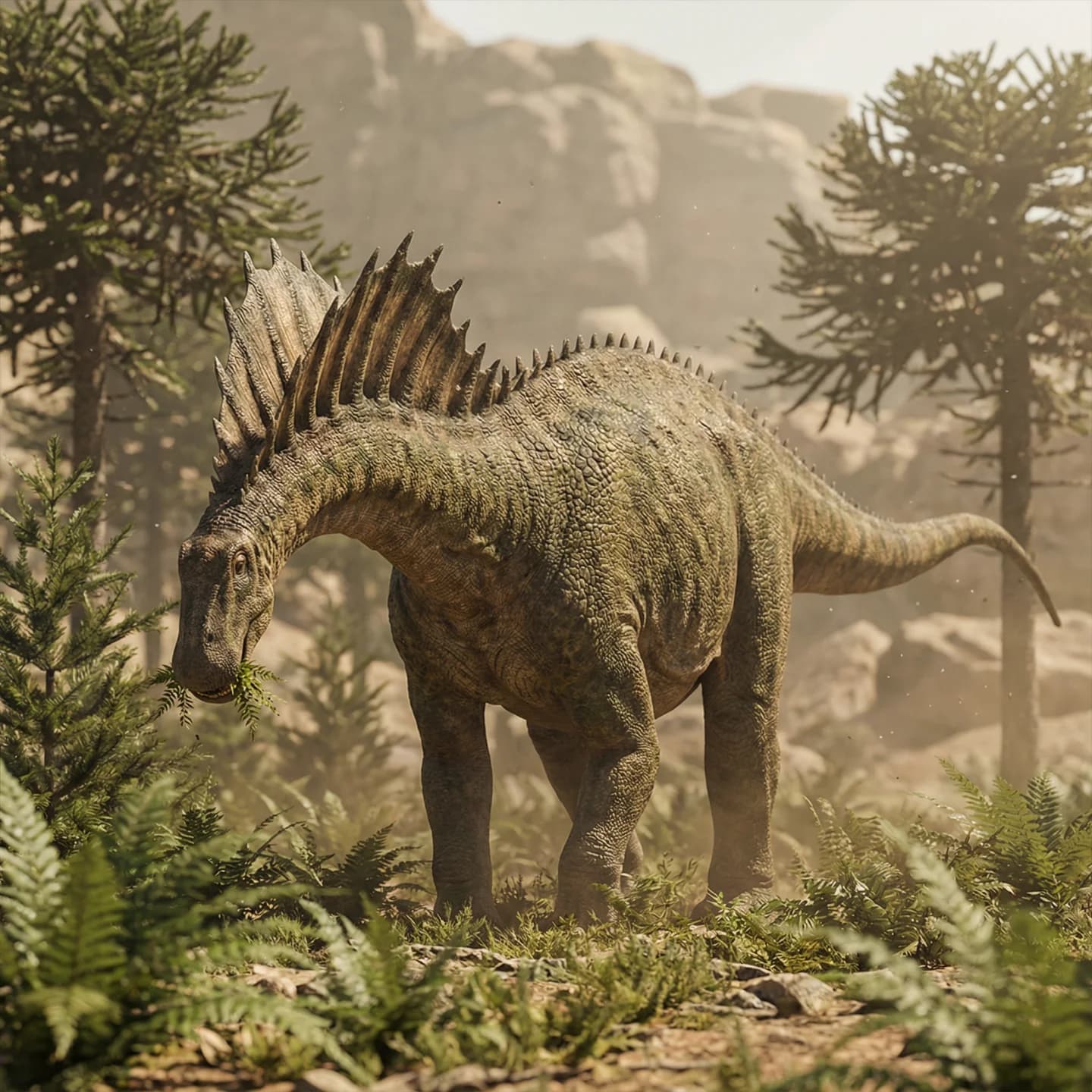
Amargasaurus (Amargasaurus cazaui Salgado & Bonaparte, 1991) is a dicraeosaurid sauropod dinosaur from the Early Cretaceous (Barremian–early Aptian, approximately 129.4–122.46 Ma) of what is now northern Patagonia, Argentina. It was recovered from the Puesto Antigual Member of the La Amarga Formation in the Neuquén Basin. The sole known skeleton was discovered in February 1984 by Guillermo Rougier during the eighth Patagonian expedition led by José Bonaparte, part of the National Geographic Society–supported project "Jurassic and Cretaceous Terrestrial Vertebrates of South America." The formal description was published in 1991 by Leonardo Salgado and Bonaparte in the Argentine journal Ameghiniana.
The most distinctive feature of Amargasaurus is the dramatically elongated, bifurcated (double-forked) neural spines on its cervical and anterior dorsal vertebrae. These reach their greatest height on the 8th cervical, at approximately 60 cm (Salgado & Bonaparte 1991; Novas 2009), forming the tallest neural spines known in any sauropod. The holotype MACN-N 15 preserves a partial skull (temporal region and basicranium), 22 articulated presacral vertebrae, a partial sacrum, some caudal vertebrae, a scapulocoracoid, humerus, radius, ulna, ilium, femur, tibia, fibula, and other fragmentary elements — making it one of the most complete sauropod skeletons from its epoch.
Amargasaurus was small by sauropod standards. Body length is estimated at approximately 9–10 m based on the skeletal reconstruction (Salgado & Bonaparte 1991; Mazzetta et al. 2004, Table I: 9.1 m), while body mass was calculated at approximately 2,500–2,600 kg using 3D mathematical slicing at a density of 1,000 kg/m³ (Mazzetta et al. 2004). Some popular sources cite lengths up to 13 m and weights up to 4 tonnes, but these upper estimates lack clearly documented academic methodology and may reflect uncertain extrapolation due to the largely missing tail. The neck was notably short for a sauropod — only about 2.4 m long (Senter 2007). Inner ear and cervical joint analyses indicate that the habitual snout position was approximately 80 cm above the ground in the neutral posture and up to about 2.7 m in the alert posture, suggesting a preference for low-to-mid-height vegetation (Paulina Carabajal et al. 2014).
A landmark 2022 osteohistological study by Cerda et al. demonstrated that the hyperelongate neural spines of Amargasaurus lack the morphological and histological correlates of a keratinous sheath (horn core features), and instead show evidence of interspinous ligament attachment and a skin sail framework. This "cervical sail" hypothesis is currently the most strongly supported interpretation of the spines' soft tissue covering.
Overview
Name and Etymology
The genus name Amargasaurus derives from the discovery site at La Amarga Arroyo. The Spanish word amarga means "bitter," and the Greek sauros means "lizard," yielding "bitter(-locality) lizard." La Amarga is also the name of a nearby settlement and the geological formation from which the fossils were recovered. The specific name cazaui honors Luis Cazau, a geologist with the Argentine state oil company YPF, who in 1983 alerted Bonaparte's team to the paleontological significance of the La Amarga Formation, catalyzing the discovery (Salgado & Bonaparte 1991).
Notably, Bonaparte had earlier used the informal name Amargasaurus groeberi in a 1984 Italian book (Sulle Orme dei Dinosauri), honoring geologist Pablo Groeber (Glut 1997). However, this was a nomen nudum, and the specific epithet was changed to cazaui in the formal 1991 description.
Taxonomic Status
Amargasaurus is a representative member of the Dicraeosauridae, a family within Diplodocoidea. Dicraeosauridae sits alongside Diplodocidae and Rebbachisauridae within the Diplodocoidea but is a distinct family-level clade characterized by short necks, relatively small body size, and extremely elongated bifurcated neural spines. In the phylogenetic analysis of Gallina et al. (2019), Amargasaurus was recovered as more derived than Pilmatueia and Bajadasaurus, forming a sister group to the Dicraeosaurus–Brachytrachelopan clade. The family currently includes at least nine species in eight genera, including Athenar bermani described in 2025 from the Morrison Formation of Utah, USA (Whitlock, Garderes, Gallina & Lamanna 2025).
One-Line Summary
Amargasaurus is an Early Cretaceous dicraeosaurid sauropod from Argentina distinguished by extremely elongated double neural spines on its neck and back, which recent histological evidence most strongly supports as having borne a skin sail.
Age, Stratigraphy, and Depositional Environment
Temporal Range
The La Amarga Formation spans the Barremian to early Aptian stages of the Early Cretaceous, approximately 129.4–122.46 Ma (Novas 2009; Leanza et al. 2004). The original description assigned the formation to the Neocomian (specifically the Hauterivian; Salgado & Bonaparte 1991), but subsequent work revised this to Barremian–early Aptian. The La Amarga Formation represents the oldest Cretaceous continental strata in the Neuquén Basin.
Formation and Lithology
The La Amarga Formation is divided into three members.
The lowermost Puesto Antigual Member is approximately 28.9 m thick and consists primarily of sandstone deposited in braided river channels, with well-developed paleosols. Most tetrapod fossils, including Amargasaurus, come from this member.
The overlying Bañados de Caichigüe Member is approximately 20.9 m thick and comprises alternating limestone, shale, and siltstone representing a lacustrine (lake) environment.
The uppermost Piedra Parada Member is approximately 109.4 m thick and consists of alternating sandstone and siltstone deposited in an alluvial plain setting, with some swamp deposits and paleosols.
The holotype MACN-N 15 was found approximately 2.5 km southeast of the La Amarga Arroyo bridge on National Route 40, within a small pebbly sandstone bed in the Puesto Antigual Member (Salgado & Bonaparte 1991).
Paleoenvironment
The sedimentary facies of the Puesto Antigual Member indicate a braided river system, and the well-developed paleosols suggest seasonal wet-dry fluctuations consistent with a semi-arid to sub-humid climate. The La Amarga Formation overlies the marine Agrio Formation unconformably, recording a transition from marine to continental deposition. Amargasaurus inhabited a braided-river floodplain environment in a semi-arid to subtropical inland setting.
Specimens and Diagnostic Features
Holotype
The holotype, specimen MACN-N 15 (= MACN PV N15), is housed at the Bernardino Rivadavia Argentine Museum of Natural Sciences (Museo Argentino de Ciencias Naturales "Bernardino Rivadavia") in Buenos Aires. It includes the following elements (Salgado & Bonaparte 1991):
| Region | Preservation |
|---|---|
| Skull | Temporal region and basicranium preserved; preorbital region and mandible absent |
| Cervical vertebrae | 13 (articulated with skull), bifurcated neural spines from the axis onward |
| Dorsal vertebrae | 9 (articulated with cervicals and connected to sacrum) |
| Sacrum | 5 fused sacrals, partially eroded |
| Caudal vertebrae | 3 anterior, 3 middle, 1 posterior, plus centrum fragments |
| Pectoral girdle | Right scapulocoracoid |
| Forelimb | Left humerus, radius, ulna |
| Pelvis | Left ilium |
| Hindlimb | Left femur, tibia, fibula, 1 astragalus, 2 metatarsals |
This specimen represents a single individual and remains the only confirmed skeleton attributable to Amargasaurus cazaui.
Diagnostic Features
The principal diagnostic features from the original description (Salgado & Bonaparte 1991) include: presacral neural spines that are far more prominently bifurcated and extremely elongated compared to Dicraeosaurus hansemanni, with bifurcation persisting to the penultimate dorsal vertebra; cervical neural spines that are notably taller than in Dicraeosaurus with subcylindrical cross-sections; secondary loss of pleurocoels; five fused sacral vertebrae; skull with parietal and postparietal openings (fontanelles); fused basal tubera (autapomorphy); and basipterygoid processes longer than in Dicraeosaurus.
Limitations of the Specimen
The preorbital portion of the skull (snout, anterior frontal region) and the mandible are missing, so the overall skull shape is reconstructed by reference to the closely related Dicraeosaurus. Most of the tail, the manus, and most of the pes are absent, introducing uncertainty in total length estimates. No teeth were recovered, so dental morphology is inferred from the dicraeosaurid common condition (horse-shaped broad snout, pencil-like teeth).
Morphology and Functional Anatomy
Body Size and Proportions
Amargasaurus was small by sauropod standards. Body length is estimated at approximately 9–10 m (Salgado & Bonaparte 1991 skeletal reconstruction; Mazzetta et al. 2004, Table I: 9.1 m), and body mass at approximately 2,600 kg (density 1,000 kg/m³) or 2,460 kg (density 950 kg/m³) by the 3D mathematical slicing method of Mazzetta et al. (2004), who summarized the mass as "only 2.5 tonnes" in their text. Some popular sources cite up to 13 m and 4 tonnes, but these upper bounds lack documented academic methodology and likely reflect uncertain extrapolation given the largely missing tail. The body followed the typical sauropod plan: long tail and neck, small head, barrel-shaped trunk, and four columnar legs.
The forelimbs were somewhat shorter than the hindlimbs. The femur measures 1,050 mm and the humerus 720 mm, yielding a femur/humerus ratio of approximately 1.45. The femur/tibia ratio of approximately 1.64 suggests Amargasaurus was a slow walker rather than a cursorial animal (Salgado & Bonaparte 1991).
Neural Spines: Structure and Current Interpretation
From the 3rd cervical onward through the anterior dorsals, the neural spines are bifurcated along their entire length, forming a double row. They are subcircular in cross-section and taper toward their tips. The tallest spines occur on the 8th cervical (approximately 60 cm) and lean posteriorly, projecting above the adjacent vertebral body (Novas 2009; Salgado & Bonaparte 1991). The last two dorsal vertebrae, the sacrum, and the anteriormost caudals also bear elongated spines, but these are not bifurcated and instead have paddle-shaped upper ends (Bailey 1997).
The function and life appearance of these spines have been debated extensively.
Paul (1994) argued that the circular cross-section of the spines was inconsistent with a sail and instead suggested keratinous sheaths. Schwarz et al. (2007) proposed a model in which the upper two-thirds of the spines were keratin-covered with an air sac (supravertebral diverticulum) in the lower one-third. Bailey (1997) suggested a short sail on the neck and a bison-like hump posteriorly.
However, the pivotal 2022 study by Cerda et al. analyzed the osteohistology of the hemispinous processes of the holotype (MACN PV N15) and an additional dicraeosaurid specimen (MOZ-Pv 6126-1). They found that the bone surface is largely smooth, lacking the neurovascular grooves, transitional lip/overgrowth, and oblique neurovascular foramina that characterize horn cores covered by keratinous sheaths. The spines show highly vascularized fibrolamellar bone with cyclical growth marks (CGMs) and oblique Sharpey's fibres on the lateral and medial surfaces, interpreted as attachment sites for an interspinous ligament system. This evidence most strongly supports a "cervical sail" — interspinous ligaments connecting the spines, covered by skin — as the most likely soft-tissue reconstruction (Cerda et al. 2022). Additionally, bone remodeling evidence demonstrates that the spine shape changed during growth, which would be impossible beneath a rigid keratinous sheath, providing a further argument against the keratin hypothesis.
Neck and Head Posture
The neck measured approximately 2.4 m, markedly short for a sauropod (Senter 2007). It comprised 13 cervical vertebrae, corresponding to approximately 136% of the dorsal vertebral column length. This is slightly longer than in Dicraeosaurus (123%) but considerably longer than the extremely short-necked Brachytrachelopan (75%) (Rauhut et al. 2005).
Paulina Carabajal et al. (2014) CT-scanned the skull to generate 3D models of the endocast and inner ear. The orientation of the semicircular canals indicates that in the alert head posture, the neck inclined gently downward, placing the snout at approximately 80 cm above the ground in the neutral posture and up to approximately 2.7 m in the alert posture. This strongly suggests that Amargasaurus primarily browsed low-to-mid-height vegetation.
In 2025, Militello et al. reconstructed the occipital muscle attachment sites of the holotype using the extant phylogenetic bracket (EPB) methodology based on extant archosaurs, producing the first complete craniocervical muscular reconstruction for a dicraeosaurid. This study showed that muscles involved in dorsiflexion and lateral rotation of the neck (e.g., M. complexus, M. obliquus capitis dorsalis) were likely well-developed, and proposed a three-stage feeding mechanism incorporating both high and low browsing modes (Militello et al. 2025).
Skull
Only the posterior portion of the skull (temporal region, basicranium) is preserved. This represents only the second known dicraeosaurid skull. Cranial features shared with Dicraeosaurus include fused frontal bones, notably elongated basipterygoid processes, and a supratemporal fenestra small enough to be visible in lateral view. The autapomorphic fused basal tubera distinguish Amargasaurus. The back of the skull bears parietal and postparietal openings (fontanelles) — structures that in other tetrapods are typically present only in juveniles and close during growth (Salgado 1999; Salgado 2005). The snout is not preserved but is inferred to have been horse-shaped and broad with pencil-like teeth, based on closely related taxa (Wilson 2005).
Diet and Ecology
Diet
Amargasaurus was herbivorous. Although teeth are not directly preserved, the box-shaped snout and narrow pencil-like teeth restricted to the jaw front are characteristic of Diplodocoidea as a whole (Wilson 2005). This dental morphology is interpreted as suited for non-selective stripping of low-to-mid-height vegetation such as ferns, cycads, and small conifers.
The habitual head height inferred from the inner ear study (approximately 0.8–2.7 m above ground; Paulina Carabajal et al. 2014) indicates that Amargasaurus browsed shrubs, ferns, and low trees rather than high canopy. Militello et al. (2025) proposed a three-stage craniocervical feeding mechanism through muscle reconstruction, suggesting the feeding strategy was more flexible than previously thought, encompassing both high and low browsing modes.
Ecological Niche and Food Web
According to Apesteguía (2007), at least 3–4 sauropod genera coexisted in the Puesto Antigual Member of the La Amarga Formation. In addition to Amargasaurus, these include another dicraeosaurid (Amargatitanis macni), a possible diplodocid, and titanosaurians. This sauropod diversity suggests niche partitioning through exploitation of different food sources or browsing heights. With its short neck and low habitual feeding height, Amargasaurus likely occupied a low-to-mid-level herbivore niche.
Contemporary fauna from the same member include the small theropod Ligabueino andesi, the notosuchian crocodyliform Amargasuchus minor (which was found associated with the Amargasaurus holotype), and pterosaur remains. The early therian mammal Vincelestes neuquenianus is also known from the La Amarga Formation, collectively documenting a diverse tetrapod community in the braided-river floodplain setting.
Distribution and Paleogeography
Occurrence
Amargasaurus is currently known from a single locality: near La Amarga Arroyo in the Picún Leufú Department of Neuquén Province, approximately 70 km south of Zapala (Salgado & Bonaparte 1991). An additional dicraeosaurid specimen (MOZ-Pv 6126-1) from the same member was identified but treated as Dicraeosauridae indeterminate (Windholz et al. 2021).
Paleogeography
The paleolatitude of the La Amarga Formation is estimated at approximately 39.6°S, with a paleolongitude of approximately 35.2°W. During the Early Cretaceous, South America and Africa had not yet fully separated. The distribution of Dicraeosauridae spans both Gondwana and Laurasia: Dicraeosaurus from Tanzania, Lingwulong from China, Suuwassea and Athenar from North America (Whitlock, Garderes, Gallina & Lamanna 2025), and multiple genera from Argentina. Bonaparte (1986) originally proposed that Dicraeosauridae was a geographically isolated Gondwanan group, but the subsequent discoveries of Laurasian members necessitate revision of this hypothesis.
Phylogeny and Taxonomic Debate
Family-Level Classification
In the original description, Salgado & Bonaparte (1991) placed Amargasaurus in the Dicraeosauridae (Huene, 1956) rather than the Diplodocidae, detailing significant cranial and postcranial differences between the two families. Dicraeosaurid skulls bear parietal and postparietal fontanelles absent in diplodocids, along with extremely elongated basipterygoid processes, secondary loss of pleurocoels, and heavy proximal caudal morphology.
Most current phylogenetic analyses recover Dicraeosauridae as the sister group of Diplodocidae within Flagellicaudata (Whitlock 2011; Tschopp et al. 2015; Xu et al. 2018; Gallina et al. 2019). The 2025 reassessment by Mannion & Moore maintained this basic topology.
Intra-Family Relationships
The phylogenetic analysis of Gallina et al. (2019) recovered the following internal relationships for Dicraeosauridae: Suuwassea at the base, followed by Lingwulong, then Bajadasaurus, Pilmatueia, and a clade of Amargasaurus + (Dicraeosaurus + Brachytrachelopan). Most analyses find Dicraeosaurus and Brachytrachelopan more closely related to each other than either is to Amargasaurus (Rauhut et al. 2005; Taylor & Naish 2005; Sereno et al. 2007). Athenar bermani, described in 2025, joins Suuwassea emilieae in demonstrating dicraeosaurid diversity in the Morrison Formation of North America (Whitlock, Garderes, Gallina & Lamanna 2025).
Alternative Hypotheses
The preliminary analysis of Tschopp et al. (2015) suggested that two poorly known Morrison Formation taxa, Dyslocosaurus polyonychius and Dystrophaeus viaemalae, might be additional dicraeosaurid members, though both are based on incomplete specimens and remain unconfirmed. The comprehensive reassessment by Mannion & Moore (2025) continued to support dicraeosaurid monophyly and stable internal relationships.
Reconstruction and Uncertainty
Confirmed
Dicraeosaurid affinity; presence of bifurcated, extremely elongated neural spines; small sauropod body size (approximately 9–10 m); short neck (approximately 2.4 m, 13 cervicals); provenance from the Barremian–Aptian La Amarga Formation of Argentina — all are firmly established.
Most Supported Hypothesis (Current Research)
The interpretation that the neural spines supported a skin sail connected by interspinous ligaments, rather than keratinous sheaths (horns), is the most strongly supported hypothesis based on the osteohistological evidence of Cerda et al. (2022). However, whether the primary function was display, species recognition, defense, or a combination thereof remains unresolved.
Estimates and Hypotheses
Snout morphology, dental form, and precise total length (especially tail length) are inferred from close relatives due to incomplete preservation. The body mass estimate of approximately 2,500–2,600 kg (Mazzetta et al. 2004) is the most rigorous available. Some sources cite up to 4 tonnes and 13 m, but these upper bounds lack clearly documented methodology, and the largely missing tail introduces considerable uncertainty in total length reconstruction. Only a single individual is known, precluding assessment of intraspecific variation.
Popular Media vs. Scientific Consensus
Popular media frequently depict the spines of Amargasaurus as free-standing horns (independent spikes), but current scientific consensus favors the sail hypothesis supported by histological evidence (Cerda et al. 2022). Additionally, some popular references classify this dinosaur as a diplodocid, which is inaccurate — it belongs to Dicraeosauridae.
Comparison with Related and Contemporary Taxa
| Taxon | Age | Locality | Estimated Length | Neural Spine Features | Neck Length Ratio |
|---|---|---|---|---|---|
| Amargasaurus cazaui | Barremian–Aptian (~129–122 Ma) | Neuquén Province, Argentina | ~9–10 m | Extremely long, posteriorly inclined, bifurcated, up to 60 cm | 136% of dorsal column |
| Bajadasaurus pronuspinax | Late Berriasian–Valanginian (~145–133 Ma) | Neuquén Province, Argentina | ~9 m (estimated) | Extremely long, anteriorly curved, bifurcated, ~58 cm | Unknown (only partial cervicals) |
| Dicraeosaurus hansemanni | Late Jurassic (~150 Ma) | Tendaguru, Tanzania | ~12–14 m | Long but shorter than Amargasaurus, bifurcated | 123% of dorsal column |
| Brachytrachelopan mesai | Late Jurassic (~150 Ma) | Chubut Province, Argentina | ~10 m | Short bifurcated spines | 75% of dorsal column |
| Pilmatueia faundezi | Valanginian (~140–133 Ma) | Neuquén Province, Argentina | Unknown (fragmentary) | Very long bifurcated spines | Unknown |
| Athenar bermani | Late Jurassic (~150 Ma) | Utah, USA (Morrison Fm.) | Unknown (braincase only) | Unknown | Unknown |
Data Tables
Key Skeletal Measurements (Salgado & Bonaparte 1991; Mazzetta et al. 2004)
| Skeletal Element | Measurement (mm) |
|---|---|
| Scapulocoracoid total length | 1,180 |
| Humerus length | 720 |
| Humerus minimum circumference | 380 |
| Ulna length | 440 |
| Radius length | 470 |
| Femur length | 1,050 |
| Femur minimum circumference | 530 |
| Femur distal width | 284 |
| Tibia length | 640 |
| Fibula length | 640 |
| Femur/humerus ratio | 1.45 |
| Femur/tibia ratio | 1.64 |
Body Mass Estimates
| Study | Method | Estimated Mass |
|---|---|---|
| Mazzetta et al. (2004) | 3D mathematical slicing, density 1,000 kg/m3 | ~2,600 kg |
| Mazzetta et al. (2004) | 3D mathematical slicing, density 950 kg/m3 | ~2,460 kg |
| Mazzetta et al. (2004) | Text summary | ~2,500 kg (2.5 t) |
Fun Facts
FAQ
📚References
- Salgado, L. & Bonaparte, J.F. (1991). Un nuevo saurópodo Dicraeosauridae, Amargasaurus cazaui gen. et sp. nov., de la Formación La Amarga, Neocomiano de la provincia del Neuquén, Argentina. Ameghiniana, 28(3-4): 333–346.
- Salgado, L. & Calvo, J.O. (1992). Cranial osteology of Amargasaurus cazaui Salgado & Bonaparte (Sauropoda, Dicraeosauridae) from the Neocomian of Patagonia. Ameghiniana, 29: 337–346.
- Paulina Carabajal, A., Carballido, J.L. & Currie, P.J. (2014). Braincase, neuroanatomy, and neck posture of Amargasaurus cazaui (Sauropoda: Dicraeosauridae) and its implications for understanding head posture in sauropods. Journal of Vertebrate Paleontology, 34(4): 870–882. https://doi.org/10.1080/02724634.2014.838174
- Cerda, I.A., Novas, F.E., Carballido, J.L. & Salgado, L. (2022). Osteohistology of the hyperelongate hemispinous processes of Amargasaurus cazaui (Dinosauria: Sauropoda): Implications for soft tissue reconstruction and functional significance. Journal of Anatomy, 240(6): 1005–1019. https://doi.org/10.1111/joa.13659
- Gallina, P.A., Apesteguía, S., Canale, J.I. & Haluza, A. (2019). A new long-spined dinosaur from Patagonia sheds light on sauropod defense system. Scientific Reports, 9: 1392. https://doi.org/10.1038/s41598-018-37943-3
- Mazzetta, G.V., Christiansen, P. & Fariña, R.A. (2004). Giants and bizarres: Body size of some southern South American Cretaceous dinosaurs. Historical Biology, 16(2-4): 71–83. https://doi.org/10.1080/08912960410001715132
- Novas, F.E. (2009). The Age of Dinosaurs in South America. Indiana University Press, Bloomington.
- Apesteguía, S. (2007). The sauropod diversity of the La Amarga Formation (Barremian), Neuquén (Argentina). Gondwana Research, 12(4): 533–546. https://doi.org/10.1016/j.gr.2007.04.007
- Bailey, J.B. (1997). Neural spine elongation in dinosaurs: Sailbacks or buffalo-backs? Journal of Paleontology, 71(6): 1124–1146. https://doi.org/10.1017/S0022336000036076
- Schwarz, D., Frey, E. & Meyer, C.A. (2007). Pneumaticity and soft-tissue reconstructions in the neck of diplodocid and dicraeosaurid sauropods. Acta Palaeontologica Polonica, 52(1): 167–188.
- Paul, G.S. (1994). Dinosaur art & restoration notes: Dicraeosaurs. The Dinosaur Report, 8.
- Rauhut, O.W.M., Remes, K., Fechner, R., Cladera, G. & Puerta, P. (2005). Discovery of a short-necked sauropod dinosaur from the Late Jurassic period of Patagonia. Nature, 435: 670–672. https://doi.org/10.1038/nature03623
- Senter, P. (2007). Necks for sex: sexual selection as an explanation for sauropod dinosaur neck elongation. Journal of Zoology, 271(1): 45–53. https://doi.org/10.1111/j.1469-7998.2006.00197.x
- Upchurch, P., Barrett, P.M. & Dodson, P. (2004). Sauropoda. In: Weishampel, D.B., Dodson, P. & Osmólska, H. (eds.), The Dinosauria (2nd ed.), pp. 259–324. University of California Press.
- Whitlock, J.A. (2011). A phylogenetic analysis of Diplodocoidea (Saurischia: Sauropoda). Zoological Journal of the Linnean Society, 161: 872–915. https://doi.org/10.1111/j.1096-3642.2010.00665.x
- Tschopp, E., Mateus, O. & Benson, R.B.J. (2015). A specimen-level phylogenetic analysis and taxonomic revision of Diplodocidae (Dinosauria, Sauropoda). PeerJ, 3: e857. https://doi.org/10.7717/peerj.857
- Xu, X., Upchurch, P., Mannion, P.D., Barrett, P.M., Regalado-Fernandez, O.R., Mo, J., Ma, J. & Liu, H. (2018). A new Middle Jurassic diplodocoid suggests an earlier dispersal and diversification of sauropod dinosaurs. Nature Communications, 9: 2700. https://doi.org/10.1038/s41467-018-05128-1
- Leanza, H.A., Apesteguía, S., Novas, F.E. & De la Fuente, M.S. (2004). Cretaceous terrestrial beds from the Neuquén Basin (Argentina) and their tetrapod assemblages. Cretaceous Research, 25(1): 61–87. https://doi.org/10.1016/j.cretres.2003.10.005
- Windholz, G.J., Baiano, M.A., Bellardini, F. & Garrido, A. (2021). New Dicraeosauridae (Sauropoda, Diplodocoidea) remains from the La Amarga Formation (Barremian–Aptian, Lower Cretaceous), Neuquén Basin, Patagonia, Argentina. Cretaceous Research, 117: 104629. https://doi.org/10.1016/j.cretres.2020.104629
- Wilson, J.A. (2005). Overview of sauropod phylogeny and evolution. In: Curry Rogers, K. & Wilson, J.A. (eds.), The Sauropods: Evolution and Paleobiology, pp. 15–49. University of California Press.
- Militello, M., Otero, A. & Carballido, J.L. (2025). The occiput of Amargasaurus (Sauropoda, Dicraeosauridae): Reconstruction of the craniocervical muscular insertions with comments on feeding strategy. Journal of Anatomy. https://doi.org/10.1111/joa.70071
- Whitlock, J.A., Garderes, J.P., Gallina, P.A. & Lamanna, M.C. (2025). Athenar bermani, a new species of dicraeosaurid sauropod from Dinosaur National Monument, Utah, U.S.A. Palaeontologia Electronica, 28(3): a50. https://doi.org/10.26879/1550
- Mannion, P.D. & Moore, A.J. (2025). Critical reappraisal of a putative dicraeosaurid sauropod dinosaur from the Middle Jurassic of Gondwana and a revised view of diplodocoid evolutionary relationships and biogeography. Journal of Systematic Palaeontology. https://doi.org/10.1080/14772019.2025.2550760
- Glut, D.F. (1997). Dinosaurs: The Encyclopedia. McFarland & Company.
- Salgado, L. (1999). The macroevolution of the Diplodocimorpha (Dinosauria; Sauropoda): a developmental model. Ameghiniana, 36(2): 203–216.
- Salgado, L. (2005). Morfología funcional del cráneo de Amargasaurus cazaui. Ameghiniana, 42(3): 533–542.
- Taylor, M.P. & Naish, D. (2005). The phylogenetic taxonomy of Diplodocoidea (Dinosauria: Sauropoda). PaleoBios, 25(2): 1–7.
- Sereno, P.C., Wilson, J.A., Witmer, L.M., Whitlock, J.A., Maga, A., Ide, O. & Rowe, T.A. (2007). Structural extremes in a Cretaceous dinosaur. PLoS ONE, 2(11): e1230. https://doi.org/10.1371/journal.pone.0001230
Gallery
5 images Amargasaurus
Amargasaurus · Cretaceous Period · Herbivore
 Amargasaurus
Amargasaurus · Cretaceous Period · Herbivore
 Amargasaurus
Amargasaurus · Cretaceous Period · Herbivore
 Amargasaurus
Amargasaurus · Cretaceous Period · Herbivore
 Amargasaurus
Amargasaurus · Cretaceous Period · Herbivore
🔗Related Creatures
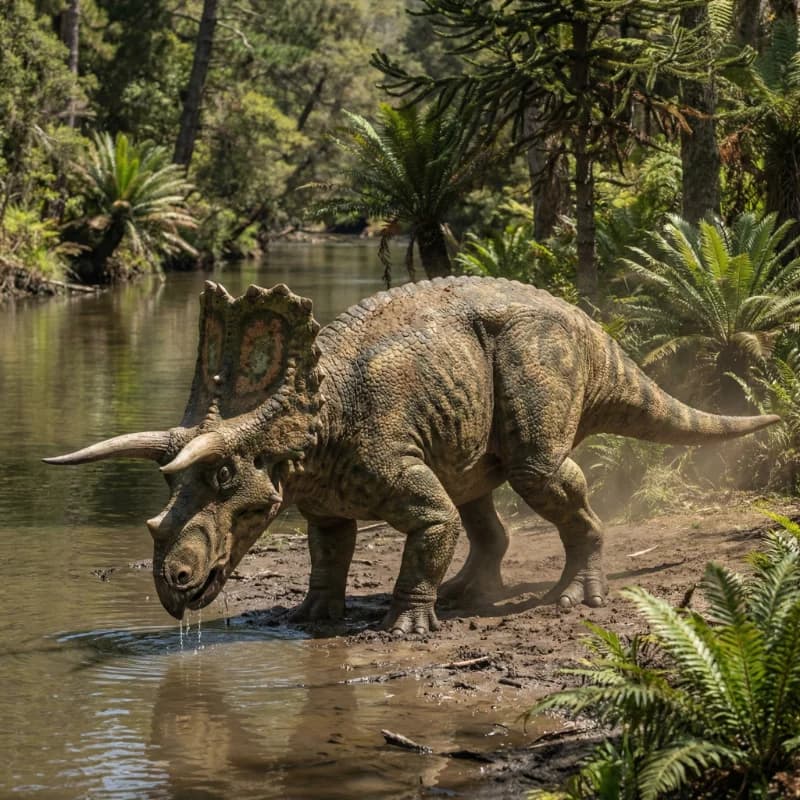
Anchiceratops
Anchiceratops ornatus

Medusaceratops
Medusaceratops lokii
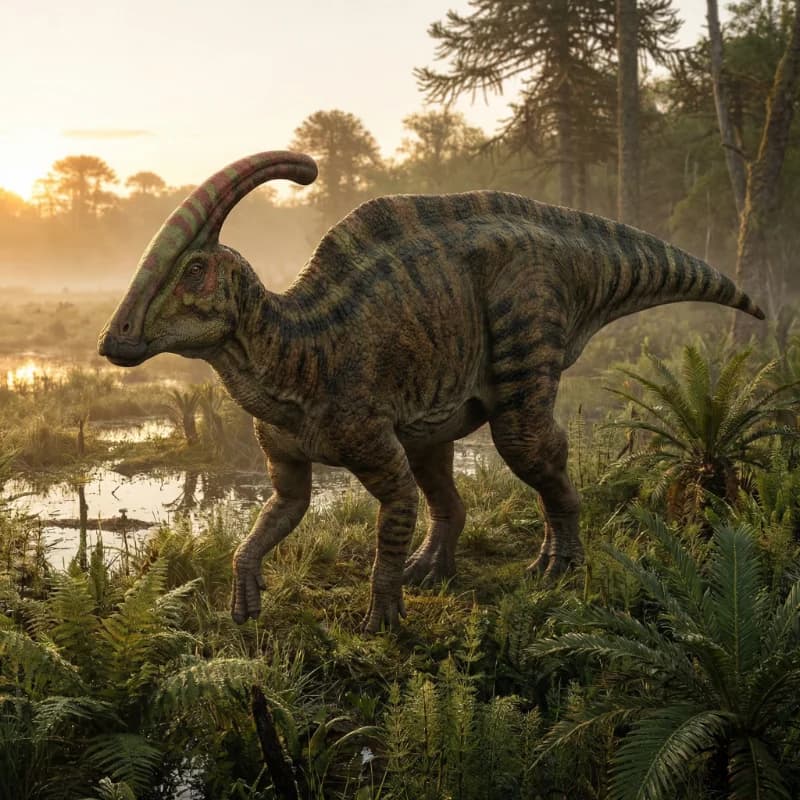
Parasaurolophus
Parasaurolophus walkeri

Leaellynasaura
Leaellynasaura amicagraphica
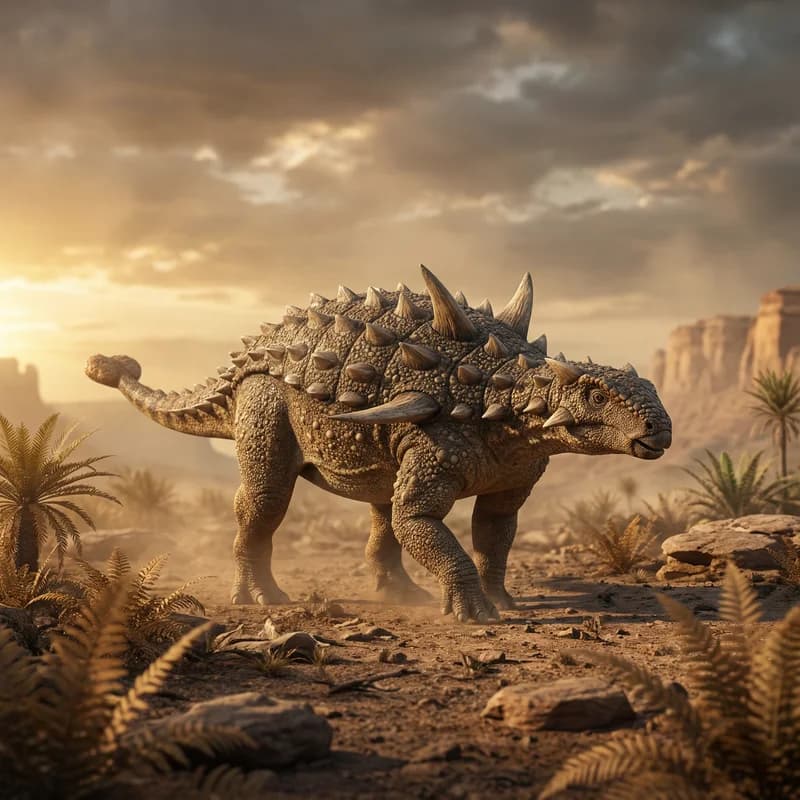
Gastonia
Gastonia burgei
Achelousaurus
Achelousaurus horneri
Utahceratops
Utahceratops gettyi
Wuerhosaurus
Wuerhosaurus homheni