Anchiceratops
Cretaceous Period Herbivore Creature Type
Anchiceratops ornatus
Scientific Name: "Greek anchi (αγχι-, near) + keras (κέρας, horn) + ops (ωψ, face) = 'near horned face'; actual naming intent was 'near Ceratops,' referring to its perceived transitional position between Monoclonius and Triceratops. Species name ornatus is Latin for 'ornate,' referring to the elaborately decorated frill margin."
Local Name: Anchiceratops
Physical Characteristics
Discovery
Habitat
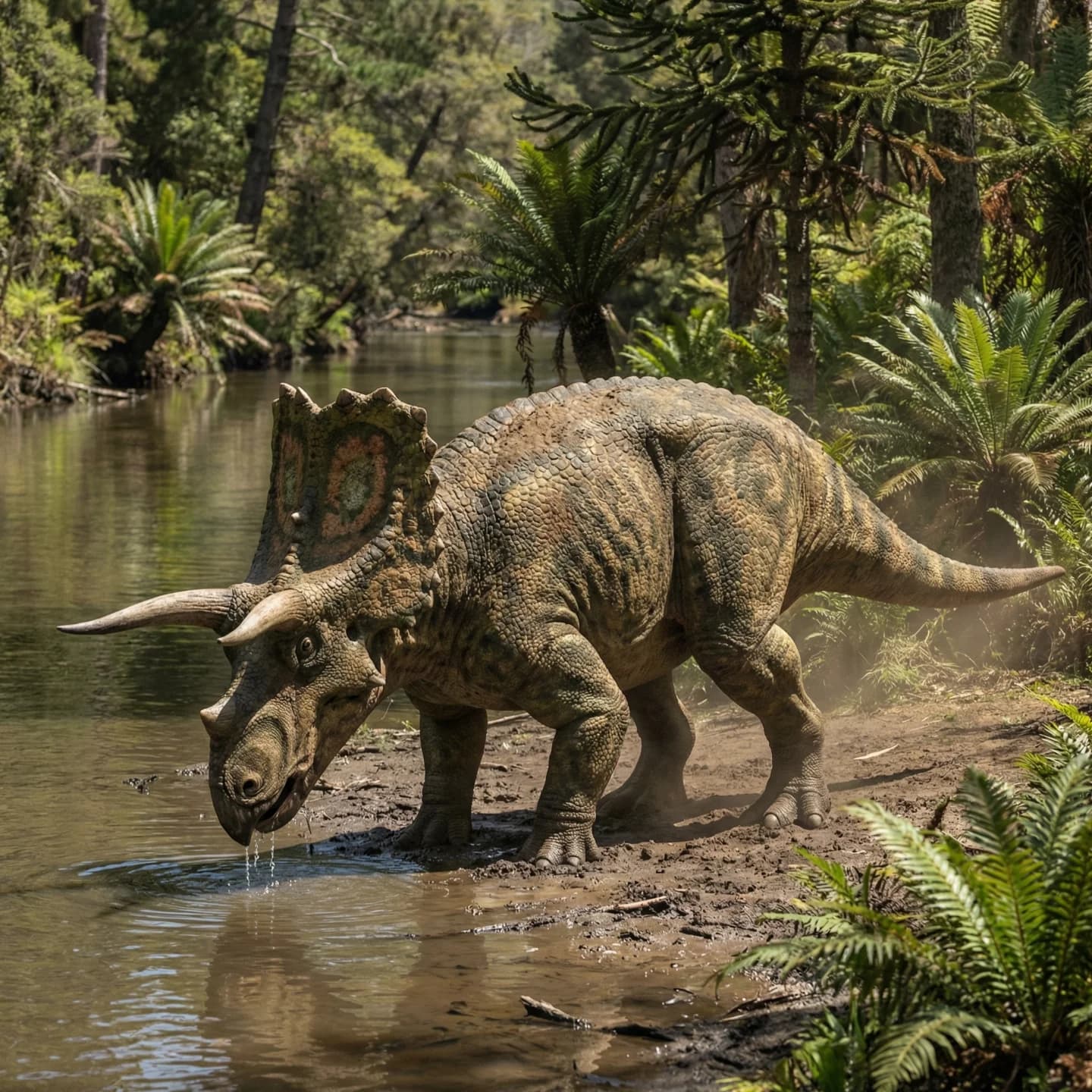
Anchiceratops (Anchiceratops ornatus Brown, 1914) is a chasmosaurine ceratopsid dinosaur from the Late Cretaceous (late Campanian to earliest Maastrichtian, approximately 72.5–71 Ma) of what is now Alberta, Canada. The genus name derives from the Greek anchi (αγχι-, "near"), keras (κέρας, "horn"), and ops (ωψ, "face"), literally meaning "near horned face." However, the naming intent was not anatomical description but rather taxonomic positioning: Brown (1914) considered the animal a transitional form between Monoclonius and Triceratops, closest to the latter in frill development, hence "near Ceratops." The species name ornatus is Latin for "ornate" or "adorned," referring to the elaborately decorated margin of its frill.
Anchiceratops was a medium-sized ceratopsid. Gregory S. Paul (2010) estimated a body length of approximately 4.3 m and a mass of about 1.2 tonnes based on specimen CMN 8547, though some popular science sources cite lengths of up to 6 m (approximately 20 ft). The skull bore two long supraorbital (brow) horns and a short nasal horn. Its most distinctive feature is the elongated, rectangular frill bordered by exceptionally large and coarse triangular osteoderms (epoccipitals). The parietal fenestrae (window-like openings in the frill) are relatively small compared to those of other chasmosaurines such as Pentaceratops and Torosaurus, and a characteristic pair of bony knobs protrudes laterally from either side of the midline near the frill's posterior end.
At least a dozen skulls (complete or partial) are known, mostly from the lower Horseshoe Canyon Formation (Horsethief Member) of southern Alberta. Anchiceratops is relatively rare compared to other ceratopsians from the same region and is notably associated with sediments deposited near marine environments, suggesting it may have favored estuarine habitats where other ceratopsids were absent. This ecological distinction, combined with its unusual frill morphology and its position at a key node in chasmosaurine evolution, makes Anchiceratops a scientifically significant taxon for understanding horned dinosaur diversity and paleoecology.
Overview
Name and Etymology
The genus name Anchiceratops combines three Greek roots: anchi (αγχι-, "near"), keras (κέρας, "horn"), and ops (ωψ, "face"). While this literally translates to "near horned face," the actual naming rationale was taxonomic rather than anatomical. Brown (1914) believed Anchiceratops represented an evolutionary intermediate between Monoclonius and Triceratops, with the frill most closely resembling the latter — hence the meaning "near Ceratops." The species epithet ornatus is Latin for "adorned" or "ornate," a direct reference to the elaborate array of triangular bony projections decorating the frill margin.
A second species, A. longirostris, was named by Charles M. Sternberg in 1929 based on a complete but smaller skull (CMN 8535) with more slender, forward-curving brow horns and a longer snout. Subsequent studies determined that these differences fall within the expected range of individual variation in A. ornatus, and A. longirostris is now widely treated as a junior synonym (Dodson, 1996; Mallon et al., 2011).
Taxonomic Status
Anchiceratops is classified within Ornithischia, Ceratopsia, Ceratopsidae, Chasmosaurinae. Brown (1914) originally assigned it to Ceratopsia; Matthew (1915) refined this to Ceratopsidae; and Dodson & Currie (1990) established the chasmosaurine assignment. The exact phylogenetic position within Chasmosaurinae remains somewhat fluid depending on the analysis. Sampson et al. (2010) recovered Anchiceratops as sister to Vagaceratops in a derived position near Arrhinoceratops and Triceratopsini. Mallon et al. (2011), using a modified version of that dataset, instead found Anchiceratops in a more basal position, closer to Chasmosaurus than to Triceratops. Most recently, Fowler & Freedman Fowler (2020) recovered Navajoceratops and Terminocavus as successive stem taxa leading toward Anchiceratops and more derived chasmosaurines, supporting an anagenetic (unbranching) evolutionary lineage from Pentaceratops.
Scientific Significance
Anchiceratops occupies a critical position in understanding chasmosaurine evolution. It sits at a key node in the hypothesized anagenetic lineage where the posterior parietal embayment (a deep notch at the back of the frill characteristic of Pentaceratops) gradually deepens, closes, and disappears. Furthermore, A. ornatus appears to have been an exceptionally long-lived species, persisting for at least 1.5 million years — far longer than the typical few-hundred-thousand-year lifespan of most ceratopsid species (Mallon et al., 2011). This longevity has sparked discussion about the relationships between species duration, competition, habitat stability, and ecological specialization.
Stratigraphy, Age, and Depositional Environment
Age Range
The confirmed stratigraphic range of Anchiceratops is approximately 72.5–71 Ma (latest Campanian to earliest Maastrichtian). This age constraint is based on high-precision U-Pb CA-ID-TIMS dating of bentonites within the Horseshoe Canyon Formation by Eberth & Kamo (2019). Anchiceratops specimens occur in the lower part of the formation, within the Horsethief Member.
Additional, less certain records extend the potential range. Langston (1959) described horn and frill fragments from the Oldman and Dinosaur Park Formations (late Campanian, approximately 76.5–75 Ma) that show the characteristic frill point pattern of Anchiceratops, though these could represent an early record of A. ornatus or possibly a related but undescribed species (Weishampel et al., 2004). Frill fragments resembling Anchiceratops have also been reported from the early Maastrichtian Almond Formation of Wyoming, USA (Farke, 2004). Ceratopsian fossils from the St. Mary River Formation at the Scabby Butte locality in southwestern Alberta cannot be referred to a specific species (Langston, 1975).
Formation and Lithology
The primary formation is the Horseshoe Canyon Formation of southern Alberta, part of the Edmonton Group in the Western Canada Sedimentary Basin. The formation comprises varicolored, thinly interbedded mudstone, sandstone, carbonaceous shale, and coal. It was deposited during the gradual withdrawal of the Western Interior Seaway during the late Campanian to middle Maastrichtian. Anchiceratops specimens occur principally within the Horsethief Member (Unit 1), the lowermost nonmarine tongue of the formation (Mallon et al., 2011; Eberth & Kamo, 2019).
Paleoenvironment
The Horseshoe Canyon Formation records a diverse array of environments associated with the retreating seaway: meandering estuarine channels, river deltas, peat swamps, floodplains, shorelines, lagoons, tidal flats, and near-shore marine settings. Anchiceratops is notably rare compared to other ceratopsians and is consistently found in proximity to marine sediments — in both the Horseshoe Canyon and Dinosaur Park Formations (Dodson, 1996; Mallon et al., 2011). This taphonomic pattern suggests that Anchiceratops may have preferentially inhabited estuarine environments where other ceratopsids did not dwell. Mean annual temperatures in this region during the late Campanian were considerably warmer than today, though a rapid decline in temperature and precipitation occurred near the Campanian–Maastrichtian boundary (Quinney et al., 2013).
Specimens and Diagnostic Features
Holotype and Key Specimens
| Specimen | Institution | Elements Preserved | Year/Collector | Notes |
|---|---|---|---|---|
| AMNH 5251 (holotype) | American Museum of Natural History | Posterior half of skull including frill | 1912, B. Brown | Red Deer River, Alberta |
| AMNH 5259 (paratype) | American Museum of Natural History | Partial skull | 1912, B. Brown | Same locality |
| AMNH 5273 | American Museum of Natural History | Partial skull | 1912, B. Brown | Same locality |
| CMN 8535 | Canadian Museum of Nature | Complete skull | 1924, C.M. Sternberg | Holotype of A. longirostris (now junior synonym) |
| CMN 8547 | Canadian Museum of Nature | Nearly complete postcranial skeleton (most of skull missing) | 1925, C.M. Sternberg | Attribution to Anchiceratops contested by Mallon & Holmes (2010) |
| TMP 1983.001.0001 | Royal Tyrrell Museum | Nearly complete juvenile skull | — | Juvenile specimen |
| UW 2419 | University of Wyoming | Nearly complete skull | — | — |
| ROM 802 | Royal Ontario Museum | Skull lacking snout | — | — |
| FMNH P15003 | Field Museum | Upper surface of skull lacking snout | — | — |
In total, at least twelve incomplete skulls have been recovered (Mallon et al., 2011).
Diagnosis
Anchiceratops is distinguished from other chasmosaurines by the following combination of characters (Brown, 1914; Mallon et al., 2011):
The frill is elongated and rectangular in shape, lacking a pronounced posterior embayment. The frill margins are bordered by exceptionally large, coarse, triangular epoccipitals. The episquamosals (osteoderms on the squamosal portion of the frill) number between five and nine, with the posteriormost episquamosal being very large, approaching the size of the three epiparietals on each side of the posterior bar. A characteristic pair of laterally directed bony knobs is located on either side of the midline near the posterior end of the frill. The parietal fenestrae are relatively small compared to those of Pentaceratops, Torosaurus, and other chasmosaurines. Deep arterial grooves are present on both the dorsal and ventral surfaces of the frill.
Limitations of the Specimen Record
The most significant gap in knowledge of Anchiceratops concerns its postcranial skeleton. The specimen traditionally used to describe the body of Anchiceratops — CMN 8547 — was removed from the genus by Mallon & Holmes (2010). This nearly complete skeleton preserves a full vertebral column down to the last tail vertebra and is one of the most complete postcranial skeletons of any ceratopsid. However, it lacks diagnostic frill elements, and because Arrhinoceratops brachyops occurs in the same formation and has a comparable frill surface structure, the specimen cannot be reliably assigned to either genus. If this reassessment is correct, no unequivocal postcranial material of Anchiceratops is currently known, introducing substantial uncertainty into body size and mass estimates.
Morphology and Functional Anatomy
Body Size
If CMN 8547 is accepted as Anchiceratops, Paul (2010) estimated a total body length of approximately 4.3 m and a mass of about 1.2 tonnes. The popular science figure of up to 6 m (approximately 20 ft) appears in several reference books (e.g., Dodson et al., in The Age of Dinosaurs) but lacks a rigorous osteological basis and should be treated with caution. Anchiceratops was a medium-sized ceratopsid, substantially smaller than the large-bodied Triceratops (8–9 m, 6–12 t).
Skull and Horns
Like other chasmosaurines, Anchiceratops bore three facial horns: a short nasal horn on the snout and two longer supraorbital horns above the eyes. The supraorbital horns being longer than the nasal horn is a general chasmosaurine trait. Considerable individual variation exists among specimens in horn core size, orientation (erect versus forward-inclined), and snout length. This variation was once interpreted as taxonomic (species-level) or sexual dimorphism, but Mallon et al. (2011) performed preliminary statistical analyses and found no evidence for bimodal distribution, concluding that the variation represents ordinary individual differences.
Frill
The frill of Anchiceratops is among the most distinctive of any chasmosaurine. It is rectangular and elongated, with the posterior margin bordered by large, coarse, triangular epoccipitals. On the squamosal (lateral portion), five to nine episquamosals are present; on the parietal (posterior bar), three epiparietals per side adorn the rear edge. A unique pair of laterally projecting bony knobs flanks the midline near the posterior end of the frill, varying considerably in size and shape between individuals. The parietal fenestrae are relatively small, and deep arterial grooves on both surfaces indicate rich vascular supply — potentially relevant to thermoregulation or display functions (flush coloration).
Postcranial Skeleton (Based on CMN 8547, Attribution Contested)
If CMN 8547 belongs to Anchiceratops, the postcranial skeleton shows several features unusual among chasmosaurines. The vertebral column comprises 10 cervicals, 13 dorsals, 12 sacrals, and 39 caudals. Typical chasmosaurines have 12 dorsals, 10 sacrals, and up to 46 caudals; the shift suggests a posteriorly displaced synsacrum and a notably short tail. Four anterior cervical vertebrae are fused into an unusually long syncervical. The forelimbs are very robust, with a large deltopectoral crest on the humerus indicating heavy musculature (Mallon & Holmes, 2010).
Diet and Paleoecology
Diet
Anchiceratops was an obligate herbivore (confirmed). Like all ceratopsids, it possessed a parrot-like beak (rostral bone + predentary) for shearing vegetation and a dental battery for oral processing. The late Campanian flora of the Horseshoe Canyon Formation region was dominated by conifers, cycads, and ferns, with flowering plants (angiosperms) becoming increasingly common but still subordinate. These plants likely comprised the bulk of the Anchiceratops diet.
Estuarine Habitat Hypothesis
The consistent association of Anchiceratops fossils with marine or near-marine sediments sets it apart from other ceratopsians, which are typically found in open-plain deposits. Langston (1959) proposed a semi-aquatic lifestyle, suggesting the long snout may have assisted breathing while the animal crossed marshy ground or waded in shallow water, with the heavy frill acting as a counterbalance. This hypothesis was largely dismissed by later workers who emphasized the terrestrial nature of dinosaurs. However, Mallon et al. (2011) revisited the idea for specimen CMN 8547, noting the exceptionally robust limbs and heavy musculature as potentially consistent with a hippopotamus-like semi-aquatic habit, while acknowledging that its short tail would have been a poor swimming organ. The hypothesis remains speculative.
Frill and Horn Function
Brown (1914) was among the first to suggest that the distinctive frill and horns of ceratopsids served intra-specific recognition and sexual selection functions, noting that defense alone could not explain the morphological differences between closely related taxa. The deep arterial grooves on the frill surface imply rich vascularization, which could have facilitated thermoregulation or visual display through blood-mediated skin color changes. The horns likely served dual roles in predator defense and intraspecific combat between competing individuals.
Coexisting Fauna
Within the Horsethief Member of the Horseshoe Canyon Formation, Anchiceratops shared its environment with a diverse dinosaur assemblage including the maniraptoran Epichirostenotes curriei, the ornithomimid Ornithomimus edmontonicus, the pachycephalosaurid Sphaerotholus edmontonensis, the hadrosaurid Edmontosaurus regalis, the ceratopsian Pachyrhinosaurus canadensis, and the apex predator Albertosaurus sarcophagus (Larson et al., 2010). Hadrosaurs dominated in sheer abundance, constituting roughly half of all dinosaurs in the assemblage. Other vertebrates included sharks, rays, sturgeons, bowfins, gars, freshwater turtles, the champsosaur Champsosaurus, crocodilians such as Leidyosuchus and Stangerochampsa, the plesiosaur Leurospondylus, multituberculate mammals, and the early marsupial Didelphodon coyi (Larson et al., 2010).
Distribution and Paleogeography
Geographic Distribution
Confirmed Anchiceratops occurrences are restricted to the Horseshoe Canyon Formation of southern Alberta, with the Red Deer River valley as the primary collecting area. Uncertain or fragmentary records include the Oldman and Dinosaur Park Formations of southern Alberta (Langston, 1959), the St. Mary River Formation at Scabby Butte, southwestern Alberta (Langston, 1975), and the Almond Formation of Wyoming, USA (Farke, 2004).
Paleogeographic Setting
During the late Campanian, the Alberta region lay at a paleolatitude of approximately 61°N and paleolongitude of approximately 68°W — considerably further north than today's geographic position. The Western Interior Seaway divided North America along a roughly north–south axis, and the Alberta region occupied a coastal lowland west of this epicontinental sea. Repeated fluctuations in sea level drove the alternation between marine and nonmarine depositional environments recorded in the Horseshoe Canyon Formation.
Phylogeny and Taxonomic Debates
Phylogenetic Analyses
The phylogenetic position of Anchiceratops within Chasmosaurinae has varied across analyses.
| Study | Method/Dataset | Anchiceratops Position |
|---|---|---|
| Sampson et al. (2010) | Morphological, PAUP | Sister to Vagaceratops; derived, near Arrhinoceratops + Triceratopsini |
| Mallon et al. (2011) | Modified Sampson et al. matrix | Basal position, closer to Chasmosaurus than Triceratops |
| Mallon et al. (2014) | Modified matrix | Basal polytomy with Arrhinoceratops |
| Fowler & Freedman Fowler (2020) | Modified matrix + morphometrics | Terminal position in Pentaceratops-to-Anchiceratops anagenetic lineage |
Mallon et al. (2014) explicitly acknowledged that "while the monophyly of Chasmosaurinae is secure, its basic structure is currently in a state of flux." Fowler & Freedman Fowler (2020) provided morphometric and phylogenetic support for a Pentaceratops → Navajoceratops → Terminocavus → Anchiceratops anagenetic series spanning approximately 5 million years, characterized by progressive deepening and closure of the posterior parietal embayment.
Sexual Dimorphism Debate
Lehman (1990) proposed that the smaller, more gracile skull of A. longirostris (CMN 8535) represented a female, while the larger, more robust skulls with longer, more erect brow horns represented males. However, Mallon et al. (2011) subjected multiple Anchiceratops specimens to preliminary statistical analysis and found that skull variation does not fall into two discrete morphs. The sexual dimorphism hypothesis was consequently rejected in favor of continuous individual variation.
Reconstruction and Uncertainty
Confirmed
- Chasmosaurine ceratopsid dinosaur: consistently supported by peer-reviewed phylogenetic analyses
- Herbivorous diet: confirmed by dental battery and beak morphology
- Age: approximately 72.5–71 Ma (Horsethief Member, Horseshoe Canyon Formation; U-Pb dating)
- Frill morphology: consistently observed across multiple skull specimens
Probable
- Body length approximately 4.3 m, mass approximately 1.2 t (Paul, 2010): based on CMN 8547 but subject to attribution uncertainty
- Estuarine habitat preference: supported by taphonomic occurrence pattern but sample size is small and collection bias cannot be excluded
Hypothetical/Unresolved
- Taxonomic attribution of CMN 8547: Anchiceratops vs. Arrhinoceratops
- Postcranial anatomy: if CMN 8547 is excluded, no unequivocal postcranial skeleton is known
- Semi-aquatic lifestyle: proposed but lacking decisive evidence
- Species identity of Oldman/Dinosaur Park Formation fragments: A. ornatus or undescribed related species
Popular Misconceptions
The commonly cited body length of 6 m and mass of 2 tonnes lack robust academic support. Additionally, the frequently repeated explanation that the name means "close-horned face" (implying the brow horns were physically close to the nasal horn) is a misinterpretation of the naming intent; the name actually refers to the animal's perceived taxonomic proximity to Ceratops (i.e., Triceratops).
Comparison with Related and Contemporaneous Taxa
| Taxon | Age (Ma) | Locality | Length (m) | Frill Characteristics | Horn Characteristics |
|---|---|---|---|---|---|
| Anchiceratops ornatus | 72.5–71 | Alberta (HCF) | ~4.3 | Rectangular, small parietal fenestrae, coarse epoccipitals | Long supraorbital horns, short nasal horn |
| Arrhinoceratops brachyops | ~72–71 | Alberta (HCF) | ~5? | Similar but with structural differences | Very small nasal horn |
| Chasmosaurus belli | ~76.5–75.5 | Alberta (DPF) | ~5 | Large parietal fenestrae, posterior embayment | Short supraorbital horns |
| Pentaceratops sternbergii | ~75.5–74.5 | New Mexico (Fruitland Fm.) | ~6–8 | Very large fenestrae, deep embayment | Long supraorbital horns, large nasal horn |
| Triceratops horridus | ~68–66 | Western North America (Hell Creek Fm.) | ~8–9 | Solid (no fenestrae), short frill | Very long supraorbital horns |
HCF = Horseshoe Canyon Formation; DPF = Dinosaur Park Formation
Fun Facts
FAQ
📚References
- Brown, B. (1914). Anchiceratops, a new genus of horned dinosaurs from the Edmonton Cretaceous of Alberta. With discussion of the origin of the ceratopsian crest and the brain casts of Anchiceratops and Trachodon. Bulletin of the American Museum of Natural History, 33: 539–548.
- Sternberg, C.M. (1929). A new species of horned dinosaur from the Upper Cretaceous of Alberta. National Museum of Canada Bulletin, 54: 34–37.
- Langston, W.J. (1959). Anchiceratops from the Oldman Formation of Alberta. National Museum of Canada Natural History Papers, 3: 1–11.
- Langston, W. Jr. (1975). The ceratopsian dinosaurs and associated lower vertebrates from the St. Mary River Formation (Maestrichtian) at Scabby Butte, southern Alberta. Canadian Journal of Earth Sciences, 12(9): 1576–1608. doi:10.1139/e75-142
- Dodson, P. (1996). The Horned Dinosaurs. Princeton: Princeton University Press. 346 pp.
- Dodson, P. & Currie, P.J. (1990). Neoceratopsia. In: Weishampel, D.B., Osmolska, H. & Dodson, P. (eds.), The Dinosauria, 1st ed., University of California Press, Berkeley, pp. 593–618.
- Lehman, T.M. (1990). The ceratopsian subfamily Chasmosaurinae: sexual dimorphism and systematics. In: Carpenter, K. & Currie, P.J. (eds.), Dinosaur Systematics: Approaches and Perspectives, Cambridge University Press, pp. 211–219.
- Farke, A.A. (2004). Ceratopsid dinosaurs from the Upper Cretaceous Almond Formation of southwestern Wyoming. Rocky Mountain Geology, 39(1): 1–5. doi:10.2113/gsrocky.39.1.1
- Mallon, J.C. & Holmes, R. (2010). Description of a complete and fully articulated chasmosaurine postcranium previously assigned to Anchiceratops (Dinosauria: Ceratopsia). In: Ryan, M.J., Chinnery-Allgeier, B.J. & Eberth, D.A. (eds.), New Perspectives on Horned Dinosaurs: The Royal Tyrrell Museum Ceratopsian Symposium, Indiana University Press, pp. 189–202.
- Paul, G.S. (2010). The Princeton Field Guide to Dinosaurs. Princeton University Press, p. 268.
- Sampson, S.D., Loewen, M.A., Farke, A.A., Roberts, E.M., Forster, C.A., Smith, J.A. & Titus, A.A. (2010). New horned dinosaurs from Utah provide evidence for intracontinental dinosaur endemism. PLoS ONE, 5(9): e12292. doi:10.1371/journal.pone.0012292
- Mallon, J.C., Holmes, R., Eberth, D.A., Ryan, M.J. & Anderson, J.S. (2011). Variation in the skull of Anchiceratops (Dinosauria, Ceratopsidae) from the Horseshoe Canyon Formation (Upper Cretaceous) of Alberta. Journal of Vertebrate Paleontology, 31(5): 1047–1071. doi:10.1080/02724634.2011.601484
- Quinney, A., Therrien, F., Zelenitsky, D.K. & Eberth, D.A. (2013). Palaeoenvironmental and palaeoclimatic reconstruction of the Upper Cretaceous (late Campanian–early Maastrichtian) Horseshoe Canyon Formation, Alberta, Canada. Palaeogeography, Palaeoclimatology, Palaeoecology, 371: 26–44. doi:10.1016/j.palaeo.2012.12.009
- Larson, D.W., Brinkman, D.B. & Bell, P.R. (2010). Faunal assemblages from the upper Horseshoe Canyon Formation, an early Maastrichtian cool-climate assemblage from Alberta. Canadian Journal of Earth Sciences, 47(9): 1159–1181. doi:10.1139/e10-005
- Mallon, J.C., Holmes, R., Anderson, J.S. & Bhullar, B.-A.S. (2014). New information on the rare horned dinosaur Arrhinoceratops brachyops (Ornithischia: Ceratopsidae) from the Upper Cretaceous of Alberta, Canada. Canadian Journal of Earth Sciences, 51(12): 1109–1120. doi:10.1139/cjes-2014-0028
- Eberth, D.A. & Kamo, S.L. (2019). High-precision U–Pb CA–ID–TIMS dating and chronostratigraphy of the dinosaur-rich Horseshoe Canyon Formation (Upper Cretaceous, Campanian–Maastrichtian), Red Deer River valley, Alberta, Canada. Canadian Journal of Earth Sciences, 57(10): 1220–1237. doi:10.1139/cjes-2019-0019
- Fowler, D.W. & Freedman Fowler, E.A. (2020). Transitional evolutionary forms in chasmosaurine ceratopsid dinosaurs: evidence from the Campanian of New Mexico. PeerJ, 8: e9251. doi:10.7717/peerj.9251
- Weishampel, D.B., Barrett, P.M., Coria, R.A. et al. (2004). Dinosaur distribution. In: Weishampel, D.B., Dodson, P. & Osmolska, H. (eds.), The Dinosauria, 2nd ed., University of California Press, Berkeley, pp. 517–606.
Gallery
5 images Anchiceratops
Anchiceratops · Cretaceous Period · Herbivore
 Anchiceratops
Anchiceratops · Cretaceous Period · Herbivore
 Anchiceratops
Anchiceratops · Cretaceous Period · Herbivore
 Anchiceratops
Anchiceratops · Cretaceous Period · Herbivore
 Anchiceratops
Anchiceratops · Cretaceous Period · Herbivore
🔗Related Creatures
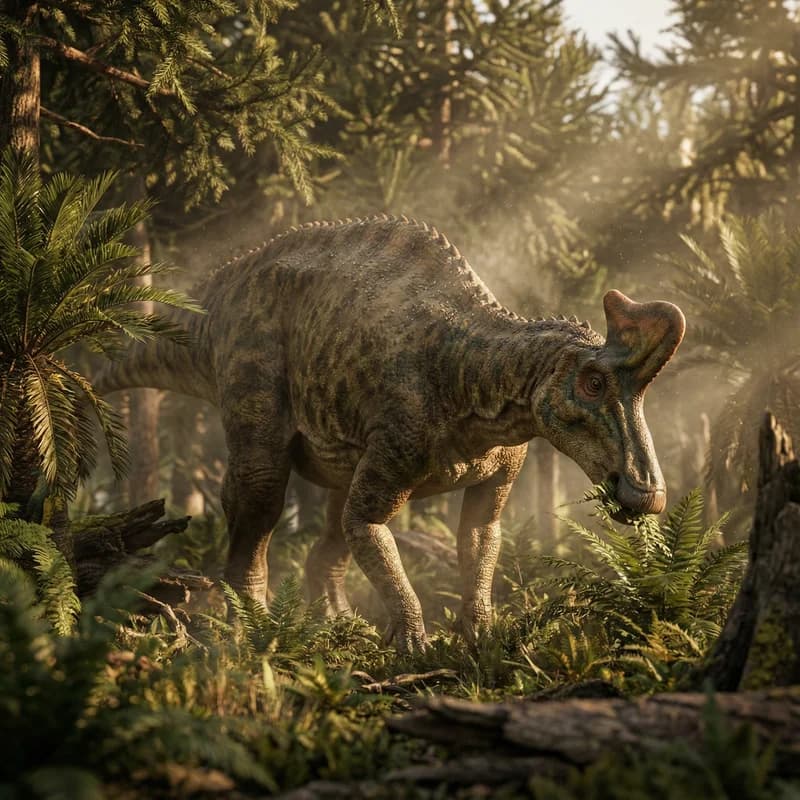
Lambeosaurus
Lambeosaurus lambei

Argentinosaurus
Argentinosaurus huinculensis
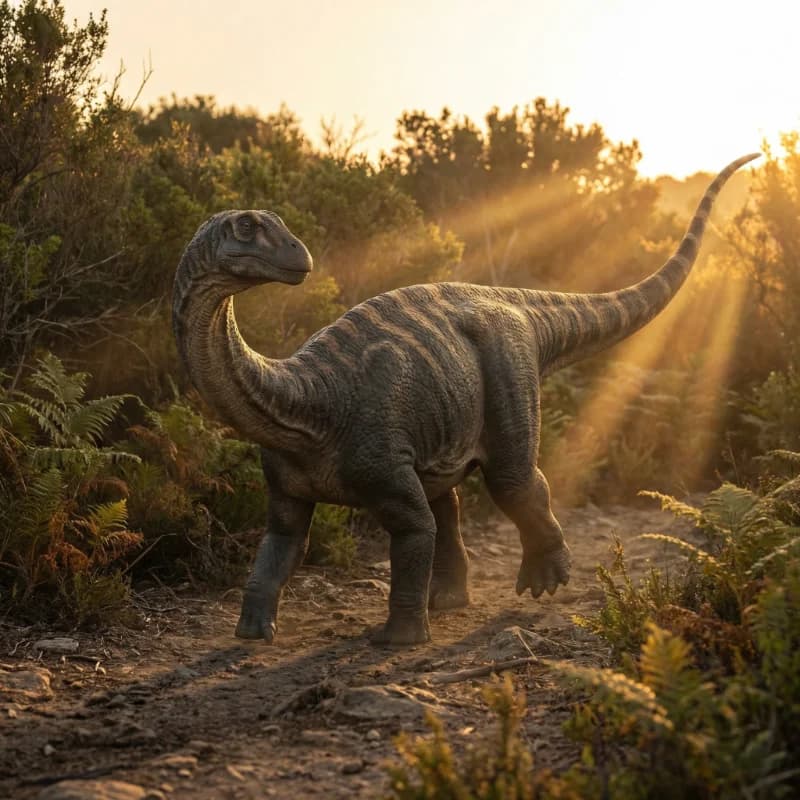
Magyarosaurus
Magyarosaurus dacus
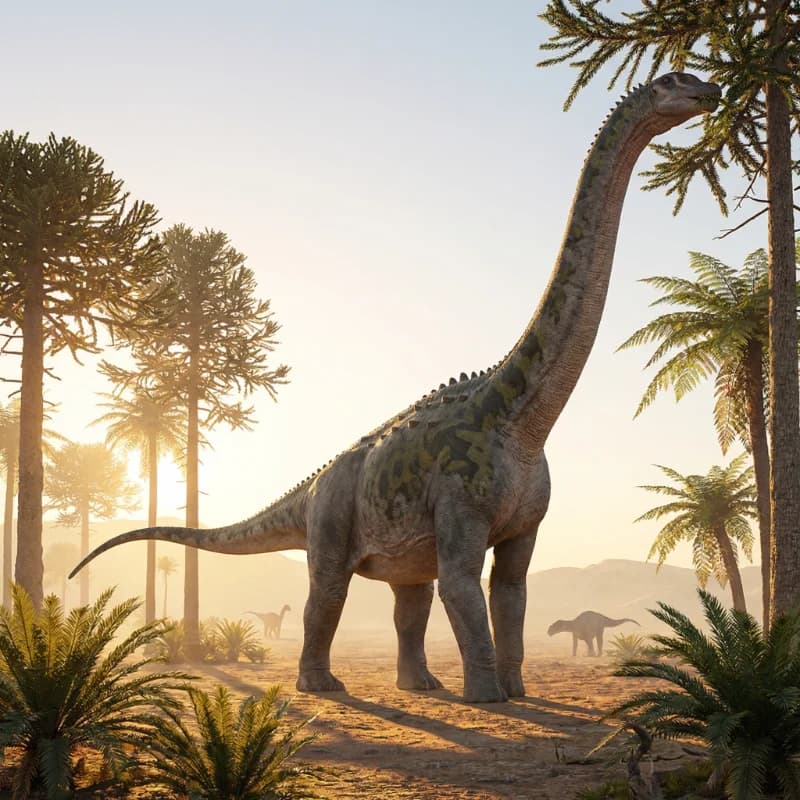
Diamantinasaurus
Diamantinasaurus matildae
Achelousaurus
Achelousaurus horneri
Einiosaurus
Einiosaurus procurvicornis
Hadrosaurus
Hadrosaurus foulkii
Shantungosaurus
Shantungosaurus giganteus