Chasmosaurus
Cretaceous Period Herbivore Creature Type
Chasmosaurus belli
Scientific Name: "Greek chasma (χάσμα, 'opening/hollow/gulf') + sauros (σαῦρος, 'lizard') = 'opening lizard'. Refers to the large parietal fenestrae in the skull frill"
Local Name: Chasmosaurus
Physical Characteristics
Discovery
Habitat
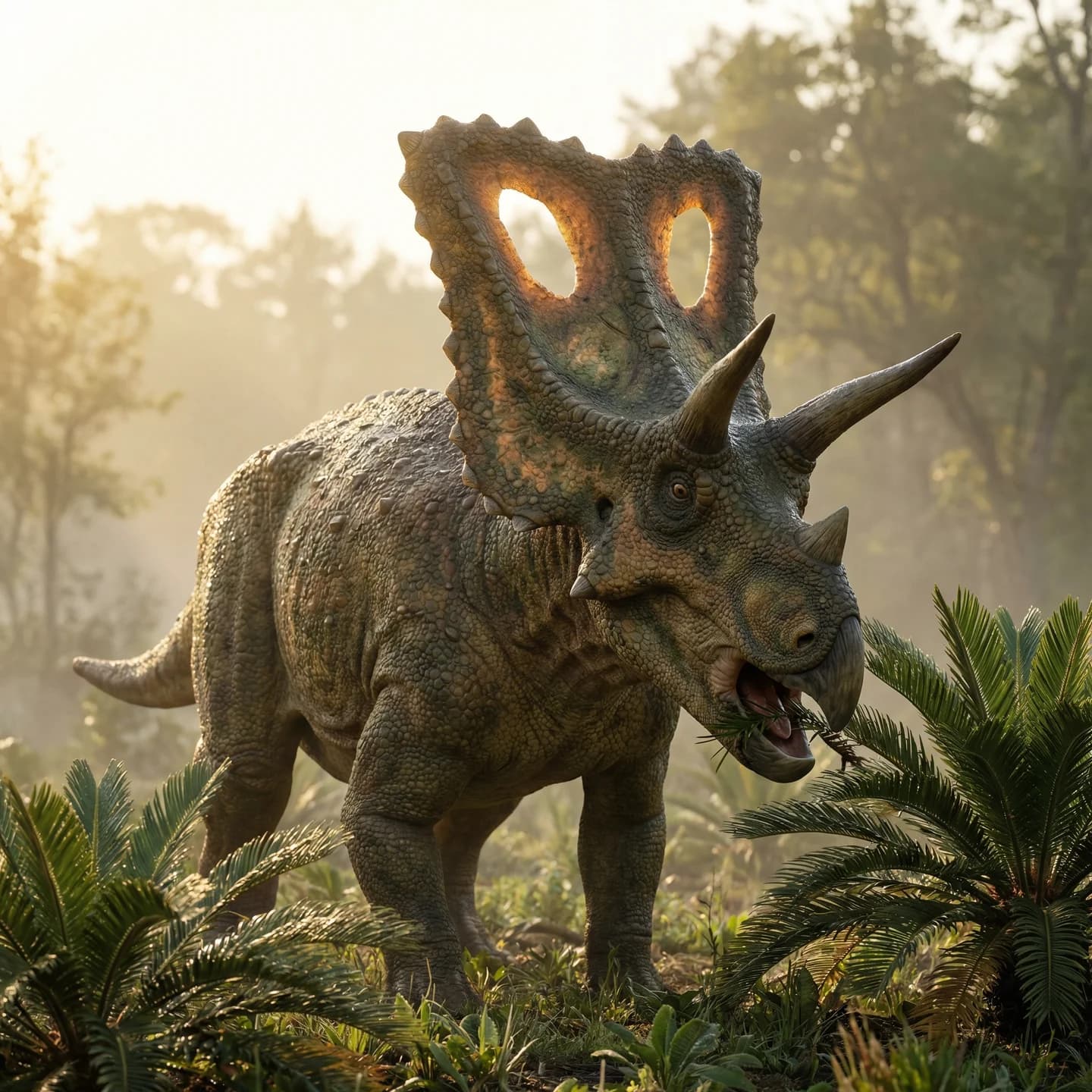
Chasmosaurus (Chasmosaurus Lambe, 1914) is a medium-sized ceratopsid dinosaur from the Late Cretaceous (Campanian stage, approximately 77–74 Ma) of western North America, specifically what is now the province of Alberta, Canada. All confirmed specimens were collected from the Dinosaur Park Formation (DPF) within the Belly River Group, exposed at Dinosaur Provincial Park—a UNESCO World Heritage Site renowned as one of the richest dinosaur fossil localities on Earth. As a basal member of the subfamily Chasmosaurinae, Chasmosaurus occupies a pivotal position in understanding the early evolution of the lineage that would eventually include Triceratops.
The most striking morphological feature of Chasmosaurus is the pair of exceptionally large, triangular parietal fenestrae that perforate its skull frill. Unlike the oval fenestrae seen in most closely related taxa, these openings are distinctly triangular with one point oriented toward the frill corner. These fenestrae likely served to reduce the overall weight of the frill while maintaining structural integrity. Chasmosaurus also possessed a small nasal horn and relatively short, blunt postorbital (brow) horns. Two species are currently recognized as valid: C. belli and C. russelli, distinguished primarily by the degree of embayment of the posterior parietal bar (Campbell et al., 2016).
The discovery history of Chasmosaurus stretches back to 1898, when Lawrence M. Lambe of the Geological Survey of Canada recovered a parietal bone fragment (holotype NMC 491) from Berry Creek, Alberta. Lambe initially described it as Monoclonius belli in 1902. Following the discovery of several complete skulls by Charles H. Sternberg and his sons in 1913, Lambe recognized the material as a new genus, first naming it Protorosaurus—only to find this name preoccupied by a Permian reptile—and subsequently erecting the replacement name Chasmosaurus in February 1914. The paratype NMC 2245, a nearly complete skeleton with associated skin impressions, remains one of the most scientifically valuable ceratopsid specimens ever found, providing direct evidence of ceratopsian integumentary structure.
Overview
Name and Etymology
The genus name Chasmosaurus derives from the Greek χάσμα (chasma, meaning 'opening', 'hollow', or 'gulf') and σαῦρος (sauros, meaning 'lizard'), thus translating to 'opening lizard' or 'chasm lizard'. The name refers to the remarkably large parietal fenestrae in the skull frill. The type species epithet belli honors fossil collector Walter Bell (Lambe, 1902). The second valid species, C. russelli, was named by Charles M. Sternberg in 1940 in honor of paleontologist Loris Shano Russell.
Notably, before settling on Chasmosaurus, Lambe had initially coined the name Protorosaurus (meaning 'before Torosaurus') in 1914, but this name was already occupied by a Permian reptile described much earlier. The replacement name Chasmosaurus was erected in the same month, February 1914, and has been in continuous use since.
Taxonomic Status
Chasmosaurus is classified within Ornithischia, Ceratopsia, Ceratopsidae, and the subfamily Chasmosaurinae. Chasmosaurines are generally characterized by long frills, in contrast to the short-frilled Centrosaurinae, with which they form the two major subfamilies of Ceratopsidae. Most cladistic analyses recover Chasmosaurus in a basal position within Chasmosaurinae (Sampson et al., 2010; Campbell et al., 2016).
Two species are currently accepted as valid: C. belli (Lambe, 1902) and C. russelli (Sternberg, 1940). Historically, numerous additional species were named—C. brevirostris, C. canadensis, C. kaiseni, C. mariscalensis, and C. irvinensis—but most have been synonymized or reassigned. C. brevirostris is a junior synonym of C. belli; C. mariscalensis was transferred to Agujaceratops (Lucas et al., 2006); and C. irvinensis was separated as Vagaceratops (Sampson et al., 2010), though Campbell et al. (2019) referred it back to Chasmosaurus, and Fowler & Fowler (2020) argued it should remain a distinct genus pending better resolution of chasmosaurine relationships. Mojoceratops (Longrich, 2010) has been considered a junior synonym of C. russelli by Maidment & Barrett (2011) and Campbell et al. (2016), though recent reinterpretation of the C. russelli holotype's stratigraphic provenance has cast some doubt on this synonymy (Fowler & Fowler, 2020).
Key Defining Feature
Chasmosaurus is a medium-sized chasmosaurine ceratopsid from the Campanian of Laramidia, diagnosed primarily by its large, triangular parietal fenestrae and distinct posterior parietal bar embayment angle.
Geological Setting: Age, Stratigraphy, and Paleoenvironment
Temporal Range
Chasmosaurus ranges through the Late Cretaceous Campanian stage, approximately 77–74 Ma. Radiometric dating of bentonites within the Dinosaur Park Formation at Dinosaur Provincial Park yielded ⁴⁰Ar/³⁹Ar dates of 77.0 ± 0.5 Ma at the top of the underlying Oldman Formation, 76.4 ± 0.4 Ma at mid-formation, and 76.1 ± 0.5 Ma near the base of the Lethbridge Coal Zone (D. Eberth, pers. comm., in Campbell et al., 2016). More recent CA-ID-TIMS U–Pb zircon geochronology constrains the DPF to approximately 76.5–74.4 Ma (Ramezani et al., 2022; Eberth et al., 2023). C. russelli referred specimens derive primarily from the lower beds, while C. belli specimens come from the middle and upper beds, though Campbell et al. (2016) demonstrated that the stratigraphic ranges of both species overlap.
Formation and Lithology
All confirmed Chasmosaurus specimens originate from the Dinosaur Park Formation, the uppermost unit of the Belly River Group (also known as the Judith River Group) in southern Alberta. Some specimens have also been reported from Saskatchewan. The DPF is bounded below by the nonmarine Oldman Formation and above by the marine Bearpaw Formation, and is approximately 70–80 m thick at Dinosaur Provincial Park (Eberth, 2005).
The lower portion of the formation consists primarily of fine- to medium-grained, cross-bedded sandstones deposited in fluvial channel environments. The upper portion transitions to massive to laminated, organic-rich mudstones with abundant root traces, thin bentonite beds, and ultimately the Lethbridge Coal Zone—a series of low-rank coal seams interbedded with mudstones and siltstones that caps the formation.
Depositional Environment and Paleoclimate
The Dinosaur Park Formation records an alluvial to coastal plain environment along the western margin of the Western Interior Seaway. Sediments were sourced from the rising Cordillera to the west and transported eastward and southeastward by river systems draining into the Bearpaw Sea. The overall depositional setting transitions from fluvial channel environments (lower DPF) to overbank and floodplain settings (upper DPF), and finally to coastal marsh and swamp environments associated with the marine transgression of the Bearpaw Sea (Eberth, 2005). The abundant and diverse vertebrate fauna (fish, turtles, crocodilians, pterosaurs, mammals) and rich plant fossil record (ferns, horsetails, conifers, angiosperms) indicate a warm, humid subtropical to warm-temperate climate.
Specimens and Diagnostic Characters
Holotype and Key Specimens
| Specimen | Composition | Taxon Referral | Notes |
|---|---|---|---|
| NMC 491 (holotype) | Parietal bone fragment (frill portion) | C. belli | Discovered 1898 at Berry Creek by Lambe |
| NMC 2245 (paratype) | Nearly complete skeleton + skin impressions | C. belli (under review) | Discovered 1913 by Sternberg family |
| NMC 8800 | Skull + partial skeleton | C. russelli (holotype) | Named by Sternberg 1940, SW Alberta |
| ROM 843 | Partial skeleton with skull | C. belli | Holotype of junior synonym C. brevirostris |
| NHMUK R4948 | Partial skeleton with skull | C. belli | Best-preserved postcranium |
| AMNH 5402 | Skull and skeleton | Chasmosaurus sp. | Vagaceratops-like morphology |
| YPM 2016 | Skull | Chasmosaurus sp. | Vagaceratops-like morphology |
| TMP 2010.126.0001 | Nearly complete juvenile skeleton | C. belli | Discovered 2010 by Currie, the 'Baby Chasmosaurus' |
Diagnosis
According to the comprehensive re-evaluation by Campbell et al. (2016), the primary diagnostic character separating C. belli from C. russelli is the embayment angle of the posterior parietal bar. C. russelli exhibits a deeply embayed posterior bar (89°–128°, approaching a V-shape), while C. belli shows a shallowly embayed to straight posterior bar (136°–180°). Additionally, C. russelli generally possesses somewhat longer, more posteriorly curved postorbital horncores, and a posterior frill margin shaped as a shallow U, whereas C. belli has a V-shaped posterior margin with straighter lateral sides (Paul, 2010). Both species share the chasmosaurine synapomorphies of triangular parietal fenestrae, an elongate rectangular frill, and relatively short facial horns.
Specimen Limitations
The holotype NMC 491 consists only of a parietal fragment, limiting its diagnostic utility. However, subsequent discoveries of numerous skulls and skeletons have substantially expanded knowledge of the genus. Campbell et al. (2016) noted that specimens lacking the preserved posterior parietal bar (e.g., AMNH 5401, ROM 839, UALVP 40) cannot be reliably assigned to species level. Furthermore, AMNH 5402 and YPM 2016 were reinterpreted as potentially representing an indeterminate Chasmosaurus species closely related to Vagaceratops rather than typical C. belli (Campbell et al., 2019; Fowler & Fowler, 2020).
Morphology and Functional Anatomy
Overall Size and Body Mass
Paul (2010) estimated C. belli at approximately 4.8 m in total body length with a mass of about 2 tonnes (2,000 kg), while C. russelli was estimated at approximately 4.3 m and 1.5 tonnes (1,500 kg). The Natural History Museum, London records a length of 5.0 m and a weight of 2,500 kg. Shoulder height is estimated at approximately 1.5 m. These dimensions are comparable to a modern white rhinoceros and considerably smaller than the larger ceratopsid Triceratops (body length ~8–9 m, mass ~6–12 t).
Skull and Frill
The skull of Chasmosaurus exhibits the typical ceratopsid construction. The premaxillae bore a keratinous rostral beak optimized for cropping vegetation. A small nasal horn sat atop the nose, while relatively short, blunt postorbital horns crowned the brow ridges. In C. russelli, the postorbital horns tend to be somewhat longer and more posteriorly recurved than in C. belli (Paul, 2010). The frill is markedly elongate, broadening posteriorly, and extends nearly in the plane of the snout without significant dorsal elevation. The lateral margins of the frill (squamosal bones) bore 6–9 smaller epidermal ossifications (episquamosals), while the posterior corners of the frill featured two larger osteoderms (epiparietals) attached to the parietal bone. The most distinctive feature is the pair of very large, triangular parietal fenestrae—unlike the oval fenestrae of most related taxa, these have one apex pointing toward the frill corner.
Postcranial Skeleton
The postcranium of Chasmosaurus is best documented from specimen NHMUK R4948 (Maidment & Barrett, 2011). The first three cervical vertebrae are fused into a syncervical, consistent with other neoceratopsians. Five additional cervicals bring the total neck count to eight. Cervicals 4–8 are amphiplatyan, wider than long, and roughly equal in length. The dorsal vertebrae are also amphiplatyan. A synsacrum—a compound unit of fused sacral, dorsal, and occasionally caudal vertebrae—supported the pelvis and transmitted body weight to the hindlimbs. Chasmosaurus was an obligate quadruped. The limb proportions of the juvenile specimen (TMP 2010.126.0001) closely match those of adults, suggesting that locomotor mode did not change significantly during ontogeny (Currie et al., 2016).
Skin Impressions
The paratype NMC 2245 preserves skin impressions from the right hip region covering an area of approximately 1 × 0.5 m (Sternberg, 1925). The integument consisted of large scales (up to 55 mm in diameter) arranged in evenly spaced horizontal rows. These large scales were pentagonal to hexagonal, with each side contacting a slightly smaller scale to form a rosette pattern. Small, non-overlapping, convex basement scales of approximately 1 cm in diameter surrounded these rosettes. The large scales bore fine grooves oriented perpendicular to their edges, and their size decreased progressively from dorsal to ventral. Similar skin impressions were recovered beneath the juvenile specimen (TMP 2010.126.0001), indicating that this integumentary pattern was established early in ontogeny. Unfortunately, no information on coloration can be derived from the known fossil skin impressions.
Diet and Paleoecology
Feeding Ecology
Chasmosaurus was an obligate herbivore. Its keratinous beak was suited for cropping low-growing vegetation, while the dental battery—composed of tightly packed, vertically stacked replacement teeth—efficiently processed tough plant material through shearing. The diverse plant fossils recovered from the Dinosaur Park Formation, including ferns, horsetails (Equisetum), conifers (Sequoia, Podocarpoxylon), and angiosperms (Platanus, Cercidiphyllum, Pistia), represent the range of potential food resources available. Chasmosaurus possessed a longer snout and jaws compared to the contemporaneous centrosaurine Centrosaurus apertus, suggesting that it may have been more selective in its plant food choices—a possible mechanism for niche partitioning between the two ceratopsid lineages (Paul, 2010).
Frill and Horn Function
The functional significance of the frill and horns remains debated. The relatively short horns and the extensively fenestrated frill would have provided limited protection against predators. Paul (2010) suggested that the beak was the primary defensive weapon. Alternative hypotheses for frill function include visual display (appearing larger and more imposing to predators or rivals), thermoregulation (the frill's large surface area could have facilitated heat exchange if vascularized), and intraspecific signaling during courtship or territorial disputes. The possibility that the frill was brightly colored has been suggested but cannot be confirmed from available fossil evidence. Sexual dimorphism was proposed by Lull (1933), who interpreted the long-horned C. kaiseni as males of C. belli, but this hypothesis is no longer supported.
Social Behavior
Several lines of evidence suggest that Chasmosaurus may have engaged in gregarious behavior. Bonebeds containing multiple Chasmosaurus individuals concentrated at single localities have been documented, consistent with herd-living in at least some circumstances. The juvenile specimen (TMP 2010.126.0001), estimated at approximately 3 years of age and 1.5 m in length, is interpreted as having drowned during a river crossing event based on sedimentological context (Currie et al., 2016). The finding that juvenile limb proportions closely matched those of adults suggests that Chasmosaurus was not a fast-moving animal, and that juveniles could keep pace with adults during group movements without requiring disproportionately long limbs.
Distribution and Paleogeography
Geographic Distribution
All confirmed Chasmosaurus specimens originate from the Dinosaur Park Formation in southern Alberta, Canada, with additional reports from Saskatchewan. Within the DPF, C. russelli referred specimens derive primarily from lower stratigraphic levels, while C. belli specimens are concentrated in the middle and upper beds. However, the recent demonstration that the C. russelli holotype (NMC 8800) actually originates from the upper DPF means that both species overlapped temporally (Campbell et al., 2016).
Paleogeographic Context
The approximate paleocoordinates of the Dinosaur Park Formation during the Campanian are ~56.4°N, ~75.8°W (Wikipedia, citing DPF paleocoordinate data). During this time, the region lay along the eastern coast of Laramidia, the western subcontinent of North America, separated from the eastern subcontinent Appalachia by the Western Interior Seaway. Despite the relatively high paleolatitude, the Campanian climate was significantly warmer than present-day conditions at equivalent latitudes, with mean annual temperatures estimated at approximately 20–25°C based on paleobotanical and geochemical proxies. The depositional setting was a low-relief alluvial to coastal plain with meandering rivers draining eastward into the shallow epeiric Bearpaw Sea.
Phylogeny and Taxonomic Debates
Position within Chasmosaurinae
In the cladistic analysis of Sampson et al. (2010), Chasmosaurus was recovered as the most basal chasmosaurine, forming the outgroup to a clade containing Mojoceratops, Agujaceratops, Utahceratops, Pentaceratops, Coahuilaceratops, Kosmoceratops, Vagaceratops, Anchiceratops, Arrhinoceratops, Torosaurus, Nedoceratops, and Triceratops.
In the specimen-level phylogenetic analysis of Campbell et al. (2016), Chasmosaurus specimens formed a poorly resolved polytomy within Chasmosaurinae. Exclusion of specimens lacking the diagnostic posterior parietal bar resolved a clade in which AMNH 5402 and YPM 2016 grouped with Vagaceratops as a sister group to remaining Chasmosaurus specimens. The remaining C. belli and C. russelli specimens formed an undifferentiated monophyletic clade, reflecting the limited number of discrete characters available to separate the two species in cladistic frameworks.
Species-Level Controversies
The validity of C. belli and C. russelli as distinct species has been debated since Lehman (1990) argued they represent morphological endpoints within a single variable species influenced by individual, ontogenetic, and/or sexual dimorphism. Campbell et al. (2016) concluded that the two species can be separated by a single character—the posterior parietal bar embayment angle—but acknowledged several caveats: the sample size is limited, the angular difference separating the taxa is modest (approximately 10° gap between the highest C. russelli value of 128° and the lowest C. belli value of 136°), the two species are not significantly separated in morphometric analyses (PCA), and their ontogenetic histories overlap completely. The previously invoked argument of stratigraphic separation is no longer supported, as the C. russelli holotype has been shown to derive from the upper DPF.
Further complicating matters, Fowler & Fowler (2020) noted that C. russelli shares cranial features with Utahceratops, raising the possibility that it may not even belong within Chasmosaurus. Additionally, the referral of Eoceratops, C. kaiseni, and Mojoceratops to C. russelli was questioned given the revised stratigraphic provenance of the C. russelli holotype. The taxonomy of Chasmosaurus is thus currently in a state of flux, and resolution will require the discovery and analysis of additional specimens.
Reconstruction and Uncertainty
Confirmed
Chasmosaurus is firmly established as a ceratopsid dinosaur within Chasmosaurinae, restricted to the Dinosaur Park Formation of the Campanian. The presence of large triangular parietal fenestrae, relatively short facial horns, a keratinous beak, and obligate herbivory are well supported. The skin impressions from NMC 2245 and the juvenile specimen provide direct evidence of integumentary structure, documenting a pattern of large polygonal feature scales surrounded by smaller basement scales.
Hypothetical or Uncertain
The precise functional role of the frill (defense, display, thermoregulation, or a combination) remains unresolved. Whether the frill bore bright coloration is speculative and unsupported by current evidence. Sexual dimorphism has not been convincingly demonstrated. Whether C. belli and C. russelli represent genuine biological species or endpoints of a single variable species is an ongoing debate. Body mass estimates vary significantly across studies (1.5–2.5 tonnes), reflecting methodological uncertainties in scaling equations applied to incomplete material.
Popular Media vs. Scientific Consensus
In popular media, Chasmosaurus is often depicted as a direct 'ancestor' of Triceratops. More accurately, it is a basal member of the same subfamily (Chasmosaurinae) and represents an early-diverging relative rather than a lineal ancestor. Some sources erroneously classify Chasmosaurus as a theropod, which is incorrect—it is an ornithischian ceratopsian. Additionally, the frill is sometimes depicted as an effective shield against predators, but the large fenestrae would have compromised its defensive capability.
Contemporaneous Fauna Comparison
The following table summarizes the major dinosaur taxa that coexisted with Chasmosaurus in the Dinosaur Park Formation.
| Taxon | Representative Species | Classification | Co-occurrence |
|---|---|---|---|
| Centrosaurus | C. apertus | Centrosaurinae | Middle DPF, ~76.2–75.5 Ma |
| Styracosaurus | S. albertensis | Centrosaurinae | Upper DPF, ~75.5–75.2 Ma |
| Vagaceratops | V. irvinensis | Chasmosaurinae | Upper DPF, ~75 Ma |
| Gorgosaurus | G. libratus | Albertosaurinae | Lower–Middle DPF, ~76.5–75 Ma |
| Daspletosaurus | D. horneri | Tyrannosaurinae | Middle–Upper DPF, ~75.6–75 Ma |
| Corythosaurus | C. casuarius | Lambeosaurinae | Lower–Middle DPF, ~76.5–75.5 Ma |
| Lambeosaurus | L. lambei | Lambeosaurinae | Upper DPF, ~75.5–75 Ma |
| Parasaurolophus | P. walkeri | Lambeosaurinae | Lower DPF, ~76.5–75.3 Ma |
Chasmosaurus shared its habitat—the eastern coast of Laramidia—with successive species of centrosaurine ceratopsids. The relatively longer snout and jaws of Chasmosaurus compared to Centrosaurus suggest dietary niche partitioning, potentially reducing direct competition for food resources between the two ceratopsid lineages.
Fun Facts
FAQ
📚References
- Lambe, L.M. (1902). New genera and species from the Belly River Series (mid-Cretaceous). Geological Survey of Canada Contributions to Canadian Palaeontology, 3(2): 25–81.
- Lambe, L.M. (1914). On the forelimb of a carnivorous dinosaur from the Belly River Formation of Alberta, and a new genus of Ceratopsia from the same horizon, with remarks on the integument of some Cretaceous herbivorous dinosaurs. The Ottawa Naturalist, 27(10): 129–135.
- Lambe, L.M. (1914). On Gryposaurus notabilis, a new genus and species of trachodont dinosaur from the Belly River Formation of Alberta, with a description of the skull of Chasmosaurus belli. The Ottawa Naturalist, 27: 145–155.
- Sternberg, C.M. (1925). Integument of Chasmosaurus belli. Canadian Field-Naturalist, 39: 108–110.
- Sternberg, C.M. (1940). Ceratopsidae from Alberta. Journal of Paleontology, 14(5): 468–480.
- Campbell, J.A., Ryan, M.J., Holmes, R.B. & Schröder-Adams, C.J. (2016). A re-evaluation of the chasmosaurine ceratopsid genus Chasmosaurus (Dinosauria: Ornithischia) from the Upper Cretaceous (Campanian) Dinosaur Park Formation of western Canada. PLoS ONE, 11(1): e0145805. https://doi.org/10.1371/journal.pone.0145805
- Maidment, S.C.R. & Barrett, P.M. (2011). A new specimen of Chasmosaurus belli (Ornithischia: Ceratopsidae), a revision of the genus, and the utility of postcrania in the taxonomy and systematics of ceratopsid dinosaurs. Zootaxa, 2963: 1–47. https://doi.org/10.11646/zootaxa.2963.1.1
- Sampson, S.D., Loewen, M.A., Farke, A.A., Roberts, E.M., Forster, C.A., Smith, J.A. & Titus, A.L. (2010). New horned dinosaurs from Utah provide evidence for intracontinental dinosaur endemism. PLoS ONE, 5(9): e12292. https://doi.org/10.1371/journal.pone.0012292
- Fowler, D.W. & Fowler, E.A.F. (2020). Transitional evolutionary forms in chasmosaurine ceratopsid dinosaurs: evidence from the Campanian of New Mexico. PeerJ, 8: e9251. https://doi.org/10.7717/peerj.9251
- Campbell, J.A., Ryan, M.J., Schröder-Adams, C.J., Holmes, R.B. & Evans, D.C. (2019). Temporal range extension and evolution of the chasmosaurine ceratopsid 'Vagaceratops' irvinensis (Dinosauria: Ornithischia) in the Upper Cretaceous (Campanian) Dinosaur Park Formation of Alberta. Vertebrate Anatomy Morphology Palaeontology, 7: 83–100. https://doi.org/10.18435/vamp29356
- Paul, G.S. (2010). The Princeton Field Guide to Dinosaurs. Princeton University Press, pp. 269–270.
- Eberth, D.A. (2005). The geology. In: Currie, P.J. & Koppelhus, E.B. (eds.), Dinosaur Provincial Park: A Spectacular Ancient Ecosystem Revealed. Indiana University Press, pp. 54–82.
- Lehman, T.M. (1990). The ceratopsian subfamily Chasmosaurinae: sexual dimorphism and systematics. In: Carpenter, K. & Currie, P.J. (eds.), Dinosaur Systematics: Perspectives and Approaches. Cambridge University Press, pp. 211–229.
- Longrich, N.R. (2010). Mojoceratops perifania, a new chasmosaurine ceratopsid from the Late Campanian of western Canada. Journal of Paleontology, 84(4): 681–694. https://doi.org/10.1666/09-114.1
- Longrich, N.R. (2015). Systematics of Chasmosaurus – new information from the Peabody Museum skull, and the use of phylogenetic analysis for dinosaur alpha taxonomy. F1000Research, 4: 1468. https://doi.org/10.12688/f1000research.7573.1
- Lucas, S.G., Sullivan, R.M. & Hunt, A.P. (2006). Re-evaluation of Pentaceratops and Chasmosaurus (Ornithischia: Ceratopsidae) in the Upper Cretaceous of the Western Interior. New Mexico Museum of Natural History and Science Bulletin, 35: 367–370.
- Eberth, D.A., Evans, D.C., Ramezani, J., Kamo, S.L., Brown, C.M., Currie, P.J. & Braman, D.R. (2023). Calibrating geologic strata, dinosaurs, and other fossils at Dinosaur Provincial Park (Alberta, Canada) using a new CA-ID-TIMS U–Pb geochronology. Canadian Journal of Earth Sciences, 60(12): 1627–1646. https://doi.org/10.1139/cjes-2023-0037
- Ramezani, J., Beveridge, T.L., Rogers, R.R., Eberth, D.A. & Roberts, E.M. (2022). Calibrating the zenith of dinosaur diversity in the Campanian of the Western Interior Basin by CA-ID-TIMS U–Pb geochronology. Scientific Reports, 12: 16026. https://doi.org/10.1038/s41598-022-19896-w
- Currie, P.J., Holmes, R.B., Ryan, M.J. & Coy, C. (2016). A juvenile chasmosaurine ceratopsid (Dinosauria, Ornithischia) from the Dinosaur Park Formation, Alberta, Canada. Journal of Vertebrate Paleontology, 36(2): e1048348. https://doi.org/10.1080/02724634.2015.1048348
- Dodson, P. et al. (1993). Chasmosaurus. The Age of Dinosaurs. Publications International, pp. 110–111.
Gallery
5 images Chasmosaurus
Chasmosaurus · Cretaceous Period · Herbivore
 Chasmosaurus
Chasmosaurus · Cretaceous Period · Herbivore
 Chasmosaurus
Chasmosaurus · Cretaceous Period · Herbivore
 Chasmosaurus
Chasmosaurus · Cretaceous Period · Herbivore
 Chasmosaurus
Chasmosaurus · Cretaceous Period · Herbivore
🔗Related Creatures
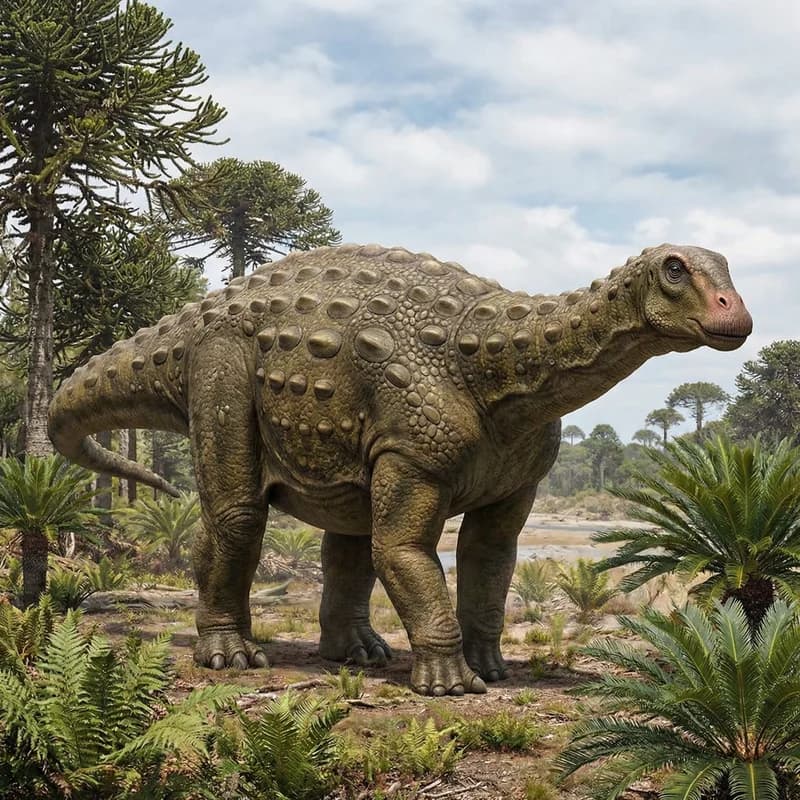
Saltasaurus
Saltasaurus loricatus

Regaliceratops
Regaliceratops peterhewsi

Maiasaura
Maiasaura peeblesorum

Leaellynasaura
Leaellynasaura amicagraphica

Corythosaurus
Corythosaurus casuarius
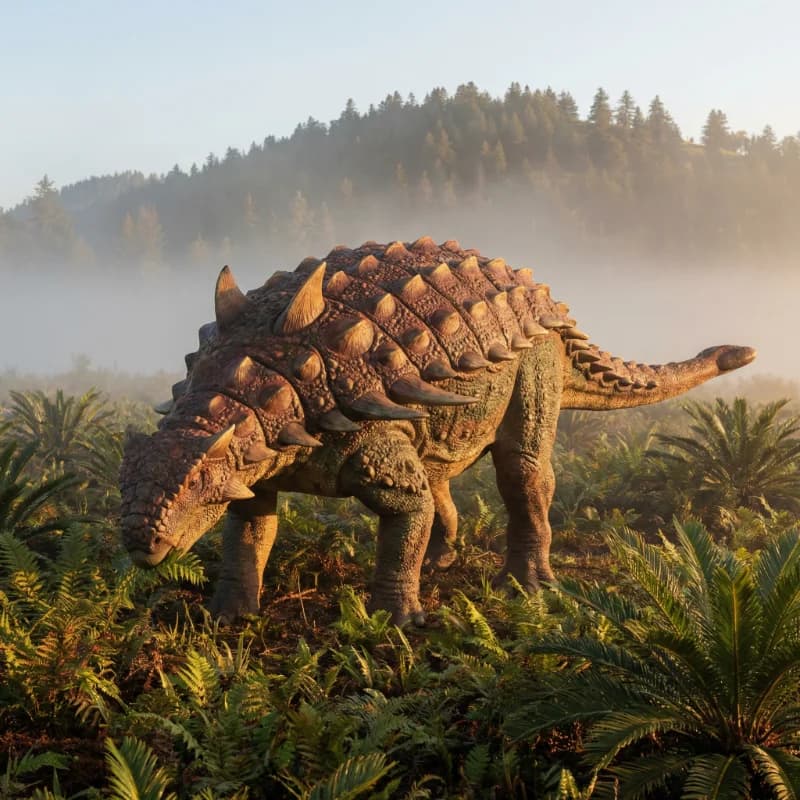
Peloroplites
Peloroplites cedrimontanus
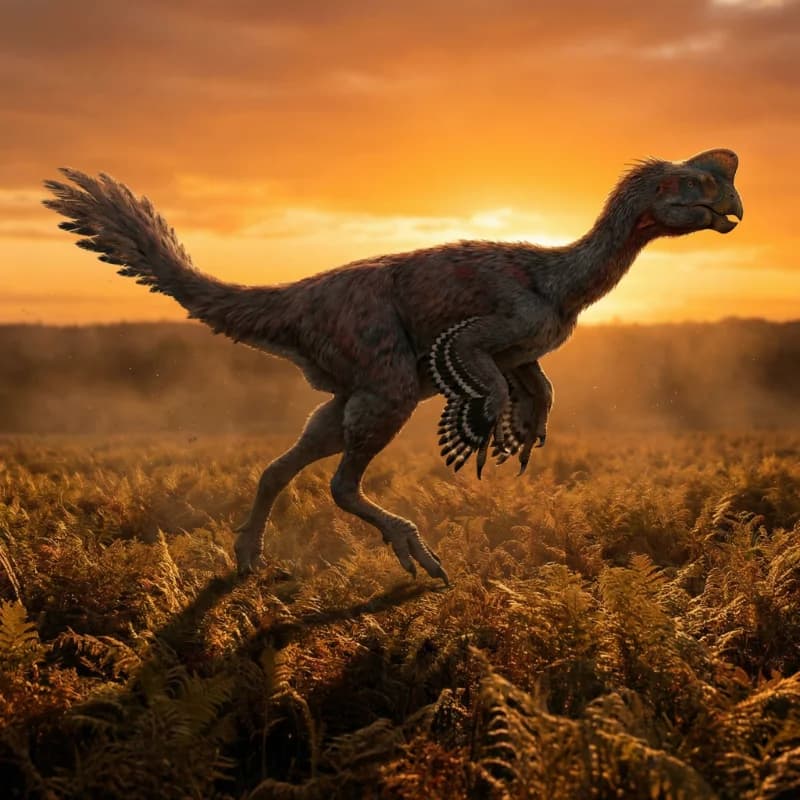
Yanbeilong
Yanbeilong ultimus
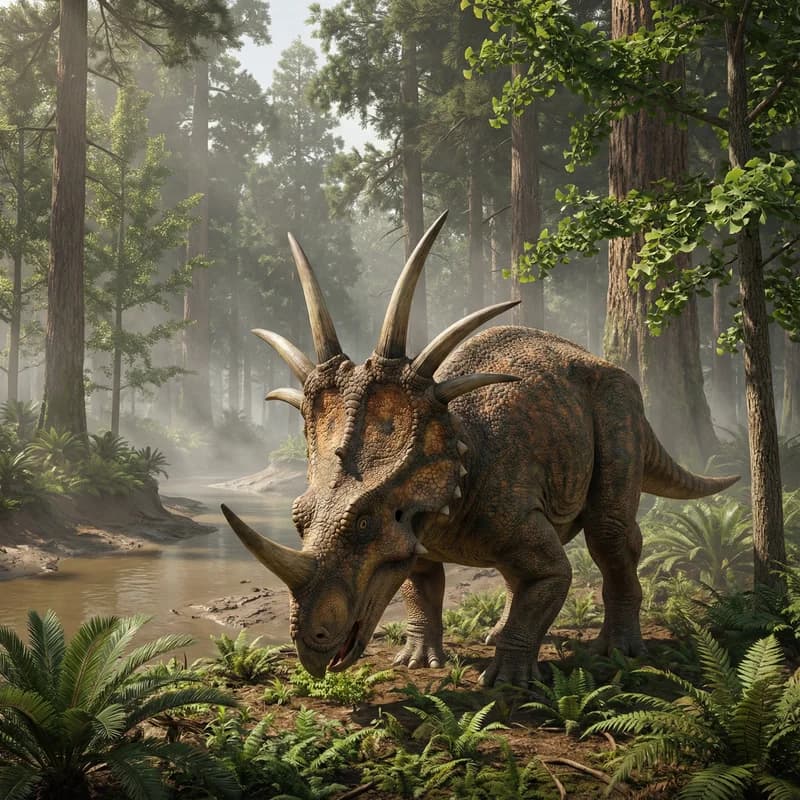
Styracosaurus
Styracosaurus albertensis