Peloroplites

Cretaceous Period Herbivore Creature Type

Peloroplites cedrimontanus

Scientific Name: "Greek peloros (monstrous, gigantic) + hoplites (heavily armed soldier) = 'monstrously heavily armed one'; the specific epithet cedrimontanus combines Latin cedrus (cedar) + mont- (mountain), referring to the Cedar Mountain Formation"

πŸ•Cretaceous Period
🌿Herbivore

Physical Characteristics

πŸ“
Size5~6m
βš–οΈ
Weight1000~2000kg
πŸ“
Height1.5m

Discovery

πŸ“…
Discovery Year2008Year
πŸ‘€
DiscovererKenneth Carpenter, Jeff Bartlett, John Bird & Reese Barrick
πŸ“
Discovery LocationEmery County, Utah, USA β€” PR-2 Quarry, Cedar Mountain Formation

Habitat

πŸ”οΈ
Geological FormationCedar Mountain Formation, Mussentuchit Member (basal portion)
🌍
EnvironmentWestern margin of the Western Interior Seaway; floodplain and distal delta system in a warm subtropical-to-temperate climate with conifer-dominated forests and dense fern/cycad understories (lithofacies: fine-grained carbonaceous mudstone, low-energy overbank deposits)
πŸͺ¨
LithologyFine-grained carbonaceous mudstone, smectitic mudstone, sandstone
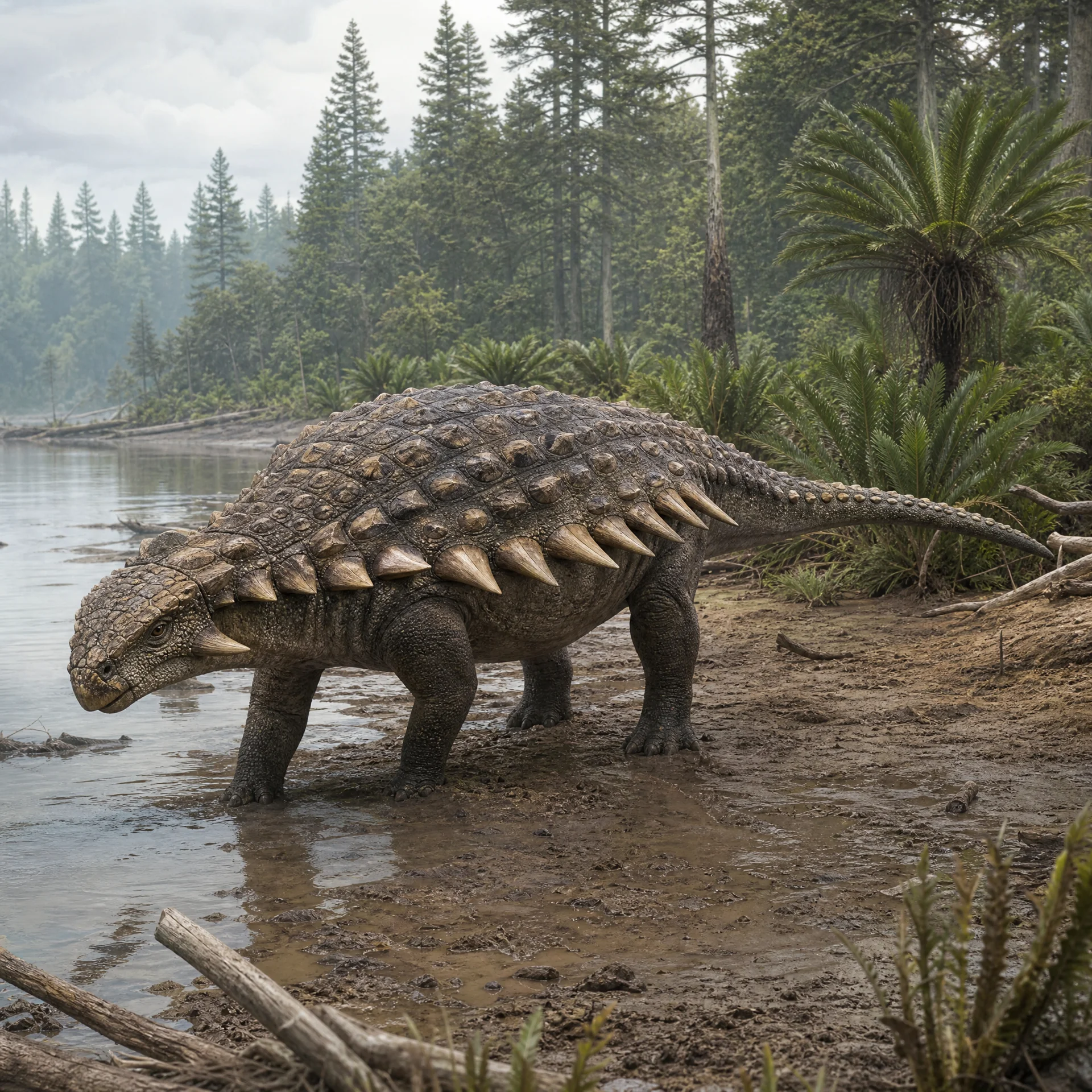
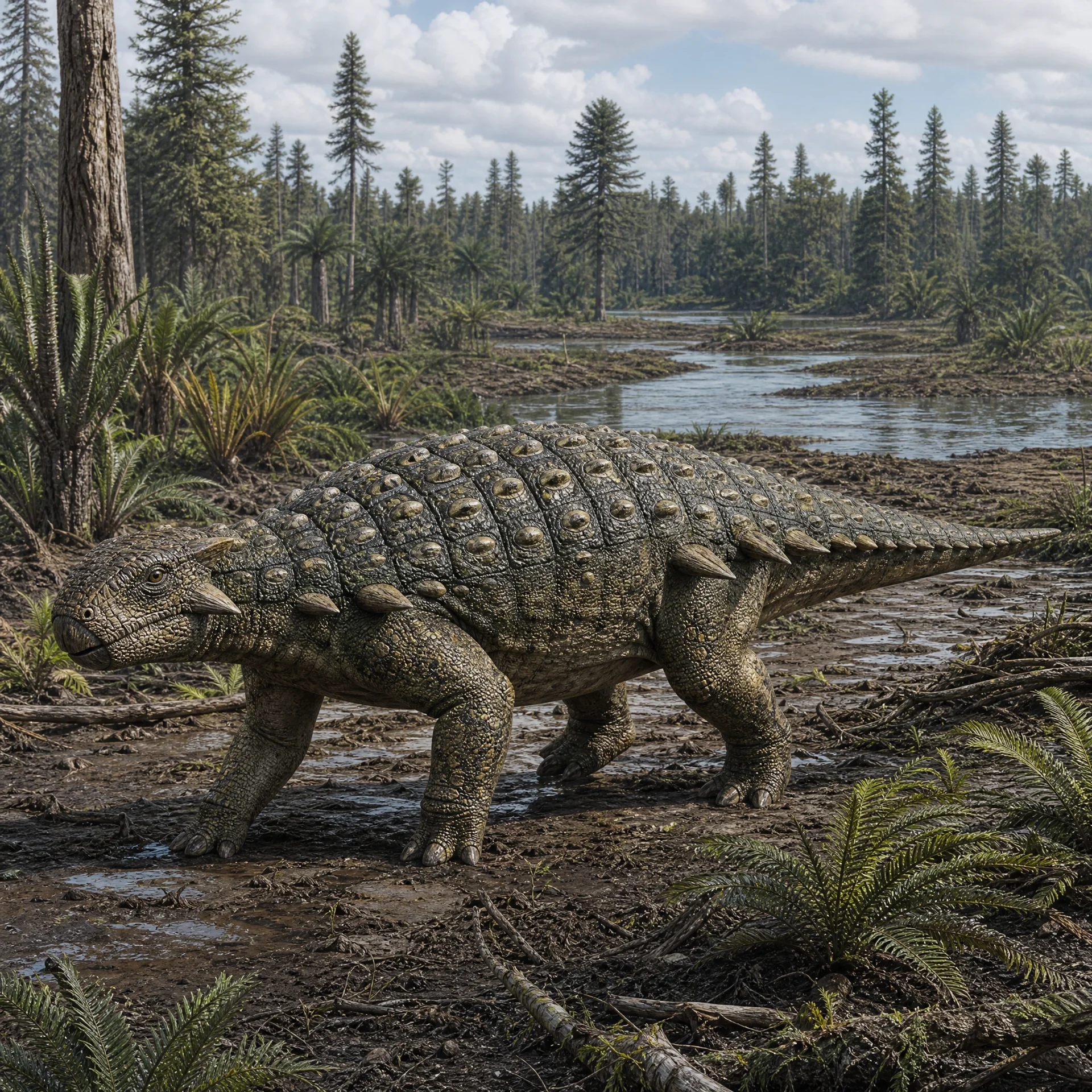
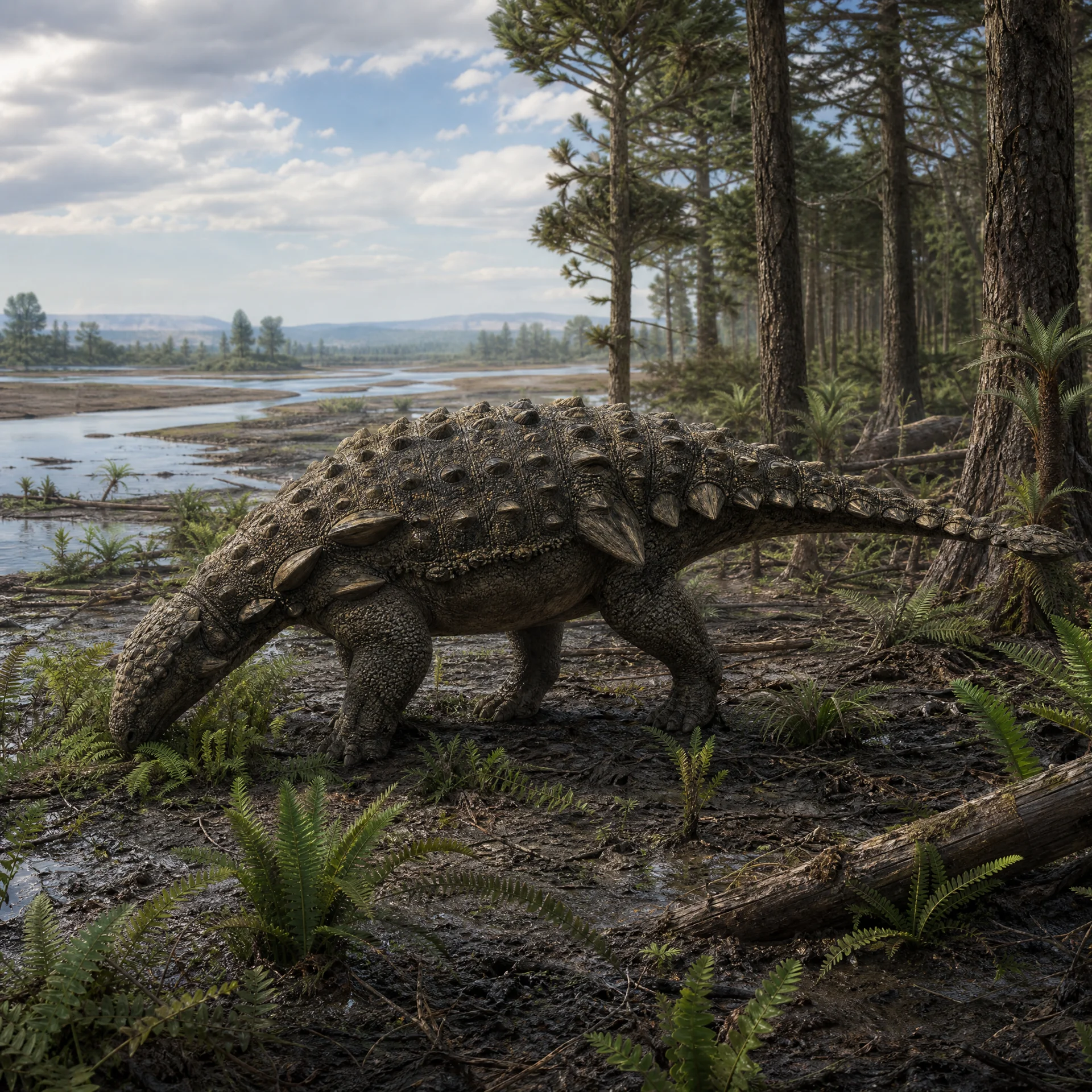
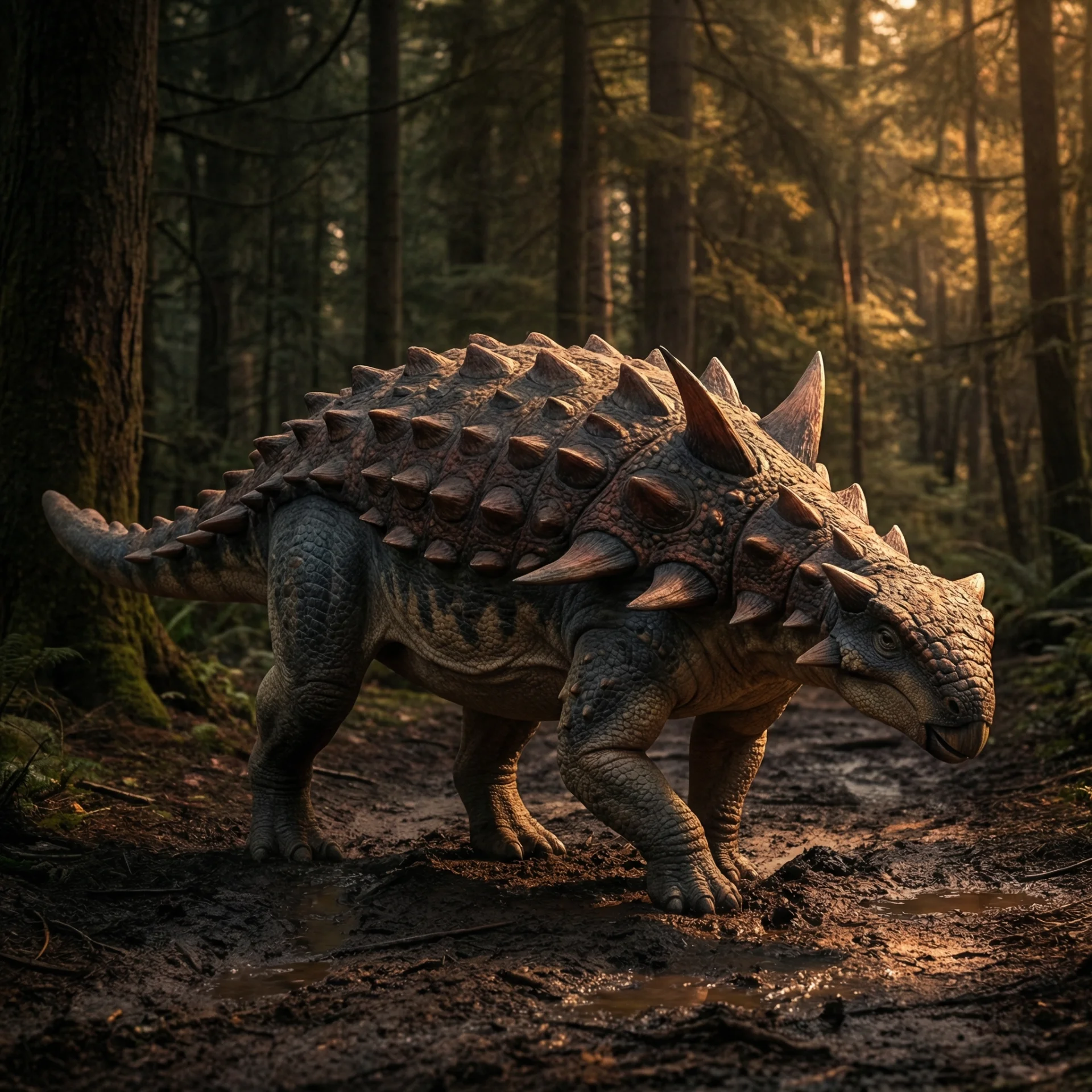
Peloroplites (Peloroplites cedrimontanus) restoration

Peloroplites (Peloroplites cedrimontanus Carpenter et al., 2008) is a large nodosaurid ankylosaur that lived during the early Late Cretaceous (Cenomanian to early Turonian, approximately 98.2–93 Ma) in what is now east-central Utah, North America. Its remains were recovered from the basal portion of the Mussentuchit Member, the uppermost unit of the Cedar Mountain Formation, and comprise a partial skull along with a substantial postcranial skeleton. Kenneth Carpenter and colleagues formally named and described this taxon in 2008, based on material excavated from the Price River 2 (PR-2) Quarry in Emery County, Utah.

With an estimated body length of approximately 5–6 m and a mass of roughly 1–2 tonnes, Peloroplites ranks among the larger known nodosaurids. Its existence coincides with a broader trend of increasing body size among both ankylosaurids and nodosaurids during the Cenomanian. Rather than bearing a tail club like its ankylosaurid relatives, Peloroplites relied on an extensive covering of dermal osteoderms and prominent neck and shoulder spines for defense β€” the hallmark strategy of nodosaurid ankylosaurs. The skull is distinguished from other nodosaurids such as Sauropelta and Edmontonia by a suite of autapomorphies, including the absence of premaxillary teeth, a forwardly and rearwardly sloping occiput, small and blunt squamosal horns, and a very short odontoid process.

Peloroplites gained some public recognition through its brief appearance as a dead individual in the film Jurassic World: Fallen Kingdom (2018), during the volcanic eruption sequence on Isla Nublar. Scientifically, it is an important taxon for understanding the diversity and paleobiogeography of mid-Cretaceous ankylosaurs in western North America (Laramidia).

Overview

Name and Etymology

The generic name Peloroplites is derived from the Greek words peloros (monstrous, gigantic) and hoplites (a heavily armed soldier), collectively meaning "monstrously heavily armed one." The specific epithet cedrimontanus combines the Latin cedrus (cedar) and mont- (mountain), in direct reference to the Cedar Mountain Formation from which the fossils were recovered (Carpenter et al., 2008).

Taxonomic Status

Peloroplites is currently a valid monospecific genus, with P. cedrimontanus as the type and only known species. In the original description (Carpenter et al., 2008), it was placed within Nodosauridae, though no formal phylogenetic analysis was conducted at that time. Subsequent cladistic analyses have recovered it in varying positions: as the sister taxon to Polacanthus within Polacanthinae (Thompson et al., 2012), closely related to Sauropelta and Taohelong within Nodosaurinae (Rivera-Sylva et al., 2018), and most recently reassigned to Polacanthidae by Raven et al. (2023). Its precise phylogenetic placement within Ankylosauria thus remains debated.

One-Line Summary

A large, heavily armored nodosaurid ankylosaur from the Cenomanian of Utah that occupies a basal position within Nodosauridae (or Polacanthidae) and is key to understanding North American ankylosaur diversity during the mid-Cretaceous.

Temporal Range, Stratigraphy, and Depositional Environment

Temporal Range

The fossils of Peloroplites were recovered from the basal portion of the Mussentuchit Member of the Cedar Mountain Formation. The original description (Carpenter et al., 2008) interpreted these strata as Aptian to Albian in age (~109–116 Ma). However, subsequent radioisotopic dating (Cifelli et al., 1997; Kirkland et al., 1999; Avrahami et al., 2018) has revised the age of the Mussentuchit Member to the Cenomanian–early Turonian (approximately 98.2 Β± 0.6 to 93 Ma). Notably, Kirkland et al. (1999) reported an Albian/Cenomanian boundary date of 98.39 Β± 0.07 Ma from the Mussentuchit Wash area. Carpenter et al. (2008) reinterpreted the PR-2 Quarry as belonging to the base of the Mussentuchit Member rather than the Ruby Ranch Member, based on the dark, carbonaceous nature of the enclosing mudstones.

Formation and Lithology

The Cedar Mountain Formation is a Cretaceous terrestrial unit distributed across east-central Utah, stratigraphically positioned above the Upper Jurassic Brushy Basin Member of the Morrison Formation and below the Upper Cretaceous Dakota Formation. The Mussentuchit Member, the formation's uppermost unit, consists predominantly of dark smectitic mudstones, sandstones, and minor conglomerates. At the PR-2 Quarry, the fossil-bearing lithology is a fine-grained carbonaceous mudstone indicative of a low-energy overbank depositional setting (Carpenter et al., 2008).

Paleoenvironment

The Mussentuchit Member has been interpreted as representing a complex mosaic of floodplain, distal delta, and lacustrine environments along the western margin of the Western Interior Seaway (Garrison et al., 2007; Avrahami et al., 2018). Palynological analyses indicate conifer pollen (e.g., Podocarpidites, Pityosporites spp.) comprising approximately 20% of assemblages, alongside fern spores (e.g., Cyathidites, Gleicheniidites spp.) at roughly 20%, and angiosperm pollen at about 10–15%. This evidence points to a warm subtropical-to-temperate climate supporting conifer-dominated forests with dense fern and cycad understories in a coastal plain setting. Intermittent volcanic ash deposits record episodic distal volcanic activity.

Specimens and Diagnostic Features

Holotype and Referred Material

The holotype, CEUM 26331, consists of a partial disarticulated skull comprising the braincase, left quadrate, partial dentary fragments, maxillary fragments, and isolated teeth. This specimen was collected from the PR-2 Quarry in Emery County, Utah, during the late 1990s and early 2000s by teams from the College of Eastern Utah Prehistoric Museum (now USU Eastern Prehistoric Museum) (Carpenter et al., 2008).

Additional paratype and referred specimens include:

Specimen NumberElements PreservedNotes
CEUM 11342Cervical vertebra with ribParatype
CEUM 11354Cervical vertebraParatype
CEUM 11682Dorsal vertebraParatype
CEUM 26283Caudal vertebrae and chevronParatype
CEUM 36714Scapula and armor fragmentsParatype
CEUM 11319Additional postcranial elementsReferred specimen

Collectively, these specimens encompass cervical, dorsal, and caudal vertebrae, synsacra, chevrons, scapula-coracoids, humeri, radii, ulnae, ilia, pubis, ischium, femora, tibiae, fibulae, metacarpals, metatarsals, phalanges, unguals, osteoderms, and miscellaneous bone fragments β€” totaling over 200 individual skeletal elements.

Diagnostic Features

Carpenter et al. (2008) diagnosed Peloroplites based on the following combination of characters:

  • Absence of premaxillary teeth
  • Occiput sloping both forwards and rearwards
  • Absence of a prominent posterior lateral temporal notch (unlike Sauropelta)
  • Small and blunt squamosal horns
  • Paroccipital process projecting laterally
  • Nearly vertical quadrate, neither anteriorly bowed nor ventrally sloped at the front
  • Very short odontoid process
  • Short axis centrum, approximately as tall as it is long (unlike Sauropelta)
  • Coracoid-to-scapula proportions similar to Animantarx and Edmontonia

Limitations of the Material

The skull is only partially preserved, which limits complete reconstruction of the frontoparietal armor fusion pattern and the nasal passage architecture. Many postcranial elements were found in a disarticulated state, introducing uncertainty in precise articular arrangements. The original placement of osteoderms on the body surface also cannot be determined with confidence, and a more complete understanding of the armor configuration awaits the discovery of additional, better-preserved specimens.

Morphology and Function

Body Size

Carpenter et al. (2008) originally estimated the body length of Peloroplites at approximately 5–5.5 m (16–18 feet) based on the preserved postcranial skeleton. Gregory S. Paul (2016) subsequently provided a higher estimate of approximately 6 m (20 feet) and a body mass of roughly 2 tonnes (4,410 lbs). Some popular databases cite even larger figures (e.g., ~6.9 m, ~2.5 t), but these are not formally supported by peer-reviewed literature. The academically supported size range is therefore approximately 5–6 m in length and 1–2 tonnes in mass, placing Peloroplites among the larger members of Nodosauridae.

Cranial Anatomy

The skull has an estimated length of approximately 56 cm, with a maximum width of 35.5 cm between the dorsal orbital rims β€” comparable to that of Sauropelta. The snout tapers anteriorly and terminates in a relatively broad premaxillary beak, wider than in Silvisaurus. The premaxillae are fused along the midline and are dorsoventrally thick, in contrast to the thin premaxillae of Gastonia. The dorsal surface of the beak is rugose, accommodating a keratinous covering, and bears a broad inverted U-shaped notch.

The orbits are widely separated from the lateral temporal fenestrae by a broad bony bridge, a condition shared with Edmontonia and Pawpawsaurus. The postorbital horncores are very low conical structures projecting dorsolaterally, far less prominent than those of Pawpawsaurus, Sauropelta, or Gastonia. A maxillary tooth resembles some teeth referred to Priconodon and bears an extensive wear facet extending across the entire face of the crown, suggesting powerful occlusal forces. The combination of a large adductor fossa and large teeth suggests a strong bite force correlated with a diet of tough forage (Carpenter et al., 2008).

Postcranial Skeleton

The axis is nearly complete but lacks the neural spine and postzygapophyses. Its centrum is almost as tall as it is long, in marked contrast to Sauropelta. The articular face of the anterior cervical vertebra is circular, distinguishing it from the heart-shaped (Sauropelta), hexagonal (Cedarpelta), and horizontally ellipsoid (Edmontonia) morphologies of other nodosaurids.

The synsacrum comprises six co-ossified vertebrae (three true sacrals, one dorsal, and two caudals), as in Silvisaurus. Both femora are complete and relatively straight-shafted. The cnemial crest of the tibia is short and rounded, and the astragalus is not fused to the distal end of the tibia.

The right scapula-coracoid is nearly complete, with the acromion process showing pathological damage possibly due to avulsion of the deltoideus clavicularis muscle. The manus preserves a complete set of five metacarpals; Senter (2011) proposed that the metacarpal configuration in Peloroplites and other ankylosaurs was arranged in a vertical semi-tubular structure similar to that of sauropods. The distal unguals are disc-shaped, wider than long, and rounded.

Armor and Defense

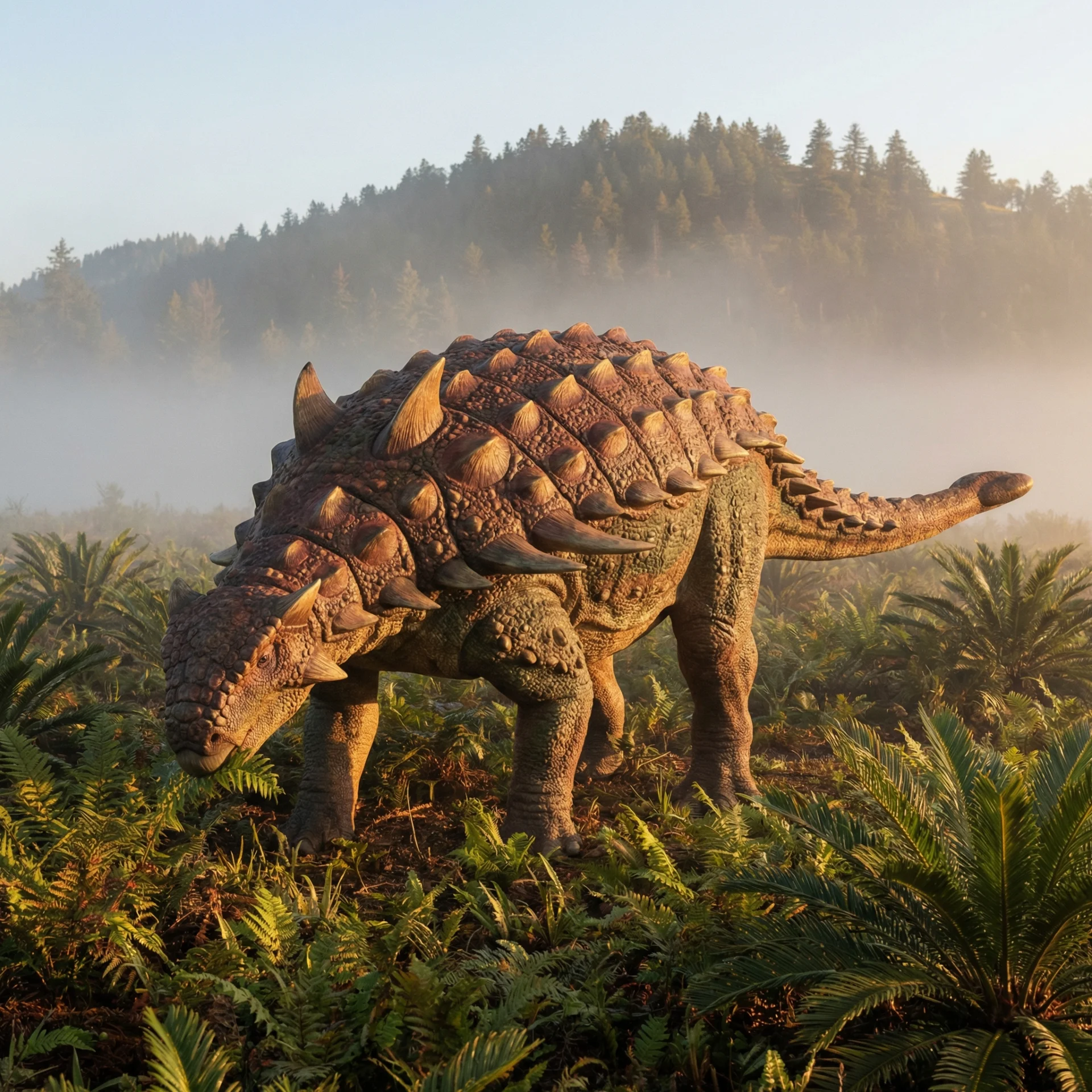
Peloroplites employed the typical nodosaurid defense strategy, relying on extensive body armor rather than a tail club. The osteoderms include keel-shaped plates along the flanks and polygonal scutes on the dorsal surface, arranged in irregular rows across the body and tail base. Large spines projected from the neck and shoulder region, functioning to deter predator approach from the sides and front. Carpenter et al. (2008) originally described the cervical spines and caudal plates as belonging to a single row on each side of the body.
Diet and Ecology

Feeding Strategy

Peloroplites was an obligate herbivore equipped with leaf-shaped teeth bearing thick enamel and a robust jaw apparatus. The extensive wear facets on maxillary teeth and the large adductor fossa indicate adaptation for processing tough, fibrous vegetation. While no direct gut content evidence exists for Peloroplites, the stomach contents of the closely related nodosaurid Borealopelta markmitchelli (Brown et al., 2020) β€” which consisted of approximately 88% fern leaves with minor proportions of cycad and conifer foliage β€” suggest that Peloroplites likely fed as a low browser on similar ground-level vegetation. The broad premaxillary beak was well suited for cropping plants close to the ground surface.

Contemporary Fauna

The Mussentuchit Member fauna associated with Peloroplites is remarkably diverse, including:

  • Ankylosaurs: Animantarx, Cedarpelta
  • Ornithischians: the basal hadrosauromorph Eolambia, the thescelosaurid cf. Zephyrosaurus, an indeterminate neoceratopsian, and an indeterminate pachycephalosaurid
  • Sauropods: the brachiosaurid Abydosaurus
  • Theropods: the tyrannosauroid Moros, the carcharodontosaurian Siats, Richardoestesia, an indeterminate velociraptorine, and an indeterminate dromaeosaurine
  • Non-dinosaurian taxa: the crocodylomorphs Dakotasuchus and cf. Bernissartia; turtles Glyptops and Naomichelys; lizards including Bicuspidon, Primaderma, and Dicothodon; the snake Coniophis; the amphibian Albanerpeton; mammals including Kokopellia and Paracimexomys; the lungfish Ceratodus; and hybodont sharks Hybodus, Lissodus, and Polyacrodus

This rich assemblage indicates that Peloroplites occupied the niche of a large-bodied herbivore within a complex food web. The contemporary large theropod Siats (a carcharodontosaurian estimated at over 9 m in length) was a potential predator, underscoring the functional importance of Peloroplites' armor and spines.

Locomotion

As a quadrupedal ankylosaur, Peloroplites possessed short, robust limbs optimized for stable, low-speed locomotion rather than agility. The forelimbs and hindlimbs were of relatively similar length (humerus estimated at ~50 cm; femur ~69–79 cm), indicating balanced weight distribution. This morphology is consistent with a wide-gauge, short-stride gait observed in ankylosaur trackways, reflecting a lumbering mode of progression across its floodplain habitat.

Distribution and Paleogeography

Occurrence

All confirmed specimens of Peloroplites originate from the PR-2 Quarry in the Cedar Mountain Formation (Mussentuchit Member, basal portion), Emery County, Utah. The quarry is located near Castle Dale at the northern end of the San Rafael Swell. Carpenter et al. (2008) noted that some large nodosaurid material from the Ruby Ranch Member previously questionably referred to Sauropelta may actually belong to Peloroplites, which would extend its stratigraphic range downward if confirmed, but this assignment remains unresolved.

Paleogeographic Context

According to Paleobiology Database (PBDB) reconstructions, the Peloroplites locality corresponds to a paleolatitude of approximately 46.3Β°N and a paleolongitude of approximately βˆ’55.6Β° during the Cenomanian. This places it in the mid-latitudes of the Laramidian landmass, along the western coastal plain of the Western Interior Seaway. During the Cenomanian, Laramidia experienced a warm subtropical-to-temperate climate, and the Western Interior Seaway divided the North American continent into eastern and western landmasses, driving geographic isolation and endemism among terrestrial faunas.

Phylogeny and Taxonomic Debate

Original Placement

Carpenter et al. (2008) assigned Peloroplites to Nodosauridae based on morphological features including the absence of a tail club, simple leaf-shaped dentition, and extensive osteoderm armor. No formal cladistic analysis was performed in the original description.

Key Phylogenetic Analyses

Thompson et al. (2012), in an analysis incorporating approximately 170 characters across more than 50 ankylosaur taxa (parsimony-based, TNT), recovered Peloroplites within the Polacanthinae subclade of Nodosauridae as the sister taxon to Polacanthus. Chen et al. (2013) recovered a similar topology.

Yang et al. (2013) found Peloroplites as sister to both Taohelong and Polacanthus, while Zheng et al. (2018) recovered it as sister to Taohelong and a larger clade containing Nodosaurus, Edmontonia, Struthiosaurus, and Europelta.

Rivera-Sylva et al. (2018), as modified by Madzia et al. (2021), placed Peloroplites at the base of Nodosaurinae, closely related to Taohelong and Sauropelta.

Recent Reassignment: Polacanthidae

Raven et al. (2023), in a comprehensive thyreophoran phylogenetic analysis, proposed that the traditional Nodosauridae is polyphyletic and reassigned Peloroplites to Polacanthidae. Polacanthidae was defined as all ankylosaurs more closely related to Gastonia burgei than to Ankylosaurus, Panoplosaurus, or Struthiosaurus austriacus, and was recovered as the earliest-diverging ankylosaur lineage. However, high missing-data rates (often exceeding 50%) in fragmentary taxa like Peloroplites generate polytomies at basal nodes, limiting the resolution of fine-scale relationships.

Summary of Phylogenetic Positions

AnalysisPlacementSister Group / Close Relatives
Carpenter et al. (2008)Nodosauridae (no analysis)β€”
Thompson et al. (2012)Polacanthinae (within Nodosauridae)Polacanthus
Yang et al. (2013)PolacanthinaeTaohelong + Polacanthus
Rivera-Sylva et al. (2018)NodosaurinaeTaohelong, Sauropelta
Raven et al. (2023)PolacanthidaeBasal position

Reconstruction and Uncertainty

Confirmed

All analyses consistently support that Peloroplites belongs to Ankylosauria and represents a nodosaurid or closely related basal ankylosaur. Its provenance from the Mussentuchit Member of the Cedar Mountain Formation, its large body size (5–6 m), the edentulous premaxilla, broad premaxillary beak, and extensive osteoderm armor are firmly established facts.

Well-Supported Estimates

The body length range of approximately 5–6 m and mass of 1–2 tonnes, based on Carpenter et al. (2008) and Paul (2016), are considered well-supported estimates. A herbivorous diet focused on low-growing vegetation (ferns, cycads) is strongly supported by morphological evidence (tooth shape, beak structure) and analogy with related taxa, although direct gut content evidence is lacking.

Hypothetical and Unresolved

The possible attribution of large nodosaurid material from the Ruby Ranch Member (previously referred to Sauropelta) to Peloroplites was raised by Carpenter et al. (2008) but remains unconfirmed. If validated, this would extend the stratigraphic range of the genus below the Mussentuchit Member. The precise phylogenetic position (Nodosauridae vs. Polacanthidae) varies among analyses and is currently unresolved. The exact arrangement of osteoderms on the body surface, color patterning, and behavioral ecology remain unknown.

Popular Media vs. Science

In Jurassic World: Fallen Kingdom (2018), Peloroplites appears only briefly as a dead individual, and the artistic reconstruction used in the film may diverge from the scientific evidence. Some popular sources cite a body mass of 4 tonnes, a figure not supported by peer-reviewed literature.

Comparison with Related and Contemporary Taxa

The following table compares ankylosaurs from the Cedar Mountain Formation and contemporaneous units:

GenusFamilyFormation/MemberAge (Ma)Est. Length (m)Est. Mass (t)
PeloroplitesNodosauridae/PolacanthidaeMussentuchit Mbr., Cedar Mountain Fm.~98–935–61–2
AnimantarxNodosauridaeMussentuchit Mbr., Cedar Mountain Fm.~98–93~3~0.3
CedarpeltaAnkylosauridae (basal)Ruby Ranch/Mussentuchit, Cedar Mountain Fm.~116–98~6~1.5 (est.)
SauropeltaNodosauridaeCloverly Fm. (Wyoming) / Cedar Mountain Fm.~115–1005–61.5–2
GastoniaPolacanthidae/NodosauridaeYellow Cat Mbr., Cedar Mountain Fm.~126–121~5~1

Peloroplites was considerably larger than the contemporary Animantarx and most similar in overall proportions to Sauropelta, from which it is clearly distinguished by detailed skull and axial morphology.

Fun Facts

πŸ’‘
The genus name Peloroplites translates to 'monstrously heavily armed soldier' in Greek, reflecting both its large body size and extensive armor plating.
πŸ’‘
At an estimated 5–6 m in length and 1–2 tonnes in mass, Peloroplites was one of the largest known nodosaurid ankylosaurs of its time.
πŸ’‘
Instead of a tail club, Peloroplites defended itself with large spines projecting from its neck and shoulders, deterring predators from flanking attacks.
πŸ’‘
A 2011 study by Senter found that the metacarpal arrangement in Peloroplites and other ankylosaurs formed a vertical semi-tubular structure similar to that of giant sauropod dinosaurs.
πŸ’‘
The holotype skull (CEUM 26331) is estimated at approximately 56 cm in length and 35.5 cm in maximum width across the orbital rims.
πŸ’‘
The PR-2 Quarry that yielded Peloroplites also produced fossils of the basal ankylosaur Cedarpelta, an unidentified brachiosaurid sauropod, an iguanodontid, a turtle, and a pterosaur.
πŸ’‘
The scapula of Peloroplites shows pathological damage to the acromion process, likely caused by avulsion of the deltoideus clavicularis muscle β€” evidence of injury or heavy muscle use during life.
πŸ’‘
Peloroplites gained public recognition through its brief appearance as a dead individual in the 2018 film Jurassic World: Fallen Kingdom.
πŸ’‘
The extensive wear facets on its maxillary teeth span the entire crown face, indicating powerful jaw forces adapted for grinding tough, fibrous vegetation.
πŸ’‘
The contemporary apex predator Siats, a carcharodontosaurian theropod estimated at over 9 m in length, was a potential threat that may have driven the evolution of Peloroplites' heavy armor.
πŸ’‘
Peloroplites has been placed in Nodosauridae, Polacanthinae, Nodosaurinae, and Polacanthidae by different studies β€” a testament to the complexity and ongoing debate in ankylosaur phylogenetics.

FAQ

?What type of dinosaur was Peloroplites?
Peloroplites was a nodosaurid ankylosaur β€” a heavily armored herbivorous dinosaur belonging to the family Nodosauridae (or possibly Polacanthidae, depending on the phylogenetic analysis). Unlike ankylosaurids, it lacked a tail club and instead relied on extensive body armor and prominent neck and shoulder spines for defense.
?How large was Peloroplites?
Carpenter et al. (2008) originally estimated its body length at approximately 5–5.5 m, while Paul (2016) provided a higher estimate of about 6 m and a mass of roughly 2 tonnes. The academically supported range is approximately 5–6 m in length and 1–2 tonnes in mass, making it one of the larger known nodosaurids.
?When and where was Peloroplites discovered?
Its fossils were excavated from the PR-2 (Price River 2) Quarry in Emery County, east-central Utah, from the basal Mussentuchit Member of the Cedar Mountain Formation. The material was collected in the late 1990s and early 2000s and was formally named and described by Kenneth Carpenter and colleagues in 2008.
?What distinguishes Peloroplites from other ankylosaurs?
Key diagnostic features include the absence of premaxillary teeth, a forwardly and rearwardly sloping occiput, small blunt squamosal horns, a very short odontoid process, an axis centrum approximately as tall as it is long, and laterally projecting paroccipital processes. These features distinguish it from Sauropelta, Edmontonia, and other nodosaurids (Carpenter et al., 2008).
?Is there debate about the phylogenetic position of Peloroplites?
Yes, considerable debate exists. The original description (2008) placed it in Nodosauridae without formal analysis. Thompson et al. (2012) recovered it as the sister taxon to Polacanthus within Polacanthinae; Rivera-Sylva et al. (2018) allied it with Sauropelta and Taohelong; and Raven et al. (2023) reassigned it to Polacanthidae, suggesting traditional Nodosauridae is polyphyletic. Incomplete preservation contributes to this instability.
?What did Peloroplites eat?
It was an obligate herbivore that likely fed on low-growing vegetation such as ferns, cycads, and horsetails. Its leaf-shaped teeth, broad premaxillary beak, and large adductor fossa are adapted for cropping and processing tough, fibrous plants. Direct gut content evidence is lacking, but the closely related Borealopelta had stomach contents dominated (~88%) by fern leaves.
?What does the name Peloroplites mean?
The genus name combines the Greek words peloros (monstrous, gigantic) and hoplites (heavily armed soldier), meaning 'monstrously heavily armed one.' The species name cedrimontanus refers to the Cedar Mountain Formation, from Latin cedrus (cedar) and mont- (mountain).
?Did Peloroplites appear in any films?
Yes, Peloroplites briefly appeared as a dead individual in Jurassic World: Fallen Kingdom (2018) during the volcanic eruption scene on Isla Nublar. However, the film's artistic reconstruction may differ from the scientific evidence, and some popular sources incorrectly cite its mass at 4 tonnes β€” a figure unsupported by peer-reviewed literature.
?What was the armor of Peloroplites like?
Its armor consisted of extensive osteoderms including keel-shaped plates along the flanks and polygonal scutes on the dorsal surface, arranged in irregular rows. Large spines projected from the neck and shoulder region, deterring predator approach from the sides and front. Unlike ankylosaurids, it did not possess a tail club.

πŸ“šReferences

  • Carpenter, K., Bartlett, J., Bird, J., & Barrick, R. (2008). Ankylosaurs from the Price River Quarries, Cedar Mountain Formation (Lower Cretaceous), east-central Utah. Journal of Vertebrate Paleontology, 28(4), 1089–1101. doi:10.1671/0272-4634-28.4.1089
  • Paul, G.S. (2016). The Princeton Field Guide to Dinosaurs, 2nd Edition. Princeton University Press.
  • Thompson, R.S., Parish, J.C., Maidment, S.C.R., & Barrett, P.M. (2012). Phylogeny of the ankylosaurian dinosaurs (Ornithischia: Thyreophora). Journal of Systematic Palaeontology, 10(2), 301–312. doi:10.1080/14772019.2011.569091
  • Rivera-Sylva, H.E., Frey, E., Stinnesbeck, W., Carbot-Chanona, G., Sanchez-Uribe, I.E., & GuzmΓ‘n-GutiΓ©rrez, J.R. (2018). Paleodiversity of Late Cretaceous Ankylosauria from Mexico and their phylogenetic significance. Swiss Journal of Palaeontology, 137(1), 83–93. doi:10.1007/s13358-018-0153-1
  • Raven, T.J., Barrett, P.M., & Joyce, C.B. (2023). The phylogenetic relationships and evolutionary history of the armoured dinosaurs (Ornithischia: Thyreophora). Journal of Systematic Palaeontology, 21(1), 2205433. doi:10.1080/14772019.2023.2205433
  • Madzia, D., Arbour, V.M., Boyd, C.A., Farke, A.A., Cruzado-Caballero, P., & Evans, D.C. (2021). The phylogenetic nomenclature of ornithischian dinosaurs. PeerJ, 9, e12362. doi:10.7717/peerj.12362
  • Avrahami, H.M., Gates, T.A., Heckert, A.B., Makovicky, P.J., & Zanno, L.E. (2018). A new microvertebrate assemblage from the Mussentuchit Member, Cedar Mountain Formation: insights into the paleobiodiversity and paleobiogeography of early Late Cretaceous ecosystems in western North America. PeerJ, 6, e5883. doi:10.7717/peerj.5883
  • Senter, P. (2011). Evidence for a sauropod-like metacarpal configuration in ankylosaurian dinosaurs. Acta Palaeontologica Polonica, 56(1), 221–224. doi:10.4202/app.2010.0041
  • Carpenter, K., Kirkland, J.I., Burge, D.L., & Bird, J. (1999). Ankylosaurs (Dinosauria: Ornithischia) of the Cedar Mountain Formation, Utah, and their stratigraphic distribution. In: Gillette, D. (Ed.) Vertebrate Paleontology in Utah. Utah Geological Survey Miscellaneous Publication 99-1, pp. 243–251.
  • Kirkland, J.I., Cifelli, R.L., Britt, B.B., Burge, D.L., DeCourten, F.L., Eaton, J.G., & Parrish, J.M. (1999). Distribution of vertebrate faunas in the Cedar Mountain Formation, east-central Utah. In: Gillette, D. (Ed.) Vertebrate Paleontology in Utah. Utah Geological Survey Miscellaneous Publication 99-1, pp. 201–217.
  • Garrison, J.R. Jr., Brinkman, D., Nichols, D.J., Layer, P., Burge, D., & Thayn, D. (2007). A multidisciplinary study of the Lower Cretaceous Cedar Mountain Formation, Mussentuchit Wash, Utah: a determination of the paleoenvironment and paleoecology of the Eolambia caroljonesa dinosaur quarry. Cretaceous Research, 28(3), 461–494. doi:10.1016/j.cretres.2006.07.007
  • Kirkland, J.I. et al. (2013). The basal nodosaurid ankylosaur Europelta carbonensis n. gen., n. sp. from the Lower Cretaceous (Lower Albian) Escucha Formation of northeastern Spain. PLoS ONE, 8(12), e80405. doi:10.1371/journal.pone.0080405
  • Chen, R., Zheng, W., Azuma, Y., Shibata, M., Lou, T., Jin, Q., & Jin, X. (2013). A new nodosaurid ankylosaur from the Chaochuan Formation of Dongyang, Zhejiang Province, China. Acta Geologica Sinica (English Edition), 87(3), 658–671. doi:10.1111/1755-6724.12077
  • Cifelli, R.L., Nydam, R.L., Gardner, J.D., Weil, A., Eaton, J.G., Kirkland, J.I., & Madsen, S.K. (1999). Medial Cretaceous vertebrates from the Cedar Mountain Formation, Emery County, Utah: the Mussentuchit local fauna. In: Gillette, D. (Ed.) Vertebrate Paleontology in Utah. Utah Geological Survey Miscellaneous Publication 99-1, pp. 219–242.
  • Brown, C.M., Henderson, D.M., Vinther, J., Fletcher, I., Sistiaga, A., Herrera, J., & Summons, R.E. (2020). An exceptionally preserved three-dimensional armored dinosaur reveals insights into coloration and Cretaceous predator-prey dynamics. Current Biology, 27(16), 2514–2521.e3. doi:10.1016/j.cub.2017.06.071

Gallery

2 images
  • Peloroplites (Peloroplites cedrimontanus) 1
    Peloroplites

    Peloroplites Β· Cretaceous Period Β· Herbivore

  • Peloroplites (Peloroplites cedrimontanus) 2
    Peloroplites

    Peloroplites Β· Cretaceous Period Β· Herbivore

πŸ”—Related Creatures