Gastonia
Cretaceous Period Herbivore Creature Type
Gastonia burgei
Scientific Name: "Genus name Gastonia honors Robert Gaston, the paleo-artist and CEO of Gaston Design Inc. who discovered the first fossils in 1989; species name burgei honors Donald L. Burge, then director of the College of Eastern Utah Prehistoric Museum (now USU Eastern Prehistoric Museum)"
Local Name: Gastonia
Physical Characteristics
Discovery
Habitat

Gastonia (Kirkland, 1998) is a medium-sized ankylosaurian dinosaur from the Early Cretaceous (approximately 139–125.77 Ma) of North America. It is generally classified within the Nodosauridae, subfamily Polacanthinae, and is considered closely related to the contemporaneous European genus Polacanthus. The holotype specimen of the type species G. burgei (CEUM 1307) was discovered in a bonebed within interbedded limestone and siltstone strata of the Yellow Cat Member of the Cedar Mountain Formation at Gaston Quarry, Grand County, eastern Utah, and consists of a single adult skull (Kirkland, 1998). A second species, G. lorriemcwhinneyae Kinneer et al., 2016, is known from the Poison Strip Member of the same formation.
Gastonia is among the most abundant ankylosaurians in the Early Cretaceous of North America, with numerous specimens recovered from multiple quarries including Gaston Quarry, Dalton Wells, and Lorrie's Site. More complete material exists for Gastonia than for any other basal ankylosaur (Benton, 2012). Size estimates vary by study: Kirkland (1998) estimated the total length at approximately 6 m, while Paul (2010) estimated approximately 5 m with a body mass of about 1.9 tonnes. A mounted skeleton composite at the Denver Museum of Nature and Science measures 4.59 m in length with a hip height of 1.12 m (Gaston et al., 2001). Gastonia is characterized by large, flat triangular spikes along its flanks and a fused pelvic shield (sacral shield), but notably lacks the tail club found in derived ankylosaurids such as Ankylosaurus. Together with Gargoyleosaurus, it was the first basal ankylosaurian to be mounted for museum display (Gaston et al., 2001).
Overview
Name and Etymology
The genus name Gastonia honors Robert Gaston, an American paleo-artist and CEO of Gaston Design Inc. who discovered the first fossils in 1989 at a hillside north of Arches National Park in eastern Utah (Kirkland, 1998). The name appeared informally in various publications and popular media throughout the mid-1990s — including Robert Bakker's novel Raptor Red (1996) and the TV series Paleoworld — but was not formally described until 1998. The name Gastonia burgei first appeared in a professional scientific paper by Carpenter & Kirkland (1998) in a review of North American ankylosaurs, with the formal description published by Kirkland (1998) in the same journal issue. The species name burgei honors Donald L. Burge, then director of the College of Eastern Utah Prehistoric Museum (now USU Eastern Prehistoric Museum).
Taxonomic Status
Gastonia belongs to Ornithischia, Thyreophora, Ankylosauria. In his original description, Kirkland (1998) placed Gastonia within the Ankylosauridae, specifically the subfamily Polacanthinae. Polacanthines were subsequently often reinterpreted as belonging to the Nodosauridae. However, Arbour (2014) recovered Gastonia as a non-polacanthine basal member of the Ankylosauridae in her comprehensive phylogenetic analysis. Rivera-Sylva et al. (2018) and Madzia et al. (2021) placed it at the base of Nodosauridae.
Two species are currently recognized. The type species G. burgei Kirkland, 1998 is from the Yellow Cat Member (Valanginian, approximately 139–134.6 Ma). G. lorriemcwhinneyae Kinneer et al., 2016 is from the Poison Strip Member (Hauterivian–Barremian) and differs from G. burgei in having a flat skull roof, shorter and proportionally less distally expanded paroccipital processes, a postacetabular process that is only 36% the length of the preacetabular process (compared to 56% in G. burgei), and an ischium with a smoothly curved ventromedial edge without a kink at its midpoint (Kinneer et al., 2016).
One-Line Summary
Gastonia is a polacanthine ankylosaur characterized by large triangular flank spikes and a fused pelvic shield, and represents one of the most iconic armored dinosaurs of the Early Cretaceous of North America.
Age, Stratigraphy, and Depositional Environment
Age Range
Gastonia spans the Early Cretaceous, approximately 139–125.77 Ma. The type locality of G. burgei in the Yellow Cat Member was originally assigned a Barremian age (~126 Ma), but recent geochronological and carbon-isotope stratigraphic work by Joeckel et al. (2023) has revised this to Berriasian–Valanginian (approximately 139–134.6 Ma). Their study obtained a high-precision CA-ID-TIMS U-Pb eruption age of 135.10 ± 0.30 Ma from zircons extracted from a paleosol cryptotephra at the Utahraptor Ridge section. Carbon-isotope features on the chemostratigraphic profile are tentatively interpreted as the Valanginian double-peak carbon isotope excursion (the "Weissert Event") and some unnamed Berriasian features, supporting the interpretation that the Yellow Cat Member records a significant portion of earliest Cretaceous time. G. lorriemcwhinneyae is from the overlying Poison Strip Member, assigned to the Hauterivian–Barremian (Kirkland et al., 2025).
Formation and Lithology
Gastonia fossils are found exclusively in the Cedar Mountain Formation, a non-marine sedimentary unit in eastern Utah that lies above the Morrison Formation and below the Naturita Formation. The formation records fluvial, lacustrine, and floodplain depositional settings.
The holotype of G. burgei (CEUM 1307) was recovered from a bonebed within interbedded limestone and siltstone in the upper Yellow Cat Member at Gaston Quarry (Kirkland, 1998). The Yellow Cat Member is dominated by light greenish-gray to red alluvial mudstones with prominently developed paleosols, with palustrine to lacustrine carbonate nodules ("calcretes") and subordinate fluvial sandstones (Joeckel et al., 2017; 2023). Additional G. burgei specimens were recovered from Dalton Wells, approximately 20 km northwest of Moab, where a debris-flow-hosted bonebed yielded thousands of fossil specimens (Eberth et al., 2006; Britt et al., 2009). G. lorriemcwhinneyae was initially reported from the lower Ruby Ranch Member (Kinneer et al., 2016) but later corrected to the Poison Strip Member (Kirkland et al., 2025).
Depositional Environment and Paleoclimate
The Yellow Cat Member records alluvial mudstone-dominated deposition with stacked paleosols. Joeckel et al. (2017; 2023) documented Vertisol-like paleosol features including prominent slickensides reflecting shrink-swell behavior of expansive clays during seasonal wet-dry cycles, carbonate-filled cracks, and evidence of vertical translocation of soil materials through pedoturbation. These features indicate a semi-arid climate with pronounced seasonal wet-dry alternation.
According to Paul (2010), Gastonia inhabited a partly wooded environment with riverine forests separated by open areas under a rather dry climate with short wet seasons. The Cedar Mountain Formation as a whole records a general trend from arid to semi-arid conditions in the lower members toward progressively more humid conditions upsection.
Specimens and Diagnostic Characters
Holotype and Key Specimens
The holotype of G. burgei (CEUM 1307, housed at USU Eastern Prehistoric Museum, Price, Utah) is a single adult skull. It was the largest of five braincases found at Gaston Quarry, with fused bones indicating adult status; the remaining individuals were determined to be sub-adults (Kirkland, 1998). Four partial skeletons were designated as paratypes, recovered from the same bonebed alongside the type specimen of Utahraptor and iguanodontid remains. A total of 4–6 Gastonia individuals were identified from Gaston Quarry. The number of known skulls rose from 4 in 2004 (Vickaryous et al., 2004) to 10 by 2014 (Kirkland, 2014).
Substantial additional material was recovered from Dalton Wells. Britt et al. (2009) reported 590 osteoderms and 316 skeletal elements attributable to Gastonia, representing a minimum of 9 individuals (1 adult and 8 sub-adults). The Dalton Wells quarry covers approximately 4,000 m² but only about 4.5% of this area has been excavated, suggesting significant potential for further discoveries.
The holotype of G. lorriemcwhinneyae (DMNH 49877, Denver Museum of Nature and Science) is a skull roof, recovered from a large bonebed at Lorrie's Site in Grand County, Utah, discovered by Lorrie McWhinney in 1999 (Kinneer et al., 2016). The bonebed measures approximately 8,600 m² in area and 30 cm in thickness. As of 2021, at least 12 individuals of G. lorriemcwhinneyae are known. The mass mortality assemblage suggests death by drought or drowning.
Altogether, as of 2009, at least 15 individuals of G. burgei alone (6 from Gaston Quarry + 9 from Dalton Wells) have been identified, making Gastonia the best-known basal ankylosaur in terms of skeletal completeness (Benton, 2012). However, most material was found disarticulated, making precise reconstruction of individual spike counts and arrangements challenging.
Diagnostic Characters
Kirkland (1998) identified three autapomorphies unique within Ankylosauria as a whole. First, a broad, gradually curved notch is present on the midline of the snout between the premaxillae. Second, the bony nostrils are positioned unusually far posteriorly. Third, the basipterygoid processes of the basisphenoid are longitudinally elongated.
G. lorriemcwhinneyae is distinguished from G. burgei by a flat skull roof (versus convex), shorter and less distally expanded paroccipital processes, a postacetabular process only 36% the length of the preacetabular process (versus 56%), and an ischium with a smooth ventromedial contour lacking the midpoint kink seen in G. burgei (Kinneer et al., 2016).
Specimen Limitations
Most Gastonia fossils were recovered in a disarticulated state, making it difficult to determine the precise number and arrangement of spikes for any individual specimen (Benton, 2012). The mounted skeleton at the Denver Museum of Nature and Science was assembled from polyurethane casts of multiple individuals, with fossil distortions corrected and missing elements restored (Gaston et al., 2001). Accordingly, some aspects of the mounted reconstruction are hypothetical. Recent paleoart research has also suggested that the spike sizes depicted in earlier popular reconstructions may have been significantly exaggerated compared to actual measured specimens.
Morphology and Function
Body Shape and Size
Gastonia was a medium-sized ankylosaur. Size estimates vary: Kirkland (1998) estimated total length at approximately 6 m (20 ft), Paul (2010) at approximately 5 m (16 ft) with a body mass of about 1.9 t (4,200 lb), and the mounted composite skeleton measures 4.59 m in length with a hip height of 1.12 m (Gaston et al., 2001). The mount is a composite of multiple individuals and may not represent any single individual precisely.
Gastonia had a notably flat and very broad rump, even for an ankylosaurian, with a strongly protruding belly between short, powerful limbs. The tail was moderately long and lacked both a tail club and stiffened distal caudal vertebrae. The neck was relatively long and the skull was comparatively small.
Skull and Dentition
The skull is somewhat elongated and pointed, subtriangular in dorsal view, measuring 295 by 283 mm in the holotype. The dorsal profile is convex, with the rear skull roof curving below the level of the upper rim of the eye sockets. The quadrate is very strongly inclined posteriorly. The occipital condyle points obliquely ventrally, an ankylosaurid trait causing the head to be directed downward.
The beak is edentulous. The maxillary tooth rows are rather straight, each consisting of 15–16 small teeth lacking a true cingulum. The snout lacks armor (caputegulae), while the skull roof's bony tiles become less distinctly patterned posteriorly, though a small central plate on the parietal bones is visible. The squamosal horns and jugal horns are small (Kirkland, 1998).
Limbs and Postcranial Skeleton
The sacrum consists of 3 sacral vertebrae with a caudosacral vertebra behind them — contrasting with the 4 sacrals in Polacanthus. The scapula possesses a blade-like acromion resembling that of nodosaurids, but it originates from the anterior edge of the scapula (rather than the lateral surface) and does not wrap posteriorly or terminate in a knob, differing from the typical nodosaurid "pseudoacromion." The coracoid is square, a characteristic ankylosaurid trait. The humerus bears a large deltopectoral crest extending to mid-shaft, a derived condition. The ulna is very robust with an enormous olecranon. The tibia is strongly expanded at both proximal and distal ends (Kirkland, 1998).
Armor (Osteoderms and Spikes)
Gastonia was protected by extensive dermal armor. The neck was covered by at least 2–3 bone rings. Unlike the typical half-rings of other ankylosaurs, Gastonia's cervical armor appears to have had only two segments per ring (one on each side of the midline), leading Kirkland to coin the term "quarter rings." Each segment bore a pointed keel with a hollow underside.
The trunk armor reconstruction is challenging because it was not found in articulation. According to Kirkland (1998), approximately 5 pairs of large, flat, triangular spikes covered the sides of the thorax. These spikes are recurved and bear deep grooves on their posterior surfaces, interpreted as receiving the anterior edge of the succeeding spike. They gradually decrease in size posteriorly, with the groove becoming relatively shorter and the base length increasing. Other large flat spikes lacking grooves were found, often strongly curved with the point at right angles to the base; Kirkland interpreted these as forming two vertical rows flanking the rump midline. Smaller triangular spikes were placed along the sides of the tail, again decreasing posteriorly. The tail had good lateral flexibility but limited dorsoventral movement. Between the horizontal and vertical spike rows, droplet-shaped osteoderms (with a vertical point at the broader end) were likely present. The dorsal tail surface bore oval plates.
The lateral spikes are hollow-based while the dorsal osteoderms are solid-based (Kirkland, 1998; Arbour et al., 2011). The hip region was covered by a large pelvic shield consisting of fused osteoderms arranged in rosette patterns — a large central plate surrounded by at least two rings of smaller plates. Kirkland (1998) proposed that 4 pairs of triangular spikes also covered the sides of the pelvic shield, but Paul (2010) disputed this. The spaces between all larger armor elements were filled by hundreds of small round ossicles up to 2 cm in diameter (Kirkland, 1998).
Compared to Polacanthus, Gastonia's triangular spikes are larger, and the tail spikes are less recurved.
Defense and Intraspecific Competition
Kirkland (1998) proposed that Gastonia's armor was an effective defense against the apex predator of its habitat, the giant dromaeosaurid Utahraptor, remains of which were found in the same quarry. The typical polacanthine defensive strategy would have combined passive protection from vertical spikes with active defense by swinging the flexible tail's horizontal spikes at attackers. The armor may also have served in intraspecific combat. Kirkland noted that Gastonia's somewhat domed skull roof resembles that of dinocephalian synapsids thought to have engaged in head-pushing contests, and that the slightly flexible braincase may have functioned as a shock absorber. The typical ankylosaurid downward-facing head posture (enabled by a more ventrally directed occipital condyle) and increased loosening of posterior skull elements were proposed as adaptations to such head-pushing behavior.
Diet and Ecology
Diet
Gastonia was an herbivorous dinosaur. Its edentulous beak and small maxillary teeth (15–16 per side) were suited to cropping low-growing vegetation. Based on general studies of ankylosaur feeding ecology, Gastonia likely fed on ferns, cycads, conifers, and other low-tier vegetation. No direct dietary evidence (stomach contents, coprolites, or stable isotope analyses) has been reported for Gastonia itself.
Ecological Role
Gastonia was among the most common dinosaurs in the Yellow Cat Member and was the only ankylosaurian present in its fauna (Kirkland, 1998). Contemporary dinosaurs include the ornithopods Hippodraco, Cedrorestes, and Iguanacolossus; the turiasaurian sauropods Cedarosaurus and Moabosaurus; and the theropods Martharaptor, Nedcolbertia, and the giant dromaeosaurid Utahraptor. Among these, Gastonia, Utahraptor, and Moabosaurus are the most abundantly represented taxa (Britt et al., 2009; 2017).
Kirkland (1998) suggested that Gastonia's abundance may reflect the effectiveness of its armor against Utahraptor. The Utahraptor type specimen was found in the same quarry (Gaston Quarry), confirming their co-occurrence.
Social Behavior
Ankylosaurs have generally been assumed to have been solitary due to short legs seemingly poorly adapted to herding behavior, but the concentration of Gastonia fossils contradicts this assumption (Vickaryous et al., 2004). At Dalton Wells, at least 9 individuals (1 adult and 8 sub-adults) were found together, suggesting an age-biased group that perished simultaneously (Britt et al., 2009). The large G. lorriemcwhinneyae bonebed at Lorrie's Site (at least 12 individuals) further supports the possibility of gregarious behavior, with drought or flooding as the probable cause of mass mortality (Kinneer et al., 2016).
Distribution and Paleogeography
Fossil Localities
Gastonia is known exclusively from the Cedar Mountain Formation of eastern Utah. The principal localities are summarized below.
| Locality | Member | Species | Discovery Year | Minimum Individuals |
|---|---|---|---|---|
| Gaston Quarry (Yellow Cat Quarry) | Yellow Cat | G. burgei | 1989–1992 | 4–6 |
| Dalton Wells | Yellow Cat | G. burgei | 1975–1994+ | at least 9 |
| Lorrie's Site | Poison Strip | G. lorriemcwhinneyae | 1999 | at least 12 |
Paleogeography
The paleolatitude of the Cedar Mountain Formation is estimated at approximately 40.2°N. The paleolongitude is estimated at approximately 69°W, reflecting the position of the North American plate well east of its present location prior to completion of North Atlantic rifting. These paleolongitude values are model-dependent and may vary between different plate reconstruction frameworks.
During the Early Cretaceous, North America and Europe had not yet fully separated. The similarities between Gastonia and the Barremian-aged Polacanthus from England, the presence of European-derived turiasaurian sauropods (Mierasaurus, Moabosaurus) in the Yellow Cat Member, and the discovery of the haramiyid mammaliaform Cifelliodon all strongly suggest that faunal exchange between the two continents persisted well into the Early Cretaceous — potentially 15 million years longer than previously thought (Kirkland et al., 1997; Huttenlocker et al., 2018; Utah Geological Survey, 2018).
Phylogeny and Taxonomic Debate
Phylogenetic Analyses
The phylogenetic position of Gastonia has been recovered differently across studies.
| Study | Position of Gastonia | Method/Dataset |
|---|---|---|
| Kirkland, 1998 | Ankylosauridae, Polacanthinae | Original description |
| Arbour, 2014 | Non-polacanthine basal Ankylosauridae | Comprehensive phylogenetic analysis (Ph.D. thesis) |
| Rivera-Sylva et al., 2018; Madzia et al., 2021 | Basal Nodosauridae | Morphological cladistic analysis |
| Raven et al., 2023 | Nodosauridae potentially polyphyletic | Large-scale thyreophoran phylogeny |
In the Rivera-Sylva et al. (2018) and Madzia et al. (2021) analyses, Gastonia was placed at the base of Nodosauridae, forming a clade with Sauroplites, Mymoorapelta, and Dongyangopelta that is either the sister group to the clade containing Gargoyleosaurus + Polacanthinae (Hoplitosaurus, Polacanthus), or in a more basal position within Nodosauridae.
Alternative Hypotheses and Ongoing Debate
The monophyly of polacanthines and their precise position within Ankylosauria remain debated. Raven et al. (2023) conducted a large-scale phylogenetic analysis of Thyreophora and found that traditional "Nodosauridae" may be polyphyletic. However, this analysis has received criticism regarding the completeness of its shortest tree search and scoring accuracy (Theropod Database Blog, 2023). Resolving Gastonia's precise phylogenetic position will require additional analyses incorporating more characters and more complete specimens.
Reconstruction and Uncertainty
Established, Likely, and Hypothetical
Established facts include the following. Gastonia is an ankylosaurian lacking a tail club. It possessed large triangular flank spikes and a fused pelvic shield. It is restricted to the Early Cretaceous of North America (Cedar Mountain Formation, Utah). Two species are recognized (G. burgei, G. lorriemcwhinneyae) with holotypes CEUM 1307 and DMNH 49877, respectively.
Likely inferences include the following. Total length was approximately 4.6–6 m with a body mass of about 1.9 tonnes (Paul, 2010). The armor functioned as defense against Utahraptor and possibly in intraspecific combat. Some degree of gregarious behavior is supported by bonebed evidence. The taxon belongs to either Nodosauridae or basal Ankylosauridae.
Hypothetical or uncertain aspects include the following. The precise number and arrangement of spikes (due to disarticulated preservation). The exact phylogenetic position (basal Nodosauridae vs. basal Ankylosauridae vs. within Polacanthinae). Whether triangular spikes flanked the pelvic shield (Kirkland, 1998 vs. Paul, 2010). The precise number of cervical half-rings (2 vs. 3 pairs — with recent reinterpretations favoring 3).
Popular Media vs. Scientific Consensus
In popular media, Gastonia is often depicted with dramatically oversized scythe-shaped spikes as an aggressively defensive animal. However, the fossil evidence shows no tail club, and the precise arrangement and size of the spikes remain uncertain. Recent reconstruction efforts based on direct measurement of actual specimens suggest that the spike sizes in earlier popular illustrations may have been substantially exaggerated, and that Gastonia may have looked more similar to other nodosaurids such as Polacanthus, Hylaeosaurus, and Silvisaurus than commonly depicted.
Comparative Table: Related and Contemporary Taxa
| Taxon | Age | Region | Size | Key Features |
|---|---|---|---|---|
| Gastonia | Early Cretaceous (Berriasian–Barremian) | North America (Utah) | ~4.6–6 m, ~1.9 t | Large triangular spikes, pelvic shield, no tail club, 3 sacrals |
| Polacanthus | Early Cretaceous (Barremian–Aptian) | Europe (England) | ~5 m | Lateral spikes, pelvic shield, no tail club, 4 sacrals |
| Hoplitosaurus | Early Cretaceous | North America (South Dakota) | Unknown (fragmentary) | Incomplete, resembles Polacanthus |
| Gargoyleosaurus | Late Jurassic (Kimmeridgian) | North America (Wyoming) | ~3 m | Basal ankylosaur, spikes and plates |
| Mymoorapelta | Late Jurassic | North America (Colorado) | ~3 m | Basal ankylosaur |
| Ankylosaurus | Late Cretaceous (Maastrichtian) | North America | ~6–8 m | Tail club present, derived Ankylosauridae |
Data Tables
Specimen Summary
| Specimen Number | Species | Elements | Locality | Formation/Member | Reference |
|---|---|---|---|---|---|
| CEUM 1307 (holotype) | G. burgei | 1 adult skull | Gaston Quarry, Grand Co., Utah | Cedar Mountain Fm., Yellow Cat Mb. | Kirkland, 1998 |
| 4 paratypes | G. burgei | Partial skeletons | Gaston Quarry | Cedar Mountain Fm., Yellow Cat Mb. | Kirkland, 1998 |
| Multiple (min. 9 individuals) | G. burgei | 590 osteoderms + 316 skeletal elements | Dalton Wells, Grand Co., Utah | Cedar Mountain Fm., Yellow Cat Mb. | Britt et al., 2009 |
| DMNH 49877 (holotype) | G. lorriemcwhinneyae | Skull roof | Lorrie's Site, Grand Co., Utah | Cedar Mountain Fm., Poison Strip Mb. | Kinneer et al., 2016 |
| Multiple paratypes (min. 12 individuals) | G. lorriemcwhinneyae | Various skeletal elements | Lorrie's Site | Cedar Mountain Fm., Poison Strip Mb. | Kinneer et al., 2016 |
Size and Mass Estimates
| Study | Estimated Length | Estimated Mass | Method/Notes |
|---|---|---|---|
| Kirkland, 1998 | ~6 m | Not provided | Original description |
| Paul, 2010 | ~5 m | ~1.9 t | Volumetric estimate |
| Mounted skeleton (Gaston et al., 2001) | 4.59 m | Not provided | Multi-individual cast composite; hip height 1.12 m |
Fun Facts
FAQ
📚References
- Kirkland, J.I. (1998). A polacanthine ankylosaur (Ornithischia: Dinosauria) from the Early Cretaceous (Barremian) of eastern Utah. In: S.G. Lucas, J.I. Kirkland, & J.W. Estep (eds), Lower and Middle Cretaceous Terrestrial Ecosystems, New Mexico Museum of Natural History and Science Bulletin 14: 271–281.
- Kinneer, B.; Carpenter, K.; Shaw, A. (2016). Redescription of Gastonia burgei (Dinosauria: Ankylosauria, Polacanthidae), and description of a new species. Neues Jahrbuch fur Geologie und Palaontologie - Abhandlungen, 282(1): 37–80. doi:10.1127/njgpa/2016/0605.
- Paul, G.S. (2010). The Princeton Field Guide to Dinosaurs. Princeton University Press. p. 228.
- Gaston, R.W.; Scellenbach, J.; Kirkland, J.I. (2001). Mounted skeleton of the polacanthine ankylosaur Gastonia burgei. In: Carpenter, K. (ed.), The Armored Dinosaurs. Indiana University Press. pp. 386–398. ISBN 0-253-33964-2.
- Vickaryous, M.K.; Maryanska, T.; Weishampel, D.B. (2004). Ankylosauria. In: Weishampel, D.B., Dodson, P., Osmolska, H. (eds), The Dinosauria, 2nd ed. University of California Press. pp. 363–392.
- Benton, M.J. (2012). Prehistoric Life. Dorling Kindersley. p. 334. ISBN 978-0-7566-9910-9.
- Joeckel, R.M.; Suarez, C.A.; McLean, N.M.; Moller, A.; Ludvigson, G.A.; Suarez, M.B.; Kirkland, J.I.; et al. (2023). Berriasian–Valanginian geochronology and carbon-isotope stratigraphy of the Yellow Cat Member, Cedar Mountain Formation, eastern Utah, USA. Geosciences, 13(2): 32. doi:10.3390/geosciences13020032.
- Arbour, V.M. (2014). Systematics, evolution, and biogeography of the ankylosaurid dinosaurs. Ph.D thesis, University of Alberta.
- Rivera-Sylva, H.E.; Frey, E.; Stinnesbeck, W.; et al. (2018). Paleodiversity of Late Cretaceous Ankylosauria from Mexico and their phylogenetic significance. Swiss Journal of Palaeontology, 137(1): 83–93. doi:10.1007/s13358-018-0153-1.
- Madzia, D.; Arbour, V.M.; Boyd, C.A.; et al. (2021). The phylogenetic nomenclature of ornithischian dinosaurs. PeerJ, 9: e12362. doi:10.7717/peerj.12362.
- Kirkland, J.I.; Sertich, J.J.W.; Titus, A.L. (2025). Dinosaur biostratigraphy of the non-marine Cretaceous of Utah. Geological Society, London, Special Publications, 545: 65–90. doi:10.1144/SP545-2023-211.
- Kirkland, J.I. (2014). The nature of the Jurassic/Cretaceous (J/K) unconformity and the Early Cretaceous of eastern Utah. In: Mid-Mesozoic: the Age of Dinosaurs in Transition. pp. 62–63.
- Joeckel, R.M.; Ludvigson, G.A.; Kirkland, J.I. (2017). Lower Cretaceous paleo-Vertisols and sedimentary interrelationships in stacked alluvial sequences, Utah, USA. Sedimentary Geology, 361: 1–24.
- Kirkland, J.I.; Burge, D.; Gaston, R. (1997). A large dromaeosaur (Theropoda) from the Lower Cretaceous of eastern Utah. Hunteria, 2(10): 1–16.
- Carpenter, K.; Kirkland, J.I. (1998). Review of Lower and Middle Cretaceous ankylosaurs from North America. In: Lucas, S.G., Kirkland, J.I., Estep, J.W. (eds), Lower and Middle Cretaceous Terrestrial Ecosystems, New Mexico Museum of Natural History and Science Bulletin 14: 249–270.
- Britt, B.B.; Eberth, D.A.; Scheetz, R.D.; Greenhalgh, B.W.; Stadtman, K.L. (2009). Taphonomy of debris-flow hosted dinosaur bonebeds at Dalton Wells, Utah (Lower Cretaceous, Cedar Mountain Formation, USA). Palaeogeography, Palaeoclimatology, Palaeoecology, 280: 1–22.
- Eberth, D.A.; Britt, B.B.; Scheetz, R.; Stadtman, K.L.; Brinkman, D.B. (2006). Dalton Wells: geology and significance of debris-flow-hosted dinosaur bonebeds in the Cedar Mountain Formation (Lower Cretaceous) of eastern Utah, USA. Palaeogeography, Palaeoclimatology, Palaeoecology, 236: 217–245.
- Raven, T.J.; Barrett, P.M.; Sherwin, J. (2023). The phylogenetic relationships and evolutionary history of the armoured dinosaurs (Ornithischia: Thyreophora). Journal of Systematic Palaeontology, 21(1): 2205433. doi:10.1080/14772019.2023.2205433.
- Arbour, V.M.; Burns, M.E.; Currie, P.J. (2011). A review of pelvic shield morphology in ankylosaurs (Dinosauria: Ornithischia). Journal of Paleontology, 85(2): 298–302.
- Britt, B.B.; Scheetz, R.D.; Whiting, M.F.; Wilhite, D.R. (2017). Moabosaurus utahensis, n. gen., n. sp., a new sauropod from the Early Cretaceous (Aptian) of North America. Contributions from the Museum of Paleontology, University of Michigan, 32(11): 189–243.
Last updated: March 7, 2026
Gallery
5 images Gastonia
Gastonia · Cretaceous Period · Herbivore
 Gastonia
Gastonia · Cretaceous Period · Herbivore
 Gastonia
Gastonia · Cretaceous Period · Herbivore
 Gastonia
Gastonia · Cretaceous Period · Herbivore
 Gastonia
Gastonia · Cretaceous Period · Herbivore
🔗Related Creatures
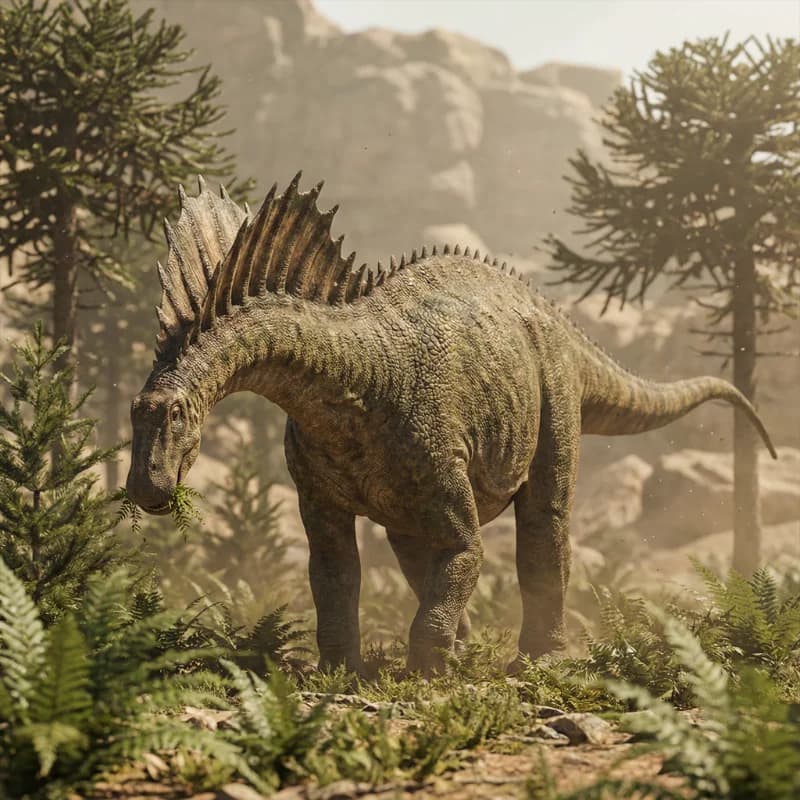
Amargasaurus
Amargasaurus cazaui
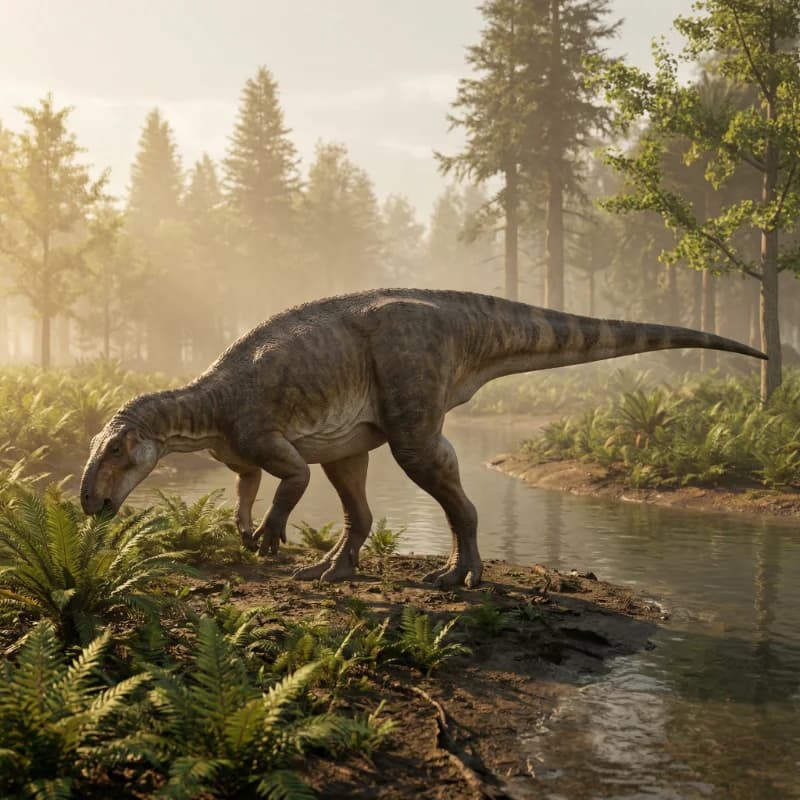
Tenontosaurus
Tenontosaurus tilletti
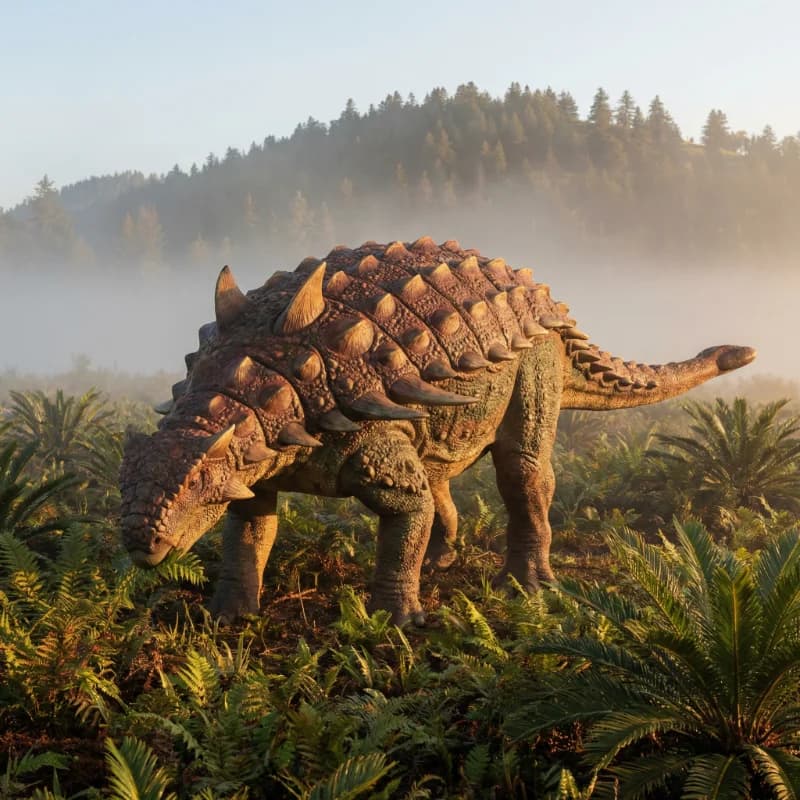
Peloroplites
Peloroplites cedrimontanus
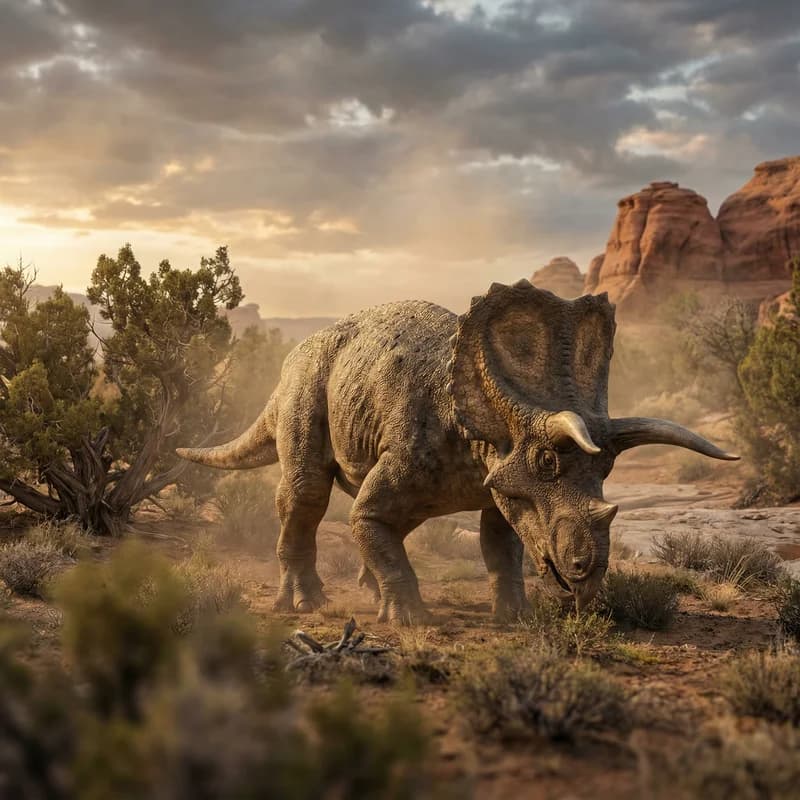
Utahceratops
Utahceratops gettyi
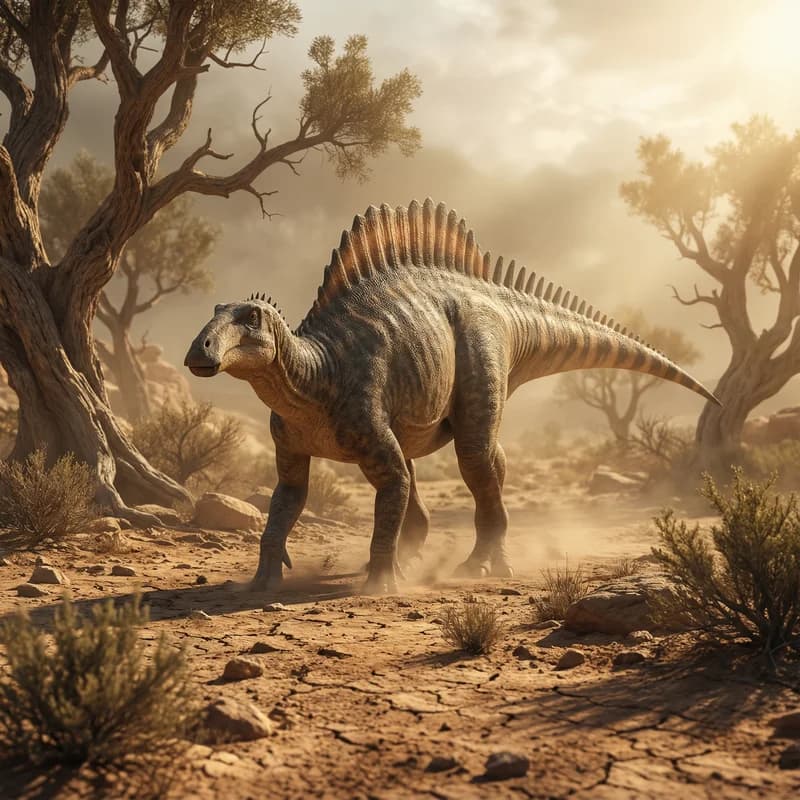
Ouranosaurus
Ouranosaurus nigeriensis
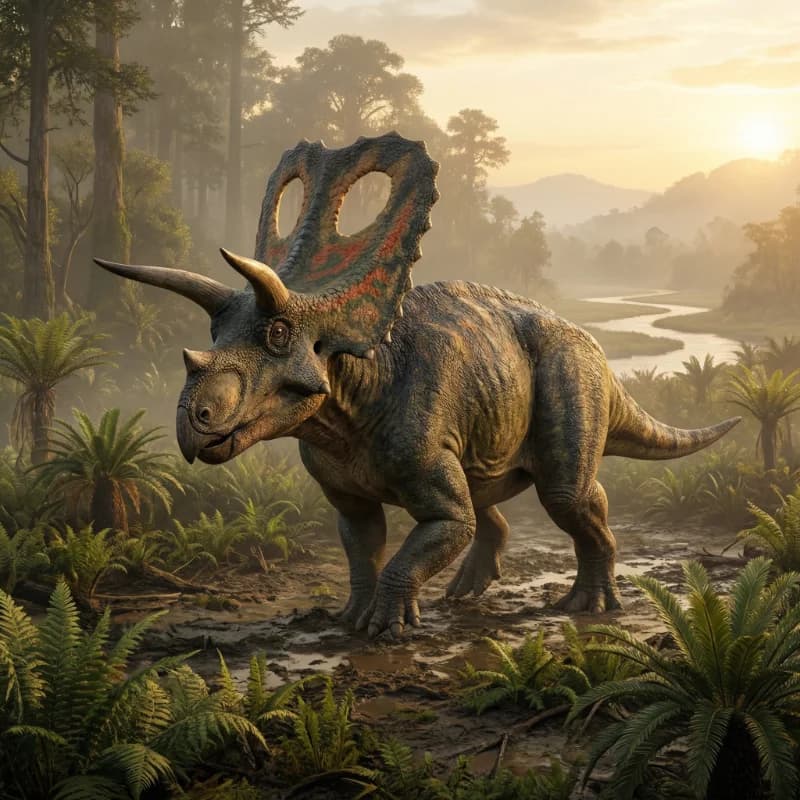
Torosaurus
Torosaurus latus
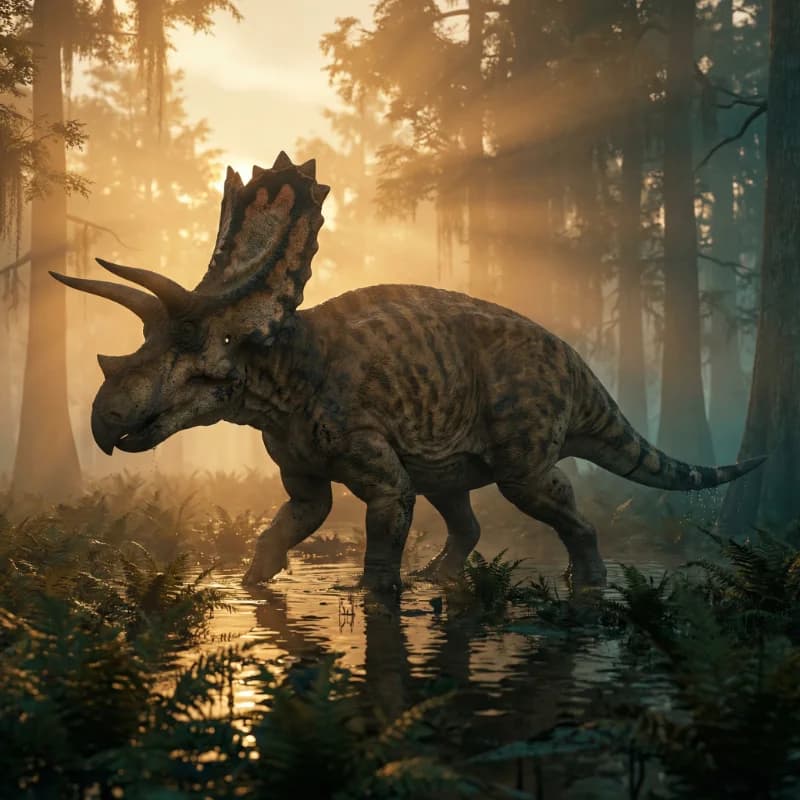
Pentaceratops
Pentaceratops sternbergii
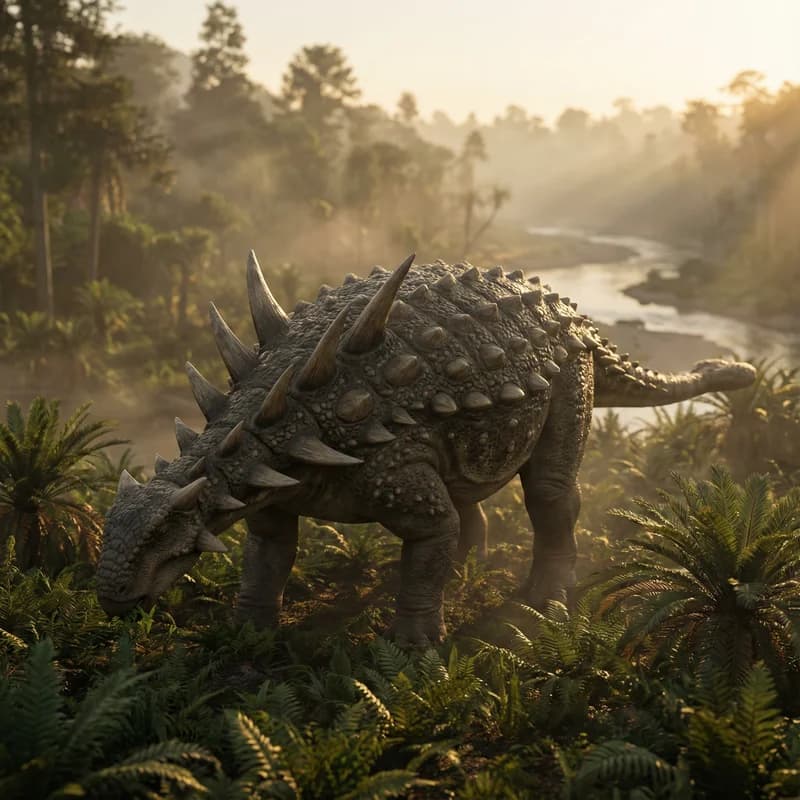
Sauropelta
Sauropelta edwardsorum