Ankylosaurus
Cretaceous Period Herbivore Creature Type
Ankylosaurus magniventris
Scientific Name: "Greek ankulos (fused, stiffened) + sauros (lizard) = 'fused lizard'; species name magniventris from Latin magnus (great) + venter (belly), referring to the animal's wide body"
Local Name: Ankylosaurus
Physical Characteristics
Discovery
Habitat

Ankylosaurus magniventris Brown, 1908 is a large armored dinosaur belonging to the family Ankylosauridae within the suborder Ankylosauria of Ornithischia. It lived during the latest Cretaceous (late Maastrichtian, approximately 68–66 Ma) in western North America and was the largest and last-surviving member of the Ankylosauridae. The genus name derives from the Greek ankulos (fused, stiffened) and sauros (lizard), referencing the extensive fusion of bones throughout the skull and skeleton—a condition known medically as ankylosis. The species epithet magniventris, from Latin magnus (great) and venter (belly), refers to the animal's exceptionally broad torso. Barnum Brown named the species in 1908 based on a partial skeleton discovered in 1906 in the Hell Creek Formation of Montana.
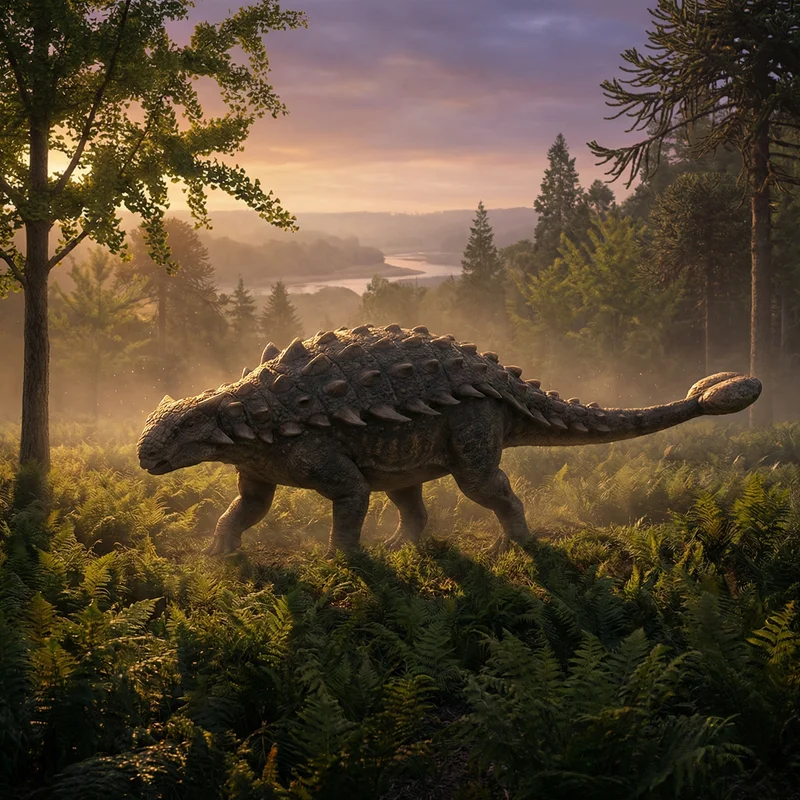
The most distinctive features of Ankylosaurus are the extensive body armor of bony osteoderms embedded in the skin and the large tail club formed by fused terminal osteoderms. The osteoderms varied widely in size (from about 1 cm to 35.5 cm in length) and covered the back, flanks, neck, and tail. The neck was protected by two semicircular cervical half-rings of fused armor plates, while the tail terminated in a massive bony club composed of two large osteoderms fused to the distal caudal vertebrae. The skull was broad, low, and triangular, bearing four horns—two squamosal horns projecting posterolaterally and two jugal horns pointing posteroventrally—and was adorned with a mosaic of scale-like cranial ornamentation (caputegulae).
Ankylosaurus is known from the Hell Creek, Lance, Scollard, Frenchman, and Ferris formations and coexisted with iconic dinosaurs including Tyrannosaurus, Triceratops, and Edmontosaurus. Despite its status as the archetypal ankylosaur in popular culture, the fossil record of Ankylosaurus is remarkably incomplete—no complete skeleton has been discovered, and only a handful of specimens exist. Nevertheless, these remains reveal that Ankylosaurus had diverged significantly from related ankylosaurines in cranial anatomy, narial structure, body size, and tail club morphology (Arbour & Mallon, 2017).
Overview
Name and Etymology
The genus name Ankylosaurus combines the Greek ankulos (fused, stiffened, or bent) with sauros (lizard), drawing on the medical term ankylosis—the stiffening of a joint by fusion of bones. This reflects the extensive skeletal fusion observed throughout the animal's skull and postcranial skeleton (Brown, 1908). The species name magniventris is derived from Latin magnus (great) and venter (belly), describing the animal's remarkably wide body. Barnum Brown named Ankylosaurus magniventris in 1908, based on material excavated in 1906 by collector Peter Kaisen near Gilbert Creek in the Hell Creek Formation of Garfield County, Montana.
Taxonomic Status
Ankylosaurus is a monotypic genus; only the type species A. magniventris is currently recognized. Within the phylogenetic framework of Arbour & Currie (2016), it is placed in Ankylosauridae, subfamily Ankylosaurinae, tribe Ankylosaurini. Its closest known relatives are Anodontosaurus and Euoplocephalus. An early claim by Williston (1908) that Ankylosaurus was synonymous with Stegopelta was rejected, and the two genera are considered distinct (Carpenter, 2001).
Summary
The largest and last-surviving ankylosaurid dinosaur from the latest Cretaceous of western North America, defined by its extensive bony armor, unique ventrolaterally-directed nostrils, and massive tail club.
Age, Stratigraphy, and Depositional Environment
Temporal Range
Ankylosaurus is restricted to the late Maastrichtian, approximately 68–66 Ma. The holotype (AMNH 5895) was recovered from 61–67 m below the Cretaceous–Paleogene (K–Pg) boundary in the Hell Creek Formation, and all other specimens likewise derive from latest Maastrichtian deposits (Carpenter, 2004; Arbour & Mallon, 2017). Ankylosaurus was among the very last non-avian dinosaurs, persisting until the K–Pg mass extinction event.
Formations and Lithology
Ankylosaurus fossils have been reported from the following formations:
| Formation | Region | Key Specimens | Lithology |
|---|---|---|---|
| Hell Creek Fm. | Montana, USA | AMNH 5895 (holotype), CCM V03 | Sandstone, mudstone, siltstone |
| Lance Fm. | Wyoming, USA | AMNH 5866 | Sandstone, mudstone, calcareous siltstone |
| Scollard Fm. | Alberta, Canada | AMNH 5214, CMN 8880 | Sandstone, mudstone, carbonaceous shale |
| Frenchman Fm. | Saskatchewan, Canada | RSM P99.1, RSM P99.4 | Sandstone, mudstone |
| Ferris Fm. | Wyoming, USA | UW 26291, UW 26293, etc. | Sandstone, mudstone |
All of these formations are latest Maastrichtian in age and were deposited in the Western Interior of North America during the final stages of the retreat of the Western Interior Seaway.
Depositional Environment and Paleoclimate
The Hell Creek Formation and its correlatives are dominated by floodplain and meandering river deposits. Channel sandstones represent river fills, while fine-grained mudstones and siltstones record overbank sedimentation; intercalated carbonaceous shales indicate the presence of swamps and marshes (Fowler, 2020). The late Maastrichtian climate in this region was warmer and more humid than the present, with estimated mean annual temperatures of approximately 15–20°C. Ankylosaurus appears to have been rare within this environment. Carpenter (2004) and Arbour & Mallon (2017) suggested that Ankylosaurus may have preferred upland habitats, which would partly explain its scarcity in lowland fluvial deposits where fossilization potential is higher. A contemporary nodosaurid ankylosaur (Denversaurus or Edmontonia) occupied the same formations but apparently did not share the same ecological niche.
Specimens and Diagnostic Features
Holotype and Referred Specimens
Ankylosaurus is known from only a handful of specimens; no complete skeleton has been found:
| Specimen | Institution | Preserved Elements | Locality / Formation | Notes |
|---|---|---|---|---|
| AMNH 5895 (holotype) | American Museum of Natural History | Partial skull roof, 2 teeth, cervical/dorsal/caudal vertebrae, right scapulocoracoid, ribs, 30+ osteoderms, cervical half-ring fragments | Montana, Hell Creek Fm. | Collected by Peter Kaisen, 1906 |
| AMNH 5214 | American Museum of Natural History | Complete skull and mandibles, tail club (only known example), ribs, caudal vertebrae, both humeri, left ischium and femur, right fibula, osteoderms | Alberta, Scollard Fm. | Best-preserved skull; only well-preserved tail club |
| CMN 8880 | Canadian Museum of Nature | Skull and left mandible | Alberta, Scollard Fm. | Largest known skull (length ~67.1 cm, width ~77 cm) |
| CCM V03 | Carter County Museum | Partial tail club handle (caudal vertebrae) | Montana, Hell Creek Fm. | Fragmentary |
| AMNH 5866 | American Museum of Natural History | 70+ osteoderms | Wyoming, Lance Fm. | Originally attributed to Dynamosaurus (= Tyrannosaurus) |
In 2017, Arbour & Mallon identified previously unrecognized elements of the holotype AMNH 5895, including an otic capsule fragment, maxilla fragment, right and left jugals, sacral centra, and additional cervical half-ring fragments.
Revised Diagnosis
The revised diagnosis by Arbour & Mallon (2017) identifies the following key autapomorphies distinguishing Ankylosaurus from other ankylosaurins: (1) a pattern of flat, hexagonal frontonasal caputegulae; (2) the nasal vestibule is uniquely roofed entirely by the loreal caputegulum (not the supranarial caputegulum), with external nares opening ventrolaterally rather than anteriorly—a feature unique among ankylosaurids; (3) 34–36 proportionally small maxillary teeth (each less than 2% of basal skull length); (4) U-shaped (rather than V-shaped) neural spines on the tail club handle vertebrae in dorsal view; and (5) a tail club knob approximately as wide transversely as it is long anteroposteriorly.
Limitations of the Fossil Record
The fossil record of Ankylosaurus is highly fragmentary. Much of the postcranial skeleton—including the pelvis, most of the tail, and the feet—remains unknown. The tail club is preserved in only one specimen (AMNH 5214), limiting understanding of individual variation. Despite being the iconic representative of Ankylosauridae in popular media, Ankylosaurus is actually known from far fewer remains than its close relatives Euoplocephalus and Anodontosaurus (Arbour & Mallon, 2017).
Morphology and Function
Body Size
Ankylosaurus was the largest known ankylosaurine and possibly the largest ankylosaurid overall. Carpenter (2004) estimated the individual with the largest skull (CMN 8880; length ~64.5 cm, width ~74.5 cm) at about 6.25 m in total length with a hip height of approximately 1.7 m. The smallest known skull (AMNH 5214; length ~55.5 cm, width ~64.5 cm) corresponded to an estimated body length of about 5.4 m and hip height of about 1.4 m.
Arbour & Mallon (2017) revised these estimates using comparisons with more complete ankylosaurines: CMN 8880 was estimated at 7.56–9.99 m in length and AMNH 5214 at 6.02–7.95 m. However, because AMNH 5214's vertebrae are not significantly larger than those of other ankylosaurines, the upper bound of nearly 10 m for large Ankylosaurus was considered an overestimate, and a realistic length of approximately 8 m was suggested. Body mass was estimated at approximately 4.78 tonnes for AMNH 5214 (Benson et al., 2014) and tentatively at approximately 7.95 tonnes for CMN 8880 (Arbour & Mallon, 2017).
Skull
The skull of Ankylosaurus was broad, low, and triangular—wider than long. The premaxillae bore a wide beak anteriorly, behind which small, leaf-shaped (phylliform) teeth were arranged in rows. The orbits were nearly circular to slightly oval. Posteriorly, two pyramidal squamosal horns projected posterolaterally from the skull roof, and two jugal horns projected posteroventrally below them. These horns are interpreted as osteoderms that became fused to the skull. The skull surface was covered in tile-like cranial ornamentation called caputegulae, whose pattern is taxonomically diagnostic.
The most remarkable cranial feature of Ankylosaurus is the position of the nostrils. In most ankylosaurids, the external nares face anteriorly or anterolaterally. In Ankylosaurus, the nares are displaced posteriorly and open ventrolaterally, unique among the family. This resulted from the anterior expansion of the loreal caputegulae (overlying the nasal bones), which entirely roof the nasal vestibule, giving the snout a distinctive bulbous appearance (Arbour & Mallon, 2017). Internally, the nasal cavities contained a complex looping airway and five pairs of sinuses on each side, which may have functioned in thermoregulation, water balance, or vocalization (Witmer & Ridgely, 2008).
Dentition
AMNH 5214 has approximately 34–35 dental alveoli (tooth sockets) in the maxilla and 71 in the mandible (35 left, 36 right). The teeth were very small and leaf-shaped with smooth enamel surfaces—a diagnostic feature. Counterintuitively, the teeth of the largest skull (CMN 8880) are absolutely smaller than those of the smallest skull (AMNH 5214), indicating that tooth size did not scale proportionally with skull size (Arbour & Mallon, 2017). This proportionally small tooth size allowed the jaws to accommodate more teeth than in any other ankylosaurine.
Postcranial Skeleton
The hind limbs were longer than the forelimbs, and Ankylosaurus was obligately quadrupedal. The holotype's scapula measures 61.5 cm in length and was fused with the coracoid. In AMNH 5214, the humerus is approximately 54 cm long and the femur approximately 67 cm—both extremely robust. The cervical vertebrae had broad neural spines that increased in height posteriorly, with well-developed entheses indicating large ligaments that supported the massive head. The dorsal vertebrae were tightly packed, limiting downward flexion of the back, and were reinforced by ossified tendons. The pelvis, most of the tail, and the feet remain unknown, though comparison with related taxa suggests the hind feet probably bore three toes.
Body Armor
The armor of Ankylosaurus consisted of osteoderms (bony scutes) embedded in the skin, ranging from approximately 1 cm to 35.5 cm in size. The osteoderms were generally thin-walled and hollow on the underside, smoother than those of Euoplocephalus. Large flat osteoderms with a low marginal keel were likely arranged in transverse and longitudinal rows across the back, with four or five transverse rows separated by skin creases. Two cervical half-rings protected the neck, each consisting of a basal band of bone surmounted by six large keeled osteoderms forming a continuous semicircular yoke over the upper neck (Arbour & Mallon, 2017). Smaller ossicles of various shapes filled the spaces between larger plates.
Tail Club
The tail club of Ankylosaurus is known only from specimen AMNH 5214. It consists of two large osteoderms fused with the distal caudal vertebrae, measuring approximately 57.5 cm in length and 54.5 cm in width (Carpenter, 2004). The club handle was formed by several distal caudal vertebrae stiffened by ossified tendons, while more proximal free caudal vertebrae provided the muscular attachment for lateral swinging.
Arbour (2009) estimated that large ankylosaurid tail clubs could generate impact forces of approximately 7,281–14,360 N upon striking, sufficient to fracture bone. Smaller and average-sized clubs were estimated to be insufficient for bone-breaking impacts. More recently, Arbour & Zanno (2022) documented lateral palaeopathological lesions on the body armor of the closely related Zuul crurivastator, consistent with damage from tail club strikes directed at the flanks. They argued that tail clubs were sexually selected structures used primarily for intraspecific combat—territorial disputes or mating competition—rather than solely for predator defense.
Diet and Ecology
Feeding
Ankylosaurus was an herbivorous dinosaur with small, weak, leaf-shaped teeth and a broad beak. The wide muzzle is interpreted as an adaptation for non-selective low browsing (Carpenter, 2004). Given the very small tooth size and relatively weak jaw musculature, Ankylosaurus likely consumed soft vegetation—ferns, cycads, and early angiosperms—performing minimal oral processing before swallowing, and relying on hindgut fermentation for digestion. No direct evidence of diet (stomach contents or coprolites) has been reported for Ankylosaurus; dietary inferences are based on cranial and dental morphology.
Ecological Role
The Hell Creek–Lance ecosystem in which Ankylosaurus lived supported a diverse dinosaur fauna including Triceratops (ceratopsian), Edmontosaurus (hadrosaurid), and Tyrannosaurus (large theropod). Within this community, Ankylosaurus was a comparatively rare constituent. A contemporary nodosaurid ankylosaur (Denversaurus or Edmontonia) inhabited the same formations but appears to have occupied a different ecological niche, with Ankylosaurus potentially favoring upland habitats (Carpenter, 2004; Arbour & Mallon, 2017).
Defense and Behavior
The full-body armor and tail club would have provided effective defense against large predators such as Tyrannosaurus. However, Arbour & Zanno (2022) presented evidence suggesting the primary function of the tail club may have been intraspecific combat rather than anti-predator defense. Lateral pathological damage on the armor of Zuul is consistent with blows from a tail club directed at the flanks—a distribution inconsistent with predator attacks, which would typically target the dorsal or cervical regions. Locomotion was likely slow given the short, robust limb proportions, with the heavy armor compensating for limited speed.
Distribution and Paleogeography
Geographic Range
Ankylosaurus fossils are known from Montana (Hell Creek Formation), Wyoming (Lance and Ferris formations), Alberta (Scollard Formation), and Saskatchewan (Frenchman Formation)—spanning the western interior of North America. All records are restricted to the latest Maastrichtian, giving the genus a temporal range of approximately 68–66 Ma (roughly 2 million years).
Paleogeographic Context
During the Maastrichtian, the Western Interior Seaway was retreating, exposing broad coastal plains across western North America. According to Arbour & Currie (2016), the Ankylosaurini—the tribe to which Ankylosaurus belongs—originated in Asia and dispersed into North America during the Late Cretaceous. The fossil localities of Ankylosaurus corresponded to paleolatitudes of approximately 55–60°N, within a warm-temperate to subtropical climatic zone.
Phylogeny and Taxonomic Debates
Phylogenetic Placement
Arbour & Currie (2016) conducted a comprehensive morphological phylogenetic analysis of the Ankylosauridae, dividing the family into the subfamily Ankylosaurinae and more basal forms, and erecting the tribe Ankylosaurini within Ankylosaurinae. In this analysis, Ankylosaurus was recovered as a derived member of the Ankylosaurini, with Anodontosaurus and Euoplocephalus as its closest relatives.
Arbour & Mallon (2017) emphasized that Ankylosaurus had diverged substantially from other Laramidian ankylosaurines in skull anatomy (particularly narial position and sinus structure), body size, and tail club handle morphology. They concluded that although Ankylosaurus is popularly treated as the "typical" representative of its family, it is in fact an atypical and highly derived member of the group.
Alternative Hypotheses and Debates
The genus-level validity of Ankylosaurus is universally accepted, but some debate has surrounded dental variation among specimens. Coombs (1990) noted differences in tooth morphology between skulls and considered naming a second species, but refrained due to insufficient documentation of intraspecific variation. Carpenter (2004) accepted all specimens as A. magniventris, noting that ankylosaur teeth are highly variable. No additional species have been named to date. Notably, Nodocephalosaurus shares a similar posterior displacement of the external nares with Ankylosaurus, but phylogenetic analyses do not recover them as close relatives, indicating this feature evolved convergently (Arbour & Currie, 2016).
Reconstruction and Uncertainty
Confirmed, Probable, and Hypothetical
Confirmed: (1) Ankylosaurus is a large ankylosaurid belonging to the Ankylosaurinae, tribe Ankylosaurini. (2) The skull bears four horns and a unique cranial ornamentation pattern with ventrolaterally-directed nostrils. (3) A tail club is present (AMNH 5214). (4) The temporal range is restricted to the late Maastrichtian (~68–66 Ma).
Probable: (1) Total body length approximately 6–8 m, mass approximately 4.78–7.95 tonnes (specimen-dependent; Arbour & Mallon, 2017). (2) Non-selective low browser based on broad muzzle and weak dentition. (3) Asian origin of the Ankylosaurini lineage with dispersal into North America.
Hypothetical: (1) The primary function of the tail club—intraspecific combat versus predator defense—remains debated. (2) The upland habitat preference hypothesis cannot exclude taphonomic bias as an explanation for rarity in lowland deposits. (3) The precise function of the complex narial sinuses (thermoregulation, vocalization, or olfaction) is unresolved.
Popular Media vs. Science
Ankylosaurus is commonly depicted in popular media as an invincible "living tank" lumbering slowly across Cretaceous landscapes. In reality, the fossil record is far more incomplete than such depictions suggest. No complete skeleton has ever been found, and major portions of the postcranium—including the pelvis, most of the tail, and the feet—remain unknown. Furthermore, the exact arrangement of body armor has never been observed in articulation and must be inferred from related taxa. Brown's (1908) original skeletal reconstruction, which was modeled partly after Stegosaurus and lacked a tail club (unknown at the time), influenced popular depictions well into the 1980s before being substantially revised by subsequent research.
Comparison with Related and Contemporary Taxa
| Taxon | Age | Region | Est. Length | Tail Club Shape | Nostril Orientation |
|---|---|---|---|---|---|
| Ankylosaurus | Maastrichtian | W. North America (Hell Creek, etc.) | 6–8 m | Knob width ≈ length | Ventrolateral |
| Euoplocephalus | Campanian | Alberta, Canada | ~5–6 m | Knob width ≈ length | Anterior to anterolateral |
| Anodontosaurus | Campanian | Alberta, Canada | ~5 m | Knob wider than long | Anterior to anterolateral |
| Zuul | Campanian | Montana, USA | ~6 m | Knob width ≈ length | Anterior to anterolateral |
| Scolosaurus | Campanian | Alberta, Canada | ~5–6 m | Unknown | Anterior to anterolateral |
Ankylosaurus is distinguished from these close relatives by its larger overall body size, uniquely ventrolateral nostril orientation, proportionally smaller but more numerous teeth, and U-shaped neural spines on the tail club handle vertebrae.
Fun Facts
FAQ
📚References
- Brown, B. (1908). The Ankylosauridae, a new family of armored dinosaurs from the Upper Cretaceous. Bulletin of the American Museum of Natural History, 24, 187–201.
- Carpenter, K. (2004). Redescription of Ankylosaurus magniventris Brown 1908 (Ankylosauridae) from the Upper Cretaceous of the Western Interior of North America. Canadian Journal of Earth Sciences, 41(8), 961–986. https://doi.org/10.1139/e04-043
- Arbour, V. M. & Mallon, J. C. (2017). Unusual cranial and postcranial anatomy in the archetypal ankylosaur Ankylosaurus magniventris. FACETS, 2, 764–794. https://doi.org/10.1139/facets-2017-0063
- Arbour, V. M. & Currie, P. J. (2016). Systematics, phylogeny and palaeobiogeography of the ankylosaurid dinosaurs. Journal of Systematic Palaeontology, 14(5), 385–444. https://doi.org/10.1080/14772019.2015.1059985
- Arbour, V. M. (2009). Estimating impact forces of tail club strikes by ankylosaurid dinosaurs. PLoS ONE, 4(8), e6738. https://doi.org/10.1371/journal.pone.0006738
- Arbour, V. M. & Zanno, L. E. (2022). Palaeopathological evidence for intraspecific combat in ankylosaurid dinosaurs. Biology Letters, 18(12), 20220404. https://doi.org/10.1098/rsbl.2022.0404
- Benson, R. B. J., Campione, N. E., Carrano, M. T., Mannion, P. D., Sullivan, C., Upchurch, P., & Evans, D. C. (2014). Rates of dinosaur body mass evolution indicate 170 million years of sustained ecological innovation on the dinosaur stem lineage. PLoS Biology, 12(5), e1001853. https://doi.org/10.1371/journal.pbio.1001853
- Coombs, W. P., Jr. (1990). Teeth and taxonomy in ankylosaurs. In K. Carpenter & P. J. Currie (Eds.), Dinosaur Systematics: Approaches and Perspectives (pp. 269–279). Cambridge University Press.
- Coombs, W. P., Jr. (1978). The families of the ornithischian dinosaur order Ankylosauria. Palaeontology, 21(1), 143–170.
- Witmer, L. M. & Ridgely, R. C. (2008). The paranasal air sinuses of predatory and armored dinosaurs (Archosauria: Theropoda and Ankylosauria) and their contribution to cephalic structure. The Anatomical Record, 291(11), 1362–1388. https://doi.org/10.1002/ar.20794
- Arbour, V. M. & Currie, P. J. (2013). Euoplocephalus tutus and the diversity of ankylosaurid dinosaurs in the Late Cretaceous of Alberta, Canada, and Montana, USA. PLoS ONE, 8(5), e62421. https://doi.org/10.1371/journal.pone.0062421
- Fowler, D. W. (2020). The Hell Creek Formation, Montana: A stratigraphic review and revision based on a sequence stratigraphic approach. Geosciences, 10(11), 435. https://doi.org/10.3390/geosciences10110435
- Arbour, V. M. & Evans, D. C. (2017). A new ankylosaurine dinosaur from the Judith River Formation of Montana, USA, based on an exceptional skeleton with soft tissue preservation. Royal Society Open Science, 4(5), 161086. https://doi.org/10.1098/rsos.161086
- Osborn, H. F. (1905). Tyrannosaurus and other Cretaceous carnivorous dinosaurs. Bulletin of the American Museum of Natural History, 21, 259–265.
- Carpenter, K. (2001). Phylogenetic analysis of the Ankylosauria. In K. Carpenter (Ed.), The Armored Dinosaurs (pp. 455–483). Indiana University Press.
- Williston, S. W. (1908). Review of The Ankylosauridae. American Journal of Science, 4(25), 135–136.
Gallery
5 images Ankylosaurus
Ankylosaurus · Cretaceous Period · Herbivore
 Ankylosaurus
Ankylosaurus · Cretaceous Period · Herbivore
 Ankylosaurus
Ankylosaurus · Cretaceous Period · Herbivore
 Ankylosaurus
Ankylosaurus · Cretaceous Period · Herbivore
 Ankylosaurus
Ankylosaurus · Cretaceous Period · Herbivore
🔗Related Creatures
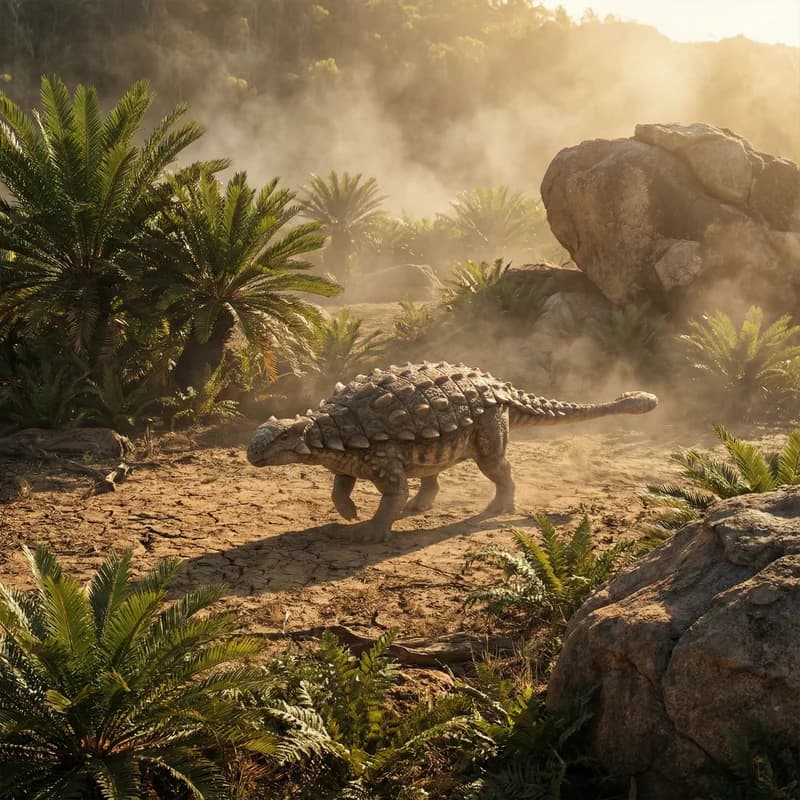
Minmi
Minmi paravertebra
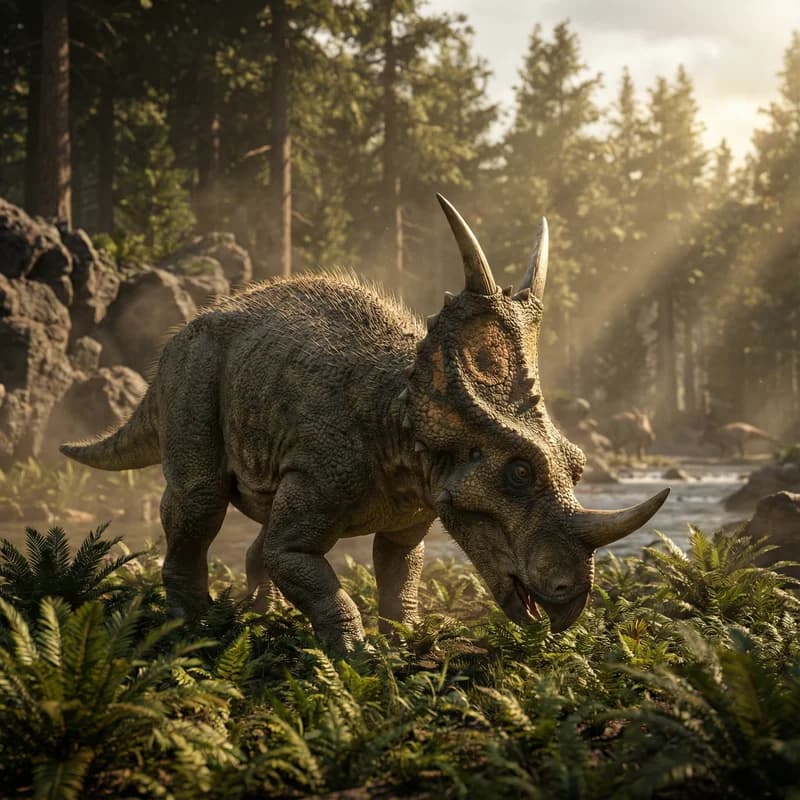
Einiosaurus
Einiosaurus procurvicornis

Nasutoceratops
Nasutoceratops titusi

Argentinosaurus
Argentinosaurus huinculensis
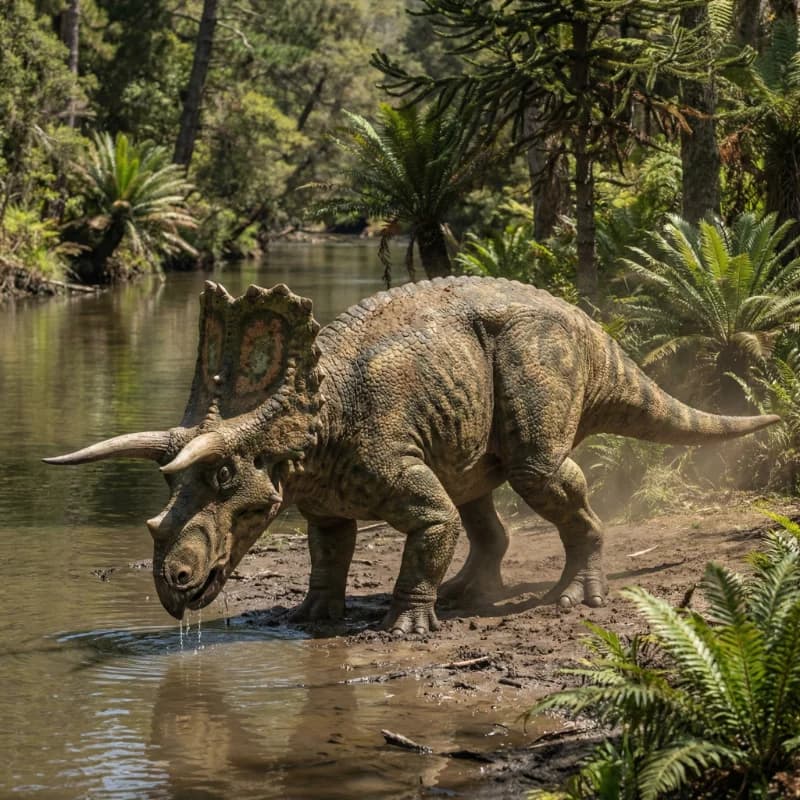
Anchiceratops
Anchiceratops ornatus
Therizinosaurus
Therizinosaurus cheloniformis
Hadrosaurus
Hadrosaurus foulkii

Diabloceratops
Diabloceratops eatoni