Nasutoceratops
Cretaceous Period Herbivore Creature Type
Nasutoceratops titusi
Scientific Name: "Nasutoceratops (Latin nasutus 'large-nosed' + Latinized Greek ceratops 'horned face') + titusi (honoring paleontologist Alan L. Titus)"
Local Name: Nasutoceratops
Physical Characteristics
Discovery
Habitat

Nasutoceratops (Nasutoceratops titusi Sampson et al., 2013) is a ceratopsid dinosaur from the late Campanian stage of the Late Cretaceous, approximately 76.0–75.5 million years ago, that inhabited western North America. It belongs to the subfamily Centrosaurinae within Ceratopsidae and represents a basal (early-diverging) centrosaurine, forming part of the clade Nasutoceratopsini. All known fossils come from the middle unit of the Kaiparowits Formation in southern Utah, USA, within the Grand Staircase–Escalante National Monument (GSENM). Three specimens are known, including a nearly complete subadult skull with associated postcranial elements and rare skin impressions.
The generic name Nasutoceratops is derived from the Latin nasutus ('large-nosed') and Latinized Greek ceratops ('horned face'), meaning 'large-nosed horned face.' The specific name titusi honors paleontologist Alan L. Titus for his significant contributions to fossil recovery at the GSENM. The dinosaur was described and named in 2013 by Scott D. Sampson, Eric K. Lund, Mark A. Loewen, Andrew A. Farke, and Katherine E. Clayton in Proceedings of the Royal Society B.
The most distinctive features of Nasutoceratops are its remarkably long, forward-curving brow horns—likened to those of a Texas Longhorn bull—and its unusually deep but short snout region. The nasal horn is paradoxically low and blade-like, contrasting sharply with other centrosaurines. The holotype skull measures approximately 1.5 m (4.9 ft) in length, while body length is estimated at 4.5 m (14.8 ft) and weight at approximately 1.5 tonnes (Paul, 2016). Nasutoceratops gained popular recognition through appearances in the 2019 short film Battle at Big Rock and the 2022 film Jurassic World Dominion.
Overview
Name and Etymology
The generic name Nasutoceratops combines the Latin nasutus ('large-nosed') with the Latinized Greek ceratops ('horned face'). The specific epithet titusi is an eponym honoring Alan L. Titus, monument paleontologist at the Grand Staircase–Escalante National Monument, for his important efforts in recovering fossils from the GSENM. Lund had informally used the spelling "Nasutuceratops" in his 2010 master's thesis, in which he also described the specimen.
In the 2013 UMNH press release accompanying the description, Sampson called the dinosaur's large nose a "jumbo-sized schnoz," attracting considerable media attention. Columnist Alexandra Petri penned humorous poems about the dinosaur, and one headline read "paleontologists discover, mock, new dinosaur species."
Taxonomic Status
Nasutoceratops is classified within Ornithischia, Ceratopsia, Ceratopsidae, and the subfamily Centrosaurinae. Notably, it does not belong to Chasmosaurinae (the subfamily containing Triceratops) but rather to Centrosaurinae. While centrosaurines are typically characterized by short brow horns and elaborate frill ornamentation, Nasutoceratops displays the opposite pattern—elongated brow horns and a simplified frill—reflecting its basal position within the subfamily.
The 2013 phylogenetic analysis recovered Nasutoceratops as the sister taxon of Avaceratops lammersi from the Judith River Formation of Montana, with both forming a previously unknown clade near the base of Centrosaurinae (Sampson et al., 2013). In 2017, Ryan, Holmes, Mallon, Loewen, and Evans formally named this clade Nasutoceratopsini, with Nasutoceratops as the type genus, defining it as all centrosaurines more closely related to Nasutoceratops than to Centrosaurus (Ryan et al., 2017).
Key Summary
Nasutoceratops is a distinctive ceratopsian from southern Laramidia during the Late Cretaceous, characterized by Texas Longhorn–like forward-curving brow horns, an anomalously deep and short snout, and simplified frill ornamentation. Its discovery provided crucial insights into centrosaurine evolutionary history and the hypothesis of dinosaur provincialism within Laramidia.
Age, Stratigraphy, and Depositional Environment
Temporal Range
Nasutoceratops lived during the late Campanian stage of the Late Cretaceous. Based on the stratigraphic position within the middle unit of the Kaiparowits Formation and radiometric dating, the specimens date to approximately 75.97–75.51 Ma (Lund et al., 2016; Roberts et al., 2005). This makes Nasutoceratops contemporaneous with northern Laramidian centrosaurines such as Styracosaurus and Centrosaurus.
Formation and Lithology
All specimens were recovered from the Kaiparowits Formation of southern Utah, which is abundantly exposed within the Grand Staircase–Escalante National Monument. The formation is a very thick Upper Cretaceous succession, reaching approximately 860 m in total thickness. 40Ar/39Ar dating constrains the entire formation to approximately 76.1–74.0 Ma (late Campanian) (Roberts et al., 2005). Nasutoceratops fossils occur in the middle unit, which ranges from 200 to 350 m in thickness.
The formation is composed primarily of fluvial channel deposits (sandstone) and floodplain deposits (mudstone, siltstone).
Paleoenvironment
During the Campanian, the Kaiparowits Formation area lay on the eastern margin of Laramidia within approximately 100 km of the Western Interior Seaway, a shallow sea that divided North America into western (Laramidia) and eastern (Appalachia) landmasses. This region corresponded to the southern part of Laramidia.
The paleoenvironment was characterized by a wet, humid climate with large rivers having deep channels and stable banks, as well as perennial wetland swamps, ponds, and lakes. Rivers drained across the alluvial to coastal plain into the Western Interior Seaway, in conditions analogous to the modern Gulf Coast region of the United States (Roberts, 2007). Conifers, ferns, and angiosperms provided abundant food for herbivorous dinosaurs.
Specimens and Diagnostic Features
Holotype and Referred Specimens
The holotype (UMNH VP 16800) is a partially associated, nearly complete skull preserving most of the skull roof. It was discovered in 2006 by Eric K. Lund, then a graduate student and technician at the University of Utah, from UMNH Locality VP 940 during the Kaiparowits Basin Project. The specimen is interpreted as a subadult based on the degree of fusion of skull elements and bone surface texture.
In addition to the skull, the holotype includes an articulated, nearly complete left forelimb, a very fragmentary right forelimb (both lacking hand bones), much of the pectoral girdle, a nearly complete syncervical vertebra (the first three cervical vertebrae fused together), three fragmentary dorsal vertebrae, and three patches of skin impressions associated with the left forelimb. These skin impressions are the only ceratopsid skin impressions known from the GSENM, and among the rarest worldwide.
Two additional specimens were assigned to this species based on shared features with the holotype: UMNH VP 19466, a disarticulated adult skull consisting of partial right and left premaxillae, a right maxilla, and a right nasal bone; and UMNH VP 19469, an isolated squamosal bone from a subadult. Together, these three specimens represent approximately 80% of the skull and about 10% of the postcranial skeleton (Sampson et al., 2013; Lund et al., 2016).
Diagnostic Features
Nasutoceratops is diagnosed by several unique features:
First, the snout region is unusually deep (dorsoventrally) but short (anteroposteriorly). The external nostril occupies 75% of the skull length anterior to the orbits, more than in any other ceratopsian.
Second, the nasal bones have well-developed internal cavities behind the horn, suggesting they were hollow and possibly pneumatized (air-filled)—a feature unknown in other ceratopsians.
Third, the nasal horn core is low, long, and blade-like, laterally compressed along its posterior portion, with a slightly raised teardrop-shaped expansion anteriorly.
Fourth, the brow horns are exceptionally elongated (approximately 40% of total skull length; up to 457 mm in the holotype) and strongly curved, with the bases directed forward and outward, curving inward and ultimately twisting upward. This configuration has been likened to the horns of a Texas Longhorn bull. These are the longest brow horns known for any centrosaurine, both in absolute and relative terms.
Fifth, the frill is nearly circular with its widest point at the middle. The epiossifications on the frill margins are shaped like low crescents, and there is an epiparietal at the midline at the top of the frill—a feature otherwise known only in chasmosaurines, not in other centrosaurines. The frill lacks the well-developed hooks and spikes typical of other centrosaurines.
Sixth, the maxillary flange is double-socketed, a unique autapomorphy of Nasutoceratops, and the maxillary contact surface for the premaxilla is very expanded, forming a contact shelf with a deeply excavated sulcus unlike any other ceratopsid.
Morphology and Function
Body Size
The subadult holotype skull is approximately 1.5 m (4.9 ft) long. Total body length is estimated at 4.5 m (14.8 ft) and body mass at approximately 1.5 tonnes (Paul, 2016). As a centrosaurine ceratopsid, Nasutoceratops was a large-bodied, quadrupedal dinosaur with a huge skull, a hooked upper beak, a heavily constructed skeleton, a shortened down-swept tail, a large pelvis indicating powerful musculature, and short digits.
Skull and Horns
Nasutoceratops bore three horns: a nasal horn above the nasal opening and two brow horns above the eye sockets.
The nasal horn is low, long, and blade-like, laterally compressed along the posterior portion, with a slightly raised teardrop-shaped expansion at the front. This contrasts markedly with the prominent nasal horns of Styracosaurus and Centrosaurus. The nasal bones have well-developed internal cavities behind the horn, raising the possibility of pneumatization—a feature unknown in other ceratopsians.
The brow horns are one of the most notable features. In the holotype, the horn cores reach up to 457 mm (18.0 in), the longest of any centrosaurine in both absolute and relative terms. The horns are strongly curved, with bases directed forward and outward, then curving inward, and ultimately twisting their tips upward, nearly reaching the level of the snout tip. Most other centrosaurines had relatively short brow horns; elongated brow horns are otherwise only found in basal forms such as Diabloceratops, Avaceratops, and Albertaceratops.
The epijugal (cheek horn) is roughly trihedral, measuring 85 mm long and 78 mm wide at the base in the holotype—the largest known among centrosaurines. Large epijugals are more typical of chasmosaurines but are also found in Diabloceratops.
Frill Structure
The parietosquamosal frill is formed by the fused parietal bones and paired squamosal bones. It is nearly circular with its widest point at the middle. The holotype frill measures approximately 610 mm (24 in) in total length and about 800 mm (31 in) in width.
Two large, oval parietal fenestrae are present, one on each parietal, as typical for centrosaurines. The longest axis of each fenestra (anteroposterior) measures about 350 mm, accounting for approximately 57% of frill length, with a width of about 260 mm, or 33% of frill width.
The epiparietals are low, roughly crescent-shaped, and asymmetrical. The presence of a midline epiparietal at the top of the frill is otherwise known only in chasmosaurines. The frill is rounded at the back of the midline with no indentation, contrasting with other centrosaurines. The frill lacks the well-developed hooks and spikes typical of other centrosaurines. Since the holotype was not fully grown, it is possible such ornaments would have developed with maturity, but this is considered unlikely given the degree of epiparietal fusion and other maturity indicators (Lund et al., 2016).
The squamosal has a high ridge on its outer surface running from the eye socket region toward the squamosal rim, an unusual feature for centrosaurines but present in Avaceratops. This ridge has been proposed as a synapomorphy of Nasutoceratopsini (Ishikawa et al., 2023).
Postcranial Skeleton and Skin Impressions
Ceratopsids are primarily distinguished by skull features, and the postcranium of Nasutoceratops is typical of the group. The syncervical is particularly similar to that of Styracosaurus. The humerus is 475 mm long and the ulna 400 mm long.
Three patches of skin impressions associated with the scapula and humerus of the left forelimb are preserved as both casts and molds. Patch A (120 cm²) consists of tightly packed, oval to nearly circular tubercles (2–8 mm in diameter). Patch B (84 cm²) is composed of larger, loosely packed circular tubercles (5–11 mm in diameter). Patch C (25 cm²), the most notable, consists of raised hexagonal tubercles (8–11 mm in diameter) surrounded by triangular grooves—a pattern unusual among ceratopsians. Similar hexagonal patterns were later observed on the limbs of Psittacosaurus and dubbed "stars," and are currently considered a unique ceratopsian feature (Vinther et al., 2022; Lund et al., 2016).
Diet and Ecology
Diet and Feeding
Nasutoceratops was herbivorous, equipped with a hooked beak and dental batteries composed of continuously replaced teeth adapted for processing large quantities of fibrous plant material. Each maxilla is estimated to have contained approximately 29 teeth. The maxillary teeth have nearly vertical wear facets on their inner surfaces, typical for ceratopsids.
Lund et al. (2016) proposed that the very short, deep snout may have been related to more derived masticatory functions. This morphology brought the beak closer to the mandibular joint, increasing mechanical advantage during chewing. The deep narial region, resulting from steeply rising, enlarged premaxilla-maxilla contact surfaces, may have been connected to absorbing greater bite forces.
Ridgwell (2017) reported two coprolites from the Kaiparowits Formation that, based on their size, may have been produced by ceratopsians (including Nasutoceratops), hadrosaurs, or ankylosaurs. The coprolites contained angiosperm wood fragments, indicating consumption of woody browse, along with traces of mollusc shell, arthropod cuticle, and lizard bone likely ingested incidentally. Nearby coprolites containing conifer wood suggest either niche partitioning among herbivores or seasonal dietary variation in the Kaiparowits ecosystem.
Horn and Frill Function
Various hypotheses have been proposed for the function of ceratopsid skull ornamentation: species recognition (driven by natural selection), mate competition (driven by sexual selection), predator defense, and thermoregulation. Sampson et al. (2013) noted that the two main centrosaurine clades concentrated evolutionary changes in different skull regions—the Nasutoceratops-Avaceratops clade reduced frill ornamentation while elaborating brow horns, whereas the Spinops-Pachyrhinosaurus clade reduced brow horns while enlarging nasal horns and frill ornaments.
Lund et al. (2016) suggested that if the mate competition hypothesis applied, the forward-and-sideward orientation and torsional twist of the brow horns could have enabled interlocking with opponents of the same species, as in modern bovids. Farke et al. (2009) identified three plausible horn-locking positions for Triceratops—"single horn contact," "full horn locking," and "oblique horn locking"—all of which could apply to Nasutoceratops. Paul (2016) suggested the forward-directed horns indicated a frontal thrusting action.
In the 2013 press release, Loewen stated that the horns were probably used as visual signs of dominance, and as weapons against rivals when that was insufficient.
Ecological Niche and Coexisting Fauna
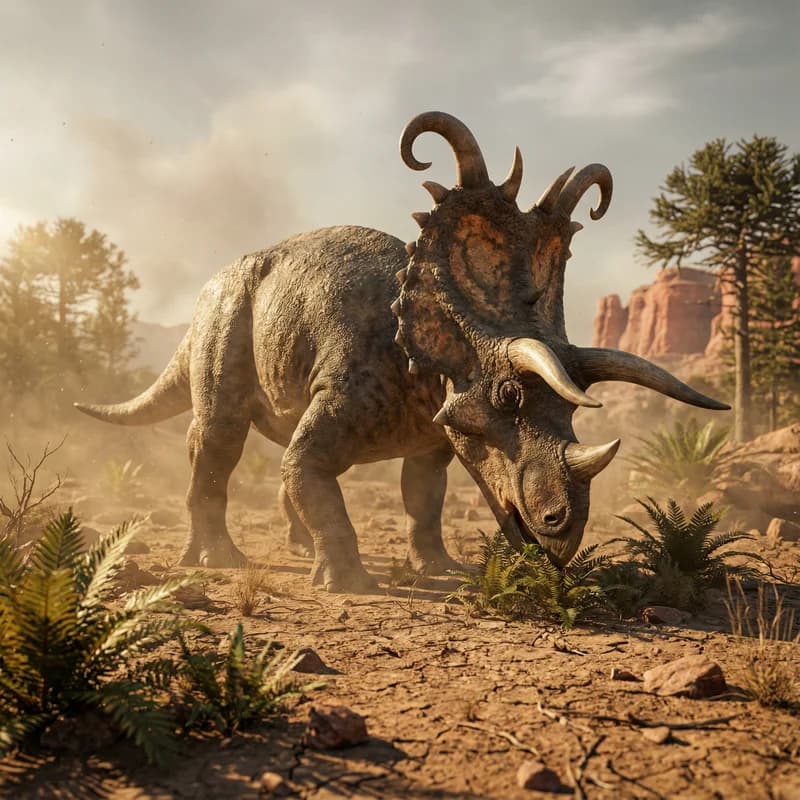
Nasutoceratops coexisted with diverse dinosaur fauna in the Kaiparowits ecosystem. Other ceratopsians from the same formation include the chasmosaurines Kosmoceratops richardsoni and Utahceratops gettyi, each with strikingly different cranial ornamentation. This diversity suggests ceratopsians relied on head ornament differentiation for species recognition or mate competition.
Predators included the tyrannosaurid Teratophoneus curriei, while co-occurring herbivores included hadrosaurs (Gryposaurus, Parasaurolophus) and ankylosaurs.
Ryan et al. (2017) proposed that differences in jaw mechanics between nasutoceratopsins and centrosaurins may have prevented resource competition, allowing coexistence. Ishikawa et al. (2023) noted that only single nasutoceratopsin specimens were recovered from individual quarries in the Judith River Formation, suggesting solitary behavior or rarity in floodplain habitats—in contrast to other centrosaurines found in multi-individual bonebeds indicative of gregarious lifestyles.
Distribution and Paleogeography
Geographic Distribution
Nasutoceratops has been definitively recovered only from the Kaiparowits Formation of southern Utah, corresponding to southern Laramidia during the Late Cretaceous. Loewen et al. (2024) noted that while Nasutoceratops has not been documented from other stratigraphic units, it may have been wide-ranging across southern Laramidia, with the lack of coeval non-marine deposits elsewhere meaning that preserved ranges underestimate true ranges.
Dinosaur Provincialism Hypothesis
The discovery of Nasutoceratops provided important evidence for the "dinosaur provincialism hypothesis," which posits that northern and southern Laramidian faunas were separated for more than one million years during the late Campanian, with at least two coeval dinosaur communities.
Sampson et al. (2013) pointed out that while the northern Avaceratops was the closest relative of Nasutoceratops, it was several million years older, and by the time of Nasutoceratops, northern centrosaurines belonged to a different clade (with short brow horns and elaborate frills). Lund et al. (2016) emphasized that the temporal overlap between northern Styracosaurus and southern Nasutoceratops demonstrates that these regions served as evolutionary centers for endemism.
However, Ryan et al. (2017) argued that the nasutoceratopsin specimen CMN 8804 from the Oldman Formation of Alberta demonstrated that the group persisted in both northern and southern Laramidia, weakening the case for strict provincialism. The known geographic range of Nasutoceratopsini spans approximately 2,000 km with an area of about 200,000 km² (Loewen et al., 2024).
Phylogeny and Classification
Position Within Centrosaurinae
Sampson et al. (2013) assigned Nasutoceratops to Centrosaurinae based on features including a premaxilla with a pronounced downward angle, an almost circular narial region, a spine composed of the nasal and premaxilla, and an abbreviated squamosal with a stepped posterior margin.
Despite being contemporaneous with derived late Campanian northern centrosaurines such as Styracosaurus and Centrosaurus, Nasutoceratops retained more "primitive" features: a downwardly displaced maxillary tooth row, elongated brow horns, and pronounced epijugals. This demonstrates that basal centrosaurines persisted alongside derived forms.
Nasutoceratopsini
Ryan et al. (2017) named Nasutoceratopsini with Nasutoceratops as the type genus, defining it as all centrosaurines more closely related to Nasutoceratops titusi than to Centrosaurus apertus. Included taxa are Avaceratops, MOR 692 (previously treated as an adult Avaceratops), CMN 8804 (an unnamed taxon from the Oldman Formation of Alberta), and Furcatoceratops elucidans (Ishikawa et al., 2023). Although new family-group names are traditionally based on the first-named genus (in this case Avaceratops), the juvenile nature of that taxon's type specimen makes feature identification problematic, whereas Nasutoceratops has several distinct adult features.
Nasutoceratopsin members share tall snouts and robust jaws, suggesting distinct feeding habits compared to other centrosaurines. A well-developed squamosal ridge was proposed as a synapomorphy of Nasutoceratopsini (Ishikawa et al., 2023).
Dalman et al. (2021), in their description of Menefeeceratops, did not recover Nasutoceratopsini as monophyletic, finding all members in an unresolved polytomy among basal centrosaurines. However, Ishikawa et al. (2023) recovered Nasutoceratopsini as a natural basal group, with Furcatoceratops elucidans from the Judith River Formation as a close relative of Nasutoceratops.
Additionally, Dalman et al. (2018) assigned Crittendenceratops krzyzanowskii from the Fort Crittenden Formation of Arizona to Nasutoceratopsini, and Yehuecauhceratops mudei from the Aguja Formation of Mexico (Rivera-Sylva et al., 2017) was also placed in this clade. However, Ishikawa et al. (2023) excluded these fragmentary taxa from their analysis.
Cladogram
Based on the 2023 phylogenetic analysis by Ishikawa et al., the position of Nasutoceratops within Ceratopsidae is as follows: Ceratopsidae splits into Chasmosaurinae and Centrosaurinae. Within Centrosaurinae, Diabloceratops and Machairoceratops diverge basally, followed by Nasutoceratopsini (containing Avaceratops, CMN 8804, MOR 692, Nasutoceratops, and Furcatoceratops). More derived taxa include Xenoceratops, Albertaceratops, Medusaceratops, Wendiceratops, Sinoceratops, and finally Eucentrosaura.
| Taxon | Position | Notes |
|---|---|---|
| Diabloceratops eatoni | Basal Centrosaurinae | Wahweap Formation, Utah |
| Machairoceratops cronusi | Basal Centrosaurinae | Wahweap Formation, Utah |
| Nasutoceratopsini | Basal clade | Includes Avaceratops, CMN 8804, MOR 692, Nasutoceratops, Furcatoceratops |
| Xenoceratops foremostensis | Intermediate | Foremost Formation, Alberta |
| Albertaceratops nesmoi | Intermediate | Oldman Formation, Alberta |
| Eucentrosaura | Derived clade | Includes Centrosaurus, Styracosaurus, Pachyrhinosaurus, etc. |
Reconstruction and Uncertainty
Established Facts
Nasutoceratops is firmly established as a late Campanian (ca. 75.97–75.51 Ma) centrosaurine ceratopsid from southern Laramidia (present-day Utah). The holotype skull measures approximately 1.5 m in length, and body length is estimated at 4.5 m with a mass of about 1.5 tonnes. The Texas Longhorn–like brow horns (up to 457 mm), low blade-like nasal horn, and simplified frill are directly confirmed from the holotype.
Well-Supported Interpretations
The monophyly of Nasutoceratopsini as a distinct natural clade within Centrosaurinae is supported by multiple phylogenetic analyses (Sampson et al., 2013; Lund et al., 2016; Ryan et al., 2017; Ishikawa et al., 2023), though Dalman et al. (2021) did not recover this grouping, so it is not fully settled. The interpretation of the brow horns being used in intraspecific competition is supported by analogy with modern bovids.
Hypothetical or Uncertain Aspects
Since the holotype is a subadult, the size and morphology of a fully grown adult remain uncertain. Whether the frill would have developed hooks or spikes in maturity is considered unlikely but cannot be entirely excluded. The precise geographic range of Nasutoceratops (whether it inhabited regions beyond Utah) requires additional fossil discoveries. The possible pneumatization of the nasal bones and its function (moisture exchange, shock absorption, vocal resonance, weight reduction) remain unclear. Sampson noted in the 2013 press release that the large snout probably did not relate to enhanced olfaction, since olfactory sensors are located further back in the head, closer to the brain.
The functional adaptations of the short, deep snout are not definitively understood. While Lund et al. (2016) suggested a link to more derived masticatory functions, the specific role of the deep narial region remains unresolved.
Popular Media vs. Science
In popular media (especially the Jurassic World franchise), Nasutoceratops is sometimes portrayed as a small relative of Triceratops. However, scientifically, it belongs to Centrosaurinae rather than to Triceratops's subfamily Chasmosaurinae. Furthermore, while the "big nose" is the popular image, the scientifically notable features are the snout's depth and shortness, and especially the exceptionally long, forward-curving brow horns resembling those of a Texas Longhorn.
Related and Contemporary Comparisons
| Taxon | Temporal Range | Locality | Estimated Length | Estimated Mass | Key Features |
|---|---|---|---|---|---|
| Nasutoceratops titusi | ca. 76.0–75.5 Ma | Utah, USA (Kaiparowits Fm.) | ca. 4.5 m | ca. 1.5 t | Long forward-curving brow horns, low nasal horn, simple frill |
| Avaceratops lammersi | ca. 78.5–77 Ma | Montana, USA (Judith River Fm.) | ca. 2–4 m | Unknown | Nasutoceratopsin, elongated brow horns, simple frill |
| Furcatoceratops elucidans | ca. 75.6 Ma | Montana, USA (Judith River Fm.) | Unknown (subadult) | Unknown | Nasutoceratopsin, forked brow horns |
| Kosmoceratops richardsoni | ca. 76.0–75.5 Ma | Utah, USA (Kaiparowits Fm.) | ca. 4.5 m | Unknown | Chasmosaurine, 15 horns/ornaments, elaborate frill |
| Utahceratops gettyi | ca. 76.0–75.5 Ma | Utah, USA (Kaiparowits Fm.) | ca. 6–7 m | ca. 3–4 t | Chasmosaurine, large body, laterally projecting brow horns |
| Centrosaurus apertus | ca. 76.5–75.5 Ma | Alberta, Canada (Dinosaur Park Fm.) | ca. 5–6 m | ca. 2–3 t | Centrosaurine (Eucentrosaura), large nasal horn, short brow horns |
Fun Facts
FAQ
📚References
- Sampson, S. D., Lund, E. K., Loewen, M. A., Farke, A. A., & Clayton, K. E. (2013). A remarkable short-snouted horned dinosaur from the Late Cretaceous (late Campanian) of southern Laramidia. Proceedings of the Royal Society B: Biological Sciences, 280(1766), 20131186. https://doi.org/10.1098/rspb.2013.1186
- Lund, E. K., Sampson, S. D., & Loewen, M. A. (2016). Nasutoceratops titusi (Ornithischia, Ceratopsidae), a basal centrosaurine ceratopsid from the Kaiparowits Formation, southern Utah. Journal of Vertebrate Paleontology, 36(2), e1054936. https://doi.org/10.1080/02724634.2015.1054936
- Ryan, M. J., Holmes, R., Mallon, J., Loewen, M., & Evans, D. C. (2017). A basal ceratopsid (Centrosaurinae: Nasutoceratopsini) from the Oldman Formation (Campanian) of Alberta, Canada. Canadian Journal of Earth Sciences, 54(1), 1–14. https://doi.org/10.1139/cjes-2016-0110
- Ishikawa, H., Tsuihiji, T., & Manabe, M. (2023). Furcatoceratops elucidans, a new centrosaurine (Ornithischia: Ceratopsidae) from the upper Campanian Judith River Formation, Montana, USA. Cretaceous Research, 151, 105660. https://doi.org/10.1016/j.cretres.2023.105660
- Rivera-Sylva, H. E., Frey, E., Stinnesbeck, W., Carbot-Chanona, G., Sanchez-Uribe, I. E., & Guzmán-Gutiérrez, J. R. (2017). Yehuecauhceratops mudei, gen. et sp. nov., a ceratopsian dinosaur from the Aguja Formation (Upper Cretaceous) of Coahuila, Mexico. Journal of South American Earth Sciences, 75, 1–7. https://doi.org/10.1016/j.jsames.2017.01.008
- Dalman, S. G., Lucas, S. G., Jasinski, S. E., & Longrich, N. R. (2021). The oldest centrosaurine: a new ceratopsid dinosaur (Dinosauria: Ceratopsidae) from the Allison Member of the Menefee Formation (Upper Cretaceous, early Campanian), northwestern New Mexico, USA. PalZ, 95, 291–335. https://doi.org/10.1007/s12542-021-00555-w
- Dalman, S. G., Hodnett, J.-P. M., Lichtig, A. J., & Lucas, S. G. (2018). A new ceratopsid dinosaur (Centrosaurinae: Nasutoceratopsini) from the Fort Crittenden Formation, Upper Cretaceous (Campanian) of Arizona. New Mexico Museum of Natural History and Science Bulletin, 79, 141–164.
- Roberts, E. M. (2007). Facies architecture and depositional environments of the Upper Cretaceous Kaiparowits Formation, southern Utah. Sedimentary Geology, 197(3–4), 207–233. https://doi.org/10.1016/j.sedgeo.2006.10.001
- Roberts, E. M., Deino, A. L., & Chan, M. A. (2005). 40Ar/39Ar age of the Kaiparowits Formation, southern Utah, and correlation of contemporaneous Campanian strata and vertebrate faunas along the margin of the Western Interior Basin. Cretaceous Research, 26(2), 307–318. https://doi.org/10.1016/j.cretres.2005.01.002
- Sampson, S. D., Loewen, M. A., Farke, A. A., Roberts, E. M., Forster, C. A., Smith, J. A., & Titus, A. L. (2010). New horned dinosaurs from Utah provide evidence for intracontinental dinosaur endemism. PLoS ONE, 5(9), e12292. https://doi.org/10.1371/journal.pone.0012292
- Farke, A. A., Wolff, E. D. S., & Tanke, D. H. (2009). Evidence of combat in Triceratops. PLoS ONE, 4(1), e4252. https://doi.org/10.1371/journal.pone.0004252
- Paul, G. S. (2016). The Princeton Field Guide to Dinosaurs (2nd ed.). Princeton University Press.
- Loewen, M. A., Sertich, J. J. W., Sampson, S. D., & Evans, D. C. (2024). Lokiceratops rangiformis gen. et sp. nov. (Ceratopsidae: Centrosaurinae) from the Campanian Judith River Formation of Montana reveals rapid regional radiations and extreme endemism within centrosaurine dinosaurs. PeerJ, 12, e17224. https://doi.org/10.7717/peerj.17224
- Vinther, J., Nicholls, R., & Kelly, D. A. (2022). The exquisitely preserved integument of Psittacosaurus and the scaly skin of ceratopsian dinosaurs. Communications Biology, 5, 809. https://doi.org/10.1038/s42003-022-03749-3
- Rivera-Sylva, H. E., Hendrick, E., & Dodson, P. (2016). A centrosaurine (Dinosauria: Ceratopsia) from the Aguja Formation (Late Campanian) of Northern Coahuila, Mexico. PLoS ONE, 11(3), e0150529. https://doi.org/10.1371/journal.pone.0150529
Gallery
5 images Nasutoceratops
Nasutoceratops · Cretaceous Period · Herbivore
 Nasutoceratops
Nasutoceratops · Cretaceous Period · Herbivore
 Nasutoceratops
Nasutoceratops · Cretaceous Period · Herbivore
 Nasutoceratops
Nasutoceratops · Cretaceous Period · Herbivore
 Nasutoceratops
Nasutoceratops · Cretaceous Period · Herbivore
🔗Related Creatures
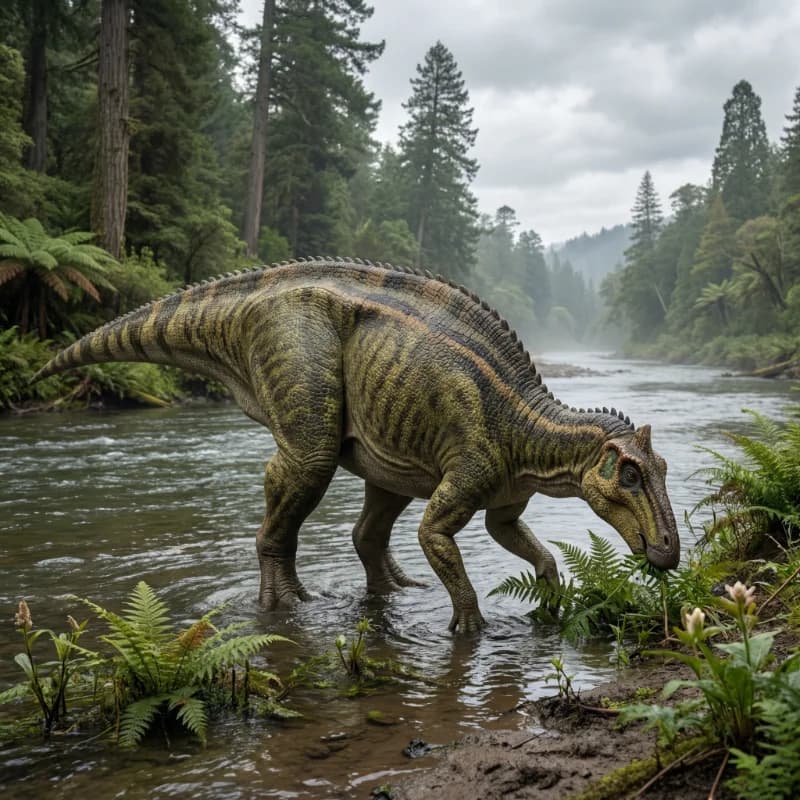
Hadrosaurus
Hadrosaurus foulkii
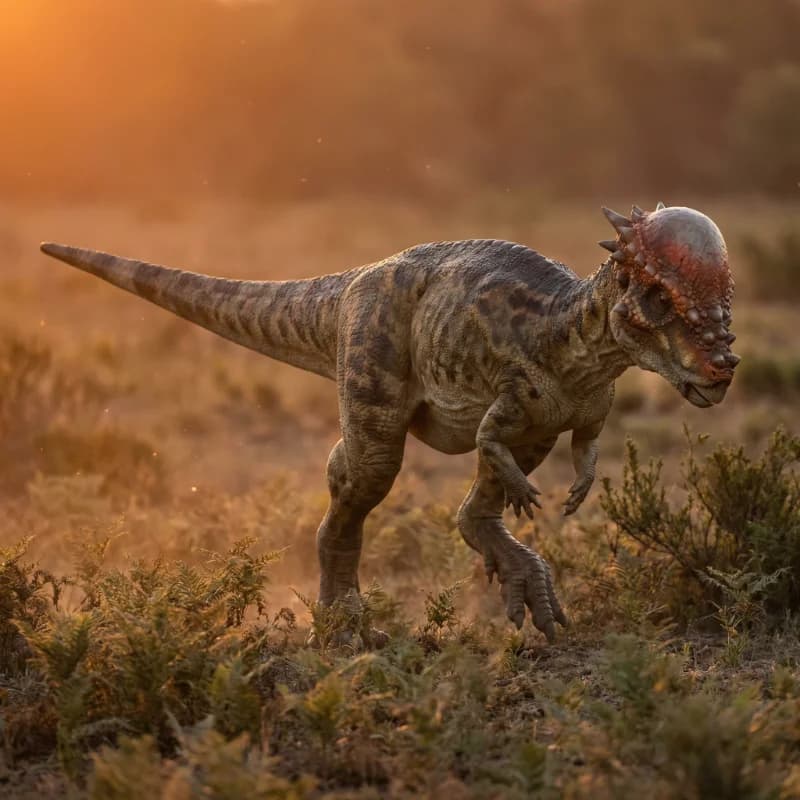
Pachycephalosaurus
Pachycephalosaurus wyomingensis
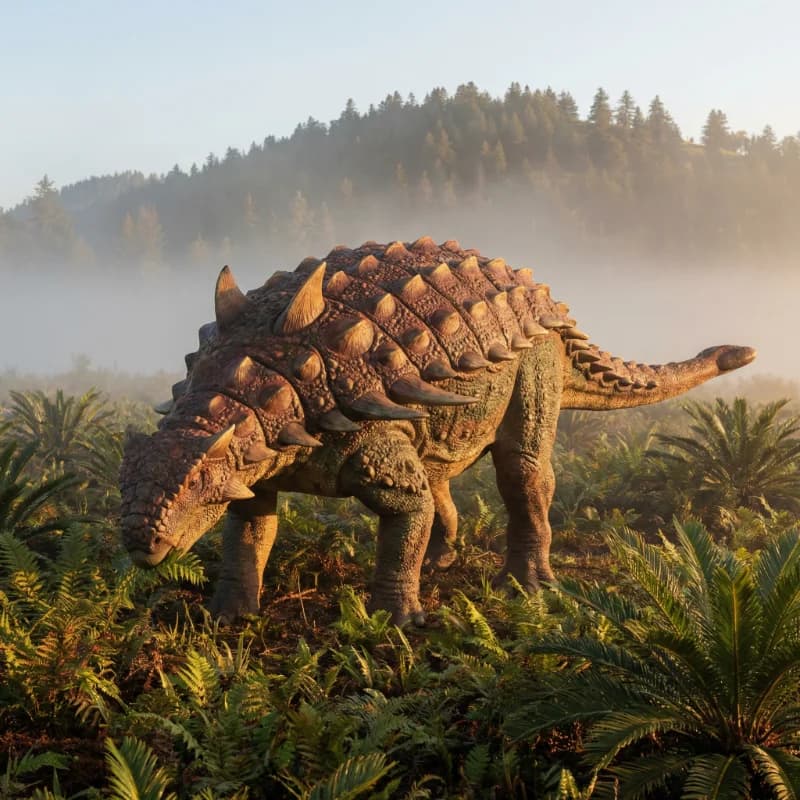
Peloroplites
Peloroplites cedrimontanus

Leaellynasaura
Leaellynasaura amicagraphica
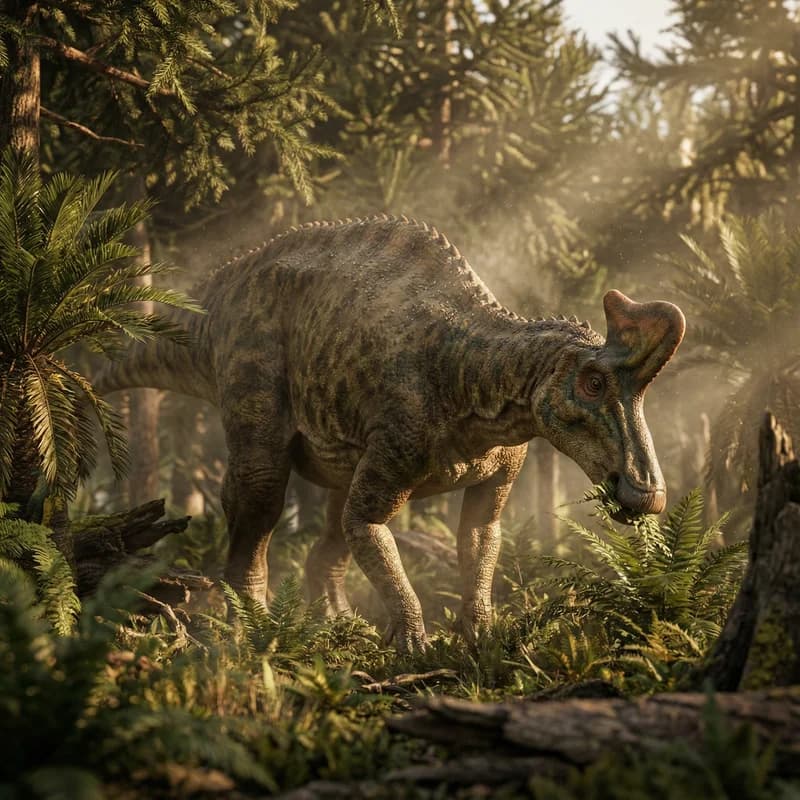
Lambeosaurus
Lambeosaurus lambei

Medusaceratops
Medusaceratops lokii
Kosmoceratops
Kosmoceratops richardsoni
Wuerhosaurus
Wuerhosaurus homheni