Lambeosaurus
Cretaceous Period Herbivore Creature Type
Lambeosaurus lambei
Scientific Name: "Lambe (Lawrence Lambe) + sauros (lizard) = Lambe's lizard"
Local Name: Lambeosaurus
Physical Characteristics
Discovery
Habitat

Lambeosaurus (Lambeosaurus Parks, 1923) is a large herbivorous hadrosaurid dinosaur from the Late Cretaceous Campanian stage (approximately 76.47–74.44 Ma) of western North America. Named in honour of Canadian palaeontologist Lawrence M. Lambe (1863–1919), it belongs to the order Ornithischia, suborder Ornithopoda, family Hadrosauridae, subfamily Lambeosaurinae, and tribe Lambeosaurini. It is the eponymous genus of the Lambeosaurinae and one of the most thoroughly documented lambeosaurine hadrosaurs.
The most conspicuous feature of Lambeosaurus is the hatchet-shaped hollow cranial crest that projects above the skull. The crest is formed primarily by an extreme expansion of the premaxillae, and houses a complex, S-shaped nasal passage system. A landmark 2026 CT scanning study by Dudgeon et al. revealed that the internal nasal anatomy of adult L. lambei is far more convoluted than previously recognized, including a unique "dorsal loop" absent in the closely related Corythosaurus and Hypacrosaurus. This structure likely contributed to low-frequency vocal resonance, suggesting that co-existing lambeosaurines produced acoustically distinct calls.
Three species are currently recognized as valid: the type species Lambeosaurus lambei Parks, 1923; L. magnicristatus Sternberg, 1935; and L. clavinitialis Sternberg, 1935. Adults reached approximately 7–7.7 m in length, 2.6–3.4 tonnes in body mass, and roughly 2.1 m in hip height. Fossils are known predominantly from the Dinosaur Park Formation (DPF) of southern Alberta, Canada, where these animals inhabited a coastal plain with meandering rivers adjacent to the Western Interior Seaway. Skin impressions and specimens spanning multiple growth stages make Lambeosaurus an invaluable model taxon for studies of ontogeny, integument, and crest-mediated behaviour in ornithopod dinosaurs.
Overview
Name and Etymology
The name Lambeosaurus derives from the surname of Canadian palaeontologist Lawrence M. Lambe combined with the Greek sauros (σαῦρος, "lizard"), meaning "Lambe's lizard." Lambe conducted pioneering fieldwork along the Red Deer River in Alberta from the 1890s onward and was the first to describe crested hadrosaur skulls from the region. In 1920, he assigned a well-preserved skull (CMN 2869) to Stephanosaurus, but as Barnum Brown had noted in 1914, the type material of Stephanosaurus lacked cranial elements, preventing confident referral of the crested skulls. After Lambe's death in 1919, William A. Parks erected the new genus Lambeosaurus in 1923 to accommodate these skulls, explicitly crediting Lambe's earlier contributions (Parks, 1923; Gilmore, 1924).
Taxonomic Status and Valid Species
Historically, numerous species were assigned to Lambeosaurus, but only three are currently regarded as valid.
Lambeosaurus lambei Parks, 1923 is the type species. Its holotype, CMN 2869 (a nearly complete skull and right mandible), was collected by Charles M. Sternberg in 1917 approximately 6.4 km southeast of the mouth of Little Sandhill Creek. Parks did not originally designate a type specimen; Charles W. Gilmore selected CMN 2869 as the holotype in 1924. This species is characterized by a hatchet-shaped crest with a prominent posterior spur. Over 11 specimens are known.
Lambeosaurus magnicristatus Sternberg, 1935 is based on holotype CMN 8705, found by C.M. Sternberg in 1919 approximately 4.8 km southwest of Little Sandhill Creek. It is distinguished by a large, rounded crest lacking a posterior spur and by differences in the pubic bone (Evans & Reisz, 2007). It is stratigraphically younger than L. lambei.
Lambeosaurus clavinitialis Sternberg, 1935 is based on holotype CMN 8703, found nearby in 1928. Previously interpreted as a female of L. lambei or L. magnicristatus, stratigraphic data now support its recognition as a separate species or at least a temporally distinct population (Evans, 2007; Brink et al., 2014). In Xing et al.'s (2022) phylogenetic analysis, L. clavinitialis is recovered as basal to a clade of L. lambei + L. magnicristatus, and crest morphometrics significantly differentiate it from both congeners (Brink et al., 2014).
Historically included species L. laticaudus Morris, 1981 (from Baja California, Mexico) was reclassified as the separate genus Magnapaulia by Prieto-Márquez et al. (2012), and Procheneosaurus convincens (from Kazakhstan) was reassigned to Kazaklambia by Brink & Bell (2013).
Scientific Significance
As the eponymous genus of Lambeosaurinae and a core member of Lambeosaurini, Lambeosaurus occupies a pivotal position in hadrosaurid taxonomy and evolutionary studies. Specimens spanning juvenile to adult growth stages allow detailed tracking of ontogenetic changes in crest morphology (Dodson, 1975; Evans et al., 2005). Multiple skin impression fossils contribute to our understanding of dinosaur integument. The 2026 study by Dudgeon et al. provided the first detailed CT-based reconstruction of adult L. lambei nasal passages, revealing far greater complexity than previously appreciated and opening new avenues for understanding dinosaur vocalization and acoustic ecology.
Age, Stratigraphy, and Depositional Environment
Temporal Range
Lambeosaurus fossils are restricted to the Late Cretaceous Campanian stage (approximately 76.47–74.44 Ma) of the Dinosaur Park Formation (Eberth, 2005). The three species show temporal separation within the formation. L. clavinitialis is the oldest, known from the middle Campanian, with five known specimens. L. lambei ranges from approximately 75.5 to 75 Ma, persisting for roughly 300,000 years, and is documented by over 11 specimens. L. magnicristatus appears later in the sequence at approximately 74.8 Ma (Evans & Reisz, 2007; Evans, 2007).
Formation and Lithology
The Dinosaur Park Formation is an Upper Cretaceous terrestrial unit in southern Alberta belonging to the Judith River Group. It is exposed along the Red Deer River, overlying the Oldman Formation, and ranges from approximately 70 to 90 m in thickness. The dominant lithofacies comprise fluvial channel sandstones, floodplain mudstones and siltstones, and coal seams. Sedimentological analysis indicates deposition by low-gradient, highly sinuous meandering rivers traversing floodplain paleosols (Eberth & Hamblin, 1993).
Paleoenvironment
The paleoenvironment of the Dinosaur Park Formation is interpreted as an alluvial-coastal plain adjacent to the Western Interior Seaway. The paleolatitude was approximately 56°N (Brinkman, 2003), under subtropical to warm-temperate climatic conditions significantly warmer than today. Meandering rivers traversed densely vegetated landscapes, with a rich flora of conifers, ferns, horsetails, and early angiosperms (Eberth, 2005). A pronounced dry-wet seasonal cycle has been suggested. The associated fauna includes diverse invertebrates, fish, turtles, crocodilians, mammals, and numerous other megaherbivorous dinosaurs.
Specimens and Diagnostic Characters
Key Specimens
| Specimen | Species | Elements | Locality / Formation | Notes |
|---|---|---|---|---|
| CMN 2869 | L. lambei (holotype) | Nearly complete skull and right mandible | Little Sandhill Creek SE 6.4 km, DPF | C.M. Sternberg 1917; Gilmore 1924 designated holotype |
| CMN 351 | L. clavinitialis | Skull | Berry Creek SE 5.6 km, DPF | C.H. Sternberg 1913; originally assigned to Stephanosaurus |
| CMN 8503 | L. lambei | Partial skull and articulated skeleton | Little Sandhill Creek W 5.6 km, DPF | C.M. Sternberg 1917 |
| CMN 8703 | L. clavinitialis (holotype) | Skull and skeleton, extensive skin impressions | Berry Creek S 4.0 km, DPF | C.M. Sternberg 1928 |
| CMN 8705 | L. magnicristatus (holotype) | Nearly complete skull and skeleton | Little Sandhill Creek SW 4.8 km, DPF | C.M. Sternberg 1919; water-damaged in storage |
| TMP 1966.04.1 | L. magnicristatus | Semi-articulated skeleton, skin impressions | Manyberries SE 11 km, DPF | C.M. Sternberg 1937; basis for Evans & Reisz 2007 redescription |
| ROM 1218 | L. lambei | Partial skeleton, skin impressions | South bank of Red Deer River, DPF | 1919; includes feature scale arrangement |
| TMP 1982.038.0001 | L. lambei | Nearly complete skull, jaws, partial postcrania | Dinosaur Provincial Park, DPF | 1982; CT scanned for Dudgeon et al. 2026 |
| FMNH UC 1479 | L. lambei | Skull | DPF | Levi Sternberg 1926 |
| FMNH PR 380 | Lambeosaurus sp. | Skeleton (skull absent) | DPF | Field Museum 1922; originally identified as Prosaurolophus |
The skeletons of L. lambei and L. clavinitialis are completely known, while L. magnicristatus is approximately 81% complete skeletally (Evans & Reisz, 2007).
Diagnostic Characters
Lambeosaurus is distinguished from other lambeosaurine genera by a combination of characters (Evans & Reisz, 2007; Prieto-Márquez, 2010): a hatchet-shaped hollow cranial crest formed by dorsally expanded premaxillae; S-shaped nasal passages within the crest (with exceptionally exaggerated convolutions in adults); external nares entirely enclosed by the premaxillae; crest apex positioned above the orbit; and a posterior spur formed by the nasal bones in some species. The critical distinction from Corythosaurus lies in the premaxilla-nasal articulation: in Lambeosaurus the premaxillae extend over the nasals, whereas in Corythosaurus the premaxillae insert between two branches of the nasal (Evans et al., 2005). This difference is identifiable even in the youngest juveniles before crest development.
At the species level, crest morphology provides the primary distinction: L. lambei has a hatchet-shaped crest with a prominent posterior spur; L. magnicristatus has a large, rounded crest lacking a posterior spur and a reduced prepubic expansion of the pubis; L. clavinitialis has a less developed posterior spur than L. lambei.
Nomenclatural Complexity
The nomenclatural history of Lambeosaurus is convoluted. Lambe initially assigned the crested skulls to Stephanosaurus, but the type material of that genus lacked cranial elements, making comparison impossible (Brown, 1914; Gilmore, 1924). Additionally, small individuals named as separate genera — Tetragonosaurus (Parks, 1931) and Procheneosaurus (Matthew, 1920) — were later demonstrated to be juveniles of Lambeosaurus and Corythosaurus (Dodson, 1975). Notably, Evans et al. (2005) showed that the type specimen of Tetragonosaurus cranibrevis exhibits Lambeosaurus rather than Corythosaurus anatomy, making it a synonym of Lambeosaurus rather than Corythosaurus as previously assumed.
Morphology and Function
Body Size
Adult Lambeosaurus (L. lambei, L. magnicristatus, L. clavinitialis) reached approximately 7–7.7 m in total length, 2.6–3.4 tonnes in body mass, and approximately 2.1 m in hip height. This is comparable to Corythosaurus (approximately 8 m, approximately 3 t) and Hypacrosaurus, making Lambeosaurus among the largest lambeosaurines excluding Magnapaulia (Evans & Reisz, 2007). Selected measurements from the L. clavinitialis holotype (CMN 8703) include a femur length of approximately 1.02 m, humerus length of approximately 52 cm, and ilium length of approximately 1.035 m (Sternberg, 1935). Popular sources frequently cite lengths of 9–15 m for Lambeosaurus; these figures conflate the currently recognized species with Magnapaulia laticaudus (formerly L. laticaudus), which was separated into its own genus in 2012.
Skull and Crest
The skull of Lambeosaurus bears an elaborate, narrow, tall hollow crest that is the genus's most distinctive feature. The crest is formed primarily by the premaxillae, which have expanded dorsally over the skull roof, rearranging the other cranial roof bones. The posterior spur is formed by the nasal bones. Inside the crest, S-shaped looping nasal passages connect the external nares (nostrils) with the internal nares, inflating the crest on either side (Ostrom, 1961; Evans, 2006).
Dudgeon et al. (2026) provided the first detailed CT-based description of the internal nasal anatomy of an adult L. lambei (TMP 1982.038.0001). Their study revealed that the S-loops in L. lambei are far more convoluted than previously appreciated, forming exaggerated loops anterior to the orbit that are the most extreme known among lambeosaurines. Uniquely, L. lambei possesses a "dorsal loop" connecting the S-loop to the common median chamber, a structure absent in Corythosaurus. The direction of S-loop curvature proceeds from lateral to medial within the premaxilla, shared with Corythosaurus but contrasting with the medial-to-lateral progression in Hypacrosaurus altispinus. The lateral diverticula in L. lambei project exclusively posteriorly from the common median chamber, differing from Corythosaurus where both anterior and posterior projections are present.
Beyond the crest, the snout is formed entirely by the premaxillae, braced beneath by the maxilla. The maxilla bears 39 to 40 uniform teeth in a closely packed dental battery (Gilmore, 1924; Evans & Reisz, 2007). The dentary contains 40 or 41 vertical columns of up to three functional teeth each.
Crest Function
Historically, numerous functions were proposed for the lambeosaurine crest, including defence (Abel, 1924), underwater air storage, enhanced olfaction, and muscle attachment. Modern consensus centres on two primary functions: socio-sexual visual display and vocal resonance (Weishampel, 1981; Evans et al., 2009; Dudgeon et al., 2026). Weishampel's (1981) acoustic analysis proposed that the internal nasal passages functioned as a resonating chamber, amplifying low-frequency vocalizations. Dudgeon et al. (2026) showed that the nasal passages of adult L. lambei are significantly longer and more convoluted than those of Corythosaurus, indicating potential for lower-frequency sound production. Given that these genera were partially contemporaneous with each other and with Parasaurolophus walkeri in the Dinosaur Park Formation, this suggests a potentially broad prehistoric soundscape with species-specific calls.
Secondary functions in species recognition and sexual display are supported by the variation in crest form among species, sexes, and age classes (Dodson, 1975).
Locomotion
Lambeosaurus was a semi-quadrupedal animal capable of both bipedal and quadrupedal locomotion. The forelimbs were shorter than the hindlimbs but relatively more robust than in Corythosaurus, with the radius and ulna exceeding the humerus in length (Evans & Reisz, 2007). The hand bore four digits (the thumb was absent); the second and third digits had hooves that would have been oriented slightly inward during walking, while the fifth digit was free and may have been capable of limited manipulation. The foot was reduced to three central toes, each with a spade-shaped hoof (Horner et al., 2004). The tail was stiffened by ossified tendons and held horizontally, preventing drooping.
Integument
Skin impressions are known from three Lambeosaurus specimens. ROM 1218 (L. lambei) preserves relatively large scales 7–9 mm in diameter, plus a unique subcircular "feature scale" arrangement 12 mm across, formed by eight wedge-shaped scales converging to a central point (Davis, 2014). This feature scale pattern is absent in Corythosaurus.
CMN 8703 (L. clavinitialis) preserves extensive in-situ skin impressions covering the ribs, the leg anterior to the femur, the area above the hip, and the first 1.2 m of the tail. The scales are relatively small and undifferentiated. The continuity of skin from the torso to the side of the leg demonstrates that the upper thigh was enclosed within the body wall (Sternberg, 1935).
TMP 1966.04.1 (L. magnicristatus) has in-situ skin patches along the neck, forelimb, and leg, consisting of small polygonal scales approximately 5 mm in diameter with no overlap or patterning (Evans & Reisz, 2007).
Diet and Ecology
Feeding Behaviour
Lambeosaurus was herbivorous, equipped with highly specialized dental batteries for processing plant material. The maxilla and dentary each bore approximately 39–41 columns of closely packed teeth, with up to three functional teeth stacked vertically per column. Only one face of each tooth crown bore enamel, optimizing the dental battery for grinding.
Dental microwear analysis by Mallon & Anderson (2013, 2014) suggested that Lambeosaurus partitioned resources with the contemporaneous saurolophine Prosaurolophus, with Lambeosaurus preferring more closed habitats, feeding closer to the ground, and maintaining a more generalized diet. Dudgeon & Evans (2025) provided quantitative biomechanical support for this resource-partitioning hypothesis through finite element analysis (FEA) of lambeosaurine and saurolophine skulls, demonstrating disparate feeding mechanics between the two lineages.
Ecological Niche and Co-occurring Fauna
Lambeosaurus occupied a specific ecological niche within the diverse megaherbivore community of the Dinosaur Park Formation. Contemporaneous lambeosaurines included Corythosaurus and Parasaurolophus, while Prosaurolophus represented the saurolophine lineage.
Predators included the large tyrannosaurids Gorgosaurus and Daspletosaurus. The Lambeosaurus skeleton at the Field Museum (FMNH PR 380) is displayed in a scene being scavenged by Daspletosaurus. Other co-occurring dinosaurs include the ceratopsians Centrosaurus, Styracosaurus, and Chasmosaurus, and the pachycephalosaur Stegoceras.
Social Behaviour
If the crest functioned in species recognition, vocal communication, and sexual display, Lambeosaurus likely lived in groups and actively utilized the crest for intraspecific interaction. The resonant capabilities of the hollow crest may have enabled long-distance communication. The dramatically different crest morphology between juveniles and adults also suggests a role in age-class recognition. The concentration of multiple specimens in the same geographic area provides indirect evidence for gregarious behaviour.
Distribution and Paleogeography
Geographic Distribution
Lambeosaurus fossils are concentrated in the Red Deer River region of Alberta, particularly in and around Dinosaur Provincial Park. Key collection areas include Berry Creek, Little Sandhill Creek, and the Happy Jack Ferry locality. Some material has also been reported from the Bearpaw Formation of Montana (Horner, 1979), representing the first lambeosaur specimen from marine sediments. The L. magnicristatus specimen TMP 1966.04.1 was found approximately 11 km southeast of Manyberries, Alberta.
Stratigraphic Range and Species Distribution
Within the Dinosaur Park Formation, the three Lambeosaurus species show temporal segregation. L. clavinitialis is the oldest, restricted to the middle Campanian, with five known specimens. L. lambei ranges from the middle to late Campanian (approximately 75.5–75 Ma), persisting for roughly 300,000 years, with over 11 specimens. L. magnicristatus appeared later in the late Campanian (approximately 74.8 Ma). This temporal separation spans approximately 2 million years and documents species turnover within a single lineage, supporting the interpretation that L. clavinitialis is a separate species rather than a sexual dimorph of L. lambei or L. magnicristatus (Evans, 2007).
Paleogeography
During the Campanian, the Dinosaur Park Formation locality was situated at approximately 56°N paleolatitude (Brinkman, 2003), on the western landmass of Laramidia, adjacent to the Western Interior Seaway. Climatic conditions were significantly warmer than present-day Alberta, supporting subtropical to warm-temperate ecosystems.
Phylogeny and Taxonomic Debates
Phylogenetic Relationships
Lambeosaurus is the eponymous genus of Lambeosaurinae and a core member of the tribe Lambeosaurini, alongside Corythosaurus and Hypacrosaurus. In Xing et al.'s (2022) phylogenetic analysis, L. clavinitialis is basal to a L. lambei + L. magnicristatus sister-group clade. Most phylogenies recover Corythosaurus and Hypacrosaurus as more closely related to each other than either is to Lambeosaurus (Evans & Reisz, 2007; Gates et al., 2021; Xing et al., 2022), though some analyses differ (Prieto-Márquez, 2010).
Dudgeon et al. (2026) suggested that internal nasal anatomy provides phylogenetically informative characters not evident from external crest morphology. In particular, the direction of S-loop curvature (lateral-to-medial in Corythosaurus and Lambeosaurus vs. medial-to-lateral in Hypacrosaurus) and the relative development of the lateral diverticula differ markedly between genera. If the Corythosaurus–Hypacrosaurus sister-group relationship is correct, the reversed S-loop curvature and anteriorly expanded diverticula in Hypacrosaurus represent derived modifications independent of external crest shape.
Historical Taxonomic Debates
Juveniles of Lambeosaurus, Corythosaurus, and Hypacrosaurus were historically named as separate genera — Procheneosaurus (Matthew, 1920), Tetragonosaurus (Parks, 1931), and Cheneosaurus — before Dodson (1975) demonstrated they represented immature growth stages of the larger lambeosaurines. Procheneosaurus praeceps was reassigned to L. lambei, while P. erectofrons was reassigned to Corythosaurus. The nomenclatural priority of Procheneosaurus over Tetragonosaurus was resolved by an ICZN ruling in 1947. Procheneosaurus is currently treated as a synonym of Lambeosaurus.
The species Hadrosaurus paucidens, briefly assigned to Lambeosaurus by Ostrom, is considered an undiagnostic hadrosaurid (Weishampel & Horner, 1990).
Reconstruction and Uncertainty
Established Facts
The following are well-supported by multiple complete specimens: Lambeosaurus was a large hadrosaurid bearing a hatchet-shaped hollow cranial crest; it was herbivorous with specialized dental batteries; it was capable of bipedal and quadrupedal locomotion; it inhabited coastal plains during the Campanian of North America; and its crest housed complex S-shaped nasal passages (confirmed by CT scanning: Evans et al., 2009; Dudgeon et al., 2026).
Well-Supported Hypotheses
The resonance function of the crest (Weishampel, 1981; Evans et al., 2009; Dudgeon et al., 2026), species recognition and sexual display functions (Dodson, 1975), ecological niche partitioning with saurolophines (Mallon & Anderson, 2013; Dudgeon & Evans, 2025), and the ontogenetic trajectory of crest growth (Dodson, 1975; Evans et al., 2005) are supported by multiple independent lines of evidence.
Uncertain or Unresolved Questions
The precise pitch and acoustic characteristics of crest-produced sounds, skin colour and patterning, detailed social structure and group size, and whether L. clavinitialis represents a fully distinct species or a chronospecies of the L. lambei lineage remain unresolved. The functional significance of the feature scales (ROM 1218) is also unknown.
Popular Media vs. Scientific Literature
Popular sources frequently depict Lambeosaurus as 9–15 m long and weighing 5–20 tonnes. The scientifically recognized species measure 7–7.7 m and 2.6–3.4 t. The larger figures derive from the former Lambeosaurus laticaudus, now classified as Magnapaulia, which reached approximately 12–15 m in length.
Comparison with Related Taxa
| Genus | Total length | Body mass | Crest form | Key internal anatomical difference |
|---|---|---|---|---|
| Lambeosaurus | 7–7.7 m | 2.6–3.4 t | Hatchet-shaped; posterior spur present/absent | Extremely developed S-loops + unique dorsal loop; lateral diverticula project posteriorly only |
| Corythosaurus | 8 m | 3 t | Semicircular / helmet-shaped | Well-developed S-loops; lateral diverticula project both anteriorly and posteriorly |
| Hypacrosaurus | 8 m | 3 t | Semicircular, more pointed | S-loops curve medial-to-lateral; anterior diverticula extremely developed |
| Parasaurolophus | 9.5 m | 2.5 t | Long, backward-projecting tubular crest | Simple U-shaped nasal passages within the tube |
| Magnapaulia | 12–15 m | ~5 t | Unknown (skull undiscovered) | Internal structure unknown |
Fun Facts
FAQ
📚References
- Parks, W. A. (1923). "Corythosaurus intermedius, a new species of trachodont dinosaur." University of Toronto Studies, Geological Series. 15: 1–57.
- Gilmore, C. W. (1924). "On the genus Stephanosaurus, with a description of the type specimen of Lambeosaurus lambei Parks." National Museum of Canada Bulletin. 38: 29–48.
- Dodson, P. (1975). "Taxonomic implications of relative growth in lambeosaurine hadrosaurs." Systematic Zoology. 24(1): 37–54. doi:10.2307/2412696
- Weishampel, D. B. (1981). "Acoustic analyses of potential vocalization in lambeosaurine dinosaurs (Reptilia: Ornithischia)." Paleobiology. 7(2): 252–261. doi:10.1017/S0094837300004036
- Sternberg, C. M. (1935). "Hooded hadrosaurs of the Belly River Series of Alberta." National Museum of Canada Bulletin. 77: 1–37.
- Evans, D. C. (2006). "Nasal cavity homologies and cranial crest function in lambeosaurine dinosaurs." Paleobiology. 32(1): 109–125. doi:10.1666/04027.1
- Evans, D. C.; Reisz, R. R. (2007). "Anatomy and relationships of Lambeosaurus magnicristatus, a crested hadrosaurid dinosaur (Ornithischia) from the Dinosaur Park Formation, Alberta." Journal of Vertebrate Paleontology. 27(2): 373–393. doi:10.1671/0272-4634(2007)27[373:AAROLM]2.0.CO;2
- Evans, D. C.; Forster, C. A.; Reisz, R. R. (2005). "The type specimen of Tetragonosaurus erectofrons (Ornithischia: Hadrosauridae) and the identification of juvenile lambeosaurines." In Dinosaur Provincial Park: A Spectacular Ancient Ecosystem Revealed. Indiana University Press. pp. 349–366.
- Evans, D. C.; Ridgely, R. C.; Witmer, L. M. (2009). "Endocranial anatomy of lambeosaurine hadrosaurids (Dinosauria: Ornithischia): a sensorineural perspective on cranial crest function." The Anatomical Record. 292(9): 1315–1337. doi:10.1002/ar.20984
- Dudgeon, T. W.; Brown, C.; Evans, D. C. (2026). "The internal crest anatomy of Lambeosaurini (Hadrosauridae: Lambeosaurinae)." The Anatomical Record. 1–14. doi:10.1002/ar.70125
- Dudgeon, T. W.; Evans, D. C. (2025). "Disparate feeding mechanics between two hadrosaurid dinosaurs support the potential for resource partitioning." Proceedings of the Royal Society B. 292: 20250921.
- Prieto-Márquez, A.; Chiappe, L. M.; Joshi, S. H. (2012). "The lambeosaurine dinosaur Magnapaulia laticaudus from the Late Cretaceous of Baja California, northwestern Mexico." PLOS ONE. 7(6): e38207. doi:10.1371/journal.pone.0038207
- Brink, K. S.; Zelenitsky, D. K.; Evans, D. C.; Therrien, F.; Horner, J. R. (2014). "Cranial morphometrics of lambeosaurine hadrosaurid dinosaurs: species recognition, growth, and morphology." Journal of Vertebrate Paleontology. 34(4): 856–868. doi:10.1080/02724634.2014.846867
- Xing, H.; Mallon, J. C.; Currie, P. J. (2022). "Supplementary cranial description of Parasaurolophus tubicen (Ornithischia: Lambeosaurini) and phylogenetic analysis of the genus." Cretaceous Research. 137: 105254. doi:10.1016/j.cretres.2022.105254
- Mallon, J. C.; Anderson, J. S. (2013). "Skull ecomorphology of megaherbivorous dinosaurs from the Dinosaur Park Formation (Upper Campanian) of Alberta, Canada." PLOS ONE. 8(7): e67182. doi:10.1371/journal.pone.0067182
- Horner, J. R.; Weishampel, D. B.; Forster, C. A. (2004). "Hadrosauridae." In Weishampel, D. B.; Dodson, P.; Osmólska, H. (eds.). The Dinosauria (2nd ed.). University of California Press. pp. 438–463.
- Eberth, D. A. (2005). "The geology." In Dinosaur Provincial Park: A Spectacular Ancient Ecosystem Revealed. Indiana University Press. pp. 54–82.
- Eberth, D. A.; Hamblin, A. P. (1993). "Tectonic, stratigraphic, and sedimentologic significance of a regional discontinuity in the upper Judith River Group of southern Alberta, Saskatchewan, and northern Montana." Canadian Journal of Earth Sciences. 30(1): 174–200. doi:10.1139/e93-015
- Davis, M. (2014). "Census of dinosaur skin reveals lithology may not be the most important factor in exceptional fossil preservation." Acta Palaeontologica Polonica. 59(3): 601–620. doi:10.4202/app.2012.0077
- Lull, R. S.; Wright, N. E. (1942). "Hadrosaurian dinosaurs of North America." Geological Society of America Special Paper. 40: 1–242.
- Ostrom, J. H. (1961). "Cranial morphology of the hadrosaurian dinosaurs of North America." Bulletin of the American Museum of Natural History. 122(2): 33–186.
- Brink, K. S.; Bell, P. R. (2013). "Kazaklambia convincens comb. nov., a primitive juvenile lambeosaurine from the Santonian of Kazakhstan." Cretaceous Research. 45: 265–274.
Gallery
5 images Lambeosaurus
Lambeosaurus · Cretaceous Period · Herbivore
 Lambeosaurus
Lambeosaurus · Cretaceous Period · Herbivore
 Lambeosaurus
Lambeosaurus · Cretaceous Period · Herbivore
 Lambeosaurus
Lambeosaurus · Cretaceous Period · Herbivore
 Lambeosaurus
Lambeosaurus · Cretaceous Period · Herbivore
🔗Related Creatures
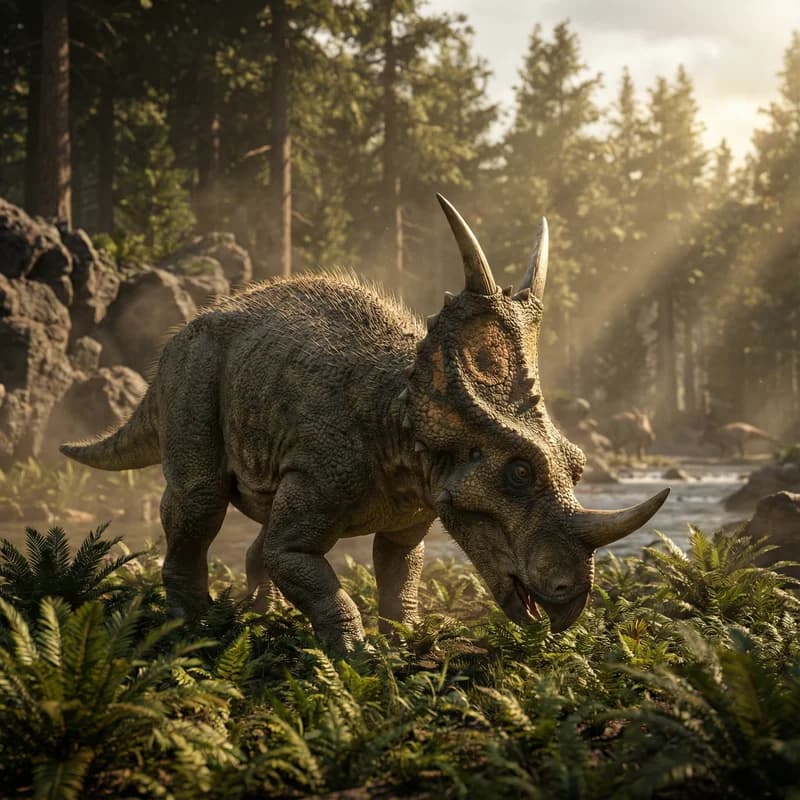
Einiosaurus
Einiosaurus procurvicornis
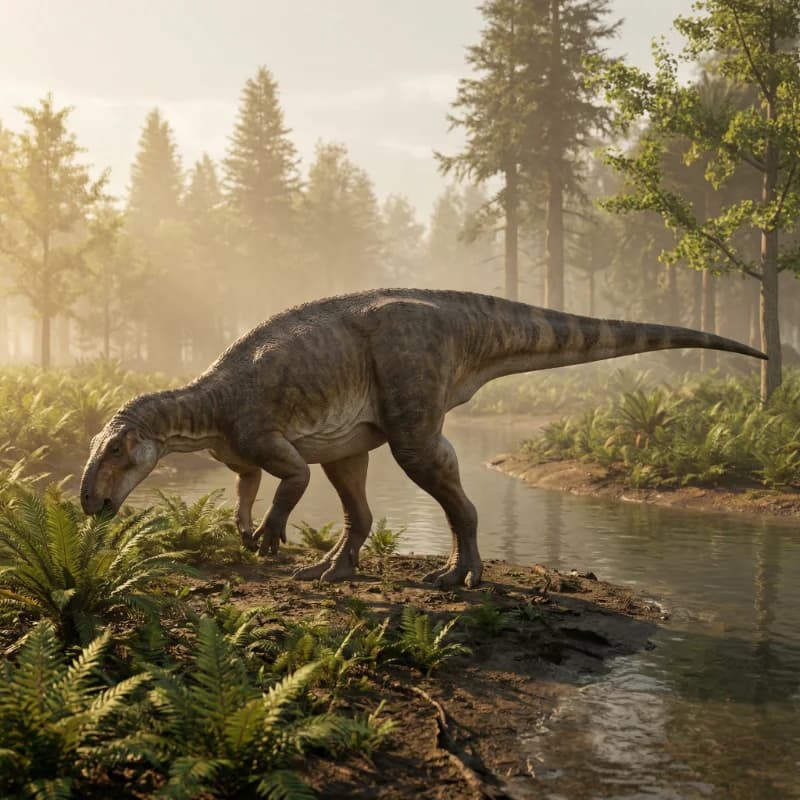
Tenontosaurus
Tenontosaurus tilletti
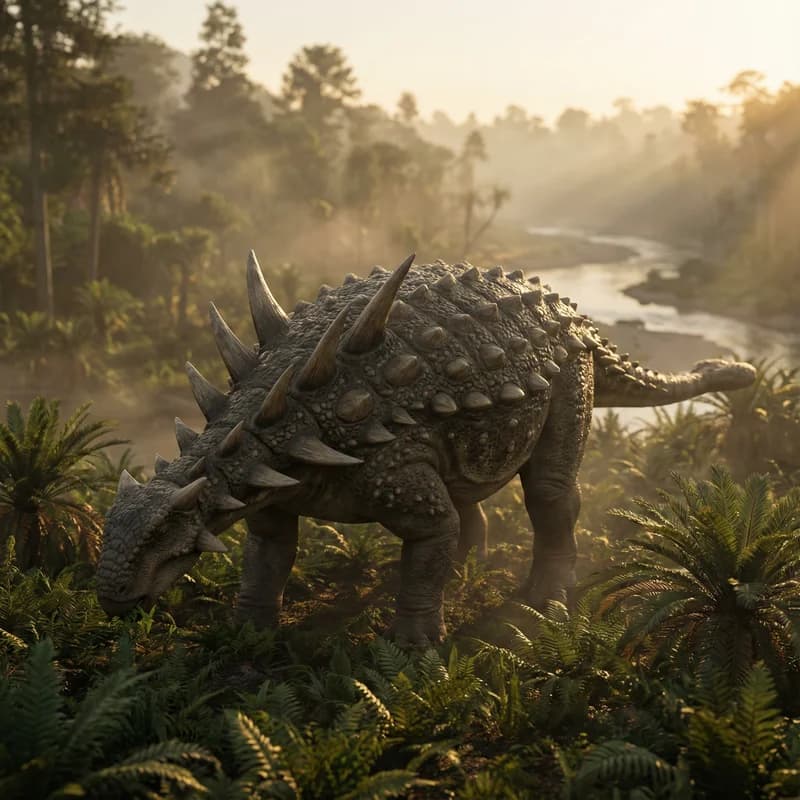
Sauropelta
Sauropelta edwardsorum
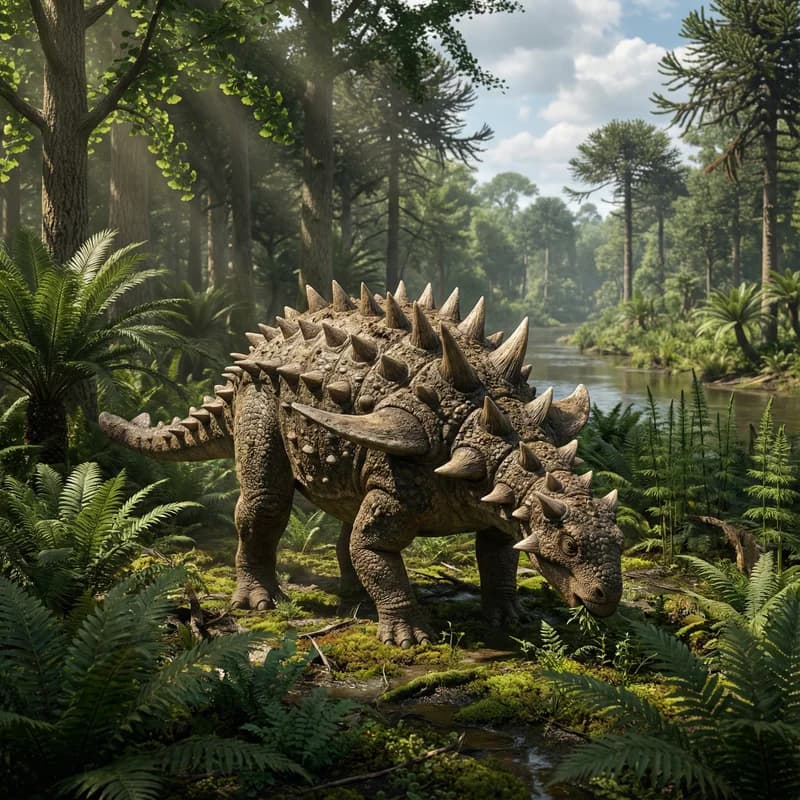
Polacanthus
Polacanthus foxii
Pachyrhinosaurus
Pachyrhinosaurus
Utahceratops
Utahceratops gettyi
Ouranosaurus
Ouranosaurus nigeriensis

Diabloceratops
Diabloceratops eatoni