Pachycephalosaurus
Cretaceous Period Herbivore Creature Type
Pachycephalosaurus wyomingensis
Scientific Name: "pachys (thick) + kephalē (head) + sauros (lizard) = 'thick-headed lizard'"
Local Name: Pachycephalosaurus
Physical Characteristics
Discovery
Habitat

Pachycephalosaurus (Pachycephalosaurus wyomingensis (Gilmore, 1931) Brown & Schlaikjer, 1943) is a pachycephalosaurid ornithischian dinosaur from the Late Cretaceous (Maastrichtian, ~70–66 Ma) of western North America. It is the largest and most famous member of the dome-headed dinosaur clade Pachycephalosauria, estimated at roughly 4.5 m in length and 370–450 kg in body mass (Paul, 2010). Its most distinctive feature is an enormously thickened frontoparietal dome on the skull roof, reaching up to 22 cm in thickness—the thickest skull of any known dinosaur. The function of this dome has been the subject of vigorous scientific debate for decades, with competing hypotheses including intraspecific head-butting, flank-butting, and sexual display.
Anatomical knowledge of Pachycephalosaurus is overwhelmingly based on cranial material; postcranial remains are exceedingly rare. The most complete individual, the "Sandy" specimen discovered in 1994, preserves approximately 50% of the skeleton—an exceptional level of completeness for this genus. Pachycephalosaurus was among the very last non-avian dinosaurs on Earth, coexisting with Tyrannosaurus rex, Triceratops horridus, and Edmontosaurus in the ecosystems immediately preceding the Cretaceous–Paleogene (K–Pg) mass extinction event approximately 66 million years ago.
Since Horner & Goodwin's landmark 2009 study, a compelling body of evidence has suggested that two genera previously considered distinct—Stygimoloch spinifer and Dracorex hogwartsia—may represent juvenile and subadult growth stages of Pachycephalosaurus, respectively. This ontogenetic synonymy hypothesis, further supported by baby skull discoveries in 2016 (Goodwin, Evans et al.), has profoundly reshaped our understanding of cranial variation and taxonomic diversity among pachycephalosaurids, though some stratigraphic questions remain.
Overview
Name and Etymology
The genus name Pachycephalosaurus derives from the Ancient Greek pachys (παχύς, "thick"), kephalē (κεφαλή, "head"), and sauros (σαῦρος, "lizard"), meaning "thick-headed lizard." The specific epithet wyomingensis refers to the U.S. state of Wyoming, where the holotype was collected. The name directly describes the genus's most defining character: an extraordinarily thickened frontoparietal dome that can reach up to 22 cm in thickness.
Naming History and Taxonomic Status
The currently valid species, P. wyomingensis, traces its origin to 1931, when Charles W. Gilmore described an incomplete skull (USNM 12031) from the Lance Formation of Niobrara County, Wyoming, as Troodon wyomingensis. At the time, pachycephalosaurids were incorrectly placed within Troodontidae because their teeth superficially resembled those of Troodon; this error was corrected by Charles M. Sternberg in 1945. In 1943, Barnum Brown and Erich Maren Schlaikjer established the genus Pachycephalosaurus based on more complete material—most importantly AMNH 1696, a nearly complete skull from the Hell Creek Formation near Ekalaka, Carter County, Montana. They named two species, P. grangeri (the original type species of the genus) and P. reinheimeri; both were synonymized with P. wyomingensis by Galton & Sues in 1983.
An older name, Tylosteus Leidy, 1872, was shown by Donald Baird (1979) to be based on a squamosal fragment referable to Pachycephalosaurus. Because Tylosteus had priority, it would normally have replaced Pachycephalosaurus. However, in 1985 the International Commission on Zoological Nomenclature (ICZN) ruled (Opinion 1371) that Pachycephalosaurus should be conserved, as Tylosteus had been unused for over fifty years and was based on undiagnostic material.
Only one species, P. wyomingensis, is currently considered valid. Some researchers recognize Stygimoloch spinifer as a second species, P. spinifer (Paul, 2010; Evans et al., 2021), though this remains debated.
One-Line Summary
Pachycephalosaurus is the largest known dome-headed dinosaur from the latest Cretaceous of North America, renowned for its skull dome up to 22 cm thick and the lively scientific debate surrounding its function.
Age, Stratigraphy, and Depositional Environment
Temporal Range
Pachycephalosaurus is restricted to the Maastrichtian stage of the Late Cretaceous, spanning approximately 70–66 Ma. This makes it one of the very last non-avian dinosaur lineages, persisting up to the K–Pg mass extinction boundary.
Formations and Lithology
| Formation | Region | Lithology | Notes |
|---|---|---|---|
| Hell Creek Formation | Montana, North Dakota | Sandstone, mudstone, siltstone | Most specimens, including AMNH 1696 |
| Lance Formation | Wyoming, South Dakota | Sandstone, mudstone | Holotype USNM 12031 |
| Scollard Formation | Alberta, Canada | Sandstone, mudstone | First non-dental cranial material reported in 2015 (Evans et al.) |
All three formations are late Maastrichtian (Lancian land mammal age) in age and were deposited after the retreat of the Western Interior Seaway.
Paleoenvironment
The Hell Creek Formation records an inland fluvial-floodplain system characterized by meandering rivers, floodplains, and swampy environments. The climate was warm-temperate to subtropical, supporting forests dominated by angiosperms and conifers interspersed with open floodplain habitats. The Lance Formation represents a similar depositional setting. Abundant accompanying fauna—including crocodilians, turtles, mammals, and diverse dinosaurs—confirm a species-rich terrestrial ecosystem.
Specimens and Diagnostic Characters
Holotype and Key Specimens
| Specimen | Institution | Preserved Elements | Formation/Locality | Notes |
|---|---|---|---|---|
| USNM 12031 | National Museum of Natural History, USA | Incomplete skull (frontoparietal, squamosals) | Lance Fm., Niobrara Co., Wyoming | Holotype of P. wyomingensis (Gilmore, 1931) |
| AMNH 1696 | American Museum of Natural History | Nearly complete skull | Hell Creek Fm., Carter Co., Montana | Holotype of P. grangeri (Brown & Schlaikjer, 1943); now synonym of P. wyomingensis |
| DMNS 469 | Denver Museum of Nature and Science | Dome and associated elements | Lance Fm., Corson Co., South Dakota | Holotype of P. reinheimeri; now synonym of P. wyomingensis |
| USNM 264304 | National Museum of Natural History, USA | Adult skull | Hell Creek Fm. | Adult reference specimen |
| BMR P2001.4.1 | Burpee Museum of Natural History | Skull dome | Hell Creek Fm. | Used in pathology studies (Peterson & Vittore, 2012) |
| "Sandy" | Currently in Japan (Triebold Paleontology discovery) | ~50% of skeleton including skull | Hell Creek Fm., South Dakota | Discovered 1994; most complete Pachycephalosaurus individual |
Sullivan (2006) emphasized that Pachycephalosaurus is known almost exclusively from cranial remains, and postcranial anatomy is largely inferred from better-known relatives, especially Stegoceras validum.
Diagnostic Characters
Key features distinguishing Pachycephalosaurus within Pachycephalosauridae include: (1) the largest and thickest frontoparietal dome among all pachycephalosaurs (up to ~22 cm thick); (2) well-developed bony knobs on the posterior margin of the dome and short bony projections on the snout (squamosal and nasal areas)—these were probably blunt rather than sharply pointed (Carpenter, 1997); and (3) the largest overall body size within the family.
Morphology and Function
Body Size and Proportions
Pachycephalosaurus is estimated at approximately 4.5 m in total length with a body mass of 370–450 kg, based on volumetric model estimates (Paul, 2010). Shoulder height was roughly 1.5 m, with a maximum height of about 1.8 m when the head was raised. This makes it the largest known member of Pachycephalosauridae, roughly twice the size of Stegoceras validum. However, because the postcranium is poorly known, these estimates carry appreciable uncertainty.
Cranial Architecture
The skull of Pachycephalosaurus was short and broad, with large, rounded orbits facing forward—suggesting binocular vision. The muzzle was small and terminated in a pointed beak. The teeth were small with leaf-shaped crowns. The most striking feature is the frontoparietal dome, reaching a maximum thickness of approximately 22 cm. The posterior edge of the dome bore rows of bony knobs, while short bony projections pointed upward from the snout.
A 2018 analysis of the most complete Pachycephalosaurus jaw yet found revealed steak knife-like serrated teeth in the anterior portion of the jaw, with flat, leaf-shaped teeth posteriorly. This dental heterogeneity, reminiscent of the functional division of labor seen in human dentition, raised the possibility that Pachycephalosaurus was omnivorous rather than strictly herbivorous.
The Dome Function Debate
Three primary hypotheses have been proposed for the function of the frontoparietal dome.
Head-butting hypothesis: First proposed by Galton (1970) and the most publicly recognized explanation, this posits that the dome was used in intraspecific combat analogous to bighorn sheep (Ovis canadensis) or muskoxen (Ovibos moschatus). Snively & Cox (2008) applied finite element analysis (FEA) to pachycephalosaur crania and demonstrated that the dome could safely withstand the stresses generated during head-on impacts. Most significantly, Peterson et al. (2013) conducted a systematic survey of 109 pachycephalosaurid domes and found that 22% exhibited lesions consistent with traumatic osteomyelitis. These lesions clustered near the apex of the dome—precisely where impact damage would be expected—and were absent from flat-headed juvenile specimens, providing strong evidence that dome-headed adults engaged in intraspecific head-striking.
Flank-butting hypothesis: Proposed by Sues (1978) and expanded by Carpenter (1997), this suggests that individuals lowered their heads to the side and struck opponents' flanks. Supporting evidence includes the relatively broad torso of pachycephalosaurs (which would protect internal organs), and the S- or U-shaped curvature of the neck, which may have been suboptimal for transmitting forces during head-on collisions.
Display/species recognition hypothesis: Goodwin & Horner (2004) argued from cranial histology that the dome was a transitory structure subject to rapid growth and remodeling via metaplasia, more consistent with a visual display function (analogous to cassowary casques). However, the high pathology rate documented by Peterson et al. (2013) strongly implies the dome served a combat function beyond mere display. Crucially, weapons in extant animals typically serve dual roles as both instruments of combat and honest signals of fitness, so these hypotheses are not mutually exclusive.
Locomotion and Limbs
Pachycephalosaurus was an obligate biped. Based on the postcranial anatomy of other pachycephalosaurids—primarily Stegoceras—it likely had a relatively short, thick neck, short forelimbs with five-fingered hands, a robust trunk, long hindlimbs, and a heavy tail stiffened by ossified tendons (Organ, 2006). There is no evidence for quadrupedal locomotion in this clade; the body plan is consistent with that of other bipedal ornithischians.
Diet and Ecology
Diet
Pachycephalosaurus has traditionally been classified as herbivorous, but its actual dietary ecology remains uncertain. Its small, thin teeth with leaf-shaped crowns were poorly suited for processing tough fibrous vegetation, suggesting a diet of softer leaves, fruits, and seeds. However, the 2018 discovery of serrated, blade-like premaxillary teeth in the most complete Pachycephalosaurus jaw raised the possibility of omnivory. No direct evidence from stomach contents or stable isotope analysis has been reported, so the exact diet remains at the hypothesis level.
Ecological Niche and Coexisting Fauna
Pachycephalosaurus was a member of the extraordinarily diverse Hell Creek ecosystem. Major contemporaneous taxa from the same formations include the apex predator Tyrannosaurus rex, the ceratopsians Triceratops horridus and Torosaurus, the hadrosaurid Edmontosaurus annectens, the ankylosaur Ankylosaurus magniventris, and various smaller theropods (Dakotaraptor, Acheroraptor, etc.). As a medium-sized herbivore/possible omnivore, Pachycephalosaurus would have occupied an intermediate trophic level. Juveniles and subadults were likely subject to predation by tyrannosaurs and other large theropods.
Distribution and Paleogeography
Geographic Range
Pachycephalosaurus was distributed across western Laramidia (the western landmass of North America during the Late Cretaceous). In the United States, fossils have been recovered from Montana (Hell Creek Formation), Wyoming (Lance Formation), and South Dakota (Lance Formation). In 2015, the first non-dental cranial material was reported from the Scollard Formation of Alberta, Canada (Evans et al., 2015), extending the genus's range northward and suggesting that late Maastrichtian dinosaur faunas were relatively cosmopolitan, lacking strong faunal provincialism within Laramidia.
Paleocoordinates
Paleomagnetic analysis places the Pachycephalosaurus localities at approximately 55.42°N paleolatitude and -64.55°W paleolongitude. These values differ considerably from the present-day coordinates, reflecting the westward and southward drift of the North American plate since the Late Cretaceous. At the time, the region experienced a warm-temperate to subtropical climate.
Phylogeny and Taxonomic Debate
Phylogenetic Placement
Pachycephalosaurus is classified within Ornithischia > Neornithischia > Pachycephalosauria > Pachycephalosauridae > Pachycephalosaurini. Pachycephalosauria belongs to Marginocephalia, making pachycephalosaurs the sister group of Ceratopsia (the horned dinosaurs).
Phylogenetic analyses by Evans et al. (2021) and Woodruff et al. (2023) consistently recover Pachycephalosaurus as one of the most derived taxa within Pachycephalosauridae, positioned closer to Sphaerotholus and Prenocephale than to Stegoceras. Within the tribe Pachycephalosaurini, Pachycephalosaurus is most closely related to Alaskacephale.
The Stygimoloch–Dracorex Synonymy Debate
This is arguably the most important taxonomic question surrounding Pachycephalosaurus. In 2007, Jack Horner of Montana State University first proposed at the SVP annual meeting—and in 2009 formally published with M.B. Goodwin—the hypothesis that Dracorex hogwartsia (flat skull with long horns), Stygimoloch spinifer (small dome with large horns), and Pachycephalosaurus wyomingensis (large dome with short knobs) represent juvenile, subadult, and adult growth stages of a single taxon, respectively. The key evidence includes: (1) all three morphs occur exclusively in the same time interval and geographic region (Hell Creek/Lance formations); (2) Dracorex and Stygimoloch are known only from juvenile/subadult specimens, while Pachycephalosaurus is known only from adults; and (3) cranial histology reveals extreme metaplastic bone growth capable of rapidly transforming horns into domes during ontogeny.
In 2016, Goodwin, Evans et al. described baby Pachycephalosaurus skulls from two separate bone beds in the Hell Creek Formation. These tiny skulls exhibited knob arrangements matching all three "genera," further supporting the ontogenetic series hypothesis.
However, some counterarguments persist. Evans et al. (2021) noted that Stygimoloch specimens with reliable stratigraphic data come exclusively from the upper part of the Hell Creek Formation, whereas Pachycephalosaurus morphs are from the lower part. On this basis, they treated Stygimoloch as a separate taxon in their phylogenetic analysis, though Evans himself indicated support for treating it as P. spinifer rather than a distinct genus. Paul (2010) also proposed this arrangement, and Witton and Holtz have endorsed it as a reasonable interpretation. The consensus that Dracorex represents an ontogenetic morph of either Stygimoloch or Pachycephalosaurus (rather than a distinct genus) is broadly accepted.
Reconstruction and Uncertainty
What is Established, Probable, and Hypothetical
Established: (1) An enormously thickened frontoparietal dome exists on the skull roof, reaching ~22 cm maximum thickness; (2) Pachycephalosaurus is the largest known pachycephalosaurid; (3) It is restricted to the Maastrichtian (~70–66 Ma) of western North America; (4) It was a bipedal ornithischian dinosaur; (5) Approximately 22% of dome specimens show lesions consistent with traumatic osteomyelitis (Peterson et al., 2013).
Probable: (1) Dracorex and Stygimoloch represent growth stages (juvenile/subadult) of Pachycephalosaurus—supported by multiple morphological and histological lines of evidence, though minor stratigraphic discrepancies remain under discussion; (2) The dome was used in intraspecific combat (head-butting and/or flank-butting)—supported by high pathology frequency and FEA results.
Hypothetical/Uncertain: (1) Precise body mass and proportions—the postcranium is too incomplete for confident estimation; (2) Exact diet—omnivory has been suggested based on anterior tooth morphology but lacks direct evidence (stomach contents, isotopes); (3) Behavioral ecology (herd structure, mating systems)—fossil evidence is extremely limited.
Popular Media vs. Science
In popular media, Pachycephalosaurus is almost invariably depicted violently ramming heads in direct frontal collisions. In the scientific literature, however: (1) the precise mode of combat (head-on ramming vs. flank-butting) is still debated; (2) the dome likely served dual roles in both combat and visual display; and (3) the S/U-shaped neck curvature may not have been optimal for transmitting direct head-on collision forces (Carpenter, 1997). Additionally, the possibility that Stygimoloch and Dracorex are growth stages of Pachycephalosaurus remains underappreciated in the public imagination.
Comparison with Related and Contemporary Taxa
| Taxon | Age | Formation | Est. Length | Dome Thickness | Notes |
|---|---|---|---|---|---|
| Pachycephalosaurus wyomingensis | Maastrichtian | Hell Creek/Lance Fm. | ~4.5 m | Up to 22 cm | Largest pachycephalosaurid |
| Stegoceras validum | Campanian | Dinosaur Park Fm. | ~2 m | ~8 cm | Best-known pachycephalosaurid postcranium |
| Sphaerotholus buchholtzae | Maastrichtian | Hell Creek Fm. | ~1.5–2 m | Moderate | Small-bodied; contemporary with Pachycephalosaurus |
| Prenocephale prenes | Maastrichtian | Nemegt Fm. (Mongolia) | ~2.4 m | ~8 cm | Representative Asian pachycephalosaurid |
| Platytholus clemensi | Maastrichtian | Hell Creek Fm. | Unknown | Flat | Described in 2023 (Woodruff et al.); flat-skulled form |
| Zavacephale rinpoche | Early Cretaceous (~108 Ma) | Khuren Dukh Fm. (Mongolia) | <1 m | Small dome | Oldest and most complete pachycephalosaur (2025) |
Fun Facts
FAQ
📚References
- Brown, B. & Schlaikjer, E.M. (1943). A study of the troödont dinosaurs with the description of a new genus and four new species. Bulletin of the American Museum of Natural History, 82: 121–149.
- Gilmore, C.W. (1931). A new species of troödont dinosaur from the Lance Formation of Wyoming. Proceedings of the United States National Museum, 79(9): 1–6.
- Galton, P.M. & Sues, H.-D. (1983). New data on pachycephalosaurid dinosaurs (Reptilia: Ornithischia) from North America. Canadian Journal of Earth Sciences, 20(3): 462–472.
- Horner, J.R. & Goodwin, M.B. (2009). Extreme cranial ontogeny in the Upper Cretaceous dinosaur Pachycephalosaurus. PLoS ONE, 4(10): e7626. https://doi.org/10.1371/journal.pone.0007626
- Peterson, J.E., Dischler, C. & Longrich, N.R. (2013). Distributions of cranial pathologies provide evidence for head-butting in dome-headed dinosaurs (Pachycephalosauridae). PLoS ONE, 8(7): e68620. https://doi.org/10.1371/journal.pone.0068620
- Snively, E. & Cox, A. (2008). Structural mechanics of pachycephalosaur crania permitted head-butting behavior. Palaeontologia Electronica, 11(1): 3A: 1–17.
- Goodwin, M.B. & Horner, J.R. (2004). Cranial histology of pachycephalosaurs (Ornithischia: Marginocephalia) reveals transitory structures inconsistent with head-butting behavior. Paleobiology, 30(2): 253–267.
- Carpenter, K. (1997). Agonistic behavior in pachycephalosaurs (Ornithischia: Dinosauria): a new look at head-butting behavior. Contributions to Geology, University of Wyoming, 32: 19–25.
- Sullivan, R.M. (2006). A taxonomic review of the Pachycephalosauridae (Dinosauria: Ornithischia). New Mexico Museum of Natural History and Science Bulletin, 35: 347–365.
- Paul, G.S. (2010). The Princeton Field Guide to Dinosaurs. Princeton University Press, Princeton, NJ. 320 pp.
- Evans, D.C., Schott, R.K., Larson, D.W., Brown, C.M. & Ryan, M.J. (2015). Pachycephalosaurid (Dinosauria: Ornithischia) cranial remains from the latest Cretaceous (Maastrichtian) Scollard Formation of Alberta, Canada. Palaeobiodiversity and Palaeoenvironments, 95: 579–585.
- Goodwin, M.B., Evans, D.C., Schott, R.K. & Horner, J.R. (2016). The early expression of squamosal horns and parietal ornamentation confirmed by new end-stage juvenile Pachycephalosaurus fossils from the Upper Cretaceous Hell Creek Formation, Montana. Journal of Vertebrate Paleontology, 36(2): e1078343.
- Evans, D.C., Schott, R.K. & Williamson, T.E. (2021). Redescription of Sinocephale bexelli (Dinosauria: Pachycephalosauria) from the Upper Cretaceous of Inner Mongolia and its phylogenetic placement. Canadian Journal of Earth Sciences, 58(9): 879–894.
- Woodruff, D.C., Horner, J.R. & Goodwin, M.B. (2023). A new pachycephalosaurid from the Hell Creek Formation, Garfield County, Montana, U.S.A. Journal of Vertebrate Paleontology, 42(5): e2190369.
- Peterson, J.E. & Vittore, C.P. (2012). Cranial pathologies in a specimen of Pachycephalosaurus. PLoS ONE, 7(4): e36227. https://doi.org/10.1371/journal.pone.0036227
- Snively, E. & Theodor, J.M. (2011). Common functional correlates of head-strike behavior in the pachycephalosaur Stegoceras validum (Ornithischia, Dinosauria) and combative artiodactyls. PLoS ONE, 6(6): e21422.
- Longrich, N.R., Sankey, J. & Tanke, D. (2010). Texacephale langstoni, a new genus of pachycephalosaurid (Dinosauria: Ornithischia) from the upper Campanian Aguja Formation, southern Texas, USA. Cretaceous Research, 31(2): 274–284.
- Baird, D. (1979). The dome-headed dinosaur Tylosteus ornatus Leidy 1872 (Reptilia: Ornithischia: Pachycephalosauridae). Notulae Naturae, 456: 1–11.
- Galton, P.M. (1970). Pachycephalosaurids—Dinosaurian battering rams. Discovery, 6: 23–32.
- Sues, H.-D. (1978). Functional morphology of the dome in pachycephalosaurid dinosaurs. Neues Jahrbuch für Geologie und Paläontologie Monatshefte, 8: 459–472.
Gallery
5 images Pachycephalosaurus
Pachycephalosaurus · Cretaceous Period · Herbivore
 Pachycephalosaurus
Pachycephalosaurus · Cretaceous Period · Herbivore
 Pachycephalosaurus
Pachycephalosaurus · Cretaceous Period · Herbivore
 Pachycephalosaurus
Pachycephalosaurus · Cretaceous Period · Herbivore
 Pachycephalosaurus
Pachycephalosaurus · Cretaceous Period · Herbivore
🔗Related Creatures
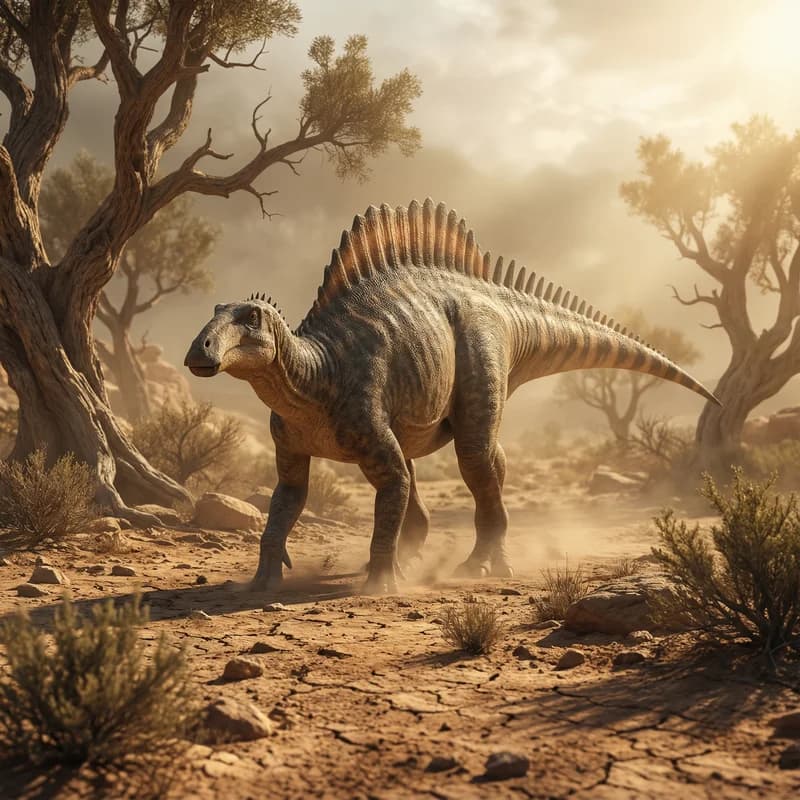
Ouranosaurus
Ouranosaurus nigeriensis
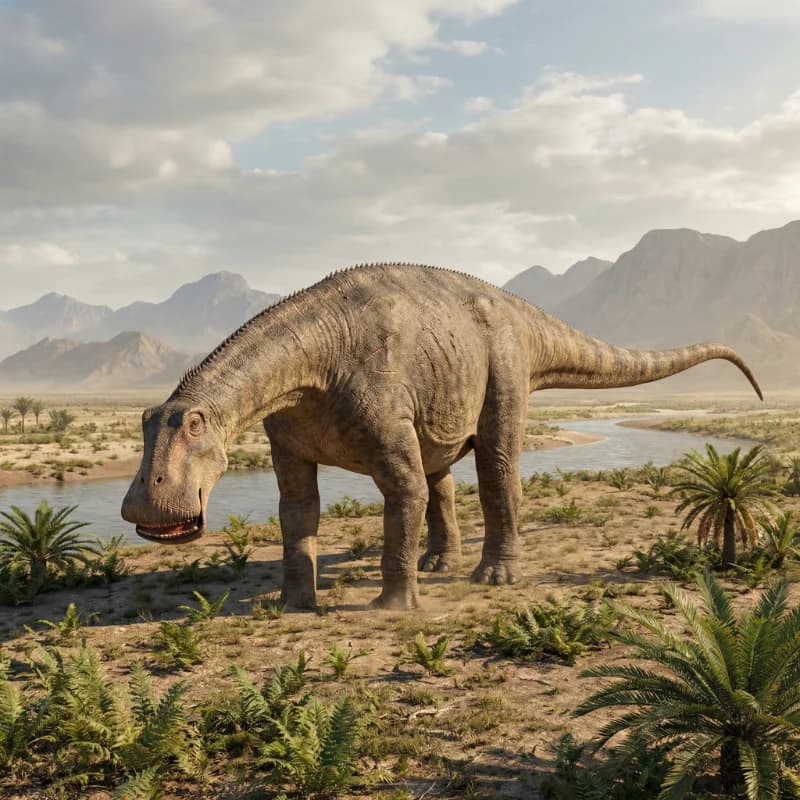
Nigersaurus
Nigersaurus taqueti
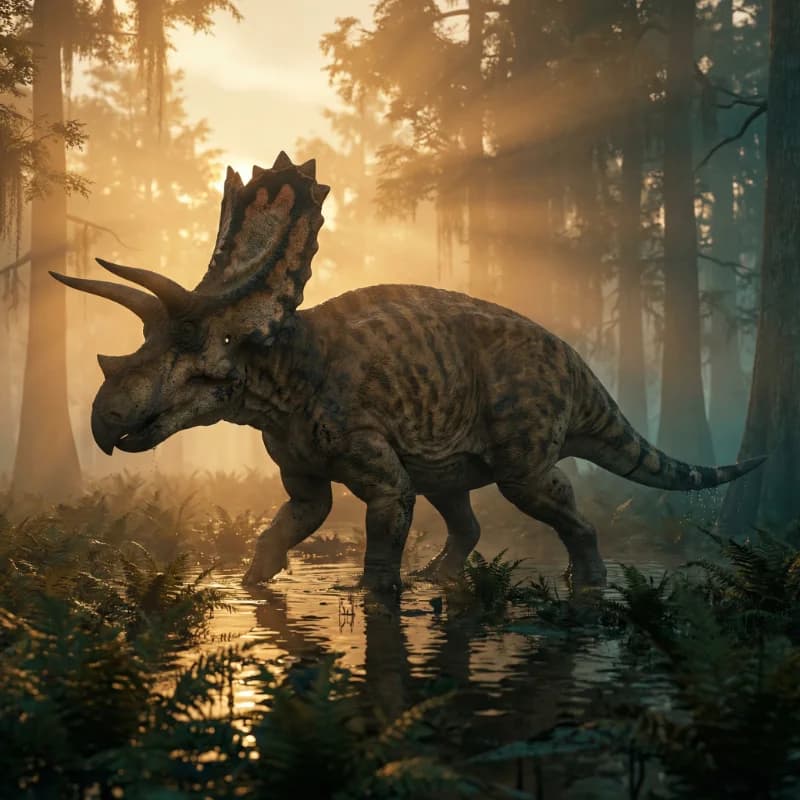
Pentaceratops
Pentaceratops sternbergii

Medusaceratops
Medusaceratops lokii

Corythosaurus
Corythosaurus casuarius

Argentinosaurus
Argentinosaurus huinculensis
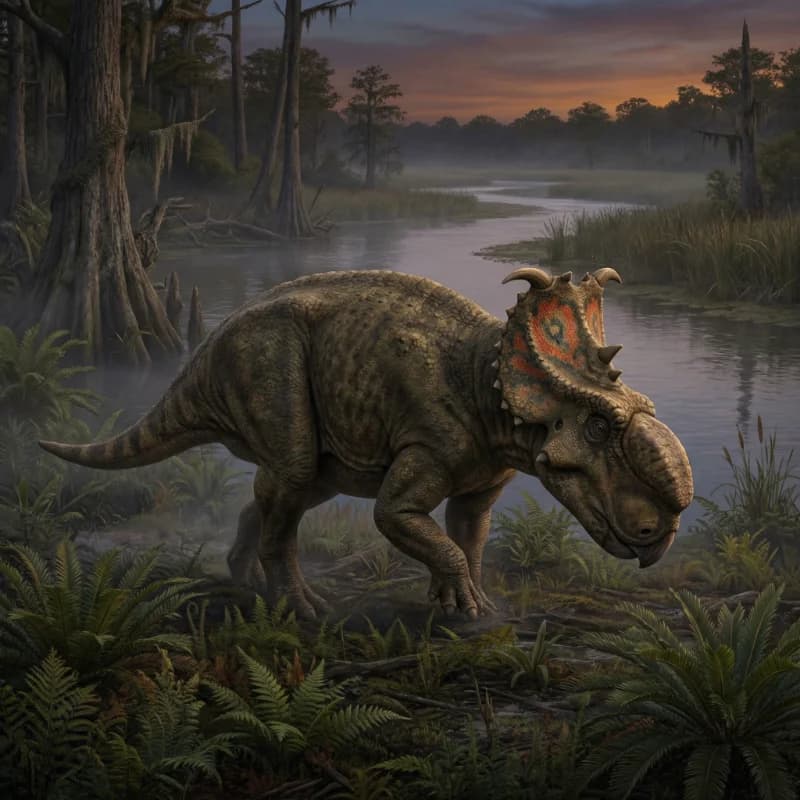
Pachyrhinosaurus
Pachyrhinosaurus
Sauropelta
Sauropelta edwardsorum