Therizinosaurus
Cretaceous Period Herbivore Creature Type
Therizinosaurus cheloniformis
Scientific Name: "therizo (scythe, to reap) + sauros (lizard) = 'scythe lizard'; species name cheloniformis from chelone (turtle) + formis (shaped), meaning 'turtle-shaped'"
Local Name: Therizinosaurus
Physical Characteristics
Discovery
Habitat

Therizinosaurus cheloniformis Maleev, 1954 is one of the most extraordinary dinosaurs of the Late Cretaceous, known from the Maastrichtian-age (approximately 72–66 Ma) Nemegt Formation in what is now the Gobi Desert of southern Mongolia. A member of Saurischia, Theropoda, and Maniraptora, it is the type genus of the family Therizinosauridae and the largest known representative of the clade Therizinosauria. Only a single species, T. cheloniformis, is currently recognized.
The most striking feature of Therizinosaurus is its manual unguals — the bony claw cores of the hands — which are the longest known from any terrestrial animal, reaching approximately 52 cm (20 in) in bone length alone. When covered by a keratinous sheath in life, the actual claws would have been considerably longer. The estimated body length is 9–10 m (30–33 ft), with body mass estimates ranging from about 3 tonnes to over 6.6 tonnes depending on the study, making it one of the largest known maniraptorans alongside the contemporaneous Deinocheirus mirificus. Despite being a theropod — a clade traditionally associated with carnivory — Therizinosaurus had evolved herbivorous or omnivorous habits, exemplifying the remarkable dietary diversity within Theropoda.
The first remains were collected in 1948 during a Soviet-Mongolian expedition and formally described by the Russian paleontologist Evgeny Maleev in 1954, who mistakenly interpreted the enormous claws as belonging to a giant turtle-like marine reptile. Decades of additional discoveries and the description of related genera ultimately revealed Therizinosaurus to be a coelurosaurian theropod dinosaur, firmly placed within the Maniraptora. Its bizarre morphology, fragmentary fossil record, and complex taxonomic history have made it one of the most iconic yet enigmatic dinosaurs known to science.
Overview
Name and etymology
The generic name Therizinosaurus is derived from the Ancient Greek θερίζω (therizo, meaning 'to reap' or 'scythe') and σαῦρος (sauros, 'lizard'), referring to the enormous scythe-like manual claws. The specific epithet cheloniformis combines the Greek χελώνη (chelone, 'turtle') with the Latin formis ('shaped'), reflecting Maleev's original misinterpretation of the animal as a giant turtle-like reptile. The name thus preserves a fascinating record of taxonomic error — a 'scythe lizard in the form of a turtle' — that belies the animal's true identity as a theropod dinosaur.
Taxonomic status
Therizinosaurus cheloniformis remains a valid genus and species. It is the type genus and namesake of Therizinosauridae, a family established by Maleev in 1954. When Russell & Dong (1993) demonstrated that Segnosauridae (Perle, 1979) was synonymous with Therizinosauridae, the latter name was retained on grounds of priority. Within Therizinosauria, Therizinosaurus is consistently recovered as a derived member of the family in phylogenetic analyses (Zanno, 2010; Hartman et al., 2019).
Scientific significance
Therizinosaurus is a pivotal taxon for understanding dietary transitions in theropod dinosaurs. It overturns the classical notion that theropods were exclusively carnivorous, demonstrating that independent shifts to herbivory and omnivory occurred repeatedly across multiple lineages. The genus is also a prime example of convergent evolution with chalicotheriine perissodactyls and other herbivorous mammals (Russell & Russell, 1993), and its giant claws have been the subject of extensive biomechanical research into claw function and evolution in dinosaurs.
Stratigraphy, age, and depositional environment
Temporal range
The Nemegt Formation, from which all confirmed Therizinosaurus specimens derive, is assigned to the Maastrichtian stage of the Late Cretaceous, with a possible extension into the late Campanian. No direct radiometric dating has been performed on the formation. However, apatite U-Pb dating of Tarbosaurus teeth from the middle Nemegt Formation yielded a maximum depositional age of 66.7 ± 2.5 Ma (Tanabe et al., 2023). Biostratigraphic evidence — including the presence of Saurolophus, a genus also known from the Horseshoe Canyon Formation of North America — supports a Maastrichtian age. The traditional estimate of approximately 71–69 Ma (early Maastrichtian) remains widely cited, but precise age constraints are still lacking (Eberth, 2018).
Formation and lithology
The Nemegt Formation is located in the Nemegt Basin of the Gobi Desert, Ömnögovi Province, Mongolia, and exceeds 235 m in total thickness. It is divided into three informal members. The lower member is dominated by fluvial (river channel) deposits, while the middle and upper members record alluvial plain, paludal (swamp), lacustrine (lake), and fluvial sedimentation (Eberth, 2018). The primary lithologies are mudstone and sandstone, with subordinate conglomerate and shale. The formation overlies (and locally interfingers with) the more arid Baruungoyot Formation. Therizinosaurus is known from the lower and middle members at the Nemegt, Hermiin Tsav, and Altan Uul localities.
Paleoenvironment
Oxygen isotope analysis (δ¹⁸O) of Tarbosaurus tooth enamel (Owocki et al., 2020) indicates that the Nemegt Formation experienced mean annual temperatures of approximately 7.6–8.7 °C, with pronounced seasonal precipitation fluctuations consistent with a monsoonal, cold semi-arid climate. Mean annual precipitation is estimated at 775–835 mm. The sedimentological record reveals large meandering and braided rivers, oxbow lakes, and floodplains. The vegetation was dominated by araucarian conifer forests forming an enclosed canopy, accompanied by ginkgos, sycamores (plane trees), bald cypresses, katsura relatives, cycad-like plants, lotuses, pondweeds, duckweeds, reed grasses, and sedges (Eberth, 2018; Owocki et al., 2020; Makulbekov, 2002). The environment has been compared to the modern Okavango Delta of Botswana — a mesic (well-watered) inland oasis surrounded by more arid terrain (Holtz, 2014). The wet conditions may have attracted fauna from neighbouring arid formations such as the Baruungoyot.
Specimens and diagnostic features
Holotype
The holotype, PIN 551-483, was collected in 1948 from Quarry V at the Nemegt type locality by the Soviet-Mongolian Paleontological Expedition and described by Maleev in 1954. It consists of three partial manual unguals (claw bones), a metacarpal fragment (later re-identified as a metatarsal by Rozhdestvensky, 1970), and several rib fragments. The rib material was subsequently excluded from the holotype by Zanno (2010) as likely belonging to a sauropod rather than Therizinosaurus. The holotype is housed at the Paleontological Institute, Moscow (PIN), Russia.
Referred specimens
| Specimen | Locality | Elements | Described by |
|---|---|---|---|
| MPC-D 100/15 | Hermiin Tsav | Both forelimbs (scapulocoracoids, humeri, ulnae, radii, carpals, metacarpals, complete digit II), ribs, gastralia | Barsbold, 1976 |
| MPC-D 100/16 | Hermiin Tsav (Upper White Beds) | Lower portion of a manual ungual | Barsbold, 1976 |
| MPC-D 100/17 | Altan Uul | Upper portion of a manual ungual | Barsbold, 1976 |
| MPC-D 100/45 | Hermiin Tsav | Right hindlimb (fragmentary femur, distal tibia, astragalus, calcaneum, tarsal IV, four metatarsals, partial digits) | Perle, 1982 |
MPC-D 100/15 is the most informative specimen, providing an articulated pair of forelimbs totalling approximately 2.4 m (7.9 ft) in length. Its distinctly theropod characters were decisive in establishing the dinosaurian identity of Therizinosaurus (Barsbold, 1976). The referral of MPC-D 100/45 (the hindlimb) was questioned by Barsbold & Maryańska (1990) due to the lack of overlapping elements with the forelimb material, but was supported by Zanno (2010) based on shared stratigraphic context and morphological consistency with other therizinosaurids.
Diagnosis
Following Zanno (2010), the key diagnostic features of Therizinosaurus include: (1) manual unguals that are extremely elongated, laterally compressed, stiffened, and recurved only at their tips — unlike the more uniformly curved claws of other therizinosaurids; (2) the first metacarpal exceeding two-thirds the length of the third metacarpal; (3) a deltopectoral crest on the humerus that extends at least two-thirds the length of the entire bone; and (4) an overall exceptionally robust and enlarged forelimb skeleton.
Limitations of the fossil record
The known fossil material of Therizinosaurus is restricted to forelimb and hindlimb elements. No skull, vertebrae, or pelvic material have been recovered. Consequently, all reconstructions of its body plan, head, and torso rely heavily on extrapolation from more completely known relatives such as Erlikosaurus, Segnosaurus, Nothronychus, and Neimongosaurus.
Morphology and functional anatomy
Body size
Therizinosaurus is estimated to have reached 9–10 m (30–33 ft) in total length (Molina-Pérez & Larramendi, 2016), making it the largest known therizinosaur and one of the largest maniraptorans. Body mass estimates vary considerably: Paul (2010) initially estimated approximately 3 tonnes, later revising this to 5–10 tonnes (Paul, 2024); Zanno & Makovicky (2013) calculated approximately 6,647 kg (6.6 tonnes). Senter & James (2010) predicted hindlimb length at approximately 3 m (9.8 ft), suggesting a standing hip height of over 3 m and a maximum height of approximately 4–5 m (13–16 ft) when the head was raised. Neck length has been estimated at approximately 2.2 m (7.2 ft) based on humerus-to-cervical ratios in Nanshiungosaurus (Taylor & Wedel). A conservative weight range of 3–7 tonnes is most commonly cited, reflecting the uncertainties inherent in estimating mass from incomplete material.
Forelimbs and claws
The forelimbs are the best-known part of Therizinosaurus, preserved in specimen MPC-D 100/15. The total arm length (humerus + ulna + second metacarpal + phalanges) was approximately 2.4 m (7.9 ft). The humerus measured 76 cm (30 in), with an exceptionally long and thick deltopectoral crest indicating powerful musculature. The ulna measured 62 cm (24.4 in) and the radius 55 cm (21.7 in). Two carpals (wrist bones), three metacarpals, and the complete second digit (two phalanges plus ungual) are preserved. The second metacarpal (28.7 cm) was the longest, while the first (14.6 cm) was the most robust.
The manual unguals are the defining feature of Therizinosaurus. At approximately 52 cm (20 in) in bony length, they are the longest manual unguals known from any terrestrial animal. Unlike the uniformly curved claws of other therizinosaurids, those of Therizinosaurus are remarkably straight and stiff, curving only near the tips. The flexor tubercle — the attachment point for the tendons that controlled claw flexion — is thick and robust, indicating a powerful grip.
Lautenschlager (2014) subjected therizinosaur claws to finite element analysis (FEA) simulations under three functional scenarios: scratch-digging, hook-and-pull, and piercing. The elongated, specialized claws of Therizinosaurus showed the highest stress and deformation under scratch-digging, making this the most unlikely function. The hook-and-pull scenario produced lower stress values, suggesting that the claws were best suited for pulling vegetation within reach — analogous to extant anteaters and extinct ground sloths. In 2023, Qin, Rayfield, Benton et al. took a different approach, finding no identifiable mechanical function for the claws of Therizinosaurus, and proposing that the extreme elongation resulted from peramorphic (overgrowth) processes linked to increasing body size. Under this hypothesis, the claws may have served primarily as visual display structures rather than functional tools.
Hindlimbs and feet
Based on MPC-D 100/45, the hindlimb was stocky and robust. The tibia was widest at its distal end, and the foot (pes) was short and heavy. Five metatarsals were present, of which four were functional and weight-bearing, producing a tetradactyl (four-toed) condition. Unlike most theropods, which are tridactyl (three-toed) with a reduced, non-functional first toe (hallux), Therizinosaurus retained a functional first toe that contacted the ground — a condition convergent with sauropodomorphs. The fifth metatarsal was vestigial.
Inferred integument
No integumentary fossils are directly known for Therizinosaurus. However, the basal therizinosaur Beipiaosaurus inexpectus (Xu et al., 1999) preserves filamentous feathers and elongated broad filamentous feathers (EBFFs), and feathered integument is widespread across Coelurosauria. Phylogenetic bracketing therefore strongly suggests that Therizinosaurus bore feathers during at least part of its life cycle, though the density and coverage in large adults remains uncertain.
Diet and ecology
Dietary evidence
No skull or teeth are directly known for Therizinosaurus, but extensive cranial material from relatives such as Erlikosaurus and Segnosaurus reveals small, leaf-shaped teeth, a keratinous beak (rhamphotheca), and low bite forces consistent with herbivory or omnivory. Fiorillo et al. (2018) demonstrated an evolutionary trend of decreasing bite force from basal to derived therizinosaurs, suggesting that the highly derived Therizinosaurus would have had a reduced bite force specialized for cropping or stripping vegetation. The wide torso inferred from relatives would have housed a large gut suitable for fermentative digestion of plant matter.
Feeding behavior
Russell & Russell (1993) reconstructed Therizinosaurus as a convergent ecological analogue of the chalicothere Chalicotherium and modern gorillas. They proposed that it sat on its robust pelvis while using its long arms and claws to pull branches and harvest foliage from shrubs and trees. In a bipedal stance, its short, robust feet would have provided stable support for high browsing. The estimated neck length of approximately 2.2 m would have extended its feeding reach with minimal physical effort.
Ecological role
Therizinosaurus was among the tallest herbivores in the Nemegt Formation ecosystem, standing 4–5 m tall when erect. This would have minimized direct competition with lower-browsing herbivores such as hadrosaurs. However, niche partitioning with the titanosaurs Nemegtosaurus and Opisthocoelicaudia — also capable of high browsing — may have occurred. The apex predator Tarbosaurus bataar could only have reached the thighs or belly of a standing adult Therizinosaurus (Senter & James, 2010), and the elongated claws may have served an intimidation function during confrontations. Lee & Richards (2018) demonstrated that therizinosaur humeri were particularly resistant to bending stress, supporting the idea that the arms were used robustly — whether for feeding, defense, or both.
Distribution and paleogeography
Geographic distribution
All confirmed specimens of Therizinosaurus come from the Nemegt Basin in Ömnögovi Province, southern Mongolia. Specific localities include Nemegt (the type locality), Hermiin Tsav, and Altan Uul, spanning the lower and middle members of the Nemegt Formation. Additional undescribed therizinosaurid material from Altan Uul IV, Bügiin Tsav, and Tsagan Khushu may represent Therizinosaurus, but formal referral remains pending.
Paleocoordinates
The approximate paleocoordinates for the Nemegt Formation during the Maastrichtian are 40.8°N, 90.2°E — slightly south and west of the present-day position. The area was part of the interior of the Asian continent, far from any marine influence, situated well north of the Tethys Sea.
Phylogeny and classification
Taxonomic history
The classification of Therizinosaurus is one of the most dramatic taxonomic reversals in paleontology. Maleev (1954) originally described it as a giant turtle-like reptile. Rozhdestvensky (1970) was the first to propose theropod affinities, comparing the unguals to those of Chilantaisaurus. Barsbold (1976) confirmed the theropod identity upon describing the articulated forelimb specimen MPC-D 100/15. Through the 1980s, alternative hypotheses placed therizinosaurs (then called segnosaurs) as late-surviving sauropodomorphs (Paul, 1984) or intermediates between sauropodomorphs and ornithischians. The discovery of Alxasaurus (Russell & Dong, 1993), the redescription of the Erlikosaurus skull (Clark et al., 1994), and the discovery of the feathered Beipiaosaurus (Xu et al., 1999) collectively established therizinosaurs as maniraptoran coelurosaurian theropods.
Current phylogenetic placement
Zanno's (2010) comprehensive taxonomic and phylogenetic re-evaluation remains the benchmark study for Therizinosauria, recovering Therizinosaurus within Therizinosauridae as a sister taxon to Erliansaurus. Hartman et al. (2019) expanded on this analysis with additional taxa and confirmed the derived position of Therizinosaurus within the family. In 2025, the description of the didactyl (two-fingered) therizinosaur Duonychus tsogtbaatari from the Bayanshiree Formation (Kobayashi et al., 2025) revealed that Therizinosauridae encompassed far greater morphological diversity than previously recognized, with Duonychus nesting in a derived position close to Nanshiungosaurus and the Segnosaurus–Erlikosaurus–Nothronychus clade.
Alternative hypotheses
The theropod affinity of Therizinosauria is now universally accepted. Earlier hypotheses linking them to sauropodomorphs (Paul, 1984, 1988) or ornithischians have been thoroughly refuted. However, intra-clade relationships remain somewhat unstable in certain analyses due to the fragmentary nature of many taxa, particularly the positions of Enigmosaurus and Suzhousaurus.
Restoration and uncertainty
Confirmed, probable, and hypothetical
Confirmed: Theropod (Maniraptora, Therizinosauridae) classification; possession of the longest known manual unguals of any land animal; occurrence in the Maastrichtian Nemegt Formation of Mongolia.
Probable: Body length of 9–10 m, body mass of 3–7 tonnes; herbivorous/omnivorous diet; hook-and-pull claw function (Lautenschlager, 2014); bipedal locomotion (inferred from relatives); feathered integument (phylogenetic inference).
Hypothetical/speculative: Purely display function of the claws (Qin et al., 2023); precise body mass (estimates range from 3 to over 10 tonnes depending on methodology); seated feeding posture (Russell & Russell, 1993); exact feather density and distribution in adults.
Popular media vs. scientific consensus
In the film Jurassic World Dominion (2022), Therizinosaurus is depicted as blind — a fictional conceit with no basis in paleontological evidence (NHM). The film also shows the animal aggressively wielding its claws as weapons, whereas scientific evidence suggests the claws were likely too fragile for active combat (Barsbold, 1976; Lautenschlager, 2014), though they may have served for intimidation.
Contemporaneous comparisons
The table below compares Therizinosaurus with other large dinosaurs from the Nemegt Formation.
| Taxon | Classification | Est. length (m) | Est. mass (t) | Diet | Notes |
|---|---|---|---|---|---|
| Therizinosaurus cheloniformis | Therizinosauridae | 9–10 | 3–7 | Herbivore/omnivore | Longest known manual unguals of any land animal |
| Deinocheirus mirificus | Deinocheiridae | 11–12 | 6–7 | Omnivore | Largest known ornithomimosaur |
| Tarbosaurus bataar | Tyrannosauridae | 10–12 | 4–5 | Carnivore | Largest Asian tyrannosaurid |
| Saurolophus angustirostris | Hadrosauridae | 10–12 | 5–8 | Herbivore | Most common hadrosaurid in the Nemegt |
| Nemegtosaurus mongoliensis | Titanosauria | 10–13 | 5–10 | Herbivore | Long known only from skull material |
| Opisthocoelicaudia skarzynskii | Titanosauria | 11–12 | 8–25 | Herbivore | Missing skull and cervical series |
Fun Facts
FAQ
📚References
- Maleev, E. A. (1954). Новый черепахообразный ящер в Монголии [A new turtle-like reptile from Mongolia]. Природа, (3), 106–108.
- Rozhdestvensky, A. K. (1970). О гигантских когтевых фалангах загадочных рептилий мезозоя [On the giant claws of enigmatic Mesozoic reptiles]. Paleontological Journal, 1970(1), 131–141.
- Barsbold, R. (1976). Новые данные о теризинозавре (Therizinosauridae, Theropoda) New data on [Therizinosaurus]. In Kramarenko, N. N. et al. (eds.), Paleontology and Biostratigraphy of Mongolia, pp. 76–92. Moscow: Nauka Press.
- Perle, A. (1982). О находке задней конечности Therizinosaurus sp. On a new finding of the hindlimb of [Therizinosaurus sp.]. Problems in Mongolian Geology, 5, 94–98.
- Barsbold, R. & Maryańska, T. (1990). Saurischia Sedis Mutabilis: Segnosauria. In Weishampel, D. B. et al. (eds.), The Dinosauria (1st ed.), pp. 408–415. University of California Press.
- Russell, D. A. & Dong, Z. (1993). The affinities of a new theropod from the Alxa Desert, Inner Mongolia, People's Republic of China. Canadian Journal of Earth Sciences, 30(10–11), 2107–2127.
- Clark, J. M., Perle, A. & Norell, M. A. (1994). The skull of Erlikosaurus andrewsi, a Late Cretaceous segnosaur from Mongolia. American Museum Novitates, 3115, 1–39.
- Xu, X., Tang, Z.-L. & Wang, X.-L. (1999). A therizinosauroid dinosaur with integumentary structures from China. Nature, 399, 350–354. https://doi.org/10.1038/20670
- Zanno, L. E. (2010). A taxonomic and phylogenetic re-evaluation of Therizinosauria (Dinosauria: Maniraptora). Journal of Systematic Palaeontology, 8(4), 503–543. https://doi.org/10.1080/14772019.2010.488045
- Zanno, L. E. & Makovicky, P. J. (2013). No evidence for directional evolution of body mass in herbivorous theropod dinosaurs. Proceedings of the Royal Society B, 280(1751), 20122526. https://doi.org/10.1098/rspb.2012.2526
- Lautenschlager, S. (2014). Morphological and functional diversity in therizinosaur claws and the implications for theropod claw evolution. Proceedings of the Royal Society B, 281(1785), 20140497. https://doi.org/10.1098/rspb.2014.0497
- Molina-Pérez, R. & Larramendi, A. (2016). Dinosaur Facts and Figures: The Theropods and Other Dinosauriformes. Princeton University Press. https://doi.org/10.1515/9780691190594
- Eberth, D. A. (2018). Stratigraphy and paleoenvironmental evolution of the dinosaur-rich Baruungoyot-Nemegt succession (Upper Cretaceous), Nemegt Basin, southern Mongolia. Palaeogeography, Palaeoclimatology, Palaeoecology, 494, 29–50. https://doi.org/10.1016/j.palaeo.2017.11.018
- Fiorillo, A. R. et al. (2018). An unusual association of hadrosaur and therizinosaur tracks within Late Cretaceous rocks of Denali National Park, Alaska. Scientific Reports, 8, 11706. https://doi.org/10.1038/s41598-018-30110-8
- Owocki, K., Kremer, B., Cotte, M. & Bocherens, H. (2020). Diet preferences and climate inferred from oxygen and carbon isotopes of tooth enamel of Tarbosaurus bataar (Nemegt Formation, Upper Cretaceous, Mongolia). Palaeogeography, Palaeoclimatology, Palaeoecology, 537, 109190. https://doi.org/10.1016/j.palaeo.2019.05.012
- Hartman, S. et al. (2019). A new paravian dinosaur from the Late Jurassic of North America supports a late acquisition of avian flight. PeerJ, 7, e7247. https://doi.org/10.7717/peerj.7247
- Russell, D. A. & Russell, D. E. (1993). Mammal-dinosaur convergence. National Geographic Research & Exploration, 9, 70–79.
- Qin, Z., Liao, C.-C., Benton, M. J. & Rayfield, E. J. (2023). Functional space analyses reveal the function and evolution of the most bizarre theropod manual unguals. Communications Biology, 6, 181. https://doi.org/10.1038/s42003-023-04552-4
- Senter, P. & James, H. (2010). Hip heights of the gigantic theropod dinosaurs Deinocheirus mirificus and Therizinosaurus cheloniformis, and implications for museum mounting and paleoecology. Bulletin of the Gunma Museum of Natural History, 14, 1–10.
- Tanabe, M. et al. (2023). Apatite U–Pb dating of dinosaur teeth from the Upper Cretaceous Nemegt Formation in the Gobi Desert, Mongolia. Island Arc, 32(1), e12488. https://doi.org/10.1111/iar.12488
- Kobayashi, Y. et al. (2025). Didactyl therizinosaur with a preserved keratinous claw from the Late Cretaceous of Mongolia. iScience, 28(4). https://doi.org/10.1016/j.isci.2025.112141
- Paul, G. S. (2024). The Princeton Field Guide to Dinosaurs (3rd ed.). Princeton University Press.
- Lee, S. A. & Richards, Z. (2018). Bending resistance of dinosaur humeri and implications for arm function. Journal of Vertebrate Paleontology, 38(sup1), e1524890.
Gallery
5 images Therizinosaurus
Therizinosaurus · Cretaceous Period · Herbivore
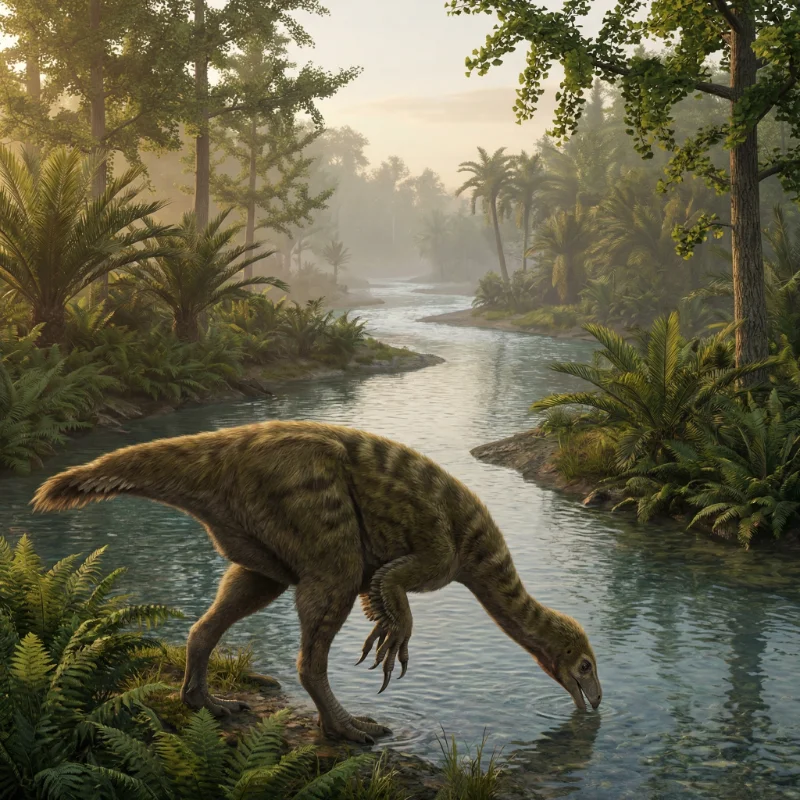 Therizinosaurus
Therizinosaurus · Cretaceous Period · Herbivore
 Therizinosaurus
Therizinosaurus · Cretaceous Period · Herbivore
 Therizinosaurus
Therizinosaurus · Cretaceous Period · Herbivore
 Therizinosaurus
Therizinosaurus · Cretaceous Period · Herbivore
🔗Related Creatures
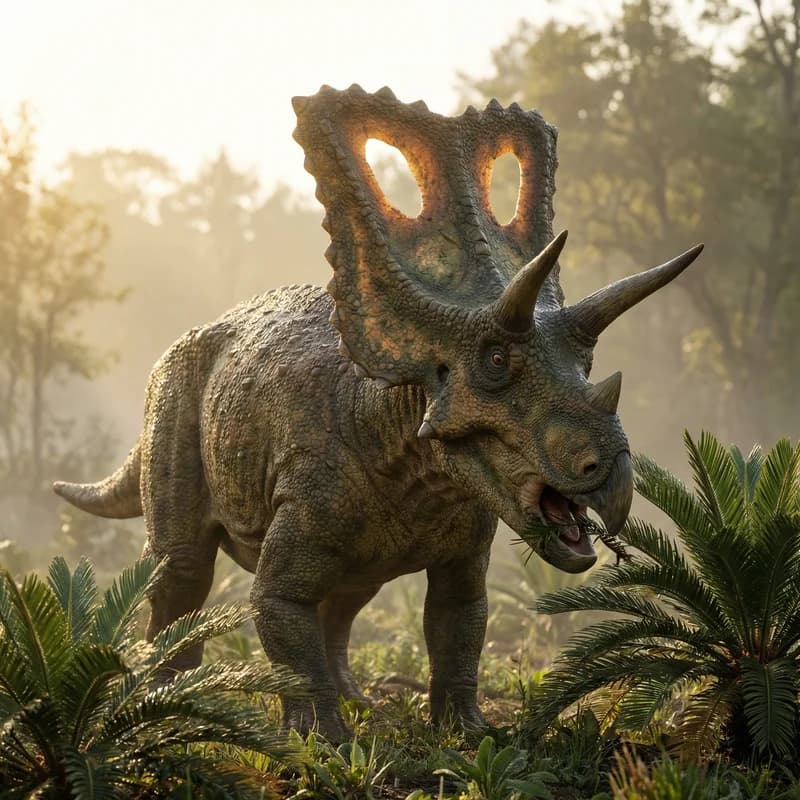
Chasmosaurus
Chasmosaurus belli

Nasutoceratops
Nasutoceratops titusi
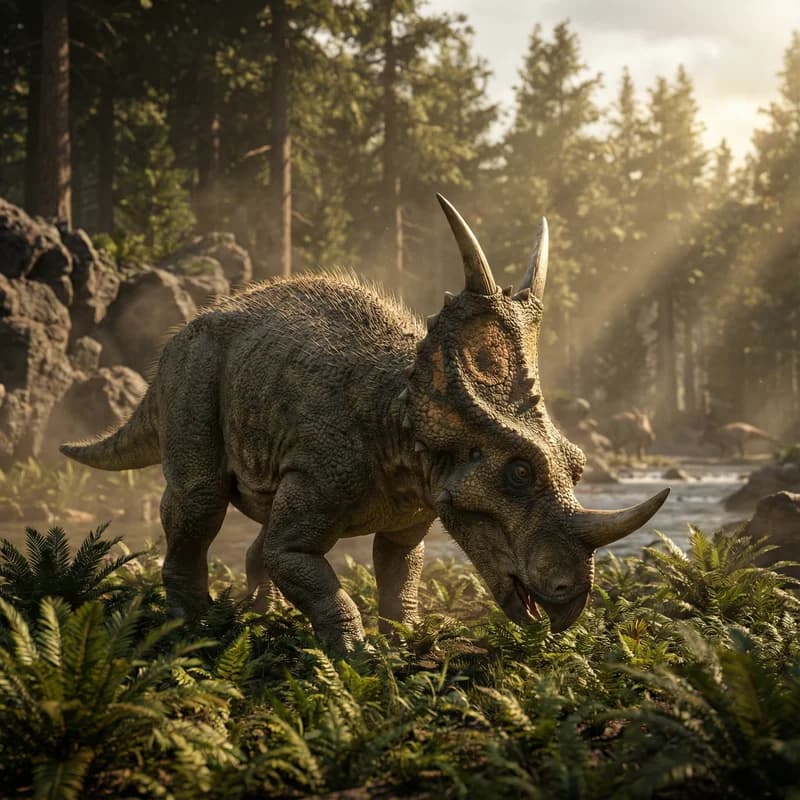
Einiosaurus
Einiosaurus procurvicornis
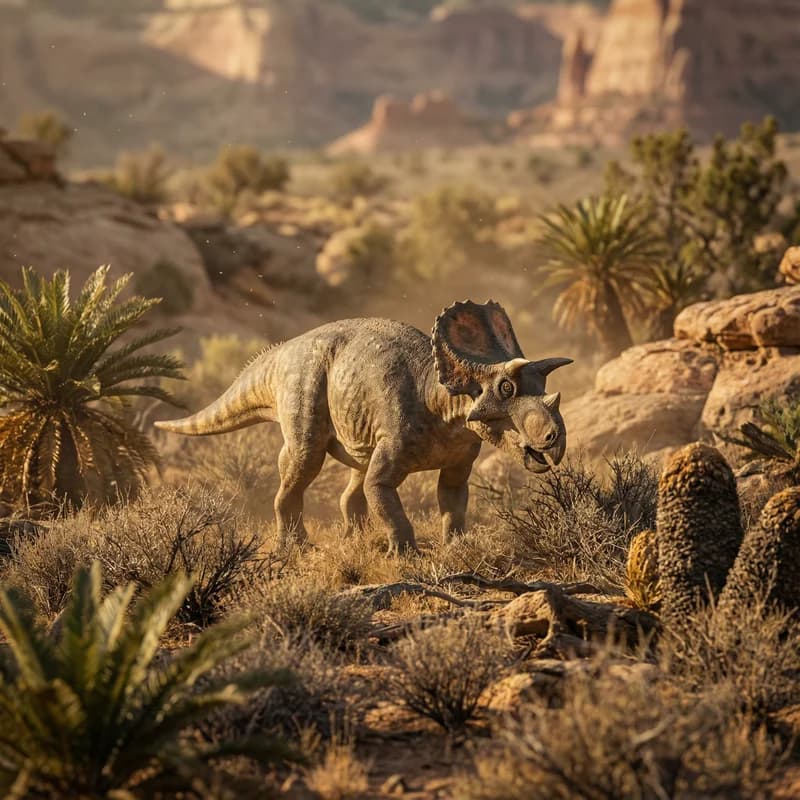
Zuniceratops
Zuniceratops christopheri

Edmontosaurus
Edmontosaurus
Leptoceratops
Leptoceratops gracilis

Maiasaura
Maiasaura peeblesorum

Medusaceratops
Medusaceratops lokii