Zuniceratops
Cretaceous Period Herbivore Creature Type
Zuniceratops christopheri
Scientific Name: "Zuni (name of an Indigenous people of the American Southwest) + Greek keras (horn) + ops (face) = 'Zuni horned face'. The specific name christopheri honors Christopher James Wolfe, the eight-year-old boy who first discovered the fossil."
Local Name: Zuniceratops
Physical Characteristics
Discovery
Habitat

Zuniceratops (Zuniceratops christopheri Wolfe & Kirkland, 1998) is a neoceratopsian dinosaur from the Late Cretaceous Turonian stage (approximately 90.9–88.6 Ma) of west-central New Mexico, United States. Belonging to the order Ornithischia and the clade Ceratopsia, it is consistently recovered in phylogenetic analyses as the sister taxon to Ceratopsidae, placing it within the superfamily Ceratopsoidea. The generic name combines the name of the Zuni, an Indigenous people of the American Southwest, with the Latinized Greek ceratops ('horned face'), while the specific name christopheri honors Christopher James Wolfe, the eight-year-old son of paleontologist Douglas G. Wolfe who first discovered the fossils in 1996.
Zuniceratops holds exceptional scientific significance as the oldest known North American ceratopsian to possess well-developed brow horns (postorbital horn cores). It lacks a nasal horn but bears a pair of prominent supraorbital horns, indicating that brow horns are a plesiomorphic (primitive) trait for Ceratopsoidea — a finding with profound implications for understanding horn evolution in the lineage leading to iconic taxa such as Triceratops. Estimated at roughly 2.2 m for the subadult holotype and 3–3.5 m for adult specimens, with a body mass of approximately 100–200 kg, Zuniceratops was relatively small compared to later ceratopsids. The original description (Wolfe & Kirkland, 1998) was followed by additional skull information (Wolfe, 2000) and a substantial redescription (Wolfe et al., 2010) that revealed a remarkable ontogenetic shift in tooth root structure — from single-rooted teeth in juveniles to double-rooted teeth in adults — providing crucial data on ceratopsian dental evolution.
All known specimens were recovered from the Moreno Hill Formation of the Zuni Basin in west-central New Mexico, a nonmarine coal-bearing succession of sandstones, shales, and siltstones deposited in a fluvial-deltaic setting along the southwestern margin of the Western Interior Seaway. The discovery of multiple individuals within a single bonebed has also drawn attention for its implications regarding gregarious behavior in early ceratopsians (Scott et al., 2022).
Overview
Name and Etymology
The generic name Zuniceratops combines 'Zuni' — the name of the Indigenous Pueblo people whose ancestral territory encompasses the fossil locality — with the Greek keras (κέρας, 'horn') and ops (ὤψ, 'face'), yielding 'Zuni horned face'. The specific epithet christopheri commemorates Christopher James Wolfe, who in 1996, at the age of eight, first noticed the fossil fragments while accompanying his father, paleontologist Douglas G. Wolfe, on fieldwork in the Zuni Basin (Wolfe & Kirkland, 1998).
Taxonomic Status
Zuniceratops is a valid monotypic genus containing the single species Z. christopheri. No synonyms have been proposed. Its phylogenetic position as the sister taxon to Ceratopsidae has been supported by multiple independent analyses since its original description (Wolfe & Kirkland, 1998; Xu et al., 2002; Dodson et al., 2004; Makovicky & Norell, 2006; Wolfe et al., 2010). The clade uniting Zuniceratops and Ceratopsidae was named Ceratopsomorpha by Wolfe & Kirkland (1998), which is essentially equivalent to Ceratopsoidea as defined by Sereno (1998) — a branch-based clade including all taxa closer to Triceratops than to Protoceratops.
Key Significance
Zuniceratops is the oldest known North American ceratopsian with well-developed brow horns, making it a critical transitional fossil between small, hornless early ceratopsians and the large, elaborately horned ceratopsids of the Late Cretaceous.
Stratigraphy, Age, and Depositional Environment
Age Range
All Zuniceratops fossils come from the Moreno Hill Formation. The most recent geochronological study (Cilliers et al., 2021), employing CA-TIMS and LA-ICP-MS U-Pb dating of detrital zircons, interprets two distinct depositional phases: initial deposition after approximately 90.9 Ma (middle Turonian) and subsequent deposition after approximately 88.6 Ma (early Coniacian). Previous biostratigraphic correlations had placed the entire formation within the Turonian (Wolfe & Kirkland, 1998), but the upper portion may extend into the earliest Coniacian. The primary Zuniceratops-bearing horizon in the lower member of the formation corresponds to a maximum depositional age of approximately 90.9 Ma (middle Turonian).
Formation and Lithology
The Moreno Hill Formation is a nonmarine, coal-bearing clastic unit located in the Zuni Basin of west-central New Mexico. It is composed predominantly of sandstone and shale with minor siltstone. The sandstones are pale orange to light brown, poorly sorted, and display steep crossbedding, interpreted as channel or splay deposits in a fluvial environment. The shales include thin lenses of bituminous coal as well as tonsteins (volcanic ash-derived clay layers). The formation reaches a maximum thickness of approximately 217 m. It overlies the Atarque Sandstone and is overlain by the Fence Lake Formation (McLellan et al., 1983).
Paleoenvironment
The Moreno Hill Formation records the landward portion of the Gallup Delta along the southwestern shoreline of the Western Interior Seaway (Cilliers et al., 2021). Sediment was supplied from the Cordilleran Volcanic Arc and Mogollon Highlands via northeasterly flowing channel complexes. The presence of coal seams, tonsteins, and abundant fossilized wood — including both angiosperm and gymnosperm taxa (Sweeney et al., 2009; Chin et al., 2019) — together with paleoclimatic proxies indicating high humidity (Hoffman, 1996), suggests a warm, humid subtropical environment. This interval corresponds to a period of global greenhouse climate, active tectonism, widespread volcanism, and fluctuating sea levels.
Specimens and Diagnostic Features
Holotype and Referred Specimens
The holotype is MSM P2101, consisting of associated but disarticulated (floated) partial cranial and postcranial elements recovered from the Moreno Hill Formation in west-central New Mexico (Wolfe & Kirkland, 1998; Wolfe et al., 2010). It is interpreted as either a juvenile or a subadult. Additional specimens include MSM P3812 and others from a bonebed that contained remains of at least five individuals, including well-preserved horn cores and maxillary elements. Adult specimens exhibit substantially larger horn cores and double-rooted teeth compared with the holotype.
| Specimen | Ontogenetic Stage | Key Elements | Notes |
|---|---|---|---|
| MSM P2101 (holotype) | Juvenile–subadult | Partial skull, postcranial elements | Single-rooted teeth, small horn core (88 mm) |
| MSM P3812 | Adult | Horn cores, maxillary elements | Double-rooted teeth, larger horn cores |
| Additional bonebed material | Mixed | Partial remains of at least 5 individuals | Variable size and ontogenetic stage |
Diagnosis
Based on the original description (Wolfe & Kirkland, 1998) and the redescription (Wolfe et al., 2010), the key diagnostic features of Zuniceratops include: well-developed postorbital horn cores (brow horns) in the absence of a nasal horn; a proximal parietal with an inverted 'T' shape similar to that of Protoceratops; teeth with expanded crowns bearing a prominent central ridge; and an ontogenetic transition from single-rooted teeth in juveniles to double-rooted teeth in adults. This combination of characters — especially the developed brow horns alongside the ontogenetic dental transition — is unique among ceratopsians and demonstrates that several features traditionally used to diagnose Ceratopsidae (brow horns, double-rooted teeth, vertical tooth wear) were already developing before the family itself originated.
Limitations of the Material
No complete skeleton of Zuniceratops is known, and the skull is represented by a single incomplete specimen supplemented by isolated elements from other individuals. The holotype's subadult status introduces uncertainty into interpretations of adult morphology. Notably, a bone initially reported as a squamosal of Zuniceratops was later reidentified as an ischium of Nothronychus, a therizinosaurid from the same formation (Kirkland & Wolfe, 2001).
Morphology and Functional Anatomy
Body Size
Zuniceratops was a relatively small ceratopsian. Gregory Paul (2010) estimated the body length at approximately 2.2 m and body mass at about 175 kg, though this figure appears to be based on the subadult holotype. The original description (Wolfe & Kirkland, 1998) provided a size range of 3–3.5 m for larger (adult) specimens subsequently discovered. Hip height was approximately 1 m — roughly the size of a pony. Although a precise volumetric mass estimate for adults has not been published, comparison with similarly sized ceratopsians suggests a range of approximately 100–200 kg.
Skull
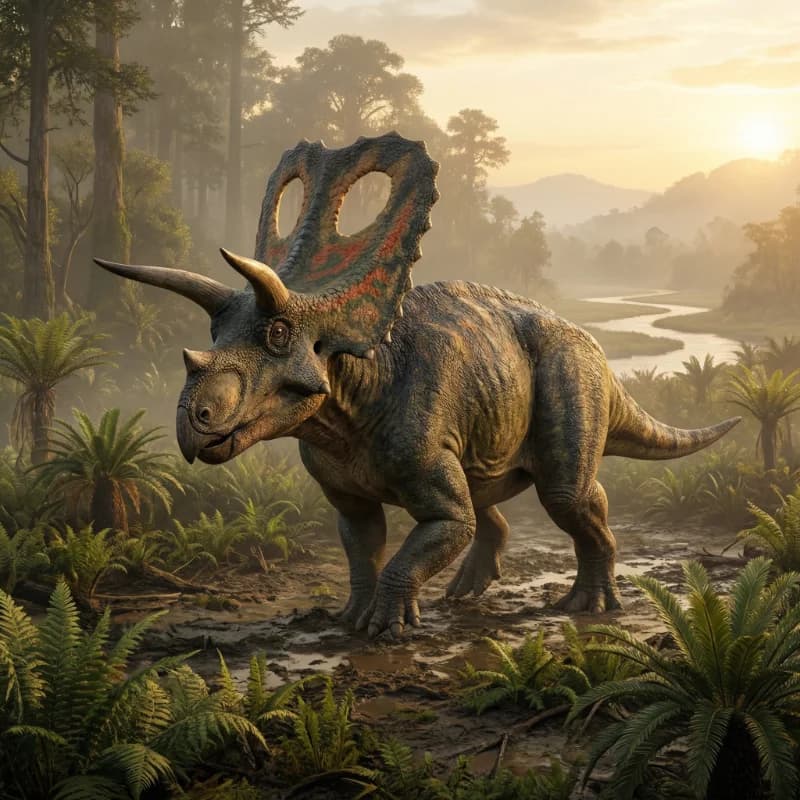
The skull is long and low in profile. The basal skull length is estimated at up to 40 cm (Farke, 2010). The most conspicuous feature is the pair of postorbital horn cores positioned above the orbits. No nasal horn has been identified. Horn core size varies considerably among individuals: the holotype bears a horn core only 88 mm long, while adult specimens have substantially larger ones that are gently curved. Some individuals possess short horn cores and others long, gently curving ones — a pattern that has prompted discussion of possible sexual dimorphism, though it may equally reflect normal intrapopulational variation (Naish, 2009; Wolfe et al., 2010).
Frill
A frill composed of the parietal and squamosal bones was present but relatively small and simple compared to those of ceratopsids. The squamosal exhibits a strong postquadrate expansion similar to that seen in ceratopsids (Wolfe & Kirkland, 1998). The proximal parietal has an inverted 'T' shape, a primitive feature shared with Protoceratops (Wolfe et al., 2010). The full extent and morphology of the frill cannot be completely reconstructed due to incomplete preservation.
Dentition and Beak
The dental morphology of Zuniceratops carries unique evolutionary significance. The subadult holotype exhibits single-rooted teeth, which were initially used as a diagnostic character. However, subsequently discovered adult specimens bear double-rooted teeth, demonstrating that tooth root structure changes during ontogeny — one of the first such documented cases among ceratopsians. This finding challenged the assumption that double-rooted teeth are a synapomorphy (shared derived feature) of Ceratopsidae alone, instead suggesting it may be a plesiomorphy (Wolfe et al., 2010). The tooth crowns are expanded with a prominent central ridge, and vertical wear surfaces indicate efficient plant-cutting function. A keratinous rostral beak, characteristic of ceratopsians, was undoubtedly present.
Limb Structure
Postcranial remains are fragmentary, limiting detailed analysis of limb proportions. However, based on known elements and its phylogenetic position within Ceratopsoidea, Zuniceratops is inferred to have been primarily quadrupedal with relatively robust limbs. While some earlier ceratopsians such as Psittacosaurus were capable of bipedal locomotion, the derived position of Zuniceratops strongly suggests obligate quadrupedality as its principal mode of locomotion.
Diet and Ecology
Feeding Ecology
Zuniceratops was an herbivore. Its expanded tooth crowns with prominent central ridges and vertical wear facets are well-suited for efficiently cutting tough plant material, indicating a low-browsing feeding strategy. The keratinous beak would have served to crop vegetation at or near ground level. Fossilized wood from the Moreno Hill Formation includes both angiosperm and gymnosperm taxa (Chin et al., 2019; Sweeney et al., 2009), indicating that food resources were diverse and abundant. No direct dietary evidence such as stomach contents or coprolites has been reported for Zuniceratops.
Ecological Context
The Moreno Hill Formation ecosystem supported a diverse vertebrate community. Co-occurring dinosaurs include the small tyrannosauroid Suskityrannus hazelae, the therizinosaurid Nothronychus mckinleyi, the basal hadrosauromorph Jeyawati rugoculus, and undescribed ankylosaur material (Nesbitt et al., 2019). Non-dinosaurian vertebrates include the baenid turtle Edowa zuniensis, the helochelydrid turtle Naomichelys, an indeterminate crocodyliform, amiid fish, and lepisosteids (gar) (Adrian et al., 2022; Wolfe & Kirkland, 1998). Zuniceratops occupied the niche of a medium-sized herbivore within this ecosystem.
Social Behavior
The recovery of at least five individuals from a single bonebed suggests the possibility of gregarious (group-living) behavior. Scott et al. (2022) cited this as one line of evidence supporting the hypothesis that grouping behavior may be a synapomorphic trait within Ceratopsia. However, non-behavioral explanations for bonebed formation — such as fluvial concentration of carcasses — cannot be entirely excluded, so this interpretation remains a plausible but unconfirmed hypothesis.
Distribution and Paleogeography
Geographic Distribution
All known Zuniceratops fossils come from the Zuni Basin in west-central New Mexico, specifically from the Salt Lake Coal Field area of the Moreno Hill Formation. The modern coordinates of the fossil locality are approximately 34.59°N, 108.76°W.
Paleogeographic Context
During the Turonian, western North America was divided by the Western Interior Seaway into the subcontinent of Laramidia to the west and Appalachia to the east. The Zuni Basin was situated along the southwestern margin of this seaway, in an inland setting receiving sediment from the Cordilleran Arc and Mogollon Highlands. The fact that Zuniceratops is the oldest brow-horned ceratopsian in North America has been used to support the hypothesis that Ceratopsidae may have originated in North America rather than Asia (Wolfe & Kirkland, 1998). However, the redescription of Turanoceratops tardabilis from Uzbekistan (Sues & Averianov, 2009) — a Turonian ceratopsian with potential ceratopsid affinities — means that the biogeographic question of ceratopsid origins remains open.
Phylogeny and Taxonomic Debates
Phylogenetic Position
Zuniceratops is consistently recovered as a non-ceratopsid neoceratopsian and the sister taxon to Ceratopsidae in multiple independent phylogenetic analyses (Wolfe & Kirkland, 1998; Xu et al., 2002; Dodson et al., 2004; Makovicky & Norell, 2006; Chinnery & Horner, 2007; Wolfe et al., 2010; Kim et al., 2019). The clade comprising Zuniceratops + Ceratopsidae has been named Ceratopsomorpha (Wolfe & Kirkland, 1998), equivalent to Ceratopsoidea under the branch-based definition of Sereno (1998). In some analyses (e.g., Kim et al., 2019), Turanoceratops is recovered as more closely related to Ceratopsidae than Zuniceratops, which would place Zuniceratops outside the Turanoceratops + Ceratopsidae clade.
Evolutionary Implications of the Brow Horns
The presence of well-developed brow horns in Zuniceratops demonstrates that this feature is plesiomorphic for Ceratopsoidea and Ceratopsidae. Lineages with short or absent brow horns — notably certain centrosaurines — must therefore have secondarily reduced or lost them over time. This hypothesis has been further supported by the discovery of Albertaceratops nesmoi, a basal centrosaurine possessing long brow horns (Ryan, 2007).
Relationship with Turanoceratops
The Asian Turanoceratops tardabilis (Uzbekistan, Turonian) and the North American Zuniceratops are the two critical ceratopsian taxa from the Turonian, and together they lie at the center of the debate over the geographic origin of Ceratopsidae (North America vs. Asia). The re-examination of both taxa (Sues & Averianov, 2009; Wolfe et al., 2010) demonstrated that the origin of ceratopsids is unrelated to — and older than — the fossil record of Protoceratops and its relatives, implying a deeper and yet-unsampled evolutionary history.
Reconstruction and Uncertainty
Confirmed
Zuniceratops was a neoceratopsian that lived during the Turonian (approximately 90.9–88.6 Ma) in North America (New Mexico). It possessed a pair of postorbital horn cores but lacked a nasal horn. Tooth root structure changed ontogenetically from single-rooted (juveniles) to double-rooted (adults). It is phylogenetically the sister taxon to Ceratopsidae.
Probable Hypotheses
Body length for adults is estimated at approximately 3–3.5 m, with a mass of approximately 100–200 kg. The primary locomotion mode was quadrupedal. The bonebed evidence suggests possible gregarious behavior. Horn core size variation may reflect sexual dimorphism or individual variation.
Unresolved or Cautionary Points
No complete skeleton is known, limiting precise body reconstruction. The full morphology of the frill remains uncertain due to incomplete preservation. Some popular media depict Zuniceratops as a 'direct ancestor' of Triceratops; this is inaccurate. Zuniceratops is the sister taxon of Ceratopsidae, not a direct ancestor of any specific ceratopsid lineage such as Chasmosaurinae. Additionally, classifying Zuniceratops under 'theropod' as a subcategory is an error — it correctly belongs to Ceratopsia (horned dinosaurs).
Comparison with Related and Contemporary Taxa
| Taxon | Age | Locality | Length (m) | Horn Configuration | Tooth Roots | Phylogenetic Position |
|---|---|---|---|---|---|---|
| Zuniceratops | Turonian–Coniacian | North America (New Mexico) | 2.2–3.5 | Brow horns present, nasal horn absent | Single to double (ontogenetic) | Sister taxon to Ceratopsidae |
| Turanoceratops | Turonian | Asia (Uzbekistan) | ~2 | Brow horns present | Double-rooted | Near Ceratopsidae |
| Protoceratops | Campanian | Asia (Mongolia) | ~1.8 | Horns poorly developed | Double-rooted | Protoceratopsidae |
| Triceratops | Maastrichtian | North America | 7.9–9 | Brow horns + nasal horn | Double-rooted | Ceratopsidae (Chasmosaurinae) |
| Centrosaurus | Campanian | North America (Canada) | ~6 | Brow horns reduced, nasal horn present | Double-rooted | Ceratopsidae (Centrosaurinae) |
As the table illustrates, Zuniceratops occupies a clear intermediate position in both size and morphology between small, hornless early ceratopsians and the large, elaborately ornamented ceratopsids. The pattern of brow horns being primitively present in Ceratopsoidea and secondarily reduced in centrosaurines is one of the most important evolutionary insights derived from the study of Zuniceratops.
Fun Facts
FAQ
📚References
- Wolfe, D.G. & Kirkland, J.I. (1998). Zuniceratops christopheri n. gen. & n. sp., a ceratopsian dinosaur from the Moreno Hill Formation (Cretaceous, Turonian) of west-central New Mexico. New Mexico Museum of Natural History and Science, Bulletin, 14: 303–317.
- Wolfe, D.G. (2000). New information on the skull of Zuniceratops christopheri, a neoceratopsian dinosaur from the Cretaceous Moreno Hill Formation, New Mexico. In: Lucas, S.G. & Heckert, A.B. (eds.), Dinosaurs of New Mexico. New Mexico Museum of Natural History and Science Bulletin, 17: 93–94.
- Wolfe, D.G., Kirkland, J.I., Smith, D., Poole, K., Chinnery-Allgeier, B.J. & McDonald, A. (2010). Zuniceratops christopheri: the North American ceratopsid sister taxon reconstructed on the basis of new data. In: Ryan, M.J., Chinnery-Allgeier, B.J. & Eberth, D.A. (eds.), New Perspectives on Horned Dinosaurs: The Royal Tyrrell Museum Ceratopsian Symposium. Indiana University Press, pp. 91–98. ISBN 978-0-253-35358-0.
- Cilliers, C.D., Tucker, R.T., Crowley, J.L. & Zanno, L.E. (2021). Age constraint for the Moreno Hill Formation (Zuni Basin) by CA-TIMS and LA-ICP-MS detrital zircon geochronology. PeerJ, 9: e10948. doi:10.7717/peerj.10948
- Paul, G.S. (2010). The Princeton Field Guide to Dinosaurs. Princeton University Press. ISBN 978-0-691-13720-9.
- Farke, A.A. (2010). Evolution, homology, and function of the supracranial sinuses in ceratopsian dinosaurs. Journal of Vertebrate Paleontology, 30(5): 1486–1500. doi:10.1080/02724634.2010.501436
- Sues, H.-D. & Averianov, A. (2009). Turanoceratops tardabilis — the first ceratopsid dinosaur from Asia. Naturwissenschaften, 96(5): 645–652. doi:10.1007/s00114-009-0518-9
- Kim, B., Yun, H. & Lee, Y.-N. (2019). The postcranial skeleton of Bagaceratops (Ornithischia: Neoceratopsia) from the Baruungoyot Formation (Upper Cretaceous) in Hermiin Tsav of southwestern Gobi, Mongolia. Journal of the Geological Society of Korea, 55(2): 179–190. doi:10.14770/jgsk.2019.55.2.179
- Kirkland, J.I. & Wolfe, D.G. (2001). First definitive therizinosaurid (Dinosauria; Theropoda) from North America. Journal of Vertebrate Paleontology, 21(3): 410–414. doi:10.1671/0272-4634(2001)021[0410:fdtdtf]2.0.co;2
- Nesbitt, S.J., Denton, R.K., Loewen, M.A., Brusatte, S.L., Smith, N.D., Turner, A.H., Kirkland, J.I., McDonald, A.T. & Wolfe, D.G. (2019). A mid-Cretaceous tyrannosauroid and the origin of North American end-Cretaceous dinosaur assemblages. Nature Ecology & Evolution, 3(6): 892–899. doi:10.1038/s41559-019-0888-0
- Adrian, B., Smith, H.F., Kelley, K. & Wolfe, D.G. (2022). A new baenid, Edowa zuniensis gen. et sp. nov., and other fossil turtles from the Upper Cretaceous Moreno Hill Formation (Turonian), New Mexico, USA. Cretaceous Research, 144: 105422. doi:10.1016/j.cretres.2022.105422
- Scott, S.H.W., Ryan, M.J. & Evans, D.C. (2022). Postcranial description of Wendiceratops pinhornensis and a taphonomic analysis of the oldest monodominant ceratopsid bonebed. The Anatomical Record, 306(7): 1824–1841. doi:10.1002/ar.25045
- McLellan, M.W., Haschke, L.R., Robinson, L.N., Carter, M.D. & Medlin, A.L. (1983). Middle Turonian and younger Cretaceous rocks, northern Salt Lake coal field, Cibola and Catron Counties, New Mexico. New Mexico Bureau of Mines and Mineral Resources Circular, 185: 41–47.
- Chin, K., Estrada-Ruiz, E., Wheeler, E.A., Upchurch, G.R. & Wolfe, D.G. (2019). Early angiosperm woods from the mid-Cretaceous (Turonian) of New Mexico, USA: Paraphyllanthoxylon, two new taxa, and unusual preservation. Cretaceous Research, 98: 292–304. doi:10.1016/j.cretres.2019.01.017
- Sweeney, I.J., Chin, K., Hower, J.C., Budd, D.A. & Wolfe, D.G. (2009). Fossil wood from the middle Cretaceous Moreno Hill Formation: Unique expressions of wood mineralization and implications for the processes of wood preservation. International Journal of Coal Geology, 79(1–2): 1–17. doi:10.1016/j.coal.2009.04.001
- Xu, X., Makovicky, P.J., Wang, X.-L., Norell, M.A. & You, H.-L. (2002). A ceratopsian dinosaur from China and the early evolution of Ceratopsia. Nature, 416: 314–317. doi:10.1038/416314a
- Dodson, P., Forster, C.A. & Sampson, S.D. (2004). Ceratopsidae. In: Weishampel, D.B., Dodson, P. & Osmólska, H. (eds.), The Dinosauria, 2nd ed. University of California Press, pp. 494–513.
- Makovicky, P.J. & Norell, M.A. (2006). Yamaceratops dorngobiensis, a new primitive ceratopsian (Dinosauria: Ornithischia) from the Cretaceous of Mongolia. American Museum Novitates, 3530: 1–42.
Gallery
5 images Zuniceratops
Zuniceratops · Cretaceous Period · Herbivore
 Zuniceratops
Zuniceratops · Cretaceous Period · Herbivore
 Zuniceratops
Zuniceratops · Cretaceous Period · Herbivore
 Zuniceratops
Zuniceratops · Cretaceous Period · Herbivore
 Zuniceratops
Zuniceratops · Cretaceous Period · Herbivore
🔗Related Creatures
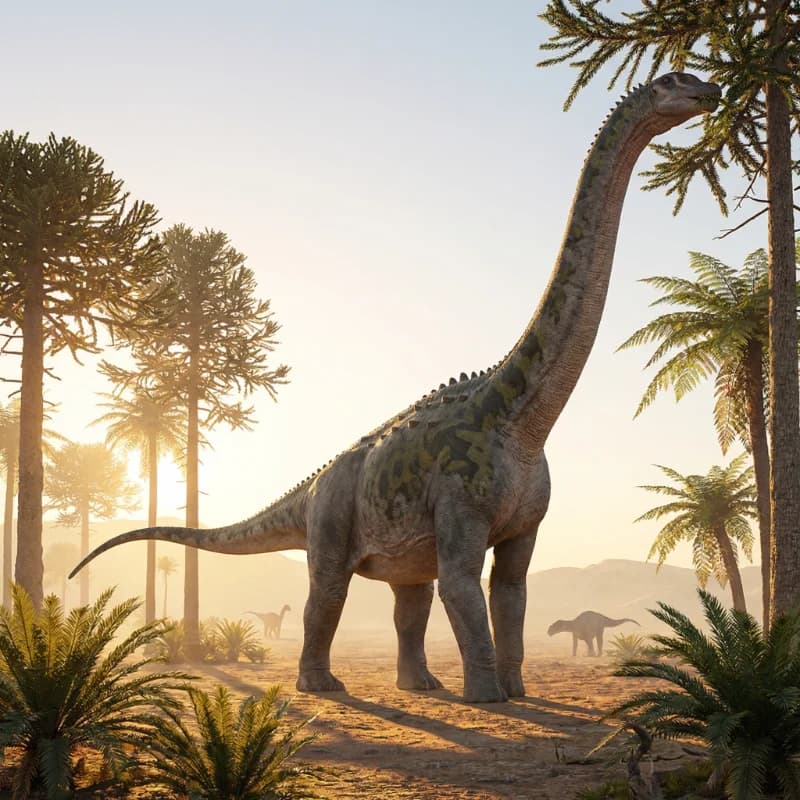
Diamantinasaurus
Diamantinasaurus matildae
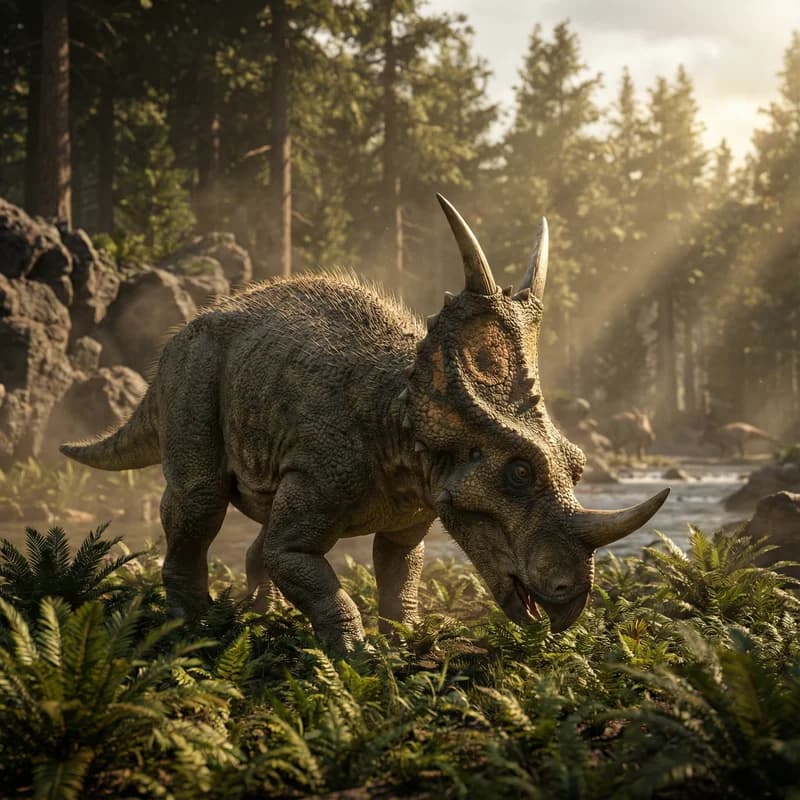
Einiosaurus
Einiosaurus procurvicornis
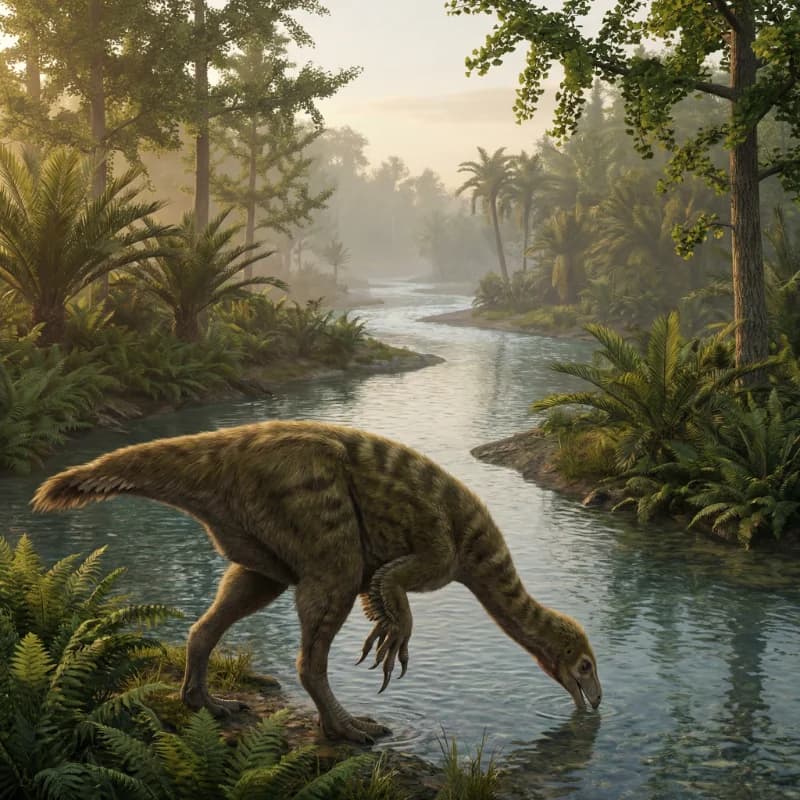
Therizinosaurus
Therizinosaurus cheloniformis
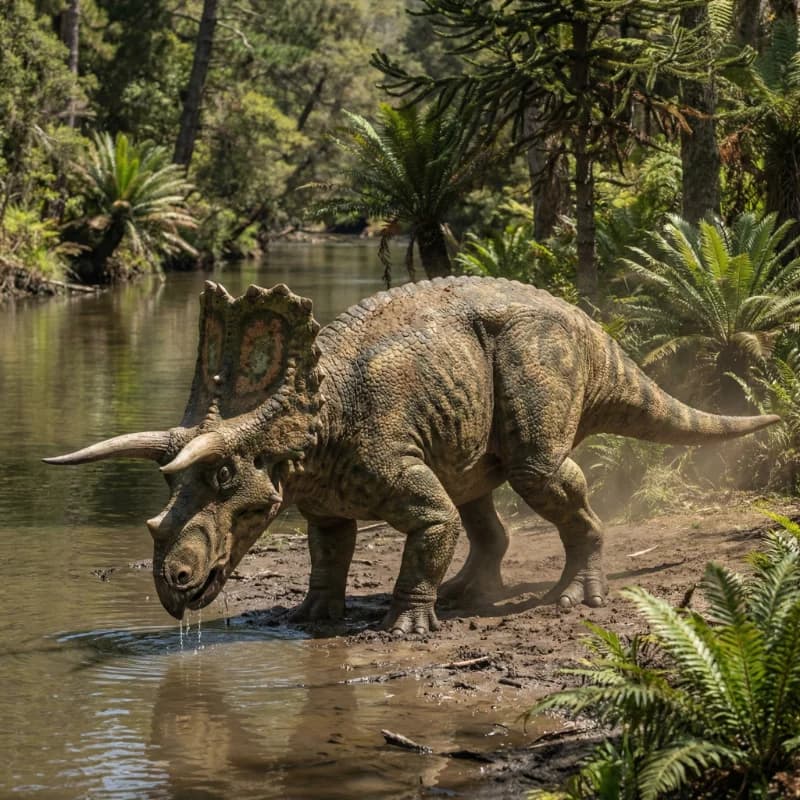
Anchiceratops
Anchiceratops ornatus
Torosaurus
Torosaurus latus

Leaellynasaura
Leaellynasaura amicagraphica

Edmontosaurus
Edmontosaurus

Medusaceratops
Medusaceratops lokii