Achelousaurus
Cretaceous Period Herbivore Creature Type
Achelousaurus horneri
Scientific Name: "Achelous (Greek river deity who lost his horn to Hercules) + saurus (lizard) — 'Achelous lizard.' The specific name horneri honors paleontologist Jack Horner."
Local Name: Achelousaurus
Physical Characteristics
Discovery
Habitat

Achelousaurus horneri Sampson, 1995 is a centrosaurine ceratopsid dinosaur from the Late Cretaceous (late Campanian, approximately 77–74.8 Ma) of what is now Montana, western North America. Classified within the Ornithischia, suborder Ceratopsia, family Ceratopsidae, and subfamily Centrosaurinae, it is recovered from the uppermost Flag Butte Member of the Two Medicine Formation in Glacier County, Montana. The holotype MOR 485 and several additional specimens—including partial skulls and a partial postcranial skeleton—were collected from the Landslide Butte area and Blacktail Creek by teams led by Jack Horner in the late 1980s, and are housed at the Museum of the Rockies in Bozeman, Montana.
The most remarkable feature of Achelousaurus is the replacement of the nasal and supraorbital horns—characteristic of most ceratopsids—with rugose, pitted bony bosses. In adults, the snout and brow bear rough, rounded bony protuberances instead of sharp horncores. These bosses were likely covered by thick keratinous pads in life, analogous to those of modern muskoxen (Ovibos moschatus), as inferred from osteological correlates (Hieronymus et al., 2009). The parietosquamosal frill bears a conspicuous pair of long spikes curving backward and outward from the posterior margin—morphologically intermediate between the straight spikes of Einiosaurus and the more outwardly directed spikes of Pachyrhinosaurus. This transitional morphology places Achelousaurus at a key position in understanding the evolutionary transformation from horns to bosses within the Centrosaurinae.
Estimated body length is approximately 5–6 m and body mass approximately 1.3–3 tonnes, depending on the study consulted. The holotype skull measures approximately 1.62 m in length (including frill), placing Achelousaurus in the same size class as other Campanian centrosaurines but with a more robust build (Sampson, 1995). As a ceratopsian, Achelousaurus was a quadrupedal herbivore equipped with a hooked beak and dental batteries containing hundreds of stacked replacement teeth for processing plant material.
Overview
Name and Etymology
The generic name Achelousaurus combines the name of Achelous (Ἀχελῷος), a shape-shifting Greek river deity, with the Latinized Greek saurus (lizard), yielding "Achelous lizard." In Greek mythology, Achelous transformed into a bull while fighting Hercules but lost the battle when Hercules broke off one of his horns. This allusion references the transitional traits of the dinosaur and the characteristic loss of horns through both ontogenetic (individual growth) and phylogenetic (evolutionary) development (Sampson, 1995). Peter Dodson (1996) praised the generic name as original and intelligent. The specific name horneri honors Jack R. Horner for his extensive research on the dinosaurs of the Two Medicine Formation.
Taxonomic Status
Achelousaurus is currently a valid monotypic genus; its sole species is A. horneri. In 2010, Gregory S. Paul reassigned the species to the genus Centrosaurus as C. horneri, but this reclassification has not been accepted by other researchers, and all subsequent taxonomic assessments have consistently retained the name Achelousaurus (McDonald, 2011; Farke et al., 2011; Fiorillo & Tykoski, 2012). The name was first introduced in a 1994 abstract at the Society of Vertebrate Paleontology annual meeting, but because the abstract did not designate a holotype, the 1995 paper in the Journal of Vertebrate Paleontology is considered the valid formal description.
Key Summary
Achelousaurus is a transitional centrosaurine ceratopsid possessing rugose bony bosses on the snout and above the eyes instead of horns. It occupies an intermediate phylogenetic position between Einiosaurus (which has horns but no bosses) and Pachyrhinosaurus (which has larger, more elaborate bosses), and is a key taxon for understanding the rapid diversification and horn-to-boss evolutionary transformation among late Campanian ceratopsids of Laramidia.
Age, Stratigraphy, and Depositional Environment
Temporal Range
Achelousaurus dates to the late Campanian stage of the Late Cretaceous, approximately 77–74.8 Ma. The Two Medicine Formation as a whole spans approximately 82.4–74.4 Ma (Rogers et al., 2024), and Achelousaurus is restricted to the uppermost member, the Flag Butte Member (77–74.8 Ma). The holotype MOR 485 was recovered approximately 20 m below the upper contact with the overlying Bearpaw Shale, placing it close to ~74.8–75 Ma. The Einiosaurus bonebeds, stratigraphically lower, occur 45–47 m below the Bearpaw contact.
Formation and Lithology
The Two Medicine Formation is a non-marine geological unit exposed in northwestern Montana and southern Alberta. It was deposited between the western shoreline of the Late Cretaceous Western Interior Seaway and the advancing margin of the Cordilleran Overthrust Belt. The formation consists predominantly of sandstone deposited by rivers and deltas, interbedded with bentonitic siltstone and mudstone. The upper portion is characterized by extensive red beds and caliche horizons, indicative of at least seasonally arid conditions (Trexler, 2001). It is underlain by the nearshore Virgelle Sandstone and overlain by the marine Bearpaw Shale. The western portion reaches approximately 600 m in thickness.
Rogers et al. (2024) revised the stratigraphy of the Two Medicine Formation into four formal members:
| Member | Age Range (Ma) | Notable Dinosaurs |
|---|---|---|
| Rock City Member | 82.4–80.8 | (sparse) |
| Shields Crossing Member | 80.8–80.2 | (sparse) |
| Hagans Crossing Member | 80.2–77 | Maiasaura, Gryposaurus latidens |
| Flag Butte Member | 77–74.8 | Einiosaurus, Achelousaurus, Stellasaurus, Hypacrosaurus stebingeri, Prosaurolophus, Daspletosaurus horneri |
Paleoenvironment
The Two Medicine Formation was deposited under a seasonal, semi-arid climate with possible rain-shadow effects from the Cordilleran highlands (Trexler, 2001). The region experienced warm temperatures with a prolonged dry season, as supported by lithological, invertebrate, and palynological data. During the time Achelousaurus lived, this area lay on the eastern coast of Laramidia, a narrow strip of land bordered to the east by the rising Western Interior Seaway and to the west by the proto-Rocky Mountains (3–4 km elevation). As the Bearpaw Transgression progressed, rising sea levels reduced the width of the coastal habitat from approximately 300 km to as little as 30 km (Horner et al., 1992), creating strong selection pressures on the fauna of the uppermost Two Medicine.
Specimens and Diagnostic Characters
Holotype and Principal Specimens
The holotype is MOR 485, a partial skull of an adult individual. It was discovered in early July 1987 by volunteer Sidney M. Hostetter near the Canyon Bone Bed, in the Landslide Butte field area approximately 40 km northwest of Cut Bank, Montana. The specimen includes the nasal and supraorbital bosses, parietal bones, right and left squamosals, both maxillae, both lacrimals, both quadrates, both palatines, the braincase, and the basioccipital (Ford, 2009). A fragmentary lower jaw has been catalogued as MOR 485-7-12-87-4 (Maiorino, 2015). A second adult squamosal from the same Canyon Bone Bed locality was reported in 2010.
The principal referred specimens are:
| Specimen | Composition | Maturity | Locality |
|---|---|---|---|
| MOR 485 (holotype) | Partial skull (nasal/supraorbital bosses, parietals, squamosals, maxillae, braincase, etc.) + fragmentary lower jaw | Adult | Landslide Butte |
| MOR 591 | Partial skull + ~60% postcranial skeleton (vertebral column, pelvis, sacrum, femur) | Subadult | Blacktail Creek |
| MOR 571 | Partial skull (parietals) + partial lower jaws + associated ribs and vertebrae | Adult | Blacktail Creek |
| MOR 456.1 | Subadult material | Subadult | Landslide Butte area |
Note: Wilson & Scannella (2021) cautioned that the subadult specimen MOR 591, traditionally referred to Achelousaurus, could alternatively belong to Einiosaurus, since its stratigraphic position—within 50 m of the Bearpaw contact—falls within the overlap zone of both taxa. None of the known specimens represent a particularly old individual (i.e., advanced ontogenetic stage). According to McDonald and colleagues, the Achelousaurus finds represent single isolated individuals rather than bone beds.
Diagnostic Characters
Sampson (1995) listed four autapomorphies distinguishing Achelousaurus from other centrosaurines:
- Adult nasal bones bear a relatively small, thin boss heavily covered with pits on top.
- Adults lack true horns above the eye sockets; instead, relatively large bosses with high transverse ridges are present.
- Subadults retain true supraorbital horncores with a concave medial surface.
- The parietal bones bear a single pair of curved spikes projecting posterolaterally from the rear margin of the frill.
Additionally, compared to Einiosaurus, the frill spikes of Achelousaurus are more laterally oriented, and compared to Pachyrhinosaurus, the nasal boss is smaller and does not extend posteriorly to reach the frontal bones (Sampson, 1995). No postcranial features are known that distinguish Achelousaurus from other centrosaurines.
Limitations of the Material
The known sample of Achelousaurus is small: only a handful of specimens, none representing advanced-age adults. No large monospecific bone bed has been discovered for this taxon, in contrast to the abundant Einiosaurus material (at least 15 individuals from two bone beds). This limited sample size makes it challenging to fully characterize intraspecific variation and to confidently separate taxonomic differences from ontogenetic or individual variation.
Morphology and Functional Anatomy
Body Size
Estimated body length for Achelousaurus is approximately 6 m with a mass of about 3 tonnes, based on comparisons with other centrosaurines (Sampson, 1995). However, Paul (2010) provided a more conservative estimate of approximately 4.5 m in length and 1.3 tonnes in mass. This discrepancy reflects the absence of a complete skeleton. The holotype skull (MOR 485) measures approximately 1.62 m in total length (including frill), placing it in the same size range as other Campanian centrosaurines such as Einiosaurus, but with a notably heavier build. Sampson noted that Achelousaurus approached the robustness of Triceratops, one of the largest and most heavily built ceratopsids.
Nasal Boss
The most distinctive cranial feature in adults is the rugose, deeply pitted boss on top of the nasal region, replacing the nasal horn found in most other ceratopsids. Although the boss is sometimes described as "pachyostotic" (thickened bone), it actually forms a wide depression with a thin bony floor and irregular excavations—less deeply depressed than in Pachyrhinosaurus (Horner & Goodwin, 2008). The nasal boss covers approximately two-thirds of the dorsal surface of the nasal bones and spans about 27% of total skull length. It is narrower, shorter, and lower than the corresponding structure in Pachyrhinosaurus, and its posterior margin does not reach the level of the eye socket.
The holotype boss has an excavation (cavity) at its anterior end. Two hypotheses exist for the developmental pathway of this structure: (1) the horncore became procurved (bent forward) during growth, as in Einiosaurus, until it fused onto the nasal bone; or (2) an originally erect horn extended its base anteriorly over the snout region, as in Pachyrhinosaurus (Sampson, 1995).
Supraorbital Bosses
Adult skulls possess large, rugose, oval bosses above the eye sockets instead of the horns typical of other ceratopsids. These bosses extend from the postorbital bone forward to incorporate the palpebral and prefrontal bones, bearing high transverse ridges that are thick at their base and thin toward their top. A distinctive transverse saddle-shaped groove separates the nasal boss from the supraorbital bosses—T-shaped in dorsal view. These bosses resemble those of Pachyrhinosaurus but display taller ridges and more pronounced rugosities.
In the subadult specimen MOR 591, the supraorbital ornamentation consists of long, low, plesiomorphic horncores with a concave medial surface—similar to subadult Einiosaurus and Pachyrhinosaurus. Incipient ridges on the postorbital bones suggest the beginning of the transition to bosses.
Frill Structure
The parietosquamosal frill exhibits typical centrosaurine proportions, with a wide, rounded squamosal bone that expands posteriorly. The most conspicuous frill feature is a pair of large spikes (corresponding to "Process 3" or P3 in the standardized numbering system) curving posterolaterally. These are more laterally oriented than the medially curved spikes of Einiosaurus but less laterally directed than those of Pachyrhinosaurus, and shorter and thinner than the corresponding spikes of Styracosaurus. Between the main spikes, two small tab-like P2 processes project toward the midline on each side of the central frill notch. The innermost P1 spikes, present in Centrosaurus, are absent in Achelousaurus.
A linear row of rounded swellings runs along the top of the parietal midline bar, potentially homologous to the spikes and horns found in the same area of some Pachyrhinosaurus specimens. Along the frill margin, a total of seven relatively small processes per side are lined by epoccipitals (small skin ossifications that fuse with the frill bone).
Keratin Sheaths
Hieronymus et al. (2009) examined correlations between skull morphology and integumentary structures in modern horned animals and applied these findings to centrosaurine dinosaurs. They concluded that the rugose bosses of Achelousaurus and Pachyrhinosaurus were covered by thick pads of cornified (keratinized) skin, analogous to the boss of modern muskoxen. The nasal boss shows correlates for a thick epidermal pad on its upper surface and a cornified sheath on the sides. The "pitting" texture may indicate a softer growing layer connecting the hard internal bone with the hard horn sheath. Correlates for a rostral scale in front of the nasal boss and scale rows along the parietal midline were also identified.
Dentition
As a ceratopsid, Achelousaurus had a hooked upper beak (likely covered in keratin), very large nasal openings, and long tooth rows developed into dental batteries containing hundreds of appressed and stacked individual teeth. Each maxilla housed 25–28 tooth positions, with new teeth growing beneath the old ones in a column at each position (Sampson, 1995).
Cervical Fusion (Syncervical)
All three principal specimens (MOR 485, MOR 591, MOR 571) exhibit fusion of the first three cervical vertebrae into a "syncervical" structure. Previously suggested to be a pathology (spondyloarthropathy), this is now interpreted as a normal ontogenetic trait—the vertebrae growing together to support the very heavy head (approximately 1.6 m long including the frill). This trait may have been inherited from a smaller ancestor that used a stiffened neck for burrowing or food acquisition.
Diet and Ecology
Feeding Habits
Achelousaurus was an obligate herbivore. Its hooked beak was optimized for cropping vegetation, while the complex dental batteries could efficiently process tough plant material. The paleoenvironment of the upper Two Medicine Formation supported conifers, ferns, and cycads; these low-to-mid-height plants were the most likely food sources. No direct evidence of diet (stomach contents, coprolites assignable to Achelousaurus, or stable isotope dietary analyses) has been reported.
Function of Skull Ornamentation
Sampson (1995) and Horner (1997) interpreted the horns and frills of ceratopsians as having functioned primarily in intraspecific display and combat, driven by sexual selection. Hieronymus et al. (2009) concluded that the nasal and supraorbital bosses of Achelousaurus were used for butting or ramming the head or flank of a rival, analogous to dominance fights in modern caprines (goat subfamily). The evolutionary transition from projecting horncores to padded bosses in the Centrosaurinae would parallel the transition seen in some living bovids, reflecting a shift in fighting technique from horn-clashing to high-energy head-butting. Hieronymus considered it unlikely that the bosses functioned primarily for species recognition, since species-specific display rituals would already serve that purpose; instead, the bosses evolved for actual combat as part of social selection for scarce resources (mates, food, breeding grounds).
Sampson (1995) rejected the hypothesis that Einiosaurus and Achelousaurus represent sexual dimorphs of a single species, citing three arguments: (1) the extensive Einiosaurus bone beds contain no specimens with bosses, as would be expected if one sex had them; (2) Einiosaurus and Achelousaurus are found in strata of different ages; and (3) both taxa independently display exaggerated secondary sexual characters, whereas sexual dimorphism typically involves only one sex with elaborated traits.
Social Behavior
Centrosaurine ceratopsians are often inferred to have been gregarious based on frequent occurrences of large monospecific bone beds. However, Achelousaurus itself lacks a confirmed large-scale bone bed; McDonald and colleagues noted that its specimens represent single isolated individuals. While Dodson interpreted the monospecific nature of the recovery sites as indirect evidence of herding, this evidence is much weaker than the direct bone-bed evidence available for the closely related Einiosaurus (at least 15 individuals from two bone beds). The social behavior of Achelousaurus therefore remains a hypothesis based on phylogenetic bracketing rather than direct taphonomic evidence.
Metabolism
Barrick & Showers (1996) analyzed oxygen isotopes from bone phosphates of ornithischian dinosaurs from the Two Medicine Formation, including the juvenile/subadult specimen MOR 591 (referred to Achelousaurus or Einiosaurus). Their results suggested that these dinosaurs maintained relatively uniform body temperatures, indicating a high metabolic rate—though lower than that of modern mammals and birds—consistent with intermediate ("mesothermic") thermoregulation.
Distribution and Paleogeography
Geographic Range
All confirmed Achelousaurus specimens come from the uppermost part of the Two Medicine Formation (Flag Butte Member) in Glacier County, Montana. The two principal localities are Landslide Butte (approximately 40 km northwest of Cut Bank) and Blacktail Creek (approximately 35 km south of Cut Bank). These localities are situated within the Blackfeet Indian Reservation.
A centrosaurine specimen with bosses (TMP 2002.76.1) from the Dinosaur Park Formation of Alberta was suggested in 2006 to possibly belong to Achelousaurus or Pachyrhinosaurus, but the diagnostic parietal bones are missing, preventing confident generic assignment (Hunt & Farke, 2010).
Paleogeography
The approximate paleocoordinates of the Two Medicine Formation are 55.3°N, 77.8°W. During the late Campanian, this region lay on the eastern coast of the island continent of Laramidia, bounded by the Western Interior Seaway to the east and the proto-Rocky Mountains (3–4 km elevation) to the west. As the Bearpaw Transgression raised sea levels, the habitable coastal strip narrowed from approximately 300 km to as little as 30 km. Achelousaurus inhabited this coastal lowland during the phase when it was at its narrowest—a population bottleneck that Horner (1992) argued could have driven rapid evolutionary change through intensified sexual selection.
Phylogeny and Taxonomic Debate
Phylogenetic Position
In all published cladistic analyses, Achelousaurus is recovered within the Ceratopsidae, subfamily Centrosaurinae, tribe Pachyrhinosaurini. By definition, it is a member of the clade Pachyrostra ("thick-snouts"), which unites Achelousaurus with Pachyrhinosaurus (Fiorillo & Tykoski, 2012). Shared derived traits (synapomorphies) of Pachyrostra include enlarged nasal ornamentation and the transformation of nasal and brow horns into bosses. Achelousaurus is the basalmost pachyrostran.
The cladogram from Wilson et al. (2020) recovers the following relationships within the Centrosaurinae:
Styracosaurus albertensis → Stellasaurus ancellae → Einiosaurus procurvicornis → Achelousaurus horneri → Pachyrhinosaurus lakustai → P. perotorum → P. canadensis
Horner's Anagenesis Hypothesis
In 1992, Horner, Varricchio, and Goodwin published a study in Nature proposing that the upper Two Medicine Formation preserved direct evidence of anagenesis—linear, non-branching evolution within a single lineage. They argued that three "transitional taxa" (designated Taxon A, B, and C) represented successive evolutionary stages from Styracosaurus to Pachyrhinosaurus, rather than separate species arising through cladogenesis (branching speciation). Taxon C, later named Achelousaurus, exhibited the most derived traits: a nasal boss fused to the nasal bone and ridged supraorbital bosses. Horner suggested that the progressive narrowing of the coastal habitat during the Bearpaw Transgression created population bottlenecks that drove rapid morphological change through intensified sexual selection.
Sampson (1995) did not fully adopt the anagenesis hypothesis. While his cladistic analysis recovered Achelousaurus as phylogenetically intermediate between Einiosaurus and Pachyrhinosaurus—as Horner predicted—Sampson assumed speciation (population splitting) rather than direct transformation. He noted that the revised stratigraphic intervals (approximately 640,000–860,000 years between taxa) were short but still consistent with a high rate of speciation among late Campanian centrosaurines.
Dodson (1996) raised two objections: (1) the single pair of main frill spikes in Einiosaurus/Achelousaurus seems more basal than the three pairs of Styracosaurus albertensis, suggesting a separate evolutionary branch; and (2) Einiosaurus and Achelousaurus could represent sexual dimorphs of a single species, given the short time interval between their respective strata.
Wilson & Scannella (2016, 2021) compared the subadult Einiosaurus skull MOR 456 8-8-87-1 with MOR 591 and found the two to be remarkably similar, differing mainly in face length and supraorbital horncore sharpness. They concluded that Achelousaurus was likely the direct descendant of Einiosaurus, with the morphological differences between the two taxa attributable to heterochrony (differential rates of trait development during individual growth). Wilson et al. (2020) further noted that Stellasaurus (Horner's Taxon A) is morphologically and stratigraphically intermediate between Styracosaurus and Einiosaurus, making it difficult to discount an anagenetic lineage.
Alternative Hypotheses
The discovery of a bossed centrosaurine specimen (TMP 2002.76.1) from the Dinosaur Park Formation—stratigraphically older than both Einiosaurus and Achelousaurus—indicated that nasal bosses may have evolved more than once or earlier than the anagenesis hypothesis predicts. Horner (2010) responded that even if Achelousaurus is not a direct descendant of Einiosaurus, its ancestor may still have been Einiosaurus-like. The debate between anagenesis and cladogenesis in this lineage remains unresolved.
Restoration and Uncertainty
Confirmed, Probable, and Hypothetical Conclusions
**Confirmed:
- Achelousaurus is a centrosaurine ceratopsid with bony bosses replacing nasal and supraorbital horns in adults.
- It is restricted to the upper Flag Butte Member of the Two Medicine Formation (~77–74.8 Ma).
- It is the sister group of Pachyrhinosaurus within the clade Pachyrostra.
**Probable (strong supporting evidence):
- The bosses were covered by thick keratinous pads in life (based on osteological correlate analysis; Hieronymus et al., 2009).
- Body length was approximately 5–6 m, mass approximately 1.3–3 t (no complete skeleton available; range reflects different estimation methods).
- Achelousaurus is the descendant or very close sister taxon of Einiosaurus.
**Hypothetical (indirect evidence only):
- The bosses were used for head-butting in dominance contests (functional inference from comparative anatomy).
- The Styracosaurus → Einiosaurus → Achelousaurus → Pachyrhinosaurus sequence represents direct anagenetic transformation (supported by some evidence but debated).
- Achelousaurus was gregarious (no large bone bed confirmed; inferred from centrosaurine phylogenetic bracket).
Common Misconceptions
Achelousaurus is popularly described as a "hornless horned dinosaur," but this oversimplifies its anatomy. The bosses are not simply bare bone; they bore complex keratinous covering structures. Additionally, the frill retains a prominent pair of long spikes, so the animal was by no means "unarmed." It should also be noted that Achelousaurus is sometimes miscategorized as a theropod in popular databases; it is actually an ornithischian ceratopsian.
Comparison with Related Taxa
| Taxon | Age (Ma) | Nasal Ornamentation | Supraorbital Ornamentation | Frill P3 Spikes | Est. Body Length |
|---|---|---|---|---|---|
| Styracosaurus albertensis | ~75.5 | Erect horn | Short horns | 3 pairs, long | ~5.5 m |
| Stellasaurus ancellae | ~76–75 | Erect to slightly curved horn | Short horns | 1 pair | ~5 m |
| Einiosaurus procurvicornis | ~76–74.5 | Procurved (forward-bent) horn | Spheroid bosses | 1 pair, straight | ~4.5–6 m |
| Achelousaurus horneri | ~77–74.8 | Rugose boss | High-ridged bosses | 1 pair, laterally curved | ~5–6 m |
| Pachyrhinosaurus canadensis | ~73.5–68.5 | Large boss | Large bosses | 1 pair, outwardly directed + extra ornamentation | ~6–8 m |
This comparison illustrates the progressive evolutionary trend from erect horns → procurved horns → rugose bosses → larger bosses in the nasal region, and from short horns → spheroid masses → high-ridged bosses → larger bosses in the supraorbital region.
Fun Facts
FAQ
📚References
- Sampson, S.D. (1995). Two new horned dinosaurs from the upper Cretaceous Two Medicine Formation of Montana; with a phylogenetic analysis of the Centrosaurinae. Journal of Vertebrate Paleontology, 15(4), 743–760. https://doi.org/10.1080/02724634.1995.10011259
- Horner, J.R., Varricchio, D.J. & Goodwin, M.B. (1992). Marine transgressions and the evolution of Cretaceous dinosaurs. Nature, 358, 59–61. https://doi.org/10.1038/358059a0
- Wilson, J.P., Ryan, M.J. & Evans, D.C. (2020). A new, transitional centrosaurine ceratopsid from the Upper Cretaceous Two Medicine Formation of Montana and the evolution of the 'Styracosaurus-line' dinosaurs. Royal Society Open Science, 7(4), 200284. https://doi.org/10.1098/rsos.200284
- Wilson, J.P. & Scannella, J.B. (2021). Comparative cranial osteology of subadult eucentrosauran ceratopsid dinosaurs from the Two Medicine Formation, Montana, indicates sequence of ornamentation development and complex supraorbital ontogenetic change. Acta Palaeontologica Polonica, 66(4), 797–814. https://doi.org/10.4202/app.00797.2020
- Hieronymus, T.L., Witmer, L.M. & Ridgely, R.C. (2009). The facial integument of centrosaurine ceratopsids: morphological and histological correlates of novel skin structures. The Anatomical Record, 292(9), 1370–1396. https://doi.org/10.1002/ar.20985
- Rogers, R.R., Horner, J.R., Ramezani, J., Roberts, E.M. & Varricchio, D.J. (2024). Updating the Upper Cretaceous (Campanian) Two Medicine Formation of Montana: Lithostratigraphic revisions, new CA-ID-TIMS U-Pb ages, and a calibrated framework for dinosaur occurrences. Geological Society of America Bulletin, 137(1–2), 315–340. https://doi.org/10.1130/B37498.1
- Fiorillo, A.R. & Tykoski, R.S. (2012). A new Maastrichtian species of the centrosaurine ceratopsid Pachyrhinosaurus from the North Slope of Alaska. Acta Palaeontologica Polonica, 57(3), 561–573. https://doi.org/10.4202/app.2011.0033
- Dodson, P. (1996). The Horned Dinosaurs. Princeton University Press. ISBN 978-0-691-02882-8.
- Paul, G.S. (2010). The Princeton Field Guide to Dinosaurs. Princeton University Press. ISBN 978-0-691-13720-9.
- Trexler, D. (2001). Two Medicine Formation, Montana: geology and fauna. In: Tanke, D.H. & Carpenter, K. (eds.), Mesozoic Vertebrate Life, Indiana University Press, pp. 298–309.
- Rogers, R.R. (1990). Taphonomy of three dinosaur bone beds in the Upper Cretaceous Two Medicine Formation of northwestern Montana: evidence for drought-related mortality. PALAIOS, 5(5), 394–413. https://doi.org/10.2307/3514834
- Sampson, S.D., Ryan, M.J. & Tanke, D.H. (1997). Craniofacial ontogeny in centrosaurine dinosaurs (Ornithischia: Ceratopsidae): taxonomic and behavioral implications. Zoological Journal of the Linnean Society, 121(3), 293–337. https://doi.org/10.1111/j.1096-3642.1997.tb00340.x
- Barrick, R.E. & Showers, W.J. (1996). Comparison of thermoregulation of four ornithischian dinosaurs and a varanid lizard from the Cretaceous Two Medicine Formation: evidence from oxygen isotopes. PALAIOS, 11(4), 295–305. https://doi.org/10.2307/3515240
- McDonald, A.T. (2011). A subadult specimen of Rubeosaurus ovatus (Dinosauria: Ceratopsidae), with observations on other ceratopsids from the Two Medicine Formation. PLoS ONE, 6(8), e22710. https://doi.org/10.1371/journal.pone.0022710
- Ford, T.L. (2009). Ceratopsian horn and frill evolution and variation. In: Ryan, M.J., Chinnery-Allgeier, B.J. & Eberth, D.A. (eds.), New Perspectives on Horned Dinosaurs, Indiana University Press, pp. 376–397.
- Farke, A.A., Ryan, M.J., Barrett, P.M., Tanke, D.H., Braman, D.R., Loewen, M.A. & Graham, M.R. (2011). A new centrosaurine from the Late Cretaceous of Alberta, Canada, and the evolution of parietal ornamentation in horned dinosaurs. Acta Palaeontologica Polonica, 56(4), 691–702. https://doi.org/10.4202/app.2010.0121
Gallery
5 images Achelousaurus
Achelousaurus · Cretaceous Period · Herbivore
 Achelousaurus
Achelousaurus · Cretaceous Period · Herbivore
 Achelousaurus
Achelousaurus · Cretaceous Period · Herbivore
 Achelousaurus
Achelousaurus · Cretaceous Period · Herbivore
 Achelousaurus
Achelousaurus · Cretaceous Period · Herbivore
🔗Related Creatures
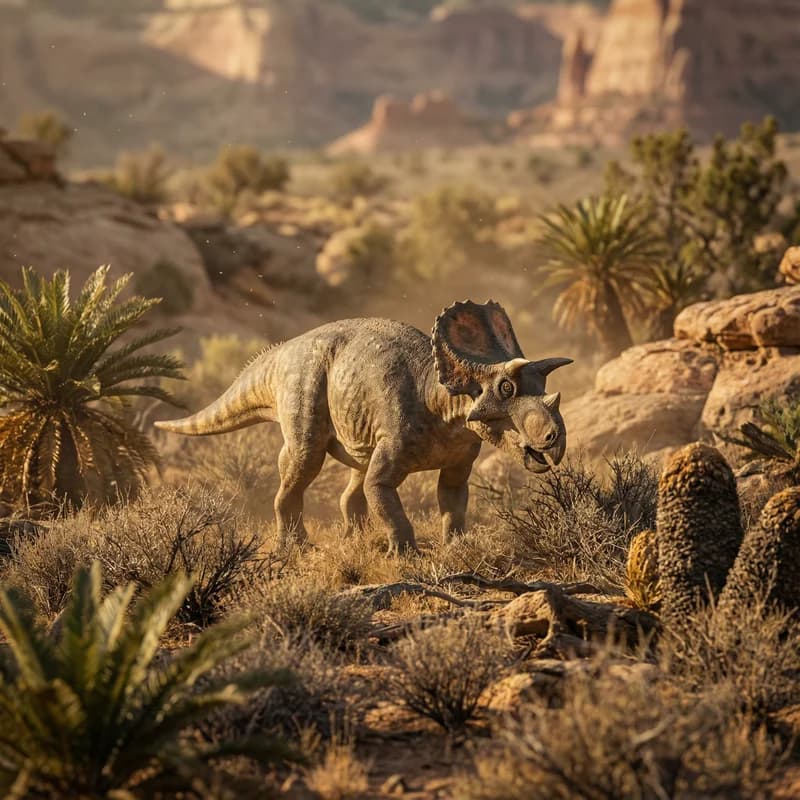
Zuniceratops
Zuniceratops christopheri

Maiasaura
Maiasaura peeblesorum
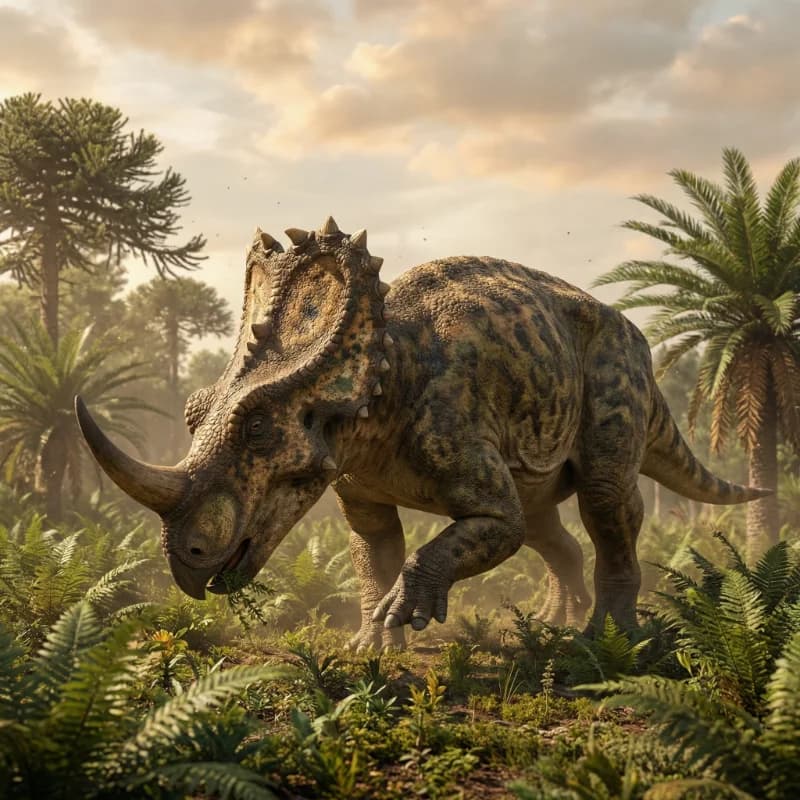
Centrosaurus
Centrosaurus apertus
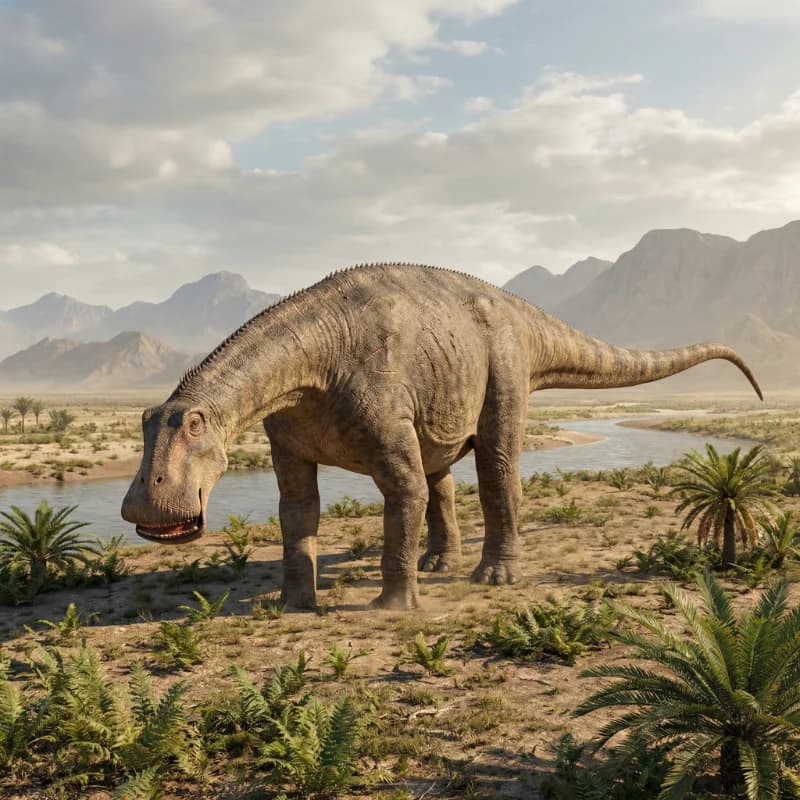
Nigersaurus
Nigersaurus taqueti
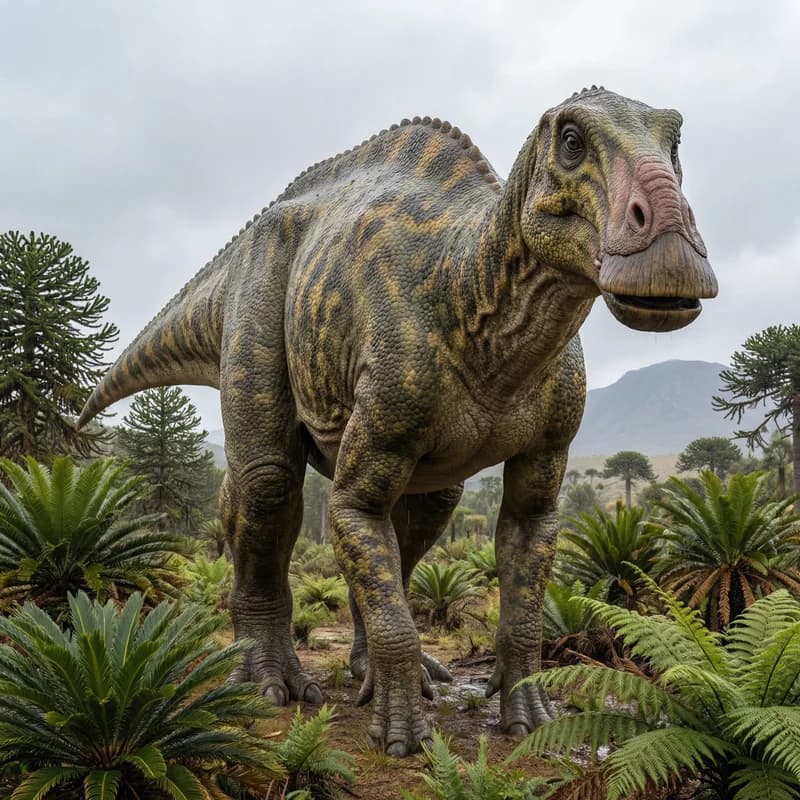
Shantungosaurus
Shantungosaurus giganteus
Protoceratops
Protoceratops andrewsi
Alamosaurus
Alamosaurus sanjuanensis

Edmontosaurus
Edmontosaurus