Shantungosaurus
Cretaceous Period Herbivore Creature Type
Shantungosaurus giganteus
Scientific Name: "Shandong Lizard (from 'Shantung,' an older romanization of Shandong + Greek 'sauros,' lizard; species name 'giganteus' = Latin for 'gigantic')"
Local Name: Shantungosaurus
Physical Characteristics
Discovery
Habitat
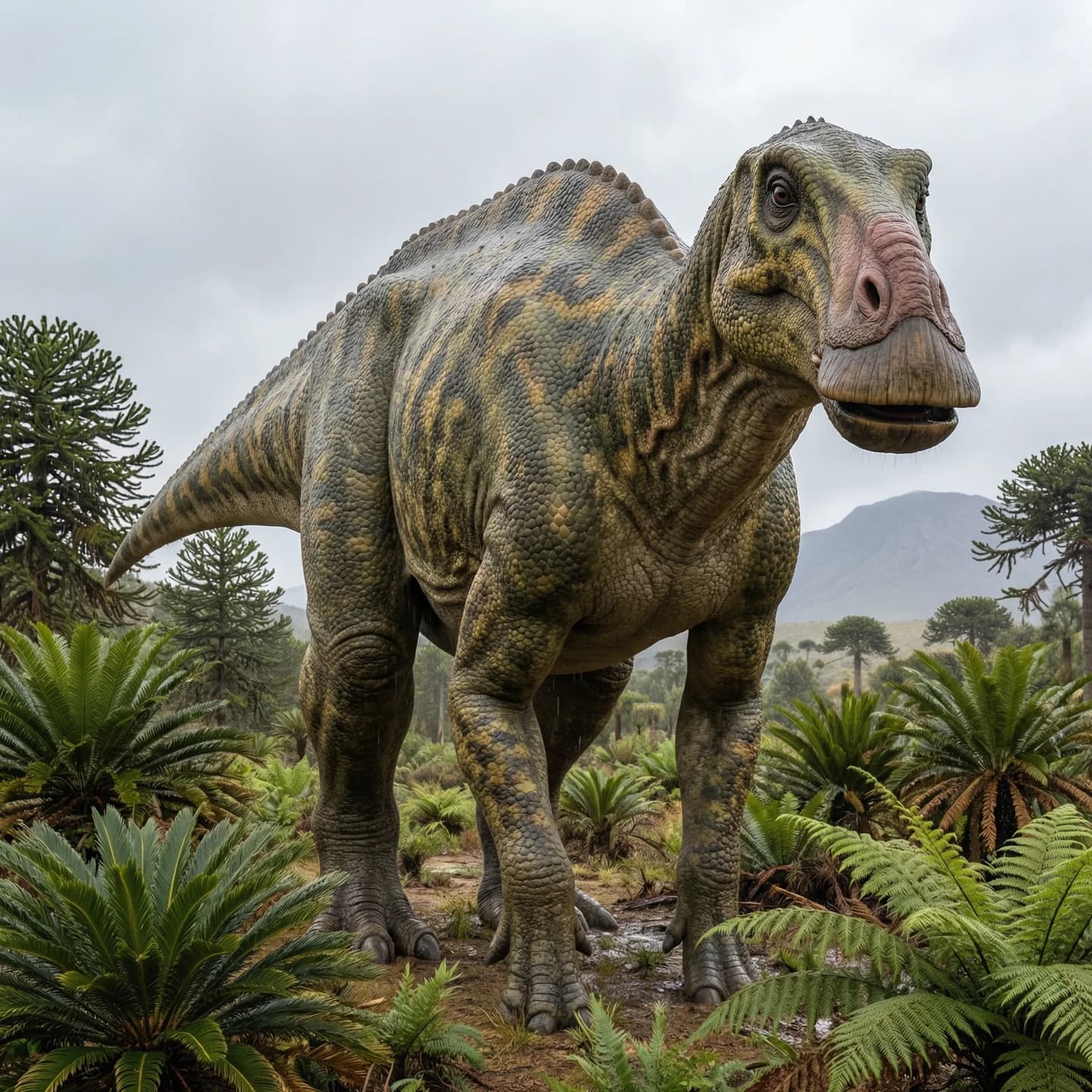
Shantungosaurus giganteus Hu, 1973 is a saurolophine hadrosaurid dinosaur from the Late Cretaceous Campanian stage (approximately 77.3–73.5 Ma) of what is now the Zhucheng area of Shandong Province, China. It is the largest known ornithischian dinosaur and, excluding sauropods, the heaviest dinosaur currently recognized. Composite mounted skeletons measure 14.7–16.6 m in total length, and body mass estimates range conservatively from about 13 to 16 tonnes, with the largest individuals potentially reaching approximately 16 m and 19 tonnes (Hu, 1973; Paul, 2016; Horner et al., 2004; Seebacher, 2001).
Between 1964 and 1968, disarticulated skeletal remains of at least five individuals were collected from the Longgujian (Dragon Bone Ravine) quarry near Zhucheng City, Shandong Province. Based on this material, Hu Chengzhi (胡承志) erected the new genus and species in 1973 (Hu, 1973). Since then, two additional quarries in the same region—Kugou (55+ individuals) and Zangjiazhuang (numerous individuals)—have yielded vast quantities of Shantungosaurus material, making it one of the most abundantly represented hadrosaurid taxa in the world from a single locality complex (Hone et al., 2014). Phylogenetically, Shantungosaurus forms a stable sister-group relationship with the North American Edmontosaurus, and both are placed within the tribe Edmontosaurini (Xing et al., 2014; Prieto-Márquez et al., 2016). This biogeographic link is significant evidence for faunal interchange between Asia and North America via the Beringian land bridge during the Late Cretaceous.
The most striking feature of Shantungosaurus is its sheer size. The type skull measures 1.63 m in length—the largest among all edmontosaurins—and its jaws contain approximately 1,500 tiny chewing teeth arranged in a dental battery capable of efficiently processing tough, fibrous vegetation (Hu et al., 2001). A large opening near the nostrils may have been covered by an inflatable soft-tissue flap used for sound production, though this hypothesis remains untested due to the absence of preserved soft tissue.
Overview
Name and Etymology
The genus name Shantungosaurus combines 'Shantung,' an older romanization of Shandong (山東, literally 'east of the mountains'), with the Greek 'sauros' (lizard), meaning 'Shandong Lizard.' The specific epithet giganteus is Latin for 'gigantic,' reflecting the animal's extraordinary size, which was its most immediately striking attribute at the time of discovery (Hu, 1973).
Taxonomic Status
Shantungosaurus belongs to the subfamily Saurolophinae within Hadrosauridae and currently contains a single valid species, S. giganteus. Two additional genera described from the Zhucheng region—'Zhuchengosaurus maximus' (Zhao et al., 2007) and 'Huaxiaosaurus aigahtens' (Zhao et al., 2011)—are now treated as junior synonyms of Shantungosaurus giganteus (Xing et al., 2014). The supposedly diagnostic differences (sacral vertebra count, body size disparity, minor vertebral morphology) fall within the range of ontogenetic variation, individual variation, and post-depositional distortion expected in disarticulated bonebeds of a single species.
Temporal Range, Stratigraphy, and Paleoenvironment
Geological Age and Stratigraphy
All known Shantungosaurus fossils come from the Wangshi Group on the Shandong Peninsula. Detrital zircon U-Pb dating (An et al., 2016), ⁴⁰Ar/³⁹Ar geochronology, and magnetostratigraphic analysis constrain the Wangshi Group to approximately 77.3–73.5 Ma, corresponding to the middle to late Campanian (An et al., 2016). Some references extend the upper boundary to approximately 71 Ma (early Maastrichtian), but the Zhucheng bonebeds are concentrated within the Campanian interval.
The stratigraphic range of Shantungosaurus spans from the top of the Xingezhuang Formation to the middle of the Hongtuya Formation. Three principal quarries, listed from stratigraphically lowest to highest, are: the Kugou quarry (Xingezhuang/Hongtuya transition), the Zangjiazhuang quarry (Hongtuya Formation), and the Longgujian quarry (lower Hongtuya Formation). The Kugou quarry lies approximately 30 m below the Longgujian, representing an earlier depositional event (Xing et al., 2014; Hone et al., 2014).
Paleoenvironment
The paleolatitude at the time of deposition was approximately 37.3°N and the paleolongitude approximately 111.0°E, similar to the modern geographic position of Shandong. The depositional setting comprised a complex transition from alluvial fans to fluvial and lacustrine floodplains. The climate is interpreted as warm and semi-arid to subtropical (Ji et al., 2011). The dominant lithologies are gneissic conglomerate, marlstone, and fine- to medium-grained sandstone. Debris flows are proposed as the primary mechanism for bonebed formation, suggesting that mass mortality events resulted from sudden burial by sediment-laden floods in a hilly terrain (Liu et al., 2010; Ji et al., 2011).
Plant fossils from the region are limited, but the expected vegetation includes conifers, ginkgos, cycads, palms, and early angiosperms—a typical Late Cretaceous flora for this paleolatitude (Ji et al., 2011).
Associated Fauna
The Wangshi Group bonebeds in the Zhucheng area have yielded a diverse dinosaur assemblage alongside Shantungosaurus. The principal co-occurring taxa are summarized below.
| Higher group | Taxon | Classification |
|---|---|---|
| Ceratopsian | Sinoceratops zhuchengensis | Ceratopsidae |
| Ceratopsian | Zhuchengceratops inexpectus | Leptoceratopsidae |
| Ceratopsian | Ischioceratops zhuchengensis | Leptoceratopsidae |
| Pachycephalosaur | Micropachycephalosaurus hongtuyanensis | Pachycephalosauria |
| Theropod | Zhuchengtyrannus magnus | Tyrannosauridae |
| Theropod | Anomalipes zhaoi | Caenagnathidae |
| Sauropod | Zhuchengtitan zangjiazhuangensis | Titanosauria (Saltasauridae) |
Shantungosaurus is by far the numerically dominant taxon in all three quarries. Together, these fossils provide a remarkably detailed window into a unique Late Cretaceous ecosystem of eastern Asia (Hone et al., 2011; Yu et al., 2018; Mo et al., 2017).
Specimens and Diagnosis
Principal Specimens
All Shantungosaurus material recovered to date is disarticulated, which limits the precision of single-individual reconstructions. The specimen record from the three quarries is summarized below.
| Quarry | Stratigraphic level | Minimum individuals | Notes |
|---|---|---|---|
| Longgujian | Lower Hongtuya Fm. | ~10 | Type locality; large adults predominate (Hu, 1973) |
| Kugou | Xingezhuang/Hongtuya transition | 55+ | Largest sample; mostly adults (Hone et al., 2014) |
| Zangjiazhuang | Hongtuya Fm. | Many | Juveniles to large adults; 'Huaxiaosaurus' type locality (Zhao et al., 2011) |
The type material consists of a composite skeleton assembled from at least five individuals at the Longgujian quarry, now mounted at the Chinese Academy of Geological Sciences (CAGS) in Beijing with a total length of 14.72 m (Hu, 1973; Glut, 1997). The femora used in this mount measure 164.5 cm and 165 cm, representing 'medium-sized adults.' The type skull is 1.63 m long (Hu et al., 2001).
A second mounted skeleton originally referred to 'Zhuchengosaurus maximus' measures 16.6 m, and a third referred to 'Huaxiaosaurus aigahtens' measures 18.7 m. However, given that the femora for these mounts measure only 170 cm and 172 cm respectively, the 18.7 m figure in particular is regarded as a significant overestimate (Xing et al., 2014).
Diagnosis
According to Xing et al. (2014), Shantungosaurus is distinguished from other hadrosaurids by: (1) an exceptionally large and robust maxilla and dentary, giving the skull a more angular and proportionately shorter-snouted appearance than other edmontosaurins; (2) a markedly enlarged deltopectoral crest on the humerus, far exceeding that of any other hadrosaurid; and (3) tall neural spines on the sacral and caudal vertebrae, resulting in a deeper, more powerfully built tail than in related taxa.
Morphology and Functional Anatomy
Body Size
Femur length serves as the primary proxy for body size in Shantungosaurus. From the Longgujian quarry, Hu (1973) reported femora of 160.5 cm, 164.5 cm, 165 cm, 169 cm, and 180.5 cm, while Zhao et al. (2007) added two more at 170 cm each. At the Kugou quarry, Hone et al. (2014) measured 86 femora ranging from 127 to 172 cm, with a mean of approximately 150 cm.
Scaling from the type composite (femur 164.5–165 cm = 14.72 m body length), the largest known femur (180.5 cm) yields an estimated body length of approximately 16.1 m. The 'Zhuchengosaurus' mount at 16.6 m and 'Huaxiaosaurus' mount at 18.7 m are considered overestimates relative to their femur sizes (170 cm and 172 cm, respectively).
Body mass estimates vary considerably by method and author. Paul (2016) used a volumetric approach to suggest approximately 13 tonnes for a 15 m individual, though his reconstructions have been criticized as overly lean ('shrinkwrapped'). Horner et al. (2004) proposed a maximum of 16 tonnes. Applying Seebacher's (2001) allometric formula (mass in kg = 11.81 × L^2.66), a 14.72 m individual yields approximately 15.1 tonnes, while a 16.1 m individual yields approximately 19.2 tonnes. Recent Graphic Double Integration (GDI) estimates based on detailed skeletal reconstructions produce comparable results: approximately 14.6 tonnes for a 165 cm femur, approximately 16 tonnes for a 170 cm femur, and approximately 19.2 tonnes for the 180.5 cm femur. The conservative academic consensus places typical adult mass at 13–16 tonnes, with the largest known individual potentially reaching approximately 19 tonnes.
Hip height is estimated at approximately 4–4.5 m. In a quadrupedal walking posture, back height is conventionally cited as approximately 5 m. When standing bipedally with the neck raised, a large individual could have reached 7–8 m in height, rivaling the feeding height of some Jurassic sauropods such as Camarasaurus (5–8 m; Brett-Surman, 1979).
Skull and Dentition
The type skull (1.63 m long) is the most robust among all edmontosaurins, with exceptionally thick maxilla and dentary bones (Xing et al., 2014). The snout is broad and proportionately short. While the beak itself is edentulous (toothless), the posterior jaw contains a dental battery of approximately 1,500 tiny teeth arranged in multiple rows within vertical grooves (Hu, 1973). Each tooth bears a serrated cutting edge suited to shearing fibrous plant material. A large opening near the naris (nasal opening) may have been covered in life by a loose, inflatable skin flap capable of producing sounds. However, since no soft tissue has been preserved, this hypothesis remains a morphological inference. Notably, a mummified specimen of the closely related Edmontosaurus regalis has revealed a fleshy, cock's-comb-like cranial crest (Bell et al., 2014), raising the possibility that Shantungosaurus also possessed similar soft-tissue display structures, though direct evidence is lacking.
Limbs and Locomotion
The humerus (upper arm bone) measures approximately 90–105 cm in length (Hu, 1973; Zhao et al., 2007; Xing et al., 2014), greatly exceeding the maximum known humeri of any other hadrosaurid (approximately 80–83 cm for Hypsibema and Edmontosaurus annectens). The prominent deltopectoral crest indicates powerful forelimb musculature, essential for supporting the massive body in a quadrupedal stance. Nevertheless, overall limb proportions are not dramatically different from those of other hadrosaurids, and facultative bipedality (the ability to walk on two legs when desired) is considered very likely. If so, Shantungosaurus would be the largest known animal capable of bipedal locomotion (Everything Dinosaur Blog, 2016). For perspective, even obligate quadrupeds like Apatosaurus and Diplodocus are inferred to have been capable of rearing onto their hind limbs, and Shantungosaurus was both smaller and far better adapted for bipedal movement than any sauropod.
The tall neural spines from the sacral region through the tail gave the caudal section a deep, powerful profile that likely served as a counterbalance for the massive torso (Hu, 1973).
Diet and Ecology
Feeding
Like all hadrosaurids, Shantungosaurus was herbivorous. Its broad, relatively short-snouted beak was used to crop low vegetation, while the dental battery of approximately 1,500 teeth processed tough, fibrous plant material via a complex chewing mechanism involving lateral jaw movement (Williams et al., 2009). Paul (2016) proposed that Edmontosaurus regalis and Shantungosaurus, which share similar snout proportions, likely combined ground-level grazing with mid-height browsing.
Notably, the Shantungosaurus dentary shows convergences with ceratopsid dentaries, including an anteriorly expanded coronoid process, a deeper jaw body, and larger muscle attachment ridges (Bell et al., 2009). These features suggest a bite force intermediate between that of a typical hadrosaurid and a ceratopsid, implying adaptation to tougher vegetation. The absence of Sharpey's fibers on the coronoid process indicates that it had not evolved the full ceratopsid-grade jaw mechanics, but its jaw was clearly more powerful than that of most other hadrosaurs. This dietary specialization may have been a driving factor behind gigantism in Shantungosaurus: a larger body could generate greater bite force and also reach higher vegetation when standing bipedally.
Herding Behavior
The occurrence of multi-individual bonebeds provides strong evidence for gregarious behavior. The Kugou quarry records a mass mortality event involving 55+ predominantly adult individuals, interpreted as instantaneous death and burial by debris flow (Liu et al., 2010; Ji et al., 2011). The normal size distribution and prevalence of fully fused sacra in the Kugou sample indicate an age-segregated herd composed almost entirely of mature adults (Hone et al., 2014).
By contrast, the Zangjiazhuang quarry preserves a mix of juveniles (femora as small as 60 cm) and large adults (femora up to 172 cm), suggesting that mixed-age herds also existed (Zhao et al., 2011). The Longgujian quarry, with its smaller sample, has yielded only large adults. Together, these data suggest that Shantungosaurus exhibited variable social organization—age-segregated adult herds and mixed-age groups may have coexisted within the population.
Predator–Prey Dynamics
Zhuchengtyrannus magnus, a large tyrannosaurid from the same bonebeds, was the apex predator in the Zhucheng ecosystem. At least one dorsal vertebra of Zhuchengtyrannus approaches the size of the corresponding element in 'Sue' (FMNH PR 2081), the famous Tyrannosaurus rex specimen, indicating that extremely large tyrannosaurs were present in this environment (Hone et al., 2011). While a fully grown Shantungosaurus at 15–19 tonnes would have been formidable prey even for such a massive predator, modern analogues (e.g., lions taking down adult buffalo, or orcas hunting large whales) demonstrate that predators routinely target prey larger than themselves.
Distribution and Paleogeography
Geographic Range
The primary locality for Shantungosaurus is the Zhucheng area of Shandong Province, where three quarries (Longgujian, Kugou, Zangjiazhuang) have provided the vast majority of specimens. Additionally, Hu (2001) reported a small amount of Shantungosaurus material from the northern Wangshi Group exposures in the Laiyang Basin, though the fauna there is dominated by smaller hadrosaurs such as Tsintaosaurus and Laiyangosaurus.
Material tentatively referred to Shantungosaurus sp. has also been reported from the Maastrichtian-aged Shanyang Formation in Shaanxi Province, near Inner Mongolia (Weishampel et al., 2004). This material may represent a separate species and its conspecificity with S. giganteus remains unconfirmed.
Biogeographic Significance
The sister-group relationship between Shantungosaurus (East Asia) and Edmontosaurus (North America) provides compelling evidence for active faunal exchange across the Beringian land bridge during the Late Cretaceous. The tribe Edmontosaurini also includes Kerberosaurus and Kundurosaurus from the Russian Far East, as well as Laiyangosaurus from Shandong, tracing a continuous distribution along the Pacific margin of Asia and into western North America (Xing et al., 2014; Zhang et al., 2017).
Phylogenetics and Taxonomic Debates
Position within Edmontosaurini
Maximum parsimony analyses by Xing et al. (2014) consistently recover Shantungosaurus as the sister taxon of Edmontosaurus. Together with Kerberosaurus, Kundurosaurus (Russian Far East), and Laiyangosaurus (Shandong), they comprise the tribe Edmontosaurini. This clade is recovered as most closely related to the tribe Saurolophini within the broader Saurolophinae. Subsequent analyses by Prieto-Márquez et al. (2016) and Xing & Mallon (2017) confirmed this arrangement.
Synonym Issues
'Zhuchengosaurus maximus' was separated from Shantungosaurus primarily on the basis of having 9 sacral vertebrae (versus 10), differences in sacral ventral groove morphology, and larger body size (Zhao et al., 2007). These distinctions were rejected because: (a) the missing sacral vertebra could result from damage or ontogenetic variation; (b) the ventral groove difference could reflect individual variation; and (c) body size differences are expected in a single-species bonebed containing individuals of varying ages and sizes (Xing et al., 2014; Hone et al., 2014).
'Huaxiaosaurus aigahtens' was diagnosed mainly by differences in vertebral count and body size (Zhao et al., 2011). These were likewise deemed insufficient for generic or specific distinction, given the inherent variability in composite specimens assembled from disarticulated bonebeds (Xing et al., 2014).
Reconstruction and Uncertainties
Key Uncertainties
The entirely disarticulated nature of all Shantungosaurus material makes it impossible to determine the exact proportions of any single individual. The mounted skeleton lengths of 14.72 m, 16.6 m, and 18.7 m are all composites from multiple individuals, and tail length in particular is strongly dependent on the reconstructor's interpretation. The largest femur ('Femur No. 1,' 180.5 cm) has a poorly reconstructed lower half, though the preserved position of the fourth trochanter confirms that the original bone was in the 180 cm range.
The size disparity between the Kugou quarry (mean femur ~150 cm) and the Longgujian quarry (mean femur ~165 cm+) may reflect a temporal increase in body size, consistent with Cope's Rule. However, sample size differences and reliance on relative stratigraphic position rather than absolute dating make this conclusion tentative (Hone et al., 2014; Xing et al., 2014).
Popular Media vs. Scientific Consensus
Some popular sources cite lengths of 18+ m and weights of 20+ tonnes for Shantungosaurus. The current scientific consensus is more conservative: approximately 15 m and 13–16 tonnes for typical adults (Paul, 2016), with the largest individuals possibly reaching approximately 16 m and 19 tonnes based on scaling estimates. The 18.7 m figure from the 'Huaxiaosaurus' mount is a clear overestimate relative to its constituent femur sizes and is not endorsed by the broader paleontological community.
Nasal Flap and Vocalization
The hypothesis that an inflatable skin pouch covered the large narial opening and was used for sound production remains untested. Unlike the hollow bony crests of lambeosaurines, which amplified sound through resonating chambers, any vocalization mechanism in Shantungosaurus would have relied entirely on soft tissue. A mummified specimen of the closely related Edmontosaurus regalis revealed a fleshy crest atop the skull (Bell et al., 2014), and more recently, E. annectens mummies have shown fleshy dorsal ridges (Science, 2025), raising the possibility of analogous soft-tissue structures in Shantungosaurus—but no direct fossil evidence exists.
Comparison with Other Large Hadrosaurids
The table below compares Shantungosaurus with other notably large hadrosaurid taxa.
| Taxon | Largest known femur (cm) | Estimated total length (m) | Estimated body mass (t) | Age | Region |
|---|---|---|---|---|---|
| Shantungosaurus giganteus | 180.5 | ~14.7–16.1 | ~13–19 | Campanian | Shandong, China |
| Edmontosaurus annectens | ~142 | ~12–13 | ~7–9 | Maastrichtian | Western North America |
| Edmontosaurus regalis | ~130 | ~12 | ~5–7 | Campanian | Western North America |
| Magnapaulia laticaudus | Unknown (est. ~120+) | ~12+ | ~10 | Campanian | Baja California, Mexico |
| Charonosaurus jiayinensis | ~135 | ~13 | Unknown | Maastrichtian | Heilongjiang, China |
Even the smallest adult femur from the Kugou quarry (127 cm) is comparable to or larger than the average adult femur of Edmontosaurus, and the Kugou mean (~150 cm) exceeds the maximum known femur of any other hadrosaurid taxon. The Longgujian individuals, with femora consistently above 160 cm, represent animals roughly twice the mass of the largest known Edmontosaurus.
Fun Facts
FAQ
📚References
- Hu, C.-C. (1973). A new hadrosaur from the Cretaceous of Chucheng, Shantung. Acta Geologica Sinica, 1973(2), 179–206.
- Hu, C.-Z., Cheng, Z.-W., Pang, Q.-P., & Fang, X.-S. (2001). Shantungosaurus giganteus. Beijing: Geological Publishing House, 123–135. ISBN 7-116-03472-2.
- Xing, H., Zhao, X., Wang, K., Li, D., Chen, S., Mallon, J. C., Zhang, Y., & Xu, X. (2014). Comparative osteology and phylogenetic relationship of Edmontosaurus and Shantungosaurus (Dinosauria: Hadrosauridae) from the Upper Cretaceous of North America and East Asia. Acta Geologica Sinica – English Edition, 88(6), 1623–1652. doi:10.1111/1755-6724.12334
- Hone, D. W. E., Sullivan, C., Zhao, Q., Wang, K., & Xu, X. (2014). Body size distribution in a death assemblage of a colossal hadrosaurid from the Upper Cretaceous of Zhucheng, Shandong Province, China. In D. Eberth & D. Evans (Eds.), Hadrosaurs (pp. 524–540). Indiana University Press.
- Ji, Y., Wang, X., Liu, Y., & Ji, Q. (2011). Systematics, behavior and living environment of Shantungosaurus giganteus (Dinosauria: Hadrosauridae). Acta Geologica Sinica (English Edition), 85(1), 58–65. doi:10.1111/j.1755-6724.2011.00378.x
- Zhao, X., Li, D., Han, G., Hao, H., Liu, F., Li, L., & Fang, X. (2007). Zhuchengosaurus maximus from Shandong Province. Acta Geoscientia Sinica, 28(2), 111–122. doi:10.3321/j.issn:1006-3021.2007.02.002
- Zhao, X., et al. (2011). Huaxiaosaurus aigahtens. Geological Bulletin of China, 30(11), 1671–1688.
- An, W., Kuang, H.-W., Liu, Y.-Q., Peng, N., Xu, K.-M., Xu, H., Zhang, P., Wang, K.-B., Chen, S.-Q., & Zhang, Y.-X. (2016). Detrital zircon dating and tracing the provenance of dinosaur bone beds from the Late Cretaceous Wangshi Group in Zhucheng, Shandong, East China. Journal of Palaeogeography, 5(1), 72–99. doi:10.1016/j.jop.2015.11.002
- Prieto-Márquez, A., Erickson, G. M., & Ebersole, J. A. (2016). A primitive hadrosaurid from southeastern North America and the origin and early evolution of 'duck-billed' dinosaurs. Journal of Vertebrate Paleontology, 36(2), e1054495. doi:10.1080/02724634.2015.1054495
- Hone, D. W. E., Wang, K., Sullivan, C., Zhao, X., Chen, S., Li, D., Ji, S., Ji, Q., & Xu, X. (2011). A new, large tyrannosaurine theropod from the Upper Cretaceous of China. Cretaceous Research, 32(4), 495–503.
- Horner, J. R., Weishampel, D. B., & Forster, C. A. (2004). Hadrosauridae. In D. B. Weishampel, P. Dodson, & H. Osmólska (Eds.), The Dinosauria (2nd ed., pp. 438–463). University of California Press.
- Paul, G. S. (2016). The Princeton Field Guide to Dinosaurs (2nd ed., p. 330). Princeton University Press. ISBN 978-1-78684-190-2.
- Seebacher, F. (2001). A new method to calculate allometric length-mass relationships of dinosaurs. Journal of Vertebrate Paleontology, 21(1), 51–60.
- Williams, V. S., Barrett, P. M., & Purnell, M. A. (2009). Quantitative analysis of dental microwear in hadrosaurid dinosaurs, and the implications for hypotheses of jaw mechanics and feeding. Proceedings of the National Academy of Sciences, 106(27), 11194–11199. doi:10.1073/pnas.0812631106
- Bell, P. R., Snively, E., & Shychoski, L. (2009). A comparison of the jaw mechanics in hadrosaurid and ceratopsid dinosaurs using finite element analysis. The Anatomical Record, 292(9), 1338–1351. doi:10.1002/ar.20978
- Bell, P. R., Fanti, F., Currie, P. J., & Arbour, V. M. (2014). A mummified duck-billed dinosaur with a soft-tissue cock's comb. Current Biology, 24(1), 70–75. doi:10.1016/j.cub.2013.11.008
- Yu, Y., Wang, K., Chen, S., Sullivan, C., Wang, S., Wang, P., & Xu, X. (2018). A new caenagnathid dinosaur from the Upper Cretaceous Wangshi Group of Shandong, China. Scientific Reports, 8, 5030.
- Mo, J., Wang, K., Chen, S., Wang, P., & Xu, X. (2017). A new titanosaurian sauropod from the Late Cretaceous strata of Shandong Province. Geological Bulletin of China, 36(9), 1501–1505.
- Zhang, J. L., Wang, X., Wang, Q., Jiang, S., Cheng, X., Ning, L., & Qiu, R. (2017). A new saurolophine hadrosaurid (Dinosauria: Ornithopoda) from the Upper Cretaceous of Shandong, China. Annals of the Brazilian Academy of Sciences, 91, e20160920.
- Xing, H., & Mallon, J. C. (2017). Supplementary cranial description of the types of Edmontosaurus regalis (Ornithischia: Hadrosauridae), with comments on the phylogenetics and biogeography of Hadrosaurinae. PLoS ONE, 12(4), e0175253. doi:10.1371/journal.pone.0175253
- Brett-Surman, M. K. (1979). Phylogeny and palaeobiogeography of hadrosaurian dinosaurs. Nature, 277(5697), 560–562. doi:10.1038/277560a0
- Glut, D. F. (1997). Shantungosaurus. In Dinosaurs: The Encyclopedia (pp. 816–817). McFarland & Co. ISBN 0-89950-917-7.
- Butler, R. J., & Barrett, P. M. (2012). Ornithopods. In M. K. Brett-Surman, T. R. Holtz, & J. O. Farlow (Eds.), The Complete Dinosaur (2nd ed., p. 647). Indiana University Press. ISBN 978-0-253-35701-4.
- Weishampel, D. B., et al. (2004). Dinosaur distribution (Late Cretaceous, Asia). In D. B. Weishampel, P. Dodson, & H. Osmólska (Eds.), The Dinosauria (2nd ed., pp. 593–600). University of California Press.
Gallery
5 images Shantungosaurus
Shantungosaurus · Cretaceous Period · Herbivore
 Shantungosaurus
Shantungosaurus · Cretaceous Period · Herbivore
 Shantungosaurus
Shantungosaurus · Cretaceous Period · Herbivore
 Shantungosaurus
Shantungosaurus · Cretaceous Period · Herbivore
 Shantungosaurus
Shantungosaurus · Cretaceous Period · Herbivore
🔗Related Creatures

Edmontosaurus
Edmontosaurus
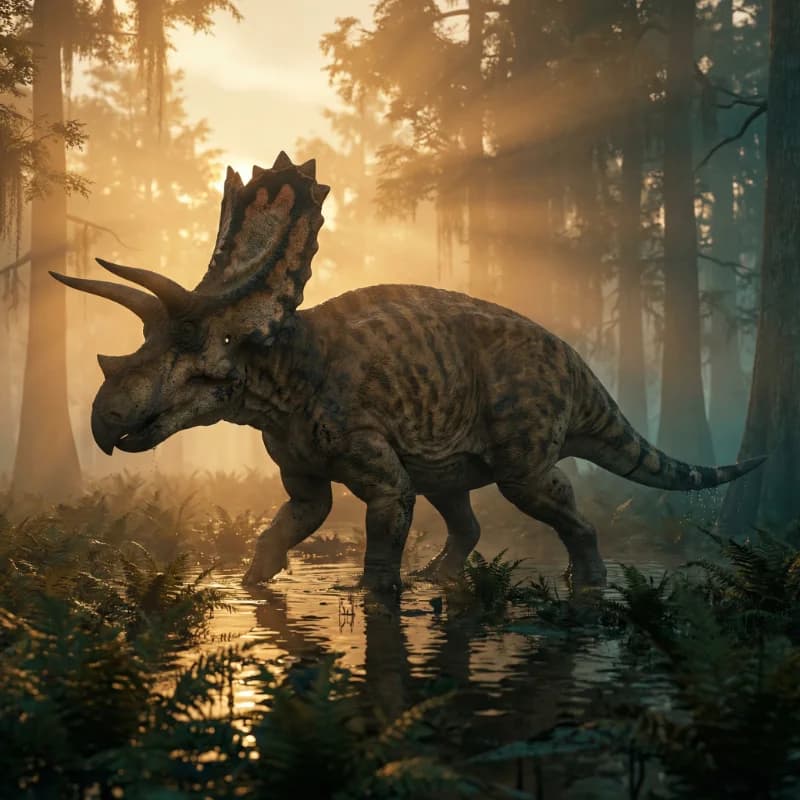
Pentaceratops
Pentaceratops sternbergii
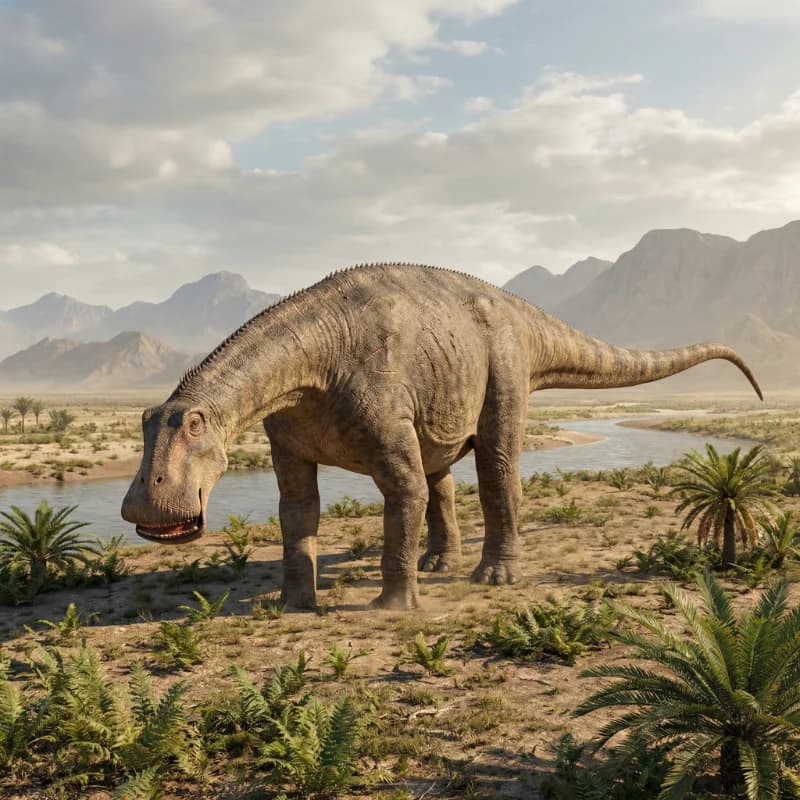
Nigersaurus
Nigersaurus taqueti
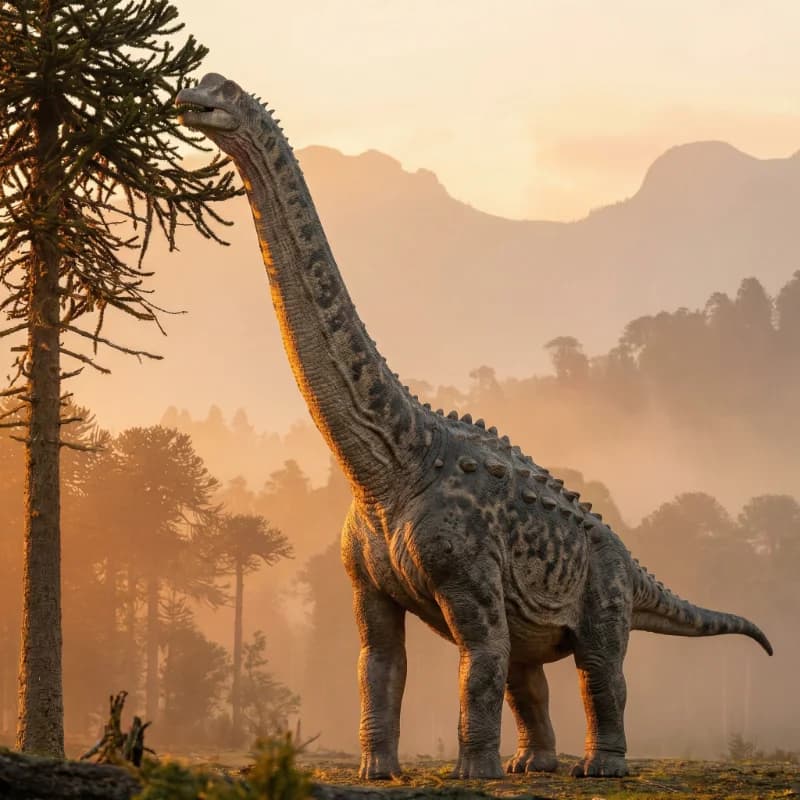
Dongbeititan
Dongbeititan dongi
Yanbeilong
Yanbeilong ultimus
Utahceratops
Utahceratops gettyi

Regaliceratops
Regaliceratops peterhewsi
Minmi
Minmi paravertebra