Hypsilophodon
Cretaceous Period Herbivore Creature Type
Hypsilophodon foxii
Scientific Name: "Hypsilophus (a high-crested iguana lizard) + odon (tooth) — named after the extant lizard genus Hypsilophus, modelled on the naming convention of Iguanodon"
Local Name: Hypsilophodon
Physical Characteristics
Discovery
Habitat
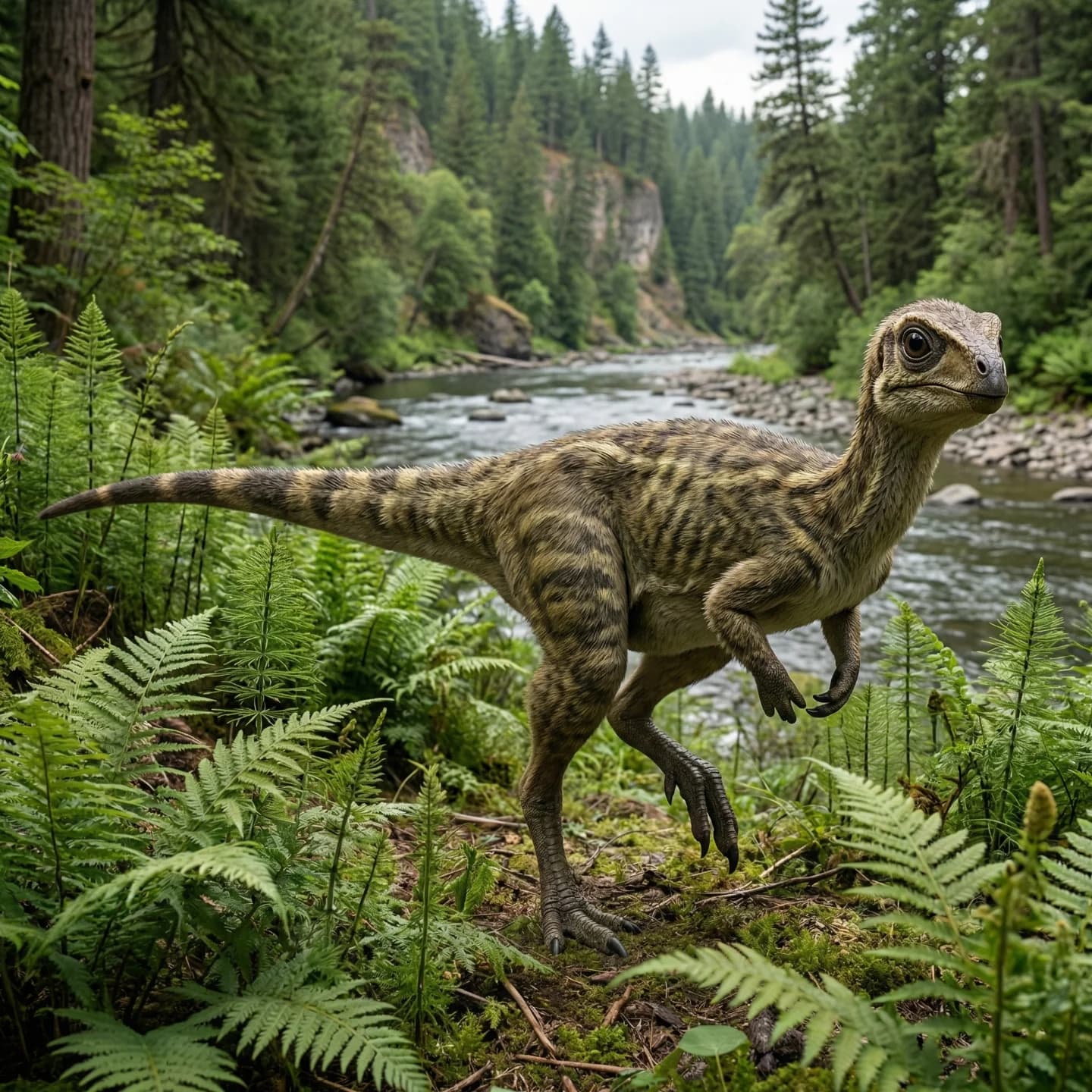
Hypsilophodon foxii Huxley, 1869 is a small neornithischian dinosaur from the Early Cretaceous (late Barremian, approximately 126 Ma) of the Isle of Wight, southern England. Traditionally classified as a basal ornithopod, recent cladistic analyses have variously placed it outside Ornithopoda altogether, making its precise phylogenetic position within Neornithischia a subject of ongoing debate. The genus was named by Thomas Henry Huxley in 1869 based on fossils recovered from the Wessex Formation (Wealden Group) on the Isle of Wight, and the species epithet foxii honours the Reverend William Fox, the amateur collector who discovered the type skull.
With over 20 individuals represented in the collections of the Natural History Museum, London (NHMUK), and an estimated total of approximately 100 individuals recovered from the so-called 'Hypsilophodon Bed' at the top of the Wessex Formation, Hypsilophodon is one of the best-known small herbivorous dinosaurs. It was a small, agile, bipedal herbivore measuring approximately 1.5–1.8 m in total length and weighing around 20 kg. Its lightweight skeleton was built for cursorial locomotion, and it possessed a distinctive pointed beak and unique dentition combining primitive premaxillary teeth with self-sharpening cheek teeth. The genus was famously but erroneously depicted as an arboreal tree-dweller for much of the 20th century, until Galton (1971) conclusively demonstrated it was a ground-dwelling runner.
The Early Cretaceous environment of the Isle of Wight, then located at approximately 35–40°N palaeolatitude, featured a warm to hot, semi-arid climate with seasonal flooding events along the floodplains of a large meandering river system. The Hypsilophodon Bed records a transitional environment from well-drained floodplain to waterlogged marsh and marginal lagoonal mudflats, coinciding with a relative sea-level rise that ultimately established the Vectis lagoon over the region (Marsden et al., 2025; Coram et al., 2017).
Overview
Name and Etymology
The generic name Hypsilophodon is frequently translated directly from Greek as 'high-crested tooth' (hypsilophos = 'high-crested' + odon = 'tooth'), but this is a common misconception. In reality, Huxley modelled the name on Iguanodon ('iguana-tooth'), which was named after the living lizard genus Iguana. By analogy, Huxley chose the extant herbivorous lizard genus Hypsilophus (an iguana with a high crest on its back) and appended Greek odon ('tooth'), creating Hypsilophodon — meaning 'Hypsilophus-tooth' (Galton, 2009; Naish, 2009). The Greek hypsilophos ('high-crested') thus refers to the frill of the lizard, not to any feature of the dinosaur's own teeth, which are not high-ridged. The specific name foxii honours William Fox, who discovered the holotype skull.
Taxonomic Status
Hypsilophodon has long served as the type genus of the family Hypsilophodontidae. However, cladistic analyses in the early 21st century demonstrated that this traditional family was paraphyletic — an artificial assemblage of successive outgroups along the neornithischian or ornithopod stem — rather than a natural (monophyletic) group (Norman et al., 2004). The precise position of Hypsilophodon varies across recent studies: Norman (2014) recovered a monophyletic Hypsilophodontia as the sister group to Tenontosaurus + Rhabdodontidae; Madzia et al. (2017) placed Hypsilophodon outside Ornithopoda entirely, as the sister taxon of Cerapoda; Poole (2022) recovered a large Hypsilophodontidae (including Thescelosauridae) as sister to Iguanodontia; and Longrich et al. (2023) proposed that Hypsilophodon and the newly described Vectidromeus insularis are the only two valid members of Hypsilophodontidae. Brown et al. (2022) explicitly highlighted the high degree of topological conflict among early neornithischian phylogenies, noting that the position of so-called 'hypsilophodontid' taxa remains one of the key unresolved questions in ornithischian dinosaur research. Despite this instability, there is broad agreement that Hypsilophodon is a basal neornithischian.
Key Significance
A small, bipedal, cursorial herbivore endemic to the Early Cretaceous of the Isle of Wight, famous for its self-sharpening dentition, retention of primitive premaxillary teeth, and a now-debunked arboreal lifestyle hypothesis that persisted for over half a century.
Age, Stratigraphy and Depositional Environment
Age Range
All confirmed Hypsilophodon foxii fossils come from the upper part of the Wessex Formation, dated to the late Barremian stage of the Early Cretaceous, approximately 126 million years ago (Galton, 2009; Coram et al., 2017). Some broader sources cite a range of 130–125 Ma, which reflects the overall age span of the Wessex Formation rather than the specific horizon of the Hypsilophodon Bed. Galton (2009) explicitly rejected earlier reports of Hypsilophodon from the overlying Vectis Formation as unsubstantiated.
Formation and Lithology
All authentic Hypsilophodon fossils derive from the Wessex Formation (Wealden Group), specifically from the so-called 'Hypsilophodon Bed' at the very top of the formation. This interval is 1–2 m thick and consists of alternating red mudstone (palaeosols/vertisols), marl, and thin crevasse-splay sandstones. The bed crops out along approximately 1 km of cliff face on the southwest coast of the Isle of Wight, between Cowleaze Chine and Barnes High (Galton, 1974; Coram et al., 2017). The Wessex Formation as a whole is a terrestrial red-bed sequence of predominantly red mudstones and sandstones belonging to the Wealden Group.
| Item | Detail |
|---|---|
| Formation | Wessex Formation (Wealden Group) |
| Horizon | Hypsilophodon Bed (uppermost Wessex Fm.) |
| Lithology | Red mudstone (vertisol), marl, sandstone (crevasse splay) |
| Age | Early Cretaceous, late Barremian (ca. 126 Ma) |
| Overlying unit | Vectis Formation (lagoonal grey mudstone) |
Depositional Environment and Palaeoenvironment
Marsden et al. (2025) conducted the most detailed sedimentological study of the Hypsilophodon Bed to date. They identified a succession of facies recording a transition from a well-oxidised, well-drained fluvial floodplain (red mottled mudstones = vertisols, interbedded with crevasse-splay sandstones) through a permanently waterlogged marsh (nodular black-red mudstone with charophyte oogonia and ostracods) to marginal lagoonal mud- and mixed-flats (organic-rich laminated clay with tidally influenced wavy bedding). This environmental shift reflects the landward advance of the Vectis lagoon driven by relative sea-level rise at the end of the Barremian. Coram et al. (2017) also described the floodplain–crevasse splay facies associations and proposed catastrophic overbank flooding as the mechanism for mass mortality.
During the Barremian, the Isle of Wight was located at approximately 35–40°N palaeolatitude (Smith et al., 1981; Marsden et al., 2025). The climate was warm to very hot and of Mediterranean aspect, with dry spells punctuated by heavy rainfall and intense storm events. Evidence for aridity includes desiccation cracks, calcretes, and burned plant material; evidence for intense flooding includes sheet-like crevasse-splay sandstones with climbing ripples deposited over timescales of hours (Stewart, 1978; Haywood et al., 2004; Coram et al., 2017).
Specimens and Diagnostic Characters
Holotype and Key Specimens
The holotype is NHMUK PV R 197 — a skull (the 'Fox skull') with the centrum of one dorsal vertebra, collected by William Fox from the Cowleaze Chine area and described by Huxley (1869, 1870). The paratype is NHMUK PV OR 28707 / NHMUK PV OR 39560–1 — the Mantell-Bowerbank block discovered in 1849, comprising seventeen vertebrae, partial ribs, a coracoid, parts of the pelvis, and assorted hindlimb elements.
Other significant specimens include: NHMUK PV R 5829 (the largest known individual skeleton, femur length 202 mm); NHMUK PV R 5830 and NHMUK PV R 196/196a (juvenile skeletons); and NHMUK PV R 2477 (a block containing a skull and two separate vertebral columns). In total, the NHMUK holds specimens representing at least 20 individuals, with an estimated total of approximately 100 individuals recovered from the bed including those in private collections (Coram et al., 2017).
Diagnostic Characters
Key diagnostic features of H. foxii, following Galton (1974, 2009), include: retention of five pointed, triangular premaxillary teeth (lost in most Early Cretaceous herbivorous dinosaurs); up to 11 maxillary teeth and up to 16 dentary teeth; fan-shaped posterior cheek teeth with a self-sharpening occlusal mechanism; a very large orbit overshadowed by a palpebral bone equal to half the orbit's diameter; a scleral ring of 15 small plates; extensive ossified tendons stiffening the back and tail; five digits on the manus with an opposable fifth digit; and four digits on the pes.
Specimen Limitations
Contrary to the long-held impression of uniformly well-preserved, articulated skeletons, the taphonomic study by Marsden et al. (2025) revealed that 85% of the 53 NHMUK specimens examined scored below 0.1 in skeletal completeness (i.e., less than 10% of the skeleton represented). The most complete specimen is NHMUK PV R 196 (completeness score 0.684), followed by NHMUK PV R 5829 (0.385). The majority of specimens consist of isolated bones or highly incomplete remains. However, abrasion was minimal (79% showing no abrasion), suggesting carcasses perished on or near the floodplain and were buried without significant transport.
Morphology and Function
Overall Size and Build
Hypsilophodon was historically reported with a maximum length of 2.3 m, based on Galton's (1974) extrapolation from a femur (BMNH R 167). However, Galton (2009) reassigned that femur to Valdosaurus, downsizing the confirmed maximum length of Hypsilophodon to approximately 1.8 m, based on the largest remaining specimen (NHMUK PV R 5829, femur length 202 mm). Typical specimens are approximately 1.5 m long (Coram et al., 2017). Paul (2010) estimated a body mass of approximately 20 kg for an animal 2 m in length.
The entire body plan was optimised for cursorial locomotion: a lightweight, minimised skeleton; a low, aerodynamic posture; long hindlimbs; and a stiffened tail immobilised by ossified tendons for balance. Galton (1974) concluded that Hypsilophodon was among the ornithischians best adapted for running.
Cranial Anatomy
The skull was short and relatively large. The snout was triangular in outline and sharply pointed, ending in an upper beak whose cutting edge lay markedly lower than the maxillary tooth row. The orbit was very large, overshadowed by a palpebral bone half the diameter of the eye socket. A scleral ring of fifteen small bone plates supported the outer eye surface. The posterior skull was relatively tall, with very large, high jugal and quadratojugal bones enclosing a small, highly positioned infratemporal fenestra (Galton, 1974).
Dentition
The retention of five pointed, triangular premaxillary teeth is a notably primitive feature for a Cretaceous herbivorous dinosaur; most contemporaneous herbivores had lost these teeth entirely. Posteriorly, there were up to 11 maxillary and 16 dentary teeth; the posterior teeth were fan-shaped. The lower tooth row, with its outward-curving teeth, fitted within the upper tooth row (inward-curving teeth), creating a self-sharpening mechanism through occlusion. This allowed processing of relatively tough plant material. Tooth replacement was continuous in an alternate arrangement, as in nearly all dinosaurs (Galton, 1974).
Postcranial Skeleton
The vertebral column comprised 9 cervical, 15–16 dorsal, 5–6 sacral, and approximately 48 caudal vertebrae. Much of the back and tail was stiffened by long ossified tendons. The caudal chevrons were connected by a distinctive set of short, split-ended ossified tendons arranged in counterdirectional rows forming a herringbone pattern, completely immobilising the tail tip — an adaptation for balance during high-speed locomotion.
A long-standing misconception about Hypsilophodon's anatomy was that it possessed dermal armour, first suggested by Hulke in 1874. Butler & Galton (2008) demonstrated that the putative armour plates were in fact internal intercostal plates associated with the rib cage — thin, mineralised, cartilage-derived structures also known from Talenkauen and Thescelosaurus.
Locomotion
Galton (1971) provided a definitive analysis of the musculoskeletal system, demonstrating that the first toe was not opposable, claw curvature was inconsistent with climbing, and neither the shoulder girdle nor the tail had sufficient mobility for arboreal life. This conclusively refuted the arboreal hypothesis proposed by Abel (1912) and upheld by Swinton (1936), and established Hypsilophodon as a bipedal cursorial form. No direct trackway evidence has been attributed to Hypsilophodon, so specific running speed estimates remain unconfirmed, though its hindlimb proportions are consistent with fast locomotion.
Diet and Ecology
Diet
Hypsilophodon was an obligate herbivore. The primary evidence is dental morphology: the pointed beak and self-sharpening cheek teeth indicate selective feeding on high-quality, low-growing plant material such as young shoots and roots, analogous to modern deer (Galton, 1974). The deeply inset tooth rows strongly suggest the presence of fleshy cheeks that retained food during chewing. No direct evidence from stomach contents or stable isotope analyses has been reported.
Social Behaviour and Mass Mortality
The concentrated occurrence of Hypsilophodon fossils has long been interpreted as evidence for herding behaviour. At least one sandstone block contains bones from three individuals, and specimens range widely in size (from under 1 m to over 2 m total length), suggesting multigenerational groups (Galton, 1974; Coram et al., 2017). Coram et al. (2017) proposed catastrophic overbank flooding as the cause of at least two separate mass-mortality events, corresponding to the lower and upper mudstone layers of the Hypsilophodon Bed.
However, the most recent study by Marsden et al. (2025) reached a different conclusion. Based on the spatial and stratigraphic distribution of fossils across multiple facies, the high proportion of highly incomplete specimens (85% with completeness <0.1), and the minimal abrasion, they interpreted the assemblage as an attritional accumulation — the gradual build-up of remains over time — rather than the result of a single catastrophic event. This calls for re-evaluation of the herding hypothesis.
Ecological Role
Hypsilophodon has often been dubbed the 'deer of the Mesozoic'. As a small, agile, bipedal herbivore, speed was likely its primary defence against the predators of the Wessex Formation ecosystem, which included the carcharodontosaurian Neovenator, the spinosaurid Baryonyx, and the early tyrannosauroid Eotyrannus.
Distribution and Palaeogeography
Geographic Range
All confirmed H. foxii material comes exclusively from the Isle of Wight, southern England, specifically from the Hypsilophodon Bed on the southwest coast. Previous referrals from mainland Britain (Dorset), Portugal, Spain, and the United States have all been rejected following Galton's (2009) comprehensive review: mainland British specimens were reclassified as Valdosaurus or indeterminate; Iberian material was recognised as belonging to related but distinct species; and the American species H. wielandi Galton & Jensen, 1979 (based on a femur from the Lakota Sandstone, South Dakota) was deemed a nomen dubium.
Palaeogeography
During the Barremian, the Isle of Wight was situated at approximately 35–40°N palaeolatitude (Smith et al., 1981; Marsden et al., 2025). This is roughly equivalent to the modern Mediterranean coast of southern Europe, consistent with the warm, subtropical to warm-temperate climate inferred from sedimentological and palaeobotanical evidence.
Phylogeny and Taxonomic Debate
Traditional Classification
Huxley (1870) originally assigned Hypsilophodon to the Iguanodontidae. Dollo (1882) established a separate Hypsilophodontidae, which became the standard classification by the mid-20th century.
Modern Phylogenetic Analyses
Multiple 21st-century cladistic analyses have demonstrated that the traditional Hypsilophodontidae is paraphyletic (Norman et al., 2004). The position of Hypsilophodon has been recovered differently across major studies:
| Study | Position of Hypsilophodon | Notes |
|---|---|---|
| Norman (2014) | Monophyletic Hypsilophodontia, sister to Tenontosaurus + Rhabdodontidae | Within Clypeodonta |
| Madzia et al. (2017) | Sister taxon to Cerapoda (outside Ornithopoda) | Basal Clypeodonta |
| Poole (2022, Bayesian) | Large Hypsilophodontidae (incl. Thescelosauridae), sister to Iguanodontia | Within Clypeodonta |
| Longrich et al. (2023) | Only two valid members of Hypsilophodontidae (with Vectidromeus) | Restricted monophyly |
| Brown et al. (2022) | High topological conflict highlighted; position of hypsilophodontids unresolved | Meta-analysis |
Brown et al. (2022) explicitly documented the extreme conflict among published topologies for early neornithischian relationships, noting that different character coding strategies and taxon sampling produce fundamentally different results. While the exact placement of Hypsilophodon remains unresolved, broad consensus supports its position as a basal neornithischian, whether within or just outside Ornithopoda.
Reconstruction and Uncertainty
Confirmed
The following aspects of Hypsilophodon's biology are well supported by direct fossil evidence: it was a small, bipedal, ground-dwelling cursorial herbivore (Galton, 1971, 1974); all confirmed fossils are restricted to the Hypsilophodon Bed of the Wessex Formation, Isle of Wight (Galton, 2009); and the geological age is late Barremian, approximately 126 Ma (Galton, 2009; Marsden et al., 2025).
Hypothetical or Uncertain
Herding behaviour is plausible based on the concentrated occurrence of fossils but is challenged by the attritional-accumulation interpretation of Marsden et al. (2025). Body mass (ca. 20 kg, Paul, 2010) is based on a single estimate for a 2 m body length — which itself exceeds the confirmed maximum of 1.8 m. Running speed remains unquantified due to the absence of attributable trackways. Sexual dimorphism (5 vs 6 sacral vertebrae possibly reflecting sex) was proposed by Galton (1974) but remains unconfirmed.
Common Misconceptions
From the 1930s to the early 1970s, popular books consistently depicted Hypsilophodon perching on tree branches. This arboreal model, originating with Abel (1912) and championed by Swinton (1936), was definitively refuted by Galton (1971). The supposed 'dermal armour' reported by Hulke (1874) was reinterpreted as internal intercostal plates by Butler & Galton (2008). Additionally, Hypsilophodon is sometimes erroneously listed as a Jurassic dinosaur or assigned to the Vectis Formation — both are incorrect; it is an Early Cretaceous taxon known only from the Wessex Formation.
Coeval Fauna Comparison
Hypsilophodon shared the Wessex Formation ecosystem with a diverse assemblage of dinosaurs and other vertebrates. The following table compares the principal coeval dinosaurian taxa from the Isle of Wight.
| Taxon | Higher classification | Diet | Estimated length | Notes |
|---|---|---|---|---|
| Hypsilophodon foxii | Basal Neornithischia / Ornithopoda | Herbivore | 1.5–1.8 m | Small cursorial biped |
| Vectidromeus insularis | Hypsilophodontidae | Herbivore | ca. 1 m (juvenile) | Described in 2023, lower Wessex Fm. |
| Mantellisaurus atherfieldensis | Iguanodontia | Herbivore | ca. 7 m | Large ornithopod |
| Polacanthus foxii | Ankylosauria | Herbivore | ca. 5 m | Armoured dinosaur |
| Neovenator salerii | Carcharodontosauria | Carnivore | ca. 7.5 m | Apex predator |
| Eotyrannus lengi | Tyrannosauroidea | Carnivore | ca. 4 m | Small theropod |
| Baryonyx walkeri | Spinosauridae | Piscivore / Carnivore | ca. 8 m | Crocodile-snouted semi-aquatic theropod |
Fun Facts
FAQ
📚References
- Huxley, T.H. (1869). "On Hypsilophodon, a new genus of Dinosauria." Geological Society of London, Abstracts of Proceedings, 204: 3–4.
- Huxley, T.H. (1870). "On Hypsilophodon foxii, a new dinosaurian from the Wealden of the Isle of Wight." Quarterly Journal of the Geological Society of London, 26: 3–12. doi:10.1144/GSL.JGS.1870.026.01-02.07
- Hulke, J.W. (1882). "An attempt at a complete osteology of Hypsilophodon foxii." Philosophical Transactions of the Royal Society of London, 173: 1035–1062. doi:10.1098/rstl.1882.0025
- Galton, P.M. (1971). "Hypsilophodon, the cursorial non-arboreal dinosaur." Nature, 231: 159–161. doi:10.1038/231159a0
- Galton, P.M. (1974). "The ornithischian dinosaur Hypsilophodon from the Wealden of the Isle of Wight." Bulletin of the British Museum (Natural History), Geology, 25: 1–152.
- Galton, P.M. (2009). "Notes on Neocomian (Lower Cretaceous) ornithopod dinosaurs from England — Hypsilophodon, Valdosaurus, 'Camptosaurus', 'Iguanodon' — and referred specimens from Romania and elsewhere." Revue de Paleobiologie, Geneve, 28(1): 211–273.
- Norman, D.B., Sues, H.-D., Witmer, L.M. & Coria, R.A. (2004). "Basal Ornithopoda." In: Weishampel, D.B., Dodson, P. & Osmolska, H. (eds.), The Dinosauria (2nd ed.), pp. 393–412. University of California Press.
- Butler, R.J. & Galton, P.M. (2008). "The 'dermal armour' of the ornithopod dinosaur Hypsilophodon from the Wealden (Early Cretaceous: Barremian) of the Isle of Wight: a reappraisal." Cretaceous Research, 29(4): 636–642. doi:10.1016/j.cretres.2008.02.002
- Paul, G.S. (2010). The Princeton Field Guide to Dinosaurs. Princeton University Press, p. 275.
- Naish, D. (2009). The Great Dinosaur Discoveries. University of California Press, p. 46.
- Norman, D.B. (2014). "On the history, osteology, and systematic position of the Wealden (Hastings group) dinosaur Hypselospinus fittoni (Iguanodontia: Styracosterna)." Zoological Journal of the Linnean Society, 173: 92–189. doi:10.1111/zoj.12193
- Madzia, D., Boyd, C.A. & Mazuch, M. (2017). "A basal ornithopod dinosaur from the Cenomanian of the Czech Republic." Journal of Systematic Palaeontology, 16(11): 967–979. doi:10.1080/14772019.2017.1371258
- Coram, R.A., Radley, J.D. & Martill, D.M. (2017). "A Cretaceous calamity? The Hypsilophodon Bed of the Isle of Wight, southern England." Geology Today, 33(2): 66–70. doi:10.1111/gto.12182
- Poole, K.E. (2022). "Phylogeny of iguanodontian dinosaurs and the evolution of quadrupedality." Palaeontologia Electronica, 25(3): 25.3.a30. doi:10.26879/702
- Longrich, N.R., Martill, D.M., Munt, M., Green, M., Penn, M. & Smith, S. (2023). "Vectidromeus insularis, a new hypsilophodontid dinosaur from the Lower Cretaceous Wessex Formation of the Isle of Wight, England." Cretaceous Research, 154: 105707. doi:10.1016/j.cretres.2023.105707
- Marsden, M.K., Gunn, J., Maidment, S.C.R., Nichols, G., Wheeley, J.R., Russell, C.E., Boomer, I., Stukins, S. & Butler, R.J. (2025). "Palaeoenvironment and taphonomy of the Hypsilophodon Bed, Lower Cretaceous Wessex Formation, Isle of Wight." Journal of the Geological Society. doi:10.1144/jgs2024-046
- Brown, C.M., Boyd, C.A., & Russell, A.P. (2022). "Assessing conflict between early neornithischian tree topologies." Journal of Systematic Palaeontology, 20(1): 2048557. doi:10.1080/14772019.2022.2048557
- Stewart, D.J. (1978). "The stratigraphy and sedimentology of the Wealden Group of the Isle of Wight." Unpublished PhD thesis, University of London.
Gallery
5 images Hypsilophodon
Hypsilophodon · Cretaceous Period · Herbivore
 Hypsilophodon
Hypsilophodon · Cretaceous Period · Herbivore
 Hypsilophodon
Hypsilophodon · Cretaceous Period · Herbivore
 Hypsilophodon
Hypsilophodon · Cretaceous Period · Herbivore
 Hypsilophodon
Hypsilophodon · Cretaceous Period · Herbivore
🔗Related Creatures

Edmontosaurus
Edmontosaurus
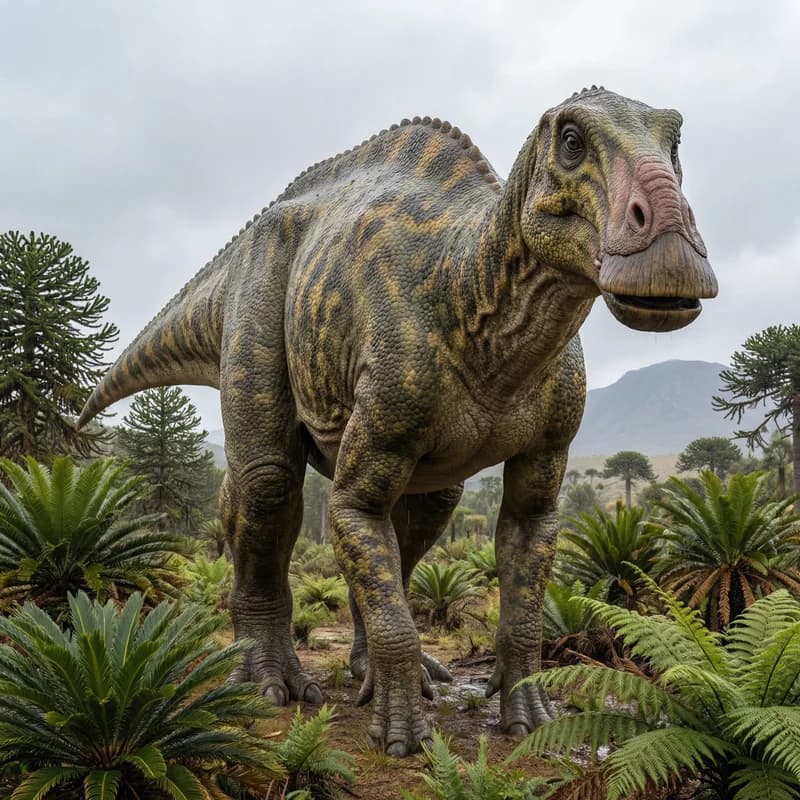
Shantungosaurus
Shantungosaurus giganteus
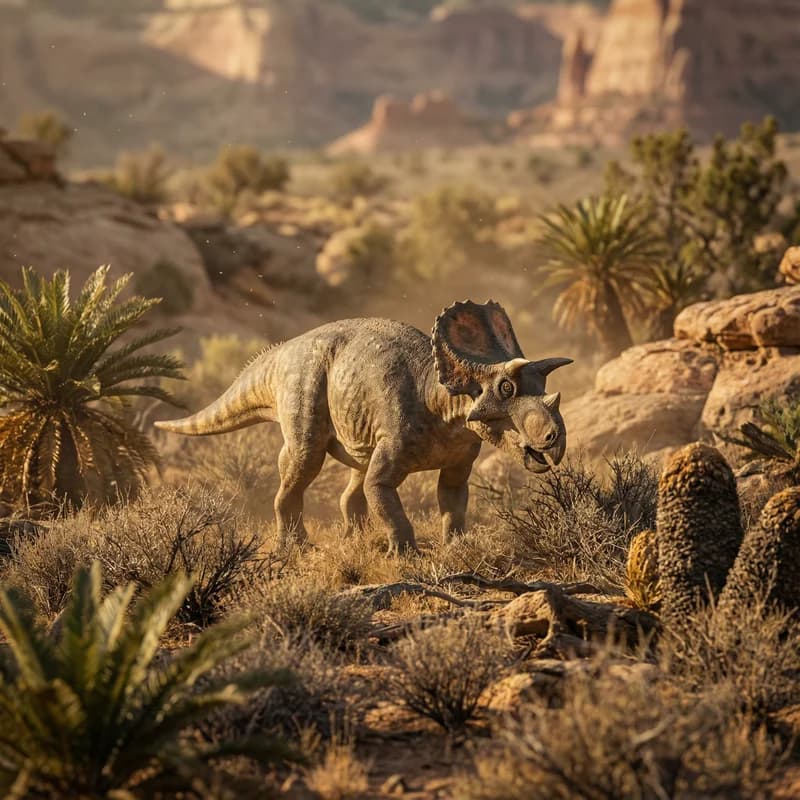
Zuniceratops
Zuniceratops christopheri
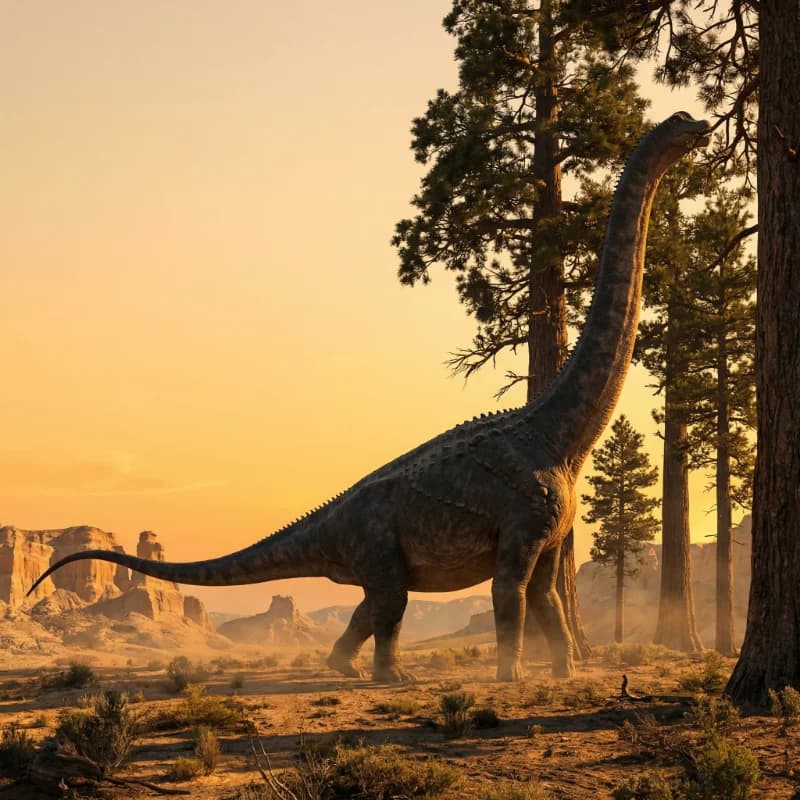
Alamosaurus
Alamosaurus sanjuanensis
Protoceratops
Protoceratops andrewsi
Diamantinasaurus
Diamantinasaurus matildae

Diabloceratops
Diabloceratops eatoni
Hadrosaurus
Hadrosaurus foulkii