Deinosuchus
Cretaceous Period Carnivore Creature Type
Deinosuchus
Scientific Name: "deinos (δεινός, terrible/fearful) + souchos (σοῦχος, crocodile) = terrible crocodile"
Local Name: Deinosuchus
Physical Characteristics
Discovery
Habitat
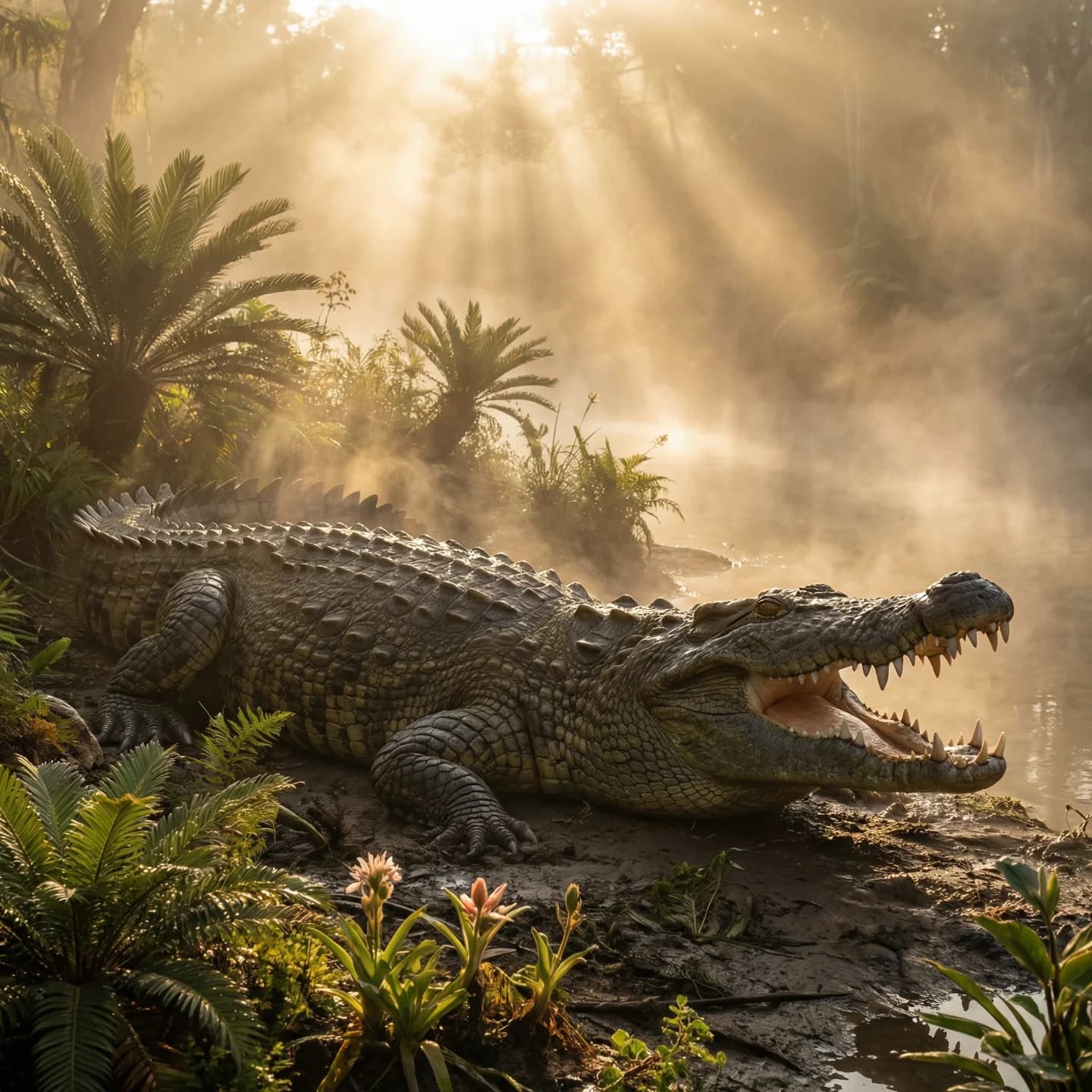
Deinosuchus Holland, 1909 is a giant eusuchian crocodyliform from the Late Cretaceous Campanian stage (approximately 82–73 Ma) of North America, and one of the largest crocodyliforms in the history of life on Earth. Its name derives from the Greek deinos (δεινός, 'terrible') and souchos (σοῦχος, 'crocodile'), meaning 'terrible crocodile.' The largest individuals attained an estimated total length of approximately 10.6 m (Farlow et al., 2005), with body mass estimates ranging from roughly 2,500 to 8,500 kg (Erickson & Brochu, 1999; Schwimmer, 2002). This far exceeded the maximum size of any living crocodilian, including the saltwater crocodile (Crocodylus porosus).
Deinosuchus was not a dinosaur — it was a crocodyliform that lived alongside dinosaurs but belonged to an entirely separate evolutionary lineage. Traditionally placed at the base of Alligatoroidea (the group encompassing modern alligators and caimans) by Brochu (1999) and Cossette & Brochu (2020), it was reinterpreted by Walter et al. (2025) as a stem-group crocodylian outside of Alligatoroidea altogether. This reclassification remains an active area of debate. If confirmed, it would mean Deinosuchus was neither an 'alligator' nor a 'crocodile' in the strict phylogenetic sense, but instead belonged to an independent lineage that diverged before the origin of modern Crocodylia. This stem-group placement would also help explain its transmarine distribution across the Western Interior Seaway through inherited saltwater tolerance.
Fossils of Deinosuchus have been recovered from 12 U.S. states and northern Mexico, spanning both the western (Laramidian) and eastern (Appalachian) shores of the Western Interior Seaway. Bite marks attributable to Deinosuchus have been identified on hadrosaur tail vertebrae (Schwimmer, 2002) and a tyrannosauroid limb bone (Schwimmer, 2010), confirming its role as an apex predator capable of preying on dinosaurs. In Appalachia (eastern North America), where no comparably large theropod dinosaurs are known, Deinosuchus was likely the dominant predator of the coastal plains (Schwimmer, 2002; Brownstein, 2018).
Overview
Name and Etymology
The genus name Deinosuchus is composed of the Greek words deinos (δεινός, 'terrible' or 'fearfully great') and souchos (σοῦχος, 'crocodile'), translating to 'terrible crocodile.' W. J. Holland coined the name in 1909 when he described Deinosuchus hatcheri based on massive osteoderms and vertebrae from the Judith River Formation of Montana (Holland, 1909). The specific epithet hatcheri honours the paleontologist John Bell Hatcher, who discovered the original fossils in 1903.
Taxonomic Status and Species
Following the 2020 systematic revision by Cossette & Brochu, three valid species are recognized. D. rugosus (Emmons, 1858), once widely used for eastern specimens, was deemed a nomen dubium because its holotype teeth are not diagnostic at the species level, and it was replaced by the newly named D. schwimmeri.
| Species | Distribution | Holotype | Notes |
|---|---|---|---|
| D. hatcheri Holland, 1909 | Laramidia (western; Montana) | CM 963 | Type species; highly incomplete; ICZN petition filed in 2024 to transfer type species status |
| D. riograndensis (Colbert & Bird, 1954) | Laramidia (western; Texas) | AMNH 3073 | Largest species; proposed replacement type species |
| D. schwimmeri Cossette & Brochu, 2020 | Appalachia (eastern U.S.) | MMNS VP-256 | Replaced the dubious D. rugosus |
Because the holotype of the type species D. hatcheri (CM 963) is extremely incomplete — consisting of only two vertebrae, approximately 27 osteoderms, rib fragments, and miscellaneous bone pieces — Cossette & Brochu (2020) proposed transferring type species status to the far more complete D. riograndensis. This petition was formally submitted to the International Commission on Zoological Nomenclature (ICZN) in 2024.
Key Significance
Deinosuchus is one of the largest crocodyliforms ever to have lived, an apex predator of Campanian North American coastal ecosystems, and a taxon whose phylogenetic placement — whether within Alligatoroidea or along the stem of Crocodylia — carries major implications for understanding crocodylian biogeography, osmoregulation, and body-size evolution.
Temporal Range, Stratigraphy, and Paleoenvironment
Temporal Range
All confirmed specimens of Deinosuchus date to the Campanian stage of the Late Cretaceous, spanning approximately 82 to 73 Ma (Schwimmer, 2002). The oldest record comes from the Menefee Formation of New Mexico at approximately 82 Ma (Mohler et al., 2021), while the youngest are from formations dating to around 73 Ma. Notably, Deinosuchus does not occur in Maastrichtian-age rocks, meaning it went extinct at least 5–9 million years before Tyrannosaurus rex (approximately 68–66 Ma) appeared. However, it did coexist with earlier tyrannosauroids — bite marks on a tyrannosauroid leg bone (NJSM 13096) from the Ellisdale Fossil Site in New Jersey provide direct evidence of this temporal overlap (Schwimmer, 2010).
Key Formations and Lithology
Deinosuchus is known from numerous formations on both sides of the Western Interior Seaway.
| Formation | Region | Age (Ma) | Principal Lithology | Representative Species |
|---|---|---|---|---|
| Judith River Fm. | Montana | ~79.5–75 | Sandstone, mudstone | D. hatcheri (holotype) |
| Aguja Fm. | Texas (Big Bend) | ~82–77 | Deltaic deposits (sandstone, mudstone, carbonate) | D. riograndensis |
| Menefee Fm. | New Mexico | ~82 | Sandstone, mudstone | Deinosuchus sp. |
| Kaiparowits Fm. | Utah | ~76–74 | Sandstone, mudstone | Deinosuchus sp. |
| Blufftown Fm. | Alabama | ~80–75 | Marine mudstone, sandstone | D. schwimmeri |
| Tar Heel/Black Creek Fm. | North Carolina | ~80–72 | Mudstone, micaceous sandstone | D. schwimmeri |
| Marshalltown Fm. | New Jersey, Delaware | ~72–69 | Greensand, mudstone | D. schwimmeri |
A notable preservational distinction exists between western and eastern specimens: Texas fossils are preserved in calcium carbonate (CaCO₃), whereas eastern Appalachian specimens are preserved in calcium phosphate (Ca₃(PO₄)₂) (Schwimmer, 2002; Cossette & Brochu, 2020).
Paleoenvironment
In the Aguja Formation of Texas, where the largest specimens occur, Deinosuchus inhabited brackish-water bays within a progradational deltaic setting (Anglen & Lehman, 2000). The Aguja Formation records saltwater lagoons, estuaries, and coastal wetlands at the margin of the Western Interior Seaway. Eastern formations such as the Blufftown and Tar Heel represent coastal marine to estuarine environments, confirming that Deinosuchus ranged broadly across estuarine and near-shore habitats. Although some specimens have been found in marine deposits, it remains unclear whether Deinosuchus actively ventured into open water or whether these remains were displaced post-mortem (Schwimmer, 2002).
Specimens and Diagnostic Characters
Holotype and Key Specimens
The holotype of D. hatcheri, CM 963, is housed at the Carnegie Museum of Natural History in Pittsburgh, Pennsylvania. It was discovered in 1903 by John Bell Hatcher and T. W. Stanton at Willow Creek, Fergus County, Montana, within the Judith River Formation. The massive osteoderms were initially mistaken for armour plates of the ankylosaur Euoplocephalus. After Hatcher's death in 1904, Holland studied the material and recognized it as a giant crocodylian, naming it Deinosuchus hatcheri in 1909. CM 963 comprises two dorsal vertebrae, one cervical rib, one dorsal rib with fragments, a pubis (now lost), approximately 27 osteoderms, and numerous unidentifiable fragments (Holland, 1909; Cossette & Brochu, 2020).
The holotype of D. riograndensis, AMNH 3073, was collected by Barnum Brown and Roland Bird from the Aguja Formation of Big Bend National Park, Texas in 1940. It includes premaxillae, a partial right maxilla, lower jaw elements, loose teeth, a thoracic vertebra, a right scapula, a possible ilium fragment, and osteoderms. Originally described as Phobosuchus riograndensis by Colbert & Bird (1954), it was reassigned to Deinosuchus by Baird & Horner (1979).
The most informative specimen for D. riograndensis is TMM 43620-1, which includes a nearly complete skull, mandible, and postcranial elements. This specimen from the Texas Memorial Museum was central to the detailed anatomical descriptions in Cossette & Brochu (2020).
The holotype of D. schwimmeri, MMNS VP-256, is housed at the Mississippi Museum of Natural Sciences and includes cranial material from eastern Appalachian deposits.
Diagnostic Characters
According to the amended diagnosis of Cossette & Brochu (2020), the genus Deinosuchus is distinguished by a unique combination of autapomorphies not found in any other living or extinct crocodyliform. The premaxillae are bulbous and bear large, dorsally displaced fenestrae anterolateral to the bony narial aperture — a feature unprecedented among crocodyliforms, with unknown function. The bony narial aperture opens posterodorsally and is wider than long. The osteoderms are exceptionally large, heavy, and deeply pitted, with inflated parasagittal keels giving them a lumpy appearance.
Limitations of the Material
The type species holotype (CM 963) is extremely incomplete, lacking any cranial material. This makes species-level comparisons based on skull morphology problematic. Cossette & Brochu (2020) noted that D. hatcheri can only be distinguished from other species by a single character — indentations along the margin of lateral dorsal shield osteoderms — but this may not be reliable because equivalent osteoderms are not preserved in the other species.
Morphology and Functional Biology
Size Estimates
Size estimates for Deinosuchus have varied considerably depending on the methodology employed.
| Study | Method | Estimated Length | Estimated Mass |
|---|---|---|---|
| Colbert & Bird (1954) | Cuban crocodile proportional scaling | ~15 m | Not provided |
| Erickson & Brochu (1999) | Modern crocodilian comparison | 8–10 m | 2,500–5,000 kg |
| Schwimmer (2002) | Isometric vertebral scaling | Up to ~12 m (D. riograndensis) | ~8,500 kg (largest individuals) |
| Farlow et al. (2005) | Mandible-to-total-length regression (American alligator) | ~10.64 m (largest mandibular fragment) | Not provided |
| Iijima & Kubo (2020) | Vertebral allometric regression | 7.37–8.17 m (AMNH 3073) | Not provided |
| Walter et al. (2025) | Skull-width phylogenetic correction | Max. ~10.5 m (D. riograndensis); ~7.64 m (D. schwimmeri) | Not provided |
The 1954 estimate of approximately 15 m is now considered inaccurate, as it was based on the short-snouted Cuban crocodile as a model. The most recent analysis by Walter et al. (2025) noted that Deinosuchus had a comparatively long snout, which may have led previous estimates based on short-snouted taxa like the American alligator to overestimate total body length. Using a skull-width proxy with phylogenetic correction, they estimated a maximum of approximately 10.5 m for D. riograndensis. However, incompletely preserved evidence of even larger individuals exists, so the true maximum may have been somewhat greater. Body mass estimates range from approximately 2,500 kg (Erickson & Brochu, 1999) to approximately 8,500 kg for the very largest individuals (Schwimmer, 2002).
Skull and Dentition
The skull of Deinosuchus was broad with an alligator-like snout, but with a slightly bulbous tip (Schwimmer, 2002). Each premaxilla bore 4 teeth, with the pair nearest the snout tip being significantly smaller. Each maxilla carried 21–22 teeth, and each dentary at least 22 teeth (Schwimmer, 2002; Cossette & Brochu, 2020). The teeth were uniformly thick and robust; those near the rear of the jaws were short, rounded, and blunt, adapted for crushing rather than piercing — an adaptation interpreted as suited for breaking turtle shells and bone (Schwimmer, 2002).
Bite force has been estimated at approximately 18,000 N (Schwimmer, 2002) to a maximum of approximately 102,803 N (extrapolated from Erickson et al., 2012). For comparison, the maximum recorded bite force of a living saltwater crocodile (C. porosus) is approximately 16,414 N.
Osteoderms and Body Form
The dorsal osteoderms (scutes) of Deinosuchus were unusually large, heavy, and deeply pitted, with some being roughly hemispherical. Deep pits and grooves served as attachment sites for connective tissue, and together with this connective tissue, the osteoderms functioned as load-bearing reinforcement to support the animal's massive body when out of water (Schwimmer, 2002). However, a 2025 biomechanical analysis by Iijima et al. found that Deinosuchus would have struggled to generate sufficient muscular force in the hindlimbs to maintain an erect 'high walk' gait. This suggests belly-dragging was its primary mode of terrestrial locomotion and that the animal spent most of its life in water.
Deinosuchus possessed a secondary bony palate, allowing it to breathe through its nostrils while the rest of the head remained submerged. Its vertebrae were procoelous (concave in front, convex behind), a derived feature shared with modern eusuchians.
Diet and Paleoecology
Evidence of Dinosaur Predation
The hypothesis that Deinosuchus preyed on dinosaurs is supported by compelling indirect evidence. Schwimmer (2002) documented bite marks attributable to Deinosuchus on hadrosaur tail vertebrae from near Big Bend National Park, Texas. Schwimmer (2010) also identified probable Deinosuchus bite marks on a tyrannosauroid leg bone (NJSM 13096) from the Ellisdale Fossil Site in New Jersey. Brochu (2003) concurred that Deinosuchus 'probably dined on ornithopods from time to time.' Hunting strategy is inferred to have been similar to that of modern crocodilians: ambushing terrestrial animals at the water's edge and subduing them by drowning (Cowen, 2000). Blanco et al. (2014) proposed that Deinosuchus was biomechanically capable of performing a 'death roll' like modern crocodilians.
Chelonivory
Schwimmer & Williams (1996) proposed that Deinosuchus preyed on marine turtles. The side-necked sea turtle Bothremys was especially common in the eastern range of Deinosuchus, and several Bothremys shells bear bite marks most likely inflicted by the giant crocodyliform. The blunt, rounded posterior teeth of Deinosuchus are well suited for crushing turtle shells (Schwimmer, 2002).
Geographic Variation in Ecology
Schwimmer (2002) proposed that feeding ecology varied geographically. The smaller eastern D. schwimmeri likely occupied an ecological niche analogous to the modern American alligator, opportunistically feeding on marine turtles, large fish (such as Megalocoelacanthus), and smaller dinosaurs. The larger western D. riograndensis may have been a more specialized predator of large dinosaurs, including hadrosaurs, ceratopsians, and theropods. Critically, no theropod dinosaur in the eastern Appalachian range of Deinosuchus approached its size, suggesting the giant crocodyliform served as the region's apex predator (Schwimmer, 2002; Brownstein, 2018).
Growth and Longevity
Erickson & Brochu (1999) analysed growth rings in dorsal osteoderms and found that Deinosuchus grew at rates comparable to modern crocodilians but sustained this growth over a far longer period. Their estimates indicate that full adult size required more than 35 years to attain, and the oldest individuals may have lived for over 50 years. This contrasts sharply with large dinosaurs, which reached adult size much more rapidly. As Erickson noted, a full-grown Deinosuchus 'must have seen several generations of dinosaurs come and go.' However, Schwimmer (2002) cautioned that the annual periodicity of osteoderm growth rings is assumed rather than proven; if the cycle were biannual, growth rates would have been faster and maximum lifespans shorter.
Distribution and Paleogeography
Geographic Range
Deinosuchus fossils have been documented from 12 U.S. states — Utah, Montana, Wyoming, New Mexico, Texas, New Jersey, Delaware, North Carolina, South Carolina, Georgia, Alabama, and Mississippi — as well as Coahuila, Mexico (San Carlos Formation; Westgate et al., 2006). A possible specimen has also been reported from Colorado (Foster & Hunt-Foster, 2015). The most fossil-rich locality is the Gulf Coastal Plain region of Georgia near the Alabama border (Schwimmer, 2002).
Western Interior Seaway and Distribution Pattern
During the Campanian, North America was bisected by the Western Interior Seaway (WIS) into western Laramidia and eastern Appalachia. Deinosuchus occurred on both sides: the largest individuals (D. riograndensis) in the west, and more abundant but smaller individuals (D. schwimmeri) in the east. Walter et al. (2025) argued that, given their stem-crocodylian placement, Deinosuchus species inherited ancestral saltwater tolerance, enabling them to disperse across the WIS and colonize both coastlines. The disappearance of Deinosuchus roughly coincides with the late Campanian regression and eventual closure of the WIS, which may have eliminated the extensive coastal wetland habitats on which these giant predators depended.
Phylogenetic Debate
Traditional View: Basal Alligatoroid
Since Brochu's (1999) foundational phylogenetic analysis, most studies have placed Deinosuchus at the base of Alligatoroidea alongside Leidyosuchus. The comprehensive 2020 revision by Cossette & Brochu reinforced this placement, recovering Deinosuchus within Alligatoroidea but outside Alligatoridae, with Diplocynodon as a nearby outgroup. Under this topology, Deinosuchus was a distant relative of modern alligators and caimans.
New Hypothesis: Stem-Group Crocodylian
In 2025, Walter et al. published an expanded phylogenetic analysis in Communications Biology that challenged this consensus. By adding new taxa, revising character definitions, and incorporating a molecular scaffold, they found that several character states previously considered diagnostic of Alligatoroidea were in fact more broadly distributed. As a result, Deinosuchus (both D. riograndensis and D. schwimmeri), Leidyosuchus canadensis, and the European Diplocynodon all fell outside Alligatoroidea, instead occupying positions along the stem lineage of crown-group Crocodylia. Under this topology, Deinosuchus was a derived non-crocodylian eusuchian — neither a 'greater alligator' nor a 'terror crocodile,' but a member of a separate lineage that diverged before the origin of the crown group containing all living crocodilians. This placement more parsimoniously explains Deinosuchus' large body size, long snout, transmarine distribution, and inferred saltwater tolerance.
Both hypotheses remain under active discussion, and resolution will likely depend on future fossil discoveries and character reassessments.
Reconstruction and Uncertainty
Well-Established Facts
The following are firmly supported by fossil evidence: Deinosuchus was a giant eusuchian crocodyliform restricted to the Campanian stage (approximately 82–73 Ma); it possessed a broad snout with uniquely bulbous premaxillae bearing unprecedented premaxillary fenestrae; and it was an apex predator that preyed on dinosaurs and marine turtles, as demonstrated by trace fossil evidence.
Plausible but Debated
The phylogenetic position (basal alligatoroid versus stem-group crocodylian) remains contested. Whether the western and eastern populations represent genuinely distinct species or geographic variants within a single species is also not fully resolved. Size estimates show substantial variation depending on methodology, and whether the maximum length exceeded 10 m requires confirmation from more complete material.
Common Misconceptions
Deinosuchus is frequently depicted in popular media as a contemporary rival of T. rex, but the two are separated by at least 5–9 million years. The 1954 plaster skull reconstruction at the American Museum of Natural History, modelled on the short-snouted Cuban crocodile, greatly exaggerated the width and length of the skull compared to the actual alligator-like but comparatively long-snouted morphology now known. The popular labels 'alligator' and 'crocodile' may both be phylogenetically inaccurate; the latest research suggests Deinosuchus may belong to neither group in the strict cladistic sense.
Comparison with Other Giant Crocodyliforms
| Taxon | Age | Region | Estimated Max. Length | Classification |
|---|---|---|---|---|
| Deinosuchus riograndensis | Campanian (~82–73 Ma) | Western North America | ~10.5 m | Eusuchia (alligatoroid or stem-crocodylian) |
| Deinosuchus schwimmeri | Campanian (~82–73 Ma) | Eastern North America | ~7.6 m | Eusuchia |
| Sarcosuchus imperator | Aptian (~113 Ma) | Africa (Niger) | ~11–12 m | Neosuchia (non-crocodylian) |
| Purussaurus brasiliensis | Miocene (~8 Ma) | South America | ~10–12.5 m | Caimaninae (Alligatoridae) |
Deinosuchus has often been described as the largest crocodyliform of all time, but Walter et al. (2025) suggested that Purussaurus may have been larger. Sarcosuchus, which predates Deinosuchus by approximately 30 million years, belongs to Neosuchia outside of Crocodylia and is thus a phylogenetically distant relative.
Fun Facts
FAQ
📚References
- Holland, W. J. (1909). Deinosuchus hatcheri, a new genus and species of crocodile from the Judith River beds of Montana. Annals of the Carnegie Museum, 6(1), 281–294. doi:10.5962/p.214851
- Colbert, E. H. & Bird, R. T. (1954). A gigantic crocodile from the Upper Cretaceous beds of Texas. American Museum Novitates, 1688, 1–22.
- Baird, D. & Horner, J. (1979). Cretaceous dinosaurs of North Carolina. Brimleyana, 2, 1–28.
- Erickson, G. M. & Brochu, C. A. (1999). How the 'terror crocodile' grew so big. Nature, 398(6724), 205–206. doi:10.1038/18343
- Brochu, C. A. (1999). Phylogenetics, taxonomy, and historical biogeography of Alligatoroidea. Society of Vertebrate Paleontology Memoir, 6, 9–100. doi:10.2307/3889340
- Anglen, J. J. & Lehman, T. M. (2000). Habitat of the giant crocodilian Deinosuchus, Aguja Formation (Upper Cretaceous), Big Bend National Park, Texas. Journal of Vertebrate Paleontology, 20(Suppl. 3), 26A.
- Schwimmer, D. R. (2002). King of the Crocodylians: The Paleobiology of Deinosuchus. Indiana University Press, 240 pp. ISBN 978-0-253-34087-0.
- Farlow, J. O., Hurlburt, G. R., Elsey, R. M., Britton, A. R. & Langston, W. Jr. (2005). Femoral dimensions and body size of Alligator mississippiensis: estimating the size of extinct mesoeucrocodylians. Journal of Vertebrate Paleontology, 25(2), 354–369. doi:10.1671/0272-4634(2005)025[0354:FDABSO]2.0.CO;2
- Erickson, G. M., Gignac, P. M., Steppan, S. J. et al. (2012). Insights into the ecology and evolutionary success of crocodilians revealed through bite-force and tooth-pressure experimentation. PLoS ONE, 7(3), e31781. doi:10.1371/journal.pone.0031781
- Blanco, R. E., Jones, W. W. & Villamil, J. N. (2014). The 'death roll' of giant fossil crocodyliforms. Historical Biology, 27(5), 514–524. doi:10.1080/08912963.2014.893300
- Brownstein, C. D. (2018). The biogeography and ecology of the Cretaceous non-avian dinosaurs of Appalachia. Palaeontologia Electronica, 21(1), 1–56. doi:10.26879/801
- Cossette, A. P. & Brochu, C. A. (2020). A systematic review of the giant alligatoroid Deinosuchus from the Campanian of North America and its implications for the relationships at the root of Crocodylia. Journal of Vertebrate Paleontology, 40(1), e1767638. doi:10.1080/02724634.2020.1767638
- Iijima, M. & Kubo, T. (2020). Vertebrae-based body length estimation in crocodylians and its implication for sexual maturity and the maximum sizes. Integrative Organismal Biology, 2(1), obaa042. doi:10.1093/iob/obaa042
- Mohler, B. F., McDonald, A. T. & Wolfe, D. G. (2021). First remains of the enormous alligatoroid Deinosuchus from the Upper Cretaceous Menefee Formation, New Mexico. PeerJ, 9, e11302. doi:10.7717/peerj.11302
- Walter, J. D., Massonne, T., Paiva, A. L. S., Martin, J. E., Delfino, M. & Rabi, M. (2025). Expanded phylogeny elucidates Deinosuchus relationships, crocodylian osmoregulation and body-size evolution. Communications Biology, 8(1), 611. doi:10.1038/s42003-025-07653-4
- Iijima, M., Blob, R. W. & Hutchinson, J. R. (2025). Biomechanical simulations of hindlimb function in Alligator provide insights into postural shifts and body size evolution. Science Advances, 11(43), eadx3811. doi:10.1126/sciadv.adx3811
- Schwimmer, D. R. & Williams, G. D. (1996). New specimens of Deinosuchus rugosus, and further evidence of chelonivory by Late Cretaceous eusuchian crocodiles. Journal of Vertebrate Paleontology, 16(Suppl. 3), 64.
- Westgate, J., Brown, R., Pittman, J., Cope, D. & Calb, J. (2006). First occurrences of Deinosuchus in Mexico. Journal of Vertebrate Paleontology, 26(Suppl. 3), 138A.
Gallery
5 images Deinosuchus
Deinosuchus · Cretaceous Period · Carnivore
 Deinosuchus
Deinosuchus · Cretaceous Period · Carnivore
 Deinosuchus
Deinosuchus · Cretaceous Period · Carnivore
 Deinosuchus
Deinosuchus · Cretaceous Period · Carnivore
 Deinosuchus
Deinosuchus · Cretaceous Period · Carnivore
🔗Related Creatures
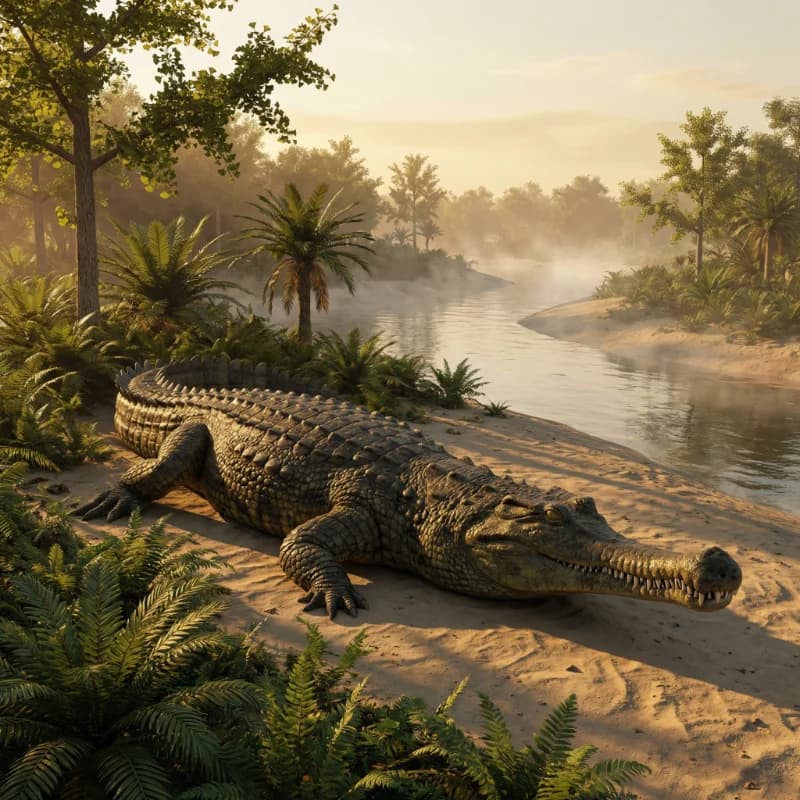
Sarcosuchus
Sarcosuchus imperator
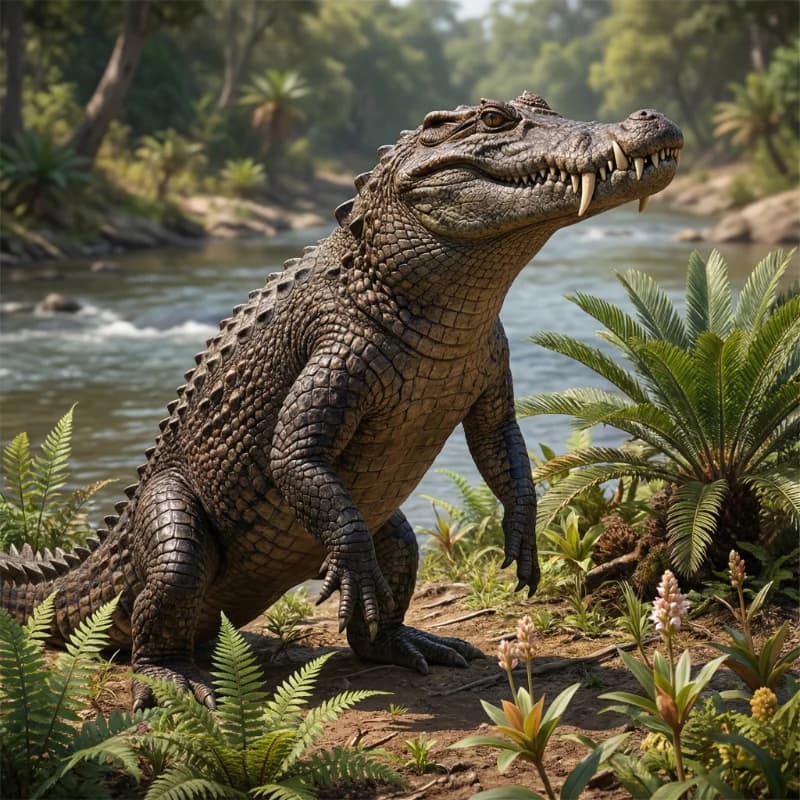
Kaprosuchus
Kaprosuchus saharicus
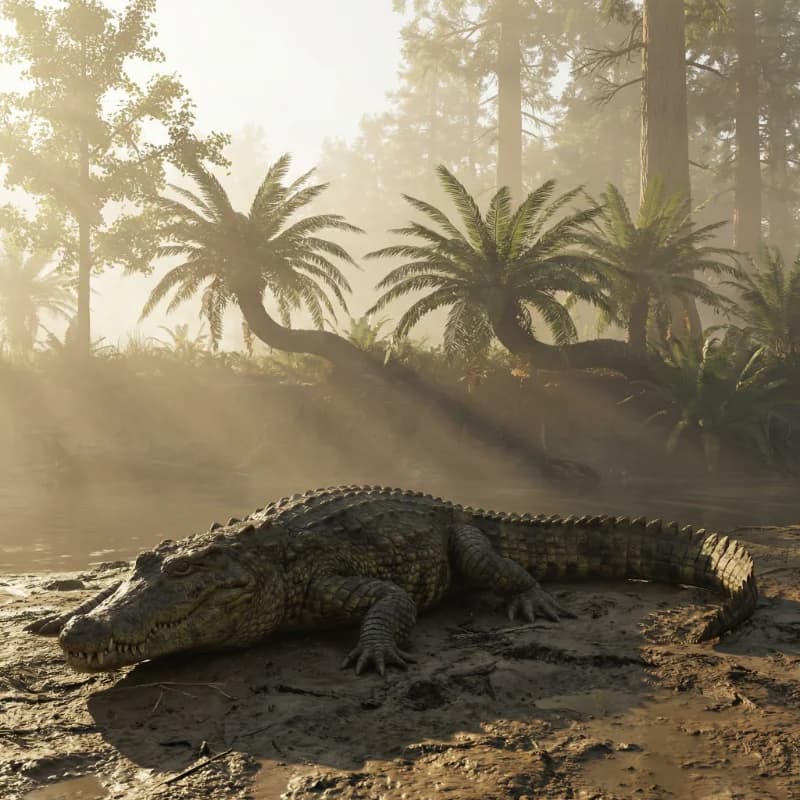
Calsoyasuchus
Calsoyasuchus valliceps
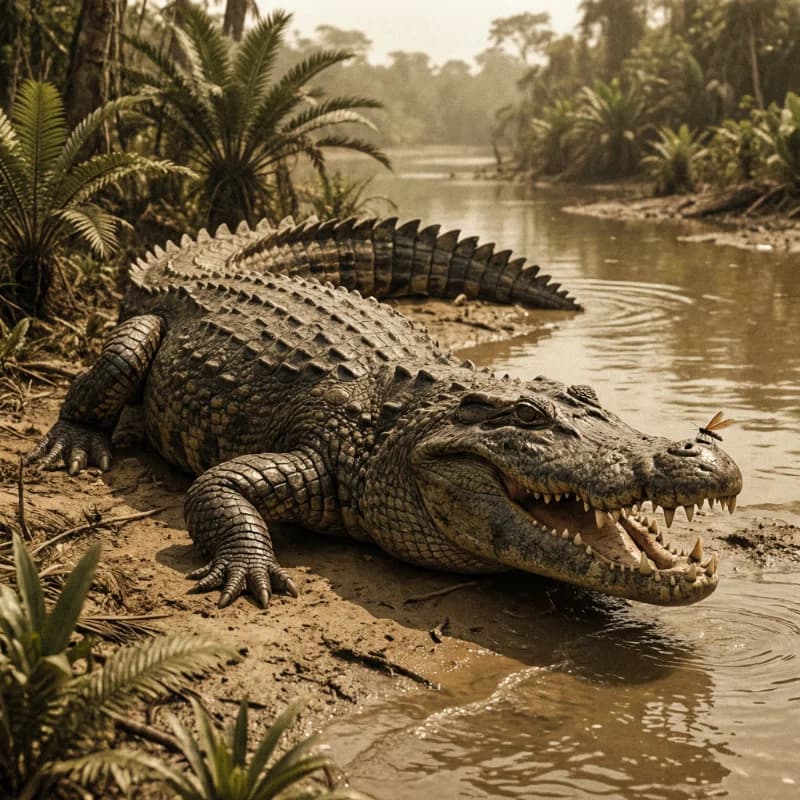
Purussaurus
Purussaurus

Stomatosuchus
Stomatosuchus inermis
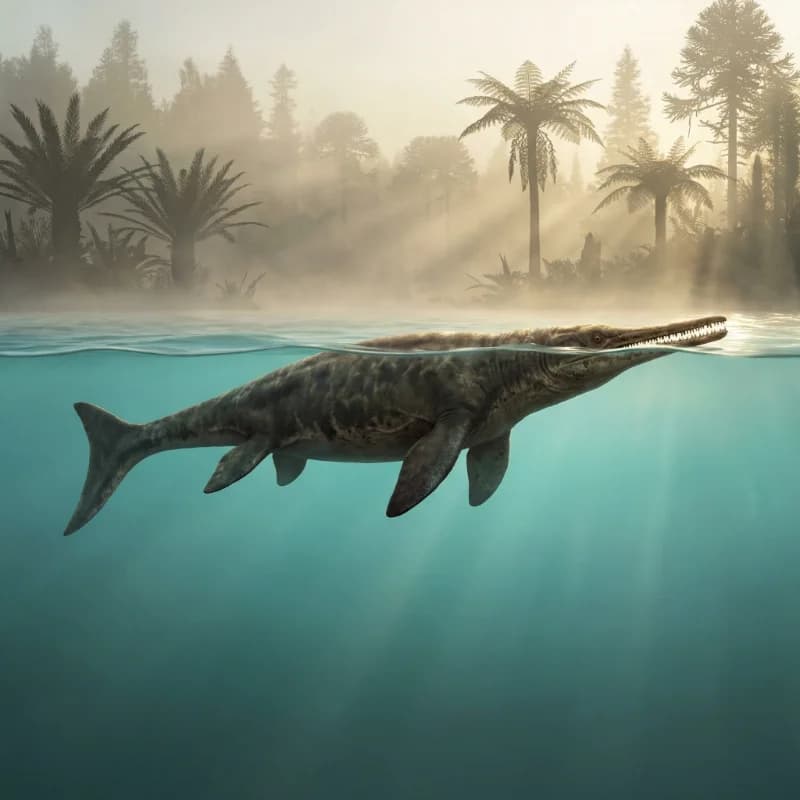
Metriorhynchus
Metriorhynchus brevirostris
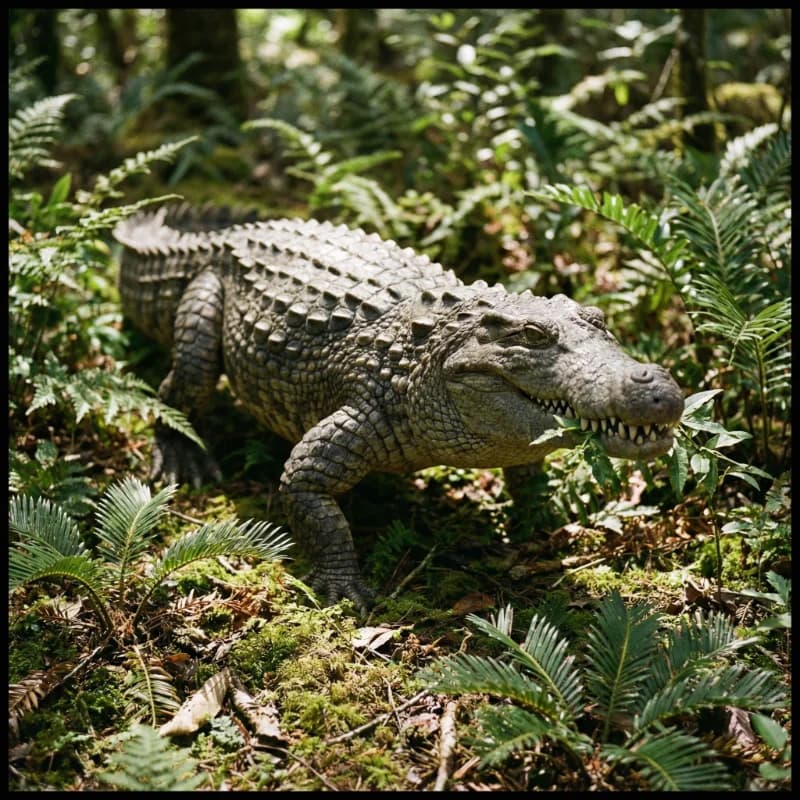
Simosuchus
Simosuchus clarki

Australovenator
Australovenator wintonensis