Stomatosuchus
Cretaceous Period Piscivore Creature Type
Stomatosuchus inermis
Scientific Name: "Greek stoma (mouth) + souchos (crocodile, from the Egyptian crocodile deity Sobek) = 'mouth crocodile'; specific epithet inermis = Latin 'unarmed/weaponless', reflecting the reduced dentition"
Local Name: Stomatosuchus
Physical Characteristics
Discovery
Habitat
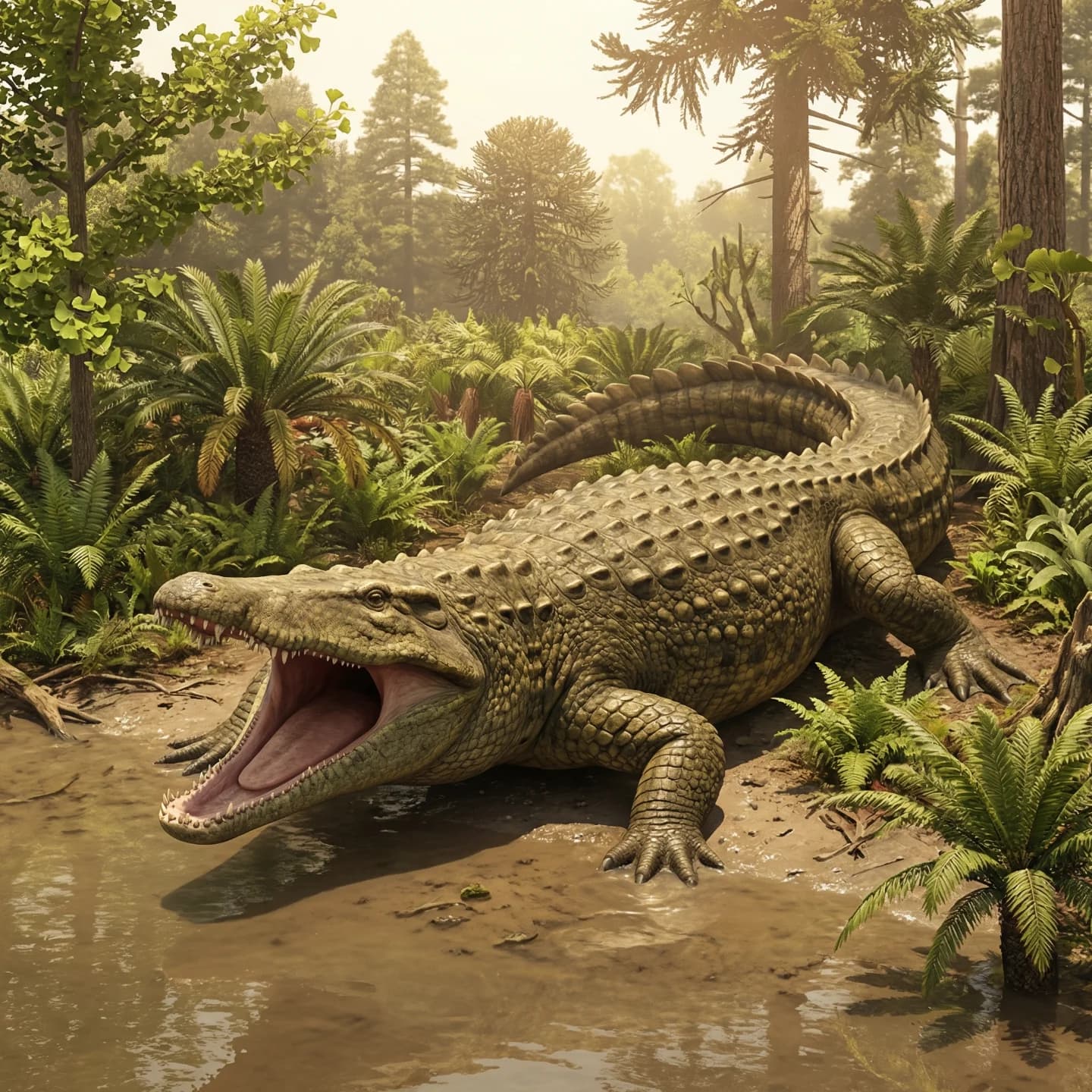
Stomatosuchus (Stomatosuchus inermis Stromer, 1925) is an extinct neosuchian crocodyliform from the Late Cretaceous (Cenomanian stage, approximately 100–94 Ma) of what is now Egypt, North Africa. It is the type genus of the family Stomatosuchidae and represents one of the largest known crocodyliforms of the Cretaceous, with an estimated total body length of approximately 10 m and a skull reaching up to 2 m in length. The generic name derives from the Greek stoma (mouth) and souchos (crocodile, from the Egyptian crocodile god Sobek), meaning "mouth crocodile," while the specific epithet inermis is Latin for "unarmed" or "weaponless," reflecting the animal's remarkably reduced dentition.
The most striking feature of Stomatosuchus is its extraordinarily long, dorsoventrally flattened, "lid-like" skull paired with extremely slender and fragile mandibular rami. The upper jaw bore rows of small, conical teeth, but the lower jaw may have been entirely edentulous, and it has been hypothesized that a pelican-like gular pouch was suspended between the mandibles. This morphology is interpreted as an adaptation for a unique feeding strategy — either filter-feeding, gulp-feeding, or sit-and-wait piscivory — unlike anything seen in other known crocodyliforms. Stomatosuchus was not a dinosaur; it belongs to Crocodylomorpha and coexisted with giant theropod dinosaurs such as Spinosaurus and Carcharodontosaurus in the same ecosystem.
Tragically, the sole known specimen — the holotype (BSP 1912 VIII 54) — was destroyed during the Allied bombing of Munich on April 24–25, 1944, during World War II. All that remains today are the photographs, illustrations, and written descriptions from Ernst Stromer's original 1925 publication. The 2009 description of Laganosuchus, a closely related stomatosuchid from Niger and Morocco, by Sereno and Larsson significantly advanced understanding of stomatosuchid morphology and ecology, but no additional specimens of Stomatosuchus itself have ever been found, and the genus remains one of the most enigmatic crocodyliforms in the fossil record.
Overview
Name and Etymology
The genus name Stomatosuchus is a compound of the Greek words στόμα (stoma, "mouth") and σοῦχος (souchos, "crocodile"), the latter derived from the ancient Egyptian crocodile deity Sobek and widely used in crocodyliform nomenclature. Together, the name translates as "mouth crocodile." The specific epithet inermis comes from the Latin word meaning "unarmed" or "weaponless," chosen by Stromer (1925) to emphasize the animal's drastically reduced dentition — a feature that immediately set it apart from all other known crocodyliforms of its time. The full binomial Stomatosuchus inermis can thus be rendered as "weaponless mouth crocodile," an apt description of its unique cranial morphology.
Taxonomic Status
Stomatosuchus inermis is currently recognized as a valid monotypic genus and species. It is classified within Crocodylomorpha, specifically as a member of Neosuchia, and serves as the type genus and species of the family Stomatosuchidae Stromer, 1925. The family also includes Laganosuchus (Sereno & Larsson, 2009), known from Niger and Morocco, while the placement of ?Chiayusuchus from China remains uncertain. The genus Aegyptosuchus peyeri, formerly considered a possible stomatosuchid, has been reclassified into its own family, Aegyptosuchidae, and interpreted as a derived eusuchian close to crown-group Crocodylia (Holliday & Gardner, 2012). It is important to note that Stomatosuchus was not a dinosaur. Crocodyliforms and dinosaurs both belong to the superorder Archosauria and are thus closely related, but they represent entirely separate evolutionary lineages.
One-Sentence Summary
A giant Cenomanian crocodyliform from Egypt, approximately 10 m long with a 2 m flat skull, possibly equipped with a pelican-like gular pouch for filter-feeding or gulp-feeding on fish.
Age, Stratigraphy, and Depositional Environment
Temporal Range
Stomatosuchus dates to the Cenomanian stage of the Late Cretaceous, with an absolute age range of approximately 100–95 Ma. This interval falls within the Cretaceous "greenhouse world," characterized by globally elevated sea levels and temperatures. The age of the Bahariya Formation has been established through biostratigraphic evidence including palynomorphs and foraminifera, as well as sequence stratigraphic analysis (Catuneanu et al., 2006).
Formation and Lithology
The fossil was recovered from the Bahariya Formation at the Bahariya Oasis in the Western Desert of Egypt. The formation is approximately 100 m thick and consists primarily of sandstone with interbedded mudstone and siltstone. Four depositional sequences separated by subaerial unconformities have been recognized, recording repeated cycles of fluvial, shoreline, and shallow marine deposition during a period of overall relative sea-level rise (Catuneanu et al., 2006; Khalifa & Catuneanu, 2008). Iron-rich concretions (ferricretes) are developed throughout the succession, reflecting fluctuating redox conditions in the depositional environment.
Paleoenvironment
The Bahariya Formation records a complex of fluvial floodplain, deltaic, tidal flat, and shallow lagoonal environments forming part of an extensive coastal wetland system. This region — sometimes referred to as the "Bahariya Bight" — extended approximately 300 km inland from the paleo-Tethys Sea shoreline. At a paleolatitude of approximately 10°N, near the equator within northern Gondwana, the climate was warm and humid, subtropical to tropical, with seasonal monsoons and periodic arid intervals evidenced by evaporite deposits and the dominance of xerophytic tree ferns such as Weichselia and Paradoxopteris (El Atfy et al., 2023). The rich aquatic ecosystem — abundant in fish, sharks, lungfish, and coelacanths — would have provided ample prey for a specialized aquatic feeder like Stomatosuchus.
Specimens and Diagnostic Features
Holotype
The holotype of Stomatosuchus inermis is BSP 1912 VIII 54, originally housed at the Bayerische Staatssammlung fur Palaontologie und Historische Geologie (Bavarian State Collection for Palaeontology and Historical Geology) in Munich. The specimen was collected in 1911 by Ernst Stromer during his expeditions to the Bahariya Oasis in Egypt, transported to Munich in 1922, and formally described in 1925 (Stromer, 1925). It consisted of a partial skull (with a partially crushed palate and rostrum and fragmentary braincase) and two caudal vertebrae.
On April 24–25, 1944, Allied bombing destroyed the Munich museum, and the holotype was lost along with other irreplaceable Bahariya fossils, including the original specimens of Spinosaurus aegyptiacus. Today, only Stromer's original photographs, illustrations, and textual descriptions survive, along with the supplementary observations published by Nopcsa (1926).
Diagnosis
Based on Stromer's (1925) original description and subsequent studies, the key diagnostic features of Stomatosuchus inermis include:
- An extraordinarily elongate, dorsoventrally flattened, "lid-like" skull reaching approximately 2 m in length
- Numerous small, conical teeth lining the upper jaw
- Extremely slender, fragile mandibular rami with a weak mandibular symphysis
- Potentially edentulous lower jaw — Nopcsa (1926) proposed the existence of a gular pouch based on a preserved skin fragment
- A weakly grooved frontoparietal region and textured skull roof
- Small, mediolaterally ovate dorsotemporal fossae
Limitations of the Material
Since the holotype was destroyed, direct reexamination is impossible, and all morphological interpretations rely entirely on Stromer's original photographs and illustrations. The partial crushing of the skull introduced considerable uncertainty regarding the detailed morphology of the palate and braincase. Postcranial material was limited to only two caudal vertebrae, severely constraining any reconstruction of body proportions, limb morphology, or osteoderm arrangement. The body mass estimate of approximately 2–3 tonnes is based on indirect comparisons with similarly sized crocodyliforms, and no formal allometric mass-estimation study has been published.
Morphology and Functional Anatomy
Skull and Jaws
The skull of Stomatosuchus measured approximately 2 m in length, an exceptionally large size even by crocodyliform standards. It was extremely flat (platyrostral) and broad, resembling a "lid" in lateral profile. The margins of the upper jaw bore numerous small, conical teeth which, based on the morphology of the closely related Laganosuchus, were likely simple, spike-shaped structures without recurvature or ornamentation. The mandible was extremely slender, with a U-shaped symphysis and an exceptionally thin cross-section. Stromer (1925) reserved judgment on whether the lower jaw was completely toothless, but Nopcsa (1926) proposed edentulousness and the presence of a gular pouch based on what he interpreted as a preserved skin fragment.
The orbits were positioned dorsally on the skull table, lying flush with the surface without raised orbital ridges. This configuration produced an extremely low lateral profile, ideally suited for submerged ambush behavior with only the eyes protruding above the waterline.
Body Size
Total body length is estimated at approximately 10 m, derived from the skull length (approximately 2 m) and skull-to-body proportions observed in comparable longirostrine crocodyliforms. Body mass has been informally estimated at approximately 2–3 tonnes through comparative scaling methods, but no rigorous allometric body-mass estimation has been published in the peer-reviewed literature. Because postcranial material is virtually unknown (only two caudal vertebrae), reconstructions of limb morphology, tail shape, and body proportions remain entirely inferential, relying on phylogenetic bracketing and comparisons to related taxa.
Functional Interpretation: Jaw Mechanics
The slender, elongate mandibles of Stomatosuchus indicate an extremely weak bite force. Analysis of Laganosuchus mandibles reveals a low, transversely broad coronoid process and an extremely reduced external mandibular fenestra, barely larger than a slit (Sereno & Larsson, 2009). These features are consistent with a feeding strategy emphasizing wide gape and passive prey capture rather than forceful biting. Study of the braincase of the related Aegisuchus witmeri revealed enlarged attachment sites for jaw-opening muscles, indicating that these flat-headed crocodyliforms were specialized for powerful head elevation and mouth opening rather than forceful jaw closure (Holliday & Gardner, 2012). This functional specialization has been compared to the "head-lifting" feeding mechanism of the Triassic temnospondyl Gerrothorax pulcherrimus — an example of convergent evolution across distantly related groups.
Diet and Ecology
Feeding Hypotheses
Three principal feeding hypotheses have been proposed for Stomatosuchus:
Hypothesis 1: Pelican-like gular pouch feeding — First proposed by Nopcsa (1926), this model suggests that a distensible gular pouch was suspended between the mandibles, analogous to a modern pelican. Stomatosuchus would have engulfed water containing fish, then closed the upper jaw and constricted the pouch to expel water while the small upper teeth prevented prey from escaping.
Hypothesis 2: Sit-and-wait piscivory — Proposed by Sereno and Larsson (2009) based on Laganosuchus, this model envisions the animal remaining motionless for extended periods with jaws agape, waiting for fish to swim between the mandibles before snapping them shut. The interdigitating spike-shaped teeth of Laganosuchus support this "fish-trap" interpretation.
Hypothesis 3: Active suction feeding — In this scenario, rapid jaw opening combined with pharyngeal muscle contraction would create suction to draw prey into the oral cavity.
Hypotheses 1 and 2 are currently the most widely supported, but the destruction of the holotype makes definitive resolution extremely difficult.
Ecological Niche
The Bahariya Formation preserves a rich ichthyofauna including lungfish (Ceratodus, Neoceratodus, Retodus), the giant coelacanth Mawsonia, the bichir Bawitius, and numerous sharks and rays (Onchopristis, Squalicorax, and various sclerorhynchids), all of which represented potential prey items. The same ecosystem supported large apex predators including Spinosaurus aegyptiacus (a semiaquatic spinosaurid theropod), Libycosuchus (a terrestrial crocodyliform), and Hamadasuchus (a peirosaurid). Stomatosuchus likely occupied a mid-level trophic position as a specialized aquatic feeder, exploiting small to medium-sized fish and possibly invertebrates rather than competing directly with the more powerful-jawed predators in its environment.
Behavioral Inferences
The flat skull with dorsally positioned orbits strongly suggests a submerged ambush lifestyle, lying just beneath the water surface with only the eyes exposed — similar to modern crocodilians but adapted for passive prey capture rather than active predation on large vertebrates. Information on reproductive behavior, social structure, or home range is entirely unknown.
Distribution and Paleogeography
Geographic Range
Stomatosuchus fossils are known exclusively from the Bahariya Formation at the Bahariya Oasis in the Western Desert of Egypt. No additional localities have been reported for this genus. However, the closely related Laganosuchus has been recovered from the Echkar Formation of Niger (L. thaumastos) and the Kem Kem Beds of Morocco (L. maghrebensis), both of Cenomanian age, demonstrating that the family Stomatosuchidae had a broad North African distribution. Whether Stomatosuchus was truly endemic to Egypt or whether its apparent restricted range reflects the extremely limited fossil record (a single specimen) remains an open question.
Paleogeographic Setting
During the Cenomanian, the Bahariya region was situated in northern Gondwana at a paleolatitude of approximately 10°N, near the equator. Africa was in the process of separating from South America, and the Tethys Sea was expanding to the north, creating extensive coastal wetlands and shallow marine environments. This setting supported one of the richest Late Cretaceous vertebrate assemblages in Africa, including giant theropod dinosaurs, massive titanosaur sauropods, diverse crocodyliforms, and a prolific aquatic fauna.
Phylogeny and Taxonomic Debates
Phylogenetic Position of Stomatosuchidae
The exact phylogenetic position of Stomatosuchidae within Neosuchia remains debated. In the large-scale crocodyliform phylogenetic analysis of Sereno and Larsson (2009), encompassing 252 morphological characters scored across 45 taxa, Stomatosuchidae was recovered as a neosuchian group outside Eusuchia. The family was diagnosed by features including flat, U-shaped jaws, reduced dentition, a straight retroarticular process, and a rounded glenoid facet.
Relationship to Aegyptosuchidae
Holliday and Gardner (2012), in their description of Aegisuchus witmeri, placed Aegyptosuchus and Aegisuchus in a separate family, Aegyptosuchidae, as derived eusuchians and the sister clade to crown-group Crocodylia. Their constrained analysis forcing Laganosuchus into a clade with the aegyptosuchids produced trees 281 steps longer than the optimal solution, indicating that a close stomatosuchid-aegyptosuchid relationship is not currently supported. Nevertheless, Stromer's descriptions of the Stomatosuchus skull roof texture, overall flat cranial profile, and small dorsotemporal fossae closely resemble features found in aegyptosuchids, leaving open the possibility that these families are related. Resolution of this question will require the discovery of additional diagnostic material.
Convergence with Mourasuchus
The Miocene South American caiman Mourasuchus exhibits a strikingly similar morphology to stomatosuchids — a broad, flat skull, slender mandibles, and reduced dentition — but this resemblance is the result of convergent evolution. Mourasuchus is a derived alligatoroid within Caimaninae and is phylogenetically distant from Stomatosuchidae (Langston, 1966; Cidade et al., 2019). The morphological similarity between these two groups represents independent adaptation to the ecological niche of aquatic filter-feeding or gulp-feeding on small prey, separated by approximately 90 million years.
Reconstruction and Uncertainty
Confirmed
- Late Cretaceous (Cenomanian) age, Bahariya Formation, Egypt
- Extremely elongate, dorsoventrally flat skull (approximately 2 m) with small conical upper teeth
- Slender mandibular rami with a weak symphysis
- Estimated total body length of approximately 10 m
- Type genus of Stomatosuchidae
Probable (Well-Supported Hypotheses)
- Edentulous or near-edentulous lower jaw — based on Nopcsa (1926), widely accepted among researchers
- Pelican-like gular pouch — proposed by Nopcsa (1926) based on a skin fragment, though Stromer (1936) expressed reservations about the preservation quality
- Piscivorous or suspension-feeding diet — inferred from skull morphology and comparison with Laganosuchus
Uncertain or Speculative
- Body mass (approximately 2–3 tonnes): based on informal comparisons, no formal published estimate
- Postcranial skeleton (limbs, osteoderms, tail): virtually unknown beyond two caudal vertebrae
- Precise structure and function of the hypothesized gular pouch: fossil evidence extremely limited
- Exact phylogenetic position: holotype destruction prevents character recoding
- Geographic range: only one locality confirmed
Common Misconceptions in Popular Media
Stomatosuchus is frequently depicted in popular media as a "filter-feeding crocodile" or "crocodilian baleen whale," but there is no direct evidence for baleen whale-style filter feeding. The pelican-like gulp/strain feeding hypothesis is the most widely favored model, but active sit-and-wait predation also remains plausible. Additionally, body mass estimates carry very high uncertainty and should not be treated as definitive figures.
Comparison with Related and Analogous Taxa
| Taxon | Family | Age | Locality | Estimated Length | Key Features |
|---|---|---|---|---|---|
| Stomatosuchus inermis | Stomatosuchidae | Cenomanian (~100-95 Ma) | Egypt | ~10 m | Flat skull (~2 m), small upper teeth, gular pouch hypothesis |
| Laganosuchus thaumastos | Stomatosuchidae | Cenomanian (~95 Ma) | Niger | ~6 m | 24 spike-shaped teeth per side, slender mandible, sit-and-wait piscivory |
| Laganosuchus maghrebensis | Stomatosuchidae | Cenomanian (~95 Ma) | Morocco | ~4-6 m | Known from a dentary fragment only |
| Aegisuchus witmeri | Aegyptosuchidae | Cenomanian (~98-93 Ma) | Morocco | Estimated very large | Braincase only, vascular skull roof boss, derived eusuchian |
| Aegyptosuchus peyeri | Aegyptosuchidae | Cenomanian | Egypt | Unknown | Skull table fragment only, thick skull roof |
| Mourasuchus spp. | Alligatoridae (Caimaninae) | Miocene | South America | ~6-10 m | Broad flat skull, convergent evolution, crown-group Crocodylia |
Discovery and Research History
The history of Stomatosuchus begins with Ernst Stromer von Reichenbach's early 20th-century explorations of the Egyptian Western Desert. Stromer conducted three expeditions to Egypt (1902, 1903, and 1910–1911), and during his 1911 season at the Bahariya Oasis, he collected the holotype of Stomatosuchus. The fossil was shipped to the Bavarian State Palaeontological Museum in Munich in 1922, and Stromer published the formal description in 1925, characterizing the animal as a "weakly toothed crocodilian" (schwach bezahnter Krokodilier) (Stromer, 1925).
In 1926, the Hungarian paleontologist Franz Nopcsa published additional observations on the specimen, first proposing the edentulous mandible hypothesis and the existence of a gular pouch (Nopcsa, 1926). Stromer revisited Stomatosuchus in his 1936 comprehensive summary of the Bahariya vertebrate fauna, but expressed reservations about the gular pouch interpretation due to the questionable preservation quality of the skin fragment (Stromer, 1936).
Following the catastrophic loss of the holotype in 1944 — when Stromer's repeated requests to the Nazi authorities to relocate his irreplaceable collection to safer storage had been refused — decades passed without new material. The genus remained a paleontological enigma until 2009, when Sereno and Larsson described Laganosuchus from Niger and Morocco, providing the first well-preserved stomatosuchid material and vastly improving understanding of the family's anatomy and ecology (Sereno & Larsson, 2009). In 2012, Holliday and Gardner described Aegisuchus witmeri from the Kem Kem Formation, further illuminating the diversity and phylogenetic relationships of flat-headed North African crocodyliforms (Holliday & Gardner, 2012).
Fun Facts
FAQ
📚References
- Stromer, E. (1925). Ergebnisse der Forschungsreisen Prof. E. Stromers in den Wusten Agyptens. II. Wirbeltier-Reste der Baharije-Stufe (unterstes Cenoman). 7. Stomatosuchus inermis Stromer, ein schwach bezahnter Krokodilier und 8. Ein Skelettrest des Pristiden Onchopristis numidus Haug sp. Abhandlungen der Bayerischen Akademie der Wissenschaften, Mathematisch-naturwissenschaftliche Abteilung, 30(6): 1-22.
- Nopcsa, F. (1926). Neue Beobachtungen an Stomatosuchus. Centralblatt fur Mineralogie, Geologie und Palaontologie, Abteilung B, 1926: 212-215.
- Stromer, E. (1936). Ergebnisse der Forschungsreisen Prof. E. Stromers in den Wusten Agyptens. VII. Baharije-Kessel und -Stufe mit deren Fauna und Flora. Eine erganzende Zusammenfassung. Abhandlungen der Bayerischen Akademie der Wissenschaften, Mathematisch-naturwissenschaftliche Abteilung, 33: 1-102.
- Sereno, P.C. & Larsson, H.C.E. (2009). Cretaceous crocodyliforms from the Sahara. ZooKeys, 28: 1-143. https://doi.org/10.3897/zookeys.28.325
- Holliday, C.M. & Gardner, N.M. (2012). A new eusuchian crocodyliform with novel cranial integument and its significance for the origin and evolution of Crocodylia. PLoS ONE, 7(1): e30471. https://doi.org/10.1371/journal.pone.0030471
- Naish, D. (2002). Fossils explained 34: Crocodilians. Geology Today, 18(2): 71-77.
- Catuneanu, O., Khalifa, M.A. & Wanas, H.A. (2006). Sequence stratigraphy of the Lower Cenomanian Bahariya Formation, Bahariya Oasis, Western Desert, Egypt. Sedimentary Geology, 190(1-4): 121-137. https://doi.org/10.1016/j.sedgeo.2006.05.010
- Khalifa, M.A. & Catuneanu, O. (2008). Sedimentology of the fluvial and fluvio-marine facies of the Bahariya Formation (Early Cenomanian), Bahariya Oasis, Western Desert, Egypt. Journal of African Earth Sciences, 51(2): 89-103. https://doi.org/10.1016/j.jafrearsci.2007.12.004
- Ibrahim, N., Sereno, P.C., Varricchio, D.J. et al. (2020). Geology and paleontology of the Upper Cretaceous Kem Kem Group of eastern Morocco. ZooKeys, 928: 1-216. https://doi.org/10.3897/zookeys.928.47517
- El Atfy, H., Coiffard, C., El Beialy, S.Y. & Uhl, D. (2023). Vegetation and climate change at the southern margin of the Neo-Tethys during the Cenomanian (Late Cretaceous): Evidence from Egypt. PLoS ONE, 18(1): e0281008. https://doi.org/10.1371/journal.pone.0281008
- Cidade, G.M., Fortier, D. & Hsiou, A.S. (2019). The crocodylomorph fauna of the Cenozoic of South America and its evolutionary history: a review. Journal of South American Earth Sciences, 90: 392-411. https://doi.org/10.1016/j.jsames.2018.12.026
- Langston, W. (1966). Mourasuchus Price, Nettosuchus Langston, and the family Nettosuchidae (Reptilia: Crocodilia). Copeia, 1966(4): 882-885.
- Carroll, R.L. (1988). Vertebrate Paleontology and Evolution. W.H. Freeman and Company, New York, pp. 1-698.
- Sallam, H.M., O'Connor, P.M., Kora, M. et al. (2018). An enigmatic crocodyliform from the Upper Cretaceous Quseir Formation, central Egypt. Cretaceous Research, 90: 174-184. https://doi.org/10.1016/j.cretres.2018.04.004
- Salem, B.S., Lamanna, M.C., O'Connor, P.M. et al. (2022). First definitive record of Abelisauridae (Theropoda: Ceratosauria) from the Cretaceous Bahariya Formation, Bahariya Oasis, Western Desert of Egypt. Royal Society Open Science, 9(6): 220106. https://doi.org/10.1098/rsos.220106
Gallery
5 images Stomatosuchus
Stomatosuchus · Cretaceous Period · Piscivore
 Stomatosuchus
Stomatosuchus · Cretaceous Period · Piscivore
 Stomatosuchus
Stomatosuchus · Cretaceous Period · Piscivore
 Stomatosuchus
Stomatosuchus · Cretaceous Period · Piscivore
 Stomatosuchus
Stomatosuchus · Cretaceous Period · Piscivore
🔗Related Creatures
Deinosuchus
Deinosuchus
Kaprosuchus
Kaprosuchus saharicus
Sarcosuchus
Sarcosuchus imperator
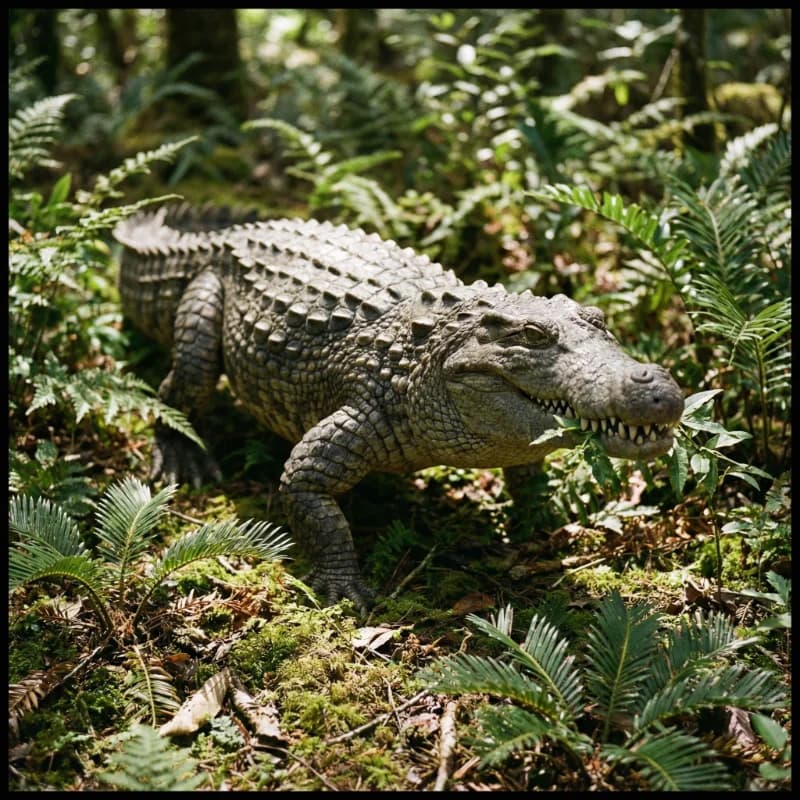
Simosuchus
Simosuchus clarki

Spinosaurus
Spinosaurus aegyptiacus
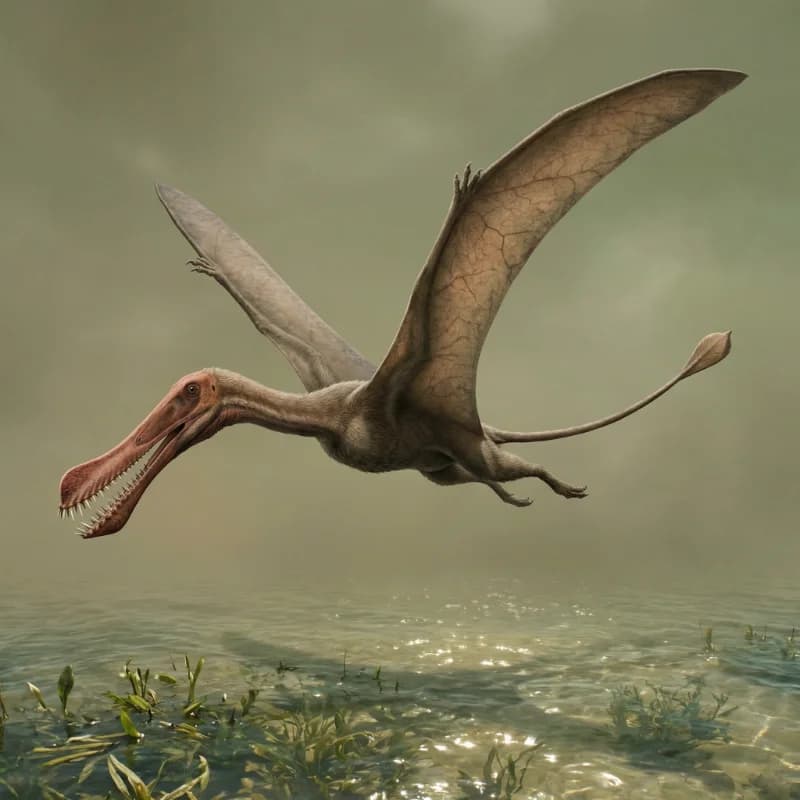
Cearadactylus
Cearadactylus atrox
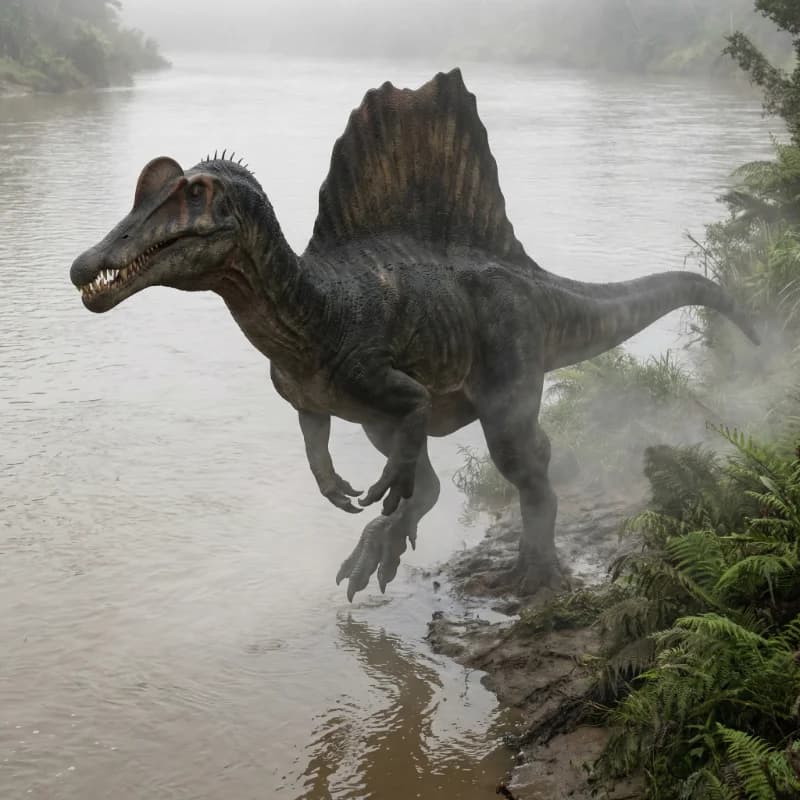
Spinosaurus mirabilis
Spinosaurus mirabilis
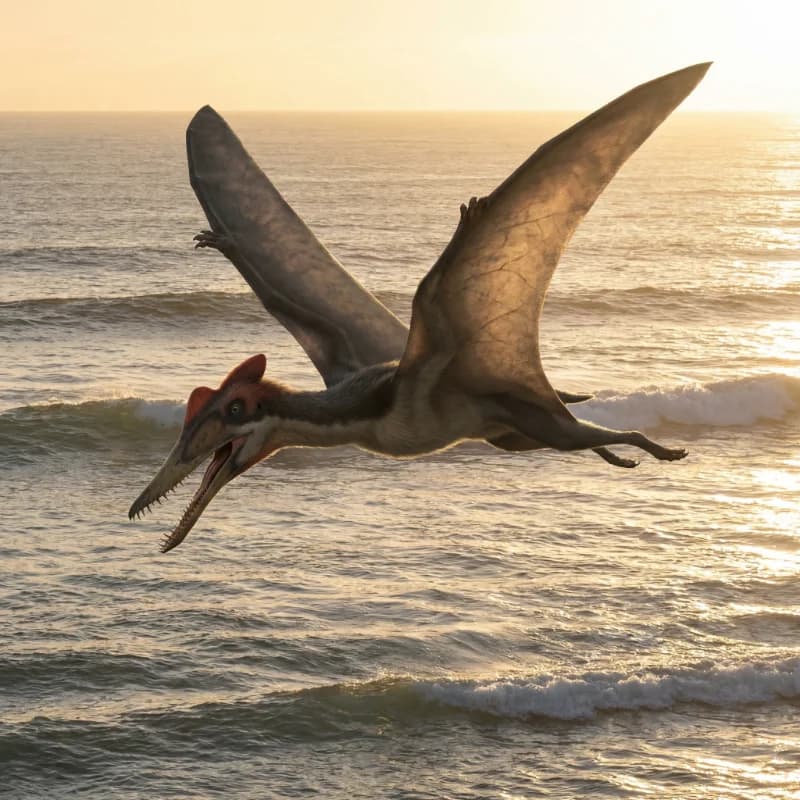
Ferrodraco
Ferrodraco lentoni