Metriorhynchus
Jurassic Period Carnivore Creature Type
Metriorhynchus brevirostris
Scientific Name: "Metriorhynchus: from Greek metrios (moderate) + rhynchos (snout) = 'moderate snout'"
Local Name: Metriorhynchus
Physical Characteristics
Discovery
Habitat
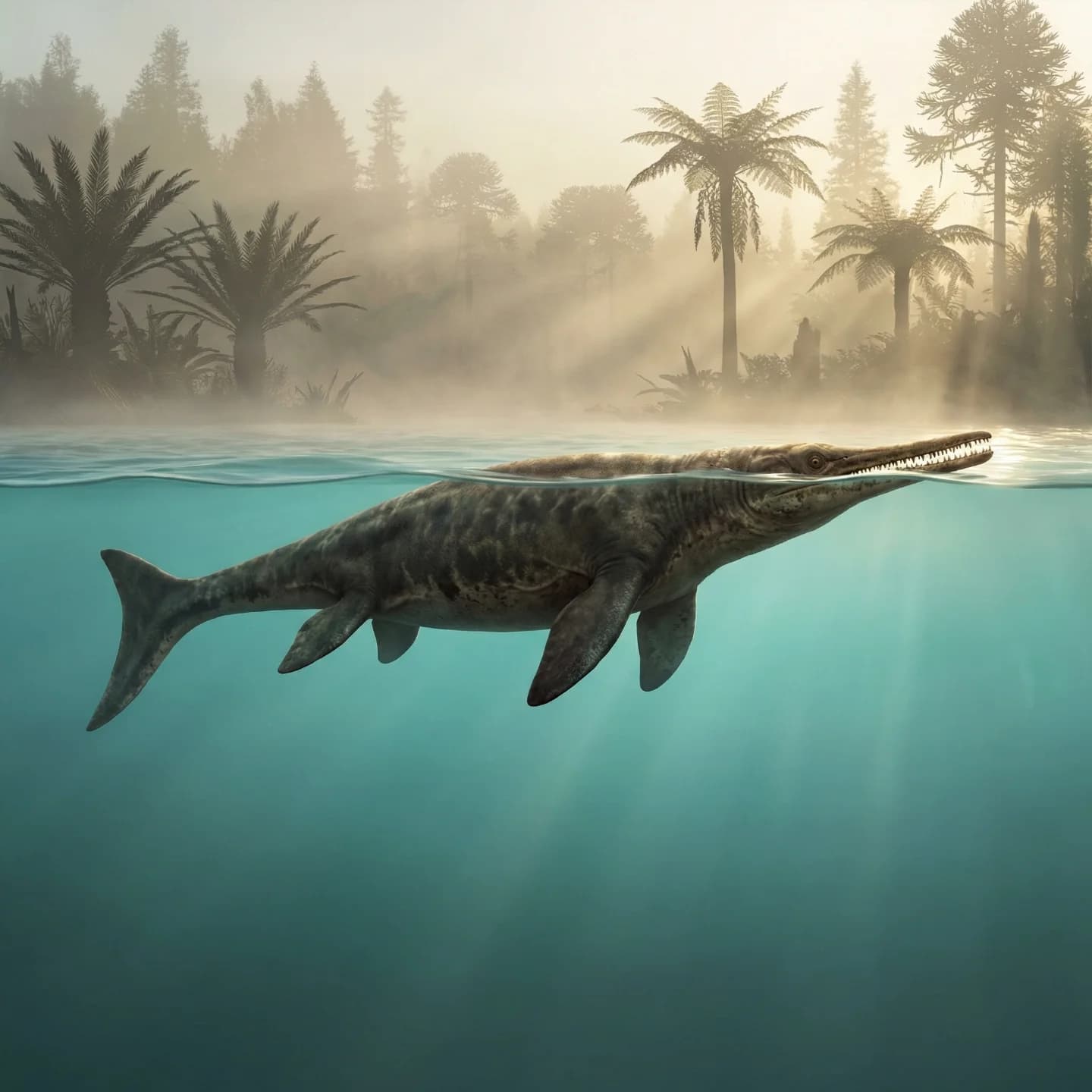
Metriorhynchus (Metriorhynchus brevirostris (Holl, 1829) vide Young et al., 2020) is an extinct marine crocodyliform that inhabited the oceans surrounding Europe during the Late Jurassic Kimmeridgian stage (approximately 157–150 Ma). Belonging to the family Metriorhynchidae, this genus was named by the German palaeontologist Christian Erich Hermann von Meyer in 1832, with the type species M. brevirostris based on a partial rostrum (holotype MHNG V-2232) from Le Havre, France. The name derives from the Greek metrios (moderate) and rhynchos (snout), meaning "moderate snout."
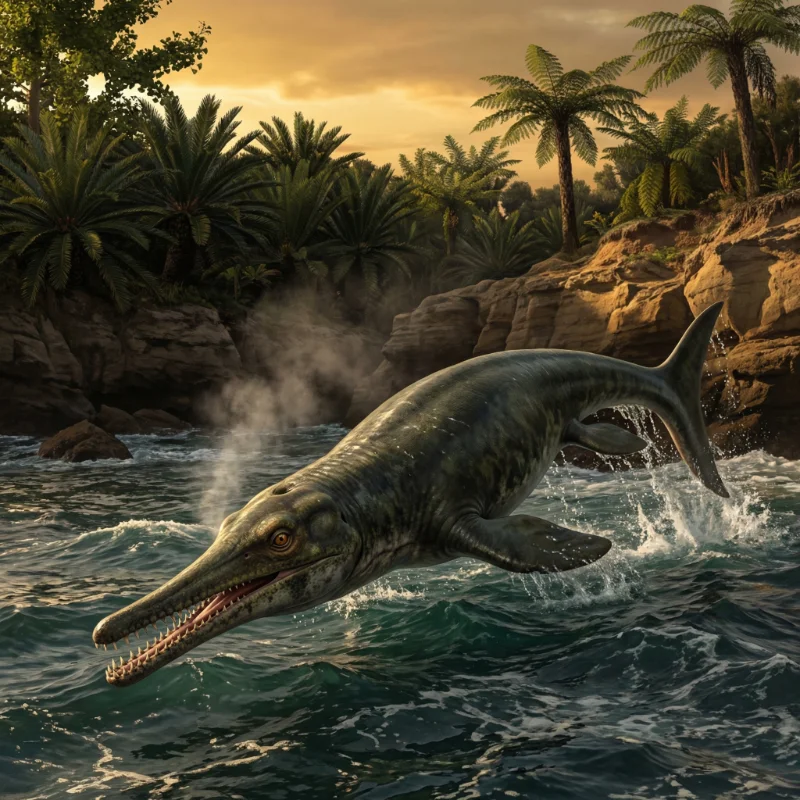
Metriorhynchus is not a dinosaur — it is a marine crocodyliform. It belongs to the suborder Thalattosuchia within Crocodylomorpha, an extinct clade that is phylogenetically distant from modern crocodilians. Metriorhynchidae represents the most extreme archosaurian adaptation to a pelagic marine lifestyle: members of this family evolved flipper-like limbs, a shark-like hypocercal tail fluke, completely lost their bony armour (osteoderms) resulting in smooth skin, and possessed cranial salt glands for osmoregulation in marine environments (Gandola et al., 2006). These adaptations made metriorhynchids obligately aquatic and almost certainly incapable of terrestrial locomotion.
With an estimated total body length of approximately 2.5–3 m, Metriorhynchus was a medium-sized predator and opportunistic scavenger in the Jurassic seas. Fossilised stomach contents have revealed gill raker fragments from the giant suspension-feeding fish Leedsichthys, fish scales, belemnites, invertebrate shells, and even pterosaur bones (Martill, 1986; Hua et al., 2024), demonstrating a diet that went well beyond simple piscivory into opportunistic scavenging. As such, Metriorhynchus is a key taxon for understanding the marine adaptive evolution of crocodyliform reptiles.
Overview
Name and Etymology
The generic name Metriorhynchus is composed of the Greek words metrios (μέτριος, "moderate" or "intermediate") and rhynchos (ῥύγχος, "snout"), referring to the animal's moderately proportioned snout compared to other thalattosuchians. The name was first published by von Meyer in his 1832 work Palaeologica zur Geschichte der Erde und ihrer Geschöpfe (von Meyer, 1832).
Taxonomic Status and Naming History
The taxonomic history of Metriorhynchus is extraordinarily convoluted, spanning over two centuries of systematic revision. The holotype specimen MHNG V-2232, a partial rostrum from Le Havre, was first mentioned by Georges Cuvier in 1811 as being in the collection of the Museum of the Academy of Geneva. Cuvier (1824) described multiple "gavial" remains, mistakenly believing he was dealing with two species of crocodilian. In 1825, Étienne Geoffroy Saint-Hilaire created Steneosaurus rostro-minor for related material, and in 1829 Friedrich Holl formally named MHNG V-2232 as Steneosaurus brevirostris (Holl, 1829). In 1831, John Edward Gray reassigned the specimen to the gharial species Gavialis jurinii (Gray, 1831). The following year, von Meyer separated Cuvier's "gharial" species and erected Metriorhynchus, creating both M. brevirostris and M. geoffroyi for the material (von Meyer, 1832).
The landmark revision by Young et al. (2020) — titled "Cutting the Gordian knot" — synonymised M. geoffroyii with M. brevirostris, formally designated MHNG V-2232 as the holotype, and reassigned many species previously placed in Metriorhynchus to other genera. Notably, the Callovian Oxford Clay species M. superciliosus was transferred to the new genus Thalattosuchus. As a result, only one valid species is currently recognised: the type species M. brevirostris.
However, this revision is not universally accepted. Le Mort et al. (2022) and Hua et al. (2024) have criticised several of the diagnostic characters used by Young et al. (2020), arguing that some are shared across multiple genera and thus insufficient for reliable generic distinction. These authors advocate a more conservative taxonomy following Vignaud (1997). This taxonomic debate remains active.
Key Summary
Metriorhynchus is a Kimmeridgian (Late Jurassic) marine crocodyliform with flipper-like limbs, a tail fluke, salt glands, and smooth skin — representing an extreme archosaurian adaptation to pelagic life.
Temporal Range, Stratigraphy, and Depositional Environment
Temporal Range
Following the strict taxonomic framework of Young et al. (2020), confirmed specimens of Metriorhynchus brevirostris are restricted to the Kimmeridgian stage of the Late Jurassic (approximately 157–150 Ma). The holotype MHNG V-2232 derives from Kimmeridgian deposits near Le Havre, France. Many specimens previously attributed to Metriorhynchus from the Callovian (approximately 166–163 Ma) have been reassigned to Thalattosuchus, Suchodus, Purranisaurus, and other genera (Young et al., 2020).
Under the broader concept of Metriorhynchus (as favoured by Le Mort et al., 2022; Hua et al., 2024), the genus ranges from the Middle Jurassic (Callovian) to the Upper Jurassic (Kimmeridgian), spanning approximately 166–150 Ma.
Formations and Lithology
The principal formations yielding Metriorhynchus or closely related metriorhynchid material are summarised below:
| Formation | Age | Locality | Lithology |
|---|---|---|---|
| Marnes de Villers Formation | Kimmeridgian | Normandy, France | Mudstone, calcareous mudstone |
| Marnes de Dives Formation | Upper Callovian | Normandy, France (Vaches Noires) | Organic-rich mudstone, pyritic mudstone |
| Oxford Clay Formation (Peterborough Member) | Callovian | Peterborough, Oxfordshire, England | Organic-rich mudstone, shale |
Strictly, only Kimmeridgian material is referable to M. brevirostris under current taxonomy, though metriorhynchid fossils span the Callovian–Kimmeridgian interval across these formations.
Palaeoenvironment
During the Jurassic, Europe was largely covered by shallow epicontinental seas connected to the Tethys Ocean. The Oxford Clay Formation's Peterborough Member represents an organic-rich mudstone deposited in a low-oxygen (hypoxic) bottom-water setting (Hudson & Martill, 1994). The Marnes de Dives in Normandy similarly represents a calm, shallow marine environment dominated by fine terrigenous sediment (illite, kaolinite, vermiculite) with pyrite and carbonate horizons (Dugué et al., 1998). These quiet, oxygen-poor conditions facilitated rapid burial and excellent preservation of marine vertebrate fossils.
Palaeomagnetic data indicate the region was situated at approximately 23°N palaeolatitude, placing it within a subtropical climatic zone during the Jurassic.
Specimens and Diagnostic Characters
Holotype and Key Specimens
Holotype: MHNG V-2232 — a partial rostrum from Le Havre, Normandy, France. Kimmeridgian deposits. Formally designated as holotype by Young et al. (2020).
MNHN.F.RJN 116 — a jaw collected from the Marnes de Villers by Charles Bacheley during the early 1770s. The earliest known specimen attributable to Metriorhynchus, initially misidentified as a fish (Bacheley, 1778) and later as a dolphin or sperm whale. Described by Cuvier (1808) and reassigned to M. brevirostris by Young et al. (2020).
FBS 2012.4.67.80 — a nearly complete skeleton from the Marnes de Dives (Upper Callovian) at Vaches Noires, discovered in 1962. Approximately 2.5 m in total length, representing a young adult with closed neurocentral sutures. Preserves gastric contents containing Leedsichthys gill raker fragments. Assigned to Metriorhynchus cf. superciliosus by Hua et al. (2024) under the broader generic concept.
Diagnosis
Young et al. (2020) provided the following diagnostic characters for M. brevirostris: the first three premaxillary teeth increase in size from front to back, with the first being circular in cross-section and the third more ovoid; a narrow constriction occurs at the premaxillary-maxillary suture; at least 13 maxillary teeth are present anterior to the palatine bones; the anterior termination of the nasals lies near the eighth maxillary tooth position; a single large external naris is present rather than paired openings; and the narial opening begins posterior to the first premaxillary tooth and terminates just past the last premaxillary tooth.
Limitations of the Material
The holotype MHNG V-2232 consists only of a partial rostrum, which limits direct comparison of postcranial anatomy and the posterior skull. This incompleteness contributed to the long history of taxonomic confusion, with many disparate species incorrectly assigned to Metriorhynchus over almost two centuries. Young et al. (2020) sought to resolve this "Gordian knot" but the restricted holotype remains a constraint for future systematic work.
Morphology and Functional Biology
Body Size
Total body length of Metriorhynchus is estimated at approximately 3 m (Haines & Chambers, 2006). The nearly complete subadult specimen FBS 2012.4.67.80 measures approximately 2.5 m, with closed neurocentral sutures confirming near-adult status (Hua et al., 2024; Brochu, 1996). Body mass estimates for Metriorhynchus specifically are scarce in the published literature, but based on body proportions and length, a range of approximately 150–250 kg is reasonable. This places Metriorhynchus as a medium-sized predator in the Jurassic marine ecosystem.
Young et al. (2011) developed regression equations for metriorhynchid body size estimation using basicranial length, finding that taxa in the Metriorhynchus size class ranged from approximately 3–3.6 m in total length.
Marine Adaptations
Metriorhynchidae represents the most extreme archosaurian adaptation to pelagic marine life. Key anatomical features include:
Flipper-like limbs: Both forelimbs and hindlimbs were transformed into paddles. The humerus exhibits a small deltoid crest and a rectangular profile, indicating minimal terrestrial capability (Andrews, 1913; Hua et al., 2024). The ulna was greatly reduced.
Hypocercal tail fluke: The distal caudal vertebrae bend ventrally, supporting a tail fin with the upper lobe on the ventral side — superficially similar to a shark's tail fin but structurally inverted.
Loss of osteoderms and smooth skin: Unlike all other crocodyliforms, metriorhynchids completely lost their bony dermal armour. UV-light investigation by Spindler et al. (2021) confirmed a uniform, scaleless skin texture resembling that of ichthyosaurs and plesiosaurs.
Cranial salt glands: Enlarged salt-excreting glands were present in the prefrontal region of the skull, enabling excretion of excess electrolytes from seawater (Gandola et al., 2006; Fernández & Gasparini, 2008). Barrios et al. (2022) further documented the evolution of these glands across Metriorhynchoidea.
Lightened skull: Histological analysis by Hua & De Buffrenil (1996) demonstrated that the Metriorhynchus skull was reduced in mass by over 60% through bone resorption, an osteoporotic-like condition that likely aided buoyancy regulation. However, this structural weakening implies reduced bite force, which may have constrained active predation on large prey.
Locomotion and Swimming
The streamlined body, flipper limbs, and tail fluke were optimised for efficient aquatic locomotion. Hua (2003) analysed the "locomotion profile" of metriorhynchids by systematically measuring the angle of prezygapophyseal articular surfaces along the vertebral column. Hua (1994) modelled Metriorhynchus as an epipelagic ambush predator — a characterisation supported by subsequent palaeobiological analyses. Quantitative swimming speed estimates remain unpublished, though the overall morphology indicates a proficient, if not necessarily fast, swimmer.
Diet and Palaeoecology
Direct Dietary Evidence
Two sets of fossilised stomach contents provide direct evidence of the diet of Metriorhynchus (in the broad sense):
Martill (1986): A specimen of Metriorhynchus sp. from the English Oxford Clay contained fish scales, belemnites, and pterosaur bones, indicating a piscivorous and opportunistic diet.
Hua et al. (2024): The specimen FBS 2012.4.67.80 (Metriorhynchus cf. superciliosus) from the Marnes de Dives preserves an 8 x 8 cm gastric content block containing gill raker fragments (up to approximately 58 mm in length) from the giant filter-feeding fish Leedsichthys, along with fragments of interraker mesh and small invertebrate shells. The gill raker size corresponds to an adult Leedsichthys individual estimated at 8–12 m standard length — vastly larger than the 2.5 m crocodyliform. This size disparity, combined with the bivalve shells (not typical prey for a piscivore), strongly supports scavenging behaviour rather than active predation.
Additionally, Forrest (2003) documented scavenging marks attributed to a metriorhynchid on a large pliosaurid humerus — further evidence of opportunistic feeding on carcasses.
Tooth morphology analysis (Vignaud, 1997; Massare, 1987) classifies longirostrine metriorhynchines as primarily piscivorous, but the stomach content evidence reveals that scavenging formed a significant component of their foraging strategy.
Ecological Niche
Hua (1994) and Hua et al. (2024) interpret Metriorhynchus as an epipelagic, opportunistic piscivore and scavenger. Bone histology indicates that metriorhynchids retained an ectothermic metabolism (Hua & De Buffrenil, 1996), contrasting with the elevated metabolic rates inferred for contemporary ichthyosaurs and plesiosaurs. Oxygen isotope analysis by Seon et al. (2020) initially suggested somewhat higher metabolic rates, but subsequent data revision supports an interpretation closer to ecto-poikilothermy (as discussed in Hua et al., 2024).
Despite this relatively low metabolic rate, metriorhynchids coexisted with ichthyosaurs and plesiosaurs. By analogy with the modern saltwater crocodile (Crocodylus porosus), which feeds opportunistically in open sea environments, metriorhynchids may have minimised energy expenditure through scavenging and ambush strategies, thereby occupying a distinct ecological niche (Hua et al., 2024).
Reproduction
Pelvic morphology analysis by Herrera et al. (2017) indicates that the sacral region of metriorhynchids was structurally compatible with viviparity (live birth). Given that flipper-like limbs would have rendered terrestrial egg-laying virtually impossible, metriorhynchids are strongly inferred to have been viviparous. Evidence from the related genus Dakosaurus supports this hypothesis (Spindler, 2019). However, no embryonic fossils or gravid individuals have yet been discovered, so direct evidence remains absent.
Distribution and Palaeogeography
Geographic Distribution
Under the strict taxonomy of Young et al. (2020), confirmed Metriorhynchus brevirostris specimens are known only from Kimmeridgian deposits in France. Under the broader generic concept, metriorhynchid material previously assigned to Metriorhynchus spans much of Europe, including France (Normandy), England (Oxford Clay localities), Germany, and Russia (Volga region; Young et al., 2023). Fragmentary material from South America (Chile, Argentina) was once attributed to Metriorhynchus from Bajocian–Bathonian deposits, but phylogenetic analysis has shown these cannot be referred to the genus (Young et al., 2010).
Palaeogeographic Context
Late Jurassic Europe bordered the Tethys Ocean, with extensive shallow epicontinental seas covering much of the continental interior. At approximately 23°N palaeolatitude, the region experienced a warm, humid subtropical climate supporting a diverse marine fauna. The broad palaeolatitudinal range of Metriorhynchidae as a whole — extending to the Volga region of Russia based on isolated teeth (Young et al., 2023) — suggests that the family may have had a wider distribution than currently documented, though the possibility of sedimentary reworking for some peripheral occurrences has been noted.
Phylogeny and Taxonomic Debates
Position within Metriorhynchidae
Metriorhynchidae is divided into two subfamilies: Metriorhynchinae and Geosaurinae. Metriorhynchinae is generally characterised by slender bodies, elongated snouts, and higher tooth counts — adapted for piscivory. Geosaurinae includes short-snouted, robust-jawed forms with serrated teeth, interpreted as macrophagous hypercarnivores (Andrade et al., 2010).
Metriorhynchus brevirostris is positioned within Metriorhynchinae. However, phylogenetic analyses by Young et al. (2010; 2020) have demonstrated that the traditional genus Metriorhynchus (as broadly conceived from the 1860s through 2010) is not monophyletic, leading to the dispersal of former "Metriorhynchus" species across multiple genera including Thalattosuchus, Suchodus, Purranisaurus, and Gracilineustes.
Active Debates
The most contentious issue is the scope of Young et al.'s (2020) revision. Their study restricts Metriorhynchus strictly to holotype-based diagnoses, transfers M. superciliosus to Thalattosuchus, and redistributes many species to other genera. In contrast, Le Mort et al. (2022) and Hua et al. (2024) argue that some of the diagnostic characters employed by Young et al. (2020) are inadequate or appear across multiple genera, and they advocate a more conservative taxonomy following Vignaud (1997). A 2022 study describing a new metriorhynchid specimen explicitly argued for returning to a broader concept of Metriorhynchus, treating Gracilineustes and Thalattosuchus as junior synonyms (Le Mort et al., 2022). Resolution of this debate awaits discovery of more complete material and further phylogenetic analyses.
Reconstruction and Uncertainty
Confirmed
The suite of marine adaptations shared across Metriorhynchidae — flipper-like limbs, hypocercal tail fluke, complete loss of osteoderms, smooth skin, and cranial salt glands — is confirmed by multiple specimens and independent lines of evidence. The piscivorous and scavenging diet is confirmed by direct stomach content evidence from two specimens.
Strongly Supported Inferences
Viviparity (live birth) is a strongly supported hypothesis based on pelvic morphology and limb adaptation, but lacks direct embryonic or gravid fossil evidence. A body length of approximately 2.5–3 m and estimated mass of 150–250 kg are well-supported estimates based on multiple specimens and regression equations.
Hypothetical/Uncertain
Precise thermoregulatory physiology (ectothermy versus partial endothermy) remains at the hypothesis level, with conflicting interpretations from oxygen isotope studies. Quantitative swimming speed estimates are unsubstantiated in the published literature.
Discrepancies with Popular Media
The BBC documentary Sea Monsters (2003) depicted Metriorhynchus actively attacking living Leedsichthys individuals. However, the actual fossil evidence consistently points to scavenging on carcasses rather than active predation on such large prey. Furthermore, while popular media often simplifies Metriorhynchus as a "crocodile," it is phylogenetically distant from modern crocodilians and represents an extinct, obligately marine lineage of crocodylomorph.
Comparison with Related and Contemporary Taxa
The following table compares Metriorhynchus with other notable metriorhynchid genera:
| Taxon | Age | Body Length | Feeding Type | Snout Form | Subfamily |
|---|---|---|---|---|---|
| Metriorhynchus brevirostris | Kimmeridgian | ~3 m | Piscivore/scavenger | Moderate | Metriorhynchinae |
| Thalattosuchus superciliosus | Callovian | ~3–3.6 m | Piscivore/scavenger | Longirostrine | Metriorhynchinae |
| Dakosaurus maximus | Kimmeridgian–Tithonian | 4–5 m | Macrophagous hypercarnivore | Brevirostrine | Geosaurinae |
| Cricosaurus suevicus | Kimmeridgian–Tithonian | ~1.5–2.5 m | Piscivore | Longirostrine | Geosaurinae (Rhacheosaurini) |
| Plesiosuchus manselii | Kimmeridgian | 5–7 m | Macrophagous hypercarnivore | Longirostrine | Geosaurinae |
In the Kimmeridgian marine ecosystem, Metriorhynchus likely occupied the niche of a medium-sized piscivore and scavenger, partitioning resources with the larger macrophagous genera Dakosaurus and Plesiosuchus (Young et al., 2011).
Fun Facts
FAQ
📚References
- Young, M.T., Brignon, A., Sachs, S., Hornung, J.J., Foffa, D., Kitson, J.J.N., Johnson, M.M. & Steel, L. (2020). Cutting the Gordian knot: a historical and taxonomic revision of the Jurassic crocodylomorph Metriorhynchus. Zoological Journal of the Linnean Society, 192(2), 510–553. https://doi.org/10.1093/zoolinnean/zlaa092
- von Meyer, H. (1832). Palaeologica zur Geschichte der Erde und ihrer Geschöpfe. Frankfurt am Main: Siegmund Schmerber, 560 pp.
- Hua, S., Liston, J. & Tabouelle, J. (2024). The Diet of Metriorhynchus (Thalattosuchia, Metriorhynchidae): Additional Discoveries and Paleoecological Implications. Fossil Studies, 2(1), 66–76. https://doi.org/10.3390/fossils2010002
- Martill, D.M. (1986). The diet of Metriorhynchus, a Mesozoic marine crocodile. Neues Jahrbuch für Geologie und Paläontologie – Monatshefte, 1986(10), 621–625.
- Young, M.T., Brusatte, S.L., Ruta, M. & De Andrade, M.B. (2010). The evolution of Metriorhynchoidea (Mesoeucrocodylia, Thalattosuchia): an integrated approach using geometric morphometrics, analysis of disparity, and biomechanics. Zoological Journal of the Linnean Society, 158(4), 801–859. https://doi.org/10.1111/j.1096-3642.2009.00571.x
- Young, M.T., De Andrade, M.B., Brusatte, S.L., Sakamoto, M. & Liston, J.J. (2011). Body size estimation and evolution in metriorhynchid crocodylomorphs: implications for species diversification and niche partitioning. Zoological Journal of the Linnean Society, 163(4), 1199–1216. https://doi.org/10.1111/j.1096-3642.2011.00734.x
- Le Mort, J., Martin, J.E., Picot, L. & Hua, S. (2022). First description of the most complete Metriorhynchus aff. superciliosus (Thalattosuchia) specimen from the Callovian of the Vaches-Noires cliffs (Normandy, France) and limitations in the classification of Metriorhynchidae. Annales de Paléontologie, 108(3), 102539. https://doi.org/10.1016/j.annpal.2022.102539
- Gandola, R., Buffetaut, E., Monaghan, N. & Dyke, G. (2006). Salt glands in the fossil crocodile Metriorhynchus. Journal of Vertebrate Paleontology, 26(4), 1009–1010. https://doi.org/10.1671/0272-4634(2006)26[1009:SGITFC]2.0.CO;2
- Hua, S. & De Buffrenil, V. (1996). Histology of the Thalattosuchia as a clue of the interpretation of functional adaptations in the Thalattosuchian (Reptilia, Crocodylia). Journal of Vertebrate Paleontology, 16(4), 703–717.
- Andrews, C.W. (1913). A Descriptive Catalogue of the Marine Reptiles of the Oxford Clay, Part Two. London: British Museum (Natural History), 206 pp.
- Herrera, Y., Fernández, M.S. & Gasparini, Z. (2017). Morphology of the sacral region and reproductive strategies of Metriorhynchidae: a counter-inductive approach. Earth and Environmental Science Transactions of the Royal Society of Edinburgh, 106(4), 247–255. https://doi.org/10.1017/S1755691016000165
- Spindler, F., Lauer, R., Tischlinger, H. & Mäuser, M. (2021). The integument of pelagic crocodylomorphs (Thalattosuchia: Metriorhynchidae). Palaeontologia Electronica, 24(2), a20. https://doi.org/10.26879/1099
- Holl, F. (1829). Handbuch der Petrefactenkunde Teil 1. Dresden: Hilscher, 416 pp.
- Seon, N., Amiot, R., Martin, J.A., Young, M.T., Middleton, H., Fourel, F., Picot, L., Valentin, X. & Lécuyer, C. (2020). Thermophysiologies of Jurassic marine crocodyliforms inferred from the oxygen isotope composition of their tooth apatite. Philosophical Transactions of the Royal Society B, 375, 20190139. https://doi.org/10.1098/rstb.2019.0139
- Andrade, M.B., Young, M.T., Desojo, J. & Brusatte, S.L. (2010). The evolution of extreme hypercarnivory in Metriorhynchidae (Mesoeucrocodylia: Thalattosuchia) based on evidence from microscopic denticle morphology. Journal of Vertebrate Paleontology, 30(5), 1451–1465. https://doi.org/10.1080/02724634.2010.501442
- Fernández, M.S. & Gasparini, Z. (2008). Salt glands in the Jurassic metriorhynchid Geosaurus: implications for the evolution of osmoregulation in Mesozoic marine crocodyliforms. Naturwissenschaften, 95, 79–84. https://doi.org/10.1007/s00114-007-0296-1
- Hudson, J.D. & Martill, D.M. (1994). The Peterborough Member (Callovian, Middle Jurassic) of the Oxford Clay Formation at Peterborough, UK. Journal of the Geological Society, 151, 113–124.
- Hua, S. (1994). Hydrodynamique et modalités d'allègement chez Metriorhynchus superciliosus (Crocodylia, Thalattosuchia): Implications paléoécologiques. Neues Jahrbuch für Paläontologie und Geologie Abhandlungen, 193, 1–19.
- Haines, T. & Chambers, P. (2006). The Complete Guide to Prehistoric Life. Firefly Books. ISBN 1-55407-181-X.
- Forrest, R. (2003). Evidence for scavenging by the marine crocodile Metriorhynchus on the carcass of a plesiosaur. Proceedings of the Geologists' Association, 114, 363–366.
Gallery
5 images Metriorhynchus
Metriorhynchus · Jurassic Period · Carnivore
 Metriorhynchus
Metriorhynchus · Jurassic Period · Carnivore
 Metriorhynchus
Metriorhynchus · Jurassic Period · Carnivore
 Metriorhynchus
Metriorhynchus · Jurassic Period · Carnivore
 Metriorhynchus
Metriorhynchus · Jurassic Period · Carnivore
🔗Related Creatures
Calsoyasuchus
Calsoyasuchus valliceps
Kaprosuchus
Kaprosuchus saharicus
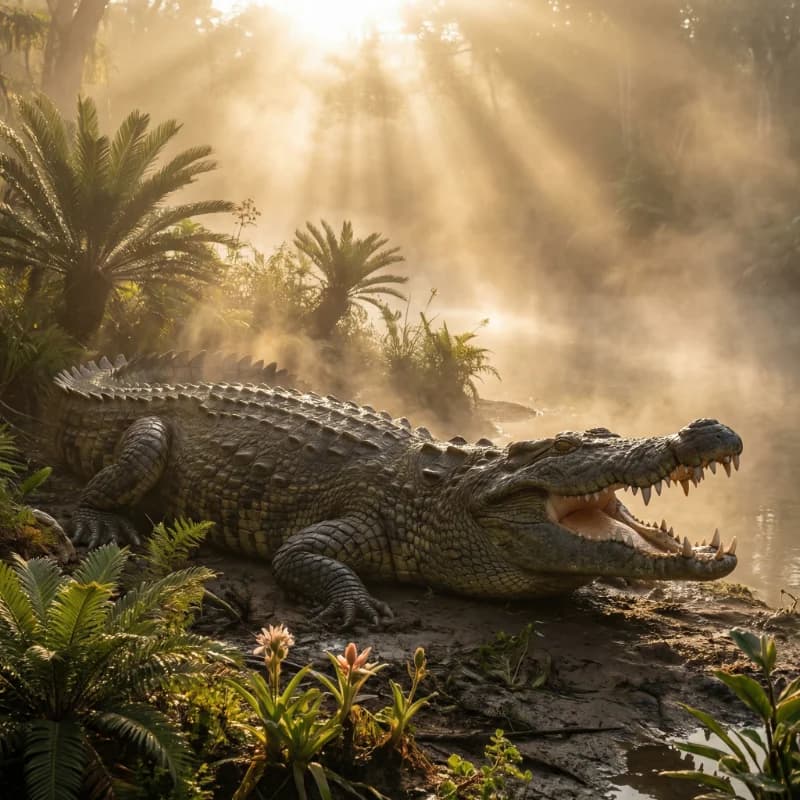
Deinosuchus
Deinosuchus
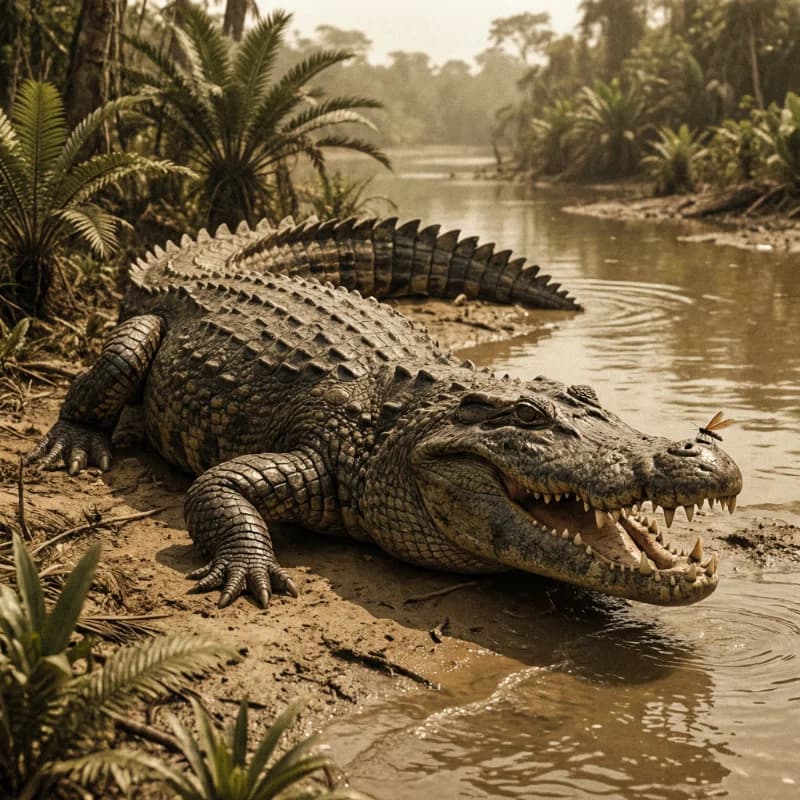
Purussaurus
Purussaurus
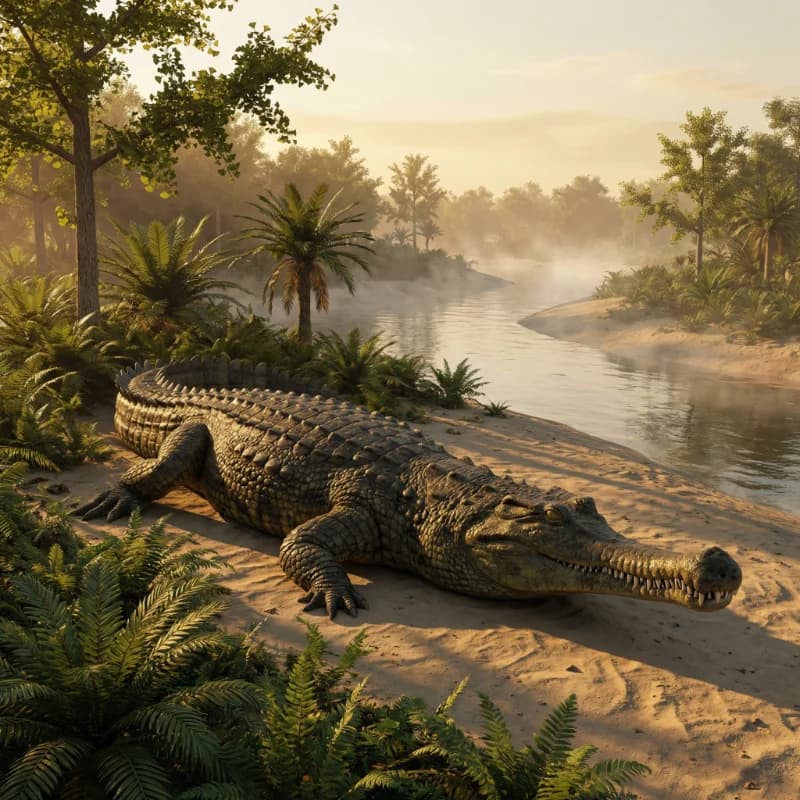
Sarcosuchus
Sarcosuchus imperator
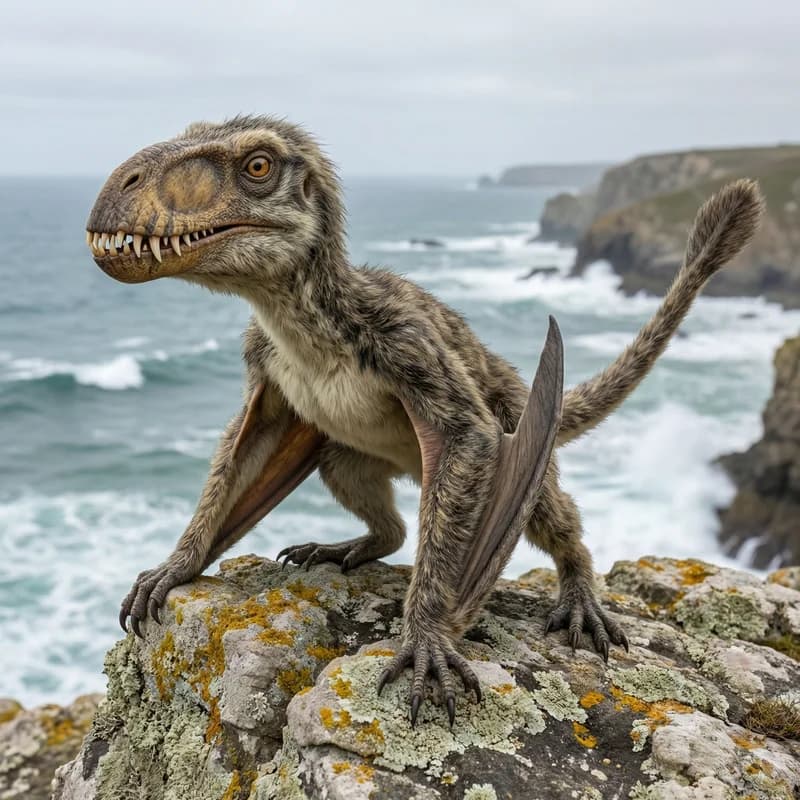
Dimorphodon
Dimorphodon macronyx
Ceratosaurus
Ceratosaurus nasicornis
Liopleurodon
Liopleurodon ferox