Liopleurodon
Jurassic Period Carnivore Creature Type
Liopleurodon ferox
Scientific Name: "Greek leios (smooth) + pleuron (side, rib) + odon (tooth) = 'smooth-sided tooth'; ferox: Latin for 'fierce' — referring to the large size of the teeth"
Local Name: Liopleurodon
Physical Characteristics
Discovery
Habitat
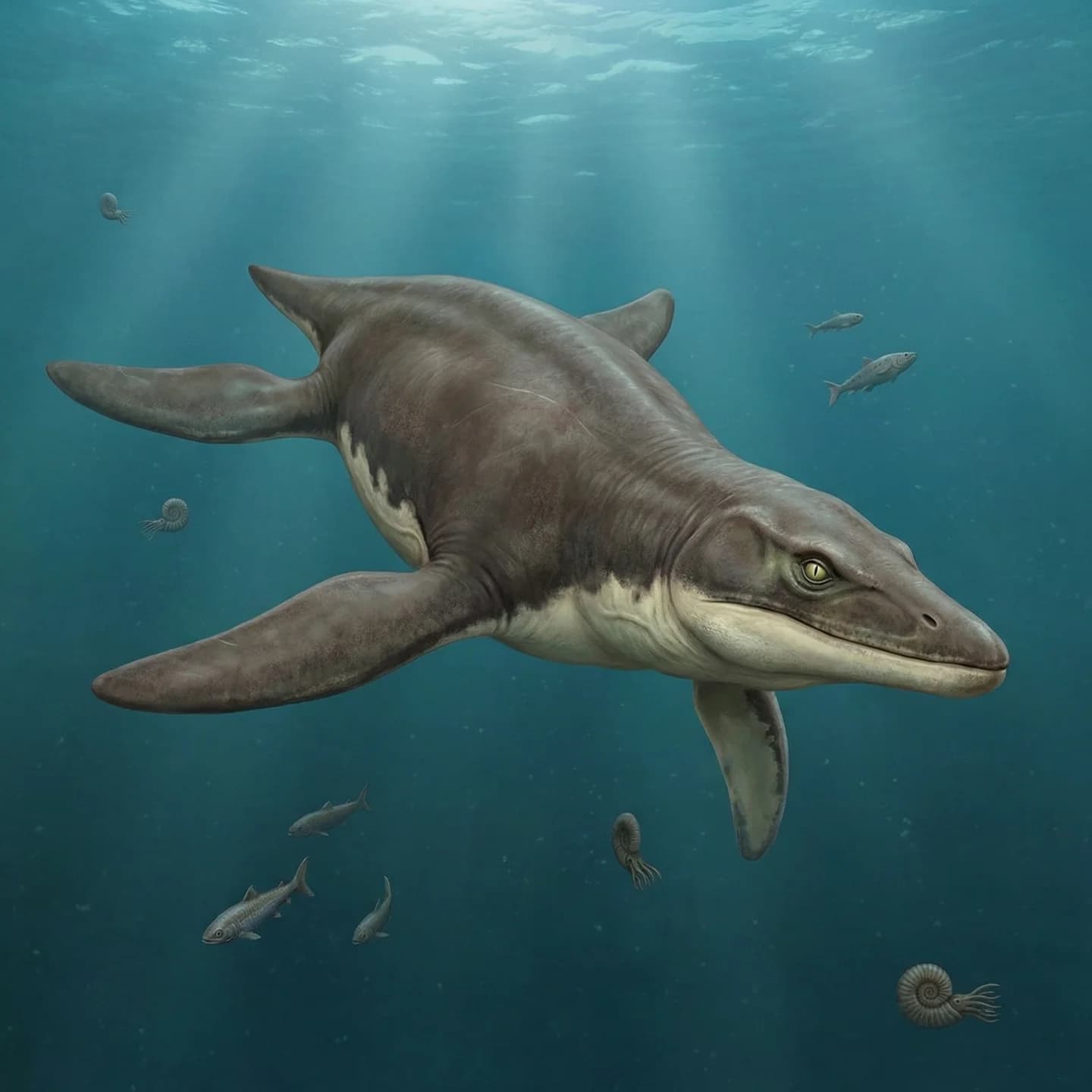
Liopleurodon ferox (Sauvage, 1873) is a large pliosaurid marine reptile from the family Pliosauridae that inhabited the shallow epicontinental seas of Europe from the Callovian stage of the Middle Jurassic to the Kimmeridgian stage of the Late Jurassic, approximately 166 to 155 million years ago. It is important to note that Liopleurodon is not a dinosaur but a marine reptile belonging to the order Plesiosauria (superorder Sauropterygia), an entirely separate evolutionary lineage from the dinosaurs. Among plesiosaurs, it represents the 'pliosauromorph' body plan characterised by a large head and short neck, in contrast to the small-headed, long-necked 'plesiosauromorph' forms.
The genus name Liopleurodon derives from the Greek λεῖος (leios, 'smooth'), πλευρά (pleurá, 'side'), and ὀδών (odṓn, 'tooth'), meaning 'smooth-sided tooth', in reference to the relatively smooth enamel surface on the lateral faces of the teeth. The specific epithet ferox is Latin for 'fierce', alluding to the large size of the teeth. The genus was erected in 1873 by the French palaeontologist Henri Émile Sauvage based on a single tooth crown (holotype BHN 3R 197) discovered at Le Wast, near Boulogne-sur-Mer in northern France.
Liopleurodon became widely known to the public through the 1999 BBC documentary series Walking with Dinosaurs, in which it was portrayed as a colossal apex predator reaching 25 m (82 ft) in length and weighing 150 tonnes. This depiction is now recognised as a gross exaggeration. Based on actual fossil evidence, typical adult body length ranged from 5 to 7 metres, with the largest known specimens estimated at approximately 8–10 metres. The vertebra from Peterborough that served as the basis for the exaggerated size was re-identified as belonging to a sauropod dinosaur in a 2019 study (Holwerda et al.). Nevertheless, Liopleurodon was one of the apex predators of the Callovian marine ecosystem, equipped with powerful jaws, large conical teeth, and four robust hydrofoil-shaped flippers, likely preying on fish, cephalopods, and other marine reptiles.
Overview
Name and Etymology
The genus name Liopleurodon combines three Greek roots: λεῖος (leios, 'smooth'), πλευρά (pleurá, 'side' or 'rib'), and ὀδών (odṓn, 'tooth'), translating literally to 'smooth-sided tooth' (Creisler, 2012). This refers to the relatively smooth enamel surface on the lateral faces of the teeth, which contrasts with the more ornamented dentition found in some related taxa. The specific name ferox is Latin for 'fierce' or 'savage', a reference to the large size of the holotype tooth. In his original 1873 description, Sauvage noted that the holotype tooth came from an animal that had reached "completely gigantic proportions".
Taxonomic Status
L. ferox is currently regarded as the only valid species of Liopleurodon by most authors (Noè, 2001). A second species, L. pachydeirus (Seeley, 1869), was distinguished on the basis of cervical vertebral morphology, but Noè (2001) argued that the reported dental differences represent individual variation and that cervical vertebrae alone are insufficient for species-level discrimination, treating it as a probable junior synonym of L. ferox. Madzia et al. (2022) noted, however, that further study is needed to confirm whether the supposed differences are indeed attributable to individual variation. A third species originally named by Sauvage (1873), L. grossouvrei, is currently considered to potentially represent a distinct pliosaurid genus in its own right (Foffa et al., 2018). Two species formerly assigned to Liopleurodon—L. macromerus and L. rossicus—have been reassigned to Pliosaurus (Knutsen, 2012).
Key Characteristic
Liopleurodon was an apex predator of the Callovian–Kimmeridgian European marine ecosystems, characterised by a massive skull (up to ~1.54 m in overall length in the largest known specimen), powerful jaws lined with large conical teeth, a streamlined body, and four large hydrofoil-shaped flippers adapted for ambush predation.
Stratigraphy, Age, and Depositional Environment
Temporal Range
The temporal range of Liopleurodon spans from the Middle Jurassic Callovian to the Late Jurassic Kimmeridgian, approximately 166–155 Ma. The majority of specimens are concentrated in the Callovian (~166–163 Ma), and some researchers (Benson et al., 2013) restrict Liopleurodon to the Middle Jurassic. However, pliosaurid material attributable to Liopleurodon from Kimmeridgian deposits of the Sabinal Formation in Oaxaca, Mexico (Barrientos-Lara et al., 2015) extends the stratigraphic range of the genus into the Late Jurassic.
Formations and Lithology
Fossils of Liopleurodon are known from several formations across Europe and one occurrence in Mexico:
| Formation | Country/Region | Age | Lithology |
|---|---|---|---|
| Oxford Clay Formation (Peterborough Member, etc.) | England (Peterborough, Fletton, Great Gransden, etc.) | Callovian–Oxfordian | Organic-rich mudstone, calcareous mudstone |
| Oxford Clay Formation (Le Wast) | France (Boulogne-sur-Mer) | Upper Callovian | Mudstone |
| Ornatenton Formation | Germany (Swabian Alb) | Callovian | Mudstone, marl, ferruginous argillaceous limestone |
| Sabinal Formation | Mexico (Oaxaca, Tlaxiaco) | Kimmeridgian | Shallow marine sediments |
| Callovian argillaceous limestones (Thouarsais) | France (western, Vienne) | Callovian | Argillaceous limestone with ferruginous ooids |
The holotype tooth (BHN 3R 197) comes from the Oxford Clay Formation at Le Wast, northern France, from the upper Callovian Quenstedtoceras lamberti Zone. The most abundant referred specimens were collected by Alfred and Charles Edward Leeds from the Oxford Clay Formation near Peterborough, England. The Peterborough Member of this formation is dominated by brownish-grey, fossiliferous, organic-rich mudstone. In Germany, the Ornatenton Formation consists primarily of mudstones and marls with iron oolite horizons.
Palaeoenvironment
The formations yielding Liopleurodon fossils represent shallow epicontinental (epeiric) sea environments during the Callovian. The Peterborough Member of the Oxford Clay Formation was deposited in a shallow sea with high biological productivity and oxygenated bottom waters (Macquaker, 1994). The Callovian strata at Thouarsais in western France are similarly interpreted as shallow waters open to the oceanic domain, supported by abundant pelagic fauna including ammonites (Gabilly & Cariou, 1974; Vincent et al., 2024). During the Callovian, these European localities were situated at approximately 16°N palaeolatitude, placing them within a warm subtropical to tropical climatic zone.
Specimens and Diagnostic Features
Holotype
The holotype of Liopleurodon ferox (BHN 3R 197) is a single isolated tooth crown measuring approximately 7.5 cm in length, discovered at Le Wast near Boulogne-sur-Mer in northern France. It is currently housed in the Lille Natural History Museum (Musée d'Histoire Naturelle de Lille). The diagnostic value of this single tooth has been questioned, and Madzia et al. (2022) recommended that a more complete neotype be designated to preserve the taxonomic stability of L. ferox.
Key Specimens
| Specimen | Composition | Locality/Formation | Notes |
|---|---|---|---|
| BHN 3R 197 (holotype) | Single tooth crown | Le Wast, France; Oxford Clay Fm., Upper Callovian | Sauvage, 1873 |
| NHMUK PV R3536 | Skull and postcranial elements | England; Oxford Clay Fm. | Largest known skull; condylobasal length ~1.26 m, overall length ~1.54 m |
| GPIT-PV-30093 (= GPIT 1754/2) | Partial skeleton (restored mount) | Fletton, England; Oxford Clay Fm. | University of Tubingen display; described by Linder, 1913 |
| CAMSM J.27424 | Skull | England; Oxford Clay Fm. | Estimated total body length ~6.39 m (Noe et al., 2003) |
| CAMSM J.46912 | 17 consecutive cervical vertebrae | Great Gransden, England; Oxford Clay Fm. | Holotype of L. pachydeirus (Seeley, 1869) |
| NHM R2680 | Partial postcranial | England; Oxford Clay Fm. | Basis for McHenry (2009) mass estimates |
| ComCom Thouarsais_Geol.0121 | Near-complete postcranial skeleton (45 vertebrae, partial girdles, partial limbs) | Saint-Laon, France; Callovian | ~3.2 m preserved length; described by Vincent et al., 2024 |
| PETCM R.296 | Partial juvenile specimen | England; Oxford Clay Fm. | Stomach contents preserved (cephalopod hooklets, fish bones, reptile tooth); at least 7 gastroliths; Martill, 1992 |
Diagnostic Features
Based on the diagnoses of Andrews (1913), Tarlo (1960), and the cranial diagnostic characters of Noè (2001), Liopleurodon is diagnosed by the following postcranial features: short cervical centra (length less than half width or height); cervical centra with a ventral lip but lacking a ventral keel; and two cervical rib facets per vertebra. Because the holotype consists of a single tooth, these diagnostic features are based primarily on referred specimens.
Morphology and Function
Body Plan and Size
Liopleurodon exhibits the typical 'pliosauromorph' body plan: a large head, short neck, robust streamlined trunk, four large flippers, and a short tail. The skull-to-body-length ratio is estimated at approximately 1:5 (Noè et al., 2003), correcting the earlier 1:7 ratio proposed by Tarlo (1960).
Size estimates vary depending on the specimen and methodology employed. The typical adult range is 5–7 metres, with the largest known specimen (NHMUK PV R3536) estimated at approximately 8 metres (Zhao, 2024). Some researchers suggest that individuals exceeding 10 metres may have existed (Tarlo, 1960; Bardet et al., 2023). Body mass estimates range from approximately 1–1.7 tonnes for individuals measuring 4.8–5.7 m (McHenry, 2009) to approximately 7.8 tonnes for the largest specimen (Zhao, 2024).
| Study | Reference Specimen | Estimated Length | Estimated Mass | Method |
|---|---|---|---|---|
| Tarlo, 1960 | NHMUK PV R3536 skull | ~10 m+ | - | Skull:body = 1:7 ratio (later revised) |
| Noe et al., 2003 | CAMSM J.27424 skull | ~6.39 m | - | Skull:body = ~1:5 ratio |
| McHenry, 2009 | NHM R2680 | ~4.8–5.7 m | ~1–1.7 t | Volumetric modelling |
| Zhao, 2024 (bioRxiv) | NHMUK PV R3536 | ~8 m | ~7.8 t | Volume-based reconstruction |
Skull and Dentition
The largest known skull specimen (NHMUK PV R3536) has a condylobasal length of approximately 1.26 metres and an overall length of approximately 1.54 metres. The teeth of Liopleurodon are large and conical, with the holotype tooth crown alone measuring 7.5 cm in length. The lateral surfaces of the teeth are relatively smooth, consistent with the etymological meaning of the genus name. According to a study of plesiosaur cranial anatomy (Carpenter, 1997), Liopleurodon could likely scan the water with its nostrils to detect the directional source of chemical signals, aiding in prey location.
Flippers and Locomotion
All four flippers were large and robust, serving as the primary means of aquatic propulsion. The humerus curves dorsodistally and exhibits a prominent postaxial expansion at the distal end (Vincent et al., 2024). A study using a swimming robot (Long et al., 2006) demonstrated that the four-flipper mode of propulsion characteristic of plesiosaurs, while not especially energy-efficient, provides excellent acceleration—a trait highly advantageous for an ambush predator.
Diet and Ecology
Stomach Contents Evidence
The most direct evidence for the diet of Liopleurodon comes from the juvenile specimen PETCM R.296 (Martill, 1992). This specimen preserved stomach contents including teuthoid cephalopod hooklets, fish bones, and a single reptilian tooth. Martill (1992) proposed three possible interpretations: (1) Liopleurodon primarily fed on abundant cephalopods (squids), though this would require an ambush strategy given that plesiosaur swimming speeds were probably much slower than those of squid; (2) it was an opportunistic feeder, with the cephalopod hooklets representing acid-resistant residue from a varied diet—the absence of otoliths suggests fish may not have been a major dietary component; (3) the hooklets were secondary stomach contents, derived from prey that had themselves consumed cephalopods. The evidence does not definitively favour any single interpretation.
Gastroliths
At least seven gastroliths were found in the stomach region of PETCM R.296. Given the well-preserved condition of the cephalopod hooklets, these stones are unlikely to have been used for grinding food. They may have been accidentally ingested, or they could represent acid-resistant residue from carbite-cemented sandstone, or possibly served a role in buoyancy regulation (Martill, 1992).
Ambush Predation Strategy
The combination of the powerful acceleration provided by the four-flipper propulsion system and the massive skull with robust jaws strongly suggests that Liopleurodon was an ambush predator (Long et al., 2006). It likely lurked in the water column before making explosive short-range attacks on unsuspecting prey.
Distribution and Palaeogeography
Geographic Distribution
Fossils of Liopleurodon are predominantly known from Europe. Confirmed records exist from England (Peterborough, Fletton, Great Gransden, Rushden, and other Oxford Clay localities), France (Le Wast, Villers-sur-Mer, Calvados, Saint-Laon), Germany (Swabian Alb), and Switzerland, with uncertain reports from Poland and Russia (Noè, 2001; Vincent et al., 2024). The only non-European record is a partial snout from the Kimmeridgian Sabinal Formation near Tlaxiaco, Oaxaca, Mexico (Barrientos-Lara et al., 2015), which suggests that Liopleurodon or closely related pliosaurids may have crossed the Tethys Sea to reach the Americas during the Late Jurassic.
Palaeogeographic Context
During the Callovian, the European localities where Liopleurodon is found were situated at much lower latitudes than today, at approximately 16°N palaeolatitude, within a warm subtropical to tropical climatic belt. These areas were covered by the shallow epicontinental seas of the western Tethys, characterised by warm waters and high biological productivity.
Phylogeny and Taxonomic Debates
Phylogenetic Position
Liopleurodon is classified within Plesiosauria > Pliosauroidea > Pliosauridae > Thalassophonea. Thalassophonea is a clade named by Benson & Druckenmiller (2014) that encompasses the macropredatory, large-headed, short-necked pliosaurids ranging from the Middle Jurassic (Callovian) to the early Late Cretaceous.
In the cladistic analysis of Ketchum & Benson (2022), Liopleurodon ferox occupies an intermediate position within Thalassophonea. It forms a sister-group relationship with a clade containing more basal taxa such as Marmornectes, Peloneustes, Eardasaurus, "Pliosaurus" andrewsi, and Simolestes, while being more basally positioned than the Late Jurassic Pliosaurus species and Brachaucheninae. This topology was broadly confirmed by the analysis of Vincent et al. (2024).
Key Taxonomic Issues
Several taxonomic issues remain concerning Liopleurodon. First, the holotype consists of a single tooth with questionable diagnostic features, prompting the recommendation for designation of a neotype (Madzia et al., 2022). Second, the validity of L. pachydeirus as a distinct species remains debated; Noè (2001) treated it as a junior synonym of L. ferox, but further confirmation is needed. Third, multiple species formerly assigned to Liopleurodon (L. macromerus, L. rossicus) have been reassigned to Pliosaurus (Knutsen, 2012), meaning the genus effectively contains only a single valid species (L. ferox) under the prevailing consensus.
Reconstruction and Uncertainty
Confirmed, Probable, and Hypothetical
Confirmed: Liopleurodon is a pliosaurid marine reptile that lived primarily during the Callovian–Kimmeridgian in the shallow seas of Europe. It possessed a pliosauromorph body plan with four large flippers, a short neck, and a proportionally large head.
Probable: Typical adult body length was 5–7 m, with the largest individuals reaching approximately 8–10 m. It likely employed an ambush predation strategy, feeding on cephalopods, fish, and other marine reptiles.
Hypothetical/Uncertain: The maximum body mass estimate of ~7.8 tonnes (Zhao, 2024) is based on a bioRxiv preprint and has not yet undergone peer review. Social behaviour, reproductive ecology, and colouration are completely unknown and cannot be reconstructed from available fossil evidence. Estimates exceeding 10 m rely on indirect proportional extrapolations and lack direct fossil support.
Popular Media vs Scientific Consensus
The depiction of Liopleurodon in the BBC series Walking with Dinosaurs (1999) as a 25-metre, 150-tonne super-predator has no scientific basis. The Peterborough vertebra that underpinned this size estimate was re-identified as belonging to a sauropod dinosaur by Holwerda et al. (2019). In reality, Liopleurodon was a marine predator roughly comparable in size to a modern great white shark or orca—formidable for its ecosystem, but far from the whale-sized leviathan of popular imagination.
Contemporaneous Fauna Comparison
Liopleurodon shared the Oxford Clay marine ecosystem with a diverse assemblage of marine vertebrates. A comparison of key contemporaneous taxa is presented below:
| Taxon | Type | Estimated Size | Ecological Role |
|---|---|---|---|
| Liopleurodon ferox | Pliosauridae | 5–8 m | Apex predator (ambush) |
| Simolestes vorax | Pliosauridae | ~3–4 m | Mid-sized marine predator |
| Peloneustes philarchus | Pliosauridae | ~3–4 m | Mid-sized marine predator |
| Cryptoclidus eurymerus | Cryptoclididae | ~4–5 m | Small prey specialist (fish/cephalopods) |
| Ophthalmosaurus icenicus | Ophthalmosauridae | ~4–6 m | Cephalopod specialist (ichthyosaur) |
| Metriorhynchus spp. | Metriorhynchidae | ~3 m | Small-to-mid marine predator (marine crocodylomorph) |
| Leedsichthys problematicus | Pachycormidae | 10 m+ | Giant filter-feeding fish |
This comparison shows that while Liopleurodon was among the largest predators in its ecosystem, the Callovian seas supported a rich diversity of marine reptiles, fish, and invertebrates occupying various trophic levels.
Fun Facts
FAQ
📚References
- Sauvage, H. E. (1873). Notes sur les reptiles fossiles. Bulletin de la Société Géologique de France, Series 3, 1: 365–385.
- Tarlo, L. B. (1960). A review of the Upper Jurassic pliosaurs. Bulletin of the British Museum (Natural History), 4(5): 145–189.
- Noè, L. F. (2001). A taxonomic and functional study of the Callovian (Middle Jurassic) Pliosauroidea (Reptilia, Sauropterygia). PhD thesis, University of Derby.
- Noè, L. F., Liston, J. & Evans, M. (2003). The first relatively complete exoccipital-opisthotic from the braincase of the Callovian pliosaur, Liopleurodon. Geological Magazine, 140(4): 479–486. doi:10.1017/S0016756803007829
- Andrews, C. W. (1913). A descriptive catalogue of the marine reptiles of the Oxford Clay. Vol. 2. London: British Museum.
- Martill, D. M. (1992). Pliosaur stomach contents from the Oxford Clay. Mercian Geologist, 13(1): 37–42.
- McHenry, C. R. (2009). Devourer of Gods: The palaeoecology of the Cretaceous pliosaur Kronosaurus queenslandicus. PhD thesis, University of Newcastle. hdl:1959.13/935911
- Knutsen, E. M. (2012). A taxonomic revision of the genus Pliosaurus (Owen, 1841a) Owen, 1841b. Norwegian Journal of Geology, 92: 259–276.
- Benson, R. B. J., Evans, M., Smith, A. S., Sassoon, J., Moore-Faye, S., Ketchum, H. F. & Forrest, R. (2013). A giant pliosaurid skull from the Late Jurassic of England. PLOS ONE, 8(5): e65989. doi:10.1371/journal.pone.0065989
- Barrientos-Lara, J. I., Fernández, M. S. & Alvarado-Ortega, J. (2015). Kimmeridgian pliosaurids (Sauropterygia, Plesiosauria) from Tlaxiaco, Oaxaca, southern Mexico. Revista Mexicana de Ciencias Geológicas, 32(2): 293–304.
- Madzia, D., Sachs, S. & Klug, C. (2022). Historical significance and taxonomic status of Ischyrodon meriani (Pliosauridae) from the Middle Jurassic of Switzerland. PeerJ, 10: e13244. doi:10.7717/peerj.13244
- Ketchum, H. F. & Benson, R. B. J. (2022). A new pliosaurid from the Oxford Clay Formation of Oxfordshire, UK. Acta Palaeontologica Polonica, 67. doi:10.4202/app.00887.2021
- Vincent, P., Poncet, D., Rard, A., Robin, J.-P. & Allemand, R. (2024). New remains of Liopleurodon (Reptilia, Plesiosauria) from the Middle Jurassic of western France and paedomorphosis within pliosaurids. Palaeontologia Electronica, 27(2): a34. doi:10.26879/1280
- Foffa, D., Young, M. T. & Brusatte, S. L. (2018). Filling the Corallian gap: New information on Late Jurassic marine reptile faunas from England. Acta Palaeontologica Polonica, 63(2): 287–313. doi:10.4202/app.00455.2018
- Long Jr, J. H., Schumacher, J., Livingston, N. & Kemp, M. (2006). Four flippers or two? Tetrapodal swimming with an aquatic robot. Bioinspiration & Biomimetics, 1(1): 20–29. doi:10.1088/1748-3182/1/1/003
- Holwerda, F. M., Evans, M. & Liston, J. J. (2019). Additional sauropod dinosaur material from the Callovian Oxford Clay Formation, Peterborough, UK: evidence for higher sauropod diversity. PeerJ, 7: e6404. doi:10.7717/peerj.6404
- Benson, R. B. J. & Druckenmiller, P. S. (2014). Faunal turnover of marine tetrapods during the Jurassic–Cretaceous transition. Biological Reviews, 89(1): 1–23. doi:10.1111/brv.12038
- Zhao, R. J. (2024). Body reconstruction and size estimation of plesiosaurs. bioRxiv 10.1101/2024.02.15.578844.
- Bardet, N., Houssaye, A., Jouve, S. & Vincent, P. (2023). Ocean Life in the Time of Dinosaurs. Princeton University Press. ISBN 978-0-691-24394-8.
- Creisler, B. (2012). Ben Creisler's Plesiosaur Pronunciation Guide. Oceans of Kansas.
- Carpenter, K. (1997). Comparative cranial anatomy of two North American plesiosaurs. In Callaway, J. M. & Nicholls, E. L. (eds.), Ancient Marine Reptiles. San Diego: Academic Press, pp. 191–216.
Gallery
5 images Liopleurodon
Liopleurodon · Jurassic Period · Carnivore
 Liopleurodon
Liopleurodon · Jurassic Period · Carnivore
 Liopleurodon
Liopleurodon · Jurassic Period · Carnivore
 Liopleurodon
Liopleurodon · Jurassic Period · Carnivore
 Liopleurodon
Liopleurodon · Jurassic Period · Carnivore
🔗Related Creatures
Temnodontosaurus
Temnodontosaurus
Thalattoarchon
Thalattoarchon saurophagis
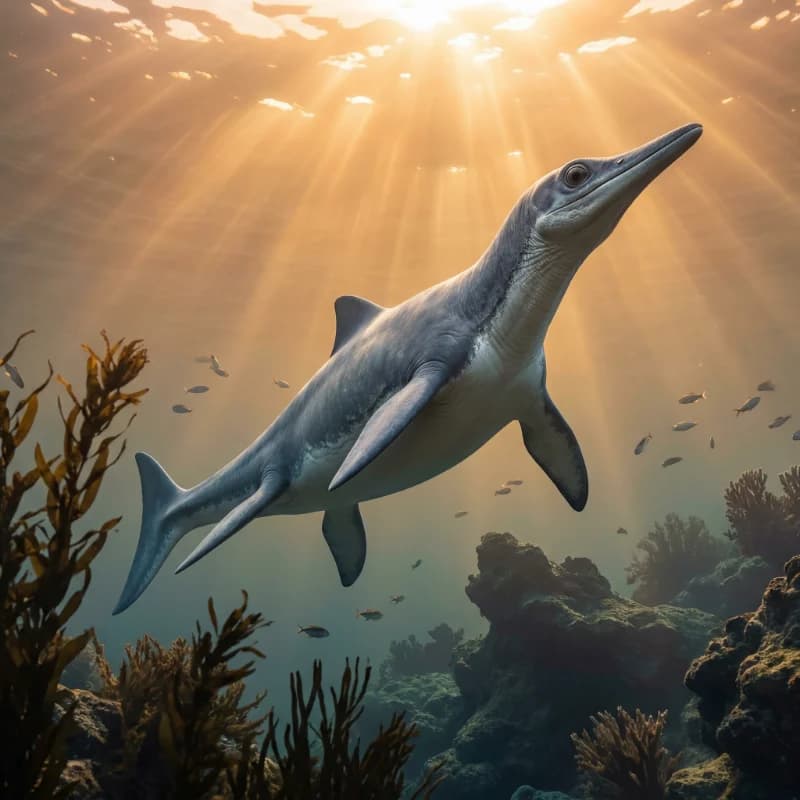
Ophthalmosaurus
Ophthalmosaurus icenicus
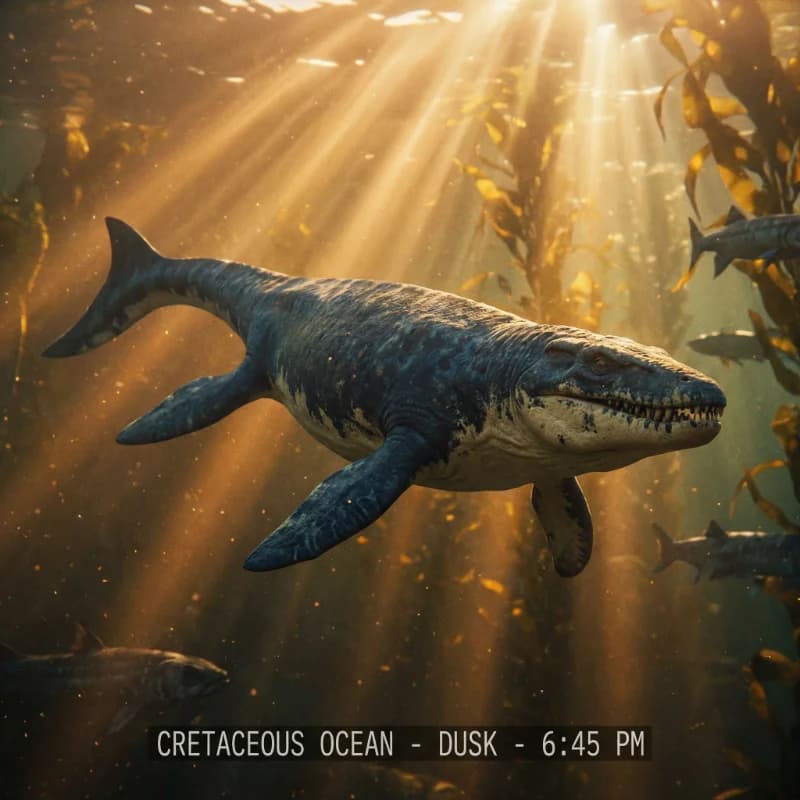
Prognathodon
Prognathodon
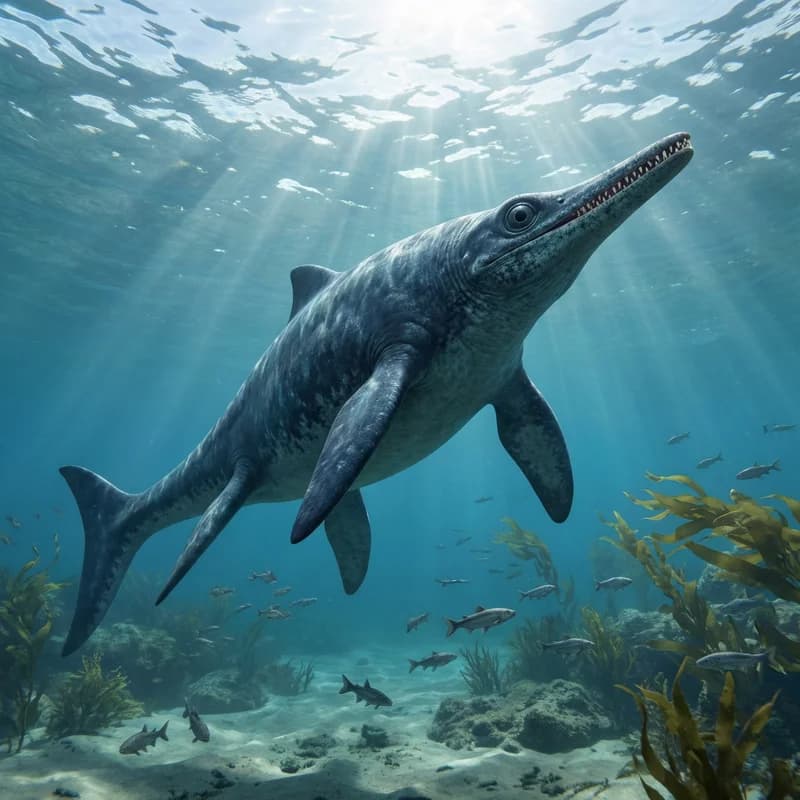
Ichthyosaurus
Ichthyosaurus communis
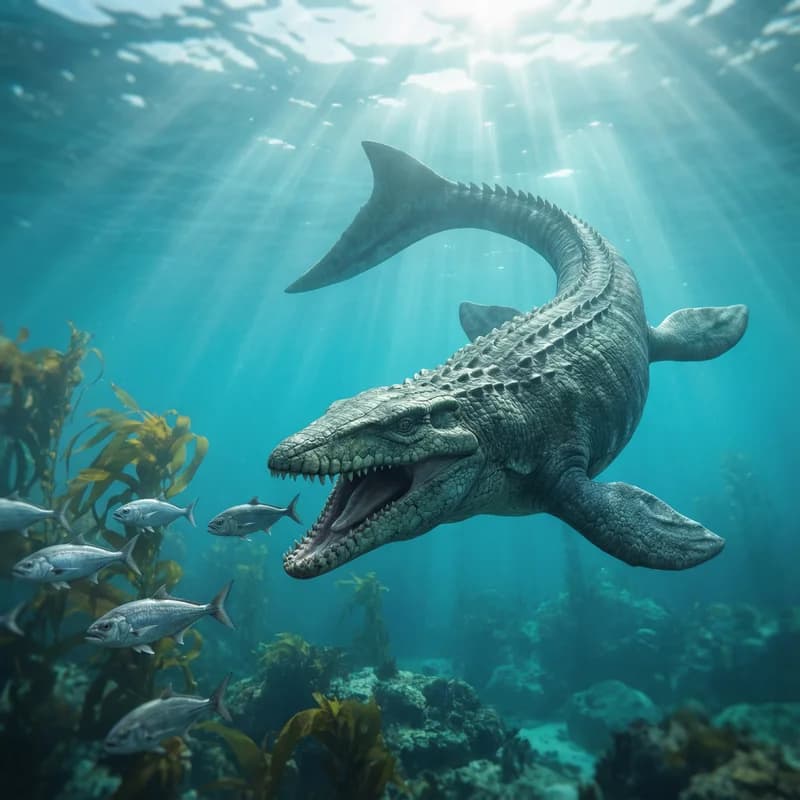
Mosasaurus
Mosasaurus hoffmannii
Tylosaurus
Tylosaurus proriger
Shonisaurus
Shonisaurus popularis