Mosasaurus
Cretaceous Period Carnivore Creature Type
Mosasaurus hoffmannii
Scientific Name: "Mosa (Meuse River, Latin) + sauros (lizard, Ancient Greek) = 'Lizard of the Meuse River'; hoffmannii honors Johann Leonhard Hoffmann (1710–1782), the army surgeon who brought the fossil to scientific attention"
Local Name: Mosasaurus
Physical Characteristics
Discovery
Habitat

Mosasaurus hoffmannii Mantell, 1829 is a giant marine reptile from the Late Cretaceous (Campanian–Maastrichtian, approximately 82–66 Ma) that inhabited oceans worldwide. It is the type genus of the Mosasauridae and belongs to the order Squamata, making it a relative of modern monitor lizards and snakes rather than a dinosaur. It is also phylogenetically distinct from ichthyosaurs and plesiosaurs. The genus name Mosasaurus derives from the Latin Mosa (the Meuse River) and the Ancient Greek sauros (lizard), meaning "lizard of the Meuse River," coined by William Daniel Conybeare in James Parkinson's 1822 publication. The specific epithet hoffmannii was added by Gideon Mantell in 1829 in honor of Johann Leonhard Hoffmann (1710–1782), a Maastricht-based army surgeon and naturalist who brought attention to the second skull discovered around 1780.
M. hoffmannii is the largest species within the genus Mosasaurus. Traditional estimates placed its maximum body length at approximately 17 m (Russell, 1967; Grigoriev, 2014), but more recent analyses suggest this figure was likely overestimated, with 11–13 m being a more realistic range for typical adults and 14 m or more for exceptionally large individuals (Fanti et al., 2014; Cleary et al., 2018; Rempert et al., 2022). Its skull was robust and elongated, equipped with dozens of large cutting teeth, pterygoid teeth on the palate, and an intramandibular joint that allowed the lower jaw to flex—adaptations enabling it to process large prey efficiently. All four limbs were modified into paddle-shaped flippers, and its tail terminated in a downward-deflected, bilobed hypocercal fluke optimized for aquatic propulsion.
The first fossils of Mosasaurus were discovered in 1764 in a chalk quarry near Maastricht, the Netherlands, making it one of the first Mesozoic marine reptiles known to science. Georges Cuvier's 1808 identification of the specimen as a giant marine lizard unlike any living animal was revolutionary, providing critical evidence for the concept of extinction—a radical idea at the time. Mosasaurus is thus one of the most historically significant fossil animals in the history of paleontology, having contributed to the scientific revolution and the development of evolutionary theory.
Overview
Name and Etymology
The genus name Mosasaurus combines the Latin Mosa, the name of the Meuse River (Dutch: Maas), with the Ancient Greek σαῦρος (sauros, "lizard"). It refers to the chalk quarries along the Meuse River near Maastricht, the Netherlands, where the first fossils were discovered. This name was formally introduced by William Daniel Conybeare in James Parkinson's 1822 work An Introduction to the Study of Fossil Organic Remains (Conybeare in Parkinson, 1822). The specific epithet hoffmannii was established by Gideon Mantell in 1829, honoring Johann Leonhard Hoffmann (1710–1782), a Swiss-born army surgeon based in Maastricht who recognized the significance of the second skull specimen discovered around 1780 and brought it to the attention of the prominent biologist Petrus Camper (Mantell, 1829).
Regarding orthography, the specific epithet has appeared variously as hoffmannii, hoffmanni, and hoffmani in the literature. A 2024 nomenclatural review by Jagt et al. in the Netherlands Journal of Geosciences confirmed the correct spelling as hoffmannii (double n, double i) (Jagt et al., 2024).
Taxonomic Status
Mosasaurus currently includes at least five valid species: M. hoffmannii Mantell, 1829 (type species), M. missouriensis Harlan, 1834, M. conodon Cope, 1881, M. lemonnieri Dollo, 1889, and M. beaugei Arambourg, 1952. An additional four species (M. mokoroa, M. hobetsuensis, M. flemingi, and M. prismaticus) remain nominally assigned to the genus but require reassessment (Street & Caldwell, 2017). In the past, more than fifty species were attributed to Mosasaurus, but taxonomic confusion stemmed from an unclear diagnosis of the type species. This issue was substantially resolved by Hallie Street and Michael Caldwell's 2017 rediagnosis and redescription of the holotype (MNHN AC 9648), providing the first proper diagnosis and description of M. hoffmannii (Street & Caldwell, 2017).
Key Summary
Mosasaurus was a giant marine squamate reptile that reigned as the apex predator of Late Cretaceous oceans, and whose discovery helped establish the concept of extinction in the history of science.
Stratigraphy, Age, and Depositional Environment
Temporal Range
The temporal range of the genus Mosasaurus spans the Campanian to Maastrichtian stages of the Late Cretaceous, approximately 82.7 to 66.0 Ma (Gallagher, 1984, 2005; Obasi et al., 2011). M. hoffmannii itself is concentrated primarily in the Maastrichtian (approximately 72–66 Ma), although Late Campanian specimens have also been reported (e.g., the Merchantville Formation of Delaware, USA; Baird & Galton, 1981).
Formations and Lithology
The holotype (MNHN AC 9648) originates from the Maastricht Formation in the area south of Maastricht, the Netherlands. This formation belongs to the upper Chalk Group and consists of bioclastic calcarenites and calcirudites. The principal formations and lithologies yielding M. hoffmannii specimens worldwide include:
| Formation | Region | Age | Primary Lithology |
|---|---|---|---|
| Maastricht Fm. | Netherlands / Belgium | Maastrichtian | Chalky limestone |
| Fox Hills Fm. | South Dakota, USA | Maastrichtian | Sandstone, mudstone |
| Ripley Fm. | Alabama / Tennessee, USA | Campanian–Maastrichtian | Sandy marl |
| Navesink Fm. | New Jersey, USA | Maastrichtian | Glauconitic sandstone |
| Oulad Abdoun Basin (Couche III) | Morocco | Maastrichtian | Phosphorite |
| Muwaqqar Chalk Marl Fm. | Jordan | Maastrichtian | Chalky marl |
| Penza deposits | Russia | Maastrichtian | Calcareous sediments |
Paleoenvironment
The depositional environments from which M. hoffmannii specimens have been recovered range from shallow marine (shallow carbonate platforms) to open oceanic settings. The Maastricht Formation represents a warm, shallow marine carbonate platform. The Moroccan phosphate deposits were laid down in a warm, shallow marine environment along the southern margin of the Mediterranean Tethys (Bardet et al., 2015; Rempert et al., 2022). The Fox Hills Formation in South Dakota reflects regressive marine conditions within the Western Interior Seaway. The Late Cretaceous was among the warmest intervals in Earth history, with elevated sea levels and extensive epicontinental seas that provided ideal habitats for large marine reptiles.
Specimens and Diagnostic Characters
Holotype
The holotype of M. hoffmannii is MNHN AC 9648, housed at the Muséum national d'Histoire naturelle in Paris, France. This specimen is a partial skull discovered around 1780 in a chalk quarry near Maastricht, the Netherlands, and was famously nicknamed the "great animal of Maastricht." Following the French capture of Maastricht during the French Revolutionary Wars in 1794, the fossil was seized and transported to Paris in 1795. The first known specimen, TM 7424, a skull fragment discovered in 1764, is held at the Teylers Museum in Haarlem, the Netherlands, and was initially misidentified as a whale.
Diagnosis (per Street & Caldwell, 2017)
Key autapomorphies distinguishing M. hoffmannii from congeners as rediagnosed by Street & Caldwell (2017) include: an anteroventral corner formed on the tympanic rim of the quadrate; marginal tooth crowns with a U-shaped cross-section; two to three prismatic facets (prism faces) on the labial surface and five or more indistinct facets on the lingual surface of the enamel; and minutely crenulated anterior and posterior carinae on the tooth crowns. These enamel ornamentation features distinguish the type species from other Mosasaurus species (e.g., M. beaugei with more numerous and distinct prism faces, M. lemonnieri with more slender crowns).
Limitations of the Fossil Record
Knowledge of the postcranial skeleton of M. hoffmannii remains incomplete, as the species is known primarily from skulls and isolated postcranial elements (Street, 2016). No complete articulated skeleton has been described. This limitation introduces significant uncertainty into body length and mass estimates. In contrast, congeners M. lemonnieri and M. missouriensis are known from more complete skeletal material and serve as important references for reconstructing the overall body plan of the genus.
Morphology and Functional Biology
Body Size
M. hoffmannii is the largest species in the genus Mosasaurus and among the largest mosasaurs known. Body size estimation remains contentious, as it depends critically on the ratio used to extrapolate total length from skull or jaw length.
Russell (1967) proposed that the mandible length equals approximately one-tenth of the total body length, although no explicit justification for this ratio was provided. Using the largest known mandible attributed to M. hoffmannii—the Penza specimen (CCMGE 10/2469, mandible length approximately 171 cm)—Grigoriev (2014) applied this ratio to estimate a maximum length of approximately 17.1 m. Lingham-Soliar (1995) similarly estimated a maximum of 17.6 m using the same ratio with a smaller partial mandible (NHMM 009002). However, Fanti et al. (2014) argued that total body length in mosasaurines was more likely approximately seven times the skull length, based on a near-complete skeleton of the related species Prognathodon overtoni. Under this ratio, an individual with a skull exceeding 145 cm would have been approximately 11 m or more in total length, with a body mass of approximately 10 metric tons. Cleary et al. (2018) concurred that the 1:10 ratio was probably overestimated. Paul (2022) offered a maximum estimate of 12 m and 4.5 metric tons. Rempert et al. (2022) cited a total body length of approximately 14 m. Currently, the prevailing view in the literature places typical adult M. hoffmannii at approximately 12–13 m, with exceptionally large individuals potentially reaching 14 m or more. The traditional 17 m figure is likely overestimated but cannot be entirely ruled out given certain isolated oversized elements (e.g., the quadrate NHMM 003892, reported by Everhart et al., 2016, to be 150% larger than average).
Body mass estimates vary widely. The Penza specimen has been estimated at approximately 13.9 metric tons using volumetric methods, while Paul (2022) estimated 4.5 metric tons for a 12 m individual. The discrepancy reflects different estimation methodologies and body proportions assumed.
| Study | Reference specimen / Method | Estimated length | Notes |
|---|---|---|---|
| Russell (1967) | Mandible = 10% of body length | Max ~17 m | No explicit justification for ratio |
| Lingham-Soliar (1995) | NHMM 009002 + 1:10 ratio | Max ~17.6 m | Mandible 90 cm, restored to 160 cm |
| Grigoriev (2014) | CCMGE 10/2469 (Penza) + 1:10 | Max ~17.1 m | Largest known mandible |
| Fanti et al. (2014) | Prognathodon overtoni skeleton ratio (1:7) | 11+ m | ~10 t mass estimate included |
| Cleary et al. (2018) | Ratio reassessment | 1:10 ratio overestimated | No specific figure given |
| Paul (2022) | Princeton Field Guide volumetric | Max ~12 m | ~4.5 t mass estimate |
| Rempert et al. (2022) | Literature synthesis | ~14 m | Morocco occurrence report |
Skull and Dentition
The skull of M. hoffmannii was long, robust, and equipped with powerful jaw musculature. The marginal dentition consisted of approximately 2 premaxillary teeth, 14–16 maxillary teeth, and about 14 dentary teeth. In addition to these marginal teeth, pterygoid teeth were present on the pterygoid bones of the palate, functioning to prevent prey from escaping the oral cavity. This pterygoid tooth system is homologous to that of modern snakes and reflects the phylogenetic affinity within Squamata.
The mandible possessed an intramandibular joint approximately halfway along its length, which allowed the lower jaw to flex laterally, and the skull exhibited cranial kinesis—both features facilitating the ingestion of large prey items whole. This system is convergently similar to the jaw mechanics of modern snakes.
The marginal tooth crowns are slightly recurved with crenulated anterior and posterior carinae suited for cutting. The presence of 2–3 prism faces on the labial surface is a key diagnostic feature of M. hoffmannii (Street & Caldwell, 2017).
Limbs and Tail
All four limbs of Mosasaurus were modified into paddle-shaped flippers. The phalanges are broad, flat, and show no evidence of muscle or tendon attachment, rendering terrestrial locomotion impossible (Schlegel, 1854). This was first demonstrated by Hermann Schlegel in 1854, though his findings were initially ignored by contemporary scientists and only widely accepted in the 1870s after Marsh and Cope discovered more complete mosasaur remains in North America.
The tail was elongated and terminated in a downward deflection (downturn) supporting a bilobed hypocercal tail fluke. Lindgren et al. (2013) reported direct evidence of preserved soft tissue in a mosasaur tail fin from the Maastrichtian of Jordan, confirming that derived mosasaurs possessed a convergently evolved tail propulsion system similar to those of ichthyosaurs and sharks (Lindgren et al., 2010, 2013).
Integument and Coloration
Mosasaur skin was covered in small, diamond-shaped keeled scales. Lindgren et al. (2011) described three-dimensionally preserved integument from Ectenosaurus clidastoides showing these scale structures in detail, a condition generalizable across derived mosasaurids.
Regarding coloration, Lindgren et al. (2014) conducted chemical analyses of fossilized skin from an approximately 85-million-year-old mosasaur specimen, revealing elevated concentrations of melanin-derived compounds on the dorsal surface. This evidence supports a countershading pattern—dark dorsal coloration and lighter ventral coloration—convergent with modern sharks, dolphins, and leatherback sea turtles.
Diet and Ecology
Feeding
M. hoffmannii was an apex predator in Late Cretaceous marine ecosystems. Evidence from tooth morphology, bite marks on other fossils, and preserved stomach contents of mosasaurs collectively indicates that Mosasaurus fed on virtually any available animal prey. Documented prey items include bony fish, sharks, cephalopods (including ammonites), seabirds, sea turtles, and other mosasaurs (Lingham-Soliar, 1995; Massare, 1987). The cutting-type teeth of M. hoffmannii, with their prismatic enamel facets and crenulated carinae, were well-suited for processing large prey. Pentagonal puncture marks consistent with M. hoffmannii dentition have been identified on ammonite shells, providing direct evidence of predation.
Ecological Role
Mosasaurus is inferred to have preferentially hunted in open water near the surface. Ecologically, the arrival of Mosasaurus in certain regions—such as the Western Interior Seaway of North America—coincides with a complete turnover of faunal assemblages and diversity, suggesting that this genus had a profound structuring influence on marine ecosystems.
M. hoffmannii coexisted with other large predatory mosasaurs including Prognathodon and Tylosaurus, which preyed on similar food sources. Coexistence was likely facilitated through niche partitioning. Nevertheless, intergeneric conflict is documented: a Tylosaurus attacking a Mosasaurus has been recorded in the fossil record. Multiple fossils also document deliberate intraspecific aggression (attacks between members of the same species), suggesting that Mosasaurus engaged in combat potentially resembling the snout grappling observed in modern crocodilians.
Thermoregulation
Harrell et al. (2016), published in Palaeontology, presented stable oxygen isotope evidence that mosasaurs maintained body temperatures consistently higher than ambient seawater temperatures, indicative of endothermy (warm-bloodedness). This is a unique adaptation among squamates (the order including lizards and snakes), as no living squamate is known to be endothermic. This metabolic strategy is considered a key factor enabling mosasaurs to inhabit oceanic environments ranging from tropical to subpolar latitudes.
Reproduction
No direct fossil evidence of viviparity has been documented for Mosasaurus itself. However, Caldwell & Lee (2001) reported viviparity (live birth) in a related mosasauroid, and Field et al. (2015) described neonatal mosasaur fossils from pelagic open-ocean deposits, strongly suggesting that mosasaurs gave birth to live young at sea rather than laying eggs on land. Given its fully aquatic adaptations, M. hoffmannii was almost certainly viviparous, though this remains an inference based on closely related taxa rather than direct evidence from the species itself.
Distribution and Paleogeography
Geographic Range
Fossils of the genus Mosasaurus have been reported from North and South America, Europe, Africa, Western Asia, and Antarctica. For M. hoffmannii specifically, definitive occurrences are concentrated in a paleolatitudinal belt of approximately 30–45°N, including Belgium, Bulgaria, Denmark, the Netherlands, Russia, Spain, Turkey, and multiple eastern U.S. states (Alabama, Delaware, Maryland, Missouri, New Jersey, South Dakota, Tennessee, Texas). In 2022, Rempert et al. reported M. hoffmannii from the Maastrichtian phosphates of Morocco (Oulad Abdoun Basin), extending its confirmed range southward to approximately 25°N paleolatitude.
More southern occurrences from Antarctica (Seymour Island), Argentina, Angola, the Democratic Republic of the Congo, and Niger have been attributed to Mosasaurus sp. aff. M. hoffmannii or cf. M. hoffmannii, but the fragmentary nature of these specimens precludes definitive species-level attribution (Rempert et al., 2022).
Paleobiogeographic Interpretation
The Maastrichtian Mediterranean Tethys exhibited distinct mosasaurid faunas between its northern and southern margins. The Northern Margin (paleolatitudes 30–40°N) was characterized by M. hoffmannii, Tylosaurus (Hainosaurus) bernardi, and Plioplatecarpus marshi, while the Southern Margin (20°S–20°N) was dominated by Prognathodon sp., Eremiasaurus, and Globidens phosphaticus (Bardet & Tunoğlu, 2002; Bardet, 2012). Comparable ecological niches in both regions were filled by regionally unique but morphologically convergent species—M. hoffmannii in the north paralleled by M. beaugei in the south (Bardet et al., 2015). This pattern has been attributed to a paleolatitudinal species gradient driven by ecological preferences and/or paleocurrents. The discovery of M. hoffmannii in Morocco suggests that the boundary between these two biogeographic provinces may have been less rigid than previously assumed.
Phylogeny and Taxonomic Debates
Position within Squamata
Mosasaurus is placed within the order Squamata, family Mosasauridae, subfamily Mosasaurinae, tribe Mosasaurini. Its precise phylogenetic position within Squamata remains contentious. Two principal hypotheses are debated.
The first and more traditional hypothesis places mosasaurs as the sister group of varanids (monitor lizards) within Varanoidea. The second hypothesis, supported by some morphological and molecular phylogenetic analyses, positions mosasaurs as more closely related to snakes (Serpentes) (Reeder et al., 2015). Simões et al. (2017) applied multiple analytical methods—including maximum likelihood, Bayesian inference, and maximum parsimony—to a mosasauroid dataset and found that results varied depending on the method employed. The question remains unresolved.
Intrageneric Relationships
Within Mosasaurus, the status of M. lemonnieri is particularly debated. Three competing interpretations exist: (1) it is a valid distinct species (Lingham-Soliar, 2000); (2) it is a junior synonym of M. conodon (Russell, 1967); (3) it represents a juvenile form of M. hoffmannii (Mulder et al., 2004). The detailed morphological study by Lingham-Soliar (2000) and the analysis of the M. conodon skull by Ikejiri & Lucas (2014) support the validity of M. lemonnieri as a separate species, but a definitive resolution requires further research (González et al., 2007; Madzia, 2016).
Restoration and Uncertainty
Established, Probable, and Hypothetical
Established (well-supported facts): Mosasaurus is a squamate marine reptile. All four limbs were modified into paddle-shaped flippers. The tail bore a bilobed hypocercal fluke. Tooth prism-face morphology is diagnostically valid at species level. Oxygen isotope evidence supports endothermy.
Probable (strongly supported inferences): Typical adult body length of M. hoffmannii was approximately 12–13 m, with large individuals exceeding 14 m. A countershading color pattern is likely. The species was viviparous.
Hypothetical (limited or debated evidence): Whether extremely large individuals truly reached 17 m or beyond. The precise phylogenetic relationship to snakes versus monitor lizards. Specific hunting strategies (ambush versus pursuit predation). Social behavior (solitary versus gregarious).
Popular Media vs. Science
In the Jurassic World film franchise, Mosasaurus is depicted at approximately 25 m or more in length—roughly double its actual estimated maximum size. Real M. hoffmannii adults are estimated at approximately 12–14 m, with a possible maximum of approximately 17 m. Additionally, the film depicts the animal breaching high above the water surface, a behavior whose biomechanical feasibility has not been established.
Comparison with Contemporaries
| Taxon | Estimated length | Age | Key features |
|---|---|---|---|
| Mosasaurus hoffmannii | ~12–14 m (max ~17 m debated) | Campanian–Maastrichtian | Robust skull, cutting-type teeth |
| Tylosaurus proriger | ~10–12 m | Campanian | Edentulous rostrum, piercing teeth |
| Prognathodon currii | ~10–11 m | Maastrichtian | Durophagous specialist, blunt teeth |
| Mosasaurus missouriensis | ~8–9 m | Campanian–Maastrichtian | More slender build than M. hoffmannii |
| Mosasaurus lemonnieri | ~7–10 m | Campanian–Maastrichtian | Serpentine, slender body; Belgium-centered distribution |
Research History
The discovery history of Mosasaurus is intertwined with the very foundations of paleontology. In 1764, the first skull (TM 7424) was recovered from a chalk quarry near Maastricht and initially misidentified as a whale. A second skull (now holotype MNHN AC 9648), found around 1780, was noticed by army surgeon Johann Leonhard Hoffmann, who believed it to be a crocodile. Hoffmann contacted the biologist Petrus Camper, who published a study identifying it as a whale.
The critical turning point came in 1808, when Camper's son Adriaan Gilles Camper and Georges Cuvier reinterpreted the fossil as a giant marine lizard with affinities to monitor lizards but unlike any living animal. Cuvier leveraged this finding as pivotal evidence for the concept of species extinction—a revolutionary idea at a time when prevailing thought held that species could not go extinct and fossils represented variants of living animals. Cuvier's catastrophism and the subsequent development of evolutionary theory owed a significant intellectual debt to Mosasaurus.
Conybeare formally named the genus Mosasaurus in 1822, and Mantell added the specific epithet hoffmannii in 1829. Throughout the 19th century, more than fifty species were assigned to the genus, but taxonomic confusion persisted due to the inadequate original diagnosis of the type species. This problem was substantially resolved by Street & Caldwell's (2017) rediagnosis and redescription of the holotype, which confirmed at least five valid species within the genus.
A famous anecdote surrounding MNHN AC 9648 involves the account by Faujas de Saint-Fond (1799), who claimed that 12 grenadiers recovered the fossil in exchange for 600 bottles of wine following the French capture of Maastricht in 1794. Historians, however, consider this narrative to be considerably embellished (Pieters et al.).
Fun Facts
FAQ
📚References
- Bardet, N. (2012). Maastrichtian marine reptiles of the Mediterranean Tethys: a palaeobiogeographical approach. Bulletin de la Société Géologique de France, 183(6), 573–596.
- Bardet, N., Houssaye, A., Vincent, P., Pereda Suberbiola, X., Amaghzaz, M., Jourani, E., & Meslouh, S. (2015). Mosasaurids (Squamata) from the Maastrichtian phosphates of Morocco: Biodiversity, palaeobiogeography and palaeoecology based on tooth morphoguilds. Gondwana Research, 27, 1068–1078.
- Caldwell, M. W., & Lee, M. S. Y. (2001). Live birth in Cretaceous marine lizards (mosasauroids). Proceedings of the Royal Society B, 268(1484), 2397–2401. https://doi.org/10.1098/rspb.2001.1796
- Cleary, T. J., Benson, R. B. J., Evans, S. E., & Barrett, P. M. (2018). Lepidosaurian diversity in the Mesozoic–Palaeogene: the potential roles of sampling biases and environmental drivers. Royal Society Open Science, 5(3), 171830. https://doi.org/10.1098/rsos.171830
- Conybeare, W. D. (1822). Mosasaurus. In J. Parkinson, An Introduction to the Study of Fossil Organic Remains. London.
- Fanti, F., Cau, A., Hassine, M., & Contessi, M. (2014). A new mosasaurid from the upper Campanian of Morocco with implications for mosasaurid body size evolution. Cretaceous Research, 49, 318–327. (Note: Includes discussion of M. hoffmannii body length estimation via Prognathodon overtoni comparison.)
- Field, D. J., LeBlanc, A., Gau, A., & Behlke, A. D. (2015). Pelagic neonatal fossils support viviparity and precocial life history of Cretaceous mosasaurs. Palaeontology, 58(3), 401–407. https://doi.org/10.1111/pala.12165
- Grigoriev, D. V. (2014). Giant Mosasaurus hoffmanni (Squamata, Mosasauridae) from the Late Cretaceous (Maastrichtian) of Penza, Russia. Proceedings of the Zoological Institute RAS, 318(2), 148–167.
- Harrell, T. L., Pérez-Huerta, A., & Suarez, C. A. (2016). Endothermic mosasaurs? Possible thermoregulation of Late Cretaceous mosasaurs (Reptilia, Squamata) indicated by stable oxygen isotopes in fossil bioapatite in comparison with coeval marine fish and pelagic seabirds. Palaeontology, 59(3), 351–363. https://doi.org/10.1111/pala.12240
- Jagt, J. W. M., Mulder, E. W. A., Schulp, A. S., & Dortangs, R. W. (2024). A nomenclatural note on Mosasaurus hoffmanni (Squamata, Mosasauroidea). Netherlands Journal of Geosciences, 103, e1. https://doi.org/10.1017/njg.2024.2
- Lindgren, J., Caldwell, M. W., Konishi, T., & Chiappe, L. M. (2010). Convergent evolution in aquatic tetrapods: insights from an exceptional fossil mosasaur. PLoS ONE, 5(8), e11998. https://doi.org/10.1371/journal.pone.0011998
- Lindgren, J., Kaddumi, H. F., & Polcyn, M. J. (2013). Soft tissue preservation in a fossil marine lizard with a bilobed tail fin. Nature Communications, 4, 2423. https://doi.org/10.1038/ncomms3423
- Lindgren, J., Sjövall, P., Carney, R. M., Uvdal, P., Gren, J. A., Dyke, G., ... & Frigerio, M. (2014). Skin pigmentation provides evidence of convergent melanism in extinct marine reptiles. Nature, 506(7489), 484–488. https://doi.org/10.1038/nature12899
- Lingham-Soliar, T. (1995). Anatomy and functional morphology of the largest marine reptile known, Mosasaurus hoffmanni (Mosasauridae, Reptilia) from the Upper Cretaceous, Upper Maastrichtian of the Netherlands. Philosophical Transactions of the Royal Society B, 347(1320), 155–172.
- Lingham-Soliar, T. (2000). The mosasaur Mosasaurus lemonnieri (Squamata; Mosasauridae; Mosasaurinae) from the Upper Cretaceous of Belgium and the Netherlands. Palaeontographica Abteilung A, 258(4–6), 137–160.
- Mantell, G. A. (1829). A tabular arrangement of the organic remains of the county of Sussex. Transactions of the Geological Society of London, Series 2, 3, 201–216.
- Paul, G. S. (2022). The Princeton Field Guide to Mesozoic Sea Reptiles. Princeton University Press.
- Rempert, T. H., Vinkeles Melchers, A. P. M., Rempert, A. N., Haque, M. R., & Armstrong, A. R. (2022). Occurrence of Mosasaurus hoffmannii Mantell, 1829 (Squamata, Mosasauridae) in the Maastrichtian phosphates of Morocco. The Journal of Paleontological Sciences, JPS.C.22.0001.
- Russell, D. A. (1967). Systematics and morphology of American mosasaurs. Peabody Museum of Natural History Bulletin, 23, 1–237.
- Simões, T. R., Vernygora, O., Paparella, I., Jimenez-Huidobro, P., & Caldwell, M. W. (2017). Mosasauroid phylogeny under multiple phylogenetic methods provides new insights on the evolution of aquatic adaptations in the group. PLoS ONE, 12(5), e0176773. https://doi.org/10.1371/journal.pone.0176773
- Street, H. P., & Caldwell, M. W. (2017). Rediagnosis and redescription of Mosasaurus hoffmannii (Squamata: Mosasauridae) and an assessment of species assigned to the genus Mosasaurus. Geological Magazine, 154(3), 521–557. https://doi.org/10.1017/S0016756816000236
Gallery
5 images Mosasaurus
Mosasaurus · Cretaceous Period · Carnivore
 Mosasaurus
Mosasaurus · Cretaceous Period · Carnivore
 Mosasaurus
Mosasaurus · Cretaceous Period · Carnivore
 Mosasaurus
Mosasaurus · Cretaceous Period · Carnivore
 Mosasaurus
Mosasaurus · Cretaceous Period · Carnivore
🔗Related Creatures
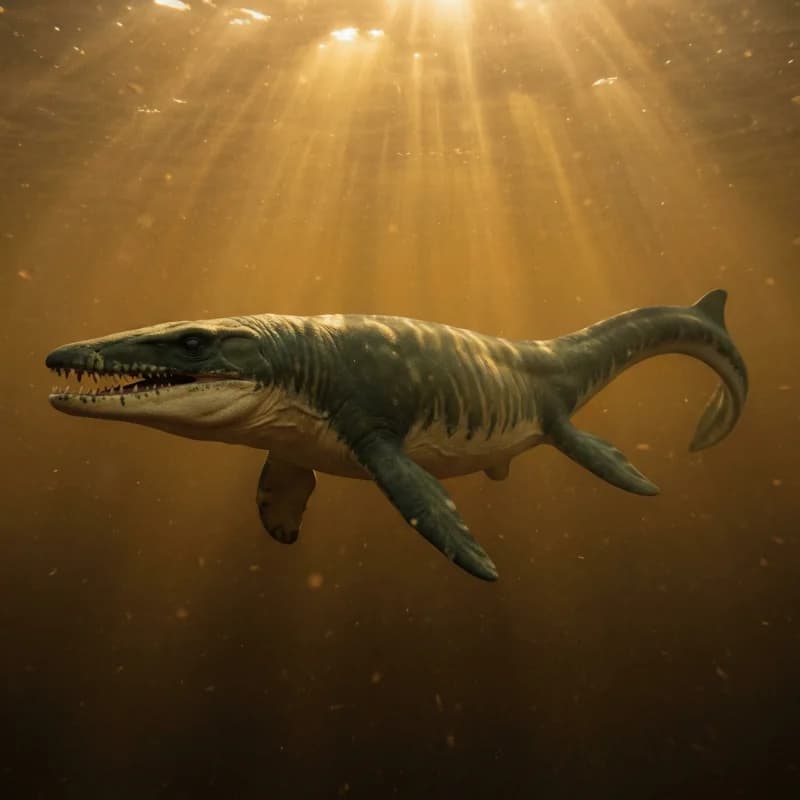
Tylosaurus
Tylosaurus proriger
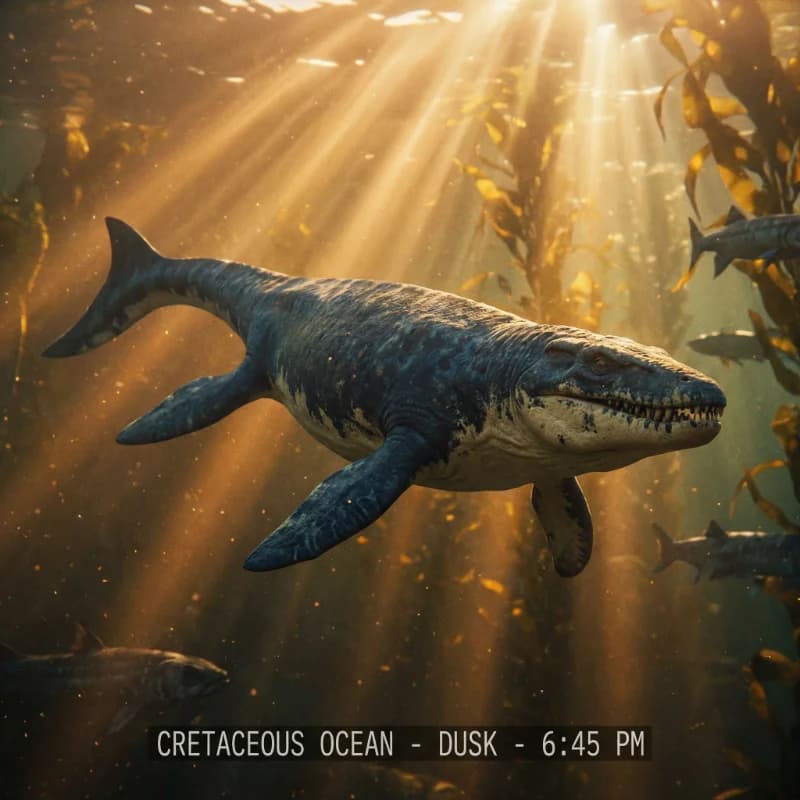
Prognathodon
Prognathodon
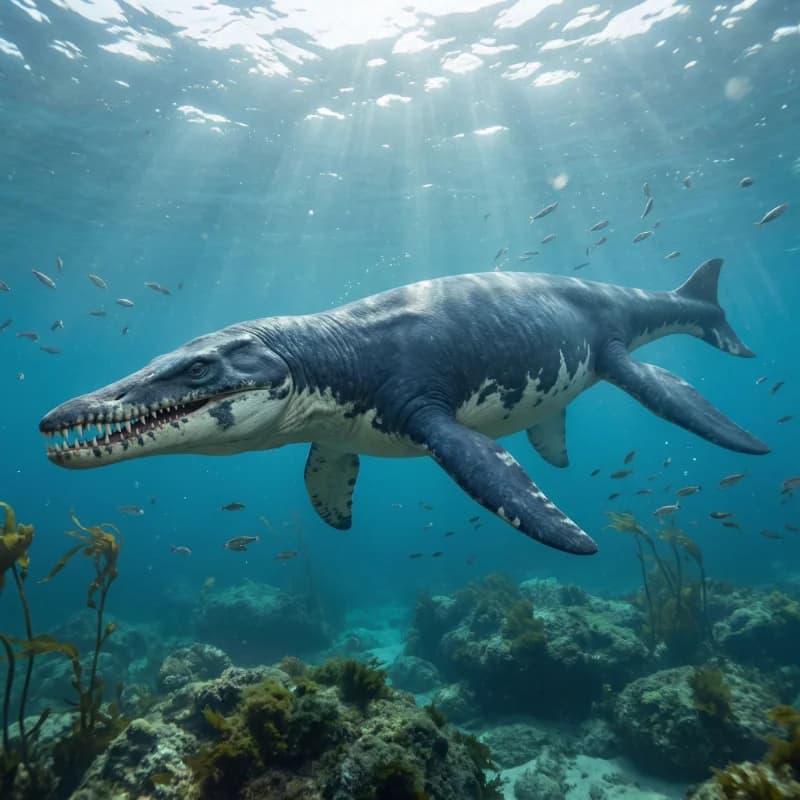
Kronosaurus
Kronosaurus queenslandicus
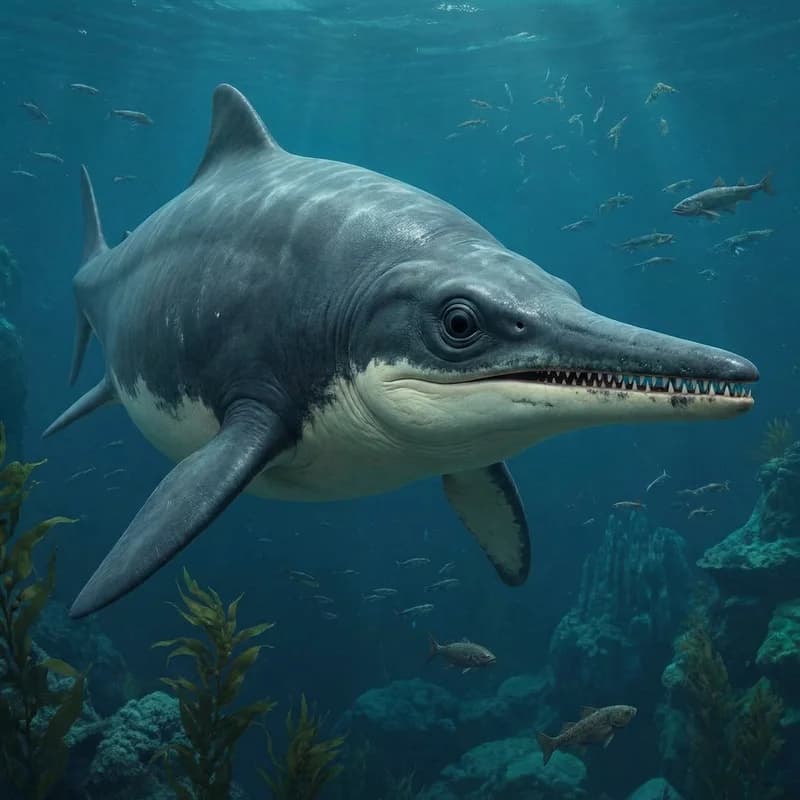
Shonisaurus
Shonisaurus popularis
Thalattoarchon
Thalattoarchon saurophagis
Luperosuchus
Luperosuchus fractus
Liopleurodon
Liopleurodon ferox
Elasmosaurus
Elasmosaurus platyurus