Prognathodon
Cretaceous Period Carnivore Creature Type
Prognathodon
Scientific Name: "pro- (Latin, 'before/prior') + gnathos (Greek, 'jaw') + odṓn (Greek, 'tooth') = 'forejaw tooth'"
Local Name: Prognathodon
Physical Characteristics
Discovery
Habitat
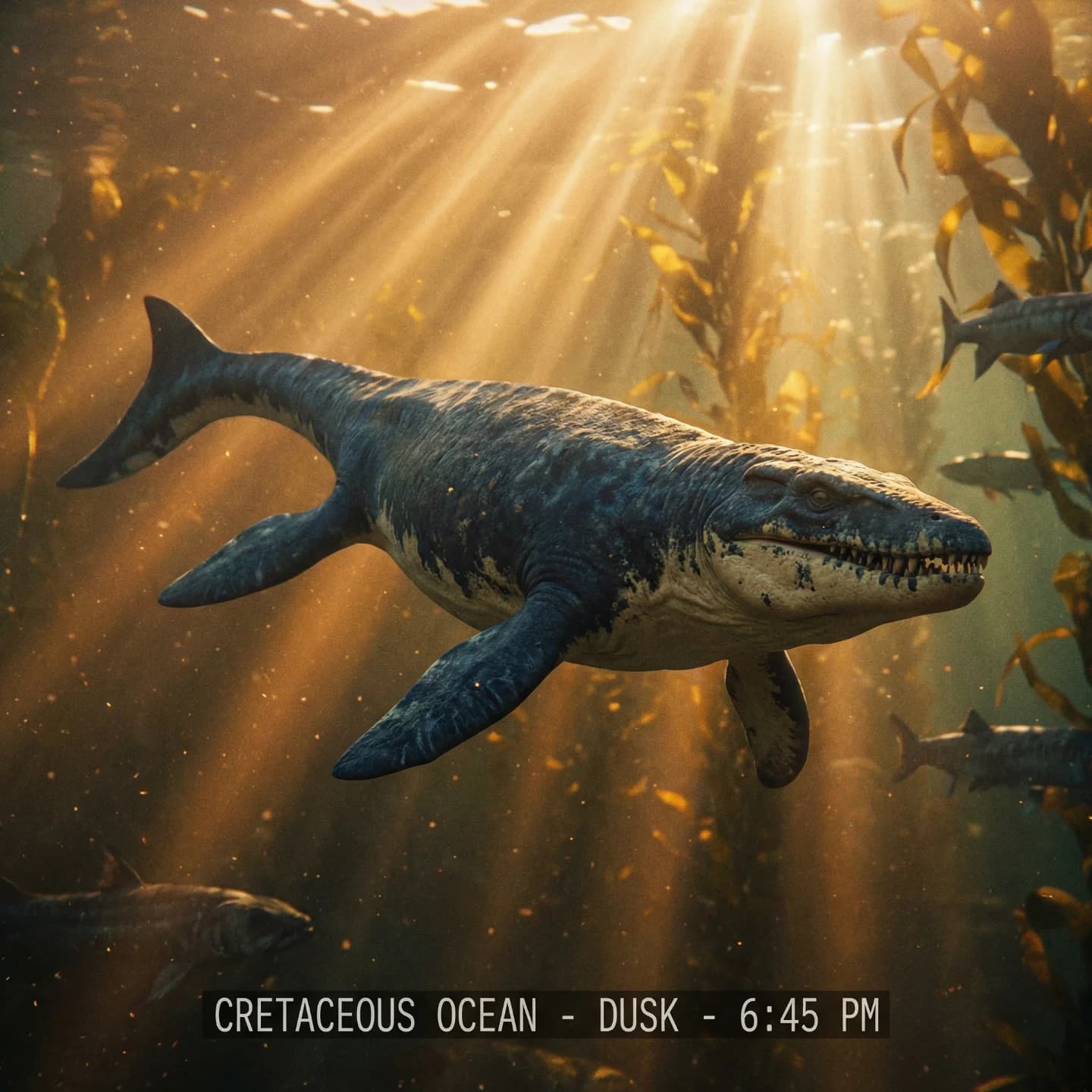
Prognathodon Dollo, 1889 is a genus of large mosasaurid marine reptile from the family Mosasauridae that thrived in oceans worldwide during the Late Cretaceous, from the Campanian to the Maastrichtian (approximately 83.6–66 Ma). Classified within the subfamily Mosasaurinae alongside Mosasaurus and Clidastes, Prognathodon was one of the apex predators of the terminal Cretaceous marine ecosystem. The genus name derives from the Latin pro- (before, prior) + Greek gnathos (jaw) + odṓn (tooth), meaning "forejaw tooth."
The most prominent feature of Prognathodon is its exceptionally robust and powerful jaw and dental apparatus. It ranks among the largest-bodied mosasaur genera, with the largest known skull (belonging to P. currii) measuring approximately 1.42 m in length. Depending on species, total body length ranges from roughly 5 m (type species P. solvayi) to approximately 12 m (P.? saturator). Fossils have been recovered from Europe, the Middle East, Africa, North America, and New Zealand, demonstrating a broad geographic distribution, although most specimens are fragmentary and incomplete, leaving the genus-level systematics still partially unresolved.
Prognathodon was not a dinosaur — it was a marine reptile. As a member of the order Squamata, mosasaurs are closely related to modern lizards and snakes and are phylogenetically distinct from the Dinosauria. Mosasaurs were secondarily aquatic reptiles that returned to the sea during the Late Cretaceous and became fully adapted to marine life, before going extinct alongside the K-Pg mass extinction event at approximately 66 Ma.
Prognathodon was first described in 1889 by the Belgian paleontologist Louis Dollo, based on specimens (IRSNB R33) collected from the Ciply-Malogne Phosphatic Chalk Formation near Mesvin, Belgium. More than twelve nominal species have been named to date, but many have been reassigned to other genera or remain controversial in their placement within Prognathodon, making the taxonomic scope of the genus a subject of ongoing revision.
Overview
Name and Etymology
The genus name Prognathodon is a compound of the Latin prefix pro- (before, prior) and Greek gnathos (jaw) with odṓn (tooth), meaning "forejaw tooth." Dollo (1889) initially used Prognathodon in preliminary notes and provided a provisional diagnosis, but subsequently replaced it with Prognathosaurus in all of his later publications. The priority of the original name Prognathodon was established by Russell (1967) in his comprehensive monograph on North American mosasaurs.
Taxonomic Status
Prognathodon is classified within Squamata > Mosasauria > Mosasauridae > Mosasaurinae. Historically, it was placed alongside Platecarpus within the Plioplatecarpinae, but since Bell's (1997) first large-scale phylogenetic analysis, most studies have consistently recovered it within the Mosasaurinae. Importantly, most recent phylogenetic analyses (Simões et al., 2017; Cau & Madzia, 2017) recover Prognathodon as paraphyletic, indicating that several species currently assigned to it likely belong outside the genus. This taxonomic instability remains one of the central research challenges.
Summary
A large, robustly-jawed mosasaurine of the Late Cretaceous with highly variable dental morphology, a worldwide distribution, and a complex taxonomic history in which the monophyly of the genus is still actively debated.
Time, Stratigraphy, and Depositional Environment
Temporal Range
The fossil record of Prognathodon spans from the early Campanian to the latest Maastrichtian, approximately 83.6–66 Ma. However, some early occurrences (e.g., P.? compressidens) are restricted to the Campanian, and when the genus is considered in the strict sense (sensu stricto), it is concentrated in the late Campanian to Maastrichtian (approximately 76–66 Ma) (Simões et al., 2017). Certain very old PBDB records (e.g., Turonian) represent cases of confusion with Liodon or other genera and are not reliably attributable to Prognathodon proper.
Major Formations and Lithology
The type species P. solvayi was recovered from the Ciply-Malogne Phosphatic Chalk Formation near Mesvin, Hainaut Province, Belgium, which corresponds to the early Maastrichtian. The genus as a whole has been recovered from a wide variety of formations. Based on published literature and PBDB records, the major occurrences include:
| Species | Formation | Region | Age | Lithology |
|---|---|---|---|---|
| P. solvayi | Ciply-Malogne Phosphatic Chalk | Belgium | Early Maastrichtian | Phosphatic chalk |
| P. giganteus | Ciply-Malogne Phosphatic Chalk | Belgium | Maastrichtian | Phosphatic chalk |
| P.? saturator | Gulpen Fm. (Lanaye Mbr.) | Netherlands | Late Maastrichtian | Biocalcarenite (grainstone) |
| P. currii | Mishash Fm. | Israel | Late Campanian | Phosphorite |
| P.? overtoni | Bearpaw Shale, Pierre Shale | Canada, USA | Late Campanian | Mudstone/shale |
| P. lutugini | (unnamed) | Ukraine | Late Campanian | (not reported) |
| P. hudae, P. primus | Muwaqqar Chalk Marl Fm. | Jordan | Maastrichtian | Chalky marl |
| P. hashimi | Muwaqqar Chalk Marl Fm. | Jordan | Maastrichtian | Chalky marl |
| P.? kianda | Mocuio Fm. | Angola | Early Maastrichtian | Siltstone/fine sandstone |
| P.? waiparaensis | Conway Fm. | New Zealand | Late Maastrichtian | Glauconitic sandstone |
| P.? rapax | Navesink Fm. | Eastern USA | Early Maastrichtian | Marl |
| P. giganteus | Phosphorite Unit | Jordan, Syria | Campanian–Maastrichtian | Phosphorite |
Depositional and Paleoenvironmental Settings
Synthesizing PBDB occurrence data, Prognathodon fossils are found across a wide range of marine depositional environments including shallow subtidal, coastal, offshore, and carbonate platform settings. The genus shows a notably high frequency of occurrence in fine-grained, low- to moderate-energy sediments such as phosphorites, chalks, and marls. The type locality of P.? saturator in the Maastricht area of the Netherlands represents a Late Maastrichtian shallow-marine carbonate setting, while the locality of P. currii in the Negev Desert of Israel is an open-marine phosphorite environment.
Specimens and Diagnostic Characters
Holotype and Key Specimens
The holotype of the type species Prognathodon solvayi is IRSNB R33, housed at the Royal Belgian Institute of Natural Sciences (Brussels). The specimen consists of a fairly complete but abraded skull and partial postcranial skeleton. Dollo's (1889) original description was very brief, and it was not until a century later that Lingham-Soliar & Nolf (1989) provided the first comprehensive redescription and emended diagnosis.
Other significant specimens include: the holotype of P.? saturator, NHMM 1998141 (Natural History Museum Maastricht, a nearly complete skull with portions of the postcranium); the holotype of P. currii, HUJ.OR 100 (Hebrew University of Jerusalem, a complete skull measuring approximately 1,422 mm); the P.? overtoni specimens TMP 2007.034.0001 and TMP 2018.042.0005 (Royal Tyrrell Museum, Alberta, fully articulated skeletons preserving gut contents); and ERMNH HFV 197 (P. hashimi, from Harrana, Jordan, preserving the soft-tissue outline of the tail fluke).
Diagnostic Characters (Lingham-Soliar & Nolf, 1989)
The emended diagnosis by Lingham-Soliar & Nolf (1989) remains the most recently published genus-level diagnosis. Key characters include: premaxilla lacks a rostrum anterior to the premaxillary teeth; prefrontal forms a large portion of the posterolateral border of the external nares; frontal does not emarginate above the orbits; dorsal parietal surface margins are parallel to each other and to the cranial midline, forming a rectangular field; suprastapedial process is fused to the infrastapedial process on the quadrate; tympanic ala is thick; dentary contains 13–14 teeth; pterygoid has 7–8 teeth; marginal teeth are stout, bicarinate, and smooth or striated; and zygosphenes and zygantra are absent, incipient, or large and functional.
Limitations of the Fossil Record
Most Prognathodon fossils are fragmentary and incomplete. Very few specimens preserve articulated skulls, and no complete skeleton is known to date (Konishi et al., 2011). This incompleteness severely limits our genus-level systematic understanding and makes definitive comparisons between species and delimitation of diagnostic characters challenging.
Morphology and Function
Size and Body Form
Prognathodon exhibits enormous size variation between species. The type species P. solvayi is the smallest at an estimated body length of only about 5–6 m (Russell, 1967; Konishi et al., 2011). P. hudae is estimated at approximately 6.4 m, P. lutugini and P.? overtoni at approximately 7–8 m, P. giganteus at approximately 10 m (Russell, 1967), P. currii at approximately 11 m (Christiansen & Bonde, 2002), and P.? saturator at approximately 12 m (Schulp et al., 2008). Rigorous quantitative body mass estimates for the genus are extremely limited; informal estimates for the larger species generally suggest a range of approximately 3–5 tonnes, but formal mass estimation studies are largely lacking.
Skull and Jaw Structure
The skull of Prognathodon is notably robust and massive. The skull of P. currii measures approximately 1,422 mm in length, making it one of the largest known mosasaur skulls (Christiansen & Bonde, 2002). The ratio of supratemporal fenestra length to total skull length is 0.22 in P.? overtoni and P.? saturator, compared to 0.19 in Mosasaurus hoffmannii, suggesting a more powerful jaw musculature (Dortangs et al., 2002). The fusion of the suprastapedial and infrastapedial processes of the quadrate, a feature shared with Globidens, is interpreted as an adaptation to counteract the strong forces experienced during biting. Kase et al. (1998) estimated the anterior bite force of P.? overtoni at approximately 6,346–9,127 N and the posterior bite force at approximately 7,630–10,974 N.
Dentition
Dental morphology is highly variable across species of Prognathodon. Robust, conical, bicarinate teeth with smooth enamel are typically considered diagnostic, but the type species P. solvayi deviates from this pattern with notably labio-lingually compressed and gently facetted marginal teeth (Lindgren, 2005). In P.? overtoni and P. giganteus, teeth are relatively uniform in size along the jaw, whereas in P. solvayi there is a pronounced anterior-to-posterior size gradient (Lingham-Soliar & Nolf, 1989). The teeth of P. lutugini are distinctive in having smooth enamel with strong bicarinate ridges and fine serrations, differentiating them from other species (Grigoriev, 2013).
Tail Fluke and Soft Tissue
The P. hashimi specimen ERMNH HFV 197 from the Maastrichtian of Harrana, Jordan is an exceptionally preserved fossil that retains the soft-tissue outline of the tail fin (Lindgren et al., 2013). This specimen provided the first unequivocal direct evidence that mosasaurs possessed an asymmetric bilobed tail fluke. The fluke morphology resembles that of modern carcharhinid sharks but inverted, with a large lower lobe and a smaller upper lobe. Scale impressions of a rhomboidal shape are also preserved.
Diet and Ecology
Dietary Evidence
The most direct evidence for the diet of Prognathodon comes from the gut contents of P.? overtoni specimens. Konishi et al. (2011) documented remains of a large fish, a small fish, a sea turtle, and possibly a cephalopod preserved within two fully articulated specimens from the Bearpaw Formation of Alberta, Canada. This confirms that Prognathodon was a generalist, opportunistic predator.
From a dental morphological standpoint, the teeth of Prognathodon are relatively tall and robust, suggesting dual adaptations for both crushing hard-shelled prey and impaling softer prey. The presence of fine serrations on the carinae implies an additional cutting function, but unlike typical cutting-tooth predators, the teeth lack a pointed apex (Konishi et al., 2011). In the Maastricht region of the Netherlands, healed bite marks found on the large sea turtle Allopleuron (approximately 2.9 m in carapace length) suggest that the prey range of P.? saturator may have included these armored animals (Dortangs et al., 2002).
Tooth wear studies on P.? overtoni reveal unusually smooth and polished crown apices with uniform wear across multiple teeth. This pattern is inconsistent with simple breakage and instead suggests gradual grinding down through prolonged food handling (Konishi et al., 2011).
Metabolism and Body Temperature
Oxygen isotope (δ¹⁸O) analysis of tooth enamel attributed to cf. Prognathodon from South Africa suggests that the animal maintained an internal body temperature higher than that of the coeval shark Squalicorax and likely higher than the surrounding seawater. This contributes to the broader discussion of possible endothermy or mesothermy in mosasaurs.
Ecological Role
Large species of Prognathodon (particularly P. currii and P.? saturator) are inferred to have occupied an apex predator niche within the Late Cretaceous marine ecosystem. They have been compared to modern killer whales (Orcinus orca) as generalist apex predators (Konishi et al., 2011). Smaller species such as P. solvayi may have occupied somewhat different ecological niches, as reflected by their divergent dental morphology.
Distribution and Paleogeography
Geographic Distribution
Fossils attributed to Prognathodon have been reported from Europe (Belgium, Netherlands, France, Spain, Sweden, Poland, Denmark, Ukraine, Russia), the Middle East (Israel, Jordan, Syria), Africa (Angola, Morocco, Egypt, South Africa), North America (United States — New Jersey, Maryland, South Dakota, Colorado, North Carolina, Texas; Canada — Alberta), and New Zealand. However, some occurrences are taxonomically contentious, and when restricted to Prognathodon sensu stricto, the distribution becomes concentrated in Europe and the Middle East (Simões et al., 2017).
Paleogeographic Context
During the Late Cretaceous, the opening Atlantic Ocean and the still-open Tethys Seaway maintained marine corridors between Europe, Africa, and the Middle East, facilitating faunal exchange. The broad distribution of Prognathodon reflects the free dispersal of large marine predators through these open oceanic corridors. The paleogeographic position of the type locality in Belgium was at approximately 50.82°N during the Late Cretaceous, though paleomagnetic reconstructions suggest a somewhat lower paleolatitude.
Phylogeny and Taxonomic Debate
Taxonomic History
Dollo (1890) initially placed Prognathodon alongside Platecarpus in a "microrhynchous" group, and later (1894) recognized its affinities with Plioplatecarpus, placing it within the Plioplatecarpinae. Russell (1967) maintained this placement but erected the tribe Prognathodontini for the genus and the related Plesiotylosaurus. Bell (1997) conducted the first major phylogenetic analysis and recovered Prognathodon within the Mosasaurinae for the first time, synonymizing Prognathodontini with Globidensini.
Current Phylogenetic Position
In the comprehensive analysis of Simões et al. (2017), Prognathodon was recovered within the Mosasaurinae as a sister group to the Mosasaurini, but the genus itself was recovered as paraphyletic. This result arises because several species (P.? waiparaensis, P.? kianda, etc.) are found to be more closely related to Eremiasaurus, Plesiotylosaurus, and Mosasaurus than to the type species P. solvayi. Cau & Madzia (2017) obtained similar results. Consequently, several species currently placed within Prognathodon will likely need to be separated into independent genera. In 2020, P. stadtmani was formally redescribed as the type species of a new genus, Gnathomortis (Street & Caldwell, 2020).
Species-Level Controversies
Species generally considered stable within the genus include P. solvayi, P. currii, P. giganteus, P. lutugini, P. hudae, P. primus, and P. hashimi. However, P.? overtoni, P.? saturator, P.? rapax, P.? kianda, and P.? waiparaensis are recovered outside the genus in the latest phylogenetic analyses and their placement remains uncertain. Lindgren (2005) raised the fundamental question of whether species with "typical" robust Prognathodon-like teeth should be assigned to the genus when the type species P. solvayi itself has distinctly different, compressed and facetted teeth.
Reconstruction and Uncertainty
Established Facts
It is well-established that Prognathodon is a member of the Mosasauridae and that it was a large marine reptile distributed worldwide during the Late Cretaceous (approximately 83.6–66 Ma). The robust jaw apparatus, powerful bite musculature, diverse dental morphology, and bilobed tail fluke (based on the soft-tissue preservation of P. hashimi) are all confirmed features.
Well-Supported Hypotheses
The interpretation of Prognathodon as a generalist apex predator is well-supported by the convergence of gut-content evidence, bite marks, dental morphology, and comparison with extant analogs. The δ¹⁸O evidence for elevated body temperatures is promising but requires further sampling for confirmation.
Key Uncertainties
The monophyly of the genus remains unresolved, meaning that many currently recognized species may eventually be transferred to independent genera. Quantitative body mass estimates are largely absent from the peer-reviewed literature, and the commonly cited "several tonnes" figures are informal approximations. The postcranial skeleton is poorly known for most species, meaning that full-body reconstructions rely heavily on comparison with better-known relatives such as Mosasaurus and Tylosaurus.
Popular Media vs. Scientific Consensus
Prognathodon is sometimes depicted in documentaries (e.g., Prehistoric Planet) as a giant apex predator reaching 10–15 m. While this is based on size estimates for the more controversial species (P.? saturator), it is important to note that the type species P. solvayi was a comparatively modest animal at only about 5 m in length.
Comparison with Related and Contemporaneous Taxa
| Genus | Classification | Time | Estimated max. length | Dental characteristics | Distribution |
|---|---|---|---|---|---|
| Prognathodon (sensu stricto) | Mosasaurinae | Campanian–Maastrichtian | ~11 m (P. currii) | Robust, bicarinate, highly variable | Worldwide |
| Mosasaurus | Mosasaurinae, Mosasaurini | Maastrichtian | ~11–12 m (M. hoffmannii) | Bicarinate, cutting-type | Worldwide |
| Globidens | Mosasaurinae, Globidensini | Campanian–Maastrichtian | ~6 m | Globular, crushing-type | N. America, Africa, Asia |
| Tylosaurus | Tylosaurinae | Turonian–Campanian | ~12–13 m | Conical, smooth | N. America, Japan, etc. |
| Eremiasaurus | Mosasaurinae | Maastrichtian | ~8 m | Heterodont | North Africa |
Prognathodon shares the fused supra- and infrastapedial processes of the quadrate with Globidens but lacks the extremely globular teeth of that genus, exhibiting instead a wider variety of dental morphologies. Compared to Mosasaurus, Prognathodon has a higher supratemporal fenestra-to-skull ratio, implying a potentially greater bite force.
Fun Facts
FAQ
📚References
- Dollo, L. (1889). Première note sur les mosasauriens de Mesvin. Bulletin de la Société Belge de Géologie, de Paléontologie et d'Hydrologie, 3, 271–304.
- Lingham-Soliar, T. & Nolf, D. (1989). The mosasaur Prognathodon (Reptilia, Mosasauridae) from the Upper Cretaceous of Belgium (Part 1). Bulletin de l'Institut Royal des Sciences Naturelles de Belgique, Sciences de la Terre, 59, 137–190.
- Russell, D. A. (1967). Systematics and morphology of American mosasaurs. Bulletin of the Peabody Museum of Natural History, 23, 1–241.
- Dortangs, R. W., Schulp, A. S., Mulder, E. W. A., Jagt, J. W. M., Peeters, H. H. G., & de Graaf, D. T. (2002). A large new mosasaur from the Upper Cretaceous of The Netherlands. Netherlands Journal of Geosciences, 81(1), 1–8. https://doi.org/10.1017/S0016774600020515
- Christiansen, P. & Bonde, N. (2002). A new species of gigantic mosasaur from the Late Cretaceous of Israel. Journal of Vertebrate Paleontology, 22(3), 629–644. https://doi.org/10.1671/0272-4634(2002)022[0629:ANSOGM]2.0.CO;2
- Konishi, T., Brinkman, D., Massare, J. A., & Caldwell, M. W. (2011). New exceptional specimens of Prognathodon overtoni (Squamata, Mosasauridae) from the upper Campanian of Alberta, Canada, and the systematics and ecology of the genus. Journal of Vertebrate Paleontology, 31(5), 1026–1046. https://doi.org/10.1080/02724634.2011.601714
- Lindgren, J., Kaddumi, H. F., & Polcyn, M. J. (2013). Soft tissue preservation in a fossil marine lizard with a bilobed tail fin. Nature Communications, 4, 2423. https://doi.org/10.1038/ncomms3423
- Simões, T. R., Vernygora, O., Caldwell, M. W., & Pierce, S. E. (2017). Mosasauroid phylogeny under multiple phylogenetic methods provides new insights on the evolution of aquatic adaptations in the group. PLoS ONE, 12(5), e0176773. https://doi.org/10.1371/journal.pone.0176773
- Cau, A. & Madzia, D. (2017). Inferring 'weak spots' in phylogenetic trees: application to mosasauroid nomenclature. PeerJ, 5, e3782. https://doi.org/10.7717/peerj.3782
- Bell, G. L., Jr. (1997). A phylogenetic revision of North American and Adriatic Mosasauroidea. In: Callaway, J. M. & Nicholls, E. L. (eds.), Ancient Marine Reptiles, Academic Press, 293–332.
- Lindgren, J. (2005). The first record of Hainosaurus (Reptilia: Mosasauridae) from Sweden. Journal of Paleontology, 79(6), 1157–1165. (Includes comparative discussion of Prognathodon species)
- Grigoriev, D. V. (2013). Redescription of Prognathodon lutugini (Squamata, Mosasauridae). Proceedings of the Zoological Institute RAS, 317(3), 246–261.
- Schulp, A. S., Polcyn, M. J., Mateus, O., Jacobs, L. L., & Morais, M. L. (2008). A new species of Prognathodon (Squamata, Mosasauridae) from the Maastrichtian of Angola, and the affinities of the mosasaur genus Liodon. In: Bentley, S. J. et al. (eds.), Proceedings of the Second Mosasaur Meeting, 1–12.
- Kaddumi, H. F. (2009). Fossils of the Harrana Fauna and the adjacent areas. Eternal River Museum of Natural History, Amman, Jordan.
- Street, H. P. & Caldwell, M. W. (2020). Redescription and phylogenetic assessment of 'Prognathodon' stadtmani: Implications for Globidensini monophyly and character homology in Mosasaurinae. Journal of Vertebrate Paleontology, 40(4), e1784183. https://doi.org/10.1080/02724634.2020.1784183
- Woolley, C. H., Buffetaut, E., & de Ricqlès, A. (2022). An anatomical review of South African mosasaurs with a reclassification of Taniwhasaurus capensis (Broom, 1912). PalZ, 96, 483–512.
- Kase, T., Johnston, P. A., Seilacher, A., & Boyce, J. B. (1998). Alleged mosasaur bite marks on Late Cretaceous ammonites are limpet (patellogastropod) home scars. Geology, 26(10), 947–950. (Cited for bite force estimation)
- Giltaij, R. E., Schulp, A. S., Jagt, J. W. M., & Milan, J. (2021). First Danish Prognathodon. Bulletin of the Geological Society of Denmark, 69, 19–24.
Gallery
5 images Prognathodon
Prognathodon · Cretaceous Period · Carnivore
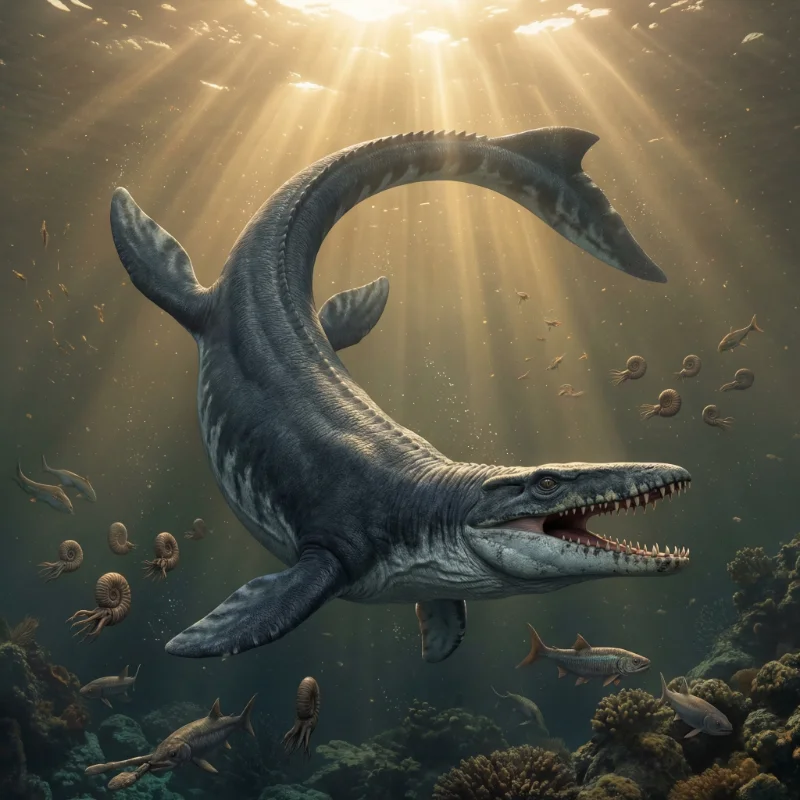 Prognathodon
Prognathodon · Cretaceous Period · Carnivore
 Prognathodon
Prognathodon · Cretaceous Period · Carnivore
 Prognathodon
Prognathodon · Cretaceous Period · Carnivore
 Prognathodon
Prognathodon · Cretaceous Period · Carnivore
🔗Related Creatures
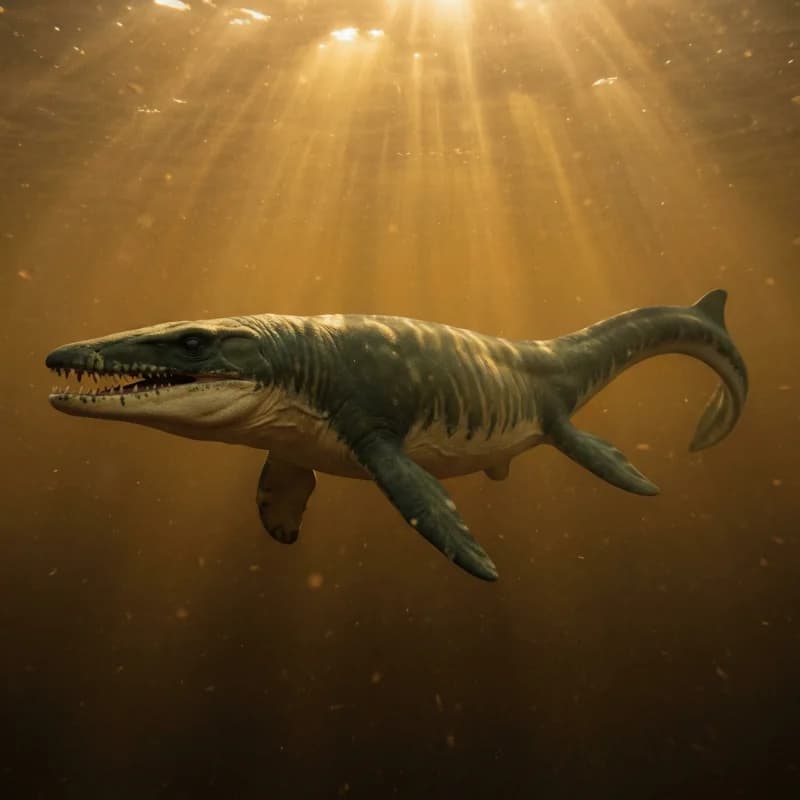
Tylosaurus
Tylosaurus proriger
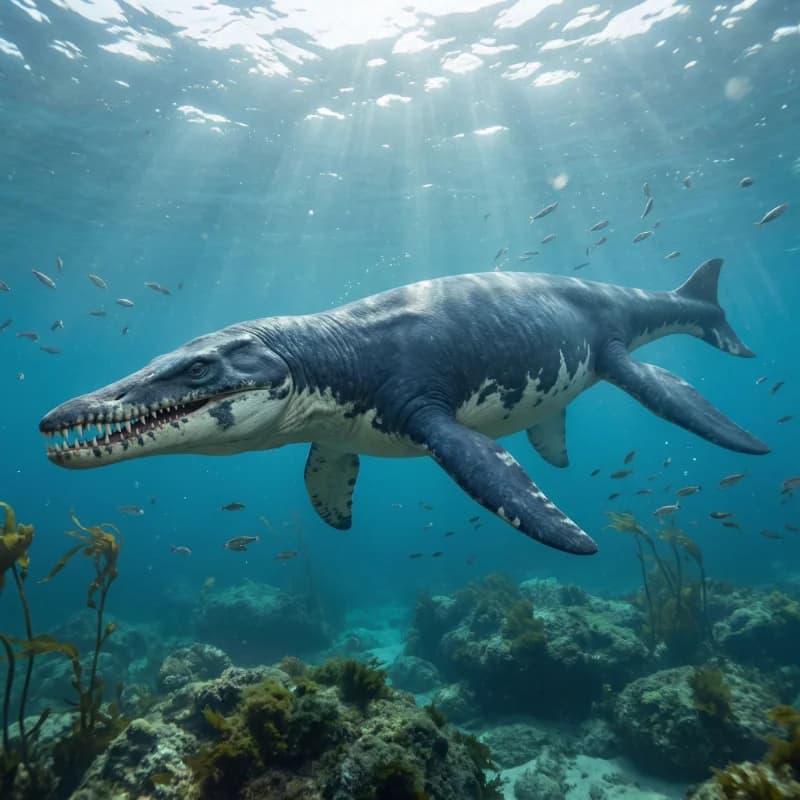
Kronosaurus
Kronosaurus queenslandicus
Mosasaurus
Mosasaurus hoffmannii
Luperosuchus
Luperosuchus fractus
Thalattoarchon
Thalattoarchon saurophagis
Elasmosaurus
Elasmosaurus platyurus
Temnodontosaurus
Temnodontosaurus
Shonisaurus
Shonisaurus popularis