Temnodontosaurus
Jurassic Period Carnivore Creature Type
Temnodontosaurus
Scientific Name: "Ancient Greek τέμνω (temnō, 'to cut') + ὀδούς (odoús, 'tooth') + σαῦρος (saûros, 'lizard') = 'cutting-tooth lizard'"
Local Name: Temnodontosaurus
Physical Characteristics
Discovery
Habitat
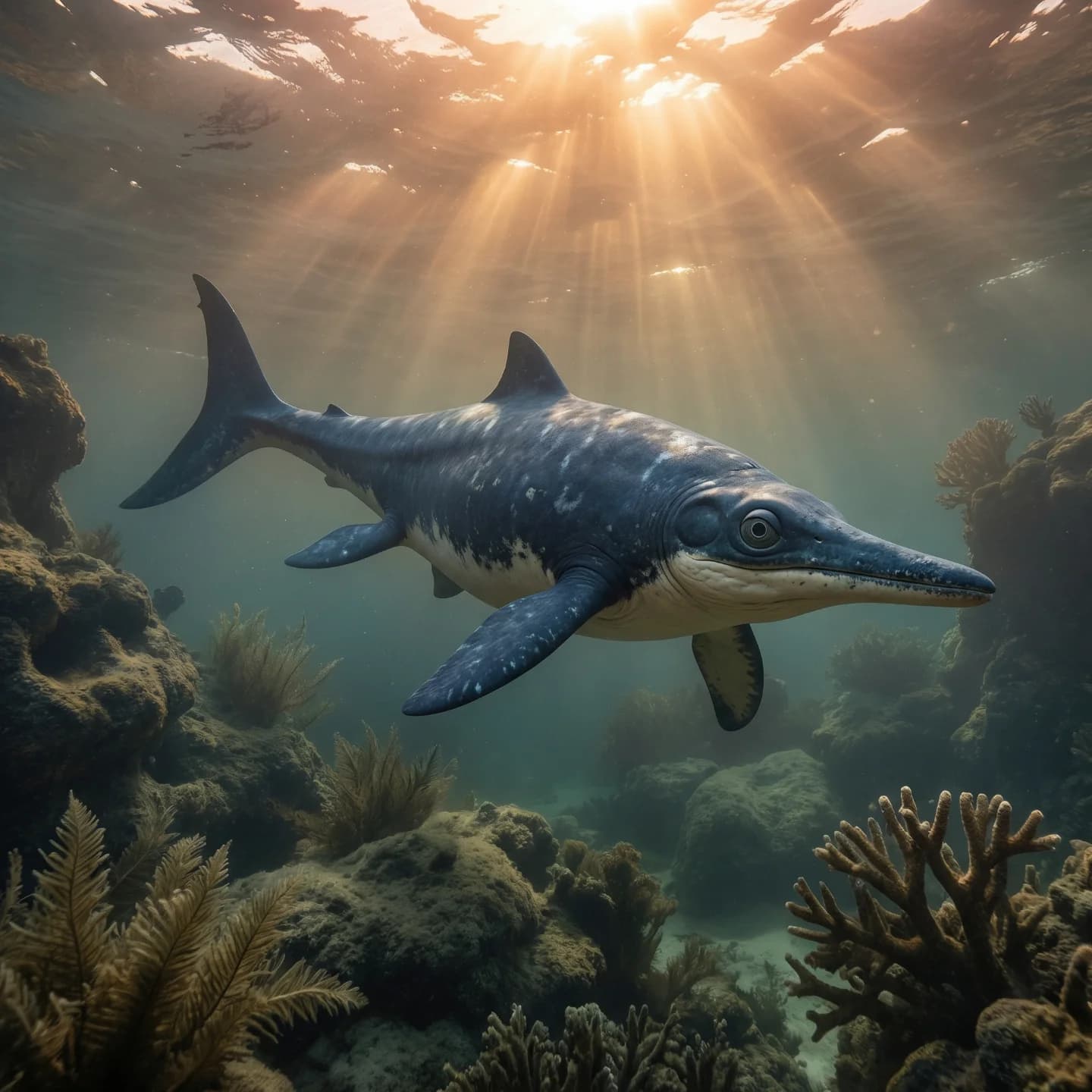
Temnodontosaurus (Lydekker, 1889) is a genus of large ichthyosaurs (order Ichthyosauria) from the Lower Jurassic (Hettangian–Toarcian, approximately 201–176 Ma) of Europe and possibly Chile. It belongs to the parvipelvian subgroup of ichthyosaurs and represents the largest known member of Parvipelvia. The type species, T. platyodon, is based on a specimen consisting of a complete skull and partial postcranial skeleton discovered around 1810–1812 by Joseph and Mary Anning on the cliffs of Black Ven in Dorset, England. This specimen holds the historic distinction of being the very first ichthyosaur to have been scientifically described. In 1889, Richard Lydekker recognized that the teeth of Ichthyosaurus platyodon differed markedly from those of other Ichthyosaurus species and erected the separate genus Temnodontosaurus to accommodate it.
Temnodontosaurus is not a dinosaur — it is an ichthyosaur, a group of marine reptiles. Ichthyosaurs were secondarily aquatic reptiles that convergently evolved dolphin-like streamlined bodies and flippers. They belong to an entirely separate evolutionary lineage from dinosaurs, and are also distinct from plesiosaurs (Plesiosauria), another group of marine reptiles.
Generally estimated at around 9 m (30 ft) in total body length, with some specimens exceeding 10 m (33 ft), Temnodontosaurus is one of the largest known post-Triassic ichthyosaurs. Its eye sockets measured over 25 cm (9.8 in) in diameter, making it a contender for the largest eyes in the entire animal kingdom. Sharp, carinate (keeled) teeth, powerful jaws, and stomach contents preserving the bones of other ichthyosaurs identify it as a megapredator — an apex predator of Early Jurassic seas. Currently, five to seven species are recognized, although the genus itself may be polyphyletic (an unnatural grouping), and comprehensive taxonomic revision is ongoing.
Overview
Name and Etymology
The generic name Temnodontosaurus derives from the Ancient Greek τέμνω (temnō, "to cut"), ὀδούς (odoús, "tooth"), and σαῦρος (saûros, "lizard"), meaning "cutting-tooth lizard." This name references the most distinctive feature of the genus: its sharp, carinate teeth bearing cutting edges (carinae) — a trait unique among post-Triassic ichthyosaurs. The type species epithet platyodon comes from the Greek πλατύς (platús, "flat, broad") and ὀδούς (odoús, "tooth"), meaning "flat tooth," reflecting the distinctive dentition of this species (Conybeare, 1822).
Taxonomic Status and Key Debates
Temnodontosaurus was long accepted as a monophyletic genus, but recent phylogenetic analyses (Laboury et al., 2022; Bennion et al., 2024) have revealed that the species currently included form a polyphyletic assemblage — that is, they do not all share an exclusive common ancestor. In the Bayesian analysis of Laboury et al. (2022), only four species — T. platyodon, T. trigonodon, T. zetlandicus, and T. nuertingensis — form a monophyletic group. The monotypic family Temnodontosauridae, erected by McGowan (1974), currently includes only this genus, but the diagnosis relies on cranial proportions that are susceptible to convergent evolution (Laboury et al., 2022). Consequently, Temnodontosaurus is currently regarded as a "wastebasket taxon" encompassing several large, more-or-less related neoichthyosaurians from the Lower Jurassic, and is in need of comprehensive revision.
One-Line Summary
The largest ichthyosaur of the Early Jurassic, the first ichthyosaur ever scientifically described, and the possessor of what may be the largest eyes in the animal kingdom — Temnodontosaurus was a megapredator of Jurassic seas.
Stratigraphy, Age, and Paleoenvironment
Temporal Range
Fossils of Temnodontosaurus span the entire Lower Jurassic, from the Hettangian (approximately 201 Ma) through the Toarcian (approximately 176 Ma). Different species occupy different stratigraphic intervals: T. platyodon ranges from the Hettangian to the Sinemurian; T. eurycephalus is restricted to the Sinemurian; T. nuertingensis to the Pliensbachian; and T. trigonodon, T. zetlandicus, and T. crassimanus to the Toarcian (Bennion et al., 2024; Laboury et al., 2022).
Formations and Lithology
In England, specimens of T. platyodon and other species come from the Blue Lias Formation along the Dorset and Yorkshire coasts — a cyclical sequence of limestone, mudstone (marl), and shale deposited in a shallow marine setting. In Germany, the Posidonia Shale (Posidonienschiefer Formation) of Baden-Württemberg, particularly around Holzmaden, has yielded exceptionally complete skeletons of T. trigonodon, often with preserved soft tissues. In France, specimens have been recovered from quarries at Sainte-Colombe (Yonne) and Belmont-d'Azergues (Beaujolais). In Luxembourg, a partial skull of T. zetlandicus was found in the Luxembourg Sandstone Formation at Schouweiler (Laboury et al., 2022).
| Species | Stage | Key Localities | Key Formations |
|---|---|---|---|
| T. platyodon | Hettangian–Sinemurian | England (Dorset), Belgium, Germany | Blue Lias Fm. etc. |
| T. eurycephalus | Sinemurian | England (Dorset) | Blue Lias Fm. |
| T. nuertingensis | Pliensbachian | Germany (Baden-Württemberg) | Lias mudstones |
| T. trigonodon | Toarcian | Germany (Baden-Württemberg, Bavaria), France (Yonne), England (Yorkshire/Rutland) | Posidonia Shale etc. |
| T. zetlandicus | Toarcian | England (Yorkshire), Luxembourg | Whitby Mudstone Fm., Luxembourg Sandstone Fm. |
| T. crassimanus | Toarcian | England (Yorkshire) | Whitby Mudstone Fm. |
| T. azerguensis | Toarcian | France (Beaujolais) | Toarcian limestones |
Depositional Environment and Paleoenvironment
The Blue Lias Formation represents a shallow marine to hemipelagic setting characterized by cyclic alternations of limestone, marl, and shale. The Posidonia Shale was deposited under oxygen-depleted (anoxic) bottom-water conditions, creating a Konservat-Lagerstätte renowned for the exceptional preservation of soft tissues (Röhl et al., 2001). Combining this environmental evidence with the enormous eyes of Temnodontosaurus — interpreted as adaptations for low-light vision — it is likely that the genus primarily inhabited pelagic to hemipelagic waters and hunted at depth in dimly lit conditions.
Specimens and Diagnostic Characters
Holotype and Key Specimens
The original holotype of T. platyodon was a single tooth preserved by the Geological Society of London, but it was noted as lost by 1960. McGowan (1974) subsequently designated NHMUK PV OR 2003 as the neotype. This specimen was discovered by Mary Anning in July 1832 at Lyme Regis and sold to Thomas Hawkins, who in turn sold it to the Natural History Museum, London, in 1834 for £210.
The holotype of T. trigonodon (PKB 1) is a specimen comprising a complete skull exceeding 2 m in length and a partial postcranial skeleton, discovered at Holzmaden, Germany (von Theodori, 1843). It remains one of the largest complete ichthyosaur skulls known.
The holotype of T. crassimanus (YORYM 497) is a nearly complete skeleton discovered in 1857 north of Whitby, Yorkshire (Blake, 1876; Swaby & Lomax, 2021).
The holotype of T. zetlandicus (CAMSM J35176) is a well-preserved skull from the coast near Whitby, housed at the Sedgwick Museum of Earth Sciences, Cambridge (Seeley, 1880; Laboury et al., 2022).
Diagnostic Characters
As defined by McGowan (1974), Temnodontosaurus is characterized by its large body size, forefins and hindfins of roughly equal length that are narrow and elongated, an unreduced tripartite pelvic girdle, three primary digits with one postaxial accessory digit, and carinate teeth. The carinate (keeled) teeth are the most distinctive feature — unique among post-Triassic ichthyosaurs, a trait otherwise known only in Triassic forms such as Thalattoarchon and Himalayasaurus (Bennion et al., 2024). However, the genus-level diagnosis relies heavily on cranial proportions susceptible to convergent evolution, rendering it unstable (Laboury et al., 2022).
Limitations of Specimens
Several holotypes are incomplete or lost (e.g., the original holotype of T. platyodon), and some species (T. eurycephalus, T. azerguensis) are phylogenetically unstable, casting doubt on their placement within the genus. Many historical specimens were heavily prepared in the 19th century, often with enamel removed, limiting detailed study of tooth microstructure.
Morphology and Functional Biology
Body Size
Adult specimens of T. platyodon, T. trigonodon, and T. crassimanus are generally estimated at around 9 m (30 ft) in total length (McGowan, 1974, 1996; McGowan & Motani, 2003). The "Rutland Sea Dragon," a probable T. trigonodon specimen discovered in 2021 in Rutland, England, is estimated at slightly over 10 m (33 ft) (Lomax et al., 2023). Von Huene (1922) described a series of very large vertebrae from the Banz Abbey Museum in Germany, from which McGowan (1996) estimated a body length of 16 m (52 ft). However, this estimate was subsequently recognized as an overestimate after the reference skeleton (SMNS 50000) proved shorter than originally assumed.
No formally published body mass estimates exist for Temnodontosaurus. Given its body length of 9–10+ m and overall proportions comparable to large dolphin-to-orca scale marine predators, a mass of several tonnes is plausible but remains unquantified in the scientific literature.
Skull and Dentition
Skulls of T. platyodon measure approximately 1.5–1.9 m in length. The largest known skulls of T. trigonodon reach 1.8–2+ m. The rostrum (snout) is long and robust with an antorbital constriction. Teeth are set in continuous grooves (aulacodonty) rather than individual sockets, and bear two to three carinae (cutting ridges).
Bennion et al. (2024) discovered heterodonty in T. platyodon: mesial (anterior) teeth are unicarinate and lingually curved, likely functioning in prey capture, while distal (posterior) teeth are labiolingually compressed and bicarinate, adapted for prey processing (cutting and shearing). This form of heterodonty appears convergent with that of early cetaceans. The same study also documented the first detailed evidence of serrations on ichthyosaur teeth, including both false denticles (created by enamel ridgelet interaction with the carinal keel) and possible cryptic true denticles visible only under SEM.
Eyes
Temnodontosaurus may have possessed the largest eyes of any known vertebrate. The scleral ring diameter of T. platyodon reaches at least 264 mm (approximately 26.4 cm), rivaling the eyes of the colossal squid (Humphries & Ruxton, 2002). Such enormous eyes are interpreted as an adaptation for visual predation in dim, deep-water environments (Motani et al., 1999). Despite their great size, the angle at which the eyes were oriented created blind spots directly above the head.
Flipper Structure and the Discovery of Chondroderms
Lindgren et al. (2025, Nature) described a metre-long forefin of T. trigonodon (specimen SSN8DOR11) from the Toarcian Posidonia Shale of south-western Germany that represents a landmark discovery in ichthyosaur research. The flipper exhibits a high-aspect-ratio, wing-like planform with sinusoidal serrations along its trailing edge. These serrations are reinforced by novel cartilaginous integumentary elements named "chondroderms" — structures without precedent in any known vertebrate. The chondroderms are composed of globular calcified cartilage and are interpreted as passive flow-control devices that suppressed self-generated hydrodynamic noise, enabling a stealthy approach to prey in darkness. Additionally, the flipper surface preserves eumelanin pigments and evenly spaced chordwise stripes, indicating that the animal had a dark body coloration in life. The distal tip extended well beyond the skeletal support, forming a flexible "winglet."
Tail and Locomotion
As in other parvipelvian ichthyosaurs, the tail provided the primary propulsive force. The tail bend angle was less than 35°, and the caudal fin has been described as semi-lunate, with the lower lobe supported by vertebrae and the upper lobe lacking bony support. The overall swimming mode was thunniform (tuna-like), although Temnodontosaurus exhibited relatively higher vertebral flexibility compared to more derived parvipelvians, possibly allowing a greater range of maneuverability (Pardo-Pérez et al., 2018).
Diet and Ecology
Dietary Evidence
Direct evidence of diet comes from stomach contents (bromalites) preserved in specimens of T. trigonodon. Specimen SMNS 50000 preserves the remains of three to four juvenile Stenopterygius (a smaller ichthyosaur) alongside a large number of cephalopod hooks (Böttcher, 1989; Serafini et al., 2025). Serafini et al. (2025) determined that T. trigonodon preferentially targeted neonatal and juvenile Stenopterygius, while also consuming substantial quantities of cephalopods. Larger prey were dismembered before being swallowed.
Bennion et al. (2024) analyzed craniodental ecomorphology across the genus and found evidence of niche partitioning among species: T. eurycephalus, with its short, deep snout and relatively small teeth, was likely specialized for grip-and-tear feeding with increased wound infliction; T. platyodon, with a more elongate yet robust snout and larger teeth, was better adapted for grip-and-shear feeding. This suggests that co-occurring species of Temnodontosaurus exploited different prey and feeding strategies.
Ecological Role
Temnodontosaurus was the apex predator of Early Jurassic European marine ecosystems. Co-occurring marine fauna included smaller ichthyosaurs (Stenopterygius, Hauffiopteryx, Leptonectes), plesiosaurs (Rhomaleosaurus), and thalattosuchian crocodylomorphs (Steneosaurus). Multiple species of Temnodontosaurus co-existed in the same regions and time periods (e.g., T. platyodon and T. eurycephalus in the Sinemurian; T. trigonodon and T. zetlandicus in the Toarcian), pointing to ecological partitioning among them.
Hunting Strategy
The flipper study by Lindgren et al. (2025) suggests that Temnodontosaurus was a visually guided, stealthy ambush predator. Its enormous eyes provided acute vision in dim environments, while the chondroderms and surface textures on its flippers suppressed hydrodynamic noise, allowing it to approach prey undetected in deep, dark waters.
Paleopathology
Multiple specimens of T. trigonodon exhibit healed traumatic injuries consistent with attacks by other large marine reptiles. Specimen SMNS 15950 bears approximately ten roughly circular bite marks spaced only a few centimeters apart, suggesting an attack by a large, long-snouted predator — either another T. trigonodon or a thalattosuchian such as the contemporaneous Steneosaurus. The holotype of T. nuertingensis and another specimen display deep, healed wounds on the posterior mandible, indicating that the mandibular tissues of Temnodontosaurus were relatively thin (Pardo-Pérez et al., 2018).
Distribution and Paleogeography
Geographic Range
Temnodontosaurus is known primarily from across Europe: England (Dorset, Yorkshire, Rutland, Nottinghamshire, Warwickshire), Germany (Baden-Württemberg, Bavaria), France (Yonne, Beaujolais), Luxembourg, Belgium (Arlon), Italy, and Switzerland (Basel). Beyond Europe, a fragmentary specimen (SGO.PV.324) was reported in 2020 from the La Negra Formation (Sinemurian) in the Atacama Desert, Chile, representing the first occurrence of the genus outside Europe (Otero & Sepúlveda, 2020).
Paleogeographic Interpretation
During the Early Jurassic, Europe formed an archipelago along the western margin of the Tethys Sea, situated in a subtropical to warm-temperate climate zone. The Chilean specimen suggests possible faunal interchange between Tethys and the eastern Panthalassa Ocean, although evidence for this remains limited (Otero & Sepúlveda, 2020).
Phylogenetics and Taxonomic Controversies
Recent Phylogenetic Analyses
Laboury et al. (2022), in their redescription of T. zetlandicus, conducted phylogenetic analyses using both implied-weighting maximum parsimony and Bayesian inference. Their results recover Temnodontosaurus, as currently defined, as polyphyletic: only T. platyodon, T. trigonodon, T. zetlandicus, and T. nuertingensis form a monophyletic group. The dubious species T. eurycephalus and T. azerguensis are phylogenetically unstable and their placement within the genus is uncertain.
Bennion et al. (2024) corroborated the need for taxonomic revision on the basis of craniodental morphological disparity. Notably, the holotype of T. trigonodon (PKB 1) differs in cranial and dental traits from other specimens assigned to that species, suggesting that a future re-evaluation is necessary.
Alternative Hypotheses
Some species currently within Temnodontosaurus (particularly T. eurycephalus, T. azerguensis, and possibly T. crassimanus) may warrant separation into distinct genera. Naish (2014) noted the substantial morphological differences among the included species and called for systematic revision. Meanwhile, the core grouping of T. platyodon and T. trigonodon is comparatively well-supported as monophyletic.
Reconstruction and Uncertainties
Confirmed, Probable, and Hypothetical Findings
Confirmed: A large marine reptile belonging to Ichthyosauria, Parvipelvia. Carinate teeth are a unique feature among post-Triassic ichthyosaurs. Stomach contents directly document predation on juvenile ichthyosaurs and cephalopods. A scleral ring diameter of at least 264 mm has been measured.
Probable: Total body length of approximately 9–10+ m. Apex predator (megapredator) ecological role. Visually guided stealth hunting strategy in deep-water, low-light environments (supported by Lindgren et al., 2025, flipper analysis). Chondroderms on flippers served a noise-reduction function.
Hypothetical/Uncertain: No formally published body mass estimate exists. The monophyly of the genus is not confirmed, and the taxonomic scope of Temnodontosaurus remains uncertain. The Chilean specimen's generic attribution rests on fragmentary material. The placement of T. eurycephalus and T. azerguensis within the genus is unstable.
Misconceptions in Popular Reconstructions
One of the earliest paleoart reconstructions of Temnodontosaurus is a life-size concrete sculpture created by Benjamin Waterhouse Hawkins between 1852 and 1854 for the Crystal Palace Park in London. While ahead of its time in depicting smooth, scaleless skin and a tail fin, the sculpture inaccurately shows the animal crawling in shallow water with an eel-like tail — reflecting outdated hypotheses. Modern reconstructions depict a dolphin-like streamlined body, a semi-lunate tail fluke, and a dorsal fin. Following the discoveries of Lindgren et al. (2025), accurate reconstructions should also incorporate wing-like flippers with serrated trailing edges and a dark overall body coloration.
Comparison with Related and Contemporary Taxa
| Taxon | Classification | Age | Total Length | Ecology | Key Differences |
|---|---|---|---|---|---|
| Temnodontosaurus | Ichthyosauria, Temnodontosauridae | Early Jurassic | ~9–10+ m | Megapredator of large marine vertebrates | Carinate teeth, largest known vertebrate eyes |
| Stenopterygius | Ichthyosauria, Stenopterygiidae | Early–Middle Jurassic | ~2–4 m | Piscivore/teuthophage | Small, thunniform swimmer |
| Ichthyosaurus | Ichthyosauria, Ichthyosauridae | Early Jurassic | ~1.5–3.3 m | Piscivore/teuthophage | Small, simple conical teeth without carinae |
| Eurhinosaurus | Ichthyosauria, Leptonectidae | Early Jurassic | ~2–3 m | Piscivore | Upper jaw longer than lower jaw (sword-like snout) |
| Rhomaleosaurus | Plesiosauria, Rhomaleosauridae | Early Jurassic | ~5–7 m | Large marine vertebrate predator | Plesiosaur (4-flipper propulsion, large head, different lineage) |
| Suevoleviathan | Ichthyosauria, Neoichthyosauria | Early Jurassic | ~5–6 m | Piscivore/teuthophage | Related to Temnodontosaurus but smaller |
Research History
Temnodontosaurus holds the historic distinction of being the very first ichthyosaur to be scientifically described. Around 1810–1812, Joseph Anning discovered a skull on the cliffs of Black Ven, Dorset, and his sister Mary Anning subsequently excavated the rest of the skeleton. Sir Everard Home published a series of papers between 1814 and 1819 describing this specimen, initially misidentifying it as a crocodile, then a fish, then an animal intermediate between salamanders and lizards. In 1821–1822, De la Beche and Conybeare properly identified it as a marine reptile and assigned it to Ichthyosaurus platyodon.
In 1889, Lydekker recognized the distinctive dental morphology and erected the separate genus Temnodontosaurus. Key milestones in subsequent research include McGowan's (1974) major revision and establishment of the family Temnodontosauridae; Maisch & Hungerbühler's (1997) redescription of T. nuertingensis; Laboury et al.'s (2022) description of T. zetlandicus and phylogenetic analysis revealing polyphyly; Bennion et al.'s (2024) craniodental ecomorphology study documenting heterodonty and niche partitioning; Serafini et al.'s (2025) analysis of bromalites documenting prey preferences; and Lindgren et al.'s (2025) discovery of chondroderms in a flipper specimen published in Nature.
Fun Facts
FAQ
📚References
- Lydekker, R. (1889). In: Nicholson, H. A. & Lydekker, R. A Manual of Palaeontology, vol. 2. William Blackwood and Sons, Edinburgh.
- McGowan, C. (1974). A revision of the longipinnate ichthyosaurs of the Lower Jurassic of England, with descriptions of two new species (Reptilia: Ichthyosauria). Life Sciences Contributions, Royal Ontario Museum, 97, 1–37.
- McGowan, C. & Motani, R. (2003). Ichthyopterygia. Handbook of Paleoherpetology, Vol. 8. Verlag Dr. Friedrich Pfeil, München.
- Laboury, A., Bennion, R. F., Thuy, B., Weis, R. & Fischer, V. (2022). Anatomy and phylogenetic relationships of Temnodontosaurus zetlandicus (Reptilia: Ichthyosauria). Zoological Journal of the Linnean Society, 195(1), 172–215. https://doi.org/10.1093/zoolinnean/zlab118
- Bennion, R. F., Maxwell, E. E., Lambert, O. & Fischer, V. (2024). Craniodental ecomorphology of the large Jurassic ichthyosaurian Temnodontosaurus. Journal of Anatomy, 244, 22–41. https://doi.org/10.1111/joa.13950
- Lindgren, J. et al. (2025). Adaptations for stealth in the wing-like flippers of a large ichthyosaur. Nature. https://doi.org/10.1038/s41586-025-09271-w
- Serafini, G., Miedema, F., Schweigert, G. & Maxwell, E. E. (2025). Temnodontosaurus bromalites from the Lower Jurassic of Germany: hunting, digestive taphonomy and prey preferences in a macropredatory ichthyosaur. Papers in Palaeontology, 11, e70018. https://doi.org/10.1002/spp2.70018
- Swaby, E. J. & Lomax, D. R. (2021). A revision of Temnodontosaurus crassimanus (Reptilia: Ichthyosauria) from the Lower Jurassic (Toarcian) of Whitby, Yorkshire, UK. PeerJ, 9, e12005. https://doi.org/10.7717/peerj.12005
- Maisch, M. W. & Hungerbühler, A. (1997). Revision of Temnodontosaurus nuertingensis (v. Huene, 1931), a large ichthyosaur from the Lower Pliensbachian (Lower Jurassic) of Nürtingen, south-western Germany. Stuttgarter Beiträge zur Naturkunde Serie B, 248, 1–11.
- Otero, R. A. & Sepúlveda, P. (2020). First temnodontosaurid (Ichthyosauria, Parvipelvia) from the Lower Jurassic of the Atacama Desert, northern Chile. Journal of South American Earth Sciences, 98, 102459. https://doi.org/10.1016/j.jsames.2019.102459
- Lomax, D. R., De la Salle, P., Mayall, M. J. & Sherburn, A. (2023). Excavating the 'Rutland Sea Dragon': The largest ichthyosaur skeleton ever found in the UK (Whitby Mudstone Formation, Toarcian, Lower Jurassic). Proceedings of the Geologists' Association, 134(5–6), 552–565. https://doi.org/10.1016/j.pgeola.2023.07.005
- Motani, R., Rothschild, B. M. & Wahl, W. (1999). Large eyeballs in diving ichthyosaurs. Nature, 402, 747. https://doi.org/10.1038/45435
- Humphries, S. & Ruxton, G. D. (2002). Why did some ichthyosaurs have such large eyes? Journal of Experimental Biology, 205, 1575–1580.
- Pardo-Pérez, J. M., Kear, B. P. & Maxwell, E. E. (2018). Pathological survey of Temnodontosaurus from the Early Jurassic of southern Germany. PLOS ONE, 13(10), e0204951. https://doi.org/10.1371/journal.pone.0204951
- Röhl, H.-J., Schmid-Röhl, A., Oschmann, W., Frimmel, A. & Schwark, L. (2001). The Posidonia Shale (Lower Toarcian) of SW-Germany: an oxygen-depleted ecosystem controlled by sea level and palaeoclimate. Palaeogeography, Palaeoclimatology, Palaeoecology, 165, 27–52.
- McGowan, C. (1996). A new and typically Jurassic ichthyosaur from the Upper Lias of Holzmaden, Germany. Canadian Journal of Earth Sciences, 33, 1587–1596.
- Böttcher, R. (1989). Über die Nahrung eines Leptopterygius (Ichthyosauria, Reptilia) aus dem süddeutschen Posidonienschiefer (Unterer Jura) mit Bemerkungen über den Magen der Ichthyosaurier. Stuttgarter Beiträge zur Naturkunde Serie B, 155, 1–19.
- Conybeare, W. D. (1822). Additional notices on the fossil genera Ichthyosaurus and Plesiosaurus. Transactions of the Geological Society of London, s2-1(1), 103–123.
- von Theodori, C. (1843). Über einen kolossalen Ichthyosaurus trigonodon. Gelehrte Anzeigen der königlich bayerischen Akademie der Wissenschaften, 16, 906–911.
- Sander, P. M. (2000). Ichthyosauria: their diversity, distribution, and phylogeny. Paläontologische Zeitschrift, 74, 1–35.
Gallery
5 images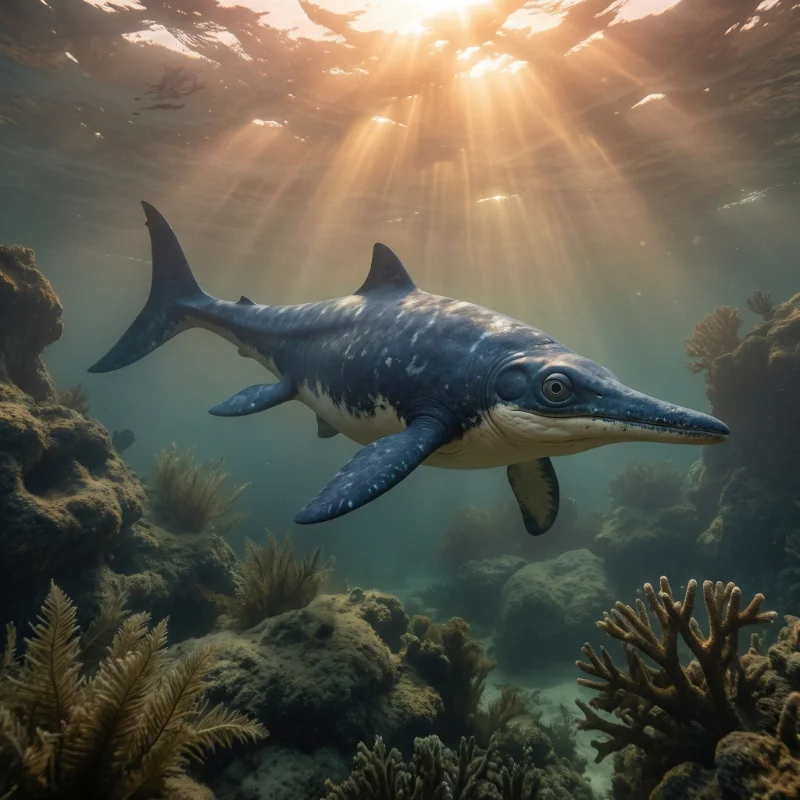 Temnodontosaurus
Temnodontosaurus · Jurassic Period · Carnivore
 Temnodontosaurus
Temnodontosaurus · Jurassic Period · Carnivore
 Temnodontosaurus
Temnodontosaurus · Jurassic Period · Carnivore
 Temnodontosaurus
Temnodontosaurus · Jurassic Period · Carnivore
 Temnodontosaurus
Temnodontosaurus · Jurassic Period · Carnivore
🔗Related Creatures
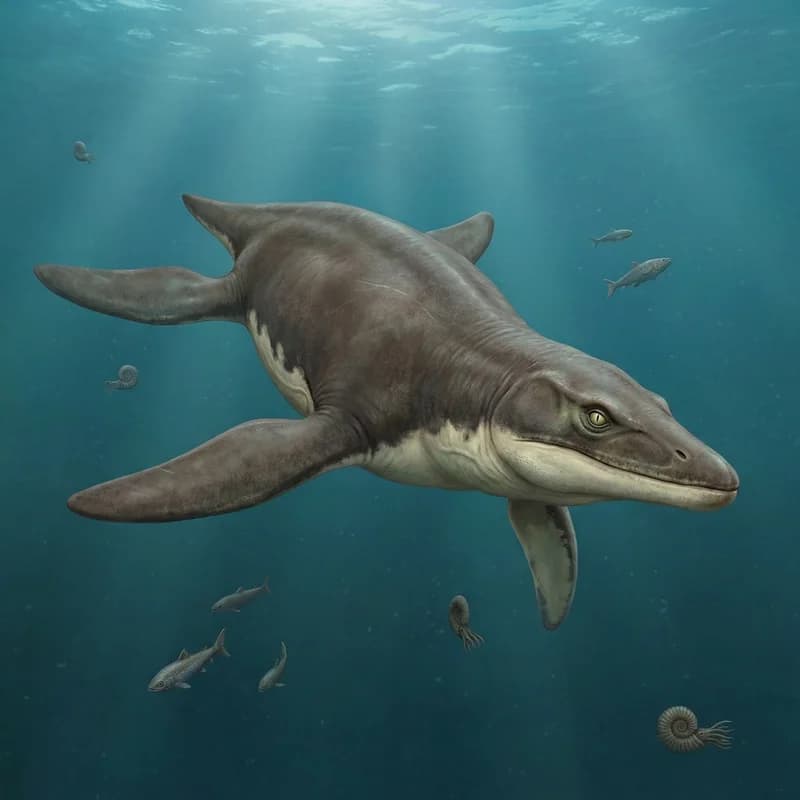
Liopleurodon
Liopleurodon ferox
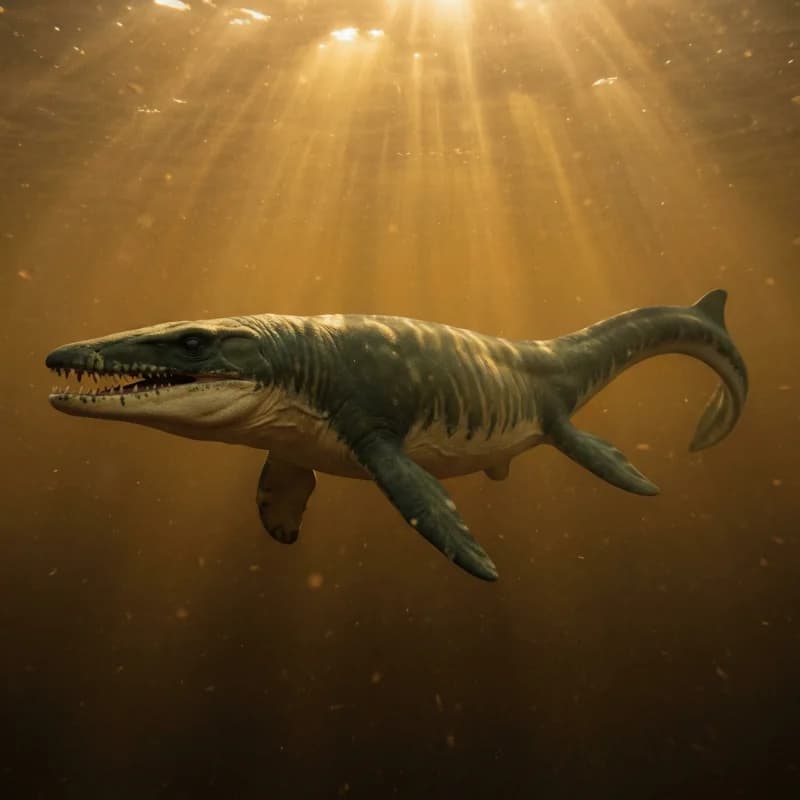
Tylosaurus
Tylosaurus proriger
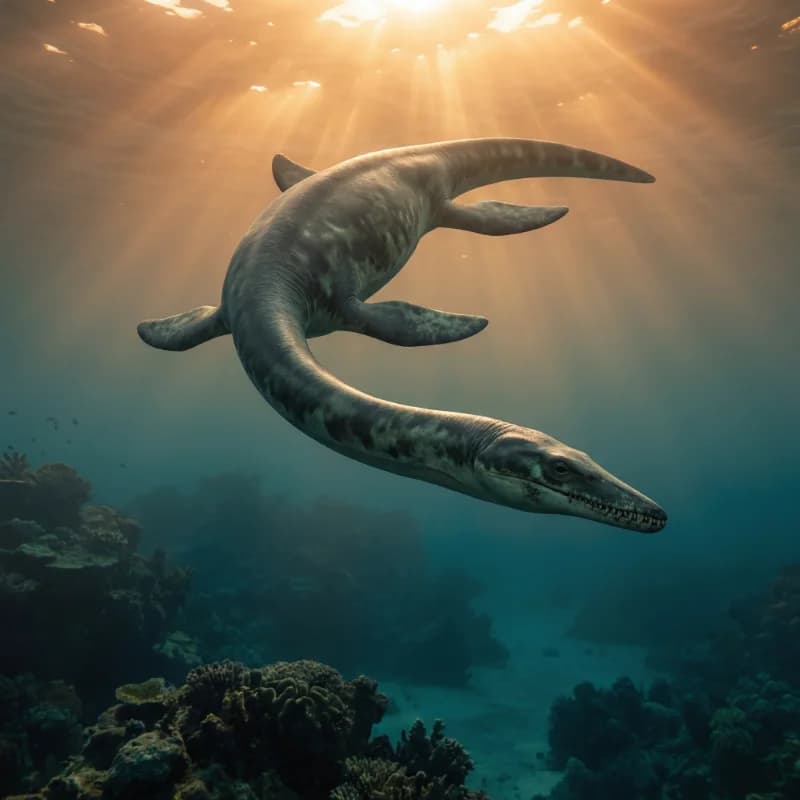
Thalattoarchon
Thalattoarchon saurophagis
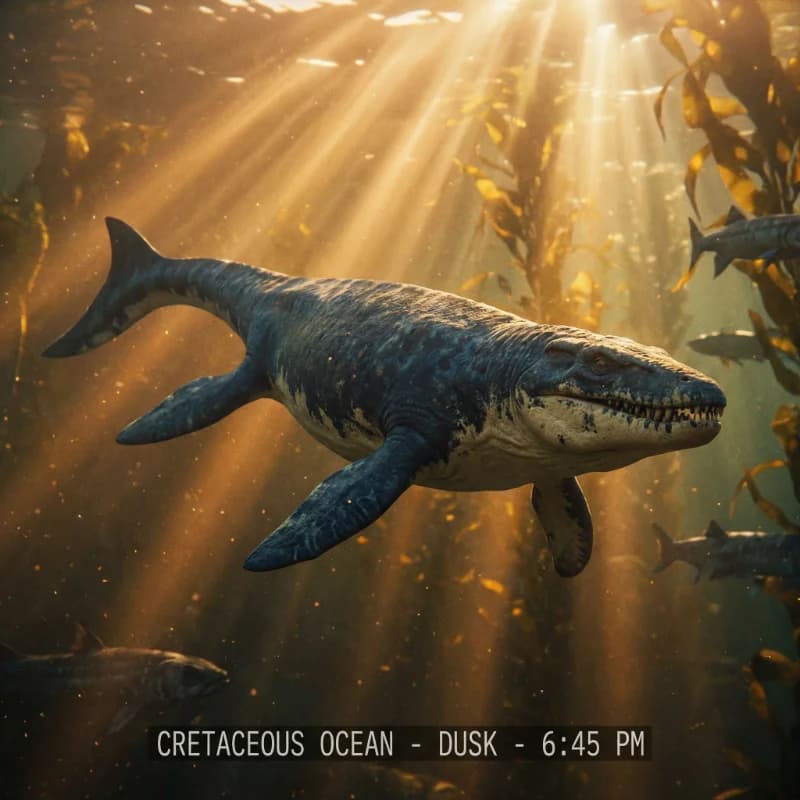
Prognathodon
Prognathodon
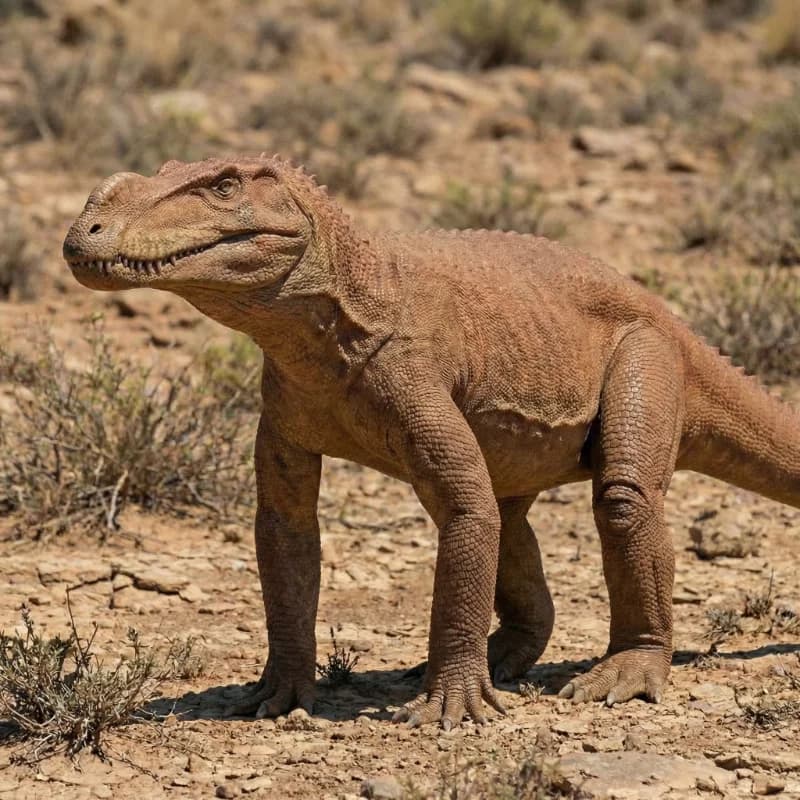
Luperosuchus
Luperosuchus fractus
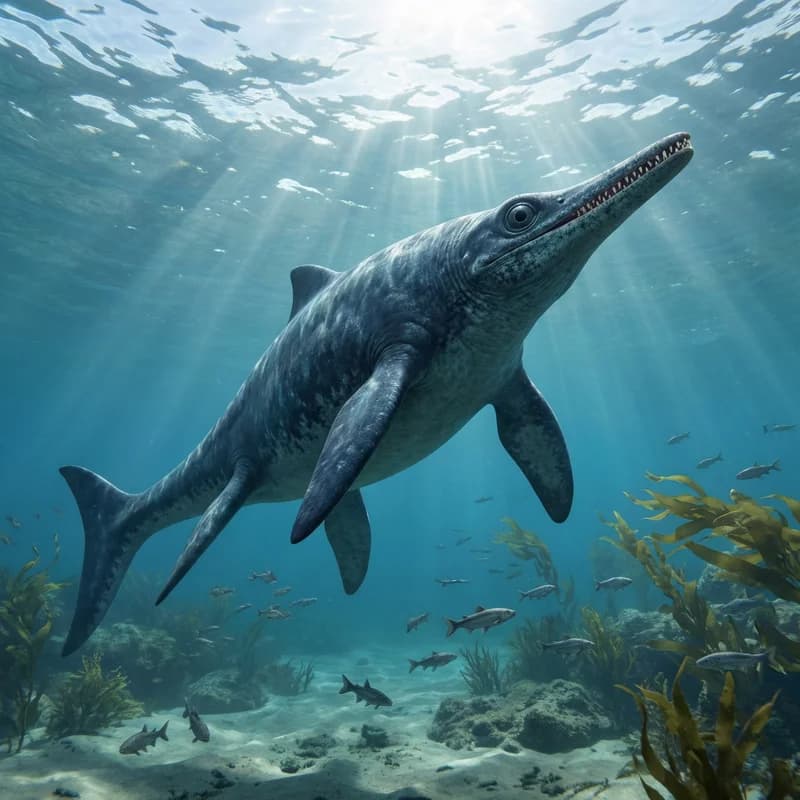
Ichthyosaurus
Ichthyosaurus communis
Mosasaurus
Mosasaurus hoffmannii
Shonisaurus
Shonisaurus popularis