Ophthalmosaurus
Jurassic Period Piscivore Creature Type
Ophthalmosaurus icenicus
Scientific Name: "Greek ophthalmos (ὀφθαλμός, eye) + sauros (σαῦρος, lizard) = 'eye lizard'; specific epithet icenicus refers to the Iceni, an ancient Celtic tribe from East Anglia, England"
Local Name: Ophthalmosaurus
Physical Characteristics
Discovery
Habitat
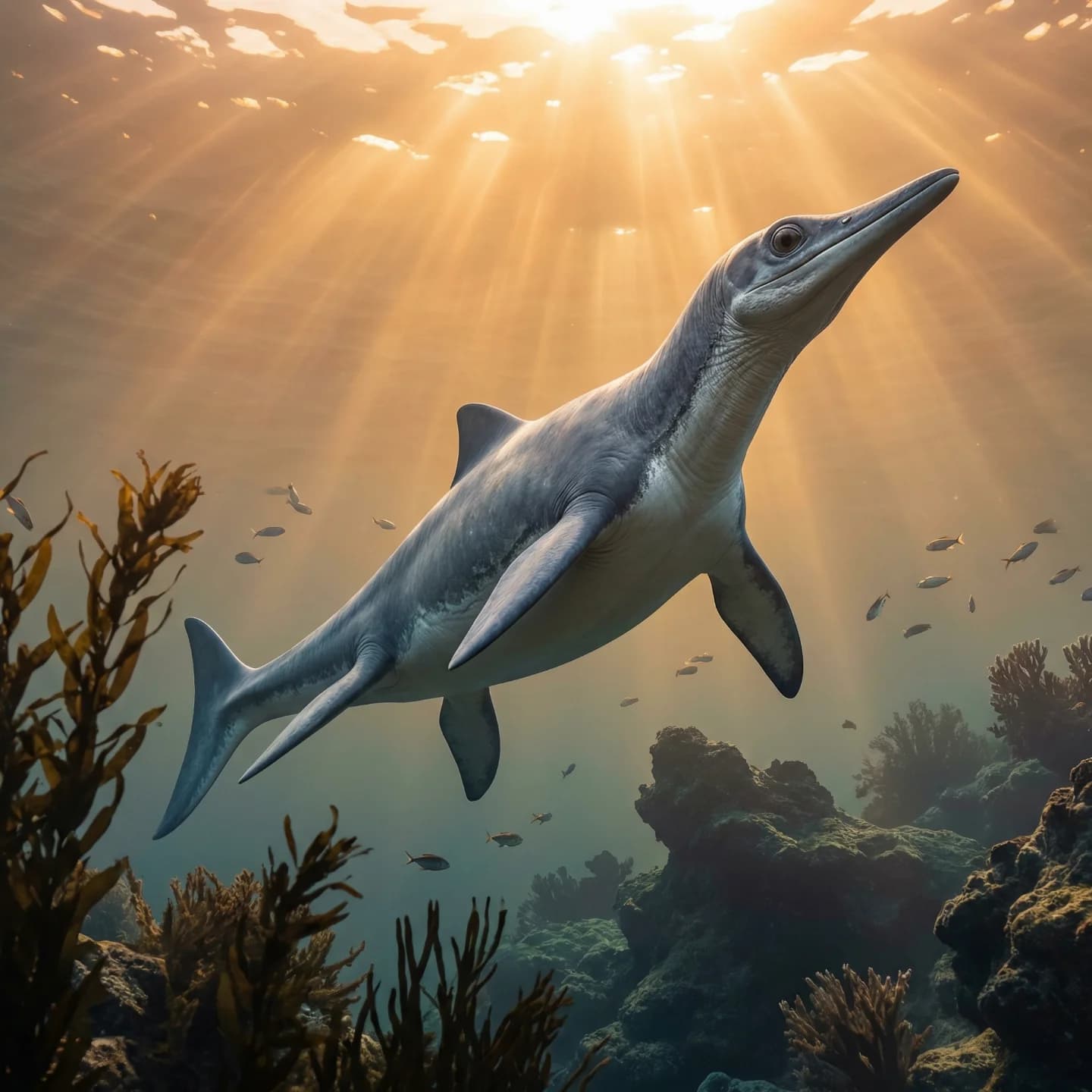
Ophthalmosaurus (Ophthalmosaurus icenicus Seeley, 1874) is a medium-sized ichthyosaur (Ichthyosauria) from the Middle to Late Jurassic (Callovian–Oxfordian, approximately 165–157 Ma). It belongs to the family Ophthalmosauridae, subfamily Ophthalmosaurinae, and is the type genus of its family. The genus name derives from the Greek ophthalmos (eye) and sauros (lizard), meaning "eye lizard," while the specific epithet icenicus refers to the Iceni, an ancient Celtic tribe from East Anglia, England, where the fossils were first discovered. It is important to note that Ophthalmosaurus is not a dinosaur but a marine reptile; ichthyosaurs represent an independent reptilian lineage that returned to the sea, evolving convergently dolphin-like body plans.
The most striking feature of Ophthalmosaurus is its extraordinarily large eyes relative to body size. The sclerotic ring measured approximately 22–23 cm in outer diameter, with a sclerotic aperture diameter of about 10 cm (Motani et al., 1999). This represents the proportionally largest eyes among ichthyosaurs of comparable body size and is interpreted as an adaptation for detecting prey in the low-light conditions of the deep ocean. The animal measured approximately 4 m in total body length with an estimated mass of 930–950 kg (Motani, 2005).
The primary fossil locality is the Oxford Clay Formation in central England, particularly the Peterborough area of Cambridgeshire, which has yielded hundreds of specimens ranging from juveniles to adults. Notably, over fifty pregnant females have been recovered, providing the most abundant direct evidence for viviparity (live birth) in ichthyosaurs. Additional specimens referred to O. icenicus have been reported from northern France (Boulonnais region), European Russia, and possible but contested material from as far afield as Argentina, demonstrating a broad geographic distribution.
Overview
Name and Etymology
The genus name Ophthalmosaurus is a compound of the Greek words ophthalmos (ὀφθαλμός, "eye") and sauros (σαῦρος, "lizard"), directly referencing the animal's most diagnostic feature: its exceptionally large eyes. The specific epithet icenicus honors the Iceni, the Iron Age Celtic tribe that inhabited East Anglia, the region of England where the type material was collected. Harry Govier Seeley first described the genus in 1874 based on a pectoral arch and forelimb from the Oxford Clay of Cambridgeshire (Seeley, 1874).
Taxonomic Status
Ophthalmosaurus is the type genus of Ophthalmosauridae and the type genus of Ophthalmosaurinae. Currently, only the type species O. icenicus is considered unambiguously valid. Historically, several other species were assigned to this genus: O. natans (originally Baptanodon Marsh, 1880, from North America) and O. chrisorum (Russell, 1993, from Canada). However, recent phylogenetic analyses have recovered O. natans as closer to other ophthalmosaurines than to O. icenicus, supporting reinstatement of the name Baptanodon (Fischer et al., 2012), while O. chrisorum was reassigned to the distinct genus Arthropterygius by Maxwell (2010). Maisch & Matzke (2000) synonymized numerous genera including Ancanamunia, Paraophthalmosaurus, and Undorosaurus with Ophthalmosaurus, but most of these have since been restored as valid genera by subsequent studies (Fischer et al., 2011; Zverkov & Jacobs, 2021).
Scientific Significance
Ophthalmosaurus is a keystone taxon for research on ichthyosaur sensory ecology, deep-diving capabilities, viviparous reproduction, and Late Jurassic marine reptile diversity. The abundance of three-dimensionally preserved specimens from the Oxford Clay makes it one of the most anatomically well-understood ichthyosaurs and a critical reference point for comparative studies across the clade.
Stratigraphy and Paleoenvironment
Temporal Range
The confirmed temporal range of O. icenicus spans the Callovian to Oxfordian stages of the Jurassic, approximately 165–157 Ma. The vast majority of specimens originate from the Peterborough Member of the Oxford Clay Formation. Fischer et al. (2012) referred material from the Spilsby Sandstone of Lincolnshire, England, dating to the early Berriasian stage of the Lower Cretaceous (approximately 145 Ma), to cf. Ophthalmosaurus, suggesting possible survival into the earliest Cretaceous, though this assignment remains tentative. Specimens identified as O. icenicus from European Russia derive from Oxfordian–Kimmeridgian deposits (Arkhangelsky et al., 2018).
Formation and Lithology
The principal formation is the Oxford Clay Formation, a widespread marine mudstone unit across central and southern England. The Peterborough Member, which yields the greatest concentration of Ophthalmosaurus material, is characterized by organic-rich, dark grey to black calcareous mudstone and clay. This unit was deposited during the Callovian–Oxfordian interval and is renowned for its exceptional fossil preservation, producing a diverse assemblage of marine vertebrates (ichthyosaurs, plesiosaurs, crocodylomorphs, sharks, bony fish) and invertebrates (ammonites, belemnites, bivalves).
Depositional Environment
The Oxford Clay was deposited in a shallow epicontinental sea that covered much of what is now the British Isles. Hudson & Martill (1991) demonstrated that the Peterborough Member accumulated in relatively shallow waters estimated at only about 50 m depth at a distance of approximately 150 km from the shoreline. The water column was stratified, with a warm, productive surface layer overlying oxygen-depleted bottom waters, which facilitated both high biotic productivity and exceptional organic matter and fossil preservation.
Specimens and Diagnosis
Holotype and Key Specimens
The holotype is NHMUK PV R2133, comprising a partial skeleton including the pectoral girdle and forelimb, housed at the Natural History Museum, London. The most iconic specimen is a composite mounted skeleton assembled from three individuals (NHMUK PV R3702, R3893, and R4124) displayed at the same institution, though Moon & Kirton (2016) noted that the forelimbs were mounted in reversed orientation. Hundreds of additional specimens are known from the Oxford Clay, representing ontogenetic stages from embryos and juveniles to fully grown adults and pregnant females.
Diagnosis
Following the redescription by Moon & Kirton (2016), O. icenicus is diagnosed by the following combination of characters: (1) extremely large orbits and sclerotic rings relative to skull and body size; (2) numerous small but robust teeth; (3) a slender, elongate rostrum; (4) a broad, flattened humerus with relatively short forelimbs; and (5) disc-shaped, closely packed vertebral centra. This character combination distinguishes O. icenicus from closely related taxa such as Acamptonectes, Mollesaurus, and Baptanodon.
Specimen Limitations
The majority of specimens are found disarticulated or partially articulated; fully articulated skeletons are rare. The composite nature of the mounted display skeleton means that individual variation must be carefully distinguished from interspecific differences. The generic assignment of certain Russian and Argentine specimens remains debated.
| Specimen | Type | Preserved Elements | Locality/Formation | Reference |
|---|---|---|---|---|
| NHMUK PV R2133 | Holotype | Pectoral girdle, forelimb | Cambridgeshire, England; Oxford Clay Fm. | Seeley, 1874 |
| NHMUK PV R3702/R3893/R4124 | Composite display skeleton | Near-complete | Peterborough area, England; Oxford Clay Fm. | Moon & Kirton, 2016 |
| NHMUK PV R4522 | Referred specimen | Partial skull, centra | England; Oxford Clay Fm. | Appleby, 1956 |
| SKM no. OF 242/6 | Referred specimen | Partial skeleton | European Russia; Oxfordian–Kimmeridgian | Arkhangelsky et al., 2018 |
Morphology and Functional Biology
Body Shape and Size
Ophthalmosaurus had a robust, streamlined, teardrop-shaped body that was nearly as wide as it was tall in cross-section. Motani (2005) estimated a total body length of approximately 4 m and a body mass of approximately 930–950 kg. Some popular sources cite lengths of up to 6 m, but this figure lacks clear academic support; 4 m is the consensus scholarly estimate. Ophthalmosaurus was thus a medium-sized ichthyosaur.
Eyes and Visual Adaptation
The defining feature of Ophthalmosaurus is its disproportionately large eyes, which occupied nearly the entire lateral surface of the cranium. The sclerotic ring measured approximately 22–23 cm in external diameter, with the sclerotic aperture itself measuring approximately 10 cm across (Motani et al., 1999). Motani et al. (1999) interpreted the large aperture as an adaptation to maximize visual sensitivity in the extremely low-light conditions of the deep ocean (scotopic vision). The well-developed sclerotic ossicles would also have provided structural support for the eyeball against the hydrostatic pressure encountered at depth.
Dentition and Snout
Contrary to some popular depictions describing Ophthalmosaurus as "toothless," the animal possessed numerous small but robust teeth set within a slender, elongate rostrum. Fischer et al. (2016) analyzed the tooth morphology and found it to be intermediate between the large, robust teeth of Platypterygius (adapted for consuming large prey such as turtles and birds) and the minute teeth of Baptanodon (interpreted as a soft-prey specialist). This intermediary morphology led them to conclude that O. icenicus was most likely a generalist predator feeding on a variety of smaller prey items.
Limbs and Locomotion
The limbs of Ophthalmosaurus were short and rounded, with the forelimbs noticeably larger than the hind limbs. The tail terminated in a well-developed bi-lobed caudal fluke, with the lower lobe formed around the downturned caudal vertebral column and the upper lobe composed entirely of soft tissue. This morphology indicates a thunniform (tuna-like) mode of locomotion powered primarily by the tail, in contrast to the anguilliform (eel-like) swimming of more basal ichthyosaurs. The limbs served primarily as stabilizers and steering devices.
Diving Capability
Biomechanical analysis by Motani (2005) estimated that Ophthalmosaurus could sustain dives of approximately 20 minutes duration. Assuming a conservative cruising speed of 1 m/s (with 2 m/s being more realistic), it could theoretically reach depths of 600 m or more, penetrating the mesopelagic zone. Evidence of avascular necrosis (decompression sickness or "the bends") has been identified in the joint bones of some specimens, providing indirect pathological evidence that deep diving actually occurred and that rapid ascents sometimes resulted in decompression injuries. However, Hudson & Martill (1991) demonstrated that the actual habitat at the Peterborough Member locality was a relatively shallow sea of approximately 50 m depth, suggesting that deep dives may have been episodic rather than routine.
Diet and Ecology
Diet
The diet of Ophthalmosaurus is inferred from dental morphology and eye size. Fischer et al. (2016) concluded that the small but robust teeth indicate a generalist predatory strategy, with the animal feeding on a variety of smaller prey including fish and cephalopods. The extremely large eyes would have been advantageous for detecting prey in the low-light conditions of deeper waters, suggesting that deep-dwelling squid and small fish were likely important components of the diet. However, no direct evidence of stomach contents has been preserved in any Ophthalmosaurus specimen, so dietary reconstructions remain morphology-based inferences.
Ecological Niche and Contemporaneous Fauna
Within the Oxford Clay ecosystem, Ophthalmosaurus occupied a mid-trophic level as a medium-sized marine predator. It shared these seas with large plesiosaurs (Cryptoclidus, Muraenosaurus), apex predatory pliosaurs (Liopleurodon, Simolestes), marine crocodylomorphs (Metriorhynchus), sharks (Hybodus, Asteracanthus), diverse bony fish, and abundant invertebrates (ammonites, belemnites, bivalves). Ophthalmosaurus itself was likely prey for the larger pliosaurs, and deep diving may have served as both a foraging strategy and a predator-evasion tactic.
Reproduction and Viviparity
Over fifty pregnant female Ophthalmosaurus specimens have been recovered from the Oxford Clay, providing the most extensive direct evidence for viviparity in any ichthyosaur genus. Individual females have been found carrying between 2 and 11 embryos, confirming that Ophthalmosaurus gave birth to multiple live young. This obligate viviparity is consistent with the fully aquatic lifestyle of derived ichthyosaurs, which could not haul out onto land, paralleling the reproductive strategy of modern cetaceans.
Distribution and Paleogeography
Geographic Distribution
The principal locality for O. icenicus is the Oxford Clay Formation in Cambridgeshire, England, particularly the Peterborough area, which has produced the majority of known specimens. Additional records include the Boulonnais region of northern France (Tithonian deposits), European Russia (Oxfordian–Kimmeridgian), and possible material (cf. Ophthalmosaurus) from the Spilsby Sandstone of Lincolnshire, England (early Berriasian). At the family level (Ophthalmosauridae), closely related taxa are known from Argentina (Vaca Muerta Formation), North America (Sundance Formation), Svalbard, Italy, and Greenland, demonstrating the worldwide success of this clade in Jurassic seas.
Paleogeographic Context
During the Callovian–Oxfordian, the British Isles were located at approximately 35–40°N paleolatitude, substantially farther south than their present position, within a subtropical to warm-temperate climatic belt. A broad, shallow epicontinental sea covered much of the European continental shelf, providing extensive marine habitat with abundant prey resources that supported a diverse assemblage of marine reptiles.
Phylogenetics and Taxonomic Debates
Recent Phylogenetic Analyses
In the cladistic analysis of Fischer et al. (2012), Ophthalmosaurus nests within Ophthalmosaurinae as part of a clade alongside Acamptonectes and Mollesaurus. Earlier studies (Fernández, 2007) placed Aegirosaurus as the closest relative, but more recent analyses consistently recover Aegirosaurus within Platypterygiinae, distant from Ophthalmosaurus. The analysis of Zverkov & Jacobs (2021) similarly places O. icenicus and O. natans in a shared subclade but supports the potential separation of O. natans into a distinct genus.
Alternative Hypotheses and Controversies
The most significant ongoing debate concerns the taxonomic placement of O. natans. Originally described as Sauranodon and later renamed Baptanodon by Marsh (1880), it was long treated as a species of Ophthalmosaurus. However, Fischer et al. (2012) and Paparella et al. (2017) recovered it as more closely related to other ophthalmosaurines than to the type species, supporting reinstatement of Baptanodon. The Russian taxon Khudiakovia calloviensis (Arkhangelsky, 1999) has been treated as a synonym of O. icenicus by some authors, but its validity continues to be discussed.
| Taxon | Current Status | Notes |
|---|---|---|
| O. icenicus Seeley, 1874 | Valid (type species) | England, Oxford Clay Fm. |
| O. natans (Marsh, 1879) | Likely separate genus (Baptanodon) | North America, Sundance Fm. |
| O. chrisorum Russell, 1993 | Reassigned to Arthropterygius | Canada |
| Ancanamunia Rusconi, 1942 | Likely synonym of O. icenicus | Argentina |
| Khudiakovia Arkhangelsky, 1999 | Likely synonym (debated) | Russia |
Reconstruction and Uncertainties
Confirmed, Probable, and Hypothetical
Confirmed: (1) A marine reptile belonging to Ichthyosauria, Ophthalmosauridae (not a dinosaur); (2) Exceptionally large eyes relative to body size (sclerotic ring outer diameter approximately 22–23 cm); (3) Streamlined body with a bi-lobed caudal fluke; (4) Viviparous reproduction (over 50 pregnant specimens); (5) Principal locality: Oxford Clay Formation, England.
Probable: (1) Deep-diving capability (supported by pathological evidence of decompression sickness and large eye size); (2) Generalist predatory ecology (based on dental morphology analysis); (3) Body length approximately 4 m, mass approximately 930–950 kg.
Hypothetical/Uncertain: (1) The theoretical maximum dive depth of 600+ m is a biomechanical estimate, not directly confirmed; (2) The final taxonomic placement of O. natans; (3) Whether Russian and Argentine specimens truly represent O. icenicus; (4) Possible survival into the Berriasian (earliest Cretaceous).
Popular Media vs. Scientific Consensus
Popular media frequently depict Ophthalmosaurus as a "toothless" animal, but it actually possessed numerous small, robust teeth. Body length is often cited as 6 m in popular sources, yet the academically supported estimate is approximately 4 m. The BBC documentary Walking with Dinosaurs (1999) featured Ophthalmosaurus prominently, including a birth sequence, significantly raising public awareness of this ichthyosaur, though certain depictions in the program are inconsistent with subsequent research findings.
Comparative Table
| Genus | Family/Subfamily | Age | Estimated Length | Key Features |
|---|---|---|---|---|
| Ophthalmosaurus | Ophthalmosaurinae | Callovian–Oxfordian | ca. 4 m | Extremely large eyes, small robust teeth |
| Baptanodon (O. natans) | Ophthalmosaurinae | Oxfordian | ca. 3–4 m | Minute teeth, inferred soft-prey specialist |
| Acamptonectes | Ophthalmosaurinae | Hauterivian–Barremian | ca. 3 m | Large eyes, Cretaceous survivor |
| Arthropterygius | Ophthalmosauridae | Kimmeridgian–Tithonian | ca. 3–5 m | Distinctive forelimb morphology |
| Brachypterygius | Platypterygiinae | Kimmeridgian | ca. 3–4 m | Short limbs |
| Ichthyosaurus | Ichthyosauridae | Hettangian–Sinemurian | ca. 2–3 m | Iconic early Jurassic ichthyosaur |
Fun Facts
FAQ
📚References
- Seeley, H. G. (1874). On the pectoral arch and fore limb of Ophthalmosaurus, a new ichthyosaurian genus from the Oxford Clay. Quarterly Journal of the Geological Society, 30(1–4), 696–707. doi:10.1144/GSL.JGS.1874.030.01-04.64
- Appleby, R. M. (1956). The osteology and taxonomy of the fossil reptile Ophthalmosaurus. Proceedings of the Zoological Society of London, 126(3), 403–447. doi:10.1111/j.1096-3642.1956.tb00447.x
- Motani, R., Rothschild, B. M., & Wahl, W. (1999). Large eyeballs in diving ichthyosaurs. Nature, 402(6763), 747. doi:10.1038/45435
- Maisch, M. W. & Matzke, A. T. (2000). The Ichthyosauria. Stuttgarter Beiträge zur Naturkunde, Serie B (Geologie und Paläontologie), 298, 1–159.
- Motani, R. (2005). Evolution of fish-shaped reptiles (Reptilia: Ichthyopterygia) in their physical environments and constraints. Annual Review of Earth and Planetary Sciences, 33, 395–420. doi:10.1146/annurev.earth.33.092203.122707
- Druckenmiller, P. S. & Maxwell, E. E. (2010). A new Lower Cretaceous (lower Albian) ichthyosaur genus from the Clearwater Formation, Alberta, Canada. Canadian Journal of Earth Sciences, 47(8), 1037–1053. doi:10.1139/E10-028
- Maxwell, E. E. (2010). Generic reassignment of an ichthyosaur from the Queen Elizabeth Islands, Northwest Territories, Canada. Journal of Vertebrate Paleontology, 30(2), 403–415. doi:10.1080/02724631003617944
- Fischer, V., Masure, E., Arkhangelsky, M. S., & Godefroit, P. (2011). A new Barremian (Early Cretaceous) ichthyosaur from western Russia. Journal of Vertebrate Paleontology, 31(5), 1010–1025. doi:10.1080/02724634.2011.595464
- Fischer, V., Maisch, M. W., Naish, D., Kosma, R., Liston, J., Joger, U., ... & Appleby, R. M. (2012). New ophthalmosaurid ichthyosaurs from the European Lower Cretaceous demonstrate extensive ichthyosaur survival across the Jurassic–Cretaceous boundary. PLoS ONE, 7(1), e29234. doi:10.1371/journal.pone.0029234
- Fischer, V., Bardet, N., Benson, R. B. J., Arkhangelsky, M. S., & Friedman, M. (2016). Extinction of fish-shaped marine reptiles associated with reduced evolutionary rates and global environmental volatility. Nature Communications, 7, 10825. doi:10.1038/ncomms10825
- Moon, B. C. & Kirton, A. M. (2016). Ichthyosaurs of the British Middle and Upper Jurassic. Part 1, Ophthalmosaurus. Monographs of the Palaeontographical Society, 170(647), 1–84. doi:10.1080/02693445.2016.11963958
- Paparella, I., Maxwell, E. E., Cipriani, A., Roncacè, S., & Caldwell, M. W. (2017). The first ophthalmosaurid ichthyosaur from the Upper Jurassic of the Umbrian-Marchean Apennines (Marche, Central Italy). Geological Magazine, 154(4), 837–858. doi:10.1017/S0016756816000455
- Arkhangelsky, M. S., Zverkov, N. G., Rogov, M. A., Stenshin, I. M., & Baykina, E. M. (2018). On the first reliable record of the ichthyosaur Ophthalmosaurus icenicus Seeley in the Oxfordian–Kimmeridgian beds of European Russia. Paleontological Journal, 52(1), 30–38. doi:10.1134/S0031030118010033
- Zverkov, N. G. & Jacobs, M. L. (2021). Revision of Nannopterygius (Ichthyosauria: Ophthalmosauridae): reappraisal of the 'inaccessible' holotype resolves a taxonomic tangle and reveals an obscure ophthalmosaurid lineage with a wide distribution. Zoological Journal of the Linnean Society, 191(1), 228–275. doi:10.1093/zoolinnean/zlaa028
- Hudson, J. D. & Martill, D. M. (1991). The Lower Oxford Clay: production and preservation of organic matter in the Callovian (Jurassic) of central England. Geological Society, London, Special Publications, 58(1), 363–379. doi:10.1144/GSL.SP.1991.058.01.23
- Schwab, I. R. (2002). My, what big eyes you have. British Journal of Ophthalmology, 86(2), 130. doi:10.1136/bjo.86.2.130
- Maisch, M. W. (2010). Phylogeny, systematics, and origin of the Ichthyosauria – the state of the art. Palaeodiversity, 3, 151–214.
Gallery
5 images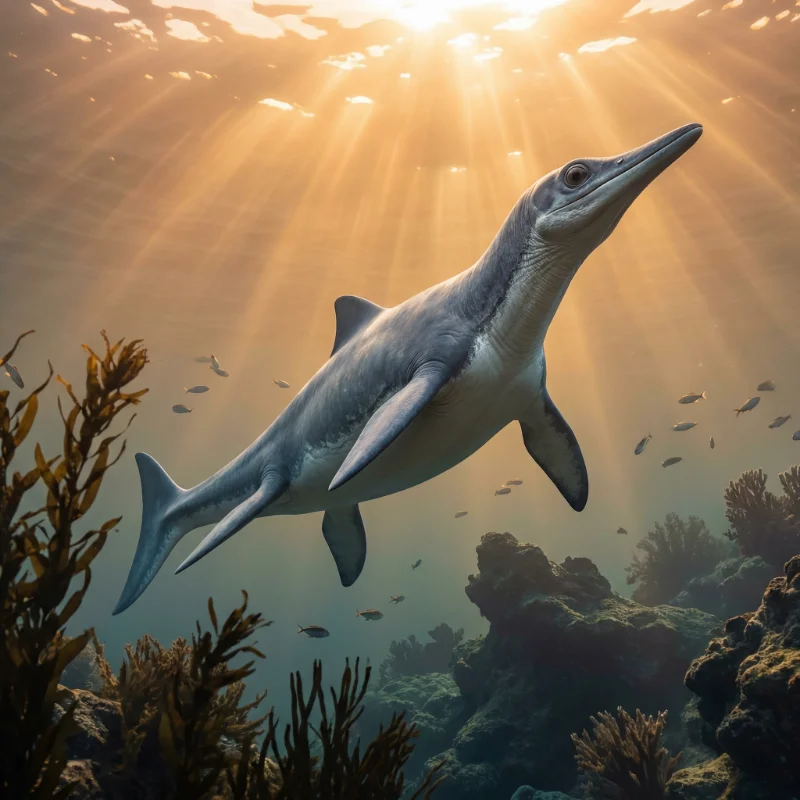 Ophthalmosaurus
Ophthalmosaurus · Jurassic Period · Piscivore
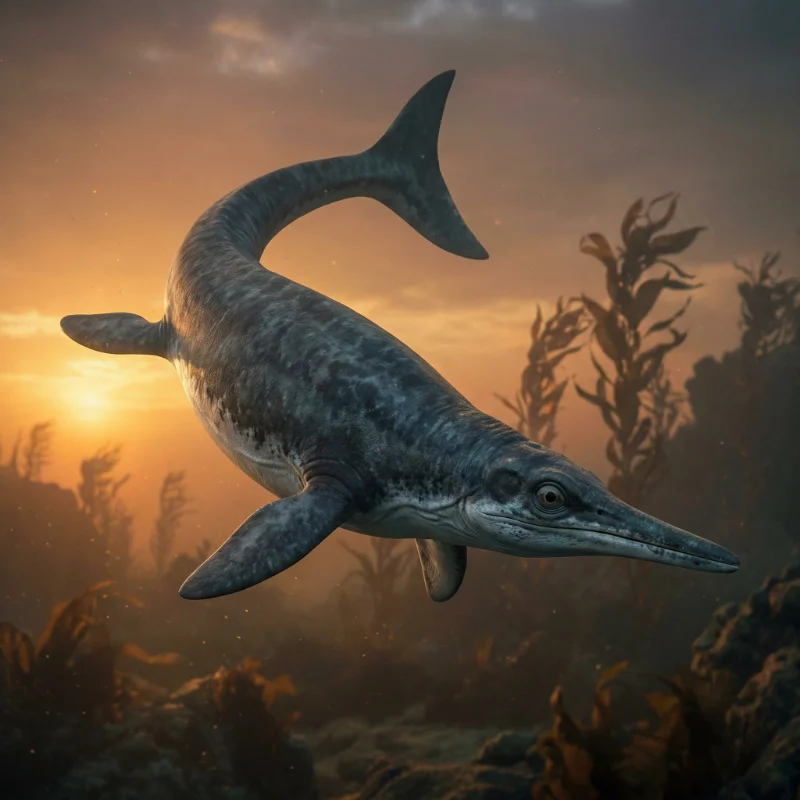 Ophthalmosaurus
Ophthalmosaurus · Jurassic Period · Piscivore
 Ophthalmosaurus
Ophthalmosaurus · Jurassic Period · Piscivore
 Ophthalmosaurus
Ophthalmosaurus · Jurassic Period · Piscivore
 Ophthalmosaurus
Ophthalmosaurus · Jurassic Period · Piscivore
🔗Related Creatures
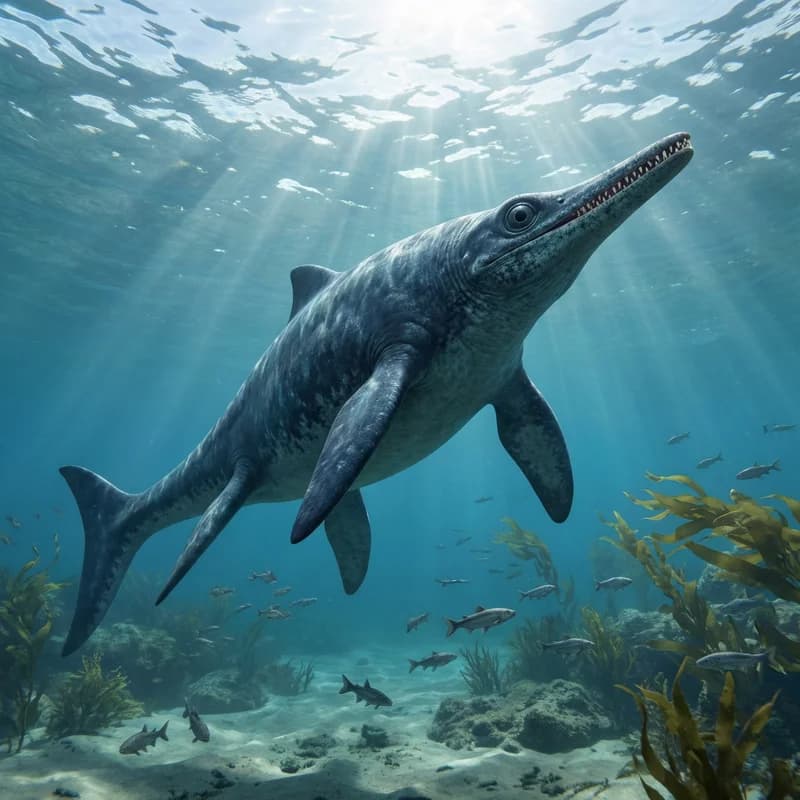
Ichthyosaurus
Ichthyosaurus communis
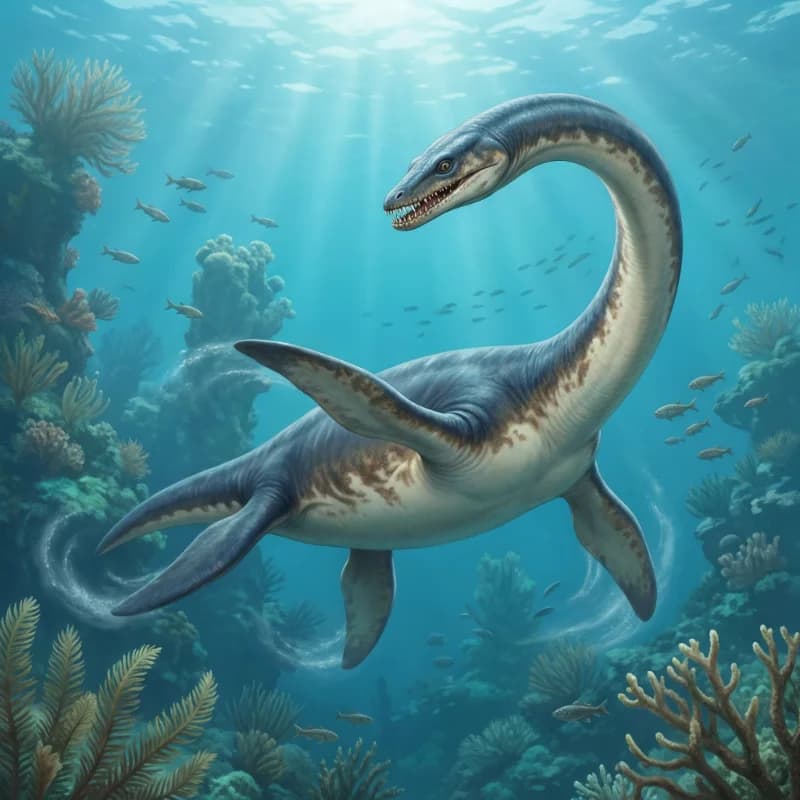
Plesiosaurus
Plesiosaurus dolichodeirus
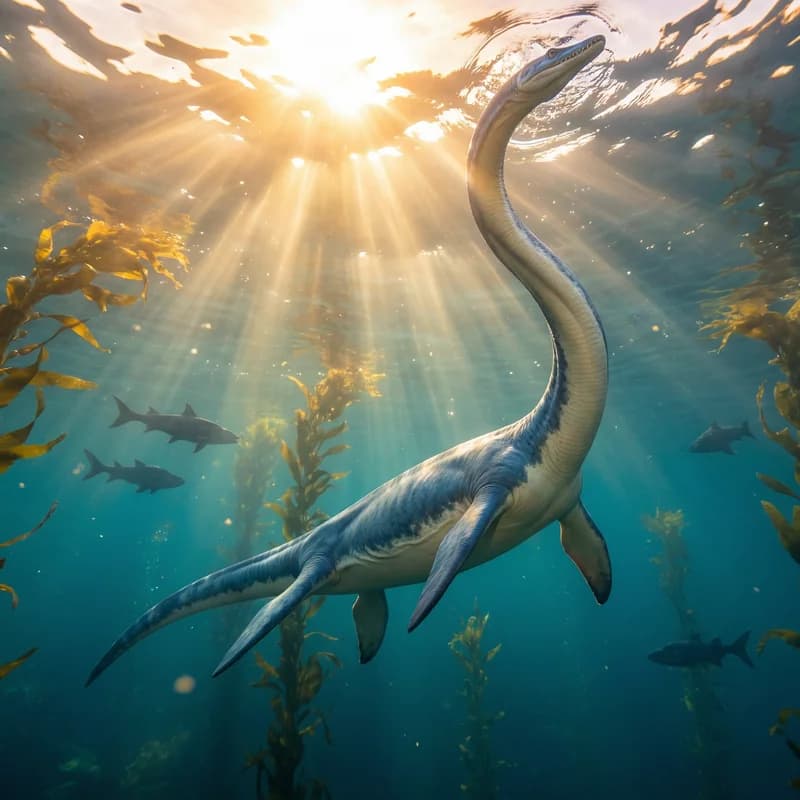
Tanystropheus
Tanystropheus longobardicus
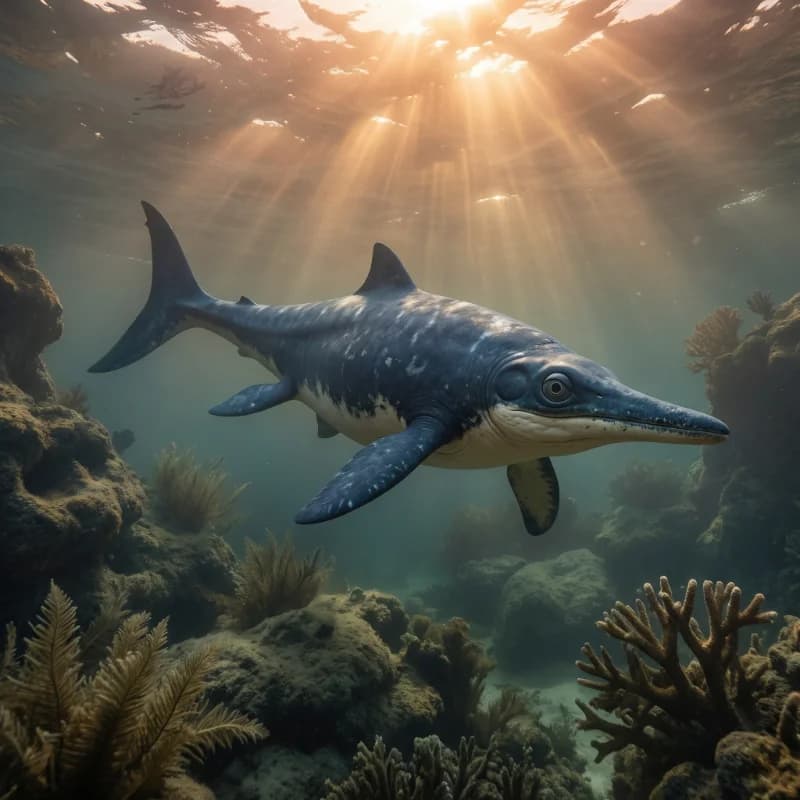
Temnodontosaurus
Temnodontosaurus
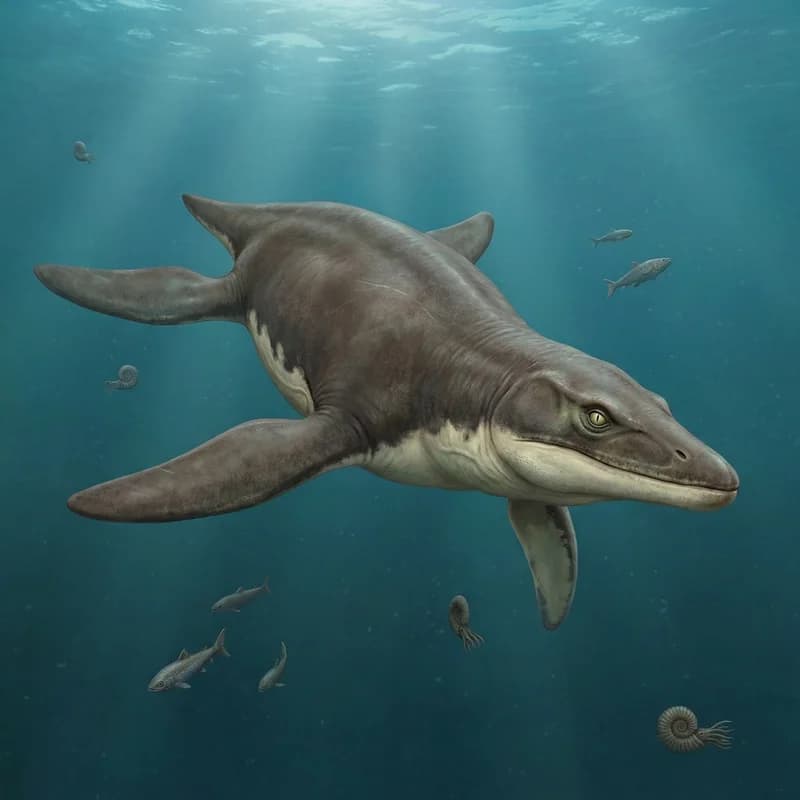
Liopleurodon
Liopleurodon ferox
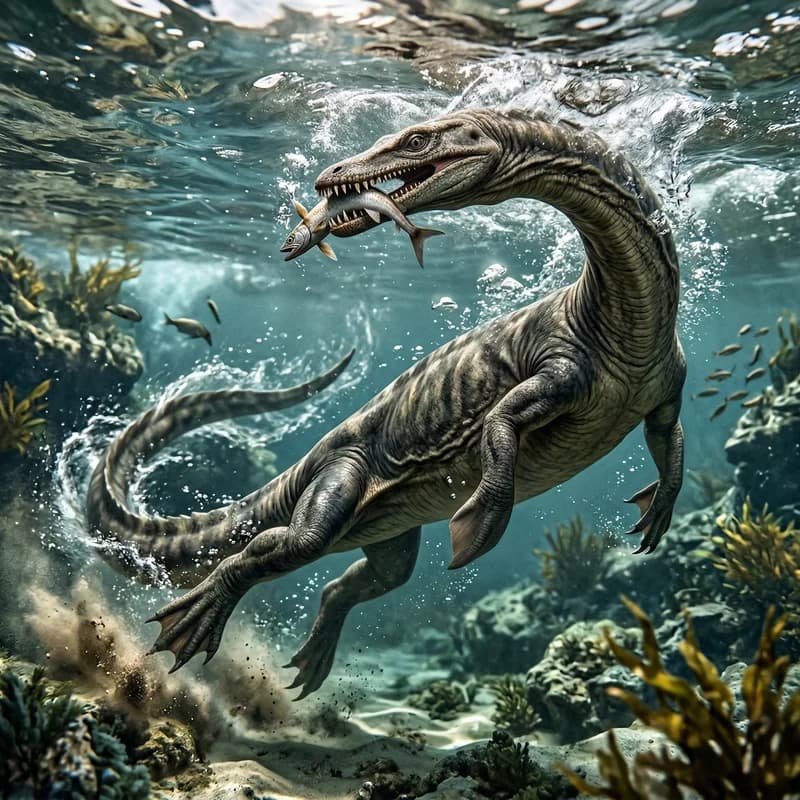
Nothosaurus
Nothosaurus mirabilis
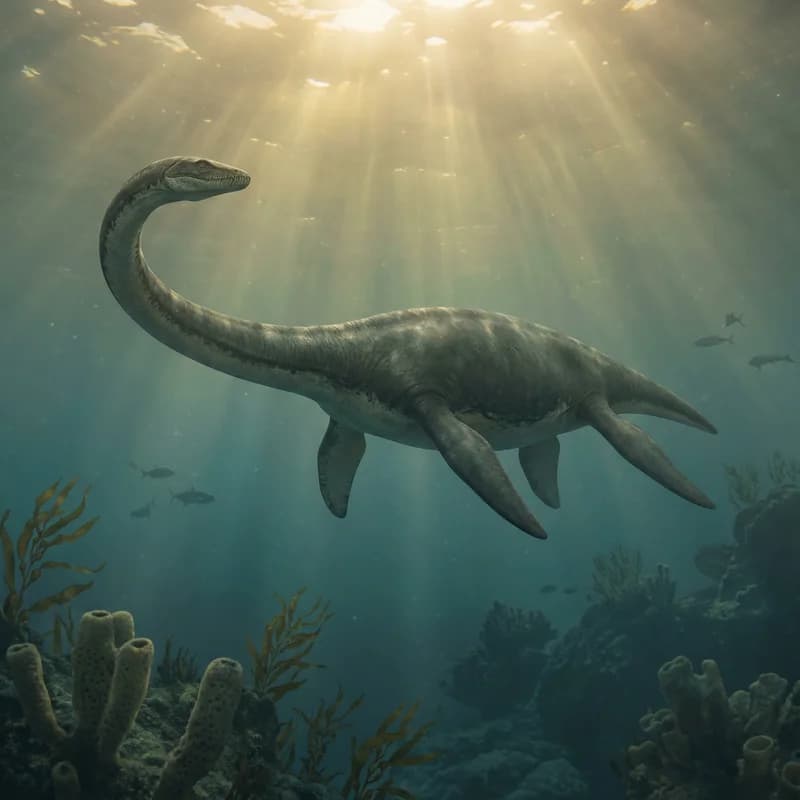
Elasmosaurus
Elasmosaurus platyurus
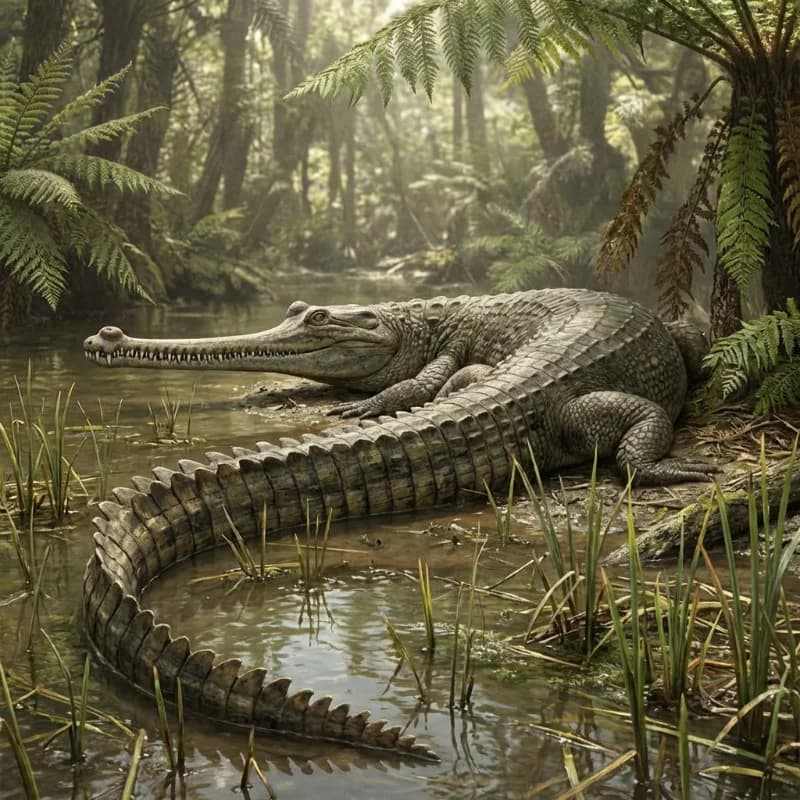
Mystriosuchus
Mystriosuchus planirostris