Tanystropheus
Triassic Period Piscivore Creature Type
Tanystropheus longobardicus
Scientific Name: "Ancient Greek τανυ~ (tany-, 'long') + στροφευς (stropheus, 'hinge/joint') = 'long hinge.' Named by Meyer (1852) when the elongated bones were misinterpreted as caudal vertebrae, hence 'the one with long hinged (vertebral) bones.'"
Local Name: Tanystropheus
Physical Characteristics
Discovery
Habitat
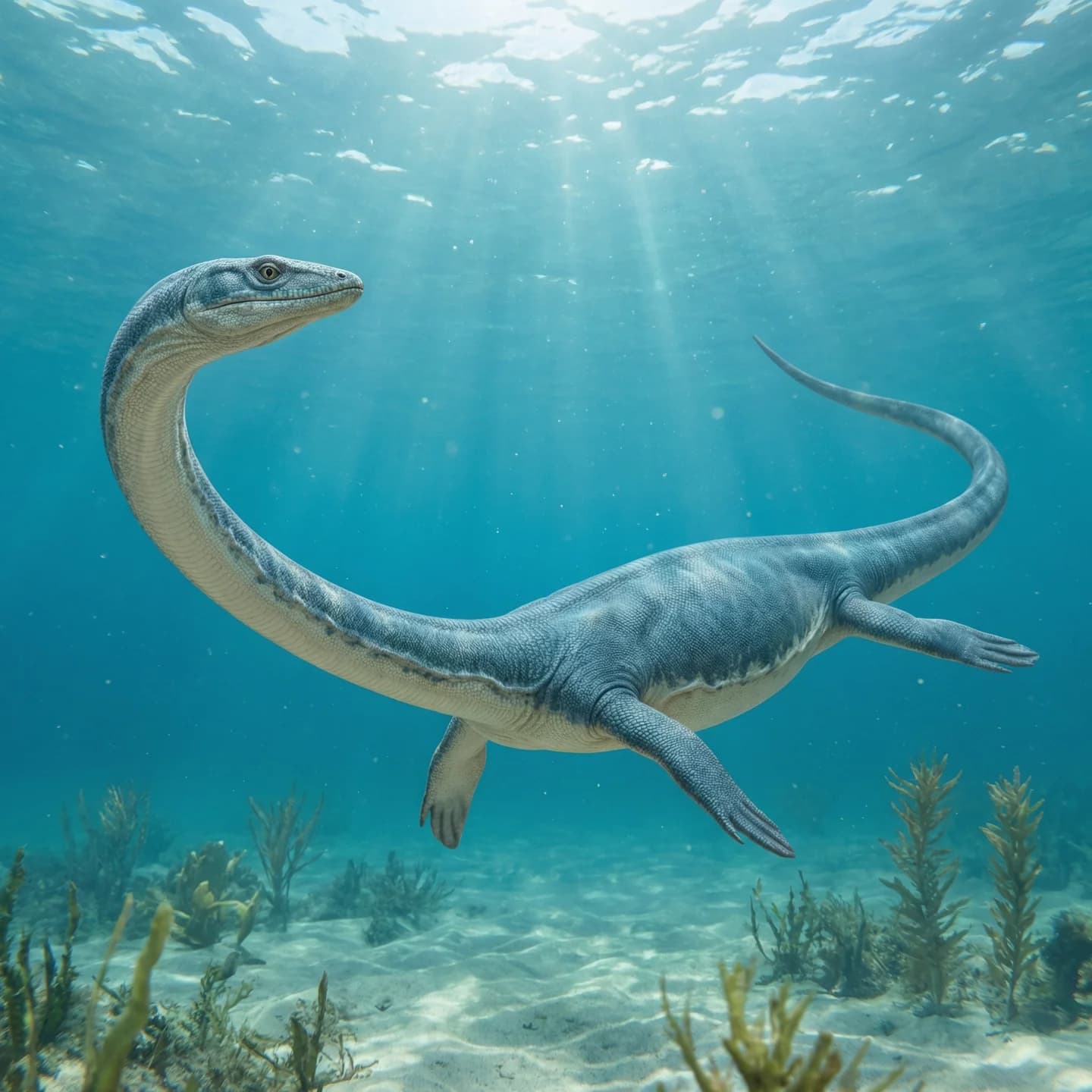
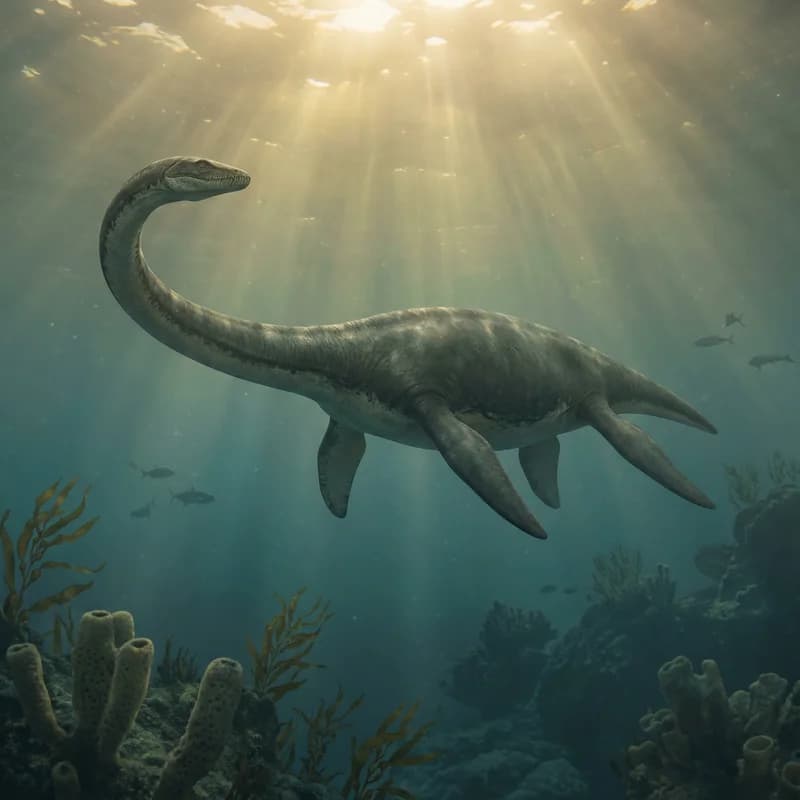
Tanystropheus (Tanystropheus Meyer, 1852) is an extinct genus of archosauromorph reptile that lived during the Triassic Period across Europe, Asia, and North America. It is not a dinosaur; rather, it belongs to the family Tanystropheidae, a clade of non-archosauriform archosauromorphs — a group that branched off before the lineage leading to crocodilians, dinosaurs, and birds. The most striking feature of Tanystropheus is its extraordinarily elongated neck, which was longer than the torso and tail combined, yet composed of only 13 cervical vertebrae. The larger species, T. hydroides, reached a total length of approximately 5–6 meters (16–20 feet), while the smaller species, T. longobardicus, had a maximum length of around 2 meters (6.6 feet).
The genus was first established in 1852 by German paleontologist Hermann von Meyer, who assigned the name to elongated bones from the Upper Muschelkalk of Germany; the type species T. conspicuus was formally named in 1855. Early researchers misidentified these bones — some interpreted them as tail vertebrae, while Italian paleontologist Francesco Bassani (1886) described Monte San Giorgio fossils as a pterosaur named "Tribelesodon," mistaking the cervical vertebrae for elongated finger bones. It was only in the late 1920s and 1930s, when Bernhard Peyer's systematic excavations at Monte San Giorgio yielded articulated skeletons, that the true identity of these bones as hyperelongate neck vertebrae was established.
A landmark 2020 study by Spiekman et al. used synchrotron micro-CT scanning and osteohistological analysis to demonstrate that the large and small morphotypes from Monte San Giorgio represent two distinct species coexisting in the same habitat. The large, single-cusped morphotype was named Tanystropheus hydroides (after the Hydra of Greek mythology), while the smaller, tricuspid-toothed morphotype retained the name T. longobardicus. This discovery also confirmed that Tanystropheus was an aquatic or semi-aquatic animal: the skull of T. hydroides exhibits nostrils positioned on top of the snout (similar to extant crocodilians) and interlocking fang-like teeth adapted for catching slippery prey, providing compelling evidence for an aquatic ambush predatory lifestyle.
Overview
Name and Etymology
The genus name Tanystropheus derives from the Ancient Greek τανυ~ (tany-, "long") and στροφευς (stropheus, "hinge" or "joint"), meaning "long hinge." Hermann von Meyer coined the name in 1852 when he assigned it to elongated bones from the Upper Muschelkalk near Bindlach, Bavaria, Germany. At the time, these bones were interpreted as elongated caudal vertebrae, so the name referenced "the one with long hinged bones." The type species epithet conspicuus is Latin for "conspicuous" or "remarkable." The species T. hydroides, named in 2020, references the Hydra of Greek mythology — the multi-headed serpent monster — evoking the animal's long, serpentine neck. The species T. longobardicus, originally described as "Tribelesodon longobardicus" by Bassani (1886), takes its epithet from Lombardy (Latin: Longobardia), the northern Italian region where the Monte San Giorgio fossils were found.
Taxonomic Status
The genus currently contains at least two valid species: T. longobardicus (Bassani, 1886) and T. hydroides Spiekman et al., 2020. The type species, T. conspicuus Meyer, 1855, is based on isolated postcranial material that is undiagnostic at the species level and is therefore considered a nomen dubium (Spiekman & Scheyer, 2019). T. antiquus von Huene, 1907–1908 is regarded as a valid archosauromorph taxon, but its assignment to Tanystropheus has been questioned; Sennikov (2011) proposed the separate genus Protanystropheus for this species, and some phylogenetic analyses recover it outside Tanystropheidae entirely. T. meridensis Wild, 1980 is a junior synonym of T. longobardicus; T. haasi Rieppel, 2001 is a nomen dubium; and T. fossai Wild, 1980 was reassigned to the separate genus Sclerostropheus (Spiekman & Scheyer, 2019).
One-Sentence Summary
Tanystropheus is one of the most iconic non-dinosaurian Triassic reptiles, distinguished by its hyperelongated neck — more than half its total body length — and its reconstructed lifestyle as a semi-aquatic ambush predator.
Temporal Range, Stratigraphy, and Depositional Environment
Temporal Range
The confirmed fossil record of Tanystropheus spans from the Middle Triassic Anisian stage to the earliest Late Triassic Carnian stage, approximately 247–235 Ma (million years ago). If T. antiquus is included within the genus, the range extends back to the latest Olenekian (ca. 248 Ma), though this species' referral to Tanystropheus remains debated. The youngest unambiguous European record is a vertebra from the lower Carnian Fusea site in Friuli, Italy (Dalla Vecchia, 2000). The youngest global records are two well-preserved skeletons from the Zhuganpo Formation of China, dated to the latest Ladinian or earliest Carnian. Potential Tanystropheus-like tanystropheid remains from the Norian-age Blue Mesa Member of the Chinle Formation in Arizona (ca. 223–218 Ma), first reported in 2025, would extend the temporal range significantly if confirmed.
Formations and Lithology
The richest and best-preserved Tanystropheus fossils come from the Besano Formation (also known as the Grenzbitumenzone) at Monte San Giorgio, a UNESCO World Heritage Site on the Switzerland-Italy border. The Besano Formation straddles the Anisian-Ladinian boundary (ca. 242–240 Ma) and consists of black bituminous marls and limestones — a Lagerstätte famed for its spectacular fossil preservation. Additional T. longobardicus specimens are known from the overlying Meride Limestone (Cassina beds, early to middle Ladinian).
In Germany and Poland, isolated specimens of T. conspicuus and T. antiquus are known from the Upper and Lower Muschelkalk and the Lower Keuper. The Miedary locality in Silesian Poland has yielded over 500 individual bones from a single Lower Keuper bonebed — the largest known concentration of Tanystropheus fossils, more than double the Monte San Giorgio total. In China, near-complete postcranial skeletons were recovered from the Zhuganpo Formation (Zhuganpo Member of the Falang Formation) in Guizhou Province (Li, 2007; Rieppel et al., 2010). A single large cervical vertebra from the Wolfville Formation (Economy Member) in the Bay of Fundy, Nova Scotia, Canada, represents the first North American occurrence (Sues & Olsen, 2015).
Paleoenvironment
The Besano Formation represents a small intraplatform basin — a deep, stable marine environment at an estimated water depth of 30–100 meters (Stockar, 2010). Anoxic to dysoxic bottom conditions facilitated exceptional fossil preservation. The Miedary bonebed in Poland represents an isolated coastal brackish body of water, and the abundance of Tanystropheus fossils suggests this type of habitat was well-suited for the animal (Surmik et al., 2022). The Wolfville Formation's Economy Member is a predominantly freshwater unit, demonstrating that Tanystropheus was not strictly restricted to marine settings. Overall, the depositional environments associated with Tanystropheus range from intraplatform marine basins to coastal lagoons, brackish waters, and freshwater systems.
| Formation / Locality | Age | Lithology | Depositional Environment | Key Taxa / Specimens |
|---|---|---|---|---|
| Besano Fm., Monte San Giorgio | Anisian-Ladinian boundary (~242–240 Ma) | Black bituminous marls, limestones | Intraplatform marine basin (30–100 m depth) | T. longobardicus, T. hydroides |
| Meride Limestone, Monte San Giorgio | Early-middle Ladinian | Limestones | Shallow marine lagoon / coastal | T. longobardicus |
| Upper Muschelkalk, Germany | Late Anisian–early Ladinian | Limestones | Shallow marine | T. conspicuus (nomen dubium) |
| Lower Keuper, Miedary, Poland | Ladinian | Mudstones, sandstones | Coastal brackish | T. conspicuus (500+ specimens) |
| Gogolin Fm., Poland | Late Olenekian–early Anisian | Limestones | Shallow marine | T. antiquus |
| Zhuganpo Fm., Guizhou, China | Late Ladinian–early Carnian | Mudstones, limestones | Coastal marine | T. cf. hydroides, Tanystropheus sp. |
| Wolfville Fm., Nova Scotia, Canada | Anisian–Carnian | Sandstones, mudstones | Primarily freshwater | cf. Tanystropheus sp. |
Specimens and Diagnostic Features
Holotype and Key Specimens
The lectotype of the type species T. conspicuus is U-MO BT 740, an isolated cervical vertebra from the Upper Muschelkalk near Bindlach, Bavaria (Meyer, 1855; lectotype designated by Wild, 1973). The original holotype of T. longobardicus — the specimen described by Bassani (1886) as "Tribelesodon longobardicus" and stored at the Natural History Museum of Milan — was destroyed during Allied bombing in World War II. Specimen PIMUZ T 2791, discovered in 1929, was subsequently designated as the neotype (Wild, 1973). The holotype of T. hydroides is PIMUZ T 2790, a nearly complete, dorsoventrally compressed skull with the first eight cervical vertebrae, recovered from the Besano Formation at Monte San Giorgio (Spiekman et al., 2020).
Notable referred specimens include MSNM BES SC 1018 (T. longobardicus, articulated skeleton with skull), PIMUZ T 3901 (T. longobardicus, skull and partial neck, formerly described as T. meridensis), PIMUZ T 2819 (large morphotype referred to T. hydroides), PIMUZ T 1277 (T. longobardicus, a skeletally mature adult at only 1.5 m total length, confirmed via osteohistology), and GMPKU-P-1527 (near-complete postcranial skeleton from Guizhou, China, referred to T. cf. T. hydroides).
Diagnostic Features
The genus Tanystropheus is diagnosed by its extremely hyperelongate cervical vertebrae (13 total), which are unique among tetrapods and immediately recognizable. The cervical vertebrae are elongated 3 to 15 times longer than tall, with extremely reduced neural spines and elongated cervical ribs bearing rod-like posterior processes. The genus is further characterized by having a constant presacral vertebral count of 25 and only 12 dorsal vertebrae.
T. hydroides is distinguished from T. longobardicus and other species by the following combination of characters (autapomorphies among Triassic archosauromorphs marked with an asterisk): premaxilla lacking a postnarial process; exclusively single-cusped marginal dentition; a dentary tooth piercing through a foramen in the maxilla; a depression on the dorsal surface of the nasals; straight suture between the frontals; fused parietals; conspicuously hooked dorsal quadrate head; wide, anteriorly rounded vomers bearing a single row of large recurved teeth along their outer margin; edentulous palatine and pterygoid; a distinct ventral keel at the anterior end of the dentary*; and a maximum total length exceeding 5 meters (Spiekman et al., 2020; Spiekman et al., 2020b).
T. longobardicus is characterized by heterodont dentition with tricuspid (three-cusped) teeth in the maxilla and posterior dentary, paired (unfused) parietals, the presence of palatal teeth on the vomers, palatines, and pterygoids, a postnarial process on the premaxilla, and a maximum total length of approximately 2 meters.
Limitations of the Fossil Record
Most Monte San Giorgio specimens are dorsoventrally compressed, limiting three-dimensional morphological observation. T. conspicuus is known only from isolated postcranial elements that cannot be diagnosed to species level. The Chinese specimens (GMPKU-P-1527, IVPP V 14472) lack skull material, precluding definitive species-level identification. The Miedary bonebed, though enormously productive in specimen count (500+), consists exclusively of isolated postcranial bones.
Morphology and Functional Anatomy
Body Plan and Size
Tanystropheus was the longest known non-archosauriform archosauromorph. Vertebrae referred to T. conspicuus may correspond to an animal 5–6 meters in total length (Spiekman & Scheyer, 2019). T. hydroides reached an estimated maximum total length of 5.25 meters, with the neck alone accounting for approximately half that length (~3 m) (Spiekman et al., 2020). T. longobardicus had an absolute maximum length of about 2 meters, and osteohistological analysis confirmed that some individuals were skeletally mature at only 1.5 meters (Spiekman et al., 2020).
Despite its considerable length, Tanystropheus was lightly built. Souza & Klein (2022) modeled the respiratory system and body mass of a 3.6 m individual, estimating a body mass of approximately 50.6 ± 21.6 kg (range ca. 33–75 kg). This was significantly lighter than crocodilians of comparable length and more similar to large lizards. Paleoartist Mark Witton (2015) estimated that the neck constituted only about 20% of the animal's total mass, owing to its hollow, lightweight vertebrae.
Skull
The skull of T. longobardicus is roughly triangular in lateral and dorsal view, tapering toward the snout. It is heterodont: the premaxilla bears six conical, fang-like teeth, while the maxilla (up to 14–15 teeth) and posterior dentary (up to 19 teeth total) bear distinctive tricuspid teeth with three stout triangular cusps arranged in a line. This tricuspid tooth morphology is convergent with that of some early pterosaurs (e.g., Eudimorphodon) and a few modern lizard species. A single, undivided narial opening is present on the dorsal surface of the snout — a feature shared with few other archosauromorphs (rhynchosaurs, most allokotosaurs, modern crocodilians, and Teyujagua). The palate bears rows of teeth on the vomers, palatines, and pterygoids.
The skull of T. hydroides is distinctly broader and flatter. All marginal teeth are unicuspid — sharp, curved, and unserrated. The first five premaxillary teeth are very large, forming an interlocking "fish trap" dentition similar to Dinocephalosaurus and many sauropterygians (plesiosaurs, nothosaurs). The vomers are wide and bear 15 relatively large curved teeth, but the palatines and pterygoids are completely toothless — a rare departure from the ancestral archosauromorph condition. The parietals are fused into a single X-shaped bone with prominent supratemporal fossae. The braincase is one of the best three-dimensionally preserved among early archosauromorphs and includes a laterosphenoid, an archosauriform-like feature (Spiekman et al., 2020b).
Neck Structure
The hallmark feature of Tanystropheus is its hyperelongate neck, composed of 13 cervical vertebrae. The 3rd through 11th cervicals are extremely elongated, ranging from 3 to 15 times longer than tall, with the 9th cervical typically being the largest bone in the skeleton. The cervicals are laterally compressed (taller than wide) and bear extremely reduced neural spines. Each cervical connects to a holocephalous (single-headed) cervical rib via a facet at its anterior lower corner. The cervical ribs bear a short anterior spur and an extremely elongated posterior spur — up to three times the length of the corresponding vertebra — running parallel beneath the vertebral column. This bundle of rod-like bones afforded considerable rigidity to the neck.
The neck elongation strategy of Tanystropheus is fundamentally different from that of trachelosaurids such as Dinocephalosaurus, which achieve long necks by adding numerous cervicals (exceeding 30 total). Instead, Tanystropheus achieved its neck length primarily through elongation of individual vertebrae. Spiekman et al. (2024) demonstrated that tanystropheids maintained a constant presacral vertebral count of 25 — the same as their shorter-necked ancestors — achieving neck elongation through a shift in regionalization (conversion of anterior dorsal vertebrae to cervicals) rather than prolonged somitogenesis (increase in total vertebral number).
Trunk, Limbs, and Tail
There are 12 dorsal vertebrae — a remarkably low count among early archosauromorphs. The tail comprised at least 30 and possibly up to 50 caudal vertebrae. More than 20 angled rows of gastralia extended along the belly. The forelimbs were relatively short, while the hindlimbs and tail base were proportionally larger and more muscular, likely capable of short bursts of active swimming in shallow water. Importantly, the limbs and tail lack specialized aquatic adaptations such as webbing or paddle-like modifications, retaining a morphology closely resembling that of terrestrial reptiles. The hand had a phalangeal formula of 2-3-4-4-3, with terminal phalanges that may have formed thick, blunt claws.
Diet and Ecology
Diet
Tanystropheus is reconstructed as a piscivorous ambush predator. No direct dietary evidence (stomach contents, coprolites, bite marks, or stable isotope data) has been reported; dietary inferences are based primarily on dental morphology and cranial functional analysis.
The tricuspid teeth of T. longobardicus are well-suited for grasping small, slippery prey such as small fish and crustaceans (Nosotti, 2007). The large interlocking fangs of T. hydroides are adapted for capturing larger slippery prey such as fish and cephalopods. The dorsally positioned nostrils of T. hydroides, its broad, flat skull, and its overall cranial configuration strongly support a subaqueous ambush-feeding strategy (Spiekman et al., 2020).
Niche Partitioning
A key finding of the 2020 study was that T. longobardicus and T. hydroides coexisted in the same habitat (the Besano Formation at Monte San Giorgio). The two species differed dramatically in body size and dentition, suggesting they avoided interspecific competition through niche partitioning. The smaller T. longobardicus (~2 m) with its tricuspid teeth likely targeted small invertebrates and fish, while the larger T. hydroides (~5 m) with its unicuspid fangs hunted larger fish and cephalopods (Spiekman et al., 2020). Contemporaneous fauna sharing the Monte San Giorgio habitat included nothosaurs, ichthyosaurs, Ceresiosaurus, Askeptosaurus, and Macrocnemus.
Predation Risk and Neck Vulnerability
Spiekman & Mujal (2023) reported in Current Biology that two Tanystropheus specimens were preserved with their necks completely severed — most likely the result of predatory attacks. This provides direct evidence that the extremely long, stiffened neck was a vulnerability exploited by predators. It is the only known case of decapitation evidence in marine reptiles.
Distribution and Paleogeography
Geographic Distribution
Tanystropheus fossils are distributed along both the western (European) and eastern (Chinese) margins of the Triassic Tethys Ocean. Within Europe, records span Switzerland, Italy (Monte San Giorgio, Friuli, Lombardy), Germany (Bavaria, Baden-Württemberg, Thuringia), Poland (Silesia), France (Lunéville), Spain (Andalusia), the Netherlands (Winterswijk), Israel (Makhtesh Ramon), Saudi Arabia (Jilh Formation), Hungary (Villány Mountains), and Romania. Outside Europe, confirmed occurrences include Guizhou Province, China (near Xingyi) and the Bay of Fundy, Nova Scotia, Canada.
Paleogeographic Interpretation
During the Middle Triassic, Tanystropheus-bearing localities were predominantly situated along low-latitude coastal margins of the Tethys Ocean, at approximately paleolatitudes of 10°–20°N. The close morphological similarity between European and Chinese specimens implies continuous or at least intermittent faunal connectivity along the Tethyan seaway (Rieppel et al., 2010). The freshwater record from Nova Scotia demonstrates that the genus was capable of occupying both coastal and inland aquatic environments.
Phylogeny and Taxonomic Debates
Higher-Level Classification
Tanystropheus is placed within Archosauromorpha, the reptilian lineage that includes modern crocodilians and birds. It was historically classified within "Prolacertiformes" or "Protorosauria," but these groupings have been demonstrated to be polyphyletic (Dilkes, 1998; Ezcurra, 2016). The genus is now firmly placed within Tanystropheidae, a monophyletic family that also includes Macrocnemus, Langobardisaurus, Tanytrachelos, and Dinocephalosaurus, among others.
In the most comprehensive phylogenetic analysis to date, Spiekman et al. (2021) recovered Tanystropheidae as a clade of non-archosauriform archosauromorphs, positioned alongside Rhynchosauria and Allokotosauria as basal divergences within Archosauromorpha. Within the genus, T. hydroides and T. longobardicus were recovered as sister taxa.
Ongoing Debates
The primary taxonomic controversy concerns T. antiquus: Sennikov (2011) proposed the separate genus Protanystropheus, and some phylogenetic analyses recover it outside Tanystropheidae entirely, closer to Dinocephalosaurus. Whether T. conspicuus is synonymous with T. hydroides also remains unresolved, as no cranial material is available for the former. The monophyly of Tanystropheidae itself has been supported by most recent analyses, but the internal relationships, particularly the positions of Pectodens, Fuyuansaurus, and the trachelosaurids, remain labile depending on the dataset and analytical method (Spiekman et al., 2021; Ezcurra, 2016).
Reconstruction and Uncertainty
Confirmed
The skeletal anatomy of Tanystropheus is well established from numerous articulated specimens. The 13-cervical hyperelongate neck, the morphological and taxonomic distinction between T. longobardicus and T. hydroides, the basic skull architecture (including detailed CT-based reconstructions of T. hydroides), and the overall postcranial bauplan are firmly supported.
Well-Supported Interpretations
A semi-aquatic lifestyle and piscivorous ambush predatory strategy are strongly supported by multiple lines of evidence (coastal/marine depositional settings, cranial morphology, dorsal nostril placement, dental morphology). However, whether Tanystropheus was fully aquatic or semi-aquatic remains debated. The absence of specialized swimming adaptations in the limbs and tail argues against a fully aquatic existence, and most recent reconstructions favor a semi-aquatic animal capable of both terrestrial locomotion and short-burst swimming.
Hypothetical / Speculative
Exact body coloration and skin texture remain unknown. The skin impression fossil described by Renesto (2005; MCSN 5562) provides limited soft-tissue information but is insufficient for color inference. Souza & Klein (2022) modeled that Tanystropheus may have required a unidirectional airflow respiratory system (similar to birds and crocodilians) to overcome the dead space created by its enormously long trachea, but this remains a modeling-based hypothesis.
Common Misconceptions
Tanystropheus is frequently misidentified as a dinosaur or an "ancient sea monster" in popular media. It is not a dinosaur but a non-archosauriform archosauromorph — a more basal reptilian lineage. Additionally, popular reconstructions often depict the neck as highly flexible and snake-like, whereas the extensive cervical ribs would have rendered it quite stiff and rod-like in life.
Comparison with Related and Contemporaneous Taxa
| Genus | Family | Age | Total Length (m) | Cervical Count | Habitat | Diet |
|---|---|---|---|---|---|---|
| Tanystropheus | Tanystropheidae | Middle–Late Triassic | 2–6 | 13 | Coastal marine / brackish / freshwater | Piscivore |
| Dinocephalosaurus | Tanystropheidae | Middle Triassic | ~5 | 33+ | Marine (likely fully aquatic) | Piscivore |
| Macrocnemus | Tanystropheidae | Middle Triassic | 1–1.5 | 8 | Terrestrial / coastal | Insectivore / small animals |
| Tanytrachelos | Tanystropheidae | Late Triassic | ~0.2 | 9 | Freshwater | Small invertebrates |
| Langobardisaurus | Tanystropheidae | Late Triassic | ~0.5 | 7 | Terrestrial | Omnivore / durophage |
| Nothosaurus | Sauropterygia | Middle Triassic | 3–7 | Multiple | Coastal marine | Piscivore |
Tanystropheus achieved its extreme neck length through a unique strategy of elongating relatively few cervical vertebrae, in contrast to Dinocephalosaurus, which added over 30 cervicals. Both genera occupied aquatic niches in the Tethyan realm during the Middle Triassic, but Tanystropheus appears to have been more versatile in its habitat usage, inhabiting marine, brackish, and freshwater environments.
Fun Facts
FAQ
📚References
- Meyer, H. von. (1855). Die Saurier des Muschelkalkes mit Rücksicht auf die Saurier aus Buntem Sandstein und Keuper. Frankfurt. Original description of [Tanystropheus conspicuus]
- Bassani, F. (1886). Sui fossili e sull'età degli schisti bituminosi triasici di Besano in Lombardia. Atti della Società Italiana di Scienze Naturali, 29, 15–72. [Original description of Tribelesodon longobardicus]
- Wild, R. (1973). Die Triasfauna der Tessiner Kalkalpen. XXII. Tanystropheus longobardicus (Bassani) (Neue Ergebnisse). Schweizerische Paläontologische Abhandlungen, 95, 1–162. [Comprehensive monograph on T. longobardicus]
- Nosotti, S. (2007). Tanystropheus longobardicus (Reptilia, Protorosauria): Re-interpretations of the anatomy based on new specimens from the Middle Triassic of Besano (Lombardy, northern Italy). Memorie della Società Italiana di Scienze Naturali e del Museo Civico di Storia Naturale di Milano, 35(3), 1–88.
- Renesto, S. (2005). A new specimen of Tanystropheus (Reptilia Protorosauria) from the Middle Triassic of Switzerland and the ecology of the genus. Rivista Italiana di Paleontologia e Stratigrafia, 111(3), 377–394.
- Rieppel, O., Jiang, D.-Y., Fraser, N. C., Hao, W.-C., Motani, R., Sun, Y.-L., & Sun, Z.-Y. (2010). Tanystropheus cf. T. longobardicus from the early Late Triassic of Guizhou Province, southwestern China. Journal of Vertebrate Paleontology, 30(4), 1082–1089. https://doi.org/10.1080/02724634.2010.483548
- Spiekman, S. N. F. & Scheyer, T. M. (2019). A taxonomic revision of the genus Tanystropheus (Archosauromorpha, Tanystropheidae). Palaeontologia Electronica, 22.3.80, 1–46. https://doi.org/10.26879/1038
- Spiekman, S. N. F., Neenan, J. M., Fraser, N. C., Fernandez, V., Rieppel, O., Nosotti, S. & Scheyer, T. M. (2020). Aquatic habits and niche partitioning in the extraordinarily long-necked Triassic reptile Tanystropheus. Current Biology, 30(19), 3889–3895.e2. https://doi.org/10.1016/j.cub.2020.07.025
- Spiekman, S. N. F., Neenan, J. M., Fraser, N. C., Fernandez, V., Rieppel, O., Nosotti, S. & Scheyer, T. M. (2020b). The cranial morphology of Tanystropheus hydroides (Tanystropheidae, Archosauromorpha) as revealed by synchrotron microtomography. PeerJ, 8, e10299. https://doi.org/10.7717/peerj.10299
- Spiekman, S. N. F., Fraser, N. C. & Scheyer, T. M. (2021). A new phylogenetic hypothesis of Tanystropheidae (Diapsida, Archosauromorpha) and other "protorosaurs", and its implications for the early evolution of stem archosaurs. PeerJ, 9, e11143. https://doi.org/10.7717/peerj.11143
- Spiekman, S. N. F. & Mujal, E. (2023). Decapitation in the long-necked Triassic marine reptile Tanystropheus. Current Biology, 33(13), R708–R709. https://doi.org/10.1016/j.cub.2023.04.027
- Souza, G. A. & Klein, W. (2022). Modeling of the respiratory system of the long-necked Triassic reptile Tanystropheus (Archosauromorpha). Journal of Anatomy, 242(3), 434–449. https://doi.org/10.1111/joa.13792
- Ezcurra, M. D. (2016). The phylogenetic relationships of basal archosauromorphs, with an emphasis on the systematics of proterosuchian archosauriforms. PeerJ, 4, e1778. https://doi.org/10.7717/peerj.1778
- Stockar, R. (2010). Facies, depositional environment, and palaeoecology of the Middle Triassic Cassina beds (Meride Limestone, Monte San Giorgio, Switzerland). Swiss Journal of Geosciences, 103, 101–119. https://doi.org/10.1007/s00015-010-0008-2
- Li, C. (2007). A juvenile Tanystropheus sp. (Protorosauria: Tanystropheidae) from the Middle Triassic of Guizhou, China. Vertebrata PalAsiatica, 45(1), 37–42.
- Sennikov, A. G. (2011). New tanystropheids (Reptilia: Archosauromorpha) from the Triassic of Europe. Paleontological Journal, 45(1), 90–104. https://doi.org/10.1134/S0031030111010151
- Sues, H.-D. & Olsen, P. E. (2015). Stratigraphic and temporal context and faunal diversity of Permian-Jurassic continental tetrapod assemblages from the Fundy rift basin, eastern Canada. Atlantic Geology, 51, 139–205.
- Spiekman, S. N. F., Ezcurra, M. D., Butler, R. J., Fraser, N. C. & Scheyer, T. M. (2024). Extreme neck elongation evolved despite strong developmental constraints in tanystropheid archosauromorphs. Current Biology, 34(10), 2320–2327.e5. https://doi.org/10.1016/j.cub.2024.04.044
Gallery
5 images Tanystropheus
Tanystropheus · Triassic Period · Piscivore
 Tanystropheus
Tanystropheus · Triassic Period · Piscivore
 Tanystropheus
Tanystropheus · Triassic Period · Piscivore
 Tanystropheus
Tanystropheus · Triassic Period · Piscivore
 Tanystropheus
Tanystropheus · Triassic Period · Piscivore
🔗Related Creatures
Mystriosuchus
Mystriosuchus planirostris
Nothosaurus
Nothosaurus mirabilis
Luperosuchus
Luperosuchus fractus
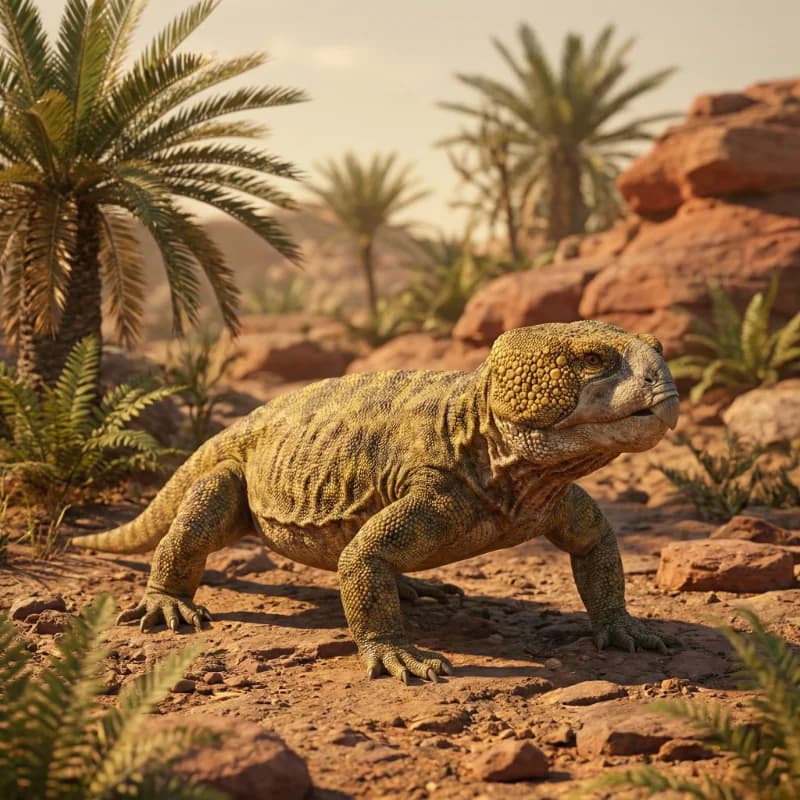
Rhynchosaurus
Rhynchosaurus articeps
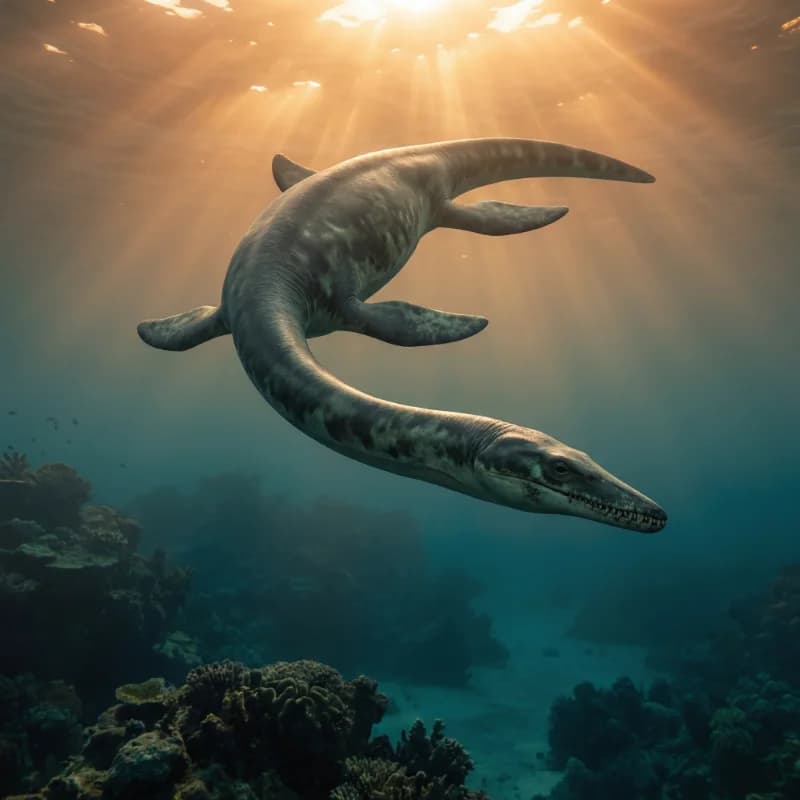
Thalattoarchon
Thalattoarchon saurophagis
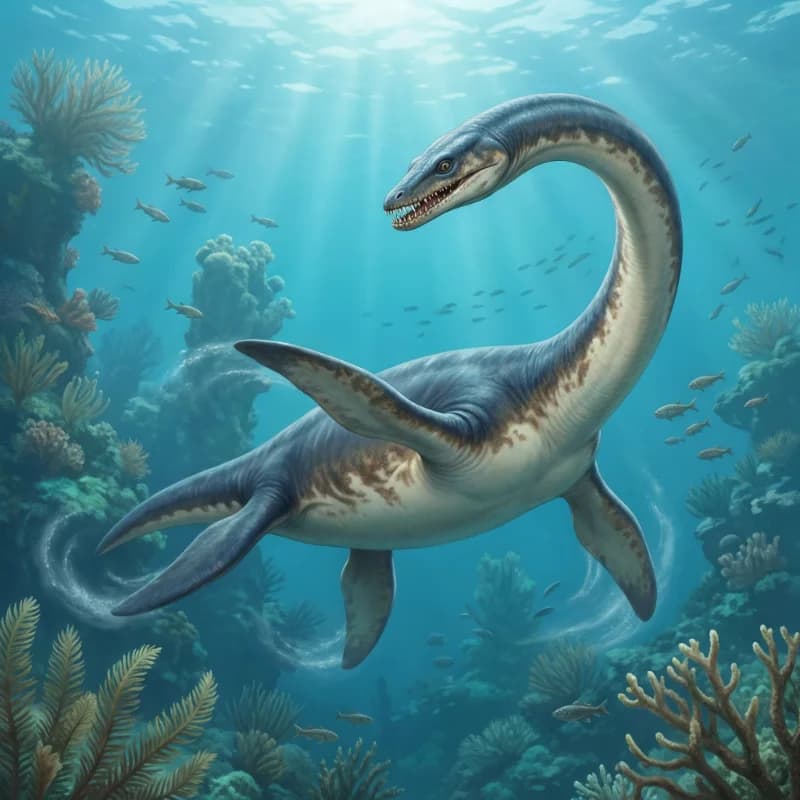
Plesiosaurus
Plesiosaurus dolichodeirus
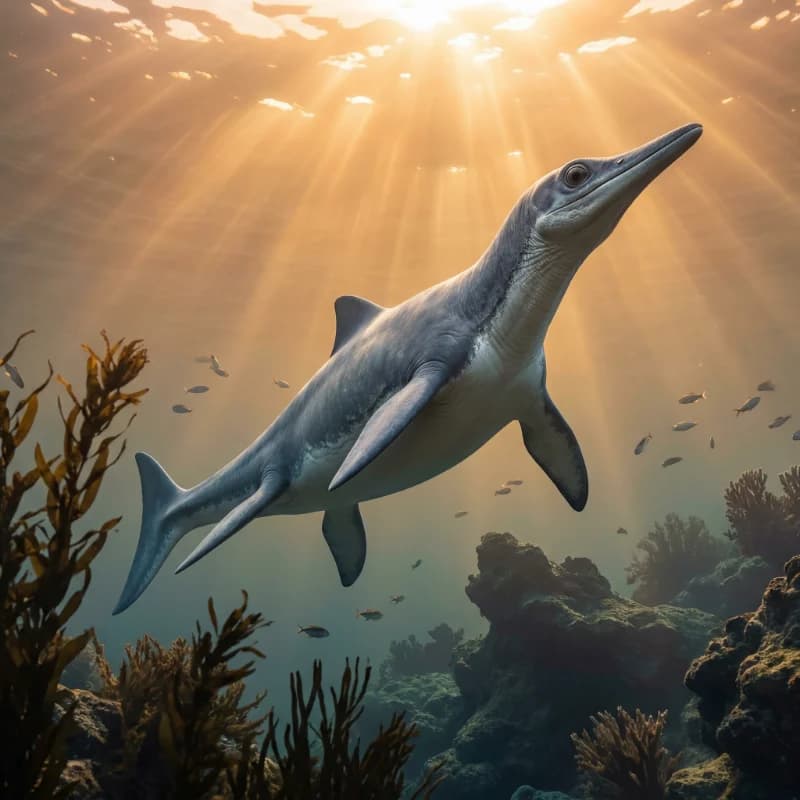
Ophthalmosaurus
Ophthalmosaurus icenicus
Elasmosaurus
Elasmosaurus platyurus