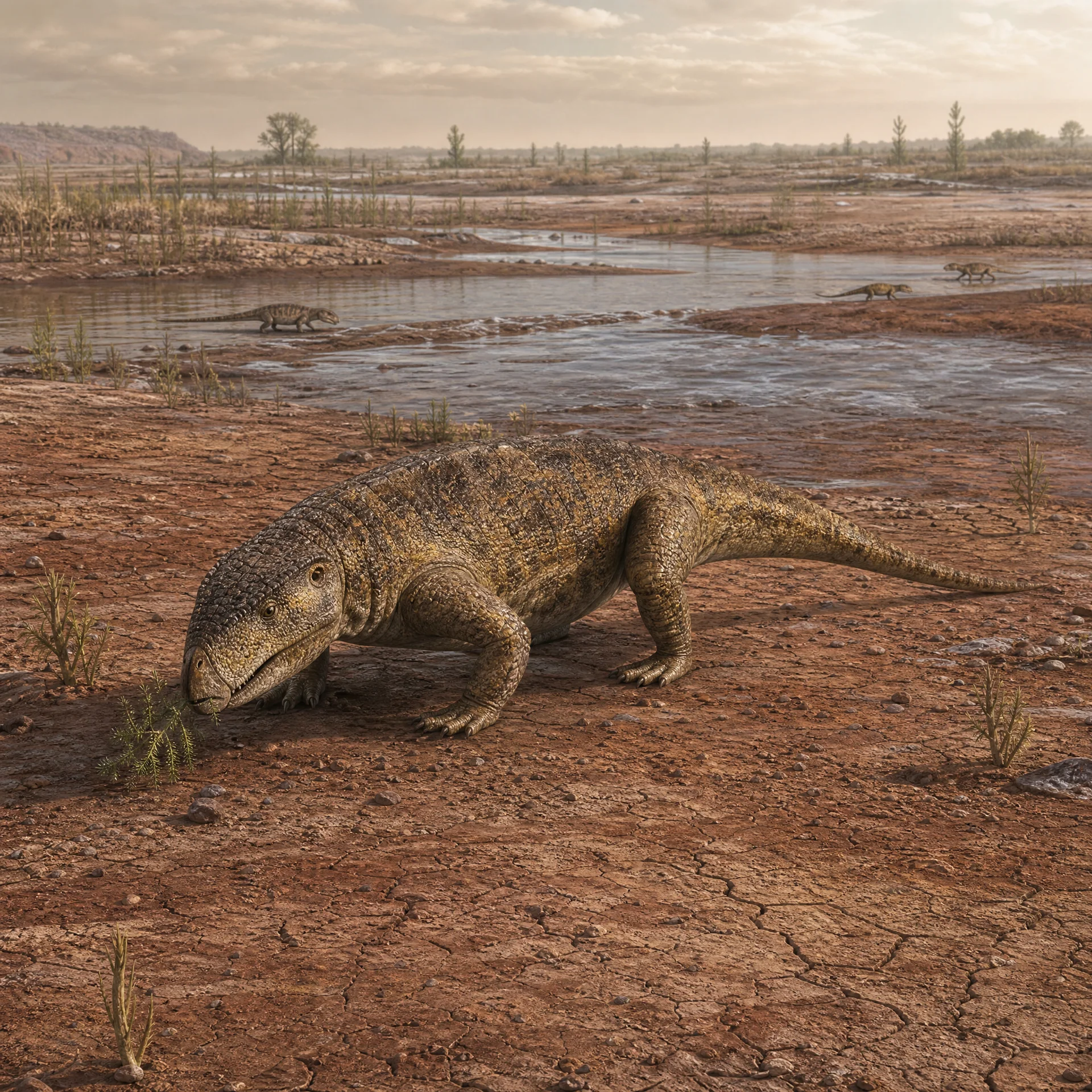
Rhynchosaurus
Rhynchosaurus articeps
⏳ Triassic Period🍽️ HerbivoreDinosaurs
Physical Characteristics
⏳
PeriodTriassic Period
🍽️
DietHerbivore
📏
Size0.5~0.6m
Classification
GEN
GenusRhynchosaurus
SP
SpeciesR. articeps
Rhynchosaurus articeps
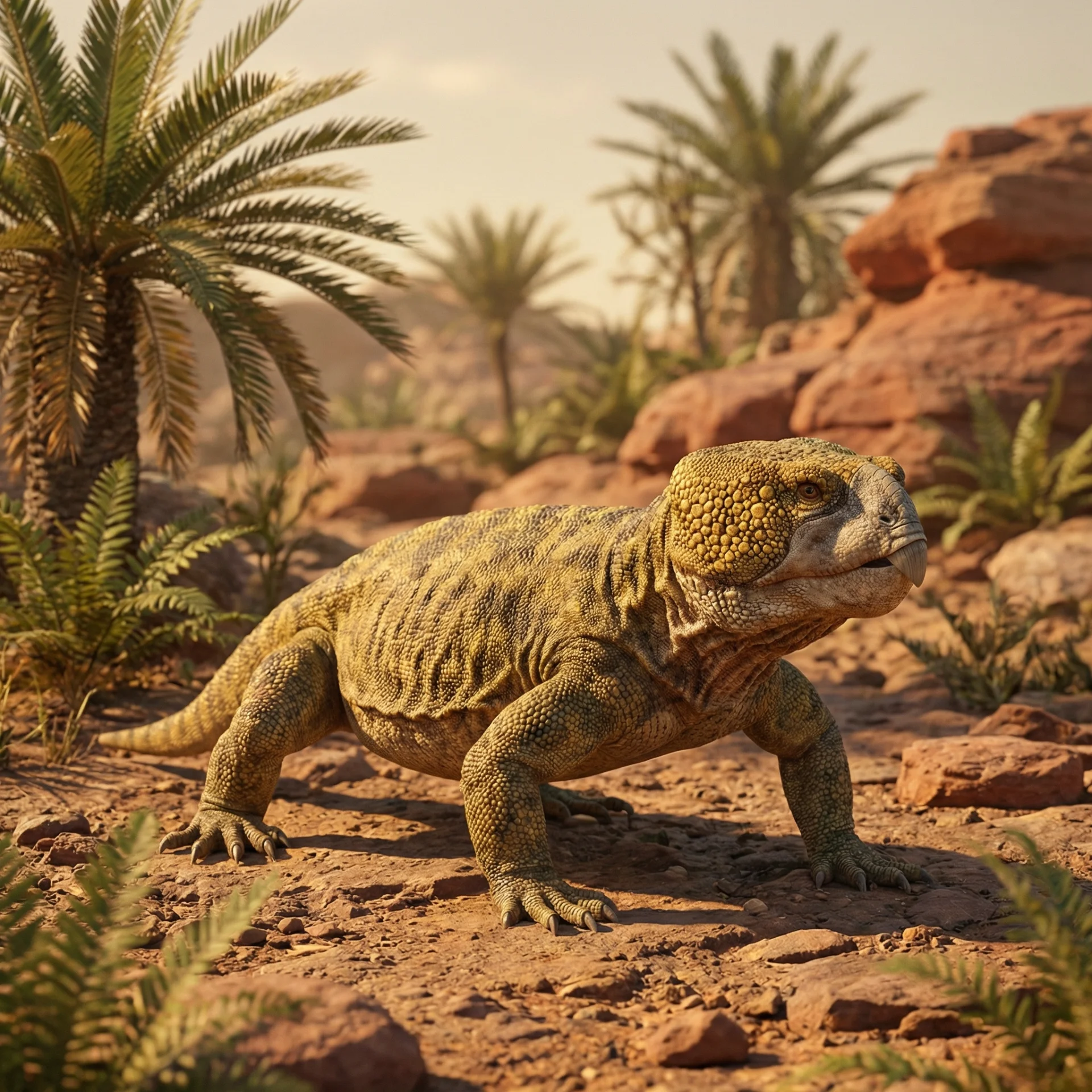
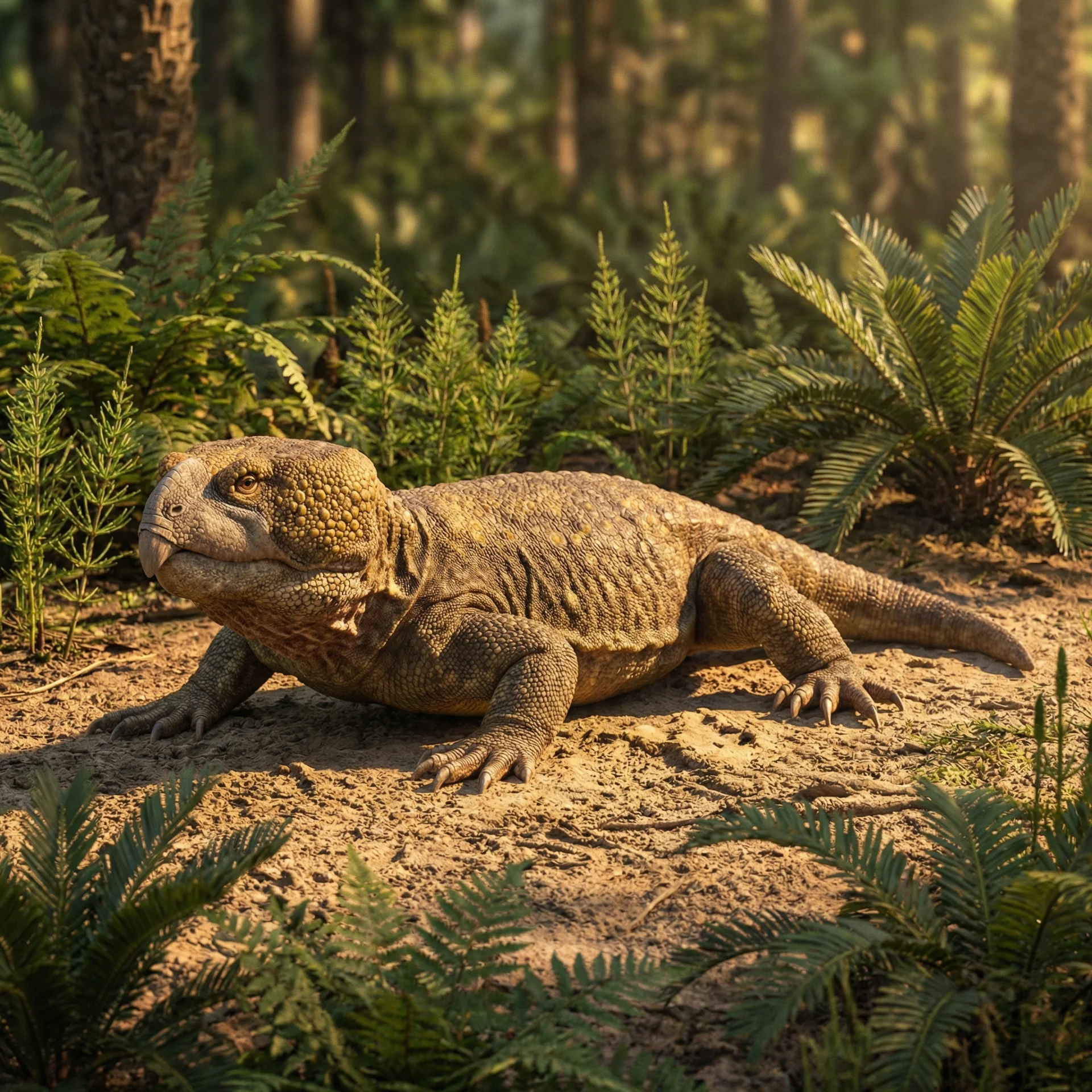
Rhynchosaurus articeps Owen, 1842 is a small herbivorous reptile that lived during the Middle Triassic (Anisian stage, approximately 247–242 Ma) in what is now central England, Europe. It belongs to the order Rhynchosauria, family Rhynchosauridae, within the larger clade Archosauromorpha — making it a distant relative of archosaurs (dinosaurs, crocodilians, and pterosaurs) but not a member of that group. With an estimated total body length of about 0.5 m and a skull length of 60–80 mm, Rhynchosaurus was notably small compared to most other Middle and Late Triassic rhynchosaurs, which typically measured 1–2 m in length. Its defining features include a low, posteriorly broadened triangular skull with beak-like premaxillae, a single median external naris, fused parietals, and broad maxillary tooth plates bearing multiple rows of teeth that engaged in a precision-shear bite with matching ridges on the dentary.
The genus Rhynchosaurus holds particular historical significance as the first rhynchosaur ever named — it was described in 1842 by Sir Richard Owen based on specimens collected from the Upper New Red Sandstone at Grinshill quarry, near Shrewsbury, Shropshire. The term "rhynchosaur" itself derives from this genus name. Approximately 17 individuals are represented by skulls, complete skeletons, and partial skeletons from the Tarporley Siltstone Formation at Grinshill (Benton, 1990). The type species R. articeps is currently the only valid species in the genus; two additional species named by Benton (1990), R. spenceri and R. brodiei, were subsequently reassigned to the separate genera Fodonyx (Hone & Benton, 2008) and Langeronyx (Ezcurra et al., 2016), respectively.
Rhynchosaurus is a critical taxon for understanding the early evolution of rhynchosaurs, a group that became dominant herbivores across much of Pangaea during the Middle and early Late Triassic, before the rise of herbivorous dinosaurs. Its precision-shear bite mechanism and scratch-digging adaptations in the hind feet provide key evidence for Triassic plant utilisation strategies. In phylogenetic analyses, Rhynchosaurus is consistently recovered as the most basally branching member of Rhynchosauridae, forming the sister taxon to all remaining rhynchosaurids including Stenaulorhynchinae and Hyperodapedontinae (Ezcurra et al., 2016).
The genus name Rhynchosaurus is derived from the Greek rhynchos (ῥύγχος, beak or snout) and sauros (σαῦρος, lizard), meaning "beaked lizard." This refers to the beak-like modification of the premaxillae, a hallmark feature of all rhynchosaurs. The species name articeps combines the Latin arti- (joint, articulation) and -ceps (head), alluding to the distinctive articulation structure of the skull. Owen (1842) originally described the animal as an "extinct lacertian reptile" in his initial publication in the Transactions of the Cambridge Philosophical Society.
Only the type species R. articeps Owen, 1842 is currently recognized as valid within Rhynchosaurus. Benton (1990), in his comprehensive monograph on the genus, named two additional species: R. brodiei from Warwick (Bromsgrove Sandstone Formation) and R. spenceri from Devon (Otter Sandstone Formation). However, subsequent cladistic analyses demonstrated that both species were phylogenetically more derived than R. articeps and warranted separate generic assignments. R. spenceri was transferred to the new genus Fodonyx by Hone & Benton (2008) based on new cranial material, while R. brodiei was reassigned to Langeronyx by Ezcurra et al. (2016) following a detailed reappraisal of early rhynchosaur phylogeny.
**The first rhynchosaur ever named, Rhynchosaurus is a small (~0.5 m) Middle Triassic herbivore from England characterised by beak-like premaxillae and a multi-rowed precision-shear dental apparatus.**
Rhynchosaurus articeps is dated to the Middle Triassic Anisian stage, approximately 247.2–242 Ma. This age assignment is based on regional lithostratigraphic correlations, palynological evidence, and broad biostratigraphic comparisons of the British Middle Triassic tetrapod assemblages (Benton et al., 1994; Benton & Spencer, 1995). Precise radiometric dating of these terrestrial formations is limited by the lack of marine index fossils, and a range extending from the Anisian into the early Ladinian has been proposed, though most workers favour an Anisian age (Ezcurra et al., 2016).
The primary fossil-bearing unit is the Tarporley Siltstone Formation (formerly known as the "Waterstones"), which forms the lowermost unit of the Mercia Mudstone Group. At Grinshill quarry, this formation consists of approximately 6–9 m of pale green-grey siltstones and fine sandstones, locally referred to as the "Grinshill Flagstones" (Benton & Spencer, 1995). Some specimens may also derive from the underlying Helsby Sandstone Formation (Sherwood Sandstone Group), a coarser fluvial sandstone unit (Benton, 1990; Mindat).
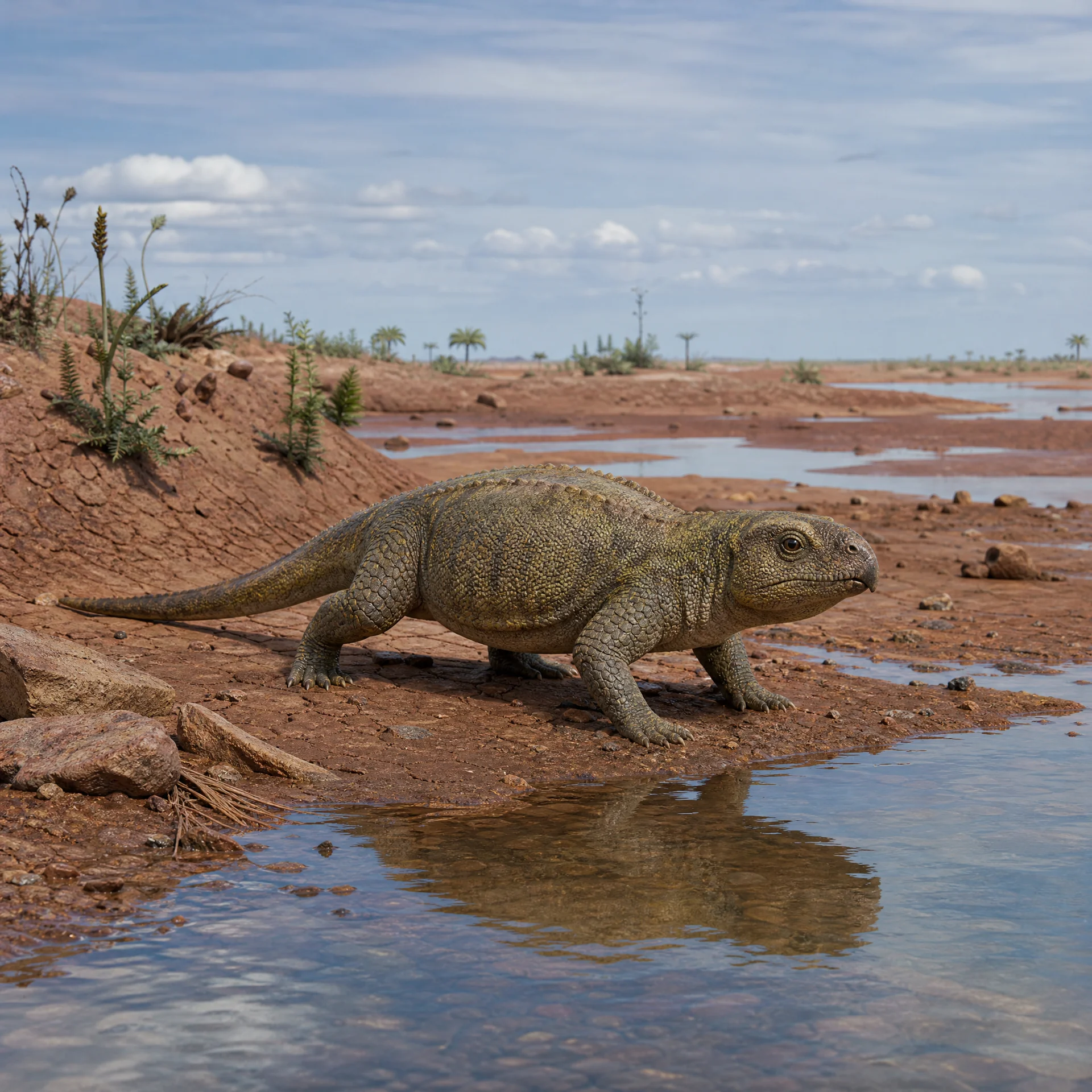
According to Benton (1990), the Rhynchosaurus-bearing sediments at Grinshill indicate a fluvial-intertidal depositional environment, with frequent desiccation cracks suggesting periodic drying under a semi-arid seasonal climate. The associated biota includes pteridophytes (ferns and allies), gymnospermopsids, bivalves, scorpions, freshwater fishes, temnospondyl amphibians, and various reptiles including macrocnemids, thecodontians, and possible procolophonids (Benton, 1990). This assemblage is consistent with a seasonally dry floodplain-river system environment.
| Locality | Formation | Lithology | Depositional Environment | Key Evidence |
|---|---|---|---|---|
| Grinshill, Shropshire | Tarporley Siltstone Fm. | Siltstone, fine sandstone | Fluvial-intertidal | Desiccation cracks, autochthonous preservation |
| Grinshill (lower levels) | Helsby Sandstone Fm.? | Coarse sandstone | Fluvial | Some specimens possibly reworked |
The original specimens were collected at Grinshill quarry in 1838–1839 and described by Owen (1842). Benton (1990) designated SHYMS 1 (Shrewsbury Museum and Art Gallery) as the lectotype in his comprehensive monograph. Other important specimens include NHMUK PV R1236 (a relatively complete skull, Natural History Museum, London), NHMUK PV R1237, MANCH L7642 (Manchester Museum), and SHYMS 3 and SHYMS 5 (the latter including postcranial elements). According to Benton (1990), approximately 17 individuals are represented, with many preserved in articulated condition, suggesting minimal post-mortem transport.
| Specimen Number | Institution | Elements | Notes |
|---|---|---|---|
| SHYMS 1 (lectotype) | Shrewsbury Museum | Partial skull | Designated by Benton (1990) |
| NHMUK PV R1236 | Natural History Museum, London | Skull + partial postcranium | One of the most complete skulls |
| NHMUK PV R1237 | Natural History Museum, London | Partial skeleton | Redescribed specimen |
| SHYMS 3 | Shrewsbury Museum | Skull + postcranium | Used for lower temporal bar analysis |
| SHYMS 5 | Shrewsbury Museum | Postcranial skeleton | Sacral rib bifurcation analysis |
| MANCH L7642 | Manchester Museum | Partial skeleton | Recommended for CT scanning |
Rhynchosaurus articeps is distinguished from other rhynchosaurs by the following combination of characters (Benton, 1990; Ezcurra et al., 2016):
The Grinshill specimens are generally well preserved, with many in articulated condition, indicating minimal transport. However, tooth preservation is poor, limiting detailed study of dental morphology (Benton, 1990). The presence or absence of palatal teeth on the pterygoid remains debated, and CT scanning of key specimens has been recommended to resolve this question (Sethapanichsakul et al., 2023a).
Rhynchosaurus articeps was a small reptile with an estimated total body length of approximately 0.5 m, reaching a maximum of about 0.6 m in the largest individuals (Benton, 1990). The skull measures 60–80 mm in length, making it markedly smaller than most other Middle and Late Triassic rhynchosaurs (skull lengths typically 90–240 mm). The body form was squat and broad, supported by sprawling to semi-erect limbs. Benton (1990) noted that the relatively slender skeletal proportions compared to larger rhynchosaurs likely reflect an allometric effect of its much smaller body size rather than a unique autapomorphic condition. No formal body mass estimates have been published for this species.
The skull is dorsoventrally low and broadens posteriorly into a characteristic triangular outline. The premaxillae are modified into a beak-like structure, and the external nares are merged into a single median opening — a synapomorphy of all rhynchosaurs. The parietal is fused. The orbit faces laterally, and the upper temporal fenestra is well-developed. The jugal forms a laterally elevated sharp edge along the ventral border of the orbit but has a short posterior process that does not contact the quadratojugal, resulting in an incomplete lower temporal bar (Ezcurra et al., 2016). This reinterpretation overturned previous reconstructions (Huene, 1938; Benton, 1990) that depicted a complete lower temporal arcade.
The maxilla bears a broad tooth plate with multiple rows of closely packed lingual teeth and two longitudinal grooves. The dentary possesses two corresponding longitudinal ridges that fit precisely into the maxillary grooves during occlusion, forming a precision-shear bite mechanism (Benton, 1990). This occlusion operates through vertical cutting without any anteroposterior jaw movement, effectively slicing tough vegetation. The tooth plates and surrounding bone wore down as uniform units during the animal's lifetime. On the pterygoid, a pair of anterolaterally-to-posteromedially oriented ridges is present, bearing a shiny enamel-like surface material that may represent vestigial palatal dentition, though this has not been confirmed (Ezcurra et al., 2016).
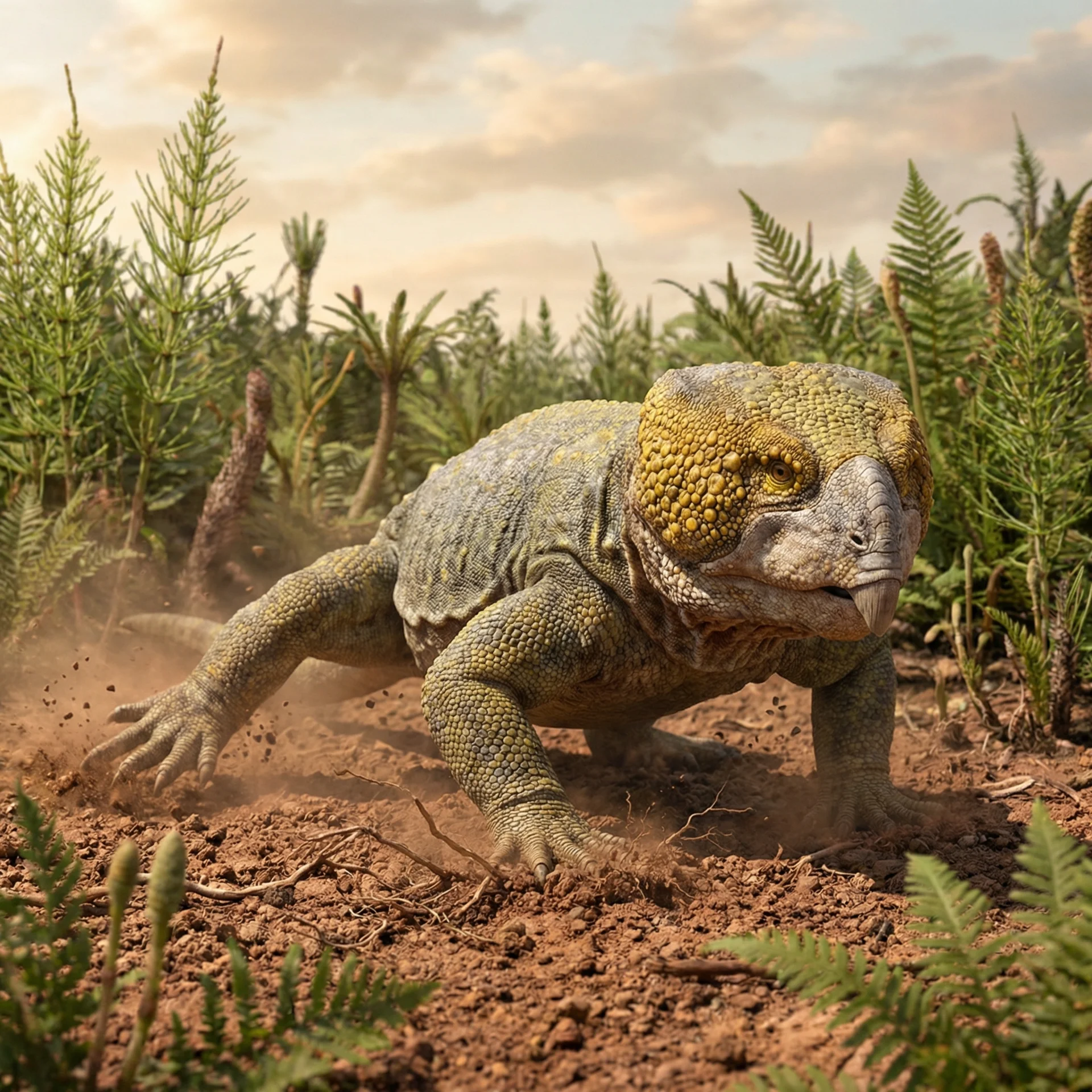
The postcranial skeleton shows adaptations for relatively fast terrestrial locomotion with a semi-erect hindlimb posture (Benton, 1990). The hind feet exhibit scratch-digging adaptations, interpreted as being related to excavation of roots and tubers. The second sacral rib has a bifurcated distal end (SHYMS 5), a plesiomorphic character shared with early archosauromorphs and South African rhynchosaurs such as Noteosuchus and Mesosuchus (Ezcurra et al., 2016).
Rhynchosaurus is firmly established as an herbivore based on the structure of its multi-rowed tooth plates, precision-shear occlusal mechanism, and ecological association with the pteridophyte-gymnospermopsid flora preserved in the same deposits (Benton, 1990). Benton (1990) proposed that the diet consisted of tough vegetation, which was dug up through scratch-digging with the hind feet, raked together using the forefeet or premaxillary beak, and manipulated within the mouth by a powerful tongue. Sethapanichsakul et al. (2023b) demonstrated that the unique tooth replacement mechanism in rhynchosaurs meant that the occlusal surfaces were progressively consumed through wear, potentially leading to eventual loss of feeding ability — a constraint on individual lifespan and population dynamics.
Rhynchosaurus articeps formed part of the Grinshill vertebrate assemblage, co-occurring with temnospondyl amphibians, macrocnemid reptiles, thecodontians, and possible procolophonids (Benton, 1990). As a small-bodied herbivore in a semi-arid, seasonally variable fluvial environment, it likely served as an important primary consumer exploiting the available plant resources.
Confirmed occurrences of Rhynchosaurus articeps are restricted to Grinshill quarry in northern Shropshire, central England. The primary fossil-bearing horizon is the Tarporley Siltstone Formation, with some fragmentary material possibly originating from the underlying Helsby Sandstone Formation.
During the Middle Triassic, the British Isles lay within the interior of the supercontinent Pangaea, at approximately 15–25°N palaeolatitude, in a semi-arid continental setting. Rhynchosaurs were widely distributed across Pangaea during this interval, with contemporaneous or near-contemporaneous relatives known from South Africa (Mesosuchus, Howesia, Eohyosaurus), Tanzania (Stenaulorhynchus), India (Mesodapedon), and the USA (Ammorhynchus) (Ezcurra et al., 2016). Rhynchosaurus represents the key European record of this globally significant group.
In the morphology-based cladistic analysis of Ezcurra et al. (2016), Rhynchosaurus articeps was recovered as the most basally branching member of Rhynchosauridae, forming the sister taxon to all remaining rhynchosaurids (Stenaulorhynchinae + Hyperodapedontinae). This result contradicts Benton's (1990) proposed Rhynchosaurinae (Rhynchosaurus + Stenaulorhynchus) as a monophyletic group.
Benton (1990) had suggested that Rhynchosaurus and Stenaulorhynchus share two synapomorphies: (1) the occipital condyle lying well anterior to the quadrates, and (2) two grooves on the maxilla with two corresponding ridges on the dentary. However, Ezcurra et al. (2016) found that Rhynchosaurus shares more derived characters with Hyperodapedontinae than with Stenaulorhynchus, thus failing to support rhynchosaurine monophyly.
| Taxon | Phylogenetic Position |
|---|---|
| Noteosuchus | Basal Rhynchosauria |
| Mesosuchus | Basal Rhynchosauria |
| Howesia | Basal Rhynchosauria |
| Eohyosaurus | Sister to Rhynchosauridae |
| Rhynchosaurus | Most basal Rhynchosauridae |
| Stenaulorhynchus | Stenaulorhynchinae |
| Langeronyx | Within Stenaulorhynchinae |
| Bentonyx | Within Stenaulorhynchinae |
| Fodonyx | Derived Stenaulorhynchinae |
| Isalorhynchus | Basal Hyperodapedontinae |
| Teyumbaita, Hyperodapedon | Derived Hyperodapedontinae |
Benton (1990) concluded that the three original Rhynchosaurus species could be arranged from "most primitive" to "most advanced" (R. articeps → R. brodiei → R. spenceri), but cautioned that this could not be confidently used as a stratigraphic sequence. The subsequent generic reassignments of R. spenceri to Fodonyx and R. brodiei to Langeronyx confirmed that these taxa are phylogenetically more derived than R. articeps, validating the directional trend but under separate generic assignments.
Traditionally, Rhynchosaurus was reconstructed with a complete lower temporal bar (e.g., Huene, 1938; Benton, 1990 reconstruction drawings), but Ezcurra et al. (2016) reinterpreted this as open based on the absence of a jugal-quadratojugal contact. Additionally, Rhynchosaurus is sometimes confused with larger rhynchosaurs in popular media; at approximately 0.5 m, it was considerably smaller than most relatives.
Four rhynchosaur taxa are known from the Anisian of England, allowing direct comparison:
| Taxon | Formation | Est. Skull Length | Est. Body Length | Skull Width/Length Ratio | Key Distinctions |
|---|---|---|---|---|---|
| Rhynchosaurus articeps | Tarporley Siltstone Fm. | 60–80 mm | ~0.5 m | 0.8–0.9 | Smallest, narrow nasals/frontals |
| Langeronyx brodiei | Bromsgrove Sandstone Fm. | 90–140 mm | ~0.6 m | ~0.7 | Large jugal, concave prefrontal |
| Fodonyx spenceri | Otter Sandstone Fm. | ~140 mm | ~0.9–1.0 m | ~1.2 | Skull broader than long |
| Bentonyx sidensis | Otter Sandstone Fm. | ~140 mm | – | ~0.9 | Unique basisphenoid recess, large basal tubera |
Rhynchosaurus articeps is the smallest and phylogenetically most basal of these four taxa. The remaining three genera occupy more derived positions within Rhynchosauridae.
Rhynchosaurus, named in 1842 by Richard Owen, was the very first rhynchosaur to be described — the entire group 'Rhynchosauria' takes its name from this genus.
At roughly 0.5 m in total length, Rhynchosaurus was less than half the size of most other Middle and Late Triassic rhynchosaurs, which typically measured 1–2 m.
Its jaws operated like a precision cigar-cutter: ridges on the lower jaw fit exactly into grooves on the upper jaw, slicing vegetation vertically with no back-and-forth movement.
Scratch-digging adaptations in its hind feet suggest Rhynchosaurus dug up roots and tubers in the semi-arid Triassic landscape.
The merged left and right nasal openings into a single median naris is a unique shared character (synapomorphy) of all rhynchosaurs.
For over 170 years, Rhynchosaurus was reconstructed with a complete bony bar below the eye — a 2016 study revealed it was actually incomplete.
About 17 individuals have been recovered from a single quarry at Grinshill, Shropshire, many preserved as complete articulated skeletons — an unusual richness for a Triassic reptile.
Two species originally placed in Rhynchosaurus (R. spenceri and R. brodiei) were later split off into entirely separate genera — Fodonyx and Langeronyx — leaving only the type species R. articeps.
Rhynchosaurs as a group were among the most abundant herbivores on land before the rise of plant-eating dinosaurs, making up as much as 45% of fossils in some Triassic deposits worldwide.
Though distantly related to dinosaurs, crocodilians, and pterosaurs (all Archosauria), Rhynchosaurus belongs to a separate archosauromorph lineage and is best thought of as a 'cousin' rather than an ancestor of those groups.
No. Rhynchosaurus was an archosauromorph diapsid reptile belonging to the order Rhynchosauria, which is distantly related to but not part of Archosauria (the group containing dinosaurs, crocodilians, and pterosaurs). Rhynchosaurs were a separate lineage of herbivorous reptiles that thrived during the Triassic before the rise of herbivorous dinosaurs.
Rhynchosaurus articeps had a total body length of approximately 0.5 m (up to about 0.6 m for the largest individuals) with a skull length of 60–80 mm. This makes it notably small compared to other Middle and Late Triassic rhynchosaurs, which typically measured 1–2 m in length. Based on Benton's (1990) redescription; no formal body mass estimate has been published.
Rhynchosaurus was herbivorous, using its multi-rowed maxillary and dentary tooth plates in a precision-shear bite to vertically cut through tough vegetation. Its hind feet show scratch-digging adaptations, suggesting it excavated roots or tubers. Food was likely raked together using the forefeet or beak-like premaxillae and manipulated by a powerful tongue (Benton, 1990).
Both species were originally named by Benton (1990) as additional species of Rhynchosaurus. Subsequent cladistic analyses showed that R. spenceri was phylogenetically closer to hyperodapedontines than to R. articeps, leading Hone & Benton (2008) to reassign it to the new genus Fodonyx. Similarly, R. brodiei was found to possess a distinct combination of diagnostic characters and was erected as Langeronyx by Ezcurra et al. (2016).
Traditionally reconstructed with a complete lower temporal bar, Ezcurra et al. (2016) reinterpreted the skull as having an incomplete bar based on the short posterior process of the jugal and absence of articular facets for the quadratojugal. This open condition is shared with other early and Middle Triassic rhynchosaurs and some basal archosauromorphs.
All confirmed specimens come from Grinshill quarry in northern Shropshire, central England, United Kingdom. The primary fossil-bearing horizon is the Tarporley Siltstone Formation (Mercia Mudstone Group). Approximately 17 individuals are known, including skulls and complete skeletons.
Rhynchosaurus lived during the Middle Triassic Anisian stage, approximately 247.2–242 million years ago. This age is based on regional lithostratigraphic correlations, palynological evidence, and vertebrate biostratigraphy of the British Middle Triassic formations (Benton et al., 1994).
The maxilla bore a broad tooth plate with multiple rows of lingual teeth and two longitudinal grooves, while the dentary had two matching ridges. During occlusion, the ridges fit precisely into the grooves, creating a precision-shear bite that cut vegetation vertically without anteroposterior jaw movement. This mechanism was highly effective for processing tough plant material (Benton, 1990).
In the phylogenetic analysis of Ezcurra et al. (2016), Rhynchosaurus is the most basally branching rhynchosaurid, forming the sister taxon to all other Rhynchosauridae (Stenaulorhynchinae + Hyperodapedontinae). Its closest known relatives from the same time and region include Langeronyx, Fodonyx, and Bentonyx, all from Anisian-aged formations in England.
5images