Dacentrurus
Jurassic Period Herbivore Creature Type
Dacentrurus armatus
Scientific Name: "Greek da~ ('very' / 'full of') + kentron ('sharp point' / 'spike') + oura ('tail') = 'tail full of points'"
Local Name: Dacentrurus
Physical Characteristics
Discovery
Habitat
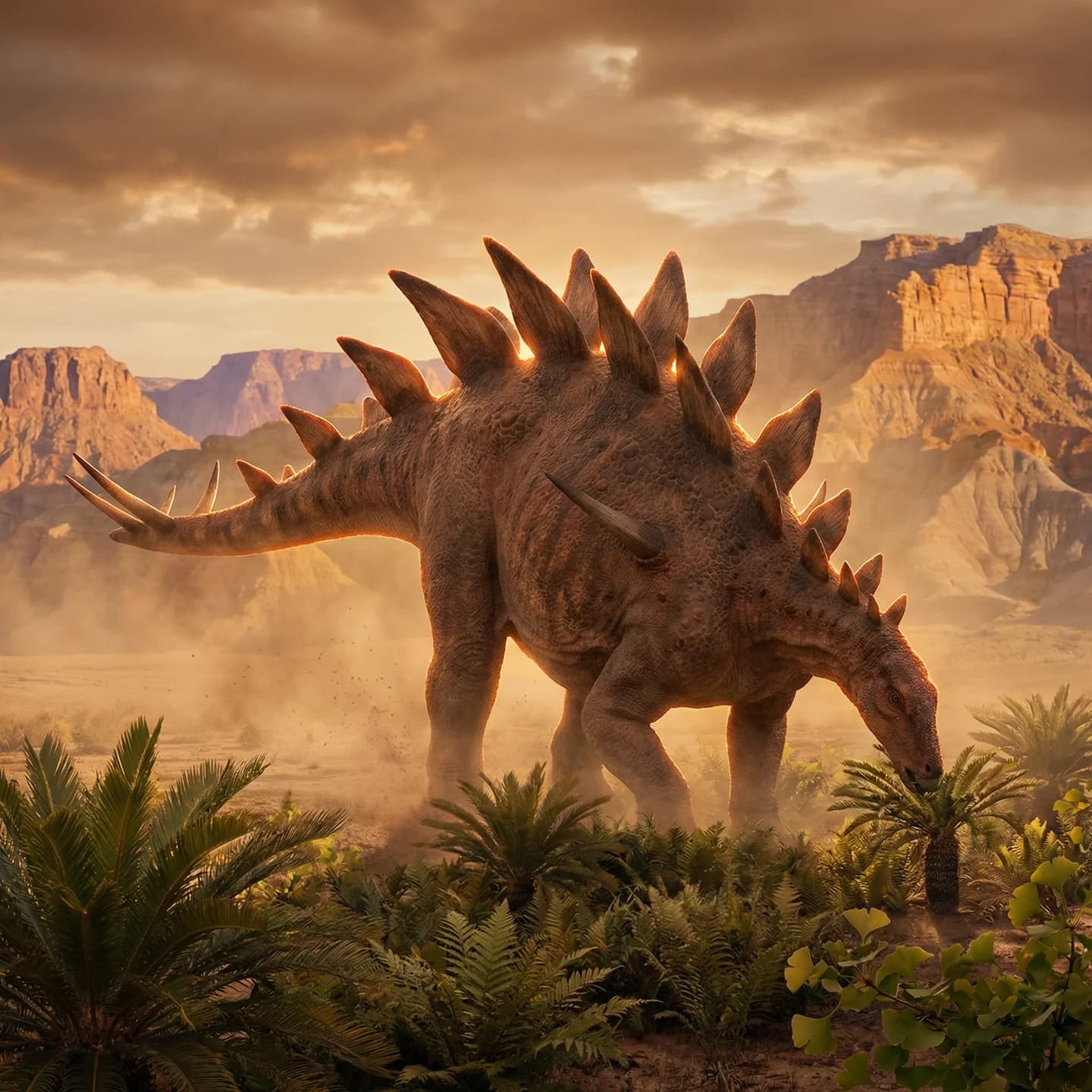
Dacentrurus (Dacentrurus armatus Owen, 1875) is a large stegosaurian (plated) dinosaur that lived from the Late Jurassic to possibly the Early Cretaceous (approximately 154–140 million years ago) in Europe. It belongs to the order Ornithischia, suborder Thyreophora, family Stegosauridae, and is the type genus of the subfamily Dacentrurinae. In 1875 the eminent British palaeontologist Richard Owen described it as Omosaurus armatus based on a skeleton discovered in the Kimmeridge Clay Formation at Swindon, Wiltshire, England. In 1902 Frederick A. Lucas renamed the genus to Dacentrurus because the name Omosaurus had already been used by Joseph Leidy in 1856 for a phytosaur.
Dacentrurus is among the largest known stegosaurs, with large individuals estimated to have reached approximately 8–9 m in length, about 1.8 m in hip height, and 5–7.4 metric tonnes in body mass (Cobos et al., 2010; Paul, 2010; Benson et al., 2014). It was described two years before Marsh named Stegosaurus in 1877, making it the first stegosaur known from a reasonably articulated skeleton and a historically pivotal taxon. Fossils have been recovered from across Europe — England, Portugal, Spain, and France — and it is distinguished from Stegosaurus by its small, blunt dorsal plates and its broad, convex tail spikes (thagomizer).
In May 2025, the most complete stegosaurian skull ever found in Europe was described from Riodeva, Teruel, Spain, and identified as Dacentrurus armatus (Sánchez-Fenollosa & Cobos, 2025). That same study formally defined a new higher-level clade, Neostegosauria, reshaping stegosaurian phylogeny. In February 2026, additional dacentrurine fossils were reported from the Morrison Formation of Wyoming and Utah, USA (Costa, 2026), reinforcing the transatlantic distribution of this clade during the Late Jurassic.
Overview
Name and Etymology
The genus name Dacentrurus derives from the Greek δα~ (da~, 'very' or 'full of'), κέντρον (kentron, 'sharp point / spike'), and οὐρά (oura, 'tail'), meaning "tail full of points" or "tail full of spikes." Lucas coined this name in 1902 to emphasise the sharp tail spikes. The specific epithet armatus is Latin for 'armed,' which Owen applied in reference to a large spike he assumed was associated with the upper arm.
Owen originally named the species Omosaurus armatus in 1875. The genus name Omosaurus derived from Greek ὦμος (omos, 'upper arm'), referencing the robust humerus. However, Omosaurus perplexus had already been used by Leidy in 1856 for a phytosaur, creating a priority conflict. Marsh pointed this out during a visit to Britain. In 1900, Richard Lydekker attempted to resolve the issue by recombining it as Stegosaurus armatus, but that name already existed. Lucas finally provided the replacement name Dacentrurus in 1902.
Taxonomic Position and Validity
Dacentrurus is placed within Ornithischia, Thyreophora, Stegosauridae, and is the type genus of Dacentrurinae. In 2025, Sánchez-Fenollosa & Cobos formally defined a new clade, Neostegosauria, as the smallest clade containing Kentrosaurus aethiopicus, Dacentrurus armatus, and Stegosaurus stenops. This clade encompasses the late-diverging members of Stegosauridae, including both Stegosaurinae and Dacentrurinae.
Several species were named after the original 1875 description, including D. hastiger, D. durobrivensis, D. phillipsi, D. lennieri, and D. vetustus, but today only D. armatus is considered valid. D. durobrivensis was separated into the genus Lexovisaurus in 1956, D. vetustus is now the type species of Eoplophysis, and the remaining species are treated as nomina dubia or synonyms of D. armatus.
Scientific Significance
Dacentrurus is the first stegosaur known from a reasonably articulated skeleton. Its description in 1875 predates the naming of Stegosaurus by two years, making it foundational to plated dinosaur research. The year 2025 marked exactly 150 years since its original description. It is a keystone taxon for understanding Late Jurassic European ecosystems and plays an important role in comparative studies of dinosaur faunas across the proto-North Atlantic (Europe vs. North America). The 2025 skull discovery and the formal definition of Neostegosauria, combined with the 2026 report of dacentrurine fossils in North America, have further elevated its scientific significance.
Temporal Range, Stratigraphy, and Depositional Setting
Temporal Range
Dacentrurus is estimated to have lived from the late Kimmeridgian (Late Jurassic) to possibly the Berriasian (earliest Cretaceous), approximately 154–140 million years ago. The main body of fossil records is concentrated in the Kimmeridgian–Tithonian interval. A specimen referred to Dacentrurus sensu lato from the Berriasian Angeac-Charente bonebed in France (Allain et al., 2022) suggests the lineage may have persisted into the earliest Cretaceous.
Key Formations
| Formation | Age | Region | Lithology |
|---|---|---|---|
| Kimmeridge Clay Formation | Kimmeridgian | England (Swindon, Wootton Bassett, Dorset, etc.) | Marine mudstone/claystone |
| Lourinhã Formation | Kimmeridgian–Tithonian | Portugal (Lourinhã) | Fluvial–coastal deposits (sandstone, mudstone) |
| Villar del Arzobispo Formation | Kimmeridgian–Berriasian | Spain (Teruel, Valencia) | Mixed siliciclastic–carbonate |
| Argiles d'Octeville | Kimmeridgian | France (Normandy) | Mudstone |
| Camadas de Alcobaça | Late Jurassic | Portugal | Limestone, mudstone |
| Unidade Bombarral | Late Jurassic | Portugal | Mudstone, limestone |
Palaeoenvironment
The depositional environments from which Dacentrurus fossils derive are remarkably varied.
The Kimmeridge Clay Formation of England represents an organic-rich shallow marine setting. Ammonites, ichthyosaurs, plesiosaurs, and marine crocodylomorphs dominate this unit; terrestrial dinosaur remains such as Dacentrurus are interpreted as drifted carcasses transported from nearby islands or coastlines into the shallow sea.
The Lourinhã Formation of Portugal records a low-lying coastal plain traversed by meandering river systems, with lagoons, tidal flats, and floodplains forming a complex transitional environment. Stegosaurian trackways (Deltapodus) have also been found in this unit.
The Villar del Arzobispo Formation of Spain documents a depositional transition from inner carbonate platforms through tidal/paralic settings to alluvial plains (Campos-Soto et al., 2017). The palaeolatitude is estimated at approximately 31.4°N, 8.6°E, indicating that Iberia occupied a subtropical to warm-temperate zone farther south than its present position.
Specimens and Diagnostic Features
Holotype and Key Specimens
The holotype, NHMUK OR 46013, was discovered on 23 May 1874 by James Shopland at the Swindon Great Quarry, a clay pit belonging to the Swindon Brick and Tile Company below Old Swindon Hill, Wiltshire, England. Shopland reported the find in a letter to Professor Owen, who dispatched William Davies to secure the specimen. The fossil was encased in an enormous clay nodule measuring approximately 2.4 m (8 ft) high and 1.8 m (6 ft) wide. Owen speculated the exceptionally hard nodule had been formed by vapours emitted from the decomposing carcass. During an attempt to lift it intact, the nodule crumbled into several pieces, which were eventually transported to London in crates with a total weight of about three tonnes.
The holotype is a postcranial skeleton lacking a skull. It includes the pelvis (right ilium maximum length 1,048 mm; width across both ilial preacetabular blades 1,493 mm), six posterior dorsal vertebrae, the complete sacrum, eight anterior caudal vertebrae, a right femur and 13 detached vertebrae, a nearly complete left forelimb (humerus, radius, ulna), a partial right fibula with calcaneum, a partial tibia, one neck/anterior dorsal plate, and one left tail spike.
Additional key specimens include NHMUK OR 46320 (a pair of spike bases from Wootton Bassett, holotype of O. hastiger). From Spain, a relatively complete postcranial skeleton from the Villar del Arzobispo Formation was described by Sánchez-Fenollosa et al. (2024), and the most complete stegosaurian skull in Europe was described from the same formation's 'Están de Colón' site at Riodeva by Sánchez-Fenollosa & Cobos (2025). In 2024, 11 specimens from France, Portugal, and Spain (including the holotype and referred material of Miragaia longicollum) were assigned to D. armatus.
Diagnostic Features
The diagnosis provided by Galton (1991) and supplemented by later studies includes the following traits. The neck comprises 12 vertebrae. The posterior neck vertebrae and entire dorsal series are massively constructed, with the maximum transverse width of the centra exceeding the maximum anteroposterior length — the opposite of the condition in all other stegosaurs. In the rear two-thirds of the dorsal series, the pedicels of the neural arches are solid and short, with the transverse processes forming an angle of at least 55° with the neural spine. The sacrum consists of seven fused vertebrae preceded by two dorsosacrals. The anterior caudals are also massively built with short neural spines ending in rounded tops. The preacetabular blade of the ilium is short and widening anteriorly.
When Maidment (2008) restricted valid material to the holotype alone, the only remaining autapomorphy was the straight upper margin of the ischium. However, Costa & Mateus (2019) proposed three additional autapomorphies based on Spanish material: the anterior end of the prepubis expanded ventrally; the tips of the cervical neural spines expanded posteriorly; and the transverse processes of the cervical vertebrae positioned at mid-height of the prezygapophyses.
Diagnostic features of Dacentrurinae as a whole include dorsal vertebral centra wider than long, an olecranon horn on the ulna, the anterior end of the anterior pubic process expanded dorsally, and the supracetabular process of the ilium extending anteriorly beyond the anterior edge of the acetabulum (Mateus et al., 2009; Costa & Mateus, 2019; Costa, 2026, modified).
The 2025 Skull Discovery
In 2025, Sánchez-Fenollosa & Cobos described the most complete stegosaurian skull ever found in Europe, recovered from the 'Están de Colón' fossil site at Riodeva, Teruel, Spain, within the Villar del Arzobispo Formation (~150 Ma). This skull was identified as Dacentrurus armatus and for the first time revealed the cranial anatomy of a genus whose head had been entirely unknown. Additional postcranial elements from the same adult individual and juvenile specimens from the same site are still under study, promising further insights.
Limitations of the Fossil Record
Prior to the 2025 skull discovery, all Dacentrurus material was postcranial and mostly fragmentary. Even now, the complete arrangement of dermal armour (plates and spikes) remains uncertain. Many details of external appearance are still reconstructed by analogy with better-known relatives such as Stegosaurus and Kentrosaurus.
Morphology and Function
Body Size
Dacentrurus is one of the largest stegosaurs alongside Stegosaurus. Current estimates place large individuals at approximately 8–9 m in length, about 1.8 m at the hip, and 5–7.4 tonnes in body mass (Cobos et al., 2010; Paul, 2010; Benson et al., 2014). There is considerable size variation among specimens; subadults and smaller individuals would have been notably smaller.
Among stegosaurs, Dacentrurus possessed an especially broad gut cavity. The dorsal vertebral centra are anomalously wide (transverse width exceeding anteroposterior length), suggesting a massive rump, interpreted as an adaptation for housing a long digestive tract necessary for fermenting large quantities of plant matter (Paul, 2010).
Limb Proportions
The forelimbs of Dacentrurus are relatively long for a stegosaur. The humerus-to-femur length ratio is approximately 68%, meaning the forelimb was proportionally longer than in Stegosaurus. The femur was only 47% longer than the humerus — an exceptional ratio among stegosaurs (Galton, 1985). The radius was 69% of humeral length and the ulna 79%, the latter being a basal value comparable to Kentrosaurus but much lower than in Stegosaurus. These limb proportions suggest a more horizontally oriented back posture than in most other stegosaurs.
The humerus bears an enormous deltopectoral crest providing attachment for powerful musculature (Musculus deltoideus), and the ulna has a large olecranon process (horn) enabling strong humeral flexion and abduction (Costa & Mateus, 2019). These structures are shared across Dacentrurinae and are interpreted as adaptations for firmly anchoring the forelimbs while the tail was swept forcefully from side to side in defence.
Plates and Spikes
The dermal armour of Dacentrurus differed considerably from that of Stegosaurus. It likely bore two rows of small plates along the neck and back, and two rows of longer spikes along the tail.
The holotype's neck/anterior dorsal plate is small, blunt, and asymmetrical, with a base length of about 15 cm and a transverse width of about 7 cm — far removed from the large kite-shaped plates of Stegosaurus. Its base is oblique; the outer surfaces are smooth but the ventral surface is porous with irregular depressions.
The holotype's left tail spike has a preserved maximum length of 456 mm and a maximum base width of 118 mm. Unlike the transversely flattened spikes of Stegosaurus, the Dacentrurus spike is transversely wide with gently convex surfaces lacking clear cutting edges — essentially sub-round in cross-section. The two spikes that constitute the holotype of O. hastiger have very massive bases (right spike transverse base width 205 mm, estimated base length ~22 cm); Owen reconstructed the original length at approximately 70 cm. Galton (1991) placed these stocky spikes on the tail base rather than the shoulder.
According to Costa (2026), the sub-round cross-section of the Dacentrurus holotype's tail spikes differs from the sigmoid (S-shaped) cross-section diagnostic of Miragaia spines, which constitutes one of the key arguments for maintaining the two genera as separate.
Whether Dacentrurus bore shoulder spikes (parascapular spines) similar to Kentrosaurus remains unconfirmed. Some reconstructions include them, but no direct evidence supports this.
Diet and Ecology
Diet
Dacentrurus was herbivorous. Like other stegosaurs, its relatively small skull and narrow snout are consistent with selective browsing of low-growing vegetation. The 2025 skull specimen now provides direct anatomical data on cranial function. Its small, leaf-shaped teeth were suited for cutting soft plant material.
Late Jurassic European vegetation comprised conifers, cycads, ferns, and ginkgoes, and Dacentrurus likely fed primarily on low-growing plants. The anomalously wide dorsal centra and implied broad gut cavity would have accommodated the long gut required for fermenting fibre-rich plant matter.
Defensive Behaviour
The tail spikes (thagomizer) of Dacentrurus served as defensive weapons against large predators. The powerful deltopectoral crests and olecranon horns on the forelimbs provided the muscular anchorage needed to brace the body firmly while sweeping the tail from side to side (Costa & Mateus, 2019).
Contemporary European predators included Torvosaurus, Allosaurus, and Ceratosaurus, and the thagomizer would have been an effective deterrent against these large theropods.
Ecological Position
Dacentrurus occupied the niche of a medium-to-large herbivore in Late Jurassic European ecosystems. In Iberia, dacentrurine fossils outnumber those of most other groups of large herbivorous dinosaurs, suggesting the clade may have been among the most successful large herbivore groups in Late Jurassic Iberia (Costa, 2026). In the Lourinhã and Villar del Arzobispo formations, Dacentrurus coexisted with diverse sauropods (e.g., Turiasaurus, Lusotitan), ornithopods (e.g., Draconyx), and other stegosaurs.
A longitudinally sectioned egg 125 mm in length from Portugal has been attributed to Dacentrurus, representing the first egg fossil associated with any stegosaur (Galton, 1991).
Distribution and Palaeogeography
Geographic Distribution
Dacentrurus fossils have been found across western Europe. In England, localities include Swindon, Wootton Bassett, Dorset, Cambridgeshire, North Yorkshire, Oxfordshire, and Weymouth. In Portugal, fossils come from the Lourinhã region and Miragaia. In Spain, the key sites are Riodeva and Galve (Teruel) and Alpuente (Valencia). In France, fossils are known from Normandy (Cap de la Hève) and Angeac-Charente.
In 2026, Costa reported additional dacentrurine fossils from the Morrison Formation of Wyoming and Utah, USA, including material from the Bone Cabin Quarry, Cleveland-Lloyd Dinosaur Quarry, and Griffin Ranch Quarry. Combined with the earlier reassignment of Alcovasaurus longispinus to Miragaia longispinus (Costa & Mateus, 2019), this demonstrates that Dacentrurinae had a transatlantic distribution in the Late Jurassic.
Palaeogeographic Context
During the Late Jurassic, Europe was fragmented into an archipelago-like configuration by the Tethys Sea and the nascent Atlantic Ocean. Temporary land bridges between North America and the Iberian Peninsula, likely during the Callovian–Oxfordian transition, permitted faunal exchange (Costa, 2026). This is supported by numerous shared or closely related genera between the Morrison Formation and the Lourinhã Formation, including Stegosaurus, Torvosaurus, Allosaurus, Ceratosaurus, and Supersaurus. The wide distribution of Dacentrurus across Europe is an important indicator of faunal connectivity across the Late Jurassic European archipelago.
Phylogeny and Taxonomic Debates
History of Phylogenetic Placement
Dacentrurus was initially considered a relatively basal stegosaurid. Galton (1981) interpreted the low angle of its transverse processes and the low pedicels of the neural arches as plesiomorphies, placing it as an early offshoot of the stegosaurian tree. However, more extensive cladistic analyses from the 2000s onwards recovered it in a relatively derived position. Carpenter et al. (2001) found it as the sister taxon of Hesperosaurus. Maidment et al. (2008, 2010) recovered it in a clade with Miragaia longicollum as Dacentrurinae, sister to Stegosaurinae (Stegosaurus + Hesperosaurus).
In 2025, Sánchez-Fenollosa & Cobos used the newly described Dacentrurus skull to propose a revised phylogenetic hypothesis and formally defined Neostegosauria — the smallest clade containing Kentrosaurus aethiopicus, Dacentrurus armatus, and Stegosaurus stenops. This new clade encompasses medium-to-large stegosaurian species from the Middle–Late Jurassic of Africa and Europe, the Late Jurassic of North America, and the Late Jurassic–Early Cretaceous of Asia.
The Miragaia Controversy
In 2009, Mateus et al. named Miragaia longicollum from the Lourinhã Formation of Portugal — a dacentrurine stegosaur with at least 17 cervical vertebrae, the longest neck known for any stegosaur. The relationship between Miragaia and Dacentrurus has since become one of the most actively debated topics in stegosaur taxonomy.
In favour of synonymy (Sánchez-Fenollosa et al., 2024): A new, relatively complete postcranial specimen of Dacentrurus from the Villar del Arzobispo Formation was described. The authors concluded that Dacentrurus and Miragaia were morphologically too homogeneous to distinguish and proposed that Miragaia longicollum is a junior subjective synonym of Dacentrurus armatus. Under this scheme, Alcovasaurus would remain a separate genus.
In favour of distinctness (Costa et al., 2025; Costa, 2026): Costa et al. (2025) re-described the Miragaia holotype (ML 433) and the referred specimen MG 4863, arguing that sufficient differences exist between Miragaia and the Dacentrurus holotype to maintain them as separate genera. They also proposed that Alcovasaurus should be included as a second species of Miragaia (M. longispinus). In 2026, Costa further highlighted differences in caudal spine cross-section (sub-round in Dacentrurus vs. sigmoid in Miragaia), mid/posterior caudal centrum morphology, and cervical plate morphology as evidence supporting their separation.
As of early 2026, the majority of researchers appear to treat Miragaia as a valid separate genus, but additional specimens and analyses are needed to definitively resolve the question.
Reconstruction and Uncertainties
Confirmed
The following are well-established: classification within Ornithischia, Thyreophora, Stegosauridae, Dacentrurinae (and within the newly defined Neostegosauria); temporal range spanning the Late Jurassic to possibly earliest Cretaceous (~154–140 Ma); distribution across western Europe (England, Portugal, Spain, France); herbivorous diet; presence of tail spikes (thagomizer); and, as of 2025, the existence of a described skull.
Well-Supported Estimates
Well-supported estimates include a body length of approximately 8–9 m and a mass of approximately 5–7.4 tonnes for large individuals; small dorsal plates and long tail spikes (though the precise count and arrangement remain unclear); use of the thagomizer in active defence; and relatively long forelimbs compared to other stegosaurs.
Uncertain Hypotheses
Uncertain or debated aspects include the precise number, arrangement, and morphology of all dermal plates and spikes; the presence or absence of parascapular (shoulder) spikes; whether Miragaia is truly synonymous with Dacentrurus (currently debated); integument colour and the function of plates (thermoregulation, display, etc.); and the exact extent of survival into the Cretaceous.
Popular Media vs. Science
Dacentrurus is frequently depicted in popular media with large, kite-shaped dorsal plates similar to Stegosaurus, but the actual fossil evidence shows much smaller, blunter plates. Some reconstructions include shoulder spikes, for which there is no direct evidence. Galton (1991) argued that the stocky spikes found with Dacentrurus belonged on the tail base, not the shoulders. The most scientifically informed life reconstruction to date accompanies the 2025 skull study (illustration by Adrián Blázquez, Fundación Dinópolis).
Comparison with Related Taxa
| Feature | Dacentrurus | Stegosaurus | Kentrosaurus | Miragaia |
|---|---|---|---|---|
| Age | Late Jurassic–Early Cretaceous | Late Jurassic | Late Jurassic | Late Jurassic |
| Distribution | Europe | North America, Europe (Portugal) | Africa (Tanzania) | Europe (Portugal), North America? |
| Estimated length | 8–9 m | 7–9 m | 4.5–5 m | 6–7 m |
| Estimated mass | 5–7.4 t | 5–5.3 t | 1–1.5 t | ~2 t |
| Dorsal plates | Small and blunt | Large, kite-shaped | Small, mixed with spikes | Small, triangular (cervical) |
| Tail spike cross-section | Sub-round, broad and convex | Flattened | Paired | Sigmoid (S-shaped) |
| Shoulder spikes | Uncertain | Absent | Present | Uncertain |
| Forelimb/hindlimb ratio | Relatively long forelimbs | Short forelimbs | Short forelimbs | Relatively long forelimbs |
| Dorsal centra | Transverse width > AP length | AP length > transverse width | AP length > transverse width | Transverse width > AP length |
| Subfamily | Dacentrurinae | Stegosaurinae | Debated | Dacentrurinae |
Fun Facts
FAQ
📚References
- Owen, R. (1875). Monographs on the fossil Reptilia of the Mesozoic formations. Part II. (Genera Bothriospondylus, Cetiosaurus, Omosaurus). The Palaeontographical Society, London 1875: 15–93.
- Lucas, F.A. (1902). Paleontological notes. The generic name Omosaurus: A new generic name for Stegosaurus marshi. Science, new series 16(402): 435.
- Galton, P.M. (1985). British plated dinosaurs (Ornithischia, Stegosauridae). Journal of Vertebrate Paleontology 5: 211–254.
- Galton, P.M. (1991). Postcranial remains of the stegosaurian dinosaur Dacentrurus from the Upper Jurassic of France and Portugal. Geologica et Paleontologica 25: 299–327.
- Maidment, S.C.R., Norman, D.B., Barrett, P.M., & Upchurch, P. (2008). Systematics and phylogeny of Stegosauria (Dinosauria: Ornithischia). Journal of Systematic Palaeontology 6: 367–407.
- Maidment, S.C.R. (2010). Stegosauria: a historical review of the body fossil record and phylogenetic relationships. Swiss Journal of Geosciences 103(2): 199–210.
- Mateus, O., Maidment, S.C.R., & Christiansen, N.A. (2009). A new long-necked 'sauropod-mimic' stegosaur and the evolution of the plated dinosaurs. Proceedings of the Royal Society B: Biological Sciences 276(1663): 1815–1821. doi:10.1098/rspb.2008.1909
- Cobos, A., Royo-Torres, R., Luque, L., Alcalá, L., & Mampel, L. (2010). An Iberian stegosaurs paradise: The Villar del Arzobispo Formation (Tithonian–Berriasian) in Teruel (Spain). Palaeogeography, Palaeoclimatology, Palaeoecology 293(1–2): 223–226. doi:10.1016/j.palaeo.2010.05.024
- Paul, G.S. (2010). The Princeton Field Guide to Dinosaurs. Princeton University Press. p. 223.
- Benson, R.B.J., Campione, N.E., Carrano, M.T., et al. (2014). Rates of Dinosaur Body Mass Evolution Indicate 170 Million Years of Sustained Ecological Innovation on the Avian Stem Lineage. PLOS Biology 12(5): e1001853. doi:10.1371/journal.pbio.1001853
- Costa, F. & Mateus, O. (2019). Dacentrurine stegosaurs (Dinosauria): A new specimen of Miragaia longicollum from the Late Jurassic of Portugal resolves taxonomical validity and shows the occurrence of the clade in North America. PLOS ONE 14(11): e0224263. doi:10.1371/journal.pone.0224263
- Sánchez-Fenollosa, S., Escaso, F., & Cobos, A. (2024). A new specimen of Dacentrurus armatus Owen, 1875 (Ornithischia: Thyreophora) from the Upper Jurassic of Spain and its taxonomic relevance in the European stegosaurian diversity. Zoological Journal of the Linnean Society 203(3): zlae074. doi:10.1093/zoolinnean/zlae074
- Costa, F., Maidment, S.C.R., Sequero, C., & Crespo, V.D. (2025). Miragaia longicollum MG 4863: New fossil and historical evidence from the most complete stegosaur from Europe. Comunicações Geológicas 112(1): 35–58. doi:10.34637/xs1n-3d27
- Sánchez-Fenollosa, S. & Cobos, A. (2025). New insights into the phylogeny and skull evolution of stegosaurian dinosaurs: An extraordinary cranium from the European Late Jurassic (Dinosauria: Stegosauria). Vertebrate Zoology 75: 165–189. doi:10.3897/vz.75.e146618
- Costa, F. (2026). Dacentrurine Stegosaurs in North America: New Occurrences from the Upper Jurassic of USA (Morrison Formation). Diversity 18(3): 143.
- Allain, R., Vullo, R., Rozada, L., et al. (2022). Vertebrate paleobiodiversity of the Early Cretaceous (Berriasian) Angeac-Charente Lagerstätte (southwestern France): implications for continental faunal turnover at the J/K boundary. Geodiversitas 44(25): 683–752.
- Campos-Soto, S., Cobos, A., et al. (2017). Jurassic Coastal Park: A great diversity of palaeoenvironments for the dinosaurs of the Villar del Arzobispo Formation (Teruel, eastern Spain). Palaeogeography, Palaeoclimatology, Palaeoecology 485: 154–177.
- Cobos, A. & Gascó, F. (2013). New vertebral remains of the stegosaurian dinosaur Dacentrurus from Riodeva (Teruel, Spain). Geogaceta 53: 17–20.
- Galton, P.M. & Upchurch, P. (2004). Stegosauria. In: Weishampel, D.B., Dodson, P., & Osmólska, H. (eds.), The Dinosauria (2nd edition). University of California Press. pp. 344–345.
- Carpenter, K., Miles, C.A., & Cloward, K. (2001). New primitive stegosaur from the Morrison Formation, Wyoming. In: Carpenter K. (ed.), The Armored Dinosaurs. Indiana University Press. pp. 55–75.
- Davis, W. (1876). On the exhumation and development of a large reptile (Omosaurus armatus, Owen), from the Kimmeridge Clay, Swindon, Wilts. Geological Magazine 3: 193–197.
- Sánchez-Fenollosa, S., Suñer, M., & Cobos, A. (2022). New Fossils of Stegosaurs from the Upper Jurassic of the Eastern Iberian Peninsula (Spain). Diversity 14: 1047.
Gallery
5 images Dacentrurus
Dacentrurus · Jurassic Period · Herbivore
 Dacentrurus
Dacentrurus · Jurassic Period · Herbivore
 Dacentrurus
Dacentrurus · Jurassic Period · Herbivore
 Dacentrurus
Dacentrurus · Jurassic Period · Herbivore
 Dacentrurus
Dacentrurus · Jurassic Period · Herbivore
🔗Related Creatures
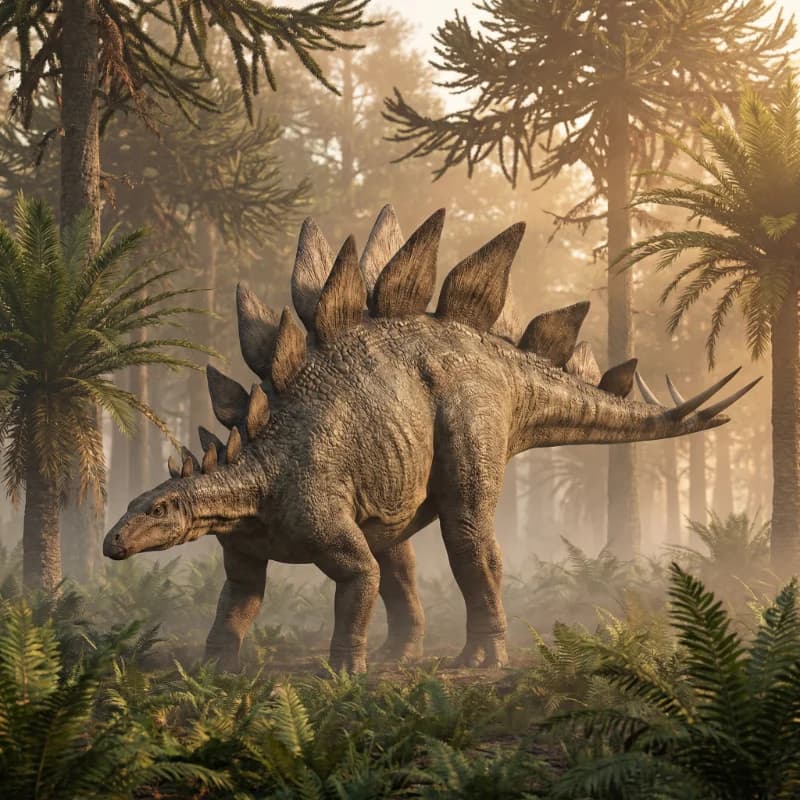
Tuojiangosaurus
Tuojiangosaurus multispinus
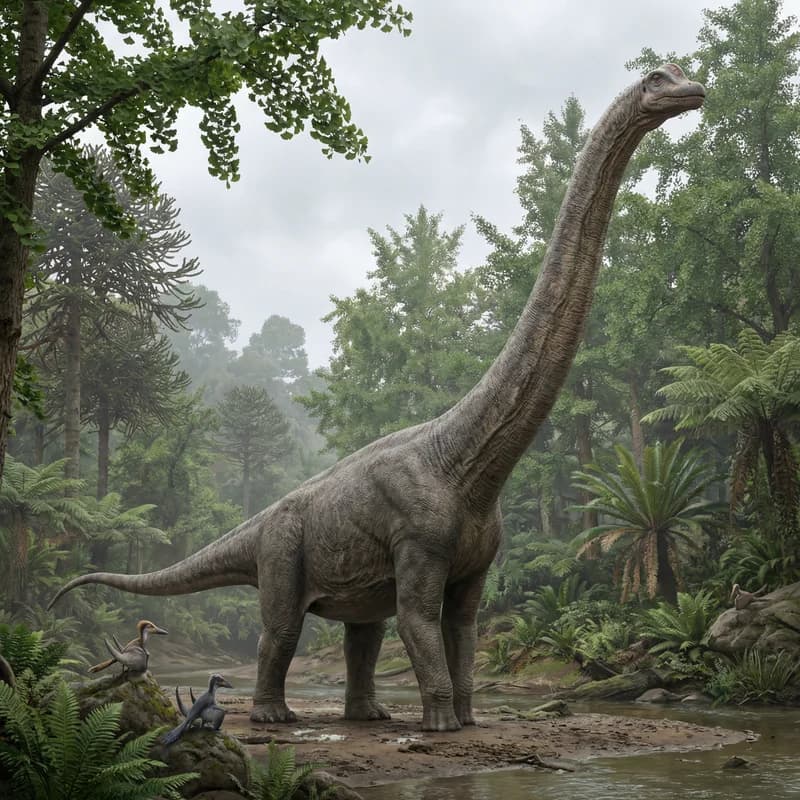
Mamenchisaurus
Mamenchisaurus
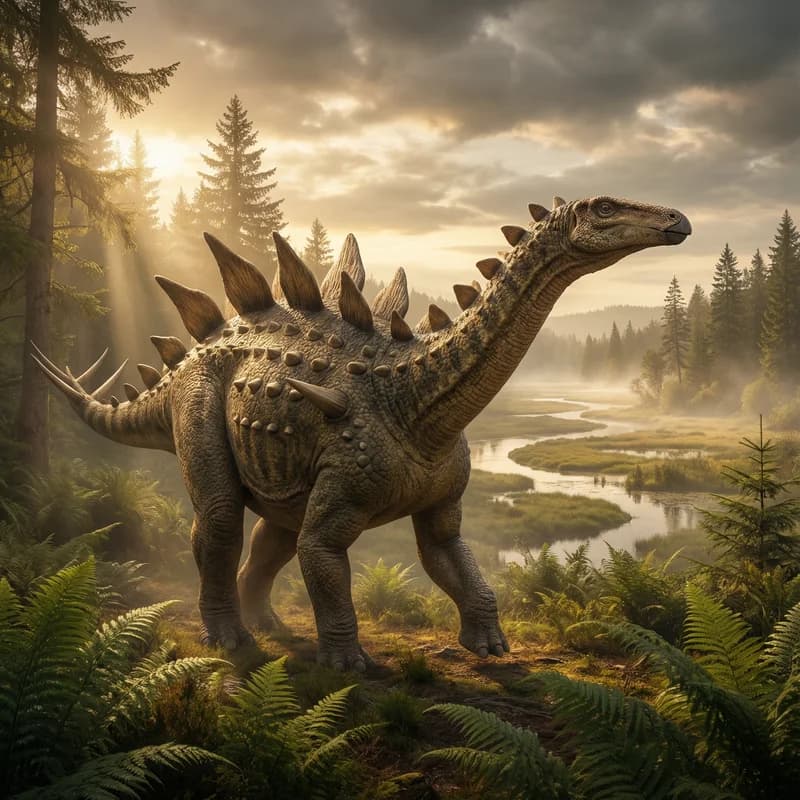
Miragaia
Miragaia longicollum
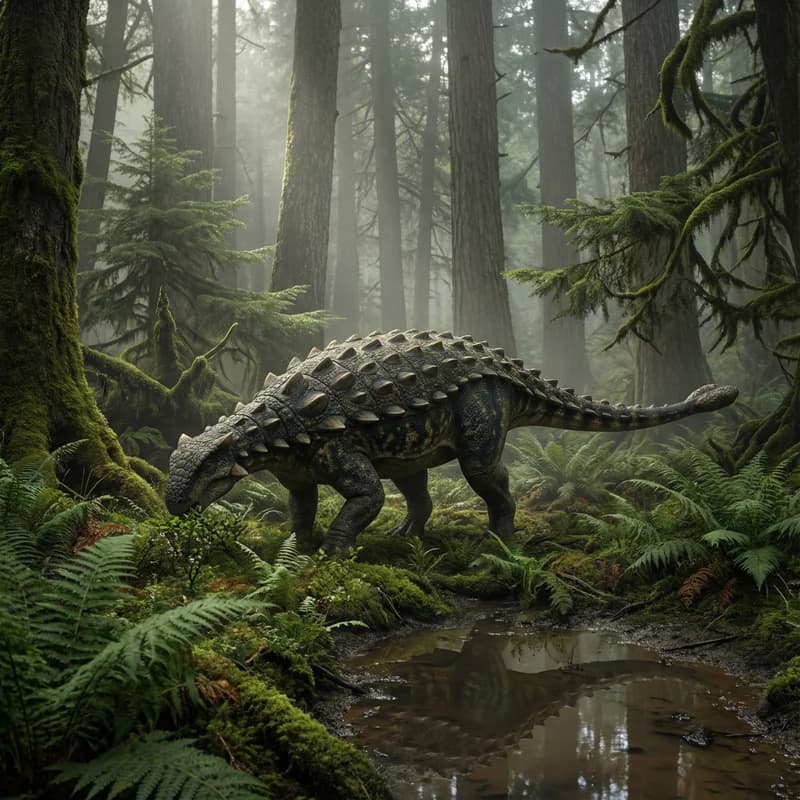
Dracopelta
Dracopelta zbyszewskii

Brachiosaurus
Brachiosaurus altithorax
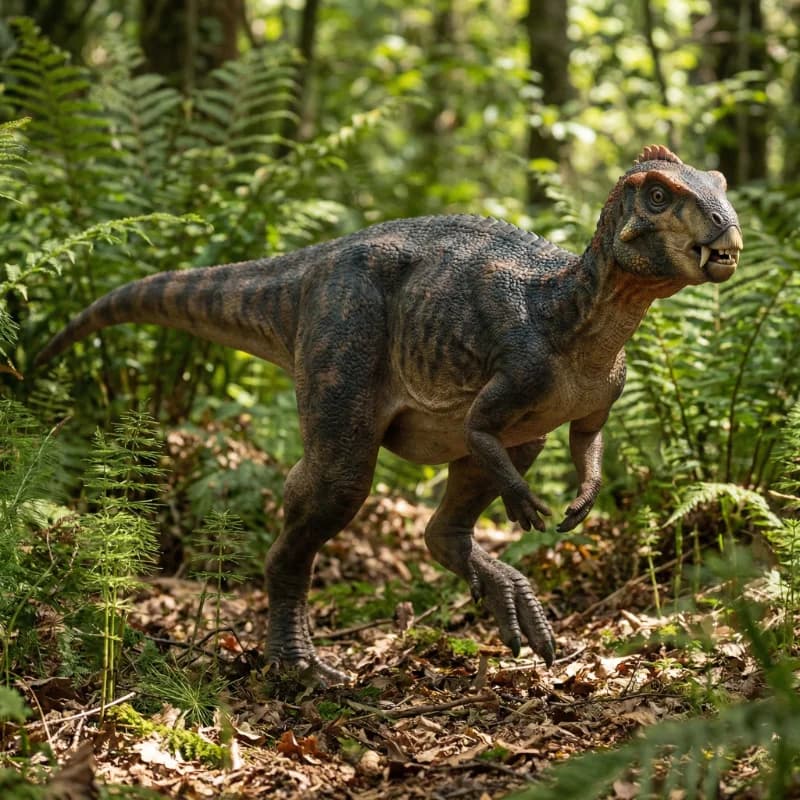
Heterodontosaurus
Heterodontosaurus tucki
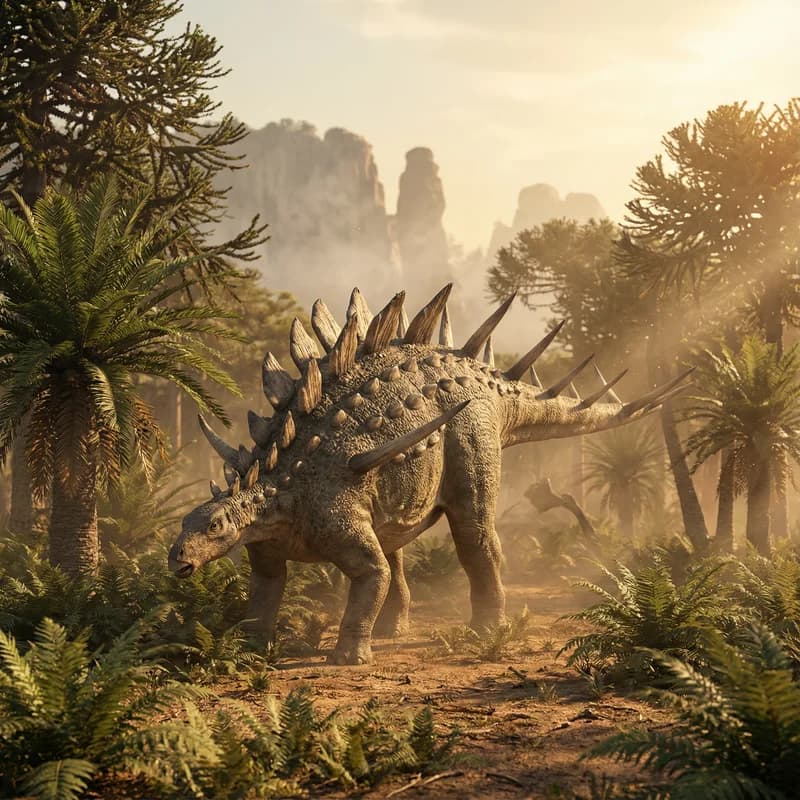
Kentrosaurus
Kentrosaurus aethiopicus

Stegosaurus
Stegosaurus stenops