Dsungaripterus
Cretaceous Period Carnivore Creature Type
Dsungaripterus weii
Scientific Name: "Dsungaripterus: Junggar/Dsungari (the Junggar Basin, Xinjiang, China) + Latinized Greek pteron (wing) = 'Junggar wing'; weii: honoring paleontologist C.M. Wei of the Bureau of Petroleum, Xinjiang"
Local Name: Dsungaripterus
Physical Characteristics
Discovery
Habitat
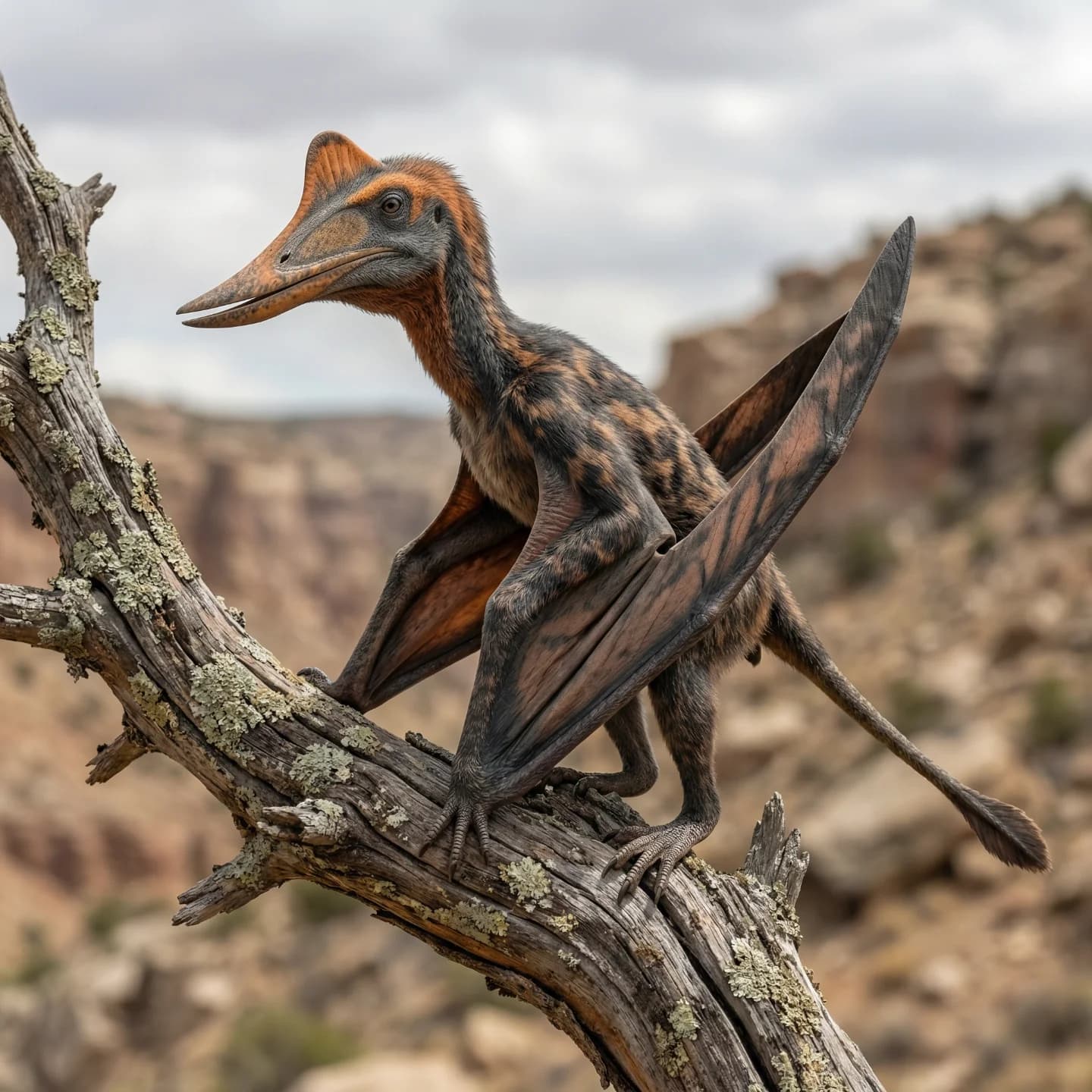
Dsungaripterus (Dsungaripterus weii Young, 1964) is a medium-sized pterodactyloid pterosaur that lived during the Early Cretaceous (Valanginian, ~135–134 Ma) in what is now the Junggar Basin of the Xinjiang Uyghur Autonomous Region, northwestern China. It belongs to the family Dsungaripteridae within the order Pterosauria, and serves as both the type genus and most well-known member of that family. Crucially, Dsungaripterus is not a dinosaur — it is a flying reptile (non-dinosaurian archosaur) that shared a common ancestor with dinosaurs but evolved along a separate lineage.
The most striking feature of Dsungaripterus is its unusual jaw and dental apparatus. The narrow, elongated jaws curve sharply upward at the tip, which is entirely toothless, forming a pincerlike structure thought to have been used to probe crevices and extract shellfish from rocks or mudflats. Farther back in the jaw, broad, flat, bulbous teeth were arranged for crushing hard-shelled prey — a feeding strategy termed durophagous. The wingspan was approximately 3–3.5 m, moderate for a Cretaceous pterosaur, and the skull measured over 46 cm in the largest specimens. Body mass has been estimated at roughly 5–15 kg, depending on the method and individual size, with Witton (2008) calculating ~9 kg for a smaller individual using a skeletal mass regression approach.
The holotype (IVPP V-2776) was named by the renowned Chinese vertebrate paleontologist Yang Zhongjian (C.C. Young) in 1964, based on a partial skull and skeleton from the Lianmuqin Formation of the Tugulu Group. Since 1973, numerous additional specimens — including nearly complete, three-dimensionally preserved skulls — have been recovered, providing detailed knowledge of cranial anatomy, palatal structure, and dental morphology. Recent U-Pb zircon dating (Zheng et al., 2024; Song et al., 2025) has established that the Wuerho Pterosaurian Fauna (WPF) of the Tugulu Group dates to at least the middle Valanginian (~134–135 Ma), making it one of the earliest Cretaceous pterosaur assemblages worldwide.
Overview
Name and Etymology
The genus name Dsungaripterus combines a reference to the Junggar (Dsungari) Basin of Xinjiang, China, with the Latinized Greek pteron ("wing"), meaning "Junggar wing" or "wing of the Junggar Basin." The specific epithet weii honors paleontologist C.M. Wei of the Palaeontological Division, Institute of Science, Bureau of Petroleum of Xinjiang (Young, 1964). The initial "D" in the genus name derives from the Romanization of the Chinese place name and is typically silent in English pronunciation, yielding something approximating "JUNG-ah-RIP-ter-us."
Taxonomic Status and Key Debates
Dsungaripterus is the type genus of the Dsungaripteridae. The phylogenetic position of this family has been debated over the past two decades. In the analysis of Andres et al. (2014), Dsungaripteridae was placed within Dsungaripteromorpha, a subgroup of the Azhdarchoidea, with Domeykodactylus as its sister taxon. By contrast, Kellner et al. (2019) recovered Dsungaripteridae outside the Azhdarchoidea, within the broader clade Tapejaroidea, with Noripterus as the sister taxon. Chen et al. (2020) provided additional support for a close relationship with azhdarchoids based on palatal similarities with Caupedactylus and Tupuxuara, though a definitive consensus has not yet been reached.
Only one species is currently recognized within the genus: D. weii. The once-proposed Dsungaripterus brancai (Galton, 1980; from the Tendaguru Formation, Tanzania) is now generally rejected (Martill et al., 2000), and D. parvus (Bakhurina, 1982) has been reassigned to Noripterus parvus (Lü et al., 2009).
One-Sentence Summary
Dsungaripterus is an Early Cretaceous durophagous pterosaur distinguished by its upturned, toothless rostral tip and posterior bulbous crushing teeth, representing the type genus of the Dsungaripteridae.
Age, Stratigraphy, and Depositional Environment
Temporal Range and Evidence
All known fossils of Dsungaripterus come from the Tugulu Group in the Wuerho (Urho) region of northwestern Xinjiang, specifically from the Shengjinkou Formation and the Lianmuqin Formation. The holotype (IVPP V-2776) was collected from the Lianmuqin Formation, while many of the nearly complete skulls described by Young (1973) and Chen et al. (2020) come from the Shengjinkou Formation.
Two independent U-Pb zircon age determinations have been published for a tuffaceous layer at the top of the Shengjinkou Formation. Zheng et al. (2024) reported 135.2 ± 0.9 Ma, and Song et al. (2025) obtained 134.27 ± 0.36 Ma from a nearby outcrop of the same horizon. These results are mutually consistent within analytical uncertainty and place the WPF firmly in the middle Valanginian, preceding the Jehol Biota of northeastern China. However, the upper and lower temporal boundaries of the WPF remain unresolved (Song et al., 2025).
Formation and Lithology
In the Wuerho region, the Tugulu Group is divided (in ascending order) into the Hutubihe Formation, the Shengjinkou Formation, and the Lianmuqin Formation (Zhao, 1980). These units consist of lacustrine-deltaic clastic sediments: the Shengjinkou and Lianmuqin formations are characterized by interbedded red, green, and yellow variegated mudstones and siltstones. The Lianmuqin Formation specifically includes gray-green, brownish-red, and purplish-brown sandy mudstones, clayey siltstones, and intercalated mudstones (ChinaLex Geolex). A distinctive whitish tuffaceous siltstone layer (~0.2 m thick) caps the Shengjinkou Formation and has provided the material for radiometric dating (Zheng et al., 2024; Song et al., 2025).
Paleoenvironment
The Tugulu Group records a shallow-water lacustrine deltaic depositional system within an inland basin under warm, semi-arid conditions (Jiang et al., 2008; Song et al., 2025). This environment — lakes, deltas, and adjacent shorelines — would have provided ideal foraging habitat for a durophagous pterosaur like Dsungaripterus, with abundant shellfish and invertebrates along waterline margins. The interpretation is supported by numerous pterosaur trackways recovered from the same strata (Li et al., 2021; Xing et al., 2011), indicating active terrestrial locomotion along lakeshores. Co-occurring fauna from the WPF includes the dsungaripterid Noripterus complicidens, fish, turtles, crocodilians, sauropods, stegosaurs, and theropods (Song et al., 2025).
Specimens and Diagnostic Features
Holotype and Key Specimens
| Specimen Number | Composition | Formation | Notes |
|---|---|---|---|
| IVPP V-2776 (holotype) | Partial skull + skeleton | Lianmuqin Fm. | Original description, Young 1964 |
| IVPP V 4063 | Nearly complete skull (length 390 mm) | Shengjinkou/Lianmuqin Fm. | At least subadult; well-preserved palate |
| IVPP V 4064 | Articulated skull + mandible (skull length 461 mm) | Shengjinkou/Lianmuqin Fm. | Adult; Young 1973 |
| IVPP V 4065 | Incomplete skull (est. length ~467 mm) | Shengjinkou/Lianmuqin Fm. | Largest individual; Young 1973 |
| IVPP V 26256 | Anterior part of skull | Tugulu Group | Comparatively thin rostrum; possible sexual dimorphism |
| MCUGB 05-01-09 | Articulated skull + mandible | Eastern Junggar Basin | Laterally compressed; Li & Ji 2010 |
Chen et al. (2020) described additional IVPP specimens (V 26560, V 26561, V 26257, V 26258, V 26259 series), substantially expanding knowledge of the palatal anatomy.
Diagnosis
Key features distinguishing Dsungaripterus from other pterosaurs include (after Chen et al., 2020; Kellner, 2003; Unwin, 2003; Hone et al., 2017):
- A robust, strongly upturned, toothless premaxillary tip
- A well-developed sagittal crest beginning anterior to the nasoantorbital fenestra and extending above the occipital region
- A sub-rounded, relatively small orbit positioned high on the skull
- Bulbous teeth with broad, oval bases — 14 to 15 per jaw side
- A posterior expansion of the maxilla bearing the last 4–5 teeth — an autapomorphy of the species
- The lateral process of the pterygoid divided into two distinct parts — unique to D. weii
- Interpterygoid fenestrae merging into an irregular oval shape with two symmetrical posterior notches
Limitations of the Material
While cranial material is relatively abundant and superbly preserved in three dimensions, the postcranial skeleton of the holotype is comparatively incomplete. Accurate reconstruction of total body length depends on articulated postcranial specimens that have not yet been fully described, and body mass estimates carry substantial uncertainty.
Morphology and Functional Anatomy
Body Size
The wingspan of Dsungaripterus is estimated at 3–3.5 m (Young, 1964; Wikipedia). Skull length reaches approximately 467 mm in the largest specimen (IVPP V 4065), and the combined head-and-neck length approaches 1 m. Total body length (snout to tail) is difficult to determine precisely due to the absence of complete articulated specimens, but is roughly estimated at 1–1.5 m.
For body mass, Witton (2008) estimated approximately 9 kg for an individual with a 2.51 m wingspan using a skeletal mass regression method. Given that dsungaripterids possess notably thick bone walls compared to most other pterosaurs, an adult with a 3–3.5 m wingspan would plausibly have weighed in the range of 5–15 kg. This is relatively heavy for a pterosaur of this wingspan, reflecting the group's characteristically stout proportions (Witton, 2013; Song et al., 2025).
Skull and Dentition
The skull's most conspicuous feature is the long, narrow, upturned rostrum with a pointed, edentulous (toothless) tip. The toothless portion measures approximately 95–100 mm (Chen et al., 2020). A sagittal crest originates near the anterior margin of the nasoantorbital fenestra and continues as a low ridge to the occiput. Vertically oriented striae at the crest base have been interpreted as attachment sites for a rhamphotheca (keratinous covering) (Holgado et al., 2019; Chen et al., 2020).
The teeth number 14–15 per jaw side, increasing in size posteriorly to about the 5th position, then decreasing before the posterior maxillary expansion, which bears 4–5 comparatively large bulbous teeth. Tooth bases are broad and oval. Clear wear facets parallel to the palatal plate are observed on some specimens (IVPP V 26256), confirming the processing of hard food items (Chen et al., 2020).
Chen et al. (2020) identified symmetrical grooves on the lateral surfaces of both the upper and lower jaws, interpreted as impressions of the edge of a keratinous sheath that covered the toothless anterior portion of the rostrum. This sheath would have protected the bone from abrasion during foraging (Young, 1964; Wellnhofer, 1991; Witton, 2013).
Wing Structure and Locomotion
As in all pterosaurs, the wing was supported by an enormously elongated fourth finger bearing a skin membrane (brachiopatagium). Dsungaripterids are distinguished from most other pterosaurs by their thick bone cortices and stout bodily proportions (Song et al., 2025), suggesting a primarily terrestrial lifestyle with good walking ability. Their flight style likely involved extensive flapping punctuated by abrupt landings, rather than sustained soaring (Witton, 2013).
Diet and Ecology
Durophagous Feeding Hypothesis
The most widely accepted dietary interpretation for Dsungaripterus is durophagous (hard-food specialist). Multiple lines of evidence support this:
- Tooth morphology: The posterior bulbous, flat-topped teeth are well suited for crushing hard shells
- Wear facets: Tooth wear surfaces parallel to the palatal plane confirm the mechanical processing of hard objects (Chen et al., 2020)
- Rostral shape: The upturned, toothless jaw tips function as a pincerlike probing tool for extracting shellfish from crevices, rocks, or mudflats
- Hypertrophied opisthotic processes: These enlarged projections anchored powerful neck muscles, consistent with the forces needed to dislodge or extract prey (Habib & Godfrey, 2010; Witton, 2013)
Since Young (1964), researchers have compared Dsungaripterus to modern probing shorebirds, suggesting it foraged along shallow lakeshores and mudflats for bivalves, gastropods, crustaceans, and possibly hard-shelled insects (Wellnhofer, 1991; Unwin, 2005; Witton, 2013). Bestwick et al. (2018), in their comprehensive review of pterosaur dietary hypotheses, classified dsungaripterids as durophagous with possible piscivorous tendencies.
Social Behavior and Co-occurring Fauna
In the Wuerho area, D. weii is the most abundant vertebrate taxon (Song et al., 2025), co-occurring with Noripterus complicidens at the same localities (Young, 1973; Chen et al., 2020). The sympatry of these two dsungaripterid species may reflect niche partitioning based on differences in body size and tooth morphology. Abundant pterosaur trackways from the same strata further suggest active terrestrial locomotion along lakeshores (Li et al., 2021).
Distribution and Paleogeography
Geographic Range
The primary fossil locality for Dsungaripterus is the Wuerho (Urho) district, Karamay City, Xinjiang Uyghur Autonomous Region, situated along the northwestern margin of the Junggar Basin. An additional skull was reported by Li & Ji (2010) from Wucaicheng (Wucaiwan) on the eastern margin of the basin.
A dsungaripterid wing phalanx from the Hasandong Formation (Early Cretaceous) of South Korea was reported in 2002 (Lim et al., 2002) and subsequently identified as Dsungaripterus? cf. D. weii (Yang, 2015; Kim & Huh, 2018). If confirmed, this would extend the geographic range to the Korean Peninsula, but the fragmentary nature of the material makes definitive attribution tentative.
Paleogeographic Position
During the Valanginian (~135 Ma), the Junggar Basin occupied an inland position at approximately 38–39°N paleolatitude, 94–95°E paleolongitude, under a warm semi-arid to temperate climate regime, somewhat farther south than its present-day coordinates.
Phylogeny and Classification Debate
Comparative Summary of Major Hypotheses
| Study | Placement of Dsungaripteridae | Sister Taxon | Data/Method |
|---|---|---|---|
| Unwin, 2003 | Dsungaripteroidea (with Germanodactylus) | Germanodactylus | Morphological cladistic analysis |
| Kellner, 2003 | Close to Azhdarchoidea | — | Morphological cladistic analysis |
| Andres et al., 2014 | Dsungaripteromorpha (within Azhdarchoidea) | Domeykodactylus | Large-scale morphological analysis |
| Kellner et al., 2019 | Tapejaroidea (outside Azhdarchoidea) | Noripterus | Morphological cladistic analysis |
| Chen et al., 2020 | Supports Azhdarchoidea affinity (palatal evidence) | — | Anatomical comparison |
The central unresolved question is whether Dsungaripteridae nests within Azhdarchoidea or represents a separate branch outside of it. The palatal similarities documented by Chen et al. (2020) — shared with Caupedactylus and Tupuxuara — support a close relationship, but the precise topology remains debated.
Species-Level Taxonomy within the Genus
Apart from D. weii, all other species ever referred to the genus have been removed or rejected:
- D. brancai (Galton, 1980) — based on Tendaguru Formation pterosaur material; referral rejected (Martill et al., 2000)
- D. parvus (Bakhurina, 1982) — reassigned to Noripterus parvus (Lü et al., 2009)
Reconstruction and Uncertainty
Confirmed
- Skull morphology (upturned toothless rostral tip, sagittal crest, bulbous teeth) — confirmed by multiple well-preserved specimens
- Locality (Junggar Basin, Xinjiang, China) and formation (Tugulu Group) — firmly established
- Valanginian age (~134–135 Ma) — confirmed by U-Pb zircon dating (Zheng et al., 2024; Song et al., 2025)
Strongly Supported Hypotheses
- Durophagous diet: robustly supported by tooth morphology, wear facets, and rostral design
- Close relationship between Dsungaripteridae and Azhdarchoidea: supported by multiple phylogenetic analyses and palatal anatomy, though precise placement varies
Estimated or Uncertain
- Body mass: estimates range from ~5 to 15 kg depending on methodology and individual size; no complete articulated skeleton is available for precise calculation
- Body length: roughly estimated at 1–1.5 m based on incomplete postcranial material
- Extent and morphology of the keratinous rostral sheath
- Relative proportions of flapping versus gliding in flight
- Precise nature of sexual dimorphism (the thin rostrum of IVPP V 26256 may reflect sex-based variation; Chen et al., 2020)
Popular Media vs. Scientific Understanding
Dsungaripterus is frequently misclassified as a "dinosaur" in popular media, but it is a non-dinosaurian archosaur — a flying reptile from a distinct evolutionary lineage. Additionally, the likely presence of a keratinous sheath over the rostrum means that restorations showing only bare bone at the jaw tips may not accurately reflect the animal's appearance in life.
Comparison with Related Taxa
| Taxon | Wingspan (m) | Age | Locality | Inferred Diet | Key Distinguishing Feature |
|---|---|---|---|---|---|
| Dsungaripterus weii | 3–3.5 | Valanginian (~135 Ma) | Xinjiang, China | Durophagous | Upturned rostrum, broad bulbous teeth |
| Noripterus complicidens | ~4 | Valanginian | Xinjiang, China / Mongolia | Durophagous | Narrower, more elongated tooth bases |
| Lonchognathosaurus acutirostris | Uncertain | Early Cretaceous | Southern Junggar Basin, China | Presumably durophagous | Laterally compressed rostrum |
| Domeykodactylus ceciliae | Uncertain | Early Cretaceous | Chile | Uncertain | Only putative South American dsungaripterid |
Noripterus is the closest relative of Dsungaripterus, and the two genera co-occurred in the Wuerho area. They are clearly distinguished by tooth base morphology (broad and bulbous in Dsungaripterus vs. narrow and elongated in Noripterus) and by humerus-to-femur ratio (0.57 in D. weii vs. 0.81 in Noripterus; Hone et al., 2017).
Fun Facts
FAQ
📚References
- Young, C.-C. (1964). On a new pterosaurian from Sinkiang, China. Vertebrata PalAsiatica, 221–225.
- Young, C.-C. (1973). Reports of Paleontological Expedition to Sinkiang (II). Pterosaurian Fauna from Wuerho, Sinkiang. Academy Sinica: Memoirs of the Institute of Vertebrate Palaeontology and Paleoanthropology, 18–35.
- Chen, H., Jiang, S., Kellner, A.W.A., Cheng, X., Zhang, X., Qiu, R., Li, Y. & Wang, X. (2020). New anatomical information on Dsungaripterus weii Young, 1964 with focus on the palatal region. PeerJ, 8, e8741. https://doi.org/10.7717/peerj.8741
- Zheng, D. et al. (2024). Calibrating the Early Cretaceous Urho Pterosaur Fauna in Junggar Basin and implications for the evolution of the Jehol Biota. Geological Society of America Bulletin, 136(1–2), 765–778. https://doi.org/10.1130/B36521.1
- Song, J., Zhong, Y., Jiang, S. & Wang, X. (2025). The first ornithocheiromorph humerus from Wuerho (Urho), China, with a new isotopic age of the Tugulu Group. Anais da Academia Brasileira de Ciencias, 97(Suppl. 1), e20240557. https://doi.org/10.1590/0001-3765202520240557
- Witton, M.P. (2008). A new approach to determining pterosaur body mass and its implications for pterosaur flight. Zitteliana, B28, 143–158.
- Witton, M.P. (2013). Pterosaurs: Natural History, Evolution, Anatomy. Princeton University Press. ISBN 978-0691150611.
- Hone, D.W.E., Jiang, S. & Xu, X. (2017). A taxonomic revision of Noripterus complicidens and Asian members of the Dsungaripteridae. Geological Society, London, Special Publications, 455(1), 149–157. https://doi.org/10.1144/SP455.8
- Andres, B., Clark, J. & Xu, X. (2014). The earliest pterodactyloid and the origin of the group. Current Biology, 24(9), 1011–1016. https://doi.org/10.1016/j.cub.2014.03.030
- Kellner, A.W.A., Weinschutz, L.C., Holgado, B., Bantim, R.A.M. & Sayao, J.M. (2019). A new toothless pterosaur (Pterodactyloidea) from Southern Brazil with insights into the paleoecology of a Cretaceous desert. Anais da Academia Brasileira de Ciencias, 91(Suppl. 2), e20190768. https://doi.org/10.1590/0001-3765201920190768
- Kellner, A.W.A. (2003). Pterosaur phylogeny and comments on the evolutionary history of the group. In: Buffetaut, E. & Mazin, J.-M. (Eds.), Geological Society Special Publications, 217, 105–137.
- Unwin, D.M. (2003). On the phylogeny and evolutionary history of pterosaurs. In: Buffetaut, E. & Mazin, J.-M. (Eds.), Geological Society Special Publications, 217, 139–190.
- Martill, D.M., Frey, E., Diaz, G.C. & Bell, C.M. (2000). Reinterpretation of a Chilean pterosaur and the occurrence of Dsungaripteridae in South America. Geological Magazine, 137(1), 19–25. https://doi.org/10.1017/S0016756800003502
- Bestwick, J., Unwin, D.M., Butler, R.J., Henderson, D.M. & Purnell, M.A. (2018). Pterosaur dietary hypotheses: a review of ideas and approaches. Biological Reviews, 93(4), 2021–2048. https://doi.org/10.1111/brv.12431
- Lu, J., Azuma, Y., Dong, Z., Barsbold, R., Kobayashi, Y. & Lee, Y.-N. (2009). New material of dsungaripterid pterosaurs (Pterosauria: Pterodactyloidea) from Western Mongolia and its palaeoecological implications. Geological Magazine, 146(5), 690–700.
- Habib, M.B. & Godfrey, S.J. (2010). On the hypertrophied opisthotic processes in Dsungaripterus weii Young (Pterodactyloidea, Pterosauria). Acta Geoscientica Sinica, 31, 26.
- Henderson, D.M. (2010). Pterosaur body mass estimates from three-dimensional mathematical slicing. Journal of Vertebrate Paleontology, 30(3), 768–785.
- Li, D. & Ji, S. (2010). New material of the Early Cretaceous Pterosaur Dsungaripterus weii from Northern Xinjiang, Northwest China. Acta Geoscientica Sinica, 31(1), 38–39.
- Lim, J.-D., Baek, K.-S. & Yang, S.Y. (2002). A new record of a pterosaur from the Early Cretaceous of Korea. Current Science, 82(10), 1208–1210.
- Kim, J.Y. & Huh, M. (2018). Dinosaurs, Birds, and Pterosaurs of Korea: A Paradise of Mesozoic Vertebrates. Springer Nature. ISBN 978-981-10-6998-7.
Gallery
5 images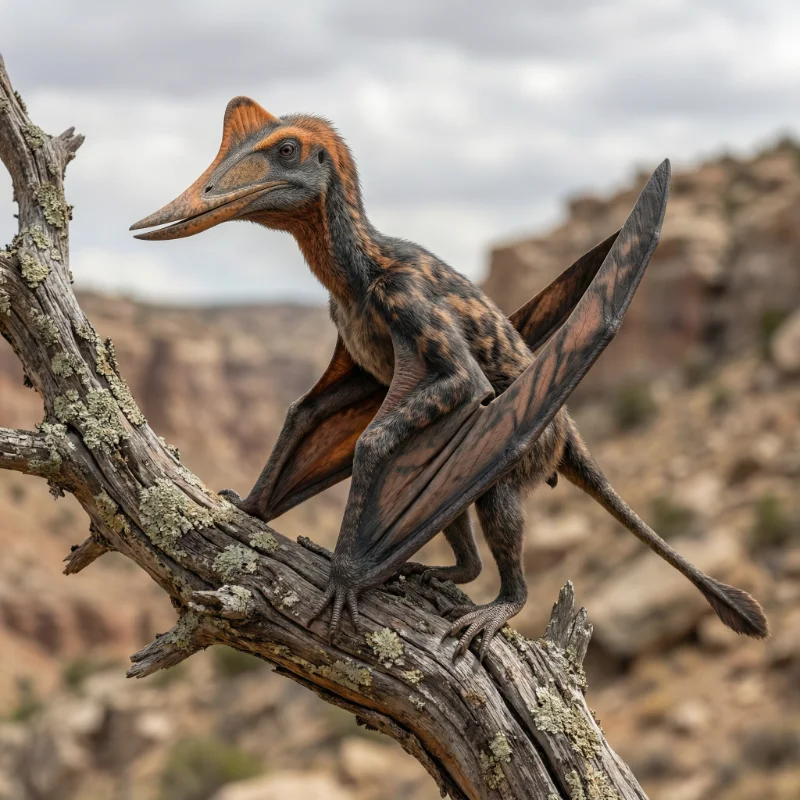 Dsungaripterus
Dsungaripterus · Cretaceous Period · Carnivore
 Dsungaripterus
Dsungaripterus · Cretaceous Period · Carnivore
 Dsungaripterus
Dsungaripterus · Cretaceous Period · Carnivore
 Dsungaripterus
Dsungaripterus · Cretaceous Period · Carnivore
 Dsungaripterus
Dsungaripterus · Cretaceous Period · Carnivore
🔗Related Creatures
Arambourgiania
Arambourgiania philadelphiae
Hatzegopteryx
Hatzegopteryx thambema
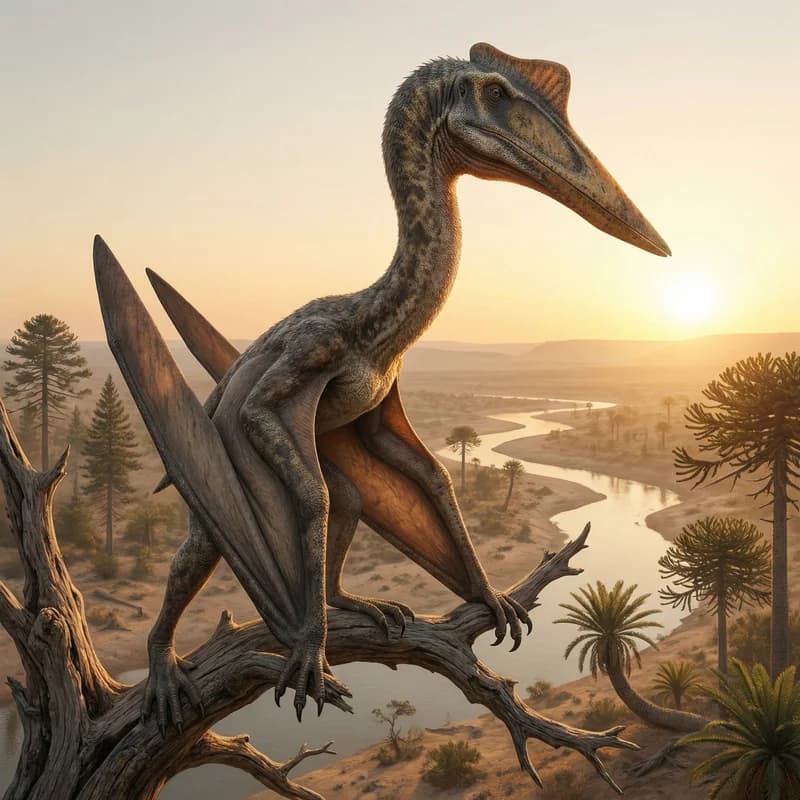
Quetzalcoatlus
Quetzalcoatlus northropi
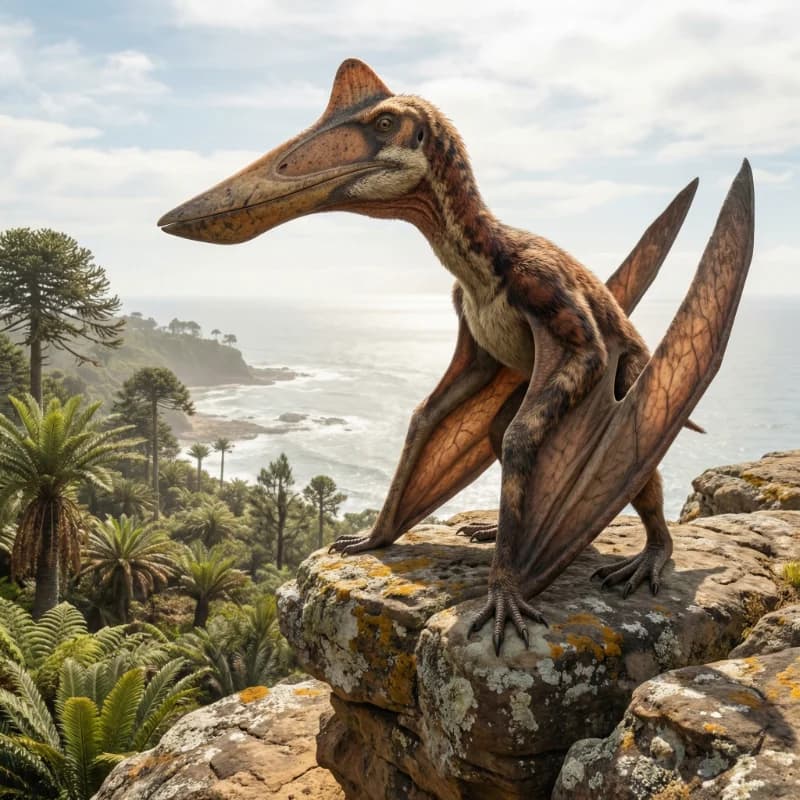
Istiodactylus
Istiodactylus latidens
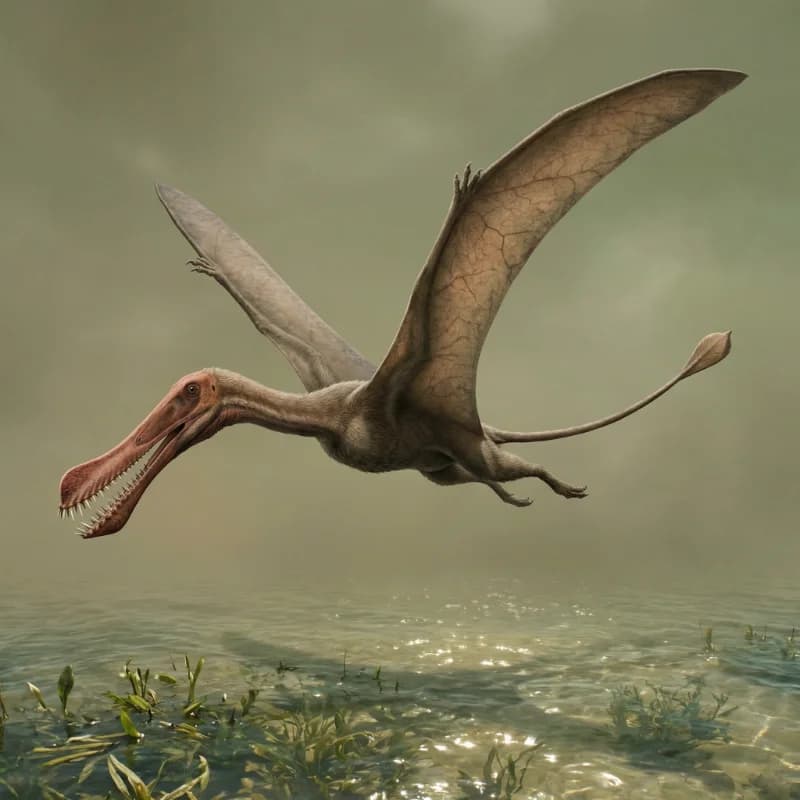
Cearadactylus
Cearadactylus atrox
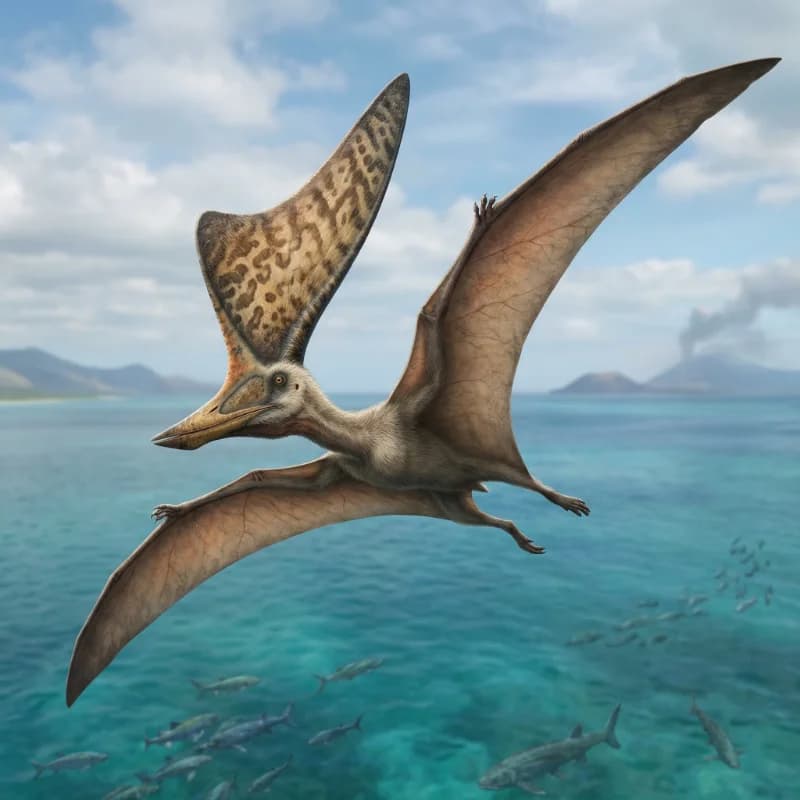
Nyctosaurus
Nyctosaurus gracilis
Pterodaustro
Pterodaustro guinazui
Coloborhynchus
Coloborhynchus clavirostris