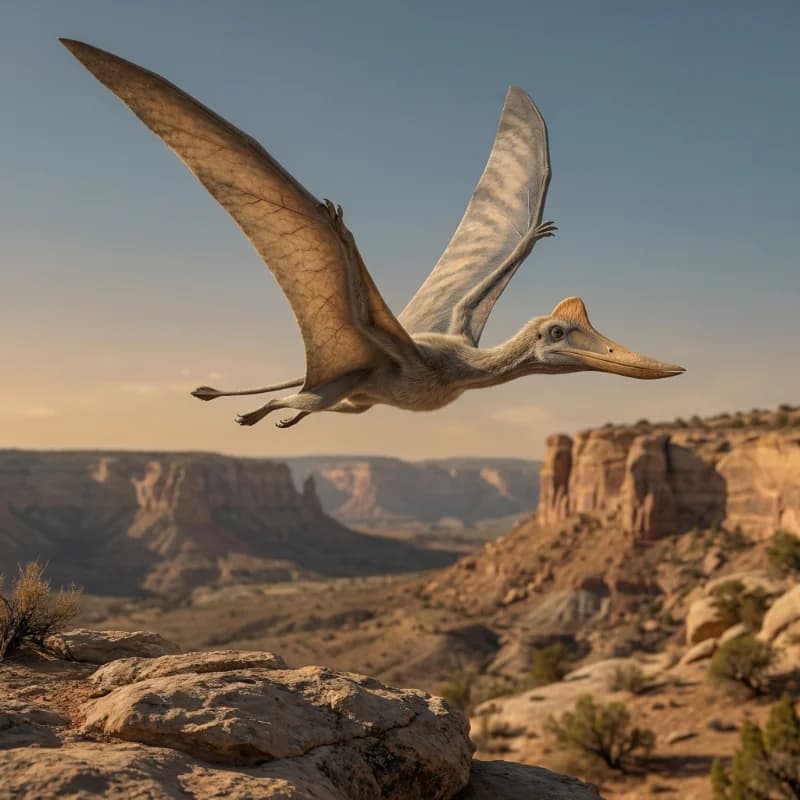
Pterodaustro
Cretaceous Period Omnivore Creature Type
Pterodaustro guinazui
Scientific Name: "Pterodaustro: Greek pteron (wing) + Latin auster (south wind/south) = 'wing from the south'; guinazui: honoring Argentine paleontologist Román Guiñazú"
Physical Characteristics
Discovery
Habitat
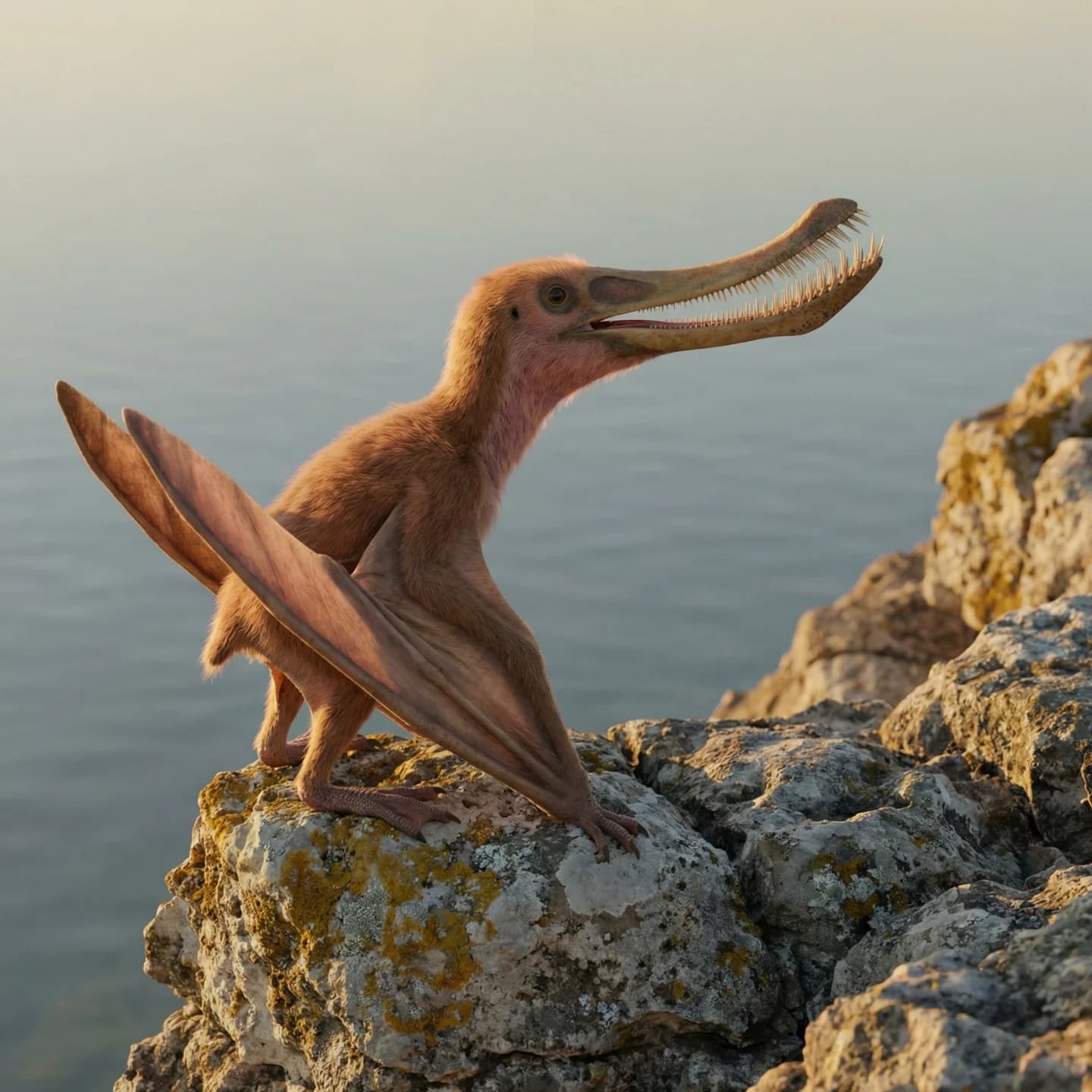
Pterodaustro guinazui Bonaparte, 1970 is a ctenochasmatid pterodactyloid pterosaur from the Early Cretaceous (Albian, ~105 Ma) of San Luis Province, Argentina. The generic name combines Greek pteron (wing) with Latin auster (south wind), yielding a condensed pteron de austro — 'wing from the south.' The specific epithet honors the Argentine paleontologist Román Guiñazú; the original spelling guiñazui was emended to guinazui by Peter Wellnhofer in 1978 because ICZN rules prohibit diacritical marks in taxonomic names.
Pterodaustro is distinguished by approximately one thousand bristle-like teeth in its lower jaws — a unique filter-feeding apparatus among pterosaurs that convergently parallels the feeding mechanism of modern flamingos. This dental specialization, combined with small globular crushing teeth in the upper jaw, represents one of the most extreme trophic adaptations known in any flying reptile. Maximum adult wingspan is estimated at approximately 2.5–3 m and body mass at about 9.2 kg (Naish et al., 2021).
The genus is known from over 750 individual specimens recovered from a single ~50 m² quarry — the 'Loma del Pterodaustro' locality in the Lagarcito Formation — making it one of the best-represented pterosaurs in the fossil record, with every ontogenetic stage documented from egg to adult (Chiappe et al., 1998). Pterodaustro also holds several paleontological firsts: the first gastroliths (gizzard stones) reported for any pterosaur (Codorniú et al., 2009), the first three-dimensionally preserved pterosaur egg (Grellet-Tinner et al., 2014), and the first putative medullary bone in a non-dinosaurian archosaur (Chinsamy et al., 2009 — though this interpretation remains debated).
Overview
Name and Etymology
The genus name Pterodaustro is a condensation of the Greek pteron (wing) and Latin de austro (from the south), meaning 'wing from the south.' José F. Bonaparte first used the name in 1969, but without a formal description it constituted a nomen nudum. The valid description followed in 1970 (Bonaparte, 1970), establishing Pterodaustro guiñazui as the type species. The tilde in the specific name was removed by Wellnhofer (1978) in compliance with ICZN nomenclatural rules, producing the currently accepted form guinazui.
Taxonomic Status
Pterodaustro is a monotypic genus; the sole recognized species is P. guinazui. Puntanipterus Bonaparte & Sánchez, 1975 is generally regarded as a junior synonym (Codorniú & Gasparini, 2007). Bonaparte (1970) originally assigned the genus to Pterodactylidae; in 1971 he erected the family Pterodaustriidae based on its unique dentition. Since 1996, successive cladistic analyses by Kellner (1996), Unwin (1996), and later workers have consistently recovered Pterodaustro within Ctenochasmatidae, close to the Late Jurassic genus Ctenochasma.
One-sentence Summary
Pterodaustro is a filter-feeding pterosaur bearing approximately 1,000 bristle-like mandibular teeth, known from all ontogenetic stages through over 750 specimens, and one of the most specialized and best-documented pterosaurs ever discovered.
Stratigraphy, Age, and Depositional Environment
Age
Pterodaustro dates to the Albian stage of the Early Cretaceous, approximately 105 Ma. This age assignment is based on radiometric dates of 107.4–109.4 Ma from basaltic flows underlying the Lagarcito Formation at Quebrada de Hualtarán (Yrigoyen, 1975), corroborated by an Aptian–Albian palynoflora from the underlying La Cantera Formation (Gigante Group), and integrated sedimentological, stratigraphic, and paleontological data (Chiappe et al., 1998a, 2000).
Formation and Lithology
All confirmed specimens derive from the Lagarcito Formation in San Luis Province, central Argentina. The Lagarcito Formation caps the second depositional megasequence of the San Luis Basin — a rift basin generated during the breakup of Gondwana — overlying the thick red-bed succession of the Gigante Group. At the Loma del Pterodaustro locality (Quebrada de Hualtarán), the basal ~8 m of the Lagarcito section are divided into three lithofacies: (1) inversely graded, massive sandstones to matrix-supported conglomerates (debris flows); (2) fine-grained sandstones with flat tops and asymmetric ripples (sheetfloods on a sand flat); and (3) massive to laminated claystones, siltstones, and very fine sandstones (lake sequence) (Chiappe et al., 1998a). Virtually all fossils come from subfacies 3.1 — laminated, very fine sediments interpreted as offshore lacustrine deposits.
Paleoenvironment and Paleoclimate
The facies association, the absence of desiccation cracks and evaporite horizons, and the preservation of laminations collectively indicate a long-lived fluvio-lacustrine sequence. The lake was at least periodically thermally stratified, with an anoxic bottom that prevented bioturbation and favored the exceptional preservation of delicate structures — hence the classification of these beds as a Konservat-Lagerstätte (Chiappe et al., 1995, 1998a). The predominant paleoclimate during deposition is interpreted as semiarid and seasonal (Chiappe et al., 1998a). Associated biota includes semionotid and pleuropholid fishes, anurans, conchostracans, ostracods, diverse trace fossils, and plant remains, painting a picture of a nutrient-rich shallow lake surrounded by seasonal vegetation.
Specimens and Diagnostic Characters
Holotype and Key Specimens
The holotype is PVL 2571, a nearly complete right humerus housed at the Sección Paleontología de Vertebrados, Instituto Miguel Lillo (Tucumán, Argentina) (Bonaparte, 1970). Subsequent large-scale excavations in 1994, 1996, and 1998 at the Loma del Pterodaustro quarry yielded over 750 individual specimens, of which 288 had been catalogued by 2008.
| Specimen | Institution | Preserved Elements | Significance |
|---|---|---|---|
| PVL 2571 | Instituto Miguel Lillo | Right humerus | Holotype (Bonaparte, 1970) |
| PVL 3860 | Instituto Miguel Lillo | Partial skull + mandible | Most commonly figured specimen (Sánchez, 1973) |
| MHIN-UNSL-GEO-V-57 | Univ. Nacional de San Luis | Nearly complete skull + mandible | Skull length ~29 cm (Chiappe et al., 2000) |
| MHIN-UNSL-GEO-V-135 | Univ. Nacional de San Luis | Skull + mandible (rostral half missing) | ~10% larger than V-57 |
| MHIN-UNSL-GEO-V-175 | Univ. Nacional de San Luis | Nearly complete isolated mandible | Dentition studies (Chiappe et al., 2000) |
| MHIN-UNSL-GEO-V246 | Univ. Nacional de San Luis | Egg with embryo | First pterosaur embryo (Chiappe et al., 2004) |
| MIC-V263 | Museo Interactivo de Ciencias | Skeleton with gastroliths | First pterosaur gastroliths (Codorniú et al., 2009) |
| MIC-V243 | Museo Interactivo de Ciencias | Skeleton with gastroliths | Second gastrolith specimen |
| MMP 3562 | Museo Municipal de Ciencias Naturales | Partial skull (occipital region) | Braincase study (Codorniú & Paulina-Carabajal, 2016) |
Diagnostic Characters
Pterodaustro is diagnosed by the following combination of features that distinguish it from other ctenochasmatids and pterosaurs: approximately 1,000 bristle-like mandibular teeth set in two long grooves (each tooth oval in cross-section, 0.2–0.3 mm wide, ~3 cm long); minute spatulate-crowned maxillary teeth attached via ligaments to a specialized tooth pad adorned with rows of small ossicles rather than individual alveoli (Chiappe et al., 2000); a tetraradiate jugal (versus triradiate in other pterodactyloids), with a unique jugal–quadrate contact unknown in any other pterosaur; mandibular teeth extending along approximately 90% of mandibular length (compared to ≤65% in Ctenochasma and allies); and 22 caudal vertebrae, far exceeding the pterodactyloid maximum of 16 (Codorniú, 2005).
Morphology and Functional Anatomy
Body Size
Maximum adult wingspan is estimated at approximately 2.5–3 m, with a maximum body mass of about 9.2 kg (Naish, Witton & Martin-Silverstone, 2021). A hatchling with a wingspan of ~0.29 m is estimated at only ~23 g — roughly 1/400th of adult mass. Skull length in the largest known specimen (MHIN-UNSL-GEO-V-135) is approximately 10% greater than the 29 cm measured in MHIN-UNSL-GEO-V-57, suggesting maximum skull length of about 32 cm. Body length (snout to tail tip, excluding wings) is estimated at roughly 0.7–1.0 m, though no single articulated skeleton preserves the complete body axis.
Cranial Anatomy
The skull is remarkably elongated, slender, and upwardly curved. In specimen MHIN-UNSL-GEO-V-57 the total cranial length is approximately 29 cm (Chiappe et al., 2000). The preorbital region comprises more than 85% of skull length. The snout and lower jaws curve strongly upward such that the tangent at the tip of the snout is perpendicular to the tangent at the jaw joint. The nasoantorbital fenestra is comparatively small, spanning only 10–12% of total skull length. The back of the skull is low-set, and there are some indications of a low parietal crest, though this remains uncertain (Chiappe et al., 2000). Codorniú & Paulina-Carabajal (2016) provided the first detailed description of the braincase, noting subtriangular elongated frontals, ossified ethmoidal elements, and short fan-shaped paroccipital processes.
Dentition
The mandibular teeth are true teeth composed of enamel, dentine, and pulp (Chiappe & Chinsamy, 1996). Despite their hard mineralogy, their extreme length-to-width ratio permitted bending of up to 45° (Currey, 1999). The upper jaw teeth are diminutive, with flat conical bases and spatulate crowns; they lack individual alveoli and appear to have been held by ligaments in a specialized tooth pad (Chiappe et al., 2000). Recent palaeohistological work by Cerda & Codorniú (2023) confirmed that the periodontium and implantation mode of both upper and lower teeth are highly unusual among reptiles, representing a specialized adaptation for filter feeding. Notably, the upper teeth may not have been replaced, unlike those of most other reptiles.
Tail and Hindlimbs
The tail is unusually long for a pterodactyloid, containing 22 caudal vertebrae — exceeding the group maximum of 16 (Codorniú, 2005). The hindlimbs are robust and the feet large, interpreted as adaptations for swimming and shoreline locomotion shared with other ctenochasmatoids (Witton, 2013). Burlot et al. (2024) provided the first complete description of the ankle joint across three ontogenetic stages, demonstrating a range of motion consistent with wading behavior similar to that of modern flamingos or geese.
Diet and Ecology
Filter-Feeding Mechanism
Pterodaustro's diet is interpreted as filter feeding, convergent with modern flamingos (Wellnhofer, 1991; Witton, 2013). The upwardly curved lower jaw with its dense brush of bristle-like teeth would have been swept through shallow water to trap small crustaceans, plankton, and algae, which were then crushed by the small globular upper teeth before being swallowed. This interpretation is supported not only by dental morphology but also by the abundance of small invertebrates preserved in the sediments of the fossil locality.
Gastroliths
At least two specimens (MIC-V263, MIC-V243) preserve gastroliths (gizzard stones) within the body cavity — the first ever reported for any pterosaur (Codorniú et al., 2009). These clusters of small angular stones may have helped crush the hard exoskeletons of crustaceans, improving digestive efficiency. However, since gastroliths are found in only a small number of specimens, it remains debatable whether they were intentionally ingested or accidentally swallowed along with food.
Nocturnality Hypothesis
Scleral ring morphology analysis by Schmitz & Motani (2011) suggested that Pterodaustro may have been nocturnal, with activity patterns similar to modern anseriform birds (ducks, geese) that feed at night. However, the methodology has been questioned by Hall et al. (2011), and the nocturnality hypothesis remains unconfirmed.
Pink Coloration Hypothesis
Robert Bakker proposed that, like flamingos whose pink color derives from carotenoid pigments in crustaceans, Pterodaustro may have also exhibited a pinkish hue. However, Shawkey & Hill (2005) demonstrated that carotenoid expression requires specific structural features in feathers or integumentary fibers, casting doubt on this idea. There is no direct evidence for Pterodaustro's body coloration, and the 'pink pterosaur' label remains a popular but unsubstantiated hypothesis.
Growth and Reproduction
Ontogeny
Bone histology by Chinsamy et al. (2008) revealed that Pterodaustro juveniles grew rapidly for the first ~2 years after hatching, reaching approximately 53% of adult body size. At this point they are inferred to have attained sexual maturity, after which growth continued at a slower rate for another 4–5 years until reaching a determinate growth stop. This was the first quantitatively documented growth curve for any pterosaur species.
Eggs and Embryos
In 2004, specimen MHIN-UNSL-GEO-V246 yielded an embryo preserved within its egg (Chiappe et al., 2004). The egg is elongated (~6 cm long, ~22 mm wide) with a primarily flexible shell covered by a thin (~0.3 mm) layer of calcite. In 2014, three-dimensionally preserved eggs were additionally reported (Grellet-Tinner et al., 2014), providing critical data on pterosaur nesting strategies.
Naish, Witton & Martin-Silverstone (2021) estimated that Pterodaustro hatchlings had a wingspan of ~29 cm and body mass of ~23 g, with humerus bones that were actually stronger than those of adults. This supports the hypothesis that pterosaurs were super-precocial, capable of powered flight almost immediately after hatching.
Medullary Bone Debate
Chinsamy et al. (2009) reported possible medullary bone tissue in the largest known femur (V 382). Medullary bone is otherwise known only from egg-laying female birds and some non-avian dinosaurs, so this would represent the first occurrence in a non-dinosaurian archosaur. However, Padian & Woodward (2021) suggested this tissue may instead represent crushed endosteal tissue, and the interpretation remains contentious.
Distribution and Paleogeography
Geographic Range
All confirmed Pterodaustro fossils come from a single locality in the Lagarcito Formation of San Luis Province, Argentina. A previous report from the Quebrada La Carreta locality in the Antofagasta Region of Chile was subsequently reinterpreted by Martill et al. (2000), who reassigned those specimens to the dsungaripterid Domeykodactylus ceciliae, thereby invalidating the Chilean occurrence.
Paleogeographic Position
During the Early Cretaceous, the San Luis region was situated at approximately paleolatitude 29°S and paleolongitude 26°W, on the western margin of Gondwana. The area occupied a rift basin under a semiarid subtropical climate, broadly consistent with the sedimentological and paleobotanical evidence from the Lagarcito Formation.
Phylogeny and Classification
Classification History
Bonaparte (1970) initially placed Pterodaustro in Pterodactylidae. In 1971 he erected the family Pterodaustriidae to accommodate its unique dentition. Bennett (1994) placed Pterodaustro in a trichotomy with Pterodactylus kochi and all other pterodactyloids, separating it from Ctenochasmatidae — a view that has not gained support.
Current Phylogenetic Position
Since 1996, cladistic analyses by Kellner (1996) and subsequent authors have consistently recovered Pterodaustro within Ctenochasmatidae, as the sister taxon of the Late Jurassic Ctenochasma (Chiappe et al., 2000; Witton, 2013). In the topology of Longrich, Martill & Andres (2018), Pterodaustro occupies a position within the tribe Pterodaustrini, basal to Beipiaopterus and Gegepterus.
| Rank | Taxon |
|---|---|
| Order | Pterosauria |
| Suborder | Pterodactyloidea |
| Family | Ctenochasmatidae |
| Tribe | Pterodaustrini (Longrich et al., 2018) |
| Genus | Pterodaustro Bonaparte, 1970 |
| Species | P. guinazui Bonaparte, 1970 |
The previous database classification as 'azhdarchid' is incorrect. Pterodaustro belongs to Ctenochasmatidae, which is phylogenetically distant from Azhdarchidae.
Restoration and Uncertainty
Confirmed Facts
The following are established by direct fossil evidence: a filter-feeding dentition (bristle-like mandibular teeth + small globular upper teeth); placement within Ctenochasmatidae; provenance from the Albian Lagarcito Formation; an ontogenetic series spanning all growth stages based on 750+ specimens; the existence of an embryo within an egg; and the first record of gastroliths in any pterosaur.
Well-Supported Interpretations
Flamingo-like filter-feeding behavior, powered flight capability in hatchlings (Naish et al., 2021), wading locomotion (Burlot et al., 2024), and the ~2-year rapid growth phase followed by sexual maturation (Chinsamy et al., 2008) are all supported by multiple independent lines of evidence and are considered well-established, though technically inferential.
Hypotheses Under Debate
Nocturnality (Schmitz & Motani, 2011 vs. Hall et al., 2011), pink body coloration (Bakker's proposal vs. Shawkey & Hill, 2005), the presence of medullary bone (Chinsamy et al., 2009 vs. Padian & Woodward, 2021), and whether gastroliths were intentionally ingested all remain actively debated or require additional evidence.
Popular Misconceptions
Pterodaustro is frequently called the 'pink pterosaur' or 'prehistoric flamingo' in popular media, but there is no direct evidence for its body color — the pink hypothesis is speculative. Additionally, Pterodaustro is sometimes incorrectly referred to as a 'dinosaur.' Pterosaurs (Pterosauria) and dinosaurs (Dinosauria) are both archosaurs but constitute separate evolutionary lineages.
Comparison with Related Taxa
| Taxon | Family | Age | Wingspan | Diet | Key Distinction |
|---|---|---|---|---|---|
| Pterodaustro guinazui | Ctenochasmatidae | Albian (~105 Ma) | 2.5–3 m | Filter feeder | ~1,000 bristle-like mandibular teeth |
| Ctenochasma elegans | Ctenochasmatidae | Kimmeridgian–Tithonian (~150 Ma) | ~1.2 m | Filter feeder | Slender tooth rows (tooth row covers less than 65% of mandible length) |
| Gegepterus changi | Ctenochasmatidae | Aptian–Albian (~120 Ma) | ~1.5 m | Probable filter feeder | China (Jiuquan Fm.); fewer teeth |
| Gnathosaurus subulatus | Ctenochasmatidae | Kimmeridgian (~155 Ma) | ~1.7 m | Probable filter feeder | Spatulate snout; European occurrence |
Among filter-feeding ctenochasmatids, Pterodaustro possesses the highest tooth count, the finest individual teeth, and by far the richest fossil record. It is also the only confirmed ctenochasmatid from South America, giving it outsized paleobiogeographic significance.
Fun Facts
FAQ
📚References
- Bonaparte, J.F. (1970). Pterodaustro guinazui gen. et sp. nov. Pterosaurio de la Formación Lagarcito, Provincia de San Luis, Argentina y su significado en la geología regional (Pterodactylidae). Acta Geológica Lilloana, 10: 209–225.
- Chiappe, L.M., Kellner, A.W.A., Rivarola, D., Davila, S. & Fox, M. (2000). Cranial Morphology of Pterodaustro guinazui (Pterosauria: Pterodactyloidea) from the Lower Cretaceous of Argentina. Contributions in Science, 483: 1–19. doi:10.5962/p.226796
- Chiappe, L.M., Rivarola, D., Cione, A., et al. (1998). Biotic association and palaeoenvironmental reconstruction of the \"Loma del Pterodaustro\" fossil site (Early Cretaceous, Argentina). Geobios, 31(3): 349–369. doi:10.1016/S0016-6995(98)80018-1
- Chinsamy, A., Codorniú, L. & Chiappe, L.M. (2008). Developmental growth patterns of the filter-feeder pterosaur, Pterodaustro guinazui. Biology Letters, 4(3): 282–285. doi:10.1098/rsbl.2008.0004
- Chinsamy, A., Codorniú, L. & Chiappe, L. (2009). Palaeobiological Implications of the Bone Histology of Pterodaustro guinazui. The Anatomical Record, 292(9): 1462–1477. doi:10.1002/ar.20990
- Chiappe, L.M., Codorniú, L., Grellet-Tinner, G. & Rivarola, D. (2004). Argentinian unhatched pterosaur fossil. Nature, 432(7017): 571–572. doi:10.1038/432571a
- Currey, J.D. (1999). The design of mineralised hard tissues for their mechanical functions. Journal of Experimental Biology, 202(23): 3285–3294. doi:10.1242/jeb.202.23.3285
- Codorniú, L. (2005). Morfología caudal de Pterodaustro guinazui (Pterosauria: Ctenochasmatidae) del Cretácico de Argentina. AMEGHINIANA, 42(2): 505–509.
- Codorniú, L. & Paulina-Carabajal, A. (2016). Braincase anatomy of Pterodaustro guinazui, pterodactyloid pterosaur from the Lower Cretaceous of Argentina. Journal of Vertebrate Paleontology, 36(1): e1031340. doi:10.1080/02724634.2015.1031340
- Codorniú, L., Chiappe, L.M., Arcucci, A. & Ortiz-Suarez, A. (2009). First occurrence of gastroliths in Pterosauria (Early Cretaceous, Argentina). XXIV Jornadas Argentinas de Paleontología de Vertebrados.
- Cerda, I.A. & Codorniú, L. (2023). Palaeohistology reveals an unusual periodontium and tooth implantation in a filter-feeding pterodactyloid pterosaur, Pterodaustro guinazui, from the Lower Cretaceous of Argentina. Journal of Anatomy, 243(4): 579–589. doi:10.1111/joa.13878
- Naish, D., Witton, M.P. & Martin-Silverstone, E. (2021). Powered flight in hatchling pterosaurs: evidence from wing form and bone strength. Scientific Reports, 11: 13130. doi:10.1038/s41598-021-92499-z
- Grellet-Tinner, G., Thompson, M., Fiorelli, L.E., et al. (2014). The first pterosaur 3-D egg: Implications for Pterodaustro guinazui nesting strategies. Geoscience Frontiers, 5(6): 759. doi:10.1016/j.gsf.2014.05.002
- Witton, M.P. (2013). Pterosaurs: Natural History, Evolution, Anatomy. Princeton University Press. ISBN 0691150613.
- Longrich, N.R., Martill, D.M. & Andres, B. (2018). Late Maastrichtian pterosaurs from North Africa and mass extinction of Pterosauria at the Cretaceous-Paleogene boundary. PLoS Biology, 16(3): e2001663. doi:10.1371/journal.pbio.2001663
- Schmitz, L. & Motani, R. (2011). Nocturnality in dinosaurs inferred from scleral ring and orbit morphology. Science, 332(6030): 705–708. doi:10.1126/science.1200043
- Hall, M.I., Kirk, E.C., Kamilar, J.M. & Carrano, M.T. (2011). Comment on \"Nocturnality in Dinosaurs Inferred from Scleral Ring and Orbit Morphology\". Science, 334(6063): 1641. doi:10.1126/science.1208442
- Burlot, R., Codorniú, L., Defend, L. & Laurin, M. (2024). The ankle joint of Pterodaustro guinazui. Acta Palaeontologica Polonica, 69(2): 329–350. doi:10.4202/app.01097.2023
- Martill, D.M., Frey, E., Diaz, G.C. & Bell, C.M. (2000). Reinterpretation of a Chilean pterosaur and the occurrence of Dsungaripteridae in South America. Geological Magazine, 137(1): 19–25.
- Shawkey, M.D. & Hill, G.E. (2005). Carotenoids need structural colours to shine. Biology Letters, 1(2): 121–124. doi:10.1098/rsbl.2004.0289
- Codorniú, L. & Gasparini, Z. (2007). Pterosauria. In Gasparini, Z., Salgado, L. & Coria, R.A. (eds.), Patagonian Mesozoic Reptiles. Indiana University Press, Bloomington, IN: 143–166.
- Padian, K. & Woodward, H.N. (2021). Archosauromorpha: Avemetatarsalia – Dinosaurs and Their Relatives. In Vertebrate Skeletal Histology and Paleohistology. CRC Press. ISBN 9780815392880.
Gallery
5 images Pterodaustro
Pterodaustro · Cretaceous Period · Omnivore
 Pterodaustro
Pterodaustro · Cretaceous Period · Omnivore
 Pterodaustro
Pterodaustro · Cretaceous Period · Omnivore
 Pterodaustro
Pterodaustro · Cretaceous Period · Omnivore
 Pterodaustro
Pterodaustro · Cretaceous Period · Omnivore
🔗Related Creatures
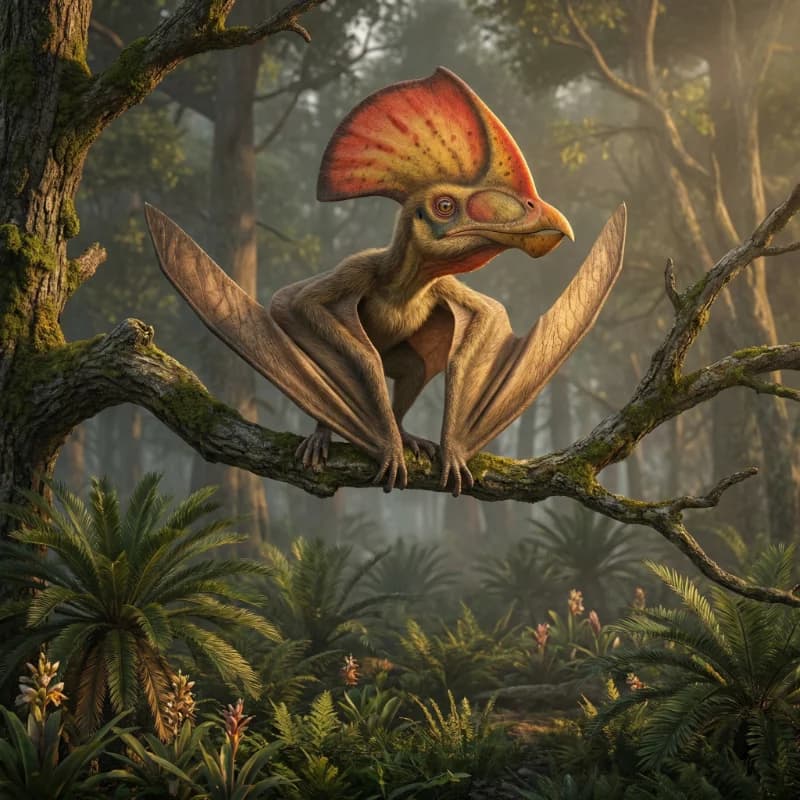
Tapejara
Tapejara wellnhoferi
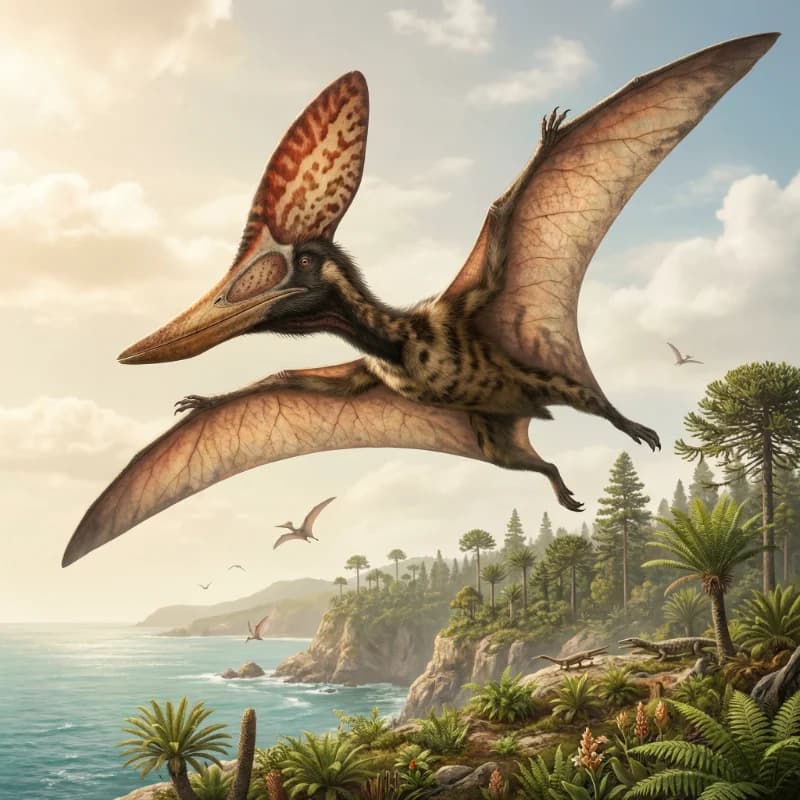
Tupuxuara
Tupuxuara longicristatus
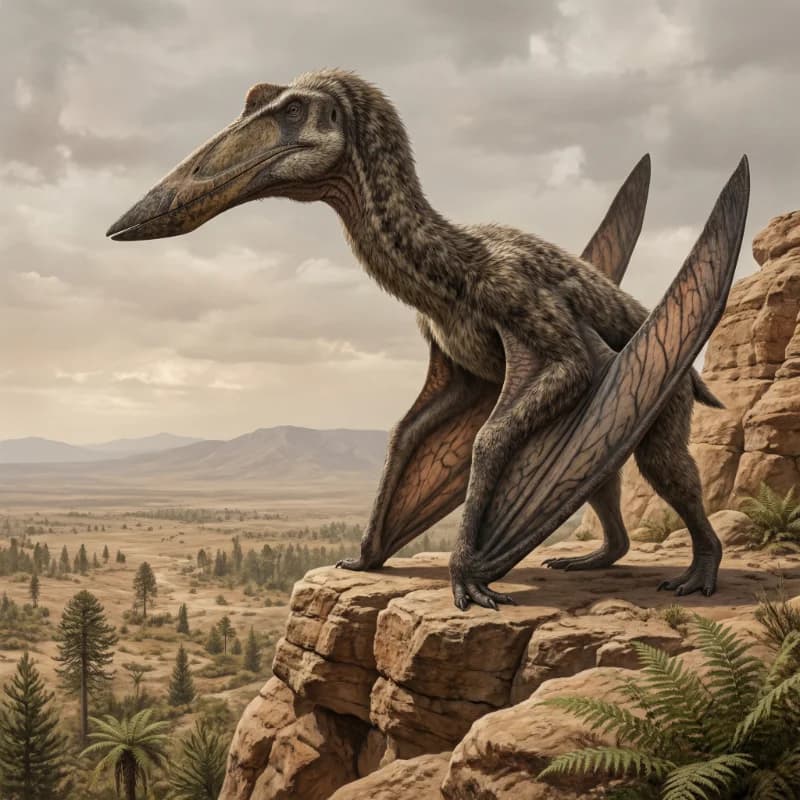
Hatzegopteryx
Hatzegopteryx thambema
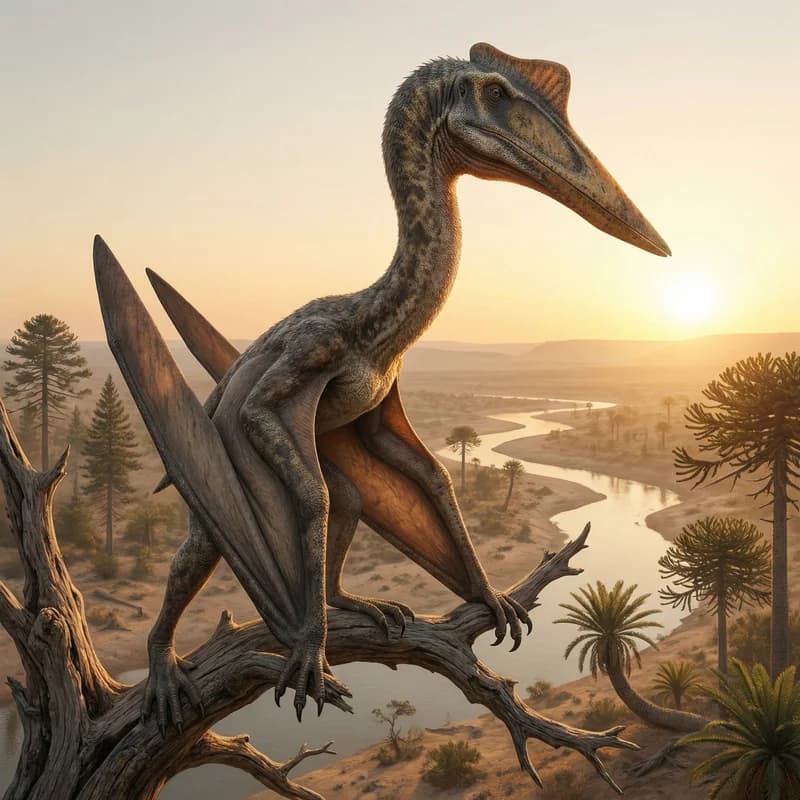
Quetzalcoatlus
Quetzalcoatlus northropi
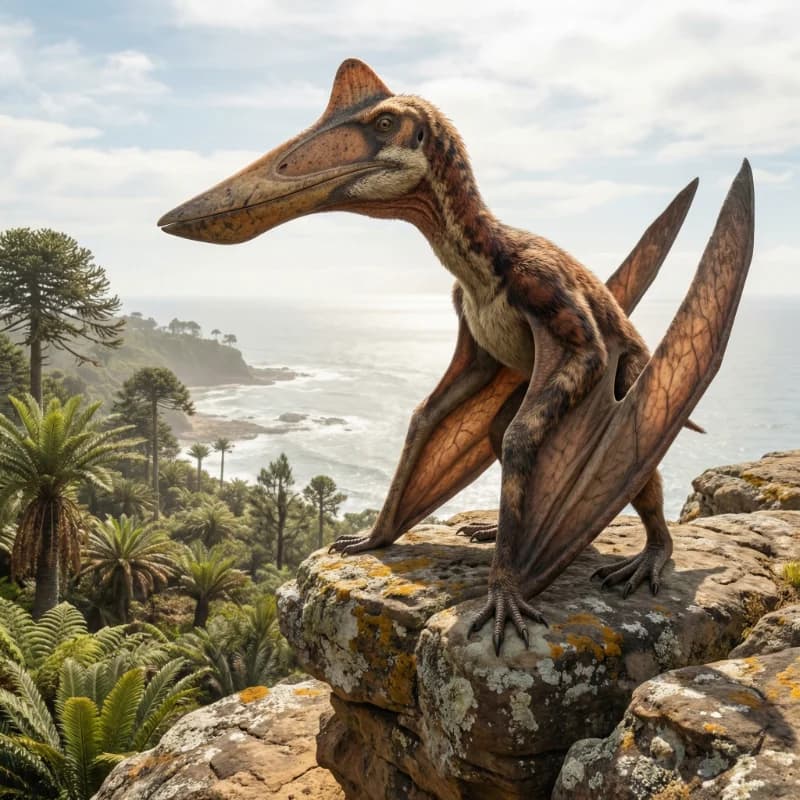
Istiodactylus
Istiodactylus latidens
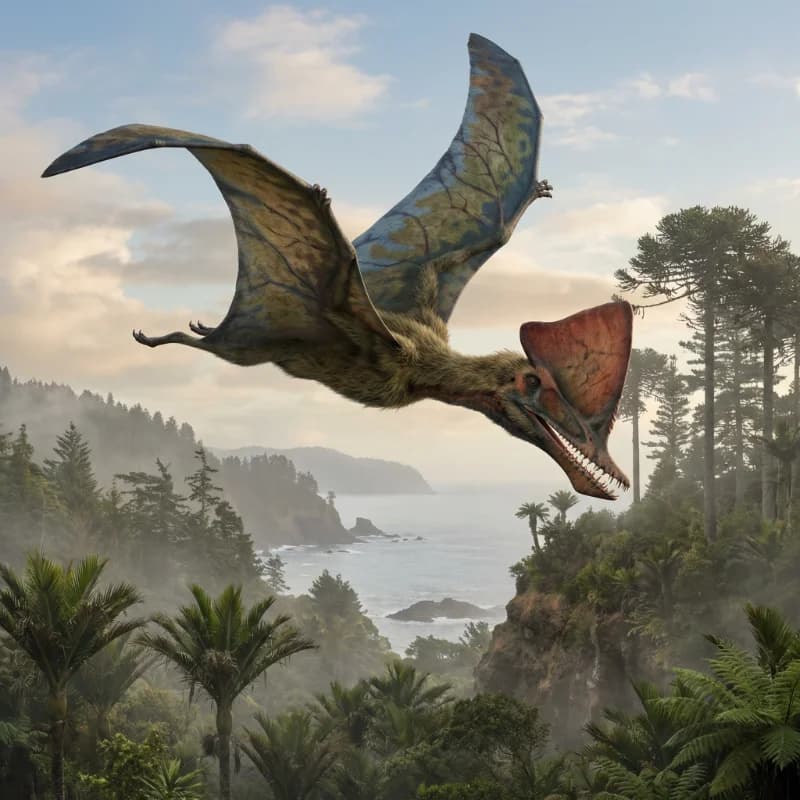
Tropeognathus
Tropeognathus mesembrinus
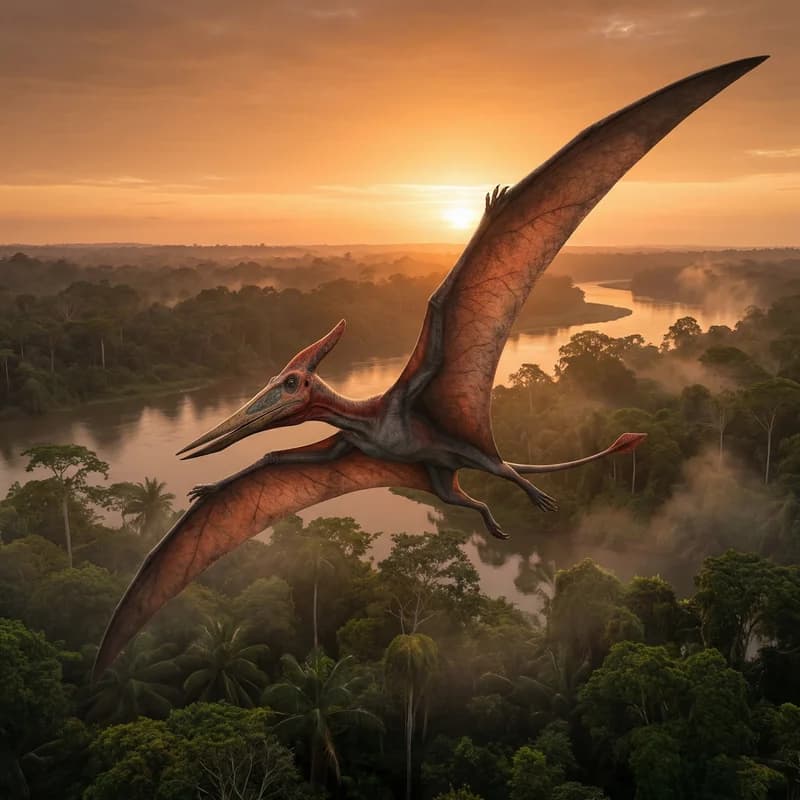
Anhanguera
Anhanguera blittersdorffi
Dsungaripterus
Dsungaripterus weii