Tupuxuara
Cretaceous Period Omnivore Creature Type
Tupuxuara longicristatus
Scientific Name: "Tupuxuara = 'familiar spirit' from Tupi indigenous mythology; longicristatus = Latin 'long-crested'"
Physical Characteristics
Discovery
Habitat
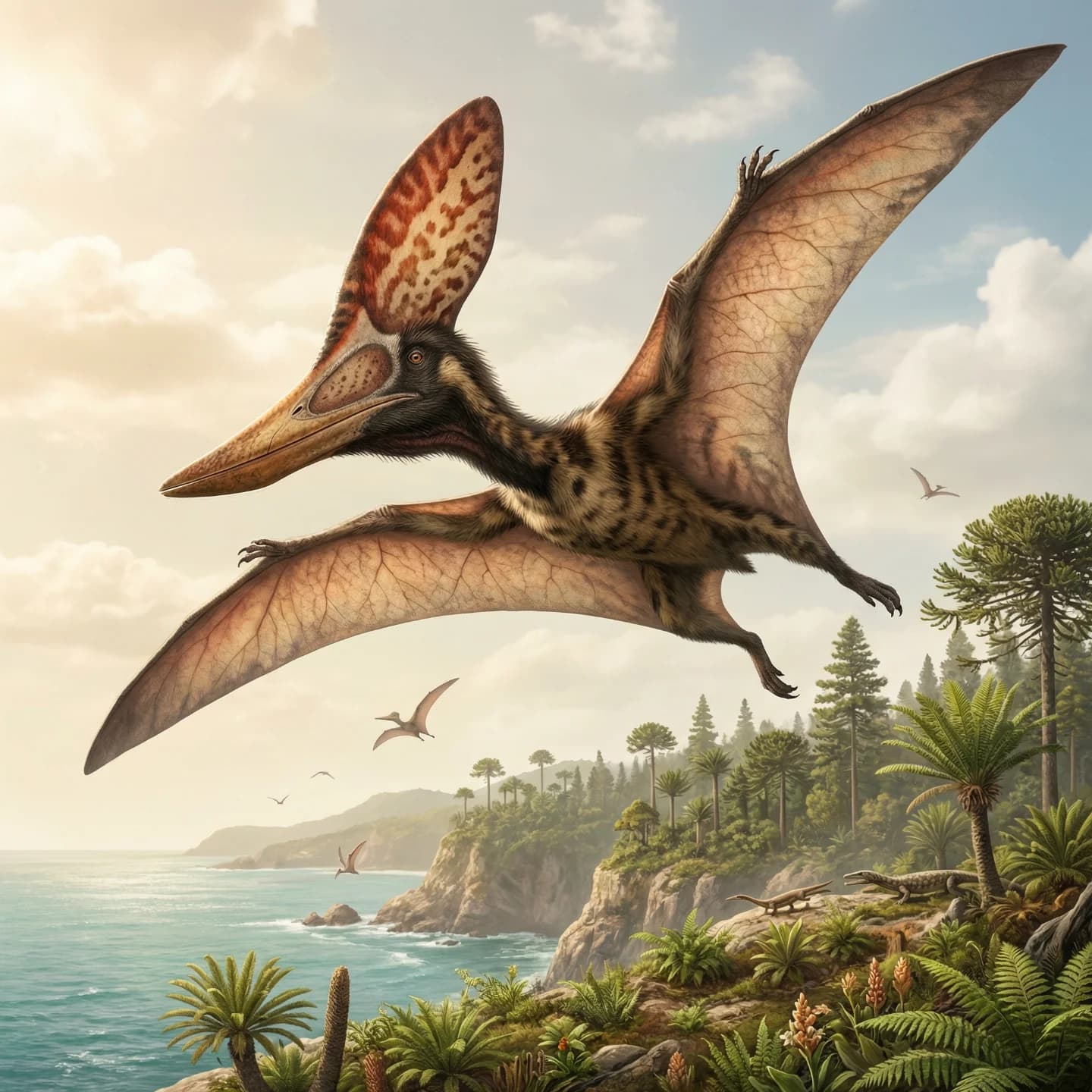
Tupuxuara (Tupuxuara Kellner & Campos, 1988) is a genus of large pterosaur that lived during the Albian age of the Early Cretaceous, approximately 112 million years ago. Its fossils have been recovered from the Romualdo Formation (Santana Group) in the Araripe Basin of northeastern Brazil. Classified within the order Pterosauria, suborder Pterodactyloidea, and the superfamily Azhdarchoidea, Tupuxuara is a prominent member of the family Thalassodromidae. The generic name refers to a "familiar spirit" from the mythology of the Tupi indigenous people of Brazil, while the type species epithet longicristatus means "long-crested" in Latin.
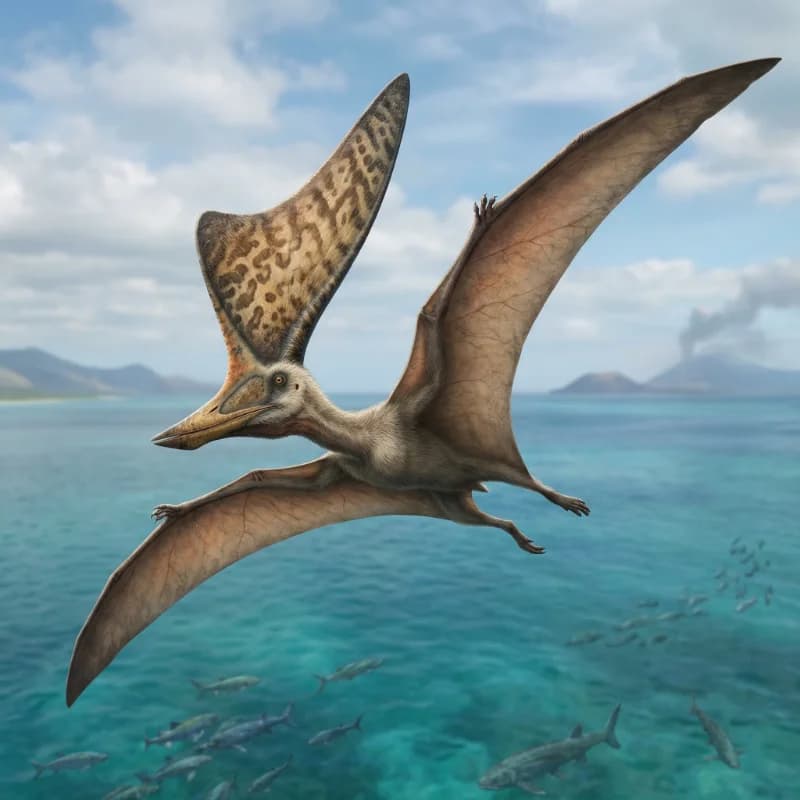
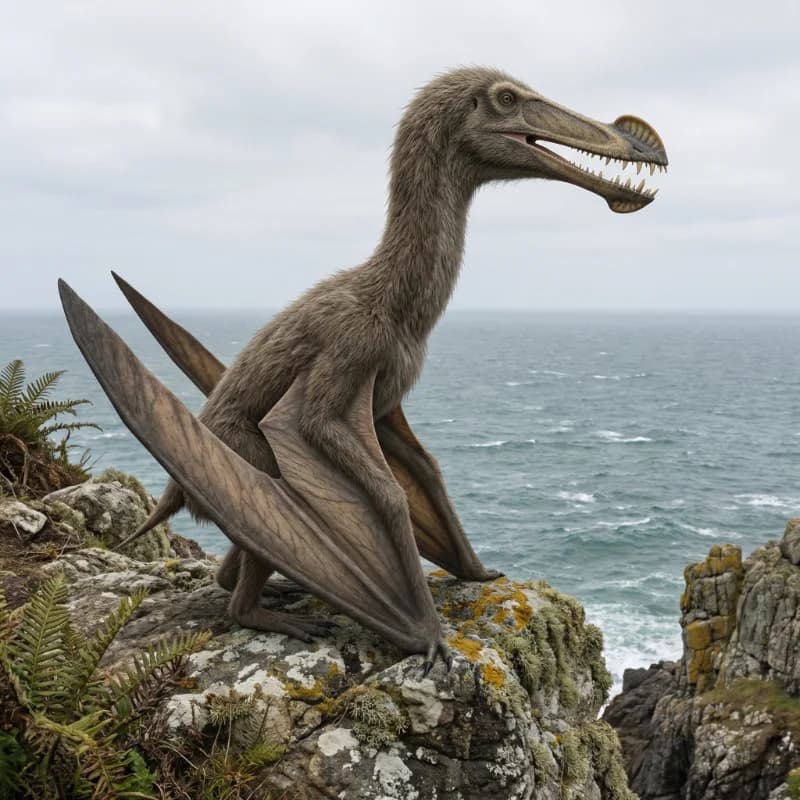
The most striking feature of Tupuxuara is its enormous bony sagittal crest, which extends from the snout to the back of the skull. The animal was entirely toothless (edentulous), possessing a keratinous beak instead of teeth. According to Gregory S. Paul (2022), Tupuxuara had an estimated wingspan of approximately 4.7 m, a total body length of about 2 m, and a body mass of around 25 kg. The largest known specimens, attributed to T. leonardii, had skulls reaching approximately 130 cm in length, suggesting wingspans of up to 5.5 m. Two species are currently considered valid: T. longicristatus (the type species) and T. leonardii. A third species, T. deliradamus, described in 2009, has been treated as a nomen dubium (dubious name) since 2013.
Early studies suggested that Tupuxuara was piscivorous (fish-eating), but more recent research, considering its phylogenetic position within Azhdarchoidea, indicates that it was more likely a terrestrial omnivore or carnivore. Importantly, Tupuxuara is not a dinosaur but a pterosaur — a flying reptile belonging to an evolutionary lineage distinct from the dinosaurs, though both groups are archosaurs.
Overview
Name and Etymology
The generic name Tupuxuara is derived from the mythology of the Tupi, an indigenous people of Brazil. In Tupi culture, a tupuxuara referred to a male familiar spirit or household servant spirit. The type species epithet longicristatus is a compound of the Latin words longus ("long") and cristatus ("crested"), describing the elongated cranial crest characteristic of this pterosaur (Kellner & Campos, 1988). The second species, T. leonardii, was named in honour of Giuseppe Leonardi, an Italian geologist and paleontologist who worked extensively in Brazil (Kellner & Campos, 1994).
Taxonomic Status
Two species are currently regarded as valid: T. longicristatus (1988) and T. leonardii (1994). A third species, T. deliradamus, was named by Mark Witton in 2009 based on a skull (holotype SMNK PAL 6410). However, Kellner (2013) considered this species a nomen dubium, and a 2023 phylogenetic analysis by Cerqueira et al. recovered it as the sister taxon of Caupedactylus ybaka rather than a member of Tupuxuara, effectively removing it from the genus. The current consensus therefore treats Tupuxuara as a two-species genus.
Key Summary
Tupuxuara is a large, toothless thalassodromid pterosaur from the Romualdo Formation of Brazil, distinguished by its massive bony cranial crest and relatively lightweight body.
Age, Stratigraphy, and Depositional Environment
Temporal Range
All Tupuxuara fossils come from the Romualdo Formation (Santana Group) in the Araripe Basin of northeastern Brazil. The Romualdo Formation dates to the Early Albian stage of the Early Cretaceous, approximately 111–108 Ma. Most workers agree that the formation lies on or near the Aptian–Albian boundary (ca. 112 Ma), although a Cenomanian age has not been entirely ruled out (Martill et al., 2007).
Formation and Lithology
The Romualdo Formation belongs to the Santana Group and was formerly known as the Romualdo Member of the Santana Formation. The primary lithology is mudstone, accompanied by limestone and shale. The formation is particularly noted for its carbonate concretions, which preserve fossils in exceptional detail — including soft tissues in some cases — earning it the designation of a Konservat-Lagerstätte. The concretions formed through early diagenesis around dead organisms, and preparation typically involves acid etching of the enclosing nodules.
Paleoenvironment
The Romualdo Formation was deposited in a lacustrine rift basin that experienced shallow marine incursions from the proto-Atlantic Ocean. During the Albian, the South Atlantic was opening as a long, narrow, shallow seaway. Tupuxuara inhabited this lagoonal to restricted shallow marine environment. Paleocoordinate estimates place the area at approximately 12.2°S, 10.7°W during the Early Cretaceous, indicating a subtropical coastal setting quite different from the modern terrestrial interior of the Araripe Plateau.
Specimens and Diagnostic Characters
Key Specimens
| Species | Specimen Number | Elements Preserved | Repository/Notes |
|---|---|---|---|
| T. longicristatus (type) | MN 6591-V (holotype) | Partial snout, wing metacarpal, first wing phalanx | Museu Nacional, Brazil |
| T. leonardii | MN 6592-V (holotype) | Fragmentary skull with rounded crest | Museu Nacional, Brazil |
| T. leonardii (referred) | IMCF 1052 | Nearly complete skull (~103 cm length) | Iwaki Coal and Fossil Museum, Japan |
| T. leonardii (large referred) | Unnumbered | Skull ~130 cm long, suggesting ~5.5 m wingspan | Institution uncertain |
| T. deliradamus (nomen dubium) | SMNK PAL 6410 (holotype) | Skull | SMNK, Germany |
| T. deliradamus (paratype) | KPMNH DL 84 | Skull | KPMNH, Japan |
Diagnostic Characters
Tupuxuara is distinguished from other azhdarchoid pterosaurs by several key features. First, it possesses a large bony midline crest that originates at the snout and extends posteriorly over the skull. Second, the jaws are entirely edentulous (toothless). Third, the maxillary palatal plates below the nasoantorbital fenestrae are strongly convex (Witton, 2009). The two valid species differ primarily in crest morphology: T. longicristatus bears an elongated, backswept, subtriangular crest, whereas T. leonardii features a more rounded, fan-shaped crest.
Limitations of the Material
The holotype of T. longicristatus (MN 6591-V) consists only of a partial snout and some wing elements, limiting full skeletal reconstruction. While T. leonardii is represented by more complete cranial material (e.g., IMCF 1052), associated postcranial material remains scarce. Consequently, body length and mass estimates rely heavily on comparisons with other thalassodromids and azhdarchoid pterosaurs.
Morphology and Functional Anatomy
Body Size
Gregory S. Paul (2022), in The Princeton Field Guide to Pterosaurs, estimated Tupuxuara's wingspan at approximately 4.7 m, total body length at about 2 m, and body mass at around 25 kg. Paul noted that the wings were notably long relative to body mass, suggesting efficient soaring capabilities. However, the largest T. leonardii specimen, with a skull approximately 130 cm long, implies a wingspan of around 5.5 m, indicating considerable size variation within the genus.
Skull and Crest
The most conspicuous morphological feature of Tupuxuara is its enormous bony sagittal crest. This crest originates at the anterior portion of the snout and extends posteriorly over the cranium, consisting primarily of bone — a feature shared with the closely related Thalassodromeus but differing from the soft-tissue-dominated crests of tapejarid pterosaurs such as Tapejara. Martill & Naish (2006) documented a subadult specimen in which the crest was incompletely developed, providing evidence that the crest was an indicator of sexual maturity. The two species differ in crest shape: T. longicristatus has a longer, more subtriangular backswept crest, while T. leonardii possesses a more rounded, bulbous crest.
Beak and Dentition
Tupuxuara was entirely toothless, and its jaws were presumably covered by a keratinous beak in life. This is a shared character with Thalassodromeus and other azhdarchoid pterosaurs. Compared to Thalassodromeus, however, Tupuxuara's skull was less heavily built, with a proportionally smaller crest (Witton, 2013).
Wings and Flight
Like all pterosaurs, Tupuxuara's wings were formed by a membrane (the brachiopatagium) supported by a hyper-elongated fourth finger. Its high wingspan-to-mass ratio (Paul, 2022) suggests it was well-adapted for efficient soaring flight. Pterosaur bones are pneumatic (hollow and air-filled), with extremely thin walls reinforced by internal trabeculae, making the skeleton exceptionally lightweight while maintaining structural integrity.
Diet and Ecology
Dietary Hypotheses
The feeding ecology of Tupuxuara has been a subject of considerable debate. Early studies, influenced by the marine/lagoonal depositional environment of the Romualdo Formation and the long beak morphology, inferred a piscivorous (fish-eating) diet. Some more unconventional hypotheses even proposed frugivory (fruit-eating). However, the current prevailing view, based on Tupuxuara's phylogenetic placement within Azhdarchoidea, is that it was most likely a terrestrial omnivore or carnivore (Witton, 2013). Unlike the closely related Thalassodromeus, which appears to have been specialised for larger prey, neither species of Tupuxuara shows such specialisation, suggesting a more generalised feeding strategy.
Activity Pattern
Schmitz & Motani (2011) compared the scleral ring and orbit morphology of Tupuxuara with those of modern birds and reptiles. Their analysis indicated that Tupuxuara's eye structure was consistent with diurnal (daytime) activity, suggesting it was primarily active during the day.
Ecological Niche
Tupuxuara coexisted with a rich assemblage of animals in the Romualdo Formation ecosystem. Co-occurring pterosaurs include the large piscivorous Tropeognathus and multiple species of Anhanguera, the fellow thalassodromid Thalassodromeus sethi and Kariridraco dianae, and the tapejarid Tapejara wellnhoferi. Theropod dinosaurs such as the spinosaurid Irritator and the compsognathid Mirischia also inhabited the same paleoenvironment. Tupuxuara likely occupied a different ecological niche from the piscivorous pterosaurs, functioning as a terrestrial generalist feeder on small animals and diverse food sources.
Distribution and Paleogeography
Geographic Range
All confirmed specimens of Tupuxuara come from the Romualdo Formation in the Araripe Basin of northeastern Brazil. This region lies at the junction of the modern states of Ceará, Pernambuco, and Piauí, at the base of the Araripe Plateau (Chapada do Araripe).
Paleogeographic Interpretation
The paleocoordinates of the Romualdo Formation are estimated at approximately 12.2°S, 10.7°W. During the Albian, this area was situated along the margins of the nascent South Atlantic, a narrow, shallow seaway formed by the ongoing separation of South America and Africa. The subtropical coastal-lagoonal environment would have provided diverse habitats. Notably, all definitive thalassodromid genera (Tupuxuara, Thalassodromeus, Kariridraco) are known exclusively from the Romualdo Formation, raising the possibility that this family had a geographically restricted distribution in Early Cretaceous Brazil.
Phylogeny and Classification Debate
Classification History
The phylogenetic placement of Tupuxuara is one of the most contentious issues in pterosaur systematics. Since the original description (1988), Kellner has consistently placed Tupuxuara within Tapejaridae, in a subfamily called Thalassodrominae alongside Thalassodromeus (Kellner & Campos, 2007). Under this framework, the two genera share bony crests that distinguish them from other tapejarids, whose crests are predominantly soft tissue.
However, an alternative phylogenetic model, originating with Unwin (2003) and supported by Martill & Naish (2006), Witton (2009), Longrich et al. (2018), and Andres (2021), recovers Tupuxuara as more closely related to Azhdarchidae than to Tapejaridae. In this framework, the group containing Tupuxuara and Thalassodromeus is elevated to its own family, Thalassodromidae (Witton, 2009), and placed within the clade Neoazhdarchia alongside Dsungaripteridae.
Recent Trends
Pêgas et al. (2023) proposed using the family-level name Thalassodromidae consistently across both competing models to reduce nomenclatural confusion. In their analysis, Thalassodromidae includes T. longicristatus, T. leonardii, Thalassodromeus, and Kariridraco, and forms the clade Tapejaromorpha together with Tapejaridae. Under Andres (2021), Thalassodromidae instead falls within Neoazhdarchia, grouped with Dsungaripteridae in Dsungaripteromorpha, more distant from Tapejaridae.
Classification Comparison
| Phylogenetic Model | Thalassodromidae Position | Sister Group | Key Studies |
|---|---|---|---|
| Kellner model (Tapejaromorpha) | Within Tapejaromorpha as independent family | Tapejaridae (sister) | Pegas et al. 2023 |
| Unwin model (Neoazhdarchia) | Within Neoazhdarchia as independent family | Azhdarchidae + Dsungaripteridae | Andres 2021; Longrich et al. 2018 |
Reconstruction and Uncertainty
Established Facts
That Tupuxuara was a large, toothless pterosaur with a massive bony crest is confirmed by multiple specimens. Its membership within the superfamily Azhdarchoidea is supported consistently across all phylogenetic analyses. Its occurrence in the Romualdo Formation (Albian, ca. 112 Ma) is also firmly established.
Well-Supported Hypotheses
The hypothesis that the crest functioned as a sexual maturity indicator is well supported by direct evidence of underdeveloped crests in subadult specimens (Martill & Naish, 2006). The inference of diurnal activity is supported by scleral ring analysis (Schmitz & Motani, 2011).
Debated or Uncertain Aspects
Whether Thalassodromidae is closer to Tapejaridae (Kellner model) or Azhdarchidae (Unwin model) remains the central unresolved phylogenetic debate. Diet is also uncertain — while the current trend favours terrestrial omnivory/carnivory over piscivory, no direct evidence such as stomach contents has been reported. Proposed aerodynamic functions for the crest (e.g., acting as a rudder during flight) are considered less likely than visual signalling functions (sexual selection, species recognition).
Popular Media vs. Scientific Consensus
Tupuxuara is often depicted in popular media as a coastal fish-hunting pterosaur, but current scientific thinking favours a more terrestrial lifestyle. The common confusion between pterosaurs and dinosaurs should also be noted: pterosaurs are flying reptiles in a separate evolutionary lineage from dinosaurs, though both belong to the broader group Archosauria.
Related Taxa and Contemporaneous Comparisons
| Taxon | Wingspan | Crest Morphology | Inferred Diet | Age/Formation |
|---|---|---|---|---|
| Tupuxuara longicristatus | ~4.7 m | Elongated, backswept bony crest | Omnivore/carnivore (inferred) | Albian, Romualdo Fm. |
| Tupuxuara leonardii | ~5.5 m (largest) | Rounded, fan-shaped bony crest | Omnivore/carnivore (inferred) | Albian, Romualdo Fm. |
| Thalassodromeus sethi | ~4.2–4.5 m | Very large, flat bony crest (skull ~1.42 m) | Specialised for large prey (inferred) | Albian, Romualdo Fm. |
| Kariridraco dianae | Undetermined | Bony crest | Undetermined | Albian, Romualdo Fm. |
| Tapejara wellnhoferi | ~3.5 m | Bony + soft tissue crest | Omnivore (inferred) | Albian, Romualdo Fm. |
Tupuxuara was slightly smaller than Thalassodromeus and possessed a less robustly built skull with a proportionally smaller crest. Compared to the same-formation tapejarid Tapejara, Tupuxuara was considerably larger and bore a crest composed primarily of bone rather than soft tissue.
Fun Facts
FAQ
📚References
- Kellner, A. W. A. & Campos, D. A. (1988). Sobre um novo pterossauro com crista sagital da Bacia do Araripe, Cretáceo Inferior do Nordeste do Brasil. Anais da Academia Brasileira de Ciências, 60: 459–469.
- Kellner, A. W. A. & Campos, D. A. (1994). A new species of Tupuxuara (Pterosauria, Tapejaridae) from the Early Cretaceous of Brazil. Anais da Academia Brasileira de Ciências, 66: 467–473.
- Martill, D. M. & Naish, D. (2006). Cranial crest development in the azhdarchoid pterosaur Tupuxuara, with a review of the genus and tapejarid monophyly. Palaeontology, 49(4): 925–941. doi:10.1111/j.1475-4983.2006.00575.x
- Kellner, A. W. A. & Campos, D. A. (2007). Short note on the ingroup relationships of the Tapejaridae (Pterosauria, Pterodactyloidea). Boletim do Museu Nacional: Geologia, 75: 1–14.
- Witton, M. P. (2009). A new species of Tupuxuara (Thalassodromidae, Azhdarchoidea) from the Lower Cretaceous Santana Formation of Brazil, with a note on the nomenclature of Thalassodromidae. Cretaceous Research, 30(5): 1293–1300. doi:10.1016/j.cretres.2009.07.006
- Schmitz, L. & Motani, R. (2011). Nocturnality in Dinosaurs Inferred from Scleral Ring and Orbit Morphology. Science, 332(6030): 705–708. doi:10.1126/science.1200043
- Kellner, A. W. A. (2013). A new unusual tapejarid (Pterosauria, Pterodactyloidea) from the Early Cretaceous Romualdo Formation, Araripe Basin, Brazil. Earth and Environmental Science Transactions of the Royal Society of Edinburgh, 103(3–4): 409–421. doi:10.1017/S1755691013000327
- Witton, M. P. (2013). Pterosaurs: Natural History, Evolution, Anatomy. Princeton University Press. ISBN 0691150613.
- Longrich, N. R., Martill, D. M., Andres, B. & Penny, D. (2018). Late Maastrichtian pterosaurs from North Africa and mass extinction of Pterosauria at the Cretaceous-Paleogene boundary. PLOS Biology, 16(3): e2001663. doi:10.1371/journal.pbio.2001663
- Andres, B. (2021). Phylogenetic systematics of Quetzalcoatlus Lawson 1975 (Pterodactyloidea: Azhdarchoidea). Journal of Vertebrate Paleontology, 41(sup1): 203–217. doi:10.1080/02724634.2020.1801703
- Paul, G. S. (2022). The Princeton Field Guide to Pterosaurs. Princeton University Press. p. 156. doi:10.1515/9780691232218
- Pêgas, R. V., Zhou, X., Jin, X., Wang, K. & Ma, W. (2023). A taxonomic revision of the Sinopterus complex (Pterosauria, Tapejaridae) from the Early Cretaceous Jehol Biota, with the new genus Huaxiadraco. PeerJ, 11: e14829. doi:10.7717/peerj.14829
- Cerqueira, G. M., Müller, R. T. & Pinheiro, F. L. (2023). On the phylogenetic affinities of the tapejarid pterosaur 'Tupuxuara deliradamus' from the Lower Cretaceous of Brazil. Historical Biology, 36(3): 677–682. doi:10.1080/08912963.2023.2180741
- Fara, E., Saraiva, A. Á. F., Campos, D. A., Moreira, J. K. R., de Carvalho Siebra, D. & Kellner, A. W. A. (2005). Controlled excavations in the Romualdo Member of the Santana Formation (Early Cretaceous, Araripe Basin, northeastern Brazil): stratigraphic, palaeoenvironmental and palaeoecological implications. Palaeogeography, Palaeoclimatology, Palaeoecology, 218(1–2): 145–160. doi:10.1016/j.palaeo.2004.12.012
- Pêgas, R. V., Costa, F. R. & Kellner, A. W. A. (2018). New information on the osteology and a taxonomic revision of the genus Thalassodromeus (Pterodactyloidea, Tapejaridae, Thalassodrominae). Journal of Vertebrate Paleontology, 38(2): e1443273. doi:10.1080/02724634.2018.1443273
Gallery
5 images Tupuxuara
Tupuxuara · Cretaceous Period · Omnivore
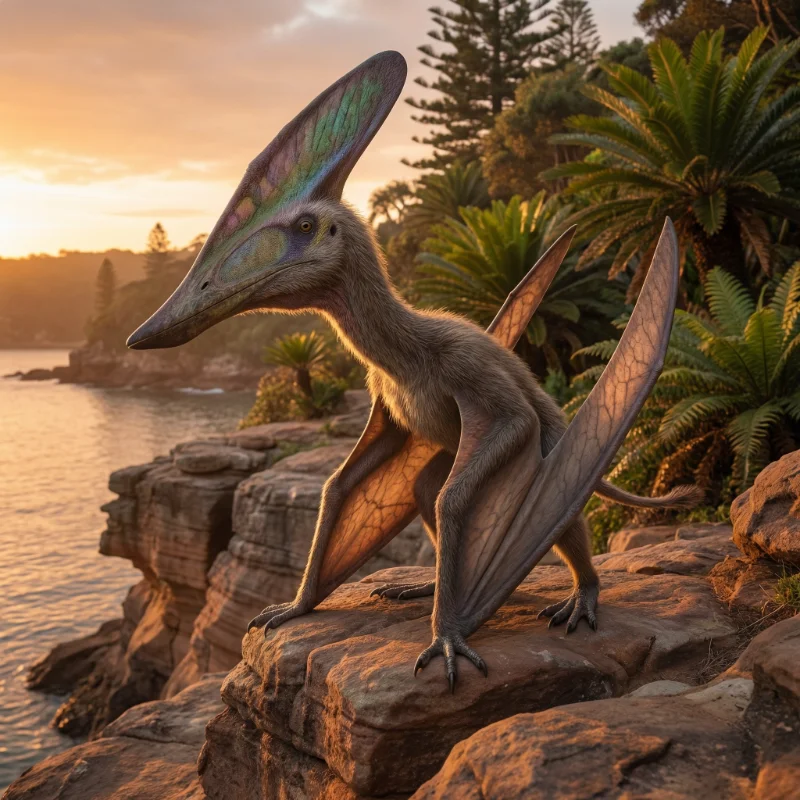 Tupuxuara
Tupuxuara · Cretaceous Period · Omnivore
 Tupuxuara
Tupuxuara · Cretaceous Period · Omnivore
 Tupuxuara
Tupuxuara · Cretaceous Period · Omnivore
 Tupuxuara
Tupuxuara · Cretaceous Period · Omnivore
🔗Related Creatures
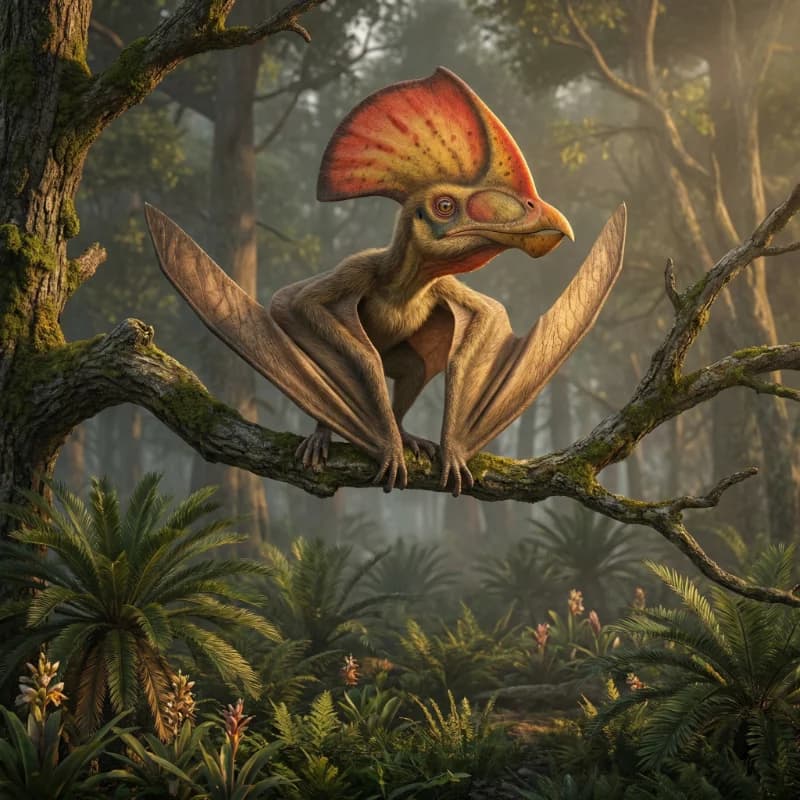
Tapejara
Tapejara wellnhoferi
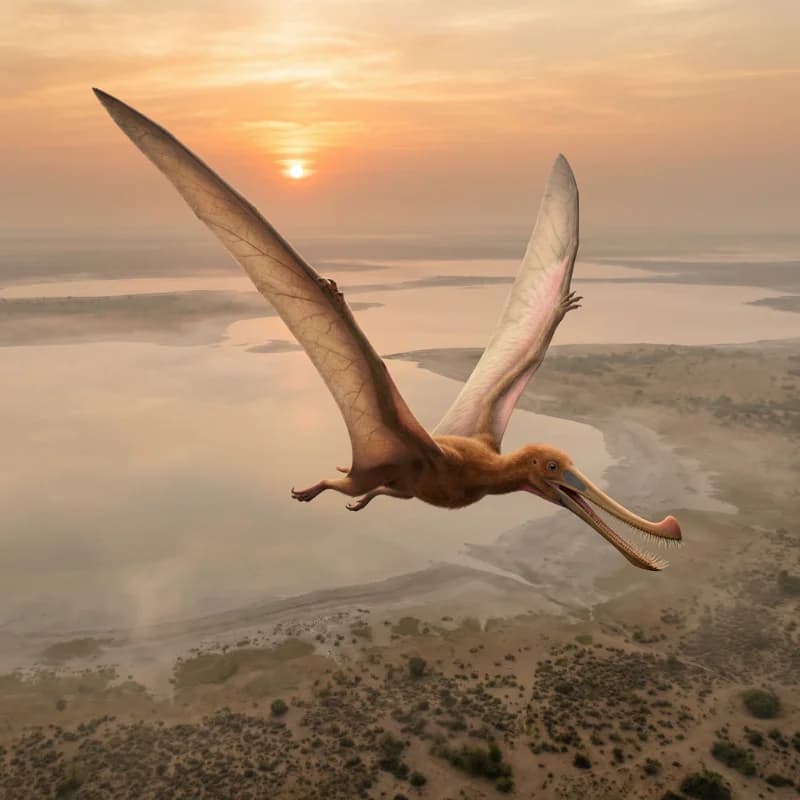
Pterodaustro
Pterodaustro guinazui
Nyctosaurus
Nyctosaurus gracilis
Quetzalcoatlus
Quetzalcoatlus northropi

Pteranodon
Pteranodon
Anhanguera
Anhanguera blittersdorffi
Guidraco
Guidraco venator
Ornithocheirus
Ornithocheirus simus