Arambourgiania
Cretaceous Period Carnivore Creature Type
Arambourgiania philadelphiae
Scientific Name: "Arambourgiania (meaning \"of Arambourg\") β named in honor of French paleontologist Camille Arambourg, who first described the holotype. The suffix -iania denotes possession/belonging. The species name philadelphiae refers to Philadelphia, the ancient Greco-Roman name for Amman, the capital of Jordan, near where the holotype was discovered."
Physical Characteristics
Discovery
Habitat

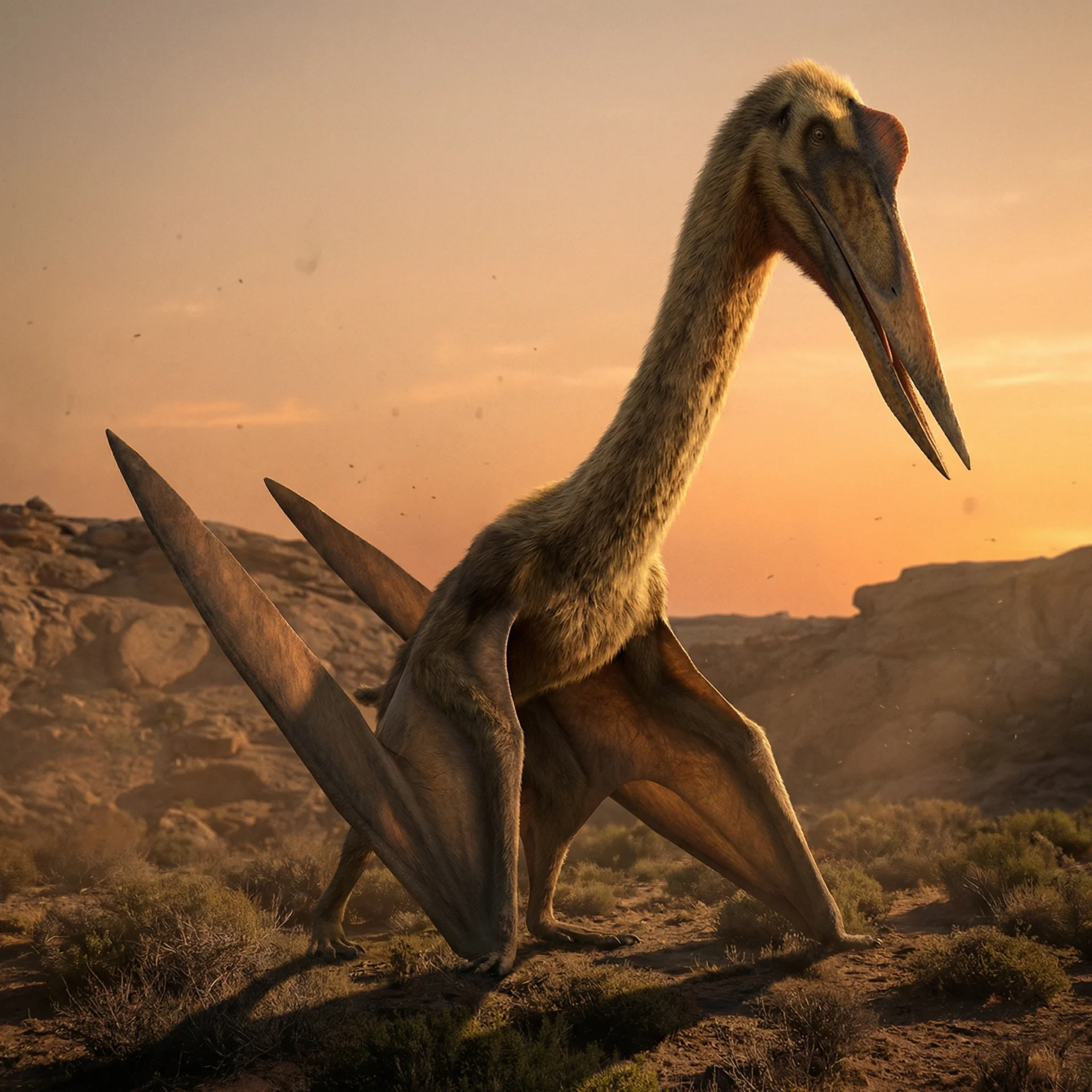
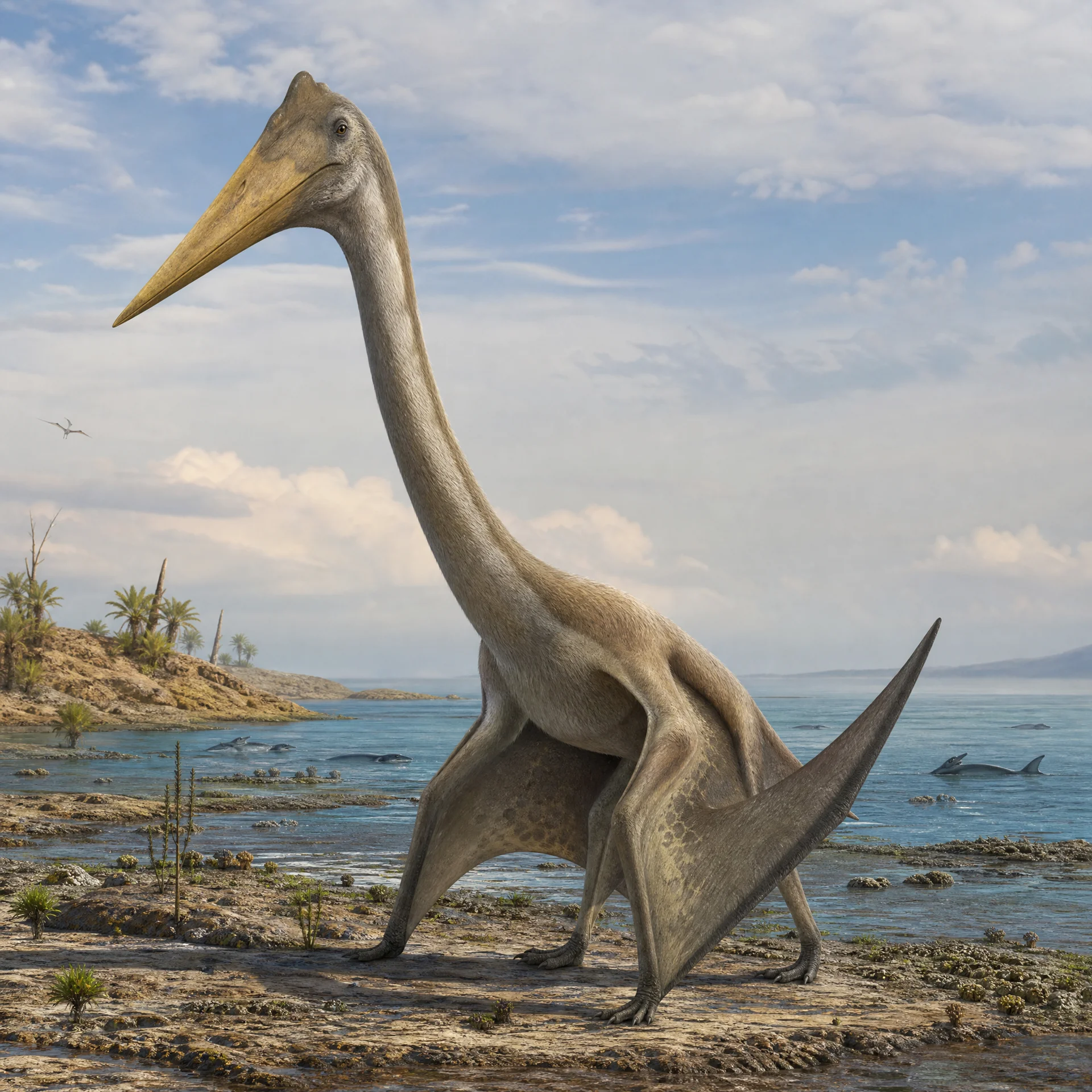
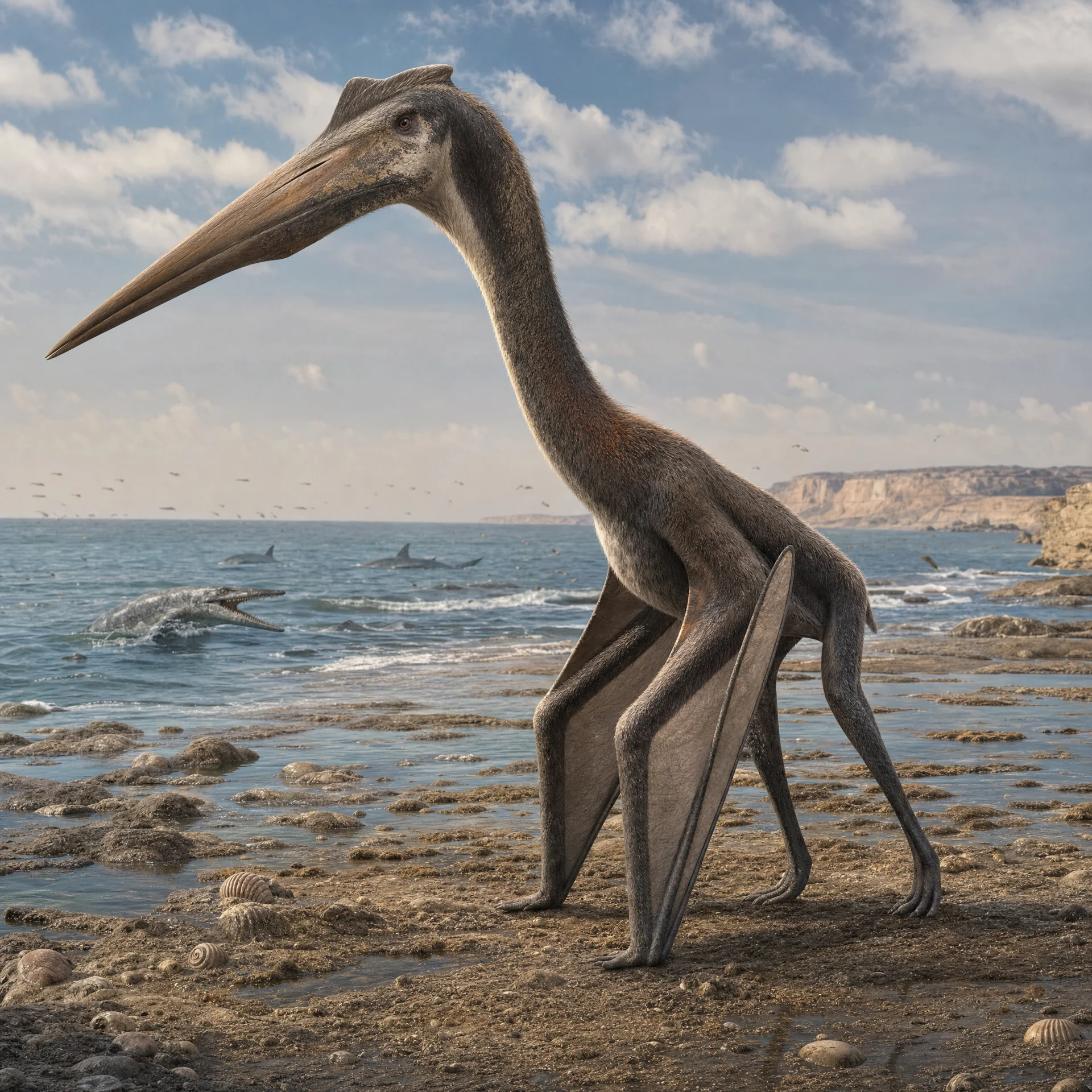
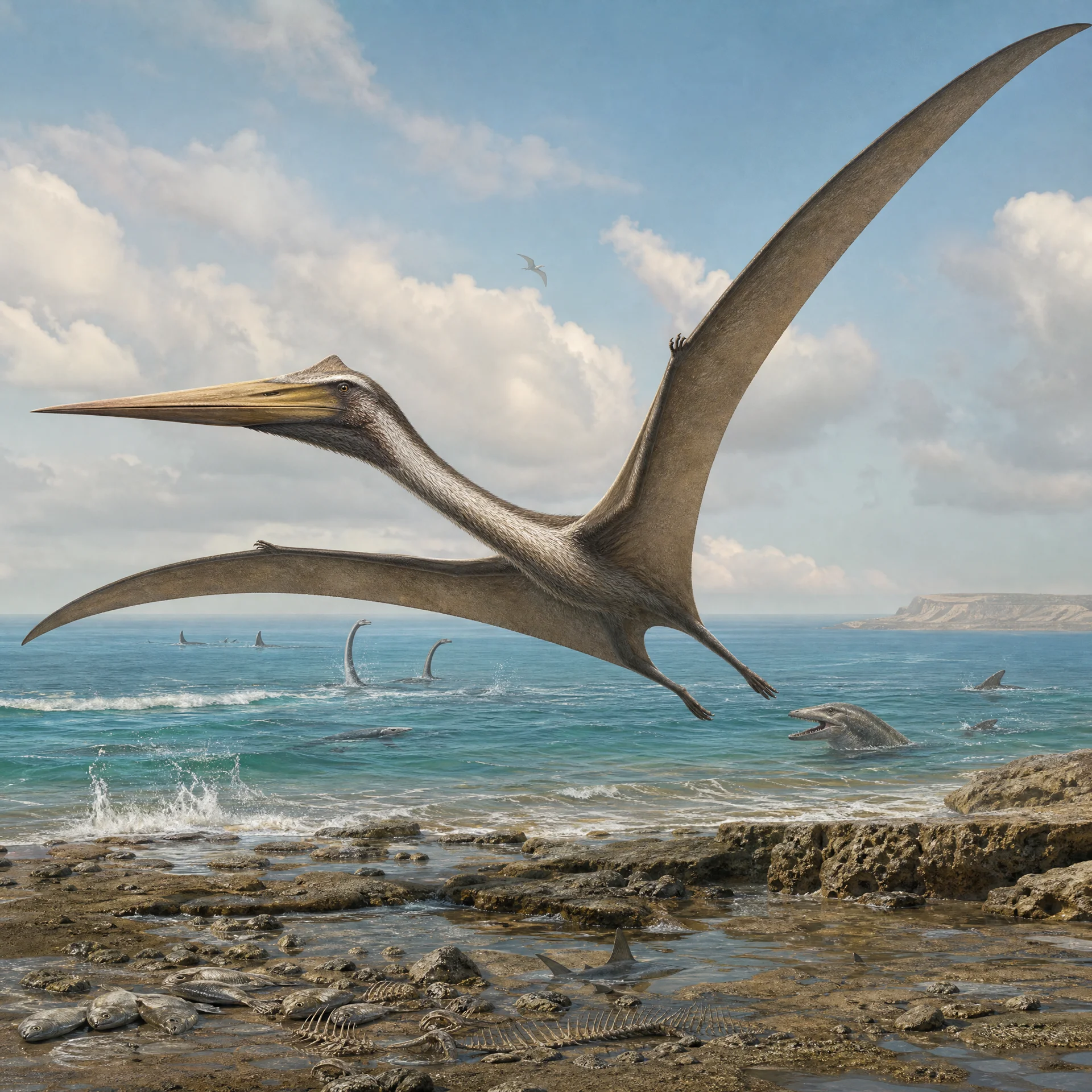
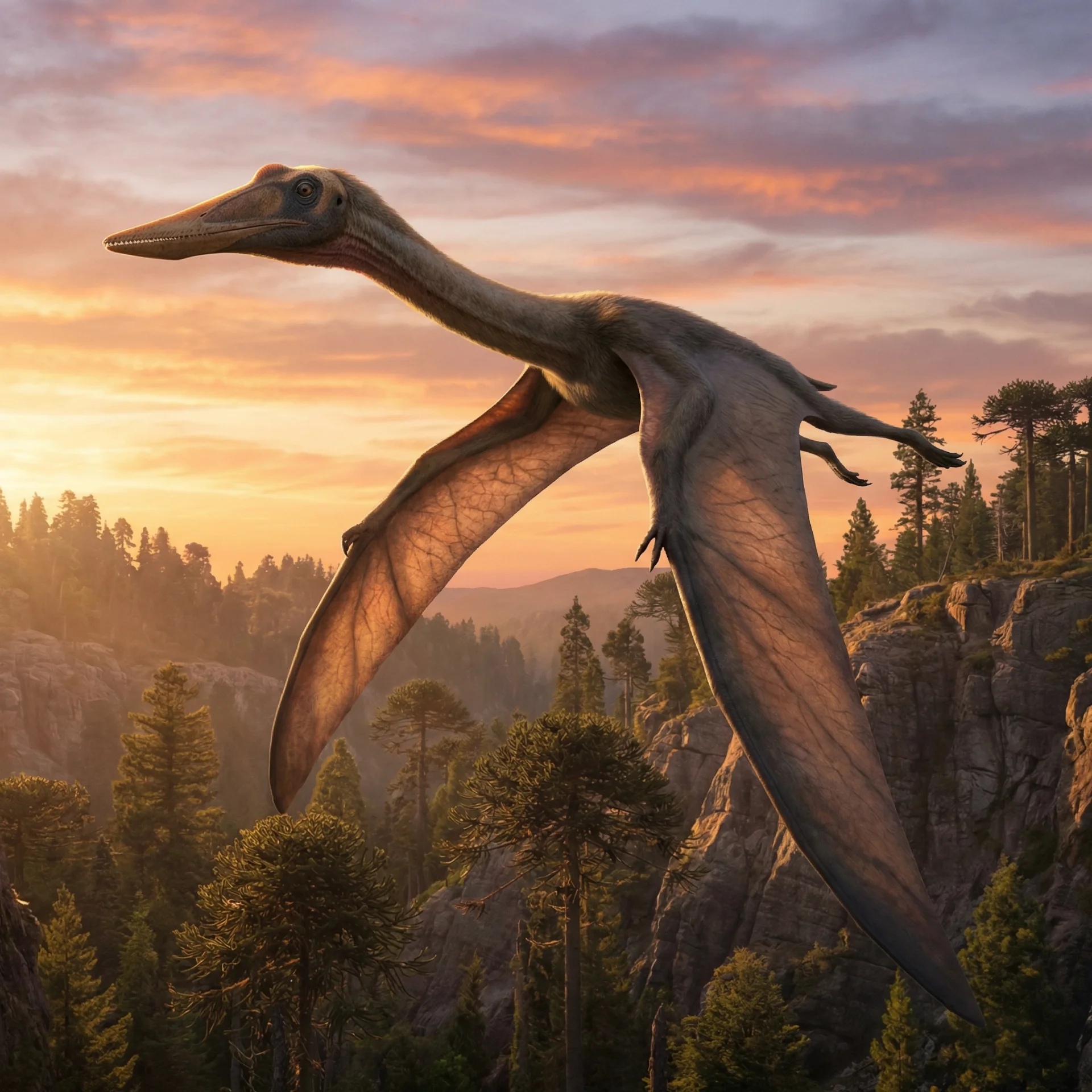
Arambourgiania (Arambourgiania philadelphiae Arambourg, 1959) is a giant azhdarchid pterosaur from the Late Cretaceous Maastrichtian stage (approximately 72β66 million years ago) of Jordan. Together with Quetzalcoatlus and Hatzegopteryx, it ranks among the largest flying animals ever to have existed, with the most recent studies estimating a wingspan of approximately 10 m (Rosenbach et al., 2024). The holotype specimen is an extraordinarily elongated cervical (neck) vertebra measuring an estimated 77β78 cm in total length, from which a complete neck length of about 3 m has been extrapolated β longer than that of a modern giraffe. When standing quadrupedally on the ground, Arambourgiania would have reached a shoulder height of roughly 3 m and a total height of approximately 5β5.5 m, rivaling an adult giraffe in stature.
The species was originally named Titanopteryx philadelphiae by Camille Arambourg in 1959, but the genus name Titanopteryx was already occupied by a black fly of the family Simuliidae, so Russian paleontologist Lev Nessov renamed it Arambourgiania in 1989. Fossils are primarily known from the Ruseifa phosphate mines of Jordan, with tentatively referred specimens also reported from the United States (Tennessee, New Jersey) and Morocco. Notably, all confirmed localities are marine or coastal deposits, a fact that is significant for debates about the ecological habits of azhdarchid pterosaurs.
Arambourgiania possessed extremely hollow and lightweight bones. A humerus (upper arm bone) reported in 2024 was found to be approximately 90% air by volume, with cortical bone only 2 mm thick β a structure highly adapted for flight. Helical ridges on the humeral shaft resemble those found in soaring birds such as vultures, and the absence of internal struts (associated with torsional loads from soaring) further supports the interpretation that Arambourgiania was a soaring flier rather than a continuous flapper (Rosenbach et al., 2024). Body mass has been estimated at roughly 180β250 kg, consistent with estimates for other giant azhdarchids.
Overview
Name and Etymology
The genus name Arambourgiania honors French paleontologist Camille Arambourg (1885β1969), who first studied the holotype. The suffix -iania is a Latinized possessive ending meaning \"of\" or \"belonging to\" (Nessov vide Nessov & Yarkov, 1989). The species name philadelphiae derives from Philadelphia, the ancient Greek and Roman name for the city of Amman, Jordan, near the holotype's discovery site. The original genus name Titanopteryx, coined by Arambourg in 1959, combined the Ancient Greek titan (referring to the mythological Titans, giants) with pteryx (wing), as the fossil was initially misidentified as a giant wing metacarpal. When it was discovered that Titanopteryx had been preoccupied since 1935 by a simuliid fly, Nessov provided the replacement name in 1989.
Taxonomic Status
Arambourgiania philadelphiae is currently recognized as a valid taxon within the family Azhdarchidae, placed in the subfamily Quetzalcoatlinae. Multiple phylogenetic analyses recover it as the sister taxon of Quetzalcoatlus (Andres, 2021), though some studies instead find a closer relationship with Mistralazhdarcho and Aerotitan (PΓͺgas et al., 2023). The newly described Infernodrakon from the Hell Creek Formation was recovered as more closely related to Arambourgiania than to Quetzalcoatlus (Thomas et al., 2025).
Key Summary
Arambourgiania is historically the first giant azhdarchid pterosaur to be scientifically described, predating the discovery of Quetzalcoatlus (1971) by over a decade. As early as 1959, Arambourg recognized that this animal was vastly larger than Pteranodon, then considered the largest known flying animal.
Age, Stratigraphy, and Depositional Environment
Temporal Range
The confirmed locality of Arambourgiania β the Ruseifa phosphate mines of Jordan β yields phosphatic sediments dated to the Maastrichtian stage (approximately 72β66 Ma), the final stage of the Cretaceous period, immediately preceding the K-Pg mass extinction event. A tentatively referred cervical vertebra from the Coon Creek Formation of Tennessee dates to the late Campanian, making it older than the Jordanian material, though its species-level assignment remains debated (Harrell, Gibson & Langston, 2016; Thomas et al., 2025).
Formation and Lithology
The holotype locality belongs to the Ruseifa Formation (also referred to in some literature as the Amman Formation or Al-Hasa Formation), part of the Balqa Group. The phosphatic deposits comprise four units, with most Arambourgiania fossils originating from the first unit (Frey & Martill, 1996). The lithology consists of phosphatic sandstone and mudstone, with fossils preserved through limestone matrix infilling of bone cavities, resulting in well-preserved three-dimensional specimens (Rosenbach et al., 2024).
Paleoenvironment
During the Maastrichtian, the Jordanian region was submerged beneath the southern margin of the Mediterranean Tethys Sea. The depositional environment of the Ruseifa phosphates has been interpreted as either shallow marine or deep marine, but the concentration of phosphates and abundant marine fossil assemblage suggest a continental shelf to upper continental slope setting (Rosenbach et al., 2024). Associated fauna includes a diversity of marine reptiles β mosasaurids (Globidens, Platecarpus, Prognathodon, Halisaurus), indeterminate elasmosaurids, chelonioids, and a crocodyliform β as well as bony fishes (Enchodus, Stratodus, Stephanodus, Pseudoegertonia) and sharks (Cretolamna, Squalicorax, Scapanorhynchus, Plicatoscyllium) and the ray Rhombodus. This faunal composition closely resembles that of the broader Maastrichtian Mediterranean Tethys.
Specimens and Diagnostic Characters
Holotype
The holotype, UJA VF1, consists of a highly elongated cervical vertebra, likely the fifth in the cervical series. The original specimen combined with its plaster cast measured approximately 62 cm in length, but it was sawed into three pieces and the middle section is now missing. Frey & Martill (1996) reconstructed the complete length at 77β78 cm using proportional comparisons with the fifth cervical vertebra of Quetzalcoatlus. The cross-section is nearly circular, with the posterior portion measuring 44 mm long and 55 mm high. The anterior portion exhibits a blunt ventral keel (carina sagittalis ventralis) that merges into the spinous process. Internally, a circular tube is preserved within the vertebra, a feature observed in other azhdarchids and dsungaripterids. The pneumatophores of the holotype are significantly larger than the neural canal, a trait consistent with maturity but to an extent unseen in other azhdarchids (Frey & Martill, 1996).
Referred and Tentatively Referred Specimens
| Specimen | Element | Locality / Formation | Referral Level | Reference |
|---|---|---|---|---|
| UJA VF1 | Cervical vertebra (5th?) | Jordan, Ruseifa / Ruseifa Fm. | Holotype | Arambourg, 1959; Frey & Martill, 1996 |
| SNSB-BSPG 1966 XXV 501 | Incomplete metacarpal IV | Jordan, Ruseifa / Ruseifa Fm. | cf. A. philadelphiae | Martill & Moser, 2018 |
| SNSB-BSPG 1966 XXV 506 | Left femur (distal) | Jordan, Ruseifa / Ruseifa Fm. | cf. A. philadelphiae | Martill & Moser, 2018 |
| SNSB-BSPG 1966 XXV 507 | Probable radius fragment | Jordan, Ruseifa / Ruseifa Fm. | cf. A. philadelphiae | Martill & Moser, 2018 |
| SNSB-BSPG 1966 XXV 503, 508 | Cervical vertebra fragments (2) | Jordan, Ruseifa / Ruseifa Fm. | cf. A. philadelphiae | Martill & Moser, 2018 |
| Unnumbered humerus | Right humerus shaft | Jordan, Ruseifa / Ruseifa Fm. | A. philadelphiae | Rosenbach et al., 2024 |
| Sidi Chennane ulna | Incomplete left ulna | Morocco, Ouled Abdoun Basin | ?Arambourgiania | Longrich et al., 2018 |
| MPPM 2000.23.1 | Cervical vertebra fragment | USA, Tennessee / Coon Creek Fm. | Arambourgiania sp. | Harrell et al., 2016; Thomas et al., 2025 |
| YPM VPPU 023497 | Cervical vertebra | USA, New Jersey / Navesink Fm. | aff. Arambourgiania sp. | Gallagher, 1984; Thomas et al., 2025 |
Diagnostic Characters
Key diagnostic features distinguishing Arambourgiania from other azhdarchids include the absence of a dorsally positioned pneumatic foramen above the neural canal, a trait typically present in relatives such as Cryodrakon. Additionally, the pneumatophores are disproportionately large relative to the neural canal, exceeding the condition observed in other azhdarchids.
Limitations of the Material
The fossil record of Arambourgiania is extremely fragmentary. The holotype consists of a single cervical vertebra with its middle section lost, and the remaining specimens are all isolated, partial elements. This incompleteness means that much of our understanding of its body plan and proportions relies on comparisons with better-known relatives, particularly Quetzalcoatlus.
Morphology and Function
Body Size
Wingspan estimates for Arambourgiania have varied considerably across studies. Early estimates (Frey & Martill, 1996; Steel et al., 1997) ranged from 11 to 13 m, but these were subsequently revised downward as more complete relatives became known. Witton & Habib (2010) argued that a 7 m wingspan is an underestimate while 11β13 m is too large. Paul (2022) proposed a wingspan of 8β9 m, and the most recent study by Rosenbach et al. (2024), based on a newly reported humerus comparable in size to that of Q. northropi, estimated a wingspan of approximately 10 m. Body mass is estimated at roughly 180β250 kg (Witton, 2016). Standing height on the ground is reconstructed at approximately 5β5.5 m, comparable to a giraffe.
| Study | Wingspan Estimate | Notes |
|---|---|---|
| Frey & Martill, 1996 | 11β13 m | Based on Quetzalcoatlus cervical proportions |
| Steel et al., 1997 | 11.5 m | Life-sized skeletal reconstruction |
| Pereda-Suberbiola et al., 2003 | ca. 7 m | No rationale provided; likely underestimate |
| Witton & Habib, 2010 | Rejected both 7 m and 11β13 m | Argued for intermediate range |
| Paul, 2022 | 8β9 m | Princeton Field Guide to Pterosaurs |
| Rosenbach et al., 2024 | ca. 10 m | Humerus-based comparison; most recent |
Cervical Vertebrae and Neck Structure
The most striking anatomical feature of Arambourgiania is its extremely elongated cervical vertebrae. The reconstructed length of the holotype cervical is 77β78 cm, yielding a total estimated neck length of approximately 2.6β3 m. This ranks among the longest necks of any non-sauropod tetrapod, exceeding those of the modern giraffe (ca. 2.4 m), the extinct reptile Tanystropheus, and theropod dinosaurs such as Gigantoraptor and Therizinosaurus.
The cross-section of the cervical is nearly circular, contrasting with the dorsoventrally flattened condition typical of most azhdarchid cervicals. This circular profile improves resistance to both vertical loads and torsion. The bone walls are extremely thin, maximizing weight reduction, while the large internal pneumatophore structures provide additional lightness and structural support.
Comparative biomechanical studies show that Arambourgiania's cervical vertebrae fail at approximately half its body weight, whereas the posterior neck vertebrae of Hatzegopteryx can withstand five to ten times its body weight (Naish & Witton, 2017). This contrast illustrates the morphological dichotomy within Azhdarchidae between long-necked, lightly built forms (such as Arambourgiania) and short-necked, robustly built forms (such as Hatzegopteryx).
Limb Bones and Flight Adaptations
The humerus shaft reported in 2024 has a preserved length of 185 mm and a minimum height of 80 mm, with cortical bone only 2 mm thick β meaning the bone was approximately 90% air by volume. This represents an extreme adaptation for flight. The humeral shaft displays helical diaphyseal ridges resembling those found in soaring birds like vultures, and it lacks the internal struts associated with torsional loading from powered flapping. This suggests that Arambourgiania was a soarer rather than a continuous flapper, in contrast to its contemporary Inabtanin, whose bone structure indicates a flapping flight style (Rosenbach et al., 2024).
The wing aspect ratio of azhdarchids is approximately 8.1, similar to that of extant storks and raptors that engage in static soaring. The brachiopatagium (main wing membrane) is thought to have extended down to the ankle.
Diet and Ecology
Diet
Several hypotheses have been proposed for azhdarchid feeding ecology. Witton & Naish (2008) suggested a \"terrestrial stalker\" lifestyle analogous to modern storks, in which azhdarchids foraged on foot for small terrestrial prey. They argued that azhdarchid jaws lacked the laterally compressed morphology and shock-absorbing adaptations required for skim-feeding, and that their jaw cross-section was nearly triangular.
However, the exclusively marine/coastal depositional context of all confirmed Arambourgiania fossils is noteworthy. Labita & Martill (2021) argued that azhdarchids may have been more closely associated with aquatic environments β rivers, lakes, marine and offshore settings β than the terrestrial stalker model suggests, noting that Moroccan and Jordanian azhdarchid fossils are found in marine strata. Arambourgiania is inferred to have had a toothless beak, and in the absence of direct dietary evidence (stomach contents, bite marks, stable isotope data), its exact prey preference remains uncertain.
Ecological Niche
In the Maastrichtian Tethys Sea of Jordan, Arambourgiania likely occupied the ecological role of a large aerial predator or opportunistic forager. The rich marine fauna found at the same locality β including four or more genera of mosasaurids, large bony fish such as Enchodus, and multiple shark genera β indicates an abundant food web. The contemporaneous pterosaur Inabtanin alarabia, described from the same phosphate mines in 2024, was a medium-sized azhdarchoid with a wingspan of approximately 5 m. Its different flight strategy (flapping vs. soaring) suggests that niche partitioning based on locomotor style may have occurred between these sympatric pterosaurs.
Locomotion and Behavior
Azhdarchid trackways, such as Haenamichnus from South Korea, indicate that Arambourgiania walked quadrupedally with its limbs held directly beneath the body, suggesting proficient terrestrial locomotion. For flight, static soaring using thermal updrafts is the most supported mode. Witton & Habib (2010) estimated that giant azhdarchids could cruise at approximately 90 km/h, with burst speeds of up to 173 km/h, and a single flight range of approximately 16,000 km.
Distribution and Paleogeography
Geographic Range
Confirmed fossils of Arambourgiania are restricted to the Ruseifa phosphate mines near Amman, Jordan. Tentatively referred (cf., ?, aff.) specimens have been reported from three additional regions: the Ouled Abdoun Basin of Morocco (incomplete ulna; Longrich et al., 2018), indicating an individual with an estimated wingspan of about 9 m; the Coon Creek Formation of Tennessee, USA (cervical vertebra fragment, late Campanian; Harrell et al., 2016); and the Navesink Formation of New Jersey, USA (cervical vertebra, Maastrichtian; Gallagher, 1984). Thomas et al. (2025) reclassified the Tennessee specimen as Arambourgiania sp. (not A. philadelphiae) and the New Jersey specimen as aff. Arambourgiania sp.
Paleogeography
During the Maastrichtian, Jordan was located along the southern margin of the Tethys Sea at an estimated paleolatitude of approximately 15Β°N. Afro-Arabia was separated from Europe and North America by the Tethys, but the extraordinary flight capabilities of azhdarchids would have allowed transoceanic dispersal. Maastrichtian azhdarchids are known from across the Tethyan realm and Laurasia, including Jordan, Morocco, Romania, Spain, France, and North America.
Phylogeny and Classification
Recent Phylogenetic Analyses
In the most comprehensive phylogenetic analysis of Pterosauria to date, Andres (2021) recovered Arambourgiania within the Azhdarchidae, specifically in the Quetzalcoatlinae, as the sister taxon of Quetzalcoatlus. This analysis was based on a morphological cladistic dataset β the most extensive for pterosaurs β and employed parsimony methods.
Alternative Hypotheses
The analysis by PΓͺgas et al. (2023) instead recovered Arambourgiania in a trichotomy with Mistralazhdarcho maggii and Aerotitan sudamericanus, placing it further from Quetzalcoatlus than in Andres' topology. These differences stem from variations in character coding and taxon sampling.
In the description of Infernodrakon hastacollis (Thomas et al., 2025), the phylogenetic analysis recovered Infernodrakon as more closely related to Arambourgiania than to Quetzalcoatlus. This result has implications for the geographic range and diversity of the Arambourgiania lineage, suggesting it may have extended into North America.
Reconstruction and Uncertainty
Confirmed, Probable, and Hypothetical
Confirmed: Arambourgiania is a valid taxon within Azhdarchidae, diagnosed by extremely elongated cervical vertebrae. Its stratigraphic range is Maastrichtian.
Probable: Wingspan of approximately 8β10 m; body mass of approximately 180β250 kg; neck length of approximately 2.6β3 m; soaring flight mode; toothless beak.
Hypothetical/Uncertain: Exact diet (terrestrial stalker vs. marine forager vs. generalist); species-level assignment of North American and Moroccan specimens; cranial morphology (no skull material is known); precise relationship to the short-necked, robust-bodied azhdarchid body plan (exemplified by Hatzegopteryx).
Popular Media vs. Science
Arambourgiania is sometimes portrayed in popular media as \"the largest flying animal of all time,\" but current scientific consensus considers Quetzalcoatlus northropi as the largest known pterosaur, with Arambourgiania being comparable or slightly smaller. Early wingspan estimates of 11β13 m are no longer mainstream; approximately 10 m is the current best estimate. Additionally, Arambourgiania is sometimes mistakenly called a \"dinosaur\" in popular accounts, but pterosaurs are a separate group of flying reptiles, distinct from Dinosauria.
Comparison with Related and Contemporaneous Taxa
| Taxon | Family | Wingspan (est.) | Mass (est.) | Neck Type | Locality | Age |
|---|---|---|---|---|---|---|
| Arambourgiania philadelphiae | Azhdarchidae | ca. 8β10 m | ca. 180β250 kg | Long, slender | Jordan (confirmed); Morocco, USA (tentative) | Maastrichtian |
| Quetzalcoatlus northropi | Azhdarchidae | ca. 10β11 m | ca. 200β250 kg | Long, slender | Texas, USA | Maastrichtian |
| Hatzegopteryx thambema | Azhdarchidae | ca. 10β12 m | ca. 200β250+ kg | Short, robust | Romania | Maastrichtian |
| Cryodrakon boreas | Azhdarchidae | ca. 10 m | ca. 250 kg | Uncertain | Alberta, Canada | Campanian |
| Infernodrakon hastacollis | Azhdarchidae | Uncertain (smaller) | Uncertain | Uncertain | Montana, USA | Maastrichtian |
| Inabtanin alarabia | Azhdarchoidea | ca. 5 m | Uncertain | Uncertain | Jordan | Maastrichtian |
Research History Timeline
| Year | Event |
|---|---|
| 1943 | Railway worker discovers holotype cervical vertebra at Ruseifa phosphate mine, Jordan |
| 1953 | Specimen transferred to the National Museum of Natural History, Paris; studied by Arambourg |
| 1954 | Arambourg reports the fossil as the wing metacarpal of a giant pterosaur |
| 1959 | Formally named Titanopteryx philadelphiae (Arambourg, 1959) |
| 1975 | Lawson correctly reidentifies the holotype as a cervical vertebra |
| 1989 | Nessov renames genus to Arambourgiania due to preoccupied name (Nessov vide Nessov & Yarkov, 1989) |
| 1995β1996 | Martill & Frey visit Jordan, rediscover additional specimens (wing phalanx fragments, etc.) |
| 1996 | Frey & Martill redescribe the holotype, estimate 11β13 m wingspan |
| 1998 | Martill et al. report recovery of the holotype, confirm taxonomic validity |
| 2018 | Martill & Moser describe six topotype specimens from Bavarian State Collection |
| 2018 | Longrich et al. tentatively refer Moroccan ulna to Arambourgiania |
| 2024 | Rosenbach et al. describe new humerus, estimate ca. 10 m wingspan, provide soaring flight evidence, and name Inabtanin |
| 2025 | Thomas et al. describe Infernodrakon, recovered as close relative of Arambourgiania |
Fun Facts
FAQ
πReferences
- Arambourg, C. (1959). \"Titanopteryx philadelphiae nov. gen., nov. sp. PtΓ©rosaurien gΓ©ant.\" Notes et MΓ©moires sur le Moyen-Orient, 7: 229β234.
- Frey, E. & Martill, D.M. (1996). \"A reappraisal of Arambourgiania (Pterosauria, Pterodactyloidea): one of the world's largest flying animals.\" Neues Jahrbuch fΓΌr Geologie und PalΓ€ontologie β Abhandlungen, 199(2): 221β247. doi:10.1127/njgpa/199/1996/221
- Martill, D.M., Frey, E., Sadaqah, R.M. & Khoury, H.N. (1998). \"Discovery of the holotype of the giant pterosaur Titanopteryx philadelphiae Arambourg 1959, and the status of Arambourgiania and Quetzalcoatlus.\" Neues Jahrbuch fΓΌr Geologie und PalΓ€ontologie β Abhandlungen, 207(1): 57β76. doi:10.1127/njgpa/207/1998/57
- Nessov, L.A. & Yarkov, A.A. (1989). \"New CretaceousβPaleogene birds of the USSR and some remarks on the origin and evolution of the class Aves.\" Trudy Zoologicheskogo Instituta AN SSSR, 197: 78β97.
- Martill, D.M. & Moser, M. (2018). \"Topotype specimens probably attributable to the giant azhdarchid pterosaur Arambourgiania philadelphiae (Arambourg 1959).\" Geological Society, London, Special Publications, 455(1): 159β169. doi:10.1144/SP455.6
- Longrich, N.R., Martill, D.M., Andres, B. & Penny, D. (2018). \"Late Maastrichtian pterosaurs from North Africa and mass extinction of Pterosauria at the CretaceousβPaleogene boundary.\" PLOS Biology, 16(3): e2001663. doi:10.1371/journal.pbio.2001663
- Rosenbach, K.L., Goodvin, D.M., Albshysh, M.G., Azzam, H.A., Smadi, A.A., Mustafa, H.A., Zalmout, I.S.A. & Wilson Mantilla, J.A. (2024). \"New pterosaur remains from the Late Cretaceous of Afro-Arabia provide insight into flight capacity of large pterosaurs.\" Journal of Vertebrate Paleontology, 44(1): e2385068. doi:10.1080/02724634.2024.2385068
- Witton, M.P. & Habib, M.B. (2010). \"On the size and flight diversity of giant pterosaurs, the use of birds as pterosaur analogues and comments on pterosaur flightlessness.\" PLoS ONE, 5(11): e13982. doi:10.1371/journal.pone.0013982
- Witton, M.P. & Naish, D. (2008). \"A reappraisal of azhdarchid pterosaur functional morphology and paleoecology.\" PLoS ONE, 3(5): e2271. doi:10.1371/journal.pone.0002271
- Andres, B. (2021). \"Phylogenetic systematics of Quetzalcoatlus Lawson 1975 (Pterodactyloidea: Azhdarchoidea).\" Journal of Vertebrate Paleontology, 41(sup1): 203β217. doi:10.1080/02724634.2020.1801703
- Averianov, A.O. (2014). \"Review of taxonomy, geographic distribution, and paleoenvironments of Azhdarchidae (Pterosauria).\" ZooKeys, 432: 1β107. doi:10.3897/zookeys.432.7913
- PΓͺgas, R.V., Costa, F.R. & Kellner, A.W.A. (2023). \"Reassessment of the pterosaur Mistralazhdarcho maggii and azhdarchid phylogeny.\" Cretaceous Research, 148: 105537.
- Thomas, H.N., Hone, D.W.E., Gomes, T. & Peterson, J.E. (2025). \"Infernodrakon hastacollis gen. et sp. nov., a new azhdarchid pterosaur from the Hell Creek Formation of Montana, and the pterosaur diversity of Maastrichtian North America.\" Journal of Vertebrate Paleontology, 44(4): e2442476. doi:10.1080/02724634.2024.2442476
- Steel, L., Martill, D.M., Kirk, J., Anders, A., Loveridge, R.F., Frey, E. & Martin, J.G. (1997). \"Arambourgiania philadelphiae: giant wings in small halls.\" The Geological Curator, 6(8): 305β313. doi:10.55468/GC539
- Paul, G.S. (2022). The Princeton Field Guide to Pterosaurs. Princeton University Press.
- Harrell, T.L., Gibson, M.A. & Langston, W. (2016). \"A cervical vertebra of Arambourgiania philadelphiae (Pterosauria, Azhdarchidae) from the late Campanian micaceous facies of the Coon Creek Formation in McNairy County, Tennessee, USA.\" Bulletin of the Alabama Museum of Natural History, 33(2): 94β103.
- Lawson, D.A. (1975). \"Pterosaur from the Latest Cretaceous of West Texas: discovery of the largest flying creature.\" Science, 187(4180): 947β948. doi:10.1126/science.187.4180.947
- Labita, C. & Martill, D.M. (2021). \"Taphonomic and palaeoenvironmental aspects of azhdarchid pterosaurs from the Maastrichtian of Morocco.\" Cretaceous Research, 127: 104946.
Gallery
2 images
ArambourgianiaArambourgiania Β· Cretaceous Period Β· Carnivore
πRelated Creatures
Dsungaripterus
Dsungaripterus weii
Hatzegopteryx
Hatzegopteryx thambema
Quetzalcoatlus
Quetzalcoatlus northropi
Istiodactylus
Istiodactylus latidens
Dimorphodon
Dimorphodon macronyx
Caelestiventus
Caelestiventus hanseni
Pterodaustro
Pterodaustro guinazui
Pterodactylus
Pterodactylus antiquus