Cretodus
Cretodus
⏳ Cretaceous Period🍽️ CarnivoreDinosaurs
Physical Characteristics
⏳
PeriodCretaceous Period
🍽️
DietCarnivore
📏
Size5~11.3m
Classification
GEN
GenusCretodus
Cretodus
Cretodus Sokolov, 1965 is an extinct genus of large mackerel sharks (order Lamniformes) that inhabited the world's oceans during the Late Cretaceous, from the Cenomanian to at least the Coniacian (approximately 100 to 89 million years ago), with some records extending from the Albian to the Santonian (Armagno & Shimada, 2024). The genus was historically known almost exclusively from isolated teeth and vertebral centra, but since 2017, the discovery of nearly complete articulated skeletons from the Scaglia Rossa of Veneto, Italy, and the Blue Hill Shale of Kansas, USA, has dramatically expanded our understanding of this shark's body form, ecology, and life history (Amalfitano et al., 2017; Shimada & Everhart, 2019). Five species are currently recognized within the genus, arranged into three grades of crown broadness interpreted as a chronospecies series (Shimada & Everhart, 2019).
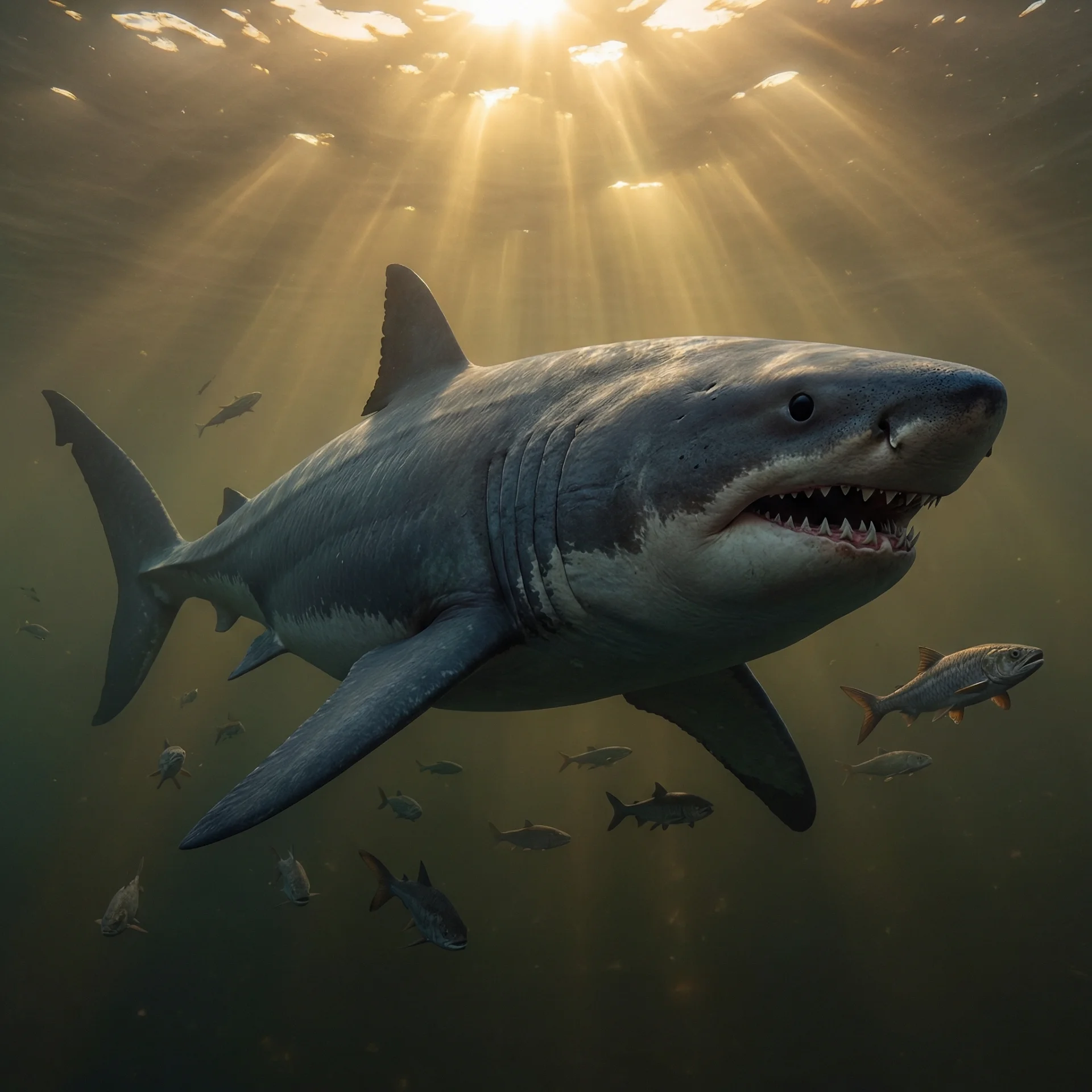
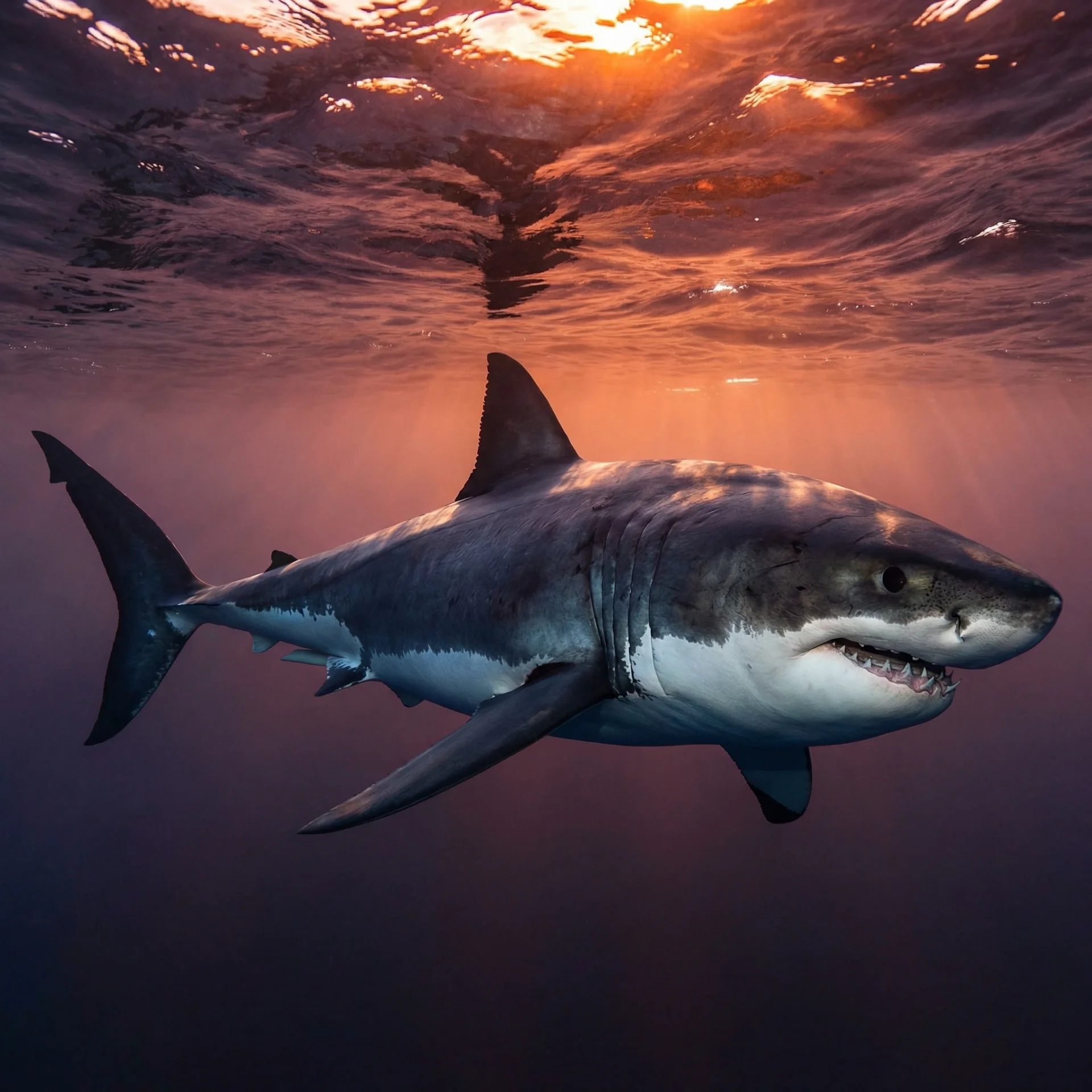
Taxonomically, Cretodus is placed within the family Pseudoscapanorhynchidae (Herman, 1979; sensu Siversson & Machalski, 2017), a group of large pelagic lamniform sharks known from the Cretaceous. Body reconstructions based on the Italian specimen suggest that Cretodus bore a strong resemblance to the extant tiger shark (Galeocerdo cuvier), possessing a wide, laterally expanded head equipped with powerful jaws and a stout, robust body (Amalfitano et al., 2022). Placoid scale morphology and vertebral centra structure indicate that it was a moderate-speed swimmer, distinctly slower than its contemporaneous macropredatory lamniform Cretoxyrhina (Shimada & Everhart, 2019; Amalfitano et al., 2022).
The largest species, C. crassidens, may have attained a theoretical maximum total length of approximately 9.55–11.28 m based on a von Bertalanffy growth model applied to a nearly complete Italian specimen that died at around 23 years of age with an estimated total length of 6.6–7.8 m (Amalfitano et al., 2022). Remarkably, this same specimen preserved the remains of an approximately 2 m long chelonioid sea turtle alongside its vertebral column, interpreted as gastric contents — direct evidence that Cretodus preyed upon large marine turtles (Amalfitano et al., 2017). As both a top predator and a globally distributed shark, Cretodus is a key genus for understanding the diversity and ecological partitioning of large Cretaceous marine predators.
The genus name Cretodus was erected by M. Sokolov in 1965. It is derived from the Latin Creta (chalk, a reference to the Cretaceous Period) and the Greek odous (ὀδούς, meaning tooth), thus translating to "chalk tooth." This name aptly reflects the nature of the genus's fossil record, which was for over a century composed almost entirely of isolated teeth from Cretaceous marine chalk and limestone deposits.
The type species is Otodus sulcatus Geinitz, 1843, originally described from the upper Cenomanian plenus marl of Plauen, Saxony, Germany (Amalfitano et al., 2022). The most well-known species, C. crassidens, was originally named Oxyrhina crassidens by Frederick Dixon in 1850 based on a single tooth (holotype: NHMUK PV OR 25823) discovered at Houghton, West Sussex, in southern England (Dixon, 1850).
Five species are currently recognized within Cretodus (Shimada & Everhart, 2019):
| Species | Author/Year | Notes |
|---|---|---|
| C. longiplicatus | Werner, 1989 | Narrow crown grade |
| C. semiplicatus | Agassiz, 1843 | Narrow crown grade |
| C. gigantea | Case, 2001 | Intermediate crown grade |
| C. houghtonorum | Shimada & Everhart, 2019 | Intermediate crown grade; first species based on a partial skeleton |
| C. crassidens | Dixon, 1850 | Broad crown grade; best known from a nearly complete skeleton |
Shimada & Everhart (2019) proposed that these five species represent a chronospecies lineage reflecting evolutionary increase in crown breadth. An earlier revision by Schwimmer et al. (2002) had suggested synonymizing most Cretodus species with C. semiplicatus, but subsequent studies (Shimada & Everhart, 2019; Amalfitano et al., 2022) have maintained the five-species framework.
Regarding family-level placement, Cretodus has traditionally been included in the Cretoxyrhinidae by some databases, but recent morphological studies place it within the Pseudoscapanorhynchidae (Herman, 1979; sensu Siversson & Machalski, 2017), which is now the predominant classification (Shimada & Everhart, 2019; Amalfitano et al., 2022).
Cretodus was a large, tiger-shark-shaped lamniform predator of the Late Cretaceous seas worldwide, equipped with grasping-type dentition and known to have preyed on large marine turtles and other sharks.
The stratigraphic range of the genus Cretodus spans from the Albian to the Santonian (Armagno & Shimada, 2024), although the vast majority of occurrences are concentrated in the Cenomanian to Turonian interval (approximately 100–89 Ma). The conservative range cited in earlier literature is Cenomanian to Coniacian (Cicimurri, 2001; Hamm & Cicimurri, 2011).
| Region | Formation | Age | Lithology |
|---|---|---|---|
| Kansas, USA | Blue Hill Shale Member, Carlile Shale | Middle Turonian | Marine shale |
| Kansas, USA | Fairport Chalk, Carlile Shale | Middle Turonian | Chalky limestone |
| South Dakota, USA | Belle Fourche Shale | Cenomanian | Shale |
| Texas, USA | Eagle Ford Formation / Atco Formation | Cenomanian–Coniacian | Limestone, marl |
| Southern England, UK | Chalk Group (Middle Chalk: Holywell Nodular Chalk Fm., New Pit Chalk Fm.) | Upper Cenomanian–middle Turonian | Chalk |
| Veneto, Italy | Scaglia Rossa (Lastame lithofacies) | Middle–upper Turonian | Nodular pinkish-white limestone |
| Hokkaido, Japan | Mikasa Formation | Lower Cenomanian | Clastic sedimentary rock |
| Saxony, Germany | Plenus Marl (type species locality) | Upper Cenomanian | Marl |
The depositional settings yielding Cretodus fossils range from nearshore shallow-marine to pelagic open-ocean environments. In the North American Western Interior Seaway, most occurrences come from nearshore to shallow-marine deposits such as the Blue Hill Shale and Eagle Ford Formation, suggesting that some species — particularly C. houghtonorum — preferred shallow waters (Shimada & Everhart, 2019). In contrast, C. crassidens is also recorded from the pelagic Chalk Group of England and the pelagic limestone of the Scaglia Rossa in Italy, indicating that this species ranged into offshore environments and had a broad, possibly cosmopolitan distribution (Amalfitano et al., 2022).
The Italian Scaglia Rossa locality preserves a rich associated fauna of echinoids, inoceramids, ammonoids, rudists, and diverse marine vertebrates (lamniform sharks, bony fishes, marine turtles, mosasaurs), consistent with a carbonate platform slope to pelagic depositional setting.
The most important specimens of Cretodus are summarized below:
| Specimen Number | Species | Composition | Locality/Formation | Repository |
|---|---|---|---|---|
| NHMUK PV OR 25823 | C. crassidens (holotype) | Single isolated tooth | Houghton, England; Middle Chalk | Natural History Museum, London |
| MPPSA IGVR 91032 | C. crassidens | Nearly complete articulated skeleton (101 teeth, 86 vertebral centra, calcified cartilage fragments, sea turtle stomach contents) | Veneto, Italy; Scaglia Rossa | Museo Paleontologico e Preistorico, Sant'Anna d'Alfaedo |
| BMB 007312 | C. crassidens | Disturbed tooth set (18 teeth) + 2 vertebral centra | Lewes, England; Middle Chalk | Booth Museum, Brighton |
| FHSM VP-17575 | C. houghtonorum (holotype) | Partial skeleton (~120 teeth, ~60 vertebral centra) | Mitchell County, Kansas, USA; Blue Hill Shale | Sternberg Museum, Fort Hays State Univ. |
The teeth of Cretodus are distinguished from those of other lamniform genera by the following combination of characters (Shimada & Everhart, 2019; Amalfitano et al., 2022): lateral cusplets are much smaller than the main cusp and well-separated from it, but connected by enameloid on the labial face. The enamel surface is generally smooth but develops vertical striae or costulae near the crown base, more prominently on the lingual face. The root is bilobate with a massive shelf-like lingual root protuberance that diminishes in size in posterior positions.
C. crassidens is specifically distinguished from all congeners by its mesiodistally broad teeth (crown width up to 82% of crown height even in anterior teeth), slightly ogival to triangular main cusp with strong vertical folds and deep grooves on the labial face, weak and well-spaced basal crown costulae on both labial and lingual faces, and robust lateral cusplets (cusplet height approximately 25–55% of crown height) (Amalfitano et al., 2022).
Most Cretodus species are defined solely on isolated teeth, meaning that body form, skeletal anatomy, and soft-tissue features remain largely unknown for most of the genus. The syntypes of the earliest described species (C. semiplicatus) are poorly preserved lateroposterior teeth with limited diagnostic value (Siversson & Machalski, 2017). Articulated skeletal material is known only for C. houghtonorum (FHSM VP-17575) and C. crassidens (MPPSA IGVR 91032).
Prior to 2017, the body form of Cretodus was effectively unknown. The discovery of the nearly complete C. crassidens skeleton from Italy (MPPSA IGVR 91032) enabled the first body reconstruction, revealing a wide head with laterally expanded, powerful jaws and a stout, robust body closely analogous to the extant tiger shark (Galeocerdo cuvier) (Amalfitano et al., 2022).
Size estimates differ among species:
| Species | Specimen | Estimated TL at Death | Theoretical Maximum TL (L-infinity) | Method |
|---|---|---|---|---|
| C. houghtonorum | FHSM VP-17575 | ~5.15 m (died at ~22 years) | ~6.84 m | Vertebral centrum diameter-TL ratio (Cretoxyrhina-based) |
| C. crassidens | MPPSA IGVR 91032 | ~6.6–7.8 m (died at ~23 years) | ~9.55–11.28 m | Crown height-TL ratio + von Bertalanffy growth model |
No explicit body mass estimates have been published in the peer-reviewed literature for Cretodus. However, for contextual comparison, an extant tiger shark (Galeocerdo cuvier) of similar body form at 5–6 m total length weighs approximately 400–600 kg, while a 6.4 m great white shark (Carcharodon carcharias) has been reported at approximately 3,300 kg (Ellis & McCosker, 1991). Given the stout body form of Cretodus, its mass would likely have ranged from several hundred to several thousand kilograms depending on species and individual size, but this remains an indirect inference rather than a confirmed estimate.
The dentition of Cretodus follows the typical lamniform dental pattern, with at least 10 tooth rows per jaw quadrant. Based on the Italian C. crassidens specimen, the upper dentition comprised 2 parasymphyseal rows + 3 anterior rows + at least 10 lateral rows, and the lower dentition comprised 1 parasymphyseal row + 3 anterior rows + at least 8 lateral rows (Amalfitano et al., 2022).
Upper teeth are labiolingually thick and nearly upright, while lower teeth exhibit a sigmoid profile with a nearly flat labial face. The largest tooth in the dentition (lower second anterior, a2) reached a total height of approximately 69 mm. The dentition was of the grasping type, well-suited for seizing and holding large prey rather than slicing.
Placoid scales (dermal denticles) recovered from the Italian specimen are 0.3–1 mm in height and 0.3–0.6 mm in width, ornamented with strong parallel basoapical ridges on the anterior crown face. Most scales have a single cusp, though some tricuspid forms also occur (Amalfitano et al., 2022).
Comparison of mean ridge distance and mean scale crown width against swimming-speed data from extant sharks places Cretodus in the moderate-swimming, nearshore taxa category — distinctly slower than the fast-cruising contemporaneous macropredator Cretoxyrhina mantelli (Shimada & Everhart, 2019; Amalfitano et al., 2022).
Age estimation from vertebral growth bands and application of the von Bertalanffy growth function (VBGF) yielded the following life-history parameters:
| Parameter | C. houghtonorum | C. crassidens |
|---|---|---|
| Length at birth | ~1.18 m | ~1.42 m |
| Age at sexual maturity | 10–15 years | 12–17 years |
| Maximum lifespan | 51–55 years | ~64 years |
The relatively large size at birth (~1.2–1.4 m) is notable even among modern large sharks and may suggest an intrauterine nutritional strategy such as oophagy (egg eating), though this remains speculative (Shimada & Everhart, 2019).
The most direct evidence for the diet of Cretodus comes from the Italian C. crassidens specimen (MPPSA IGVR 91032). A circular accumulation of bones from an approximately 2 m long chelonioid sea turtle was found alongside the shark's vertebral column and was interpreted as a gastric pellet — the remains of the shark's last meal (Amalfitano et al., 2017). This constitutes direct fossil evidence of predation on large marine turtles.
The C. houghtonorum holotype (FHSM VP-17575) also preserves remains of hybodont sharks interpreted as stomach contents, suggesting that Cretodus also preyed on other sharks (Shimada & Everhart, 2019).
The grasping-type dentition with tall main cusps and robust lateral cusplets indicates a feeding strategy optimized for seizing and holding large prey rather than cutting or slicing.
Within the Western Interior Seaway, Cretodus coexisted with numerous other shark genera including Cretoxyrhina, Squalicorax, Ptychodus, Cretalamna, Scapanorhynchus, and hybodont sharks (Shimada & Everhart, 2019). Coexistence among these predators was likely enabled by resource partitioning: Cretodus (especially C. houghtonorum) frequented nearshore environments while Cretoxyrhina dominated offshore waters (Shimada et al., 2011), and the genera likely specialized on different prey items.
The Italian C. crassidens specimen, recovered from pelagic deposits of the Scaglia Rossa, indicates that this species had a broader habitat range extending into open-ocean settings (Amalfitano et al., 2022).
Fossils of Cretodus have a nearly global distribution. The principal records include:
North America: The Western Interior Seaway deposits yield the most abundant material. Occurrences are documented from Kansas, South Dakota, Wyoming, and Texas (Cicimurri, 2001; Shimada, 2006; Hamm & Cicimurri, 2011; Shimada & Everhart, 2019; Armagno & Shimada, 2024).
Europe: Numerous isolated teeth and associated specimens from the Chalk Group of southern England (Kent, Sussex, Surrey) (Dixon, 1850; Woodward, 1911; Amalfitano et al., 2022). A nearly complete skeleton from the Scaglia Rossa of Veneto, Italy (Amalfitano et al., 2017, 2022). The type species syntype locality is in Saxony, Germany.
Africa: Occurrences have been reported, though detailed published records are limited.
Asia: A tooth of C. semiplicatus from the Mikasa Formation (Lower Cenomanian) of Hokkaido, Japan, constitutes the first record of the genus from the Pacific region (Tomita & Kurihara, 2011).
The wide distribution of Cretodus across both Boreal and Tethyan oceanic realms indicates that the genus occupied a broad paleogeographic range (Amalfitano et al., 2022). C. crassidens in particular, occurring in both pelagic carbonate platform deposits (Scaglia Rossa, Chalk Group) and shallow clastic deposits (Blue Hill Shale, Eagle Ford Fm.), likely possessed the capacity for offshore migration or a broad habitat tolerance spanning nearshore to open-ocean environments.
The family-level classification of Cretodus remains debated. It has traditionally been placed in the Cretoxyrhinidae by some databases (e.g., shark-references.com), but recent morphological studies favor placement within the Pseudoscapanorhynchidae (Herman, 1979; sensu Siversson & Machalski, 2017). This family also includes Pseudoscapanorhynchus and is characterized as a group of large pelagic lamniforms from the Cretaceous.
Schwimmer et al. (2002) proposed synonymizing most Cretodus species, including C. crassidens, with C. semiplicatus. However, Cappetta & Case (1999) and Cicimurri (2004) maintained the separation of C. crassidens from C. semiplicatus, and Shimada & Everhart's (2019) comprehensive revision established the current five-species framework. Amalfitano et al. (2022) further confirmed the validity of C. crassidens through a detailed emended diagnosis based on the Italian skeleton.
Shimada & Everhart (2019) classified the five species into three grades reflecting progressive broadening of the tooth crown: C. longiplicatus/C. semiplicatus (narrow crown) → C. gigantea/C. houghtonorum (intermediate crown) → C. crassidens (broad crown), interpreted as a chronospecies series.
The precise phylogenetic position of Cretodus within Lamniformes is not firmly resolved. Because chondrichthyan skeletons are cartilaginous and rarely preserved, taxonomy relies heavily on dental morphology, which has inherent limitations. Shimada & Everhart (2019) confirmed that the vertebral centra are of the lamnoid type, and the body reconstruction by Amalfitano et al. (2022) suggests that Cretodus represents a distinct lineage within Lamniformes, ecologically analogous to the extant tiger shark but phylogenetically more closely allied with other pseudoscapanorhynchids.
The identity of Cretodus as a large lamniform shark with a worldwide distribution during the Late Cretaceous (principally Cenomanian–Turonian) is well established on the basis of dental and vertebral fossil evidence. The grasping-type dentition and direct stomach content evidence (sea turtle) confirm its role as a macropredator of large marine prey.
The tiger-shark-like body form — wide head, stout body — is strongly supported by the Italian specimen but is based on a single articulated individual, and species-level or intraspecific variation may exist. The characterization as a moderate-speed swimmer is based on comparative placoid scale morphology and is well-supported but ultimately relies on analogy with extant sharks.
The theoretical maximum total length of 9.55–11.28 m for C. crassidens is derived from a von Bertalanffy model fitted to growth band data from a single specimen and should be regarded as an exploratory estimate. The inference of intrauterine oophagy based on large birth size is indirect and speculative.
Some popular media sources describe Cretodus as an "ancestor of the great white shark" or a "great-white-sized predator." In reality, Cretodus belongs to a different family (Pseudoscapanorhynchidae) from the extant great white shark (Lamnidae). Its body form was stout and tiger-shark-like rather than the streamlined fusiform shape of a great white, and its swimming speed was distinctly slower than that of Cretoxyrhina or modern lamnids. Ecologically, the tiger shark (Galeocerdo cuvier) is a more appropriate modern analogue than the great white shark.
| Genus | Family | Temporal Range | Estimated Max TL | Diet/Ecology | Habitat Preference |
|---|---|---|---|---|---|
| Cretodus | Pseudoscapanorhynchidae | Cenomanian–Coniacian (~Santonian) | ~7–11 m (C. crassidens theoretical max) | Grasping macropredator (turtles, sharks) | Nearshore to offshore |
| Cretoxyrhina | Cretoxyrhinidae | Albian–Campanian | ~6–7 m | Apex macropredator (ichthyosaurs, plesiosaurs, fish) | Primarily offshore |
| Squalicorax | Anacoracidae | Cenomanian–Maastrichtian | ~3–5 m | Predator/scavenger (dinosaur bone bite marks reported) | Nearshore to offshore |
| Ptychodus | Ptychodontidae | Albian–Campanian | Up to ~10 m | Durophagous (crushing mollusks) | Nearshore to offshore |
| Cardabiodon | Cardabiodontidae | Cenomanian–Turonian | ~6–8 m | Apex macropredator | Mid-latitude marine |
Compared with its contemporary Cretoxyrhina, Cretodus swam more slowly and likely favored nearshore environments, practicing resource partitioning that allowed the two large predators to coexist. Unlike Ptychodus, which had crushing dentition for hard-shelled prey, Cretodus possessed grasping-type teeth optimized for seizing large vertebrate prey such as turtles and sharks.
The Italian Cretodus specimen preserved an approximately 2 m long sea turtle in its stomach region — one of the rarest direct evidence of predator-prey interaction in the fossil record.
The name Cretodus literally means 'chalk tooth,' reflecting the fact that this shark's fossil record was composed almost entirely of isolated teeth from Cretaceous chalk and limestone deposits for over a century.
Cretodus was born big — estimated birth length of about 1.2–1.4 m (4–4.7 ft), which is larger at birth than most modern large shark species.
Despite being a lamniform like the great white shark, Cretodus had a body form more similar to the modern tiger shark, with a wide head and stout body rather than a streamlined torpedo shape.
The theoretical maximum length of C. crassidens — approximately 9.55–11.28 m (31–37 ft) — would have made it one of the largest sharks of the Cretaceous Period, far exceeding the modern great white.
The nearly complete Italian skeleton was discovered in 1996–1997 by quarry owners Giovanni and Gianfranco Benedetti in a limestone quarry in the Lessini Mountains near Verona, Italy.
The Kansas C. houghtonorum specimen was found in 2010 after local newspaper editor Fred Smith mistook fossilized shark vertebrae for petrified wood protruding from a shale hillside.
The placoid scales (dermal denticles) of Cretodus are only 0.3–1 mm in size and can only be isolated by dissolving the surrounding limestone matrix with acid.
The five species of Cretodus form a chronospecies series showing progressive broadening of tooth crowns through time, providing a textbook example of evolutionary trends in shark dental morphology.
The largest tooth of C. crassidens (lower second anterior) reached approximately 69 mm in total height, with a crown width reaching 82% of crown height — an unusually broad proportion for a lamniform shark.
Cretodus was an extinct genus of large mackerel sharks (order Lamniformes) that lived in the world's oceans during the Late Cretaceous, approximately 100 to 89 million years ago. It had a body form similar to the modern tiger shark, with a wide head, powerful jaws, and a stout body.
Size varied by species. C. houghtonorum is estimated to have reached a maximum of about 6.84 m (22.4 ft) in total length (Shimada & Everhart, 2019). The larger species C. crassidens had a theoretical maximum total length of approximately 9.55–11.28 m (31–37 ft) based on a von Bertalanffy growth model (Amalfitano et al., 2022). This exceeds the maximum size of the modern great white shark (~6 m).
Direct fossil evidence shows that Cretodus preyed on large marine turtles: an approximately 2 m long chelonioid sea turtle was found as inferred stomach contents in an Italian C. crassidens specimen (Amalfitano et al., 2017). The holotype of C. houghtonorum also preserved hybodont shark remains interpreted as stomach contents, suggesting predation on other sharks (Shimada & Everhart, 2019).
Both belong to the order Lamniformes (mackerel sharks), but they are placed in different families. Cretodus is classified in the Pseudoscapanorhynchidae, while the great white shark (Carcharodon carcharias) belongs to the Lamnidae. The body form of Cretodus was stout and tiger-shark-like, quite different from the streamlined shape of a great white.
Cretodus fossils have a nearly global distribution. They are most abundant in the Western Interior Seaway deposits of North America (Kansas, Texas, South Dakota, etc.), but have also been found in Europe (England, Italy, Germany), Africa, and Asia (Hokkaido, Japan). This broad distribution indicates a cosmopolitan marine predator.
Five species are currently recognized: C. longiplicatus (Werner, 1989), C. semiplicatus (Agassiz, 1843), C. gigantea (Case, 2001), C. houghtonorum (Shimada & Everhart, 2019), and C. crassidens (Dixon, 1850). These are arranged into three grades of increasing crown breadth, interpreted as a chronospecies lineage.
Analysis of Cretodus placoid scale morphology and comparison with extant sharks indicates it was a moderate-speed swimmer, significantly slower than the fast-cruising contemporaneous macropredatory shark Cretoxyrhina. Its swimming ecology was more similar to the modern tiger shark than to the great white or mako sharks.
Growth band analysis of vertebral centra suggests that C. houghtonorum had a maximum lifespan of approximately 51–55 years, while C. crassidens could live up to about 64 years. Sexual maturity was reached between 10 and 17 years of age depending on species.
A nearly complete articulated skeleton of C. crassidens was discovered in the Scaglia Rossa limestone of Veneto, Italy (specimen MPPSA IGVR 91032), comprising 101 teeth, 86 vertebral centra, and calcified cartilage fragments. A partial skeleton of C. houghtonorum (~120 teeth, ~60 vertebrae) was also found in Kansas, USA. These are the only known articulated specimens of the genus.
The precise cause of Cretodus extinction is not yet established. Most occurrences are concentrated in the Turonian (~93.9–89.8 Ma), with records becoming sparse by the Coniacian–Santonian. Environmental changes such as sea-level fluctuations and oceanic anoxic events during this interval may have played a role, but no definitive cause has been confirmed.
2images