Dunkleosteus
Paleozoic Era Carnivore Creature Type
Dunkleosteus terrelli
Scientific Name: "Dunkle (surname of David Dunkle) + Greek osteon (bone) = 'Dunkle's bone'; terrelli (species epithet) honors Jay Terrell, the amateur collector who first discovered the fossils"
Local Name: Dunkleosteus
Physical Characteristics
Discovery
Habitat
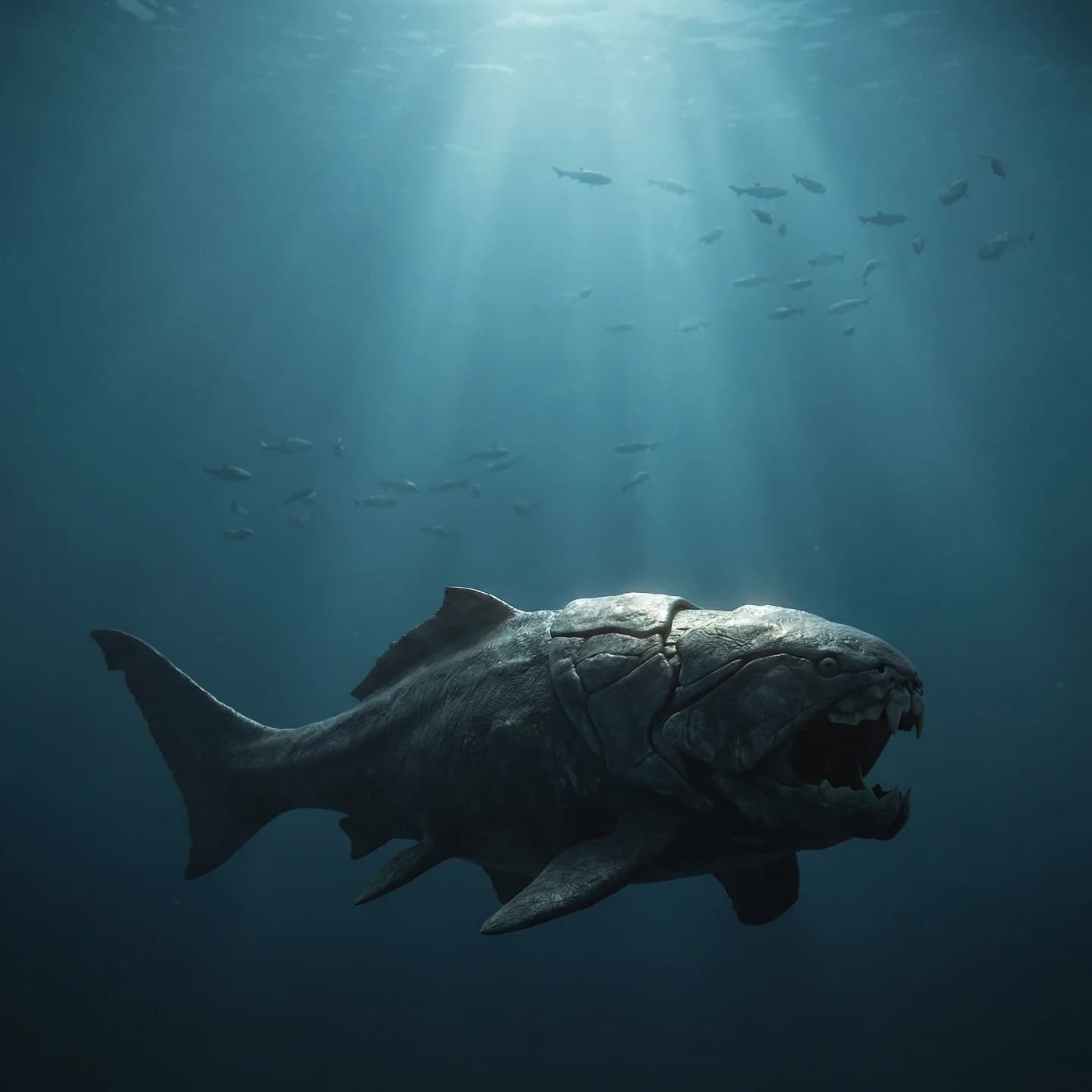
Dunkleosteus terrelli (Newberry, 1873) is an extinct arthrodire placoderm fish that lived during the Late Devonian (Frasnian to Famennian, approximately 382–358 Ma). It is the largest and most famous member of the Placodermi, and one of the first vertebrate apex predators in Earth's history. Fossils are primarily known from the Cleveland Shale of Ohio, United States, with additional occurrences in Pennsylvania, Tennessee, California, New York, Canada (Ontario), Poland, Belgium, Morocco, and Russia.
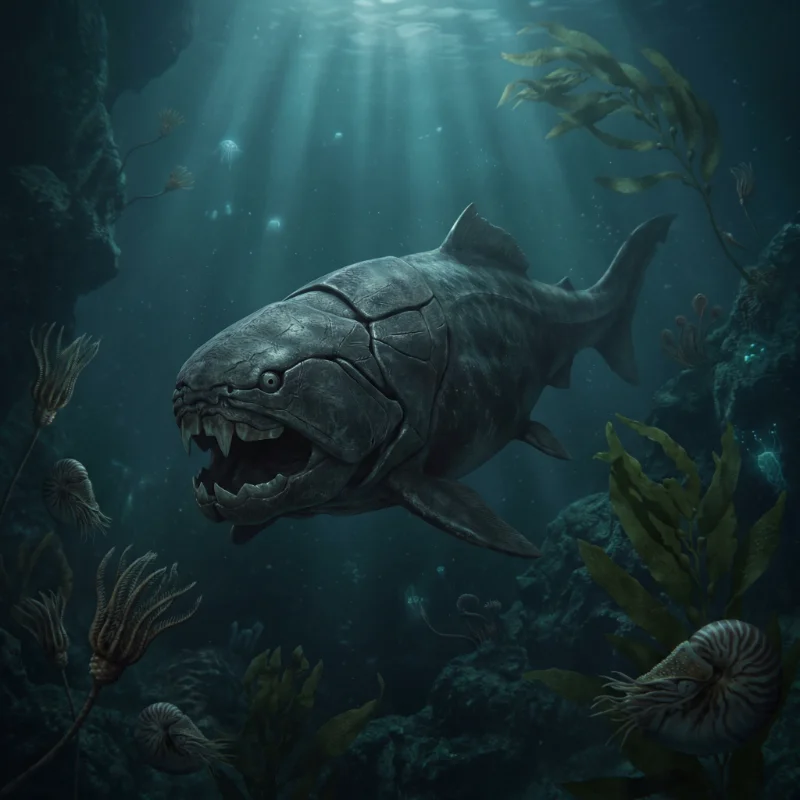
The most striking feature of Dunkleosteus is the massive dermal bone armor covering its skull and the anterior half of its trunk, combined with blade-like bony gnathal plates that functioned in place of true teeth. These gnathal plates formed a guillotine-like cutting apparatus optimized for shearing prey. Biomechanical models by Anderson & Westneat (2007) estimated bite forces of approximately 4,414–6,170 N at the fang tip and up to 7,495 N at the blade edge, though a 2025 anatomical revision by Engelman et al. revealed that nearly half the skull was composed of cartilage, suggesting these estimates may require re-evaluation.
Regarding body size, Dunkleosteus was long cited at 6–10 m in length. However, the most recent and rigorous studies (Engelman, 2023a, 2023b, 2024) used multiple independent size proxies — orbit-opercular length, skull length, entering angle, ventral shield length, and pelvic girdle position — to produce substantially smaller estimates: approximately 3.4 m for typical adults and 4.1 m for the largest known individual. Body mass was estimated at 950–1,200 kg for average adults and 1,494–1,764 kg for the largest specimen, comparable in weight to a 4.6 m great white shark. The revised body plan is shorter and stouter than traditional shark-like reconstructions, with a deep trunk reminiscent of lamnid sharks or tunas.
Overview
Name and Etymology
The genus name Dunkleosteus was coined in 1956 by French paleontologist Jean-Pierre Lehman to honor David Dunkle (1911–1984), former curator of vertebrate paleontology at the Cleveland Museum of Natural History. The name combines Dunkle's surname with the Greek word ὀστέον (osteon, 'bone'), literally meaning \"Dunkle's bone.\" The species epithet terrelli honors Jay Terrell, the hotel owner and amateur fossil collector who first discovered Dunkleosteus fossils in 1867 along the Lake Erie cliffs near Sheffield Lake, Ohio.
The species was originally described in 1873 by John Strong Newberry as Dinichthys terrelli (\"terrible fish of Terrell\"). In 1956, Lehman separated the genus Dunkleosteus from Dinichthys, establishing the current binomial.
Taxonomic Status
Dunkleosteus belongs to the class Placodermi, order Arthrodira, suborder Brachythoraci. Carr & Hlavin (2010) placed it in the family Dunkleosteidae based on a cladistic analysis that demonstrated Dunkleosteus and Dinichthys belong to separate clades — Dunkleosteus within Dunkleosteoidea and Dinichthys within Aspinothoracidi — overturning the long-standing placement of both in Dinichthyidae. This topology was supported by Zhu & Zhu (2013), though Zhu et al. (2016) recovered a slightly different arrangement with Panxiosteidae outside Dunkleosteoidea.
Approximately ten species of Dunkleosteus have been described, but only four are considered unambiguously valid by all researchers: D. terrelli, D. raveri, D. tuderensis, and tentatively D. amblyodoratus (Lebedev et al., 2023). As currently defined, Dunkleosteus has been characterized as a wastebasket taxon for large dunkleosteoid arthrodires more derived than Eastmanosteus (Lebedev et al., 2023).
Key Identification
Dunkleosteus is the largest and most iconic placoderm: an armored apex predator of the Late Devonian seas, distinguished by its blade-like bony jaw plates and massive dermal armor.
Age, Stratigraphy, and Depositional Environment
Temporal Range
The genus Dunkleosteus spans the Late Devonian from the Frasnian to the Famennian, approximately 382–358 Ma. The type species D. terrelli is most abundantly known from Famennian-aged strata, specifically the Cleveland Shale Member of the Ohio Shale. The small species D. raveri occurs in the stratigraphically lower Huron Shale (also Famennian), while Frasnian species such as D. magnificus are known from New York.
Formations and Lithology
The principal fossil-bearing unit is the Cleveland Shale Member of the Ohio Shale, a Famennian black shale composed of fine-grained mudstone rich in organic matter. Additional US formations include the Huron Shale, Chagrin Shale, Conneaut and Chadakoin Formations (Pennsylvania), Chattanooga Shale (Tennessee), and Lost Burro Formation (California). Outside North America, D. amblyodoratus comes from the Kettle Point Formation (Ontario, Canada), D. tuderensis from the Bilovo Formation (Tver Region, Russia), D. marsaisi from the Lower Famennian of the Atlas Mountains (Morocco), and D. belgicus (dubious) from the Famennian of Belgium.
| Formation | Region | Age (Stage) | Key Species |
|---|---|---|---|
| Cleveland Shale (Ohio Shale) | Ohio, USA | Famennian | D. terrelli |
| Huron Shale (Ohio Shale) | Ohio, USA | Famennian | D. raveri |
| Chagrin Shale | Ohio, USA | Famennian | D. terrelli |
| Conneaut / Chadakoin Fm. | Pennsylvania, USA | Famennian | D. terrelli |
| Chattanooga Shale | Tennessee, USA | Famennian | D. terrelli |
| Lost Burro Formation | California, USA | Frasnian–Famennian | Dunkleosteus sp. |
| Kettle Point Formation | Ontario, Canada | Late Devonian | D. amblyodoratus |
| Rhinestreet Shale | New York, USA | Frasnian | D. magnificus |
| Bilovo Formation | Tver Region, Russia | Famennian | D. tuderensis |
| Atlas Mountains strata | Morocco | Lower Famennian | D. marsaisi |
Paleoenvironment
The Cleveland Shale is interpreted as an offshore, open-water environment (Lewis & Schwietering, 1971; Carr, 2010; Baird et al., 2023). The water column was vertically stratified, with an oxygenated surface layer overlying a dysoxic-to-anoxic bottom that extended at least 80 km perpendicular to the paleo-coastline (Baird et al., 2023). The anoxic seafloor was uninhabitable to benthic organisms; bioturbation is near-absent and benthic fauna is limited to rare, hypoxia-tolerant lingulid brachiopods (Hlavin, 1976; Dunkel et al., 2022). The vertebrate fauna is entirely nektonic, comprising pachyosteomorph arthrodires (28 species) and chondrichthyans (32 species), all showing strongly nektonic body plans (Carr & Jackson, 2008). Common benthic or demersal Devonian fish groups — antiarchs, ptyctodonts, non-eubrachythoracid arthrodires — are rare or absent.
D. terrelli is the most common vertebrate fossil in the Cleveland Shale, representing approximately 20% of all vertebrate specimens and 32% of genus-identifiable material in the CMNH collections (Engelman, 2024). Fossils are distributed uniformly across the anoxic zone and span the full range of ontogenetic stages, from juveniles to large adults, indicating D. terrelli was an autochthonous, year-round inhabitant of this pelagic environment (Carr, 2010).
Specimens and Diagnostic Features
Holotype and Key Specimens
The original description of Dinichthys terrelli was published by Newberry (1873), based on material collected by Jay Terrell from the Lake Erie cliff exposures near Sheffield Lake, Ohio, beginning in 1867. Most of Terrell's original collection was destroyed in an 1873 fire at Elyria, Ohio (Claypole, 1893).
The largest and best-preserved D. terrelli specimen is CMNH 5768 at the Cleveland Museum of Natural History — a near-complete head and thoracic armor with a skull length of approximately 61.3 cm. This specimen serves as the basis for most museum displays worldwide (Engelman, 2023). Other significant specimens include CMNH 5936 (the largest known jaw fragment), CMNH 50322 (preserving 16 vertebrae within the trunk armor), and specimens preserving pectoral fin outlines with ceratotrichia (Carr et al., 2010). The CMNH houses over 600 D. terrelli specimens — the world's largest collection — with additional significant holdings at the American Museum of Natural History, Smithsonian National Museum of Natural History, and Yale Peabody Museum.
Diagnosis
Dunkleosteus is distinguished from other arthrodires by: (1) massive dermal bone armor with a particularly thick nuchal plate; (2) blade-like gnathal plates in place of true teeth, with self-sharpening cutting edges; (3) an apomorphically deep trunk armor among arthrodires; (4) a cranio-thoracic joint enabling head elevation via a four-bar linkage mechanism. Carr & Hlavin (2010) provided detailed diagnoses for D. terrelli, D. raveri (distinguished by smaller size, large eyes, and an uncrushed skull from a carbonate concretion in the Huron Shale), and D. amblyodoratus (nuchal and paranuchal plates forming a blunted spearhead shape).
Limitations of the Fossil Record
The endoskeleton of Dunkleosteus was largely cartilaginous (with a thin perichondral bone coating), meaning only the dermal armor routinely fossilizes. Only about 5% of D. terrelli specimens have more than 25% of their skeleton preserved (Engelman, 2023). No complete post-thoracic body is known, making body shape and total length reconstructions dependent on indirect evidence — comparative anatomy, phylogenetic bracketing, and paleoenvironmental context.
Morphology and Functional Anatomy
Body Size and Shape
Historical length estimates for D. terrelli ranged from 4.5 to 10 m, but most lacked stated methods or quantitative backing. Engelman (2023a, 2023b) used orbit-opercular length (OOL) — the anteroposterior length of the head excluding the snout, which correlates tightly with total length across 971 fish species (r² = 0.947) — to produce substantially smaller estimates. Multiple independent size proxies (skull length, entering angle, ventral shield length, pelvic girdle position) converged on similar values: approximately 3.4 m for typical adults (CMNH 5768) and 4.1 m for the largest known individual (CMNH 5936). Statistical margins of error permit lengths up to 3.7 m (typical) and 4.5 m (maximum), but lengths exceeding 5 m require proportions far outside the range observed in other arthrodires and jawed fishes (Engelman, 2023a, 2023b).
The earlier estimate of Ferron et al. (2017) — 6.88–8.79 m based on upper jaw perimeter of modern sharks — was criticized by Engelman (2023b) because arthrodires have proportionally larger mouths than sharks, causing this method to systematically overestimate body length.
| Study | Est. Adult Length | Est. Max. Length | Method |
|---|---|---|---|
| Newberry, 1875 | 4.5–5.5 m | — | Extrapolation from Coccosteus |
| Denison, 1978 | 6 m | — | Unstated |
| Anderson & Westneat, 2007 | 6 m | — | Unstated |
| Ferron et al., 2017 | 6.88 m | 8.79 m | Shark upper jaw perimeter |
| Engelman, 2023 | ~3.4 m | ~4.1 m | OOL, skull length, entering angle, ventral shield, pelvic girdle |
Body mass was estimated by Engelman (2023) using an ellipsoid volumetric method: 950–1,200 kg for typical adults and 1,494–1,764 kg for the largest individual. These weights exceed those predicted by shark-like body plans of equal length because arthrodires had relatively deeper, wider bodies than sharks.
Engelman (2024) reconstructed D. terrelli with a stout, deep-bodied trunk and a fineness ratio of approximately 2.5–3.0, resembling lamnid sharks and tunas rather than the elongate, shark-like body plan of traditional reconstructions.
Dermal Armor
The dermal armor covering the head and anterior trunk is the most distinctive feature. Armor thickness varies significantly by region: the nuchal plate at the back of the skull reaches 5–7.6 cm, while the remaining armor is generally 0.8–2.5 cm thick (Carr & Hlavin, 2010). The bone plates have a dual structure of hard cortical bone and marrow-filled cancellous bone, more similar to tetrapod bones than to typical teleost fish (Giles et al., 2013).
Gnathal Plates and Jaw Mechanism
Dunkleosteus lacked true teeth entirely. Instead, the upper and lower jaws bore pairs of elongate, blade-like bony projections forming a guillotine-like cutting apparatus. The cranio-thoracic joint created a four-bar linkage mechanism linking the skull, thoracic shield, lower jaw, and jaw musculature. Anderson & Westneat (2007) modeled jaw-opening time at approximately 20 ms with a complete bite cycle of 50–60 ms, and estimated bite forces of 4,414 N at the fang tip and 5,363 N at the blade edge (up to 7,495 N in their subsequent 2009 study).
Engelman et al. (2025) published a comprehensive anatomical revision revealing that nearly half of the skull was composed of cartilage, including most major jaw connections and muscle attachment sites. They demonstrated that Dunkleosteus could achieve a gape angle of at least 65–70°, supporting an active pursuit-and-bite feeding strategy (oral processing with wide gape and prey tearing) rather than suction feeding. The authors noted that previous bite force estimates may need re-evaluation given this revised cranial anatomy.
Fins and Locomotion
An exceptionally preserved specimen retains a pectoral fin outline with ceratotrichia (Carr et al., 2010), demonstrating greater fin morphological diversity in placoderms than previously assumed. Ferron et al. (2017) used this information along with ecomorphological inference to reconstruct the caudal fin with a strong ventral lobe, high aspect ratio, and narrow caudal peduncle — contrasting with earlier eel-like reconstructions based on coccosteomorph arthrodires.
A series of 16 vertebrae preserved in specimen CMNH 50322 are mostly fused, extending nearly to the end of the trunk armor (Johanson et al., 2019; Engelman, 2024). Combined with a ridge on the interior of the trunk armor suggesting a well-developed horizontal septum attachment, this anatomy is compatible with thunniform swimming — efficient high-speed locomotion used by lamnid sharks and tunas, where force generated by anterior trunk muscles is transmitted to the tail fin through stiffened anterior structures (Engelman, 2024).
Diet and Ecology
Feeding Behavior
Dunkleosteus was a carnivorous apex predator equipped with powerful gnathal plates capable of shearing through a range of nektonic prey. Fossils of D. terrelli are frequently found with boluses of semi-digested fish bones, suggesting the animal routinely regurgitated indigestible prey remains (Carr, 2010). Teeth of the chondrichthyan Orodus — interpreted as a fast-swimming pelagic fish — have been found in association with Dunkleosteus remains, possibly representing stomach contents and indicating that Dunkleosteus was capable of capturing fast prey (Ferron et al., 2017).
Engelman et al. (2025) argued that the blade-like gnathal plates are consistent with active pursuit predation involving wide-gape biting and prey tearing, rather than suction feeding. They noted that Dunkleosteus's large mouth would have decreased effective suction force, and that suction feeding on large prey is unreliable in open-water environments.
Ecological Context and Coexisting Fauna
Over 65 fish species are recorded from the Cleveland Shale (Carr & Jackson, 2008), dominated by pachyosteomorph arthrodires (28 species) and chondrichthyans (32 species). Notable contemporaries include the large arthrodires Heintzichthys, Gorgonichthys, and Titanichthys, as well as early sharks such as Cladoselache and Stethacanthus. All taxa with preserved body outlines show strongly nektonic body plans, often with pelagic specializations such as caudal keels. Benthic or demersal Devonian fish groups are rare or absent.
Titanichthys, another very large dunkleosteoid, coexisted with Dunkleosteus but lacked sharp gnathal plates, suggesting a filter-feeding or small-prey diet — an ecologically distinct niche.
Growth and Reproduction
Morphological analysis of juvenile D. terrelli lower jaws reveals they were proportionally as robust as adult jaws, indicating juveniles could already produce high bite forces and shear through resistant prey tissue — unlike the condition in tetrapods where juvenile jaws are typically more gracile. Placoderms may have been among the first vertebrates to practice internal fertilization; some placoderms preserve evidence of viviparity, including possible umbilical cord structures (Long et al., 2008).
Distribution and Paleogeography
Geographic Distribution
Fossils of Dunkleosteus are known from North America (US: Ohio, New York, Pennsylvania, Tennessee, California; Canada: Ontario), Europe (Poland, Belgium, Russia), and Africa (Morocco). The type species D. terrelli is documented from both North America and Europe. The Moroccan material (D. marsaisi) is sometimes synonymized with D. terrelli but has alternatively been assigned to Eastmanosteus (Schultze, 1973).
Paleogeographic Position
During the Late Devonian (~370–360 Ma), the Ohio region lay in the subtropical-to-tropical belt of the southern hemisphere, within the western interior seaway of Laurussia. Paleobiology Database records for Cleveland Shale localities indicate approximate paleocoordinates of ~25°–35° S latitude and ~15°–30° W longitude. Moroccan and Belgian occurrences correspond to the northern margin of Gondwana and the Laurussian periphery, respectively, indicating that Dunkleosteus had a broad trans-oceanic geographic range during the Late Devonian.
Phylogenetics and Taxonomic Debates
Current Phylogenetic Framework
Carr & Hlavin (2010) performed a morphological cladistic analysis that placed Dunkleosteus (along with Eastmanosteus, Xiangshuiosteus, and allies) in the family Dunkleosteidae within Dunkleosteoidea, while Dinichthys was recovered within Aspinothoracidi — a distantly related clade. This topology was supported by Zhu & Zhu (2013).
Alternative Hypotheses
Zhu et al. (2016), using a larger morphological dataset, recovered Panxiosteidae outside Dunkleosteoidea, leaving the monophyly of Dunkleosteidae as distinct from Dunkleosteoidea uncertain. The exact phylogenetic placement of Dunkleosteus remains somewhat sensitive to dataset composition and analytical method.
Lebedev et al. (2023) noted that Dunkleosteus as currently defined is a wastebasket taxon encompassing large dunkleosteoid arthrodires more derived than Eastmanosteus. Some nominal species, such as D. newberryi, may not belong to Dunkleosteus or even Dunkleosteoidea based on the absence of diagnostic features like accessory odontoids.
Reconstruction and Uncertainty
Well-Established Features
Skull and trunk armor morphology, gnathal plate structure, the cranio-thoracic joint mechanism, and pelagic habitat are all well-supported by abundant fossil evidence and paleoenvironmental data.
Strongly Supported Inferences
The revised body length of ~3.4–4.1 m (Engelman, 2023, 2024) is supported by multiple independent size proxies producing convergent results. The stout, deep-bodied shape and pelagic swimming habit are supported by both comparative anatomy and the Cleveland Shale paleoenvironment.
Hypothetical or Uncertain Features
Caudal fin morphology (thunniform reconstruction vs. traditional eel-like form) remains based on indirect evidence. Precise bite force values, the feasibility of suction feeding, body coloration, and swimming speed remain uncertain. Length estimates exceeding 5 m have been largely rejected by recent work, but the size debate is not entirely settled.
Popular Media vs. Scientific Consensus
Dunkleosteus is frequently depicted in popular culture as a 6–10 m shark-shaped giant. Recent research (2023–2025) strongly supports a shorter, stouter body plan (~3–4 m, the \"chunky dunk\"). The pointed, shark-like snout commonly seen in popular reconstructions contradicts fossil evidence; the actual head was blunt-snouted (Engelman, 2024).
Comparison with Contemporaries
| Taxon | Family/Clade | Age | Est. Length | Diet | Habitat |
|---|---|---|---|---|---|
| Dunkleosteus terrelli | Dunkleosteidae | Late Devonian (Famennian) | ~3.4–4.1 m | Large carnivore | Pelagic open water |
| Titanichthys | Dunkleosteoidea | Late Devonian | ~3–5 m (est.) | Filter/small prey (inferred) | Pelagic |
| Gorgonichthys clarki | Selenosteidae | Late Devonian (Famennian) | ~2–3 m (est.) | Carnivore | Pelagic |
| Heintzichthys gouldii | Selenosteidae | Late Devonian (Famennian) | ~1–2 m (est.) | Carnivore | Pelagic |
| Cladoselache | Cladoselachidae | Late Devonian | ~1–2 m | Carnivore | Pelagic |
| Eastmanosteus calliaspis | Dunkleosteidae | Late Devonian | ~1–2 m | Carnivore | Unknown |
Dunkleosteus was the largest arthrodire in the Cleveland Shale ecosystem and, together with Titanichthys, among the largest vertebrates of the Devonian. Titanichthys lacked sharp gnathal plates and likely occupied a different ecological niche, possibly analogous to modern whale sharks or basking sharks.
Fun Facts
FAQ
📚References
- Newberry, J.S. (1873). Descriptions of fossil fishes. Report of the Geological Survey of Ohio, 1(2), Part II: Paleontology, 245–355.
- Lehman, J.-P. (1956). Les arthrodires du Devonien superieur du Tafilalet (Sud Marocain). Notes et Memoires, Service Geologique du Maroc, 129, 1–170.
- Anderson, P.S.L. & Westneat, M.W. (2007). Feeding mechanics and bite force modelling of the skull of Dunkleosteus terrelli, an ancient apex predator. Biology Letters, 3(1), 77–80. https://doi.org/10.1098/rsbl.2006.0569
- Anderson, P.S.L. & Westneat, M.W. (2009). A biomechanical model of feeding kinematics for Dunkleosteus terrelli (Arthrodira, Placodermi). Paleobiology, 35(2), 251–269.
- Carr, R.K. & Hlavin, W.J. (2010). Two new species of Dunkleosteus Lehman, 1956, from the Ohio Shale Formation (USA, Famennian) and the Kettle Point Formation (Canada, Upper Devonian), and a cladistic analysis of the Eubrachythoraci (Placodermi, Arthrodira). Zoological Journal of the Linnean Society, 159(1), 195–222. https://doi.org/10.1111/j.1096-3642.2009.00578.x
- Carr, R.K. (2010). Paleoecology of Dunkleosteus terrelli (Placodermi: Arthrodira). Kirtlandia, 57, 36–45.
- Carr, R.K. & Jackson, G.L. (2008). The vertebrate fauna of the Cleveland Member (Famennian) of the Ohio Shale. Guide to the Geology and Paleontology of the Cleveland Member of the Ohio Shale.
- Ferron, H.G., Martinez-Perez, C. & Botella, H. (2017). Ecomorphological inferences in early vertebrates: reconstructing Dunkleosteus terrelli (Arthrodira, Placodermi) caudal fin from palaeoecological data. PeerJ, 5, e4081. https://doi.org/10.7717/peerj.4081
- Engelman, R.K. (2023a). A Devonian fish tale: A new method of body length estimation suggests much smaller sizes for Dunkleosteus terrelli (Placodermi: Arthrodira). Diversity, 15(3), 318. https://doi.org/10.3390/d15030318
- Engelman, R.K. (2023b). Giant, swimming mouths: oral dimensions of extant sharks do not accurately predict body size in Dunkleosteus terrelli (Placodermi: Arthrodira). PeerJ, 11, e15131. https://doi.org/10.7717/peerj.15131
- Engelman, R.K. (2024). Reconstructing Dunkleosteus terrelli (Placodermi: Arthrodira): A new look for an iconic Devonian predator. Palaeontologia Electronica, 27(3), a45. https://doi.org/10.26879/1343
- Engelman, R.K., Carr, R.K., Trinajstic, K., Johanson, Z. & Lebedev, O.A. (2025). Functional anatomy, jaw mechanisms, and feeding behavior of Dunkleosteus terrelli (Placodermi, Arthrodira). The Anatomical Record. https://doi.org/10.1002/ar.70075
- Lebedev, O.A., Engelman, R.K., Skutschas, P.P., Johanson, Z., Smith, M.M., Kolchanov, V.V., Trinajstic, K. & Linkevich, V.V. (2023). Structure, growth and histology of gnathal elements in Dunkleosteus (Arthrodira, Placodermi), with a description of a new species from the Famennian (Upper Devonian) of the Tver Region (North-Western Russia). Diversity, 15(5), 648. https://doi.org/10.3390/d15050648
- Zhu, Y.-A. & Zhu, M. (2013). A redescription of Kiangyousteus yohii (Arthrodira: Eubrachythoraci) from the Middle Devonian of China, with remarks on the systematics of the Eubrachythoraci. Zoological Journal of the Linnean Society, 169(4), 798–819. https://doi.org/10.1111/zoj12089
- Zhu, Y.-A., Zhu, M. & Wang, J.-Q. (2016). Redescription of Yinostius major (Arthrodira: Heterostiidae) from the Lower Devonian of China, and the interrelationships of Brachythoraci. Zoological Journal of the Linnean Society, 176(4), 806–834. https://doi.org/10.1111/zoj.12356
- Denison, R. (1978). Placodermi. Handbook of Paleoichthyology, Vol. 2. Gustav Fischer Verlag, 128 pp.
- Giles, S., Rucklin, M. & Donoghue, P.C.J. (2013). Histology of \"placoderm\" dermal skeletons: implications for the nature of the ancestral gnathostome. Journal of Morphology, 274(6), 627–644.
- Claypole, E.W. (1893). The three great fossil placoderms of Ohio. American Geologist, 12, 89–99.
- Johanson, Z., Trinajstic, K., Carr, R. & Ritchie, A. (2019). Evolution and development of the synarcual in early vertebrates. Zoomorphology, 138, 95–114.
- Baird, G.C., Hannibal, J.T. & Carr, R.K. (2023). Stratigraphic context and taphonomy of the Cleveland Shale. In: Advances in Devonian Paleontology.
Gallery
4 images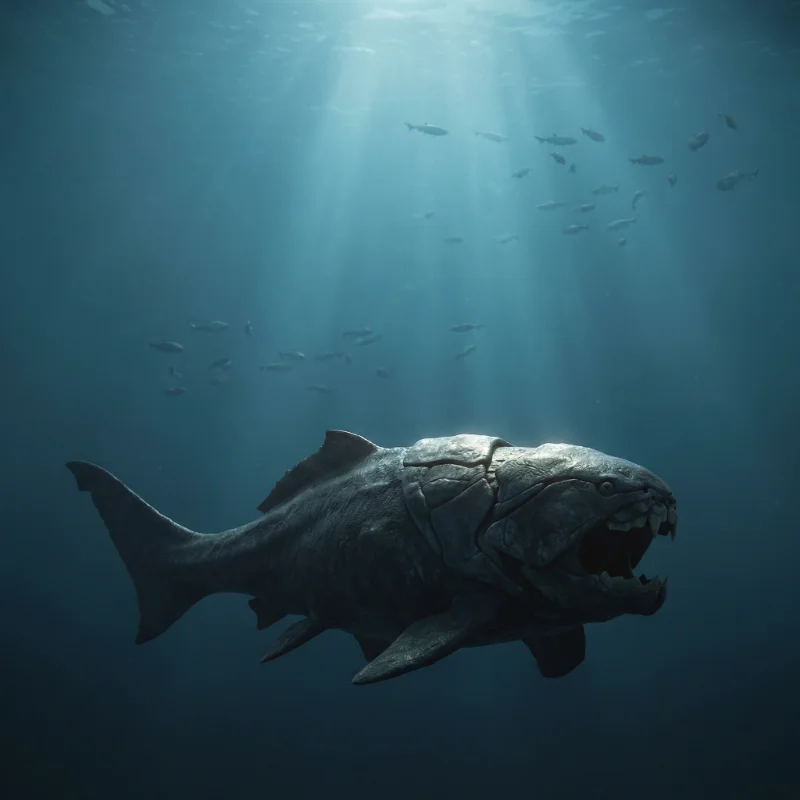 Dunkleosteus
Dunkleosteus · Paleozoic Era · Carnivore
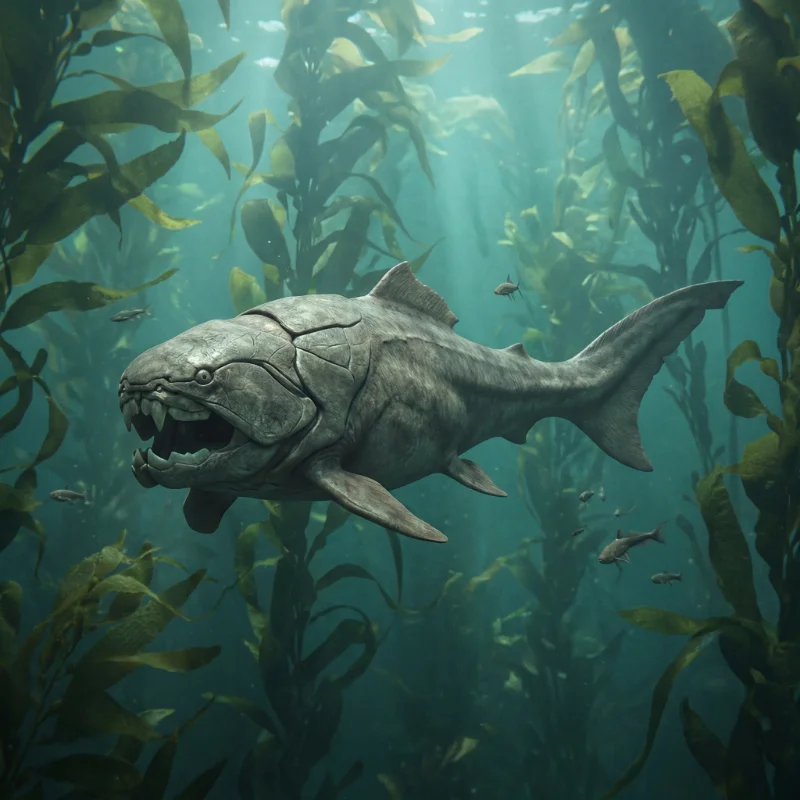 Dunkleosteus
Dunkleosteus · Paleozoic Era · Carnivore
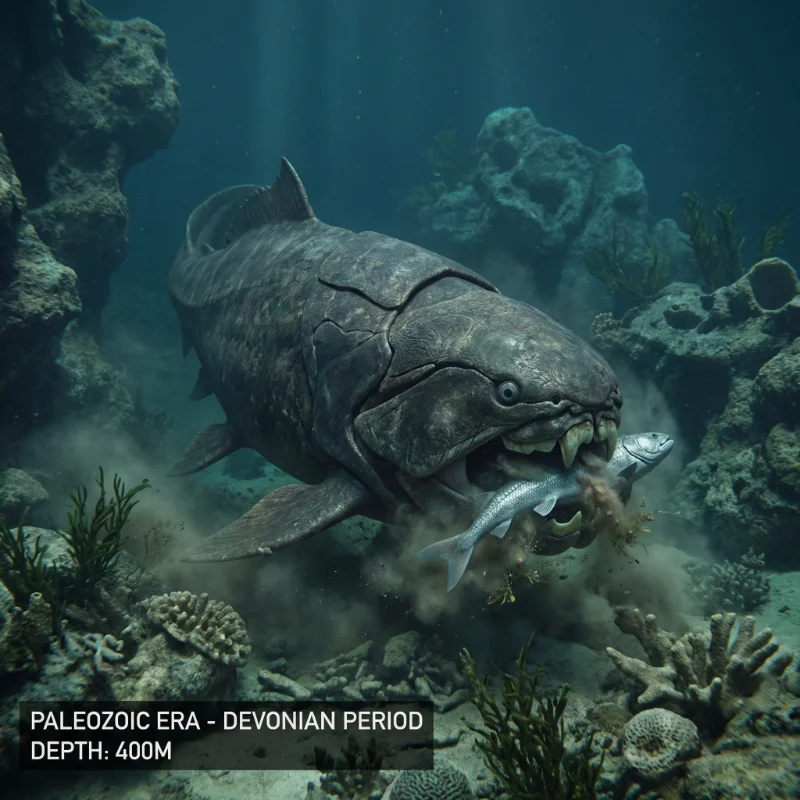 Dunkleosteus
Dunkleosteus · Paleozoic Era · Carnivore
 Dunkleosteus
Dunkleosteus · Paleozoic Era · Carnivore
🔗Related Creatures
Cretodus
Cretodus

Archaeopteryx
Archaeopteryx lithographica
Domestic Cat
Felis catus
Arambourgiania
Arambourgiania philadelphiae

Tiger
Panthera tigris
Thalattoarchon
Thalattoarchon saurophagis
Temnodontosaurus
Temnodontosaurus

Lion
Panthera leo