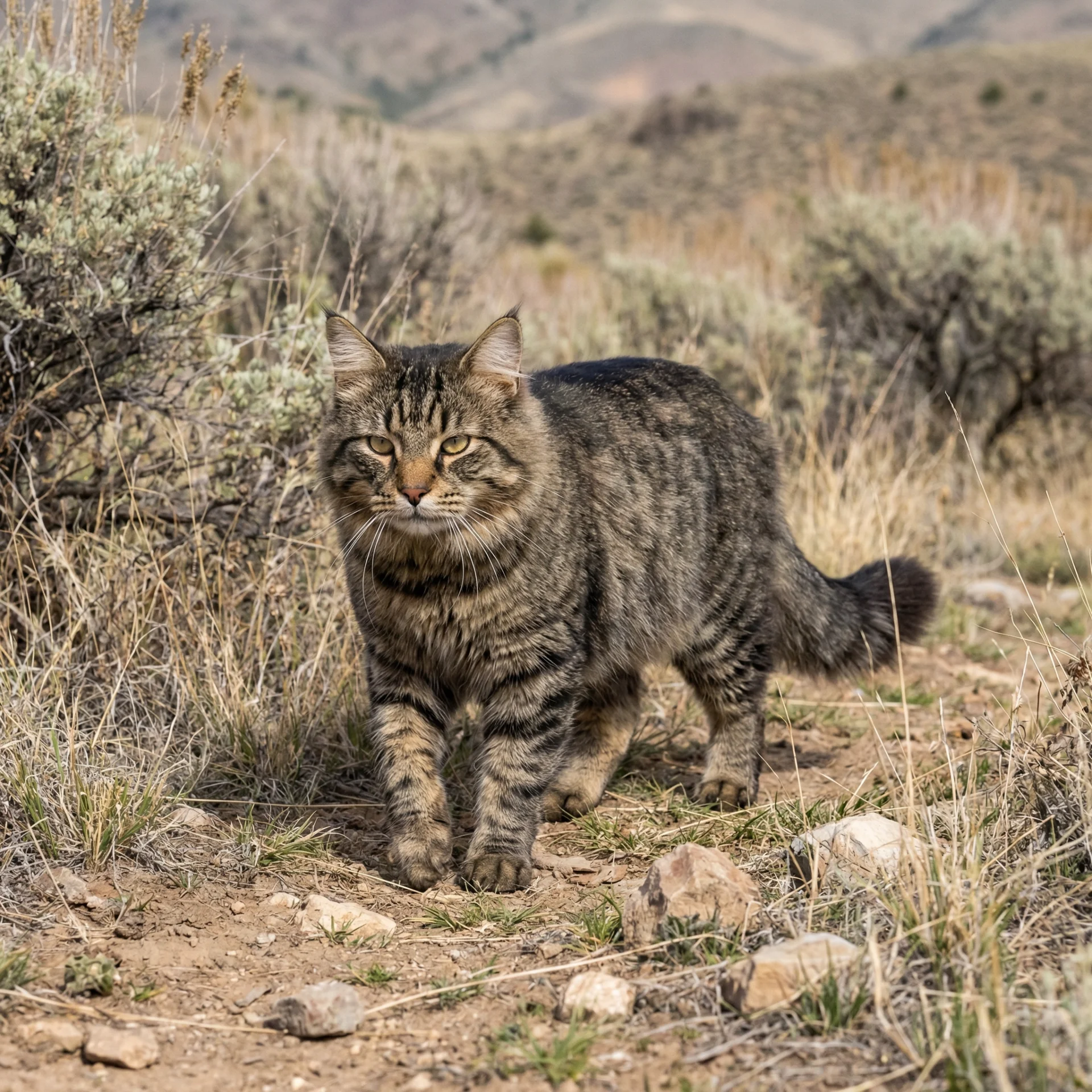
Domestic Cat
Cretaceous Period Carnivore Creature Type
Felis catus
Scientific Name: "Felis (Latin for 'cat') + catus (Late Latin for 'domesticated cat' or 'clever/cunning')"
Physical Characteristics
Discovery
Habitat
보μ Β·κ°μ²΄Β·μλͺ

The domestic cat (Felis catus Linnaeus, 1758) is a small carnivorous mammal belonging to the genus Felis within the family Felidae β the only domesticated species in its entire family. Genetic and archaeological evidence indicates that domestication began approximately 10,000 years ago in the Fertile Crescent of the Near East, where African wildcats (Felis lybica) were drawn to early agricultural settlements by concentrations of rodent prey. From those origins, cats spread alongside human civilisations to virtually every continent except Antarctica, making them one of the most cosmopolitan mammals on Earth. Current global estimates place the combined population of pet, stray, and feral cats at roughly 600 million to 1 billion individuals.
Adult domestic cats typically measure about 40β60 cm in head-body length, with a tail adding another 22β38 cm, and weigh between 2.5 and 7 kg depending on breed and sex. Wikipedia notes an average head-body length of approximately 46 cm and a shoulder height of 23β25 cm. Breed diversity is extensive: the Cat Fanciers' Association (CFA) recognises approximately 45 breeds, while The International Cat Association (TICA) recognises over 73. As obligate carnivores, domestic cats possess a suite of highly specialised predatory adaptations β a tapetum lucidum for superior low-light vision, retractable claws, an exceptionally flexible spine, and acute hearing extending to roughly 65 kHz. Although the species is not evaluated (NE) on the IUCN Red List because it is a domesticated form, feral populations are recognised as a severe threat to native wildlife worldwide, and the IUCN Invasive Species Specialist Group lists the domestic cat among the world's 100 worst invasive alien species.
1. Overview
Name and Etymology
The binomial Felis catus was formally established by Carl Linnaeus in the 10th edition of Systema Naturae (1758). The genus name Felis is the Latin word for "cat," while the specific epithet catus derives from Late Latin, meaning "domesticated cat" or, in some interpretations, "clever" or "cunning." The type locality is Sweden, as recorded in the ASM Mammal Diversity Database. The English common name "cat" traces back through Old English catt to Late Latin cattus, which is thought to be a loanword from an Afro-Asiatic language.
Taxonomic Status
The naming of the domestic cat has a complex taxonomic history. For much of the 20th century, many authorities treated the domestic cat as a subspecies of the European wildcat under the trinomial Felis silvestris catus. In 2003, the International Commission on Zoological Nomenclature (ICZN) issued Opinion 2027, ruling that species names based on wild animals take precedence over those based on domestic forms even when the domestic name predates the wild one. Under this ruling, the wildcat retains the name Felis silvestris Schreber, 1777, while the domestic cat keeps its independent binomial Felis catus Linnaeus, 1758. The 2017 IUCN Cat Classification Taskforce (Kitchener et al., 2017) followed this recommendation, treating Felis catus as a distinct species.
One-Line Summary
The domestic cat is the only domesticated member of Felidae, with a ~10,000-year history of coevolution with human civilisation and a near-global distribution.
2. Taxonomy and Phylogeny
Higher Classification
The domestic cat falls within the following hierarchical classification: Animalia (kingdom) β Chordata (phylum) β Mammalia (class) β Carnivora (order) β Feliformia (suborder) β Felidae (family) β Felinae (subfamily) β Felis (genus). The family Felidae diverged from other feliforms in the late Oligocene, approximately 25 million years ago (Johnson et al., 2006). Living felids are divided into two subfamilies: Pantherinae (big cats) and Felinae (small cats), with Felis nested firmly within the latter.
Molecular Phylogenetics
Driscoll et al. (2007) analysed mitochondrial DNA and microsatellite loci from 979 domestic and wild cats and demonstrated that all domestic cats descend from the Near Eastern population of the African wildcat, Felis lybica lybica. Five wildcat lineages were evaluated (F. s. silvestris, F. s. lybica, F. s. ornata, F. s. cafra, F. s. bieti), and only the Near Eastern lybica clade clustered with domestic cats. Ottoni et al. (2017), using ancient DNA from archaeological specimens spanning thousands of years and multiple continents, confirmed two major waves of cat dispersal: one originating from Neolithic Near Eastern farming communities, and a second from ancient Egypt after approximately 1500 BCE, spreading via maritime trade routes across the Mediterranean and into Europe.
Lipinski et al. (2022) further corroborated the Fertile Crescent origin by analysing microsatellite data from random-bred cat populations worldwide.
Subspecies and Breed Diversity
No natural subspecies of Felis catus are recognised. The remarkable morphological diversity observed in domestic cats is the product of artificial selection (selective breeding). The numbers of recognised breeds by major registries are summarised below.
| Registry | Recognised Breeds (approx. 2024) | Notes |
|---|---|---|
| CFA (Cat Fanciers' Association) | ~45 | Largest US registry, founded 1906 |
| TICA (The International Cat Association) | ~73 | World's largest genetic registry |
| FIFe (Federation Internationale Feline) | ~48 | European-centred |
| WCF (World Cat Federation) | ~70 | Headquartered in Germany |
Taxonomic History
After Linnaeus named Felis catus in 1758, Erxleben (1777) proposed Felis catus domesticus, and Satunin (1904) described a black cat from the Transcaucasus as Felis daemon β both later synonymised with F. catus. From the late 20th century onward, the prevailing view treated the domestic cat as a subspecies of F. silvestris, but ICZN Opinion 2027 (2003) and the subsequent Kitchener et al. (2017) revision restored Felis catus as an independent species.
3. Morphology and Anatomy
External Appearance
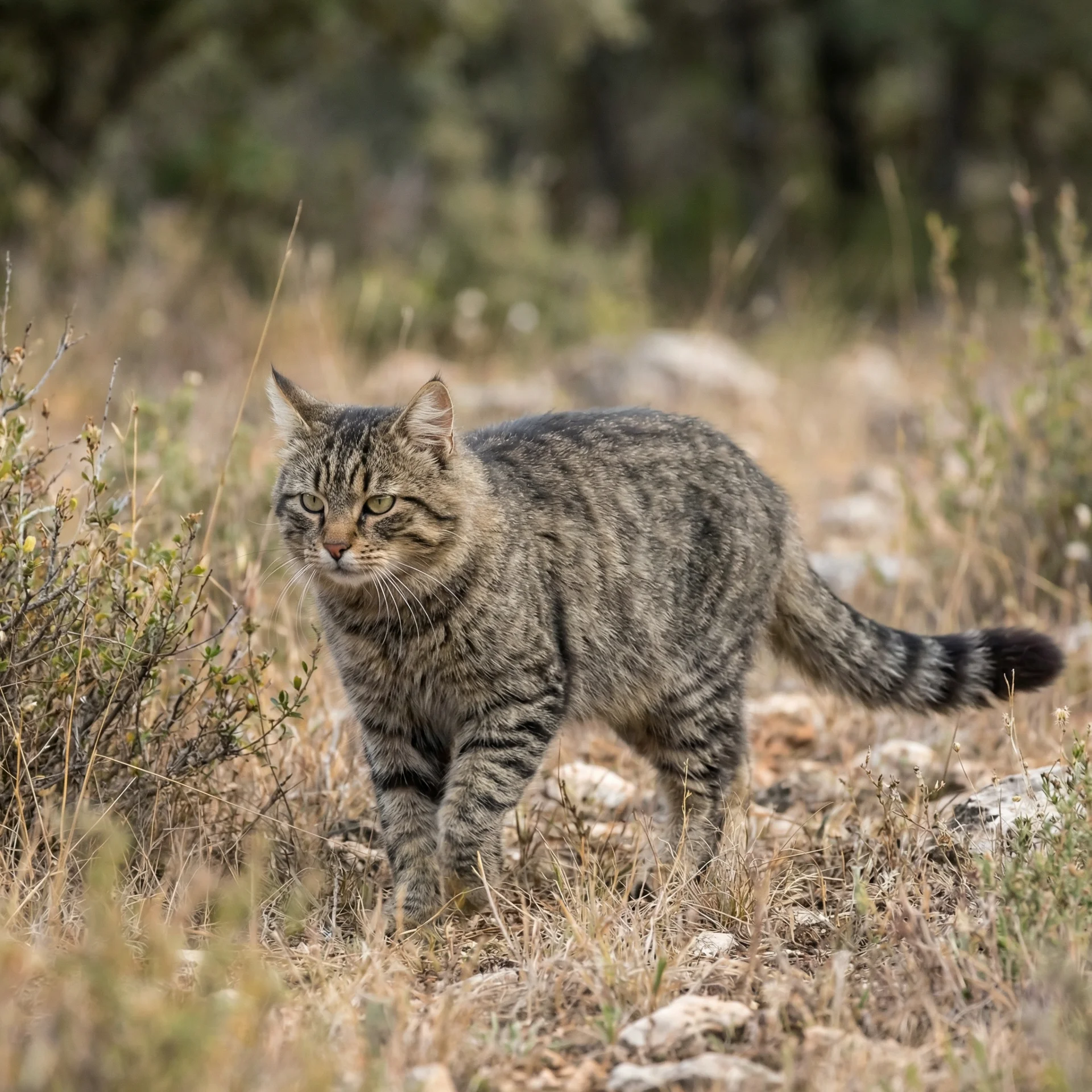
The domestic cat has a lithe, muscular body, a rounded head, triangular ears, and a long tail. Coat colours and patterns are highly variable: solid (black, white, grey, red/orange), tabby (mackerel, classic, spotted, ticked), bicolour, calico/tortoiseshell, and colour-point are among the most common. Coat texture ranges from short-haired to long-haired to hairless (e.g. the Sphynx). Sexual dimorphism is expressed primarily in body mass, with males typically 0.5β1.5 kg heavier than females.
Size
According to Wikipedia and Encyclopaedia Britannica, the average domestic cat has a head-body length of approximately 46 cm (range ~40β60 cm), a tail length of roughly 30 cm (range ~22β38 cm), and a shoulder height of 23β25 cm. Adult body mass typically ranges from 2.5 to 7 kg (approximately 5.5 to 15.4 lb), with most healthy individuals weighing 4β5 kg. Large breeds such as the Maine Coon can reach 8β11 kg. The Animal Diversity Web reports an adult mass range of 4.1β5.4 kg and an average total length (nose to tail tip) of approximately 76.2 cm.
Skeletal System
Domestic cats possess approximately 244 bones, of which about 30 are vertebrae (the exact number varies with tail length). This large vertebral count confers extraordinary spinal flexibility, allowing cats to rotate half of the spine 180Β°. The clavicle is vestigial and free-floating, and the scapulae are positioned medially on the body, enabling cats to squeeze through any gap wide enough for their skull. Powerful hindlimb musculature allows a standing jump of roughly five times the animal's own body height.
Dentition
The adult dental formula is I 3/3, C 1/1, P 3/2, M 1/1, yielding a total of 30 teeth (some sources cite 26 teeth with a formula of I 3/3, C 1/1, P 2/2, M 1/1 due to premolar variation). Deciduous teeth erupt at approximately two weeks of age, and permanent dentition is complete by roughly six months. The canines are adapted for delivering a killing bite to the back of the prey's neck, while the carnassial pair (upper fourth premolar and lower first molar) functions as shearing blades for processing meat.
Sensory Systems
The cat's sensory apparatus is highly tuned for predation. The eyes contain a tapetum lucidum that reflects light back through the retina, dramatically enhancing vision in low-light conditions. Auditory range extends from approximately 50 Hz to 65 kHz β roughly two octaves above the human upper limit of ~20 kHz β and the pinnae can rotate 180Β° independently. The nose houses approximately 200 million olfactory receptor cells (about 14 times the human count), supplemented by a vomeronasal organ (Jacobson's organ) situated dorsal to the hard palate that detects pheromones and other chemical signals. Vibrissae (whiskers) on the muzzle, above the eyes, and on the elbows act as haptic receptors that detect airflow changes around nearby objects, enabling precise navigation in darkness.
Claws
Like most felids, domestic cats possess retractable claws. At rest, the claws are sheathed within the digit sheaths, minimising wear; they are protracted for hunting, climbing, and defence. The forelimbs bear five digits and the hindlimbs four. Polydactyly (extra toes) is not uncommon, particularly in certain populations (e.g. "Hemingway cats" of Key West, Florida).
4. Ecology and Behaviour
Diet
The domestic cat is an obligate carnivore, requiring nutrients such as taurine, arachidonic acid, and preformed vitamin A that are available only from animal tissues. Feral cats primarily prey on small rodents, birds, fish, and arthropods, using a characteristic killing bite to the cervical vertebrae. Companion cats depend primarily on commercial cat food. Adult females require approximately 200β300 kcal/day; adult males approximately 250β300 kcal/day.
Social Organisation
Domestic cats are fundamentally solitary in their ancestral ecology, yet they display considerable social flexibility. Where food resources are concentrated β particularly near human habitation β females may form loose colonies exhibiting affiliative behaviours such as allogrooming, nose touching, and allorubbing. Unrelated females occasionally cooperate in kitten rearing, although this is uncommon. Males generally maintain larger, overlapping territories that encompass those of several females.
Territorial Behaviour
Territory is demarcated by urine spraying, claw-marking (which also deposits scent from pedal glands), and rubbing against objects to transfer secretions from glands near the ears, neck, and head. Reported home ranges vary enormously with habitat: male farm cats may patrol approximately 60 ha (~150 acres), females approximately 6 ha (~15 acres), while urban territories are dramatically smaller and frequently overlapping.
Communication
Cats employ a rich repertoire of vocalisations, body-language signals, and chemical cues. Among adults, visual and postural signals β ear orientation, tail position, pupil dilation, piloerection β and agonistic vocalisations (hissing, growling, spitting) are primary modes of conspecific communication. The meow is notably a vocalisation directed predominantly at humans rather than at other cats; adult wildcats seldom meow to one another (Nicastro & Owren, 2003). Purring (approximately 25β150 Hz) occurs in affiliative, contented, or self-soothing contexts and may promote tissue healing, though the precise mechanism remains under investigation.
Activity Pattern
Domestic cats are inherently crepuscular (most active at dawn and dusk) and nocturnal, spending an average of 12β16 hours per day sleeping. Companion cats partially adapt to human schedules but retain substantial nocturnal activity.
Predators and Defence
Feral and outdoor cats face predation from coyotes (Canis latrans), foxes (Vulpes spp.), pumas (Puma concolor), large raptors, crocodilians, and large snakes. Defensive responses include piloerection (arching the back and puffing up), hissing, spitting, rapid flight, and tree-climbing.
5. Reproduction and Life History
Mating System
Domestic cats are polygynandrous (promiscuous), with both sexes mating with multiple partners. In the Northern Hemisphere, the breeding season spans roughly March to September. Non-pregnant females cycle approximately every 21 days. Ovulation is induced β triggered by the physical stimulus of copulation.
Gestation and Birth
Gestation lasts approximately 60β67 days (mean ~63β65 days). Litter size usually ranges from 1 to 9 kittens, averaging 4β6; first-time mothers tend to produce smaller litters. Neonatal mass is approximately 110β125 g.
Parental Care and Independence
Kittens are reared exclusively by the mother; paternal care is virtually absent. Weaning is typically complete at 7β8 weeks, and full independence may be reached by 12 weeks, though kittens often remain with the mother for 6β8 months. Mothers actively teach hunting skills, initially restricting kittens to very small prey (e.g. mice) before permitting them to pursue larger targets.
Lifespan
Feral cats have an average lifespan of approximately 2β5 years due to disease, accidents, predation, and nutritional stress. Indoor companion cats average 12β18 years, with a median lifespan of approximately 14 years (Teng et al., 2024). The verified longevity record is approximately 38 years. Neutered/spayed cats live significantly longer than intact individuals.
Sexual Maturity
Females reach sexual maturity at approximately 6 months; males at approximately 8 months.
6. Distribution and Habitat
Natural Range
The wild ancestor of the domestic cat, the African wildcat (Felis lybica), is native to North Africa and the Near East. Following domestication, cats spread with human populations to every continent except Antarctica and to most oceanic islands, making Felis catus one of the few truly cosmopolitan mammal species.
Habitat Types
Domestic cats primarily inhabit areas of human settlement β urban, suburban, and rural environments. Feral populations also occur predominantly near current or former human habitation. The species demonstrates tolerance of a wide climatic range, from tropical and subtropical to temperate and arid zones, and from sea level to approximately 4,000 m elevation in mountain settlements.
Invasive Populations
Cats have been introduced by humans to island ecosystems worldwide, where feral populations pose severe threats to endemic species with no evolutionary experience of mammalian predators. The IUCN Invasive Species Specialist Group (ISSG) lists the domestic cat among the 100 of the World's Worst Invasive Alien Species.
Historical Dispersal
Ottoni et al. (2017) identified two major dispersal waves using ancient DNA. The first accompanied the spread of Neolithic agriculture from the Fertile Crescent across southwestern Asia and into Europe. The second, originating from ancient Egypt after approximately 1500 BCE, spread cats via maritime trade routes throughout the Mediterranean basin, eventually reaching Northern Europe, Sub-Saharan Africa, and beyond.
7. Conservation Status and Threats
IUCN Red List
As a domesticated species, Felis catus is Not Evaluated (NE) on the IUCN Red List. Its wild progenitor, the African wildcat (Felis lybica), is assessed as Least Concern (LC).
Population Estimate and Trend
The global population of domestic cats β including owned pets, strays, and feral individuals β is estimated at roughly 600 million to 1 billion. Approximately 370 million are kept as pets; the remainder live as strays or ferals. In the United States alone, an estimated 60β100 million feral and stray cats exist. The overall trend is increasing.
Impact on Wildlife
Loss et al. (2013) estimated that free-ranging cats in the United States kill approximately 1.3β4.0 billion birds and 6.3β22.3 billion mammals annually, with un-owned cats responsible for the majority of this mortality. On islands, feral cats have caused or contributed to 33 (14%) of the modern bird, mammal, and reptile extinctions documented by the International Union for Conservation of Nature (Medina et al., 2011).
Management and Conservation Measures
Management strategies for feral cat populations include Trap-Neuter-Return (TNR) programmes, lethal control in sensitive ecosystems, indoor-only housing campaigns, and public sterilisation initiatives. Australia launched a national Threatened Species Strategy in 2015 targeting feral cats, and eradication programmes operate on islands in New Zealand, Hawai'i, and numerous other locations.
Hybridisation with Wild Cats
Introgression from feral domestic cats into European wildcat (Felis silvestris) populations is a serious conservation concern across Europe, diluting the genetic integrity of wild populations.
8. Relationship with Humans
Domestication History
Genetic and archaeological evidence converge on a domestication origin approximately 10,000 years ago in the Fertile Crescent (Driscoll et al., 2007; Vigne et al., 2004). Wildcats likely self-domesticated through a commensal pathway: rodents attracted to stored grain drew wildcats into farming villages, where natural selection and human tolerance gradually fostered a mutualistic relationship. A ~9,500-year-old burial on Cyprus β a human interred alongside a cat with seashells and polished stones β provides the earliest direct archaeological evidence of a special humanβcat relationship (Vigne et al., 2004).
Cultural Significance
In ancient Egypt, cats were venerated as sacred animals associated with the goddess Bastet (initially depicted with a lioness head, later with a cat head), symbolising protection, fertility, and domestic harmony. Killing a cat, even accidentally, could be punishable by death, and deceased cats were mummified and ceremonially buried. In medieval Europe, cats suffered persecution through associations with witchcraft and demonic power. In East Asian cultures, cats symbolise good fortune β notably the Japanese maneki-neko (beckoning cat) and various Chinese folk traditions.
Role as Companion Animal
Today, the domestic cat is, alongside the dog, one of the world's most popular companion animals. Studies suggest that cat ownership is associated with reduced stress, lower blood pressure, and decreased risk of cardiovascular disease. Cats also serve as biomedical research models; the feline genome (~2.7 billion base pairs, 2n = 38 chromosomes, ~20,000 protein-coding genes) has been sequenced and is valuable for comparative genomics and human disease research (Montague et al., 2014).
Economic Impact
The global pet-cat industry β encompassing food, veterinary care, supplies, and services β is valued at tens of billions of dollars annually. Conversely, management and eradication of feral cat populations and the ecological and economic losses caused by wildlife predation impose substantial costs.
9. Uncertainties and Misconceptions
Confirmed / Probable / Hypothetical Distinctions
The Near Eastern Fertile Crescent origin of cat domestication approximately 10,000 years ago is confirmed by multiple independent genetic and archaeological studies. The hypothesis of a separate, independent domestication event in ancient Egypt remains hypothetical; Ottoni et al. (2017) demonstrated that Egyptian cat lineages contributed to the global gene pool, but whether this constituted an independent domestication or secondary admixture of already-domesticated cats is debated.
Unresolved Questions
The precise timing and stages of the commensal domestication pathway, the genetic architecture of tameness-related behavioural traits, the exact biomechanical mechanism and full functional significance of purring, and the delineation of genetic boundaries between feral domestic cats and true wildcats are all subjects of active research.
Common Misconceptions
The popular notion that cats are aloof and indifferent to humans is not fully supported by science. Vitale et al. (2019) demonstrated that domestic cats can form secure attachment bonds with their owners, analogous to those seen in dogs and human infants. Social flexibility in cats is greater than traditionally assumed. The belief that cats are strictly nocturnal is also inaccurate; they are more accurately described as crepuscular, with peak activity at dawn and dusk.
10. Comparison with Related Species
The genus Felis contains several wild species closely related to the domestic cat. Key differences are summarised below.
| Species | Scientific Name | Weight (kg) | Distribution | IUCN Status |
|---|---|---|---|---|
| Domestic Cat | Felis catus | 2.5β7.0 | Cosmopolitan (human-associated) | NE |
| African Wildcat | Felis lybica | 3.0β6.5 | Africa, SW Asia | LC |
| European Wildcat | Felis silvestris | 3.0β8.0 | Europe, Asia Minor | LC |
| Sand Cat | Felis margarita | 1.4β3.4 | N Africa, SW Asia deserts | LC |
| Black-footed Cat | Felis nigripes | 1.0β2.4 | Southern Africa arid regions | VU |
| Jungle Cat | Felis chaus | 3.0β16.0 | S Asia to Middle East | LC |
The domestic cat most closely resembles its wild progenitor, the African wildcat, in body size, build, and behaviour; the two hybridise readily in the wild. The European wildcat is generally larger, more robustly built, and far more wary of humans. The black-footed cat, the smallest member of the genus, is notable for having the highest hunting success rate (by body mass) of any felid.
Fun Facts
Adult cats use meowing almost exclusively to communicate with humans; wild and feral adult cats rarely meow to one another.
A domestic cat can jump approximately five times its own body height from a standing position, thanks to its flexible spine and powerful hindlimb muscles.
Cats can hear frequencies up to approximately 65 kHz β roughly three times the upper limit of human hearing β allowing them to detect ultrasonic rodent calls.
Domestic cats sleep an average of 12β16 hours per day, an energy-conservation strategy shared with many obligate carnivores.
A cat's purr vibrates at 25β150 Hz, a frequency range that some researchers hypothesise may promote bone density and tissue healing.
The oldest archaeological evidence of a humanβcat relationship is a ~9,500-year-old joint burial of a human and a cat on the island of Cyprus.
In ancient Egypt, intentionally killing a cat could be punishable by death; cats were revered as living embodiments of the goddess Bastet.
Cats have approximately 244 bones, and because their clavicle is vestigial (free-floating), they can squeeze through any gap their skull fits through.
The IUCN Invasive Species Specialist Group ranks feral domestic cats among the 100 of the World's Worst Invasive Alien Species.
With roughly 200 million olfactory receptor cells β about 14 times the human count β cats also possess a vomeronasal organ for detecting pheromones.
The domestic cat genome comprises approximately 2.7 billion base pairs and shares about 90% sequence similarity with the human genome, making it a key model in comparative medicine.
The verified longevity record for a domestic cat is approximately 38 years β more than double the typical indoor lifespan of 12β18 years.
FAQ
The currently accepted name is Felis catus Linnaeus, 1758. ICZN Opinion 2027 (2003) established that species names based on wild forms take precedence but preserved both names: Felis silvestris for the European wildcat and Felis catus for the domestic cat. The 2017 IUCN Cat Classification Taskforce follows this convention, treating the domestic cat as a distinct species rather than a subspecies of the wildcat.
Genetic and archaeological evidence points to the Fertile Crescent of the Near East approximately 10,000 years ago. African wildcats (Felis lybica) were drawn to rodent populations around early grain stores, initiating a commensal relationship that gradually became mutualistic (Driscoll et al., 2007). The oldest direct evidence of a humanβcat relationship is a ~9,500-year-old burial on Cyprus (Vigne et al., 2004).
Indoor companion cats typically live 12β18 years, with a median lifespan of approximately 14 years according to recent large-scale studies. Feral cats average only 2β5 years due to disease, predation, and accidents. The verified longevity record is approximately 38 years. Neutering/spaying significantly increases lifespan.
Purring (approximately 25β150 Hz) occurs in affiliative and contented contexts, during motherβkitten bonding, and as a self-soothing behaviour during stress or injury. Some research suggests the frequency range may promote bone and tissue healing, but this hypothesis is not yet fully confirmed. The exact biomechanical mechanism of purr production is still under investigation.
Feral domestic cats are highly effective predators that threaten native wildlife, especially on islands where endemic species evolved without mammalian predators. Loss et al. (2013) estimated that free-ranging cats kill 1.3β4.0 billion birds and 6.3β22.3 billion mammals annually in the United States alone. Cats have contributed to at least 33 modern vertebrate extinctions on islands. The IUCN ISSG accordingly lists them among the world's 100 worst invasive alien species.
The global population of domestic cats β including owned pets, strays, and ferals β is estimated at roughly 600 million to 1 billion. Approximately 370 million are kept as pets, while the remainder live as strays or feral cats in urban and rural areas worldwide.
Cats are more accurately described as crepuscular β most active at dawn and dusk β rather than strictly nocturnal. They sleep an average of 12β16 hours per day. Companion cats partially adjust to human schedules but retain significant dawn and dusk activity peaks.
The meow is a vocalisation primarily directed at humans rather than at other cats. Adult wild and feral cats rarely meow to one another; instead they rely on body posture, scent marking, and agonistic vocalisations. Meowing appears to have been elaborated during the domestication process as a means of soliciting attention, food, or interaction from humans.
The number depends on the registry. The Cat Fanciers' Association (CFA) recognises approximately 45 breeds, The International Cat Association (TICA) recognises over 73, FIFe approximately 48, and WCF approximately 70. Differences reflect varying recognition criteria, so the global total ranges from roughly 40 to 75.
The domestic cat genome comprises approximately 2.7 billion base pairs distributed across 38 chromosomes (2n = 38; 19 pairs). Around 20,000 protein-coding genes have been identified. Cats share approximately 90% DNA sequence similarity with humans, making them a valuable comparative model in biomedical research.
πReferences
- Linnaeus, C. (1758). Systema Naturae per Regna Tria Naturae (10th ed.). Holmiae: Laurentii Salvii.
- Driscoll, C. A., Menotti-Raymond, M., Roca, A. L., et al. (2007). The Near Eastern origin of cat domestication. Science, 317(5837), 519β523. https://doi.org/10.1126/science.1139518
- Ottoni, C., Van Neer, W., De Cupere, B., et al. (2017). The palaeogenetics of cat dispersal in the ancient world. Nature Ecology & Evolution, 1(7), 0139. https://doi.org/10.1038/s41559-017-0139
- Kitchener, A. C., Breitenmoser-Wursten, C., Eizirik, E., et al. (2017). A revised taxonomy of the Felidae: The final report of the Cat Classification Task Force of the IUCN/SSC Cat Specialist Group. Cat News, Special Issue 11, 1β80.
- International Commission on Zoological Nomenclature (ICZN). (2003). Opinion 2027 (Case 3010). Usage of 17 specific names based on wild species which are pre-dated by or contemporary with those based on domestic animals. Bulletin of Zoological Nomenclature, 60(1), 81β84.
- Loss, S. R., Will, T., & Marra, P. P. (2013). The impact of free-ranging domestic cats on wildlife of the United States. Nature Communications, 4, 1396. https://doi.org/10.1038/ncomms2380
- Vigne, J.-D., Guilaine, J., Debue, K., Haye, L., & Gerard, P. (2004). Early taming of the cat in Cyprus. Science, 304(5668), 259. https://doi.org/10.1126/science.1095335
- Johnson, W. E., Eizirik, E., Pecon-Slattery, J., et al. (2006). The late Miocene radiation of modern Felidae: A genetic assessment. Science, 311(5757), 73β77. https://doi.org/10.1126/science.1122277
- Lipinski, M. J., Froenicke, L., Baysac, K. C., et al. (2022). Genetics of randomly bred cats support the cradle of cat domestication being in the Near East. Heredity, 129, 346β355. https://doi.org/10.1038/s41437-022-00568-4
- Teng, K. T., Brodbelt, D. C., Pegram, C., et al. (2024). Life tables of annual life expectancy and risk factors for mortality in cats in the UK. Journal of Feline Medicine and Surgery, 26(5). https://doi.org/10.1177/1098612X241234556
- Vitale, K. R., Behnke, A. C., & Udell, M. A. R. (2019). Attachment bonds between domestic cats and humans. Current Biology, 29(18), R864βR865. https://doi.org/10.1016/j.cub.2019.08.036
- Medina, F. M., Bonnaud, E., Vidal, E., et al. (2011). A global review of the impacts of invasive cats on island endangered vertebrates. Global Change Biology, 17(11), 3503β3510. https://doi.org/10.1111/j.1365-2486.2011.02464.x
- Nicastro, N., & Owren, M. J. (2003). Classification of domestic cat (Felis catus) vocalizations by naive and experienced human listeners. Journal of Comparative Psychology, 117(1), 44β52. https://doi.org/10.1037/0735-7036.117.1.44
- Montague, M. J., Li, G., Gandolfi, B., et al. (2014). Comparative analysis of the domestic cat genome reveals genetic signatures underlying feline biology and domestication. Proceedings of the National Academy of Sciences, 111(48), 17230β17235. https://doi.org/10.1073/pnas.1410083111
- Bradshaw, J. W. S. (2013). Cat Sense: The Feline Enigma Revealed. London: Allen Lane.
- Turner, D. C., & Bateson, P. (Eds.). (2014). The Domestic Cat: The Biology of its Behaviour (3rd ed.). Cambridge: Cambridge University Press.
Gallery
2 images
Domestic CatDomestic Cat Β· Cretaceous Period Β· Carnivore
πRelated Creatures
Domestic Dog
Canis lupus familiaris
Lion
Panthera leo
Amur Leopard Cat
Prionailurus bengalensis euptilura
Tiger
Panthera tigris
Brown Bear
Ursus arctos
Deinosuchus
Deinosuchus
Carnotaurus
Carnotaurus sastrei
Nanotyrannus
Nanotyrannus lancensis