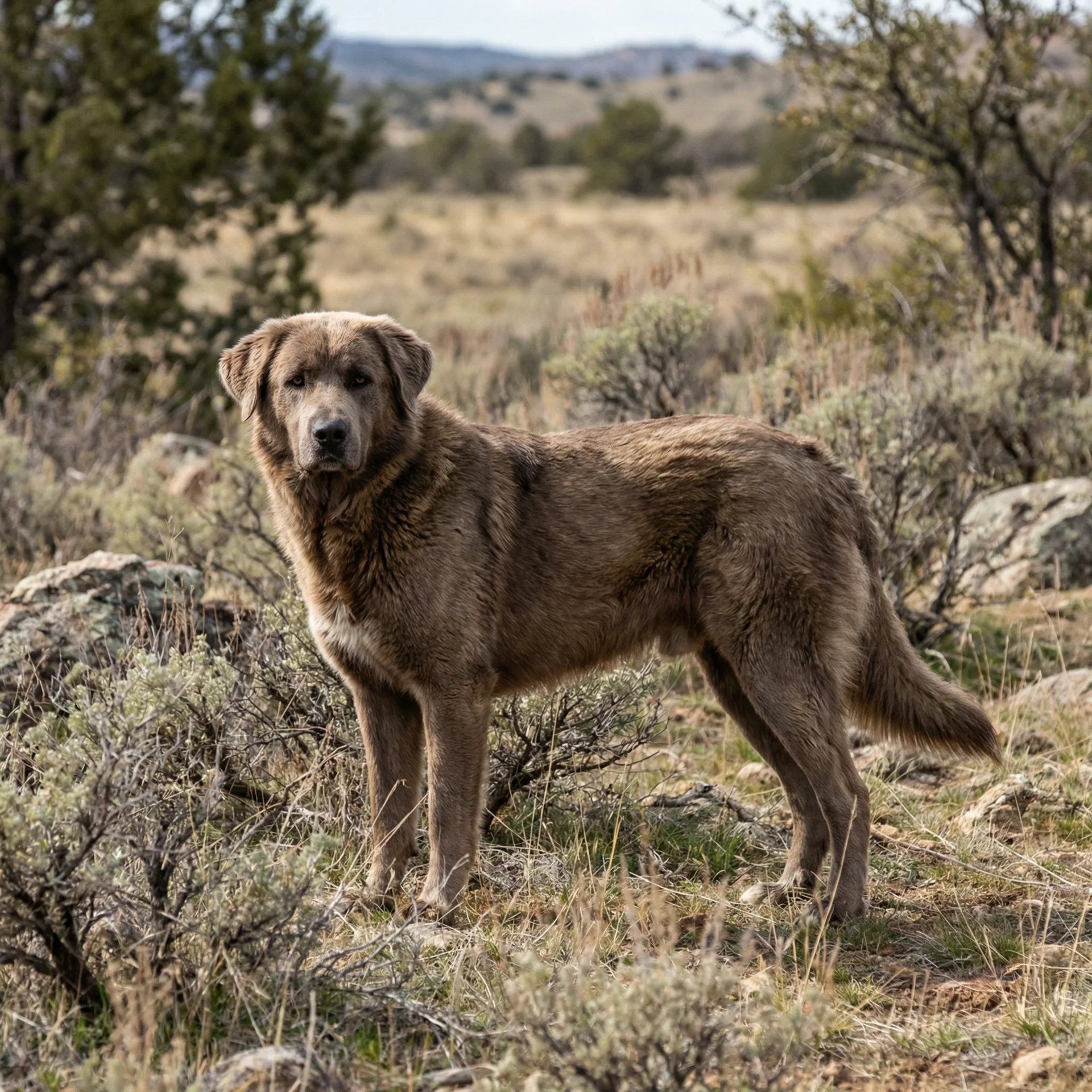
Domestic Dog
Cretaceous Period Omnivore Creature Type
Canis lupus familiaris
Scientific Name: "Canis (dog, Latin) + lupus (wolf, Latin) + familiaris (of the household / domestic, Latin) โ meaning 'the domestic wolf'"
Physical Characteristics
Discovery
Habitat
๋ณด์ ยท๊ฐ์ฒดยท์๋ช

The domestic dog (Canis lupus familiaris Linnaeus, 1758) is a domesticated subspecies of the gray wolf (Canis lupus) belonging to the family Canidae within the order Carnivora. It holds the singular distinction of being the first species ever domesticated by humans, a process that began during the Late Pleistocene, well before the advent of agriculture. The earliest remains conclusively identified as those of a domesticated dog were recovered at Bonn-Oberkassel, Germany, and dated to approximately 14,000โ15,000 years ago, while genetic analyses suggest the divergence between dogs and wolves may have occurred as far back as 27,000โ40,000 years ago.
The domestic dog is arguably the most morphologically variable mammal on Earth. Breeds range from the Chihuahua, standing roughly 13โ20 cm at the shoulder and weighing 0.5โ3 kg, to the English Mastiff, which can exceed 81 cm in height and 105 kg in weight. Approximately 360 breeds are recognized by the Fรฉdรฉration Cynologique Internationale (FCI) and around 205 by the American Kennel Club (AKC). Over tens of thousands of years of cohabitation with humans, dogs have developed a remarkable capacity to interpret human facial expressions, gestures, and vocal cues โ a trait unparalleled among domesticated animals and one that has earned them the enduring epithet "man's best friend." The global dog population is estimated at 700 million to 1 billion individuals, of which roughly 75% exist as feral, stray, or community dogs in developing countries, with the remaining 20โ25% being owned pets in developed nations.
From a conservation standpoint, the domestic dog is not evaluated (NE) on the IUCN Red List, as it is a domesticated taxon far from any extinction risk. However, feral and free-ranging dogs have been listed as an invasive species by the IUCN Invasive Species Specialist Group (ISSG), posing significant ecological threats to native wildlife through predation, competition, and disease transmission in numerous regions worldwide.
1. Overview
Name and Etymology
The trinomial name Canis lupus familiaris is composed of three Latin elements: Canis meaning "dog," lupus meaning "wolf," and familiaris meaning "of the household" or "domestic." The full name thus translates as "the domestic wolf" or "the household wolf," reflecting the dog's taxonomic status as a subspecies of the gray wolf. In 1758, Carl Linnaeus described the domestic dog as Canis familiaris in the tenth edition of Systema Naturae, classifying it on a separate page from the gray wolf (Canis lupus). Linnaeus's primary diagnostic character distinguishing the dog from the wolf was the dog's upward-curving tail (cauda recurvata), a trait not found in any other canid. The English word "dog" derives from the Old English docga, of uncertain deeper etymology, while alternative terms such as "hound" trace to the Proto-Germanic hundaz.
Taxonomic Status
The taxonomic placement of the domestic dog has been debated for centuries. The prevailing modern view classifies it as a subspecies of the gray wolf: Canis lupus familiaris. This reclassification was formalized in the 2005 edition of Mammal Species of the World by W. Christopher Wozencraft, based in part on a 1999 mitochondrial DNA study. However, some authoritative databases, including ITIS (Integrated Taxonomic Information System) and NatureServe, continue to recognize Canis familiaris as a valid species-level name. In 2019, an IUCN/SSC Canid Specialist Group workshop regarded the dingo and the New Guinea singing dog as feral Canis familiaris and consequently excluded them from IUCN Red List assessment. All members of the genus Canis share a diploid chromosome number of 2n = 78, permitting hybridization between dogs, wolves, coyotes, and jackals.
One-Sentence Summary
The domestic dog is humanity's oldest domesticated partner, originating from wolves over 14,000 years ago and now encompassing more than 360 recognized breeds โ the most morphologically diverse mammal on the planet.
2. Taxonomy and Phylogeny
Higher Classification
The domestic dog is classified within Domain Eukaryota โ Kingdom Animalia โ Phylum Chordata โ Subphylum Vertebrata โ Class Mammalia โ Order Carnivora โ Family Canidae โ Genus Canis โ Species C. lupus โ Subspecies C. l. familiaris. The family Canidae is thought to have originated in North America approximately 35 million years ago during the Late Eocene and currently includes about 36 extant species distributed across all continents except Antarctica.
Molecular Phylogenetics
A landmark 2022 study published in Nature by Bergstrรถm et al. analyzed genomes from 72 ancient wolves spanning the last 100,000 years, revealing that domestic dogs possess a dual ancestry โ they are more closely related to ancient wolves from eastern Eurasia than to those from western Eurasia, suggesting an eastern Eurasian origin for domestication. A 2025 study in Proceedings of the Royal Society B by Tong et al. demonstrated that prehistoric dogs evolved rapidly from wolves through a combination of natural and artificial selection. Furthermore, a 2025 study published in PNAS found that 64.1% of modern breed dogs carry wolf ancestry from admixture events occurring approximately 1,000 generations ago, underscoring the complex genetic entanglement between dogs and wolves throughout their shared history.
All modern dogs are descended from an ancient, now-extinct wolf population distinct from any living wolf lineage. While some earlier studies proposed that all living wolves are more closely related to each other than to dogs, others have suggested that dogs share a closer affinity with modern Eurasian wolf populations than with American wolves.
Subspecies and Related Taxa
Within Canis lupus, the domesticated dog (C. l. familiaris) is recognized alongside the dingo (C. l. dingo Meyer, 1793). The classification of the dingo remains contentious and politically charged in Australia: treating it as a feral dog facilitates pest management, while classifying it as a distinct taxon supports conservation programs. The New Guinea singing dog (C. l. hallstromi) is generally treated as a junior synonym of the dingo.
Taxonomic History
Since Linnaeus's original 1758 description, dozens of synonyms have been published for the domestic dog, including C. domesticus, C. aegyptius, C. molossus, C. anglicus, and many others โ all representing breed-level variants erroneously described as separate species. Following the accumulation of mitochondrial and nuclear DNA evidence from the 1990s onward, the consensus shifted toward recognizing dogs as a subspecies of the gray wolf, culminating in Wozencraft's 2005 reclassification.
3. Morphology and Anatomy
External Appearance
The domestic dog exhibits the most extreme morphological diversity of any mammal species, a consequence of millennia of artificial selection. Skull morphology alone varies dramatically, encompassing three fundamental cranial types: dolichocephalic (elongated, as in sighthounds such as the Greyhound), mesocephalic (intermediate, as in the Labrador Retriever), and brachycephalic (shortened and broadened, as in the Pug and Bulldog). The phenotypic diversity in skull shape, body proportions, and limb ratios among dog breeds exceeds that observed across the entire order Carnivora (approximately 280 species). Coat types include short, long, curly, corded, wire-haired, and hairless varieties, with colors and patterns ranging across white, black, brown, tan, red, gray, brindle, merle, piebald, and virtually every combination thereof.
Body Size
Domestic dogs display a roughly 200-fold range in body mass, from the smallest breed, the Chihuahua (approximately 0.5โ3 kg; 13โ20 cm shoulder height), to the largest, the English Mastiff (approximately 54โ105 kg; up to 76 cm or more at the shoulder). The Great Dane is the tallest breed, with males typically standing 71โ81 cm at the shoulder and weighing 50โ79 kg. According to the NHGRI Dog Genome Project, standard adult body size in dog breeds ranges from as small as about 1 kg (2 lb) to greater than 90 kg (200 lb).
| Category | Smallest Breed (Chihuahua) | Largest Breed (English Mastiff / Great Dane) |
|---|---|---|
| Shoulder Height | approx. 13โ20 cm | approx. 71โ81 cm |
| Body Weight | approx. 0.5โ3 kg | approx. 50โ105 kg |
| Body Length (head-body) | approx. 15โ23 cm | approx. 100โ120 cm |
Despite this extreme size variation, all healthy dogs share the same number of bones (with the exception of tail vertebrae), although significant skeletal variation exists between breed types.
Key Anatomical Features
The dog's skeleton is adapted for efficient locomotion: the cervical and thoracic vertebrae bear elongated spinous processes for the attachment of powerful epaxial and hypaxial muscles; the long rib cage accommodates a large heart and lungs; and the scapulae are disconnected from the axial skeleton, permitting stride flexibility. The jaw houses approximately 42 teeth, including well-developed carnassial teeth (the upper fourth premolar and lower first molar) specialized for shearing meat. Most dogs possess 26 tail vertebrae, though naturally bobtailed breeds may have as few as three.
Sensory Systems
Dogs possess an olfactory system far superior to that of humans, with approximately 125โ300 million olfactory receptor cells compared to roughly 6 million in humans โ a roughly 40-fold advantage. The Bloodhound possesses the highest count at approximately 300 million receptors. Dogs' hearing is approximately four times more acute than human hearing, capable of detecting faint sounds at approximately 400 m compared to about 90 m for humans. In contrast, canine visual acuity is roughly one-eighth that of humans; dogs possess dichromatic vision (blue-yellow), lacking the red-green cone type. Research also suggests that dogs may possess magnetoreception, as they tend to align their body axis along the north-south magnetic field when defecating under calm geomagnetic conditions.
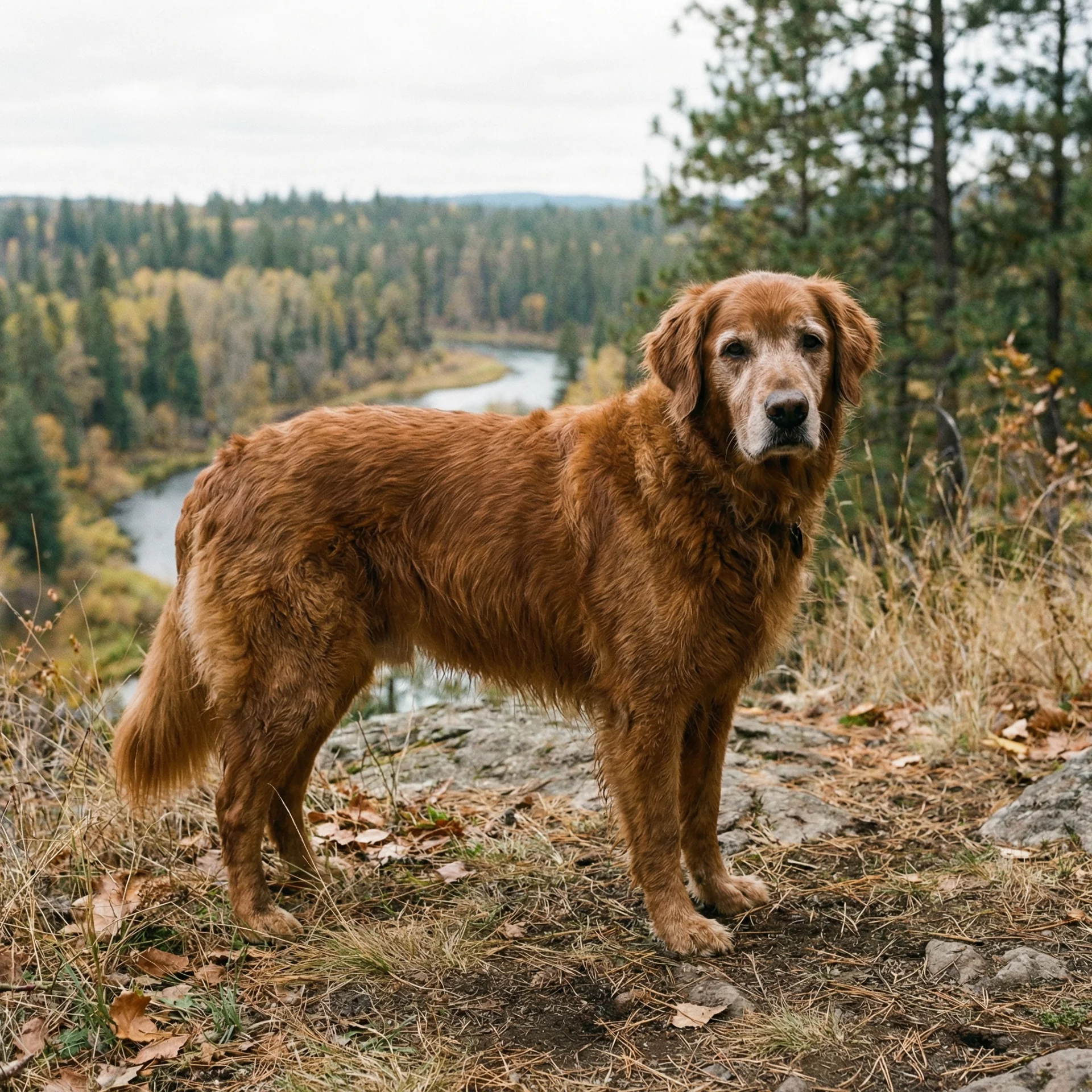
4. Ecology and Behavior
Diet
Although taxonomically classified within the order Carnivora, the domestic dog has evolved into a functional omnivore over the course of domestication. A key genetic adaptation is the amplification of the AMY2B gene, which encodes pancreatic amylase for starch digestion โ a trait virtually absent in wolves. This adaptation reflects thousands of years of co-evolution with agricultural human societies. Feral and free-ranging dogs are opportunistic feeders, consuming small mammals, carrion, livestock, garbage, human refuse, fruits, and virtually any available food source.
Social Structure
Feral dogs live either solitarily or in loose, fluid social groups that differ structurally from wolf packs, which are family-based units. The once-popular "alpha theory" of dog social behavior, derived from captive wolf studies by Schenkel (1947), has been largely discredited in modern ethology. David Mech, the researcher most associated with the alpha wolf concept, publicly retracted the framework, noting that wild wolf packs function as family units rather than dominance hierarchies. In domestic contexts, the dog-human relationship is best characterized by social bonding and cooperative communication rather than dominance-submission dynamics.
Communication
Canine communication is a multimodal system involving visual signals (eye gaze, facial expression, body posture, tail position and movement), auditory signals (barking, growling, whining, howling), and chemical signals (urine marking, anal gland secretions, pheromones). Dogs are uniquely adept among domestic animals at reading human communicative intent, including pointing gestures and eye contact โ abilities that surpass those of chimpanzees in certain experimental paradigms and are considered products of the domestication process. Asymmetric tail-wagging has been documented, with rightward wagging associated with approach/positive affect and leftward wagging associated with withdrawal/negative affect.
Activity Patterns
Dogs are ancestrally crepuscular, with peak activity at dawn and dusk, but pet dogs readily adjust to diurnal patterns aligned with their owners' schedules. Feral dogs often exhibit increased nocturnal activity.
Predators and Defense
Adult dogs can fall prey to large predators including wolves, large felids (lions, tigers, leopards), crocodilians, and large raptors in the case of small breeds. However, pet dogs in human-dominated environments face negligible predation pressure. Feral dogs employ group defense and territorial aggression when threatened.
5. Reproduction and Life History
Breeding Season
Most female dogs (bitches) experience estrus approximately twice per year, though the timing and frequency vary by breed. Some primitive breeds, such as the Basenji, cycle only once annually, more closely resembling the wolf's single annual breeding season. First estrus typically occurs at approximately 6 months of age in small breeds and 12โ24 months in large breeds.
Gestation and Birth
The gestation period averages approximately 63 days from ovulation (range: 57โ65 days). Average litter size varies markedly by breed: small breeds average approximately 3โ4 puppies, while large breeds average 6โ8, with an overall mean of approximately 5โ6 puppies per litter. The largest documented single litter contained 24 puppies.
Parental Care and Development
Puppies are born altricial โ blind (eyes sealed) and deaf (ear canals closed). Eyes open at approximately 10โ14 days, and ear canals open at around 3 weeks. The critical socialization window extends from approximately 3 to 14 weeks of age; experiences during this period profoundly influence adult temperament and behavior. Weaning typically occurs at 6โ8 weeks. Sexual maturity is reached at approximately 6โ9 months in small breeds and 12โ24 months in large breeds.
Lifespan
The average lifespan of pet dogs is approximately 10โ13 years, with small breeds (14โ16 years) generally outliving large breeds (7โ10 years). A 2023 analysis of UK veterinary clinical data reported a median age at death of approximately 11.57 years. Feral and stray dogs have dramatically shorter lifespans, averaging approximately 3โ5 years due to malnutrition, disease, trauma, and environmental hazards. The longest-verified canine lifespan belongs to Bluey, an Australian Cattle Dog from Victoria, Australia, who lived 29 years and 5 months (1910โ1939) according to Guinness World Records. A previous record attributed to Bobi, a Rafeiro do Alentejo from Portugal, was revoked by Guinness World Records in February 2024 following an investigation that could not confirm the claimed age of 31 years.
6. Distribution and Habitat
Natural Range
The domestic dog is a cosmopolitan species, distributed across every continent alongside humans (though dogs were banned from Antarctica under the Protocol on Environmental Protection to the Antarctic Treaty, effective 1994). The geographic origin of dog domestication remains debated. A 2021 literature review by Perri et al. inferred that dogs were likely domesticated in Siberia approximately 23,000 years ago by Ancient North Siberians, subsequently dispersing eastward into the Americas and westward across Eurasia. A competing hypothesis supported by the 2022 Bergstrรถm et al. study favors an eastern Eurasian origin, with possible secondary contributions from western Eurasian wolf populations.
Habitat Types
Pet dogs inhabit virtually every human-occupied environment: urban apartments, suburban homes, rural farmsteads, nomadic camps, and high-altitude settlements. Feral and community dogs are typically found on the margins of human habitation โ urban peripheries, garbage dumps, agricultural edges, and forest margins. There is no strict altitudinal limit; breeds such as the Tibetan Mastiff have lived at elevations exceeding 4,000 m on the Tibetan Plateau for millennia.
Feral Populations as Invasive Species
Feral dogs are listed as an invasive species by the IUCN Global Invasive Species Database (GISD). They have been implicated in the extinction of at least 11 species and are identified as a known or potential threat to at least 188 threatened species worldwide, comprising 96 mammals, 78 birds, 22 reptiles, and 3 amphibians (Doherty et al., 2017). Feral dogs rank as the third most damaging invasive alien mammalian predator globally, after cats and rodents. Significant impacts have been documented in Australia (predation on native marsupials), the Galรกpagos Islands (predation on marine iguanas), India (attacks on at least 80 wild species, including 31 IUCN-listed threatened species), and Israel (predation on endangered mountain gazelles).
7. Conservation Status and Threats
IUCN Red List Assessment
As a domesticated taxon, the domestic dog (Canis lupus familiaris) is Not Evaluated (NE) on the IUCN Red List. The parent species, the gray wolf (Canis lupus), is assessed as Least Concern (LC) based on its 2018 evaluation.
Population Estimate and Trend
The global dog population is estimated at approximately 700 million to 1 billion individuals, with multiple sources converging on approximately 900 million as a central estimate. Of these, approximately 470 million are kept as pets (2018 data), while the remainder โ estimated at over 300 million โ exist as strays, feral dogs, or community dogs. Developing countries account for approximately 75% of the total dog population. The global dog population is increasing, driven by human population growth and the expanding pet ownership culture worldwide.
Threats Posed by Dogs (Rather Than to Dogs)
Dogs are overwhelmingly a source of ecological threats rather than being threatened themselves. Key impacts include predation on wildlife, competition with native carnivores (particularly smaller canids such as the Indian fox), disease transmission (rabies, canine distemper virus, canine parvovirus), and hybridization with wild canids (wolf-dog hybrids). Dog-mediated rabies alone kills an estimated 59,000 people annually worldwide according to WHO estimates, with the CDC reporting a figure of approximately 70,000, and dogs cause 99% of human rabies deaths outside the United States.
Breed Conservation
While the species requires no conservation intervention, some rare heritage breeds face declining populations and risk being lost. Examples include the Otterhound, Skye Terrier, and Norwegian Lundehund. National programs exist to preserve culturally significant breeds; for example, South Korea designates the Jindo Dog (์ฒ์ฐ๊ธฐ๋ ๋ฌผ ์ 53ํธ), Sapsali, and Pungsan Dog as Natural Monuments under legal protection.
8. Relationship with Humans
Economic Value and Utilization
Historically, dogs have served humans as hunters, herders, guardians, draft animals (sled dogs), and pest controllers. In the modern era, the scope of canine roles has expanded to include companionship, therapy (therapy dogs), assistance (guide dogs for the blind, hearing dogs, seizure-alert dogs), law enforcement (police dogs, detection dogs for narcotics, explosives, and contraband), military service, search and rescue, and scientific research. The global pet industry, centered substantially around dogs, is valued at hundreds of billions of dollars annually.
Cultural Symbolism
Dogs appear as symbols of loyalty, guardianship, and companionship in virtually every human culture. In ancient Egypt, the jackal-headed god Anubis served as guardian of the underworld; in Greek mythology, Odysseus's faithful hound Argos waited twenty years for his master's return; in Hindu tradition, the dog Sarama is a messenger of Indra. In East Asian cultures, the dog is one of the twelve animals of the Chinese zodiac, symbolizing loyalty and honesty. The bond between humans and dogs has been a recurrent subject in art, literature, and philosophy across millennia.
Human-Dog Conflict
Conflicts involving feral and free-ranging dogs include livestock depredation, rabies transmission, and wildlife predation. India alone is estimated to have approximately 60 million stray dogs, contributing to tens of thousands of rabies-related human deaths annually in South Asia and Africa. The practice of dog consumption, still occurring in parts of East and Southeast Asia, has become a subject of intense international animal welfare debate.
9. Uncertainties and Misconceptions
Confirmed, Probable, and Hypothetical Findings
The derivation of dogs from the gray wolf is genetically confirmed. However, the precise timing (approximately 15,000โ40,000 years ago), geographic location (Siberia, eastern Asia, Europe, or multiple regions), and number of domestication events (single vs. multiple) remain actively debated. The 2022 Bergstrรถm et al. dual-ancestry model favors an eastern Eurasian origin but does not fully resolve whether one or two domestication events occurred.
Unresolved Questions
Whether the initial domestication was a deliberate human-driven process or a self-domestication through a commensal pathway (wolves scavenging human refuse and gradually becoming tamer) remains an open question. The taxonomic status of fossils described as "Paleolithic dogs" from approximately 30,000 years ago is also unresolved; these specimens may represent early domesticated dogs or morphologically variable Late Pleistocene wolves.
Common Misconceptions
The "alpha wolf" dominance hierarchy model, widely popularized in dog training culture, is based on mid-twentieth-century studies of captive wolves in artificial social groupings. David Mech, the researcher most associated with the concept, has publicly repudiated it, explaining that wild wolf packs are family units led by the breeding pair, not dominance-based hierarchies. Applying alpha theory to dog-human relationships is considered scientifically unsupported by modern animal behaviorists. Another common misconception is that dogs are strict carnivores; in fact, their genome and physiology reflect substantial adaptation to omnivory.
10. Comparison with Related Species
| Taxon | Scientific Name | Weight (kg) | Distribution | Key Notes |
|---|---|---|---|---|
| Domestic Dog | Canis lupus familiaris | 0.5โ105 | Cosmopolitan (worldwide) | First domesticated animal; over 360 breeds |
| Gray Wolf | Canis lupus | 25โ80 | North America, Eurasia | Wild ancestor of the domestic dog |
| Dingo | Canis lupus dingo | 12โ24 | Australia, parts of SE Asia | Feral dogs isolated approx. 8,000 years ago |
| Coyote | Canis latrans | 7โ21 | North and Central America | Hybridizes with dogs (coydogs) and wolves |
| Golden Jackal | Canis aureus | 6โ14 | Eurasia, North Africa | Closest relative to the wolf-dog clade among jackals |
| African Golden Wolf | Canis lupaster | 7โ15 | Africa | Formerly classified as a subspecies of the golden jackal |
Fun Facts
The domestic dog is the first species ever domesticated by humans, predating the domestication of any livestock or crop plant by thousands of years.
The morphological diversity among dog breeds โ in skull shape, body size, and limb proportions โ exceeds the total variation found across the entire order Carnivora, which contains approximately 280 species.
Dogs outperform chimpanzees in understanding human pointing gestures, a trait considered to have been selected for during the domestication process.
The Bloodhound possesses approximately 300 million olfactory receptors, and scent evidence from Bloodhound tracking has been admitted in some courts of law.
Dogs tend to align their spine along the north-south magnetic axis when defecating under calm geomagnetic conditions, suggesting they possess magnetoreception.
Each dog's nose print is unique, similar to a human fingerprint, and can be used for individual identification.
Dogs carry extra copies of the AMY2B gene for starch digestion that wolves lack, reflecting their evolutionary adaptation to human agricultural diets.
Dogs wag their tails asymmetrically: rightward wagging is associated with positive emotions, while leftward wagging correlates with negative or withdrawal-related emotions.
The smallest dog ever recorded by Guinness World Records was Milly, a Chihuahua standing just 9.65 cm (3.8 inches) tall at the shoulder.
In 1957, Laika, a Soviet space dog aboard Sputnik 2, became the first animal to orbit the Earth.
The Basenji, one of the oldest known breeds, does not bark in the conventional sense but instead produces a distinctive yodel-like vocalization known as a 'baroo.'
Dogs have approximately 42 teeth, including carnassial teeth specialized for shearing meat like a pair of scissors.
FAQ
Both names are in use. Canis familiaris is Linnaeus's original 1758 binomial, treating the dog as a distinct species. Canis lupus familiaris reflects the modern consensus that the dog is a subspecies of the gray wolf, formalized by Wozencraft in 2005. Most current taxonomic references favor the trinomial, though some databases (e.g., ITIS) retain the binomial.
The timing is estimated at approximately 15,000โ40,000 years ago, before the advent of agriculture. A 2021 review by Perri et al. in PNAS inferred that dogs were likely domesticated in Siberia approximately 23,000 years ago by Ancient North Siberians. A 2022 study by Bergstrรถm et al. in Nature supports an eastern Eurasian origin. The exact location and whether domestication occurred once or multiple times remain debated.
Dogs and gray wolves share over 99.9% mitochondrial DNA similarity and can interbreed to produce fertile offspring. However, all modern dogs descend from an extinct ancient wolf population, not from any living wolf lineage (Bergstrรถm et al., 2022).
The global dog population is estimated at approximately 700 million to 1 billion, with most sources converging on approximately 900 million. About 470 million are kept as pets (2018 data), while over 300 million exist as stray, feral, or community dogs, predominantly in developing countries.
Pet dogs live an average of approximately 10โ13 years. Small breeds tend to live longer (14โ16 years) than large breeds (7โ10 years). Feral and stray dogs average approximately 3โ5 years. The longest-verified canine lifespan is 29 years and 5 months, achieved by Bluey, an Australian Cattle Dog (1910โ1939).
Thousands of years of artificial selection have amplified specific morphological traits. Systematic breed development accelerated during the Victorian era (19th century), producing the enormous size range seen today โ from the 0.5 kg Chihuahua to the 105 kg English Mastiff. The phenotypic diversity in skull, limb, and body proportions among dog breeds exceeds that of the entire order Carnivora.
Yes. Feral and free-ranging dogs are listed as an invasive species by the IUCN ISSG. They have contributed to at least 11 species extinctions and threaten at least 188 IUCN-listed species worldwide. They also transmit diseases such as rabies (responsible for an estimated 59,000โ70,000 human deaths annually) and canine distemper to wildlife.
Yes, but with limited range. Dogs have dichromatic vision with two types of cone cells, allowing them to perceive blue and yellow hues. They cannot distinguish red from green. Their visual acuity is approximately one-eighth that of humans, but they have superior motion detection and low-light vision.
Approximately 40 times or more. Dogs possess 125โ300 million olfactory receptor cells compared to about 6 million in humans. The Bloodhound has the highest count at approximately 300 million receptors. This extraordinary sense of smell underpins their use in search-and-rescue, narcotics detection, and medical scent detection.
The Fรฉdรฉration Cynologique Internationale (FCI) recognizes approximately 360 breeds globally. The American Kennel Club (AKC) recognizes approximately 205 breeds as of 2025. Including unrecognized local and regional breeds, the actual number is considerably higher.
๐References
- Linnaeus, C. (1758). Systema Naturae per Regna Tria Naturae, 10th ed. Holmiae: Laurentii Salvii. pp. 38โ40.
- Wozencraft, W. C. (2005). Order Carnivora. In Wilson, D. E. & Reeder, D. M. (eds.), Mammal Species of the World, 3rd ed. Johns Hopkins University Press. pp. 575โ577.
- Bergstrรถm, A., et al. (2022). Grey wolf genomic history reveals a dual ancestry of dogs. Nature, 607, 313โ320. https://doi.org/10.1038/s41586-022-04824-9
- Perri, A. R., et al. (2021). Dog domestication and the dual dispersal of people and dogs into the Americas. Proceedings of the National Academy of Sciences, 118(6), e2010083118. https://doi.org/10.1073/pnas.2010083118
- Frantz, L. A. F., et al. (2016). Genomic and archaeological evidence suggest a dual origin of domestic dogs. Science, 352(6290), 1228โ1231. https://doi.org/10.1126/science.aaf3161
- Thalmann, O., et al. (2013). Complete mitochondrial genomes of ancient canids suggest a European origin of domestic dogs. Science, 342(6160), 871โ874. https://doi.org/10.1126/science.1243650
- Alvares, F., et al. (2019). Old World Canis spp. with taxonomic ambiguity: Workshop conclusions and recommendations. CIBIO/InBIO, IUCN/SSC Canid Specialist Group. https://www.canids.org/CBC/Old_World_Canis_Taxonomy_Workshop.pdf
- Ostrander, E. A., Wang, G.-D., Larson, G., et al. (2019). Dog10K: An international sequencing effort to advance studies of canine domestication, phenotypes, and health. National Science Review, 6(4), 810โ824. https://doi.org/10.1093/nsr/nwz049
- Janssens, L., et al. (2018). A new look at an old dog: Bonn-Oberkassel reconsidered. Journal of Archaeological Science, 92, 126โ138. https://doi.org/10.1016/j.jas.2018.01.004
- Freedman, A. H., & Wayne, R. K. (2017). Deciphering the origin of dogs: From fossils to genomes. Annual Review of Animal Biosciences, 5, 281โ307. https://doi.org/10.1146/annurev-animal-022114-110937
- Larson, G., & Bradley, D. G. (2014). How much is that in dog years? The advent of canine population genomics. PLoS Genetics, 10(1), e1004093. https://doi.org/10.1371/journal.pgen.1004093
- Tong, K., et al. (2025). Rapid evolution of prehistoric dogs from wolves by natural and artificial selection. Proceedings of the Royal Society B, 292(2040), 20242646. https://doi.org/10.1098/rspb.2024.2646
- Doherty, T. S., et al. (2017). The global impacts of domestic dogs on threatened vertebrates. Biological Conservation, 210, 56โ59. https://doi.org/10.1016/j.biocon.2017.04.007
- Hughes, J., & Macdonald, D. W. (2013). A review of the interactions between free-roaming domestic dogs and wildlife. Biological Conservation, 157, 341โ351. https://doi.org/10.1016/j.biocon.2012.07.005
- Boyko, A. R. (2011). The domestic dog: man's best friend in the genomic era. Genome Biology, 12(2), 216. https://doi.org/10.1186/gb-2011-12-2-216
- Coppinger, R., & Coppinger, L. (2001). Dogs: A New Understanding of Canine Origin, Behavior and Evolution. University of Chicago Press.
- Serpell, J. (ed.) (2017). The Domestic Dog: Its Evolution, Behavior and Interactions with People, 2nd ed. Cambridge University Press.
- Teng, K. T., et al. (2024). Life tables of annual life expectancy and mortality risk factors for companion dogs in the UK. Scientific Reports, 14, 531. https://doi.org/10.1038/s41598-024-54522-3
- WHO (2024). Rabies Fact Sheet. World Health Organization. https://www.who.int/news-room/fact-sheets/detail/rabies
- IUCN Global Invasive Species Database. (2010). Canis lupus (mammal). http://www.iucngisd.org/gisd/species.php?sc=146
Gallery
2 images
Domestic DogDomestic Dog ยท Cretaceous Period ยท Omnivore
๐Related Creatures
Brown Bear
Ursus arctos
Domestic Cat
Felis catus
Caudipteryx
Caudipteryx zoui
Oviraptor
Oviraptor philoceratops
Pterodaustro
Pterodaustro guinazui
Tupuxuara
Tupuxuara longicristatus
Tiger
Panthera tigris
Lion
Panthera leo