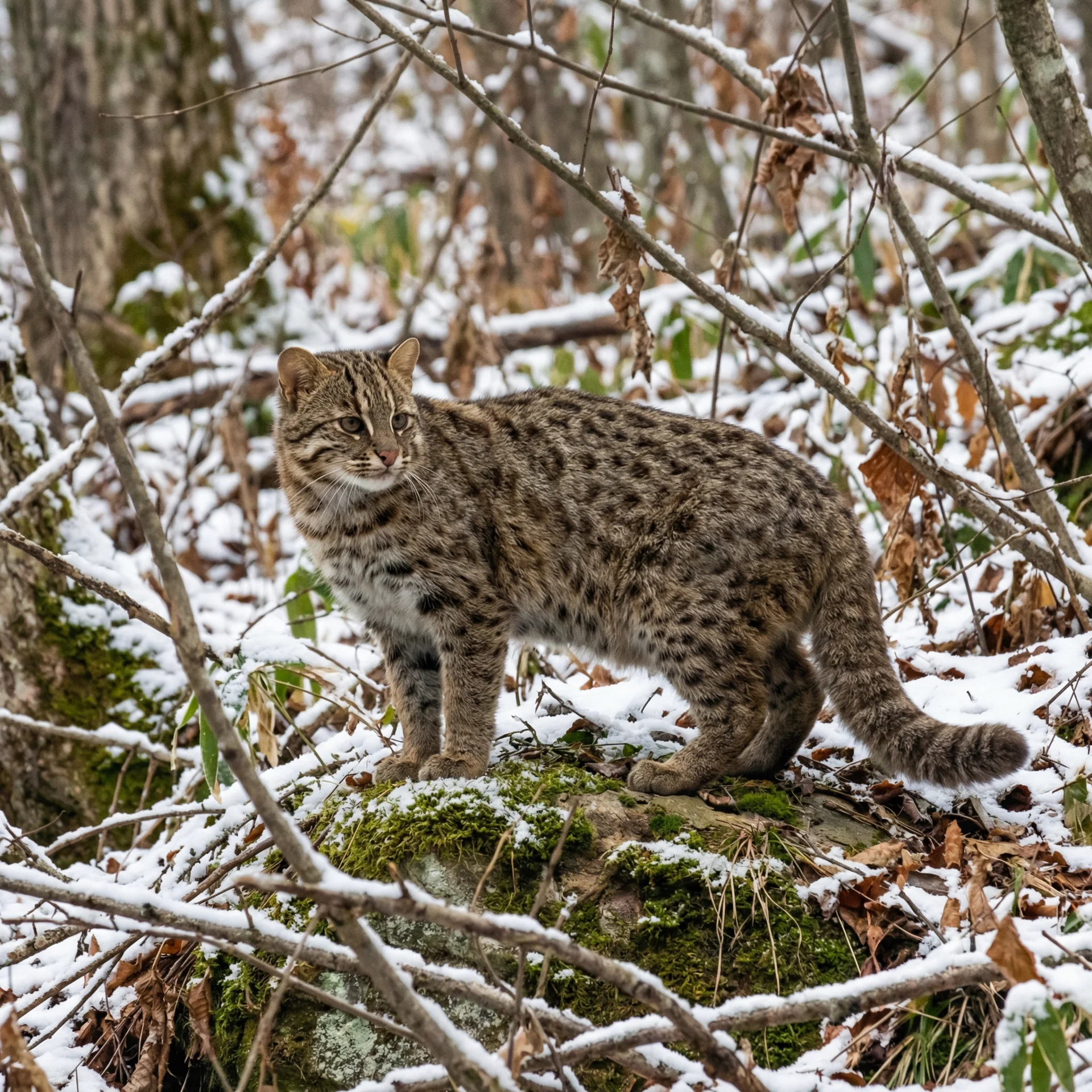
Amur Leopard Cat
Carnivore Creature Type
Prionailurus bengalensis euptilura
Scientific Name: "Prionailurus (saw-toothed cat; Greek prion 'saw' + ailouros 'cat') + bengalensis (of Bengal; Latin geographical adjective) + euptilura (beautiful fur; Greek eu 'good' + ptilon 'soft feather/down')"
Physical Characteristics
Discovery
Habitat
보전·개체·수명

The Amur leopard cat (Prionailurus bengalensis euptilura Elliot, 1871) is a small wild felid belonging to the genus Prionailurus within the family Felidae (order Carnivora). It represents the northern subspecies of the leopard cat (Prionailurus bengalensis), one of only two currently recognised mainland subspecies. Also known as the Siberian leopard cat, it is distinguished from the southern nominate subspecies (P. b. bengalensis) by its larger body size, thicker winter pelage, and paler, greyish-brown coloration — adaptations to the cold-temperate climates of northeast Asia.
The Amur leopard cat ranges across the Russian Far East (Primorsky Krai, Amur Oblast), northeastern China (Manchuria), the Korean Peninsula, Taiwan, and the Japanese islands of Tsushima and Iriomote. Head-body length reaches approximately 45–75 cm, tail length 23–35 cm, and body mass 3–7.1 kg, substantially exceeding the size of tropical populations (0.55–3.8 kg). The background coat colour is pale silvery-grey to greyish-brown, in contrast to the yellowish-brown to reddish-brown tones of southern populations. The thick, dense winter fur provides excellent insulation against harsh winters.
At the species level, the leopard cat is classified as Least Concern (LC) on the IUCN Red List (Ghimirey et al., 2022), with a global population estimated at well over 50,000 individuals. However, the conservation status of the Amur leopard cat varies dramatically by region. In South Korea, it is designated as Endangered Wildlife Class II by the Ministry of Environment. The Tsushima population in Japan (approximately 70–90 individuals) and the Iriomote population (approximately 100–110 individuals) are listed as Critically Endangered on the Japanese Red List. Major threats include habitat destruction, roadkill, poaching, and disease transmission from domestic cats.
1. Overview
Name and etymology
The genus name Prionailurus derives from the Greek prion (πρίων, 'saw') and ailouros (αἴλουρος, 'cat'), meaning 'saw-toothed cat', referring to the serrated premolar teeth characteristic of the genus. The specific epithet bengalensis is a Latin geographical adjective meaning 'of Bengal', referring to the type locality in Bengal, India, where Robert Kerr first described the species as Felis bengalensis in 1792. The subspecific epithet euptilura derives from the Greek eu (εὖ, 'good, beautiful') and ptilon (πτίλον, 'soft feather, down'), interpreted as 'having beautiful fur' — a reference to the luxuriant winter pelage of the Siberian specimens upon which the original description was based.
The common name 'leopard cat' refers to the leopard-like spotted pattern found across all populations. In Korea, the species is known as sal (삵) or salkkwaengi (살쾡이), native Korean words for a small, wild, cat-like predator of the mountains. The Chinese name 石虎 (shíhǔ, 'stone tiger') alludes to its rocky, mountainous habitat.
Taxonomic status
Following the 2017 revision of Felidae taxonomy by the IUCN Cat Specialist Group (Kitchener et al., 2017), the leopard cat is split into two species: the mainland leopard cat (P. bengalensis) and the Sunda leopard cat (P. javanensis). Within the mainland leopard cat, only two subspecies are tentatively recognised based on genetic evidence: the southern P. b. bengalensis (South Asia to China and probably the Malay Peninsula) and the northern P. b. euptilura (Manchuria, Russian Far East, Korean Peninsula, Taiwan, Tsushima Island, and Iriomote Island).
Under Article 31.2.1 of the International Code of Zoological Nomenclature (ICZN), the subspecific name euptilura — being a noun in apposition — is not subject to gender agreement. Consequently, 'euptilura' (not 'euptilurus') is the correct spelling, although both forms appear widely in the literature.
Summary in one sentence
The Amur leopard cat is the northern subspecies of the leopard cat, adapted to cold-temperate environments of northeast Asia, and is the sole extant wild felid in South Korea.
2. Taxonomy and phylogeny
Higher classification
| Rank | Taxon | Common name |
|---|---|---|
| Kingdom | Animalia | Animals |
| Phylum | Chordata | Chordates |
| Class | Mammalia | Mammals |
| Order | Carnivora | Carnivorans |
| Suborder | Feliformia | Cat-like carnivorans |
| Family | Felidae | Cats |
| Subfamily | Felinae | Small cats |
| Genus | Prionailurus | Leopard cats and allies |
| Species | P. bengalensis | Leopard cat |
| Subspecies | P. b. euptilura | Amur leopard cat |
Molecular phylogenetics
The genus Prionailurus belongs to the 'Leopard Cat Lineage' within Felidae. Nuclear DNA analyses estimate the common ancestor of Prionailurus species to have diverged approximately 8.16–4.53 million years ago (Ma) (Johnson et al., 2006) or 8.76–0.73 Ma (Li et al., 2016). Within the genus, the rusty-spotted cat (P. rubiginosus) diverged first, followed by the flat-headed cat (P. planiceps) and the fishing cat (P. viverrinus). The leopard cat and fishing cat are estimated to have split approximately 4.31–1.74 Ma (Johnson et al., 2006).
Mitochondrial DNA analysis of 39 leopard cat tissue samples (Tamada et al., 2008) resolved three major clades: a Northern Lineage (comprising specimens from Tsushima Islands, the Korean Peninsula, the continental Far East, Taiwan, and Iriomote Island), corresponding to the Amur leopard cat, and two Southern Lineages representing Southeast Asian populations. The Northern Lineage is genetically distinct and broadly corresponds to the subspecies P. b. euptilura.
More recent genomic studies (Lee et al., 2022; Patel et al., 2017) confirm that the Korean leopard cat population exhibits notably low nucleotide diversity compared to Southeast Asian populations, suggesting a relatively small effective population size and possible historical bottleneck.
Subspecies and geographic variation
Two mainland leopard cat subspecies are currently recognised (Kitchener et al., 2017):
| Subspecies | Trinomial | Author, year | Distribution | Key traits |
|---|---|---|---|---|
| Southern/Indian leopard cat | P. b. bengalensis | Kerr, 1792 | South Asia (Pakistan to India, Nepal), China, Southeast Asia, probably Malay Peninsula | Smaller (0.55–3.8 kg), yellowish-brown to reddish-brown, tropical–subtropical adapted |
| Amur/Northern leopard cat | P. b. euptilura | Elliot, 1871 | Russian Far East, Manchuria, Korean Peninsula, Taiwan, Tsushima Island, Iriomote Island | Larger (3–7.1 kg), pale silvery-grey to greyish-brown, thick winter pelage, cold-climate adapted |
Historically, more than 12 subspecies were proposed (Pocock, 1939, and others). The Iriomote cat (P. b. iriomotensis Imaizumi, 1967), once considered a distinct species, was reclassified as a leopard cat subspecies following mtDNA analysis (Masuda et al., 1995) and falls within the Northern Lineage corresponding to P. b. euptilura.
Taxonomic history
Daniel Giraud Elliot described Felis euptilura in 1871 based on two skins from Siberia. One specimen had been illustrated and described by Gustav Radde; the other was held at the Regent's Park Zoo in London. Elliot noted their light brownish-yellow ground colour, heavily mixed with grey, covered with reddish-brown spots, and a grey head with a dark-red cheek stripe.
Reginald Innes Pocock transferred the species to Prionailurus in 1939, proposing a broad subspecific classification based on skulls and skins in the Natural History Museum, London. In the 1970s and 1980s, Russian zoologists Geptner, Gromov, and Baranova argued that the Amur populations differed sufficiently from Southeast Asian leopard cats to warrant species-level separation, coining the name 'Amur forest cat.' However, Chinese zoologists in 1987 pointed out extensive morphological overlap, and subsequent molecular studies have consistently supported subspecific rather than specific status.
3. Morphology and anatomy
External appearance
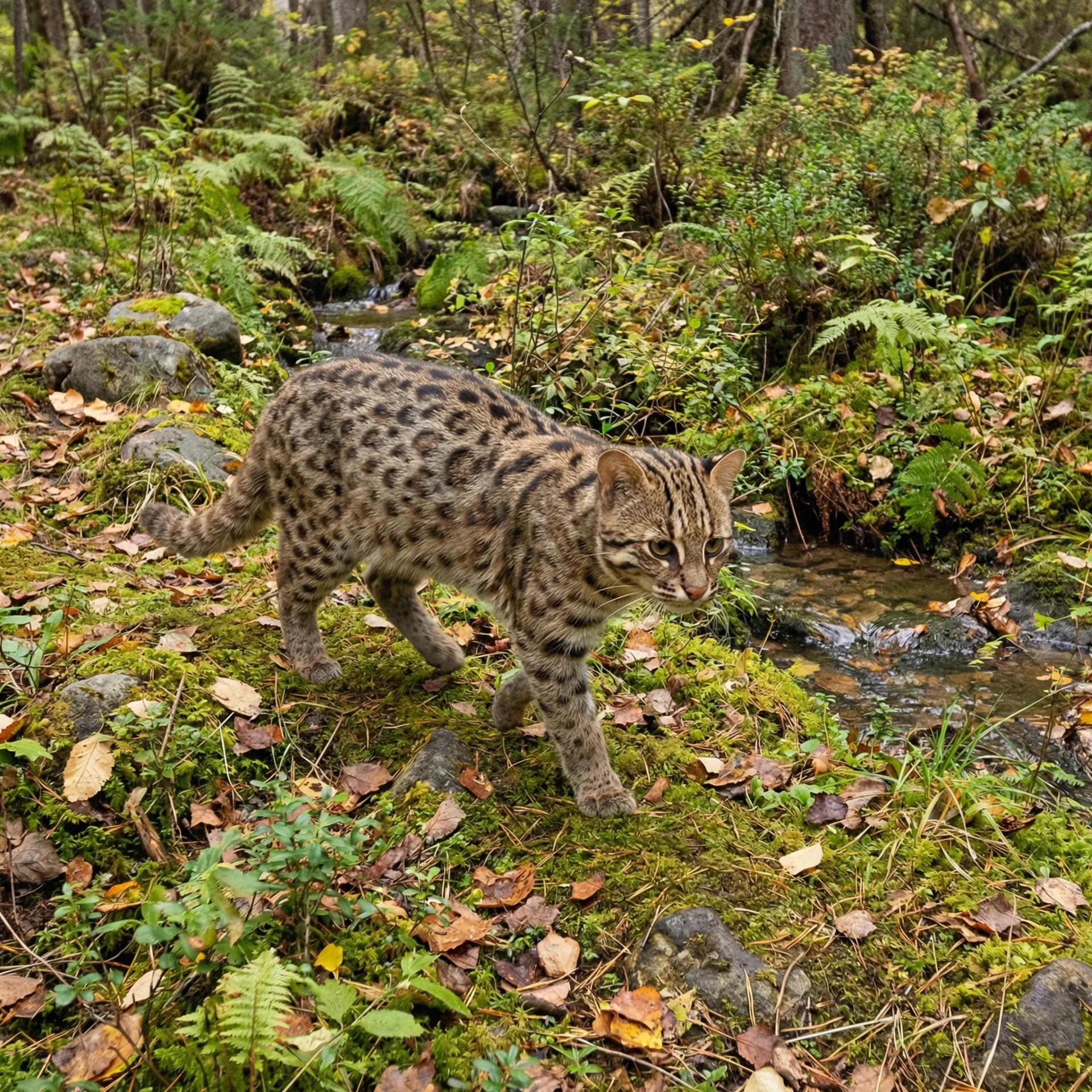
The Amur leopard cat is similar in general build to a domestic cat but with proportionally longer legs and a more slender frame. The small, rounded head bears two prominent dark stripes running from the forehead to the nape and a short, narrow white muzzle. Two dark stripes extend from the eyes to the ears, and smaller white streaks run from the eyes to the nose. The moderately long, rounded ears have black backs with a central white spot (ocelli) — a key distinguishing feature from domestic cats.
The body and limbs are marked with black spots of varying size, arranged in 2–4 rows of elongated spots along the back. The tail is approximately half the head-body length, spotted, with indistinct rings near the black tip. The ventral surface is white. Well-developed interdigital webbing between the toes aids swimming.
Size
The Amur leopard cat is conspicuously larger than its southern counterpart. In northern China and Siberia, head-body length reaches up to 75 cm and body mass up to 7.1 kg (Sunquist & Sunquist, 2002). Typical measurements for Korean populations are head-body length 45–55 cm, tail length 25–32 cm, and body mass 3–7 kg. Shoulder height is approximately 41 cm. Males are generally larger than females, though precise quantitative data on sexual dimorphism remain limited.
Seasonal body mass fluctuation is well documented: individuals gain weight before winter and become progressively thinner through spring.
Pelage and colouration
The background coat colour of the Amur leopard cat is pale silvery-grey to greyish-brown, markedly lighter than the ochre-to-tawny tones of tropical populations. The winter pelage is considerably denser and longer than in the southern subspecies — a clear adaptation to cold climates. Elliot's (1871) original description noted 'light brownish-yellow, strongly mixed with grey, and covered with reddish-brown spots; head grey with a dark-red stripe across the cheek.'
Spot morphology varies among individuals and may take the form of solid spots, rosettes, or dotted streaks. This variation was historically a source of taxonomic confusion, leading early taxonomists to describe multiple 'species' that are now considered synonyms.
Skull and dentition
Substantial variation in skull morphology exists among leopard cat subspecies (Groves, 1997). The Amur leopard cat possesses a larger skull overall and larger carnassial teeth compared to southern populations. These cranial differences were among the primary arguments used by Russian zoologists in the 1970s–1980s to advocate for species-level separation.
4. Ecology and behaviour
Diet
The Amur leopard cat is an obligate carnivore. Its primary prey consists of small rodents (rats and mice), which dominate the diet across all studied populations. Additional prey items include hares, birds, reptiles, amphibians, insects, eels, and fish, with the relative importance of each varying by region and season.
In the Primorsky Region of the Russian Far East, small rodents dominate during the snow-free season, but the frequency of occurrence of ungulate remains in the diet increases significantly during the snowy season (IUCN CatSG). On Tsushima Island (Japan), rats are the dominant prey, supplemented by other mammals, birds, amphibians, reptiles, and insects. On Iriomote Island, the diet is notably distinct, consisting predominantly of frogs, toads, birds, and Ryukyu fruit bats.
The leopard cat is an active hunter that dispatches prey with a rapid pounce and bite. Unlike many other small cats, it does not 'play' with captured prey, maintaining a firm grip with its claws until the animal is dead. This behaviour is hypothesised to relate to the high proportion of birds in its diet — birds are more likely to escape if released than rodents (Sunquist & Sunquist, 2002).
Two documented cases of cannibalism have been recorded in the Primorsky Region of the Russian Far East.
Social structure and home range
The Amur leopard cat is fundamentally solitary, with individuals interacting primarily during the breeding season. Males maintain territories that overlap with those of multiple females, indicating a polygynous mating system.
Home range sizes vary considerably by habitat and region. In South Korea, the average home range is approximately 2.6 km² (IUCN CatSG). On Tsushima Island, one tracked male had a home range of only 0.8 km². In Taiwan, male home ranges measured 6.5–9.5 km² versus 1.8–2.0 km² for females, indicating significant intersexual variation. Home ranges tend to expand during the wet season, potentially due to seasonal shifts in prey availability.
Communication
Leopard cats produce a vocal repertoire comparable to that of domestic cats, including purring and crying. Both sexes scent-mark their territories through urine spraying, depositing faeces in exposed locations, head rubbing, and scratching (Sunquist & Sunquist, 2002).
Activity patterns
The Amur leopard cat is primarily classified as nocturnal and crepuscular, though diurnal activity has been documented. Radio-telemetry studies in Thailand found that four collared individuals were frequently active during the day, with males exhibiting more diurnal activity than females. Camera-trap studies in South Korea have also confirmed intermittent daytime activity.
Predators and anti-predator strategies
Natural predators include large carnivores such as leopards and wolves, and large raptors such as golden eagles. The species' nocturnal habits, semi-arboreal lifestyle, small body size, and cryptic spotted colouration contribute to predator avoidance. It is an adept climber and frequently rests or takes refuge in trees.
Swimming ability
The leopard cat is an excellent swimmer, a capacity facilitated by its well-developed interdigital webbing. This ability has enabled the species to colonise numerous offshore islands across its range.
5. Reproduction and life history
Breeding season and courtship
Unlike tropical populations, which may breed year-round, the Amur leopard cat exhibits seasonal breeding. In the northern part of its range, mating typically occurs between February and March, with births in spring (approximately May). The oestrus period lasts 5–9 days.
Gestation and birth
Gestation lasts approximately 60–72 days (mean approximately 65 days). Litter size ranges from 1 to 4 kittens, typically 2–3. Captive-born kittens weigh 75–130 g at birth and open their eyes within 10–15 days. Body mass doubles by two weeks of age and quadruples by five weeks. Permanent canines begin to emerge at approximately four weeks of age, at which point kittens start to consume meat.
Parental care and development
Females are the primary caregivers, raising kittens in hollow trees, rock crevices, or burrows. The extent of paternal care is unknown. In captivity, females reach sexual maturity as early as one year of age, with first litters produced at 13–14 months. In the wild, sexual maturity is typically reached at approximately 18 months.
If a litter is lost to predation or other causes, females can become pregnant again within 4–5 months.
Lifespan
Wild leopard cats have an estimated average lifespan of approximately 4–8 years. Captive individuals have survived up to approximately 13 years (IUCN CatSG). Some sources (Animal Diversity Web) report a maximum captive lifespan of 20 years, though this appears exceptional.
6. Distribution and habitat
Natural range
The Amur leopard cat occupies the northern and eastern margin of the leopard cat's total range. Its distribution encompasses the Russian Far East (Primorsky Krai, southern Amur Oblast), northeastern China (Manchuria), the Korean Peninsula (both South Korea and North Korea), Taiwan, and the Japanese islands of Tsushima and Iriomote.
In South Korea, the subspecies is distributed nationwide, with key habitats including the mountainous interior of Gangwon Province, the Demilitarized Zone (DMZ), Upo Wetland, and the Sihwa Lake area. Recent camera-trap surveys and roadkill records indicate increasing detection frequency near peri-urban and agricultural areas, suggesting a degree of tolerance to human-modified landscapes.
A 2024 study documented an increase in the abundance of the Amur leopard cat in the southern Amur Region of Russia, with track sightings on the right bank of the Amur approximately doubling between 2011–2021 compared to 2000–2010.
Habitat types
The Amur leopard cat utilises a wide range of habitats. In the Russian Far East, it primarily inhabits deciduous oak forests, mixed coniferous-broadleaf forests, and riparian valley forests. On the Korean Peninsula, it is found in temperate deciduous broadleaf forests, mixed forests, areas adjacent to rivers and wetlands, and the margins of agricultural land. It also occupies dense secondary forests, logged regrowth areas, and scrubland.
The species shows a strong association with water sources and can utilise remnant riparian forest strips in otherwise deforested landscapes. However, it avoids areas with snowfall exceeding approximately 10 cm and does not inhabit arid steppe or grassland environments.
Elevation range
The leopard cat species as a whole has been recorded from sea level to above 4,500 m (the highest record is 4,579 m in Langdu, China, and 4,474 m in the Kanchenjunga Conservation Area, Nepal). However, the Amur leopard cat subspecies primarily occupies lowland to mid-elevation zones. On the Korean Peninsula, it is found from coastal lowlands to mountainous interior regions.
Historical distribution changes
Fossil evidence from Pleistocene deposits in Japan indicates that the leopard cat formerly had a much broader distribution across the Japanese archipelago. Today, it is restricted to Tsushima and Iriomote islands in Japan. On the Korean Peninsula, populations declined severely during the Japanese colonial period (1910–1945) due to predator extermination policies, followed by continued habitat destruction and poaching. Since the 2000s, there have been signs of partial recovery in some areas of South Korea.
7. Conservation status and threats
IUCN Red List assessment
The leopard cat species (Prionailurus bengalensis) as a whole was assessed as Least Concern (LC) by the IUCN in 2022 (Ghimirey et al., 2022), based on its wide distribution and relatively large total population. The assessment nevertheless acknowledges that habitat loss and hunting pose threats in parts of the range.
Regional population estimates and trends
| Region | Estimated population | Trend | Source/notes |
|---|---|---|---|
| Global (species level) | Well over 50,000 | Presumed stable | IUCN 2022 |
| Russia | Approximately 1,600 | Increasing in some areas | IUCN CatSG; 2024 Amur region study |
| China | Approximately 230,000 | Stable | IUCN CatSG |
| Nepal | Fewer than 2,500 | Unknown | IUCN CatSG |
| Tsushima, Japan | Approximately 70–90 | Declining | Japanese Ministry of the Environment; Critically Endangered |
| Iriomote, Japan | Approximately 100–110 | Presumed declining | Japanese Ministry of the Environment; Critically Endangered |
| South Korea | Not census-estimated (nationwide distribution) | Partial recovery suspected | Ministry of Environment; Endangered Wildlife Class II |
Major threats
Habitat destruction and fragmentation: Urbanisation, road construction, and agricultural conversion are the primary threats. Island populations (Tsushima, Iriomote) are especially vulnerable.
Roadkill: In South Korea, roadkill is identified as a leading cause of leopard cat mortality. Over 200 leopard cats were killed on national expressways alone between 2006 and 2016, and annual roadkill of endangered species (including leopard cats and otters) numbers in the hundreds. On Tsushima, 122 individuals were killed by vehicles between 1992 and 2022.
Poaching and illegal trade: In China, approximately 200,000 leopard cat skins per year were exported during 1984–1989, with over 800,000 skins in stock reported in a 1989 survey. Following the EU import ban (1988) and Chinese export cessation (1993), commercial trade has been greatly reduced, but illegal hunting and trade for fur, food, and the pet trade persist.
Disease: Feline immunodeficiency virus (FIV) and other pathogens transmitted from domestic cats pose a threat, particularly to genetically depauperate island populations.
Retaliatory killing: The species is widely regarded as a poultry pest in rural areas, leading to retaliatory killing.
Incidental trapping: Indiscriminate snares set for other target species cause bycatch mortality, particularly severe in Southeast Asia.
Conservation measures
The leopard cat is listed in CITES Appendix II, with the P. b. bengalensis populations of Bangladesh, India, and Thailand in Appendix I. In South Korea, it is designated as Endangered Wildlife Class II by the Ministry of Environment, with hunting and trade prohibited. In Japan, a government-funded conservation programme for the Tsushima leopard cat has been operational since 1995, including a captive breeding programme, though no successful reintroductions have been achieved.
Hunting is prohibited in Russia, Bangladesh, Cambodia, Hong Kong, India, Japan, Malaysia, Myanmar, Nepal, Pakistan, Thailand, and Taiwan. In South Korea, ecological corridors and wildlife fencing are being installed at roadkill hotspots to mitigate leopard cat and otter mortality.
8. Human interactions
Domestication and the Bengal cat
The leopard cat has an ancient association with humans. A 2016 study (Vigne et al., 2016) identified leopard cat (P. bengalensis) bones from Neolithic villages in Shaanxi and Henan Provinces, China, dating to at least 5,000 years ago. These findings indicate that the leopard cat was the first cat species to be domesticated (or commensal) in China, though this lineage was later replaced by the Near Eastern-origin domestic cat (Felis catus), sometime before the Tang Dynasty.
In the modern era, the Bengal cat — a hybrid between the leopard cat and domestic cat — was introduced to cat shows in the 1970s and has become a globally popular pet breed. Fifth-generation (F5) and later Bengal cats are generally permitted as pets without special licensing in most jurisdictions.
Cultural significance
In Korea, the leopard cat has long been recognised as a small but fierce predator of mountainous terrain. The native Korean name sal (삵) and the Chinese name 石虎 ('stone tiger') both reflect this perception. In recent years, increased sightings near urban areas and growing public awareness of roadkill incidents have elevated the species' profile as a conservation icon.
Human–wildlife conflict
Leopard cats occasionally raid poultry in rural settlements, leading to their classification as agricultural pests in some areas and subsequent retaliatory killing. Conversely, they provide an ecosystem service by controlling rodent populations around farmland, reducing crop damage and disease transmission.
9. Uncertainties and knowledge gaps
Established, probable, and hypothetical findings
Established: Subspecific status within P. bengalensis; IUCN LC (species level); Endangered Wildlife Class II designation in South Korea; obligate carnivory with rodent-dominated diet.
Probable: Genetic distinctiveness of the Northern Lineage (Tsushima–Korea–Russian Far East–Taiwan–Iriomote) from Southern Lineages, supported by multiple molecular studies (Tamada et al., 2008; Patel et al., 2017; Lee et al., 2022). Low genetic diversity in the Korean population relative to Southeast Asian populations.
Hypothetical/Uncertain: Precise phylogenetic relationships and divergence times among island and mainland populations within the Amur leopard cat subspecies. Total population size on the Korean Peninsula (no systematic census conducted). Exact etymology of the Korean common name salkkwaengi.
Taxonomic uncertainties
Whether the current two-subspecies framework (bengalensis vs. euptilura) adequately captures the full geographic and genetic diversity of the mainland leopard cat remains debated. In particular, the island populations of Taiwan, Iriomote, and Tsushima may warrant recognition as distinct conservation units, regardless of formal taxonomic rank.
Common misconceptions
The Amur leopard cat is frequently confused with tiger cubs, leopard cubs, or ordinary domestic cats. Key distinguishing features include the white ocelli on the ear backs, prominent forehead stripes, and slender build. The Amur leopard cat (Prionailurus bengalensis euptilura) should not be confused with the Amur leopard (Panthera pardus orientalis), which is an entirely different species — a large-bodied felid weighing 32–48 kg.
10. Comparison with related species
The following table compares extant species within the genus Prionailurus:
| Species | Scientific name | Body mass (kg) | Distribution | IUCN status | Key features |
|---|---|---|---|---|---|
| Leopard cat | P. bengalensis | 0.55–7.1 | Continental South, Southeast, and East Asia | LC | Spotted coat, most widespread Asian small wild cat |
| Sunda leopard cat | P. javanensis | 0.55–3.8 | Java, Bali, Borneo, Sumatra, Palawan, Philippines | VU | Elevated to species in 2017; tropical island distribution |
| Fishing cat | P. viverrinus | 5–16 | South and Southeast Asia | VU | Large, semi-aquatic, specialised fish hunter |
| Flat-headed cat | P. planiceps | 1.5–2.75 | Malay Peninsula, Borneo, Sumatra | EN | Flattened skull, extremely rare |
| Rusty-spotted cat | P. rubiginosus | 0.8–1.6 | India, Sri Lanka | NT | Among the world's smallest wild cats |
Fun Facts
The leopard cat was the first cat species to be domesticated in China approximately 5,000 years ago, predating the arrival of the Near Eastern domestic cat — but that ancient lineage was eventually replaced and did not persist to the present day.
The subspecific name 'euptilura' means 'beautiful fur' in Greek, referencing the luxuriant winter coat of the Siberian specimens on which the original 1871 description was based.
Unlike many small cats, the leopard cat does not 'play' with its captured prey — it maintains a firm grip with its claws until the animal is dead, likely because the high proportion of birds in its diet would easily escape if released.
The Amur leopard cat is the sole surviving wild felid species in South Korea — tigers and leopards are considered locally extinct in the country.
The white spots (ocelli) on the backs of the leopard cat's ears are the single most reliable field feature for distinguishing it from a domestic cat.
On Japan's Tsushima Island, 122 leopard cats were killed by vehicles between 1992 and 2022 — a devastating figure given the island's total population of only approximately 70–90 individuals.
Amur leopard cats gain weight before winter and become progressively thinner through spring, a seasonal body mass cycle that aids survival in cold-temperate climates.
The Bengal cat, one of the world's most popular exotic pet breeds, was created by crossing the leopard cat with the domestic cat in the 1970s.
Two documented cases of cannibalism among leopard cats have been recorded in the Primorsky Region of the Russian Far East.
The leopard cat species as a whole spans an elevation range from sea level to 4,579 m in the Himalayas — the broadest altitudinal range of any small wild cat in Asia.
Under the International Code of Zoological Nomenclature, the correct spelling of the subspecific name is 'euptilura' (a noun), not the frequently used but grammatically incorrect 'euptilurus'.
The Korean leopard cat population has notably low genetic diversity compared to Southeast Asian populations, raising concerns about its long-term evolutionary resilience.
FAQ
The Amur leopard cat has proportionally longer legs and a more slender build than a domestic cat. Key distinguishing features include prominent dark forehead stripes, leopard-like spots across the body, and most notably, white ocelli (spots) on the backs of its ears — a feature absent in domestic cats. Its tail is relatively short with a black tip.
The Amur leopard cat is found in the Russian Far East, northeastern China (Manchuria), the Korean Peninsula, Taiwan, and the Japanese islands of Tsushima and Iriomote. It inhabits temperate deciduous and mixed forests, riparian corridors, secondary growth, and the margins of agricultural areas, typically close to water sources.
At the species level, the leopard cat is classified as Least Concern (LC) by the IUCN (2022 assessment). However, regional assessments differ significantly. In South Korea, it is Endangered Wildlife Class II. The Tsushima and Iriomote island populations in Japan are listed as Critically Endangered, with only approximately 70–90 and 100–110 individuals, respectively.
No, they are entirely different animals. The Amur leopard cat (Prionailurus bengalensis euptilura) is a small wild felid weighing 3–7 kg, belonging to the genus Prionailurus. The Amur leopard (Panthera pardus orientalis) is a large big cat weighing 32–48 kg, belonging to the genus Panthera. They share the 'Amur' name because both are found in the Amur region, but are separated at the genus level taxonomically.
The Amur leopard cat is an obligate carnivore that feeds primarily on small rodents (rats and mice). Its diet also includes birds, amphibians, reptiles, insects, hares, fish, and occasionally young ungulates. In the Russian Far East, the proportion of ungulate prey increases during the snowy season when small rodents become less accessible.
In South Korea, the Amur leopard cat is designated as Endangered Wildlife Class II primarily due to habitat destruction from urbanisation and road construction, roadkill (over 200 killed on expressways between 2006–2016), historical poaching, and habitat fragmentation. Road mortality is considered the leading direct threat to the population.
The Bengal cat is a domestic cat breed created by hybridising the leopard cat (Prionailurus bengalensis) with the domestic cat (Felis catus). First introduced to cat shows in the 1970s, Bengal cats from the fifth generation (F5) onward are generally permitted as pets without special licensing in most countries.
The Amur leopard cat is primarily nocturnal and crepuscular (active at dawn and dusk), but diurnal activity has been documented. Studies show that males tend to be more active during daytime than females. Activity patterns can be flexible depending on habitat type and prey availability.
In the wild, the Amur leopard cat has an estimated average lifespan of approximately 4–8 years. In captivity, individuals have lived up to approximately 13 years, with some exceptional reports of up to 20 years. Survival in the wild is influenced by predation, roadkill, disease, and food availability.
Yes, the leopard cat is an excellent swimmer. It has well-developed interdigital webbing between its toes, which aids in swimming. This ability has enabled the species to naturally colonise numerous offshore islands throughout its range and to hunt aquatic prey.
📚References
- Ghimirey, Y., Petersen, W., Jahed, N., Akash, M., Lynam, A.J., Kun, S., Din, J., Nawaz, M.A., Singh, P., Dhendup, T., Marcus, C., Gray, T.N.E. & Phyoe Kyaw, P. (2022). Prionailurus bengalensis. The IUCN Red List of Threatened Species 2022: e.T18146A212958253. https://doi.org/10.2305/IUCN.UK.2022-1.RLTS.T18146A212958253.en
- Kitchener, A.C., Breitenmoser-Würsten, C., Eizirik, E., Gentry, A., Werdelin, L., Wilting, A., Yamaguchi, N. et al. (2017). A revised taxonomy of the Felidae: The final report of the Cat Classification Task Force of the IUCN Cat Specialist Group. Cat News, Special Issue 11: 26–29.
- Johnson, W.E., Eizirik, E., Pecon-Slattery, J., Murphy, W.J., Antunes, A., Teeling, E. & O'Brien, S.J. (2006). The Late Miocene radiation of modern Felidae: A genetic assessment. Science, 311(5757): 73–77. https://doi.org/10.1126/science.1122277
- Sunquist, M. & Sunquist, F. (2002). Wild Cats of the World. University of Chicago Press.
- Groves, C.P. (1997). Leopard-cats, Prionailurus bengalensis (Carnivora: Felidae) from Indonesia and the Philippines, with the description of two new subspecies. Zeitschrift für Säugetierkunde, 62: 330–338.
- Elliot, D.G. (1871). Remarks on various species of Felidae, with a description of a species from north-western Siberia. Proceedings of the Zoological Society of London, 1871: 758–761.
- Pocock, R.I. (1939). The Fauna of British India, including Ceylon and Burma. Mammalia. Vol. 1. Taylor and Francis, London.
- Tamada, T., Siriaroonrat, B., Subramaniam, V., Hamachi, M., Lin, L.K., Oshida, T., Rerkamnuaychoke, W. & Masuda, R. (2008). Molecular diversity and phylogeography of the Asian leopard cat, Felis bengalensis, inferred from mitochondrial and Y-chromosomal DNA sequences. Zoological Science, 25(2): 154–163. https://doi.org/10.2108/zsj.25.154
- Lee, O., Lee, S., Nam, D.H. & Lee, H.Y. (2014). Genetic diversity in Korean leopard cats (Prionailurus bengalensis euptilura), based on mitochondrial DNA cytochrome b gene sequence analysis. Korean Journal of Veterinary Service, 37(2): 113–120.
- Masuda, R., Yoshida, M.C., Shinyashiki, F. & Bando, G. (1995). Molecular phylogenetic status of the Iriomote cat Felis iriomotensis, inferred from mitochondrial DNA sequence analysis. Zoological Science, 12(5): 655–659. https://doi.org/10.2108/zsj.12.655
- Li, G., Davis, B.W., Eizirik, E. & Murphy, W.J. (2016). Phylogenomic evidence for ancient hybridization in the genomes of living cats (Felidae). Genome Research, 26(1): 1–11. https://doi.org/10.1101/gr.186668.114
- Vigne, J.D., Evin, A., Cucchi, T., Dai, L., Yu, C., Hu, S. et al. (2016). Earliest "Domestic" Cats in China Identified as Leopard Cat (Prionailurus bengalensis). PLOS ONE, 11(1): e0147295. https://doi.org/10.1371/journal.pone.0147295
- Murayama, A. (2008). The Tsushima Leopard Cat (Prionailurus bengalensis euptilura): Population Viability Analysis and Conservation Strategy. MSc thesis, Imperial College London.
- Lee, S.J., Jegal, S., Baek, S.Y., Kim, C.B. & Oh, H.S. (2022). Korean Leopard Cat (Prionailurus bengalensis) population with low genetic diversity is distinct from Southeast Asian populations. Global Ecology and Conservation, 38: e02218. https://doi.org/10.1016/j.gecco.2022.e02218
- Werdelin, L., Yamaguchi, N., Johnson, W.E. & O'Brien, S.J. (2010). Phylogeny and evolution of cats (Felidae). In: Macdonald, D.W. & Loveridge, A.J. (eds.), Biology and Conservation of Wild Felids. Oxford University Press, pp. 59–82.
- Patel, R.P., Wutke, S., Lenz, D., Mukherjee, S., Ramakrishnan, U., Veron, G. et al. (2017). Genetic structure and phylogeography of the leopard cat (Prionailurus bengalensis) inferred from mitochondrial genomes. Journal of Heredity, 108(4): 349–360. https://doi.org/10.1093/jhered/esx017
- Cho, Y.S., Hu, L., Hou, H., Lee, H., Xu, J., Kwon, S. et al. (2013). The tiger genome and comparative analysis with lion and snow leopard genomes. Nature Communications, 4: 2433. https://doi.org/10.1038/ncomms3433
Gallery
2 images
Amur Leopard CatAmur Leopard Cat · Carnivore
🔗Related Creatures
Lion
Panthera leo
Domestic Cat
Felis catus
Tiger
Panthera tigris
Domestic Dog
Canis lupus familiaris
Brown Bear
Ursus arctos
Dunkleosteus
Dunkleosteus terrelli
Hatzegopteryx
Hatzegopteryx thambema
Albertosaurus
Albertosaurus sarcophagus