Chicken
Gallus gallus domesticus
The chicken (Gallus gallus domesticus Linnaeus, 1758) is a domesticated bird of the pheasant family (Phasianidae), derived from the wild red junglefowl (Gallus gallus). It is the most numerous and most widely distributed bird on Earth, as well as the most common domestic animal, with roughly 26–33 billion individuals alive at any given moment (FAO 2020). Raised for meat and eggs across nearly every human society, the chicken exists in close to 1,600 officially recognized local breeds worldwide (FAO 2020).
Taxonomically, the chicken is the domesticated form of the red junglefowl and is commonly written either as the trinomial Gallus gallus domesticus or, when emphasizing it as a distinct species, as Gallus domesticus. Carl Linnaeus named the domestic fowl Gallus domesticus in the 10th edition of Systema Naturae (1758), but modern usage widely treats it at the subspecies level of the red junglefowl to reflect continuity with its wild ancestor.
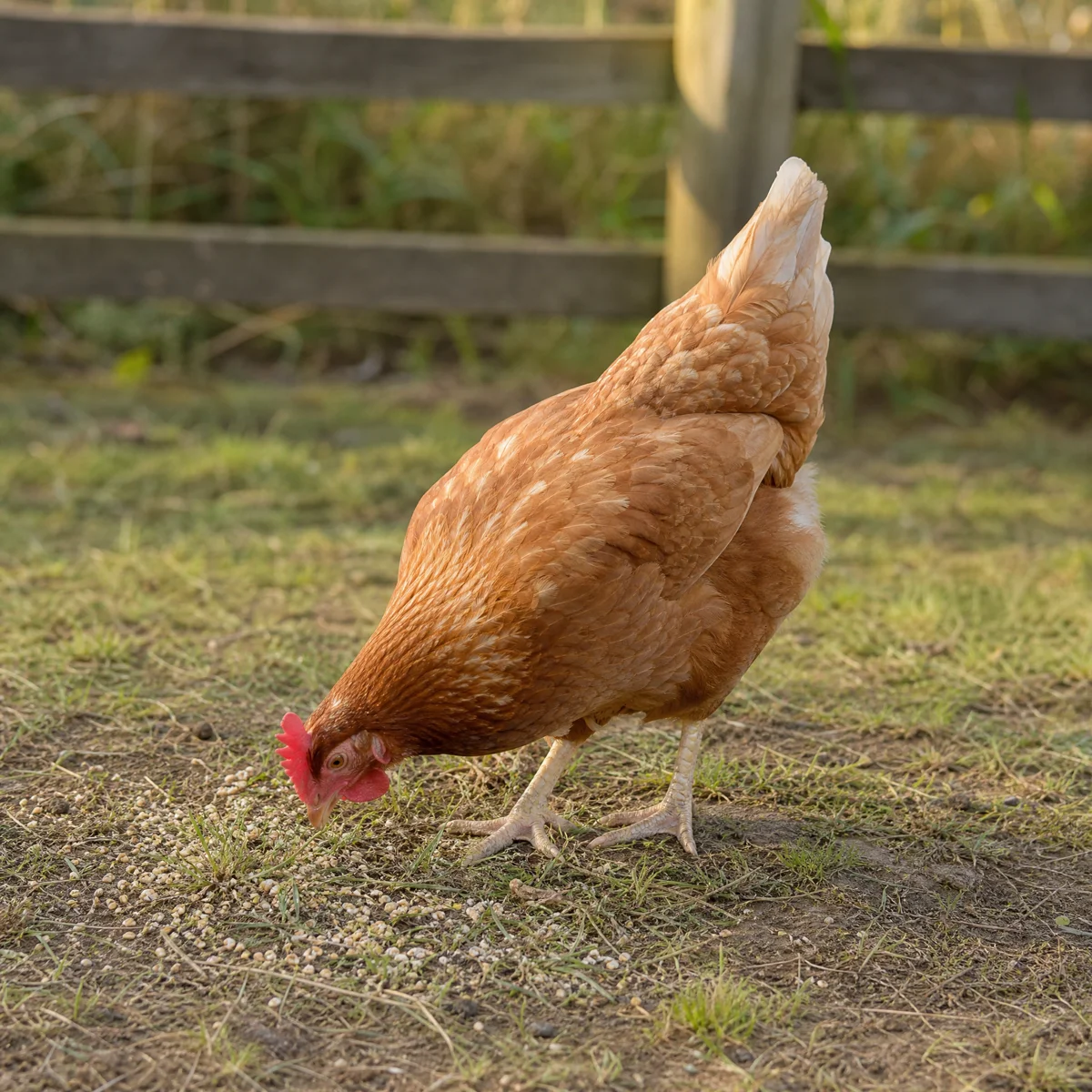
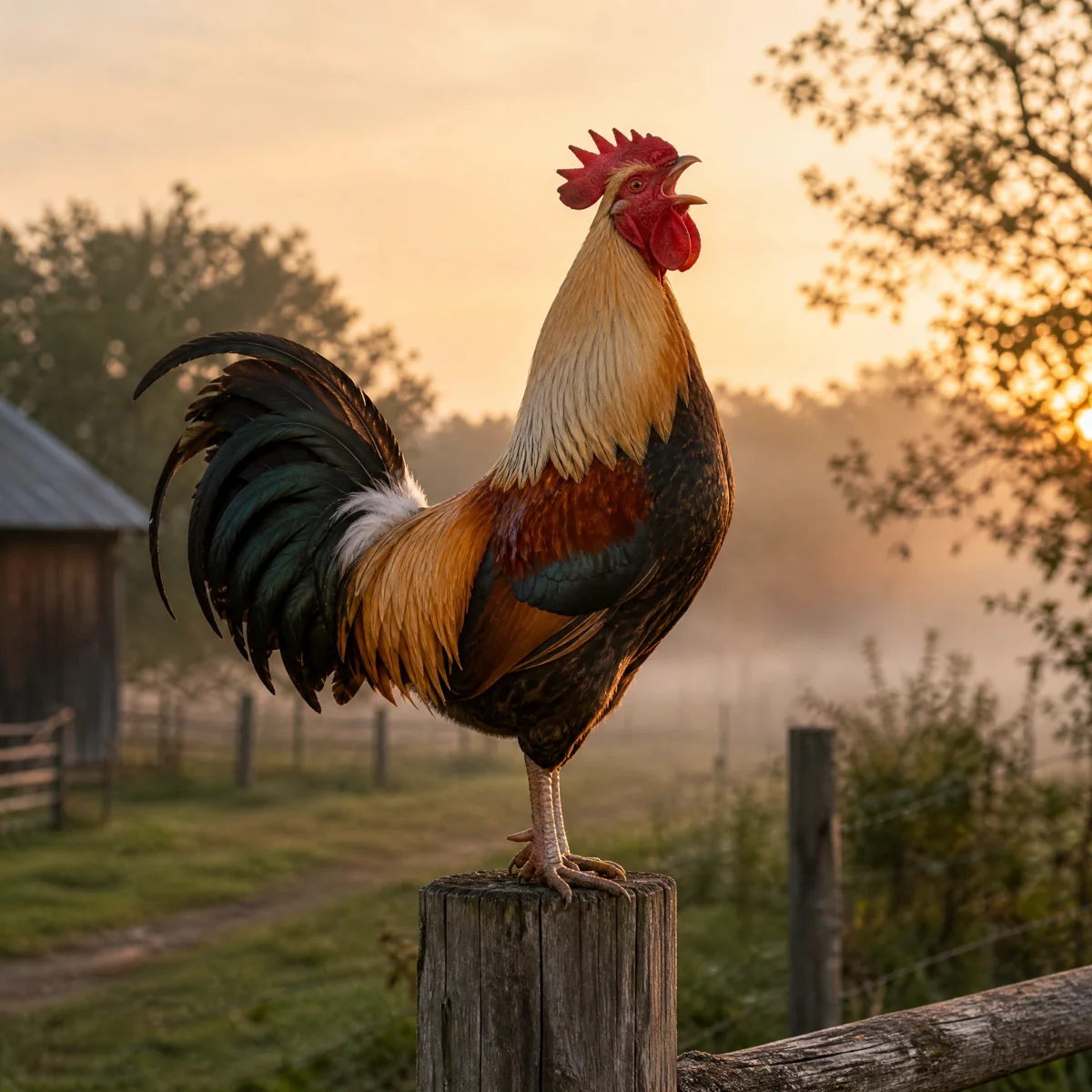
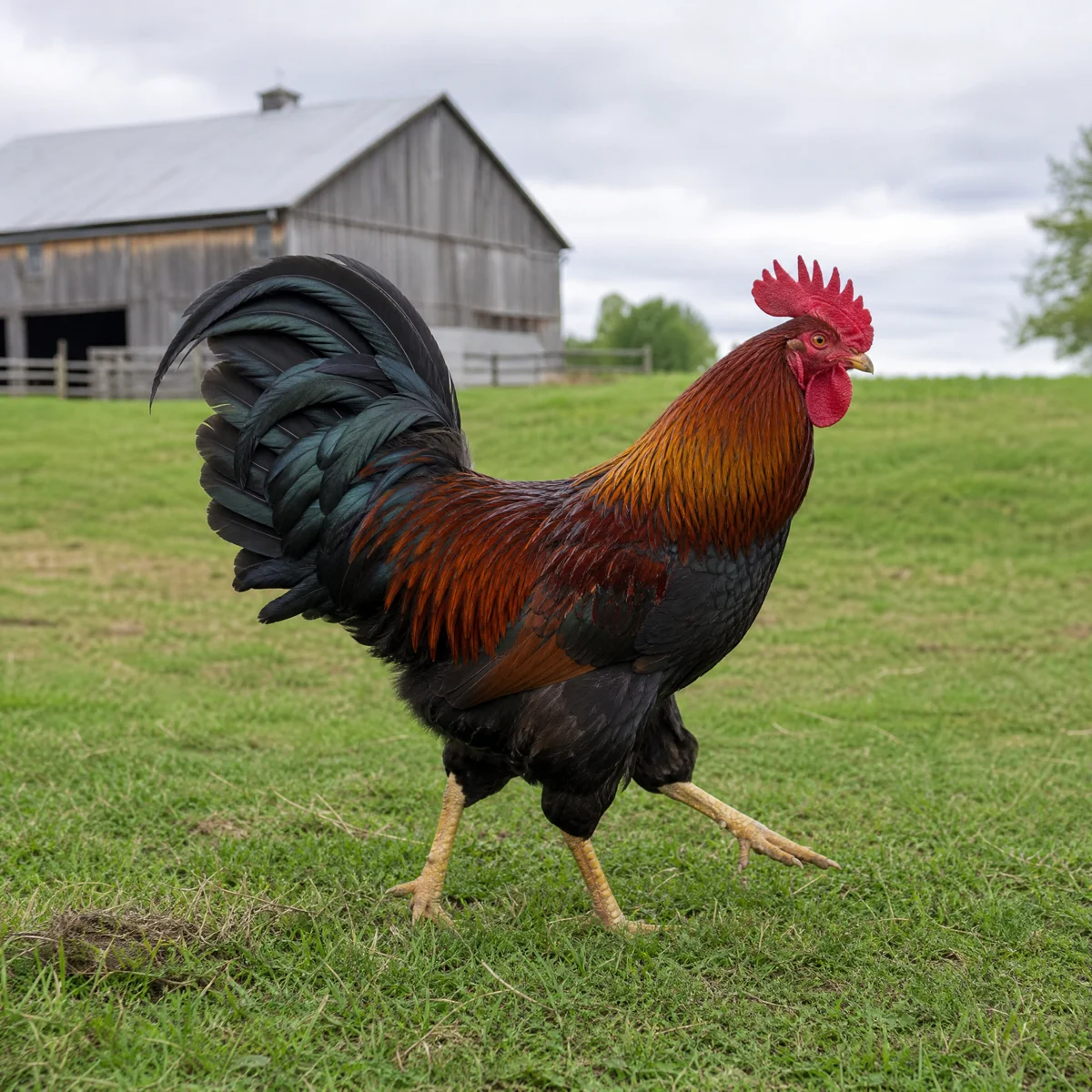
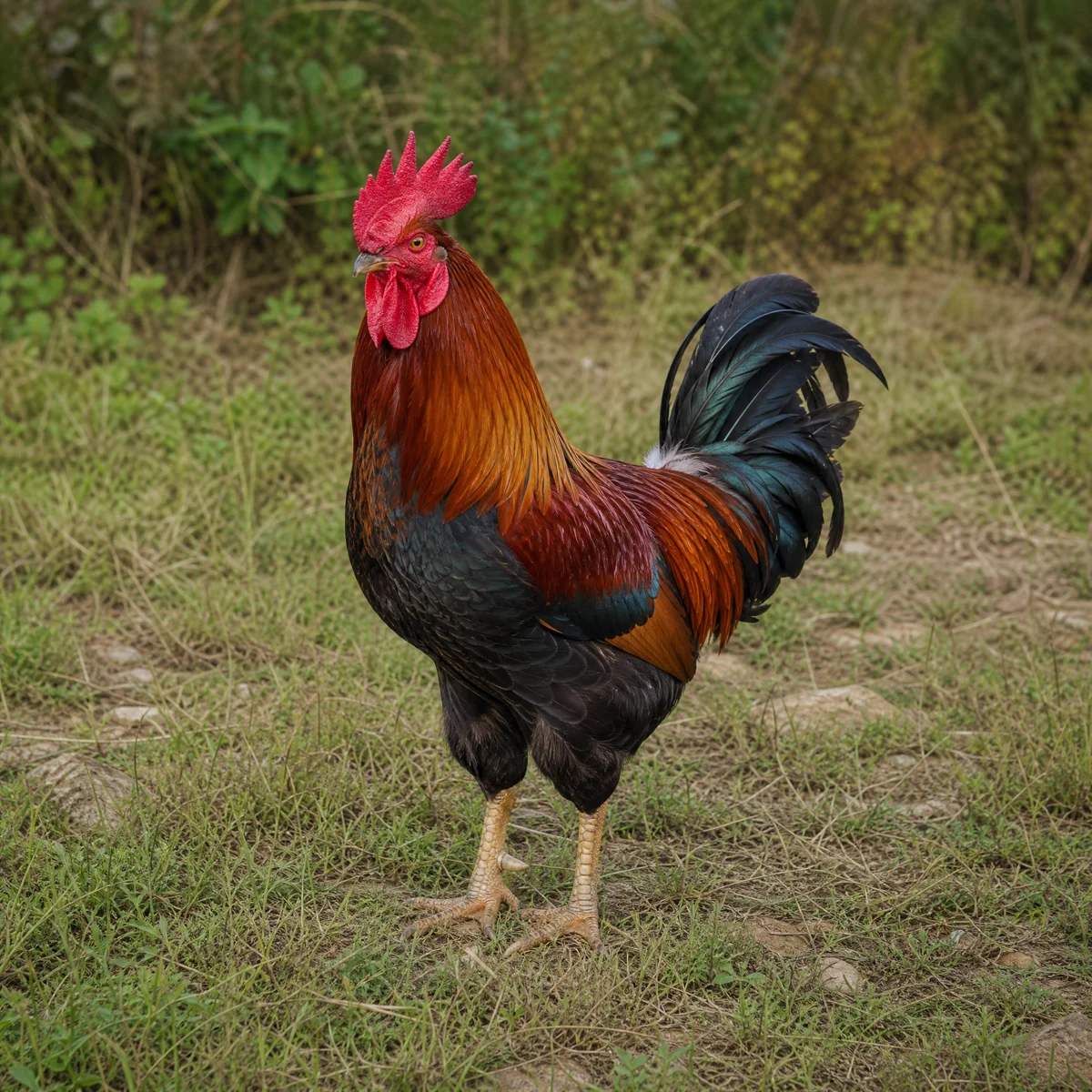
Males (cocks or roosters) bear showy plumage, a red comb and wattles, long tail feathers, and leg spurs, and are well known for crowing at dawn. Females (hens) have comparatively plain plumage and lay and incubate eggs. Chickens are gregarious and form a distinct dominance hierarchy known as the "pecking order," a concept first described in 1921 by the Norwegian zoologist Thorleif Schjelderup-Ebbe while observing chickens, which became the foundation for the study of dominance hierarchies in animal societies.
The timing and location of chicken domestication were long debated. Earlier hypotheses proposed domestication around 8,000–10,000 years ago in the Indus Valley or China's Yellow River basin, but a 2022 study (Peters et al., PNAS) that reassessed more than 600 archaeological sites concluded that the earliest unambiguous domestic chicken bones appear around 1650–1250 BCE at the Neolithic site of Ban Non Wat in central Thailand, and proposed that the spread of rice and millet cultivation acted as a "magnet" drawing wild red junglefowl into the human niche.
The genus name Gallus is Latin for "cock" or "rooster," and the species epithet gallus repeats the same meaning, making it a tautonymous scientific name. The varietal name domesticus is Latin for "of the household, domesticated." The English word "chicken" derives from Old English cicen, which originally referred to a young fowl.
Two conventions coexist regarding the chicken's taxonomic rank. One treats the domestic chicken as the distinct species Gallus domesticus Linnaeus, 1758; the other treats it as a subspecies of the wild red junglefowl, Gallus gallus domesticus. Modern molecular genetics conclusively shows that the chicken descends from the red junglefowl, with the Southeast Asian subspecies Gallus gallus spadiceus identified as the most likely direct ancestor (Wang et al., 2020). Following domestication, however, admixture occurred with the native Indian subcontinent subspecies (G. g. murghi) and others.
The chicken is the most common bird on Earth and a cornerstone of human protein supply, derived from the red junglefowl and domesticated in Southeast Asia roughly 3,500 years ago.
The chicken belongs to the phylum Chordata, class Aves, order Galliformes, family Phasianidae, and genus Gallus. Besides the red junglefowl, the genus Gallus comprises three other recognized species: the grey junglefowl (Gallus sonneratii), the Sri Lankan junglefowl (Gallus lafayettii), and the green junglefowl (Gallus varius).
Charles Darwin proposed early on that the red junglefowl (Gallus bankiva, now Gallus gallus) was the ancestor of the domestic chicken, and molecular phylogenetic research later supported this view. A study analyzing 863 Gallus genomes (Wang et al., 2020) identified G. gallus spadiceus, one of the five red junglefowl subspecies, as the closest ancestor, and estimated the divergence between this subspecies and the ancestral chicken lineage at about 12,800–6,200 years ago. This divergence date cannot be equated with the onset of domestication; rather, it represents an upper bound for the domestication timeframe. Ongoing hybridization between wild red junglefowl and domestic or free-ranging chickens is also flagged as a conservation concern that threatens the genetic integrity of wild populations.
| Species | Scientific name | Main distribution | Notes |
|---|---|---|---|
| Red junglefowl | Gallus gallus | Southeast Asia, parts of South Asia | Direct ancestor of the chicken; red comb, dark tail |
| Grey junglefowl | Gallus sonneratii | Southwestern India | Grey, spotted plumage; possible source of yellow-skin gene |
| Sri Lankan junglefowl | Gallus lafayettii | Endemic to Sri Lanka | Orange plumage, yellow comb patch |
| Green junglefowl | Gallus varius | Java and Lesser Sunda Islands | Iridescent green plumage, single comb |
| Domestic chicken | Gallus gallus domesticus | Worldwide | Roughly 1,600 breeds; domesticated form |
The chicken is a medium-sized bird with marked sexual dimorphism. Roosters have a large red comb and wattles, long curved ornamental tail feathers (sickle feathers), and spurs on the inner legs, with brightly colored plumage. Hens have smaller combs and wattles, plainer plumage, and shorter tail feathers. Plumage color, pattern, and body form vary enormously among breeds, ranging from white layers to black, barred, and golden varieties, and from clean legs to feathered legs.
Breed-to-breed variation is so large that a single figure is impractical. Small bantam breeds may weigh only about 0.5–1 kg, whereas large meat or exhibition breeds (e.g., Brahma, Cochin, Jersey Giant) can exceed 5 kg in males. Overall body length is roughly 0.4–0.7 m, with shoulder height around 0.3–0.5 m. The wild ancestor, the red junglefowl, is smaller and more agile.
The chicken has the strong legs and claws typical of galliforms, well suited to scratching the ground for food. Food is temporarily stored in the crop and ground up in the gizzard with the aid of swallowed small stones (grit). The beak is short and sturdy, and the wings are relatively short, allowing only brief bursts of flight rather than sustained flying. The comb and wattles are richly vascularized skin structures that aid thermoregulation and serve as social and reproductive signals.
The chicken is an omnivore, consuming grains, seeds, and green plants as well as insects, earthworms, small invertebrates, and occasionally small vertebrates. The wild red junglefowl's habit of feeding on bamboo seeds and rice grains is considered a key factor in their attraction to human grain fields during domestication (Peters et al., 2022). Scratching and pecking at the ground is the typical foraging behavior.
Chickens live in groups and establish a dominance hierarchy known as the "pecking order." Schjelderup-Ebbe first described this concept in 1921 after observing consistent dominance ranks in chicken flocks, and it went on to influence the broader study of dominance hierarchies in animal societies. The hierarchy is formed and maintained largely through pecking and determines priority of access to food, nesting, and roosting space.
Chickens are known to use more than 30 distinct vocalizations to convey predator alarms, food discoveries, nesting signals, and more. A rooster's dawn crowing is a territorial display. Chickens are fundamentally diurnal, foraging during the day and roosting on elevated perches to sleep at dusk. In wild and free-ranging settings they retain the arboreal roosting habit of sleeping in trees.
Wild and free-ranging chickens are targeted by a range of predators, including foxes, weasels, raptors, and snakes. They warn the flock with alarm calls and evade danger through short flights or by hiding. Roosters defend the flock and may attack with their spurs.
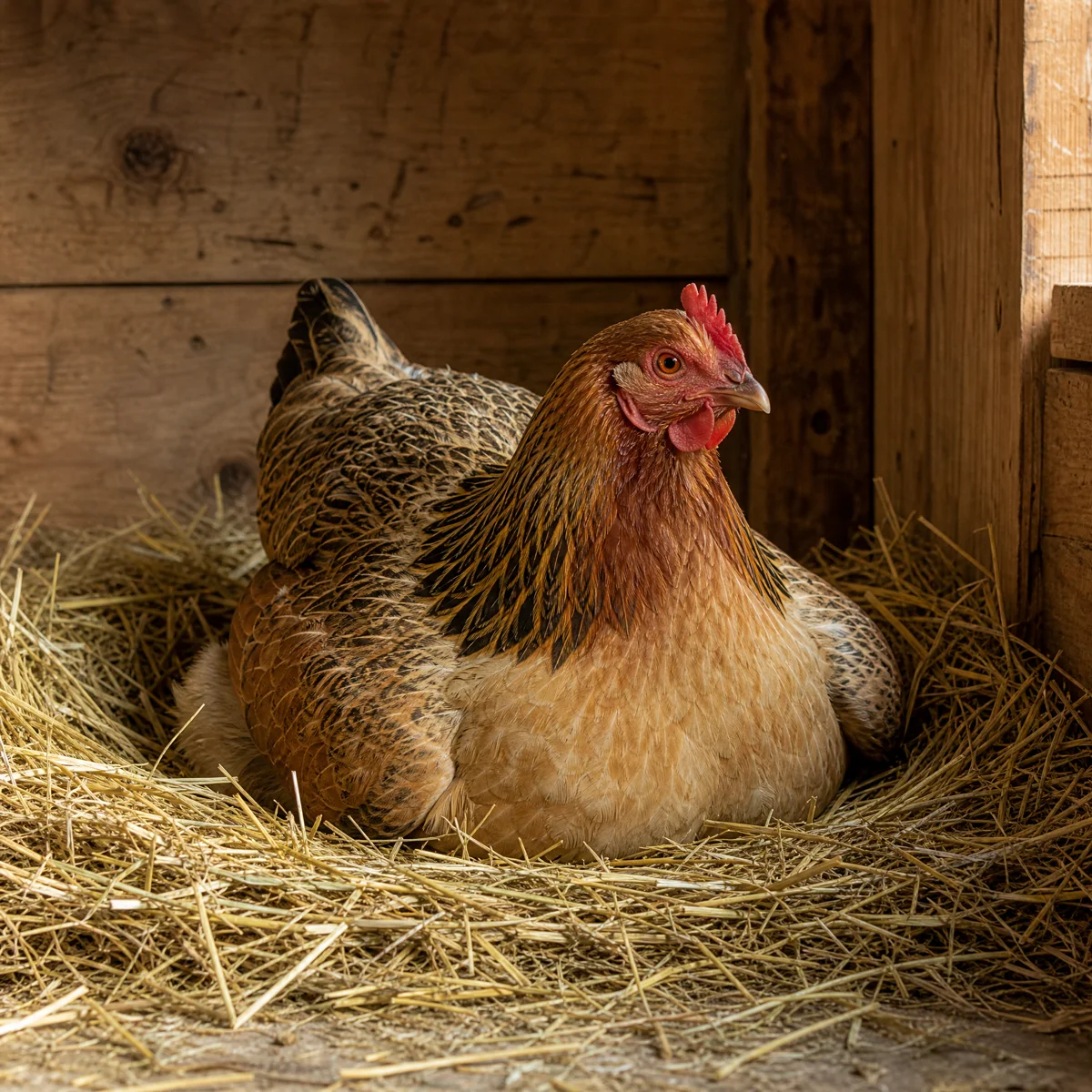
A hen typically lays one egg every 24–26 hours, and laying breeds have been selected to produce hundreds of eggs per year. The natural clutch size is roughly 10–15 eggs, and once a hen accumulates a certain number she begins incubation. Fertilized eggs hatch in about 21 days (�1 day depending on breed).
While incubating (broodiness), a hen rarely leaves the nest, and after hatching she leads the chicks about, teaching them to forage and protecting them. Chicks are precocial—able to walk and peck for food shortly after hatching. Sexual maturity is reached at roughly 5–6 months of age, depending on breed.
In natural or free-ranging conditions, chickens live about 5–10 years, with some individuals living longer. Commercial layers and broilers are culled much earlier on productivity grounds, so actual managed lifespan depends heavily on breed and rearing purpose.
The domestic chicken is distributed across virtually every continent and inhabited region, following humans. Its wild ancestor, the red junglefowl, occurs naturally in Southeast Asia (Thailand, Myanmar, Indochina, parts of Indonesia) and parts of South Asia. According to archaeological, linguistic, and genetic evidence, the chicken's global spread began in Southeast Asia, moved through South Asia and Mesopotamia, reached Mediterranean Europe and Ethiopia by around 800 BCE, and later spread to Oceania and the Americas through seafaring and trade.
Domestic chickens live in human-created environments such as farmyards, free-range farms, and intensive poultry facilities. The wild red junglefowl adapts well to disturbed vegetation such as secondary forest, bamboo groves, swidden (slash-and-burn) plots, and scrubland at forest edges, and it has been hypothesized that secondary vegetation created by human agriculture served as suitable early habitat during domestication (Peters et al., 2022).
The domestic chicken itself is not assessed on the IUCN Red List and, given its enormous numbers, is in no danger of extinction. The wild ancestor, the red junglefowl (Gallus gallus), is assessed as Least Concern (LC) by the IUCN. The principal conservation concern for the red junglefowl is genetic pollution from widespread hybridization with domestic and free-ranging chickens, which is gradually eroding the genetic identity of pure wild populations.
The modern poultry industry depends heavily on a small number of high-productivity commercial lines, leading to narrowing genetic diversity. Although the FAO recognizes close to 1,600 local indigenous breeds, many are at risk of disappearing as their rearing scale declines, making the conservation of animal genetic resources important for food security.
The chicken is one of humanity's most important sources of protein, producing meat (broilers) and eggs on a vast scale. Tens of billions of birds are slaughtered annually, and at any given moment roughly 26–33 billion are alive (FAO 2020). The poultry industry is a central pillar of agricultural economies and food systems.
Chickens and roosters appear across many cultures as symbols of dawn, vigilance, courage, and fertility. The rooster's crow was regarded as a herald of daybreak, and the Rooster (酉) occupies one of the twelve earthly branches in the East Asian zodiac. Cockfighting is a long-standing custom in many regions and also a subject of animal-welfare debate. The chicken is also a central model organism in biology and embryology, long used in the study of embryonic development.
Established facts include that the chicken descends from the red junglefowl and that the wild red junglefowl is assessed as Least Concern (LC) by the IUCN. Probable views include that G. gallus spadiceus is the closest ancestral subspecies and that domestication began in Southeast Asia (Wang et al., 2020; Peters et al., 2022). At the hypothesis level are the "cereal magnet" model—that rice and millet cultivation triggered domestication—and the dating of the earliest unambiguous domestic chickens to around 1650–1250 BCE, with the possibility that future excavations reveal earlier dates.
The earlier claim that chickens were domesticated around 8,000–10,000 years ago in the Indus Valley or China's Yellow River basin stemmed from specimen misidentification and stratigraphic disturbance, and much of it has been refuted in recent reassessments (Peters et al., 2022). Many specimens once described as "chicken bones" from Neolithic Chinese sites have been reidentified as pheasant bones.
The chicken is the most numerous bird on Earth, with roughly 26–33 billion individuals alive at any given moment.
The term 'pecking order' originated from studying the social hierarchy of chickens and is now applied even to human organizations.
The spread of rice and millet cultivation acting as a 'magnet' that drew wild red junglefowl into the human niche is the leading explanation for chicken domestication.
Chickens are known to use more than 30 distinct vocalizations to alert flockmates about predators, food, and more.
Chicks are precocial, able to walk and peck for food on their own shortly after hatching.
Many specimens once thought to be chicken bones at Neolithic Chinese sites turned out, on reassessment, to be pheasant bones.
Chickens grind their food without teeth by using small swallowed stones (grit) in the gizzard.
The chicken is a classic model organism in developmental biology, long used in experiments observing embryonic development.
As hybridization between wild red junglefowl and domestic chickens increases, the weakening of pure wild populations' genetic identity has become a conservation concern.
The chicken is derived from the wild red junglefowl (Gallus gallus), native to Southeast Asia and parts of South Asia. According to an analysis of 863 genomes (Wang et al., 2020), the Southeast Asian subspecies Gallus gallus spadiceus is identified as the closest ancestor.
Although 8,000–10,000 years ago was long suggested, a 2022 study (Peters et al., PNAS) reassessing more than 600 sites concluded that the earliest unambiguous domestic chicken bones appear around 1650–1250 BCE at Ban Non Wat in central Thailand. Southeast Asia about 3,500 years ago is the leading view.
A chicken egg hatches in about 21 days after incubation begins. Small bantams may hatch a day early and large breeds a day late.
According to the FAO, roughly 26–33 billion chickens are alive at any given moment, making them the most numerous bird on Earth and the most common domestic animal.
It is the dominance hierarchy that forms within a flock of chickens. The Norwegian zoologist Schjelderup-Ebbe first described it in 1921–1922 while observing chickens, and it became the foundation for the study of dominance hierarchies in animal societies.
Chickens are omnivores, eating grains, seeds, and green plants as well as insects, earthworms, and small invertebrates. Their characteristic behavior is scratching and pecking at the ground to find food.
The FAO (2020) recognizes close to 1,600 local indigenous breeds worldwide. However, as commercial poultry concentrates on a few lines, many indigenous breeds are at risk of disappearing.
Because two conventions coexist: treating the domestic chicken as the distinct species Gallus domesticus, or as a subspecies of the red junglefowl, Gallus gallus domesticus. Molecular genetics confirmed descent from the red junglefowl, and the trinomial is widely used to stress continuity with the wild species.
5images