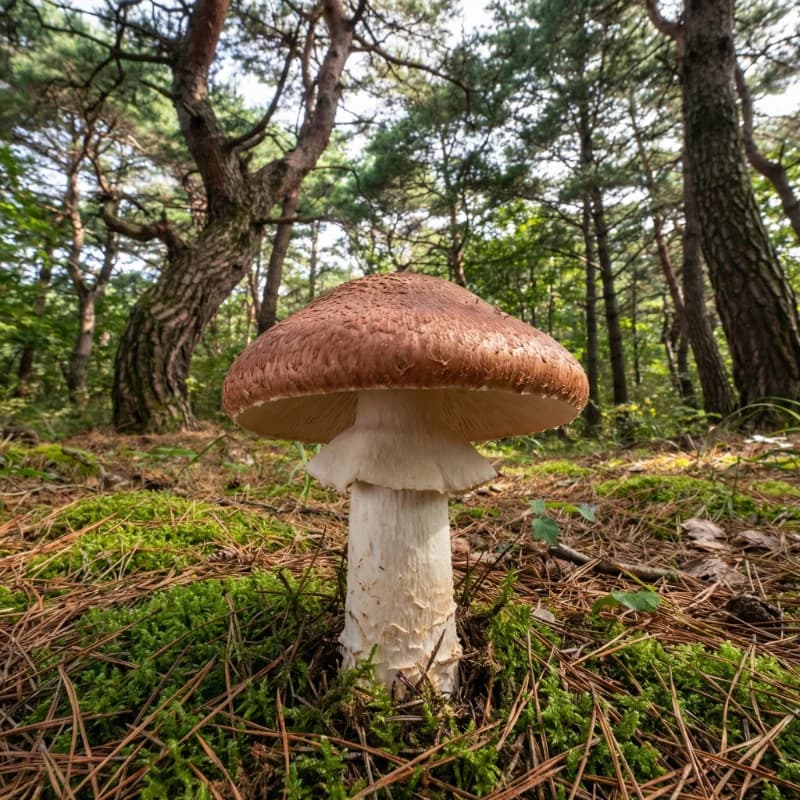
Button Mushroom
Creature Type
Agaricus bisporus
Scientific Name: "Agaricus originates from the Latin agaricum, derived from the ancient Greek agarikón (ἀγαρικόν, tree mushroom). Bisporus is a compound of the Latin bi (two) + sporus (spore), meaning 'having two spores,' derived from the characteristic of producing two basidiospores per basidium."
Physical Characteristics
Discovery
Habitat

The button mushroom (Agaricus bisporus (J.E. Lange) Imbach, 1946) is a saprotrophic fungus belonging to the phylum Basidiomycota, class Agaricomycetes, order Agaricales, family Agaricaceae, and genus Agaricus. It is the most widely cultivated and consumed edible mushroom in the world. Native to the temperate grasslands of Eurasia and North America, it is now commercially cultivated in more than 70 countries. It accounts for approximately 30–62% of global edible mushroom production (estimates vary by source), and as of 2025, the global button mushroom market is estimated at approximately $5.49 billion (Market Data Forecast, 2025).
The most distinctive biological feature of the button mushroom is that it produces only two basidiospores per basidium—in contrast to most basidiomycetes, which produce four. This trait is the origin of the epithet bisporus ('two spores'). Each spore already contains two non-sister nuclei, enabling reproduction without separate mating through a mechanism known as 'secondary homothallism.'
Commercially sold button mushrooms are distinguished by maturity stage and color: immature white (button mushroom, white mushroom), immature brown (cremini, baby bella), and mature brown (portobello)—yet all belong to the same species. Most white button mushrooms sold worldwide today are descendants of a single white mutant discovered in Pennsylvania, USA, in 1925. The species is not listed on the IUCN Red List (NE, not evaluated); while relatively rare in the wild, it is mass-produced globally through commercial cultivation.
1. Overview
The genus name Agaricus derives from the Latin agaricum, which in turn comes from the ancient Greek ἀγαρικόν (agarikón). This term referred to a tree fungus used medicinally in antiquity, and is thought to originate from 'Agaria,' a place name in Sarmatia on the Black Sea coast. The specific epithet bisporus is a compound of the Latin bi (two) and sporus (spore), meaning 'having two spores,' derived from the characteristic of producing only two basidiospores per basidium rather than the usual four.
In English-speaking regions, the mushroom is known by various names depending on its maturity stage and color. In its immature white state it is called button mushroom, white mushroom, common mushroom, table mushroom, or champignon de Paris; in its immature brown state, cremini (crimini), baby bella, Swiss brown, Italian brown, or chestnut mushroom; and in its mature brown state, portobello, portabella, or portobella.
The currently accepted scientific name is Agaricus bisporus (J.E. Lange) Imbach, 1946. Three varieties are recognized, each exhibiting distinct reproductive strategies: var. bisporus (secondary homothallism, 2 spores per basidium), var. burnettii Kerrigan & Callac, 1993 (heterothallism, 4 spores per basidium), and var. eurotetrasporus Callac & Guinb., 2003 (homothallism, 4 spores per basidium).
The button mushroom is the most widely cultivated and consumed edible mushroom in the world, a saprotrophic fungus with a unique secondary homothallic reproductive mode that produces only two spores per basidium.
2. Classification and Phylogeny
| Rank | Name |
|---|---|
| Kingdom | Fungi |
| Phylum | Basidiomycota |
| Subphylum | Agaricomycotina |
| Class | Agaricomycetes |
| Subclass | Agaricomycetidae |
| Order | Agaricales |
| Family | Agaricaceae |
| Genus | Agaricus |
| Species | A. bisporus |
The taxonomic history of the button mushroom has undergone complex revisions. British botanist Mordecai Cubitt Cooke first described it as Agaricus campestris var. hortensis in his 1871 Handbook of British Fungi (Cooke, 1871). In 1926, Danish mycologist Jakob Emanuel Lange examined cultivated specimens and named it Psalliota hortensis var. bispora (Lange, 1926). It was elevated to species level by Schäffer & Möller in 1938–1939 as Psalliota bispora, and in 1946, Emil Imbach assigned the current name Agaricus bisporus when the genus Psalliota was subsumed into Agaricus (Imbach, 1946). The type locality is Denmark (Biota of New Zealand).
A 2023 mitogenome analysis of 361 global strains by Zhang et al. identified seven genetic clades: Clade Eurotetrasporus, Clade China, Clade America I, Clade America II, Clade Europe I, Clade Europe II, and Clade Europe III. All commercial cultivated strains belong to only two of these clades (Europe II and Europe III), demonstrating that the genetic diversity of cultivated strains is extremely limited compared to wild populations (Zhang et al., 2023).
A 2026 whole-genome resequencing study of 482 strains by Ling et al. concluded that geographic isolation driven by Quaternary glaciation, centered around approximately 2 million years ago (Mya), drove the divergence of the species across North America and Europe, giving rise to the three varieties. Interglacial expansions subsequently facilitated widespread gene flow among populations (Ling et al., 2026).
| Trait | var. bisporus | var. burnettii | var. eurotetrasporus |
|---|---|---|---|
| Author/Year | (J.E. Lange) Imbach, 1946 | Kerrigan & Callac, 1993 | Callac & Guinb., 2003 |
| Spores per basidium | 2 | 4 | 4 |
| Reproductive mode | Secondary homothallism | Heterothallism | Homothallism |
| Distribution | Worldwide cultivation; wild in Eurasia & North America | Sonoran/Mojave Desert, California, USA | France, Greece (Mediterranean) |
| Commercial importance | Very high | Low (research use) | Low (research use) |
3. Morphology and Anatomy
The fruiting body (basidiocarp) of the button mushroom consists of a pileus (cap), gills (lamellae), stipe (stem), and annulus (ring). The pileus of wild specimens is pale grayish-brown with broad, flat scales, fading toward the margin. Commercial cultivars are white or brown. Young specimens are hemispherical, flattening as they mature.
The pileus diameter ranges from approximately 3–10 cm in the immature state and can reach 10–15 cm in the portobello (mature brown) stage. The stipe is approximately 3–6 cm tall and 1–3 cm in diameter. Individual fruiting bodies typically weigh about 10–30 g, though portobello specimens can exceed this.
The gills are narrow and crowded, free from the stipe. They are pink in young specimens, turning reddish-brown and finally dark brown to blackish-brown as the mushroom matures. The gill edges are whitish due to cheilocystidia. The spores are ellipsoidal to subglobose, approximately 4.5–5.5 × 5–7.5 μm. The spore print is dark brown.
The most distinctive morphological feature of the button mushroom is the production of only two basidiospores per basidium. While most basidiomycetes produce four spores per basidium, var. bisporus produces only two, and each spore already contains two non-sister nuclei, so dikaryotic mycelium is formed immediately upon germination. Exceptionally, var. burnettii and var. eurotetrasporus produce four spores per basidium.
A thick, narrow, membranous ring is present on the upper stipe and may be striate on its upper surface; it forms when the partial veil tears as the mushroom matures. The flesh is firm and white, staining pale pink to reddish when cut or bruised. Crucially, it never stains yellow — a key distinguishing feature from the toxic Agaricus xanthodermus.
The progenitor of modern commercial strains was brown, similar to wild specimens. In 1925, a white variant was discovered growing among brown button mushrooms at the Keystone Mushroom Farm in Coatesville, Pennsylvania, USA. Farm owner and mycologist Louis Ferdinand Lambert isolated and commercialized the mutant. According to Ling et al. (2026), white cap coloration is a key trait selected during domestication, and a loss-of-function mutation haplotype (AbPPO1Hap-2) in the polyphenol oxidase 1 gene (AbPPO1, chromosome 8) is the genetic basis of white coloration. This haplotype harbors a mutation in the gene encoding the key enzyme of the melanin biosynthesis pathway, confirmed as a loss-of-function mutation through transformation experiments (Ling et al., 2026).
4. Ecology and Behavior
The button mushroom is a saprotroph, obtaining nutrients by decomposing dead organic matter. It produces a diverse array of enzymes that break down complex plant biomass including cellulose, hemicellulose, and lignin. A 2012 genome analysis by Morin et al. showed that the genome encodes mechanisms for adaptation to a humus-rich ecological niche.
In nature, button mushrooms grow in compost, leaf litter, humus-rich soil, and dung heaps of horses or sheep. Commercial cultivation uses a composted substrate of fermented horse manure, straw, and gypsum. Optimal growing conditions are approximately 16–18°C, relative humidity of 85–95%, and CO₂ concentration below 1,000 ppm.
In the wild, fruiting bodies appear from late spring through autumn, particularly after rainfall. In commercial cultivation, environmental conditions are artificially controlled to enable year-round production.
As a saprotroph, it plays an important ecological role in decomposing organic matter and cycling nutrients, breaking down dead plant material and animal dung to return nutrients to the soil. The mycelium also interacts with soil microbial communities, and some studies report that it contributes to improving soil structure.
5. Reproduction and Life Cycle
The button mushroom follows a typical basidiomycete life cycle with secondary homothallic characteristics. When a mature basidiospore lands on a suitable substrate, it germinates to form mycelium. In var. bisporus, each basidiospore already contains two non-sister nuclei, so dikaryotic mycelium is formed immediately upon germination, allowing sexual reproduction without a separate mating event.
The dikaryotic mycelium forms an extensive network within the substrate, and when appropriate environmental conditions are met (temperature change, humidity, CO₂ concentration, light stimulus, etc.), it produces fruiting bodies. Basidia develop on the gills of fruiting bodies, and two basidiospores are formed and released from each basidium.
The three varieties each exhibit distinct reproductive strategies. Var. bisporus is secondary homothallic: in the two-spore system, each spore contains two nuclei, enabling self-fertilization. Var. burnettii is heterothallic: in the four-spore system, fusion of hyphae with different mating types is required. Var. eurotetrasporus is homothallic: it produces four spores but is capable of self-fertilization. Evolutionarily, the progression from homothallism to secondary homothallism to heterothallism is inferred.
Commercial cultivation proceeds through the following stages: Composting (mixing horse manure, straw, and gypsum; approximately 2–3 weeks of fermentation); Spawning (mixing grain spawn colonized by mycelium into the compost); Incubation (approximately 2–3 weeks); Casing (covering the surface with a mixture of peat and lime); Induction (regulating temperature and CO₂); and Harvesting (beginning approximately 3 weeks after casing, typically over 3–4 flushes).
6. Distribution and Habitat
The button mushroom is native to temperate grasslands of Eurasia and North America. In the wild it is relatively rarely encountered, occurring mainly in grassy fields, meadows, gardens, and parks where herbaceous vegetation dominates. In Britain and Ireland it is found almost exclusively in grassland (First Nature).
Genetically distinct native North American populations have been recorded along the California coast (Monterey cypress forests), the mountains of New Mexico (subalpine mixed forests), and the mountains of Alberta (spruce forests) (MushroomExpert.Com). According to Zhang et al. (2023), the most common wild habitat is warm-temperate humid forest with rich leaf litter and humus-rich soil; in western France it is found as a dominant macrofungus in the leaf litter of Monterey cypress (Cupressus macrocarpa) introduced approximately 170 years ago. It has also been found in semi-arid habitats such as Atlantic coastal dunes in France and beneath mesquite shrubs in the Sonoran Desert of California.
The button mushroom is commercially cultivated in more than 70 countries worldwide. According to 2022 FAO statistics, the leading producers of mushrooms and truffles are China (approximately 45.4 million tonnes, 94%), Japan (0.47 million tonnes), the USA (0.32 million tonnes), Poland (0.26 million tonnes), and the Netherlands (0.24 million tonnes) (FAOSTAT, 2024). In the United States, button mushrooms account for approximately 80–90% of total mushroom production (USDA, 2025), with Chester County, Pennsylvania, serving as the center of US production and known as the 'Mushroom Capital of the World.'
According to the large-scale population genomics study by Ling et al. (2026), geographic isolation driven by Quaternary glaciation, centered around approximately 2 million years ago, drove the divergence of the species. The isolation of North American and European populations during glacial periods gave rise to the three varieties, while interglacial expansions promoted gene flow between populations, shaping the mixed-origin populations of var. bisporus seen today.
7. Evolution and Genetics
According to the 2023 mitogenome study by Zhang et al., A. bisporus is estimated to have diverged from closely related species A. qilianensis and A. sinotetrasporus approximately 4.62 million years ago (Ma). The species originated in Europe, with the var. eurotetrasporus lineage diverging approximately 1.47 Ma, European lineages diverging approximately 1.17 Ma, and some populations expanding from Europe around 0.72 Ma to give rise to Chinese and American lineages (Zhang et al., 2023).
The 2026 whole-genome analysis of 482 strains by Ling et al. estimated the divergence time at approximately 2 million years ago, differing from Zhang et al. (2023), likely due to differences in genomic data used (mitogenome vs. whole genome) and analytical methods. Both studies agree that Quaternary glaciation was the primary driver of diversification in the button mushroom.
The button mushroom genome is approximately 30–33.5 Mb in size and consists of 13 chromosomes (Morin et al., 2012; Sonnenberg et al., 2020; Wellcome Open Research, 2024). The var. bisporus reference genome (ASM168247v1) in NCBI GenBank is reported as approximately 30.8 Mb across 13 chromosomes. The mitochondrial genome is approximately 134–148 kb—very large among basidiomycetes—with 43 group I introns and 3 group II introns accounting for approximately 45.3% of the mitogenome size.
The 2026 study by Ling et al. was the first to elucidate the genetic basis of button mushroom domestication at a large-scale population genomics level. Through selective sweep analysis and genome-wide association studies (GWAS), they confirmed that cap color variation is determined by the polyphenol oxidase 1 gene (AbPPO1) on chromosome 8. This gene encodes the key enzyme of the melanin biosynthesis pathway, and a unique haplotype with a loss-of-function mutation (AbPPO1Hap-2) is present in white cultivars. Kinship analysis confirmed that white cap coloration was the key trait selected during domestication (Ling et al., 2026).
Cultivated strains belong to only 2 of 7 genetic clades and exhibit only 2 of 30 intron distribution patterns (IDPs) (Zhang et al., 2023). This demonstrates that the genetic diversity of cultivated strains is extremely limited compared to wild populations, underscoring the necessity of utilizing wild genetic resources in breeding programs aimed at improving disease resistance, climate adaptation, and quality.
8. Conservation Status and Threats
The button mushroom is not listed on the IUCN Red List (NE, not evaluated). Fungi are very rarely assessed by the IUCN compared to animals or plants, and given the large-scale commercial cultivation of A. bisporus worldwide, it is considered not at risk of extinction at the species level.
Systematic monitoring data on wild button mushroom populations are lacking. Wild populations are relatively rarely encountered, and factors such as the decline of temperate grassland habitats, pesticide use, and land-use change may affect them. However, no formal assessment of the conservation status of wild populations has been conducted.
The extremely limited genetic diversity of commercial strains is an important concern from an industrial perspective. The collection and conservation of wild genetic resources is essential for breeding programs targeting disease resistance, climate change adaptation, and quality improvement.
9. Nutrition and Health
Raw white button mushrooms provide approximately 22 kcal (93 kJ) per 100 g, with water 92.45 g, carbohydrates 3.26 g, protein 3.09 g, fat 0.34 g, and dietary fiber 1.0 g (USDA FoodData Central). They are an excellent source of B vitamins, providing riboflavin (B₂) 0.402 mg (31% DV), niacin (B₃) 3.607 mg (23% DV), and pantothenic acid (B₅) 1.497 mg (30% DV). Minerals include potassium 318 mg (11% DV), phosphorus 86 mg (7% DV), and selenium 9.3 μg (17% DV).
Fresh button mushrooms contain only approximately 0.2 μg (8 IU) of vitamin D per 100 g, but following UV light exposure, ergocalciferol (D₂) content increases substantially to 11.2 μg (446 IU) (USDA). This occurs because ergosterol in the mushroom is converted to vitamin D₂ by ultraviolet radiation, and some commercial button mushrooms are intentionally UV-treated and sold as 'vitamin D-enhanced mushrooms.'
Button mushrooms contain trace amounts of agaritine, a phenylhydrazine derivative. While potential carcinogenicity of high-dose agaritine has been reported in some animal studies, a 2010 review by Shepherd et al. concluded that agaritine from consumption of cultivated button mushrooms does not pose a known toxicological risk to healthy humans (Shepherd et al., 2010). Agaritine is substantially reduced during cooking, and at typical consumption levels is not considered a health concern.
Button mushrooms contain a variety of bioactive compounds including ergothioneine, selenium, phenolic compounds, beta-glucans, and polysaccharides. In vitro and animal studies have reported antioxidant, immunomodulatory, potential anticancer, blood glucose and cholesterol-regulating, antimicrobial, anti-inflammatory, and gut health-promoting effects (Blumfield et al., 2020; Usman et al., 2021). However, most of these effects require further validation through human clinical trials.
10. Relationship with Humans
The first scientific record of commercial button mushroom cultivation was made in 1707 by French botanist Joseph Pitton de Tournefort. Early methods involved transplanting wild-collected mycelium into compost, which suffered from pathogen contamination problems. In 1780, year-round commercial production began in underground quarry caves near Paris, leading to the mushroom being called 'champignon de Paris (mushroom of Paris).' In 1893, the Pasteur Institute developed sterilized pure-culture spawn, laying the foundation for modern cultivation. A white mutant was discovered in Pennsylvania, USA in 1925, and in 1980 the Netherlands developed the first commercial F1 hybrid cultivar, 'Horst U1.'
The button mushroom is the most economically important edible mushroom in the world. As of 2025, the global button mushroom market is estimated at approximately $5.49 billion and is projected to grow to approximately $12.2 billion by 2033 (Market Data Forecast, 2025). In the United States, per the August 2025 USDA report, Agaricus mushrooms account for 80% of certified organic mushroom sales by volume.
The button mushroom is the most widely used mushroom in Western cuisine, employed in a wide variety of preparations including raw (salads), sautéed, grilled, fried, stewed, in soups, and in sauces. Portobellos are grilled whole as 'mushroom steaks' or stuffed and baked. In South Korea, they are primarily used in Western dishes such as pizza, pasta, and steak, as well as in hot pot and stir-fry dishes.
The mushroom cultivation industry has an environmentally friendly dimension in converting agricultural waste (straw, manure, etc.) into valuable food. Spent mushroom substrate remaining after commercial cultivation is recycled as a soil amendment, compost, or for bioenergy production, contributing to circular agriculture.
11. Comparison with Similar Species — Button Mushroom vs. Field Mushroom
The button mushroom (A. bisporus) and its closest relative, the field mushroom (A. campestris), are often confused but are distinct species.
| Trait | A. bisporus (Button Mushroom) | A. campestris (Field Mushroom) |
|---|---|---|
| Spores per basidium | 2 (var. bisporus) | 4 |
| Cap diameter | 5–15 cm | 5–10 cm |
| Gill color change | Pink → brown → dark brown | Pink (more vivid) |
| Primary habitat | Commercial cultivation; rare in wild | Wild grasslands, meadows |
| Ease of cultivation | Easy | Difficult |
| Fruiting season | Year-round (cultivated) | Summer–autumn |
| Commercial production | #1 worldwide | Extremely limited |
Several toxic mushrooms resemble the button mushroom in appearance, and caution is essential when foraging in the wild. The Destroying Angel (Amanita virosa, A. bisporigera, A. verna) is deadly, characterized by completely white gills, a volva at the stem base, and a white spore print. The Death Cap (Amanita phalloides) is one of the most toxic mushrooms in the world. Agaricus xanthodermus belongs to the same genus as the button mushroom but is toxic; it is distinguished by its flesh staining bright yellow when cut or bruised and by a phenol (carbolic acid) odor. Entoloma sinuatum, a toxic mushroom found in Europe, resembles the button mushroom in appearance but has gills that change from yellowish to pink and lacks a ring.
12. Uncertainties and Open Questions
The taxonomic position of the button mushroom (genus Agaricus, family Agaricaceae), the production of 2 spores per basidium (var. bisporus), the secondary homothallic reproductive mode, genome size (approximately 30–33.5 Mb, 13 chromosomes), and Eurasian–North American origin have been established by multiple independent studies. The genetic basis of white coloration (loss-of-function mutation in the AbPPO1 gene) was also established by Ling et al. (2026).
The European origin hypothesis and diversification driven by Quaternary glaciation are well-supported by two independent large-scale studies (Zhang et al., 2023; Ling et al., 2026), though estimates of the divergence time differ (approximately 2 Ma vs. approximately 4.62 Ma).
Why the button mushroom evolved its unique reproductive mode of producing only two spores per basidium, and how this relates to its adaptation to cultivation, is not fully understood. Whether the intron losses observed in cultivated strains occurred before or after domestication also remains uncertain. The details of the enzymatic mechanisms by which the button mushroom degrades complex plant biomass are still under investigation. Outstanding questions include: the mechanisms of resistance to mushroom virus diseases (MVX, etc.) and bacterial and fungal pathogens; the impact of climate change on wild populations; and the clinical validation of health effects reported in in vitro and animal studies.
The misconception that button mushrooms, cremini, and portobello are different species is widespread, but all are the same species at different maturity stages and color variants. The Korean name 'yangsongyi (洋松栮)' implies a connection to the pine mushroom (matsutake), but the two species are entirely unrelated both taxonomically and ecologically.
13. Data Tables
Table 1. Nutritional Composition of Button Mushroom (Raw, White, per 100 g, USDA)
| Nutrient | Amount | % Daily Value |
|---|---|---|
| Energy | 93 kJ (22 kcal) | — |
| Water | 92.45 g | — |
| Protein | 3.09 g | — |
| Fat | 0.34 g | — |
| Carbohydrates | 3.26 g | — |
| Dietary fiber | 1.0 g | — |
| Riboflavin (B2) | 0.402 mg | 31% |
| Niacin (B3) | 3.607 mg | 23% |
| Pantothenic acid (B5) | 1.497 mg | 30% |
| Potassium | 318 mg | 11% |
| Phosphorus | 86 mg | 7% |
| Selenium | 9.3 μg | 17% |
Table 2. Global Mushroom and Truffle Production (2022, FAO)
| Country | Production (million tonnes) | Share (%) |
|---|---|---|
| China | 45.4 | 94% |
| Japan | 0.47 | 1.0% |
| USA | 0.32 | 0.7% |
| Poland | 0.26 | 0.5% |
| Netherlands | 0.24 | 0.5% |
| Other | 1.61 | 3.3% |
| World Total | 48.3 | 100% |
14. References
- Imbach, E.J. (1946). Pilzflora des Kantons Luzern und der angrenzen Innerschweiz. Mitteilungen der naturforschenden Gesellschaft Luzern, 15, 5–85.
- Cooke, M.C. (1871). Handbook of British Fungi, Vol. 1. London: Macmillan and Co., p. 138.
- Lange, J.E. (1926). Studies in the agarics of Denmark. Part VI. Psalliota, Russula. Dansk Botanisk Arkiv, 4(12), 1–52.
- Morin, E., et al. (2012). Genome sequence of the button mushroom Agaricus bisporus reveals mechanisms governing adaptation to a humic-rich ecological niche. Proceedings of the National Academy of Sciences, 109(43), 17501–17506. https://doi.org/10.1073/pnas.1206847109
- Zhang, M.Z., et al. (2023). Insight into the evolutionary and domesticated history of the most widely cultivated mushroom Agaricus bisporus via mitogenome sequences of 361 global strains. BMC Genomics, 24, 176. https://doi.org/10.1186/s12864-023-09257-w
- Ling, Z.L., et al. (2026). Genomic signatures of evolution and domestication in the button mushroom Agaricus bisporus. Current Biology. https://doi.org/10.1016/j.cub.2025.12.008
- Callac, P., Billette, C., Imbernon, M., & Kerrigan, R.W. (1993). Morphological, genetic, and interfertility analyses reveal a novel, tetrasporic variety of Agaricus bisporus from the Sonoran Desert of California. Mycologia, 85(5), 835–851. https://doi.org/10.2307/3760617
- Sonnenberg, A.S.M., et al. (2020). Telomere-to-telomere assembled and centromere annotated genomes of the two main commercial strains of Agaricus bisporus. Nature Scientific Reports, 10, 14653. https://doi.org/10.1038/s41598-020-71043-5
- Blumfield, M., et al. (2020). Examining the health effects and bioactive components in Agaricus bisporus mushrooms: A scoping review. Journal of Nutritional Biochemistry, 84, 108453. https://doi.org/10.1016/j.jnutbio.2020.108453
- Usman, M., et al. (2021). Nutritional, Medicinal, and Cosmetic Value of Bioactive Compounds in Button Mushroom (Agaricus bisporus): A Review. Applied Sciences, 11(13), 5943. https://doi.org/10.3390/app11135943
- Shepherd, S.E., et al. (2010). Mushrooms and agaritine: A mini-review. Journal of Functional Foods, 2(2), 91–98. https://doi.org/10.1016/j.jff.2010.02.001
- FAO. (2024). FAOSTAT: Production of mushrooms and truffles 2022. Food and Agriculture Organization of the United Nations. https://www.fao.org/faostat/
- USDA. (n.d.). FoodData Central: Mushrooms, white, raw. https://fdc.nal.usda.gov/food-details/169251/nutrients
- Sonnenberg, A.S.M., Baars, J.J.P., Gao, W., & Visser, R.G.F. (2017). Developments in breeding of Agaricus bisporus var. bisporus: progress made and technical and legal hurdles to take. Applied Microbiology and Biotechnology, 101(5), 1819–1829. https://doi.org/10.1007/s00253-017-8102-2
- Wellcome Open Research. (2024). The genome sequence of the cultivated mushroom, Agaricus bisporus. Wellcome Open Research, 9, 621. https://wellcomeopenresearch.org/articles/9-621
- Jeong, S.C., et al. (2010). White button mushroom (Agaricus bisporus) lowers blood glucose and cholesterol levels in diabetic and hypercholesterolemic rats. Nutrition Research, 30(1), 49–56. https://doi.org/10.1016/j.nutres.2009.12.003
- Market Data Forecast. (2025). Agaricus Bisporus Market Size, Share, Trends & Analysis, 2033. https://www.marketdataforecast.com/market-reports/agaricus-bisporus-market
- Spencer, D.M. (1985). The mushroom—its history and importance. In Flegg P.B., Spencer D.M., Wood D.A. (eds.), The Biology and Technology of the Cultivated Mushroom. New York: John Wiley and Sons, pp. 1–8.
- MushroomExpert.Com. (n.d.). Agaricus bisporus. https://www.mushroomexpert.com/agaricus_bisporus.html
- Atila, F., Owaid, M.N., & Shariati, M.A. (2017). The nutritional and medical benefits of Agaricus bisporus: A review. Journal of Microbiology, Biotechnology and Food Sciences, 7(3), 281–286.
Fun Facts
The button mushroom is the most widely cultivated and consumed mushroom in the world, commercially grown in over 70 countries. As of 2022, China alone accounts for 94% of global mushroom production—approximately 45.4 million tonnes (FAO, 2024).
Most white button mushrooms sold in stores worldwide today are descendants of a single natural mutation discovered at a mushroom farm in Coatesville, Pennsylvania, USA in 1925.
A landmark 2026 genomic study (Ling et al.) unlocked the secret of the white button mushroom: a loss-of-function mutation in the melanin biosynthesis gene AbPPO1 on chromosome 8 is responsible for the white coloration, and this was the key trait selected during the domestication of the button mushroom.
The most distinctive biological feature of the button mushroom is that it produces only two spores per basidium. Each spore already contains two nuclei, enabling reproduction without a separate mating event—a mode known as 'secondary homothallism.'
Exposing button mushrooms to sunlight for 30 minutes to an hour increases their vitamin D content by approximately 56 times (from 0.2 μg to 11.2 μg per 100 g). This occurs because ergosterol in the mushroom is converted to vitamin D₂ by ultraviolet radiation.
The Korean name '양송이 (洋松栮)' means 'Western pine mushroom,' but the button mushroom and the pine mushroom (matsutake) are completely unrelated both taxonomically and ecologically. The pine mushroom is a mycorrhizal fungus that lives in symbiosis with pine trees, while the button mushroom is a saprotroph that decomposes organic matter.
In 1780, year-round commercial production of button mushrooms began in underground quarry caves near Paris, earning the mushroom its famous nickname 'champignon de Paris (mushroom of Paris).' The caves maintained a constant temperature and high humidity ideal for mushroom cultivation.
A mitogenome analysis of 361 global strains found that all commercial button mushroom cultivars belong to only 2 of 7 genetic clades, demonstrating that the genetic diversity of cultivated strains is extremely limited compared to wild populations (Zhang et al., 2023).
The button mushroom is estimated to have diverged from related species approximately 2 to 4.62 million years ago, with Quaternary glaciation thought to be the primary driver of its divergence into the three varieties recognized today (Zhang et al., 2023; Ling et al., 2026).
The mitochondrial genome of the button mushroom is approximately 134–148 kb—very large among basidiomycetes—with introns comprising approximately 45.3% of the total mitogenome.
At only approximately 22 kcal per 100 g, the button mushroom is a low-calorie food that nonetheless delivers 31% of the daily value for riboflavin (B₂) and 30% for pantothenic acid (B₅), making it an excellent source of B vitamins.
FAQ
The Korean name '양송이 (洋松栮)' literally means 'Western pine mushroom.' However, the button mushroom actually belongs to an entirely different genus and family from the pine mushroom (Tricholoma matsutake), and the two are ecologically distinct as well. The pine mushroom is an ectomycorrhizal fungus that forms a symbiotic relationship with pine trees, whereas the button mushroom is a saprotroph that decomposes dead organic matter.
Yes, they are all the same species (Agaricus bisporus). Button mushrooms (white mushrooms) are the immature white form, cremini are the immature brown form, and portobello is the mature brown form (cap diameter 10–15 cm). Most white button mushrooms sold today descend from the white mutant discovered in Pennsylvania, USA, in 1925. Research by Ling et al. (2026) revealed that this white coloration results from a loss-of-function mutation in the AbPPO1 gene.
Button mushrooms can be eaten raw and are commonly sliced thinly into salads or served with dipping sauces. While they contain trace amounts of agaritine (a phenylhydrazine derivative), a 2010 review by Shepherd et al. concluded that agaritine from consumption of cultivated button mushrooms does not pose a known toxicological risk to healthy humans at typical consumption levels. Agaritine is substantially reduced during cooking.
Toxic mushrooms resembling the button mushroom include the Destroying Angel (Amanita virosa and related species), the Death Cap (Amanita phalloides), and the Yellow-staining Mushroom (Agaricus xanthodermus). Button mushrooms are characterized by pink-to-brown gills, a dark brown spore print, and flesh that stains pink to reddish when bruised. The Destroying Angel is distinguished by its pure white gills and a volva at the base; A. xanthodermus is distinguished by flesh that stains bright yellow when cut and a strong phenol (carbolic acid) odor. Expert confirmation is always recommended when foraging in the wild.
Exposing button mushrooms to ultraviolet (UV) light converts their ergosterol to vitamin D₂. Fresh button mushrooms contain only approximately 0.2 μg (8 IU) of vitamin D per 100 g, but after UV exposure this increases to 11.2 μg (446 IU)—approximately 56 times higher (USDA). Placing mushrooms gill-side up in sunlight for 30 minutes to an hour can significantly boost their vitamin D content.
The button mushroom is the most widely cultivated edible mushroom in the world. According to 2022 FAO statistics, global mushroom and truffle production totals approximately 48.3 million tonnes, with China accounting for 94% (approximately 45.4 million tonnes). As of 2025, the global button mushroom market is estimated at approximately $5.49 billion and is projected to grow to approximately $12.2 billion by 2033 (Market Data Forecast, 2025).
'Bisporus' is a Latin compound of 'bi' (two) and 'sporus' (spore), meaning 'having two spores.' While most basidiomycetes produce four spores per basidium, the button mushroom (var. bisporus) produces only two. Each spore already contains two nuclei, enabling reproduction without a separate mating event—a reproductive mode known as 'secondary homothallism.'
The first scientific record of commercial button mushroom cultivation was made in 1707 by French botanist Joseph Pitton de Tournefort. Year-round commercial production began in 1780 in underground quarry caves near Paris, earning the mushroom the name 'champignon de Paris (mushroom of Paris).' In 1893, the Pasteur Institute developed sterilized pure-culture spawn, laying the foundation for modern cultivation methods.
Most white button mushrooms sold worldwide today trace their origin to a natural mutation discovered in 1925 at the Keystone Mushroom Farm in Coatesville, Pennsylvania, USA. According to Ling et al. (2026), the white coloration is caused by a loss-of-function mutation (haplotype AbPPO1Hap-2) in the polyphenol oxidase 1 gene (AbPPO1) on chromosome 8. This gene encodes the key enzyme in the melanin biosynthesis pathway; the mutation prevents melanin production, resulting in the white appearance.
According to 2022 FAO statistics, China dominates global mushroom and truffle production with 94% (approximately 45.4 million tonnes). The USA (0.32 million tonnes), Poland (0.26 million tonnes), and the Netherlands (0.24 million tonnes) follow. In the United States, button mushrooms account for approximately 80–90% of total mushroom production, with Chester County, Pennsylvania, serving as the center of US production—nicknamed the 'Mushroom Capital of the World.'
Gallery
3 images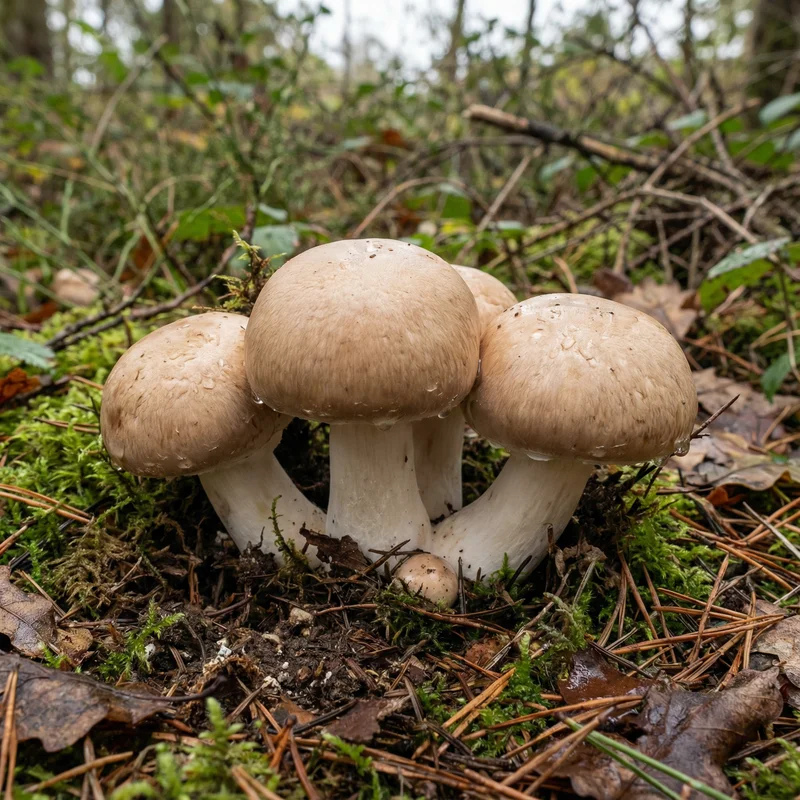 Button Mushroom
Button Mushroom
 Button Mushroom
Button Mushroom
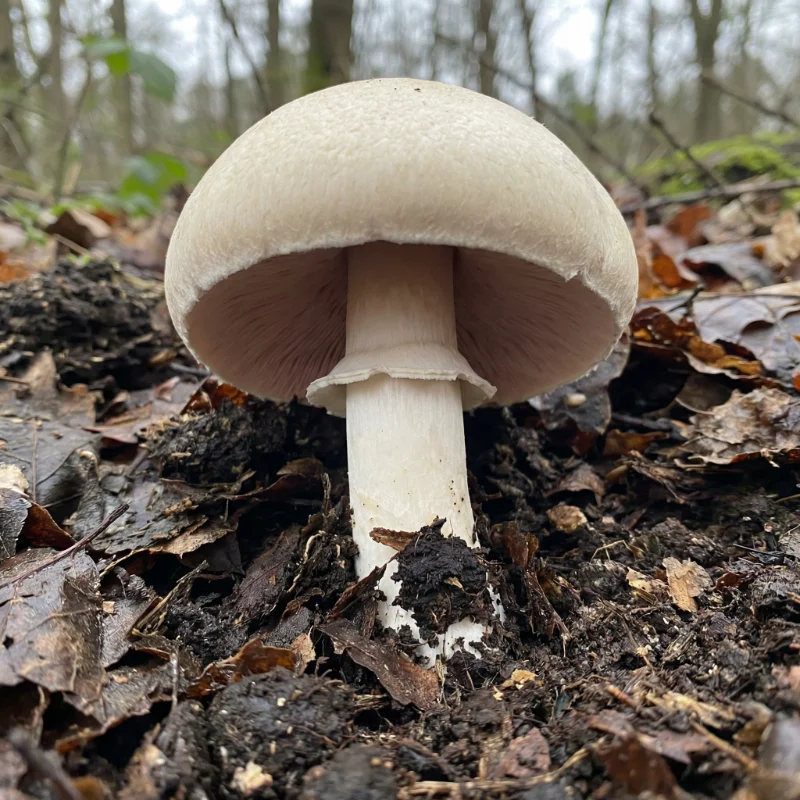 Button Mushroom
Button Mushroom