Matsutake
Creature Type
Tricholoma matsutake
Scientific Name: "Tricholoma from Greek trichos (hair) + loma (fringe), referring to the fibrillose cap margin; matsutake from Japanese 松茸 (matsu = pine + take = mushroom), meaning 'pine mushroom'"
Physical Characteristics
Discovery
Habitat
보전·개체·수명

The matsutake (Tricholoma matsutake (S.Ito & S.Imai) Singer, 1943) is an ectomycorrhizal basidiomycete belonging to the family Tricholomataceae (order Agaricales, phylum Basidiomycota). It is one of the world's most expensive and culturally revered edible mushrooms, forming obligate symbiotic partnerships with living pine roots across temperate and boreal forests of East Asia, northern Europe, and Siberia. The species is distinguished by its large, robust fruitbodies bearing brown fibrillose scales over a white to pale-brown cap, and above all by its intense, unmistakable aroma — a complex blend of cinnamon spice and pine — generated primarily by 1-octen-3-ol ("matsutake alcohol") and methyl cinnamate, compounds that also function as chemical defenses against mycophagous invertebrates.
Assessed as Vulnerable (VU) on the IUCN Red List, T. matsutake has suffered an inferred decline of over 30% during a 50-year evaluation period, driven by pine wilt disease, altered forest management, eutrophication, and climate change (Brandrud, 2020). Japan's harvest plummeted from 6,000–12,000 tonnes per year in the 1940s to just 14 tonnes in 2019 — a decline exceeding 99.9%. In South Korea, Grade 1 Yangyang matsutake reached a record auction price of KRW 1,611,200 per kilogram (approximately USD 1,100) in October 2025. In Japan, eight Tamba matsutake (about 198 g) sold for JPY 850,000 (approximately USD 5,600) at the season's first auction in Hyogo Prefecture in October 2025. All matsutake must be wild-harvested because commercial artificial cultivation remains impossible despite decades of research; a landmark telomere-to-telomere (T2T) genome assembly was completed in 2023, opening new avenues for understanding this species' biology.
The IUCN estimates the total Eurasian population at approximately 10,000 localities and 200,000 individuals. Due to severe habitat losses in East Asia, the northern boreal populations of Fennoscandia and Russia may now rival the East Asian subpopulations in size. Climate-change projections indicate that highly suitable habitat could shrink to 1–18% of current extent by the 2050s, with near-total loss predicted for South Korea and Japan under high-emission scenarios.
1. Overview
The genus name Tricholoma derives from the Greek trichos (hair) and loma (fringe or border), referring to the hairy or fibrillose margin of the cap. The specific epithet matsutake is borrowed directly from Japanese: 松茸 (まつたけ), a compound of 松 (matsu, pine) and 茸 (take, mushroom), meaning "pine mushroom." The Korean name 송이 (songi, from 松栮/松耳) carries the same meaning, reflecting the fungus's obligate association with pine trees. In Chinese, the species is known as 松茸 (sōng róng) or 松蘑 (sōng mó).
The earliest known literary reference to matsutake appears in a poem dated to 759 AD in the Man'yōshū (万葉集, "Collection of Ten Thousand Leaves"), Japan's oldest extant poetry anthology, compiled during the Nara period (Ohara, 1994). This documents a cultural history spanning more than 1,250 years.
The currently accepted name is Tricholoma matsutake (S.Ito & S.Imai) Singer (1943). The species was originally described as Armillaria matsutake S.Ito & S.Imai in 1925 by the Japanese mycologists Seiya Ito and Sanshi Imai, though the original description lacked a detailed diagnosis (Aoki et al., 2022). Rolf Singer transferred it to Tricholoma in 1943. The European synonym Tricholoma nauseosum (A.Blytt) Kytöv. (1989) was confirmed as conspecific with the Asian T. matsutake through molecular phylogenetic analyses (Chapela & Garbelotto, 2004). Other synonyms include the basionym Armillaria matsutake and Armillaria ponderosa (Peck) Sacc.
The species belongs to the Tricholoma caligatum complex (section Caligata), which encompasses 9–10 species worldwide. In 2022, Aoki et al. designated a type specimen for T. matsutake from Japan and confirmed the presence of the species under fir (Abies) trees in Ukraine (Eastern Europe) through nine-locus phylogenetic analysis, suggesting a broader geographic and host range than previously recognized.
An ectomycorrhizal fungus obligately symbiotic with living pines, impossible to cultivate commercially, renowned for its cinnamon-pine aroma and profound cultural significance, and one of the most expensive edible mushrooms in the world.
2. Taxonomy and Phylogeny
| Rank | Taxon |
|---|---|
| Kingdom | Fungi |
| Phylum | Basidiomycota |
| Subphylum | Agaricomycotina |
| Class | Agaricomycetes |
| Subclass | Agaricomycetidae |
| Order | Agaricales |
| Family | Tricholomataceae |
| Genus | Tricholoma |
| Section | Caligata |
| Species | T. matsutake |
Section Caligata contains morphologically similar but genetically distinct species. Key phylogenetic studies include Chapela & Garbelotto (2004; ITS and AFLP), Ota et al. (2012; multilocus), Murata et al. (2013; mobile DNA elements), and a 2024 comparative genomics study analyzing 19 Tricholoma genomes that identified species-specific genes and symbiotic adaptations in T. matsutake, including notable gene-family modifications related to iron-ion homeostasis (Kim et al., J. Fungi, 2024).
The principal allied species are compared below.
| Species | Distribution | Primary Hosts | Key Features |
|---|---|---|---|
| T. matsutake | East Asia, N. Europe, Siberia | Pinus densiflora, P. sylvestris | Highest quality; strong cinnamon-pine aroma |
| T. magnivelare | Western North America | Pinus, Tsuga, Lithocarpus | White; similar but weaker aroma |
| T. murrillianum | Western North America | Pinus, Lithocarpus | Often confused with T. magnivelare |
| T. caligatum | Mediterranean, S. Europe | Quercus, Pinus | Darker; lower culinary value |
| T. anatolicum | Turkey | Pinus brutia | Regional endemic |
| T. bakamatsutake | Japan | Broadleaf trees (Quercus spp.) | "Foolish matsutake"; lower quality |
Swedish mycologist Elias Fries may have described the species now known as T. matsutake near Uppsala as early as 1849 (Fungi Magazine, 2016). The "Pale Matsutake" of eastern North America, found in jack pine (Pinus banksiana) forests on sandy glacial soils, is genetically very close to or conspecific with the Eurasian T. matsutake but is morphologically paler, and its taxonomic position requires further clarification (Chapela & Garbelotto, 2004; IUCN, 2020). Near-complete de novo assembly of T. bakamatsutake (G3, 2023) confirmed at least three phylogenetic clades within section Caligata.
3. Morphology and Anatomy
The fruitbody (basidiocarp) is large and robust. The cap (pileus) measures 5–20 cm in diameter (maximum recorded: 35 cm), hemispherical when young and flattening with maturity. The surface is white to pale brown, overlaid with brown to reddish-brown fibrillose scales; the flesh is firm and white.
The gills (lamellae) are white to pale cream, crowded, and sinuate to notched in attachment. The stipe is 4–20 cm tall and 1.5–4 cm in diameter, cylindrical and solid. The upper surface is white, while the lower portion is covered in brown scales. A membranous annulus (ring) is present, below which cinnamon-brown patches are visible.
The spore print is white. Basidiospores are ellipsoid to subglobose, 6.5–8.5 x 5–6 micrometres, smooth-walled, and inamyloid. Basidia are four-spored and clavate.
Typical fruitbody weight ranges from 50 to 300 g; large specimens can exceed 500 g. Paradoxically, the market places the highest value on small, unopened button-stage fruitbodies in which the cap has not yet expanded, as these retain maximum aroma intensity.
4. Ecology and Behavior
As an obligate ectomycorrhizal fungus (biotroph), T. matsutake forms a Hartig net and fungal mantle around the fine roots of living host trees, receiving photosynthetically derived carbon from the host in exchange for water and mineral nutrients (especially phosphorus and nitrogen) absorbed from the soil. In East Asia, primary hosts include Japanese red pine (Pinus densiflora), Japanese black pine (P. thunbergii), and Korean pine (P. koraiensis). In Europe, the host is Scots pine (Pinus sylvestris). In Japan, hemlock (Tsuga) and, on Sakhalin, Maries fir (Abies mariesii) also serve as hosts. The 2022 discovery of T. matsutake under fir trees in Ukraine (Aoki et al., 2022) expanded the known host range beyond Pinus.
The shiro (シロ, Japanese for "white") is the subterranean mycelial aggregation of mycorrhizae and hyphae that constitutes the essential reproductive structure. Ohara (1994) defined the shiro as "a subterranean biotic community where mycorrhizal development plays a leading part over the soil constituents, especially soil microbes."
Shiro development proceeds through spore germination, mycorrhiza formation with host roots (beginning when host trees reach 10–20 years of age), mycelial aggregation, and finally fruitbody emergence — typically 3–4 years after initial shiro formation. Healthy shiros expand outward at approximately 100–200 mm per year, creating the characteristic fairy-ring pattern, and can produce fruitbodies for decades (Ogawa, 1975; Narimatsu et al., 2015). Antibiotic substances secreted within the shiro suppress competing soil microorganisms, creating a distinctive microenvironment.
A 2026 cross-study meta-analysis published in Microbiome identified functionally distinct core microbial phylotypes and niche-specific microbes within the shiro, providing new insights into the ecological roles of the shiro-associated microbiome (Lee et al., 2026).
Fruiting occurs in autumn (September–October in Korea and Japan; August–November in Europe) when soil temperatures drop below 19°C and adequate rainfall has occurred. Fruitbody development takes approximately 20 days from primordia initiation to cap opening, and ceases when soil temperatures fall below 10°C (Ohara, 1994). A 2024 meta-analysis of 20 years of foraging data from Yangyang-gun, South Korea, found a significant positive correlation (r = 0.68) between mean August temperature and matsutake harvest, with a predicted 1.5-tonne increase in yield per 1°C rise in August temperature (Choi et al., Forests, 2024).
The two principal volatile compounds — 1-octen-3-ol and methyl cinnamate — serve a dual function. Beyond generating the mushroom's prized aroma, they repel mycophagous springtails (Collembola), particularly Proisotoma minuta, acting as natural insecticides that protect the fruitbody from herbivory (Sawahata et al., 2008).
5. Reproduction and Life History
The life cycle follows: basidiospore germination → monokaryotic mycelium → dikaryotic mycelium (after mating) → ectomycorrhiza formation with host roots → shiro development → fruitbody production → spore release. The vegetative mycelial phase extends from March to June; fruitbody production occurs from late August to early October (Shim et al., 2007).
Mature fruitbodies release billions of basidiospores from the gills, dispersed primarily by wind. However, the probability of successful germination, host colonization, and shiro establishment is extremely low, contributing to the rarity of new populations.
Once established, a healthy shiro may persist for decades, expanding annually by 100–200 mm. Shiro health depends critically on host-tree vitality, soil conditions, and freedom from competing microorganisms. Damage to the shiro — particularly from destructive harvesting practices — is often irreversible.
6. Distribution and Habitat
Tricholoma matsutake occurs across the temperate and boreal pine forests of Eurasia. In East Asia, the traditional centers of abundance are South Korea, Japan, China (Yunnan, Sichuan, and the northeast), and North Korea. In Europe, the species occurs in Fennoscandia (Sweden, Norway, Finland), Russia, and Estonia, with rare records from central Europe (Bavaria, Austria, Czech Republic). The IUCN assessment reports approximately 350–400 confirmed localities in Fennoscandia, with the true number estimated at 3,500–4,000; including Russia, totals may reach approximately 5,000 (Brandrud & Bendiksen, 2014; IUCN, 2020).
Aoki et al. (2022) reported T. matsutake for the first time from Ukraine, under fir trees in Eastern Europe, extending the known range. Due to severe declines in East Asia, the northern boreal populations of Fennoscandia and Russia may now be of comparable size to the East Asian subpopulations. In eastern North America, the genetically close "Pale Matsutake" occurs in jack pine forests on sandy glacial soils.
Major producing regions include Gangwon Province (Yangyang, Inje, Samcheok) and North Gyeongsang Province (Bonghwa, Uljin, Yeongdeok), all under Japanese red pine (P. densiflora). Yangyang is considered the premium-quality site; Bonghwa is the major producing region by volume. Long-term foraging data from Yangyang-gun (1990–2023) show a continuous declining trend (Choi et al., 2024).
The species strongly favors nutrient-poor, well-drained sandy or rocky soils. In northern Europe, optimal habitats are lichen-dominated dry pine forests on glaciofluvial deposits (esker ridges). In East Asia, south-west-facing slopes at 400–1,500 m elevation, with pine stands approximately 40–50 years old, open canopy, and thin litter layers provide the best fruiting conditions (IUCN, 2020; Ohara, 1994). In northern Fennoscandia, the species is preferentially associated with old-growth forests. Some level of disturbance — whether from reindeer grazing, forest fires, or traditional management — enhances fruitbody production (Brandrud & Bendiksen, 2014).
7. Conservation Status and Threats
Tricholoma matsutake was assessed as Vulnerable (VU) in 2020 (errata version 2022) by Brandrud. The species qualifies under Criterion A2c+3c+4c, with an inferred decline exceeding 30% over a 50-year evaluation period. The total Eurasian population is estimated at approximately 10,000 localities and 200,000 individuals. The population trend is decreasing.
Pine Wilt Disease: The most devastating threat. The pine wood nematode (Bursaphelenchus xylophilus), native to North America, is vectored by longhorn beetles (Monochamus spp.) and causes rapid mortality of susceptible pines. Introduced to Japan in the early 1900s, the pathogen has spread throughout East Asia and is the primary driver of Japan's catastrophic 99.9% production decline since the 1940s.
Altered Forest Management: The post-war shift from traditional charcoal-based economies — which maintained open, litter-poor pine forests — to fossil fuel use has allowed understory encroachment by broadleaf species and litter accumulation, degrading matsutake habitat. In northern Europe, clear-cutting of old-growth pine forests is the principal threat.
Eutrophication: Atmospheric nitrogen deposition degrades the nutrient-poor soils that T. matsutake requires.
Destructive Harvesting: Raking away soil and litter to collect premium button-stage fruitbodies damages the shiro, reducing long-term productivity. A study on T. magnivelare (American Matsutake) confirmed that raking has long-term negative effects, while careful harvesting of fruitbodies without soil disturbance does not affect population vitality (Hosford et al., 1997).
Climate Change: Modeling by Li et al. (2017) projects that by the 2050s, highly suitable habitat could contract to 1–18% of current extent. South Korea and Japan face near-total loss under high-emission scenarios (RCP 8.5), with suitable habitat shifting to higher latitudes.
In Europe, recommended actions include designation of pine forest reserves, prescribed burning to maintain natural disturbance regimes, and prohibition of forest fertilization. In Japan, efforts focus on pine wilt nematode control and forest management (thinning, litter removal) to restore matsutake habitat. In South Korea, regional governments regulate harvesting seasons and methods, and the National Forestry Cooperative Federation operates an auction system to discourage illegal harvesting.
| Country/Region | Conservation Status | Production Trend | Primary Threats |
|---|---|---|---|
| Japan | Near Threatened (national) | 14–140 t/yr (2019: 14 t) | Pine wilt disease, forest neglect |
| South Korea | Regional regulations | ~100–200 t/yr estimated | Pine wilt disease, climate change |
| China | Class 2 protected | Yunnan–Sichuan major production | Overharvesting, habitat loss |
| Sweden/Finland | Threatened (national red lists) | Relatively stable | Clear-cutting, nitrogen deposition |
| Russia | Red-listing proposed | Unknown | Logging, harvesting |
8. The Challenge of Artificial Cultivation
Matsutake is the paradigmatic example of a commercially uncultivatable mushroom. As an obligate ectomycorrhizal fungus, it cannot produce fruitbodies on artificial media as saprotrophic species like shiitake (Lentinula edodes) or oyster mushroom (Pleurotus ostreatus) can. Shiro formation requires a suite of exacting conditions — appropriate soil chemistry, host-tree age and health, competitive exclusion of rival microorganisms — that have proven impossible to replicate at commercial scale (Yamanaka et al., 2020; Yamada, 2022).
South Korea's National Institute of Forest Science achieved experimental fruitbody production from matsutake-infected pine seedlings for four consecutive years (2017–2020), but this remained a limited experimental success, not a commercial breakthrough (Tridge, 2020). In 2023, the first telomere-to-telomere (T2T) genome assembly of T. matsutake was published, comprising 13 chromosomes spanning 161.0 Mb plus a 76-kb mitochondrial genome (Kurokochi et al., DNA Research, 2023). A 2023 study also found that Penicillium species can promote T. matsutake mycelial growth in vitro (PMC, 2023). A 2024 comparative genomics study of 19 Tricholoma species identified species-specific gene families and iron-homeostasis adaptations in T. matsutake, providing molecular foundations for understanding the symbiotic lifestyle (Kim et al., J. Fungi, 2024).
9. Relationship with Humans
Matsutake is among the most expensive mushrooms on Earth. In Japan, domestic matsutake typically sells for JPY 100,000–150,000 per kilogram (approximately USD 650–1,000), with first-of-season specimens fetching over JPY 1,000,000 (approximately USD 7,000). In October 2025, eight Tamba matsutake (approximately 198 g) sold for JPY 850,000 (approximately USD 5,600) at the season's first auction in Sasayama, Hyogo Prefecture. In South Korea, Grade 1 Yangyang matsutake reached a record auction price of KRW 1,611,200 per kilogram (approximately USD 1,100) on October 3, 2025. Imported matsutake (from China, South Korea, North Korea, and Canada) typically sells for approximately USD 50–100 per kilogram in Japan — roughly one-tenth the domestic price.
In South Korea, matsutake is graded into three classes plus sub-standard, based on size, shape, and freshness. Grade 1 (special) specimens are unopened buttons with long, thick stipes and strong aroma; Grade 2 has slightly expanded caps; Grade 3 has fully opened caps. Japan is the primary importing nation, sourcing from China, South Korea, North Korea, and Canada.
In Japan, matsutake has been revered for over a millennium. The Man'yōshū (759 AD) contains a poem referencing its fragrance. Until the 17th century, consumption was restricted to the imperial court and nobility; in the 11th-century Kyoto court, women were required to use the honorific "O-Matsu" rather than speaking the word "matsutake" directly (Ohara, 1994). Today, matsutake remains a symbol of autumn, fortune, fertility, and prosperity, and gifting matsutake is a cherished tradition — especially in the corporate world.
In Korea, matsutake (songi) is an essential component of Chuseok (harvest moon festival) cuisine and a prized gift. Regional festivals such as the Yangyang Songi-Salmon Festival and Bonghwa Songi Festival celebrate the harvest. In China's Yunnan province, an estimated 60% of the population of Shangri-La is involved in the matsutake trade (Winkler, 2004).
Simple preparations that showcase the aroma are preferred. Iconic dishes include matsutake gohan (松茸ご飯, pine mushroom rice), dobinmushi (土瓶蒸し, a clear dashi broth served in a ceramic teapot), salt-grilled matsutake, sukiyaki/hot pot with beef, and matsutake donburi (rice bowl). Matsutake can be eaten raw, thinly sliced with soy-based dipping sauce.
In East Asian traditional medicine, matsutake has been valued for qi nourishment, immune enhancement, and digestive health. Modern research has identified polysaccharides, phenolic compounds, and antioxidants with demonstrated immunomodulatory, anti-inflammatory, and potential antitumor activities (Tan et al., Critical Reviews in Food Science and Nutrition, 2022).
10. Chemical and Nutritional Profile
The signature matsutake fragrance is a complex of volatile organic compounds. The dominant constituents in vacuum-freeze-dried fruitbodies are 1-octen-3-ol (31.41%, contributing earthy mushroom notes), methyl cinnamate (19.93%, the sweet cinnamon-spice note), and beta-barbatene (15.02%) (Foods, 2024). These compounds decline with maturity; hence unopened button-stage fruitbodies have the strongest aroma (Li & Zhang, 2016).
On a dry-weight basis, matsutake contains approximately 20.3% crude protein, 29.1% crude fiber, 36.7% carbohydrates, and 2–4% crude fat. Micronutrients include B-group vitamins (B1, B2, B3), vitamin D, potassium, copper, zinc, and selenium. Fresh-weight moisture content is approximately 85–90%.
| Component | Content (dry weight) |
|---|---|
| Crude protein | ~20.3% |
| Crude fiber | ~29.1% |
| Carbohydrates | ~36.7% |
| Crude fat | ~2–4% |
| Moisture (fresh) | ~85–90% |
11. Uncertainties and Open Questions
Confirmed: T. matsutake is an obligate ectomycorrhizal fungus that cannot produce fruitbodies on artificial media. The European T. nauseosum and Asian T. matsutake are the same species. The IUCN Vulnerable status and declining population trend are well-supported.
Probable: The eastern North American "Pale Matsutake" is conspecific or a very close sister taxon to Eurasian T. matsutake. Climate change will cause severe contraction of suitable habitat by mid-century.
Hypothetical/Uncertain: Whether Elias Fries's 1849 description pertains to the current T. matsutake. Whether genome sequencing will eventually enable commercial cultivation. The precise determinants of shiro initiation at specific microsites.
Why shiros form at specific locations remains poorly understood; the interplay between soil microbiome composition, host-root exudates, and abiotic factors is complex. The molecular mechanisms governing fruitbody induction from established shiros are unclear. Whether T. matsutake can adapt to shifting climatic envelopes — through range expansion to higher latitudes or elevations — is uncertain. Sustainable harvesting protocols that maximize yield without damaging shiros require further scientific validation.
The popular statement that matsutake "grows on pine trees" is misleading; fruitbodies emerge from the soil where the subterranean shiro colonizes pine roots, not from the trees themselves. Reports of "successful artificial cultivation" appear periodically in the media but refer to limited experimental results, not commercial-scale production.
12. Allied Species Comparison
| Feature | T. matsutake | T. magnivelare | T. caligatum |
|---|---|---|---|
| Distribution | East Asia, N. Europe, Siberia | Western North America | Mediterranean, S. Europe |
| Cap color | White to pale brown, brown scales | White, pale-brown scales | Brown to dark brown, dark scales |
| Aroma intensity | Strong cinnamon-pine | Similar but weaker | Similar; may have unpleasant aftertaste |
| Primary hosts | P. densiflora, P. sylvestris | Pinus, Tsuga | Quercus, Pinus |
| Habitat | Dry sandy pine forests | Coniferous forests | Mediterranean-climate forests |
| Edibility | Premium | Good | Edible (lower quality) |
| IUCN status | VU | Not Evaluated | Not Evaluated |
| Market price | Very high | High | Low to moderate |
| Fruiting season | Autumn (Sep–Oct) | Autumn | Summer to autumn (earlier) |
T. caligatum is phylogenetically the earliest-diverging species within section Caligata, fruits earlier in the season, and is darker in coloration with lower culinary value.
13. Data Tables
Table 1. Japanese Matsutake Production Over Time
| Period | Annual Production | Notes |
|---|---|---|
| 1910s–1940s | 6,000–12,000 t | Historical peak |
| 2007 | 51 t | |
| 2008 | 71 t | |
| 2009 | 24 t | |
| 2010 | 140 t | |
| 2011 | 37 t | |
| 2019 | 14 t | Lowest on record |
Table 2. Korean Yangyang Matsutake Price Trends (2024–2025)
| Period | Grade 1 Price (per kg) | Notes |
|---|---|---|
| September 2024 | ~KRW 800,000–1,200,000 | Pre-Chuseok |
| September 30, 2024 | KRW 1,600,000 | Previous record |
| October 2, 2025 | KRW 1,500,600 | |
| October 3, 2025 | KRW 1,611,200 | All-time record |
| Mid-October 2025 | ~KRW 620,000 | Price drop after rainfall |
Table 3. Fruitbody Measurements
| Structure | Size Range | Notes |
|---|---|---|
| Cap diameter | 5–20 cm (max 35 cm) | Flattens at maturity |
| Stipe height | 4–20 cm | Thick and solid |
| Stipe diameter | 1.5–4 cm | White above, brown below |
| Spore size | 6.5–8.5 x 5–6 um | Ellipsoid, smooth |
| Fruitbody weight | 50–300 g (typical) | Large specimens exceed 500 g |
14. References
Aoki, W., Bergius, N., Kozlan, S., Fukiharu, T., Ota, Y., Miyauchi, S., Fries, N.K., Kytövuori, I., & Hattori, T. (2022). New findings on the fungal species Tricholoma matsutake from Ukraine, and revision of its taxonomy and biogeography based on multilocus phylogenetic analyses. Mycoscience, 63(5), 197–210. https://doi.org/10.47371/mycosci.2022.09.001
Brandrud, T.-E. (2020). Tricholoma matsutake (errata version published in 2022). The IUCN Red List of Threatened Species 2020: e.T76267712A223017164. https://doi.org/10.2305/IUCN.UK.2020-3.RLTS.T76267712A177054645.en
Brandrud, T.-E., & Bendiksen, E. (2014). Funga Nordica: Tricholoma matsutake. In Agaricoid, boletoid and cyphelloid genera. Nordsvamp.
Chapela, I.H., & Garbelotto, M. (2004). Phylogeography and evolution in matsutake and close allies inferred by analyses of ITS sequences and AFLPs. Mycologia, 96(4), 730–741. https://doi.org/10.1080/15572536.2005.11832920
Choi, D.-H., Ko, C.-S., Oh, Y.-L., Im, J.-H., Oh, M., & Lee, E.-J. (2024). Investigation of climatic factors affecting the amount of foraged matsutake mushrooms in Korea. Forests, 15(12), 2165. https://doi.org/10.3390/f15122165
Hosford, D., Pilz, D., Molina, R., & Amaranthus, M. (1997). Ecology and Management of the Commercially Harvested American Matsutake Mushroom. USDA Forest Service PNW-GTR-412.
Kim, M., et al. (2024). Comparative genomics reveals species-specific genes and symbiotic adaptations in Tricholoma matsutake. Journal of Fungi, 10(11), 746. https://doi.org/10.3390/jof10110746
Kurokochi, H., Tajima, N., Sato, M.P., Yoshida, K., Asakawa, S., Isobe, S., & Shirasawa, K. (2023). Telomere-to-telomere genome assembly of matsutake (Tricholoma matsutake). DNA Research, 30(3), dsad006. https://doi.org/10.1093/dnares/dsad006
Lee, H., et al. (2026). Functionally distinct core microbes of Tricholoma matsutake revealed by cross-study analysis. Microbiome, 14, 42. https://doi.org/10.1186/s40168-025-02329-x
Li, Q., Zhao, Z., Wei, H., Gao, B., & Gu, W. (2017). Prediction of the potential geographic distribution of the ectomycorrhizal mushroom Tricholoma matsutake under multiple climate change scenarios. Scientific Reports, 7, 46221. https://doi.org/10.1038/srep46221
Narimatsu, M., Koiwa, T., Masaki, T., Sakamoto, Y., Ohmori, H., & Tawaraya, K. (2015). Relationship between climate, expansion rate, and fruiting in fairy rings ('shiro') of an ectomycorrhizal fungus Tricholoma matsutake in a Pinus densiflora forest. Fungal Ecology, 15, 18–28. https://doi.org/10.1016/j.funeco.2015.02.002
Ogawa, M. (1975). Microbial ecology of mycorrhizal fungus — Tricholoma matsutake (Ito et Imai) Sing. in pine forest. Bulletin of the Government Forest Experiment Station, 272, 1–79.
Ohara, H. (1994). Matsutake: Biology and ecology. In D. Hosford et al. (Eds.), Proceedings of the matsutake symposium.
Ota, Y., Li, Y., & Hattori, T. (2012). Phylogenetic relationship and species delimitation of matsutake and allied species. Mycologia, 104(6), 1369–1381. https://doi.org/10.3852/12-068
Sawahata, T., Shimano, S., & Suzuki, M. (2008). Tricholoma matsutake 1-ocen-3-ol and methyl cinnamate repel mycophagous Proisotoma minuta (Collembola: Insecta). Mycorrhiza, 18(2), 111–114. https://doi.org/10.1007/s00572-007-0160-y
Tan, X., Wu, J., Li, T., Wu, L., Wang, Q., & Liu, H. (2022). Insights into health promoting effects and mychemical profiles of Tricholoma matsutake. Critical Reviews in Food Science and Nutrition, 63(27), 9144–9174. https://doi.org/10.1080/10408398.2022.2066663
Yamada, A. (2022). Cultivation studies of edible ectomycorrhizal mushrooms. Mycoscience, 63(6), 242–253. https://doi.org/10.47371/mycosci.2022.10.003
Yamanaka, T., Yamada, A., & Furukawa, H. (2020). Advances in the cultivation of the highly-prized ectomycorrhizal mushroom Tricholoma matsutake. Mycoscience, 61(2), 49–57. https://doi.org/10.1016/j.myc.2020.01.001
Fun Facts
The two principal aroma compounds of matsutake — 1-octen-3-ol and methyl cinnamate — do far more than create a delicious fragrance: they also repel mycophagous springtails (Collembola), functioning as natural insecticides that protect the mushroom from herbivory (Sawahata et al., 2008).
Japan's matsutake harvest collapsed from a peak of 12,000 tonnes per year in the 1940s to just 14 tonnes in 2019 — a decline exceeding 99.9% in roughly 70 years, making it one of the most dramatic collapses in the production of any edible fungus recorded in human history.
A poem in the Man'yōshū (万葉集), Japan's oldest extant poetry anthology compiled in 759 AD, references the fragrance of matsutake, documenting a cultural appreciation spanning more than 1,250 years.
A healthy shiro (underground mycelial structure) expands outward by approximately 100–200 mm per year and can produce mushrooms for decades, but a single episode of destructive raking during harvest can cause irreversible damage.
In 2023, Japanese scientists completed the first telomere-to-telomere genome assembly of matsutake (13 chromosomes, 161.0 Mb), potentially opening new pathways for the cultivation research that has frustrated mycologists for decades.
While the cap of a mature matsutake can reach 35 cm in diameter, the highest market prices are paid for small, unopened button-stage specimens whose caps have not yet expanded, precisely because they retain maximum aroma intensity.
The IUCN estimates the total Eurasian matsutake population at approximately 10,000 localities and 200,000 individuals, and due to catastrophic declines in East Asia, the boreal populations of Fennoscandia and Russia may now equal the remaining Asian subpopulations in size.
Climate modeling predicts that by the 2050s, the highly suitable habitat for matsutake could shrink to just 1–18% of its current extent, with near-total loss projected for South Korea and Japan under high-emission scenarios.
Until the 17th century in Japan, matsutake consumption was restricted to the imperial court and nobility. At the 11th-century Kyoto court, women were forbidden from saying 'matsutake' openly and had to use the respectful term 'O-Matsu' instead.
In 2022, Tricholoma matsutake was reported for the first time from Ukraine, growing under fir trees rather than pines, suggesting that the species' geographic and host range may be broader than previously understood.
A 2024 study from Yangyang, South Korea, found that August mean temperature is the single most significant climatic predictor of matsutake harvest volume, with each 1°C rise associated with a 1.5-tonne increase — quantifying the direct impact of climate change on production.
FAQ
Matsutake's extraordinary price results from a convergence of factors. First, commercial artificial cultivation is impossible — every matsutake must be wild-harvested. Second, global production has collapsed; Japan's harvest fell from 6,000–12,000 tonnes per year in the 1940s to just 14 tonnes in 2019, a decline exceeding 99.9%. Third, the mushroom's intense, unique cinnamon-pine aroma drives enormous demand among connoisseurs. Fourth, deep cultural significance in East Asia — matsutake symbolizes autumn, fortune, and prosperity — sustains high demand for gift-giving. In 2025, Grade 1 Korean matsutake reached KRW 1.61 million per kilogram (approximately USD 1,100), and eight Japanese Tamba matsutake sold for JPY 850,000 (approximately USD 5,600) at auction.
Matsutake has a powerful, distinctive aroma combining cinnamon spice, pine, and earthy mushroom notes. The principal volatile compounds are 1-octen-3-ol (matsutake alcohol, contributing the earthy mushroom character, approximately 31% of dried volatile profile) and methyl cinnamate (the sweet cinnamon-spice note, approximately 20%). The flavor is nutty and subtly peppery, with a firm, slightly crunchy texture when cooked. These qualities are best showcased through simple preparations — complex seasonings can mask the mushroom's inherent character.
Matsutake is an obligate ectomycorrhizal fungus that requires a living symbiotic partnership with pine roots to survive and fruit. Unlike saprotrophic mushrooms such as shiitake or oyster mushroom, it cannot grow on dead organic matter or artificial substrates. Forming a shiro (the underground mycelial structure essential for fruiting) demands a precise confluence of soil chemistry, host-tree age and health, and competitive exclusion of other soil microorganisms — conditions that have proven impossible to replicate commercially. South Korea's National Institute of Forest Science achieved experimental fruiting from infected pine seedlings (2017–2020), and the complete T2T genome was sequenced in 2023, but commercial-scale cultivation remains elusive.
In South Korea and Japan, matsutake fruits in September–October. Major Korean harvest areas include Gangwon Province (Yangyang, Inje, Samcheok) and North Gyeongsang Province (Bonghwa, Uljin, Yeongdeok), all under Japanese red pine. Optimal conditions are found at 400–1,500 m elevation on south-west-facing slopes in 30–70-year-old pine forests, with soil temperatures dropping below 19°C after adequate rainfall. In Europe, the season extends from August to November in Scots pine forests. A 2024 study found that August mean temperature is the most significant climatic predictor of harvest yield in Yangyang, South Korea.
Matsutake is IUCN Vulnerable (VU), with a global decline exceeding 30% over 50 years. The primary threats are: (1) Pine wilt disease caused by the nematode Bursaphelenchus xylophilus, which kills host pines rapidly; (2) Changed forest management practices — abandonment of traditional charcoal economies allowed litter buildup and broadleaf encroachment; (3) Destructive harvesting (raking soil to find buttons) that damages the shiro; (4) Atmospheric nitrogen deposition degrading the nutrient-poor soils the fungus requires; and (5) Climate change, projected to reduce highly suitable habitat to 1–18% of current extent by the 2050s.
On a dry-weight basis, matsutake contains approximately 20.3% crude protein, 29.1% crude fiber, 36.7% carbohydrates, and 2–4% crude fat. It is rich in B vitamins (B1, B2, B3), vitamin D, potassium, copper, zinc, and selenium. Bioactive compounds including polysaccharides, phenolic compounds, and antioxidants have shown immunomodulatory, anti-inflammatory, and potential antitumor activities in laboratory studies (Tan et al., 2022). Fresh matsutake is approximately 85–90% water.
The Eurasian matsutake (T. matsutake) and Western American matsutake (T. magnivelare) are morphologically similar but genetically distinct species. T. magnivelare grows under western pines and hemlocks and has a similar but somewhat weaker aroma. The Mediterranean T. caligatum ('false matsutake') is darker and of lower culinary value. Intriguingly, the eastern North American 'Pale Matsutake' is genetically very close to — and possibly conspecific with — the Eurasian T. matsutake, but it is morphologically paler and its taxonomic status remains unresolved.
A shiro (シロ, Japanese for 'white') is the subterranean aggregation of mycorrhizae and hyphae that forms the essential reproductive structure of matsutake. It begins to develop when host trees reach 10–20 years of age, and fruiting commences 3–4 years after initial formation. A healthy shiro expands outward by approximately 100–200 mm per year and can produce mushrooms for decades. Antibiotic substances secreted within the shiro suppress competing microorganisms. However, damage from destructive harvesting practices is often irreversible, making harvest technique a critical factor in long-term productivity.
Simple preparations that preserve the mushroom's signature aroma are preferred. Classic dishes include matsutake gohan (rice cooked with matsutake), dobinmushi (a clear dashi broth steamed in a ceramic teapot), salt-grilled matsutake, sukiyaki or hot pot, and matsutake donburi (rice bowl). It can also be eaten raw, thinly sliced with a soy-based dipping sauce. Complex seasonings or heavy sauces are avoided because they mask the mushroom's distinctive cinnamon-pine fragrance.
Matsutake holds deep cultural meaning across East Asia. In Japan, the earliest literary reference appears in the Man'yōshū poetry anthology (759 AD). Until the 17th century, consumption was restricted to the imperial court; at the 11th-century Kyoto court, women were required to use the honorific 'O-Matsu' rather than the common name. Today it symbolizes autumn, good fortune, fertility, and prosperity, and is a cherished corporate gift. In Korea, matsutake is essential to Chuseok (harvest festival) cuisine and celebrated at regional festivals. In China's Yunnan, an estimated 60% of Shangri-La's population participates in the matsutake trade.
Yes. In 2023, Japanese researchers (Kurokochi et al.) published the first telomere-to-telomere (T2T) complete genome assembly of T. matsutake, consisting of 13 chromosomes spanning 161.0 Mb plus a 76-kb mitochondrial genome (DNA Research, 2023). In 2024, a comparative genomics study of 19 Tricholoma species identified matsutake-specific gene families and adaptations related to iron homeostasis and symbiotic lifestyle (J. Fungi, 2024). These advances provide a molecular foundation for future cultivation research, though practical application remains distant.
Gallery
3 images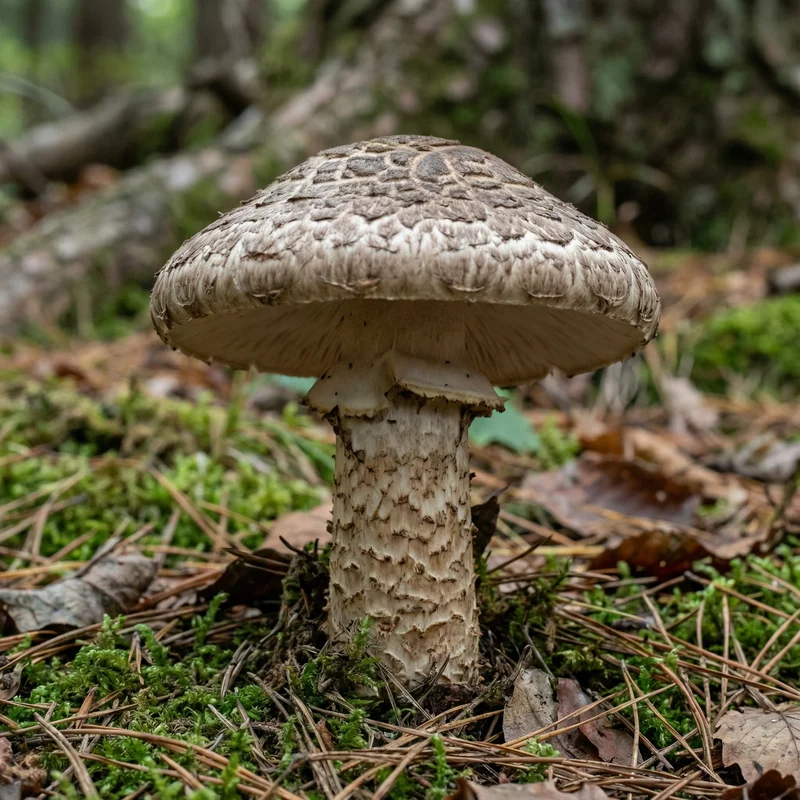 Matsutake
Matsutake
 Matsutake
Matsutake
 Matsutake
Matsutake
