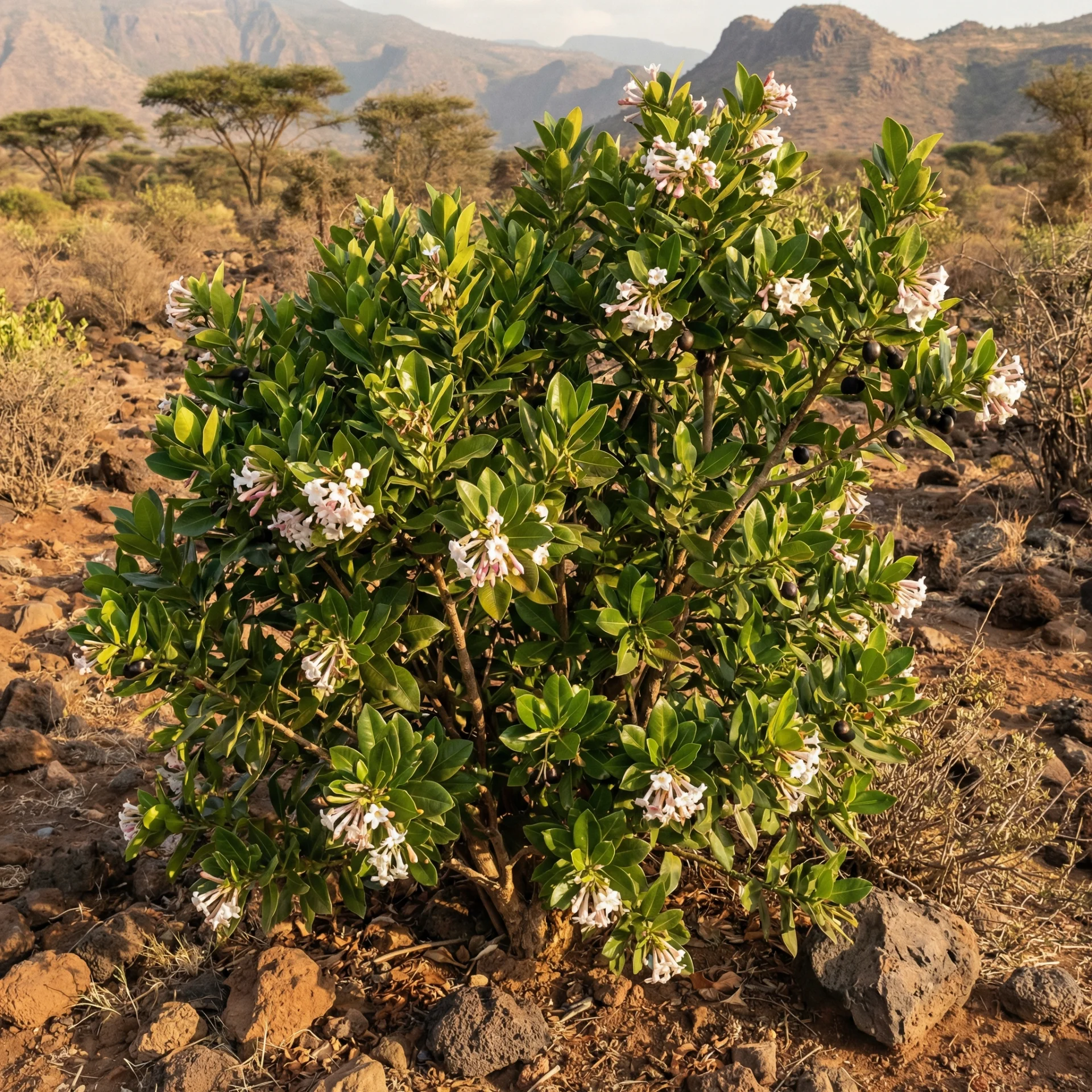
Arrow Poison Tree
Acokanthera schimperi
Modern life
Physical Characteristics
↕
Height9m
Classification
FAM
FamilyApocynaceae
ORD
OrderGentianales
GEN
GenusAcokanthera
SP
SpeciesA. schimperi
Acokanthera schimperi
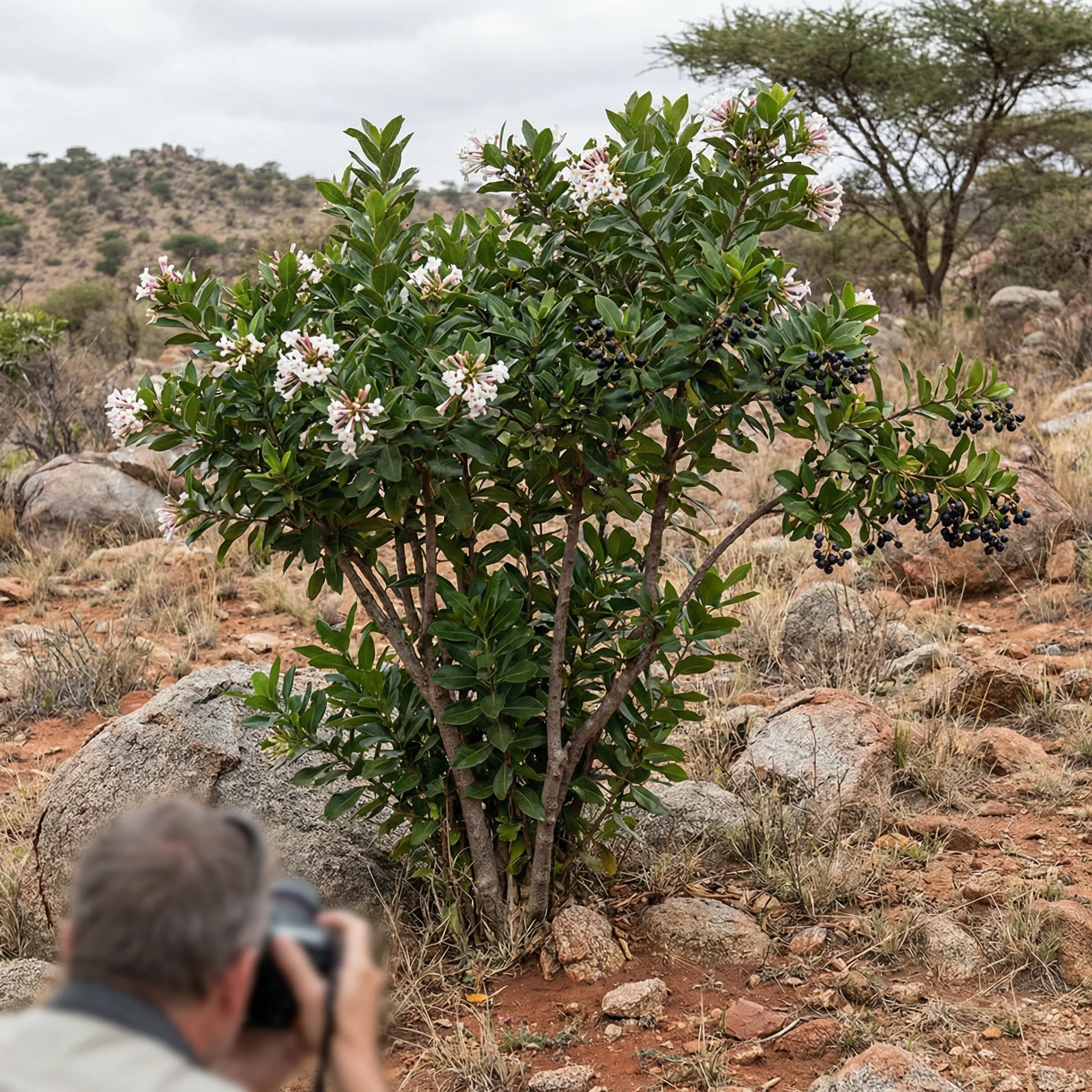
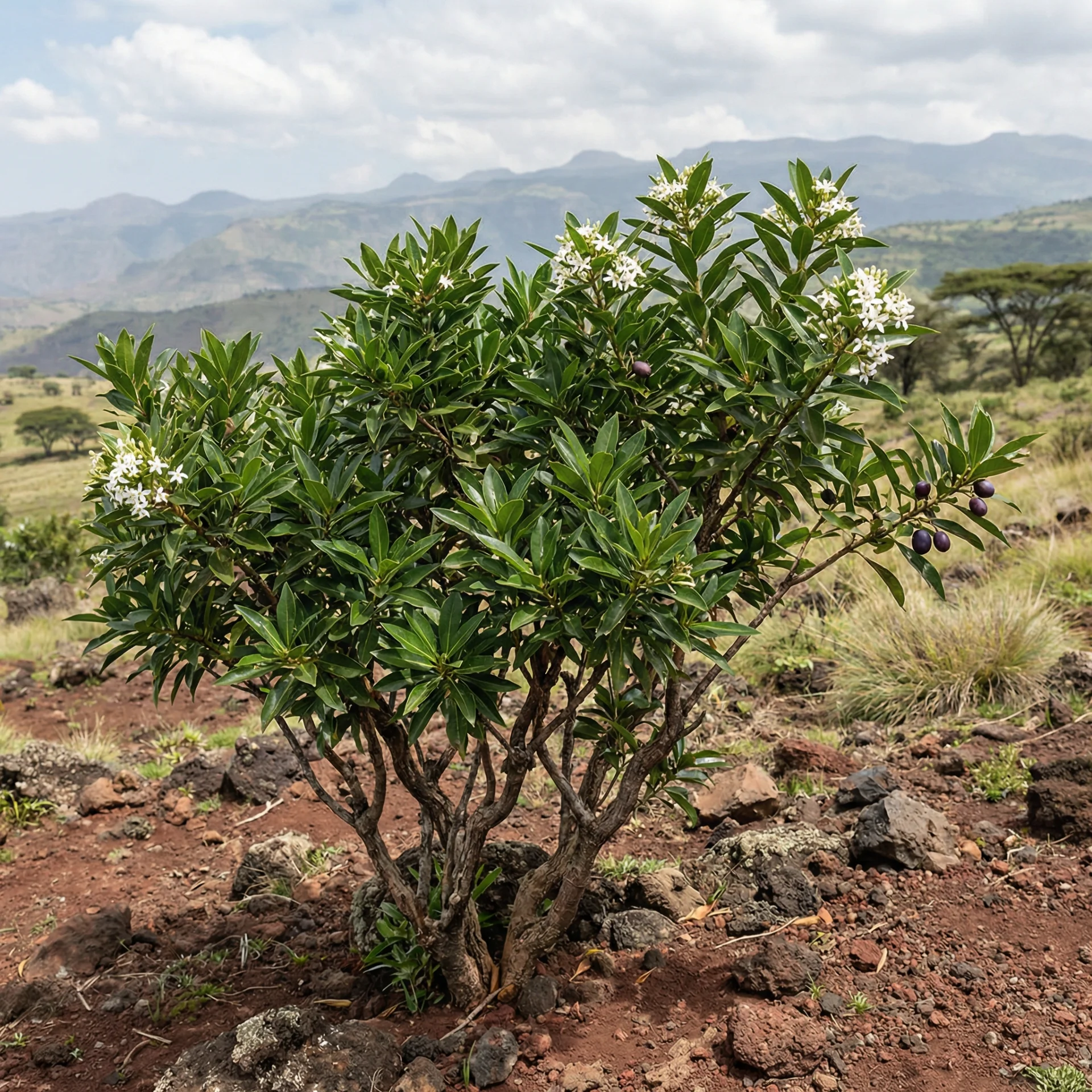
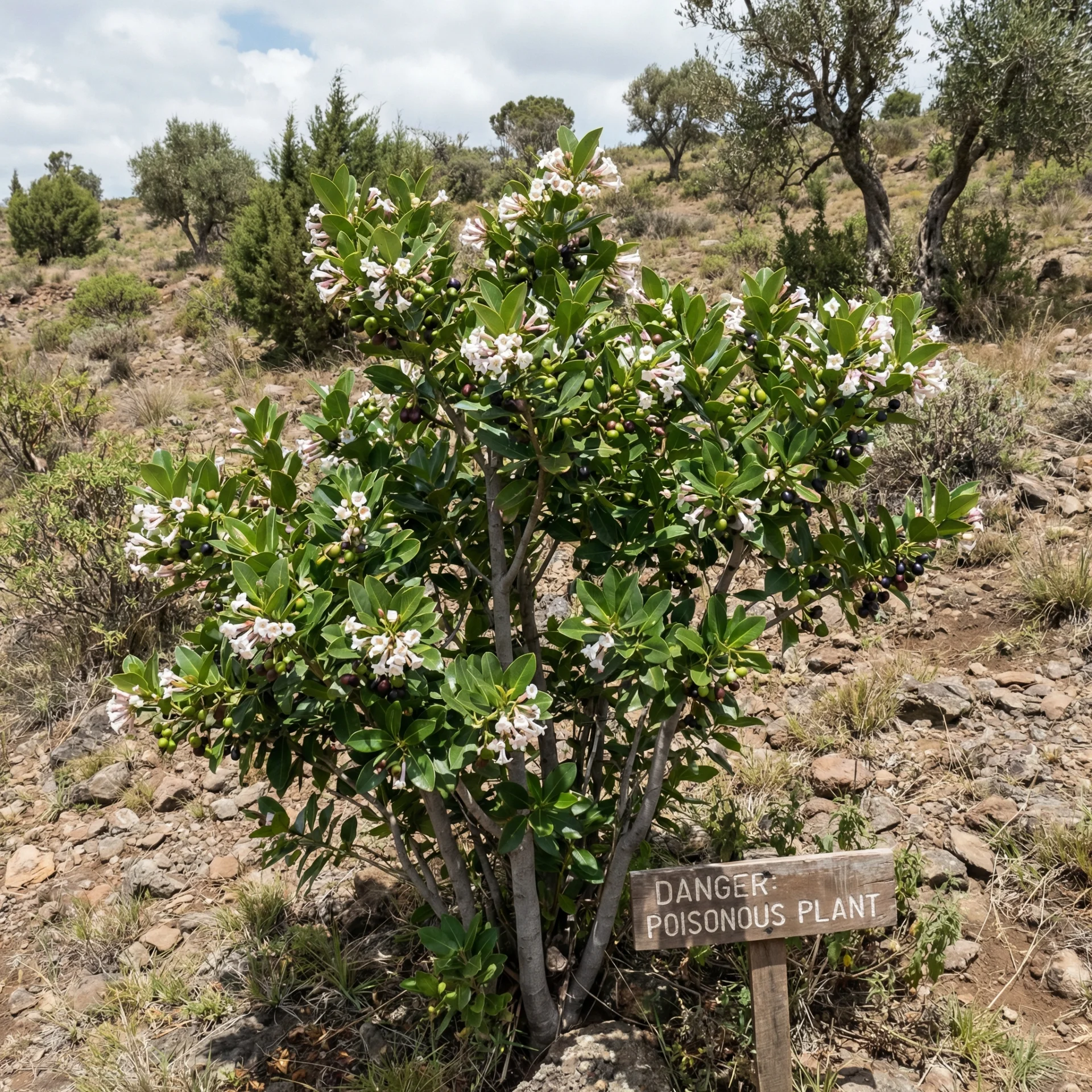
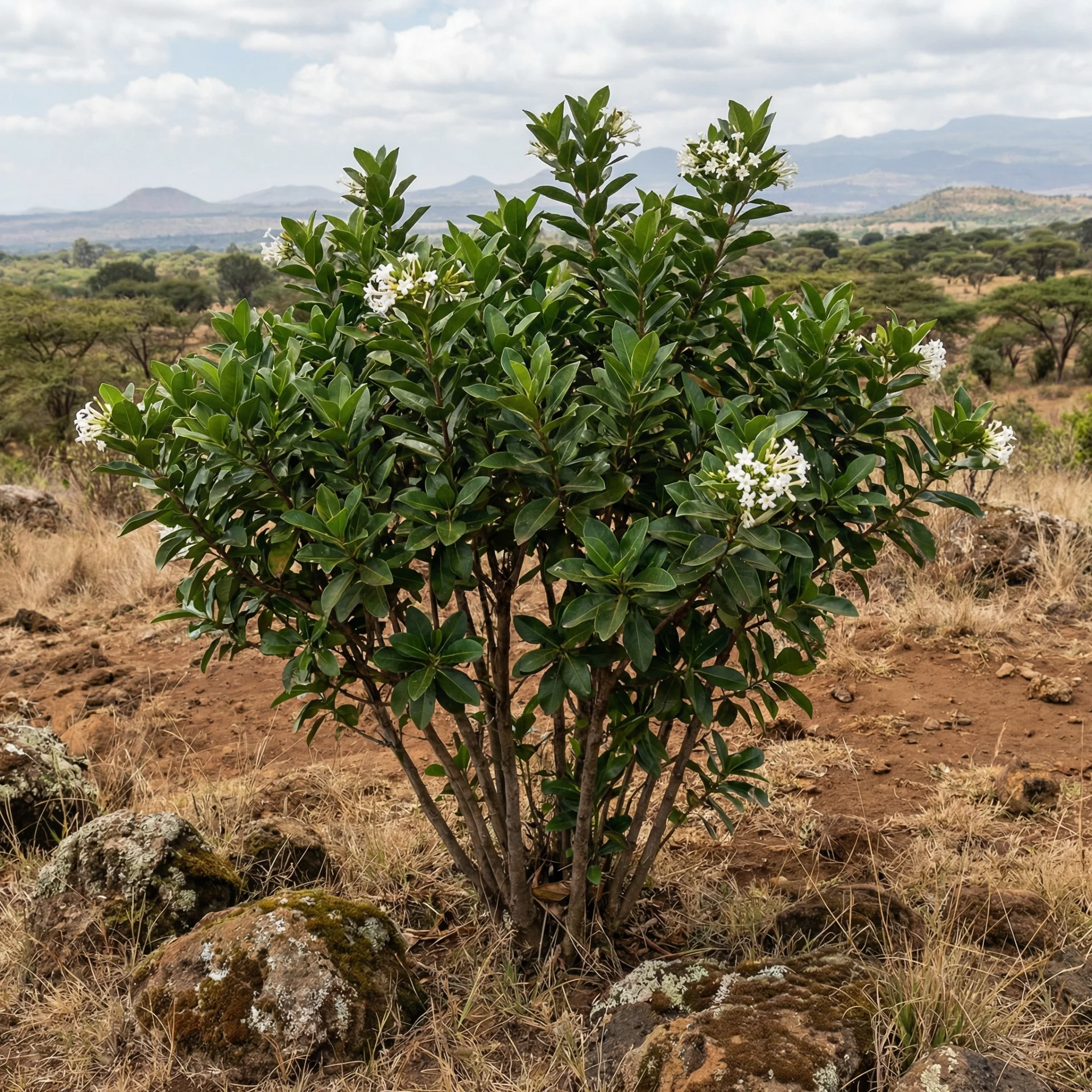
Acokanthera schimperi (A.DC.) Schweinf. (1891) is an evergreen shrub or small tree belonging to the family Apocynaceae (subfamily Rauvolfioideae, tribe Carisseae). Native to East and Central Africa — Eritrea, Ethiopia, Somalia, Kenya, Uganda, Tanzania, Rwanda, and the eastern Democratic Republic of Congo — it is the sole member of its genus to occur beyond the African continent, also growing in southern Yemen. Commonly known as the Arrow Poison Tree or Common Poison Bush, it is primarily found at elevations of 1,100–2,400 m in dry forest margins, thickets, grasslands, and bushland, typically in regions receiving 600–1,000 mm of annual rainfall.
The plant is globally renowned as one of the most acutely toxic plants on Earth. With the sole exception of the pulp of fully ripe fruit, every part of the plant — bark, wood, roots, leaves, unripe fruit, and seeds — contains a complex mixture of approximately 20 cardenolide cardiac glycosides. The primary toxic compounds, acovenoside A and ouabain, are potent Na⁺/K⁺-ATPase inhibitors that arrest the heart in systole. When used as arrow poison, death in animals occurs almost immediately; in humans, fatality typically follows within 30 minutes to 2 hours (PROTA, 2007). For centuries, the bark, wood, and roots have been boiled down into a concentrated arrow poison by hunting peoples including the Maasai, Hadza, Samburu, and Giriama of East Africa.
Beyond its ethnobotanical significance, A. schimperi attracted major scientific attention in 2011 when researchers documented the African crested rat (Lophiomys imhausi) deliberately chewing the plant's bark and roots, mixing the extracted toxin with saliva, and slathering the resulting colloid onto highly specialised lateral-line hairs. This behaviour represents the first confirmed case of toxicity by acquisition in any placental mammal (Kingdon et al., 2011, Proceedings of the Royal Society B). Contemporary pharmacological research has also revealed antiviral, antibacterial, antifungal, and wound-healing properties in leaf extracts, indicating significant biomedical potential beyond its traditional uses.
The generic name Acokanthera is a compound of the Greek words akē (ακή, meaning 'sharp point' or 'pointed tip') and anthēra (ἄνθηρα, 'anther'), together describing the characteristically sharp, pointed anthers of the flowers. The species epithet schimperi commemorates Wilhelm Paul Schimper (1808–1880), a German-French botanist who made extensive collections across Ethiopia and East Africa. The basionym is Carissa schimperi A.DC. (1844), which was transferred to its current combination by Georg August Schweinfurth (Schweinf.) in 1891. In Swahili, the tree is known as msunguti or msungu.
Acokanthera schimperi is accepted as a valid species in the World Flora Online (WFO-0000336741, data verified 2024) and in the WCSP (World Checklist of Selected Plant Families). Numerous historical synonyms exist, including Carissa schimperi A.DC. (1844), Acokanthera ouabaio Cathelineau ex Lewin, Acokanthera abyssinica K.Schum. (nom. illeg.), Acokanthera deflersii Schweinf. ex Lewin, and Acokanthera friesiorum Markgr. The genus Acokanthera comprises five species, of which A. schimperi has the widest distribution.
Acokanthera schimperi is placed within the flowering plant clade Eudicots (Asterids), order Gentianales, family Apocynaceae — one of the 10–12 largest angiosperm families, comprising approximately 5,290 species in 378 genera (Endress et al., 2018). Within Apocynaceae, the genus belongs to subfamily Rauvolfioideae, tribe Carisseae, a group that occupies a relatively basal position in the family based on molecular phylogenetic analyses (Livshultz et al., 2007; Nazar et al., 2013). The closest relatives of Acokanthera within the tribe are the genera Carissa and Landolphia.
The five species of Acokanthera are all restricted to Africa, with the sole exception of A. schimperi, which extends into southern Yemen. The most important monographic revision of the genus remains Kupicha (1982), Studies on African Apocynaceae: the genus Acokanthera, published in the Kew Bulletin. The table below summarises the five recognised species.
| Species | Primary Distribution | Key Features |
|---|---|---|
| A. schimperi | E/C Africa + S Yemen | Widest range; ouabain and acovenoside A main compounds |
| A. oppositifolia | Southern Africa | Bushman's poison; toxicity equivalent to A. schimperi |
| A. laevigata | Tanzania, Malawi | Bark used for arrow poison; acolongifloroside A dominant |
| A. rotundata | Kenya, Tanzania | Small shrub; restricted range |
| A. longiflora | East Africa | Distinguished by elongated corolla tube |
The species was first formally described by Alphonse de Candolle in 1844 as Carissa schimperi. In 1891, Schweinfurth transferred it to the genus Acokanthera, creating the current accepted combination. This transfer was based on collections made by Wilhelm Schimper near Ado, Ethiopia (specimen Schimper 254). The comprehensive revision of the genus by Kupicha (1982) standardised species circumscriptions and remains the principal reference for Acokanthera taxonomy.
Acokanthera schimperi is a much-branched, evergreen shrub or small tree reaching up to 9(–10) m in height, though it most commonly grows as a shrub of approximately 3–5 m. The trunk is short, and the bark is brown and soft. The crown is dense and rounded. Young branches are glabrous or shortly hairy and are conspicuously angled and ribbed. The wood is extremely hard and compact — a quality that has made branches historically valuable for spear-shaft construction.
Leaves are arranged in decussate opposite pairs. The petiole measures 1–6(–9) mm in length. The leaf blade is elliptical to ovate or broadly ovate, 2–10 cm long × 1.5–6.5 cm wide, with a cuneate or rounded base and an acute, obtuse, or rounded apex bearing a hard mucro (firm terminal point). The texture is distinctly leathery (coriaceous) and glossy; the surface is glabrous or shortly hairy, with pinnate venation and obscure lateral veins. Two morphological types have been documented: a large-leaved form (blade up to 11 cm) and a small-leaved form. A third, climbing form with shortly recurved leaf margins has been reported from Kenya.
Flowers are borne in dense, many-flowered axillary cymes. Each flower is bisexual, radially symmetrical (regular), 5-merous, and distinctly fragrant. Sepals are free, ovate to lanceolate, (1)1.5–2.5 mm long, with acuminate to acute apices, and are shortly hairy or glabrous on the outer surface with ciliate margins. The corolla tube is cylindrical, 8–12.5 mm long, pink or red externally; the corolla lobes are ovate, 2.5–5 mm long, and white. Stamens are inserted 7–10 mm from the base of the corolla tube and are slightly exserted. The ovary is superior, ellipsoid, and 2-celled; the style is 7–10 mm long with a minutely bifid stigma.
Fruits are ellipsoid berries, 1–2.5 cm long, turning deep purple when fully ripe (green when unripe). The pulp ranges from green to deep red at full maturity and contains 1–2 seeds. Seeds are ellipsoid, plano-convex, 6–13 mm long, smooth, and glabrous. The fully ripe pulp is the only edible part of the plant, tasting sweet with a slight bitterness; unripe fruit and seeds are highly toxic, and multiple cases of accidental child poisoning have been recorded.
All parts of A. schimperi — with the single exception of the ripe fruit pulp — contain large concentrations of cardiac glycosides (cardenolides). Approximately 20 individual cardenolides have been identified. The principal compounds are:
Marked geographic variation in compound ratios has been documented. Plants from the Nairobi region of Kenya contain the highest concentrations of acovenoside A and the lowest levels of ouabain, while coastal Kenyan populations are predominantly ouabain-rich. Eritrean plants contain roughly half the acovenoside A of Nairobi specimens but considerably more ouabain. Large-leaved, domesticated individuals from coastal Kenya — cultivated by the Giriama people for generations — show the highest ouabain contents of any recorded population (PROTA, 2007).
Ouabain and the other cardenolides act by potently inhibiting the Na⁺/K⁺-ATPase pump on cell membranes. This inhibition leads to intracellular accumulation of Na⁺ and a secondary rise in intracellular Ca²⁺, resulting in uncontrolled intensification of cardiac muscle contractions and ultimately arresting the heart in systole. At the doses delivered via arrow poison, death in targeted animals occurs almost immediately; in humans, fatality typically occurs within 30 minutes to 2 hours following a wound (PROTA, 2007; Cassels, 1985). In sub-therapeutic doses, ouabain is pharmacologically equivalent to digitalis glycosides and has historically been used as a clinical treatment for congestive heart failure.
Beyond its poisonous properties, extracts from A. schimperi have shown considerable pharmacological promise. A methanol extract from the leaves demonstrated significant antiviral activity against influenza A virus, coxsackievirus B3, and herpes simplex virus type 1 (HSV-1) by inhibiting viral replication (Gebre-Mariam et al., 2006). The same extract exhibited antibacterial activity against Staphylococcus aureus and Pseudomonas aeruginosa, as well as antifungal activity against Trichophyton mentagrophytes. A 2021 study confirmed that methanol leaf extract ointment significantly promotes wound closure in murine models, consistent with traditional use (Alemu & Misganaw, 2021). Separately, acovenoside A has been shown to induce apoptosis in non-small-cell lung cancer (A549) cell lines, suggesting anticancer potential (Frontiers in Pharmacology, 2021).
Acokanthera schimperi inhabits the margins of dry forests, relict forest patches, thickets, grasslands, and bushland at elevations of 1,100–2,400 m above sea level. It is well-adapted to the semi-arid highlands of East Africa, tolerating annual rainfall as low as 600 mm and exhibiting pronounced drought resistance. It grows best on well-drained red or black rocky soils but is also recorded on black cotton soil and poor, dry-site soils. Occurrences below 1,100 m are generally attributed to deliberate human planting rather than natural dispersal.
The species reproduces naturally by seed. Fruiting occurs in February–March in Kenya and April–July in Tanzania. Pollination is primarily carried out by bees. Seeds are dispersed by animals consuming the ripe fruit pulp. Seeds have a high moisture content and rapidly lose viability under ambient storage conditions; there are approximately 400–450 seeds per kilogram and germination rates are low. In Kenya and Ethiopia, the common practice is to transplant wildlings directly to home gardens. The plant's moderate growth rate allows it to be pruned or pollarded and incorporated into intercropping systems.
One of the most remarkable ecological relationships associated with A. schimperi involves the African crested rat (Lophiomys imhausi), the only known placental mammal to acquire chemical defence from plant toxins. The rat gnaws the bark and roots of A. schimperi, masticates the material, and applies the resulting toxin-saliva colloid specifically to a tract of highly specialised lateral-line hairs. These hairs possess a unique internal structure — a perforated outer cylinder enclosing fibrillar wicking strands — that rapidly absorbs and retains the colloid. When a predator bites the rat and contacts these hairs with its oral mucosa, cardiac glycoside toxicity is rapidly induced. Dogs that have encountered the crested rat have been reported to suffer symptoms ranging from disorientation and frothing to collapse and death from apparent heart failure. This entire behavioural and morphological complex was formally documented in 2011 (Kingdon et al., Proc. R. Soc. B 278:675–680), marking the first confirmed case of toxicity by acquisition in any placental mammal. Fourier-transform infrared (FT-IR) spectroscopy of the rat's specialised hairs confirmed the presence of ouabain derived from A. schimperi bark.
The species is native to Eritrea, Ethiopia, Somalia, Kenya, Uganda, Tanzania, Rwanda, and the eastern Democratic Republic of Congo, spanning the highlands of East and Central Africa. Its elevational distribution corresponds broadly to the Afromontane and transitional Afromontane–dry bushland zones. Outside Africa, it is the only member of its genus naturalised in southern Yemen, a biogeographically notable disjunction that remains to be fully explained in the literature. In Kenya, it has been domesticated by the Giriama people of the coastal hinterland, with cultivated populations displaying elevated ouabain concentrations compared to wild counterparts.
Despite its toxicity, A. schimperi is cultivated as an ornamental, shade tree, and living fence in parks and home gardens across Kenya, Ethiopia, and Uganda. It can be pruned, pollarded, and integrated into intercropping systems, giving it genuine utility as an agroforestry species in semi-arid highland regions.
The preparation of arrow poison from A. schimperi has been documented among numerous East African peoples, including the Maasai, Samburu, Giriama, Hadza, and others, over a period of several centuries. The standard extraction process involves chopping stems into 15 cm lengths, combining them with roots and leaves in a clay vessel filled with water, and boiling the mixture for up to 10 hours with continuous stirring until a thick, viscous black substance remains. This concentrate is then applied in small amounts to arrow tips. The poison retains its lethal potency for decades when stored in cool, dark conditions. Chemical analysis by Cassels (1985) of a Maasai preparation identified acolongifloroside K as the major active compound, with ouabain and acovenoside A as additional toxic components.
In Kenya, various plant additives are mixed with the poison to increase potency. In Tanzania, Strophanthus spp. are the most common admixture; in Rwanda, Strychnos usambarensis is often combined with Acokanthera extract. The poison is traded across East Africa in the traditional form of a 'poison cigar' — a stick of concentrate wrapped tightly in maize leaves — a practice unchanged from at least 150 years ago (PROTA, 2007).
Across its range, A. schimperi is employed in diverse traditional medical systems. In Ethiopia, leaves and bark are applied topically for skin disorders; a leaf infusion is gargled for tonsillitis; dried powdered leaves mixed with honey are used as an antifertility preparation; and the plant has been used traditionally for jaundice (Tewari et al., 2017). In Kenya, Samburu women take a bark decoction for excessive menstruation. In Kenya and Tanzania, a hot infusion of pounded root is consumed in small quantities to treat sexually transmitted diseases and as a tonic. In Uganda, a leaf decoction is administered to cattle with respiratory illness.
The fully ripe fruit pulp is an established famine food and is also made into jams. The latex contained in unripe fruits is used as chewing gum by children, though the latex itself contains toxic glycosides and ingestion of unripe fruit has caused accidental poisoning. Ripe fruit is gathered by hand or with the aid of poles.
The extremely hard, compact wood is valued for the manufacture of spear shafts, tool handles, and building poles. In Uganda, the tree is used as firewood and for charcoal production. Smoke from dried roots and twigs acts as an insect repellent, though excessive inhalation is harmful to humans.
Acokanthera schimperi has not been formally assessed by the IUCN Red List (status: NE, Not Evaluated). It is considered widespread and common throughout much of its East African range and is regarded as rare only in parts of southern Ethiopia (PROTA, 2007). No formal population decline trend has been reported in the published literature.
Although no population-level assessments exist, several potential threats are worth noting. Deforestation and the degradation of dry forests and bushland across East Africa reduce available habitat. Overharvesting of bark, roots, and wood for poison and medicinal purposes may exert localised pressure on populations, particularly near human settlements. Climate change-driven shifts in semi-arid highland rainfall patterns could alter suitable habitat extent over the long term. Conversely, active cultivation for agroforestry, ornamental, and ethnobotanical purposes in Kenya and Ethiopia appears to sustain or increase populations in agricultural landscapes.
The table below compares A. schimperi with its closest congener, A. oppositifolia, the species most frequently substituted for it in the arrow poison trade.
| Character | A. schimperi | A. oppositifolia |
|---|---|---|
| Distribution | E/C Africa + S Yemen | Southern Africa |
| Height | Up to 9(–10) m | Up to 3(–5) m |
| Main toxin | Acovenoside A + ouabain | Ouabain + acolongifloroside K |
| Acolongifloroside K | Trace | Higher concentrations |
| Overall toxicity | Equivalent | Equivalent |
| Domestication | Yes (Giriama, Kenya) | Not documented |
The arrow poison made from Acokanthera schimperi bark was historically potent enough to kill an elephant — East African hunters used it for exactly that purpose for centuries.
The African crested rat (Lophiomys imhausi) is the only known placental mammal to acquire its chemical defence entirely from a plant, slathering Acokanthera toxin onto specialised lateral-line hairs — confirmed in a landmark 2011 study.
The finished arrow poison retains lethal potency for several decades when stored in a cool, dark place — it was traditionally traded across East Africa in 'poison cigars' wrapped tightly in maize leaves.
Despite being one of the world's most toxic plants, the fully ripe pulp of its fruit is perfectly edible, tastes sweet, and has served as a famine food across East Africa for generations.
Ouabain isolated from Acokanthera bark has been used in cardiology labs worldwide as the standard inhibitor of the Na⁺/K⁺-ATPase pump — a molecule that began its scientific life as an arrow poison is now a cornerstone tool of cell biology.
The Giriama people of coastal Kenya have cultivated this tree for generations, and their domesticated populations produce significantly higher ouabain concentrations than wild trees from the same region.
The toxic content of individual trees can vary by season: experienced hunters reportedly judged a tree's potency by checking whether dead insects or birds were found beneath it.
Acokanthera schimperi is the only member of its five-species genus to grow outside Africa — it also occurs naturally in southern Yemen, a biogeographic outlier that has yet to be fully explained.
A 2021 pharmacology study found that acovenoside A from this plant induces programmed cell death (apoptosis) in non-small-cell lung cancer cell lines, suggesting potential future use as an anticancer agent.
For centuries, East African hunting peoples — including the Maasai, Hadza, Samburu, and Giriama — have boiled the bark, wood, and roots of this tree to produce a concentrated, viscous black extract that is applied to arrow tips. An arrow wound from this poison kills animals almost instantly and humans within 30 minutes to 2 hours due to cardiac arrest caused by the plant's glycoside toxins.
Yes — the pulp of fully ripe fruit is safe and edible, tasting sweet with a slight bitterness. It has historically been used as a famine food and for making jam. However, all other parts of the plant — including unripe fruit, seeds, bark, roots, leaves, and wood — are acutely toxic. Multiple cases of accidental poisoning of children who ate unripe fruit have been documented.
The two principal toxins are acovenoside A (present at 0.3–1.8% by dry weight) and ouabain (approximately 0.15%). Both are cardiac glycosides (cardenolides) that strongly inhibit the Na⁺/K⁺-ATPase pump in cardiac muscle cells. In total, approximately 20 different cardenolides have been identified in the plant. Their relative proportions vary significantly across geographic populations.
The African crested rat (Lophiomys imhausi) chews the bark and roots of Acokanthera schimperi, mixes the toxin-laden material with saliva, and deliberately applies the resulting colloid to specialised hairs on its flanks. When a predator bites the rat and contacts these hairs, it rapidly develops symptoms of acute cardiac glycoside poisoning. Confirmed in a 2011 study in the Proceedings of the Royal Society B, this is the only known example of toxicity by acquisition in any placental mammal.
Yes. In small doses, ouabain from this plant has been used as a treatment for congestive heart failure, acting via the same mechanism as digitalis. Laboratory studies have shown that leaf extracts exhibit antiviral activity against influenza A, coxsackievirus B3, and HSV-1, as well as antibacterial activity against Staphylococcus aureus and Pseudomonas aeruginosa. A 2021 study confirmed wound-healing effects of leaf extract ointment in mice, and acovenoside A has shown anticancer activity against lung cancer cell lines.
It is native to Eritrea, Ethiopia, Somalia, Kenya, Uganda, Tanzania, Rwanda, and eastern DR Congo, growing at elevations of 1,100–2,400 m in dry forest margins, thickets, grasslands, and bushland. It is the only species in its genus to grow outside Africa, with an additional population in southern Yemen.
Traditional treatment involved immediate excision of flesh around the wound or sucking blood from the site, but these measures were rarely effective once a significant dose had been absorbed. In modern medicine, digoxin-specific antibody fragments (e.g., DigiFab) can be used against cardiac glycoside poisoning, though a clinical protocol specifically validated for ouabain overdose has not been fully established.
The concentrated extract is extremely potent. Historically, it was used by East African elephant hunters, and it is reported that even a few milligrams can kill a human. The poison retains lethal potency for several decades when stored in cool, dark conditions. One kilogram of wood combined with 250 g of roots and 100 g of leaves yields approximately 100 g of finished poison.
The species has not been formally evaluated by the IUCN Red List (NE — Not Evaluated). It is considered widespread and common across most of East Africa and is regarded as rare only in parts of southern Ethiopia. No population decline has been formally documented, and active cultivation for agroforestry and ornamental purposes in Kenya, Ethiopia, and Uganda helps sustain populations in human-modified landscapes.
5images