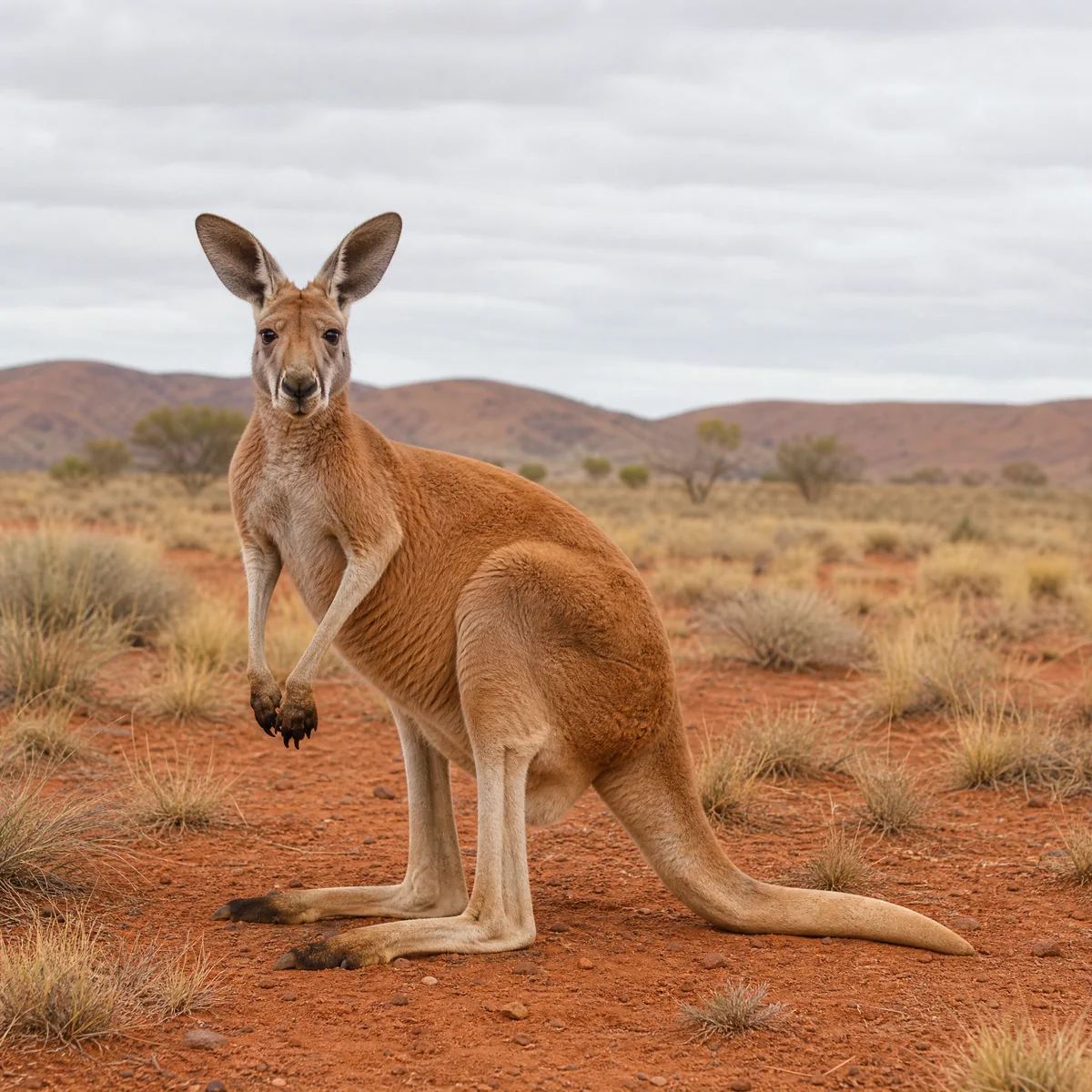
Kangaroo
Macropus rufus
🍽️ HerbivoreModern life
Physical Characteristics
🍽️
DietHerbivore
📏
Size0.85~1.6m
⚖️
Weight17~92kg
↕
Height1.5m
Classification
FAM
FamilyMacropodidae
ORD
OrderDiprotodontia
GEN
GenusMacropus
SP
SpeciesM. rufus
Macropus rufus
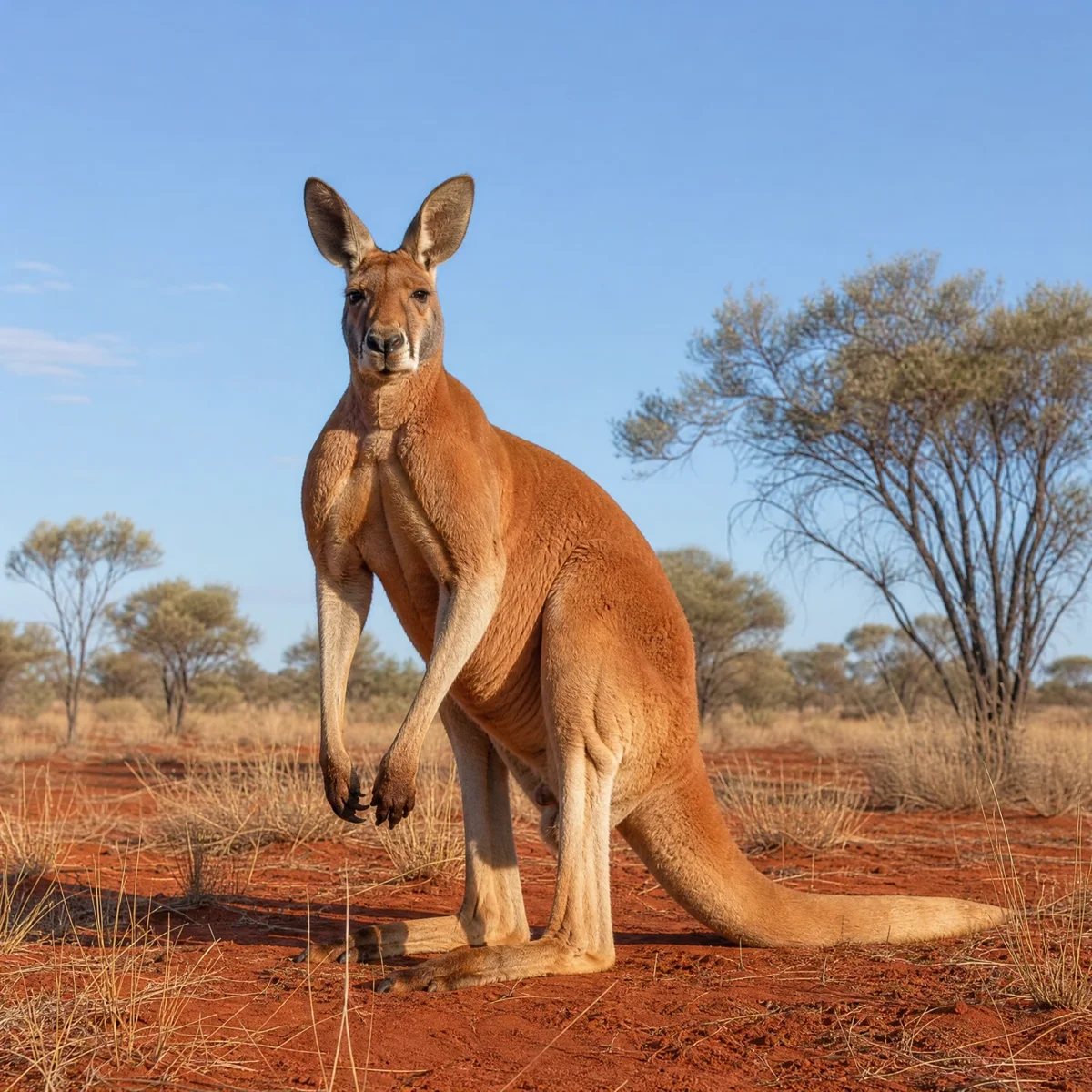
The red kangaroo (Macropus rufus Desmarest, 1822) is a large marsupial of the kangaroo family (Macropodidae) in the order Diprotodontia, belonging to the genus Macropus. It is the largest living marsupial. The species is widely distributed across the arid and semi-arid interior of Australia and shows pronounced sexual dimorphism: males bear reddish-brown fur while females are typically blue-grey. Adult males may weigh up to approximately 90 kg, whereas females usually range from 17 to 40 kg and are considerably smaller.
Taxonomically, the red kangaroo was first described by Anatole Desmarest in 1822 as Kangurus rufus, and the genus name was later standardized as Macropus. In 2015, however, Jackson and Groves proposed reclassifying several large kangaroo species, including the red kangaroo, into the separate genus Osphranter on genetic and morphological grounds, yielding the alternative name Osphranter rufus. Molecular phylogenetic studies since 2019 have supported the monophyly of the Osphranter lineage, yet Macropus rufus remains the more widely used designation in field guides, management reports, and international listings.
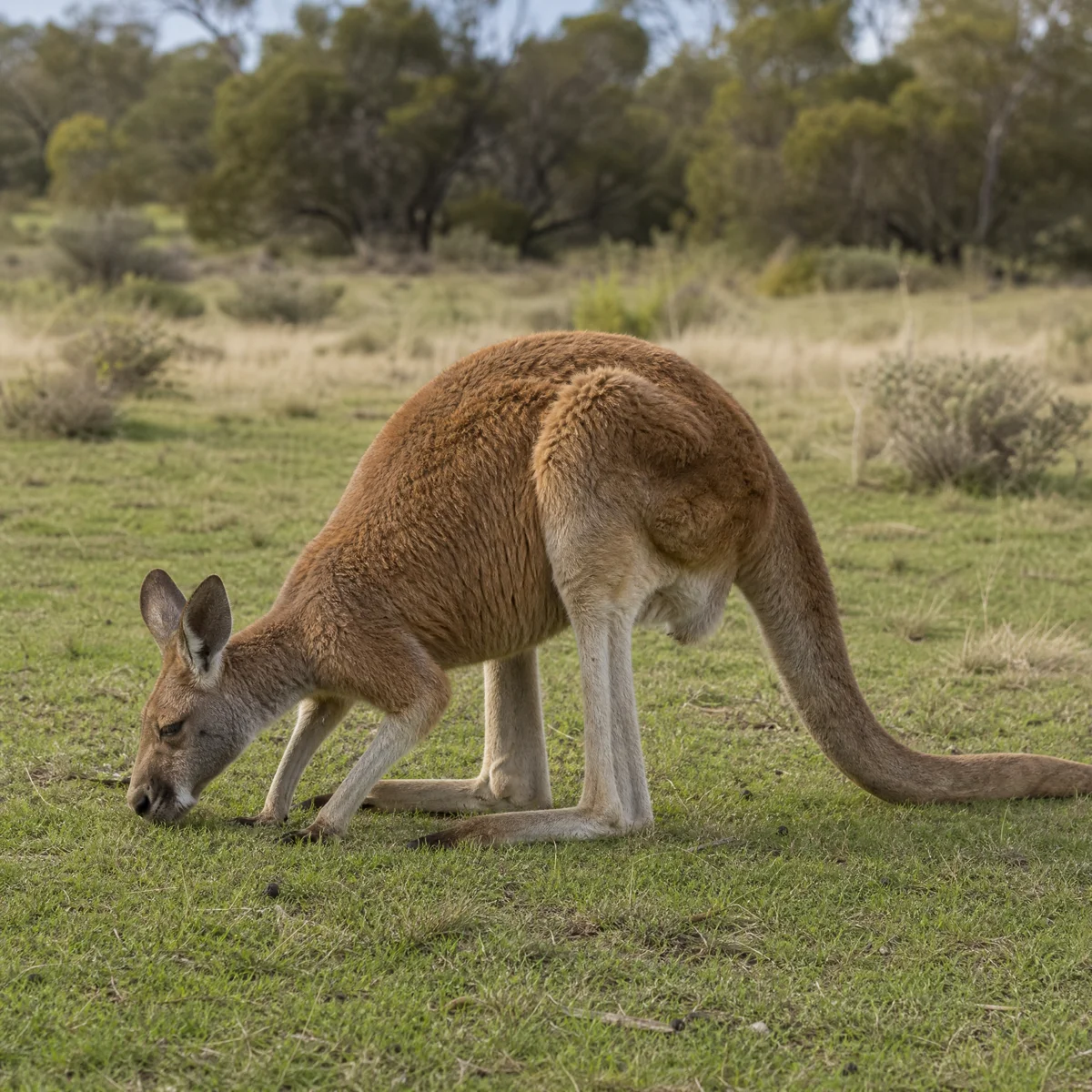
The red kangaroo is a strict herbivore, feeding mainly on grasses, forbs, and the young shoots of shrubs, and digests fiber-rich forage through foregut fermentation. It is not omnivorous—a common misconception worth correcting. Adapted to dry environments, it can survive on relatively little free water and is known to use its sense of smell to assess the moisture content of plants. Locomotion is characteristically by hopping on powerful hind legs, with a maximum speed of roughly 64 km/h and single leaps of up to about 8 m. At slow speeds it employs a pentapedal gait, using the tail as a fifth limb.
Social structure centers on loose groups called mobs, typically numbering around ten individuals. During the breeding season, males engage in ritualized boxing to establish dominance—a behavior that has become one of the most recognizable images of Australian wildlife. Marsupial reproduction is highly specialized: gestation lasts only about 33 days, yet the joey develops in the mother's pouch for approximately 235 days. Through embryonic diapause, a single female can simultaneously nurse a pouch young and an at-heel juvenile. The IUCN Red List rates the species Least Concern, and within strictly managed commercial hunting zones more than 11.5 million red kangaroos were estimated in 2020 alone.
The genus name Macropus combines the Greek makros ("large") and pous ("foot"), reflecting the enormous hind feet characteristic of macropods. The specific epithet rufus is Latin for "red" and refers to the reddish-brown pelage of adult males. The English word "kangaroo" is widely accepted to derive from gangurru, recorded in 1770 when James Cook's expedition encountered Guugu Yimithirr speakers near Cape York in northern Queensland. In Australia the species is often shortened to "red roo." The common name "red kangaroo" thus unites the male's coat color with the Latin species epithet rufus.
Two scientific names coexist for the red kangaroo: Macropus rufus and Osphranter rufus. Traditionally all large kangaroos were placed in Macropus, but Jackson and Groves (2015) separated the grey kangaroos, western grey kangaroo, eastern grey kangaroo, and red kangaroo into Osphranter. Subsequent molecular analyses by Couzens et al. (2019) support Osphranter as a monophyletic group, yet international checklists, management agencies, and field guides have not fully harmonized their usage. This article employs Macropus rufus as the primary designation while documenting the Osphranter alternative.
The red kangaroo is Australia's largest living marsupial, a dry-interior macropod distinguished by extreme sexual dimorphism, hopping locomotion, and sophisticated pouch-based reproduction.
The red kangaroo belongs to the phylum Chordata, class Mammalia, infraclass Marsupialia, order Diprotodontia, superfamily Macropodoidea, family Macropodidae, and genus Macropus (or Osphranter). The Macropodidae comprise roughly 60 species of kangaroos, wallabies, wallaroos, and tree-kangaroos, with Australia and New Guinea as the primary distribution region.
Desmarest (1822) described the species as Kangurus rufus. At that time "Kangurus" served as a genus for kangaroo-like marsupials in general, but as Macropus was established the species was transferred into that genus. The original description already noted sexual dimorphism in coat color—red males and grey females—a diagnostic trait that has remained central to identification for more than two centuries.
Meredith et al. (2008) presented a combined mitochondrial and nuclear DNA phylogeny of Macropodidae, demonstrating that large kangaroos diversified within a single lineage. The study places the origin of the family around the Middle Miocene and supports the interpretation that expansion of open country during increasing aridification promoted an adaptive radiation of large macropods. The red kangaroo is a close sister taxon to grey kangaroo species and exhibits morphology and ecology specialized for arid interior environments.
| Species | Scientific name (conventional) | Alternative name | Main distribution | Notes |
|---|---|---|---|---|
| Red kangaroo | Macropus rufus | Osphranter rufus | Arid and semi-arid interior of Australia | Largest marsupial; red males, blue-grey females |
| Eastern grey kangaroo | Macropus giganteus | Osphranter giganteus | Eastern interior | Most common large kangaroo in the east; grey males |
| Western grey kangaroo | Macropus fuliginosus | Osphranter fuliginosus | Southwestern Australia | Dark grey; genetically distinct island populations |
| Common wallaroo | Macropus robustus | Osphranter robustus | Rocky ranges | Smaller, stockier build; rock-associated habitat |
| Antilopine kangaroo | Macropus antilopinus | Osphranter antilopinus | Tropical north | Slender build; monsoon-zone specialist |
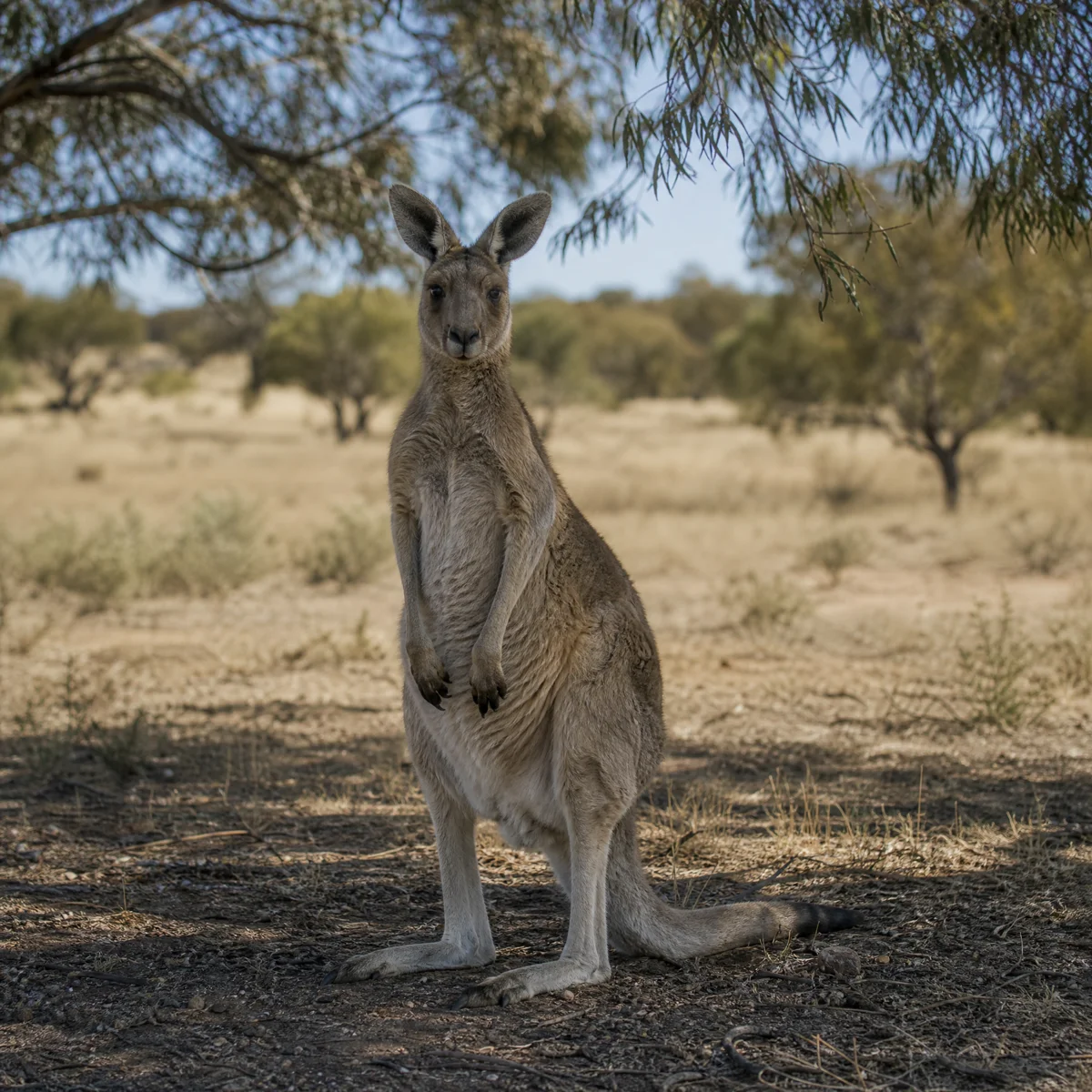
Among living marsupials the red kangaroo is the largest species, with extreme differences in body size and color between sexes. Adult males have red-brown to russet fur, a head-and-body length of approximately 1.3–1.6 m (tail excluded), and a weight of roughly 55–90 kg. Females are typically blue-grey, measure about 0.85–1.0 m in head-and-body length, and weigh 17–40 kg—often less than half the mass of a large male. This dimorphism is interpreted as the outcome of divergent reproductive investment strategies and intense male–male competition.
The hind legs are long and powerfully muscled, with elastic Achilles tendons that store and release energy efficiently during hopping. The forelimbs are relatively short and weak but are used when standing upright to fight or pull vegetation within reach. The tail is a long, muscular organ that serves as a support when sitting and functions as the "fifth leg" during pentapedal locomotion at slow speeds. The hind foot bears a greatly enlarged fourth toe with a single claw that provides propulsive thrust during each leap.
The red kangaroo is a foregut fermenter: microbial digestion of cellulose occurs in an enlarged forestomach analogous in function, though not in detailed anatomy, to the rumen of cattle and sheep. Combined with the characteristically low basal metabolic rate of marsupials, this system improves energy and water efficiency in dry habitats. The species concentrates urine effectively, and individuals have been observed surviving for extended periods on the moisture content of green vegetation alone. Although strictly herbivorous, seasonal shifts in plant selection are necessary to meet nutritional requirements from low-protein forage.
The red kangaroo is a strict herbivore, consuming grasses, forbs, and the young leaves and roots of shrubs. It does not habitually eat meat or insects, and the popular notion of an "omnivorous kangaroo" is incorrect. During dry periods it preferentially selects plants with higher moisture content, and home-range use shifts after rainfall when fresh forbs appear. Foregut fermentation handles fiber well but requires prolonged retention of low-protein forage, so resting periods are lengthy relative to body size.
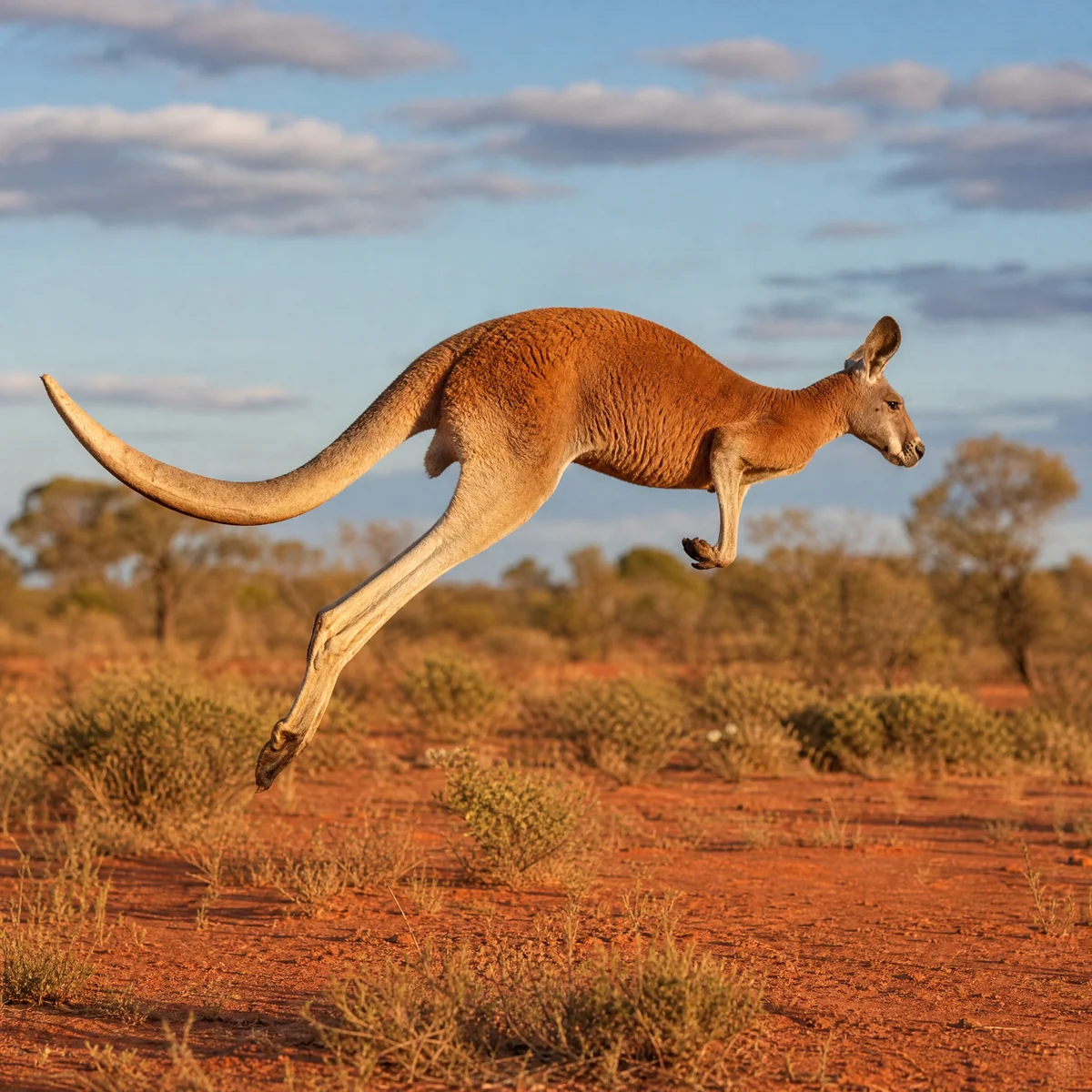
Routine travel involves alternating flexion and extension of the hind limbs in a forward hopping gait. When threatened or fleeing, a red kangaroo can reach speeds of up to about 64 km/h and cover up to 8 m in a single bound. At low speed—especially while grazing or moving cautiously—females in particular may use pentapedal locomotion: the forelimbs and tail contact the ground while the hind limbs are drawn forward beneath the body. This gait reduces energy expenditure while allowing the animal to scan its surroundings.
Red kangaroos move in mobs, usually of around ten animals though group size varies with food, water, and season. Mobs are loose aggregations rather than rigid permanent units, typically centered on females and their dependent young. During the breeding season males spar with arm-swinging, kicking, and ritualized boxing to establish rank; dominant males tend to secure more mating opportunities. Hind-leg kicks directed at rivals or predators are powerful defensive weapons.
The species is predominantly crepuscular, active mainly at dawn and dusk, though it may feed by day when temperatures permit. During midday heat it rests in shade and may spread saliva on the forearms and chest for evaporative cooling. Behavioral and physiological patterns reflect adaptation to the wide diurnal temperature swings of the arid interior.
Fertilization is followed by a gestation of only about 33 days, after which the newborn joey—weighing roughly 1 g—is born in a highly altricial state. It crawls unaided into the pouch, attaches to a teat, and completes most of its development there. Pouch life lasts approximately 235 days (about eight months), during which the joey grows on milk supplied by the mother.
Females possess embryonic diapause: mating and fertilization can occur while a pouch young is still suckling, but embryonic development is arrested until the pouch young vacates. When the pouch joey emerges, the dormant embryo resumes development and a new pregnancy begins. A single female may therefore simultaneously care for a pouch joey and an at-heel juvenile that has left the pouch but continues to suckle. This reproductive strategy increases breeding success in an environment where rainfall and forage are unpredictable.
Females reach sexual maturity at roughly 14–20 months and males at 20–24 months. In the wild, females may live 15–20 years, while males often have shorter lives because of competition, hunting, and accidents. Mortality profiles differ between populations inside and outside commercial harvest zones.
The red kangaroo is widely distributed across the arid and semi-arid mainland of Australia but is largely absent from coastal rainforests and high-rainfall temperate forests. It occurs in the interior of Queensland, New South Wales, Victoria, South Australia, Western Australia, and the Northern Territory. Distribution correlates closely with annual rainfall and the species is most abundant where mean annual precipitation falls below about 500 mm.
Typical habitat includes open savanna, spinifex grassland, shrubland, and gently rolling plains with access to forage, shade, and water. Where its range overlaps that of the eastern grey kangaroo, competition and habitat partitioning may occur. Expansion of artificial water points for livestock has contributed to range extension in some regions.
Numbers fluctuate sharply with rainfall and primary production: droughts can cause steep declines, followed by recovery in wet years. In commercial harvest zones populations are monitored by regular aerial surveys, and more than 11.5 million red kangaroos were estimated within those zones nationally in 2020. Total abundance across all of Australia exceeds that figure.
The red kangaroo is listed as Least Concern (LC) on the IUCN Red List. Broad distribution, large population size, and use of artificial water sources contribute to a low overall extinction risk assessment. Localized drought, habitat clearing, road mortality, and managed harvest can nonetheless affect regional populations.
Australian state governments license and regulate commercial kangaroo harvesting. Quotas are set from aerial surveys and population models and are adjusted to remain within sustainable limits. The red kangaroo often receives the largest quota among harvested macropod species. Meat and leather exports are economically significant, while animal-welfare and management-transparency issues remain subjects of domestic and international debate.
Drought is the principal natural threat, capable of rapidly reducing numbers through food shortage and water stress. Habitat clearing, competition with livestock, fencing, and roads cause fragmentation and roadkill. In areas of locally high density, overgrazing of rangeland is sometimes discussed, though distinguishing natural rainfall-driven fluctuations from anthropogenic effects is important.
For Australian Aboriginal peoples, kangaroos have for millennia provided food, hides, bone tools, and mythological motifs. The transmission of gangurru into English "kangaroo" during Cook's 1770 encounter symbolizes early contact between Europeans and First Nations Australians. The red kangaroo holds particular importance in traditional hunting and ceremony among arid-interior communities.
In modern Australia the red kangaroo is harvested under regulated commercial programs that supply kangaroo meat and leather. Kangaroo meat is marketed as lean and high in protein and is sold domestically and internationally. In tourism, kangaroos are iconic symbols of Australian wildlife and feature prominently in wildlife viewing and protected-area experiences.
The kangaroo appears on the Australian coat of arms, airline logos, sports mascots, and postage stamps. Male red kangaroos boxing is among the most widely recognized behavioral images of the fauna worldwide. Where habitat intersects road networks, human–kangaroo conflict through vehicle collisions and occasional crop damage is also reported.
Established facts include that the red kangaroo is the largest living marsupial, that it is herbivorous rather than omnivorous, that it is rated Least Concern by the IUCN, and that Desmarest described it in 1822. Strong inferences include the macropod phylogeny of Meredith et al. (2008), the Osphranter split supported by Jackson and Groves (2015) and subsequent molecular work, and population estimates of many millions within commercial zones. Open questions include when checklists will unify Macropus versus Osphranter usage, whether artificial water has permanently raised carrying capacity, and how climate change may shift the southern and eastern margins of arid-zone distribution.
The belief that kangaroos are omnivorous is widespread but incorrect for large macropods including the red kangaroo. The anecdote that "kangaroo" meant "I don't know" in an Aboriginal language is false; etymologists accept derivation from Guugu Yimithirr gangurru. Not every kangaroo is a red kangaroo—several distinct species such as grey kangaroos exist separately. Commercial harvest does not imply extinction risk; it is classified as managed sustainable use under current Australian policy.
The red kangaroo is the largest living marsupial, and males may weigh nearly twice as much as females—one of the most extreme cases of sexual dimorphism among mammals.
After a 33-day gestation the joey is born at about 2.5 cm and less than 1 g, yet crawls unaided into the mother's pouch.
A female can supply milk of different composition from separate teats to a pouch joey and an at-heel juvenile at the same time.
The English word kangaroo comes from gangurru, recorded in 1770 by Cook and Banks among Guugu Yimithirr speakers in northern Queensland.
At slow speeds the red kangaroo uses a pentapedal gait, moving on forelimbs, tail, and hind limbs together.
Reproduction is tightly linked to rainfall; ovulation can be stimulated within about 14 days after drought-breaking rain.
Australia's commercial kangaroo harvest is managed through quotas typically set at 10–20% of surveyed populations, widely cited as a regulated sustainable-use model.
The popular claim that kangaroo meant 'I don't know' in an Aboriginal language has been refuted by linguists; gangurru is the accepted etymology.
The red kangaroo (Macropus rufus) is a large marsupial of the family Macropodidae in the order Diprotodontia—the largest living marsupial. It is distinguished by hopping locomotion on powerful hind legs and by the female's pouch in which young develop.
The red kangaroo is the largest species, adapted to dry interior country, with reddish-brown males and blue-grey females. Grey kangaroos (Macropus giganteus and related taxa) are more common in comparatively mesic eastern and southern regions and differ in build and distribution. In everyday English 'kangaroo' often evokes the red kangaroo as the archetypal species.
Gestation lasts only about 33 days. The newborn joey—hairless and weighing roughly 1 g—crawls into the pouch and attaches to a teat. It remains in the pouch for about 235 days, then emerges but may continue suckling for nearly a year. Through embryonic diapause a female can simultaneously support a pouch joey, an at-heel juvenile, and a dormant embryo.
A red kangaroo can reach speeds of up to about 64 km/h and cover nearly 8 m in a single hop. Elastic energy storage in the Achilles tendon is central to efficient consecutive bounding.
The red kangaroo is a strict herbivore, eating grasses, forbs, and shrub leaves. It digests fiber through foregut fermentation and can survive in arid environments on far less free water than sheep require.
Within commercial harvest zones alone, red kangaroos numbered more than 11.5 million in 2020 (combined NSW, Queensland, South Australia, and Western Australia estimates). Total national abundance, including unsurveyed areas, is considerably higher.
Ritualized sparring among males during the breeding season establishes dominance and access to females. Hind-leg kicks are also used as a powerful defense against rivals and predators.
Yes—they are alternative scientific names for the red kangaroo. Macropus rufus is the traditional usage; Jackson & Groves (2015) and later genetic studies support elevating large kangaroos to Osphranter. This database uses Macropus rufus as the primary name while noting Osphranter rufus.
5images