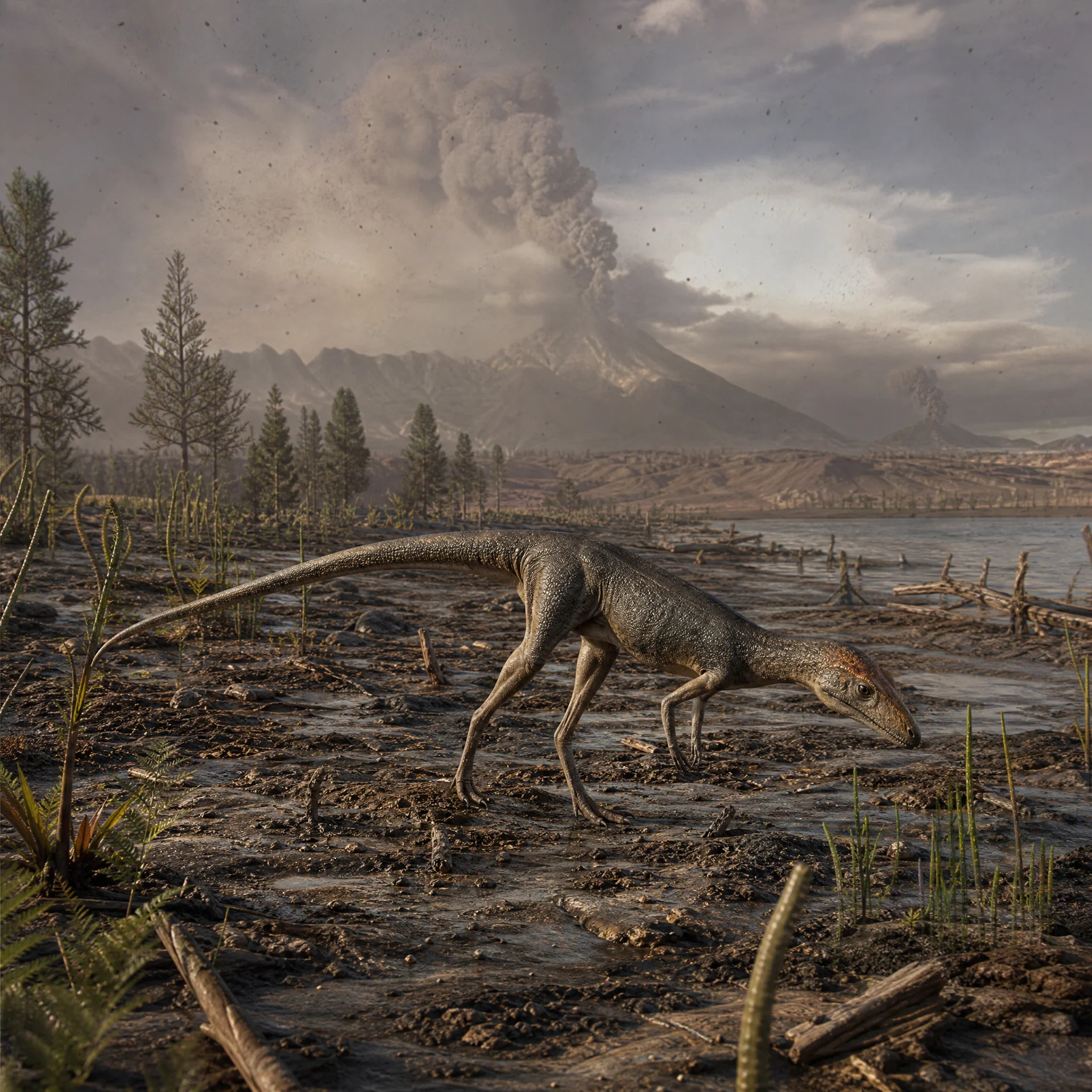
Marasuchus
Marasuchus lilloensis
⏳ Triassic Period🍽️ CarnivoreDinosaurs
Physical Characteristics
⏳
PeriodTriassic Period
🍽️
DietCarnivore
📏
Size0.4~0.5m
⚖️
Weight0.13~0.5kg
Classification
GEN
GenusMarasuchus
SP
SpeciesM. lilloensis
Marasuchus lilloensis
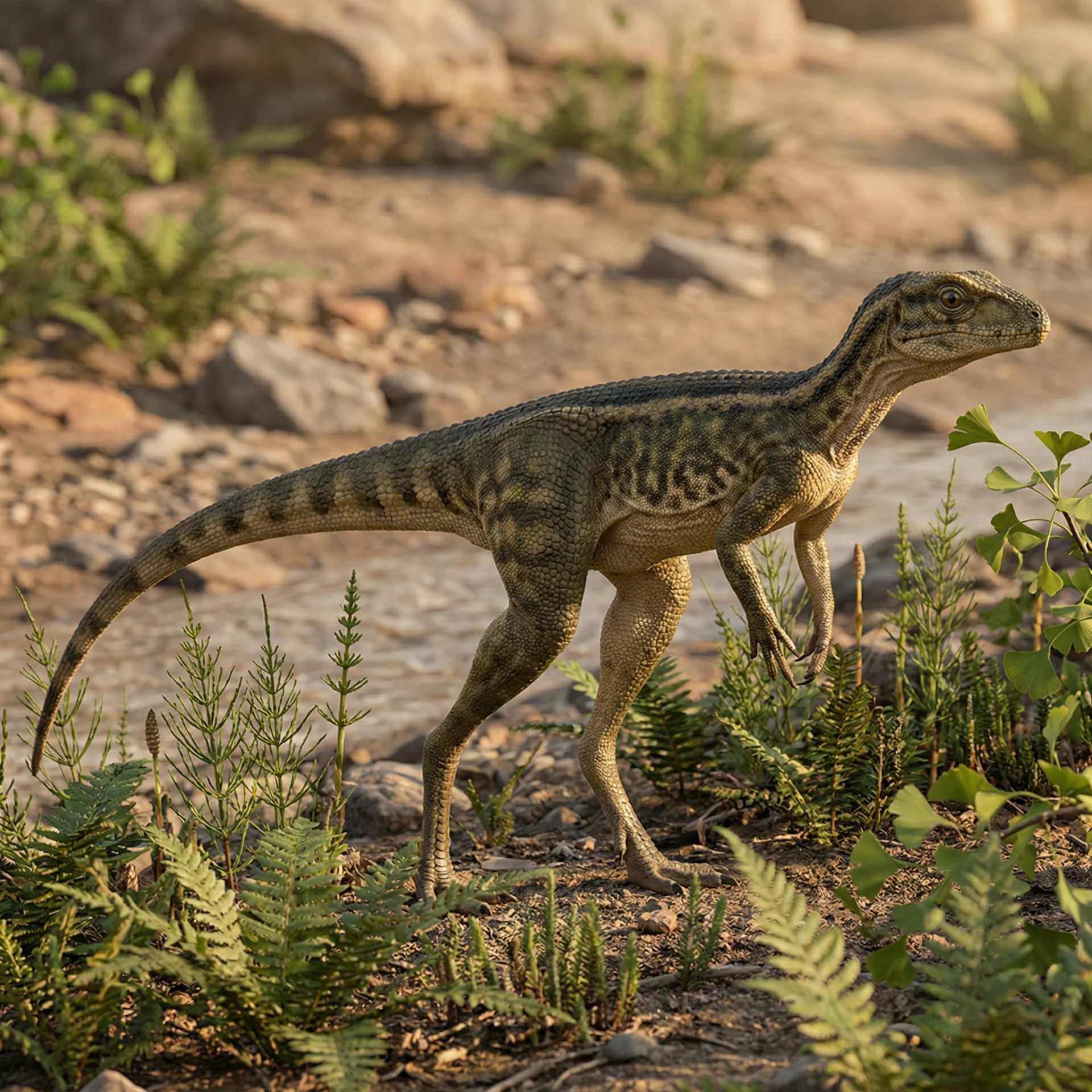
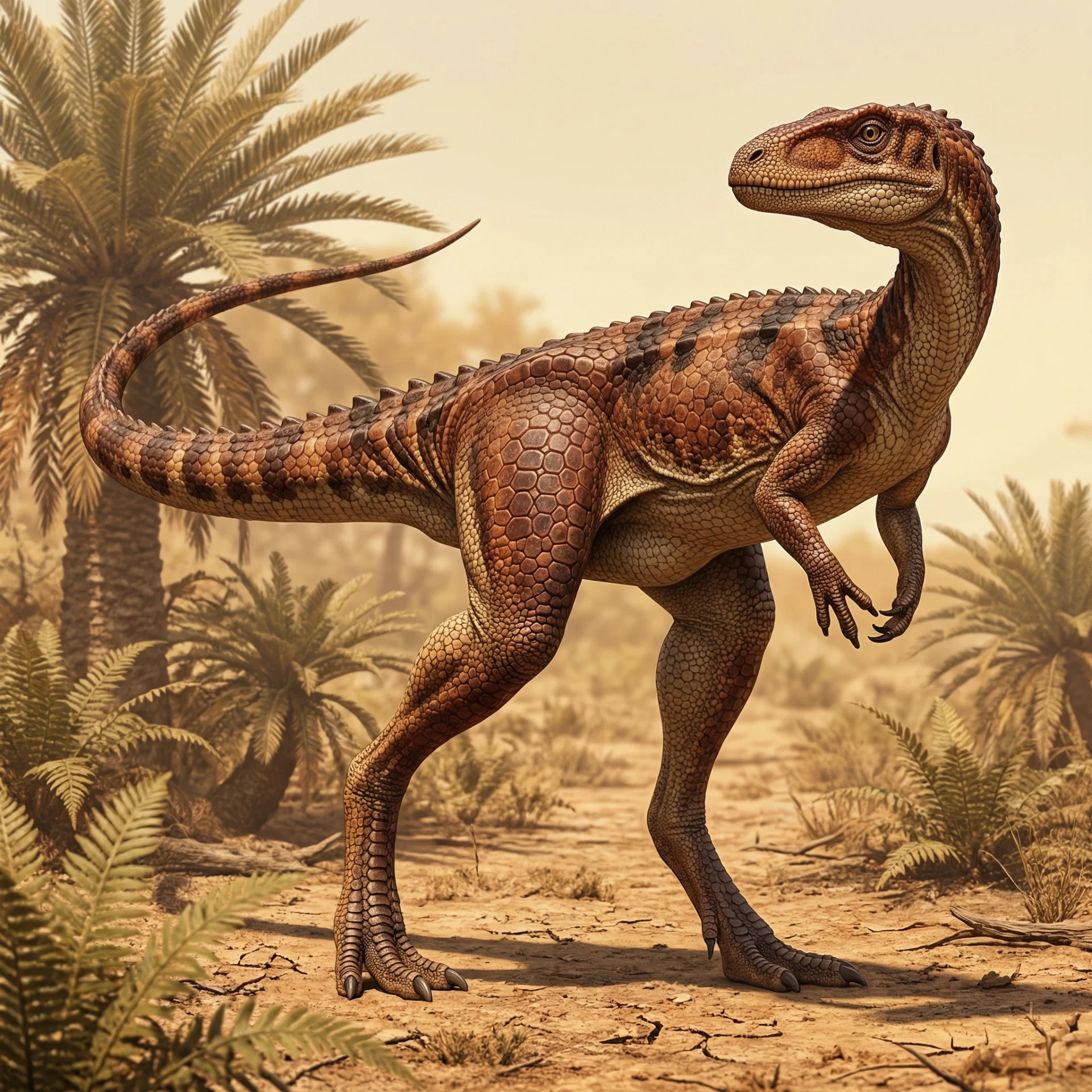
Marasuchus (Marasuchus lilloensis Sereno & Arcucci, 1994) is a small basal dinosauriform archosaur from the Late Triassic (early Carnian stage, approximately 236–234 Ma) Chañares Formation of La Rioja Province, Argentina. While not a true dinosaur (Dinosauria), Marasuchus occupies a pivotal position just outside Dinosauria within Dinosauriformes, making it one of the most informative taxa for understanding the origin and early evolution of dinosaurs. It exhibits several transitional features between earlier archosaurs and true dinosaurs, including habitual bipedalism, an erect hindlimb posture, an anterior trochanter with a trochanteric shelf on the femur, and an ascending process on the astragalus—while still retaining a largely imperforate acetabulum that characterizes non-dinosaurian dinosauriforms.
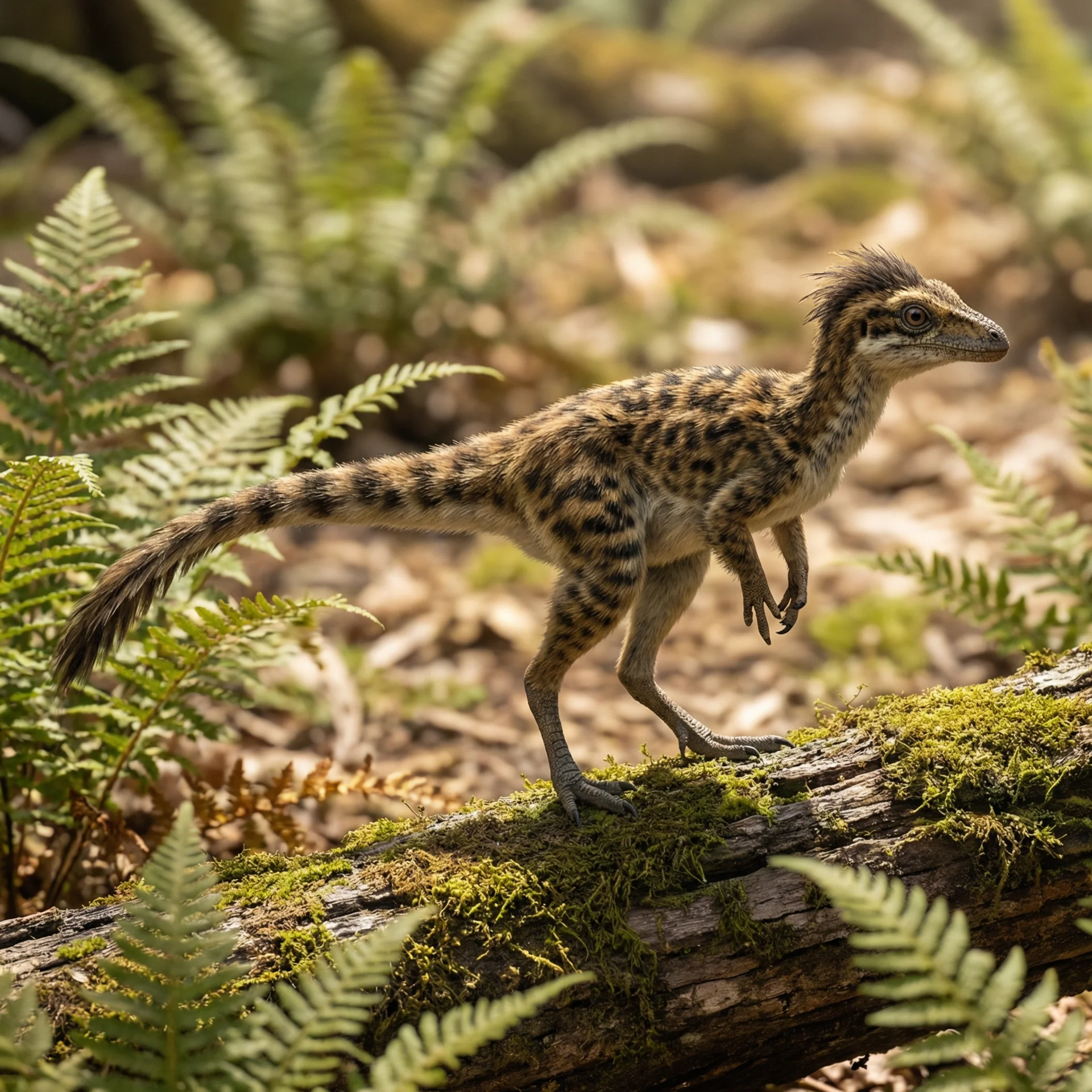
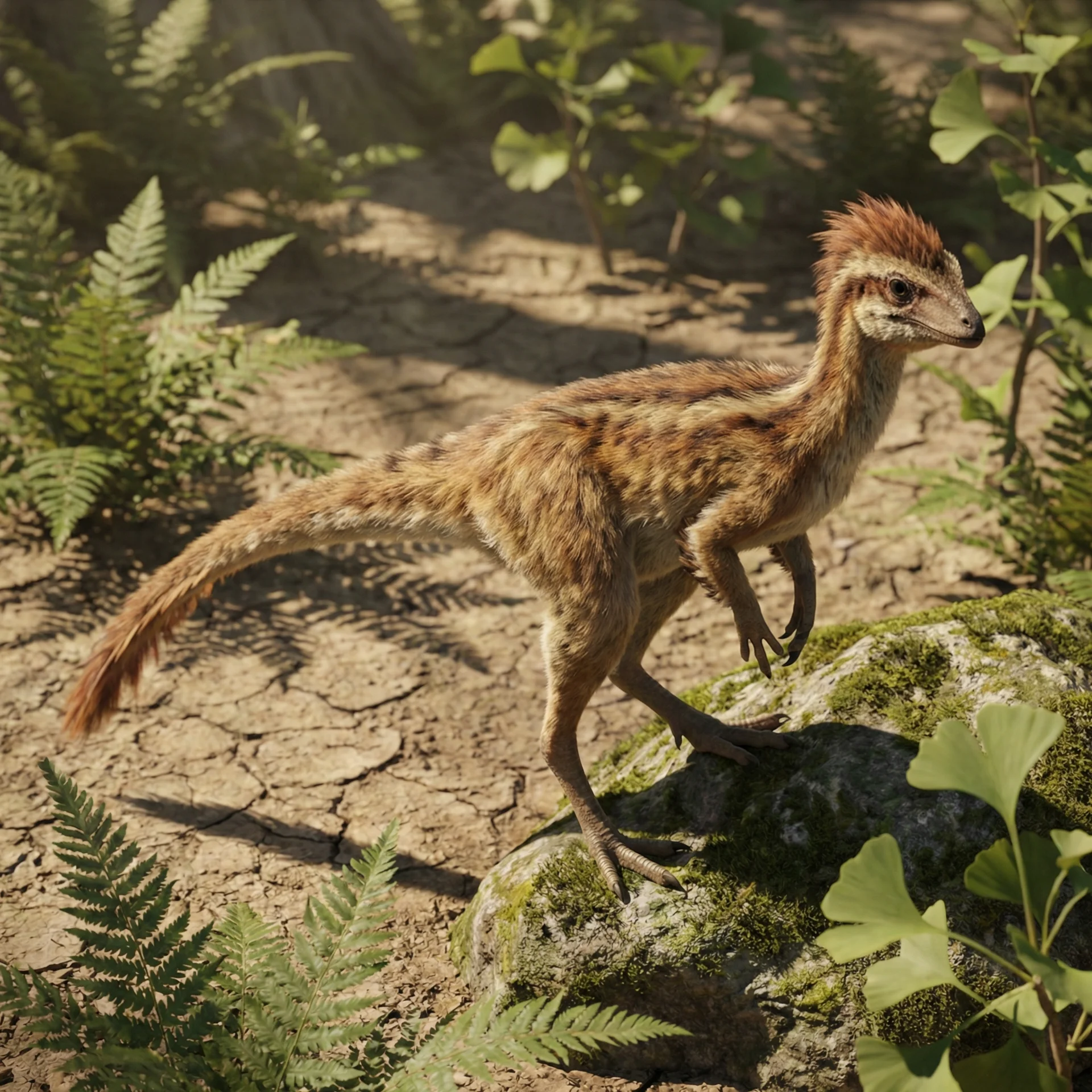
This animal was extremely small and lightly built, with an estimated total length of approximately 0.4–0.5 m and a body mass of roughly 0.13–0.5 kg. Its hindlimbs were about twice the length of the forelimbs, giving it proportions broadly comparable to early theropod dinosaurs such as Coelophysis. It possessed a long, S-curved neck and a very long, thin tail that was unusually deep at its base. The blade-like, serrated teeth preserved in the maxilla suggest a carnivorous or insectivorous diet targeting small vertebrates and invertebrates.
The taxonomic status of Marasuchus remains debated. Sereno & Arcucci (1994) erected the genus for specimens previously assigned to Lagosuchus lilloensis Romer, 1972, on the grounds that the holotype of Lagosuchus talampayensis was too poorly preserved to be diagnostic. However, Agnolín & Ezcurra (2019) re-examined the Lagosuchus holotype, found it to be valid and indistinguishable from Marasuchus specimens, and consequently treated Marasuchus lilloensis as a junior synonym of Lagosuchus talampayensis. Otero et al. (2024) followed this synonymy. The issue remains unresolved in the broader literature.
The genus name Marasuchus combines Mara, referring to the mara (Dolichotis), a rabbit-like South American rodent, with the Greek souchos (crocodile), yielding "Mara crocodile." This parallels the etymology of the earlier genus name Lagosuchus ("rabbit crocodile"). The specific epithet lilloensis honors the Instituto Miguel Lillo in Tucumán, Argentina, where the fossil specimens are housed.
Marasuchus was erected as a new genus by Sereno & Arcucci (1994). Prior to this, Romer (1972) had described the relevant specimens as Lagosuchus lilloensis, and Bonaparte (1975) had synonymized this species with L. talampayensis. Sereno & Arcucci (1994) argued that the holotype of L. talampayensis (PULR 09) was too fragmentary to be diagnostic (a nomen dubium), and accordingly established the new genus Marasuchus for the better-preserved PVL specimens. In contrast, Agnolín & Ezcurra (2019) re-examined PULR 09 and identified diagnostic features shared with Marasuchus, concluding that Marasuchus lilloensis is a junior synonym of Lagosuchus talampayensis. Both viewpoints continue to be cited in the current literature.
A tiny bipedal dinosauriform from the early Carnian of South America that preserves a transitional body plan immediately preceding the origin of Dinosauria.
All Marasuchus fossils derive from the Chañares Formation within the Ischigualasto–Villa Unión Basin of La Rioja Province, Argentina, exposed within Talampaya National Park (a UNESCO World Heritage Site). The formation was long considered Middle Triassic (Ladinian) in age, but CA-TIMS U-Pb zircon dating by Marsicano et al. (2016) constrained the main fossiliferous interval to the early Carnian stage of the Late Triassic, approximately 236.1 ± 0.6 Ma to 233.7 ± 0.4 Ma. Additional U-Pb dating of the overlying lower Los Rastros Formation yielded an age of 234.47 ± 0.44 Ma (Mancuso et al., 2020), corroborating the early Carnian assignment.
The Chañares Formation is the lowermost unit of the Agua de la Peña Group, approximately 70 m thick. Its lower portion consists of olive-grey fluvial sandstones and siltstones, while the main fossiliferous interval (the "bluish facies") comprises wide, massive beds of very fine bluish-grey volcaniclastic sandstone, siltstone, and claystone rich in volcanic ash and debris. Calcareous concretions up to 2 m in diameter commonly preserve articulated skeletal material of multiple taxa (Rogers et al., 2001; Mancuso et al., 2014).
The primary fossil-bearing section is interpreted as a volcaniclastic floodplain environment influenced by nearby volcanic activity. Lahars, ash falls, and pyroclastic flows are thought to have caused mass mortality events that rapidly buried small animals, producing the exceptional articulated preservation observed in concretions (Rogers et al., 2001; Mancuso et al., 2014). The upper portion of the formation transitions into lacustrine (lake) deposits. Palynological analysis of coprolites from the formation indicates a flora dominated by Umkomasiales (seed fern) pollen with subsidiary podocarpacean and voltzialean conifer pollen, consistent with the Dicroidium flora of late Ladinian–early Carnian Gondwana (Pérez Loinaze et al., 2018). The paleolatitude was approximately 50°S, placing the locality in a temperate to cool-temperate zone of southwestern Pangaea.
The holotype of Marasuchus is PVL 3871, collected by José Bonaparte in 1969. Romer (1971, 1972) referred to it as "the Tucuman specimen" and designated it as the type of Lagosuchus lilloensis. PVL 3871 includes large portions of the tail, left forelimb (scapulocoracoid, humerus, radius, ulna), hip, both hindlimbs, and possible snout fragments.
The principal referred specimens are summarized below:
| Specimen | Key Elements | Notes |
|---|---|---|
| PVL 3870 | Partial braincase and maxilla, entire presacral vertebral column, partial tail, nearly complete pelvis and hindlimbs | Best-preserved specimen overall |
| PVL 3871 | Most of the tail, left forelimb, pelvis, both hindlimbs | Holotype; pelvic material may include silesaurid elements |
| PVL 3872 | Braincase, cervical and dorsal vertebrae | - |
| PVL 4670 | Proximal caudal vertebrae, partial forelimb bones | Referral to Marasuchus/Lagosuchus uncertain (Agnolín & Ezcurra, 2019) |
| PVL 4671 | Proximal caudal vertebrae | - |
| PVL 4672 | Cervical and dorsal vertebral series | Includes partial forelimb elements with some morphological differences |
Otero et al. (2024) cautioned that the pelvis of PVL 3871 may partially derive from an unrelated silesaurid dinosauriform, and that the originally described left scapulocoracoid of PVL 3871 more closely resembles those of "sphenosuchian" crocodylomorphs.
The key diagnostic features identified by Sereno & Arcucci (1994) are primarily vertebral: (1) neural spines of vertebrae near the base of the neck lean forwards; (2) neural spines of vertebrae near the hip are trapezoidal and expanded to such an extent that they contact those of adjacent vertebrae; (3) caudal vertebrae dramatically increase in length towards the tail tip, and proximal chevrons are elongated, making the tail base unusually deep.
Skull material is extremely limited (only one maxilla and two braincases are preserved). The hand (manus) is entirely unknown. Furthermore, some PVL specimens (particularly PVL 3871 pelvic elements and PVL 4670) may contain admixed elements from other taxa, requiring caution in anatomical interpretation (Otero et al., 2024).
Overall proportions broadly resemble a miniaturized early theropod dinosaur such as Coelophysis. The hindlimbs were approximately twice the length of the forelimbs. The neck was long with an S-shaped default curvature, and the tail was very long and thin, though notably deep at its base. The holotype femur (PVL 3871) measures approximately 5.75 cm in length, roughly 40–50% larger than the holotype femur of L. talampayensis (Sereno & Arcucci, 1994).
Body mass estimates vary across studies. Allen et al. (2013) reconstructed a 3D volumetric model yielding a mean body mass of approximately 0.13 kg. Paul (1988) estimated Lagosuchus at about 167 g, while Holtz (2012) suggested a pigeon-range mass of 50–500 g. Otero et al. (2024) reconstructed a body approximately 0.5 m in total length. The Dawndinos project cited a figure of approximately 5 kg, which is likely an overestimate. The current consensus range is approximately 0.13–0.5 kg for body mass and 0.4–0.5 m for total length.
Cranial material is restricted to the maxilla of PVL 3870 and braincases of PVL 3870 and 3872. The maxilla was low, bearing at least 12 teeth. Most teeth were blade-like and serrated, though some near the rear of the bone were less curved and more leaf-shaped. Interdental plates were present on the medial surface of the maxilla (Sereno & Arcucci, 1994). The braincase was tall and broadly typical of early archosaurs, but shared specific similarities with early dinosaurs, including short, blade-like, anteriorly tilted basipterygoid processes and wide exoccipitals with pronounced ridges adjacent to the hypoglossal nerve foramina.
Nearly the entire vertebral column is represented (excluding the tail tip). The cervical vertebrae were elongated with offset anterior and posterior ends, creating a long, curved neck typical of avemetatarsalians. The neural spine of the axis vertebra was expanded and trapezoidal. Uniquely, neural spines near the base of the neck leaned forwards, and those near the hip were trapezoidal and expanded to contact adjacent neural spines. Only two vertebrae formed the sacrum, fewer than in most dinosaurs (typically three or more). Caudal vertebrae dramatically increased in length distally, and the elongated proximal chevrons gave the tail base unusual depth (Sereno & Arcucci, 1994).
The scapulocoracoid was relatively large and broad compared to other avemetatarsalians, though the glenoid (shoulder socket) was directed somewhat posteriorly—a dinosauriform feature. The humerus, ulna, and radius were very slender, and the entire forelimb was about half the length of the hindlimb. No portion of the hand (manus) is preserved. Otero et al. (2024) noted that the originally described left scapulocoracoid of PVL 3871 is morphologically more consistent with "sphenosuchian" crocodylomorphs, calling its attribution into question.
The pelvis displays several dinosauriform synapomorphies. The ilium generally resembles that of Herrerasaurus, and the pubis was longer than the ischium. The ischium was enlarged relative to earlier archosauriforms, and its contact with the pubis was reduced. A "gap" between the ilium and ischium along the pubic margin represents a transitional state toward the fully perforated acetabulum of dinosaurs. However, in Marasuchus the bony inner wall of the acetabulum was retained, and the ischial margin still contacted the ilium and pubis—unlike the open condition in dinosaurs (Sereno & Arcucci, 1994; Nesbitt, 2011).
The femoral head bore a distinct anterior trochanter and a trochanteric shelf extending from it down the femoral shaft—synapomorphies shared with other dinosauriforms and some early dinosaurs. The tibia was longer than the femur and bore a sharp longitudinal groove edged by a flange at its posterior outer corner near the ankle. The ankle comprised a larger, boxy astragalus and a smaller calcaneum. A vertical, triangular ascending process of the astragalus rose in front of the tibia (a dinosauriform synapomorphy), but the posterior vertical groove on the astragalus and the calcaneal tuber represent surprisingly primitive features. The astragalus and calcaneum were not fused. The five metatarsals were thin and elongated, with III and IV longest; metatarsals I and V were approximately half the length of the longest. The phalangeal formula was likely 2-3-4-5-0 as in other dinosauromorphs (Sereno & Arcucci, 1994).
No direct evidence such as stomach contents or stable isotope data is available. The primary evidence for inferring diet comes from dental morphology: the maxillary teeth are laterally compressed, blade-like, and bear serrations, suggesting a carnivorous or insectivorous diet targeting small vertebrates and invertebrates. Some posterior teeth are less curved and more leaf-shaped, potentially indicating a degree of omnivory, but the overall dental and skeletal morphology points to an active small predator (Sereno & Arcucci, 1994). Evidence type: dental morphology (strongly inferred).
The contemporary Chañares fauna included large dicynodonts (Dinodontosaurus), medium-sized cynodonts (Massetognathus, Probainognathus, Chiniquodon), proterochampsid archosauriforms (Chanaresuchus, Tropidosuchus), the small pseudosuchian Gracilisuchus, and fellow dinosauriforms Lagerpeton and Lewisuchus (Mancuso et al., 2014). Within this assemblage, Marasuchus likely functioned as a small bipedal insectivore or micro-predator.
The proportions of the limbs (hindlimbs roughly twice the length of forelimbs, tibia longer than femur), elongated metatarsals, and erect hindlimb posture confirm habitual bipedalism. This inference is supported by the 3D volumetric and morphometric analyses of Allen et al. (2013) and Bishop et al. (2020), and by the musculoskeletal model of Otero et al. (2024). Pontzer et al. (2009) inferred potential endothermy from the locomotor biomechanics of Marasuchus. Evidence type: limb proportions and biomechanical modelling (near-certain inference).
All confirmed Marasuchus specimens come exclusively from the Chañares Formation within Talampaya National Park, La Rioja Province, northwestern Argentina. No undisputed material is known from any other locality or formation.
The approximate paleocoordinates for the Chañares Formation are about 49.9°S, 37.8°W. During the Triassic, South America formed the southwestern portion of the Pangaean supercontinent (Gondwana). This region occupied a temperate to cool-temperate zone. Palynological data indicate a transitional floral character between the temperate Ipswich flora of far southern Gondwana and the subtropical Onslow flora along the Neotethyan margin (Pérez Loinaze et al., 2018).
Marasuchus is placed within Avemetatarsalia (the branch of archosaurs closer to birds and dinosaurs than to crocodilians), specifically within Dinosauriformes. In the large-scale phylogenetic analysis of Nesbitt (2011), Marasuchus was recovered as more closely related to dinosaurs than the Lagerpetonidae but outside Silesauridae + Dinosauria, positioning it as a basal dinosauriform. This placement has been broadly maintained in subsequent analyses (Ezcurra, 2016; Baron et al., 2017).
Phylogenetic summary (based on Nesbitt, 2011 and Baron et al., 2017):
| Clade | Included Taxa |
|---|---|
| Dinosauromorpha | Lagerpetonidae + Dinosauriformes |
| Dinosauriformes | Marasuchus + (Silesauridae + Dinosauria) |
| Dinosauria | Saurischia + Ornithischia (or rearranged under the Ornithoscelida hypothesis) |
The foremost taxonomic controversy concerns the validity of the genus Marasuchus itself. Sereno & Arcucci (1994) considered the holotype of L. talampayensis (PULR 09) non-diagnostic and erected Marasuchus. In contrast, Agnolín & Ezcurra (2019) identified diagnostic features in PULR 09 overlapping with those of Marasuchus, attributed size differences and minor morphological variation to ontogeny or individual variation, and synonymized Marasuchus lilloensis with Lagosuchus talampayensis. Otero et al. (2024) adopted this synonymy while additionally noting that some PVL specimens (particularly PVL 3871 pelvic and pectoral elements) may derive from other taxa. Both perspectives are currently represented in the literature, and resolution will likely require additional specimens or further detailed study.
Recent work repositioning Lagerpetonidae as the sister group to Pterosauria (Ezcurra, Nesbitt, Bronzati et al., 2020) has not altered the placement of Marasuchus/Lagosuchus as a basal dinosauriform. It continues to serve as a key outgroup taxon for understanding dinosaur origins.
Marasuchus is confirmed as a small bipedal archosaur within Dinosauriformes from the Chañares Formation (early Carnian, approximately 236–234 Ma), based on radiometric dating and multiple independent phylogenetic analyses. The presence of an anterior trochanter, trochanteric shelf, ascending process of the astragalus, and bipedal adaptations are well-established dinosauriform synapomorphies.
A carnivorous/insectivorous diet (based on dental morphology), body mass of approximately 0.13–0.5 kg (3D volumetric and comparative estimates), and habitual bipedal locomotion with agile running capability (limb proportions and biomechanical models) are strongly inferred but lack direct evidence such as stomach contents.
Endothermy is hypothesized based on indirect evidence from bipedal locomotor mechanics (Pontzer et al., 2009). The presence of feathers or filamentous integument lacks any direct evidence and is purely speculative based on phylogenetic proximity to dinosaurs. The synonymy with Lagosuchus also remains a hypothesis-level debate.
Popular media sometimes characterize Marasuchus as "the first dinosaur" or "a direct ancestor of dinosaurs." These claims are inaccurate. Marasuchus is a dinosauriform outside Dinosauria and represents a stem lineage that illustrates the ancestral body plan leading to dinosaurs rather than being a direct ancestor.
The principal dinosauriforms and related taxa from the Chañares Formation are compared below:
| Taxon | Phylogenetic Position | Estimated Length | Key Features |
|---|---|---|---|
| Marasuchus lilloensis | Basal Dinosauriformes | approximately 0.4–0.5 m | Anterior trochanter, trochanteric shelf, imperforate acetabulum |
| Lagerpeton chanarensis | Lagerpetonidae (Pterosauromorpha?) | approximately 0.7 m | Very long hindlimbs, possible leaping adaptations |
| Lewisuchus admixtus | Silesauridae | approximately 1.0 m | Osteoderms present, larger body size |
| Gracilisuchus stipaniciorum | Pseudosuchia (crocodilian lineage) | approximately 0.3 m | Small pseudosuchian with two rows of osteoderms |
Marasuchus is phylogenetically closer to dinosaurs than Lagerpeton but more basal than silesaurids (including Lewisuchus). All three dinosauriform lineages coexisted in the early Carnian Chañares ecosystem, demonstrating a remarkable diversity of dinosaur-line archosaurs on the eve of dinosaur origins.
The name Marasuchus ('Mara crocodile') is a playful etymological parallel to Lagosuchus ('rabbit crocodile'), replacing 'rabbit' with the mara (Dolichotis), a rabbit-like South American rodent.
The holotype femur of Marasuchus is only about 5.75 cm long—roughly the length of an adult human finger joint.
With an estimated body mass of roughly 0.13–0.5 kg, Marasuchus weighed about as much as a pigeon, making it one of the smallest known Triassic archosaurs.
The exceptional articulated preservation of Marasuchus fossils is attributed to rapid burial by volcanic lahars and ash falls from nearby eruptions.
Marasuchus still retained a bony inner wall of the acetabulum (hip socket), showing the transitional stage toward the fully perforated acetabulum that defines true dinosaurs.
Lagerpeton, which lived alongside Marasuchus in the Chañares Formation, has recently been repositioned as a possible sister group to pterosaurs—meaning the dinosaur and pterosaur lineages already coexisted at this site.
The Chañares Formation was long thought to be Middle Triassic (Ladinian) in age, but 2016 U-Pb radiometric dating revised it to early Late Triassic (early Carnian), significantly recalibrating the timeline of dinosaur origins.
Marasuchus had only two sacral (hip) vertebrae, whereas later dinosaurs evolved three or more, providing greater pelvic reinforcement for their larger body sizes.
Otero et al. (2024) discovered that the shoulder blade originally assigned to the Marasuchus holotype may actually belong to a 'sphenosuchian' crocodylomorph, potentially revising decades of anatomical interpretation.
Talampaya National Park, where Marasuchus was discovered, is a UNESCO World Heritage Site and one of the world's premier localities for Triassic tetrapod fossils.
No. Marasuchus belongs to Dinosauriformes, a clade closely related to but outside of Dinosauria. It is best understood as a 'cousin' or 'immediate precursor' to dinosaurs, sharing many features with them (such as bipedalism and certain hip and femoral adaptations) while retaining a largely imperforate acetabulum and other primitive traits that distinguish it from true dinosaurs (Sereno & Arcucci, 1994; Nesbitt, 2011).
This is debated. Sereno & Arcucci (1994) considered the holotype of Lagosuchus talampayensis too poorly preserved to be diagnostic and erected Marasuchus as a separate genus. However, Agnolín & Ezcurra (2019) and Otero et al. (2024) argued that the Lagosuchus holotype is valid and indistinguishable from Marasuchus, making the latter a junior synonym. Both viewpoints are currently represented in the literature.
Marasuchus was very small, with an estimated total length of approximately 0.4–0.5 m and a body mass of roughly 0.13–0.5 kg. Allen et al. (2013) estimated about 0.13 kg from a 3D volumetric model, while Otero et al. (2024) reconstructed a body about 0.5 m long. For comparison, this is roughly the size of a pigeon to a large weasel.
All confirmed specimens come from the Chañares Formation in the Ischigualasto–Villa Unión Basin, La Rioja Province, northwestern Argentina. The formation is exposed within Talampaya National Park and dates to approximately 236–234 Ma (early Carnian stage of the Late Triassic) based on U-Pb radiometric dating (Marsicano et al., 2016).
No direct stomach content evidence is available. However, the blade-like, serrated maxillary teeth strongly suggest a carnivorous or insectivorous diet targeting small vertebrates and invertebrates (Sereno & Arcucci, 1994).
Across several specimens (PVL 3870, 3871, 3872, and others), partial skull material, nearly the entire vertebral column, forelimbs, pelvis, and hindlimbs are known—making it one of the most completely known basal dinosauriforms. However, most of the skull and the entire hand (manus) remain unknown, and some specimens may contain admixed bones from other taxa (Otero et al., 2024).
No direct evidence of feathers or any integumentary covering has been found for Marasuchus. Some speculation about filamentous integument exists based on its phylogenetic position near the base of the dinosaur lineage, but this remains purely hypothetical.
The Chañares Formation preserves a diverse assemblage of dinosauriforms (Marasuchus, Lagerpeton, Lewisuchus) and other tetrapods from the early Carnian (approximately 236–234 Ma), a critical time window just before the origin of dinosaurs. Radiometric dating has made it one of the most precisely calibrated pre-dinosaur fossil localities, essential for understanding the temporal and ecological context of dinosaur origins (Marsicano et al., 2016; Ezcurra et al., 2017).
5images