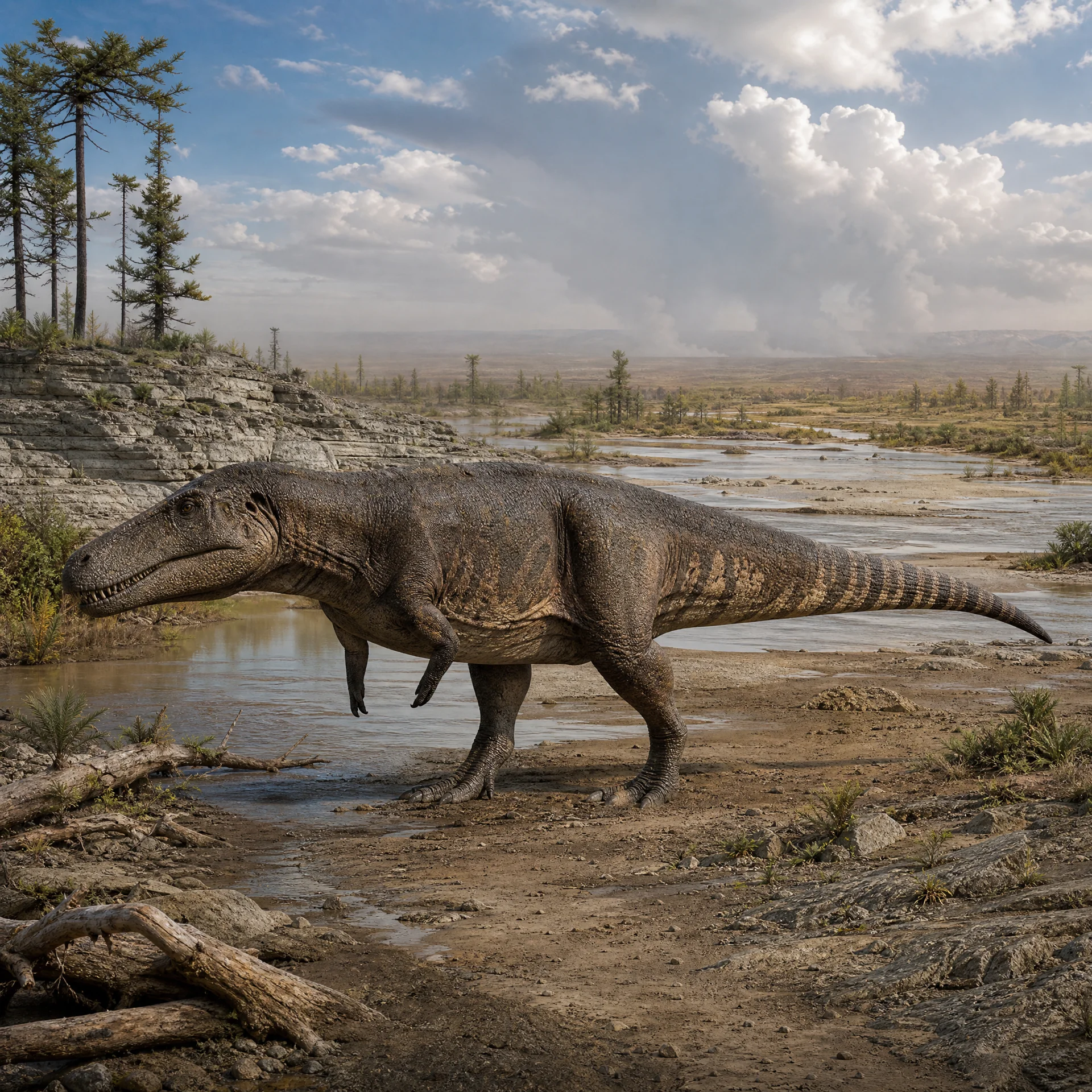
Smok
Smok wawelski
⏳ Triassic Period🍽️ CarnivoreDinosaurs
Physical Characteristics
⏳
PeriodTriassic Period
🍽️
DietCarnivore
📏
Size5~6m
⚖️
Weight1000~2000kg
Classification
GEN
GenusSmok
SP
SpeciesS. wawelski
Smok wawelski
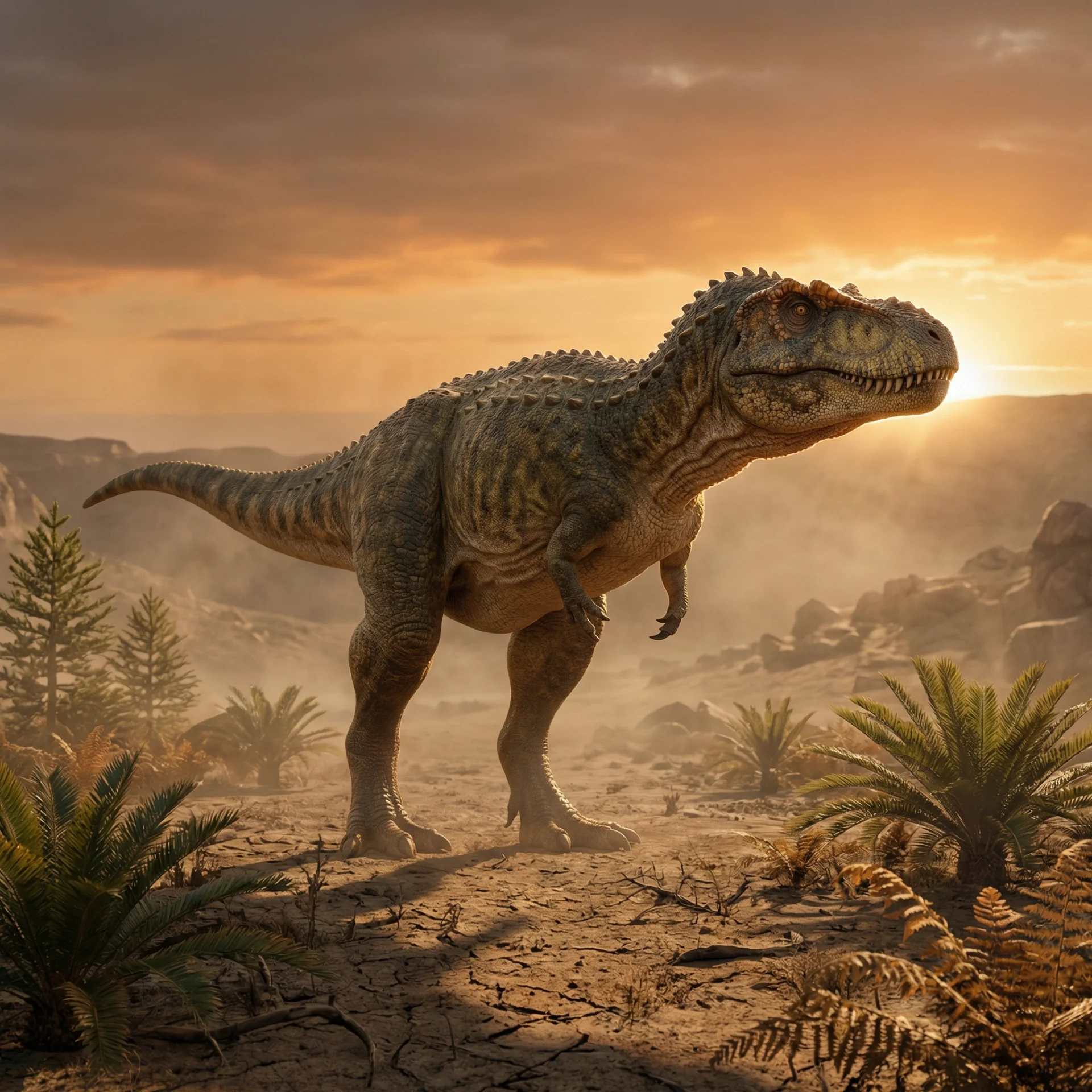
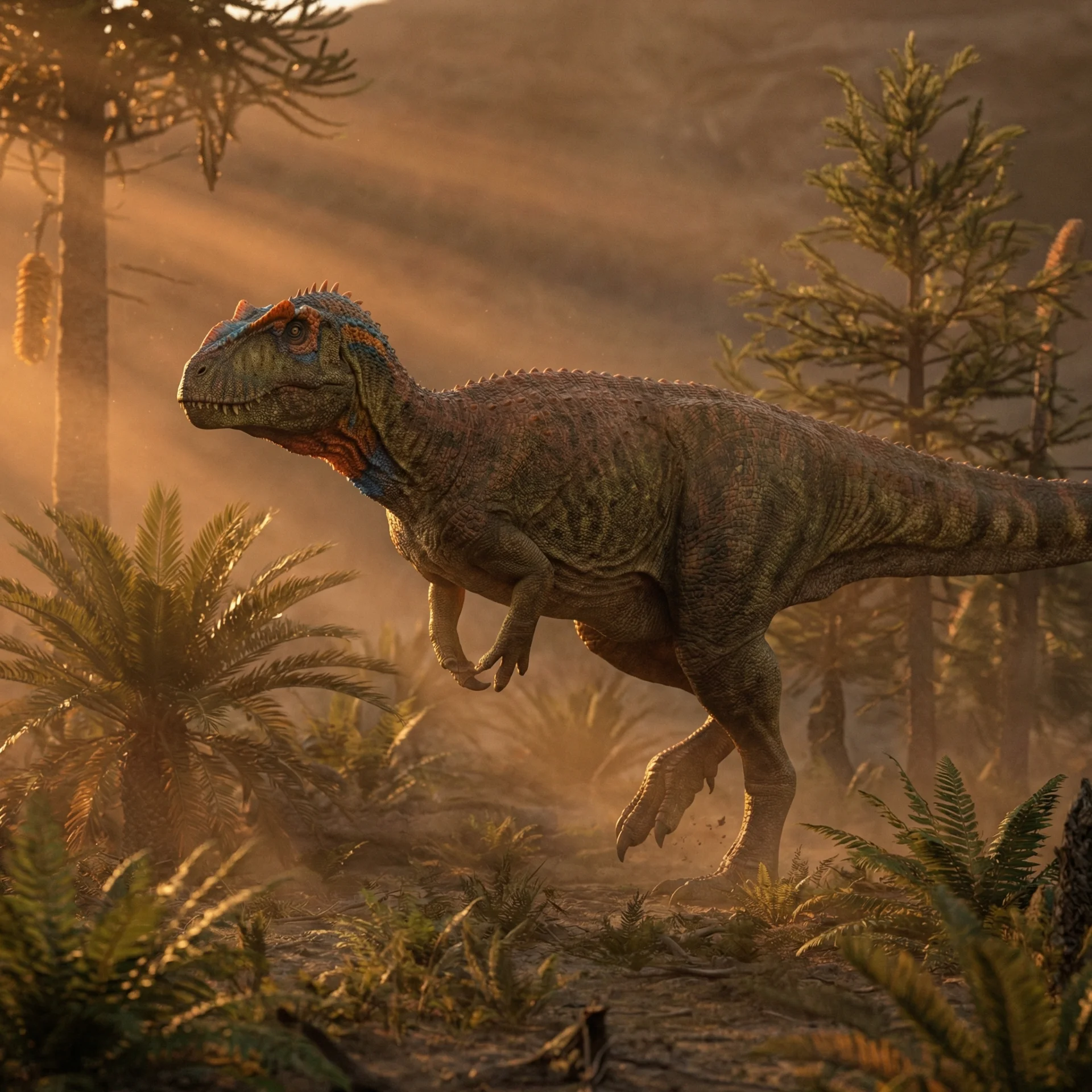
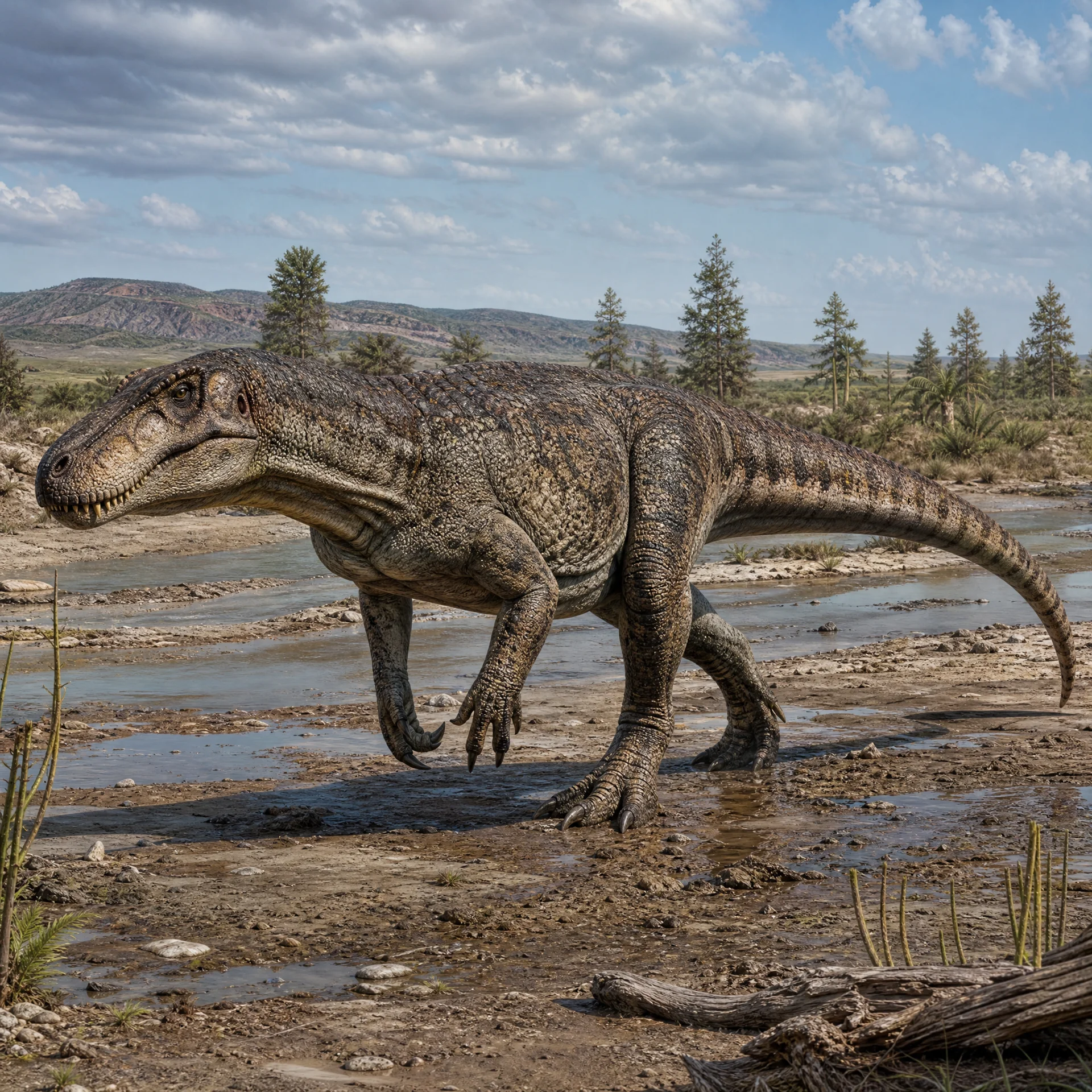
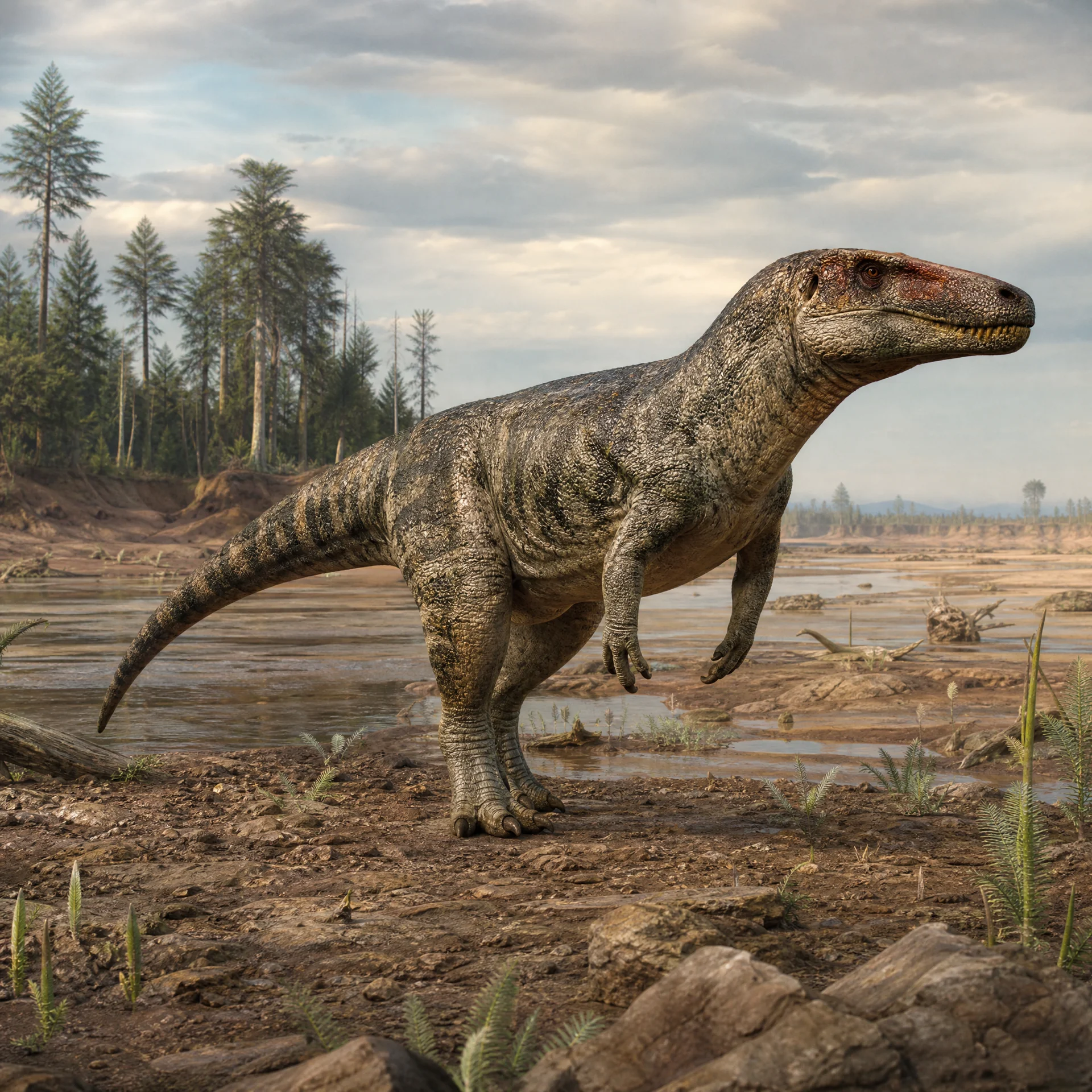
Smok wawelski Niedźwiedzki, Sulej & Dzik, 2012 is a large carnivorous archosaur from the Late Triassic (latest Norian to early Rhaetian, approximately 208.5–205 Ma) of southern Poland. With a reconstructed skeleton length of about 5–6 m and a skull length of approximately 48–57 cm, it was larger than any other known predatory archosaur from the Late Triassic or Early Jurassic of central Europe. The genus name 'Smok' is Polish for 'dragon,' and the species epithet 'wawelski' refers to Wawel Hill in Kraków, after the legendary Wawel Dragon (Smok Wawelski) of Polish folklore.
The most remarkable aspect of Smok is its taxonomic enigma. Its braincase exhibits derived features shared with theropod dinosaurs, while the iliac buttress above the acetabulum and the triangular antorbital fenestra are characters shared with rauisuchians. Additionally, it possesses plesiomorphic archosauromorph features such as a non-pneumatic braincase, the retention of a postfrontal bone, and a closed acetabulum. Even the original describers refrained from assigning it to any major predatory archosaur group—theropod, rauisuchian, or ornithosuchid. A 2025 review by Mujal et al. tentatively placed Smok within Pseudosuchia (Loricata), but no formal cladistic analysis including Smok has been published in a peer-reviewed journal, and its phylogenetic position remains unresolved.
The fauna at the Lisowice locality, where Smok was found, is extraordinarily distinctive. It includes the giant dicynodont Lisowicia bojani (estimated mass 5–9 tonnes), small theropod dinosaurs, dinosauriforms, pterosaurs, temnospondyl amphibians (Cyclotosaurus sp., Gerrothorax sp.), early crocodylomorphs, lungfish, coelacanths, sharks (Polyacrodus, Hybodus), and early mammaliaforms (Hallautherium sp.). Smok was the apex predator in this ecosystem. Bite marks on dicynodont bones matching its dentition, coprolites containing up to 50% bone fragments by volume, and tooth fragments of Smok itself found within those coprolites collectively demonstrate a bone-crushing (osteophagous) feeding behavior convergent with that of tyrannosaurids—the earliest such evidence known in the archosaur fossil record.
The genus name Smok derives from the Polish word for 'dragon,' while the species epithet wawelski refers to Wawel Hill in Kraków, Poland. Together, they honor the legendary Wawel Dragon (Smok Wawelski), a famous creature from Polish folklore said to have inhabited a cave beneath Wawel Hill along the Vistula River. When the discovery was first announced to the public, the animal was nicknamed the "Dragon of Lisowice" (Sulej & Niedźwiedzki, 2009). The geographic connection is fitting, as the fossil locality lies in southern Poland not far from the Kraków region.
Smok wawelski was formally named and described in 2012 by Niedźwiedzki, Sulej, and Dzik in Acta Palaeontologica Polonica. In the original description, the authors explicitly declined to assign Smok to any of the major carnivorous archosaur clades—Theropoda, "Rauisuchia," or Ornithosuchidae—noting that a comprehensive phylogenetic analysis would be the subject of the first author's PhD thesis (Niedźwiedzki, 2013, University of Warsaw). However, this thesis was not published as a formal journal article, and no cladistic data matrix including Smok has appeared in peer-reviewed literature to date. In 2018, Niedźwiedzki & Budziszewska-Karwowska reported additional material (Smok sp.) from Marciszów, referring to Smok as a "theropod-like archosaur." A 2025 comprehensive review by Mujal et al. in Earth-Science Reviews tentatively placed Smok within Pseudosuchia (Loricata). The current taxonomic status remains incertae sedis, with the leading hypotheses being: (1) Theropoda, (2) Rauisuchia/Paracrocodylomorpha, (3) Pseudosuchia (Loricata), and (4) Ornithosuchidae.
The largest carnivorous archosaur of the Late Triassic of central Europe, exhibiting a mosaic of theropod, rauisuchian, and primitive archosaur characters that renders its classification a longstanding phylogenetic puzzle.
The type locality at Lisowice (Lipie Śląskie clay-pit) dates to the latest Norian to early Rhaetian of the Late Triassic. The original description (Niedźwiedzki et al., 2012) estimated an age of approximately 205–200 Ma. Subsequent U-Pb dating of a detrital zircon grain (SHRIMP IIe/MC) from a sandstone bed below the upper fossil-bearing interval yielded a maximum depositional age of 211 ± 3 Ma (Kowal-Linka et al., 2018). Given that the current ICS-defined Norian–Rhaetian boundary is placed at approximately 208.5 Ma, the bone-bearing horizon is estimated at approximately 208.5–205 Ma (Qvarnström et al., 2019; Cohen et al., 2013).
The fossil-bearing strata at Lipie Śląskie clay-pit are correlatable with the upper part of the subsurface Zbąszynek Beds and the lower part of the Wielichowo Beds, which in turn correspond to the Exter Formation of the Upper Keuper in the eastern part of the Germanic Basin (Franz et al., 2007a, b; Niedźwiedzki et al., 2012). The exposed section is approximately 12 m thick and contains two fossil-bearing intervals (upper and lower) spanning six horizons (Qvarnström et al., 2019). Smok's skeleton was recovered from the upper interval, within lenticular bodies of grey carbonate-rich mudstone and siltstone. Bones are typically encrusted in calcareous and pyritic crusts or embedded in limestone concretions, resulting in excellent preservation.
The depositional environment is interpreted as a fluvial system—likely braided or anastomosing river channels—with associated floodplains. The succession consists of carbonaceous greenish and grey fluvial claystone, siltstone, and mudstone, interbedded with cross- or horizontally-stratified greywacke sandstones and local conglomerates (Pieńkowski et al., 2014; Qvarnström et al., 2019). Kowal-Linka & Bodzioch (2017) interpreted the Upper Triassic strata in Upper Silesia as recording a transition from playa to gilgai floodplain to fluvial environments under semi-arid to seasonal climatic conditions. The associated fauna—giant dicynodonts, temnospondyls, bony fishes, sharks, pterosaurs, and others—is consistent with a paleoenvironment featuring both permanent and seasonal water bodies within a semi-arid landscape.
The holotype is ZPAL V.33/15, the ventral part of the braincase comprising the basioccipital and basisphenoid, along with a separate articulating piece of the right exoccipital-opisthotic including approximately half of the paroccipital process. This specimen is associated with a partially preserved skeleton believed to represent a single individual.
Referred specimens include ZPAL V.33/16–56, 97–102, 220, 238, 239, 295–298, 300, 302–304, 306–309, 311–314, 461, and 507, all collected from the same 1.5-m-thick horizon of claystone and mudstone. The bones are distributed across three accumulations covering an area of approximately 700 m², corresponding broadly to the skull region, forelimb/trunk, and hindlimb/pelvis. Consistency in size and preservation, with no duplication of elements, supports attribution to a single individual.
| Specimen Number | Element | Notes |
|---|---|---|
| ZPAL V.33/15 (holotype) | Ventral braincase (basioccipital + basisphenoid + exoccipital) | Contains key diagnostic autapomorphies |
| ZPAL V.33/19 | Right premaxilla | Four large alveoli |
| ZPAL V.33/20 | Left maxilla | 11–12 teeth |
| ZPAL V.33/25 | Left dentary | 14 teeth |
| ZPAL V.33/21 | Left frontal | Co-ossified with postfrontal |
| ZPAL V.33/97 | Left jugal | Posteriorly curved postorbital process |
| ZPAL V.33/45 | Left femur | Anteriorly bowed, with anterior trochanter |
| ZPAL V.33/298, 300, 302–304 | Pelvis + sacrals | Nearly complete pelvic girdle |
The original description (Niedźwiedzki et al., 2012) identified the following diagnostic features of Smok wawelski (autapomorphies among archosaurs marked with an asterisk):
(1) A funnel-like expansion on the ventral surface of the braincase between the basal tubera and basipterygoid processes, rounded in outline and indented by a deep pit at its caudal corner — unreported in any other archosaur. (2) Nearly the entire lateral surface of the basisphenoid excavated by a deep fossa for pterygoideus musculature, such that the midline region between the left and right fossae is extremely thin (< 2 mm) — unreported in any other archosaur. (3) Premaxilla and maxilla closely and tightly articulated, without a subnarial gap along the tooth row — distinguishing it from early theropods and ornithosuchids. (4) Antorbital fenestra low and triangular in outline, with the antorbital fossa developed only around the anterior part. (5) Postorbital process of the jugal strongly curved posteriorly, with a markedly convex anterior margin. (6) A large, ovoid antitrochanter-like structure on the medial acetabular wall of the ilium, immediately caudal to the pubic peduncle. (7) Closed acetabulum (ventral margin of the ilium convex) with no brevis fossa.
The skeleton of Smok is only partially preserved. Notably, the feet (pes) and hands (manus) remain undiscovered. This makes it impossible to definitively associate it with large tridactyl footprints (ZPAL V.33/219, 508–510, etc.; approximately 35–50 cm long) found in sandstone layers about 1 m above the bone-bearing horizon at the same locality. Additionally, cranial elements were found disarticulated and scattered, limiting the precision of full skull reconstruction.
Based on the reconstructed skeleton, the estimated total length is approximately 5–6 m, with a skull length of roughly 48–57 cm as estimated from the premaxilla, maxilla, and jugal bones (Niedźwiedzki et al., 2012). The humerus measures approximately 49 cm and the femur approximately 56 cm in length (Mujal et al., 2025). No formal body mass estimate has been published in the original description, but informal estimates based on body length and femoral dimensions suggest a range of approximately 1–2 tonnes (1,000–2,000 kg). This makes Smok definitively larger than contemporaneous central European carnivorous archosaurs such as Liliensternus (~5 m), Polonosuchus, and Teratosaurus, and comparable in size to the largest Late Triassic predatory archosaurs globally, including Postosuchus, Fasolasuchus, and Gojirasaurus.
The premaxilla bears four large alveoli and a shallow narial fossa. The maxilla is a large, robust bone with 11–12 teeth, and the antorbital fenestra is triangular and tapers to a point rostrally. The premaxilla and maxilla are tightly articulated, lacking both the premaxilla-maxilla gap seen in rauisuchians and the subnarial gap characteristic of early theropods and ornithosuchids.
The most distinctive features of Smok are found in the braincase. The ventral basisphenoid bears a unique funnel-like expansion between the basal tubera and basipterygoid processes, and the lateral basisphenoid is excavated by extremely deep fossae for pterygoideus musculature—so deep that the midline bone between them is less than 2 mm thick. This precludes internal pneumatic recesses, contrasting sharply with the pneumatic braincases typical of large theropod dinosaurs. The enlarged muscle attachment area suggests powerful jaw adduction, consistent with the bone-crushing feeding behavior inferred from coprolite evidence.
The pelvis is nearly completely preserved. The ilium is tall (craniocaudal length less than 3.5 times the height above the acetabulum) and robust, with a pronounced buttress on the lateral surface above the acetabulum—a defining characteristic of rauisuchians that creates a pillar-erect stance. Critically, the acetabulum is closed, with a convex ventral margin. This contrasts with the open (perforated) acetabulum of most dinosaurs and some dinosauromorphs. No brevis fossa is present. The ischial peduncle bears a distinct antitrochanter that is continuous with the antitrochanter on the ischium. Three sacral vertebrae are present, with two broadly attached to the ilia through sacral ribs.
The femur is anteriorly bowed, with a craniomedially directed head. A mound-like lesser (anterior) trochanter is present, but no trochanteric shelf connects it to the greater trochanter. A ridge-like fourth trochanter is present on the caudal surface.
Overall body proportions and pelvic architecture suggest bipedal locomotion (Qvarnström et al., 2019). The iliac buttress above the acetabulum would have supported the femur in a pillar-erect posture, consistent with the locomotor mode of rauisuchians. Large tridactyl footprints at the same locality may have been made by Smok, but the absence of pedal bones prevents definitive attribution.
Direct evidence for the feeding behavior of Smok comes from multiple taphonomic sources:
(1) Coprolites: Qvarnström, Ahlberg & Niedźwiedzki (2019, Scientific Reports) attributed ten large coprolites (87–250 mm long) from the upper bone-bearing interval at Lisowice to Smok. The coprolites contain up to approximately 50% bone fragments by volume, including fragments from dicynodonts, temnospondyl amphibians, and fish. Serrated tooth fragments matching those of Smok itself were also found within the coprolites, indicating that broken teeth were swallowed during feeding. This represents unequivocal evidence of pronounced osteophagy (bone-eating behavior).
(2) Bite marks: Niedźwiedzki, Gorzelak & Sulej (2011, Lethaia) reported deep bite traces on dicynodont bones from the same locality, matching the dentition of Smok in size and morphology. One juvenile dicynodont fibula had its distal head bitten off.
(3) Regurgitalites: Bone-rich fossil regurgitates from the same bone-bearing beds contain larger, more angular bone fragments than those found in coprolites, suggesting that Smok expelled indigestible material in a manner comparable to modern raptorial birds such as owls (Niedźwiedzki, 2013).
(4) Tooth wear: Both teeth recovered from coprolites and isolated teeth from the locality exhibit heavy in vivo wear facets, indicating repeated use on hard substrates such as bone.
Smok was the apex predator in the Lisowice ecosystem. Coprolite content analysis indicates it was a generalized predator, consuming dicynodonts, temnospondyls, and fish. Qvarnström et al. (2019) interpreted Smok's osteophagous behavior as convergent with that of Late Cretaceous tyrannosaurids, describing it as a "Triassic hyena-like predator" that exploited bones for salt and marrow.
In 2024, Qvarnström et al. published a study in Nature synthesizing digestive contents and coprolites from five Triassic vertebrate assemblages, including Lisowice. This work reconstructed the trophic transition from pseudosuchian-dominated to dinosaur-dominated apex predator guilds across the Late Triassic, with Smok representing a key taxon during this pivotal ecological shift.
| Taxonomic Group | Representative Taxon/Taxa | Ecological Role |
|---|---|---|
| Dicynodontia (Synapsida) | Lisowicia bojani (~4.5 m long, 5–9 t) | Large herbivore |
| Small theropod dinosaurs | Neotheropoda indet. (2+ species) | Small carnivore |
| Dinosauriformes | Dinosauriformes/Dinosauria indet. | Small to medium-sized |
| Pterosaurs | Pterosauria indet. | Small, volant |
| Crocodylomorphs | Crocodylomorpha indet. | Small |
| Temnospondyl amphibians | Cyclotosaurus sp., Gerrothorax sp. | Aquatic predators |
| Sharks | Polyacrodus, Hybodus | Aquatic predators |
| Bony fish | Coelacanths, Ptychoceratodus sp., actinopterygians | Aquatic |
| Mammaliaforms | Hallautherium sp. | Small |
| Lepidosauromorphs | Sphenodontia indet. | Small |
The type locality of Smok wawelski is the Lipie Śląskie clay-pit at Lisowice village, approximately 2 km west of Lubliniec in the Silesia region of southern Poland. In 2018, Niedźwiedzki & Budziszewska-Karwowska reported additional material identified as Smok sp. from Marciszów near Zawiercie, also in southern Poland. This second locality also yielded bones of a large dicynodont in association, suggesting that Smok was distributed across multiple Late Triassic depositional basins within southern Poland.
During the Late Triassic (Norian–Rhaetian), what is now southern Poland occupied the southeastern margin of the Central European Basin (CEB), situated at a paleolatitude of approximately 30–40°N in a subtropical-to-warm temperate transitional zone (Mujal et al., 2025). Climate conditions were semi-arid to seasonally dry, as supported by the character of the fluvial deposits, paleosols, and evaporite minerals found in the region.
The phylogenetic position of Smok wawelski has remained unresolved since its original description over a decade ago. The fundamental challenge is that homoplasy and convergent evolution were rampant among Late Triassic archosaurs: virtually every character once considered diagnostic of dinosaurs has subsequently been identified in crocodile-line archosaurs (Brusatte et al., 2010b; Nesbitt, 2011).
(1) Theropoda hypothesis: Characters shared with theropod dinosaurs include a supratemporal fossa extending onto the frontal, three sacral vertebrae, an antitrochanter on the ilium, an anterior trochanter on the femur, and enlarged pterygoideus muscle attachment areas on the braincase. In 2008, the initial report by Dzik et al. tentatively identified the animal as a theropod—particularly resembling allosauroids—based on braincase and frontal bone features.
(2) Rauisuchian/Pseudosuchian hypothesis: Characters shared with rauisuchians (e.g., Postosuchus, Polonosuchus) include a triangular antorbital fenestra, flange-like palatal processes on the premaxilla and maxilla, a bifurcated ectopterygoid articulation on the jugal, and a buttress on the lateral surface of the ilium above the acetabulum. The 2025 review by Mujal et al. tentatively classified Smok within Pseudosuchia (Loricata).
(3) Primitive characters: A non-pneumatic braincase, the retention of a postfrontal, a closed acetabulum, and spine tables on dorsal vertebrae are plesiomorphic features unexpected in either derived theropods or derived rauisuchians.
The single greatest constraint is that no formal cladistic data matrix including Smok has been published in a peer-reviewed journal. Although Niedźwiedzki's (2013) PhD thesis presumably contained such an analysis, its results have not been made publicly available, precluding independent verification by the broader scientific community.
When first reported in 2007–2008, Smok was publicized as "the first member of a lineage leading to Tyrannosaurus rex"—a claim the original describers themselves retracted in 2012 by declining to place it within Dinosauria. Current scientific consensus leans toward Smok being a non-dinosaurian archosaur. The creature also appears in the video game ARK: Survival Evolved (creature submission), where it is referred to as an "ancient reptile," reflecting its unresolved classification.
| Taxon | Classification | Age | Estimated Length | Locality |
|---|---|---|---|---|
| Smok wawelski | Archosauria incertae sedis (Pseudosuchia?) | Latest Norian–early Rhaetian (~208.5–205 Ma) | 5–6 m | Poland |
| Postosuchus kirkpatricki | Rauisuchidae / Paracrocodylomorpha | Norian | ~4–5 m | Texas, USA |
| Fasolasuchus tenax | Rauisuchidae | Norian | ~6–8 m | Argentina |
| Polonosuchus silesiacus | Rauisuchidae | Carnian | ~5 m | Poland |
| Liliensternus liliensterni | Theropoda (Coelophysoidea) | Early Rhaetian | ~5 m | Germany |
| Gojirasaurus quayi | Theropoda (?) | Norian | ~5.5 m | New Mexico, USA |
The femur of Smok (56 cm) is distinctly larger than that of Liliensternus liliensterni (original description, Fig. 7) and is compared morphologically with the femur of Postosuchus kirkpatricki. However, the unique braincase morphology and closed acetabulum of Smok do not match any of these taxa directly.
Fossilized droppings (coprolites) of Smok contained up to 50% bone fragments by volume, proving that bone-crushing feeding behavior existed 200 million years ago—long before T. rex.
Broken serrated teeth belonging to Smok itself were found inside its own coprolites, indicating that it swallowed its own teeth while biting through bone during feeding.
Smok has been a 'taxonomic mystery' for over a decade—scientists still cannot determine whether it was a dinosaur or a crocodile-line archosaur, making it one of the most enigmatic Triassic carnivores.
Smok shared its ecosystem with the elephant-sized dicynodont Lisowicia bojani (estimated 5–9 tonnes), and left bite marks on this giant herbivore's bones.
The braincase of Smok contains a unique funnel-shaped structure found in no other known archosaur, interpreted as an attachment area for enormously enlarged jaw muscles.
When first discovered in 2007, Smok was announced to the press as the 'Dragon of Lisowice' and was proclaimed an ancestor of T. rex—a claim the original describers themselves later retracted.
At 5–6 m in length, Smok was larger than any other carnivorous archosaur—including theropod dinosaurs—known from the Late Triassic to Early Jurassic of central Europe.
In 2024, Smok's coprolites were featured in a Nature paper that reconstructed Triassic food webs to trace how dinosaurs rose to ecological dominance.
Smok's hip socket (acetabulum) is closed—a primitive feature contrasting with the open acetabulum of most dinosaurs and one of the key reasons its classification remains so contentious.
Its classification remains unresolved. When first reported in 2008, it was tentatively identified as a theropod dinosaur, but the 2012 formal description declined to place it within Dinosauria. Competing hypotheses include Theropoda, Rauisuchia (crocodile-line archosaurs), and Ornithosuchidae. A 2025 review by Mujal et al. tentatively placed it within Pseudosuchia (Loricata), meaning it was more likely a relative of crocodilians than a dinosaur. No formal cladistic analysis has been published.
The genus name 'Smok' is Polish for 'dragon.' The species epithet 'wawelski' refers to Wawel Hill in Kraków, Poland, honoring the legendary Wawel Dragon (Smok Wawelski)—a famous dragon from Polish folklore said to have lived in a cave beneath the hill along the Vistula River. The fossil site is located in southern Poland, not far from the Kraków region.
The reconstructed skeleton measures approximately 5–6 m in total length, with a skull length of about 48–57 cm, a humerus of ~49 cm, and a femur of ~56 cm. Informal body mass estimates range from about 1,000 to 2,000 kg (1–2 tonnes). This made it the largest carnivorous archosaur known from the Late Triassic to Early Jurassic of central Europe.
Yes. A 2019 study by Qvarnström et al. published in Scientific Reports analyzed ten large coprolites (fossilized droppings) attributed to Smok, finding up to 50% bone fragments by volume along with broken teeth from Smok itself. Combined with bite marks on dicynodont bones and bone-rich regurgitalites from the same beds, this provides direct evidence of tyrannosaurid-like osteophagy (bone-crushing feeding behavior) approximately 140 million years before the first tyrannosaurids.
The type locality is the Lipie Śląskie clay-pit at Lisowice village, about 2 km west of Lubliniec in the Silesia region of southern Poland. A second occurrence of Smok sp. was reported in 2018 from Marciszów near Zawiercie, also in southern Poland.
The Lisowice fauna is remarkably diverse and includes the giant dicynodont Lisowicia bojani (~4.5 m long, 5–9 tonnes), small theropod dinosaurs, dinosauriforms, pterosaurs, early crocodylomorphs, temnospondyl amphibians (Cyclotosaurus, Gerrothorax), sharks (Polyacrodus, Hybodus), coelacanths, lungfish, early mammaliaforms (Hallautherium), and sphenodontians.
Smok dates to the latest Norian to early Rhaetian stage of the Late Triassic, approximately 208.5–205 million years ago. This is based on U-Pb zircon dating (maximum depositional age of 211 ± 3 Ma for underlying beds), faunal evidence, and the ICS-defined Norian–Rhaetian boundary (~208.5 Ma).
Smok displays a mosaic of characters from theropod dinosaurs (supratemporal fossa on frontal, three sacrals, anterior trochanter), rauisuchians (iliac buttress, triangular antorbital fenestra), and primitive archosaurs (non-pneumatic braincase, postfrontal, closed acetabulum). In the Late Triassic, homoplasy and convergent evolution were pervasive among archosaurs, making traditional diagnostic characters unreliable. Additionally, no formal cladistic analysis including Smok has been published in a peer-reviewed journal.
Six large tridactyl (three-toed) footprints, approximately 35–50 cm long, were discovered in sandstone about 1 m above the bone-bearing horizon at the type locality. They morphologically resemble Jurassic theropod footprints, and their size is compatible with Smok. However, since the feet of Smok are unknown, a definitive association cannot be established.
Smok wawelski has been submitted as a creature concept for ARK: Survival Evolved, where it is portrayed as an 'ancient reptile' with devastating bone-crushing jaw attacks. This characterization reflects its real-world taxonomic uncertainty—whether it was a dinosaur or a crocodile-line archosaur remains debated.
5images