Snow Crab
Omnivore Creature Type
Chionoecetes opilio
Scientific Name: "The genus name Chionoecetes is derived from the Greek words 'chion' (snow) and 'oiketes' (inhabitant), meaning 'snow dweller,' reflecting the species' preference for extremely cold waters. The specific epithet 'opilio' is Latin for 'shepherd' (sheep-master), a term used by the Roman writers Plautus and Virgil, though the reason it was applied to this crab remains unknown."
Physical Characteristics
Discovery
Habitat
보전·개체·수명
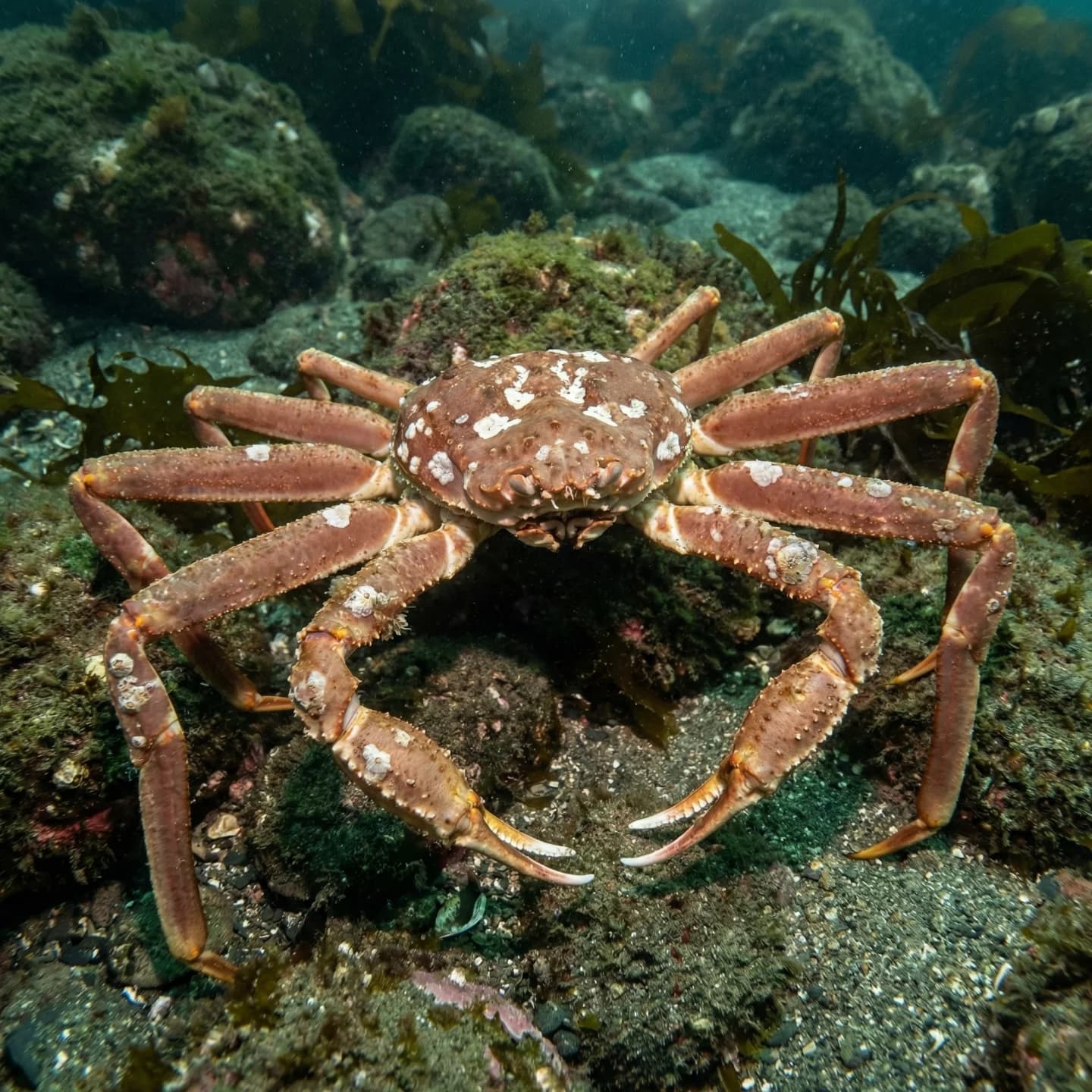
The snow crab (Chionoecetes opilio (Fabricius, 1788)) is a crustacean belonging to the family Oregoniidae within the order Decapoda (class Malacostraca, phylum Arthropoda). It is a predominantly benthic species widely distributed across the cold-water continental shelves of both the North Pacific and North Atlantic oceans. Known in English as the snow crab or opilio crab, it inhabits sandy and muddy substrates at depths of 13–2,187 m (typically within 110 m) in water temperatures of −1 to 5°C. The genus name Chionoecetes, meaning "snow dweller" in Greek, aptly reflects this preference for frigid habitats.
The species is characterized by a relatively round, flat carapace and 10 long, slender legs, with pronounced sexual dimorphism: males reach a maximum carapace width of approximately 150–165 mm and a leg span of up to 1 m, while females rarely exceed 80–95 mm in carapace width. The snow-white appearance of the cooked meat gives the species its common English name. An omnivorous benthic feeder, it preys opportunistically on shrimp, polychaetes, bivalves, brittle stars, and detritus, and can live for up to approximately 20 years (NOAA Fisheries; DFO Canada).
The snow crab is among the most commercially important crustacean species worldwide, with major fisheries in Alaska's Bering Sea, the Canadian Atlantic coast, Russia, Japan, and South Korea. However, the species gained global attention when an unprecedented marine heatwave in 2018–2019 caused the starvation and death of approximately 10 billion crabs in the eastern Bering Sea (Szuwalski et al., 2023), leading to full fishery closures from 2021 to 2023. Since 2024, the fishery has been gradually reopening, with the 2025–2026 season total allowable catch (TAC) set at approximately 9.3 million pounds (ca. 4,218 metric tons). Although not assessed on the IUCN Red List (NE), NOAA's 2023 stock assessment classifies the population as "not overfished but still rebuilding," with a target rebuilding date of 2029.
1. Overview
Name and Etymology
The genus name Chionoecetes combines the Greek words 'χιών' (chion, "snow") and 'οἰκητης' (oiketes, "inhabitant"), meaning "snow dweller" — a reference to the species' association with extremely cold water environments. The specific epithet opilio derives from the Latin word for "shepherd" (sheep-master), used by the Roman writers Plautus and Virgil. The reason for applying this particular name to a marine crab remains unclear.
The English common name "snow crab" has dual origins: the etymological meaning of the genus name and the snow-white color of the cooked meat. NOAA Fisheries states that "the snow-white meat is what gives the snow crab its name and its reputation as a delicacy." In South Korea, the species is called daege (대게, literally "big crab") owing to its large, long legs, while in Japan it is known as zuwaigani (ズワイガニ). According to the Alaska Department of Fish and Game (ADF&G), Chionoecetes is pronounced "ki-no-see'-tes."
Taxonomic Status
The currently accepted scientific name is Chionoecetes opilio (Fabricius, 1788), as recognized by the World Register of Marine Species (WoRMS). Synonyms include the original combination Cancer opilio Fabricius, 1788, as well as Chionoecetes behringianus, Chionoecetes chilensis, and Peloplastus pallasii. The subspecies C. opilio opilio is sometimes recognized.
One-Line Summary
A keystone cold-water benthic crustacean of the Northern Hemisphere, the snow crab is one of the world's most commercially valuable crab species and an emblematic case study in the effects of climate change on marine ecosystems.
2. Taxonomy and Phylogeny
Higher Classification
The snow crab belongs to the Kingdom Animalia, Phylum Arthropoda, Subphylum Crustacea, Superclass Multicrustacea, Class Malacostraca, Subclass Eumalacostraca, Superorder Eucarida, Order Decapoda, Suborder Pleocyemata, Infraorder Brachyura, Section Eubrachyura, Subsection Heterotremata, Superfamily Majoidea, and Family Oregoniidae. Oregoniidae is considered a monophyletic and basal (ancient) family within Majoidea (Becker et al., 2022).
Taxonomic History
The species was first described in 1788 by the Danish zoologist and missionary Otto Fabricius, who named it Cancer opilio in his Fauna Groenlandica, with Greenland as the type locality. In 1838, the Danish zoologist Henrik Nikolai Krøyer transferred the species to the newly erected genus Chionoecetes, establishing the current binomial Chionoecetes opilio.
Species of the Genus Chionoecetes
The genus Chionoecetes currently comprises seven recognized species, all informally grouped as "snow crabs" or "tanner crabs." C. opilio (snow crab / opilio crab) is the most widespread and commercially important species. C. bairdi Rathbun, 1924 (Tanner crab / bairdi crab) occurs in the North Pacific and is larger and considered more flavorful than C. opilio. C. japonicus Rathbun, 1932 (red snow crab) inhabits deeper waters of the Sea of Japan and the East Sea of Korea. Other species include C. angulatus (triangle Tanner crab), C. tanneri (grooved Tanner crab), C. elongatus, and C. pacificus.
Molecular Phylogenetics
The complete mitochondrial genome of C. opilio was first sequenced in 2020 (Hwang et al., 2020). It is a 16,067 bp circular molecule containing 13 protein-coding genes (PCGs), 22 transfer RNA (tRNA) genes, and 2 ribosomal RNA (rRNA) genes — a typical crustacean mitochondrial genome structure. Phylogenetic analyses place C. opilio clearly within Oregoniidae.
Natural hybridization between C. opilio and C. japonicus has been documented in Japanese waters, and the complete mitochondrial genome of this hybrid was reported in 2023 (Kim et al., 2023). Genetic analysis of the Barents Sea invasive population was conducted in 2022 to trace its origin by comparison with populations from Alaska, eastern Canada, and the western Pacific (Becker et al., 2022).
Remarkably, the 2025 eastern Bering Sea trawl survey documented an unprecedented surge of hybrid Chionoecetes (crosses between C. opilio and C. bairdi), never previously observed at such abundance (Zacher et al., 2025). This hybridization event is thought to have been facilitated by the snow crab population collapse, and whether these hybrids will persist is an open research question that will be further investigated in 2026 surveys.
3. Morphology and Anatomy
External Appearance
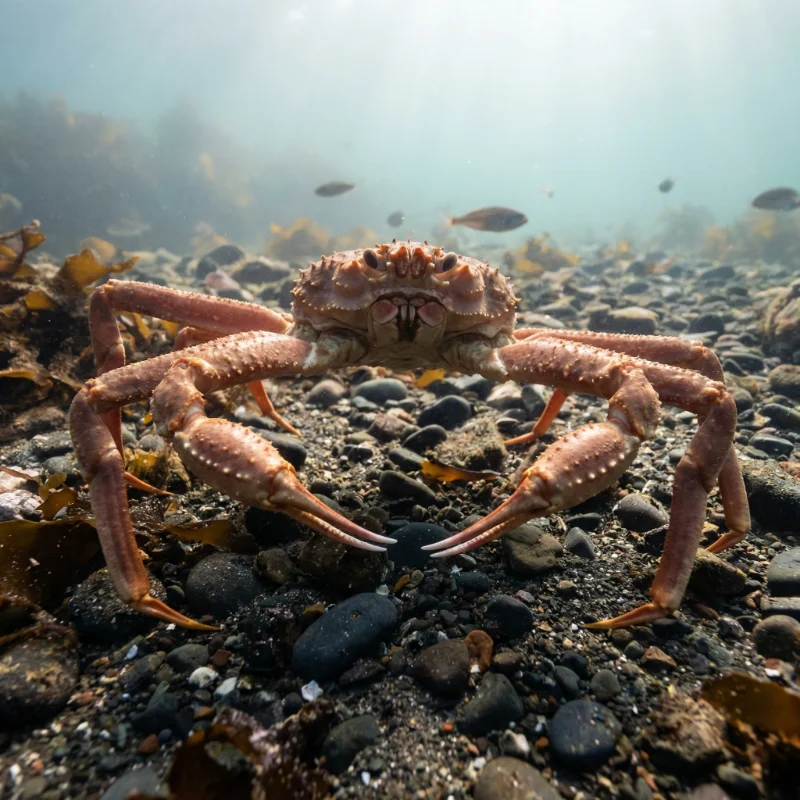
The snow crab has a relatively round, flat carapace and a short rostrum. Of its 10 legs (five pairs), the first pair bears claws (chelae), while the posterior four pairs are walking legs; the first three pairs of walking legs are considerably longer than the chelipeds. The dorsal surfaces of the carapace and legs are reddish-brown to brown and covered with small tubercles or spines, while pre-molt individuals are dark green. The lateral and ventral surfaces of the legs and the abdomen are white to yellowish-white.
The eyes are green or greenish-blue, mounted on eye stalks as compound eyes, and can be retracted into sockets in the carapace for protection.
Size and Sexual Dimorphism
The species exhibits pronounced sexual dimorphism. According to NOAA Fisheries, males can reach approximately 15 cm (6 inches) in carapace width, and the DFO Canada records a maximum of 150 mm. The leg span of males reaches approximately 90 cm to 1 m. Commercially caught males typically weigh 0.5–1.35 kg, with a maximum of 1.4 kg (DFO Canada). The ADF&G reports commercial-size male opilio crabs weigh approximately 0.45–0.9 kg (1–2 pounds).
Females are markedly smaller, with a maximum carapace width of approximately 80–95 mm (NOAA states females rarely exceed 7.6 cm / 3 inches), a leg span averaging approximately 38 cm, and a body weight of approximately 0.5 kg. The sexes can be distinguished by claw size (larger in males) and the shape of the abdominal flap: males have a triangular flap, while females have a broadly rounded flap adapted for brooding eggs.
Sensory Organs and Special Adaptations
Setae on the walking legs provide tactile information about substrate differences, and the species possesses chemoreceptive capabilities for detecting pheromones during mating. The snow crab is adapted to extreme cold (−1 to 5°C), and its reddish-brown coloration provides camouflage against the seabed. It can burrow into soft sediments to evade predators.
4. Ecology and Behavior
Diet
Adult snow crabs are omnivorous or opportunistic carnivores that feed primarily on benthic invertebrates. Major prey items include shrimp, brittle stars, polychaete worms, gammarid amphipods, bivalves, hydroids, gastropods, and squid. They also consume algae, sponges, bryozoans, and detritus, functioning as scavengers of dead material. NOAA Fisheries notes that snow crabs "will eat almost anything they can catch and break open with their claws." DFO Canada additionally lists sea anemones, small fish, and cannibalism (larger individuals preying on smaller ones) as part of their diet. Larvae feed on phytoplankton and zooplankton in the water column.
Social Structure and Movement
Snow crabs are solitary outside of the breeding season, with males and females occupying different habitats. Males are found at greater depths on muddy substrates, while females aggregate at shallower depths (60–120 m) on gravel or rocky bottoms. Seasonal migration occurs, with crabs moving to shallower waters during the breeding season and shifting to deeper waters as they age in response to changes in food availability, temperature preferences, and substrate. Males preparing for mating will temporarily defend the immediate area around a female.
Predators and Defense
Predators of the snow crab include seals, sea otters, octopuses, other crabs, and a wide variety of fish (particularly cod, halibut, skates, wolffish, and American plaice). In the Barents Sea, snow crab has become a new food item for Northeast Arctic cod (Holt et al., 2021). Juveniles and soft-shelled individuals after molting are particularly vulnerable. Burrowing into soft sediment and cryptic coloration are the primary defense strategies.
Activity Patterns
Snow crabs display both diurnal and nocturnal activity patterns. Larvae swim using appendages in the water column, while megalopae settle on the seafloor, after which all subsequent life stages are benthic crawlers.
5. Reproduction and Life History
Mating System
The snow crab employs a polygynandrous (promiscuous) mating system. Males reach sexual maturity at approximately 4–11 years (8–13 molts), while females mature at approximately 4–6 years (8–10 molts). In the weeks leading up to mating, males grasp females and assist in their terminal molt, provide food, and defend them against rival males. Females are highly selective in mate choice and can reject unwanted suitors. After fertilization, females store sperm in the spermatheca, enabling them to fertilize subsequent clutches without additional mating events.
Egg Production and Incubation
Females brood approximately 12,000–160,000 eggs at a time; NOAA reports up to nearly 100,000 depending on size, while DFO Canada states 20,000–150,000. Fertilized eggs are attached to the pleopods beneath the abdomen and incubated for 1–3 years (DFO states 1–2 years), with hatching time strongly dependent on water temperature. Hatching generally occurs in late spring to early summer (April–May). DFO notes that sexually mature females may live for 5–6 years and produce 2–3 clutches in their lifetime.
Larval Development
Upon hatching, larvae resemble tiny shrimp and swim freely in the water column. They undergo three molts over approximately 3–5 months (DFO states larvae spend 12–15 weeks in the water column) before reaching the megalopa stage, at which point they settle on the seafloor. The megalopa feeds on detritus for approximately 30 days before molting again into the juvenile form. Juveniles molt 1–3 times per year until reaching sexual maturity, at which point both sexes undergo a terminal molt — after which they never molt again.
Lifespan
NOAA Fisheries and DFO Canada estimate that snow crabs can live for up to approximately 20 years. According to the Animal Diversity Web, the estimated maximum lifespan is approximately 12–13 years for females (about 5 years after the terminal molt) and approximately 13–19 years for males (about 4–5 years after the terminal molt). A NOAA repository report estimates male lifespan at 14–16 years and female lifespan at 11–12 years. Mark-recapture studies have shown that males can survive for 7–8 years after terminal molt (Fonseca et al., 2008), although reproductive success peaks at 2–5 years post-terminal molt.
6. Distribution and Habitat
Natural Range
The snow crab exhibits a Holarctic distribution across both the North Pacific and North Atlantic oceans. In the North Pacific, it occurs in the Bering Sea, Beaufort Sea, Chukchi Sea, Sea of Okhotsk, Sea of Japan, and along the Aleutian Islands and the Russian Far East coast (Primorsky Krai, Peter the Great Bay, northern Siberian coast). In the North Atlantic, it ranges from northern Labrador and Newfoundland to the Gulf of Maine, including the Gulf of St. Lawrence and the Scotian Shelf. In South Korea, it is harvested throughout the East Sea coast, particularly off Yeongdeok, Uljin, Pohang, and Sokcho.
Introduced Populations
In the Barents Sea, the snow crab was first recorded in 1996 and is believed to have been intentionally introduced during the Soviet era (estimated 1960s). It has since expanded at an unprecedented rate into the Kara Sea, establishing itself as an invasive species with significant ecological implications (Pereladov et al., 2019). The Barents Sea population has simultaneously developed into a valuable commercial fishery, creating a dual management challenge. Notably, a 2024 study found no evidence of Hematodinium infections (Bitter Crab Disease) in the Barents Sea population, unlike in native ranges.
Habitat Characteristics
Snow crabs are benthic animals that inhabit predominantly sandy or muddy substrates. The depth range spans approximately 13–2,187 m, though NOAA states most crabs are found at depths less than approximately 200 m (650 feet). Water temperature is the single most critical habitat determinant: the species typically prefers −1 to 5°C (DFO: below 3°C, tolerating up to 7°C). A 2025 NOAA study (Fedewa et al.) demonstrated that temperatures below 0°C appear essential for promoting elevated energy reserves and high survival. The "cold pool" of the Bering Sea (bottom waters below 2°C) serves as critical snow crab habitat. DFO Canada additionally describes the cold intermediate water layer in the Gulf of St. Lawrence as essential habitat for Atlantic populations, noting that warmer winter conditions negatively affect its size and quality.
7. Conservation Status and Threats
IUCN and Official Assessments
The snow crab is Not Evaluated (NE) on the IUCN Red List and is not listed under CITES or U.S. federal protection laws. NOAA Fisheries' 2023 stock assessment (Stock SMART) classifies the Alaskan stock as "not overfished but still rebuilding" and "not subject to overfishing," with a rebuilding target date of 2029.
Population Collapse
Between 2018 and 2021, the eastern Bering Sea snow crab population experienced an unprecedented collapse, with more than 10 billion crabs disappearing — one of the largest mass mortality events in recent marine history. Research published in Science by Szuwalski et al. (2023) and a subsequent NOAA study by Fedewa et al. (2025, Canadian Journal of Fisheries and Aquatic Sciences) elucidated the mechanism: the 2018–2019 marine heatwave dramatically increased metabolic demands while high population density intensified competition for food, creating energetic limitations that led to mass starvation. The research team described this as a "perfect storm" of warming and crowding.
Signs of Recovery
Recent data offer cautious optimism. The 2025 eastern Bering Sea trawl survey (Zacher et al., 2025) documented a pulse of small snow crabs indicating successful recent recruitment, along with high abundances of very large mature females — promising for future reproductive output. The NOAA study by Fedewa et al. (2025) showed that energetic condition rebounded quickly following the heatwave, coinciding with strong recruitment and increasing abundance from 2021 to 2024. However, the authors cautioned that "strong recruitment in the near-future is critically dependent on conditions that promote high energetic reserves and survival of juvenile snow crab. The population is still vulnerable to another marine heatwave."
Major Threats
Climate change and rising ocean temperatures represent the most severe threat, as warming reduces the cold pool and overall habitat suitability. NOAA attributes the collapse to "borealization" — an ecological shift from Arctic to sub-Arctic conditions. DFO Canada highlights additional climate-related threats including large-scale shifts in ocean currents, stronger winds, more frequent storms, and ocean acidification, which poses risks to developing exoskeletons of larvae and juveniles. Commercial fishing pressure, while managed through regulations, remains a concern. Bitter Crab Disease, caused by the parasitic dinoflagellate Hematodinium spp., renders infected crabs commercially worthless and can affect population dynamics.
8. Human Interactions
Commercial Fisheries
The snow crab supports some of the most valuable crustacean fisheries globally. Major fishing grounds include Alaska's Bering Sea, Canada's Atlantic coast (Newfoundland, Gulf of St. Lawrence, Scotian Shelf), Russia, Japan, South Korea, and increasingly the Barents Sea. In Alaska, the snow crab fishery expanded rapidly after the king crab market collapse in the 1980s, reaching a quota of approximately 89.9 million pounds (40,779 metric tons) in the 2011–2012 season.
In the Bering Sea, the fishery is jointly managed by NOAA Fisheries, the North Pacific Fishery Management Council (NPFMC), and the Alaska Department of Fish and Game (ADF&G) under the "three S's" principle: Size, Sex, and Season. Only male crabs at or above 78 mm carapace width may be harvested, and fishing is prohibited during mating and molting periods. The 2005 Crab Rationalization Program allocates harvest shares among harvesters, processors, and coastal communities, with a Community Development Quota (CDQ) ensuring 10% of harvest goes to local community groups.
Following the population collapse, the fishery was fully closed for the 2021–2022, 2022–2023, and 2023–2024 seasons. It reopened in 2024–2025 with a TAC of approximately 4.7 million pounds, and the 2025–2026 TAC was nearly doubled to approximately 9.3 million pounds, including an additional 1 million pounds to allow targeting of the newly abundant hybrid Chionoecetes crabs (ADF&G, 2025).
In Canada, DFO manages the Atlantic snow crab fishery, which is one of the country's largest in terms of landings and economic value. The fishery operates across approximately 60 Crab Fishing Areas, and is subject to closures to protect soft-shelled crabs and North Atlantic right whales.
Snow Crab in South Korea
In South Korea, the snow crab is considered a premium seafood delicacy, with specimens from the Yeongdeok and Uljin regions of Gyeongsang Province being the most prized, marketed as "Yeongdeok daege." The harvest season runs from November to May. Korean markets distinguish between C. opilio (daege) and C. japonicus (honggae, red snow crab), the latter being less expensive.
Culinary and Nutritional Profile
NOAA Fisheries describes snow crab meat as sweet in taste with a delicate, flaky texture. Its snow-white appearance is its defining culinary characteristic. Nutritionally, snow crab is a low-fat, high-protein food: per 100 g (raw), it contains approximately 90 kcal, 18.5 g protein, 1.18 g total fat, 55 mg cholesterol, 34.6 μg selenium, and 539 mg sodium. Snow crab is generally harvested from January to April in the eastern Bering Sea but is available year-round as a frozen processed product.
Popular Culture
The Discovery Channel television series "Deadliest Catch" (premiered 2005) documents snow crab and king crab fishing in the Bering Sea, significantly raising public awareness of the fishery and its dangers.
9. Uncertainties and Open Questions
Established Facts
The 2018–2019 marine heatwave was the primary driver of the eastern Bering Sea snow crab population collapse. Elevated temperatures combined with high population density caused energetic depletion (starvation) as the specific mechanism (Szuwalski et al., 2023; Fedewa et al., 2025). Post-collapse, energetic condition has recovered and new recruitment has been observed.
Probable Hypotheses
If climate change continues, shrinking of the cold pool will likely reduce long-term habitat suitability for snow crab in the Bering Sea. The 2025 surge in C. opilio–C. bairdi hybrids is likely linked to post-collapse conditions that facilitated interbreeding.
Unresolved Questions
Whether the eastern Bering Sea snow crab population can fully recover to historical levels under ongoing climate change remains uncertain; a 2024 Science report cautioned that it "may never fully recover." The ecological role, persistence, and fishery management implications of the hybrid Chionoecetes are unknown and are planned for investigation in 2026 surveys. The long-term ecosystem impacts of the Barents Sea and Kara Sea invasive populations require continued study. The epidemiology and population-level effects of Bitter Crab Disease (Hematodinium spp.) need further research. Developing adaptive management strategies that account for changing environmental conditions remains an ongoing challenge.
Common Misconceptions
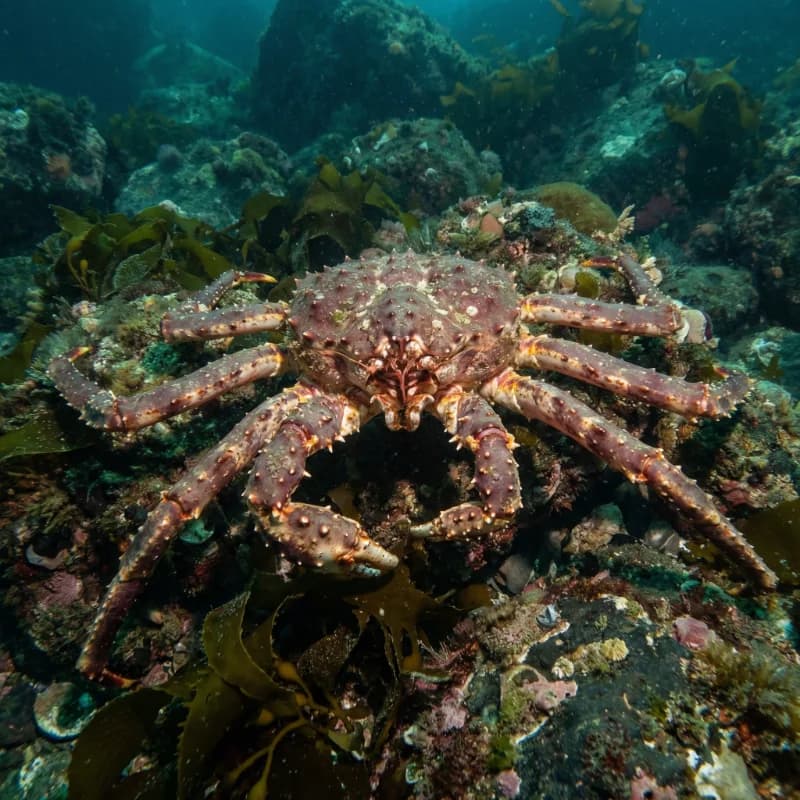
Snow crab (family Oregoniidae, infraorder Brachyura) and king crab (family Lithodidae, infraorder Anomura) are frequently confused but are taxonomically distinct groups. Additionally, "snow crab" as a commercial label is sometimes applied indiscriminately to both C. opilio and C. bairdi, though these are separate species. The Tanner crab (C. bairdi) is larger, and its meat is generally considered more valuable.
10. Comparison with Related Species
| Feature | Snow Crab (C. opilio) | Tanner Crab (C. bairdi) | Red Snow Crab (C. japonicus) | Red King Crab (P. camtschaticus) |
|---|---|---|---|---|
| Family | Oregoniidae (Brachyura) | Oregoniidae (Brachyura) | Oregoniidae (Brachyura) | Lithodidae (Anomura) |
| Max. male CW | ca. 150–165 mm | ca. 170–180 mm | ca. 150 mm | ca. 280 mm |
| Male weight | 0.5–1.4 kg | 1.4–2.3 kg | Variable | Up to 10–12.7 kg |
| Visible legs | 10 (5 pairs) | 10 (5 pairs) | 10 (5 pairs) | 10 (1 pair reduced; appears 8) |
| Preferred temp. | −1 to 5°C | 1–5°C | 0–3°C | −1.7 to 10°C (pref. 2–4°C) |
| Depth range | 13–2,187 m | Similar | 200–2,500 m | Intertidal to 200+ m |
| Distribution | N. Pacific, N. Atlantic | North Pacific | Sea of Japan, East Sea | North Pacific |
| Max. lifespan | ca. 20 years | ca. 14 years | Data deficient | ca. 25–30 years |
| IUCN status | NE | NE | NE | NE |
Snow crab and Tanner crab belong to the same genus and are morphologically similar, but Tanner crab is larger and commands higher market prices. In Alaska, the two species can hybridize, and the 2025 Bering Sea survey documented an unprecedented abundance of hybrids. Red king crab belongs to a completely different infraorder (Anomura), is much larger, and has a reduced fifth pair of legs that gives the appearance of only eight legs.
11. Data Tables
Table 1. Habitat Parameters
| Parameter | Range / Value | Notes |
|---|---|---|
| Depth range | 13–2,187 m | Majority within 110 m |
| Preferred temperature | −1 to 5°C | Below 0°C optimal for energy reserves (Fedewa et al., 2025) |
| Preferred substrate | Mud, sand | Juveniles prefer gravel |
| Female aggregation depth | 60–120 m | Gravel/rock substrate |
| Legal harvest size (U.S.) | CW 78 mm or greater | Males only, Bering Sea |
Table 2. Morphometric Data by Sex
| Measurement | Males | Females |
|---|---|---|
| Max. carapace width | 150–165 mm | 80–95 mm |
| Leg span | ca. 90 cm–1 m | ca. 38 cm |
| Body weight (commercial) | 0.5–1.4 kg | ca. 0.5 kg |
| Age at maturity | 4–11 years (8–13 molts) | 4–6 years (8–10 molts) |
| Estimated max. lifespan | ca. 13–19 years | ca. 12–13 years |
Table 3. Bering Sea Snow Crab Fishery Status (2020–2026)
| Season | TAC (lbs) | TAC (metric tons) | Status |
|---|---|---|---|
| 2020–2021 | ca. 45 million | ca. 20,412 | Open |
| 2021–2022 | Closed | – | Population collapse |
| 2022–2023 | Closed | – | Population collapse |
| 2023–2024 | Closed | – | Population collapse |
| 2024–2025 | ca. 4.7 million | ca. 2,132 | Reopened, rebuilding |
| 2025–2026 | ca. 9.3 million | ca. 4,218 | Rebuilding (incl. 1M lbs hybrid) |
Table 4. Life History Stages
| Stage | Duration / Characteristics | Notes |
|---|---|---|
| Egg | Attached to pleopods, 1–3 years incubation | 12,000–160,000 per female |
| Zoea larvae | Free-swimming, 3 molts | 3–5 months (12–15 weeks) |
| Megalopa | Settlement on seafloor, ca. 30 days | Feeds on detritus |
| Juvenile | Benthic life, 1–3 molts/year | Prefers gravel substrate |
| Adult | After terminal molt | No further molting |
| Post-terminal molt survival | Males ca. 4–8 years; females ca. 5 years | Shell wear used to estimate age |
Fun Facts
The species epithet 'opilio' means 'shepherd' in Latin, borrowed from the works of the Roman writers Plautus and Virgil, yet no one knows why this name was applied to a marine crab.
Between 2018 and 2021, approximately 10 billion snow crabs vanished from the Bering Sea — the result of mass starvation triggered by a marine heatwave that raised their metabolic demands beyond what the available food could sustain.
Female snow crabs can store sperm in a specialized organ called the spermatheca, allowing them to fertilize multiple clutches of eggs from a single mating event over their lifetime.
Snow crab eggs require 1 to 3 years to hatch depending on water temperature — the colder the water, the slower the development. A single female can brood up to 160,000 eggs at once.
After reaching sexual maturity, snow crabs undergo a 'terminal molt' and never shed their shell again for the rest of their lives. Males can survive 4–8 years after this final molt, their shell gradually wearing down with age.
The Discovery Channel's 'Deadliest Catch' (2005–present) documents the perilous Bering Sea snow crab and king crab fisheries, making snow crab one of the most widely recognized commercial marine species in popular culture.
Snow crabs in the Barents Sea are an invasive species, first detected in 1996 and believed to have been intentionally introduced during the Soviet era. They have spread at an unprecedented rate, reaching the Kara Sea and creating a dual challenge as both an ecological disruptor and a valuable fishery resource.
Snow crabs have green or greenish-blue eyes that can be retracted into sockets in the carapace for protection — an adaptation for life on the seafloor where collisions and predator encounters are frequent.
In 2025, an unprecedented surge of hybrid crabs (crosses between snow crab and Tanner crab) appeared in the Bering Sea, prompting fishery managers to add 1 million pounds of quota specifically to target these never-before-seen hybrids.
Snow crabs can contract 'Bitter Crab Disease' from the parasitic dinoflagellate Hematodinium, which turns their flesh bitter and renders them commercially worthless — an unsettling condition for one of the world's most prized crustaceans.
A 2025 NOAA study revealed that snow crabs need water temperatures below 0°C — not just 'cold' but genuinely frigid — to build the energy reserves necessary for survival, underscoring why the Bering Sea's shrinking 'cold pool' poses an existential threat.
In South Korea, snow crab from the Yeongdeok and Uljin regions is considered a premium delicacy known as 'Yeongdeok daege,' harvested each winter from November to May and commanding prices far above the closely related red snow crab (C. japonicus).
FAQ
The name 'snow crab' has two origins. First, the genus name Chionoecetes combines the Greek words for 'snow' (chion) and 'inhabitant' (oiketes), meaning 'snow dweller' — reflecting the species' preference for extremely cold water temperatures (−1 to 5°C). Second, the cooked meat is snow-white in color, which NOAA Fisheries describes as 'what gives the snow crab its name and its reputation as a delicacy.'
According to NOAA Fisheries and DFO Canada, snow crabs can live for up to approximately 20 years. Lifespan varies by sex: males have an estimated maximum lifespan of approximately 13–19 years, while females live approximately 12–13 years. After the terminal molt (the final molt at sexual maturity), males can survive an additional 4–8 years and females about 5 years.
Snow crab (Chionoecetes opilio) and king crab (Paralithodes camtschaticus) are taxonomically distinct. Snow crab belongs to family Oregoniidae within the 'true crabs' (infraorder Brachyura), while king crab belongs to family Lithodidae within Anomura (more closely related to hermit crabs). King crabs are much larger (up to 12.7 kg vs. 1.4 kg), have a reduced fifth pair of legs (appearing to have 8 legs), and occupy different ecological niches.
A marine heatwave in 2018–2019 led to the disappearance of approximately 10 billion snow crabs in the eastern Bering Sea — one of the largest mass mortality events in recent marine history. Research by NOAA (Szuwalski et al., 2023; Fedewa et al., 2025) determined that elevated temperatures increased metabolic demands while high population density intensified food competition, creating energetic limitations that led to mass starvation. The fishery was closed for the 2021–2022 through 2023–2024 seasons, reopening in 2024–2025 at a reduced quota.
Snow crabs have 10 legs (five pairs). The first pair bears claws (chelae) used for grasping and feeding, while the posterior four pairs are walking legs. This distinguishes them from king crabs (Anomura), which also have 10 legs but whose fifth pair is reduced and hidden, giving the appearance of only 8 legs.
Snow crabs are benthic animals inhabiting the cold-water continental shelves of the North Pacific and North Atlantic. They prefer sandy or muddy substrates at depths of 13–2,187 m (mostly within 110 m), in water temperatures of −1 to 5°C. A 2025 NOAA study found that temperatures below 0°C are critical for maintaining high energy reserves and survival. Females typically occupy shallower depths (60–120 m) on gravel substrates, while males prefer deeper muddy bottoms.
Snow crabs exhibit pronounced sexual dimorphism. Males reach a maximum carapace width of approximately 150–165 mm, a leg span of up to 1 m, and a weight of 0.5–1.4 kg. Females are markedly smaller, with a maximum carapace width of approximately 80–95 mm, a leg span of about 38 cm, and a weight of approximately 0.5 kg.
There are cautious signs of recovery. The 2025 eastern Bering Sea trawl survey found a pulse of small snow crabs indicating successful recent recruitment, along with high abundances of large mature females. NOAA research showed that energetic condition rebounded quickly after the heatwave, coinciding with strong recruitment from 2021–2024. The 2025–2026 season TAC was nearly doubled to 9.3 million pounds. However, scientists warn the population remains vulnerable to future marine heatwaves and 'may never fully recover' to historical levels under ongoing climate change.
The 2025 Bering Sea trawl survey documented an unprecedented abundance of hybrid crabs — crosses between C. opilio (snow crab) and C. bairdi (Tanner crab). While hybridization between the two species is known to occur, it had never been observed at such scale. The surge is thought to be linked to conditions following the snow crab population collapse that encouraged interbreeding. ADF&G allocated an additional 1 million pounds of TAC specifically for these hybrids. Whether they persist or represent a temporary phenomenon will be investigated in 2026 surveys.
The snow crab is currently Not Evaluated (NE) on the IUCN Red List and is not listed under CITES or U.S. federal protection laws. However, NOAA's 2023 stock assessment classifies the Bering Sea population as 'not overfished but still rebuilding,' with a target rebuilding date of 2029. In Canada, DFO manages the Atlantic snow crab fishery as one of the country's most valuable, with annual quotas and seasonal closures.
📚References
- Fabricius, O. (1788). Fauna Groenlandica. Hafniae et Lipsiae. [Original description as Cancer opilio]
- Szuwalski, C. S., Aydin, K., Fedewa, E. J., Garber-Yonts, B., & Litzow, M. A. (2023). The collapse of eastern Bering Sea snow crab. Science, 382(6668), 306–310. https://doi.org/10.1126/science.adf6035
- Fedewa, E. J., Copeman, L. A., Litzow, M. A., et al. (2025). Energetic limitations and mass mortality of Bering Sea snow crab. Canadian Journal of Fisheries and Aquatic Sciences. https://doi.org/10.1139/cjfas-2025-0099
- Zacher, L. S., Hennessey, S. M., Richar, J. I., Fedewa, E. J., Ryznar, E. R., & Litzow, M. A. (2025). The 2025 eastern Bering Sea continental shelf trawl survey: Results for commercial crab species. NOAA Technical Memorandum NMFS-AFSC (Draft). https://bsfrf.org/wp-content/uploads/2025/12/draft-ebs-crab-tech-memo-2025.pdf
- Hwang, I. J., et al. (2020). The complete mitogenome of Chionoecetes opilio (Crustacea: Decapoda: Oregoniidae). Mitochondrial DNA Part B, 5(3), 2668–2669. https://doi.org/10.1080/23802359.2020.1780974
- Kim, J. N., et al. (2023). The complete mitochondrial genome of the hybrid snow crab (Chionoecetes opilio × C. japonicus). F1000Research, 12, 195. https://doi.org/10.12688/f1000research.130279.2
- Becker, S. L., et al. (2022). Genetic analysis of the exploited snow crab (Chionoecetes opilio) in the Barents Sea. ICES Journal of Marine Science, 79(9), 2389–2402. https://doi.org/10.1093/icesjms/fsac165
- Holt, R. E., Hvingel, C., Agnalt, A.-L., et al. (2021). Snow crab (Chionoecetes opilio), a new food item for North-east Arctic cod. ICES Journal of Marine Science, 78(2), 491–501. https://doi.org/10.1093/icesjms/fsaa163
- NOAA Fisheries. (2025, April 17). Alaska Snow Crab. https://www.fisheries.noaa.gov/species/alaska-snow-crab
- NOAA Fisheries. (2025, December 5). Snow Crab Collapse Linked to Energetic Limitations During a Marine Heatwave. https://www.fisheries.noaa.gov/feature-story/snow-crab-collapse-linked-energetic-limitations-during-marine-heatwave
- NOAA Fisheries. (2023, October 19). Research Confirms Link Between Snow Crab Decline and Marine Heatwave. https://www.fisheries.noaa.gov/feature-story/research-confirms-link-between-snow-crab-decline-and-marine-heatwave
- Department of Fisheries and Oceans Canada. (2025, July 4). Snow Crab (Chionoecetes opilio). https://www.dfo-mpo.gc.ca/species-especes/profiles-profils/snow-crab-crabe-neiges-atl-eng.html
- Animal Diversity Web. (n.d.). Chionoecetes opilio (snow crab). University of Michigan Museum of Zoology. https://animaldiversity.org/accounts/Chionoecetes_opilio/
- WoRMS Editorial Board. (2024). Chionoecetes opilio (Fabricius, 1788). World Register of Marine Species. http://www.marinespecies.org/aphia.php?p=taxdetails&id=107315
- Alaska Beacon. (2025, October 7). Gradual improvements in Bering Sea crab stocks allow for Alaska harvest increases. https://alaskabeacon.com/2025/10/07/gradual-improvements-in-bering-sea-crab-stocks-allow-for-alaska-harvest-increases/
- BSFRF. (2025, December 9). Signs of Chionoecetes Recovery? https://bsfrf.org/2025/12/signs-of-chionoecetes-recovery/
- Ocean Conservancy. (2024, October 9). The Bering Sea Snow Crab Collapse: A Climate-Driven Crisis. https://oceanconservancy.org/blog/2024/10/09/bering-sea-snow-crab-collapse-climate-crisis/
- Sainte-Marie, B., et al. (2008). Population genetic structure of the snow crab (Chionoecetes opilio) at the Northwest Atlantic scale. Canadian Journal of Fisheries and Aquatic Sciences, 65(3), 425–436. https://doi.org/10.1139/f07-163
- Fonseca, D. B., Sainte-Marie, B., & Hazel, F. (2008). Longevity and change in shell condition of adult male snow crab inferred from dactyl wear and mark-recapture data. Transactions of the American Fisheries Society, 137(4), 1029–1043. https://doi.org/10.1577/T07-079.1
- Alaska Department of Fish and Game. (2025). 2025/26 Bering Sea Crab Review of Total Allowable Catch (TAC). https://www.adfg.alaska.gov/static/fishing/PDFs/commercial/bering_aleutian/2025_2026_bsai_crab_tac_industry_meeting.pdf
- Comeau, M., Conan, G. Y., Maynou, F., Robichaud, G., Therriault, J.-C., & Starr, M. (1998). Growth, spatial distribution, and abundance of benthic stages of the snow crab (Chionoecetes opilio) in Bonne Bay, Newfoundland, Canada. Canadian Journal of Fisheries and Aquatic Sciences, 55(1), 262–279. https://doi.org/10.1139/f97-248
Gallery
2 images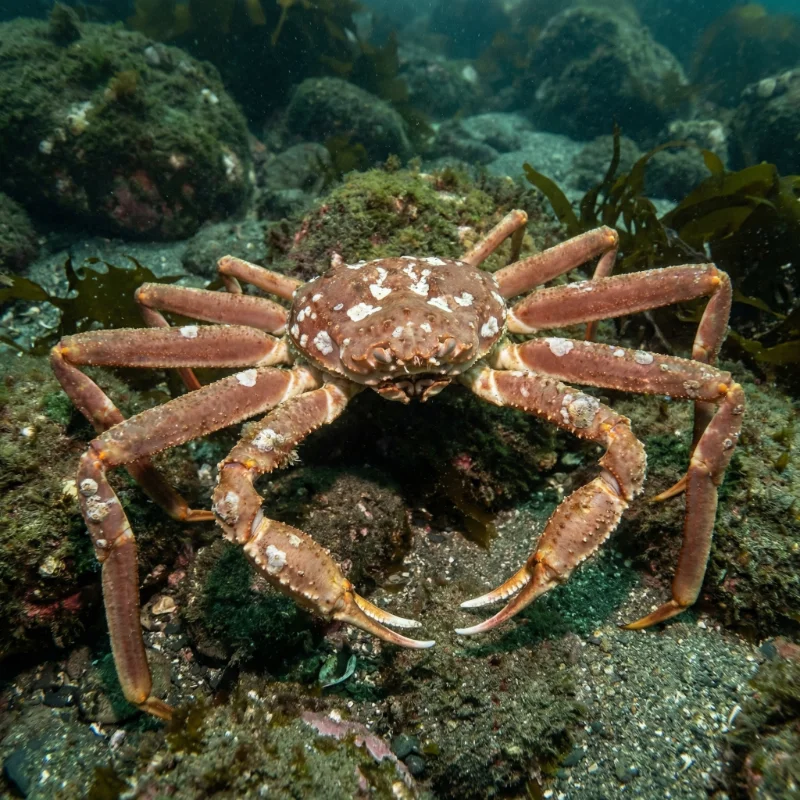 Snow Crab
Snow Crab · Omnivore
 Snow Crab
Snow Crab · Omnivore
🔗Related Creatures
King Crab
Paralithodes camtschaticus
American Lobster
Homarus americanus
Doolysaurus
Doolysaurus huhmini
Oviraptor
Oviraptor philoceratops

Eoraptor
Eoraptor lunensis
Struthiomimus
Struthiomimus altus
Extraterrestrial Life
Extraterrestrial Life
Deinocheirus
Deinocheirus mirificus