Eoraptor
Triassic Period Omnivore Creature Type
Eoraptor lunensis
Scientific Name: "Eoraptor: Greek eos (dawn) + Latin raptor (plunderer) = 'dawn plunderer'; lunensis: Latin luna (moon) + -ensis (inhabitant) = 'inhabitant of the Valley of the Moon.' The full name references both the dawn of the dinosaur era and the fossil's discovery site, the Valle de la Luna in Argentina"
Local Name: Eoraptor
Physical Characteristics
Discovery
Habitat

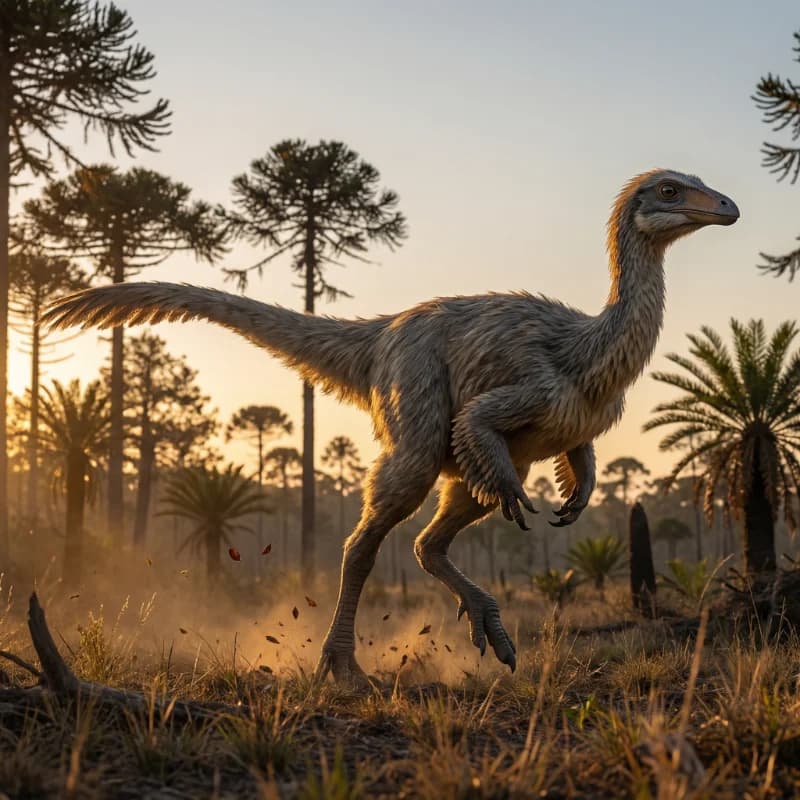
Eoraptor (Eoraptor lunensis Sereno, Forster, Rogers & Monetta, 1993) is a small, lightly built bipedal dinosaur that lived during the Late Triassic Carnian stage (approximately 231–228 Ma) in Western Gondwana, in the region that is now northwestern Argentina. Its name derives from the Greek eos (dawn) and the Latin raptor (plunderer), meaning 'dawn plunderer,' while the specific epithet lunensis refers to the Valle de la Luna ('Valley of the Moon'), the fossil discovery site. With a total body length of approximately 1.2–1.3 m and an estimated body mass of 10 kg or less, Eoraptor is one of the earliest known dinosaurs and provides a critical window into the anatomy and ecology of dinosaurs at the very beginning of their evolutionary history.
Originally described as a theropod in 1993, Eoraptor has since been reclassified by the majority of phylogenetic analyses conducted from 2011 onward as a basal sauropodomorph—placing it not on the lineage leading to predatory dinosaurs like Tyrannosaurus and Velociraptor, but rather on the distant ancestral branch that would eventually give rise to the giant sauropods such as Apatosaurus and Brachiosaurus. This reclassification, however, remains debated: Baron et al. (2017) recovered Eoraptor as the earliest-diverging theropod in their alternative dinosaur phylogeny. The heterodont dentition of Eoraptor—with serrated, recurved teeth in the upper jaw and leaf-shaped teeth in the lower jaw—suggests an omnivorous diet, though the precise dietary habits remain a subject of ongoing investigation.
The holotype skeleton (PVSJ 512) was discovered in 1991 by the paleontologist Ricardo Martínez in the Ischigualasto Formation of San Juan Province, Argentina, during a joint field expedition by the University of Chicago and the University of San Juan. The specimen is nearly complete and remarkably well-preserved, making it one of the most informative early dinosaur fossils ever recovered. Together with several referred specimens, Eoraptor has become a cornerstone taxon in understanding the initial diversification of dinosaurs during the Late Triassic.
Overview
Name and Etymology
The genus name Eoraptor is a compound of the Greek word eos (ἠώς, 'dawn') and the Latin raptor ('plunderer' or 'thief'), symbolizing a predator from the dawn of the dinosaur era. The specific epithet lunensis derives from the Latin luna ('moon') with the locative suffix -ensis ('inhabitant of'), referring to the Valle de la Luna ('Valley of the Moon') in San Juan Province, Argentina—a region renowned for its arid, otherworldly landscape reminiscent of a lunar surface. The complete binomial Eoraptor lunensis thus translates as 'dawn plunderer from the Valley of the Moon.'
Taxonomic Status and Debate
The phylogenetic placement of Eoraptor has been a subject of considerable debate since its discovery. In the 1993 original description, Sereno et al. classified it as a theropod based on its functionally tridactyl hand and other anatomical features. Sereno (1995) further posited it as the earliest-recorded theropod. However, in 2011, Martinez et al. redescribed the Ischigualasto fauna alongside the newly named Eodromaeus murphi and repositioned Eoraptor as a basal sauropodomorph. This conclusion was reinforced by Sereno et al.'s (2013) detailed osteological redescription of the holotype. The vast majority of phylogenetic analyses published between 2012 and 2025—including Martínez et al. (2012), Cabreira et al. (2016), Müller et al. (2018), Pol et al. (2021), Novas et al. (2021), and Hechenleitner et al. (2025)—recover Eoraptor as one of the earliest-diverging sauropodomorphs, branching after Buriolestes but before most other members of the clade. The notable exception is Baron, Norman & Barrett (2017), whose large-scale reorganization of dinosaur phylogeny recovered Eoraptor as the most basal theropod within a clade called Ornithoscelida.
Scientific Significance
Eoraptor is a keystone taxon for understanding early dinosaur evolution. Its nearly complete skeleton preserves a suite of primitive (plesiomorphic) features that illuminate the ancestral condition of Dinosauria. The combination of theropod-like and sauropodomorph-like dental and skeletal traits in a single animal provides crucial evidence for understanding when and how the major dinosaur lineages diverged.
Stratigraphy, Age, and Depositional Environment
Temporal Range
Eoraptor inhabited the Late Triassic during the Carnian stage, with an absolute age of approximately 231–228 Ma (million years ago). This age is constrained by ⁴⁰Ar/³⁹Ar radiometric dating of interbedded volcanic ash layers within the Ischigualasto Formation (Rogers et al. 1993; recalibrated by Martinez et al. 2011) and more recent U-Pb CA-ID-TIMS geochronology (Desojo et al. 2020). A tuff near the base of the formation yields an age of approximately 231.4 ± 0.3 Ma, while the upper boundary dates to approximately 225.9 ± 0.9 Ma. The Cancha de Bochas Member, from which the Eoraptor holotype was recovered, falls within the approximately 231–228 Ma interval.
Formation and Lithology
All confirmed Eoraptor specimens derive from the Ischigualasto Formation within the Ischigualasto-Villa Unión Basin of northwestern Argentina, spanning San Juan and La Rioja Provinces. The formation belongs to the Agua de la Peña Group, conformably overlying the Los Rastros Formation and underlying the Los Colorados Formation. The holotype PVSJ 512 was discovered in muddy siltstone of the Cancha de Bochas Member (Unit II), a fine-grained interval dominated by mottled red, green, and grey mudstones with abundant calcareous nodules, interspersed with single- and multi-channel fluvial sandstone bodies and volcanic tuffs.
The Ischigualasto Formation is subdivided into four members in the type area (Ischigualasto Provincial Park): the La Peña Member (Unit I), Cancha de Bochas Member (Unit II), Valle de la Luna Member (Unit III), and Quebrada de la Sal Member (Unit IV). The formation reaches a maximum thickness of up to 1,059 m at the Cerro Las Lajas locality in La Rioja Province.
Paleoenvironment
The Ischigualasto Formation was deposited in a fluvial-dominated setting characterized by meandering and braided river systems with extensive floodplains. Coarse channel sandstones and conglomerates alternate with fine-grained overbank mudstones and paleosols (fossil soils), while thin bentonite tuffs derived from volcanic ash are scattered throughout the formation. During the Carnian, the Ischigualasto Basin was a volcanically active lowland situated within a half-graben, experiencing a warm and humid climate with strong seasonal rainfall (Tucker & Benton 1982; Colombi 2008). Vegetation consisted of ferns, horsetails, and tall araucarian conifers forming forests along river banks and highland areas, with more open floodplain areas between the forested zones.
Specimens and Diagnostic Features
Holotype and Key Specimens
| Specimen | Type | Preserved Elements | Locality | Reference |
|---|---|---|---|---|
| PVSJ 512 | Holotype | Nearly complete skull and articulated skeleton; missing most of the left scapulocoracoid, most left manual phalanges, and minor elements | Cancha de Bochas Member, Ischigualasto Fm. | Sereno et al. 1993; 2013 |
| PVSJ 559 | Referred | Partial skeleton found approximately 25 cm from holotype in excavation trench wall | Same locality | Sereno et al. 2013 |
| PVSJ 889 | Referred | Partial skeleton | Ischigualasto Fm. | Sereno et al. 2013 |
| MACN-Pv 18689 | Referred | Partial skeleton | Ischigualasto Fm. | Sereno et al. 2013 |
The holotype PVSJ 512 was discovered in 1991 by Ricardo Martínez of the University of San Juan during a joint field expedition with the University of Chicago. Collection of the specimen required approximately 12 months. It was subsequently shipped to the Field Museum of Natural History in Chicago for preparation by William F. Simpson and Bob Masek. After initial display in Chicago, the fossil was returned to the Museo de Ciencias Naturales in San Juan, Argentina, where it is currently housed.
Diagnostic Features
According to Sereno et al. (1993, 2013), Eoraptor is distinguished by the following combination of characters: (1) premaxillary and anterior maxillary teeth that are leaf-shaped, (2) slightly enlarged external nares, and (3) a slender posterolateral process of the premaxilla. Langer & Benton (2006) additionally noted that the proximal end of the fibula is extremely transversely compressed, providing a further diagnostic feature.
Specimen Limitations
Although the holotype is nearly complete, Sereno et al. (2013) interpreted it as a young adult approaching skeletal maturity. Evidence of maturity includes the closure of vertebral sutures and partial fusion of the scapulocoracoid, while juvenile indicators include relatively large orbits, a short snout, and incompletely fused cranial bones. Bonaparte (1996) and Tykoski (2005) also noted juvenile skull features. Consequently, a fully mature individual may have been slightly larger than the holotype.
Morphology and Functional Anatomy
Body Size
Eoraptor was a small dinosaur. Known specimens measure approximately 1.2–1.3 m (3.9–4.3 ft) in total length (Sereno et al. 2013), with an estimated hip height of approximately 0.5 m (1.5 ft) and body mass of around 10 kg (22 lb) or less (Rauhut et al. 2011). This is roughly comparable to the size of a modern red fox. For comparison, the contemporaneous Herrerasaurus ischigualastensis reached 3–6 m in length and an estimated 210–350 kg—making Eoraptor dramatically smaller than the largest predator in its ecosystem.
Skull and Dentition
The skull of Eoraptor is lightly built with a slightly enlarged external naris and a spacious antorbital fossa with a prominent, everted dorsal margin (Sereno et al. 2013). A kink between the premaxilla and maxilla is present, a feature shared with early sauropodomorphs such as Buriolestes and Pampadromaeus as well as later coelophysoid theropods. The lower jaw possesses a mid-mandibular joint.
The dentition is heterodont, displaying two distinct tooth morphologies. The upper jaw bears serrated, recurved teeth resembling those of theropods, while the lower jaw has leaf-shaped teeth characteristic of basal sauropodomorphs. The dental formula consists of 4 premaxillary teeth and 18 maxillary teeth, a configuration not dissimilar to that of Herrerasaurus. This combination of tooth types is the primary evidence for the hypothesis that Eoraptor was omnivorous.
Limb Structure and Locomotion
The forelimbs are approximately half the length of the hindlimbs, strongly indicating obligate bipedality. Each hand bears five digits, of which the three longest (digits I–III) terminate in large claws presumably used for grasping prey or manipulating food. Digits IV and V are greatly reduced and likely non-functional in feeding or predation.
The holotype's femur measures 152 mm and the tibia 157 mm, yielding a tibia-to-femur ratio greater than 1.0—a hallmark of cursorial (running-adapted) animals. Combined with a digitigrade stance and hollow long bone shafts, these features indicate that Eoraptor was a swift, agile runner.
Tail and Balance
The tail was long and robust, serving a critical role in counterbalancing the body during bipedal locomotion. The ilium was supported by three sacral vertebrae, which is more derived than the plesiomorphic condition of two sacrals seen in basal sauropodomorphs and in the contemporaneous Herrerasaurus.
Diet and Ecology
Dietary Evidence
Eoraptor is generally considered to have been an omnivore (Sereno et al. 2013), based primarily on its heterodont dentition. The serrated, recurved upper jaw teeth would have been effective for processing small animal prey, while the leaf-shaped lower jaw teeth suggest an ability to process plant material. Unlike later carnivorous dinosaurs, Eoraptor lacked a sliding joint at the lower jaw articulation, which would have limited its ability to restrain large struggling prey.
However, recent studies have complicated this picture. The closely related basal sauropodomorph Buriolestes schultzi, which possesses a dentition quite similar to that of Eoraptor, has been reinterpreted as a carnivore rather than an omnivore (Cabreira et al. 2016; Müller et al. 2018). This raises the possibility that Eoraptor's diet may have been more carnivorous than previously assumed. No direct dietary evidence—such as stomach contents, coprolites, or stable isotope data—has been reported for Eoraptor, so the omnivory hypothesis remains based on dental morphology alone.
Ecological Context and Coexisting Fauna
Dinosaur fossils constitute only approximately 6% of all tetrapod specimens recovered from the Ischigualasto Formation (Rogers et al. 1993), demonstrating that dinosaurs were a minor component of the Carnian terrestrial ecosystem. The dominant herbivores were non-dinosaurian taxa: the rhynchosaur Hyperodapedon and the cynodont Exaeretodon were by far the most abundant tetrapods. The apex predator was not a dinosaur but the rauisuchian Saurosuchus galilei, a massive crocodile-line archosaur reaching approximately 6–7 m in length.
Key taxa coexisting with Eoraptor in the Ischigualasto Formation include:
| Taxon | Representative Genus | Ecological Role |
|---|---|---|
| Dinosauria (Saurischia) | Herrerasaurus, Eoraptor, Eodromaeus | Medium to small predators/omnivores |
| Dinosauria (Ornithischia?) | Pisanosaurus | Small herbivore (classification uncertain) |
| Rhynchosauria | Hyperodapedon | Large herbivore (most abundant) |
| Cynodontia (Traversodontidae) | Exaeretodon | Medium herbivore |
| Dicynodontia | Ischigualastia | Large herbivore |
| Aetosauria | Aetosauroides | Medium armored herbivore/omnivore |
| Rauisuchia | Saurosuchus | Apex predator (~6–7 m) |
| Proterochampsidae | Proterochampsa | Semi-aquatic predator |
Within this ecological framework, Eoraptor likely occupied the niche of an opportunistic small omnivore, feeding on insects, small vertebrates, and soft plant material.
Behavioral Inferences
Direct evidence for Eoraptor behavior is limited. The light build, long hindlimbs, and hollow bones suggest agile, rapid locomotion—consistent with an active forager or prey animal that relied on speed to escape larger predators such as Saurosuchus. Multiple individuals have been found in proximity at the same site, but this alone is insufficient to confirm gregarious behavior, as taphonomic factors (e.g., fluvial concentration of remains) could produce similar patterns.
Distribution and Paleogeography
Geographic Distribution
All confirmed specimens of Eoraptor derive from the Ischigualasto-Villa Unión Basin in northwestern Argentina. The primary collecting locality is within Ischigualasto Provincial Park, San Juan Province, which was designated a UNESCO World Heritage Site in 2000 along with the adjacent Talacasto National Park.
Paleogeographic Context
During the Late Triassic, northwestern Argentina was situated at approximately 40–50°S paleolatitude within Western Gondwana (approximate paleocoordinates: 46.0°S, 40.2°W based on PBDB reconstructions). At this time, Pangaea remained largely intact, with South America, Africa, and India still connected as a single landmass. A comparable Carnian dinosaur fauna—including Buriolestes, Saturnalia, Guaibasaurus, and abundant Hyperodapedon—has been documented from the Upper Santa Maria Formation of southeastern Brazil, indicating a broad geographic distribution of early dinosaur assemblages across southern Gondwana during the late Carnian.
Phylogeny and Classification Debate
Theropod vs. Basal Sauropodomorph
The central phylogenetic debate surrounding Eoraptor concerns whether it is a theropod (Theropoda) or a basal sauropodomorph (Sauropodomorpha).
Theropod hypothesis: The original description by Sereno et al. (1993) classified Eoraptor as a theropod based on its functionally tridactyl hand and other features. Sereno (1995) further argued it was the earliest-recorded theropod. Sues et al. (2011) supported this placement following the descriptions of Daemonosaurus and Tawa, which they argued provided transitional character states reinforcing Eoraptor's theropod affinities. Baron, Norman & Barrett (2017) recovered Eoraptor as the earliest-diverging theropod in their radical restructuring of dinosaur phylogeny under the clade Ornithoscelida.
Basal sauropodomorph hypothesis: Martinez et al. (2011) repositioned Eoraptor as a basal sauropodomorph when describing Eodromaeus murphi, citing enlarged external nares, leaf-shaped lower jaw teeth, and other cranial and postcranial features as sauropodomorph synapomorphies. Sereno et al. (2013) concurred in their detailed osteological redescription of the holotype. Virtually all major phylogenetic analyses from 2012 through 2025—including those by Martínez et al. (2012), Cabreira et al. (2016), Müller et al. (2018), Pol et al. (2021), Novas et al. (2021), and Hechenleitner et al. (2025)—recover Eoraptor as an early-diverging sauropodomorph. In the most recent comprehensive analysis (Hechenleitner et al. 2025), Eoraptor is placed as the second-earliest diverging sauropodomorph after Buriolestes.
Current Consensus
As of 2025, the prevailing scientific consensus favors classifying Eoraptor as a basal sauropodomorph, though the debate is not fully resolved. The instability of its phylogenetic position reflects the broader challenge of resolving relationships among the earliest dinosaurs, where character distributions often exhibit mosaic patterns that complicate traditional cladistic analysis.
Reconstruction and Uncertainties
Well-Established Facts
The following aspects of Eoraptor are well supported by direct fossil evidence: (1) a small bipedal dinosaur approximately 1.2–1.3 m in total length, (2) heterodont dentition with serrated recurved upper teeth and leaf-shaped lower teeth, (3) five manual digits with three large-clawed functional digits, (4) Carnian age (~231–228 Ma) from the Ischigualasto Formation of Argentina, (5) a nearly complete and well-preserved holotype skeleton.
Probable Inferences
Classification as a basal sauropodomorph (supported by the majority of analyses), omnivorous diet (based on dental morphology), and cursorial ability (tibia longer than femur, hollow long bones) are well-supported but not definitively confirmed inferences.
Hypothetical and Uncertain Aspects
The integumentary covering of Eoraptor (scale type, potential protofeathers), precise coloration, gregarious behavior, and exact dietary proportions (animal vs. plant matter) all lack direct fossil evidence and remain hypothetical. Additionally, because the holotype is interpreted as a young adult, the maximum adult body size remains somewhat uncertain.
Common Misconceptions
Eoraptor is frequently described in popular media as 'the first dinosaur' or 'the ancestor of all dinosaurs.' Neither characterization is accurate. Eoraptor is one of the earliest known dinosaurs, but contemporaries such as Herrerasaurus, Eodromaeus, and Pisanosaurus inhabited the same ecosystem, and slightly older dinosaur fossils (e.g., Buriolestes, Saturnalia, ~233 Ma) have been discovered in Brazil. Furthermore, the presence of 'raptor' in its name sometimes leads to confusion with dromaeosaurid 'raptors' (e.g., Velociraptor); however, the Latin word raptor simply means 'plunderer' and does not imply any close relationship to dromaeosaurids.
Comparisons with Contemporaries
A comparison of Eoraptor with other early Triassic dinosaurs highlights the small body sizes and ecological marginality that characterized dinosaurs at the onset of their evolutionary radiation:
| Taxon | Classification | Age | Length | Mass | Diet | Locality |
|---|---|---|---|---|---|---|
| Eoraptor lunensis | Basal sauropodomorph (probable) | Carnian (~231–228 Ma) | 1.2–1.3 m | ~10 kg or less | Omnivore (inferred) | Argentina |
| Herrerasaurus ischigualastensis | Herrerasauridae | Carnian (~231–228 Ma) | 3–6 m | ~210–350 kg | Carnivore | Argentina |
| Eodromaeus murphi | Basal theropod | Carnian (~231–228 Ma) | ~1.2 m | ~5 kg | Carnivore | Argentina |
| Buriolestes schultzi | Basal sauropodomorph | Carnian (~233 Ma) | ~1.5 m | ~6–11 kg | Carnivore (inferred) | Brazil |
| Panphagia protos | Basal sauropodomorph | Carnian (~231–228 Ma) | ~1.3 m | Unknown | Omnivore (inferred) | Argentina |
| Saturnalia tupiniquim | Basal sauropodomorph | Carnian (~233 Ma) | ~1.5 m | ~10 kg | Omnivore (inferred) | Brazil |
Notably, with the sole exception of Herrerasaurus, all of these early dinosaurs were small animals in the 1–2 m range weighing approximately 10 kg or less. Dinosaur fossils as a whole constitute only about 6% of the Ischigualasto tetrapod assemblage, underscoring the ecological marginality of dinosaurs during the late Carnian.
Fun Facts
FAQ
📚References
- Sereno, P.C., Forster, C.A., Rogers, R.R. & Monetta, A.M. (1993). Primitive dinosaur skeleton from Argentina and the early evolution of the Dinosauria. Nature, 361(6407), 64–66. doi:10.1038/361064a0
- Sereno, P.C., Martínez, R.N. & Alcober, O.A. (2013). Osteology of Eoraptor lunensis (Dinosauria, Sauropodomorpha). Journal of Vertebrate Paleontology Memoir, 12, 83–179. doi:10.1080/02724634.2013.820113
- Martinez, R.N., Sereno, P.C., Alcober, O.A., Colombi, C.E., Renne, P.R., Montañez, I.P. & Currie, B.S. (2011). A basal dinosaur from the dawn of the dinosaur era in southwestern Pangaea. Science, 331(6014), 206–210. doi:10.1126/science.1198467
- Rogers, R.R., Swisher, C.C. III, Sereno, P.C., Monetta, A.M., Forster, C.A. & Martinez, R.N. (1993). The Ischigualasto tetrapod assemblage (Late Triassic, Argentina) and ⁴⁰Ar/³⁹Ar dating of dinosaur origins. Science, 260(5109), 794–797. doi:10.1126/science.260.5109.794
- Langer, M.C. & Benton, M.J. (2006). Early dinosaurs: a phylogenetic study. Journal of Systematic Palaeontology, 4(4), 309–358. doi:10.1017/S1477201906001970
- Rauhut, O.W.M., Fechner, R., Remes, K. & Reis, K. (2011). How to get big in the Mesozoic: the evolution of the sauropodomorph body plan. In: Klein, N. et al. (eds.) Biology of the Sauropod Dinosaurs. Indiana University Press, pp. 119–149.
- Baron, M.G., Norman, D.B. & Barrett, P.M. (2017). A new hypothesis of dinosaur relationships and early dinosaur evolution. Nature, 543(7646), 501–506. doi:10.1038/nature21700
- Cabreira, S.F. et al. (2016). A unique Late Triassic dinosauromorph assemblage reveals dinosaur ancestral anatomy and diet. Current Biology, 26(22), 3090–3095. doi:10.1016/j.cub.2016.09.040
- Müller, R.T., Langer, M.C., Bronzati, M., Pacheco, C.P., Cabreira, S.F. & Dias-da-Silva, S. (2018). Early evolution of sauropodomorphs: anatomy and phylogenetic relationships of a remarkably well-preserved dinosaur from the Upper Triassic of southern Brazil. Zoological Journal of the Linnean Society, 184(4), 1187–1248. doi:10.1093/zoolinnean/zly009
- Sues, H.-D., Nesbitt, S.J., Berman, D.S. & Henrici, A.C. (2011). A late-surviving basal theropod dinosaur from the latest Triassic of North America. Proceedings of the Royal Society B, 278(1723), 3459–3464. doi:10.1098/rspb.2011.0410
- Colombi, C.E. (2008). Stable isotope analysis of fossil plants from the Upper Triassic Ischigualasto Formation in the northwest of Argentina. Geological Society of America Abstracts.
- Tucker, M.E. & Benton, M.J. (1982). Triassic environments, climates, and reptile evolution. Palaeogeography, Palaeoclimatology, Palaeoecology, 40(4), 361–379. doi:10.1016/0031-0182(82)90034-7
- Pol, D., Otero, A., Apaldetti, C. & Martínez, R.N. (2021). Triassic sauropodomorph dinosaurs from South America: the origin and diversification of dinosaur dominated herbivorous faunas. Journal of South American Earth Sciences, 107, 103145. doi:10.1016/j.jsames.2020.103145
- Novas, F.E., Agnolin, F.L., Ezcurra, M.D., Müller, R.T., Martinelli, A. & Langer, M. (2021). Review of the fossil record of early dinosaurs from South America, and its phylogenetic implications. Journal of South American Earth Sciences, 110, 103341. doi:10.1016/j.jsames.2021.103341
- Hechenleitner, E.M., Martinelli, A.G., Rocher, S., Fiorelli, L.E., Juarez, M., Taborda, J.R.A. & Desojo, J.B. (2025). A long-necked early dinosaur from a newly discovered Upper Triassic basin in the Andes. Nature. doi:10.1038/s41586-025-09634-3
- Desojo, J.B. et al. (2020). The Late Triassic Ischigualasto Formation at Cerro Las Lajas (La Rioja, Argentina): fossil tetrapods, high-resolution chronostratigraphy, and faunal correlations. Scientific Reports, 10, 12782. doi:10.1038/s41598-020-67854-1
- Nesbitt, S.J., Smith, N.D., Irmis, R.B., Turner, A.H., Downs, A. & Norell, M.A. (2009). A complete skeleton of a Late Triassic saurischian and the early evolution of dinosaurs. Science, 326(5959), 1530–1533. doi:10.1126/science.1180350
- Martínez, R.N., Apaldetti, C. & Abelin, D. (2012). Basal sauropodomorphs from the Ischigualasto Formation. Journal of Vertebrate Paleontology, 32(sup1), 51–69. doi:10.1080/02724634.2013.819361
Gallery
5 images Eoraptor
Eoraptor · Triassic Period · Omnivore
 Eoraptor
Eoraptor · Triassic Period · Omnivore
 Eoraptor
Eoraptor · Triassic Period · Omnivore
 Eoraptor
Eoraptor · Triassic Period · Omnivore
 Eoraptor
Eoraptor · Triassic Period · Omnivore
🔗Related Creatures
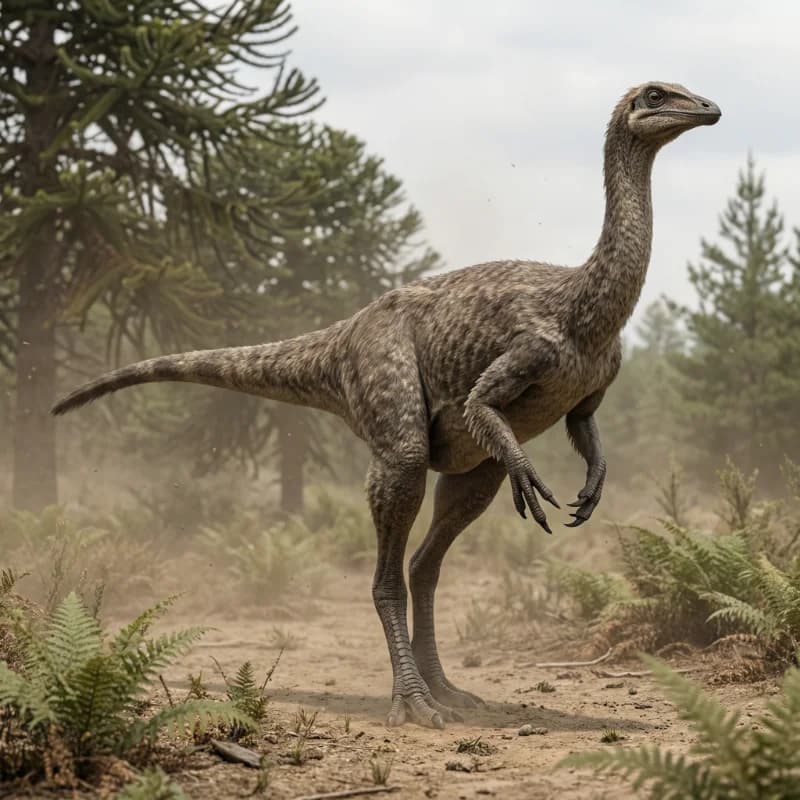
Struthiomimus
Struthiomimus altus
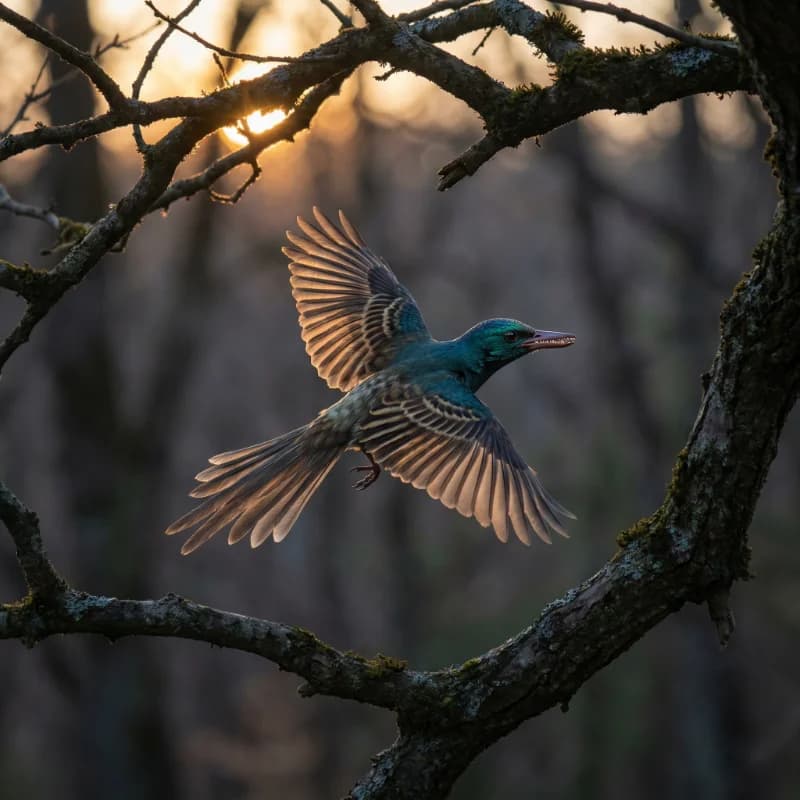
Longipteryx
Longipteryx chaoyangensis

Plateosaurus
Plateosaurus
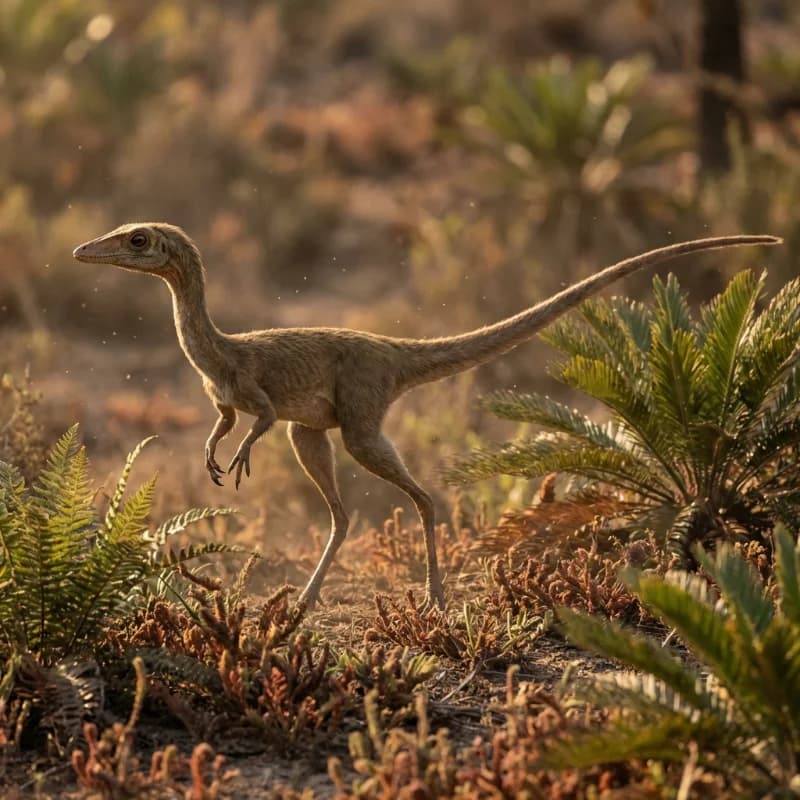
Procompsognathus
Procompsognathus triassicus
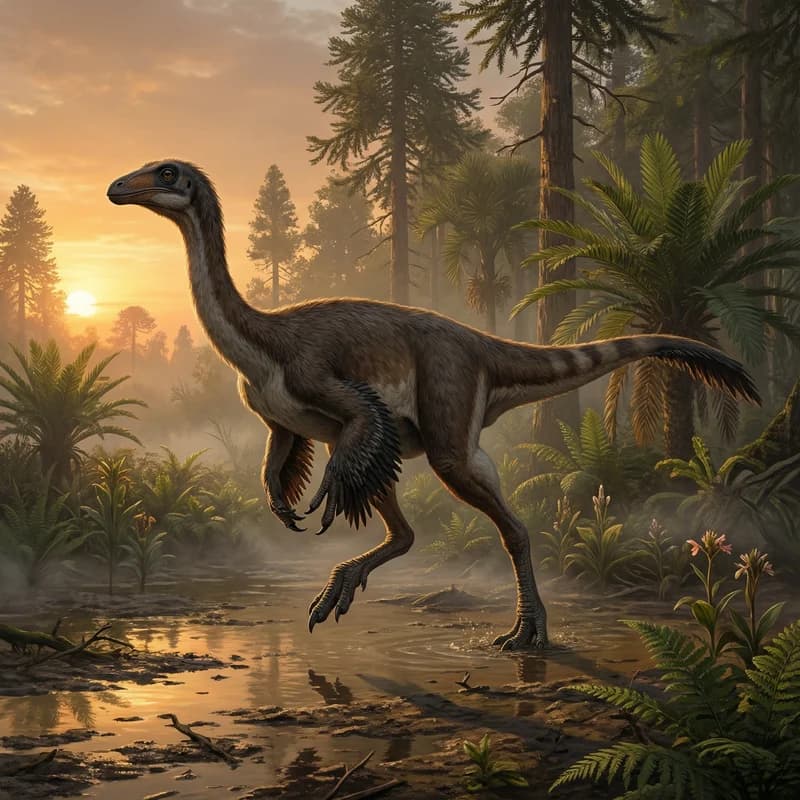
Ornithomimus
Ornithomimus velox
Arkansaurus
Arkansaurus fridayi

Coelophysis
Coelophysis bauri

Gallimimus
Gallimimus bullatus