King Crab
Omnivore Creature Type
Paralithodes camtschaticus
Scientific Name: "The genus name Paralithodes combines the Greek para (beside, beyond) and lithos (stone), meaning 'resembling a stone crab'; the species epithet camtschaticus derives from the Kamchatka Peninsula in Russia, where the species was first described"
Physical Characteristics
Discovery
Habitat

The King Crab (Paralithodes camtschaticus (Tilesius, 1815)) is a large crustacean belonging to the order Decapoda, infraorder Anomura, and family Lithodidae, and is the largest species among extant king crabs. In the English-speaking world it is commonly known as the Red King Crab, Kamchatka Crab, or Alaskan King Crab; in Japan it is called Tarabagani (タラバガニ). It is native to the cold waters of the North Pacific and adjacent seas — the Bering Sea, Gulf of Alaska, Kamchatka Peninsula, Sea of Okhotsk, and northern Sea of Japan — and an invasive population has also established itself in the Barents Sea following deliberate Soviet introduction in the 1960s.
Taxonomically, king crabs resemble true crabs (Brachyura) in appearance but belong to Anomura, the same infraorder as hermit crabs. A landmark 1992 molecular phylogenetic study published in Nature by Cunningham et al. confirmed that king crabs are phylogenetically nested within the hermit crab genus Pagurus. This evolutionary process represents a classic example of carcinization — the convergent evolution of a crab-like body form that has arisen independently at least five times across crustaceans. With a maximum leg span of approximately 1.8 m and a body weight of up to 12.7 kg, combined with a distinctive brownish-crimson exoskeleton covered in sharp spines, the king crab stands as one of the most commercially valuable seafood species in the world.
The species is listed as Not Evaluated (NE) on the IUCN Red List; however, Alaskan populations suffered severe declines following the 2018–2019 marine heatwave, leading to consecutive closures of the Bristol Bay fishery in the 2021–2022 and 2022–2023 seasons. Limited fishing resumed from the 2023–2024 season onward, and a Total Allowable Catch (TAC) of 2.68 million pounds was set for the 2025–2026 season. Nevertheless, long-term recovery prospects remain uncertain due to persistently poor recruitment of immature individuals (Alaska Beacon, 2025; ADFG, 2025).
1. Introduction
The genus name Paralithodes derives from the Greek words 'παρά' (para, meaning 'beside' or 'beyond') and 'λίθος' (lithos, meaning 'stone'), conveying the meaning of "resembling a stone crab." The species epithet camtschaticus originates from the Kamchatka Peninsula in Russia, where the species was first described. The English common name "Red King Crab" is believed to derive not from its coloration while alive — which is brownish to crimson — but from the vivid red color it turns upon cooking.
In Korea the species is known as King Crab or Red King Crab. The Japanese name Tarabagani (タラバガニ) literally translates to "crab from where the cod are," reflecting the overlap between its habitat and the fishing grounds for Pacific cod.
The king crab was first formally described in 1815 by Wilhelm Gottlieb Tilesius von Tilenau based on specimens collected from the Kamchatka Peninsula. Originally placed in the genus Maja (family Majidae), it was subsequently reclassified into the family Lithodidae under the genus Paralithodes, establishing the current valid combination Paralithodes camtschaticus (Tilesius, 1815) (WoRMS, 2025; CABI Compendium). No subspecies are officially recognized, though genetic differences among populations have been reported.
The world's largest king crab species, having evolved from hermit crab ancestors through carcinization, inhabiting cold-water environments of the North Pacific and representing one of the world's most commercially valuable fishery resources.
2. Classification and Phylogeny
| Rank | Name |
|---|---|
| Kingdom | Animalia |
| Phylum | Arthropoda |
| Subphylum | Crustacea |
| Class | Malacostraca |
| Order | Decapoda |
| Suborder | Pleocyemata |
| Infraorder | Anomura |
| Family | Lithodidae |
| Genus | Paralithodes |
| Species | P. camtschaticus |
The phylogenetic position of the king crab is one of the most compelling cases in crustacean evolutionary biology. The 1992 study by Cunningham, Blackstone, and Buss published in Nature demonstrated through molecular genetics that king crabs are not merely descendants of hermit crabs, but are phylogenetically nested within the hermit crab genus (Pagurus). The research team estimated that the loss of shell-dwelling behavior and the complete transition to a crab-like body form (full carcinization) required approximately 13–25 million years.
A 2018 paper by Noever and Glenner in the Zoological Journal of the Linnean Society reconfirmed the hermit crab ancestry hypothesis through expanded molecular phylogenetic analysis and provided detailed examination of the morphological transition. A 2011 phylogenetic analysis by Tsang et al. using five nuclear protein-coding genes suggested that hermit crabs form a monophyletic group, but that non-hermit anomurans — including king crabs — independently transitioned to a crab-like form multiple times from hermit crab ancestors.
This evolutionary phenomenon is called carcinization, a celebrated example of convergent evolution in which the crab body plan (broad, flattened carapace, folded abdomen, robust walking legs) has evolved independently at least five times across crustaceans.
The genus Paralithodes includes, alongside the king crab, the Blue King Crab (P. platypus). In a broader sense, "king crabs" also encompass the Golden King Crab (Lithodes aequispinus) and Brown King Crab (L. couesi and related species) within the family Lithodidae — all of which are commercially significant.
After Tilesius (1815) originally described the species as Maja camtschatica, it was transferred by Brandt (1850) to Lithodes camtschaticus, and was ultimately moved to the genus Paralithodes, establishing the current combination Paralithodes camtschaticus (Tilesius, 1815) (WoRMS).
3. Morphology and Anatomy
The king crab is the largest species among king crabs and one of the largest arthropods in the world. The recorded maximum size is a carapace width of approximately 28 cm (11 inches), a leg span of approximately 1.8 m (5.9 feet), and a body weight of approximately 12.7 kg (28 lb) (Wikipedia; NOAA Fisheries). According to NOAA Fisheries, individuals can grow up to approximately 24 pounds (about 11 kg) with a leg span of 5 feet (about 1.5 m). Males grow faster and attain larger sizes than females; the largest recorded female weighed approximately 10.5 pounds (about 4.8 kg).
The average individual currently harvested measures approximately 17 cm (7 inches) in carapace width and weighs approximately 2.9 kg (6.4 lb). According to the CABI Compendium, carapace lengths exceeding approximately 22 cm and weights above 10 kg have been reported, and an individual with a carapace width of 312 mm (approximately 12.3 inches) has been recorded in the Barents Sea (Consensus).
The exoskeleton is brownish to crimson (burgundy) in color and covered with sharp spines. Although the crab appears to have only six walking legs and two claws (chelae), it actually possesses ten legs. The fifth pair of legs is vestigial and concealed beneath the carapace; these small limbs are used to clean the gills. The two claws are asymmetrical in size and form — the larger claw is used to crush food while the smaller one handles prey more delicately.
The abdomen (tail) of the king crab is fan-shaped, unlike that of true crabs, serving as a vestige of its hermit crab ancestry. Females have a rounded abdominal flap while males have a triangular one, making external sex determination straightforward.
The king crab possesses five pairs of gills within branchial chambers inside the carapace; water enters behind the walking legs and exits through prebronchial apertures beside the mouth. The circulatory system is an open system, with a neurogenic heart located dorsally. A cardiac ganglion composed of nine neurons controls the heartbeat, and seven arteries distribute hemolymph to various body parts.
Rather than iron-based hemoglobin, the blood contains a copper-based respiratory pigment called hemocyanin, which turns blue upon oxygenation. This represents an adaptation enabling efficient oxygen transport in cold, low-oxygen environments.
The tolerated temperature range spans approximately −1.8 to 12.8°C, with an optimal range of approximately 3.2–5.5°C. Juvenile individuals prefer temperatures below approximately 6°C. While capable of adapting to a wide range of salinity, king crabs are sensitive to ocean acidification. A 2013 PLOS ONE study by Long et al. found that even a modest decrease in pH from 8.0 to 7.8 slowed the growth of juvenile king crabs, and at pH 7.5, 100% mortality was observed within 95 days. However, a 2024 study published in the Journal of Experimental Marine Biology and Ecology suggested that larval stages exhibit comparatively greater resilience across a wide pH range.
4. Ecology and Behavior
The king crab is an opportunistic omnivore that consumes nearly anything it can find on the seafloor. Larvae feed on phytoplankton and zooplankton in the water column; juveniles consume diatoms, small worms, small clams, and hydrozoans. Adults have a broad diet including worms, clams, mussels, barnacles, small crabs, sea stars, sea urchins, tunicates, brittle stars, fish, algae, and carrion. The average daily food intake of adults with a body length exceeding 150 mm is approximately 0.8% of body weight (SeaLifeBase).
Cannibalism has also been reported; a 2012 study by Daly et al. documented cannibalism occurring both within and between age classes.
Juvenile king crabs (approximately 2–4 years old) exhibit a distinctive aggregation behavior known as podding, forming extremely dense clusters of thousands to tens of thousands — and up to approximately 500,000 — individuals, interpreted as a predator avoidance strategy (Animal Diversity Web). Podding occurs primarily during the day, while the crabs disperse at night to forage.
Adult males undertake annual round-trip migrations of up to approximately 160 km (100 miles) (NOAA Fisheries). In winter through early spring they migrate to shallow waters (approximately 10–50 m) for mating, then return to deeper waters below the thermocline in summer to focus on foraging.
Predators of king crabs include Pacific cod, walleye pollock, halibut, sculpin, Greenland halibut, salmon, sea otters, seals, large octopuses, and nemertean worms (which prey on eggs) (ADFG; Wikipedia). Individuals are especially vulnerable to predation immediately after molting, when the shell is still soft; large adults, however, have few natural predators thanks to their sharp spines and thick exoskeleton.
5. Reproduction and Life History
King crabs exhibit pronounced sexual dimorphism, with males growing larger than females. Females reach sexual maturity at approximately 5–6 years; males at approximately 6–7 years.
The breeding season is primarily in spring (around May), when females migrate to shallow coastal waters to molt and spawn. Males engage in a pre-copulatory behavior of grasping the female's carapace for several days prior to her molt. When the female molts, the male fertilizes the eggs through external fertilization. Females must molt to mate, whereas males may skip molts and retain the same shell for 1–2 years.
Females reproduce once per year, releasing approximately 50,000–500,000 eggs (NOAA Fisheries). Fertilized eggs are brooded under the abdomen for approximately 10–12 months; during this period females remain in warmer water (approximately 4°C) while males stay in colder water (approximately 1.5°C) to conserve energy.
Hatched larvae (zoea) resemble small shrimp and drift in the water column for 2–3 months feeding on plankton, undergoing five molts during this period. After approximately 64 days, they metamorphose into the glaucothoe stage, settle to the seafloor, and develop into the fully crab-like juvenile form.
Wild lifespan is reported at approximately 20–30 years, with the Alaska SeaLife Center citing a maximum of approximately 25–30 years. Animal Diversity Web reports approximately 15–20 years, reflecting some variation among sources. Most individuals do not reach their natural maximum lifespan due to fishing pressure and predation.
6. Distribution and Habitat
The king crab is native to the cold waters of the North Pacific and adjacent seas.
In the eastern Pacific, it is distributed throughout the Bering Sea, Gulf of Alaska, and Aleutian Islands, with records extending south to British Columbia, Canada. Bristol Bay and the Kodiak Archipelago represent the most productive areas in Alaska. In the western Pacific, it occurs along the Kamchatka Peninsula, Sea of Okhotsk, and northern Sea of Japan (including the coast of Hokkaido, Japan).
In the 1960s, the Soviet Union deliberately introduced king crabs from the North Pacific into the Murmansk Fjord (Barents Sea) with the aim of establishing a new fishery resource in Europe. Individuals transported by aircraft survived and were released into the wild, where they reproduced and spread. First detected in Norwegian waters in 1977, the invasive population has since expanded rapidly, now reaching the northern Norwegian coast as far as Tromsø (Frontiers in Marine Science, 2022).
In Norway they are colloquially called "Stalin's crabs." The Barents Sea population now numbers in the millions (Guardian, 2020), and in 2025 Norwegian king crab exports reached a record high, driven by increased frozen product sales and growing demand from the United States (Undercurrent News, 2026). The 2026 Barents Sea king crab TAC was set at 13,900 metric tons, a 10% increase over the previous year.
Larvae and juveniles inhabit shallow waters from the intertidal zone to approximately 50 m, preferring complex habitats with shells, gravel, algae, and bryozoans. Adults are found primarily on sand and mud substrates at depths of approximately 200 m or more, migrating to shallower waters (approximately 10–50 m) during the spawning season in spring. SeaLifeBase records a depth range of 0–461 m.
7. Conservation Status and Threats
| Organization / Convention | Status | Notes |
|---|---|---|
| IUCN Red List | NE (Not Evaluated) | As of Version 2025-2 |
| CITES | Not listed | Not subject to international trade regulation |
| U.S. ESA | Not listed | Not federally protected |
Although king crabs hold no special international conservation status, strict fisheries management is applied in Alaskan waters.
The Bristol Bay red king crab fishery was closed for the 2021–2022 and 2022–2023 seasons due to a sharp decline in mature female abundance — the first closure in approximately 25 years. The fishery reopened in a limited capacity in the 2023–2024 season with a TAC of approximately 2.31 million pounds, maintained at 2.31 million pounds in 2024–2025, and marginally increased to 2.68 million pounds in 2025–2026 (ADFG, 2025; Alaska Beacon, 2025).
However, according to Alaska Department of Fish and Game researcher Katie Palof, there has been no meaningful increase in recruitment of immature individuals since 2015, making a significant biomass rebound difficult to anticipate. Continued concerns include wind-driven degradation of larval food environments, above-average bottom temperatures relative to the past four years, and corrosive bottom conditions (low pH) (Alaska Beacon, 2025).
For Norton Sound, the 2026 commercial fishery Guideline Harvest Level (GHL) was set at 268,000 pounds, a decrease of approximately 65% compared to the previous year (Cordova Times, 2026).
The intense marine heatwave that struck the Bering Sea in 2018–2019 had devastating effects on crustacean populations, including king crabs. A study by Szuwalski et al. published in Science (2023) confirmed that elevated temperatures increased metabolic rates while food availability remained insufficient, causing billions of snow crabs to starve to death; king crabs are believed to have been affected by a similar mechanism.
Ocean acidification poses a particularly serious threat to juvenile individuals. Additionally, new marine heatwaves are developing along the California coast of the North Pacific, and Bering Sea surface temperatures have been observed above normal, raising concerns about future recurrent heatwave events (Alaska Beacon, 2025).
In the Barents Sea, the king crab functions as a large benthic omnivorous predator and has been confirmed to reduce native benthic biodiversity and exert negative effects on species diversity and biomass (Seafood Watch, 2023; Falk-Petersen et al., 2011). By preying on capelin eggs, it may also affect the food chain for Atlantic cod.
8. Relationship with Humans
The king crab is one of the most commercially valuable crustacean species in the world. Between 1975 and 2018, American fishermen harvested approximately 854 million pounds (about 387,000 metric tons) of king crab from Alaskan waters, with a landed value of approximately 2.5 billion dollars (ADFG).
In Alaska, harvesting is conducted primarily using mesh-covered pots approximately 7–8 square feet in size, and only males are legally permitted to be retained. Harvest follows the "3S" principle (Size, Sex, Season), targeting only males above a minimum size and avoiding mating and molting periods. The Crab Rationalization Program, implemented in 2005, allocates quotas among harvesters, processors, and coastal communities.
In Norway, the Barents Sea king crab has grown into a multi-hundred-million-dollar industry. As of 2023, Norway exported approximately 2,500 metric tons of king crab worth approximately 1.2 billion Norwegian kroner (about 100 million euros) (Barents Observer, 2024), and 2025 saw record export values (Undercurrent News, 2026). Retail prices were reported above 100 dollars per pound as of late 2025 (National Fisherman, 2025).
In Japan, particularly in northern regions such as Hokkaido, the king crab is a prized winter delicacy consumed as sashimi, shabu-shabu, and steamed dishes. In Korea it is equally popular as a premium seafood, served steamed, raw, or in hot pot preparations.
The American reality television program "Deadliest Catch" on Discovery Channel brought widespread public attention to the extreme conditions and dangers of king crab and snow crab fishing in the Bering Sea.
King crab processing waste constitutes approximately 69% of the total harvest mass, comprising the shell (approximately 60%) and viscera (including the hepatopancreas). Research is ongoing into the industrial utilization of various enzymes extracted from the hepatopancreas, including collagenase, proteases, lipases, and nucleases.
9. Certainties and Open Questions
The evolution of king crabs from hermit crab ancestors through carcinization is firmly established by multiple molecular phylogenetic studies. The taxonomic placement within Anomura and Lithodidae is stable and largely uncontested.
While the 2018–2019 marine heatwave is considered the primary driver of the Bering Sea crustacean population collapse, a direct causal relationship for king crabs specifically has not been established to the same degree as for snow crabs. The relative contributions of overfishing, increased fish predation, and disease have yet to be fully quantified.
First, the precise cause of poor immature individual recruitment in Alaskan populations since 2015 remains unclear. Second, predictions of long-term range shifts and reproductive success under climate change are needed. Third, a comprehensive assessment of the long-term ecological impacts of the invasive Barents Sea population has not yet been completed. Fourth, the feasibility of commercial aquaculture remains challenging due to biological constraints including a prolonged larval stage.
A widespread misconception holds that king crabs are "true crabs," when in fact they belong taxonomically to Anomura rather than Brachyura. Additionally, the name "Red King Crab" derives from the color the animal turns after cooking, not from its coloration while alive.
10. Comparison with Related Species
| Species | Scientific Name | Max Weight | Max Leg Span | Primary Range | Infraorder |
|---|---|---|---|---|---|
| King Crab | P. camtschaticus | ~12.7 kg | ~1.8 m | N. Pacific, Barents Sea | Anomura |
| Blue King Crab | P. platypus | ~8 kg | ~1.5 m | Bering Sea, Aleutians | Anomura |
| Golden King Crab | Lithodes aequispinus | ~5 kg | ~1 m | Aleutians, Gulf of Alaska | Anomura |
| Snow Crab | Chionoecetes opilio | ~1.4 kg | ~0.9 m | N. Atlantic, N. Pacific | Brachyura |
| Japanese Spider Crab | Macrocheira kaempferi | ~19 kg | ~3.7 m | Waters off Japan | Brachyura |
The king crab is the largest and most commercially valuable among king crab species. While the Japanese spider crab (Macrocheira kaempferi) exceeds it in absolute leg span, the king crab far surpasses it in commercial value due to the quantity and quality of its edible portions.
11. Data Tables
Table 1. Summary of Morphometric Measurements
| Measurement | Current Average | Recorded Maximum | Unit | Source |
|---|---|---|---|---|
| Body weight | ~2.9 | ~12.7 | kg | Wikipedia; NOAA |
| Carapace width | ~17 | ~28 | cm | Wikipedia |
| Leg span | ~1.0–1.5 | ~1.8 | m | Wikipedia |
| Carapace length | ~10.7 (mature) | ~22 | cm | SeaLifeBase; CABI |
Table 2. Key Reproductive and Developmental Parameters
| Parameter | Range / Average | Unit / Notes | Source |
|---|---|---|---|
| Egg output | ~50,000–500,000 | eggs/year | NOAA |
| Egg brooding period | ~10–12 | months | Wikipedia; NOAA |
| Planktonic larval period | ~2–3 | months | NOAA |
| Larval molts | 5 | times | NOAA |
| Age at maturity (female) | ~5–6 | years | ADFG |
| Age at maturity (male) | ~6–7 | years | ADFG |
| Lifespan | ~20–30 | years | ADFG; Alaska SeaLife Center |
Table 3. Alaska King Crab Fishery Status (2025–2026 Season)
| Population | TAC (2025–2026) | Fishery Status | Notes |
|---|---|---|---|
| Bristol Bay | 2.68 million lb | Open (10/15–1/15) | Slight increase from previous year |
| Norton Sound | 268,000 lb | Open | ~65% decrease from previous year |
| Pribilof Islands | — | Closed since 1999 | Blue king crab bycatch prevention |
| Western Aleutian Islands | — | Closed | Insufficient data |
12. References
Alaska Department of Fish and Game. (n.d.). Red King Crab Species Profile. https://www.adfg.alaska.gov/index.cfm?adfg=redkingcrab.main
Alaska Department of Fish and Game. (2025). Bristol Bay Red King Crab Season Opens October 15. News Release.
Alaska Beacon. (2025, October 7). Gradual improvements in Bering Sea crab stocks allow for Alaska harvest increases. https://alaskabeacon.com/2025/10/07/gradual-improvements-in-bering-sea-crab-stocks-allow-for-alaska-harvest-increases/
Alaska SeaLife Center. (n.d.). Red King Crab. https://www.alaskasealife.org/aslc_resident_species/46
Animal Diversity Web. (n.d.). Paralithodes camtschaticus (red king crab). https://animaldiversity.org/accounts/Paralithodes_camtschaticus/
CABI Compendium. (n.d.). Paralithodes camtschaticus (red king crab). https://www.cabidigitallibrary.org/doi/full/10.1079/cabicompendium.71549
Cunningham, C. W., Blackstone, N. W., & Buss, L. W. (1992). Evolution of king crabs from hermit crab ancestors. Nature, 355, 539–542. https://doi.org/10.1038/355539a0
Falk-Petersen, J., Renaud, P., & Anisimova, N. (2011). Establishment and ecosystem effects of the alien invasive red king crab (Paralithodes camtschaticus) in the Barents Sea–a review. ICES Journal of Marine Science, 68(3), 479–488. https://doi.org/10.1093/icesjms/fsq192
Long, W. C., Swiney, K. M., Harris, C., Page, H. N., & Foy, R. J. (2013). Effects of ocean acidification on juvenile red king crab (Paralithodes camtschaticus) and tanner crab (Chionoecetes bairdi) growth, condition, calcification, and survival. PLOS ONE, 8(4), e60959. https://doi.org/10.1371/journal.pone.0060959
Long, W. C. et al. (2024). Red king crab larval survival and development are resilient to ocean acidification. Journal of Experimental Marine Biology and Ecology. https://doi.org/10.1016/j.jembe.2024.152031
NOAA Fisheries. (n.d.). Red King Crab. https://www.fisheries.noaa.gov/species/red-king-crab
Noever, C., & Glenner, H. (2018). The origin of king crabs: hermit crab ancestry under the magnifying glass. Zoological Journal of the Linnean Society, 182(2), 300–318. https://doi.org/10.1093/zoolinnean/zlx033
SeaLifeBase. (n.d.). Paralithodes camtschaticus, Red king crab. https://www.sealifebase.se/summary/Paralithodes-camtschaticus.html
Szuwalski, C. S., Cheng, W., Foy, R. J., Hermann, A. J., Hollowed, A., Holsman, K. K., ... & Zheng, J. (2023). The collapse of eastern Bering Sea snow crab. Science, 382(6668), eadf6035. https://doi.org/10.1126/science.adf6035
The Barents Observer. (2024, April 6). King crab boom in northern Norway has become multi-million dollar industry. https://www.thebarentsobserver.com/news/king-crab-boom-in-northern-norway-has-become-multimillion-dollar-industry/109745
The Cordova Times. (2026, January 14). GHL for 2026 Norton Sound red king crab down 65%. https://thecordovatimes.com/2026/01/14/ghl-for-2026-norton-sound-red-king-crab-down-65/
Tsang, L. M., Chan, T. Y., Ahyong, S. T., & Chu, K. H. (2011). Hermit to king, or hermit to all: multiple transitions to crab-like forms from hermit crab ancestors. Systematic Biology, 60(5), 616–629. https://doi.org/10.1093/sysbio/syr063
Undercurrent News. (2026, January 12). Historic 2025 for Norwegian king, snow crab as frozen sales take off, quotas increase. https://www.undercurrentnews.com/2026/01/12/historic-2025-for-norwegian-king-snow-crab-as-frozen-sales-take-off-quotas-increase/
WoRMS Editorial Board. (2025). Paralithodes camtschaticus (Tilesius, 1815). World Register of Marine Species. http://www.marinespecies.org/aphia.php?p=taxdetails&id=233889
Fun Facts
King crabs evolved from hermit crabs. According to a 1992 Nature study, they are phylogenetically nested within the hermit crab genus (Pagurus), and it is estimated that abandoning shell-dwelling behavior and fully evolving into a crab-like form took approximately 13–25 million years.
Although king crabs appear to have only 6 walking legs and 2 claws, they actually possess 10 legs. The fifth pair is vestigial and hidden beneath the carapace, where these small limbs are used to clean the gills.
King crab blood is blue. It contains hemocyanin, a respiratory pigment that uses copper rather than iron to carry oxygen, turning blue when oxygenated.
The name "Red King Crab" comes not from the animal's color while alive — which is brownish to crimson (burgundy) — but from the vivid red color it turns after cooking.
Juvenile king crabs form an aggregation behavior called podding, in which up to approximately 500,000 individuals cluster together in extremely dense groups to avoid predators. They disperse at night to forage.
Adult male king crabs undertake annual round-trip migrations of up to approximately 160 km (100 miles), moving between shallow coastal waters for mating and deeper waters for feeding depending on the season.
Female king crabs can produce approximately 50,000–500,000 eggs in a single spawning event and brood the fertilized eggs under their abdomen for approximately 10–12 months. During this period, females remain in warmer water (~4°C) while males stay in colder water (~1.5°C) to conserve energy.
The king crabs in the Barents Sea are an invasive species deliberately introduced by the Soviet Union in the 1960s. Known colloquially in Norway as "Stalin's crabs," their population has grown to millions, and in 2025 Norwegian king crab exports reached a record high.
Between 1975 and 2018, American fishermen harvested approximately 854 million pounds (about 387,000 metric tons) of king crab from Alaskan waters, with a total landed value of approximately 2.5 billion dollars.
Approximately 69% of the total king crab harvest mass becomes processing waste. However, enzymes extracted from this waste — including collagenase, proteases, and others — are actively being researched for industrial applications.
King crabs are known to practice cannibalism, consuming other individuals of the same species both within and between age classes.
As of the 2025–2026 season, retail prices for Bristol Bay king crab exceeded 100 dollars per pound, making it one of the most expensive seafood products in the world.
FAQ
Although king crabs appear crab-like, they are taxonomically not true crabs (Brachyura) but belong to Anomura, the same infraorder as hermit crabs. A 1992 molecular genetics study published in Nature by Cunningham et al. showed that king crabs evolved from hermit crab ancestors and are phylogenetically nested within the hermit crab genus (Pagurus). This evolutionary process is called 'carcinization' — the independent evolution of a crab-like body form at least five times across crustaceans. A vestigial fifth pair of legs hidden beneath the carapace and a fan-shaped abdomen (tail) are remnants of the hermit crab ancestor.
The wild lifespan of king crabs is reported at approximately 20–30 years (ADFG; Alaska SeaLife Center), while Animal Diversity Web reports approximately 15–20 years, reflecting some variation among sources. Most individuals do not reach their natural maximum lifespan due to fishing pressure and predation. Females reach sexual maturity at approximately 5–6 years; males at approximately 6–7 years.
Several factors contribute to the high price of king crabs. First, they are harvested under extreme and dangerous conditions in the Bering Sea and Alaskan waters, making the fishery costly to operate. Second, population declines have led to strict catch quotas, limiting supply. Third, their flavor and size make them a highly sought-after premium seafood. Following the closure of the Bristol Bay fishery in 2021–2023, prices rose further, with retail prices reported above 100 dollars per pound as of late 2025.
The king crab is the largest species among king crabs and can reach a maximum carapace width of approximately 28 cm (11 inches), a leg span of approximately 1.8 m (5.9 feet), and a body weight of approximately 12.7 kg (28 lb) (Wikipedia; NOAA Fisheries). An even larger individual with a carapace width of 312 mm (approximately 12.3 inches) has been recorded in the Barents Sea. The average individual currently harvested, however, measures approximately 17 cm in carapace width and weighs approximately 2.9 kg. Males grow larger than females; the largest recorded female weighed approximately 10.5 pounds (4.8 kg).
The king crabs in the Barents Sea were deliberately introduced from the North Pacific by the Soviet Union in the 1960s to establish a new fishery resource in Europe. Individuals transported by aircraft were released into the Murmansk Fjord, where they reproduced and spread in the wild. First detected in Norwegian waters in 1977, the invasive population expanded rapidly to number in the millions, and in 2025 Norwegian king crab exports reached a record high. In Norway they are colloquially called 'Stalin's crabs.'
King crab fishing is considered one of the most dangerous occupations in the world because it takes place in the extreme environment of the Bering Sea. High winds, violent waves, sub-zero temperatures, and ice formation on deck all pose serious hazards. Fishermen handle heavy pots (approximately 300–400 kg) on slippery decks and face risks including vessel capsize, drowning, and hypothermia. Discovery Channel's 'Deadliest Catch' brought widespread public awareness to these dangers.
King crabs are opportunistic omnivores that consume nearly anything they can find on the seafloor. Adults eat worms, clams, mussels, barnacles, small crabs, sea stars, sea urchins, brittle stars, fish, algae, and carrion. Larvae feed on plankton, while juveniles consume diatoms and small invertebrates. Cannibalism has also been documented, with individuals consuming others of the same species both within and between age classes.
The Bristol Bay red king crab fishery was closed for the 2021–2022 and 2022–2023 seasons due to a sharp decline in mature female abundance — the first closure in approximately 25 years. Proposed causes include the 2018–2019 Bering Sea marine heatwave, which increased metabolic rates while food availability was insufficient, as well as overfishing and increased fish predation. The fishery subsequently reopened in limited capacity, with a TAC of 2.68 million pounds set for the 2025–2026 season, though long-term recovery remains uncertain due to poor juvenile recruitment.
Yes, it is true. Rather than iron-based hemoglobin, king crab blood contains a copper-based respiratory pigment called hemocyanin, which turns blue when bound to oxygen. This adaptation enables efficient oxygen transport in the cold, low-oxygen environments where king crabs live.
Climate change affects king crabs in multiple ways. Ocean warming elevates metabolic rates and alters the boundaries of optimal habitat. The 2018–2019 marine heatwave is identified as a primary driver of mass crustacean die-offs in the Bering Sea. Ocean acidification is also a serious threat, particularly for juveniles: even a modest pH decrease slows growth and increases mortality in young king crabs (Long et al., 2013). However, a 2024 study found that larval stages are comparatively resilient across a broad pH range.
Gallery
3 images King Crab
King Crab · Omnivore
 King Crab
King Crab · Omnivore
 King Crab
King Crab · Omnivore
🔗Related Creatures
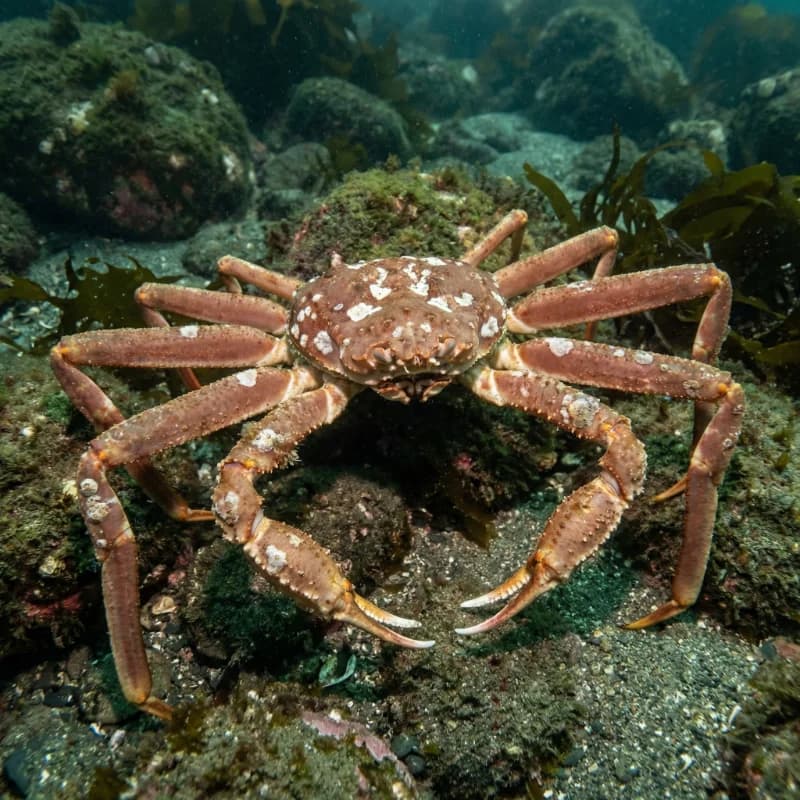
Snow Crab
Chionoecetes opilio
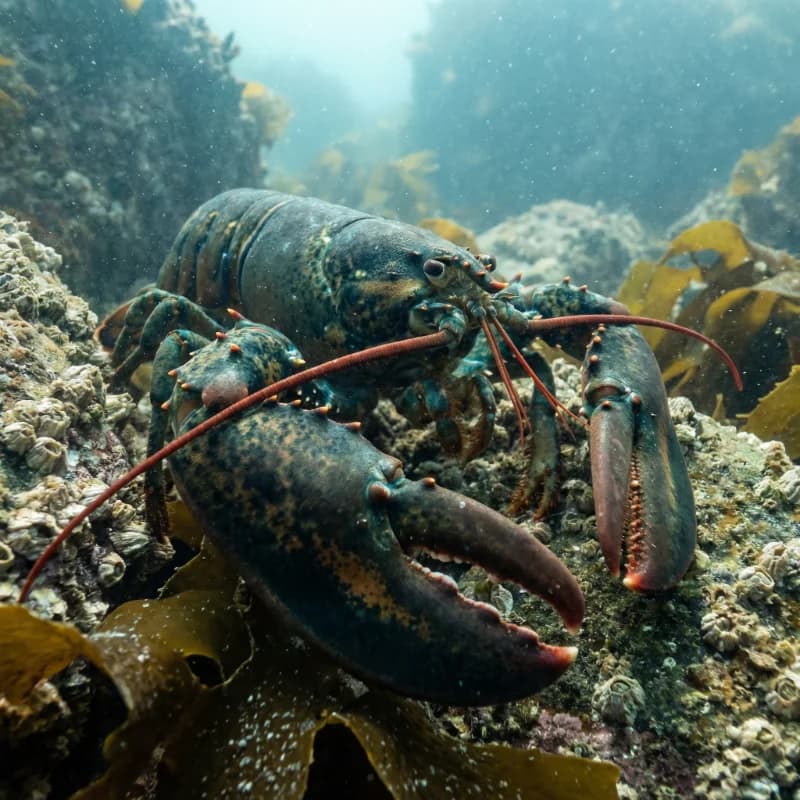
American Lobster
Homarus americanus
Doolysaurus
Doolysaurus huhmini
Ornithomimus
Ornithomimus velox
Longipteryx
Longipteryx chaoyangensis
Extraterrestrial Life
Extraterrestrial Life
Tapejara
Tapejara wellnhoferi
Deinocheirus
Deinocheirus mirificus