Pig
Sus scrofa domesticus
🍽️ OmnivoreModern life
Physical Characteristics
🍽️
DietOmnivore
📏
Size0.9~1.8m
⚖️
Weight50~350kg
↕
Height0.7m
Classification
FAM
FamilySuidae
ORD
OrderArtiodactyla
GEN
GenusSus
SP
SpeciesS. scrofa domesticus
Sus scrofa domesticus
The domestic pig (Sus scrofa domesticus Erxleben, 1777) is a domesticated mammal of the pig family (Suidae), derived from the Eurasian wild boar (Sus scrofa). It ranks among the most numerous livestock animals on Earth; according to FAO statistics, roughly one billion pigs are raised worldwide, of which China alone accounts for approximately 450 million. Raised for meat and fat in nearly every human society, thousands of years of selective breeding have produced hundreds of breeds with extreme variation in body form, litter size, fat content, and growth rate.
Taxonomically, the pig is the domesticated form of the wild boar and is commonly written either as the trinomial Sus scrofa domesticus or, when emphasizing it as a distinct species, as Sus domesticus Erxleben, 1777. Carl Linnaeus united both wild boar and domestic pig under Sus scrofa in the 10th edition of Systema Naturae (1758), but modern usage widely treats the domestic pig at the subspecies level of the wild boar to reflect continuity with its wild ancestor.
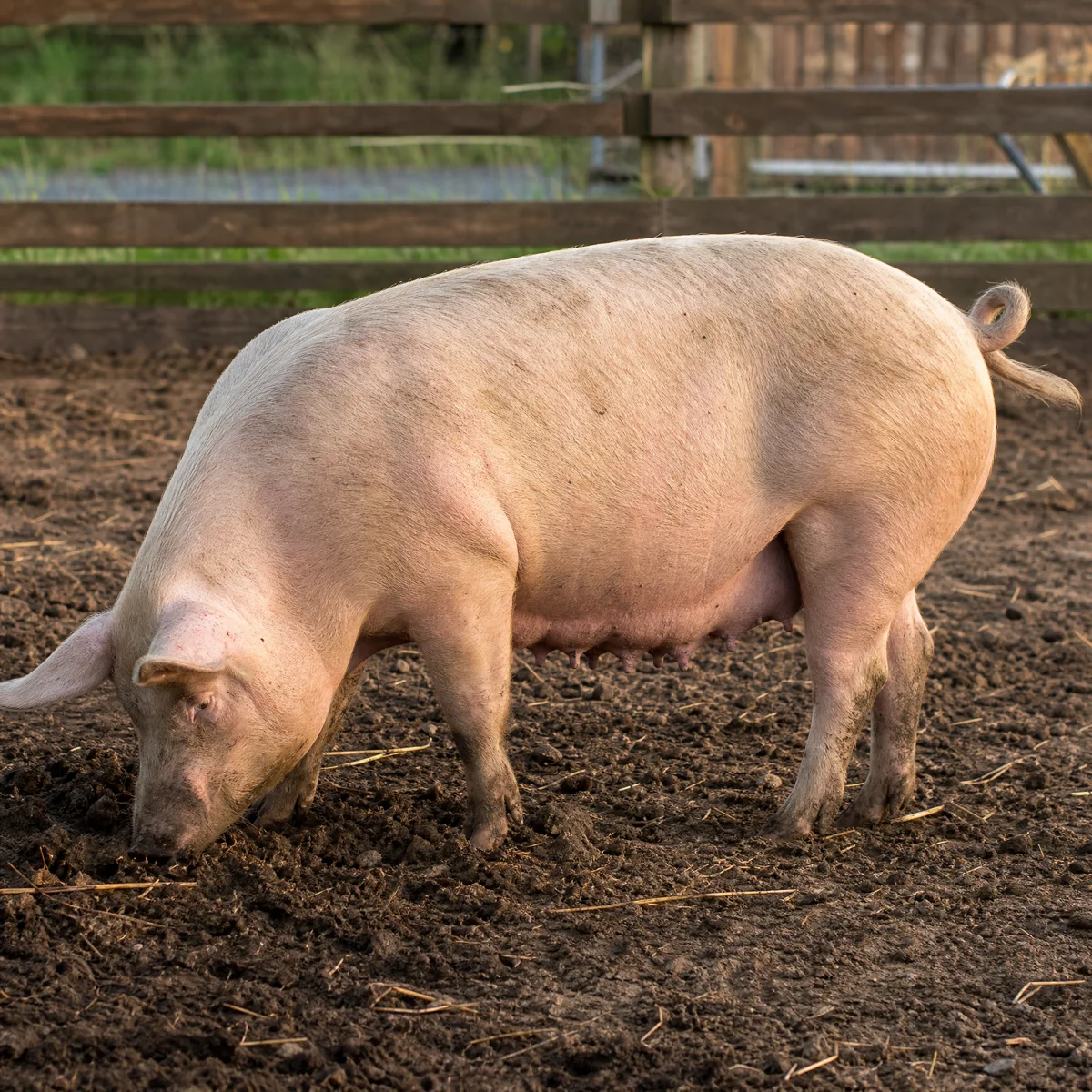
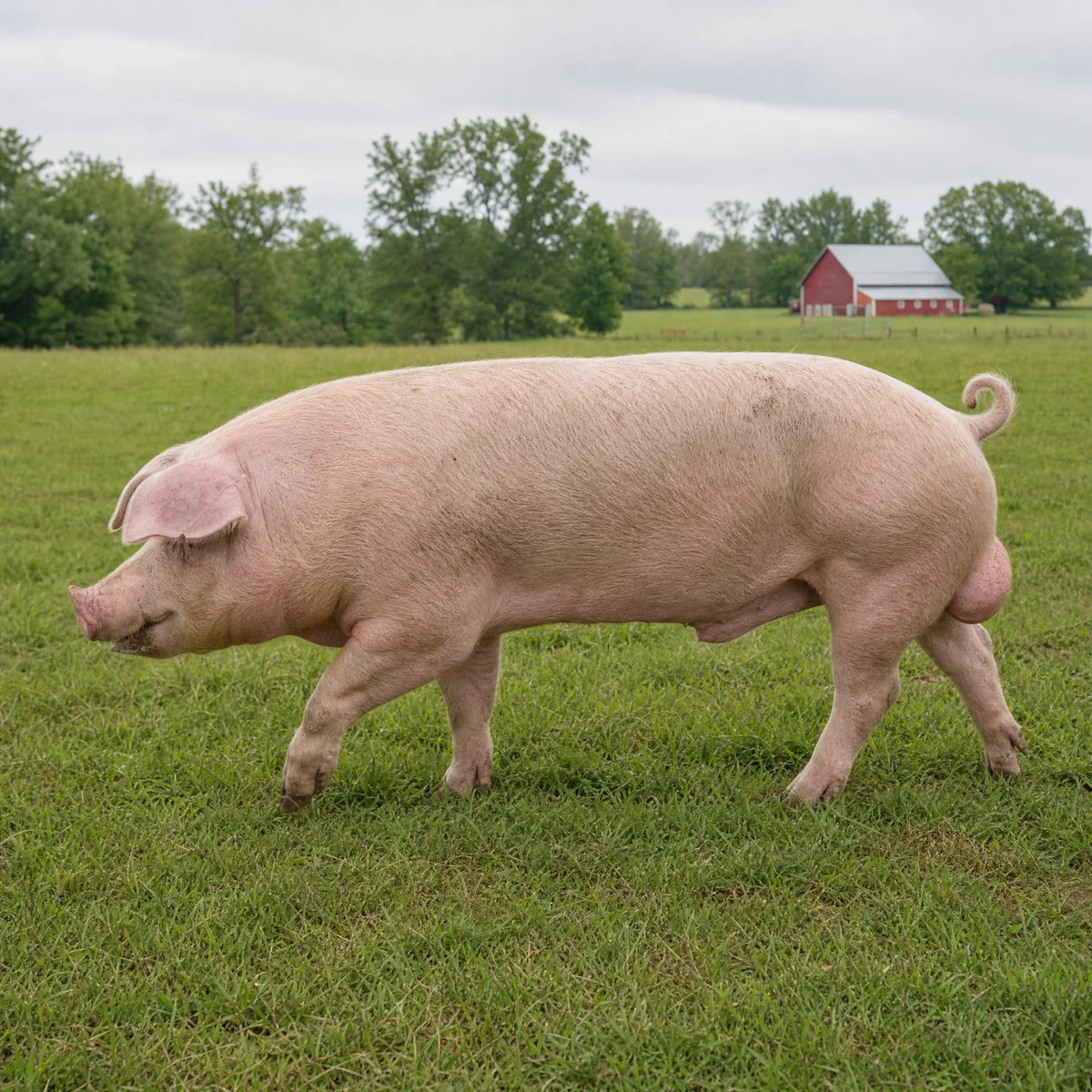
Adult pigs have a stocky body, short sturdy legs, a long snout, and cloven hooves; depending on breed, body length ranges from 0.9 to 1.8 m, shoulder height from 51 to 97 cm, and weight from 50 to 350 kg. Pigs are omnivores whose characteristic rooting behavior—turning over soil with the snout to find food—is typical of the species. They live in social groups called sounders. Pigs are also among the more intelligent mammals, with well-developed problem-solving ability, social learning, and spatial memory.
The timing and location of pig domestication were long debated. Earlier hypotheses favored a single origin, but archaeological and genomic research strongly supports independent domestication in the Near East and in China. Olsen & Cucchi (2019) proposed independent domestication around 7500 cal BC in the Near East and around 6000 cal BC in China. Melinda Zeder's "commensal pathway" model explains how wild boar lingered around human refuse heaps and grain stores and gradually adapted to human settlements.
The genus name Sus is Latin for "pig," and the species epithet scrofa means "sow" or "female wild boar" in Latin. The varietal name domesticus is Latin for "of the household, domesticated." In English, "pig" derives from Old English picg, "hog" refers especially to a domestic pig, and "swine" is used in collective or technical contexts. European languages such as German Schwein and French porc likewise draw on distinct etymological roots.
Two conventions coexist regarding the pig's taxonomic rank. One treats the domestic pig as the distinct species Sus domesticus Erxleben, 1777; the other treats it as a subspecies of the wild boar, Sus scrofa domesticus. Modern molecular genetics conclusively shows that the pig descends from the wild boar, and the multiple-origins model—independent domestication in the Near East and East Asia followed by global spread—has become mainstream (Olsen & Cucchi, 2019). European domestic pigs were initially introduced from Near Eastern lineages, but research (Frantz et al., 2019) showing later replacement of their genetic makeup through admixture with European wild boar has made the domestication history considerably more complex.
The pig is a core human meat supply derived from the Eurasian wild boar, independently domesticated in the Near East and China, with roughly one billion individuals raised worldwide.
The pig belongs to the phylum Chordata, class Mammalia, order Artiodactyla, family Suidae, and genus Sus. Besides the Eurasian wild boar (Sus scrofa), the genus Sus includes several recognized species such as the Philippine warty pig (Sus cebifrons), the bearded pig (Sus barbatus), and the Bawean warty pig (Sus ahoenobarbus); the domestic pig belongs to the Eurasian wild boar lineage.
Charles Darwin early on identified the wild boar as the ancestor of the domestic pig, and subsequent archaeogenetic and genomic research has supported this view. The comprehensive review by Olsen & Cucchi (2019) proposes independent domestication in the Near East (especially Anatolia and the Levant) and in the Yellow and Yangtze River basins of China, estimating domestication dates of roughly 7500 cal BC and 6000 cal BC, respectively. Maternal lineages of East Asian domestic pigs appear to have maintained high continuity into modern times (Wang et al., 2021), suggesting that indigenous East Asian wild boar lineages continued to contribute after domestication. In Europe, however, research (Frantz et al., 2019) indicates that early Near Eastern domestic pigs were later largely replaced by genes from European wild boar, showing that the genetic composition of European domestic pigs may not be a simple direct descendant of Near Eastern stock.
| Species | Scientific name | Main distribution | Notes |
|---|---|---|---|
| Eurasian wild boar | Sus scrofa | Europe, Asia, North Africa, and introduced regions | Direct ancestor of the domestic pig; IUCN Least Concern (LC) |
| Domestic pig | Sus scrofa domesticus | Worldwide | Hundreds of breeds; domesticated form |
| Philippine warty pig | Sus cebifrons | Philippine islands | Small body size; endangered |
| Bearded pig | Sus barbatus | Sumatra, Borneo | Bearded; tropical forest dweller |
| Feral pig | Sus scrofa (mixed) | Introduced regions worldwide | Escaped or free-ranging domestic pigs; hybridizes with wild boar |
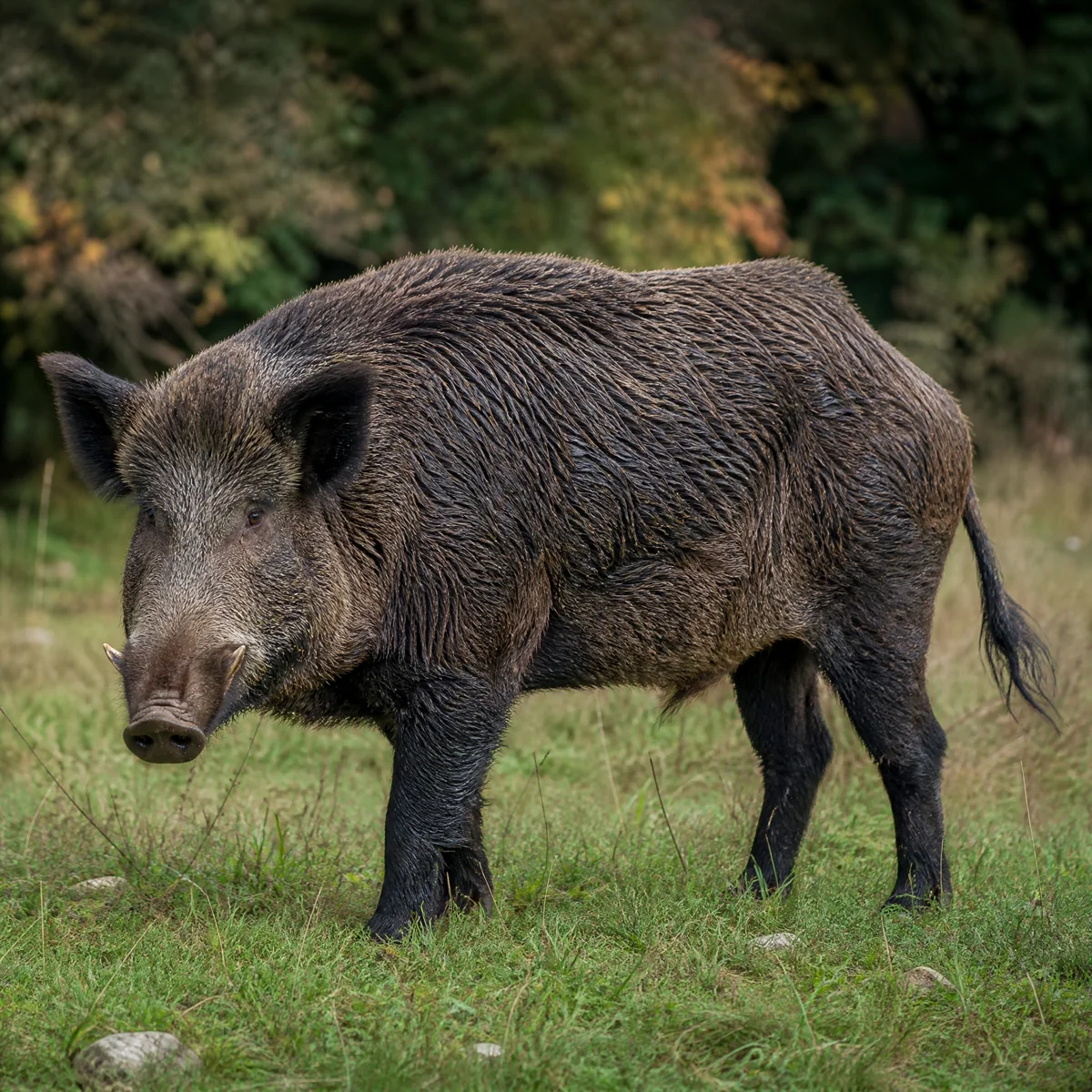
The pig is a medium-to-large mammal with relatively marked sexual dimorphism. Boars are larger than sows, with broader heads, and wild or semi-wild boars in particular bear well-developed tusks on the forehead and neck. Sows have a relatively rounder body and smaller head. Breed variation is extreme in body form, coat color, ear size, and backfat thickness, ranging from small miniature pigs to large commercial breeds such as Landrace and Duroc.
Breed-to-breed variation is so large that a single figure is impractical. A typical adult domestic pig falls in the range of roughly 0.9–1.8 m body length, 51–97 cm shoulder height, and 50–350 kg body weight. Small breeds (e.g., miniature pigs) may weigh only 20–50 kg, whereas large meat breeds can produce adult boars exceeding 300 kg. The wild ancestor, the wild boar, is more agile and muscular and generally smaller than domestic pigs.
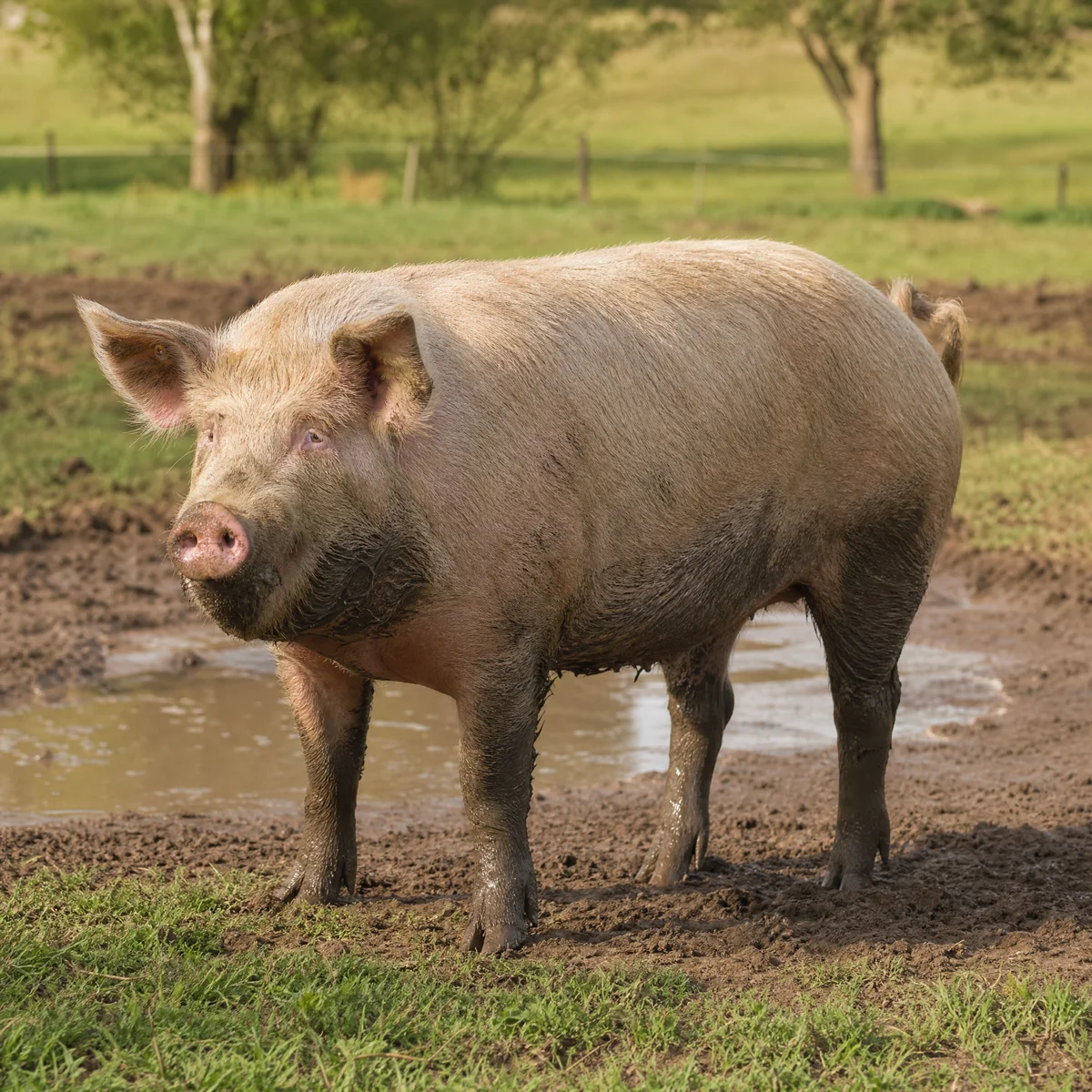
Pigs possess the even-toed hooves typical of artiodactyls, well suited to scratching and turning over the ground. The cartilaginous rhinarium at the tip of the long snout is highly sensitive to smell and is the key organ for rooting behavior—digging up roots, earthworms, and insects. The stomach is not a single simple chamber; its walls are well developed for omnivorous digestion. The skin is relatively thick, and adults have little or no hair. Pigs lack functional sweat glands and tend to use water and mud wallows for thermoregulation.
Pigs are typical omnivores, consuming roots, stems, fruits, grains, and seeds as well as insects, earthworms, small vertebrates, and sometimes carrion. Rooting—turning over the soil with the snout—is central to foraging and allows efficient use of plant and animal resources on farmland and forest floors. The wild boar's habit of obtaining food around human grain stores and refuse heaps is considered a key factor drawing them toward human settlements during domestication (Zeder, 2012).
Pigs live in groups called sounders, generally structured around females and piglets. Adult males often live alone or in small groups outside the breeding season. Within a sounder, individuals form dominance ranks and close social bonds, and piglets acquire behavior through sibling play and social learning. Pigs rank among the more intelligent mammals and perform well in problem-solving experiments, mirror self-recognition studies, and spatial memory tests.
Pigs are known to use more than 20 distinct vocalizations to convey alarm, food discovery, farrowing signals, and calls to young. High-pitched squeals of piglets elicit maternal responses, while low-pitched boar vocalizations are involved in territorial display. Pigs are fundamentally diurnal but have relatively poor vision and rely heavily on smell and hearing. Wallowing in water and mud contributes to thermoregulation, parasite defense, and ultraviolet protection.
Wild boar and feral pigs may be targeted by large predators such as wolves, leopards, tigers, and bears. Piglets are especially vulnerable, and sows and sounders attempt collective defense. Adult boars can drive off attackers with tusks and powerful jaw strength. In regions where humans have introduced feral pigs and local large predators are absent, feral pigs may become top consumers with major ecosystem impacts.
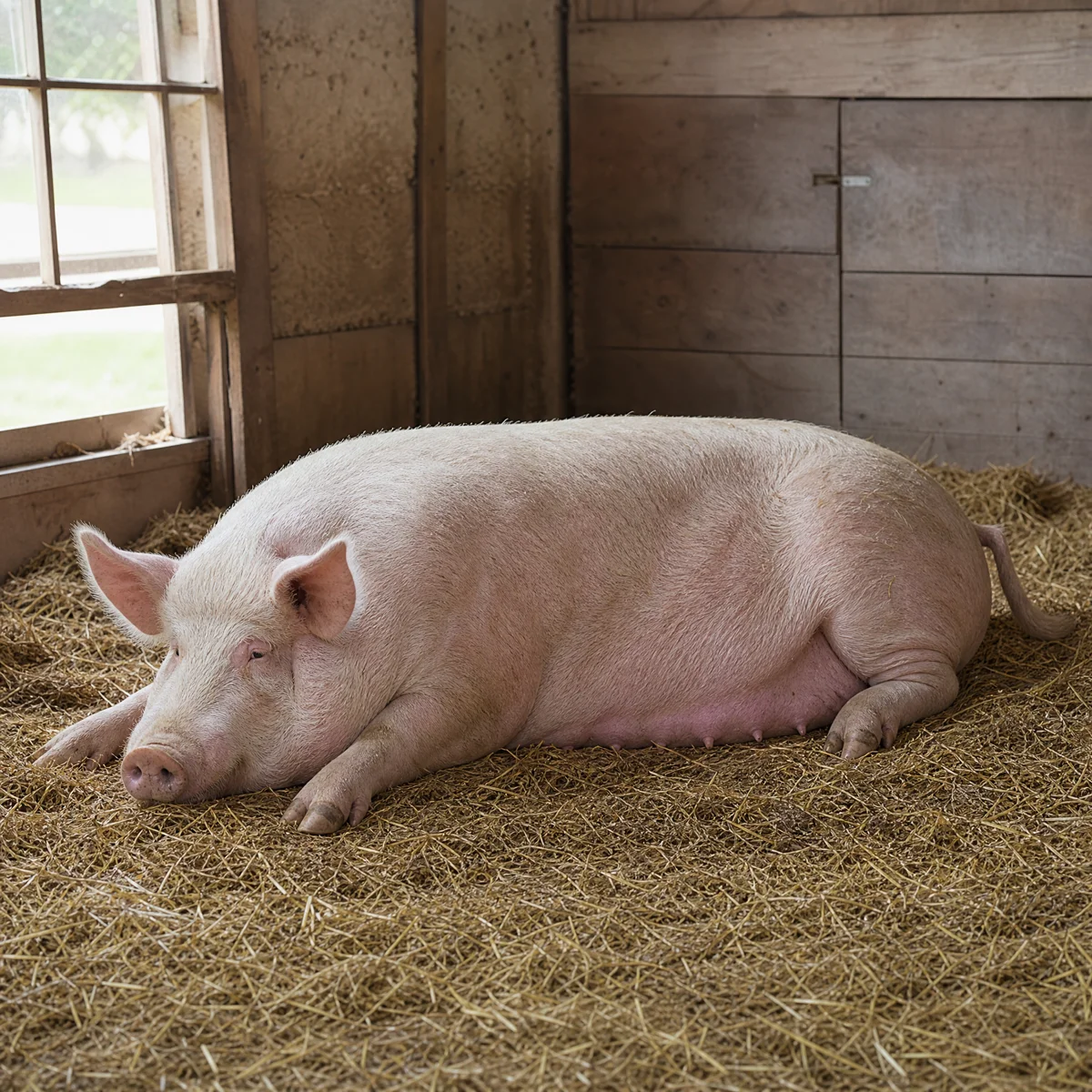
After sexual maturity, a sow cycles through estrus roughly every 21 days (three weeks), and gestation after mating lasts about 114 days (three months, three weeks, and three days). Litter size varies with breed and management but is typically 10–13 piglets, with some breeds producing more. Shortly before farrowing, sows show nest-building behavior, gathering materials to construct a nest, and after birth they lick piglets to stimulate them and nurse them.
Piglets are somewhat altricial yet can walk and find milk shortly after birth. Weaning typically occurs at about 21 days of age, though commercial pig farming may separate them earlier. Sexual maturity is reached at roughly 5–8 months depending on breed, and meat breeds grow rapidly. In natural or free-ranging conditions pigs live about 10–15 years, whereas commercial meat pigs are removed from production much earlier at slaughter weight.
The lifespan of domestic pigs depends heavily on rearing purpose and breed. Breeding sows are culled after producing several litters, and meat pigs are slaughtered once they reach market weight. Wild boar, affected by predation, disease, and human hunting, have shorter average lifespans.
The domestic pig is distributed across virtually every continent and inhabited region, following humans. Its wild ancestor, the wild boar, occurs naturally in Europe, western Asia, East Asia, Southeast Asia, the Indian subcontinent, and North Africa, and has been introduced by humans to Oceania, North America, South America, and other regions. The pig's global spread accompanied the food demands of ancient agricultural societies, radiating along different routes after independent domestication in the Near East and China.
Domestic pigs live in human-created environments such as farm pigsties, pasture systems, and intensive commercial facilities. Wild boar adapt to diverse habitats including deciduous forest, coniferous forest, mixed woodland, farmland margins, wetlands, and mountainous terrain, using thickets, burrows, and the undersides of trees as shelter. Feral pigs thrive in forests, wetlands, and farmland in introduced regions and hybridize with wild boar, producing genetic admixture.
The domestic pig itself is not assessed on the IUCN Red List and, given its enormous numbers, faces no extinction threat. The wild ancestor, the Eurasian wild boar (Sus scrofa), is assessed as Least Concern (LC) by the IUCN. Wild boar have a wide distribution and relatively stable populations but face localized threats from habitat destruction, overhunting, and eradication campaigns driven by crop damage.
Populations of domestic pigs that have escaped or been deliberately released and become feral are problematic invasive species in many regions worldwide. Feral pigs hybridize with wild boar, causing introgression that threatens the genetic identity of pure wild boar populations. In Europe, ongoing admixture between domestic pigs and wild boar has also been interpreted as evidence reshaping the history of domestication itself (Frantz et al., 2019).
The modern pig industry depends heavily on a small number of high-productivity commercial lines, leading to narrowing genetic diversity. Although the FAO recognizes hundreds of local indigenous breeds, many are at risk of disappearing as rearing scale declines, making the conservation of animal genetic resources important for food security.
The pig is one of humanity's most important meat sources, producing pork and processed products such as bacon, ham, and sausage on a vast scale, along with by-products including fat, leather, and lard. Roughly one billion pigs are raised worldwide (FAO), with China as the largest producer at approximately 450 million head. The pig industry is a central pillar of agricultural economies and food systems, especially in East Asia, Europe, and North America.
Pigs appear across many cultures as symbols of abundance, fertility, and good fortune. In Korea, pork is a staple meat on traditional tables, and the Pig (亥) occupies the final earthly branch in the East Asian zodiac. In some religions, including Islam and Judaism, pork consumption is prohibited, strongly shaping the geographic and cultural distribution of pig farming and consumption. Pigs are also key model organisms in medicine and physiology, used in research on skin, heart, and kidney xenotransplantation.
Pigs can serve as vectors of zoonotic disease; swine influenza, African swine fever, and classical swine fever have major impacts on the pig industry and public health. Large-scale intensive rearing can increase disease transmission risk, making biosecurity, vaccination, and movement control central to pig management.
Established facts include that the pig descends from the Eurasian wild boar (Sus scrofa), that wild boar are assessed as Least Concern (LC) by the IUCN, and that independent domestication occurred in the Near East and China (Olsen & Cucchi, 2019). Probable views include high maternal-line continuity in East Asian domestic pigs (Wang et al., 2021), replacement of early Near Eastern genetic contributions in European domestic pigs by European wild boar genes (Frantz et al., 2019), and the commensal pathway as an explanation of domestication mechanism (Zeder, 2012). At the hypothesis level is the model that wild boar gradually domesticated themselves by adapting to human settlements rather than through intensive early human capture and breeding management, with the possibility that future archaeological excavation and ancient DNA analysis will reveal earlier domestication evidence.
The earlier single-origin hypothesis—that pigs were domesticated once in a single region such as only the Near East or only China and then spread worldwide—has been substantially revised by genomic research. The simple picture of European domestic pigs as direct descendants of Near Eastern stock is also complicated by Frantz et al. (2019), which shows genetic replacement through admixture with European wild boar. The stereotype that pigs are "dirty and unintelligent" lacks scientific support; numerous behavioral studies confirm their high intelligence and sociality. Treating feral pigs merely as "escaped livestock" can also overlook the genetic and ecological impacts of hybridization with wild boar.
A sow's 114-day gestation is commonly remembered as 'three months, three weeks, and three days' on farms.
Roughly one billion domestic pigs are raised worldwide, with China accounting for nearly half of the global total.
Pigs rank among the more intelligent mammals and perform well in problem-solving, mirror self-recognition, and spatial memory experiments.
European domestic pigs were initially introduced from Near Eastern lineages but were later largely replaced by European wild boar genes (Frantz et al., 2019).
Pigs are known to use more than 20 distinct vocalizations to convey alarm, food discovery, farrowing signals, and calls to young.
The wild boar's habit of feeding around human grain stores and refuse heaps is considered a key factor in the commensal pathway of domestication.
Pigs lack functional sweat glands and tend to use water and mud wallows for thermoregulation.
Hybridization between feral pigs and wild boar is widespread worldwide, making conservation of pure wild populations a key issue.
The domestic pig is derived from the Eurasian wild boar (Sus scrofa). Molecular genetics and archaeogenetics conclusively support this, and the multiple-origins model—independent domestication in the Near East and China—is now mainstream.
According to the comprehensive review by Olsen & Cucchi (2019), independent domestication occurred around 7500 cal BC in the Near East (Anatolia and the Levant) and around 6000 cal BC in China. Zeder's commensal pathway model explains how wild boar lingered around human refuse heaps and were gradually managed.
A sow's gestation period is about 114 days (three months, three weeks, and three days). Litter size varies by breed but is typically 10–13 piglets.
According to FAO statistics, roughly one billion domestic pigs are raised worldwide, with China alone accounting for approximately 450 million. The pig is among the most numerous livestock animals on Earth.
A sounder is the social group formed by pigs. It is generally centered on females and piglets, while adult boars often live alone outside the breeding season.
Pigs are typical omnivores, consuming roots, grains, and fruits as well as insects, earthworms, and small animals. Rooting—turning over soil with the snout—is the characteristic foraging behavior.
Thousands of years of artificial selection have produced hundreds of breeds with extreme variation in body form, litter size, fat content, and growth rate, ranging from miniature pigs to large commercial breeds such as Landrace and Duroc.
Two conventions coexist: treating the domestic pig as the distinct species Sus domesticus, or as a subspecies of the wild boar, Sus scrofa domesticus. Molecular genetics confirmed descent from the wild boar, and the trinomial is widely used to stress continuity with the wild species.
5images