Lystrosaurus
Lystrosaurus
⏳ Triassic Period🍽️ HerbivoreDinosaurs
Physical Characteristics
⏳
PeriodTriassic Period
🍽️
DietHerbivore
📏
Size0.6~2.5m
⚖️
Weight50~200kg
Classification
GEN
GenusLystrosaurus
SP
SpeciesL. murrayi
Lystrosaurus
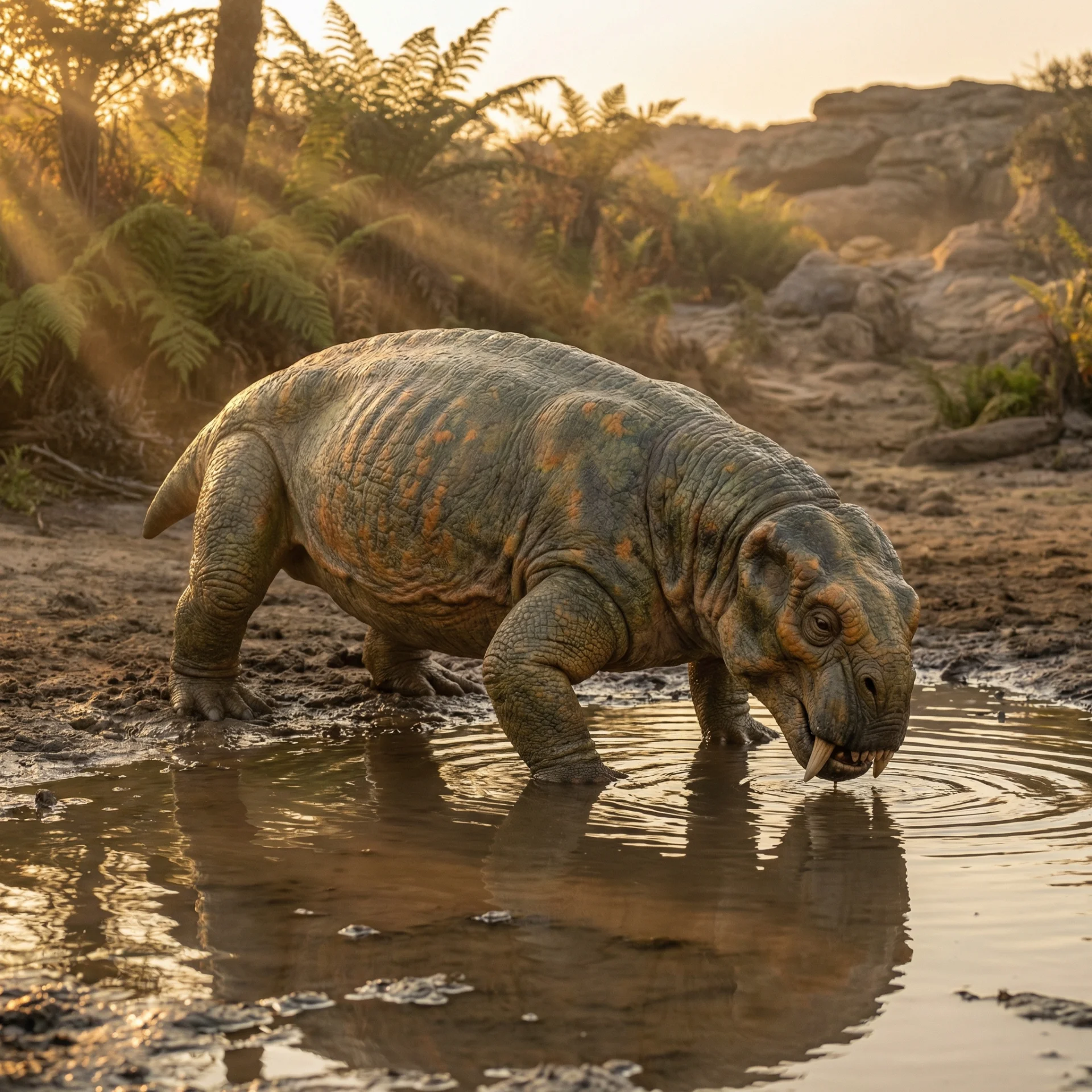
Lystrosaurus (Lystrosaurus Cope, 1870) is an extinct genus of herbivorous dicynodont therapsid (Synapsida: Therapsida: Anomodontia: Dicynodontia) that lived from the late Permian (Lopingian) through the Early Triassic (Olenekian), approximately 255–248 million years ago. The genus name derives from Ancient Greek, meaning 'shovel lizard,' and was first described by Edward Drinker Cope in 1870 in the Proceedings of the American Philosophical Society. Within Dicynodontia, Lystrosaurus is placed in the family Lystrosauridae, where it forms a monophyletic clade with Kwazulusaurus.
What makes Lystrosaurus truly remarkable is its status as the sole dicynodont genus to survive the Permian-Triassic mass extinction (~252 Ma) — the most catastrophic extinction event in Earth's history — and its subsequent explosive dominance in the Early Triassic. In the Lystrosaurus Assemblage Zone of South Africa's Karoo Basin, Lystrosaurus fossils account for approximately 90–95% of all terrestrial vertebrate fossils, an unprecedented level of dominance by a single genus in the history of land life (Benton, 2006; Botha & Smith, 2007).
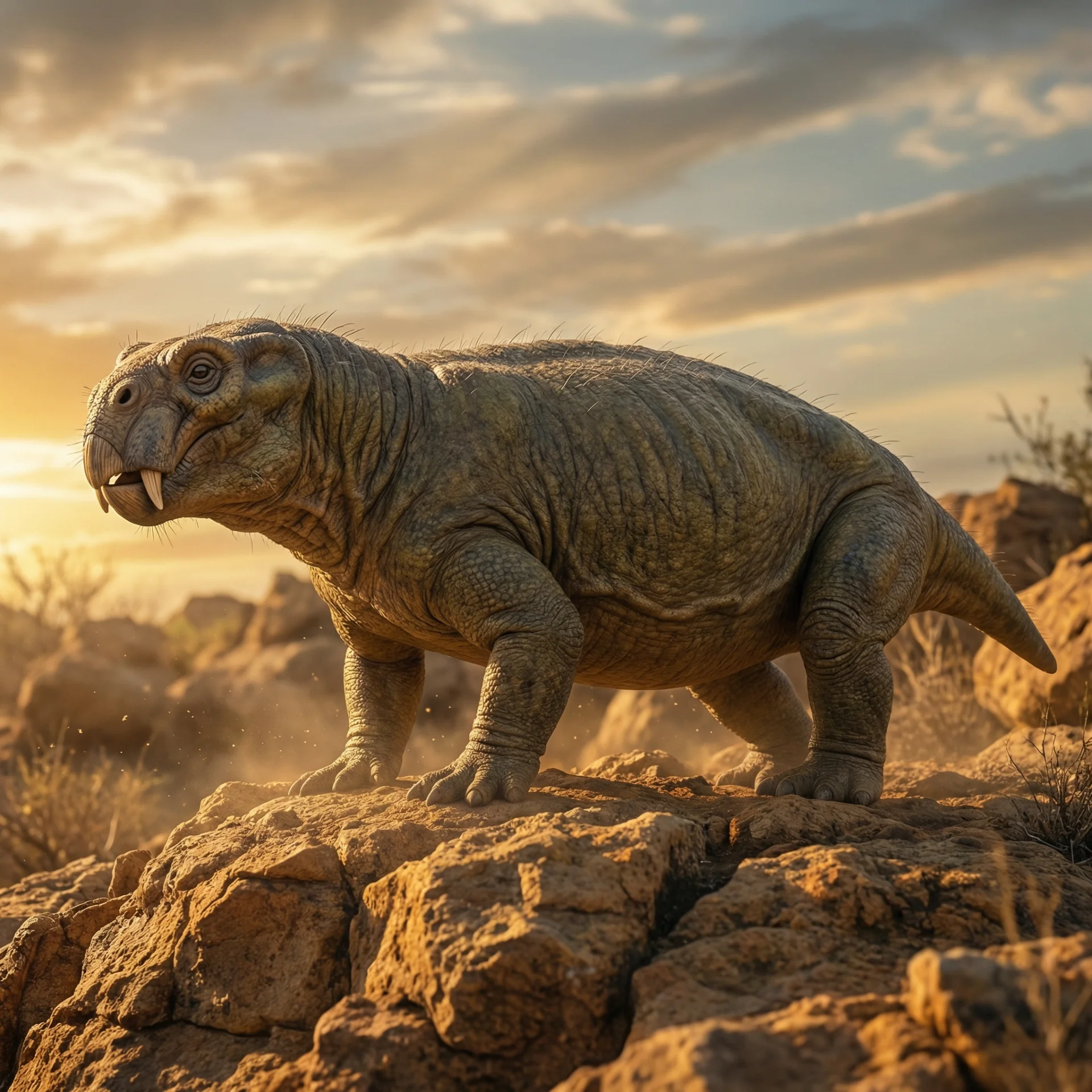
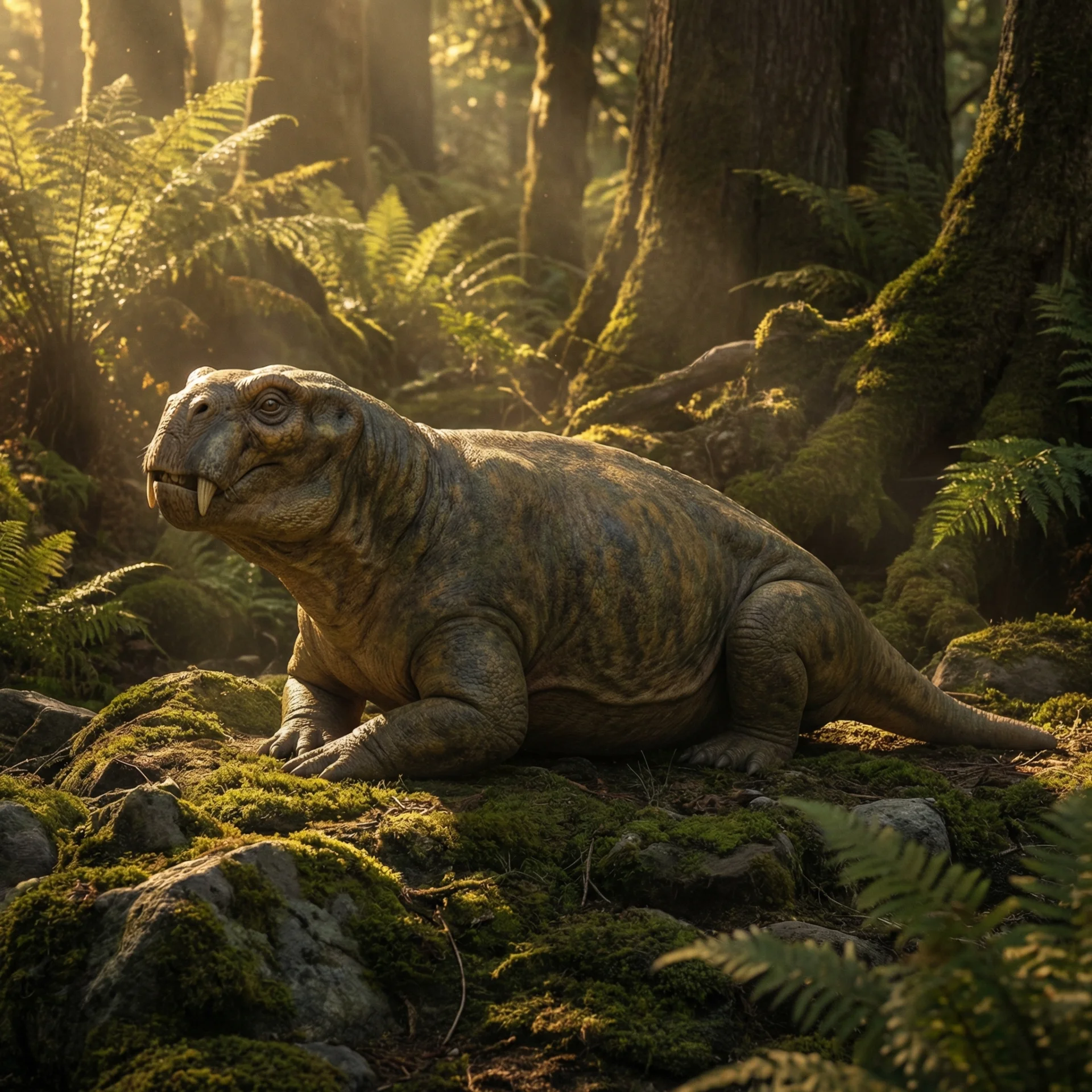
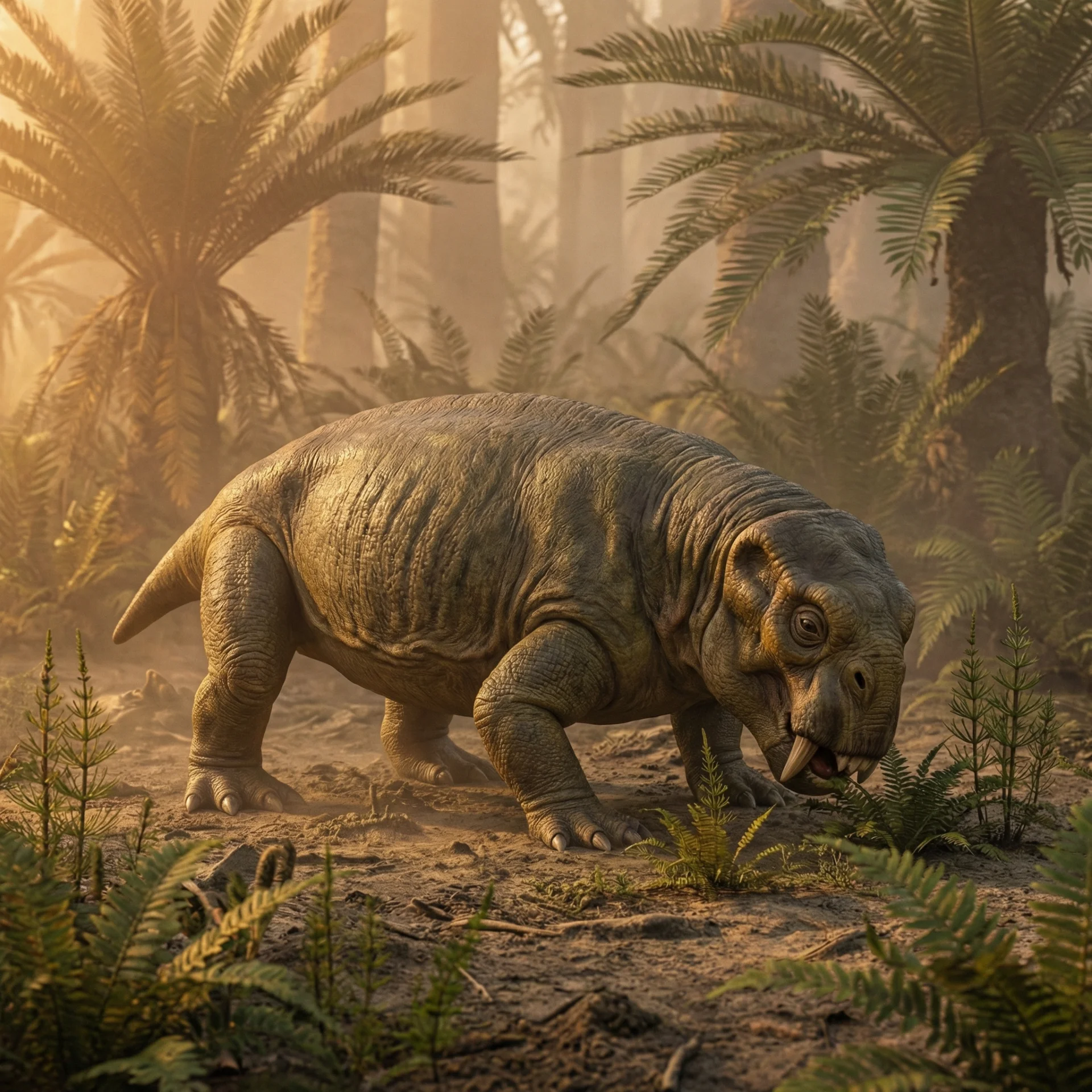
Body length varied considerably among species, ranging from about 0.6 to 2.5 m, with an average of roughly 0.9 m. These stocky, barrel-bodied animals possessed short limbs, a pair of tusks (upper canines), and a turtle-like horny beak. Their fossils have been recovered from South Africa, India, China, Russia, Antarctica, and Mongolia — regions that were part of the Pangaean supercontinent (particularly southern Gondwana) — and this wide distribution served as pivotal evidence for the theory of continental drift and plate tectonics.
The genus name Lystrosaurus is composed of the Ancient Greek words λίστρον (lístron, 'shovel, hoe, leveling tool') and σαῦρος (saûros, 'lizard'), thus meaning 'shovel lizard' (Liddell & Scott, 1980). The name likely references the strongly deflected, shovel-like snout that is characteristic of the genus. Cope (1870) coined the name when he described a skull discovered in South Africa by the Philadelphia-based missionary and fossil collector Dr. Elias Root Beadle.
Four species are currently widely recognized: L. murrayi (Huxley, 1859) — the type species, L. declivis (Owen, 1860), L. curvatus (Owen, 1876), and L. maccaigi Seeley, 1898. From the 1930s through the 1970s, the number of named species was as high as 23, but successive taxonomic revisions in the 1980s–1990s reduced this to six, and further revision by Grine et al. (2006) synonymized L. platyceps and L. oviceps with L. curvatus, arriving at the current four-species framework. Of seven species described from the Bogda Mountains of Xinjiang, China, only L. youngi and L. hedini may be valid (Angielczyk et al., 2022), and L. georgi from Russia is recognized as a separate species by some authors (Surkov et al., 2005).
A 2025 study by Kammerer, Angielczyk & Fröbisch reported new lystrosaurid material from Permian strata in South Africa and raised the possibility that the holotype of Kwazulusaurus shakai may represent a juvenile Lystrosaurus, suggesting that the origins of Lystrosauridae extend back to the middle Permian.
Lystrosaurus is the only dicynodont genus to have survived the end-Permian mass extinction, subsequently dominating terrestrial vertebrate faunas worldwide during the Early Triassic to an extent unmatched by any other land animal in Earth's history.
The fossil record of Lystrosaurus spans the late Permian (Lopingian) to the Early Triassic (Olenekian), approximately 255–248 Ma (Surkov et al., 2005; Botha & Smith, 2007). Species-level distributions differ significantly in time: L. maccaigi and L. curvatus range from the latest Permian through the earliest Triassic and disappear within the Palingkloof Member of the Balfour Formation. L. murrayi and L. declivis are found exclusively in Triassic strata, with L. declivis ranging through to the top of the Lystrosaurus Assemblage Zone (Botha & Smith, 2020).
The Karoo Basin of South Africa is the richest source of Lystrosaurus fossils. The primary bearing formations are the Balfour Formation (Palingkloof Member) and the overlying Katberg Formation, with the Normandien Formation productive in the eastern part of the basin. The dominant lithologies are red to greenish-grey mudstones, siltstones, and fluvial sandstones.
Additional important occurrences include the Panchet Formation (Damodar Valley) and Kamthi Formation (Pranhita-Godavari Basin) in India; the Jiucaiyuan, Guodikeng, and Wutonggou Formations of the Bogda Mountains in Xinjiang, China; the Fremouw Formation of the Transantarctic Mountains in Antarctica; and lowermost Triassic sediments of the Moscow Basin in Russia.
| Region | Formation | Lithology | Species Recorded |
|---|---|---|---|
| South Africa, Karoo Basin | Balfour Fm. (Palingkloof Mbr.), Katberg Fm. | Mudstone, siltstone, sandstone | L. maccaigi, L. curvatus, L. murrayi, L. declivis |
| India, Damodar Valley | Panchet Fm. | Sandstone, mudstone | L. murrayi, L. cf. curvatus, L. cf. declivis |
| China, Xinjiang (Bogda Mts.) | Jiucaiyuan, Guodikeng, Wutonggou Fms. | Sandstone, siltstone | L. youngi, L. hedini, and others |
| Antarctica, Transantarctic Mts. | Fremouw Fm. | Sandstone, mudstone | L. curvatus, L. murrayi, L. maccaigi |
| Russia, Moscow Basin | Lower Triassic sediments | Mudstone, sandstone | L. georgi |
Lystrosaurus-bearing strata in the Karoo Basin record floodplain and fluvial environments. Sedimentological changes across the Permo-Triassic boundary indicate a transition from meandering to braided river systems, reflecting extreme aridification and loss of vegetation cover (Ward et al., 2000; Smith & Ward, 2001). However, Gastaldo et al. (2020) have proposed that seasonally wet conditions may have prevailed during parts of the latest Permian. The Early Triassic paleoenvironment is characterized by elevated temperatures, reduced atmospheric oxygen, increased CO₂, and recurring droughts (Smith & Botha-Brink, 2014; MacLeod et al., 2017).
The type material of the genus was a skull collected in South Africa by Dr. Elias Root Beadle and described by Cope (1870) in volume 11 of the Proceedings of the American Philosophical Society. The type species is L. murrayi (Huxley, 1859), originally described as Dicynodon murrayi based on Indian material. The holotype specimens for each species are as follows:
Thousands of specimens have been recovered from the Karoo Basin, and abundant material is also known from the Fremouw Formation at Coalsack Bluff, Graphite Peak, and along McGregor and Shackleton glaciers in Antarctica (Colbert, 1974).
The genus Lystrosaurus (and family Lystrosauridae) is diagnosed by the following key characters (Surkov et al., 2005; Grine et al., 2006): the snout is strongly deflected ventrally; the external nares are positioned high on the skull near the dorsal surface; a pair of large, deeply rooted tusks (upper canines) are present, with no other teeth; the orbits are positioned high and far forward on the skull; and the skull is short and broad overall.
Species-level distinctions rely primarily on snout deflection angle, sagittal facial profile curvature, cranial proportions, and tusk size. L. maccaigi is the largest and most specialized species, with a basal skull length reaching approximately 31 cm, while L. curvatus is the least specialized, characterized by a smoothly curved sagittal facial profile and a lower deflection angle (<65°).
Ontogenetic variation is substantial in Lystrosaurus, and post-mortem taphonomic deformation can mimic interspecific morphological differences, complicating taxonomic assignments (Grine et al., 2006). The synonymization of formerly separate species such as L. platyceps and L. oviceps with L. curvatus illustrates these challenges.
Body length ranged from approximately 0.6 to 2.5 m depending on species, with estimated body masses of roughly 50–200 kg (Cluver, 1978; Britannica). The average individual was about 0.9 m long and 50–90 kg — roughly the size of a pig or medium dog. The largest species, L. maccaigi, could reach up to approximately 2.5 m, while the smaller Triassic species (L. murrayi, L. declivis) were notably smaller. This size reduction has been discussed in the context of the 'Lilliput effect,' a pattern of body size decrease in lineages surviving mass extinctions (Botha, 2020).
Lystrosaurus possessed the characteristically extreme short snout of dicynodonts, with only a single pair of upper canines (tusks) and no other teeth. Food was processed by a turtle-like horny beak and a horny secondary palate. The jaw joint was weak and operated in a fore-and-aft shearing motion rather than the more typical lateral or vertical movements. The jaw muscles were attached unusually far forward on the skull, occupying much of the dorsal and posterior skull surface, which forced the eyes into a high, forward position on the skull (Cowen, 2000).
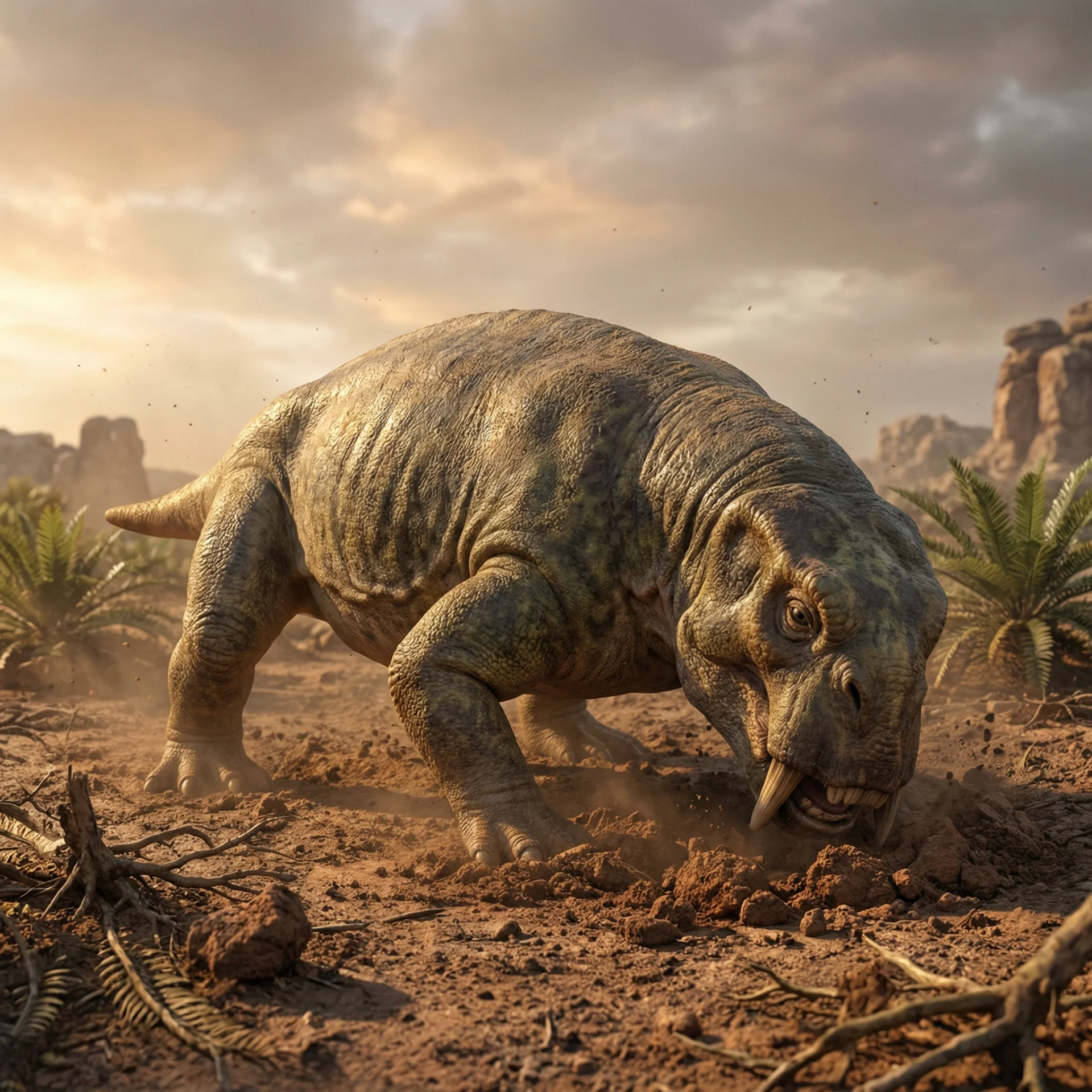
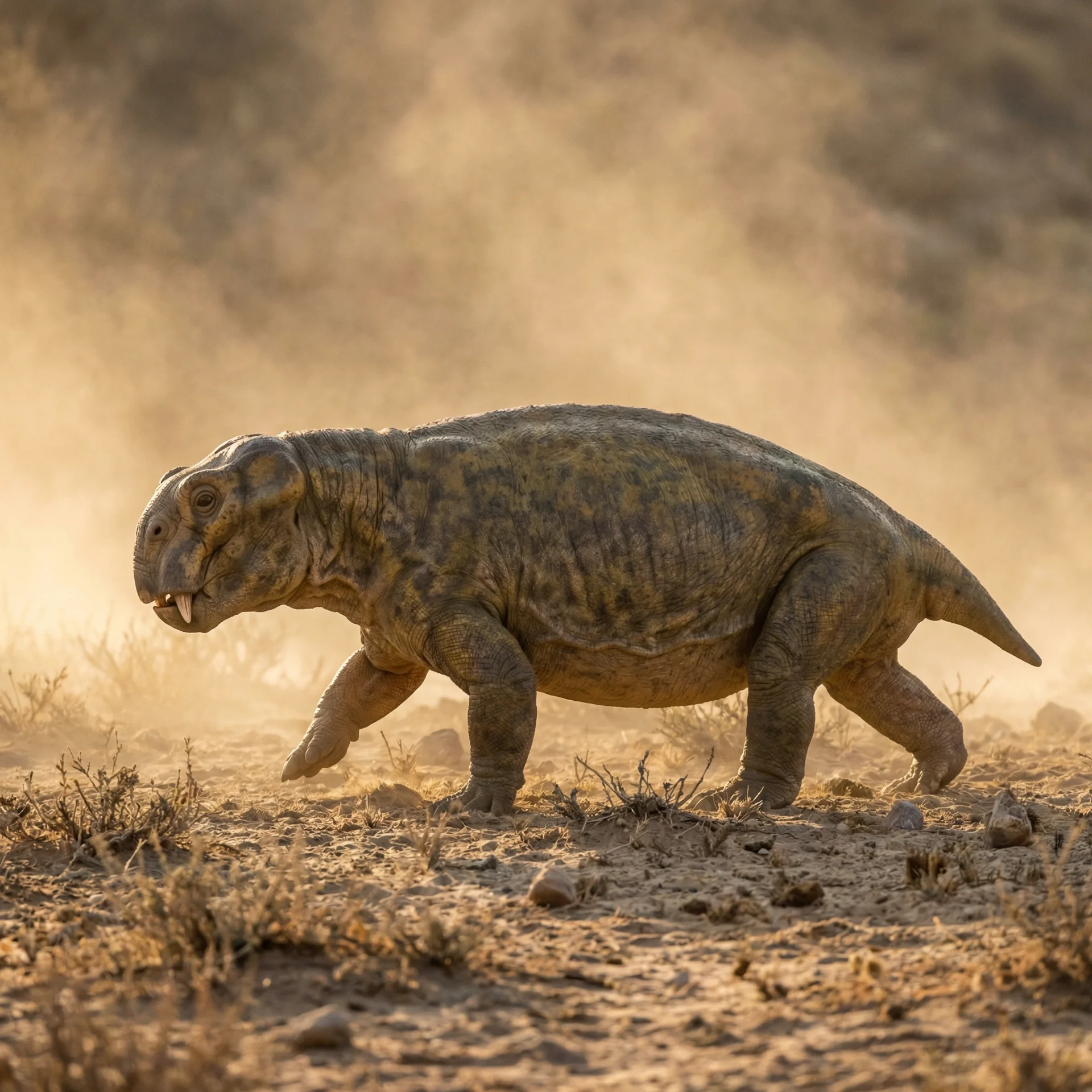
Skeletal features indicate a semi-sprawling gait. The strongly ossified lower rear corner of the scapula suggests that scapular movement contributed to forelimb stride length while reducing lateral body flexion. Five massive (but unfused) sacral vertebrae further reduced sideways flexing during walking (Surkov et al., 2005). A buttress above each acetabulum likely prevented femoral dislocation during the semi-sprawling gait. The forelimbs were much more robust than the hindlimbs, strongly suggesting that Lystrosaurus was a powerful burrower.
A 2022 study by Smith, Botha & Vigilietti on mummified specimens from the Early Triassic Karoo Basin revealed that Lystrosaurus had dimpled, leathery, and hairless skin. This preservation resulted from rapid desiccation during drought conditions and constitutes exceptionally rare direct evidence of integument in non-mammalian synapsids.
The combination of a horny beak, a horny secondary palate, and the fore-and-aft jaw shearing mechanism is consistent with an herbivorous diet. Tusk wear patterns suggest use in digging or rooting out vegetation (Britannica). Early Triassic Lystrosaurus likely fed on the dominant Dicroidium-like flora, while the larger Permian species L. maccaigi may have depended on the larger Glossopteris flora, which did not survive the end-Permian extinction — potentially contributing to L. maccaigi's demise (Botha & Smith, 2007).
In the Early Triassic, Lystrosaurus constituted approximately 90–95% of terrestrial vertebrates in the Karoo Basin — an unprecedented level of dominance by a single genus. Several hypotheses have been proposed to explain this phenomenon:
Hypothesis 1: Low-oxygen adaptation and burrowing lifestyle. Following the extinction, atmospheric oxygen may have declined while CO₂ increased. Lystrosaurus's barrel chest (potentially housing large lungs), short internal nostrils (facilitating rapid breathing), and tall neural spines (enhancing respiratory muscle leverage) may have been advantageous. However, the chest proportions were not significantly different from other dicynodonts, and tall neural spines may relate to posture rather than respiration (Botha & Smith, 2007).
Hypothesis 2: Semi-aquatic adaptation. A semi-aquatic lifestyle may have aided survival, though the far greater abundance of Lystrosaurus compared to contemporary temnospondyl amphibians undermines this as a sufficient explanation.
Hypothesis 3: Unspecialized generalist strategy. Larger, more specialized species are disproportionately vulnerable in mass extinctions. The relatively unspecialized L. curvatus survived while the larger, more specialized L. maccaigi perished alongside other large Permian herbivores and carnivores.
Hypothesis 4: Absence of predators. Only the therocephalian Moschorhinus (~1.5 m) and the archosauriform Proterosuchus were large enough to prey on Triassic Lystrosaurus species, and this scarcity of predators may have enabled a population explosion.
Hypothesis 5: Luck. As Benton (2006) noted, the survival of Lystrosaurus may simply have been a matter of fortune.
Whitney & Sidor (2020) analyzed growth marks in the dentine of Antarctic Lystrosaurus tusks and found evidence of torpor — a hibernation-like physiological state. This represents the oldest known evidence of torpor in a vertebrate, consistent with the fact that Antarctica during the Early Triassic lay largely within the Antarctic Circle and experienced prolonged winter darkness.
A comprehensive osteohistological study by Botha (2020) demonstrated that all four South African species exhibit rapidly forming fibrolamellar bone tissue during early to mid-ontogeny, indicating growth rates comparable to modern mammals and birds. Triassic species are estimated to have reached sexual maturity within 1–2 years (Botha-Brink et al., 2016). This 'live fast, breed young' strategy may have been critical for survival in the unstable post-extinction environment.
Lystrosaurus fossils have been found in South Africa (most abundantly), India, northwestern China, European Russia, Antarctica, and Mongolia. During the late Permian and Early Triassic, these regions were all part of the Pangaean supercontinent, with most localities situated in the mid- to high-latitude portions of southern Gondwana.
The 1969–1970 discovery of Lystrosaurus fossils by Edwin H. Colbert's expedition at Coalsack Bluff in the Fremouw Formation of the Transantarctic Mountains was a landmark event for the theory of plate tectonics (Colbert, 1974). Because the Antarctic specimens were conspecific with species previously known only from Africa, the find powerfully demonstrated that continents now separated by thousands of kilometers of ocean were once connected.
Lystrosaurus is classified within Synapsida → Therapsida → Anomodontia → Dicynodontia → Lystrosauridae. A cladistic analysis by Surkov et al. (2005), based on 27 taxa and 18 postcranial characters, placed Lystrosaurus in a derived position within Dicynodontia, though support for Lystrosauridae monophyly from postcranial characters alone was weak.
Kammerer et al. (2011), in their comprehensive taxonomic revision of Dicynodon, confirmed that Lystrosaurus and Kwazulusaurus form sister taxa within a monophyletic Lystrosauridae, nested within Dicynodontoidea.
The most recent study by Kammerer, Angielczyk & Fröbisch (2025) reported new lystrosaurid material from Permian strata in southern Africa and raised the possibility that the holotype of Kwazulusaurus shakai represents a juvenile Lystrosaurus, prompting an ongoing reassessment of the internal taxonomy of Lystrosauridae.
The Russian species L. georgi is considered most closely related to the African L. curvatus (Surkov et al., 2005), although its phylogenetic placement is unstable in some analyses. The validity and interrelationships of Chinese species (L. youngi, L. hedini, and others) remain debated (Angielczyk et al., 2022).
Popular accounts frequently state that Lystrosaurus constituted '95% of all land vertebrates,' but this figure is specifically derived from certain stratigraphic intervals within the Lystrosaurus Assemblage Zone of the Karoo Basin and cannot be universally applied to all global faunas. Additionally, some paleoart reconstructions depicted Lystrosaurus with mammal-like body hair prior to the 2022 discovery of hairless, leathery skin in mummified specimens — such depictions were speculative and unsupported by direct evidence.
| Taxon | Classification | Age | Size | Diet | Notes |
|---|---|---|---|---|---|
| Lystrosaurus | Dicynodontia, Lystrosauridae | Late Permian – Early Triassic | 0.6–2.5 m | Herbivore | Only dicynodont to survive P-T extinction |
| Kwazulusaurus shakai | Dicynodontia, Lystrosauridae | Late Permian | Similar to L. curvatus | Herbivore | Sister taxon to Lystrosaurus (2025 reinterpretation pending) |
| Diictodon | Dicynodontia, Pylaecephalidae | Middle–Late Permian | ~0.45 m | Herbivore | Permian burrowing dicynodont; did not survive P-T extinction |
| Moschorhinus kitchingi | Therocephalia | Late Permian – Early Triassic | ~1.5 m | Carnivore | P-T extinction survivor; exhibited dwarfism (Lilliput effect) |
| Thrinaxodon | Cynodontia | Early Triassic | ~0.5 m | Carnivore/omnivore | Burrowing cynodont coexisting with Lystrosaurus |
| Proterosuchus | Archosauriformes | Early Triassic | ~1.5–3 m | Carnivore | One of the few large predators in the Early Triassic |
Among Early Triassic terrestrial animals in the Karoo Basin, temnospondyl amphibians, primitive archosauriforms (Proterosuchus), and rare therocephalians and cynodonts co-occur with Lystrosaurus, but all are vastly outnumbered in the fossil record.
| Species | Permian (lower Palingkloof Mbr.) | P-T Boundary Interval | Triassic (upper Palingkloof Mbr.) | Katberg Formation |
|---|---|---|---|---|
| L. maccaigi | Present | Present | Rare (Botha et al., 2020) | Not recorded |
| L. curvatus | Present | Present | Rare | Not recorded |
| L. murrayi | Not recorded | Not recorded | Present | Present |
| L. declivis | Not recorded | Not recorded | Present | Present (through top of AZ) |
| Species | Estimated Body Length | Basal Skull Length | Temporal Range |
|---|---|---|---|
| L. maccaigi | Up to ~2.5 m | Up to ~31 cm | Late Permian – earliest Triassic |
| L. curvatus | ~0.6–1.5 m | Small to medium | Latest Permian – earliest Triassic |
| L. murrayi | ~0.9 m (average) | Small | Early Triassic |
| L. declivis | ~0.9 m (average) | Small | Early Triassic |
Lystrosaurus achieved the most extreme dominance by a single genus in the history of terrestrial vertebrate life: in the Early Triassic of South Africa, it accounted for roughly 90–95% of all land vertebrate fossils.
The 1969 discovery of Lystrosaurus fossils in Antarctica was one of the key pieces of evidence that helped confirm the theory of plate tectonics and continental drift.
The naming of Lystrosaurus is linked to the famous 19th-century 'Bone Wars' rivalry: paleontologist Othniel Charles Marsh ignored the fossil collector's letter, allowing his rival Edward Drinker Cope to describe and name the genus first.
In 2022, mummified Lystrosaurus specimens from the Karoo Basin revealed for the first time that the animal had dimpled, leathery, hairless skin — overturning speculative reconstructions showing mammal-like fur.
Growth marks in Antarctic Lystrosaurus tusks provide the oldest known evidence of a hibernation-like state (torpor) in any vertebrate, dating back approximately 250 million years (Whitney & Sidor, 2020).
Despite its name meaning 'shovel lizard,' Lystrosaurus was not a lizard or any kind of reptile in the modern sense — it belonged to Synapsida, the evolutionary lineage leading to mammals.
Over 23 species of Lystrosaurus were once named, but rigorous taxonomic revision reduced the number of valid South African species to just four.
Triassic Lystrosaurus species could reach sexual maturity in as little as 1–2 years, an extremely rapid growth-and-reproduction strategy that may have been key to surviving the unstable post-extinction world (Botha-Brink et al., 2016).
Lystrosaurus had only two teeth — a pair of large tusks (upper canines) — and relied entirely on a turtle-like horny beak and palate to process its plant food.
As the only dicynodont genus to survive the end-Permian extinction — the worst mass extinction in Earth's history — Lystrosaurus effectively ruled the land for millions of years until full ecosystem recovery took hold some 30 million years later.
No. Lystrosaurus was not a dinosaur but a dicynodont therapsid belonging to the Synapsida — the evolutionary lineage that eventually gave rise to mammals. Dinosaurs belong to a completely different lineage (Diapsida → Archosauria). Although Lystrosaurus superficially resembled a reptile, it is far more closely related to modern mammals than to any dinosaur.
The precise cause remains uncertain. Leading hypotheses include: (1) its burrowing lifestyle and possible adaptation to low-oxygen conditions; (2) being a generalist rather than a specialist, which reduced vulnerability to ecological collapse; (3) the near-total absence of predators in the post-extinction world; and (4) a rapid growth and early reproduction strategy. Benton (2006) has also suggested simple luck may have played a role. The answer is likely a combination of multiple factors.
Size varied considerably among species. The largest species, L. maccaigi, could reach up to approximately 2.5 m (8 ft) in length, while the most common Triassic species (L. murrayi and L. declivis) averaged about 0.9 m (3 ft) — roughly pig-sized. Estimated body mass ranged from about 50 to 200 kg depending on species.
Lystrosaurus was an herbivore. It used a turtle-like horny beak to shear vegetation and processed food on a horny secondary palate. Its pair of tusks was likely used for digging or rooting out vegetation. In the Early Triassic, it probably fed primarily on Dicroidium-type plants that dominated the post-extinction flora.
Lystrosaurus was a land animal, yet fossils of the same species have been found in South Africa, India, and Antarctica — continents now separated by thousands of kilometers of ocean. The 1969 discovery of Lystrosaurus in Antarctica's Transantarctic Mountains, belonging to a species previously known only from Africa, provided compelling evidence that these landmasses were once connected as part of the supercontinent Gondwana.
Four South African species are widely recognized: L. murrayi (type species), L. declivis, L. curvatus, and L. maccaigi. Additionally, L. georgi from Russia and L. youngi and L. hedini from China may be valid. At one point over 23 species were named, but most have been synonymized through taxonomic revisions.
A 2020 study by Whitney & Sidor found stress marks in the dentine growth layers of Antarctic Lystrosaurus tusks that are consistent with prolonged periods of torpor — a hibernation-like physiological state. This represents the oldest known evidence of torpor in any vertebrate, dating to approximately 250 million years ago. However, additional verification from more specimens is needed.
Mummified specimens from the Karoo Basin, described by Smith, Botha & Vigilietti in 2022, revealed that Lystrosaurus had dimpled, leathery, hairless skin. The mummification resulted from rapid desiccation during drought conditions. This is one of the few instances of direct skin preservation in a non-mammalian synapsid.
The semi-aquatic hypothesis has been debated since Broom first proposed it in 1902. Some bone histology studies interpreted high porosity in limb bones as consistent with aquatic adaptation (Jasinoski & Chinsamy-Turan, 2012), while others interpret the same feature as evidence of rapid growth (Botha, 2020). No definitive consensus has been reached.
The last occurrence of Lystrosaurus in the fossil record dates to the Early Triassic (Olenekian), approximately 248 million years ago. L. declivis has the latest record, ranging through to the top of the Lystrosaurus Assemblage Zone. As more diverse and stable ecosystems recovered during the later Triassic, Lystrosaurus's generalist niche was gradually overtaken by newly evolving faunas.
6images