Megatherium
Cenozoic Era Herbivore Creature Type
Megatherium americanum
Scientific Name: "Megatherium: from Greek mega (great) + therion (beast) = 'great beast'. americanum: Latin for 'of America'"
Local Name: Megatherium
Physical Characteristics
Discovery
Habitat

Megatherium americanum Cuvier, 1796 is an extinct giant ground sloth that inhabited South America from the Early Pliocene through the end of the Late Pleistocene (approximately 5 million to 12,000 years ago). It belongs to the order Pilosa, family Megatheriidae, and molecular phylogenetic analyses indicate that its closest living relatives are the three-toed sloths (Bradypus) (Delsuc et al., 2019). Megatherium was not a dinosaur but a Cenozoic mammal that thrived approximately 60 million years after the extinction of the non-avian dinosaurs. The genus name derives from Greek mega (great) and therion (beast), literally meaning 'great beast', while the species epithet americanum means 'of America' in Latin.
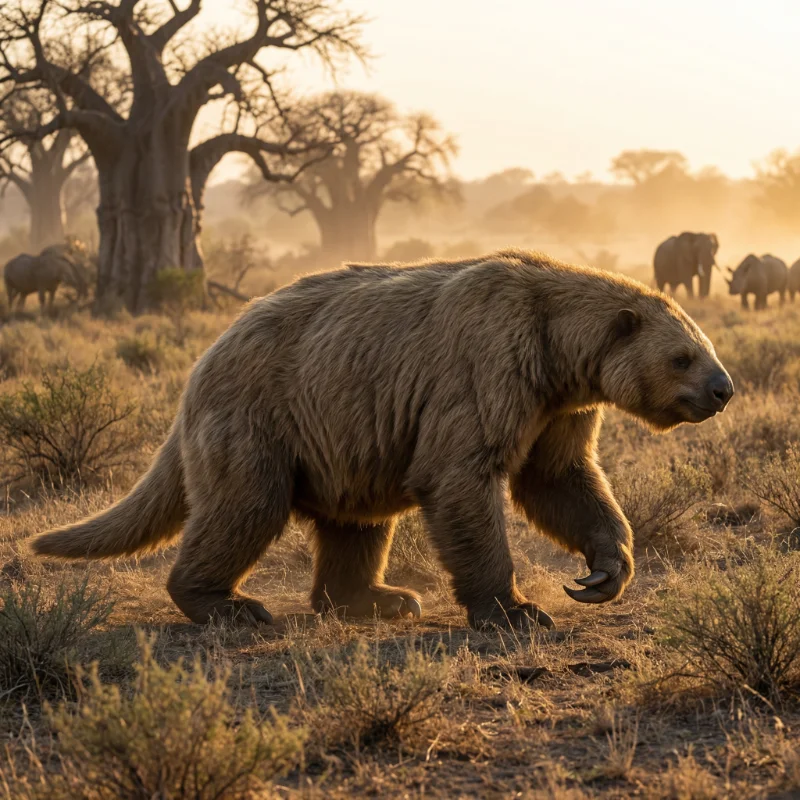
The type species M. americanum reached a total body length of approximately 6 m and a volumetric body mass estimate of approximately 3,700–4,000 kg, comparable to a modern Asian elephant (Brassey & Gardiner, 2015; Fariña et al., 2014). When rearing on its hind legs, it stood approximately 3.5 m at the shoulder and up to approximately 6 m to the top of the head, earning it the distinction of the largest bipedal mammal of all time (NHM, 2018). It possessed powerful forelimbs armed with enormous claws up to 30–40 cm in length, which were likely used to grasp branches and pull down vegetation for feeding.
The holotype specimen was discovered in 1787 (some sources cite 1788) on the banks of the Luján River in what is now northern Argentina by Manuel de Torres, a Dominican friar and naturalist. The skeleton was shipped to the Royal Cabinet of Natural History in Madrid (now the Museo Nacional de Ciencias Naturales, MNCN). In 1796, French paleontologist Georges Cuvier, working solely from engravings of the specimen prepared by Juan Bautista Bru and Manuel Navarro, correctly identified the animal as a giant sloth through comparative anatomy and named it Megatherium americanum—making it one of the first fossil mammals to receive both a genus and species name (Pimentel, 2021; Argot, 2008).
Overview
Name and Etymology
The genus name Megatherium is composed of Greek méga (μέγα, great) and theríon (θηρίον, beast), meaning 'great beast'. The species epithet americanum is Latin for 'of America', reflecting its South American origin. Georges Cuvier coined the name in 1796 based on engravings of the skeleton sent from Madrid. Remarkably, he never personally examined the specimen, instead relying entirely on the printed plates to conduct his comparative anatomical analysis (Pimentel, 2021). Through this method, he became the first person to determine that the remains belonged to a giant sloth related to the 'edentate' mammals (now recognized as members of the superorder Xenarthra).
Taxonomic Status and Synonymy
The genus Megatherium is currently divided into two subgenera (Pujos, 2006; De Iuliis et al., 2009). The subgenus Megatherium includes M. americanum (type species), M. altiplanicum, and M. gallardoi, while the subgenus Pseudomegatherium Kraglievich, 1931 includes M. tarijense, M. sundti, M. medinae, M. celendinense, and M. urbinai. Former synonyms include the genera Essonodontherium Ameghino, 1884, Orocanthus Ameghino, 1885, and Neoracanthus Ameghino, 1889. Species-level taxonomy remains debated: some authors consider M. gallardoi a synonym of M. americanum (Brandoni et al., 2008), while others have recently argued that M. filholi may be a valid species (Agnolin et al., 2018).
Scientific Significance
Megatherium holds a symbolic place in the history of paleontology as one of the first fossil mammals to receive a formal scientific name. Cuvier's 1796 description demonstrated that comparative anatomy could identify extinct organisms—a groundbreaking achievement for the nascent field. Additionally, specimens collected by Charles Darwin during the Voyage of the Beagle in the 1830s (now reassigned to M. americanum) are believed to have provided important inspiration for Darwin's development of evolutionary theory.
Age, Stratigraphy, and Depositional Environment
Temporal Range
The fossil record of the genus Megatherium spans from the Early Pliocene (approximately 5–3.8 Ma) to the end of the Late Pleistocene (approximately 12,000 years ago). The oldest species, M. altiplanicum, is known from the Umala Formation of the Bolivian Altiplano in Montehermosan/Chapadmalalan-aged deposits, dated to approximately 5–3 Ma (Saint-André & de Iuliis, 2001; Chimento et al., 2021). The type species M. americanum first appears in the fossil record during the latter half of the Middle Pleistocene (from approximately 400,000 years ago) (Prado et al., 2021) and went extinct at the end of the Late Pleistocene (approximately 12,000 years ago). Purported early Holocene dates for M. americanum have been questioned due to likely humic acid contamination of collagen used for radiocarbon dating (Politis et al., 2019).
Formations and Lithology
M. americanum is primarily known from the Pampean sedimentary deposits of Buenos Aires Province, Argentina. Key formations and their characteristics are summarized below:
| Formation | Region | Age | Primary Lithology | Depositional Environment |
|---|---|---|---|---|
| Luján Fm. (Guerrero Mbr.) | Buenos Aires, Argentina | Late Pleistocene (Lujanian) | Siltstone, sandstone | Fluvial floodplain |
| Buenos Aires Fm. | Buenos Aires, Argentina | Middle Pleistocene (Bonaerian) | Loessic silt | Terrestrial (aeolian) |
| Vorohué Fm. | Chapadmalal, Buenos Aires | Pliocene–Early Pleistocene | Tuffaceous siltstone | Terrestrial |
| Sopas Fm. | Uruguay | Late Pleistocene (Lujanian) | Not reported | Fluvial floodplain (meandering) |
| Tarija Fm. | Tarija, Bolivia | Early–Late Pleistocene | Siltstone, sandstone (conglomeratic) | Fluvial |
| Umala Fm. | Altiplano, Bolivia | Pliocene (Montehermosan) | Sandstone (calcareous) | Large lacustrine |
The Pampean deposits are dominated by loessic silt and mudstone, interbedded with fluvial and lacustrine sediments. PBDB records classify Megatherium occurrences under depositional environments including 'terrestrial indet.', 'fluvial indet.', and 'mire/swamp'.
Paleoenvironment
The Pampas region where M. americanum predominantly occurred was characterized by temperate to semi-arid conditions during the Late Pleistocene, considerably drier than the present day, with a steppe-like environment dominated by grass with patches of woodland and scrubland (McDonald, 2023). During the Last Glacial Period, these open habitats supported Megatherium as a selective browser feeding on the foliage, twigs, and fruits of shrubs and trees.
Specimens and Diagnostic Features
Holotype and Key Specimens
The holotype of M. americanum is the near-complete skeleton discovered in 1787 on the banks of the Luján River, Argentina, by Manuel de Torres. It was shipped to Spain and is currently on display at the Museo Nacional de Ciencias Naturales (MNCN) in Madrid, still mounted in the original configuration prepared by Juan Bautista Bru in 1796—making it one of the oldest paleontological mounts in the world. Other key specimens include MLP 2-64 (skull and mandible, Museo de La Plata, used in Bargo's 2001 study), the skull fragments collected by Charles Darwin during the Voyage of the Beagle (RCSHM/CO 3443 and ENGH: 88202309, Natural History Museum, London), and MNHN F PAM 276 (skull, Muséum national d'histoire naturelle, Paris, used in inner ear studies).
Diagnostic Characters
Key diagnostic features of the genus Megatherium include (Pujos, 2006; De Iuliis et al., 2009): a deep mandible accommodating very long hypselodont (ever-growing) teeth; a dental formula of 5/4 (5 upper, 4 lower teeth in each jaw quadrant); enamel-less teeth with sharp crests separated by V-shaped valleys forming a self-sharpening mechanism; strongly developed ascending and descending processes of the jugal bone. M. americanum and M. altiplanicum are distinguished from species of the subgenus Pseudomegatherium by the fusion of the maxilla and premaxilla, while Pseudomegatherium species are distinguished by their flattened occipital condyles.
Limitations of the Fossil Record
Although M. americanum is represented by numerous relatively complete skeletons from the Pampas—providing a thorough understanding of its osteology—no direct evidence of soft tissue (skin, fur) has been reported for this species. Consequently, reconstructions of its external appearance (presence, absence, or thickness of fur) rely on phylogenetic inference from related taxa and thermodynamic modeling.
Morphology and Functional Anatomy
Body Size and Proportions
Adult M. americanum reached a total body length of approximately 6 m (Naish, 2005). Volumetric body mass estimates place a fully grown individual at approximately 3,700–4,000 kg (Brassey & Gardiner, 2015). Earlier estimates by Fariña et al. (1998) suggested approximately 3,950 kg, while some estimates for particularly large individuals have reached up to approximately 6,000 kg. When rearing on its hind legs, shoulder height reached approximately 3.5 m. Species of the subgenus Pseudomegatherium were substantially smaller: M. sundti had an estimated body mass of only approximately 1,253 kg, and the Pliocene M. altiplanicum is estimated at 977–1,465 kg (Saint-André & de Iuliis, 2001).
Skull and Dentition
The skull is relatively small compared to body size and roughly cylindrical in shape, with a narrow cranial region (Casinos, 1996). The cranial cavity (and thus brain) is small relative to skull size, with extensive sinus spaces (Boscaini et al., 2023). The ossified nasal septum and relatively narrow snout are consistent with a thick prehensile upper lip, functionally analogous to that of the living black rhinoceros, which compensated for the absence of front teeth (Bargo et al., 2006). Analysis of the hyoid bones indicates that the tongue had limited ability to protrude, refuting the historically popular depiction of Megatherium feeding with a long prehensile tongue (Perez et al., 2010). The teeth lack enamel and are hypselodont (ever-growing), with sharp crests separated by V-shaped valleys that interlock with opposing teeth to create a self-sharpening cutting mechanism analogous to rodent incisors (Green & Kalthoff, 2015). The skull and jaws show adaptations for powerful vertical biting (Bargo, 2001).
Limbs and Feet
The forelimb bones are relatively slender but possessed powerful extension capability. Three central fingers bore massive claws, and the humerus features well-developed muscle attachment crests. Like other xenarthrans but unlike most mammals, Megatherium possesses clavicles (collarbones) that support the forelimb, with the clavicle fused to the acromion of the scapula (Chichkoyan et al., 2022). The femur is massive and roughly rectangular. In M. americanum, the tibia and fibula are fused at both the proximal and distal ends (Bonini & Brandoni, 2015). The foot is highly modified: digits I and II are lost, the metapodials of the outer digits are enlarged and robust, and the calcaneum (heel bone) is wide and elongated posteriorly. The foot was inwardly rotated, with weight primarily borne on the outer digits and calcaneum—a pedolateral stance (Toledo et al., 2018).
Locomotion
Analysis of the inner ear (vestibular system) reveals that Megatherium's semicircular canals are more similar to those of armadillos than to living tree sloths, suggesting significantly greater agility compared to modern sloths, which move at only 0.5–0.6 km/h (Boscaini et al., 2013). Calculations based on the stride length of fossil trackways attributed to Megatherium have estimated a walking speed of approximately 3–8 km/h, although the validity of deriving precise speed estimates from fossil trackways has been questioned.
Diet and Ecology
Diet (Evidence-Based)
Dental morphology: Bargo's (2001) analysis of skull shape and bite mechanics in M. americanum concluded that the tooth crests were optimized for shearing plant material, indicating a diet of moderate to soft vegetation rather than hard, fibrous foods.
Isotopic evidence: Bocherens et al. (2017) performed stable carbon and nitrogen isotope analysis of bone collagen from M. americanum, confirming an exclusively herbivorous diet dominated by C3 plants. This effectively refuted the earlier hypothesis by Fariña & Blanco (1996) that Megatherium may have been an omnivore or opportunistic scavenger.
Coprolite evidence: Analysis of fossilized dung attributed to Megatherium has identified plant remains including Fabiana, Ephedra breana, beebrush, Junellia, and Chuquiraga—all scrubland taxa consistent with a browsing diet.
In summary, M. americanum was a selective browser that fed on the foliage, twigs, and fruits of shrubs and trees in open environments. Isotopic data also suggest that some individuals consumed grass (C4 plants) at certain times and places.
Ecological Role and Behavior
Megatherium was primarily quadrupedal but could rear up on its hind legs, bracing itself against tree trunks with its forelimbs to feed on high-growing vegetation. Paleopathological analysis of clavicular injuries suggests that this bipedal-feeding posture was habitual (Chichkoyan et al., 2022). Fariña & Blanco (1996) proposed that the forelimb anatomy permitted rapid, powerful arm extension, potentially making the claws effective stabbing weapons for defense against predators.
Metabolic rate remains debated. Nutrient foramen analysis of the femoral diaphysis suggests a metabolism more similar to elephants than to living tree sloths, while tooth isotope analysis has been argued to indicate a body temperature of approximately 30–32°C—comparable to living sloths and implying a lower metabolic rate. The question of integument (fur) is similarly unresolved: thermodynamic modeling suggests a dense fur coat approximately 3 cm thick to tolerate the cool environments M. americanum inhabited, while some authors argue it was relatively hairless like modern elephants due to surface-area-to-volume constraints on heat dissipation.
Megatherium is thought to have had a slow life cycle consistent with K-selection strategy, likely giving birth to a single large offspring at a time.
Associated Fauna
In the Pampas, M. americanum coexisted with a diverse megafauna assemblage including: the large ground sloth Lestodon, medium-to-large ground sloths Mylodon, Glossotherium, and Scelidotherium; glyptodonts (giant armored xenarthrans) Glyptodon, Doedicurus, and Panochthus; the South American native ungulates Macrauchenia (camel-like) and Toxodon (rhinoceros-like); the gomphothere Notiomastodon (elephant relative); equines Hippidion and Equus neogeus; the giant short-faced bear Arctotherium; and the sabertooth cat Smilodon (McDonald, 2023).
Distribution and Paleogeography
Geographic Range
Fossils of M. americanum are known primarily from low-elevation areas east of the Andes: the Pampas of Buenos Aires Province (the core of its range), extending north to the Chaco, Corrientes, and Formosa provinces of Argentina, as well as Uruguay, Paraguay, southern Bolivia, and southern Brazil (Rio Grande do Sul). To the south, it ranged into northernmost Patagonia. Records from Peru's Cusco Valley are also documented (PBDB). Species of the subgenus Pseudomegatherium are distributed in the Andean highlands of Bolivia, Peru, and Chile, demonstrating clear geographic differentiation within the genus.
Paleogeographic Context
PBDB records for M. americanum concentrate in Buenos Aires Province, Argentina (approximately latitude -34° to -38°, longitude -58° to -62°), with the representative coordinates for this database entry set at the Luján River basin (approximately -36.78°, -59.87°). The distribution of M. americanum overlaps minimally with its similarly-sized tropical congener Eremotherium, with co-occurrence confidently reported only from a few localities in southern Brazil. Whether they were truly contemporaneous at these sites remains unclear.
Phylogeny and Taxonomic Debates
Molecular Phylogenetics
Mitochondrial DNA analysis by Delsuc et al. (2019) placed Megatheriidae as the closest fossil relatives of the living three-toed sloths (Bradypus). This finding implies that the two-toed sloths (Choloepus) are more closely related to Mylodontidae, meaning that arboreal habits evolved independently at least twice in sloth evolution.
Morphological Phylogenetics
In Pujos's (2006) morphology-based cladistic analysis, Megatherium is recovered as the sister taxon of Eremotherium, together forming the crown group of Megatheriinae. The subfamily Megatheriinae first appeared in the Middle Miocene (at least 12 Ma) of Patagonia, represented by Megathericulus (Brandoni et al., 2018). Megatheriidae is estimated to have diverged from other sloth families during the Oligocene, approximately 30 Ma (Delsuc et al., 2019).
Intrageneric Relationships
Within the genus, M. altiplanicum is phylogenetically closer to M. americanum than to species of Pseudomegatherium (Pujos, 2006). Ongoing debates include the synonymy of M. gallardoi with M. americanum (Brandoni et al., 2008 vs. Chimento et al., 2021), and the validity of M. filholi as a distinct species (Agnolin et al., 2018).
Extinction and Relationship with Humans
Megatherium went extinct approximately 12,000 years ago as part of the end-Pleistocene extinction event, which eliminated more than 80% of large mammalian species in South America. The timing of extinction coincides with the arrival of humans in the Americas and specifically with the proliferation of Fishtail projectile points across the Pampas region (Politis et al., 2019).
Campo Laborde, in the Pampas of Argentina, is the only confirmed giant ground sloth kill and butchery site in the Americas. Here, a single M. americanum individual was slaughtered and butchered at the edge of a swamp approximately 12,600 cal yr BP (Politis et al., 2019). Stone tools, including a projectile point fragment, were found in association with the bones. Additional evidence of human interaction includes cut marks on an ulna and an atlas vertebra from separate collections. At Arroyo Seco 2 near Tres Arroyos, M. americanum bones were found associated with human artifacts dated to approximately 14,782–11,142 cal yr BP.
Bioclimatic envelope modeling indicates that suitable habitat for Megatherium shrank and fragmented by the mid-Holocene. While this alone would not have caused extinction, climate change in combination with human hunting pressure is the most widely accepted explanation for the disappearance of M. americanum and its contemporaries.
Reconstruction and Uncertainties
Established Facts
The following are supported by multiple independent lines of evidence (anatomy, isotopes, archaeology): Megatherium was a herbivorous giant ground sloth; it could adopt a bipedal stance to feed from trees; it inhabited primarily temperate to semi-arid open environments; and it was hunted by early humans.
Well-Supported Hypotheses
The presence of a black rhinoceros–like prehensile upper lip (Bargo et al., 2006), self-sharpening teeth for cutting plant material (Green & Kalthoff, 2015), and a walking speed of approximately 3–8 km/h (based on inner ear anatomy and trackways) are well-supported hypotheses.
Unresolved Questions
Metabolic rate (low xenarthran-like vs. normal large-mammal), integument (dense fur coat vs. largely hairless), whether it could locomote bipedally (not just stand), and the use of claws as offensive stabbing weapons remain unresolved. These questions continue to be active areas of research.
Common Misconceptions
Megatherium is frequently mistaken for a dinosaur; in fact, it was a Cenozoic mammal that lived approximately 60 million years after the end-Cretaceous mass extinction. Additionally, the historically popular depiction of Megatherium feeding with a long prehensile tongue has been refuted by hyoid bone analysis, which shows limited tongue protrusion ability.
Comparative Table: Megatherium and Related Taxa
| Taxon | Age | Distribution | Estimated Mass | Diet | Notes |
|---|---|---|---|---|---|
| Megatherium americanum | Middle–Late Pleistocene | Pampas, eastern lowland South America | 3,700–4,000 kg | Herbivore (browser) | Megatheriidae; temperate habitats |
| Eremotherium laurillardi | Pleistocene | Tropical South America, Central America, southern North America | 3,000–5,000+ kg | Herbivore | Megatheriidae; tropical counterpart |
| Lestodon armatus | Late Pleistocene | Pampas, Uruguay | ~3,400 kg | Herbivore (mixed feeder) | Mylodontoidea; third-largest ground sloth |
| Mylodon darwinii | Late Pleistocene | Patagonia | 1,000–2,000 kg | Possible omnivore | Mylodontidae; Darwin's collection |
| M. altiplanicum | Pliocene | Bolivian Altiplano | 977–1,465 kg | Herbivore (inferred) | Oldest and smallest Megatherium species |
Fun Facts
FAQ
📚References
- Cuvier, G. (1796). Notice sur le squelette d'une très grande espèce de quadrupède inconnue jusqu'à présent, trouvé au Paraguay, et déposé au cabinet d'histoire naturelle de Madrid. Magasin Encyclopédique, 1: 303–310.
- Pimentel, J. (2021). Megatherium. In: Pimentel, J. & Thurner, M. (eds.), New World Objects of Knowledge, University of London Press, pp. 231–236. ISBN 978-1-908857-82-8.
- Argot, C. (2008). Changing Views in Paleontology: The Story of a Giant (Megatherium, Xenarthra). In: Sargis, E.J. & Dagosto, M. (eds.), Mammalian Evolutionary Morphology, Springer, pp. 37–50. doi:10.1007/978-1-4020-6997-0_3.
- Bargo, M.S. (2001). The ground sloth Megatherium americanum: Skull shape, bite forces, and diet. Acta Palaeontologica Polonica, 46(2): 173–192.
- Bargo, M.S., Toledo, N. & Vizcaíno, S.F. (2006). Muzzle of South American Pleistocene ground sloths (Xenarthra, Tardigrada). Journal of Morphology, 267(2): 248–263. doi:10.1002/jmor.10399.
- Pujos, F. (2006). Megatherium celendinense sp. nov. from the Pleistocene of the Peruvian Andes and the phylogenetic relationships of Megatheriines. Palaeontology, 49(2): 285–306. doi:10.1111/j.1475-4983.2006.00522.x.
- De Iuliis, G., Pujos, F. & Tito, G. (2009). Systematic and taxonomic revision of the Pleistocene ground sloth Megatherium (Pseudomegatherium) tarijense (Xenarthra: Megatheriidae). Journal of Vertebrate Paleontology, 29(4): 1244–1251. doi:10.1671/039.029.0426.
- Saint-André, P.-A. & de Iuliis, G. (2001). The smallest and most ancient representative of the genus Megatherium Cuvier, 1796 (Xenarthra, Tardigrada, Megatheriidae), from the Pliocene of the Bolivian Altiplano. Geodiversitas, 23(4): 625–645.
- Delsuc, F., Kuch, M., Gibb, G.C. et al. (2019). Ancient Mitogenomes Reveal the Evolutionary History and Biogeography of Sloths. Current Biology, 29(12): 2031–2042.e6. doi:10.1016/j.cub.2019.05.043.
- Bocherens, H., Cotte, M., Bonini, R.A. et al. (2017). Isotopic insight on paleodiet of extinct Pleistocene megafaunal Xenarthrans from Argentina. Gondwana Research, 48: 7–14. doi:10.1016/j.gr.2017.04.003.
- Fariña, R.A. & Blanco, R.E. (1996). Megatherium, the stabber. Proceedings of the Royal Society of London B, 263(1377): 1725–1729. doi:10.1098/rspb.1996.0252.
- Brassey, C.A. & Gardiner, J.D. (2015). An advanced shape-fitting algorithm applied to quadrupedal mammals: improving volumetric mass estimates. Royal Society Open Science, 2(8): 150302. doi:10.1098/rsos.150302.
- Politis, G.G., Messineo, P.G., Stafford, T.W. & Lindsey, E.L. (2019). Campo Laborde: A Late Pleistocene giant ground sloth kill and butchering site in the Pampas. Science Advances, 5(3): eaau4546. doi:10.1126/sciadv.aau4546.
- McDonald, H.G. (2023). A Tale of Two Continents (and a Few Islands): Ecology and Distribution of Late Pleistocene Sloths. Land, 12(6): 1192. doi:10.3390/land12061192.
- Chimento, N.R., Agnolin, F.L., Brandoni, D. et al. (2021). A new record of Megatherium (Folivora, Megatheriidae) in the late Pliocene of the Pampean region (Argentina). Journal of South American Earth Sciences, 107: 102950. doi:10.1016/j.jsames.2020.102950.
- Prado, J.L., Alberdi, M.T. & Bellinzoni, J. (2021). Pleistocene Mammals from Pampean Region (Argentina). Biostratigraphic, Biogeographic, and Environmental Implications. Quaternary, 4(2): 15. doi:10.3390/quat4020015.
- Owen, R. (1851–1861). On the Megatherium (Megatherium americanum). Parts I–V. Philosophical Transactions of the Royal Society of London, vols. 141–149; Memoir on the Megatherium (1861), Williams and Norgate, London.
- Green, J.L. & Kalthoff, D.C. (2015). Xenarthran dental microstructure and dental microwear analyses, with new data for Megatherium americanum (Megatheriidae). Journal of Mammalogy, 96(4): 645–657. doi:10.1093/jmammal/gyv045.
- Chichkoyan, K.V., Villa, C., Winkler, V. et al. (2022). Paleopathologies of the Clavicles of the Giant Ground Sloth Megatherium americanum (Mammalia, Xenarthra) from the Pleistocene of the Pampean Region (Argentina). Ameghiniana, 59(6). doi:10.5710/AMGH.15.10.2022.3509.
- Toledo, N., De Iuliis, G., Vizcaíno, S.F. & Bargo, M.S. (2018). The Concept of a Pedolateral Pes Revisited: The Giant Sloths Megatherium and Eremotherium (Xenarthra, Folivora, Megatheriinae) as a Case Study. Journal of Mammalian Evolution, 25(4): 525–537. doi:10.1007/s10914-017-9410-0.
Gallery
2 images Megatherium
Megatherium · Cenozoic Era · Herbivore
 Megatherium
Megatherium · Cenozoic Era · Herbivore
🔗Related Creatures
Woolly Mammoth
Mammuthus primigenius
Deinotherium
Deinotherium giganteum
Smilodon
Smilodon
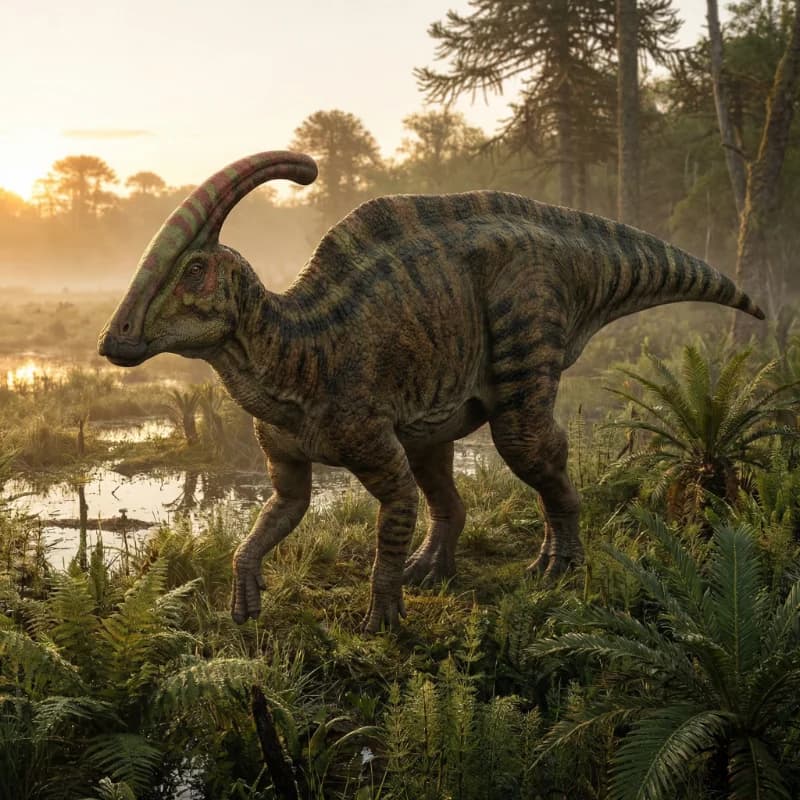
Parasaurolophus
Parasaurolophus walkeri

Iguanodon
Iguanodon bernissartensis
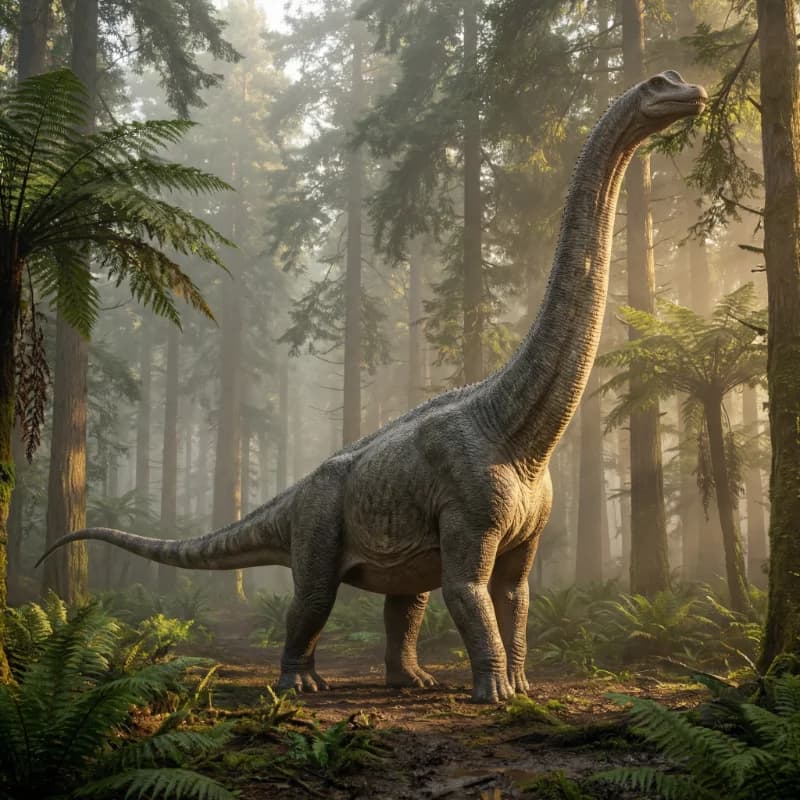
Vulcanodon
Vulcanodon karibaensis
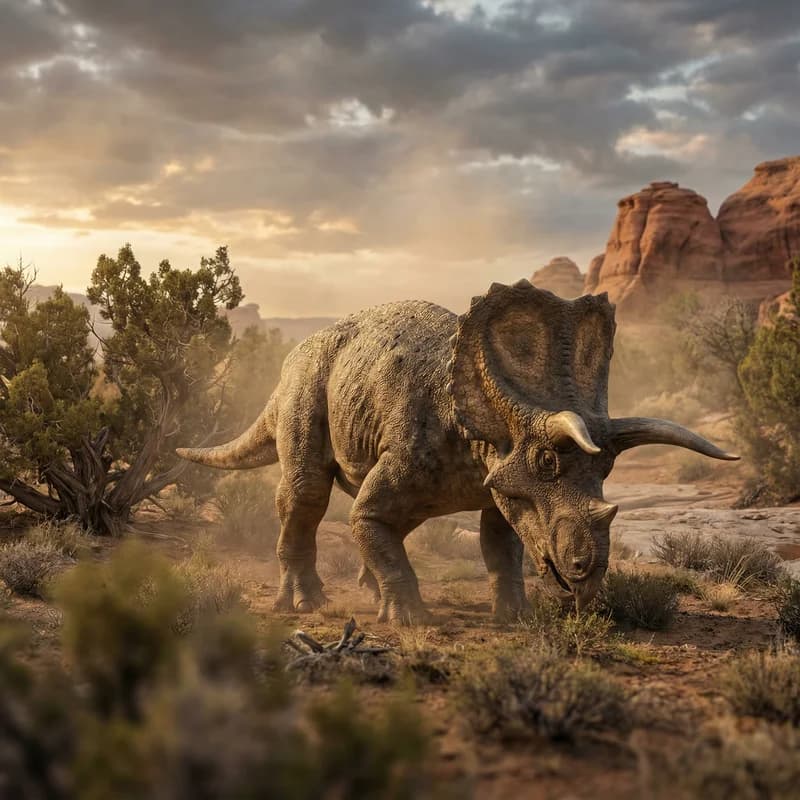
Utahceratops
Utahceratops gettyi

Apatosaurus
Apatosaurus