Nile Crocodile
Carnivore Creature Type
Crocodylus niloticus
Scientific Name: "From Greek κρόκη (krokē, 'pebble') and δρῖλος (drilos, 'worm'), referring to the rough, pebbly skin texture; the specific epithet niloticus is Latin for 'of the Nile'"
Physical Characteristics
Discovery
Habitat
보전·개체·수명

The Nile crocodile (Crocodylus niloticus Laurenti, 1768) is a large crocodilian belonging to the family Crocodylidae and the genus Crocodylus. It is the largest crocodile in Africa and the second-largest living reptile in the world, surpassed only by the saltwater crocodile (Crocodylus porosus). Widely distributed across freshwater habitats in 26 countries of sub-Saharan Africa, as well as Madagascar's western coast, the Nile crocodile inhabits rivers, lakes, wetlands, mangrove swamps, and occasionally brackish and marine environments. Adult males typically measure 3.5–5.0 m in total length and weigh 225–750 kg, while the largest verified individual — shot near Mwanza, Tanzania — measured 6.45 m and weighed approximately 1,043–1,089 kg (Cott, 1961).
This species possesses one of the most powerful bite forces ever recorded in a living animal, with a field measurement by Dr. Brady Barr yielding approximately 22 kN (5,000 lbf). As an ambush predator, the Nile crocodile waits motionless at the water's edge for hours or even days before launching an explosive attack on prey approaching the shoreline, including large mammals such as wildebeest, zebra, and buffalo. The IUCN Red List classifies it as Least Concern (LC) based on a 2017 assessment (Isberg et al., 2019), with an estimated global wild population of 250,000–500,000 individuals (50,000–70,000 mature individuals).
The Nile crocodile has a deep entanglement with human history: in ancient Egypt, it was venerated as a manifestation of the god Sobek, symbolizing fertility, power, and royal authority, and thousands of crocodile mummies have been discovered in temples and tombs. Yet in modern Africa, it remains one of the most dangerous large animals to humans, with an estimated 275–745 attacks per year, approximately 63% of which are fatal (Sideleau & Britton, 2012). After severe population declines caused by mid-20th-century hide hunting, CITES regulations and sustainable-use programs have enabled recovery across most of its range.
1. Overview
The genus name Crocodylus derives from the Greek words 'κρόκη' (krokē, 'pebble') and 'δρῖλος' (drilos, 'worm'), referring to the rough, pebbly texture of the skin. The specific epithet niloticus is Latin for 'of the Nile,' reflecting the species' early association with the Nile River basin. The English common name, 'Nile crocodile,' is a direct translation of the Latin binomial.
The Nile crocodile was formally described in 1768 by the Austrian naturalist Josephus Nicolaus Laurenti. For over two centuries, all large crocodiles across Africa were treated as a single species. However, a landmark 2011 molecular study by Hekkala et al. — which included DNA extracted from ancient Egyptian crocodile mummies — revealed that the traditional "Nile crocodile" actually comprised two genetically distinct species. The populations of western and central Africa were separated as Crocodylus suchus (the West African or desert crocodile), while C. niloticus sensu stricto was restricted to eastern, southern, and Nile Basin populations. The IUCN adopted this split in its 2017 assessment, though C. suchus has not yet received a separate Red List evaluation. The holotype of C. niloticus is lost (Fuchs et al., 1974), and the restricted type locality is Egypt.
Africa's largest crocodile and the apex freshwater predator of the continent, renowned for its extreme bite force, elaborate parental care, and deep cultural significance spanning from ancient Egyptian religion to modern conservation economics.
2. Taxonomy and Phylogenetics
| Rank | Taxon |
|---|---|
| Kingdom | Animalia |
| Phylum | Chordata |
| Class | Reptilia |
| Order | Crocodilia |
| Family | Crocodylidae |
| Genus | Crocodylus |
| Species | C. niloticus |
Hekkala et al. (2011) analyzed both mitochondrial and nuclear markers, demonstrating that C. niloticus sensu stricto is more closely related to New World crocodile species — including the American crocodile (C. acutus), Cuban crocodile (C. rhombifer), Morelet's crocodile (C. moreletii), and Orinoco crocodile (C. intermedius) — than it is to the sympatric C. suchus. This finding supports a trans-Atlantic dispersal scenario for the genus Crocodylus.
In 2020, Delfino et al. re-described the Late Miocene fossil Crocodylus checchiai from Libya using CT imaging, confirming its position near the common ancestor of the Nile crocodile and New World species, and further supporting an African origin for the genus followed by oceanic dispersal to the Americas. Hekkala et al. (2021) conducted paleogenomic analyses on the extinct Malagasy crocodylian Voay robustus, further clarifying deep relationships within Crocodylia.
Up to seven subspecies have been proposed historically based on morphological variation (C. n. africanus, C. n. chamses, C. n. cowiei, C. n. madagascariensis, C. n. niloticus, C. n. pauciscutatus), but none are currently recognized as valid (Fergusson, 2010). After the separation of C. suchus, research into genetic structure among remaining C. niloticus populations is ongoing. Karsten et al. (2019) documented significant genetic differentiation among five South African regional populations (Lower Zambezi, Okavango, Limpopo, Mpumalanga, and Kruger), with implications for conservation management units.
The Lake Turkana (Kenya) population is notable for having more ventral osteoderms than other populations, rendering its hides less commercially valuable. This paradoxically reduced hunting pressure and allowed an exceptionally large population to persist through the 20th century.
The most significant taxonomic revision was Hekkala et al. (2011). Their analysis of mummy DNA revealed that ancient Egyptians may have distinguished the two species: the docile C. suchus lineage was preferentially kept and worshipped in temples at Fayum, while the more aggressive C. niloticus was documented along the lower Nile. Earlier molecular evidence for species-level divergence had been reported by Schmitz et al. (2003) based on shorter sequence data.
3. Morphology and Anatomy
Adult Nile crocodiles are dark bronze to olive-green dorsally, with yellowish-green flanks bearing irregular dark spots. The ventral surface is dull yellowish. Juveniles are grey, multicolored, or brown, with distinct dark transverse bands on the tail and body that fade with age. The eyes are green, positioned on top of the head to allow observation above the waterline while the body is submerged. A nictitating membrane protects the eyes underwater, and a tapetum lucidum enhances nocturnal vision.
Size is strongly sexually dimorphic, with males up to approximately 30% larger than females.
| Category | Average Total Length | Maximum Total Length | Average Weight | Maximum Weight |
|---|---|---|---|---|
| Adult males | 3.5–4.5 m | 6.45 m | 225–500 kg | ~1,089 kg |
| Adult females | 2.5–3.0 m | ~3.8 m | 70–150 kg | ~250 kg |
| Subadults (2–5 yr) | 1.0–2.0 m | — | 15–70 kg | — |
| Hatchlings | 0.25–0.30 m | — | ~0.07 kg | — |
The largest reliably measured specimen was a male killed near Mwanza, Tanzania, at 6.45 m total length and an estimated 1,043–1,089 kg. The largest skull on record, from Lake Chamo, Ethiopia, measured approximately 68.6 cm in cranial length and 87 cm in mandibular length, corresponding to an estimated total length of 5.4–5.6 m. Breeding-age individuals from Uganda and Zambia averaged 3.16 m and 137.5 kg (Cott, 1961), while a large Lake Turkana sample averaged 3.66 m and 201.6 kg (Graham, 1968).
The dorsal surface is covered with rows of ossified osteoderms providing formidable armor. The ventral surface has fewer osteoderms, making it commercially valuable for leather goods. Integumentary sensory organs (ISOs) are distributed across the skin, particularly on the snout, and are believed to detect waterborne pressure changes for prey localization.
The snout is of moderate width, approximately 1.6–2.0 times as long as the preorbital width. The mouth contains 64–68 conical teeth: 5 premaxillary, 13–14 maxillary, and 14–15 dentary teeth per side. The enlarged 4th mandibular tooth is visible when the jaws are closed, a diagnostic feature of Crocodylidae (as distinct from Alligatoridae). Teeth are replaced continuously throughout life, with an estimated 3,000+ teeth replaced over a lifetime.
Dr. Brady Barr's field measurements recorded a Nile crocodile bite force of approximately 22 kN (5,000 lbf), among the most powerful ever documented for a living animal. Erickson et al. (2012), in controlled laboratory conditions, recorded 16,460 N (3,700 psi) from a 4.59 m saltwater crocodile and comparable body-size-adjusted values for Nile crocodiles, confirming that bite force scales allometrically with body size across crocodilian species. While the absolute record depends on the size of the individual measured, both species rank at the top of all living animals. Notably, the jaw-opening muscles are extremely weak, and a human hand or a strip of duct tape can hold the mouth shut.
Vision is enhanced by a tapetum lucidum for low-light conditions, with probable dichromatic color vision. Hearing is acute even underwater, with an estimated range of 20 Hz to 4 kHz. Lingual salt glands allow tolerance of brackish and occasionally marine environments.
The Nile crocodile possesses a four-chambered heart similar in structure to those of birds and mammals, though modified with a foramen of Panizza that allows shunting of blood flow during diving. Its blood can tolerate lactic acid concentrations that would be lethal to most vertebrates, enabling the animal to remain submerged and motionless for up to approximately 2 hours — a critical adaptation for ambush hunting.
4. Ecology and Behavior
The Nile crocodile is an opportunistic apex predator and ambush hunter. Diet varies markedly with age: hatchlings and juveniles feed on insects, small fish, crustaceans, and amphibians; subadults take fish, turtles, small mammals, and birds; and adults rely primarily on fish (approximately 70% of the diet) supplemented by medium to large mammals (impala, bushbuck, waterbuck, buffalo, zebra, wildebeest) taken at the water's edge (Cott, 1961; Pooley & Ross, 1989).
The hunting method involves lying motionless at the waterline — sometimes for hours, days, or even weeks — until prey approaches within striking distance. The crocodile then lunges with explosive speed, seizing the prey in its powerful jaws and dragging it underwater to drown. Large prey is dismembered using the "death roll" — a rapid axial rotation of the body that tears off manageable pieces, compensating for the inability to chew. A single Nile crocodile can consume up to half its own body weight in one feeding, and it also scavenges carcasses.
In water, the Nile crocodile can swim at speeds up to approximately 30–35 km/h using powerful lateral tail strokes. On land, it can run in short bursts at approximately 14–17 km/h (10–11 mph), but stamina is extremely limited and this speed cannot be sustained for more than a few seconds.
The Nile crocodile is relatively social for a crocodilian, sharing basking sites and large food sources. A strict dominance hierarchy based on body size prevails, with the largest adult males occupying prime positions for feeding and basking. During the breeding season, territorial males defend their domains through roaring vocalizations, water slapping, body inflation displays, and — if hierarchy is violated — violent combat that can be fatal (Kofron, 1993).
Primarily nocturnal hunters, Nile crocodiles are also active during the day, particularly for thermoregulation. As ectotherms, they bask on riverbanks in the morning to raise body temperature and return to the water or gape (open the mouth widely) to dissipate heat when overheated.
Nile crocodiles share habitat with hippopotamuses (Hippopotamus amphibius), which are generally dominant; crocodiles avoid large adult hippos but may prey on calves or weakened individuals. A cleaning symbiosis with plovers and sandpipers — which reportedly remove parasites from the crocodile's skin — has been observed but remains debated. Large males occasionally engage in cannibalism, preying on smaller conspecifics.
Adult Nile crocodiles are effectively apex predators with no natural enemies. However, eggs and hatchlings are highly vulnerable to predation by Nile monitors (Varanus niloticus), honey badgers (Mellivora capensis), hyenas, eagles, and marabou storks. Wild hatchling survival is estimated at only approximately 10%, and survival to adulthood at roughly 1–2%.
5. Reproduction and Life History
The Nile crocodile has a polygynous mating system, with dominant males mating with 4–5 females per season. Sexual maturity is reached at approximately 12–19 years in the wild, corresponding to a total length of about 2.5 m. Females may mature slightly earlier than males.
Males perform elaborate aquatic courtship displays including acoustic bubble blowing, narial geysering (spraying water through the nostrils), head-slapping, tail-waving, tail arching, throat inflation, and wave generation. Mating occurs in shallow water, with the interval from copulation to egg laying spanning approximately 1–5 months.
Females excavate pit nests approximately 50 cm deep in sandy banks near the waterline during the dry season. Clutch size ranges from 25–80 eggs (average approximately 55–60), each measuring about 7.5 cm in length and weighing approximately 110 g (San Diego Zoo Wildlife Alliance, 2019). Colonial nesting is common.
Incubation lasts approximately 80–90 days, with duration varying by temperature. Nile crocodiles exhibit temperature-dependent sex determination (TSD): temperatures at or below 31°C produce all females, while temperatures of 31–34°C produce mixed or male-biased clutches. The threshold temperature shows slight variation among populations (Hutton, 1987).
The Nile crocodile displays well-developed parental care, unusual among reptiles. The female guards the nest throughout incubation, and males also participate in nest defense in some cases — a rare example of paternal involvement among crocodilians. When hatchlings vocalize from within the eggs, the mother excavates the nest to assist hatching and gently transports the young in her mouth to the water. She guards the hatchlings for weeks to months after hatching, though she does not provision food — the young must hunt independently.
Juvenile crocodiles grow at approximately 30 cm per year, with growth rates declining to approximately 2.5 cm per year in elderly individuals. Wild lifespan averages approximately 40–60 years, with some individuals potentially reaching 70–100+ years. The most famous captive individual, "Henry" at the Crocworld Conservation Centre in South Africa, is estimated to be approximately 124 years old as of December 2024, having been born around 1900 in Botswana and captured in 1903. He has fathered over 10,000 offspring and continues to breed.
| Reproductive Parameter | Value/Description |
|---|---|
| Age at sexual maturity | 12–19 years (~2.5 m total length) |
| Breeding season | Dry season (varies regionally) |
| Clutch size | 25–80 eggs (average 55–60) |
| Egg dimensions | ~7.5 cm long, ~110 g |
| Incubation period | 80–90 days |
| Sex determination threshold | <=31°C: female; 31–34°C: mixed/male |
| Hatchling survival (wild) | ~10% |
| Survival to adulthood | ~1–2% |
6. Distribution and Habitat
The Nile crocodile is distributed across 26 countries of sub-Saharan Africa, with the highest densities in eastern, southern, and central Africa. Major population strongholds include Lake Turkana (Kenya) — one of the world's largest and least-disturbed Nile crocodile populations; the Nile Basin (Uganda, Sudan, Lake Nasser in Egypt); the Zambezi River system (Zambia, Zimbabwe, Mozambique); the Okavango Delta (Botswana); Kruger National Park (South Africa); Lake Chamo (Ethiopia); and western Madagascar.
Following the recognition of C. suchus as a separate species, the precise distributional boundary between the two species remains under investigation, particularly in central Africa where potential hybridization zones may exist.
Historically, the Nile crocodile ranged into the Nile Delta and Mediterranean coast of Egypt, as well as southern Israel and the Palestinian coastal region. In the Maghreb (Morocco, Algeria, Tunisia), it formerly occurred but is now locally extinct or extremely rare. Notably, three Nile crocodiles confirmed by DNA testing were captured in southern Florida (USA) in 2009, 2011, and 2014 (Rochford et al., 2016), raising concerns about intentional or accidental introduction far outside the native range.
The Nile crocodile inhabits diverse freshwater environments including rivers, lakes, reservoirs, marshes, and swamps, basking on sandy banks and muddy embankments. It also occurs in brackish habitats such as mangrove swamps, estuaries, and lagoons, aided by lingual salt glands that facilitate salt excretion. Rarely, individuals are found in fully marine environments. The altitudinal range extends from sea level to approximately 1,800 m, with significant populations at highland lakes such as Lake Chamo in Ethiopia.
7. Conservation Status and Threats
The IUCN Red List classifies the Nile crocodile as Least Concern (LC) (2017 assessment; Isberg et al., 2019), with a stable population trend. The global wild population is estimated at 250,000–500,000 individuals, of which approximately 50,000–70,000 are mature adults. C. suchus has not yet been separately assessed.
Under CITES, populations are listed under Appendix I (most populations; commercial trade prohibited) or Appendix II (populations of Botswana, Egypt, Ethiopia, Kenya, Madagascar, Malawi, Mozambique, Namibia, South Africa, Uganda, Tanzania, Zambia, and Zimbabwe; regulated trade permitted). The species is listed as Threatened under the U.S. Endangered Species Act.
Mid-20th-century commercial hunting for hides caused catastrophic population declines. In the Okavango Delta alone, an estimated 48,000 adult crocodiles were killed between 1957 and 1968 (SDZWA, 2019). By the 1960s, the species had been hunted to near extinction in Egypt. Following the 1973 CITES agreement (effective 1975), which banned trade in wild C. niloticus products, combined with establishment of sustainable-use programs, populations have recovered across most of the range. By 1993, approximately 80,000 Nile crocodile hides were traded on the world market, the vast majority sourced from managed farms in Zimbabwe and South Africa rather than wild harvest.
Ongoing threats include human-crocodile conflict (the most significant); habitat loss from dam construction, canal development, agricultural expansion, and urbanization; invasive plants (the non-native shrub Chromolaena odorata shades nesting sites in Greater St. Lucia Wetland Park, South Africa, lowering nest temperatures and producing female-biased sex ratios; Leslie & Spotila, 1998); water pollution; depletion of fish stocks through overfishing; and the uncertain long-term effects of climate change on temperature-dependent sex determination.
One of the most successful conservation approaches for the Nile crocodile has been sustainable utilization. Crocodile farming (breeding captive stock for hides) has substituted for wild poaching demand, contributing to wild population recovery. Crocodile ranching (collecting wild eggs or hatchlings for captive rearing) exploits the naturally very low wild hatchling survival rate (~10%), converting eggs that would otherwise mostly perish into economic value while incentivizing habitat protection. Kenya's CITES case study (2019) demonstrated that ranching programs provide economic benefits to local communities while contributing positively to wild population conservation.
8. Human Interactions
The Nile crocodile is among the most dangerous crocodilian species to humans. Sideleau & Britton (2012) estimated annual attacks at approximately 275–745 incidents, of which about 63% are fatal — far exceeding the saltwater crocodile (~30 attacks/year, ~50% fatality rate). Most attacks occur during everyday activities at the waterside — laundering, water collection, fishing, and bathing — with young males and boys constituting the majority of victims. Tanzania, Mozambique, and Malawi are among the highest-risk countries. Livestock predation also causes substantial economic losses in rural communities, sometimes provoking retaliatory killing.
In ancient Egypt, the Nile crocodile held profound religious significance as a manifestation of the god Sobek (also Sebek), who represented fertility, power, royal authority, and military might, and was associated with the annual flooding of the Nile that sustained agriculture. At the city of Shedet in the Fayum (known to Greeks as Crocodilopolis), crocodiles were raised, adorned with jewelry, and worshipped as sacred animals. Thousands of crocodile mummies have been recovered from temples and tombs, including one approximately 2,500-year-old mummy nearly 4 meters long with over 20 hatchling mummies attached to its back. Intriguingly, the 2011 genetic study suggested that ancient Egyptians may have recognized the two crocodile species, preferentially keeping the docile C. suchus in temples.
The Nile crocodile is a major attraction in African safari tourism, particularly during the Great Migration at the Mara River where crocodile predation on crossing wildebeest draws international attention. The hide industry represents significant economic value, and sustainable farming operations contribute to both conservation and local economies.
In the village of Bazoulé, Burkina Faso, crocodiles have coexisted peacefully with human residents for centuries, with villagers offering chickens as sacrificial gifts. This celebrated relationship has become a tourist attraction. However, these crocodiles are likely C. suchus (the less aggressive West African species) rather than C. niloticus.
9. Comparable Species
The Nile crocodile and the saltwater crocodile (Crocodylus porosus) are the world's two largest crocodilian species and are frequently compared.
| Characteristic | Nile Crocodile (C. niloticus) | Saltwater Crocodile (C. porosus) |
|---|---|---|
| Average total length (males) | 3.5–5.0 m | 4.0–5.5 m |
| Maximum total length | 6.45 m | ~6.3–7.0 m |
| Average weight (males) | 225–750 kg | 400–1,000 kg |
| Distribution | Africa, Madagascar | SE Asia, Australia, India |
| Primary habitat | Freshwater, some brackish | Freshwater, brackish, marine |
| Annual human attacks | ~275–745 | ~30 |
| Attack fatality rate | ~63% | ~50% |
| IUCN status | LC (2017) | LC |
While the saltwater crocodile averages somewhat larger and heavier, at equivalent total lengths the Nile crocodile tends to be more heavily built and muscular. The Nile crocodile's far higher annual attack frequency reflects the greater overlap between human settlements and crocodile habitat in Africa, where daily waterside activities bring people into close proximity with crocodiles.
10. Evolutionary History
The fossil record of the Nile crocodile extends back to the Late Miocene, approximately 11.6 million years ago (Rio & Mannion, 2021). The modern C. niloticus is estimated to have first appeared approximately 7–5 million years ago in Kenya, sharing similar size and morphological features with the contemporaneous fossil species Crocodylus checchiai from the Late Miocene of Libya and Kenya (Delfino et al., 2020).
Notable fossil relatives include Crocodylus anthropophagus from the Plio-Pleistocene of Tanzania (estimated total length ~7.5–7.6 m) and Crocodylus thorbjarnarsoni from Kenya, both substantially larger than living Nile crocodiles. Rimasuchus lloydi, once considered the closest fossil relative of C. niloticus (skull length up to ~97 cm), has been repositioned as more closely related to the dwarf crocodile (Osteolaemus tetraspis) in recent phylogenetic analyses.
The Nile crocodile has a diploid chromosome number of 2n = 32, slightly fewer than the 2n = 34 typical of most crocodilians. Lane & Mance (2022) identified 7 major tandem-repeat DNA families and 2 LTR retrotransposon fragments in the Nile crocodile genome using fluorescence in situ hybridization.
11. Uncertainties and Misconceptions
The Nile crocodile's status as Africa's largest crocodile and the second-largest living reptile is well established. Its IUCN LC classification and stable population trend are based on robust 2017 assessment data. The separation of C. suchus as a distinct species since 2011 is supported by strong molecular evidence and is accepted by major taxonomic authorities.
Whether the Nile crocodile possesses the absolute strongest bite force of any living animal depends on how measurements are compared. Brady Barr's field measurement (5,000 lbf) and Erickson et al.'s laboratory data (3,700 psi for saltwater crocodile) used different methodologies and differently sized animals. Body-size-adjusted bite force appears comparable between the two species, and both rank at the top of all living animals.
Key unresolved questions include the precise distributional boundary and potential hybridization zones between C. niloticus and C. suchus; the degree of genetic differentiation among regional C. niloticus populations and their implications for conservation management units; the long-term impact of climate change on temperature-dependent sex determination and population sex ratios; the accuracy of global population estimates (the 250,000–500,000 range carries substantial uncertainty); effective mitigation strategies for human-crocodile conflict in rural Africa; and the validity of the "negligible senescence" hypothesis in crocodilians.
Popular media frequently exaggerates Nile crocodile sizes, suggesting 7 m+ individuals are common, whereas the confirmed maximum is 6.45 m. The folk belief that "crocodile tears" signify sorrow is unfounded — tears produced during feeding are a physiological response related to eye lubrication and sinus pressure, not emotion.
12. Data Tables
Table 1. Regional Population and Conservation Status
| Region/Country | Estimated Population | CITES Appendix | Status |
|---|---|---|---|
| Africa (total) | ~250,000–500,000 | I or II | Stable |
| Kenya (Lake Turkana) | Tens of thousands (est.) | II | Stable, large population |
| South Africa | Thousands | II | Stable, farming active |
| Zimbabwe | Tens of thousands (est.) | II | Stable, ranching/farming |
| Tanzania | Tens of thousands (est.) | II | Stable |
| Ethiopia (Lake Chamo) | Thousands | II | Large individuals present |
| Egypt (Lake Nasser) | Thousands | II | Stable |
| Madagascar | Thousands | II | Declining trend concern |
| North Africa (Maghreb) | Very few to locally extinct | I | Threatened |
Table 2. Crocodilian Bite Force Comparison
| Species | Bite Force | Method/Source |
|---|---|---|
| Nile crocodile | ~5,000 lbf (22 kN) | Brady Barr (field) |
| Saltwater crocodile | ~3,700 psi (16,460 N) | Erickson et al. 2012 (lab) |
| American crocodile | ~2,980 psi | Erickson et al. 2012 |
| American alligator | ~2,125 psi | Erickson et al. 2012 |
| Gharial | Relatively low | Narrow snout morphology |
13. References
- Cott, H.B. (1961). Scientific results of an inquiry into the ecology and economic status of the Nile crocodile (Crocodylus niloticus) in Uganda and Northern Rhodesia. Transactions of the Zoological Society of London, 29(4), 211–356.
- Delfino, M., Iurino, D.A., Mercurio, B., et al. (2020). Old African fossils provide new evidence for the origin of the American crocodiles. Scientific Reports, 10, 11127. https://doi.org/10.1038/s41598-020-68482-5
- Erickson, G.M., Gignac, P.M., Steppan, S.J., et al. (2012). Insights into the ecology and evolutionary success of crocodilians revealed through bite-force and tooth-pressure experimentation. PLoS ONE, 7(3), e31781. https://doi.org/10.1371/journal.pone.0031781
- Fergusson, R.A. (2010). Nile Crocodile Crocodylus niloticus. In: S.C. Manolis & C. Stevenson (Eds.), Crocodiles: Status Survey and Conservation Action Plan (3rd ed., pp. 84–89). IUCN Crocodile Specialist Group.
- Graham, A. (1968). The Lake Rudolf crocodile (Crocodylus niloticus Laurenti) population. Report to the Kenya Game Department. Nairobi, Kenya.
- Hekkala, E., Shirley, M.H., Amato, G., et al. (2011). An ancient icon reveals new mysteries: mummy DNA resurrects a cryptic species within the Nile crocodile. Molecular Ecology, 20(20), 4199–4215. https://doi.org/10.1111/j.1365-294X.2011.05245.x
- Hutton, J. (1987). Incubation temperatures, sex ratios and sex determination in a population of Nile crocodiles (Crocodylus niloticus). Journal of Zoology, 211(1), 143–155. https://doi.org/10.1111/j.1469-7998.1987.tb07458.x
- Isberg, S., Balaguera-Reina, S.A., & Ross, J.P. (2019). Crocodylus niloticus. The IUCN Red List of Threatened Species 2017: e.T45433088A3010181. https://doi.org/10.2305/IUCN.UK.2019-1.RLTS.T45433088A3010181.en
- Karsten, M., et al. (2019). Phylogeography, genetic diversity, and population structure of Nile crocodiles (Crocodylus niloticus) in five southern African regions. PLoS ONE, 14(12), e0226505. https://doi.org/10.1371/journal.pone.0226505
- Kofron, C.P. (1993). Behavior of Nile crocodiles in a seasonal river in Zimbabwe. Copeia, 1993(2), 463–469.
- Lane, J., & Mance, G. (2022). The Cytogenetic Map of the Nile Crocodile (Crocodylus niloticus, Crocodylidae, Reptilia) with Fluorescence In Situ Localization of Major Repetitive DNAs. Genes, 13(11), 2068. https://doi.org/10.3390/genes13112068
- Leslie, A.J., & Spotila, J.R. (1998). Alien plant threatens Nile crocodile (Crocodylus niloticus) breeding in Lake St. Lucia, South Africa. Biological Conservation, 98(3), 347–355.
- Pooley, A.C., & Ross, C.A. (1989). Mortality and predators. In: C.A. Ross (Ed.), Crocodiles and Alligators (pp. 92–101). Facts on File.
- Rio, J.P., & Mannion, P.D. (2021). Phylogenetic analysis of a new morphological dataset elucidates the evolutionary history of Crocodylia and resolves the long-standing gharial problem. PeerJ, 9, e12094. https://doi.org/10.7717/peerj.12094
- Rochford, M.R., Krysko, K.L., Nifong, J.C., et al. (2016). Molecular analyses confirming the introduction of Nile crocodiles (Crocodylus niloticus) in southern Florida, with an assessment of potential risk to the greater Everglades ecosystem and public safety. Herpetological Conservation and Biology, 11(1), 80–89.
- San Diego Zoo Wildlife Alliance. (2019). Nile Crocodile (Crocodylus niloticus & C. suchus) Fact Sheet. https://ielc.libguides.com/sdzg/factsheets/nile_crocodile
- Schmitz, A., Mansfeld, P., Hekkala, E., et al. (2003). Molecular evidence for species level divergence in African Nile crocodiles Crocodylus niloticus (Laurenti, 1768). Comptes Rendus Palevol, 2(8), 703–712. https://doi.org/10.1016/j.crpv.2003.07.002
- Sideleau, B., & Britton, A.R.C. (2012). A preliminary analysis of worldwide crocodilian attacks. In: Crocodiles. Proceedings of the 21st Working Meeting of the IUCN-SSC Crocodile Specialist Group (pp. 111–114). IUCN.
- Thorbjarnarson, J.B. (1992). Crocodiles: An Action Plan for Their Conservation. IUCN, Gland, Switzerland.
Fun Facts
The Nile crocodile is a top contender for the strongest bite of any living animal, with a field measurement by Dr. Brady Barr recording approximately 22 kN (5,000 lbf). This force can crush a turtle's shell, yet the jaw-opening muscles are so weak that a single strip of duct tape can hold the mouth shut.
A Nile crocodile replaces an estimated 3,000+ teeth over its lifetime. As each tooth wears down or is lost, a new one grows in beneath it — a process called polyphyodonty — ensuring the animal always maintains 64–68 razor-sharp teeth.
Nile crocodiles can remain submerged and completely motionless for up to approximately 2 hours. Their blood can tolerate lactic acid concentrations that would be lethal to most vertebrates, making them superbly adapted for ambush hunting at the water's edge.
A 2011 DNA analysis of ancient Egyptian crocodile mummies revealed that the 'Nile crocodile' was actually two distinct species. Even more surprisingly, the true Nile crocodile (C. niloticus) turned out to be more closely related to crocodiles in the Americas than to the West African species (C. suchus) it shares the continent with.
A Nile crocodile's sex is determined not by chromosomes but by the temperature at which its egg incubates. Nest temperatures at or below 31°C produce all females, while 31–34°C yields males — raising concerns that climate change could skew population sex ratios.
'Henry,' a Nile crocodile at South Africa's Crocworld Conservation Centre, is estimated to be approximately 124 years old (as of 2024) and has fathered over 10,000 offspring. Born around 1900 in Botswana and captured in 1903 for attacking humans, he didn't start breeding until the 1980s.
Nile crocodiles cause an estimated 275–745 attacks on humans per year, with approximately 63% being fatal — more than any other crocodilian species. This is largely because millions of Africans depend on daily waterside activities like water collection, laundering, and fishing.
When dismembering large prey, the Nile crocodile performs a 'death roll' — spinning its entire body rapidly along the longitudinal axis while gripping the prey in its jaws. This tears off bite-sized pieces because crocodilian teeth are designed for gripping, not chewing.
In Bazoulé, Burkina Faso, crocodiles have coexisted peacefully with villagers for centuries, with residents offering chickens as sacrifices. However, these docile crocodiles are likely C. suchus (the West African species recently split from C. niloticus), which is known to be less aggressive.
Despite possessing jaws that can exert 5,000 lbf of force, a female Nile crocodile can gently pick up her 70-gram hatchlings in the same mouth and carry them safely to the water — a remarkable feat of motor control and one of the most developed forms of parental care among reptiles.
The Nile crocodile's four-chambered heart contains a unique structure called the foramen of Panizza, which allows it to shunt blood away from the lungs and toward the body during dives, maximizing oxygen efficiency during extended submersion for ambush hunting.
FAQ
In the wild, Nile crocodiles have an average lifespan of approximately 40–60 years, with some individuals potentially reaching 70–100+ years. In captivity, they can live considerably longer. The most famous example is 'Henry' at the Crocworld Conservation Centre in South Africa, estimated to be approximately 124 years old as of December 2024. Born around 1900 in Botswana and captured in 1903, Henry has fathered over 10,000 offspring and continues to breed, challenging our understanding of aging in reptiles.
The Nile crocodile is classified as Least Concern (LC) on the IUCN Red List because its global wild population of approximately 250,000–500,000 individuals (50,000–70,000 mature adults) is stable. Although the species was severely depleted by mid-20th-century hide hunting, international protections under CITES (enacted 1975) combined with sustainable-use programs — including crocodile farming and ranching — have enabled population recovery across most of its range. The 2017 IUCN assessment confirmed this status (Isberg et al., 2019).
In water, Nile crocodiles can swim at speeds up to approximately 30–35 km/h (19–22 mph) using powerful lateral tail strokes, enabling explosive ambush attacks on waterside prey. On land, they can reach approximately 14–17 km/h (10–11 mph) in short bursts but have extremely limited stamina, sustaining this speed for only a few seconds. A reasonably fit human can outrun a crocodile on land, but the explosive initial lunge from water is extremely dangerous.
Dr. Brady Barr's field measurements recorded a Nile crocodile bite force of approximately 22 kN (5,000 lbf), among the most powerful ever documented for a living animal. Erickson et al. (2012) recorded 16,460 N (3,700 psi) for a 4.59 m saltwater crocodile in laboratory conditions; body-size-adjusted values are comparable between the two species. Paradoxically, the jaw-opening muscles are extremely weak — a human hand or a strip of duct tape can hold the mouth shut.
Statistically, the Nile crocodile is far more dangerous. It is estimated to cause 275–745 attacks on humans per year, with approximately 63% being fatal, compared to roughly 30 annual attacks by saltwater crocodiles with a 50% fatality rate (Sideleau & Britton, 2012). This disparity reflects the greater overlap between human settlements and crocodile habitat in Africa, where millions of people rely on waterside activities — water collection, laundering, fishing — that bring them into close proximity with crocodiles.
The Nile crocodile is distributed across 26 countries of sub-Saharan Africa, inhabiting rivers, lakes, wetlands, reservoirs, mangrove swamps, and occasionally brackish and marine environments. It occurs from sea level to approximately 1,800 m elevation. Major population centers include Lake Turkana (Kenya), the Nile basin (Uganda, Sudan, Lake Nasser in Egypt), the Zambezi system (Zambia, Zimbabwe, Mozambique), the Okavango Delta (Botswana), Kruger National Park (South Africa), and western Madagascar.
Females dig pit nests approximately 50 cm deep in sandy riverbanks during the dry season and lay 25–80 eggs (average 55–60). After 80–90 days of incubation, the sex of hatchlings is determined by nest temperature rather than genetics: temperatures at or below 31°C produce all females, while 31–34°C yields mixed or male-biased clutches. When hatchlings vocalize inside the eggs, the mother excavates the nest, gently picks up the hatchlings in her jaws, and carries them to the water. She guards them for weeks to months but does not provide food.
In ancient Egypt, the Nile crocodile was revered as a manifestation of the god Sobek, who symbolized fertility, power, royal authority, and military strength and was associated with the Nile flood that sustained agriculture. At Shedet in the Fayum (Greek: Crocodilopolis), crocodiles were raised as sacred animals, adorned with jewelry, and mummified after death. Thousands of crocodile mummies have been found in temples and tombs. A 2011 genetic study of mummy DNA suggested that ancient Egyptians may have distinguished between the two species — preferentially keeping the docile C. suchus in temples.
Yes. A landmark 2011 molecular study by Hekkala et al., which included DNA extracted from ancient Egyptian crocodile mummies, demonstrated that the traditional 'Nile crocodile' comprised two genetically distinct species. East African, Nile Basin, and southern African populations were retained as Crocodylus niloticus, while west and central African populations were separated as Crocodylus suchus (the West African or desert crocodile). Remarkably, the Nile crocodile is more closely related to New World crocodile species (American, Cuban, Morelet's, and Orinoco crocodiles) than to the West African crocodile with which it shares the African continent.
Potentially, yes. Because Nile crocodiles have temperature-dependent sex determination (TSD), rising ambient temperatures could alter nest temperatures and skew offspring sex ratios. Temperatures at or below 31°C produce females while 31–34°C produces males; sustained warming could therefore shift sex ratios in unpredictable ways. A documented case in South Africa already shows how an invasive plant that shades nests has lowered temperatures enough to produce all-female clutches (Leslie & Spotila, 1998). Long-term effects of climate change on population dynamics remain an active area of research.
Gallery
3 images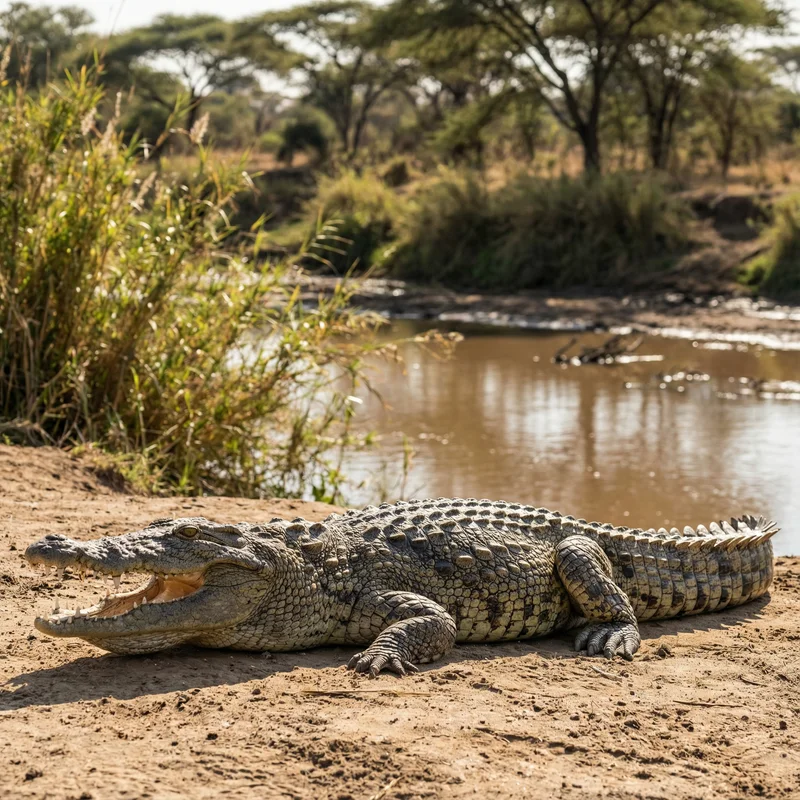 Nile Crocodile
Nile Crocodile · Carnivore
 Nile Crocodile
Nile Crocodile · Carnivore
 Nile Crocodile
Nile Crocodile · Carnivore
🔗Related Creatures
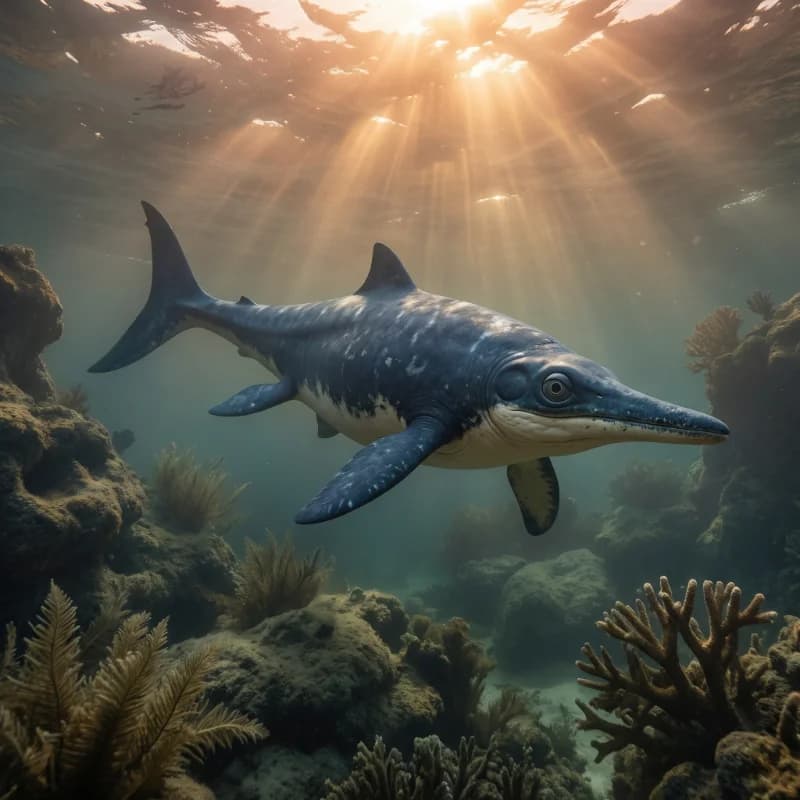
Temnodontosaurus
Temnodontosaurus
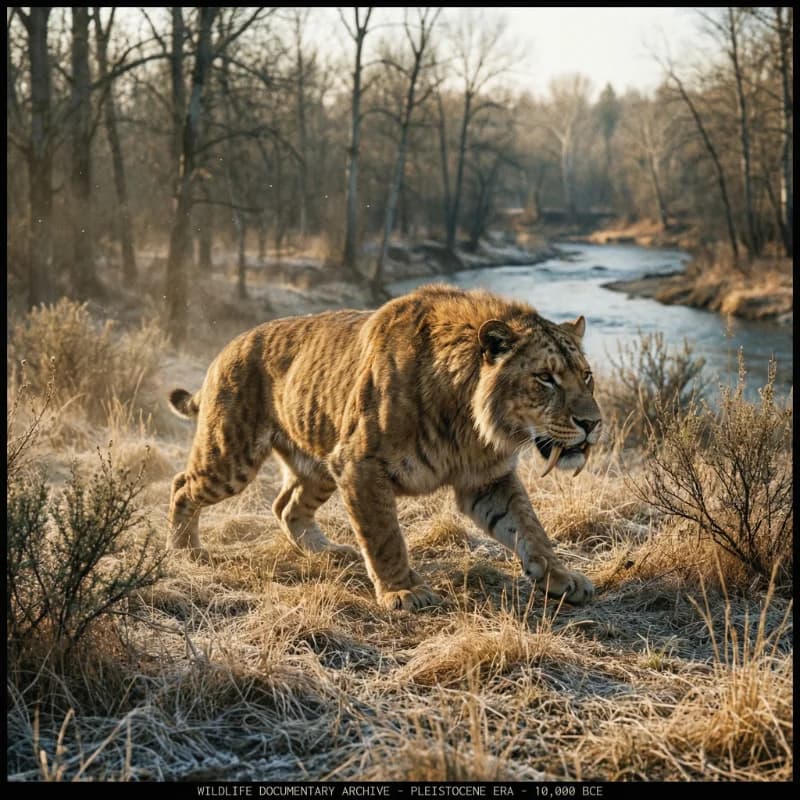
Smilodon
Smilodon
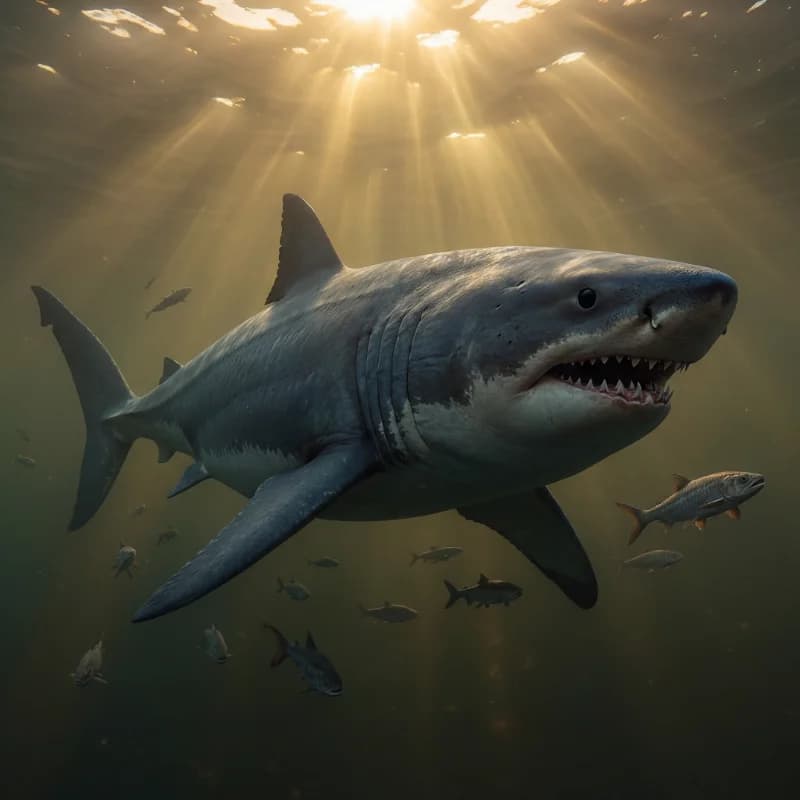
Cretodus
Cretodus
Liliensternus
Liliensternus liliensterni

Utahraptor
Utahraptor ostrommaysi
Concavenator
Concavenator corcovatus
Gorgosaurus
Gorgosaurus libratus

Axolotl
Ambystoma mexicanum